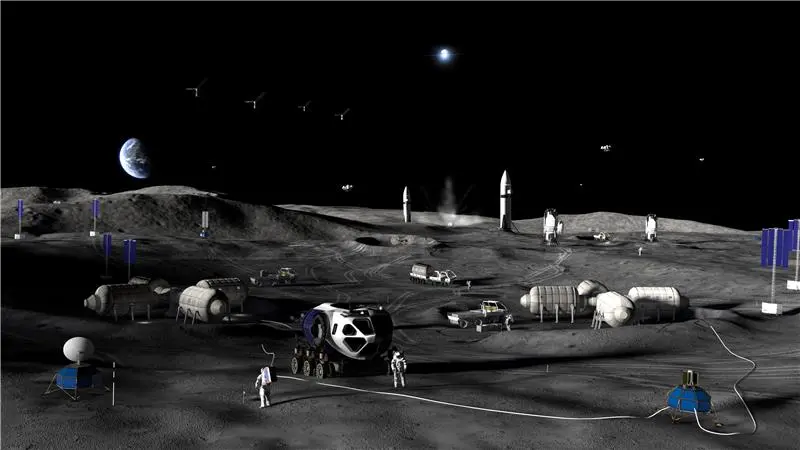

As humanity prepares for its next giant leap in space exploration, NASA has officially revealed a detailed roadmap for building a long-term Moon Base near the lunar South Pole under the Artemis program. The initiative signals a shift toward permanent extraterrestrial infrastructure where architecture, engineering, robotics, and habitation systems merge to create the first sustained human presence beyond Earth.
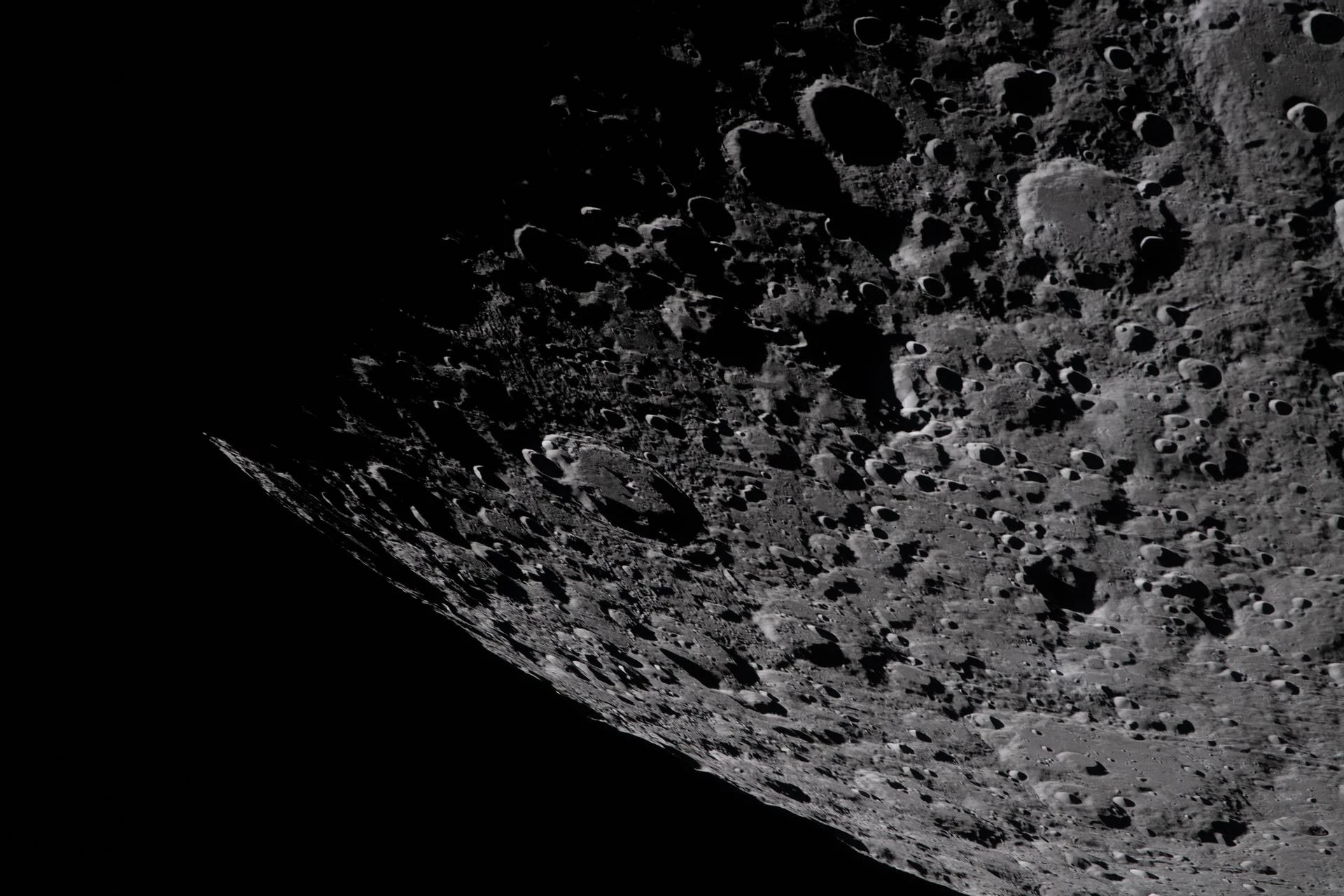
According to NASA, the Moon Base is envisioned as a multi-phase lunar settlement designed to support scientific research, resource extraction, technological testing, and future missions to Mars. Located near the Moon’s South Pole, the site has been strategically selected for its unique environmental conditions, including regions with prolonged sunlight for solar power generation and permanently shadowed craters believed to contain water ice deposits.
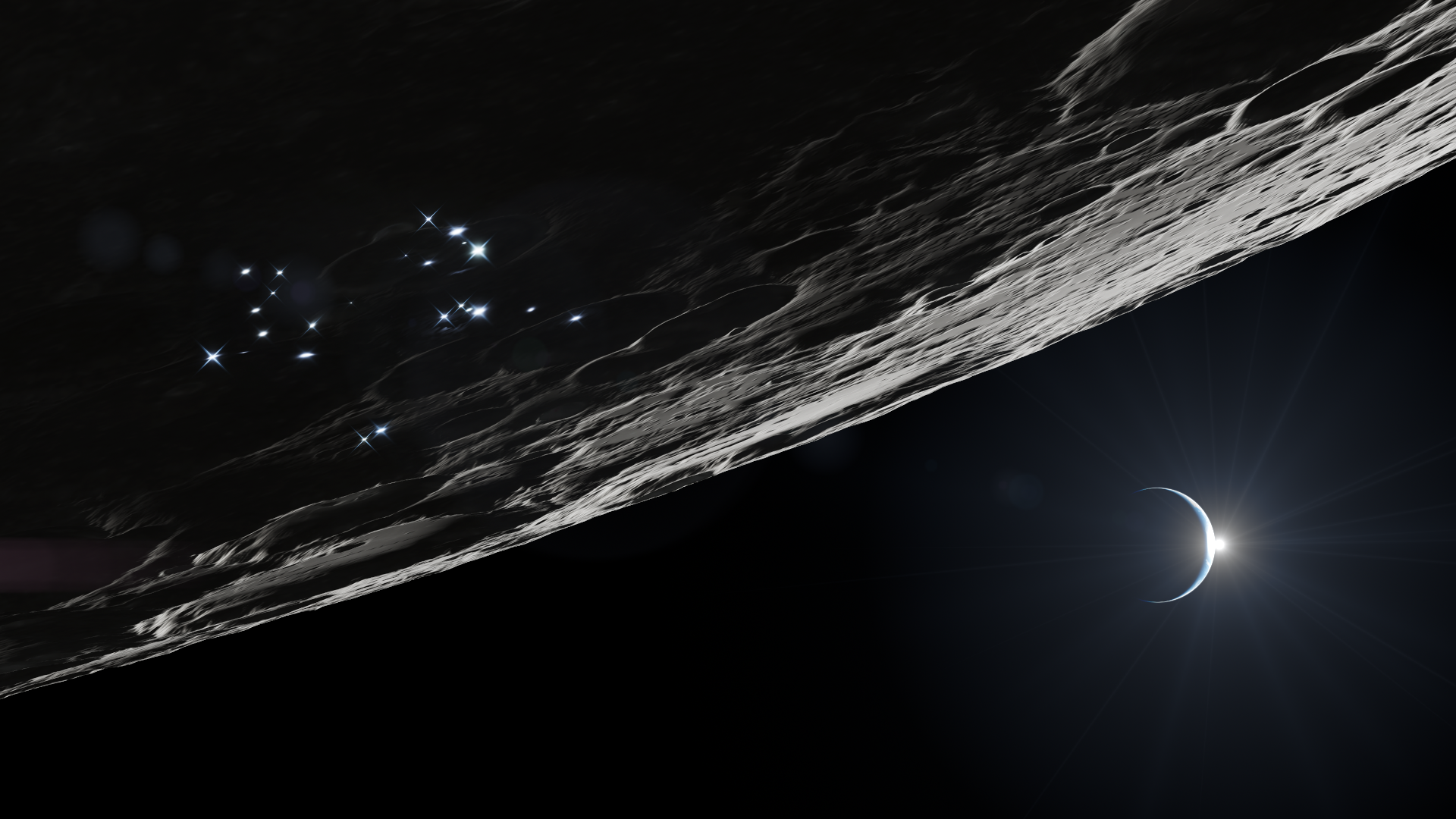
From a space architecture perspective, the project introduces an entirely new model of off-world urbanism. Instead of a singular station or habitat module, NASA proposes a gradually expanding lunar ecosystem consisting of habitation units, autonomous mobility systems, communication networks, power infrastructure, and robotic logistics. The agency describes the development as a “phased, iterative approach,” allowing systems to evolve through experimentation before supporting continuous human occupation.
NASA Details Future Moon Base Vision
The first phase, extending through 2029, will focus on robotic missions and technology demonstrations. NASA plans up to 25 lunar missions, including 21 landings, to test the operational viability of rovers, drones, communication satellites, and thermal protection systems designed for the harsh lunar environment. Among the most notable additions are the “MoonFall” drones, hopping robotic explorers inspired by the Ingenuity Mars Helicopter, capable of accessing terrain beyond the reach of conventional rovers.
By the second phase, beginning around 2029, the Moon Base transitions from experimentation to early habitation. Semi-permanent infrastructure will start appearing across the lunar surface, including expanded solar fields, nuclear surface power systems, upgraded mobility vehicles, and early habitation modules. NASA estimates that as many as 24 cargo landings could deliver nearly 60 tons of material to support construction and logistics operations.
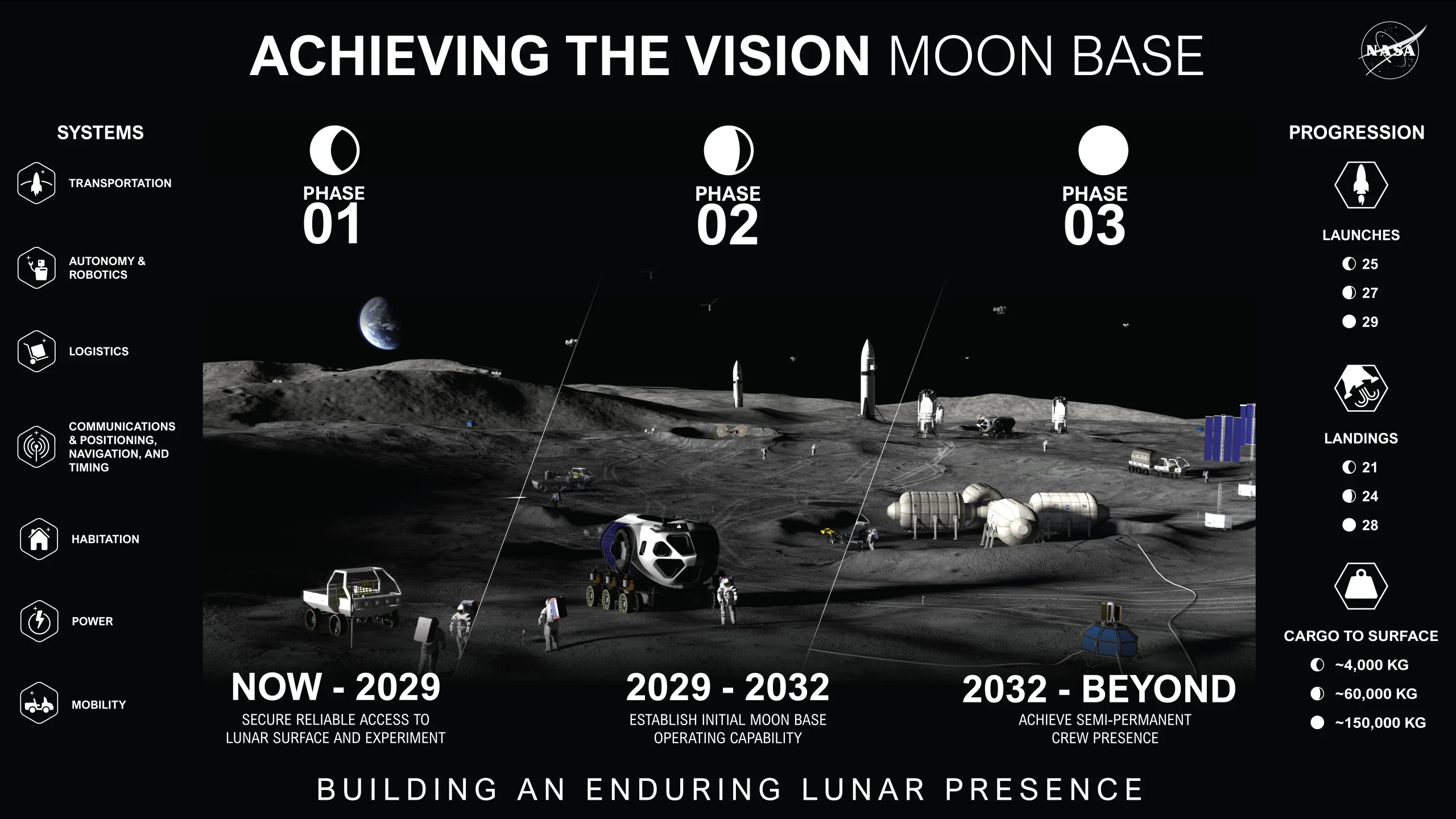
The final phase, projected beyond 2032, imagines the Moon as an operational frontier. NASA’s plans include semi-permanent habitation structures with larger interior spaces for astronauts, year-round logistics supported by autonomous and crewed rovers, and continuous cargo deliveries to maintain scientific outposts and infrastructure. Operational fission power systems are also expected to provide stable energy during the Moon’s long nights, addressing one of the most critical challenges of lunar habitation.
Moon Base represents a major departure from the compact and isolated typologies of the International Space Station era. Lunar habitats must respond to extreme temperature fluctuations, abrasive regolith dust, micrometeoroid impacts, and radiation exposure. Research linked to Artemis-era habitation has already explored shielding technologies and modular surface systems capable of surviving the Moon’s hostile environment.
The Moon Base initiative also reflects a broader collaborative ecosystem. NASA plans to involve commercial aerospace companies, research institutions, and international agencies in the development of lunar infrastructure. Blue Origin, Firefly Aerospace, Lunar Outpost, and Astrolab are among the companies connected to lunar mobility and cargo systems supporting the Artemis framework.
Beyond engineering initiative, the project signals the emergence of a new discipline within architecture itself, one where habitat design extends beyond Earth and into planetary environments. The Moon Base is about survival in space and designing systems capable of sustaining life, work, mobility, and scientific discovery on another celestial body.
As NASA accelerates its Artemis missions throughout the decade, the Moon is gradually transforming from a destination of exploration into a site of long-term occupation, redefining the future of space architecture in the process.
Credit: NASA