

Topic: Choreographic Light: Spatial Design in Grasshopper
Date: July 4 – 5, 2026
Time: 15:00 – 19:00 GMT
Format: Online on Zoom
Duration: 2 Sessions (8 Hours)
Registration Deadline: July 3rd, 2026
Total Seats: 50 seats
Difficulty: Beginner – Intermediate
Language: English
Certificate: Yes
General Registration: 100 EUR
Join free: with Full Access membership
Fee for Digital Members: 85 EUR (15% discount available only for Digital Members)
Organized By: PAACADEMY
Tutor: Edward Park
Recordings: Recordings will be available for all participants afterward indefinitely.
Introduction to Choreographic Light: Spatial Design in Grasshopper:
Architecture typically negotiates between program and context, but what happens when the program is ephemeral, dimensional, and alive? How can movement and light begin to sculpt space?
This workshop explores the intersection of spatial design, performance, and technology by teaching participants how to translate human motion into immersive spatial laser installations.
Methodology:
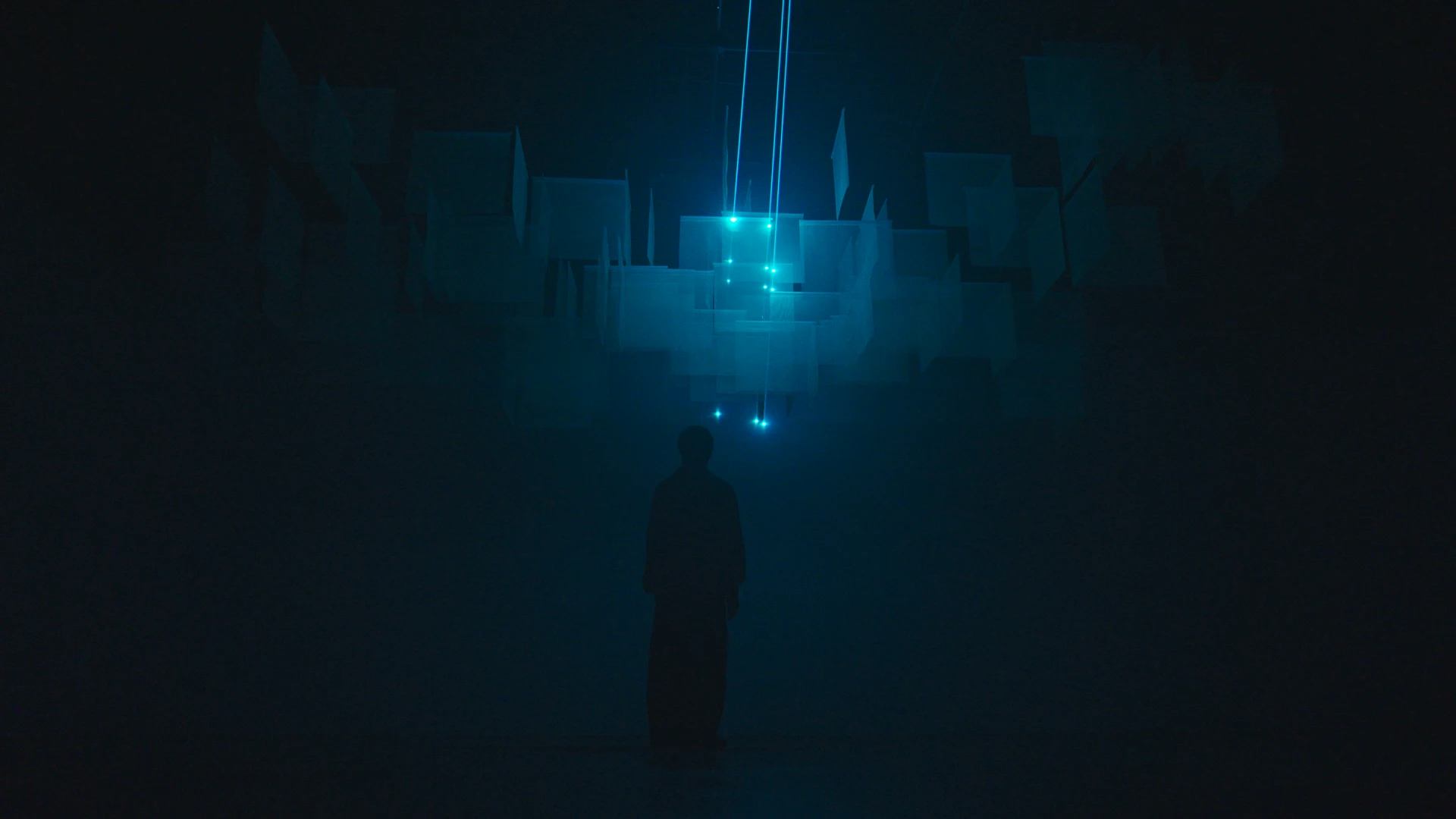
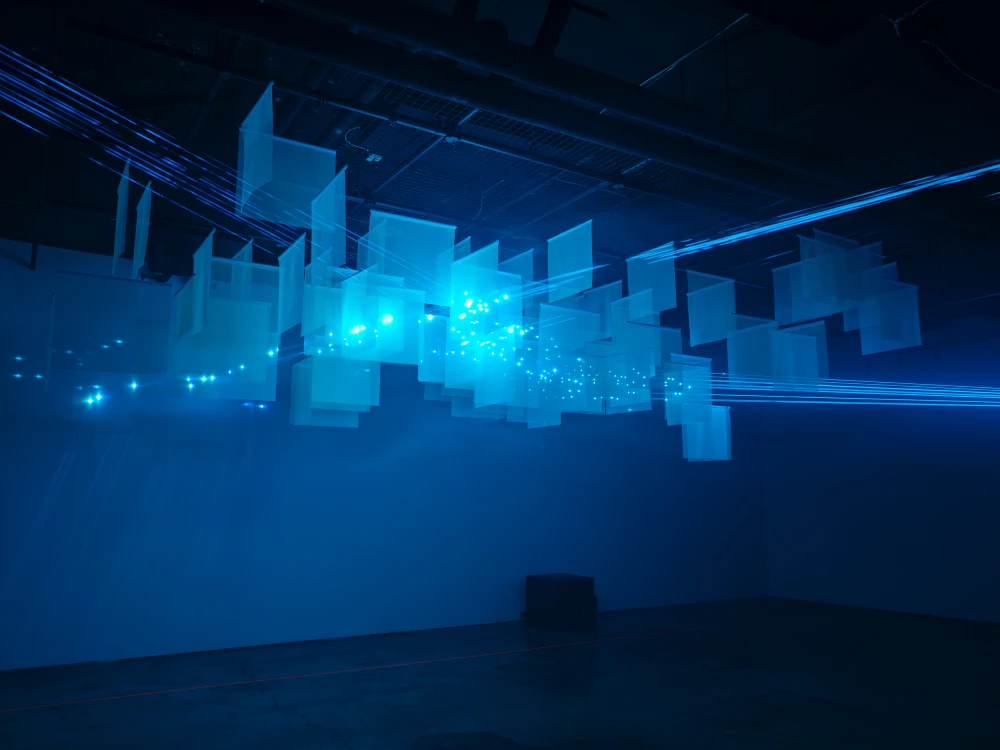
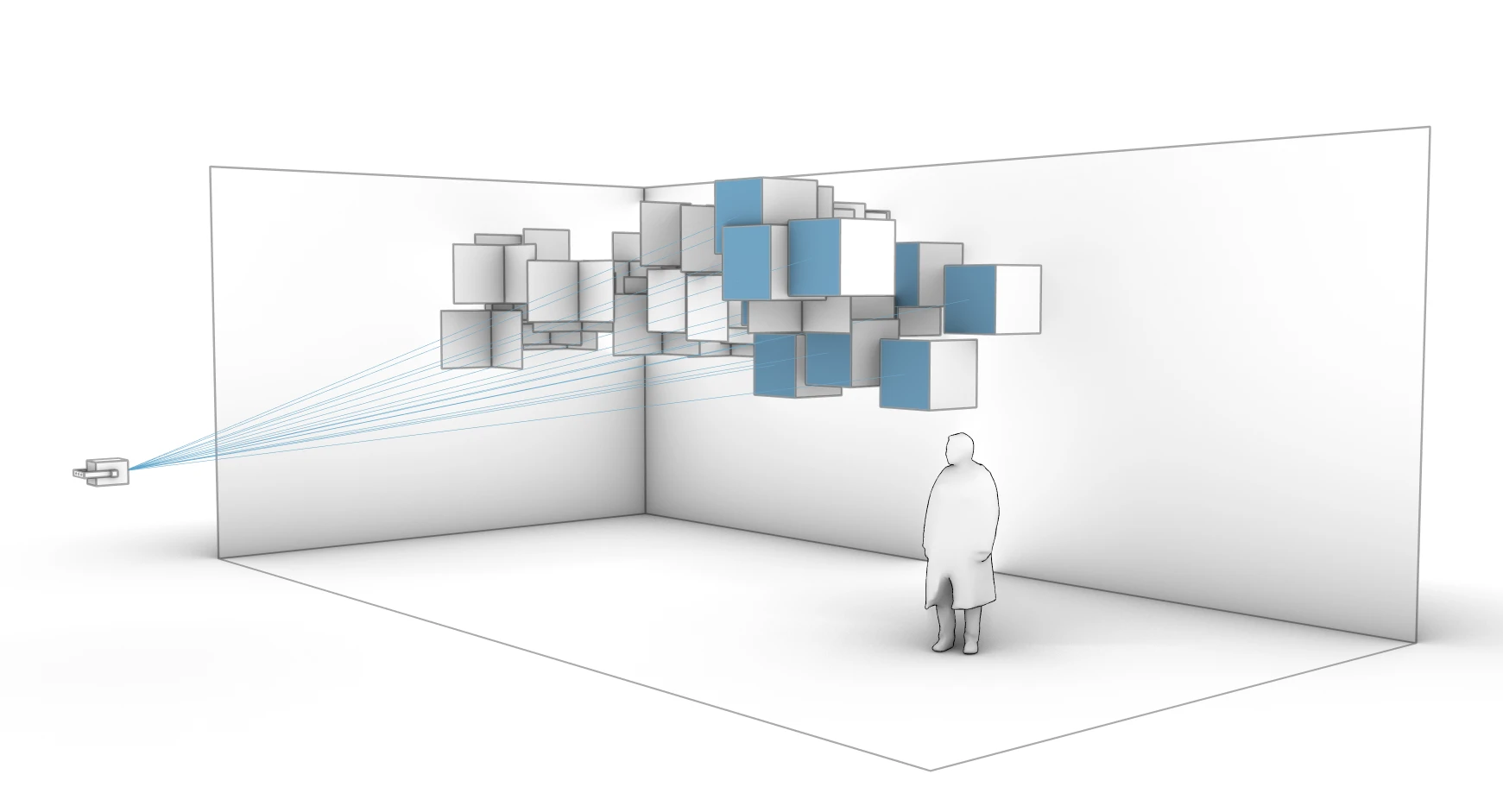
We will focus on moving beyond static designs to create transdisciplinary interactive environments. Using a custom web app for motion tracking, participants will capture joint tracking data and bring it into Rhino and Grasshopper to create a spatial installation. A dynamic laser simulation will be developed in Grasshopper to enhance and highlight the spatial installation, making it a dynamic experience.
These specific software tools are utilized because they are deeply embedded in architectural practice, are dimensionally accurate, and allow the designer to act as the bridge between the physical and digital worlds.
By the end of the workshop, participants will have built a fully functioning digital simulation where lasers are mapped to specific zones of a spatial installation designed from motion-captured joint data. This culminates in a script and simulation that is ready for concept-level experiential design pitches.
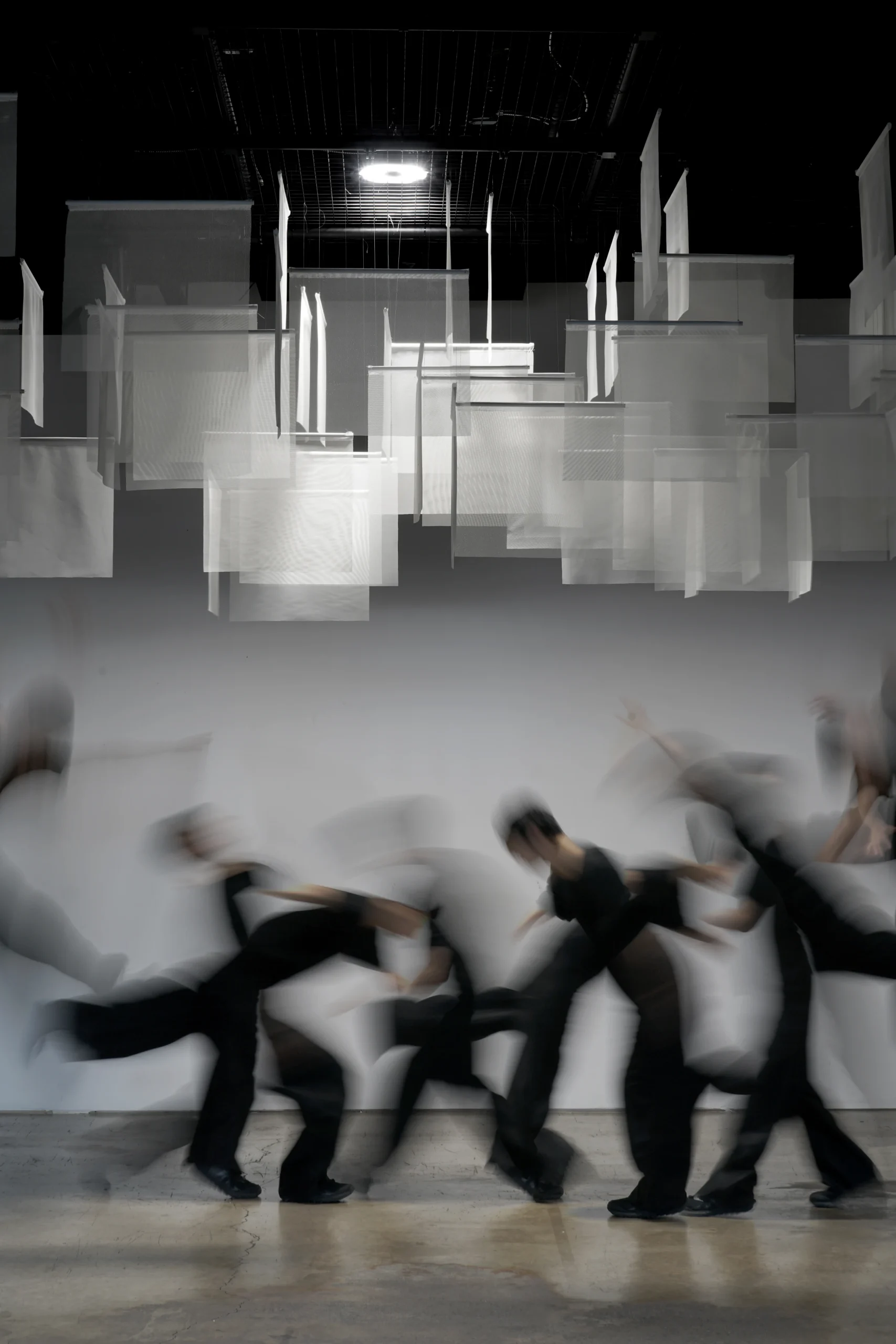
This workshop treats the capture of movement as a design method. The curriculum centers on rapid prototyping of spatial installations, challenging participants to capture a temporal event (a dance, a gesture) and freeze it into an architectural state.
Participants will use a custom motion-tracking web app to collect initial XYZ pose data for joints. We will then transition into Rhino and Grasshopper, utilizing parametric controls and volumetric translations to calibrate coordinate data. Each participant will independently develop their own spatial installation. You will build an “invisible architecture”, a systematic grid or structural logic that dictates the placement of physical elements or projection paths. The focus is strictly on using Grasshopper as the central
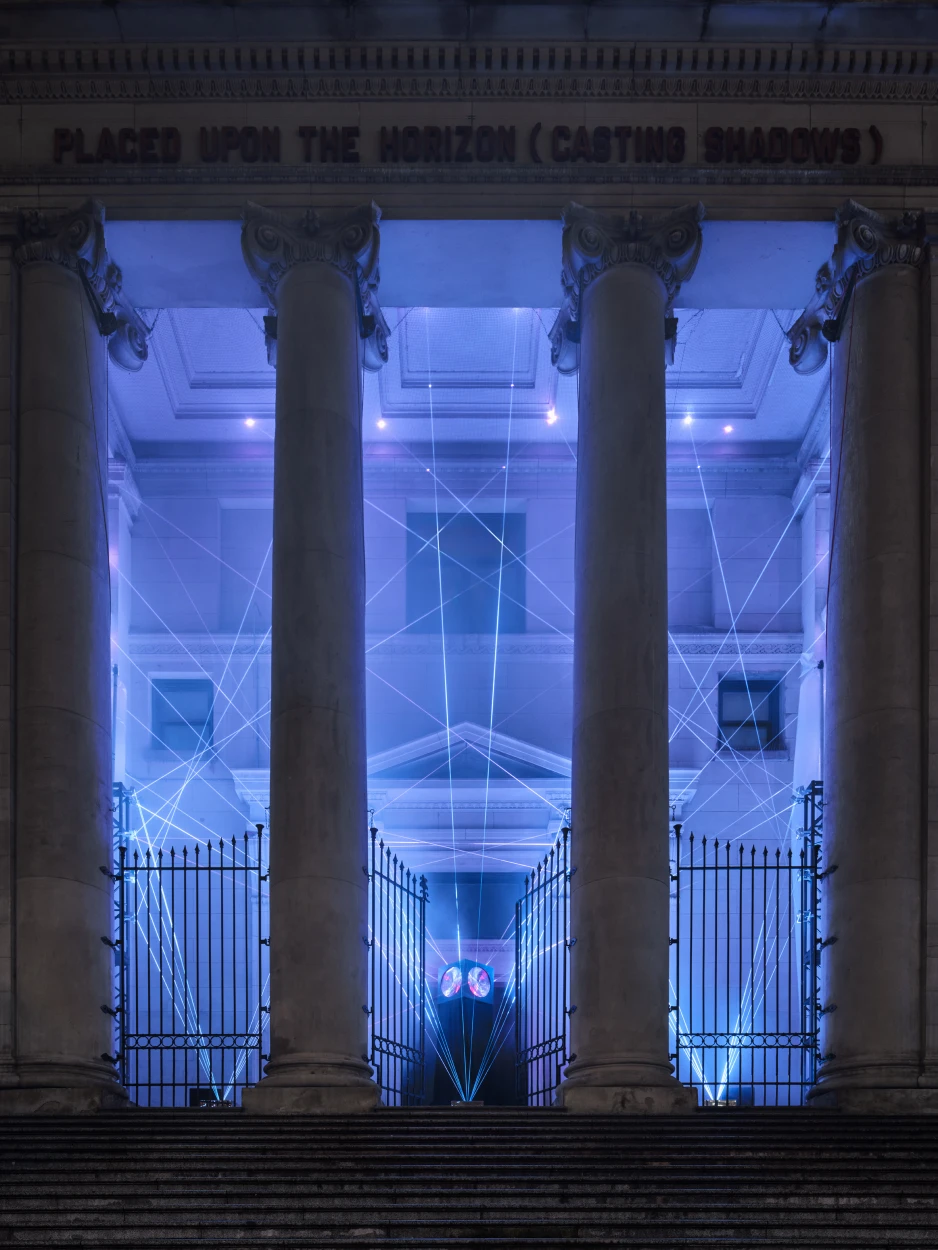
processing engine, proving how standard architectural tools can be pushed to design experiential, temporal events. Once the physical architecture is established, we will activate the space. Participants will script simulated laser systems in Grasshopper to emit light based on defined zones within the installation, mapped directly to specific zones according to the designer’s preference.
The methodology demonstrates how a singular digital framework can respond to unique physical inputs, creating a procedural workflow that mirrors choreography. The process concludes by translating this dynamic interaction into simulation-ready pre-visualizations for experiential design installations
Key Learning Topics:
- Capture and map motion-tracked XYZ joint data.
- Translate movement into spatial installations in Grasshopper.
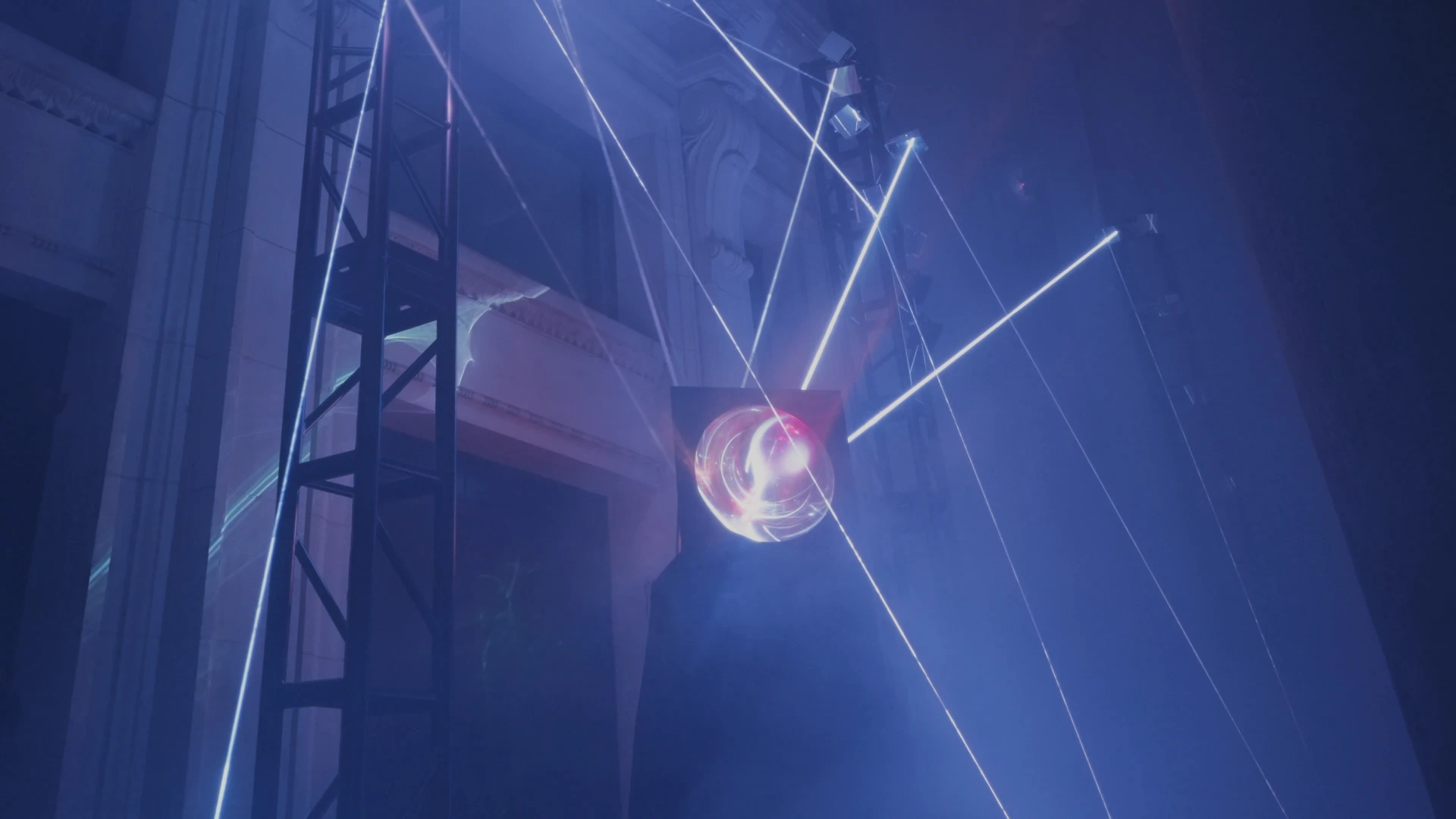
- Simulate laser systems mapped to spatial zones.
- Generate dynamic geometric patterns from motion.
- Export concept-level visualizations and simulations.
Program:
Day 1: Translation – From Capture to Installation
● Introductory lecture on the workshop framework, design approaches, and the overall digital workflow.
● Case study analysis of spatial interactive environment.
● Walkthrough of motion capture techniques using custom web applications.
● Live demonstration of converting raw motion capture data into an installation logic within Grasshopper.
● Homework: Capture a favorite dance or movement sequence and use the provided logic to create a uniquely configured spatial armature.
Day 2: Activation – Simulating the Environment
● Review of participant homework and geometric configurations.
● Technical discussion regarding laser technology, material behaviors (e.g., phosphorescence), and spatial interactions.
● Walkthrough of scripting laser interactions and establishing the active layer of the installation.
● Development of the final visual simulation showcasing the interplay between the digital data and the architectural space.
● Final participant presentations and Q&A.
● Post-Workshop Submission: Render 3 lighting scenes of your simulated environment in your visualization software of choice.
Software:
- Rhino
- Grasshopper
- Pufferfish
- Elefront
Workshop Notes:
- Basic Rhino 3D knowledge is required.
- Grasshopper familiarity is highly recommended.
- Motion tracking tools may include Kinect, Rokoko, or Mediapipe.
- Webcam or smartphone camera required.
- TouchDesigner, Unreal, Blender, etc., are referenced but not covered.
Instructor:
Edward Park

Edward Park is a second-generation Korean Canadian artist and registered architect (AIBC, AAA, MRAIC) whose practice is built at the threshold. He navigates the space between cultures, disciplines, and materials. Through laser installations, immersive environments, and material research, he uses light, sound, and material memory to charge architectural boundaries with cultural voltage, exploring how bodies carry history through space. He has extensive experience utilizing Rhino and Grasshopper, both in professional architectural work and within his transdisciplinary art collective, Interim, to bridge digital data with physical execution.
Important Notes:
- The “Choreographic Light: Spatial Design in Grasshopper” workshop by PAACADEMY will start at 15:00 (GMT) on Saturday, July 4th, 2026.
- Total sessions: 2 Sessions (8 Hours).
- The teaching duration per session will be 4 hours.
- Students will have time for a break between teaching hours.
- The workshop will be recorded, and videos will be available for participants just a day after the class for an unlimited time.
- PAACADEMY will provide a certificate of attendance.
- The studio has limited seats. Tickets are non-transferable & non-refundable. Please read carefully before you register.
Topic: Choreographic Light: Spatial Design in Grasshopper
Date: July 4 – 5, 2026
Time: 15:00 – 19:00 GMT
Format: Online on Zoom
Duration: 2 Sessions (8 Hours)
Registration Deadline: July 3rd, 2026
Total Seats: 50 seats
Difficulty: Beginner – Intermediate
Language: English
Certificate: Yes
General Registration: 100 EUR
Join free: with Full Access membership
Fee for Digital Members: 85 EUR (15% discount available only for Digital Members)
Organized By: PAACADEMY
Tutor: Edward Park
Recordings: Recordings will be available for all participants afterward indefinitely.
Explore Courses
.jpg "Ondrej Chybik - Rethinking Architecture")