

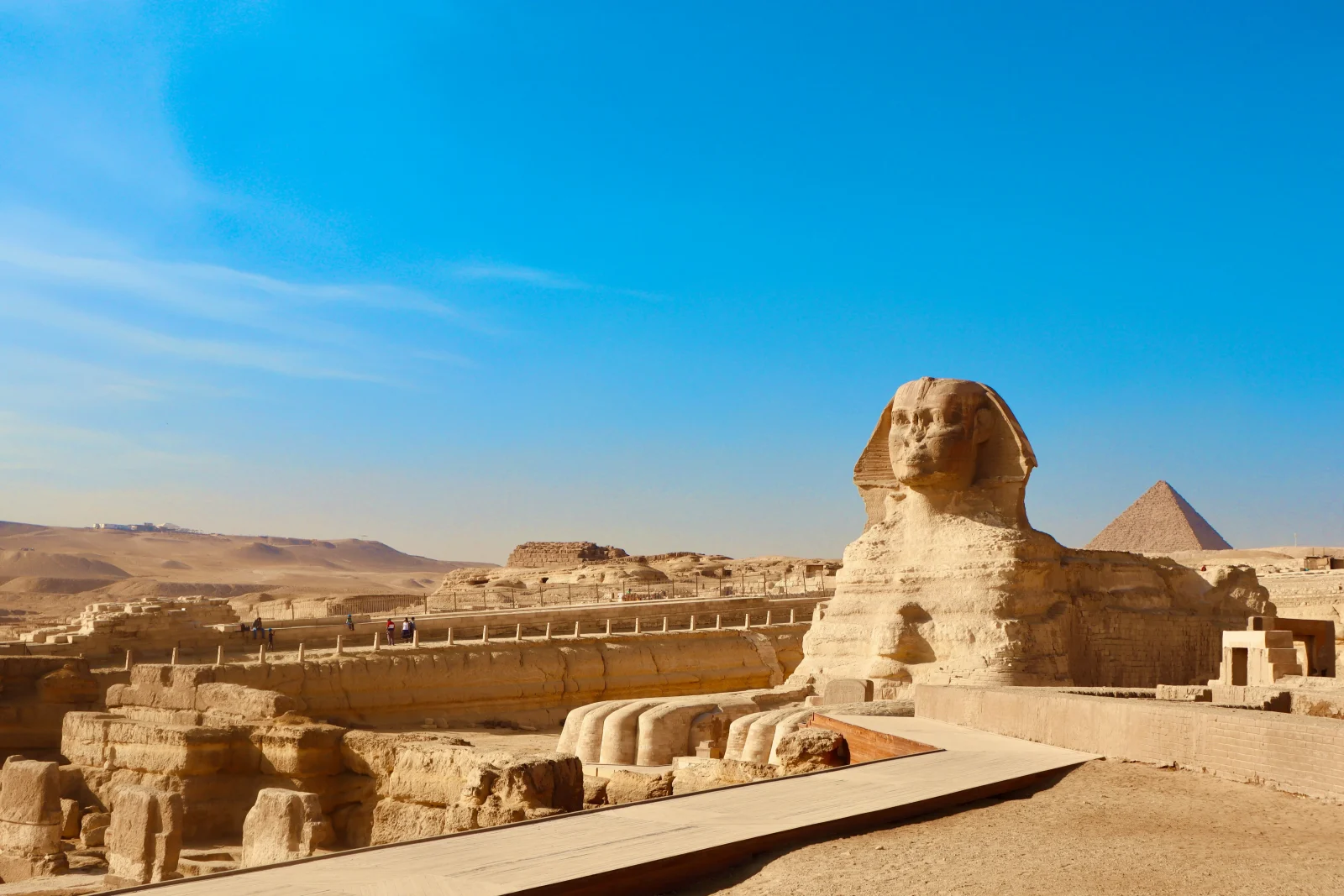
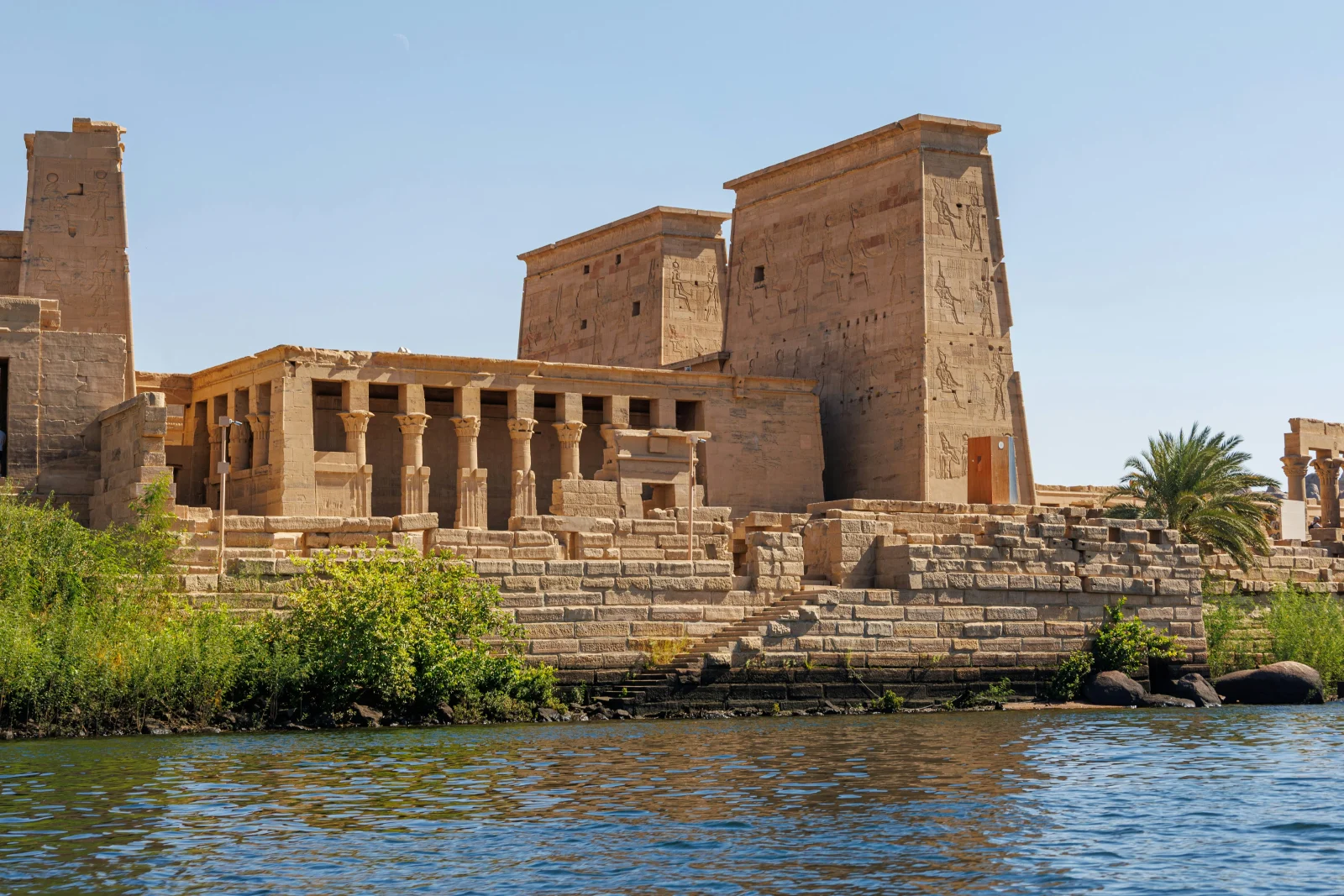
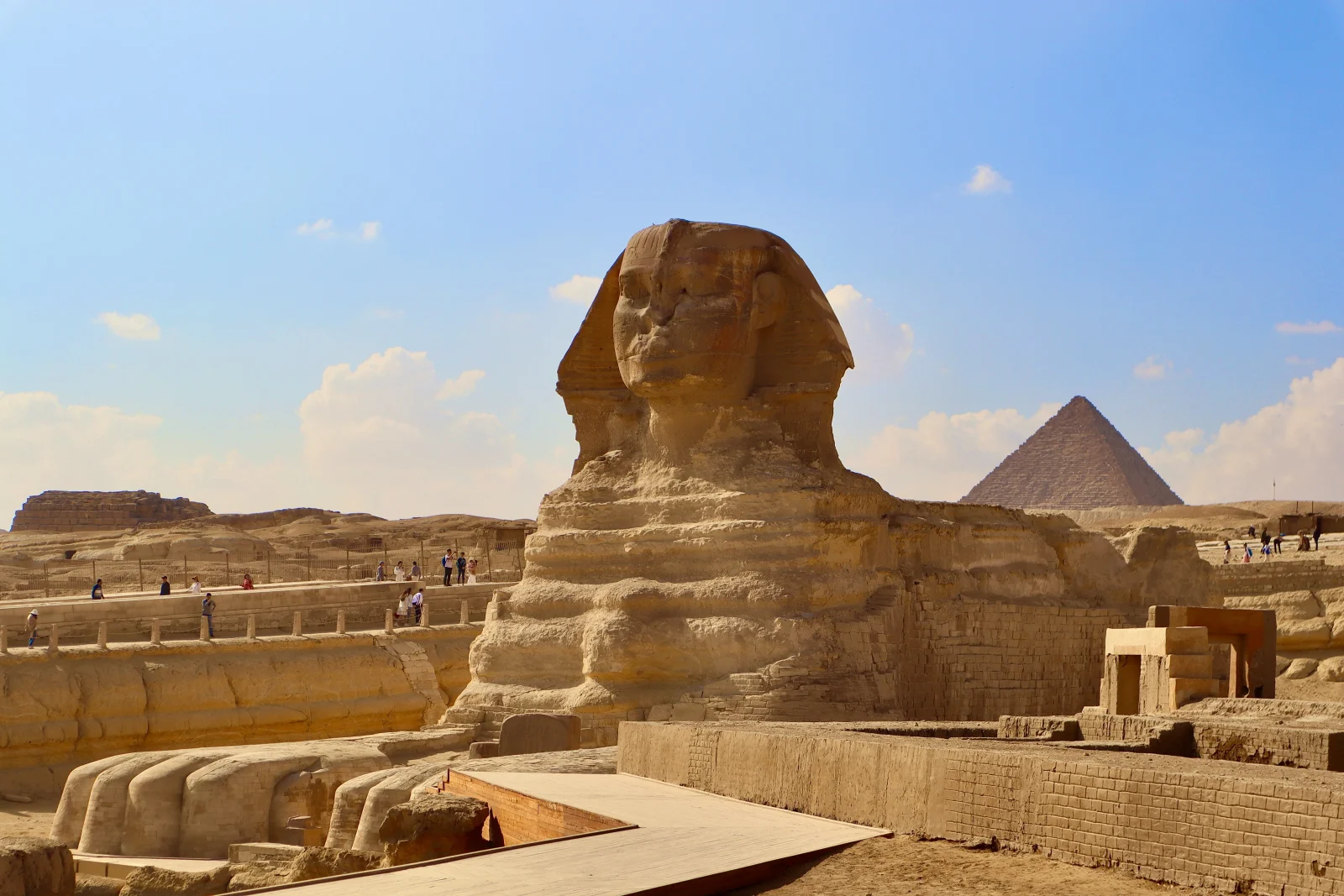
Egypt (The Arab Republic of Egypt) is a land where the ancient and monumental masterpieces stand, as an architectural evolution, an enduring testament to the civilization that has thrived for thousands of years. The country, situated in the northeast corner of Africa, is home to ancient wonders and modern masterpieces.
From the timeless Great Pyramid of Giza to the ancient grand temples of the Pharaohs, Egyptian architecture showcases centuries of evolution and artistic mastery. Some of the architecture built thousands of years ago in Egypt is well known for its pyramids, temples, sphinxes, mummies, artifacts, etc. Evidence has been found by various archaeologists that proves that the architecture and sites built during that time showcase their strength to remain standing to this day.
What is Egyptian Architecture?
Ancient Egyptian architecture is one such architectural style that has spanned several centuries, from approximately 3150 BCE to 30 BCE. The architectural style is renowned for its monumental structures, including temples, pyramids, and tombs. A characteristic feature is the monumental scale of structures with the utilization of sturdy and durable materials (stone and mud brick).

The structures built reflect the civilization’s rich architectural and engineering legacies, which have influenced various cultures throughout history. Most buildings in Ancient Egyptian architecture were mainly designed to serve a religious purpose and were built with a workforce of skilled and highly trained craftsmen and laborers. Most of the buildings were made from the Nile mud that is baked in the sun, and other monumental structures are made from stone, creating long-lasting architecture.
6 Timeless Examples of Egyptian Architecture
1. Karnak Temple Complex
Location: Luxor City, Egypt
Typology: Temple (Religious)
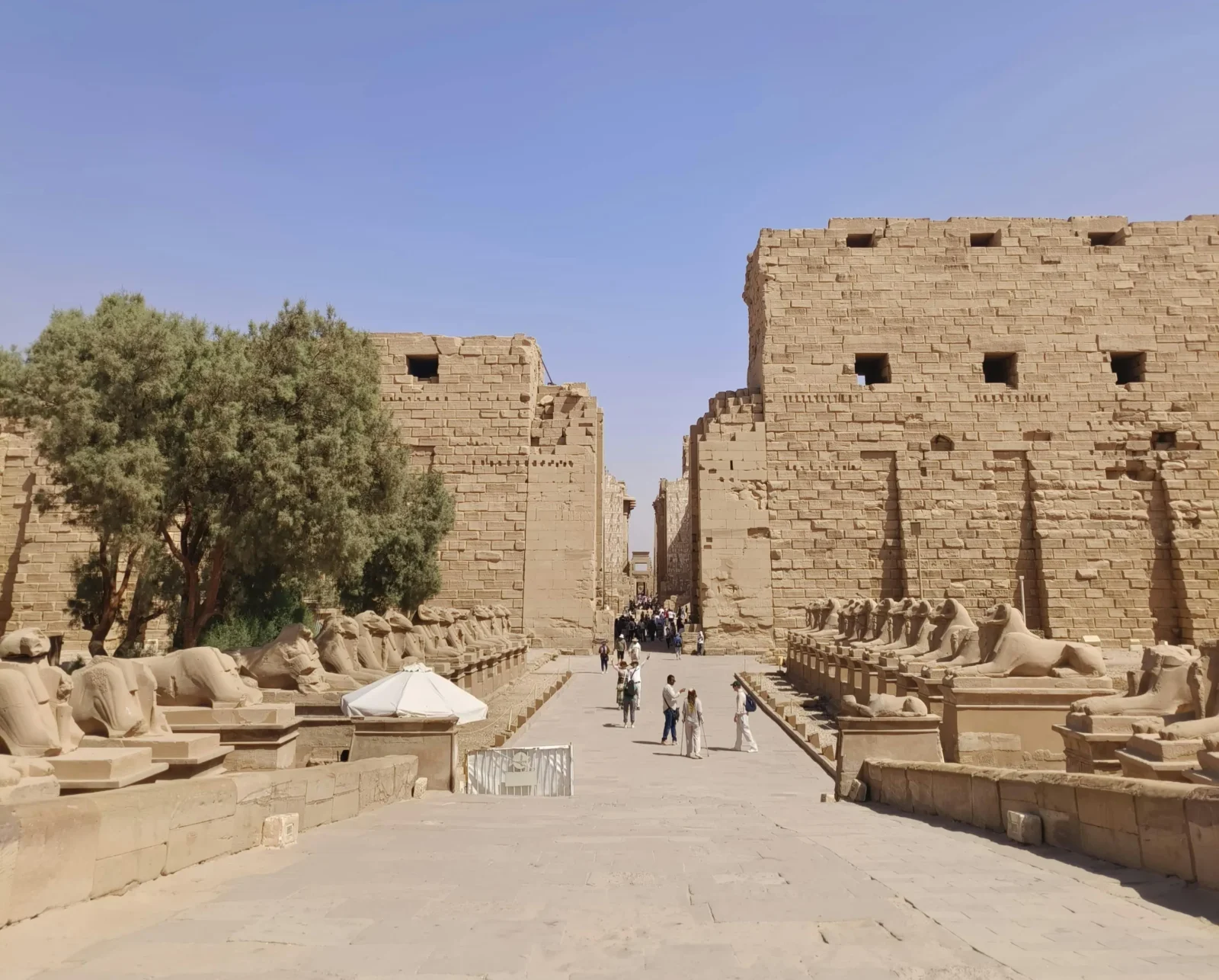
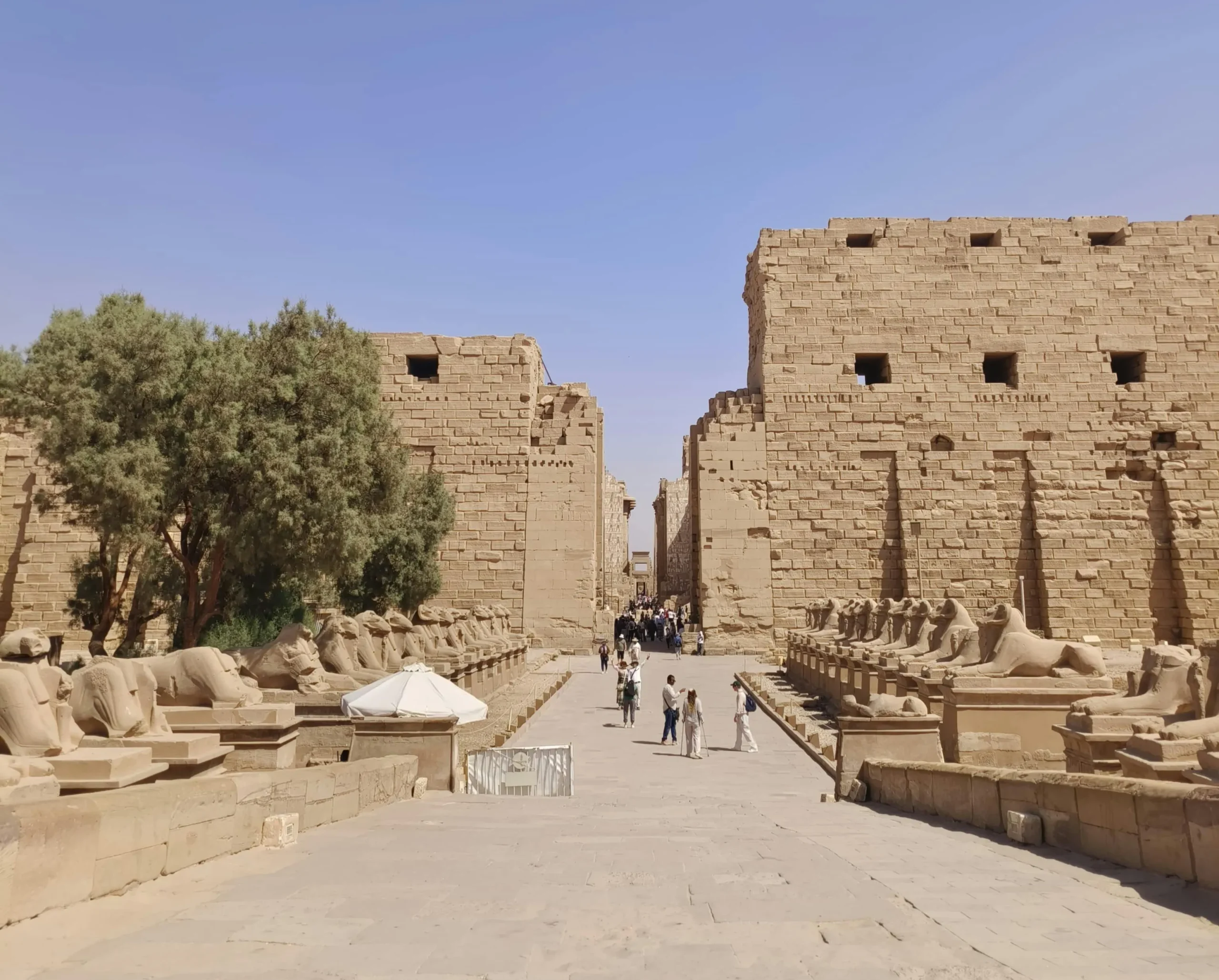
The Karnak Temple Complex (referred to as Karnak), situated near the city of Luxor, is one of the most “selected places” in Ancient Egypt. The complex comprises numerous buildings, including the primary temple structure, as well as temples, pylons, chapels, and various sculptures. It is a monumentally large complex dedicated to the god Amun-Re. The monumental architecture of the temple is renowned for its immense scale, intricate design, and historical significance. The construction of the complex began in the “Middle Kingdom” (1700-2000 BC) and continued in the Ptolemaic period (305-30 BC). During the “New Kingdom,” remaining structures were built.
“Karnak” is an Arabic word for “fort,” referred to as the Ipetesut, meaning “the most esteemed of places.” The Karnak complex stands as a testament to the Egyptians’ religious significance and architectural brilliance during the ancient Egyptian period. The temple complex, covering an area of 200 acres, features the most prominent design, the Temple dedicated to the God Amun-Re.
The meticulously planned layout of the complex reflected the technical and architectural skills of ancient Egyptian builders. The primary temples have been situated near sacred lakes with places for religious ceremonies. The key areas of the Karnak complex are listed below. Each of the areas has been separated by a rough brick boundary with a main temple in the center.
1. The Great Temple of Amun-Re—The most significant temple of the entire complex, dedicated to the Great God Amun-Re.
2. The Sanctuary of Mut—A temple complex dedicated to Mut (the mother of Goddess Amun-Re), built by Thutmose II and Thutmose III, along with Amenhotep III.
3. Sanctuary of Montu – The Precinct of Montu is one of the four main temple enclosures that make up the Karnak temple complex, dedicated to the Egyptian God Montu.
2. Great Pyramid of Giza
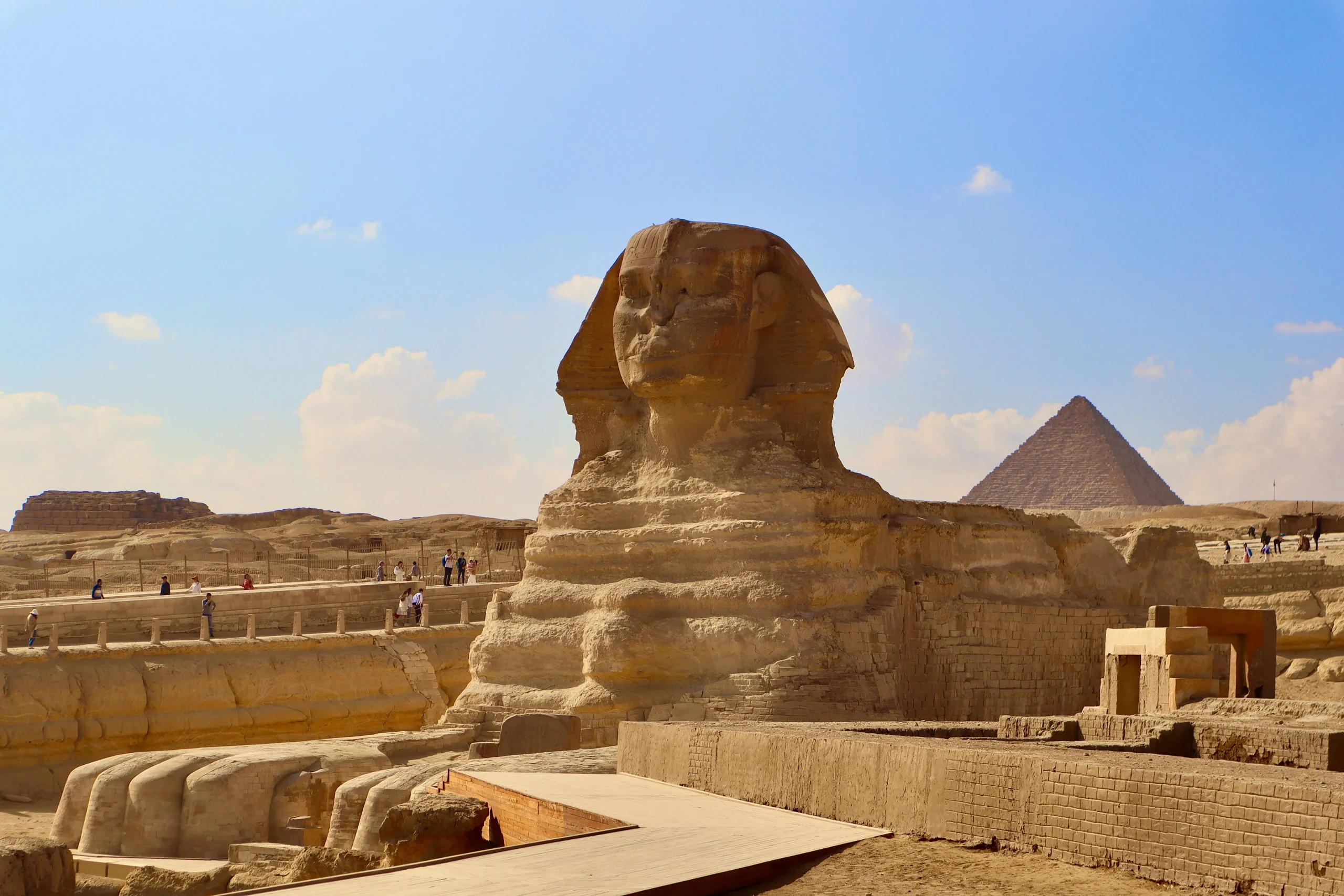
Location: Egypt
Typology: Pyramid
The Great Pyramid of Giza is one of the most iconic monumental masterpieces in the world, situated in the Giza Necropolis outside Cairo. The architecture of the Egyptians has a distinct characteristic evident in their buildings, stemming from their perspective on human existence and the philosophy of the afterlife. It is one of the biggest Egyptian pyramids and one of the oldest of the 3 big pyramids in the complex.
It is one of the Seven Wonders of the World and is included in the New 7 Wonders of the World list as well. Constructed during the 4th dynasty (2580 and 2560 BC), it was believed to have been built by the Pharaoh Khufu based on a few writings within the pyramid.
The Pyramid, spanning up to a height of 146.7 meters (481 feet high then and currently 138.5 metres (454.4 feet) high), was considered the tallest building in the entire world for a period of 3800 years. The Pyramid is a great example of Egyptian architecture, showcasing the skilled design and construction craftsmanship of the ancient period. The 3 pyramids on the Giza plateau are not all in the same shape, since the construction style of the Egyptians changed with time and experience.
The complex architecture features include the precise pyramid dimension, a complex internal structure, and advanced construction techniques. The rectangle-based 4 sloped triangular side pyramids were constructed using limestone and granite that were locally available at the site. Egyptians’ belief in the afterlife consists of an internal passage with chambers for the burial of pharaohs and for protecting their tombs.
3. Temple of Hatshepsut
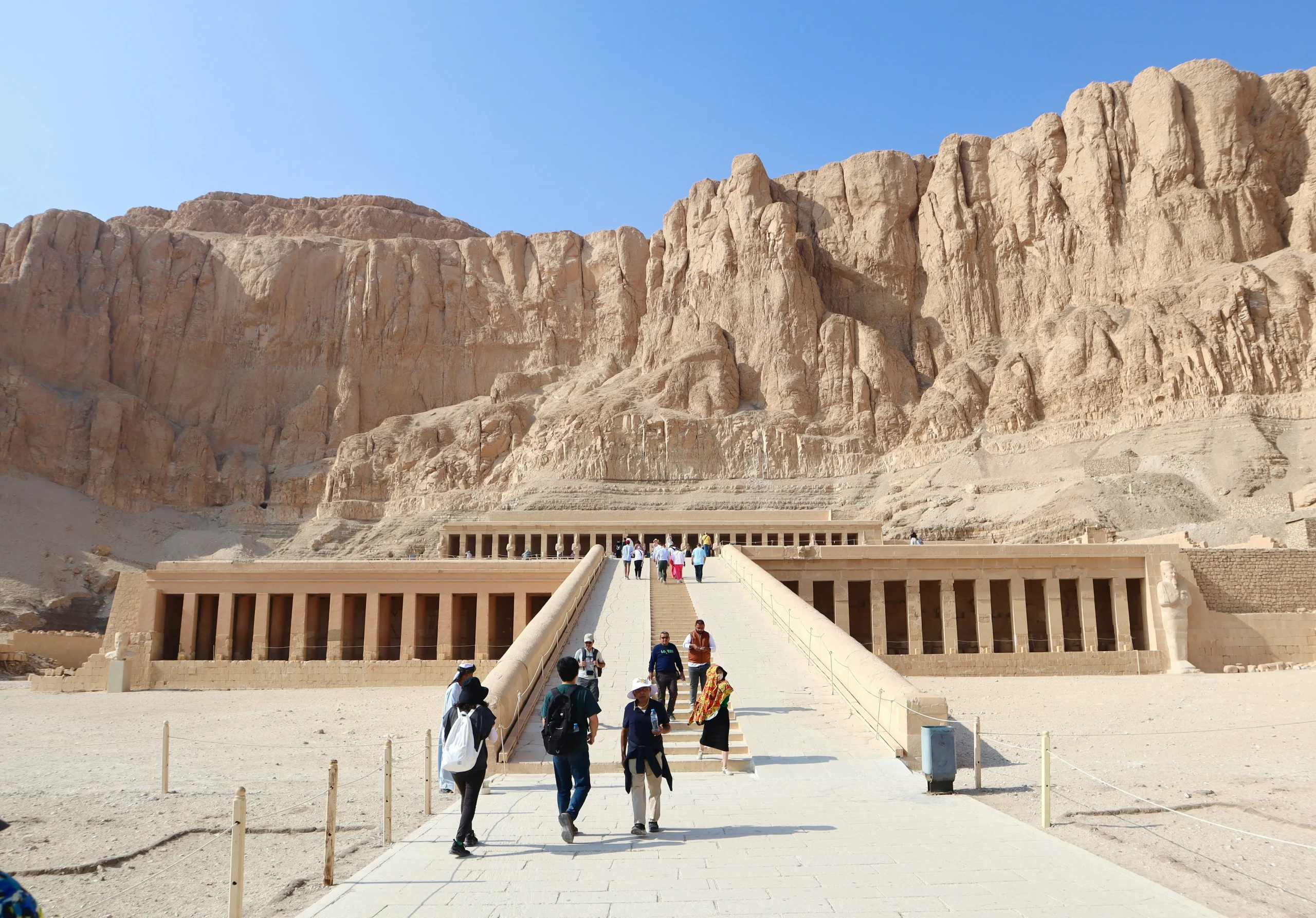
Location: Deir el Bahari, Upper Egypt
Typology: Temple (Religious)
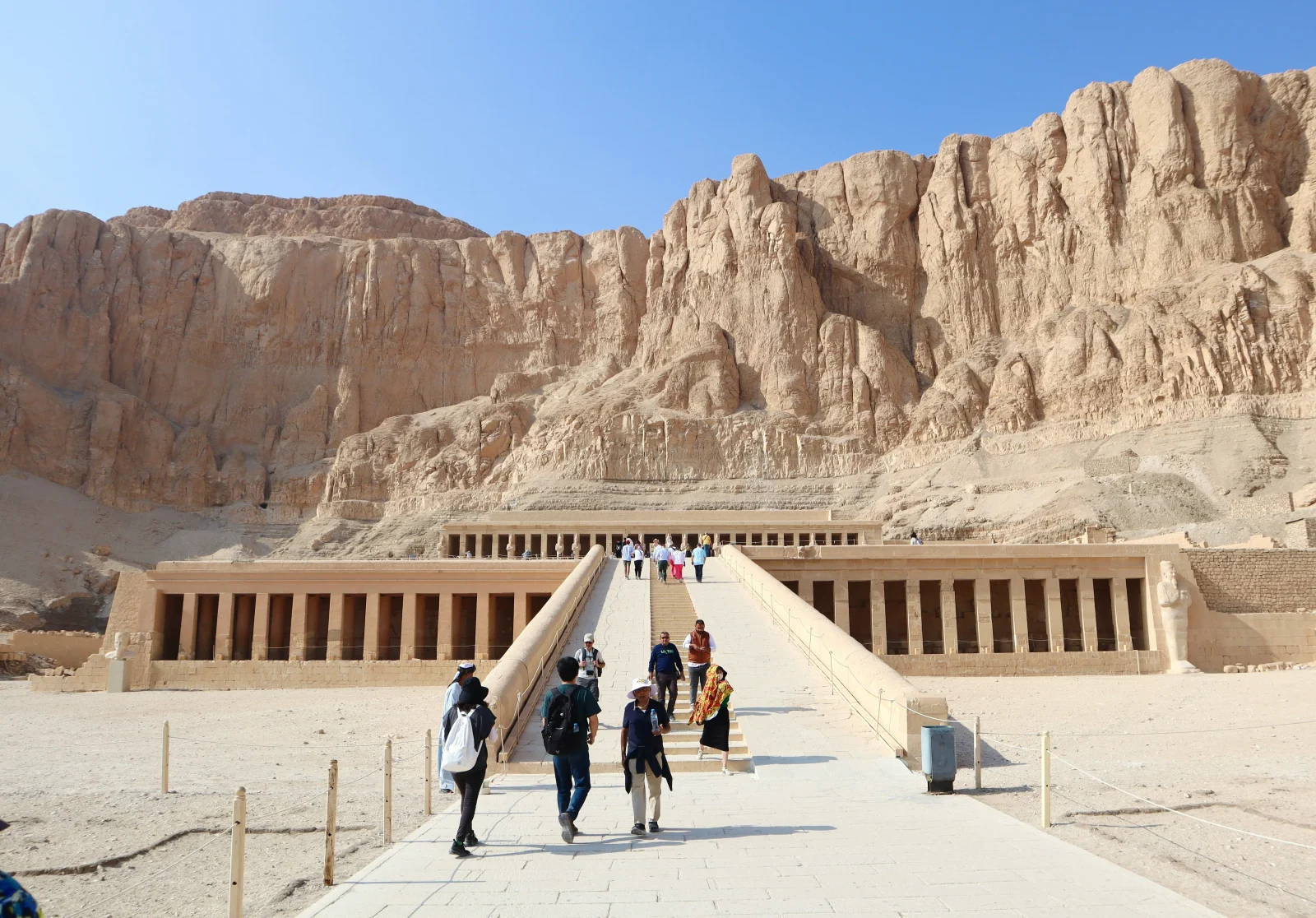
The Temple of Hatshepsut is the mortuary temple dedicated to the female Pharaoh Hatshepsut, referred to as the “Djeser-Djeseru” (“Holy of Holies”). Dedicated to the female Pharaoh, she ruled during the 18th dynasty and died in the year 1458 BC. The temple stands as one of the most remarkable architectural landmarks of Ancient Egypt.
The temple is located at Deir el-Bahari on the western bank of the Nile, near the Valley of the Kings in Upper Egypt. It is situated beneath the massive cliffs, creating a distinctive architecture, and was designed by Hatshepsut’s architect, Senen Mut. The Mortuary Temple consists of three gigantic terraces whose designs were inspired by the earlier temple, which is a significant representation of the Pharaoh’s connection and her afterlife role.
The Temple is one of the striking examples of New Kingdom temple architecture designed to seamlessly integrate with the limestone cliffs of the Theban mountains. The architecture of the temple resembles the classical Greek architecture constructed 1000 years later. The structure has three prominent visible levels that lead up to the sacred temple, which took 15 years to complete. The first level is composed of exotic trees and shrubs and a colonnade with square pillars and several intricate reliefs.
The second level consists of the first-ever recorded pictorial documentation of a trade expedition (the relief retells Hatshepsut’s high officials’ journey to Punt). The third level consists of statues of Horus flanking the ramp that leads to the third level from the second courtyard. The third level houses a portico with a row of columns in the front. The rear portion of the third level consists of an enormous statue of Hatshepsut surrounded by octagonal columns inside.
4. Luxor Temple
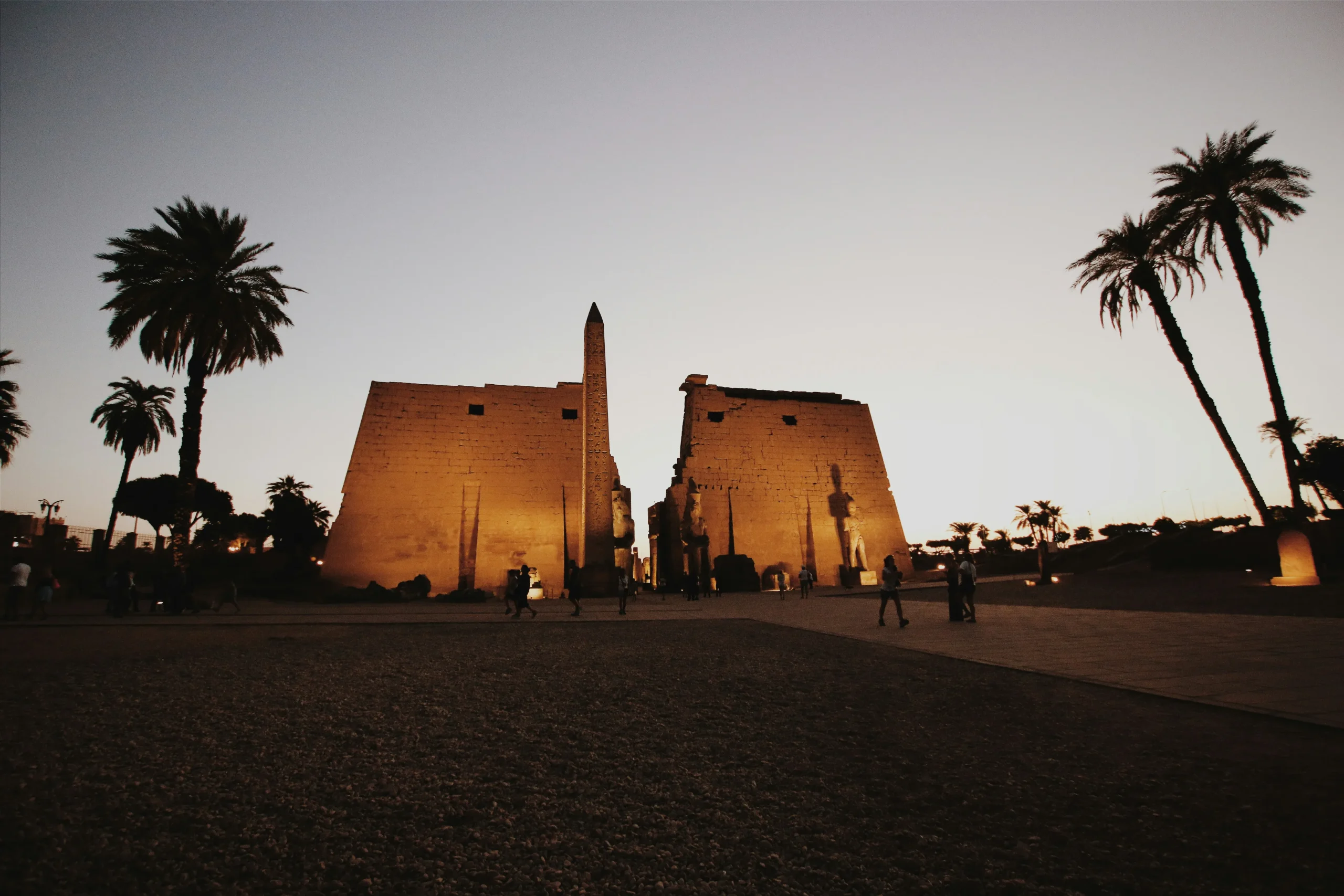
Location: Luxor, Egypt
Typology: Temple Complex (Religious)
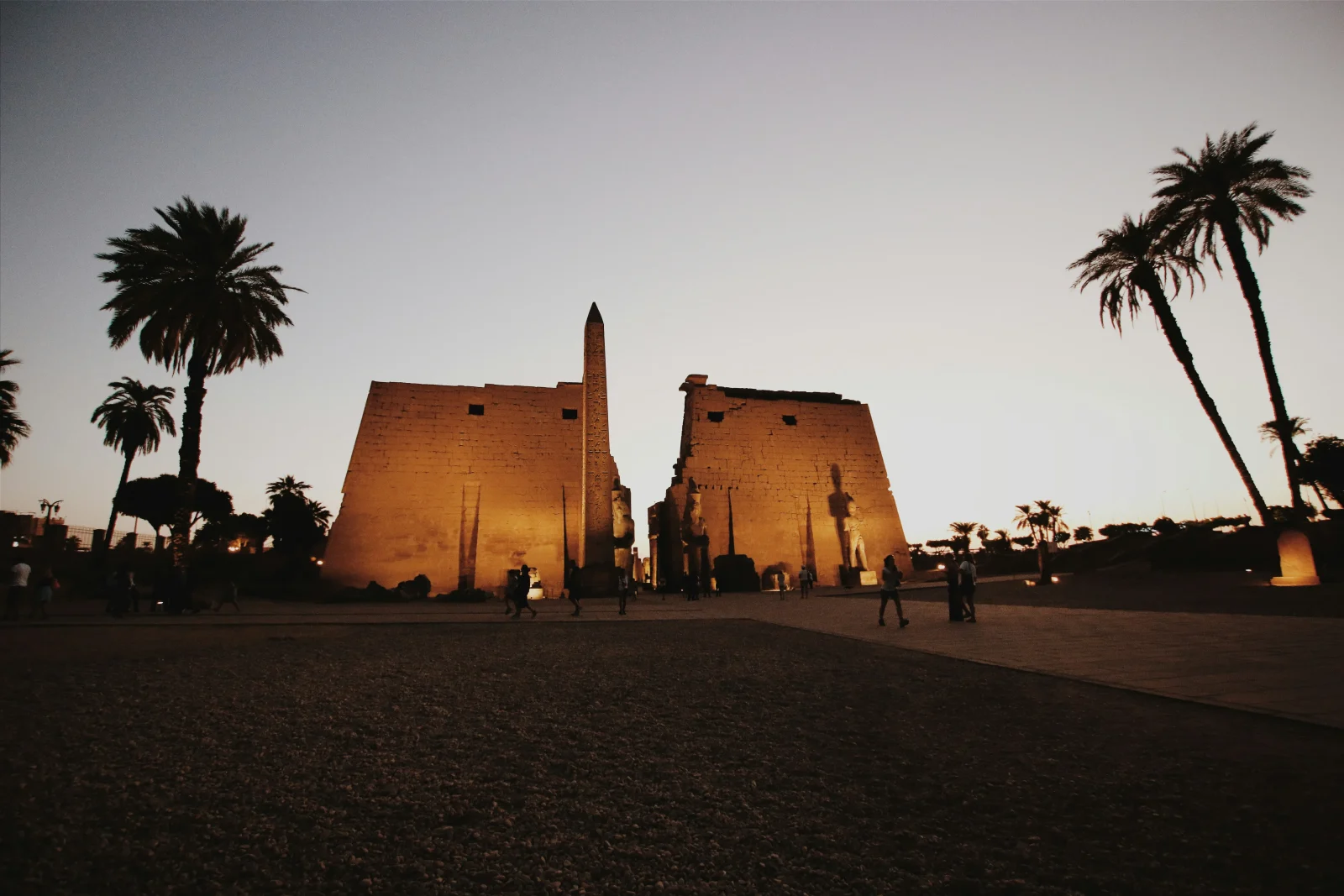
Located on the east bank of the Nile River in the current city of Luxor (the ancient city of “Thebes”), it was constructed approximately in 1400 BCE by the New Kingdom. The Luxor Temple complex is a classic Egyptian temple, dedicated to the God Amun and for the “rejuvenation of kingship” (where Egyptian kings were crowned here). The classical Egyptian construction method was followed during the complex’s construction, built with sandstone and altered by various kings thereafter.
The Temple is one of the largest and primary Egyptian temple complexes on the eastern bank. The primary zones of the temple complex are composed of a large courtyard, sanctuary, vestibules, hypostyle rooms, etc. The Luxor temple, unlike other Egyptian temples, is dedicated to the rejuvenation of kingship, where several Pharaohs of Egypt were crowned over several years. The architecture of the temple is composed of a Sphinx-lined avenue, colossal statues of Ramesses II with majestic colonnades, and vast 20 metre walls with decorated reliefs, all made of sandstone material.
The ten parts of the Luxor Temple Complex are the Avenue of the Sphinxes, Mosque Court, Chapel of Mut, Roman Camp, Chapel of Khonsu, Chapel of Amun, Court of Amenhotep 3, Birth Chamber, Court of Ramses 2, First Pylon, and Mosque.
5. Temple of Horus
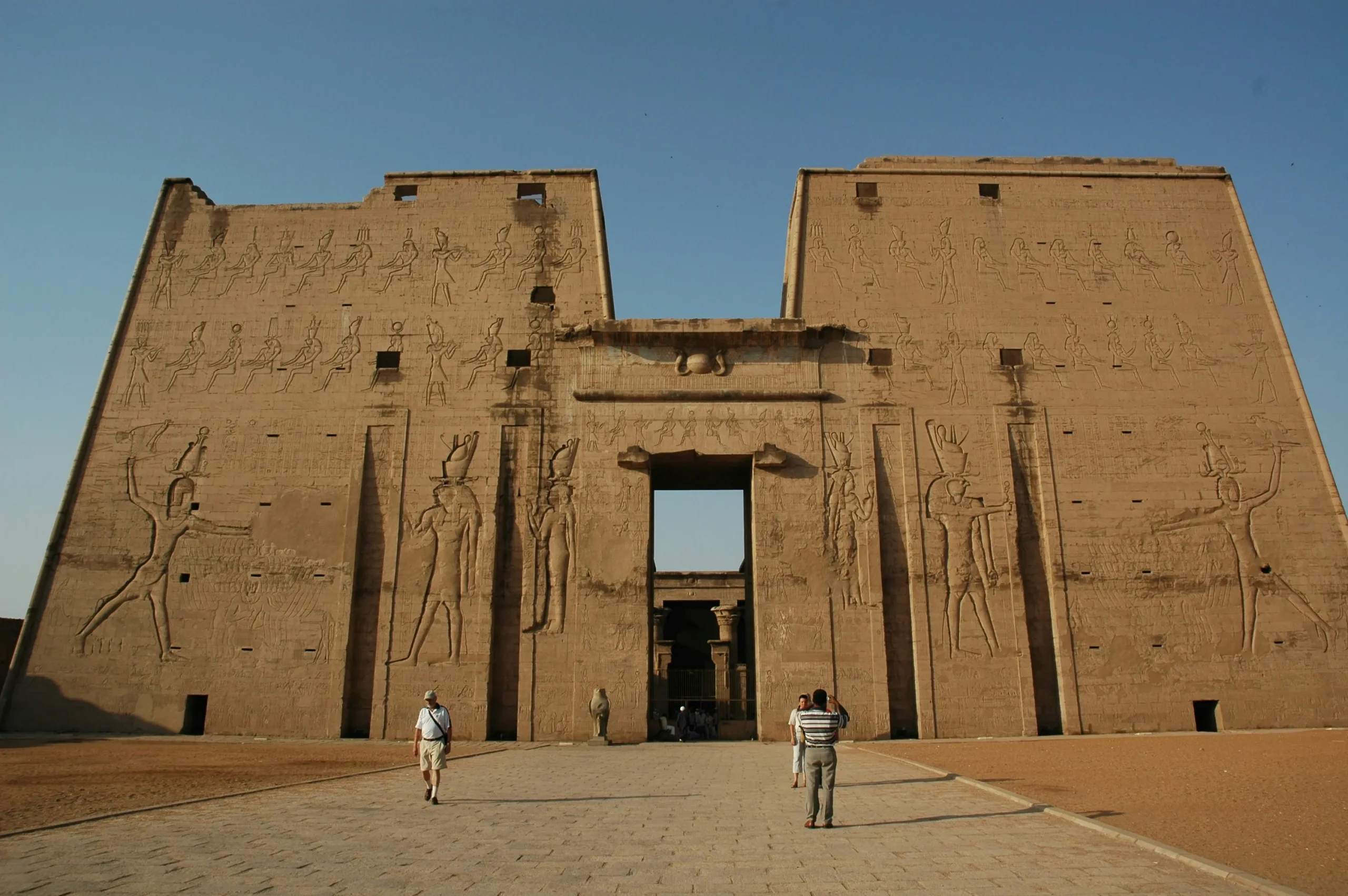
Location: Edfu, Egypt
Typology: Temple (Religious)
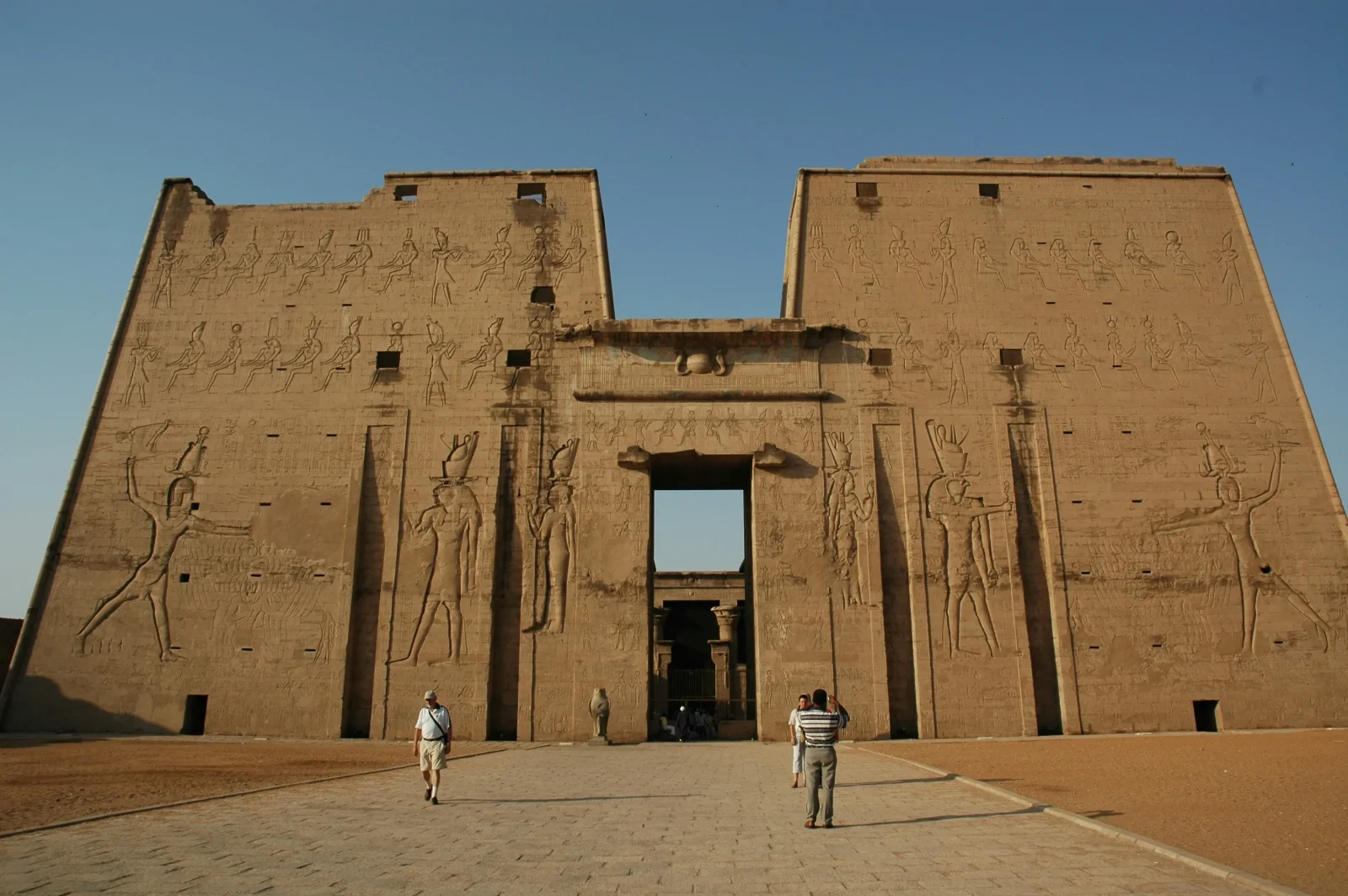
The Temple of Horus in the Ancient city of Edfu is one of the best-preserved temples from the Ancient Egyptian period. The second largest Egyptian temple was built between 237 and 57 BC, dedicated to the God Horus, one of the important Gods of ancient Egypt. The God Horus is often represented as either a falcon or a man, consisting of a falcon head, considered one of the oldest and most significant deities of Egyptian mythology.
Situated in the ancient city of Edfu on the west bank of the River Nile in Egypt, it is located halfway between Luxor and Aswan. The characteristic feature of the temple was the gigantic pylons adorned with intricate carvings, composed of two 36 metres high towers.
The temple’s grand stone entrance with gigantic pylons leads to an impressive courtyard consisting of 32 columns that bear various festival carvings. The 140-metre-long temple showcases the grandeur of Egyptian architecture and the monumental vision of the ancient civilization. The architecture of the Horus temple is a rich blend of traditional Egyptian architecture and Hellenistic influences. Hellenistic influences are quite evident in the wall inscriptions, which provide valuable information on myth, language, and religion during this period.
The temple’s layout consists of a series of halls, courtyards, and sanctuaries within the inner sanctum that houses the sacred statue of the Falcon God Horus. Constructed with the application of limestone and sandstone with the utilization of precise measurements and celestial bodies’ alignment, reflecting the Egyptians’ understanding of astrology and intricate construction.
6. Abu Simbel Temple
Location: Aswan Governorate, Egypt
Typology: Temple (Religious)
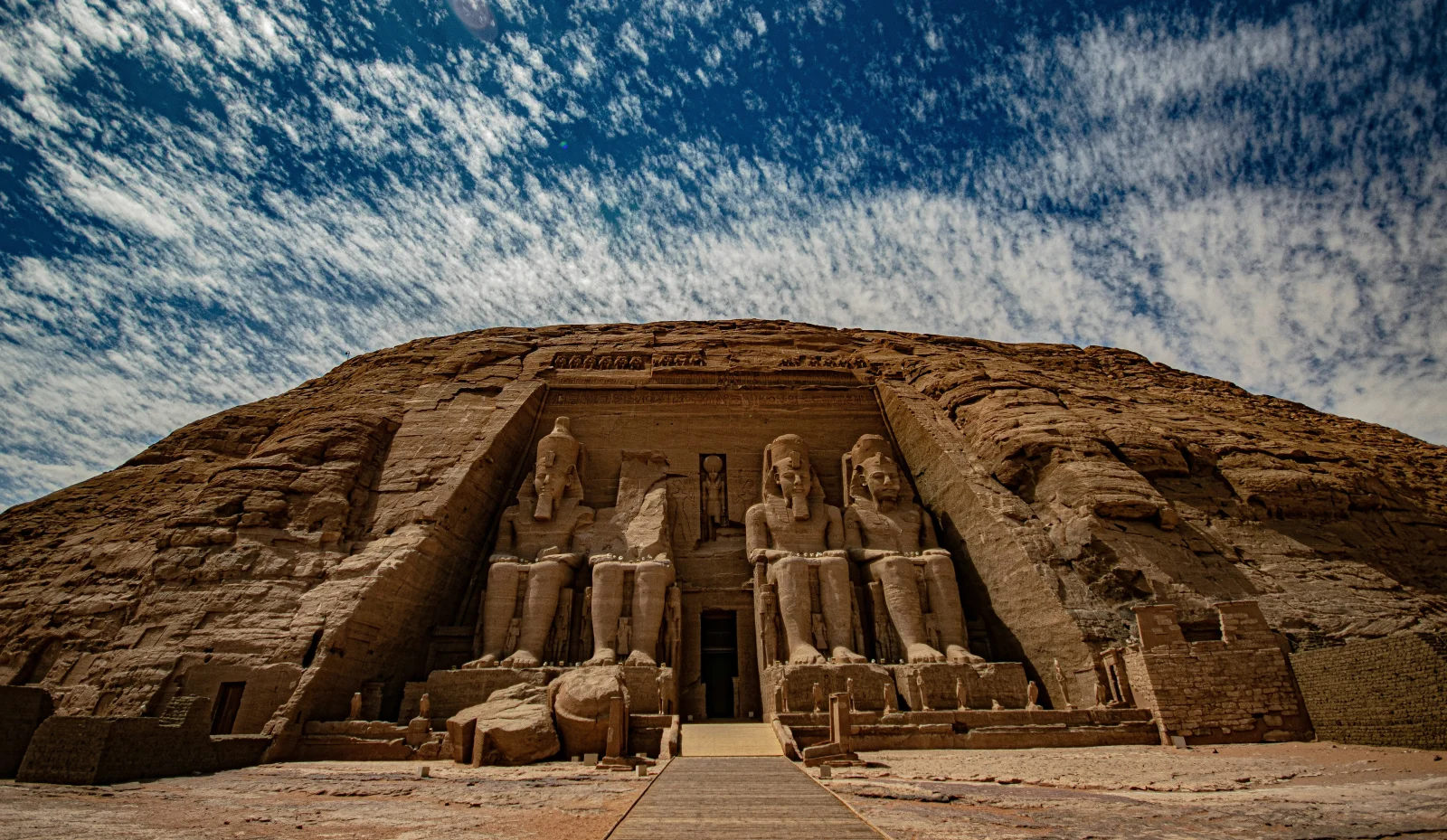
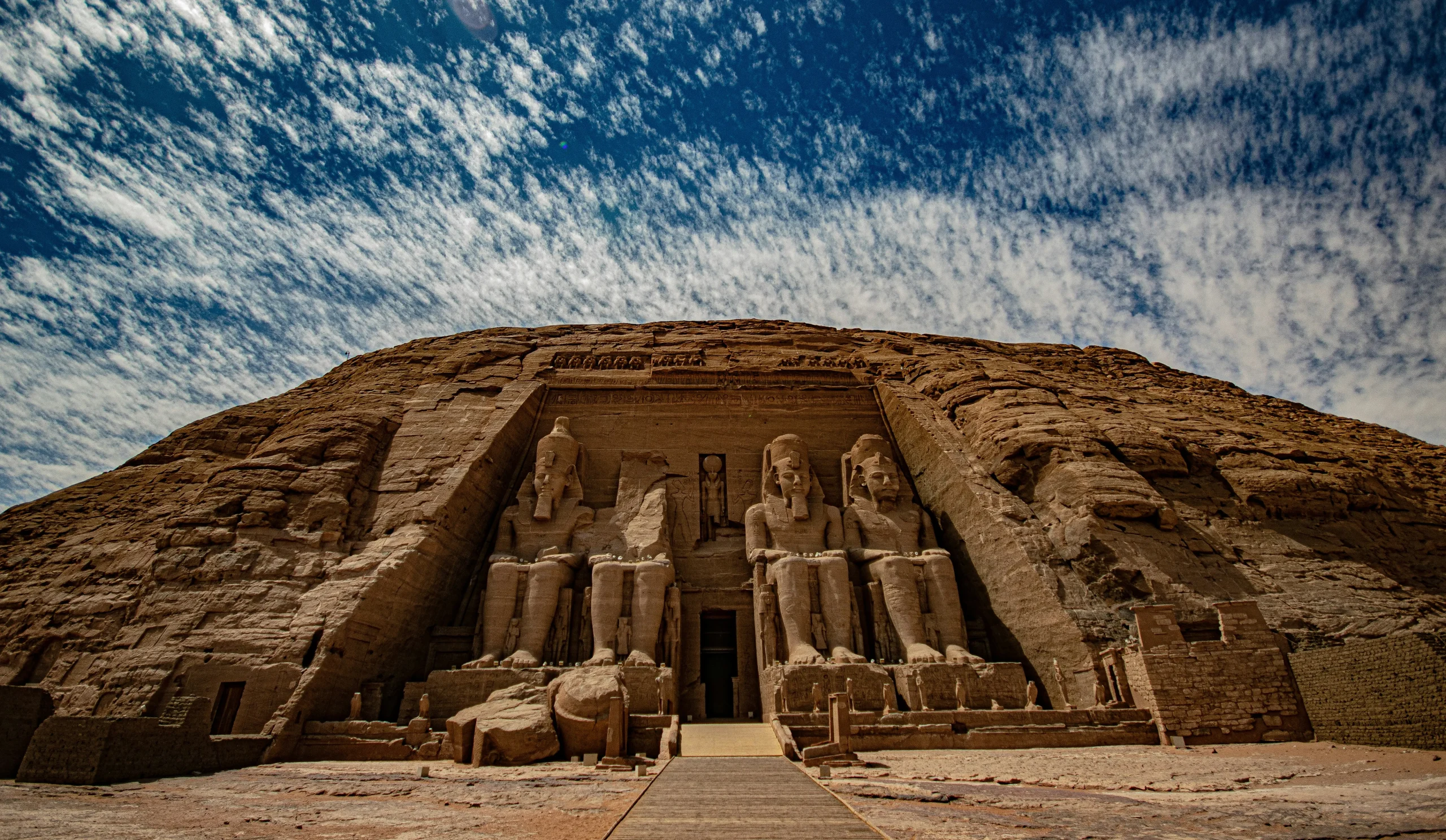
The Great Temple of Abu Simbel, carved out of a sandstone cliff located in Aswan (Southern Egypt), was built by the Pharaoh Ramses II and his queen Nefertari. The gigantic temple is flanked by four colossal statues of Ramses in the temple entrance, a distinctive example of Egyptian Architecture. The architecture of the temple showcases the complex engineering feats of the Egyptians in that period.
The temple was actually not discovered to the entire world until 1813, by a Swiss researcher, Johann Ludwig Burckhardt, and was explored first in 1817 by an Egyptologist, Giovanni Battista Belzoni. The temple complex, composed of two gigantic temples carved into the mountainside, was built to commemorate their victory during the Battle of Kadesh.
The two temples built within the temple complex consist of a larger temple dedicated to Pharaoh Ramses II himself, and the smaller temple dedicated to his queen Nefertari (Goddess Hathor). The temple is standing up to a height of 98 feet (30 metres) and 115 feet (35 metres) long, flanked by 4 statues, 2 on either side of the grand entrance, 65 feet (20 metres) high, depicting Ramesses II on his throne. It is one of the architectural marvels situated in Egypt, renowned for its intricate carving, distinctive alignment of the complex with the sun, which is a symbol of power and devotion of Egyptians to their mythological beliefs.
Explore Courses
.jpg "Ondrej Chybik - Rethinking Architecture")