

The library is more than just a haven for book lovers to borrow books; it is also a space for endless fascination and inspiration. It is considered to be a space for discovery and features as an architectural marvel for designers and architects. Library architecture serves as a source of inspiration for awe-inspiring architectural designs, drawing from the book collection it houses. Libraries are a symbol of cultural knowledge and wealth; hence, it has become a subject of vital importance for designers and architects to design, construct, restore, and renovate Libraries and their architecture.
Over several decades, library architecture has evolved, depending on the requirements and its usage. Library designs have been evolving constantly with the architectural trends of the era and the technological advancements in architecture. Library architecture is an evolving scope of architecture that showcases knowledge, with the innovation of the architecture that houses the knowledge. Read further into the article and follow PAACADEMY to explore such unique and innovative libraries and their architecture.
1. Stuttgart City Library, Germany
Architect: Yi Architects
Location: Germany
Completion Year: 2011
The New Stuttgart City Library, situated in Southern Germany, is a unique architectural design by Yi Architects as a perfect and unique white cube housing the library. Eun Young Yi, after winning the competition for the project in 1999, the new Stuttgart library was completed in 2011. The Central library was situated in the Wilhelms Palais (1965-2011), designed by Giovanni Saucci as the Wurttemberg kings’ residence. In 2011, the year 2011 was moved to the newly built Stuttgart Library building, which gathers all the ancient libraries in one building.
The building has been referred to as a Pantheon zoned within the centre of the concentric plan, with inverted zigzag reading rooms encased by a rotating photovoltaic roof panel.
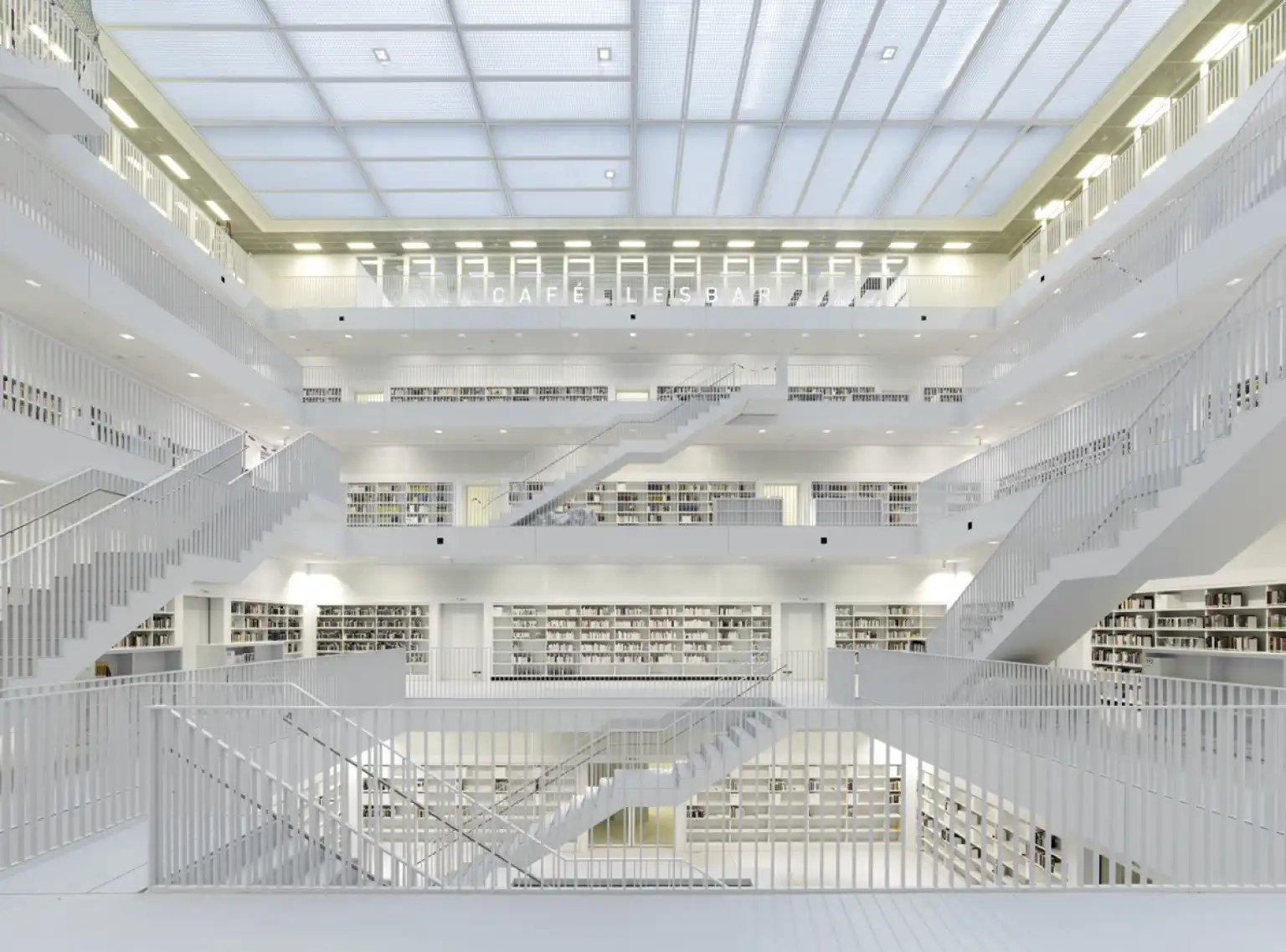
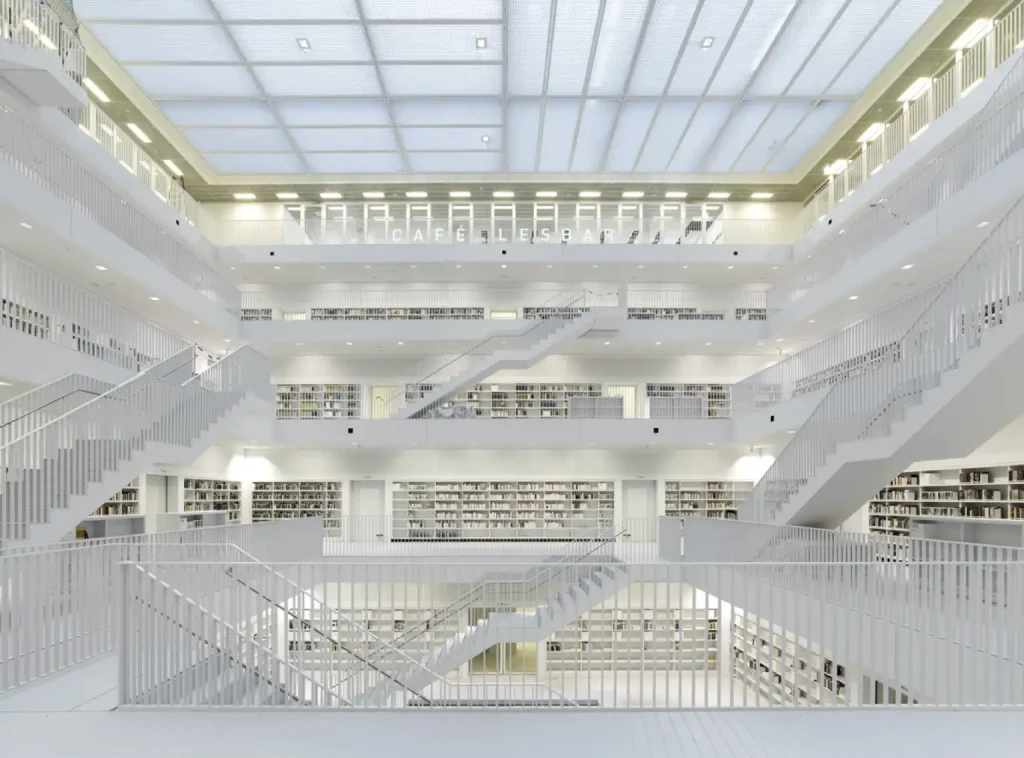
The library’s distinctive feature is the inner skin and its circulation, composed of a quadruple helix of stairs between the wall and each level. The helical stairs on all levels provide an appearance of endless potential for children to lose their parents within the cube. The character of the spaces on each level has been made up of pale grey flooring with furniture, the entire space enveloped with sliding glass walls opening to continuous promenades around the building exterior.
The gallery hall is a square-shaped cube composed of five levels of long shelves of books. The distinctive exterior skin of the building is composed of an 80 mm-thick double-faced concrete wall with translucent glass blocks with nine-by-nine grids emitting blue light in the late evenings. The unique façade reflects the white cube interiors housing a sea of books.
2. Tianjin Binhai Library, China
Architect: MVRDV and Tianjin Urban Planning and Design Institute (TUPDI)
Location: Tianjin, China
Completion Year: 2017
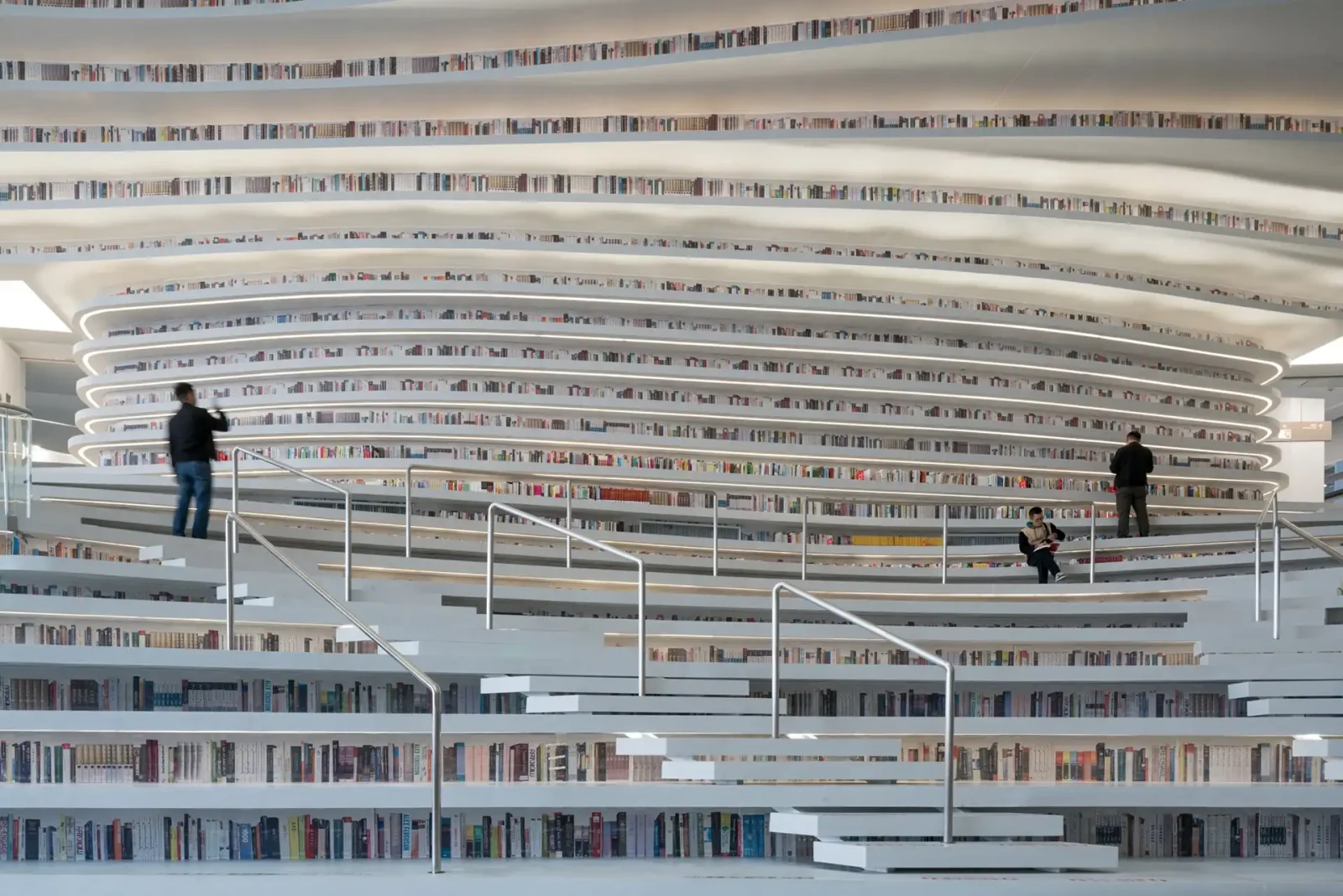
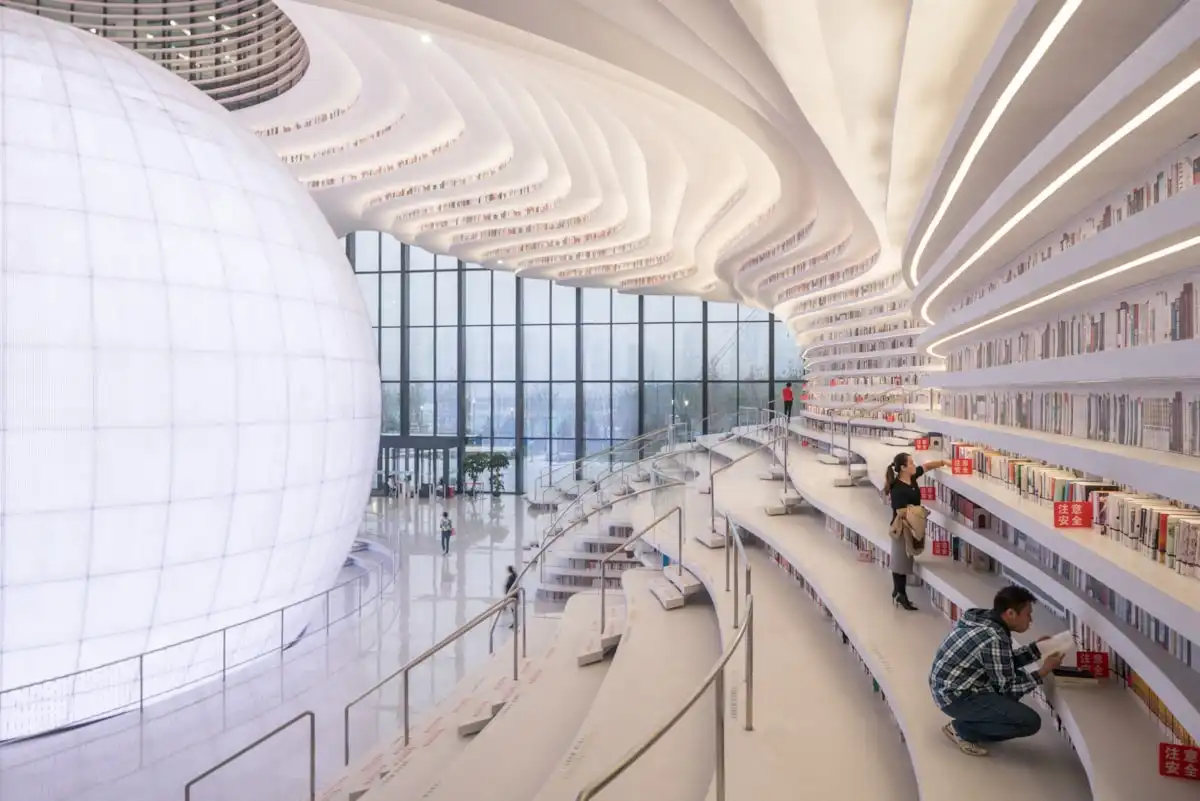
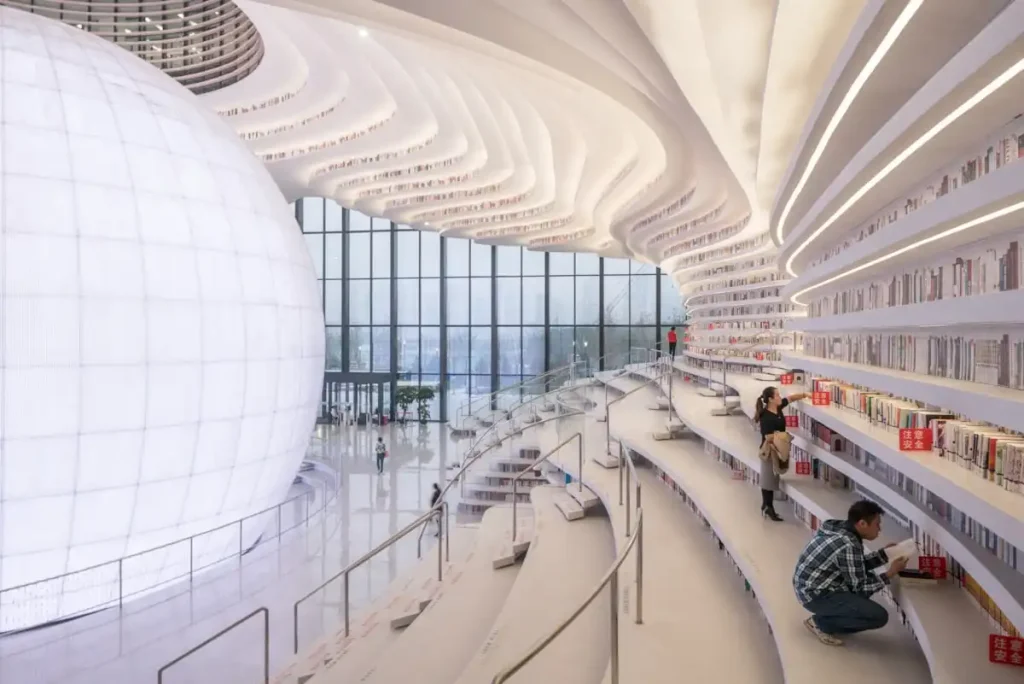
The Tianjin Binhai Library, designed by MVRDV and TUPDI, is a unique architectural innovation. The Binhai Library has been referred to as “The Evil Eye” due to its sphere-like appearance, which is evident from the park adjacent to the library. The 33,700 square meters cultural center is situated in the heart of the city of Tianjin. The building is designed as a cultural center that serves as a space more than a library, but also as a dynamic space and an educational hub.
The iconic central feature within the atrium is a gigantic, luminous, spherical auditorium with surrounding bookshelves spanning from the ceiling to the floor levels. The unique organic topographical form of the terraced bookshelves in the interior echoes the sphere form with wrapped contours around the façade.
The five-level cultural center with extensive educational facilities vertically spanning along the edge, with different facilities on various levels. The building consists of underground parking spaces, book storage, archives, and the ground floor consists of access to the reading area. The first and Second levels are composed of reading and lounge spaces, and the upper levels consist of meeting rooms and office spaces. The library is one of the fastest-tracked projects, which took around three years from the sketch initiation to completion within the time restraints.
3. Chengdu Museum of Contemporary Art, Tianfu Library of Humanity and Art, China
Architect: CSWADI
Location: Chengdu, China
Completion Year: 2021
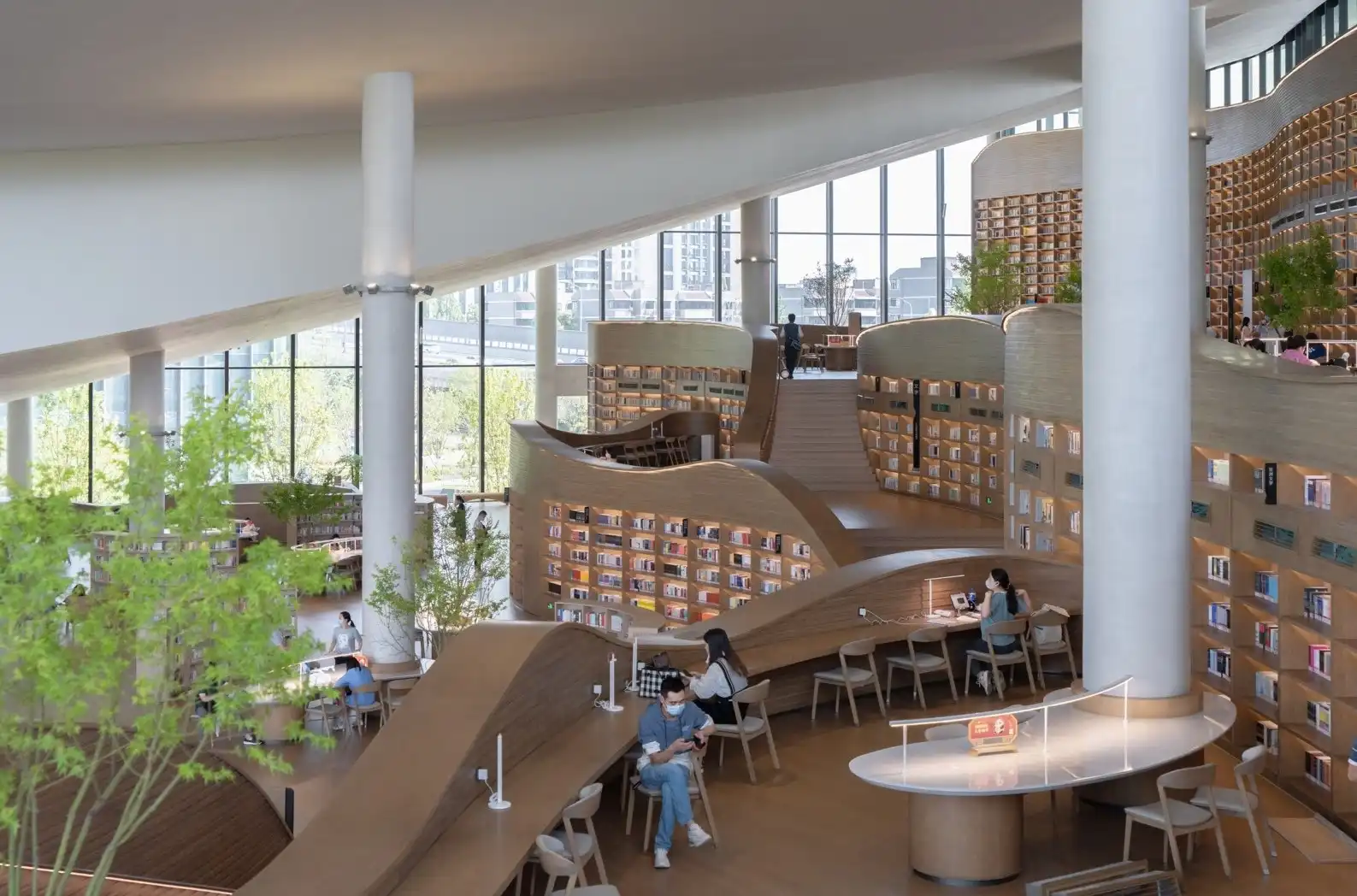
Tianfu Library of Humanity and Art is in the Tianfu Art Park, spanning approximately 32,000 square meters in size and consisting of reading spaces. The Chengdu Museum of Contemporary Art and the Tianfu Library of Humanity and Art interact to create an organic and symbiotic relationship between buildings. The characteristic library is designed as an artistic composition of undulating green terraces and cascading mountains of books, named with a meaning as the “Book Mountain” library. The iconic curved roof of the pavilions shows the seamless integration of nature and art. The library is also well-renowned for housing cultural heritage books of Hong Kong, Taiwan, and Macao, reflecting the culture, history, society, etc.
The library, with 2,000 reading seats and an immense collection of 800,000 books, is a unique artistic library that combines humanistic and aesthetic elements. This newly opened library was designed as a reading space open to the public, where the organic terrain of the architecture reflects the library’s housing a unique collection of books. The interiors of the bookshelves and their collection form a unique artificial terrain, where the visitors get the opportunity to move around the path of Shushan, looking at books.
The iconic feature is the 8-metre high Shushan District with all books below the 6th floor of the bookshelves. The first floor consists of special reading areas of the library, while the second and third floors have art and literature books, and 3.5 feet of music and plant book areas. The unique architecture of the library is made up of glass curtain walls and skylights, bringing a gush of sunlight into the library and the museum.
4. Thailand Creative & Design Center, Bangkok
Architect: Twitee Vajrabhaya and Amata Luphaiboon
Location: Bangkok, Thailand
Completion Year: 2017
The Thailand Creative and Design Centre (TCDC) is a government agency comprising various facilities, with a mission to inspire creative thinkers in contributing to the country’s creative prosperity. The TCDC buildings have been shifted to a newer location, situated in the back and side wings of the historical Grand Postal Building. The design intent was seamless integration of the old building and the new architecture, also supporting TCDC’s mission to develop the country as a creative incubator. The Architects behind the design centre, Twitee Vajrabhaya Teparkum and Amata Luphaiboon, have thoughtfully created architecture within the existing structure.
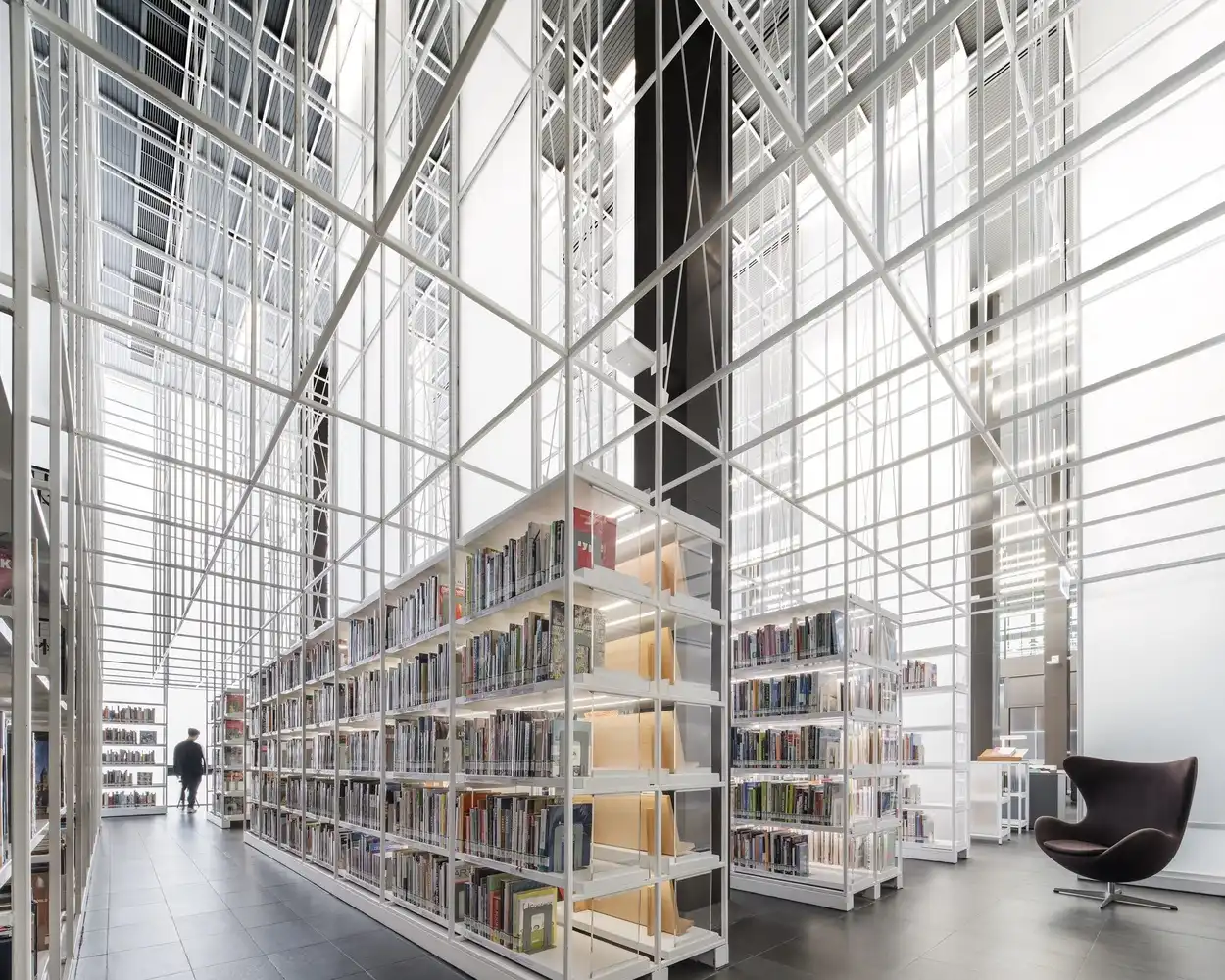
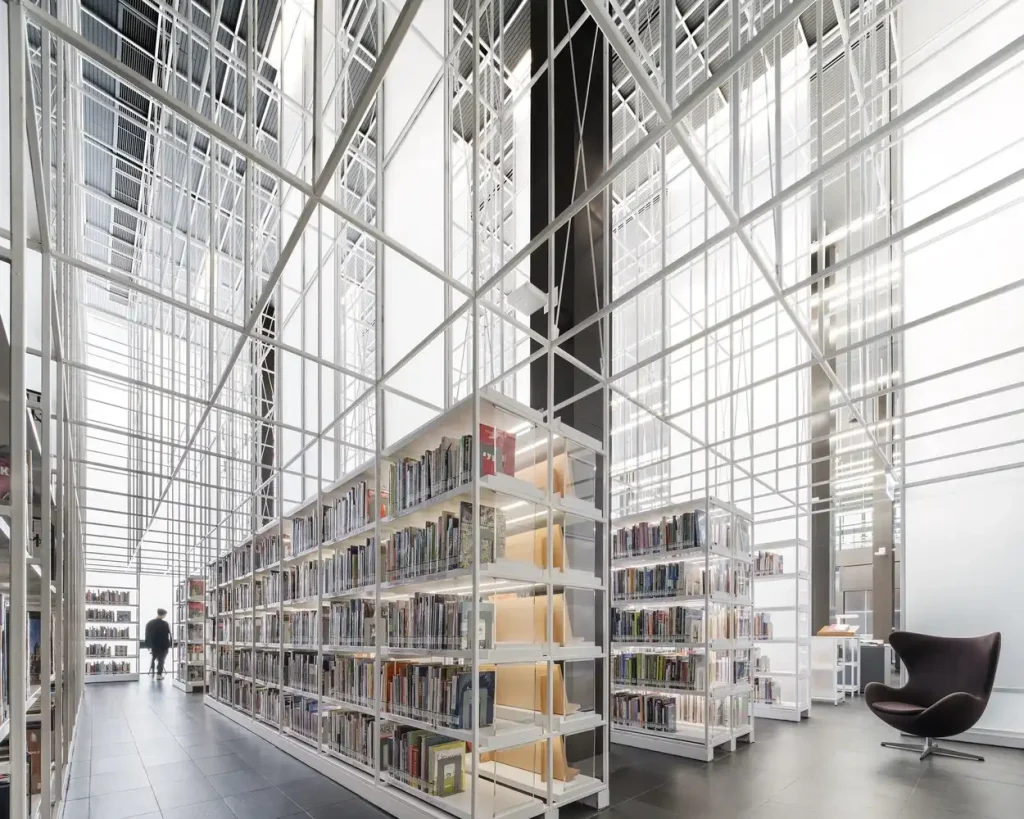
The centre offers several services and a varied range of resources such as exhibition spaces, workshops, seminar rooms, multipurpose areas, etc. The main areas of the building are the design library, the material library, and the co-working spaces. The unique feature of the design centre is that it houses two libraries, one a 5000 square feet glass box containing architecture and design books, and the other library containing curated samples by Material Connexion.
The architects have thoughtfully added new design elements to the existing building, in turn preserving the site’s and building’s mid-century character. The interior of the centre features interior design with characteristic white powder-coated steel bookshelves of 30 feet high, as empty grids passing solid painted panels merging with the roof’s steel structure. The large spaces designed with their openness bring people together, creating a feeling of a co-working space.
5. Deichman Bjorvika Library, Norway
Architect: Atelier Oslo, Lund Hagem
Location: Sentrum, Norway
Completion Year: 2020
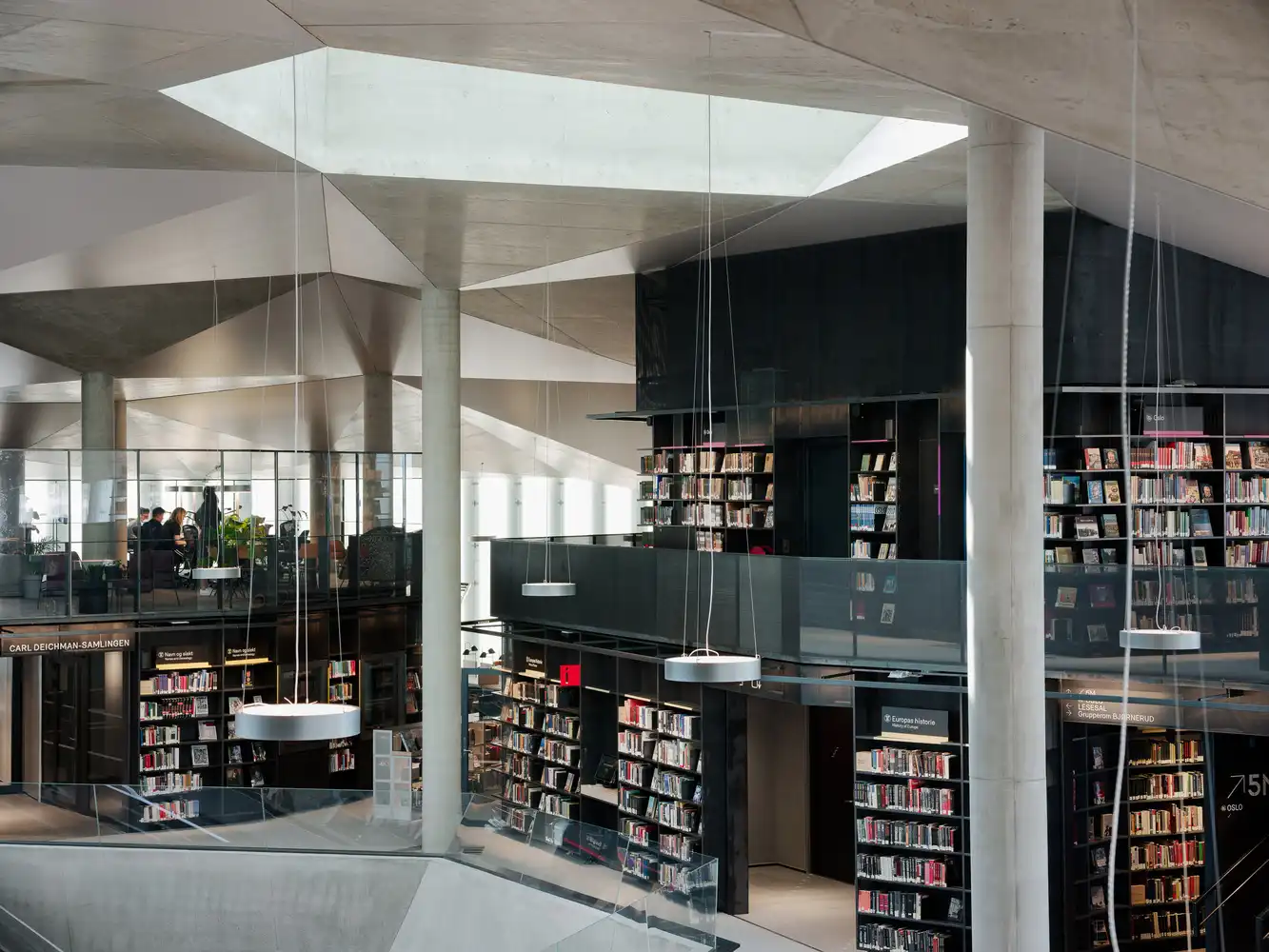
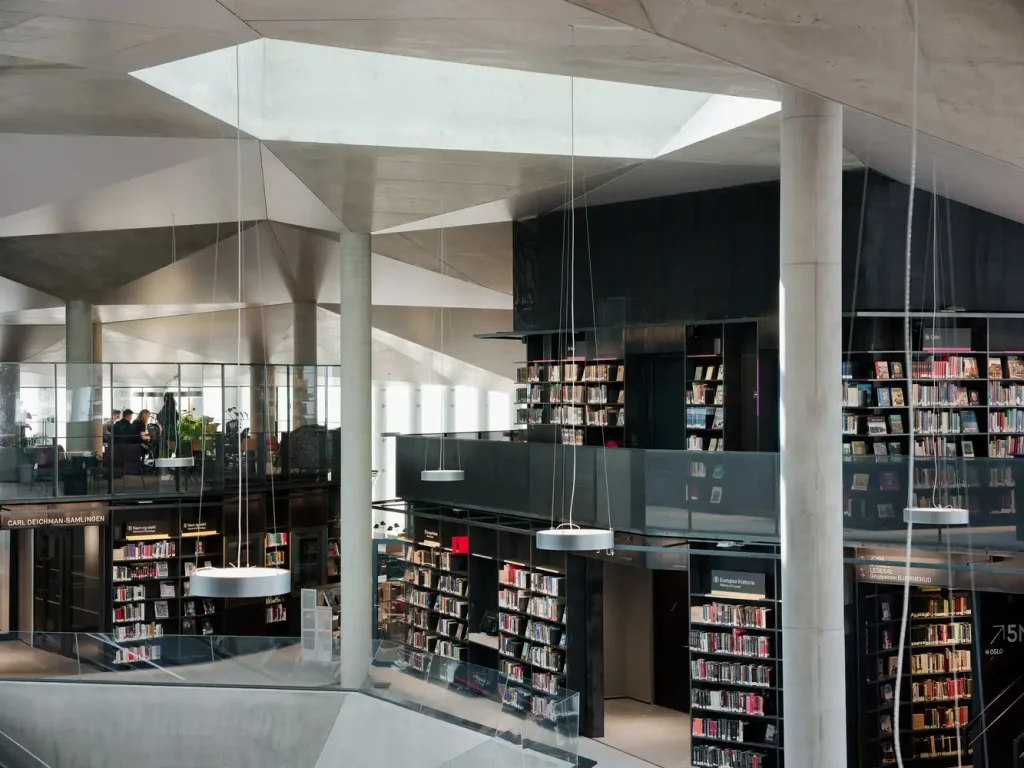
The Deichman Bjorvika library is situated in Oslo Harbour, between the Central Station and Oslo’s Opera House. It has been referred to as the World’s best new Public Library 2021 by the International Federation of Library Associations (IFLA). The new public library has been designed by the architects Atelier Oslo and Lundhagem. The unique design was aimed at creating a library architecture that is more flexible in design in comparison to a traditional library. The international architecture competition in 2009 was created to design Oslo’s new main library, which was won by the Architects Atelier Oslo and Lund Hagem. The challenges of having a small site and creating many floors, the building was designed to cantilever out above its footprint.
The design of the public library has been spread across six vertical levels with different levels of reading and learning spaces. The entire space was designed as per the librarian’s requirement, to inspire visitors to explore the library and all the modern facilities the library can offer. The underground floor of the building houses auditoriums and cinemas for audiences, while the first floor consists of children’s fiction books. The second and third floors consist of enclosed spaces like the Workshop spaces, gaming rooms, and recording studios.
The uppermost floors are quieter zones for readers with study rooms and reading rooms. The architecture of the building utilizes modern technological elements with a spectacular design and a sustainable environmental awareness. Several entrances in different directions consist of light shafts that cut diagonally through the entrances, creating unique views and glimpses of the library interiors.
6. Hyundai Card Travel Library, Seoul (South Korea)
Architect: Wonderwall
Location: Seoul, South Korea
Completion Year: 2014
Hyundai Car is recognized as the second-largest credit card provider in South Korea. The Hyundai Card Travel Library was designed by Wonderwall’s Japanese interior designer, Katayama Masamichi, and completed in 2014. The company boosted its brand awareness in the past by hosting concert series with very renowned artists and tennis superstars. The library was designed as the latest marketing thought; the thought process involved in creating a Travel Library. The library is located in the heart of Seoul’s Gangnam district. The library is dedicated to Travel, architecture, photography, etc.
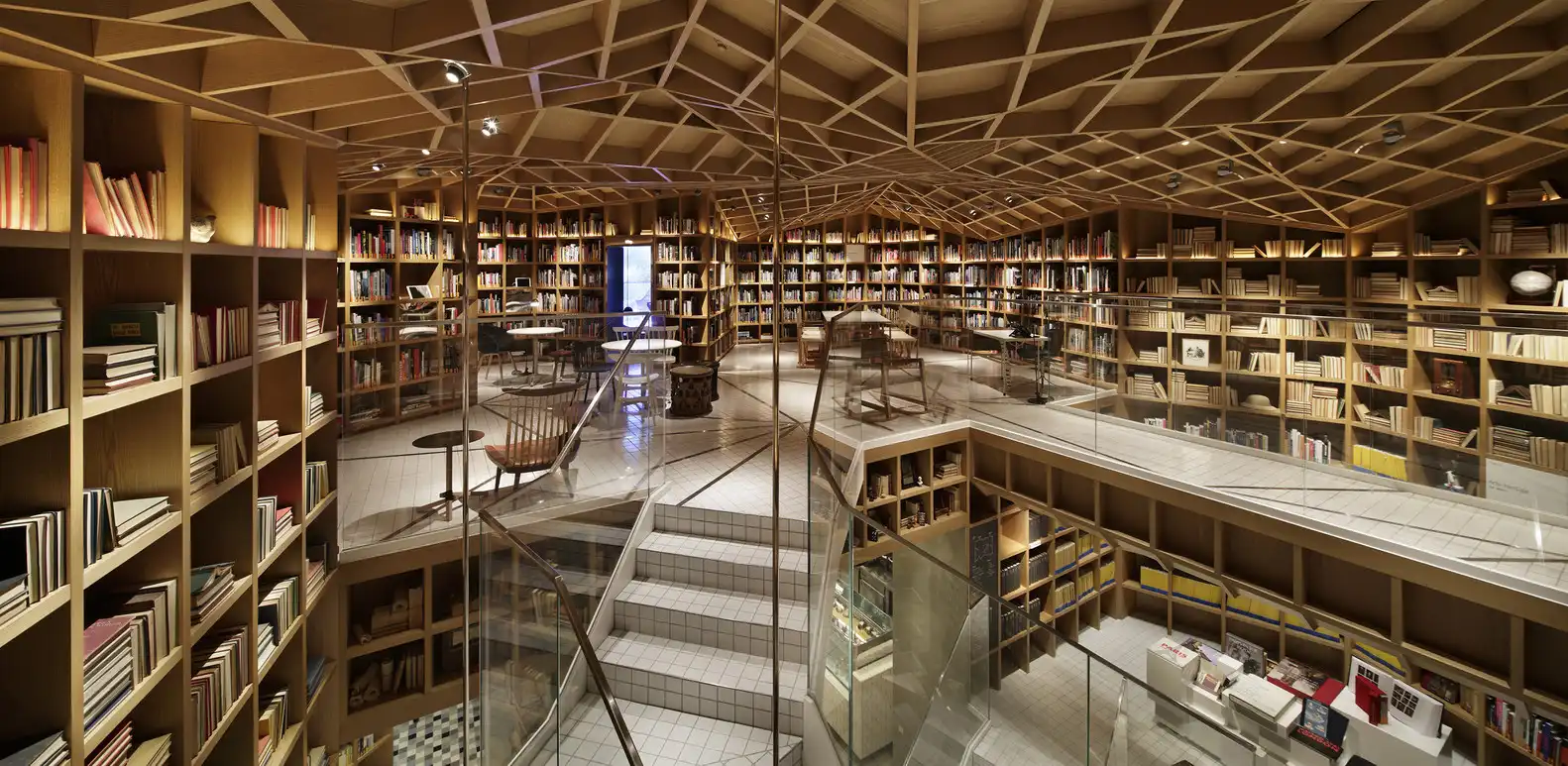
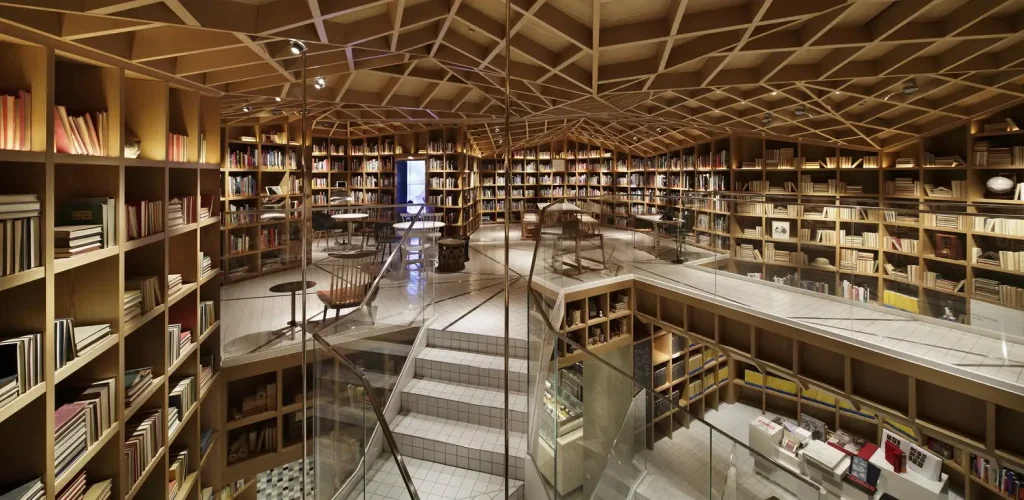
The Interior design style of the library is composed of ceiling-to-floor tall bookcases stacked with 15,000 books dedicated mainly to travel and architecture. The designer commented that the design of the library was intended to create an amusement park with travel knowledge, and where one can experience travel through books they browse. The library is also a café with a primary concept of “Stock of Curiosity.” The café situated on the first floor features several unique collections of chairs from around the world, showcasing the cultural diversity.
Explore Courses
.jpg "Ondrej Chybik - Rethinking Architecture")