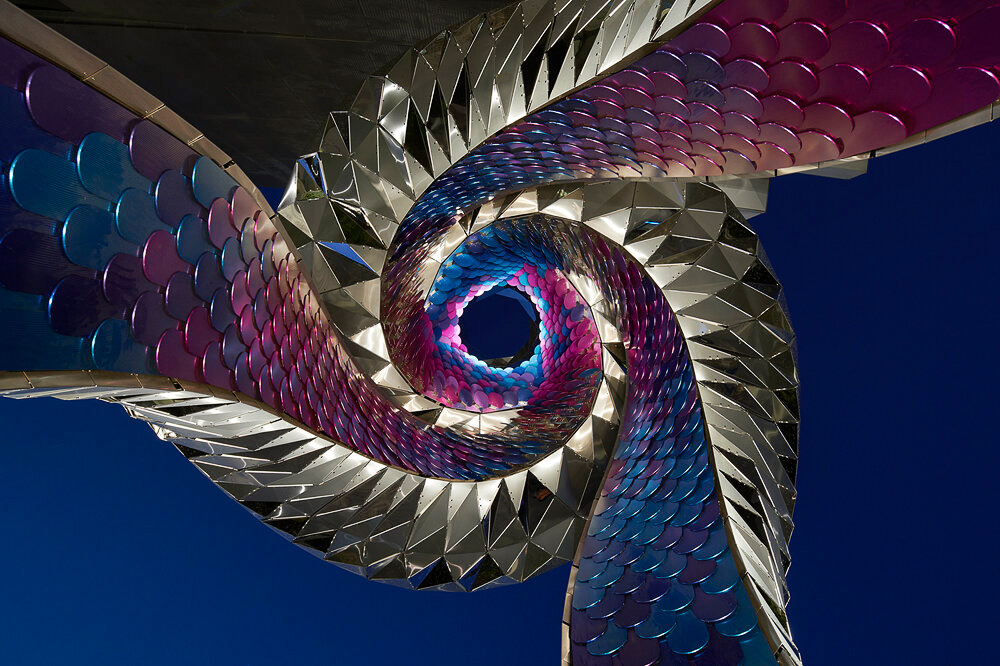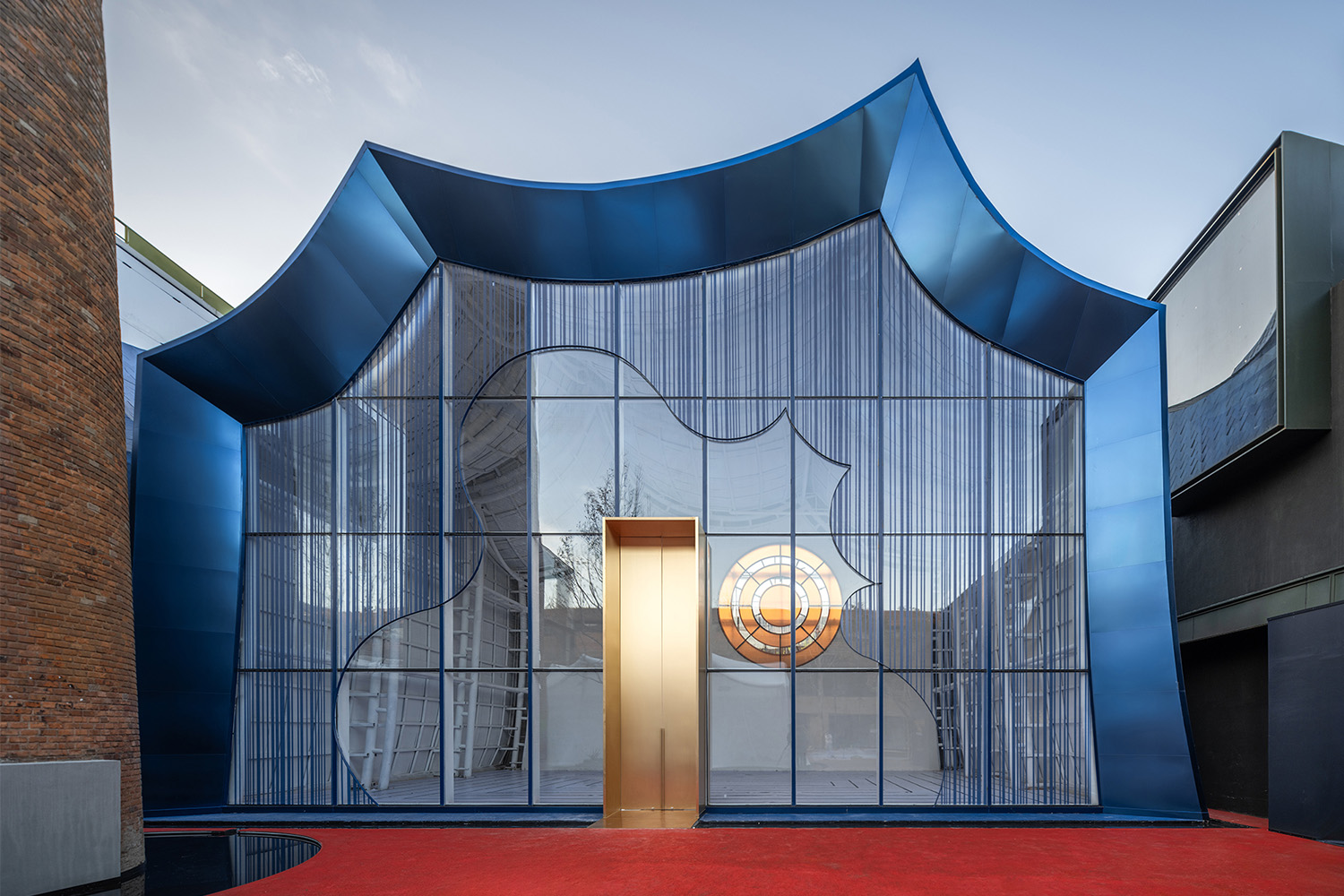



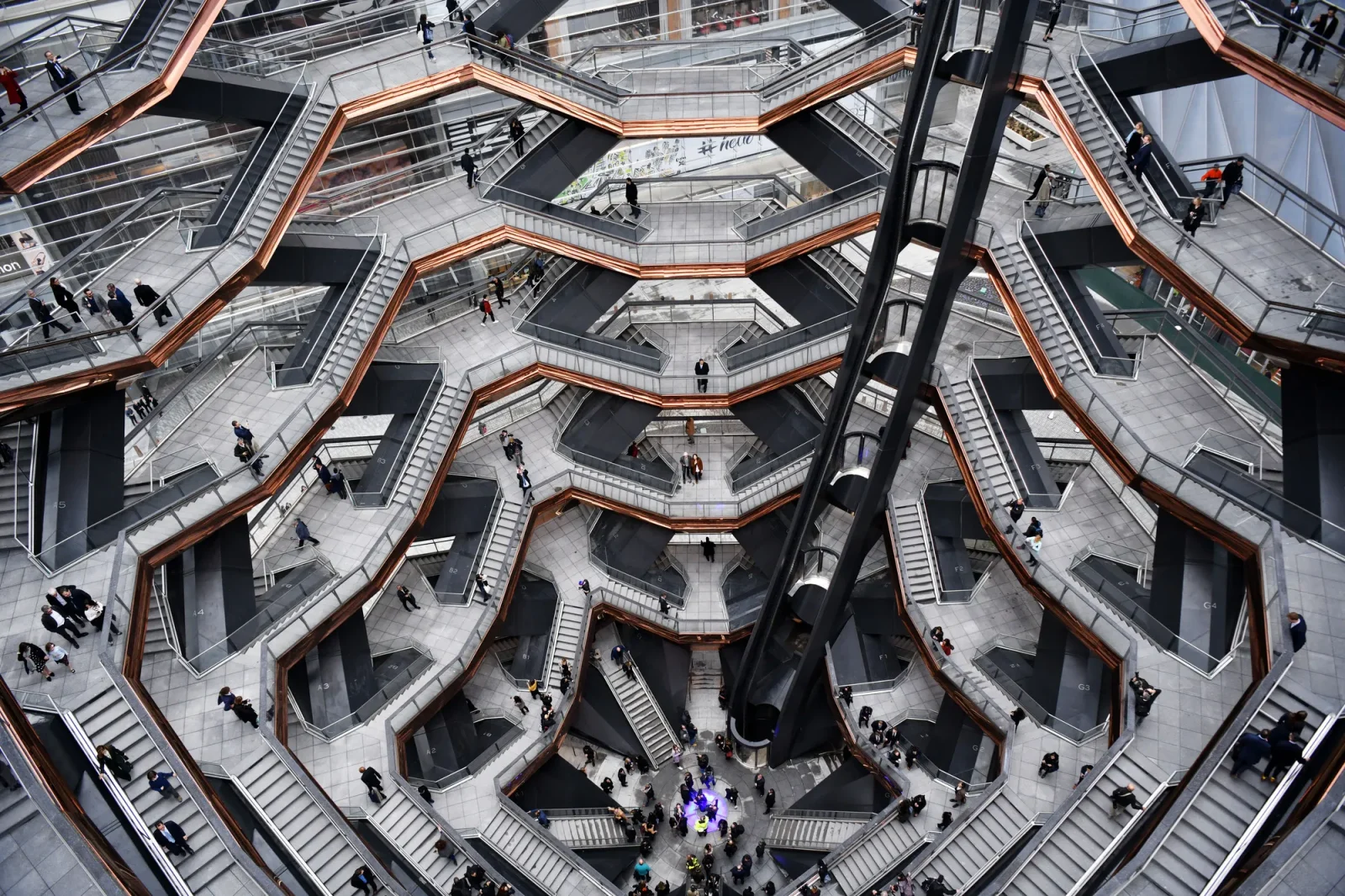
Thomas Heatherwick is a British designer known for his human-centric approach that bridges architecture, engineering, sculpture, and art. He founded Heatherwick Studio in London in 1994, which has completed major projects worldwide with a team of over 200 architects, designers, and engineers. His design signature centers on tactile, interactive experiences, often challenging conventional definitions of architecture and design.
Heatherwick has received numerous honors, including being appointed a Commander of the Order of the British Empire (CBE) in 2013 and being elected a Royal Academician for his services to design.
This article demonstrates how Heatherwick Studio creates distinctive monuments that not only influence skylines but also promote environmental harmony and community involvement in some of the liveliest cities on earth.
1. Vessel: A Fresh Approach to Public Architecture in New York
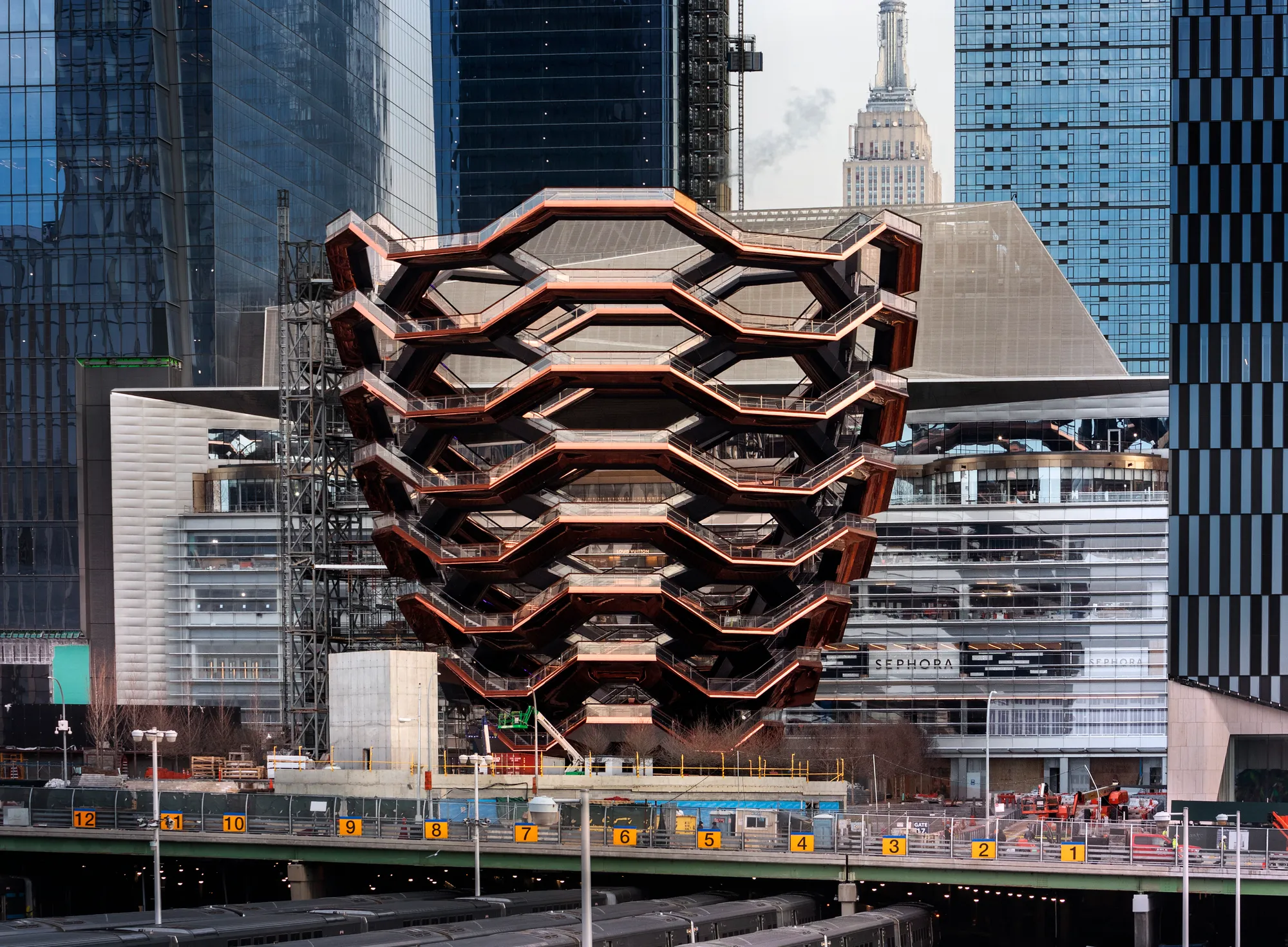
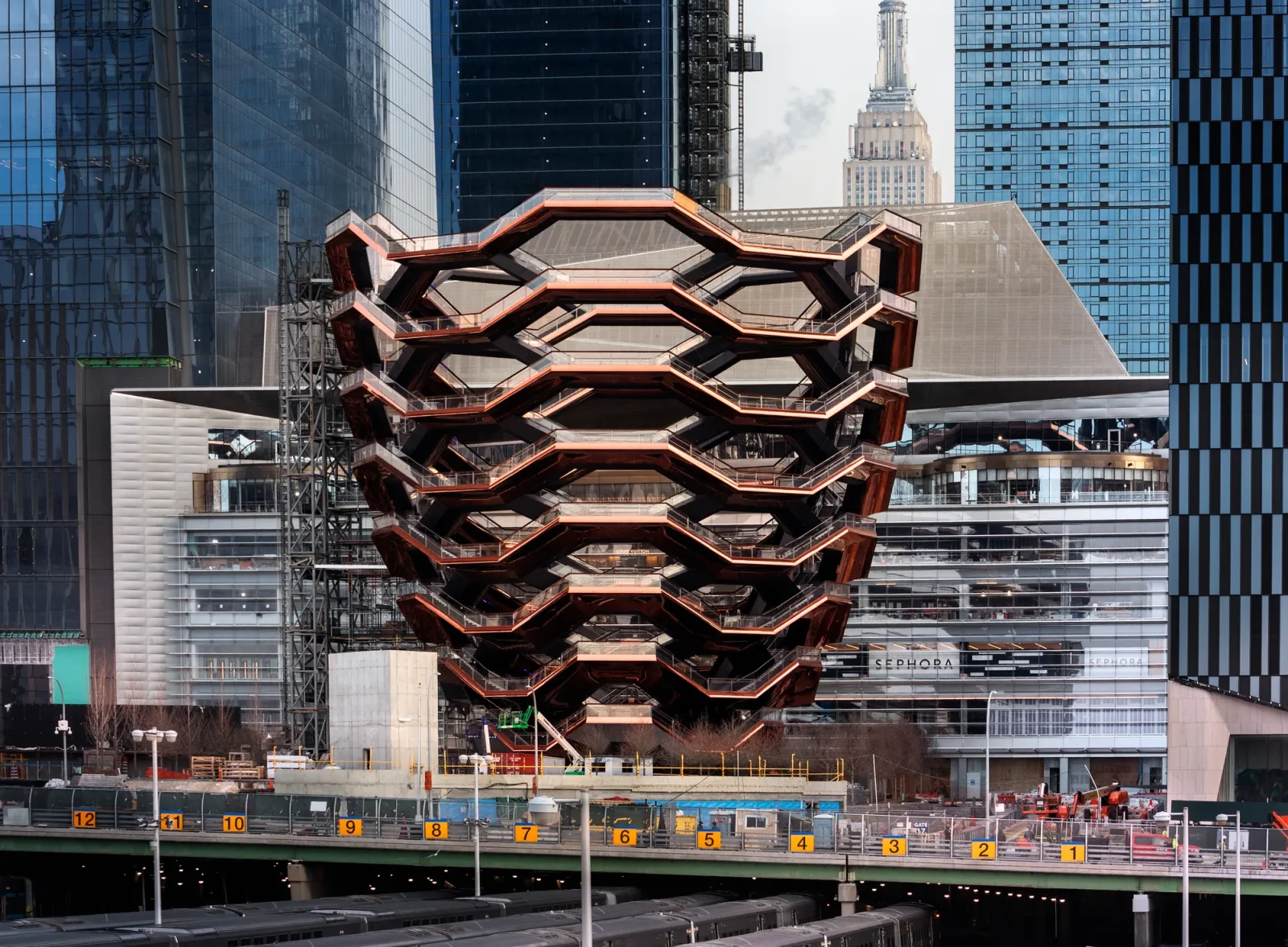
The Vessel at Hudson Yards, designed by Heatherwick Studio, stands out as an ambitious centerpiece in the largest private real estate development in the U.S. since Rockefeller Center. Intended to be a new urban landmark, Vessel encourages public participation and urban experience.
Design Concept and Inspiration
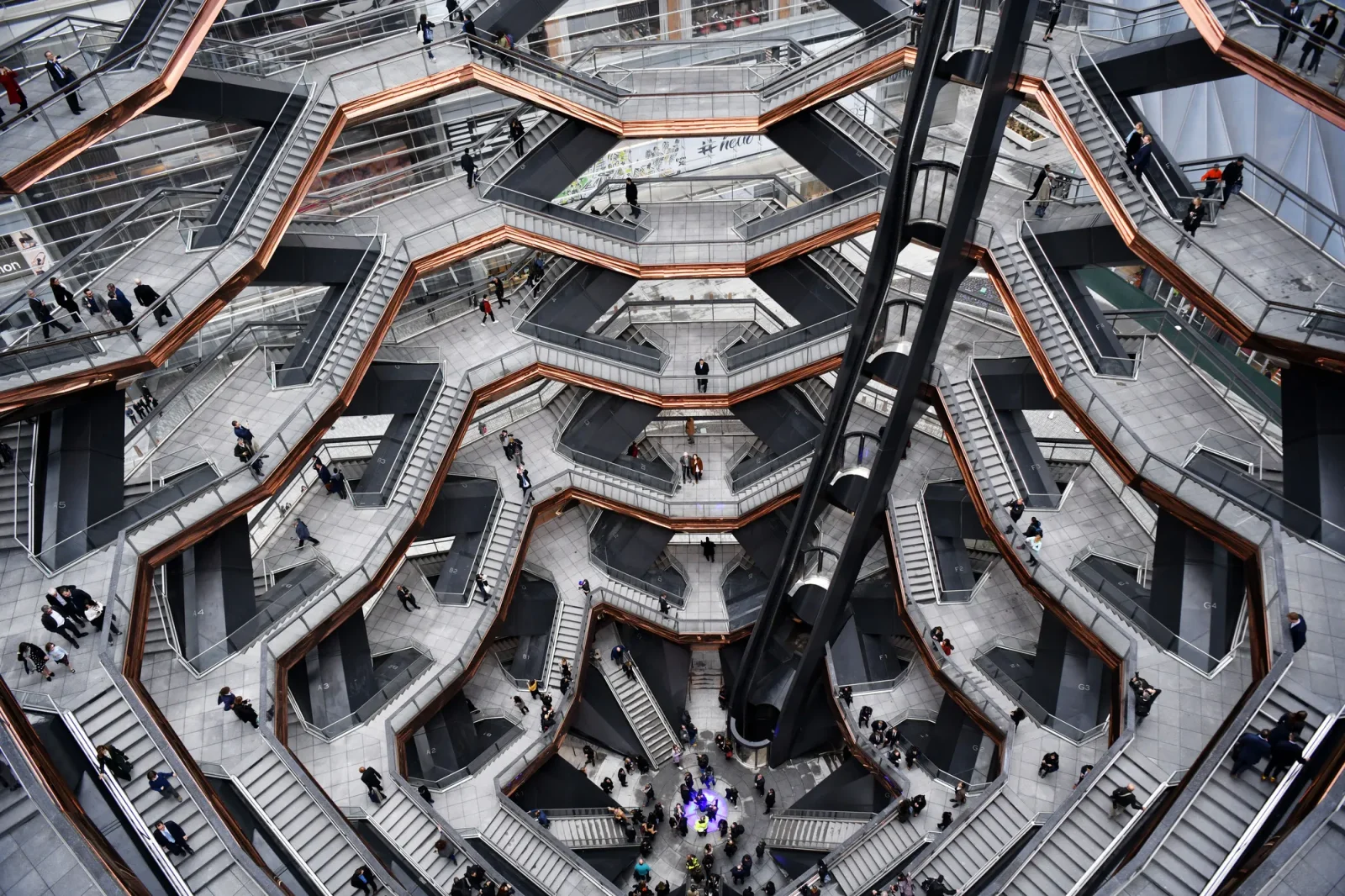
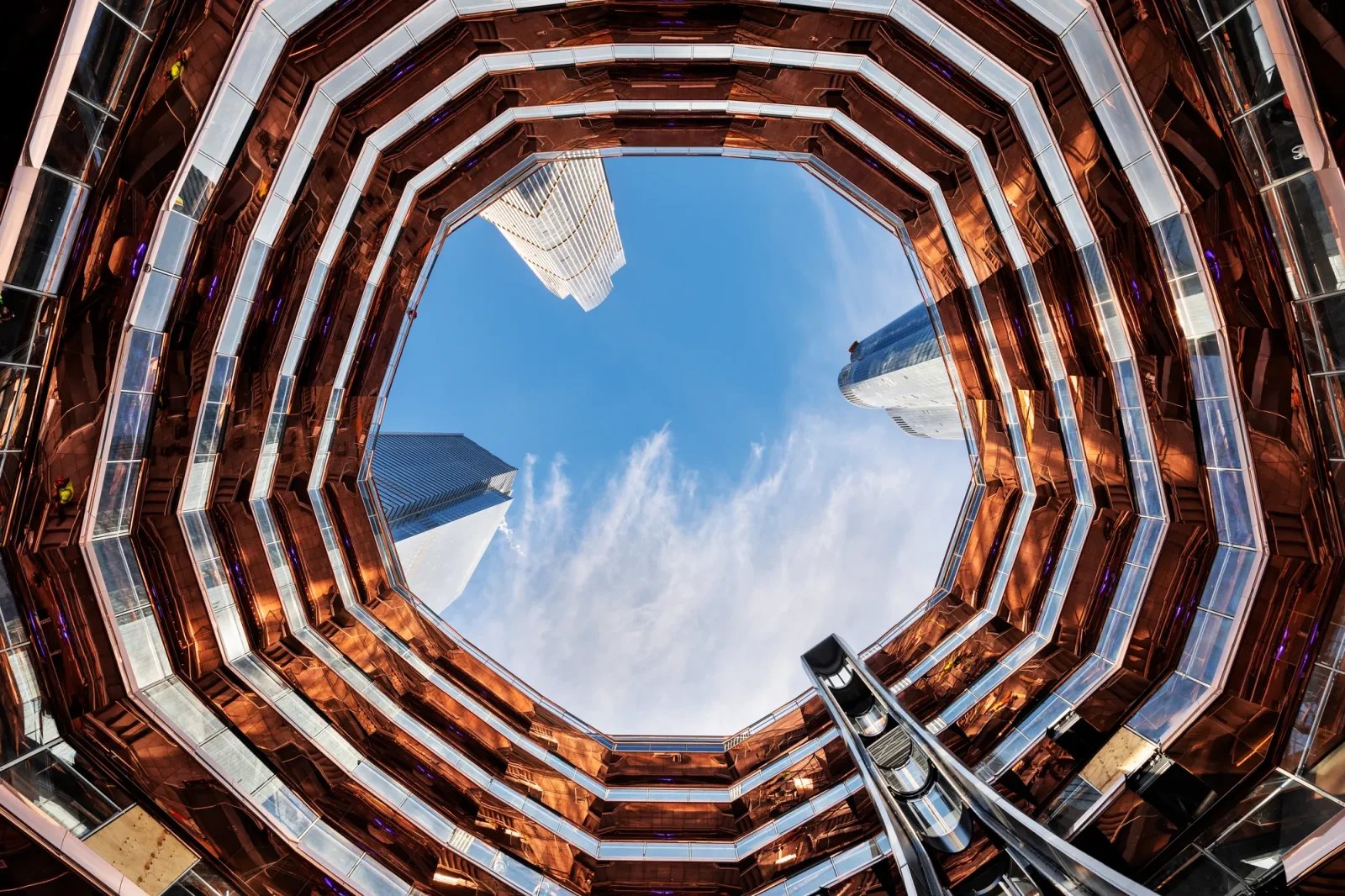
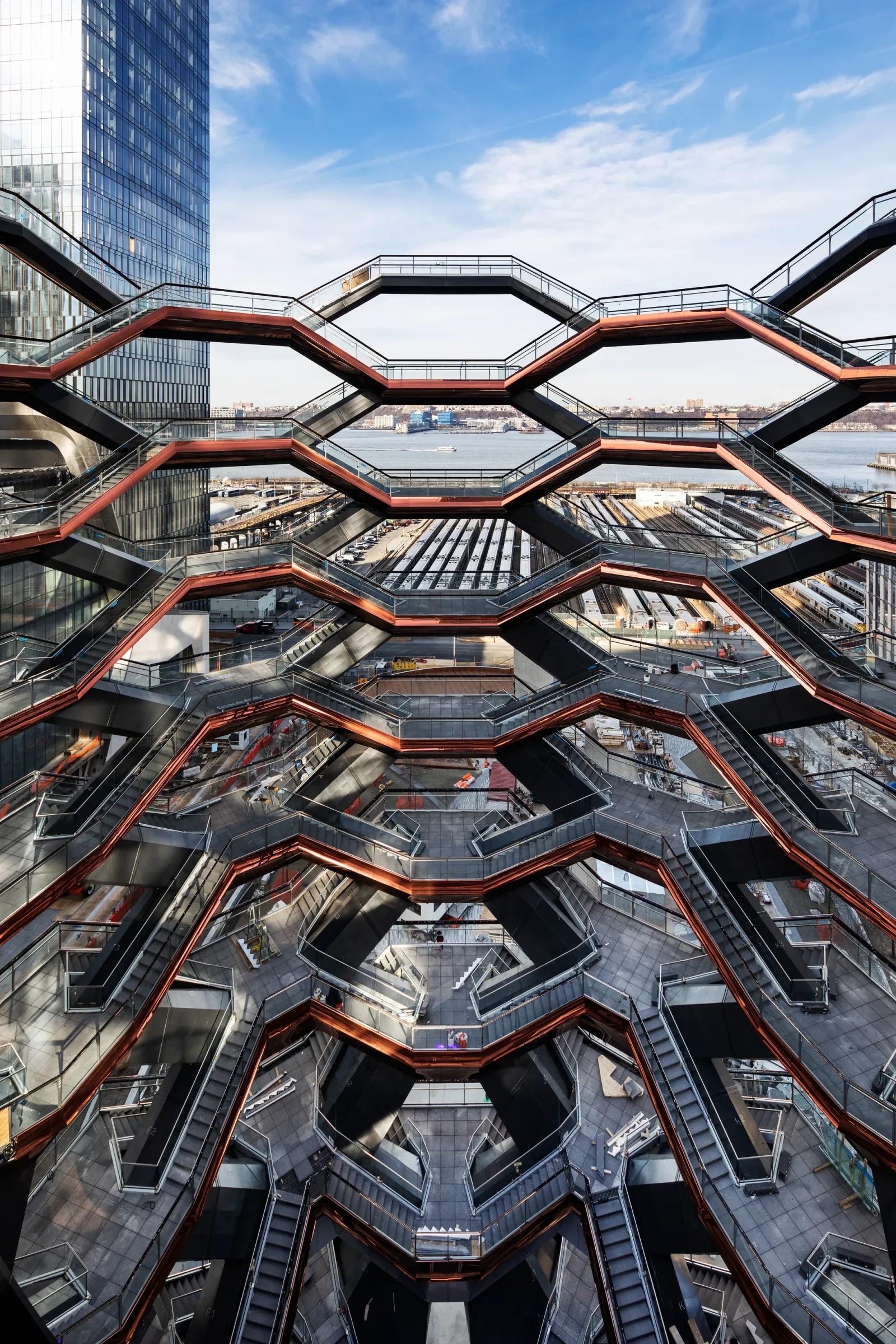
When Thomas Heatherwick was invited to create a focal point for Hudson Yards, he wanted to move beyond the typical plaza monument. His interest in interactive urban elements led him to draw inspiration from stepwells in India, which are complex networks of staircases that serve practical and social purposes. The result is a 46-meter-tall structure featuring 154 interconnecting staircases, totaling over 2,500 steps and 80 platforms or landings.
The vessel is designed for people to use and explore. The geometry of the stairs and landings allows for a wide variety of routes upward, offering constantly changing city views as users occupy different levels. Every landing is intended to create fresh perspectives of the surroundings, including the Hudson River and Manhattan skyline.
Construction and Engineering
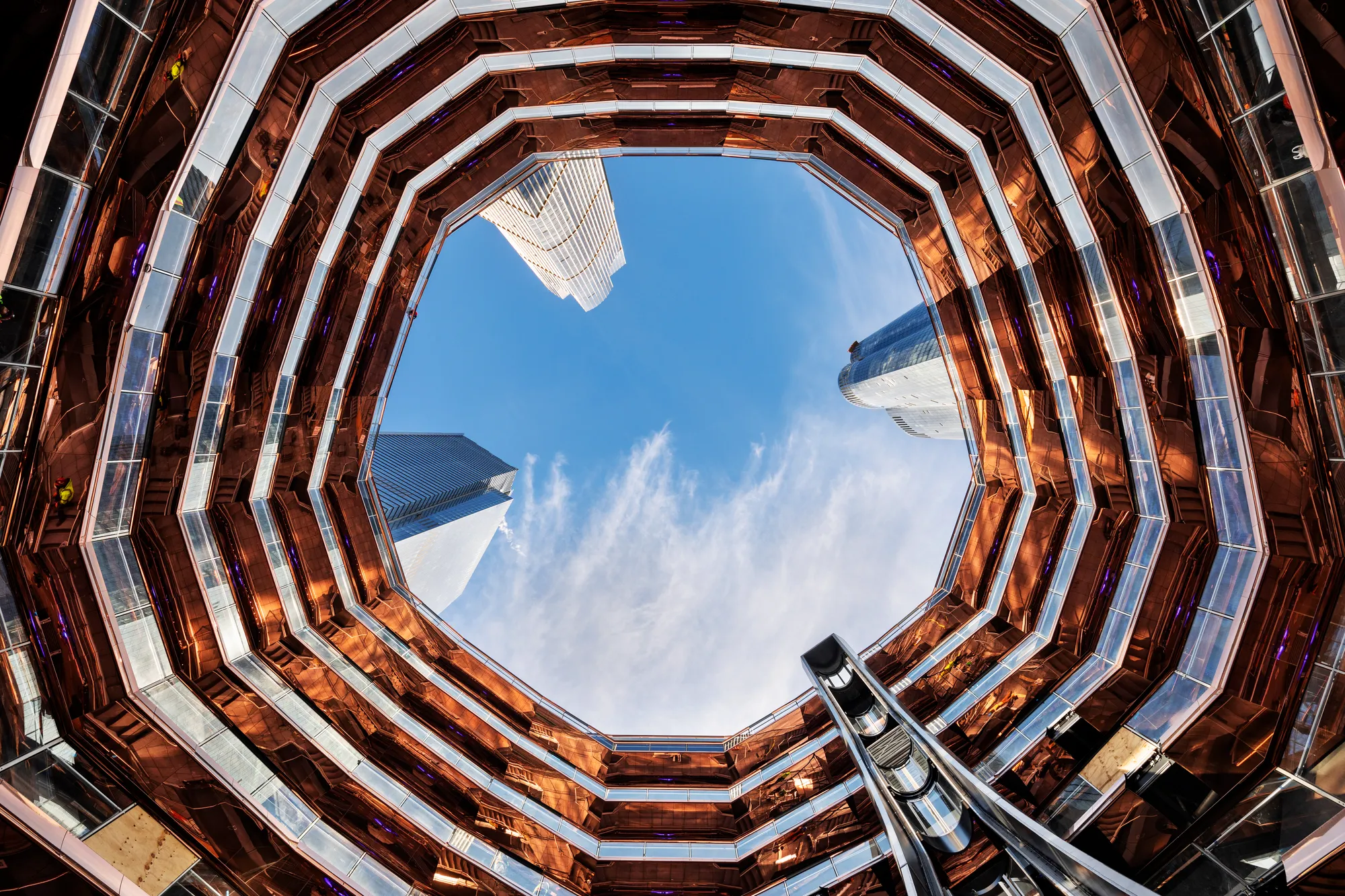
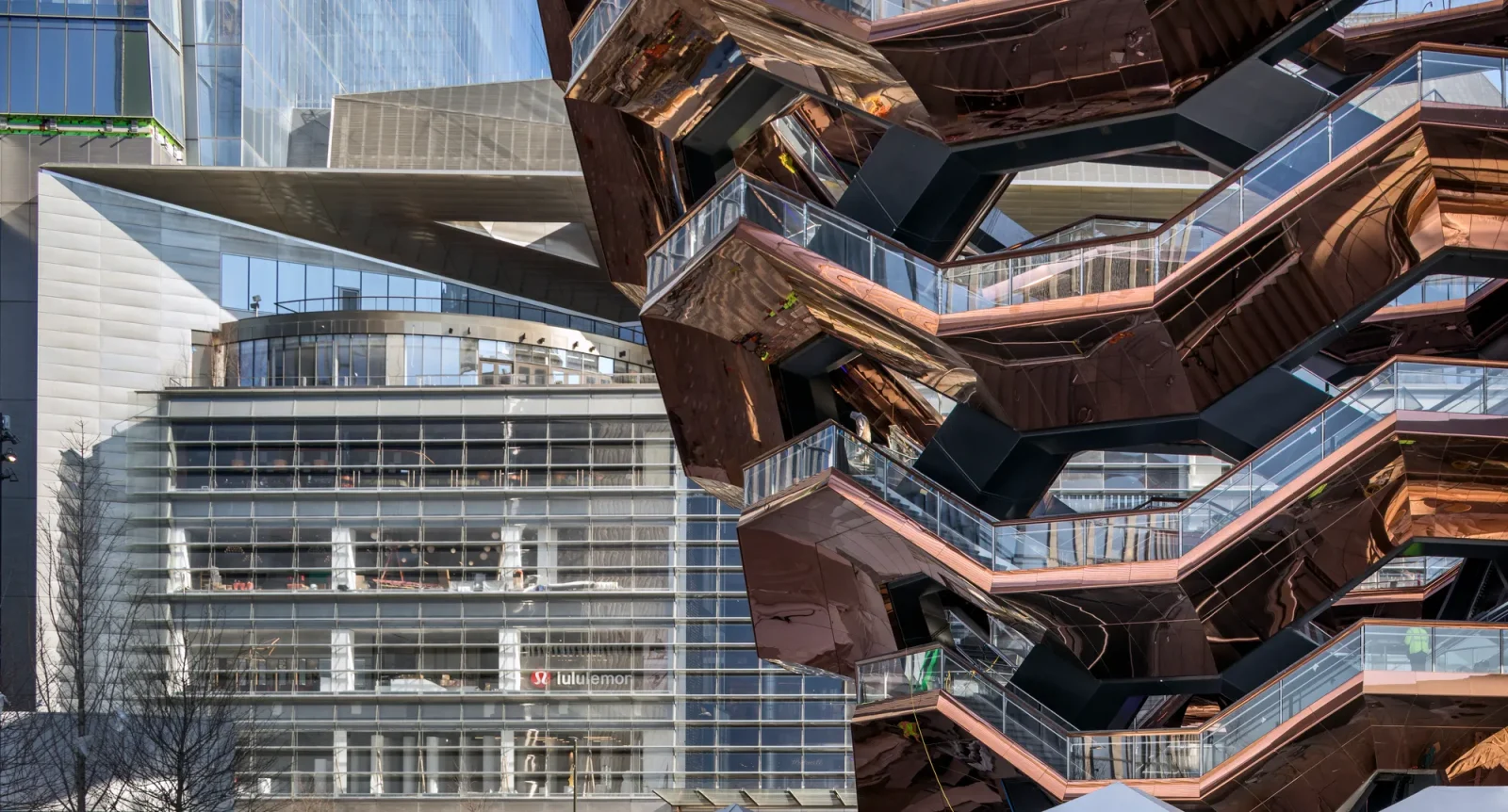
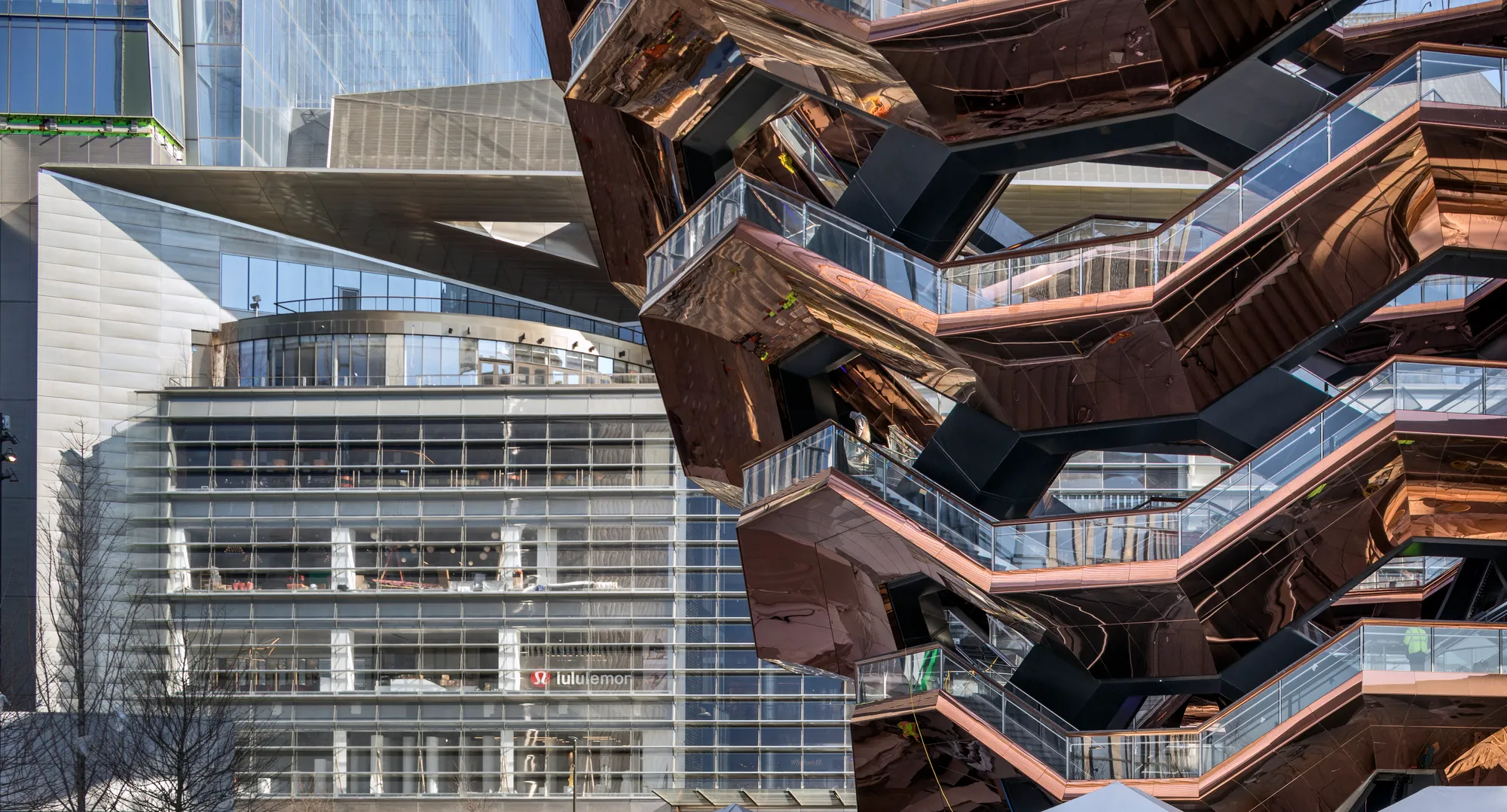
Building the Vessel was a significant engineering challenge. The structure consists of 75 prefabricated steel modules, each weighing over 40 tonnes, manufactured in Italy before being shipped and assembled on-site. Positioning these large segments above an operational rail yard was a complex logistical task requiring careful planning and execution. Custom-fabricated copper-colored cladding further emphasizes its distinctive appearance and reflects the surrounding environment.
Public Response and Architectural Discussion
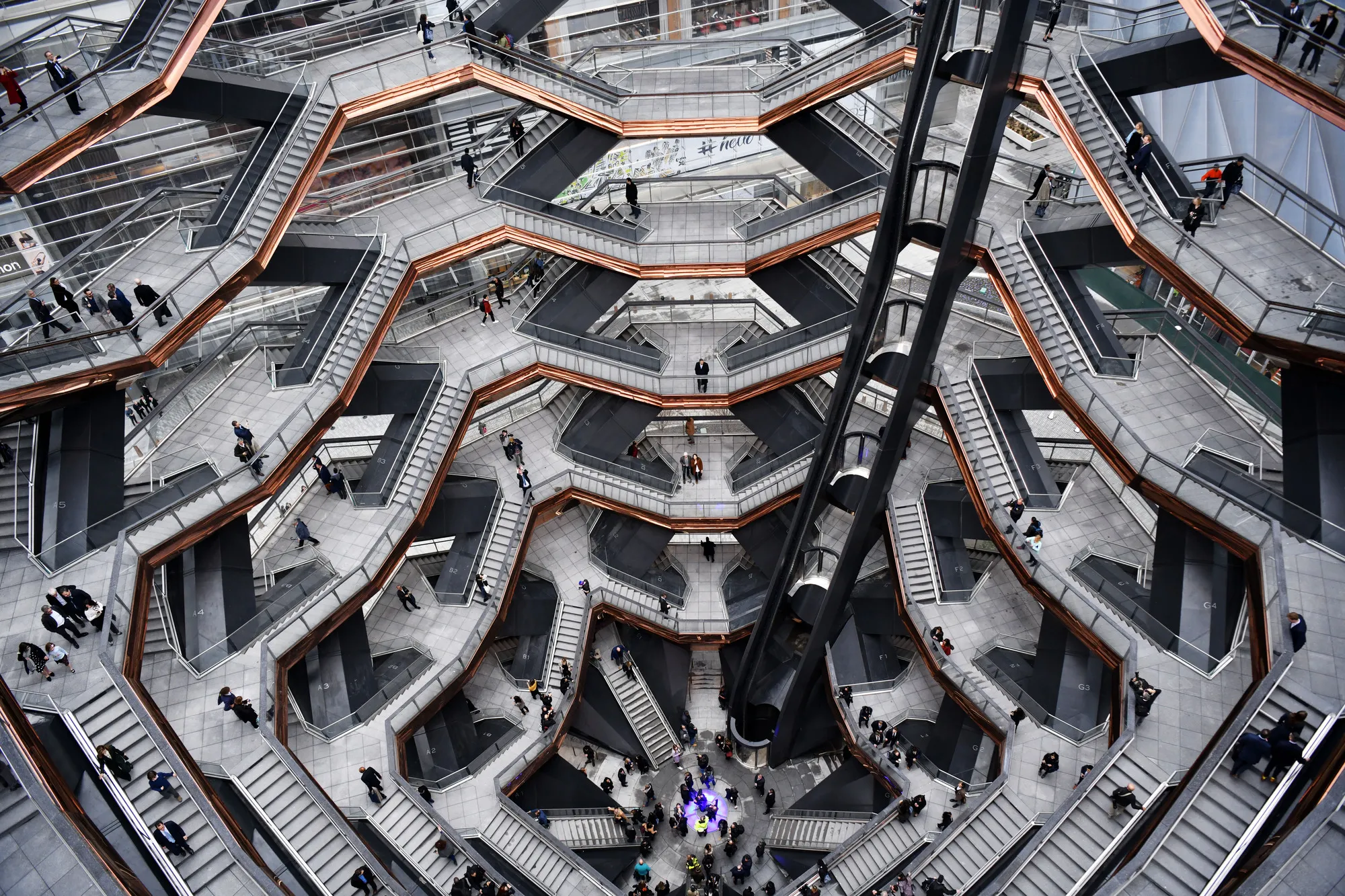
Since its 2019 opening, Vessel has captured international attention from architects, urbanists, and critics. The project has not been without controversy. The $200 million construction cost raised questions about priorities in public investment. Accessibility for people with mobility impairments has also been criticized, prompting updates to improve inclusivity. Most notably, safety concerns arose following several incidents, prompting changes in public access and the implementation of enhanced safety measures.
2. Hatai: Lantern-Inspired Urban Intervention in Bangkok
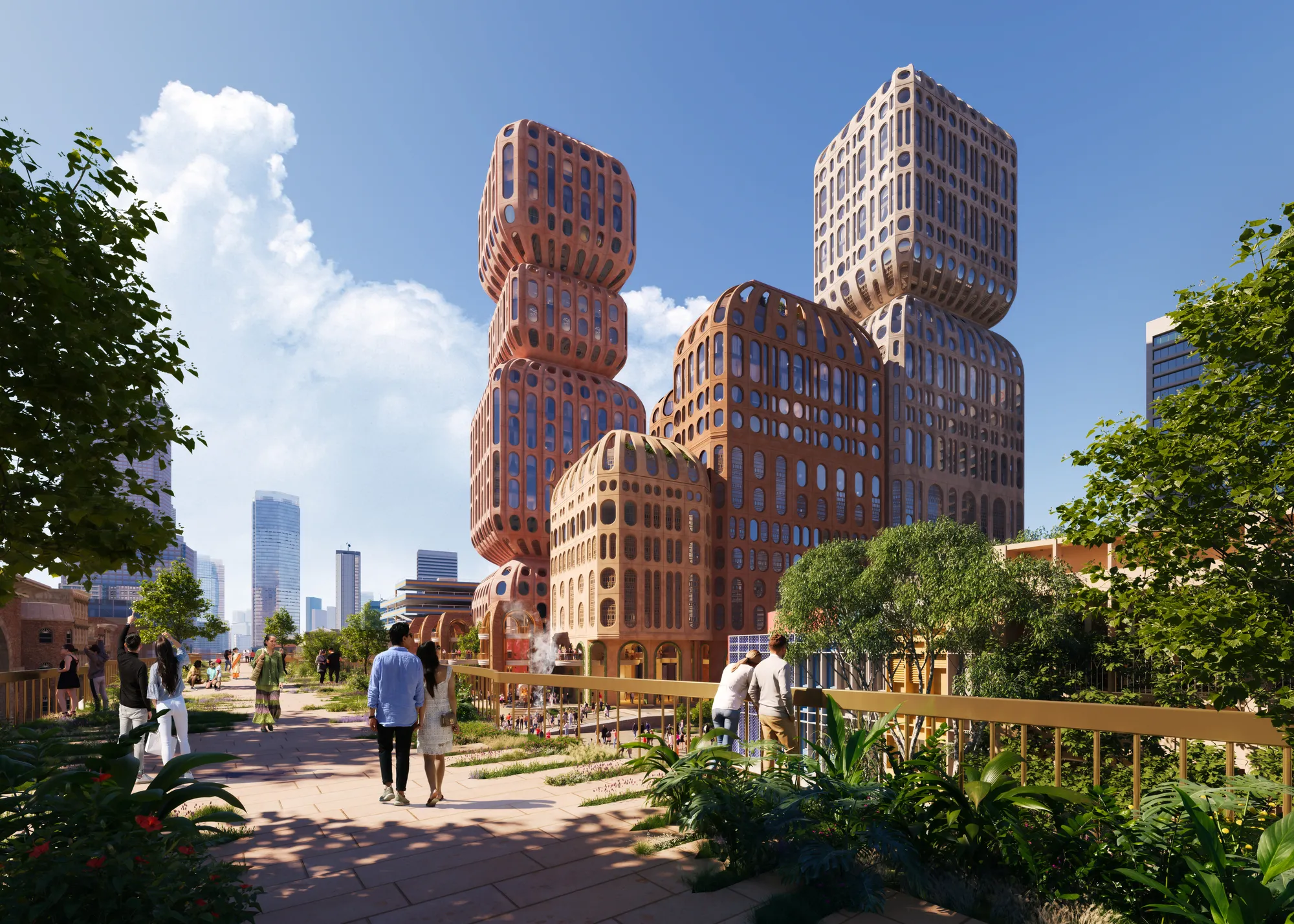
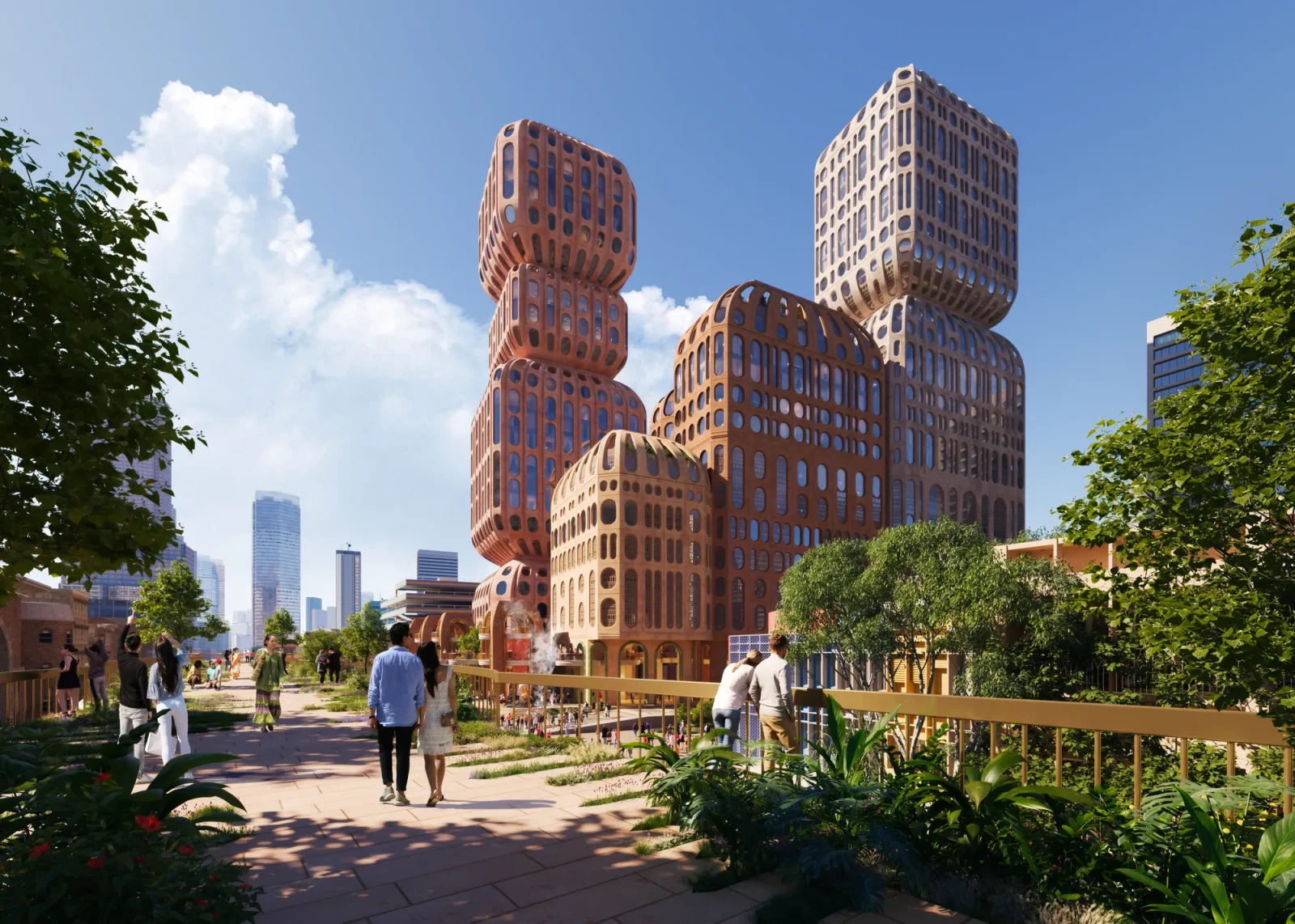
Heatherwick Studio’s Hatai marks a notable new chapter in Bangkok’s urban landscape and stands as the firm’s first project in Thailand. Located on the site of the original Narai Hotel in the busy Silom district, Hatai is planned as a mixed-use development featuring two hotels, Six Senses and a new Narai Hotel. It is integrated with a significant public realm at ground level. The project aims to open in 2027–2028 and promises to expand public space and hospitality standards in the heart of the Thai capital.
Design Approach
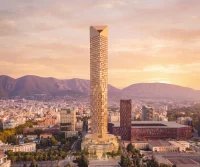
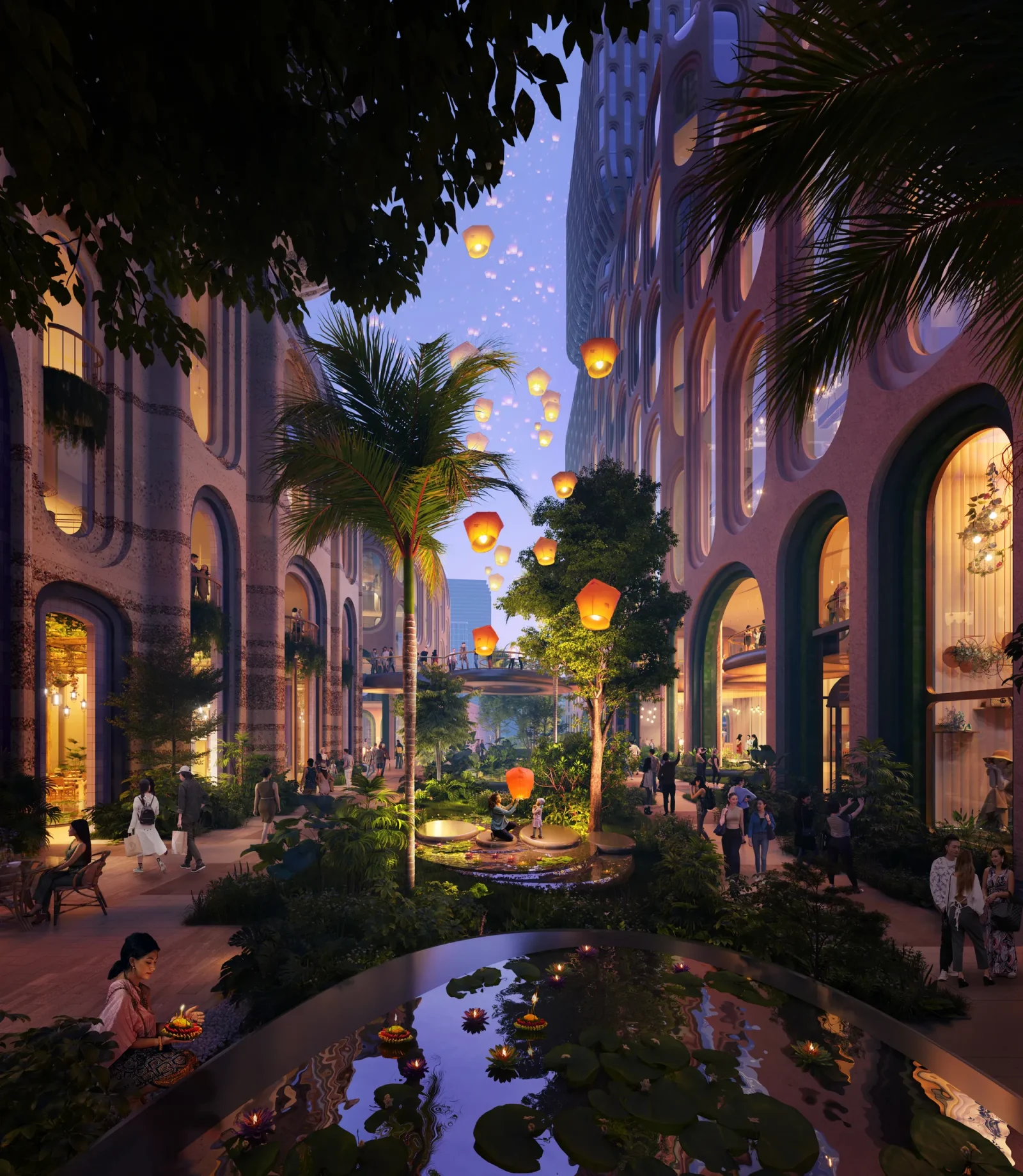
The architectural concept centers on the form and symbolism of traditional Thai lanterns. The towers are designed as a vertical stack of softly rounded, illuminated volumes that break away from the anonymous glass and steel high-rises typical of modern Bangkok. These shapes not only nod to Thai cultural traditions but also help soften the development’s profile on the skyline.
The towers house over 300 hotel rooms along with a ballroom, conference facilities, and a wellness center, but the impact extends beyond hospitality. Heatherwick Studio’s approach is to connect the physical structure with local craft, lighting, and materials native to Thai heritage, contrasting sharply with more generic urban developments in the city.
Expanding Public Space and Urban Connectivity
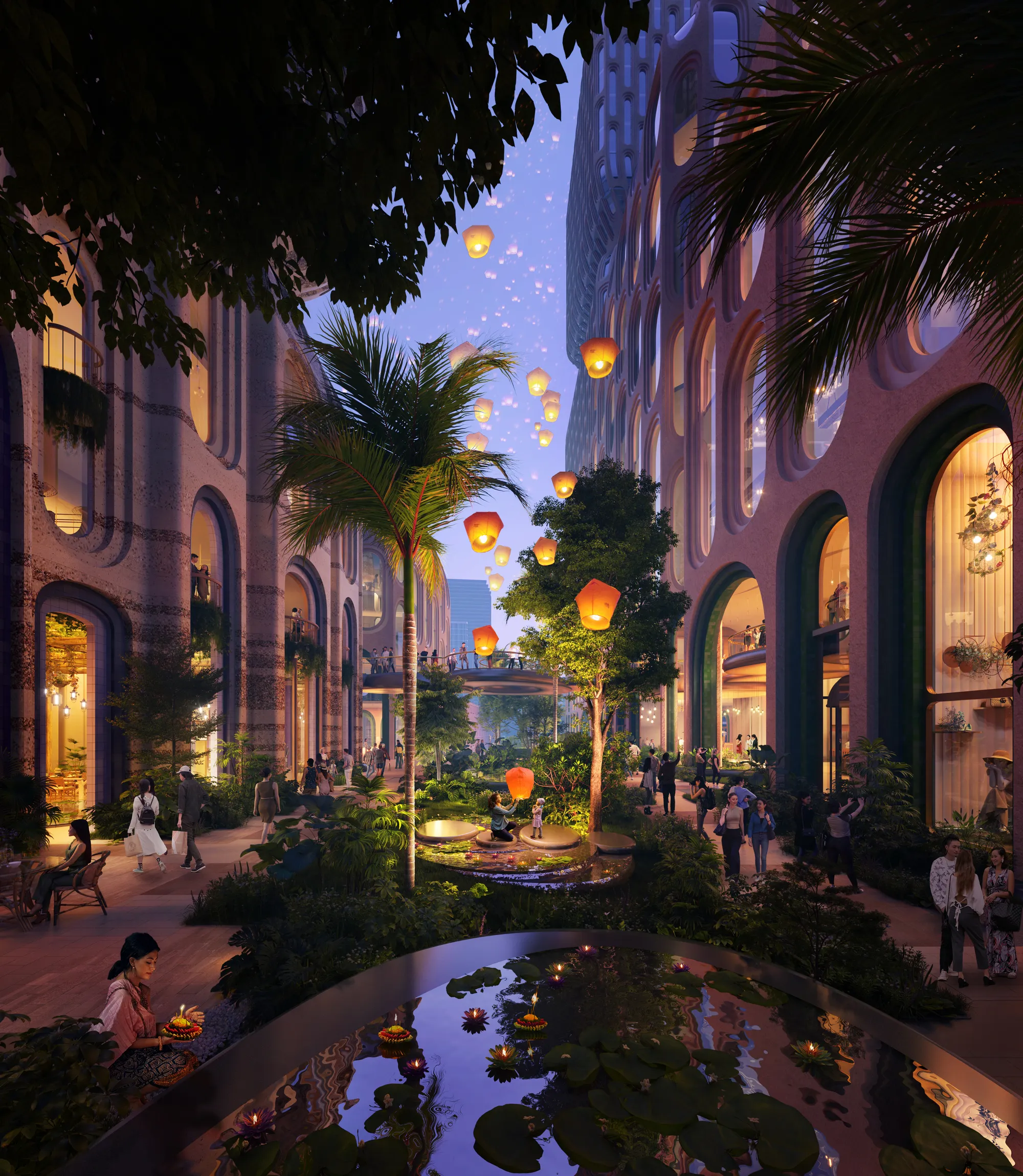
A central goal for Hatai is to design the ground plane as an accessible public space and not just a hotel podium. The project introduces 5,200 sq.m. of new public areas, including a canopied plaza with native planting for microclimatic comfort, and a restored canal running through the site.
This public village incorporates a shrine, open-air market, community event spaces, nursery, and elevated walkways, all designed to activate street-level life and encourage people to linger, socialize, and explore. Heatherwick Studio emphasizes a permeability that is often absent from large-scale developments, aiming to connect with the surrounding Silom neighborhood rather than sit apart from it.
Cultural Integration and Architectural Intent
Heatherwick Studio’s founder, Thomas Heatherwick, notes that too many modern Bangkok buildings lack a connection to their cultural or historical context, resulting in blank severity. Unlike many luxury developments, Hatai’s open and varied program at street level, combined with practical features like weather protection and improved pedestrian links, demonstrates a commitment to the city’s urban fabric and daily life.
3. 1000 Trees: Integrating Nature and Urban Life in Shanghai
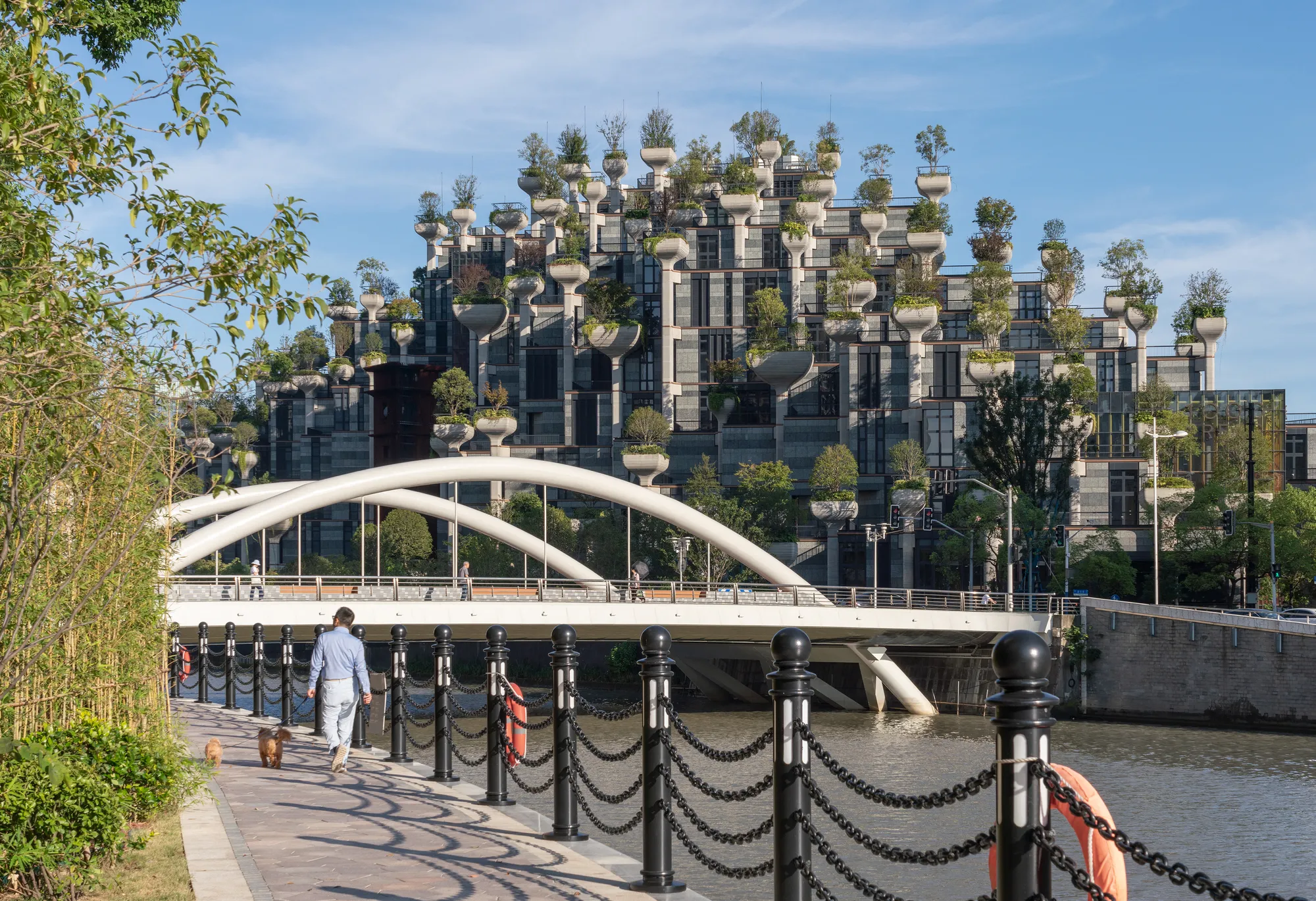
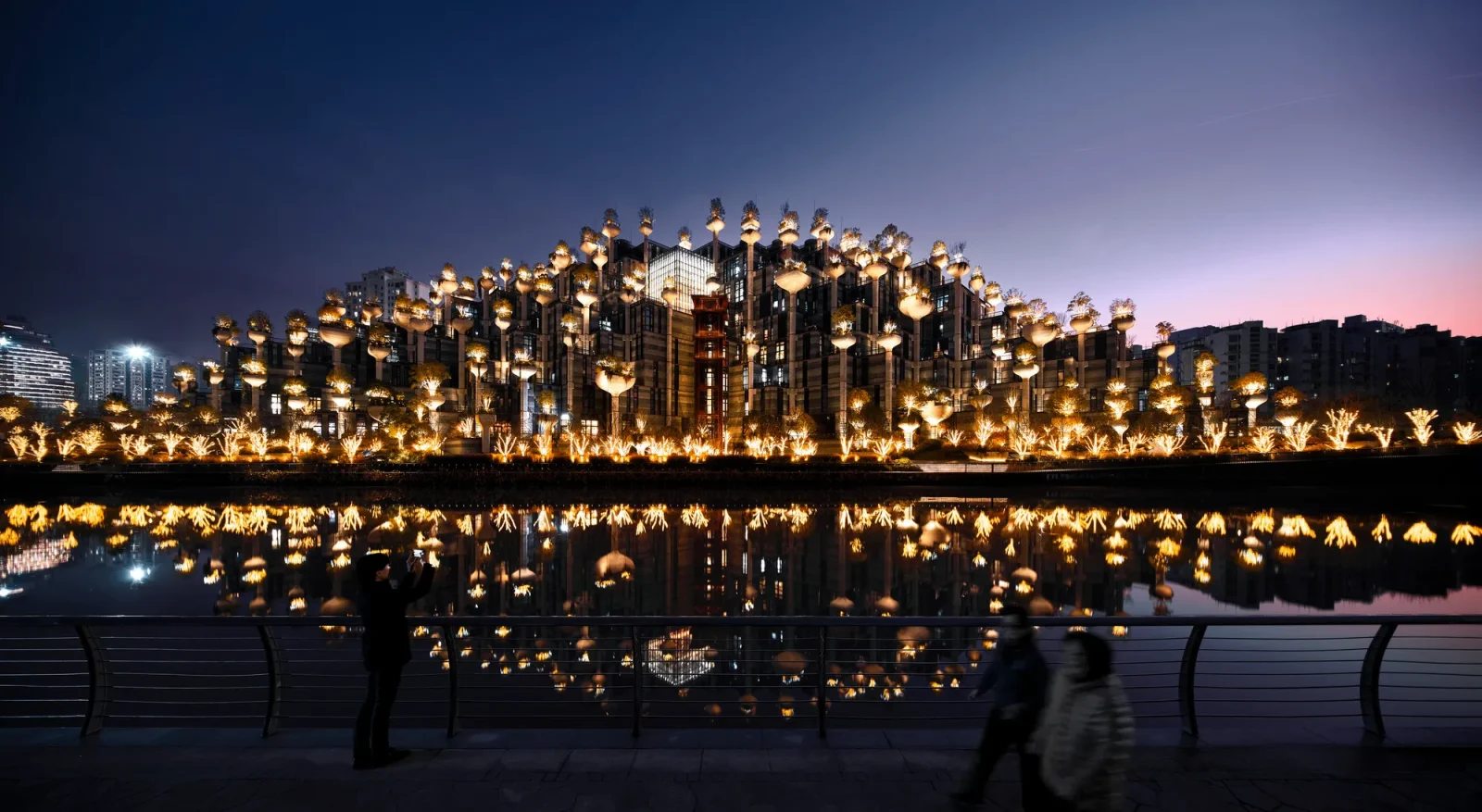
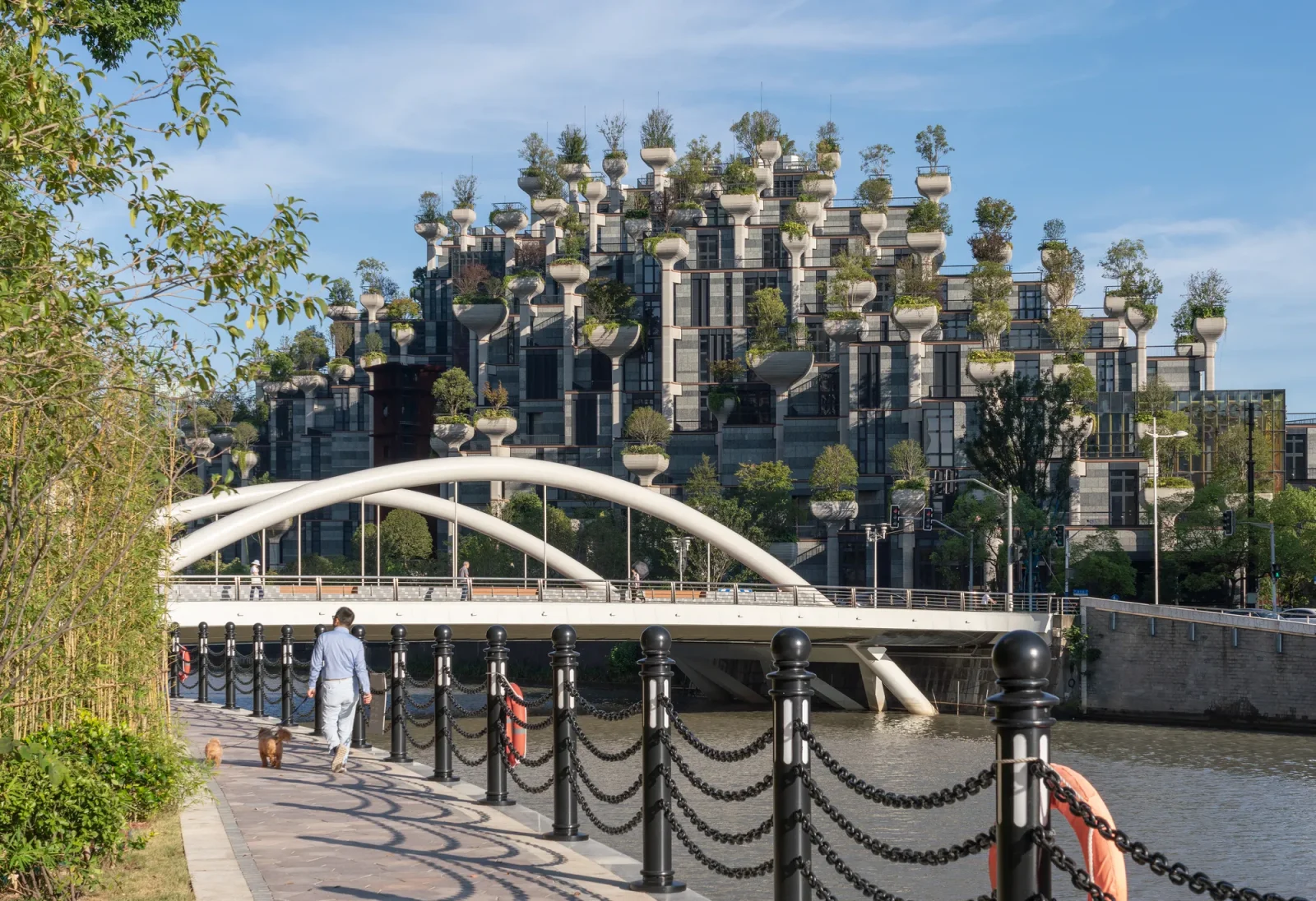
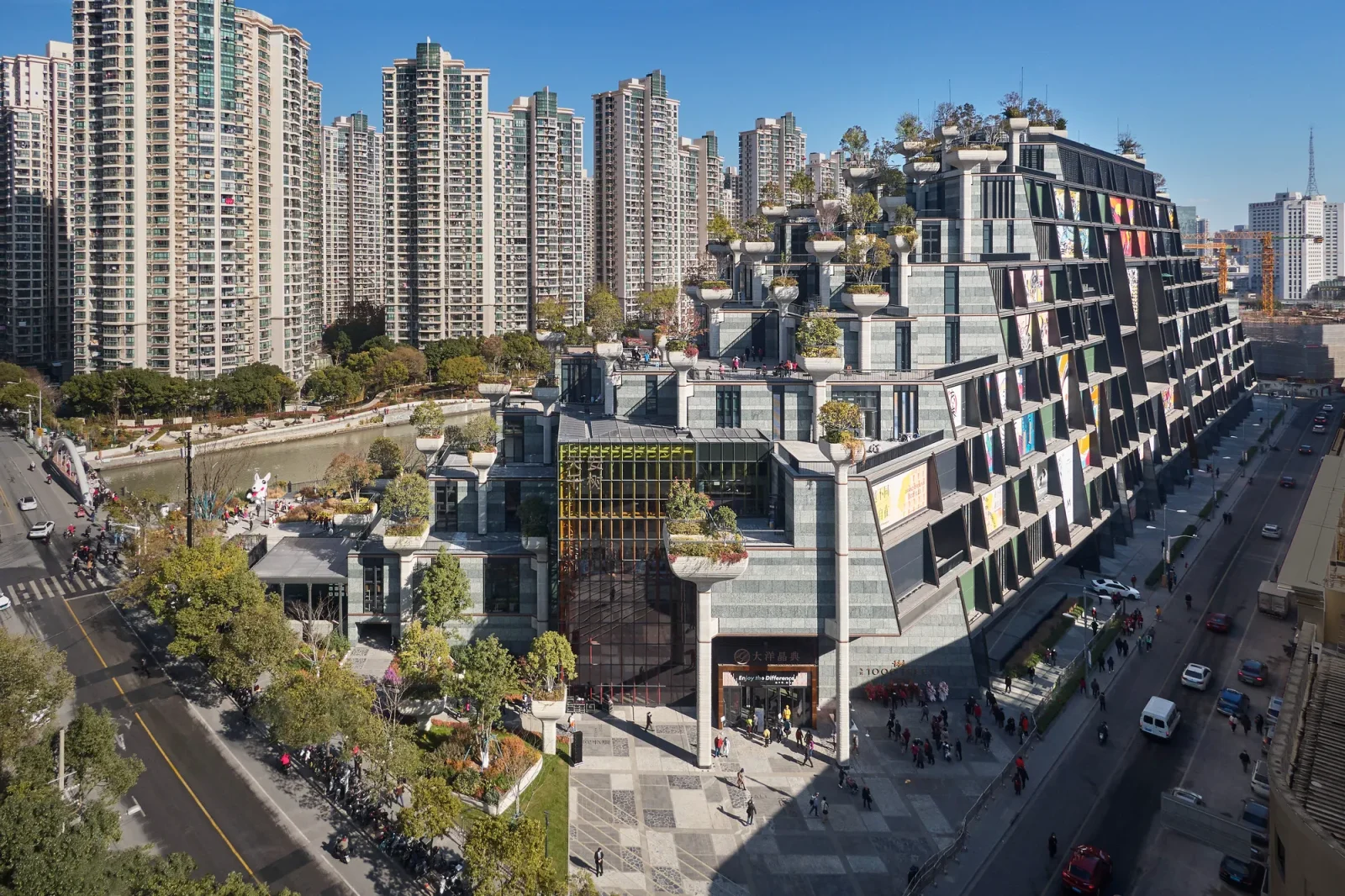
1000 Trees is a distinctive mixed-use development located in Shanghai’s Putuo district, adjacent to the M50 art district and Suzhou Creek. Completed in 2021, this project is creating a compelling new model for integrating nature into dense cityscapes.
Concept and Design Strategy
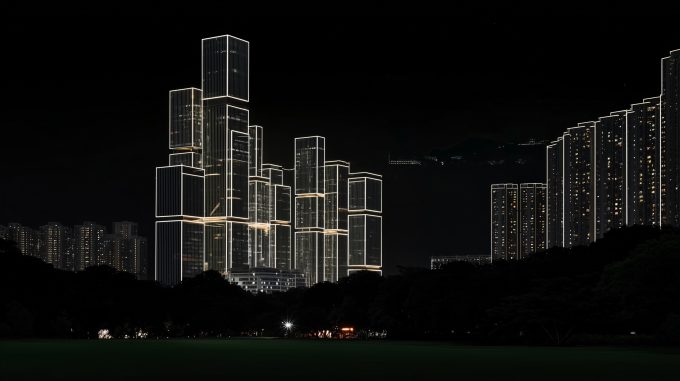
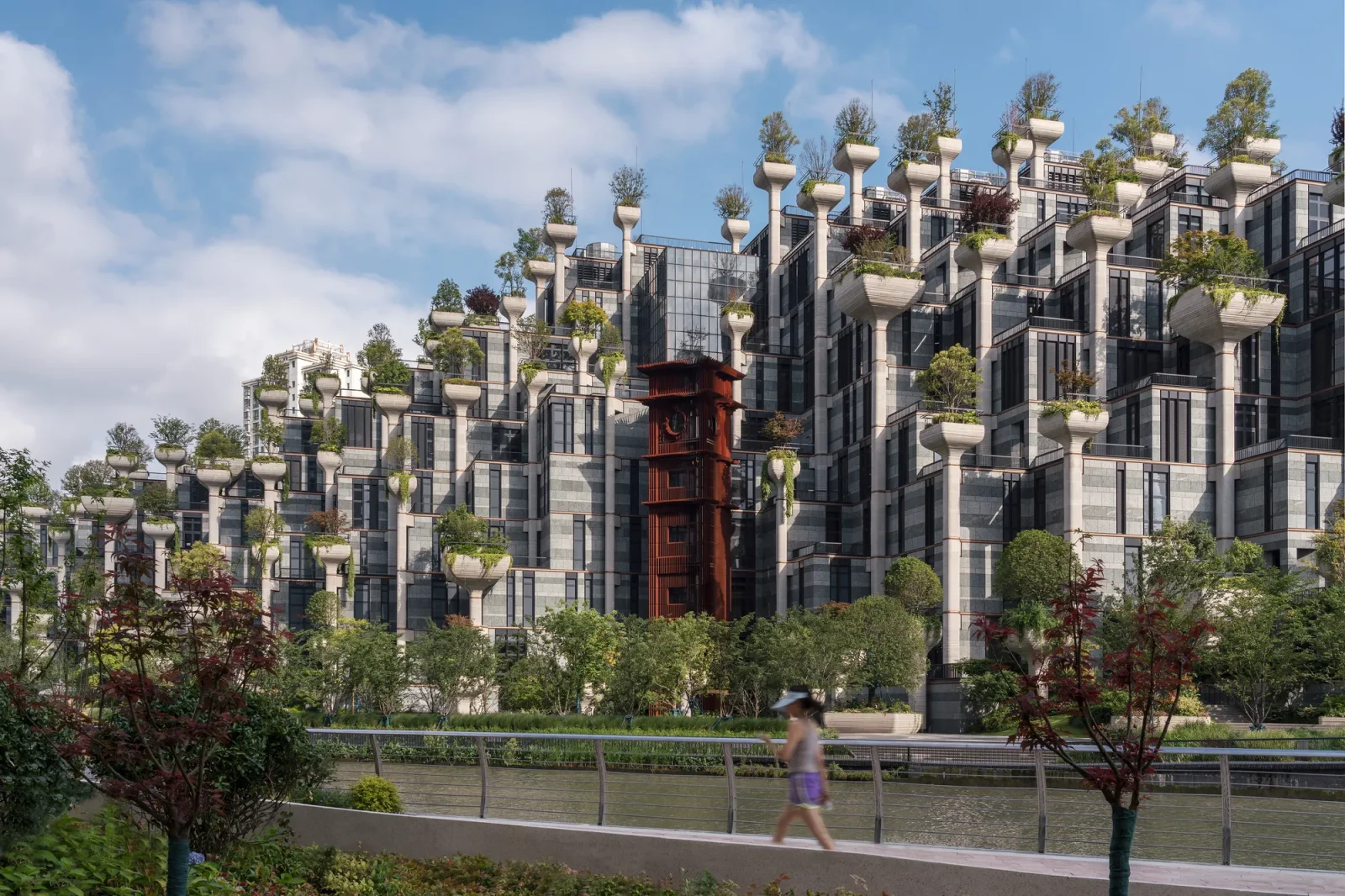
Rather than following the conventional tower-and-podium typology typical of large developments, 1000 Trees takes inspiration from natural topography, presenting itself as a pair of forest-capped mountains rising from the waterfront. This analogy extends beyond shape to the very structure and programming of the project, which is designed as an extension of the nearby park and green spaces.
The building’s design revolves around a flexible nine-meter grid, rotated to optimize panoramic views of the river and surrounding cityscape. This grid breaks down the development’s scale into cubic pixels, which disrupts the monotony of the surrounding high-rise context, offering a distinctly human scale and visual texture.
Structure and Landscape
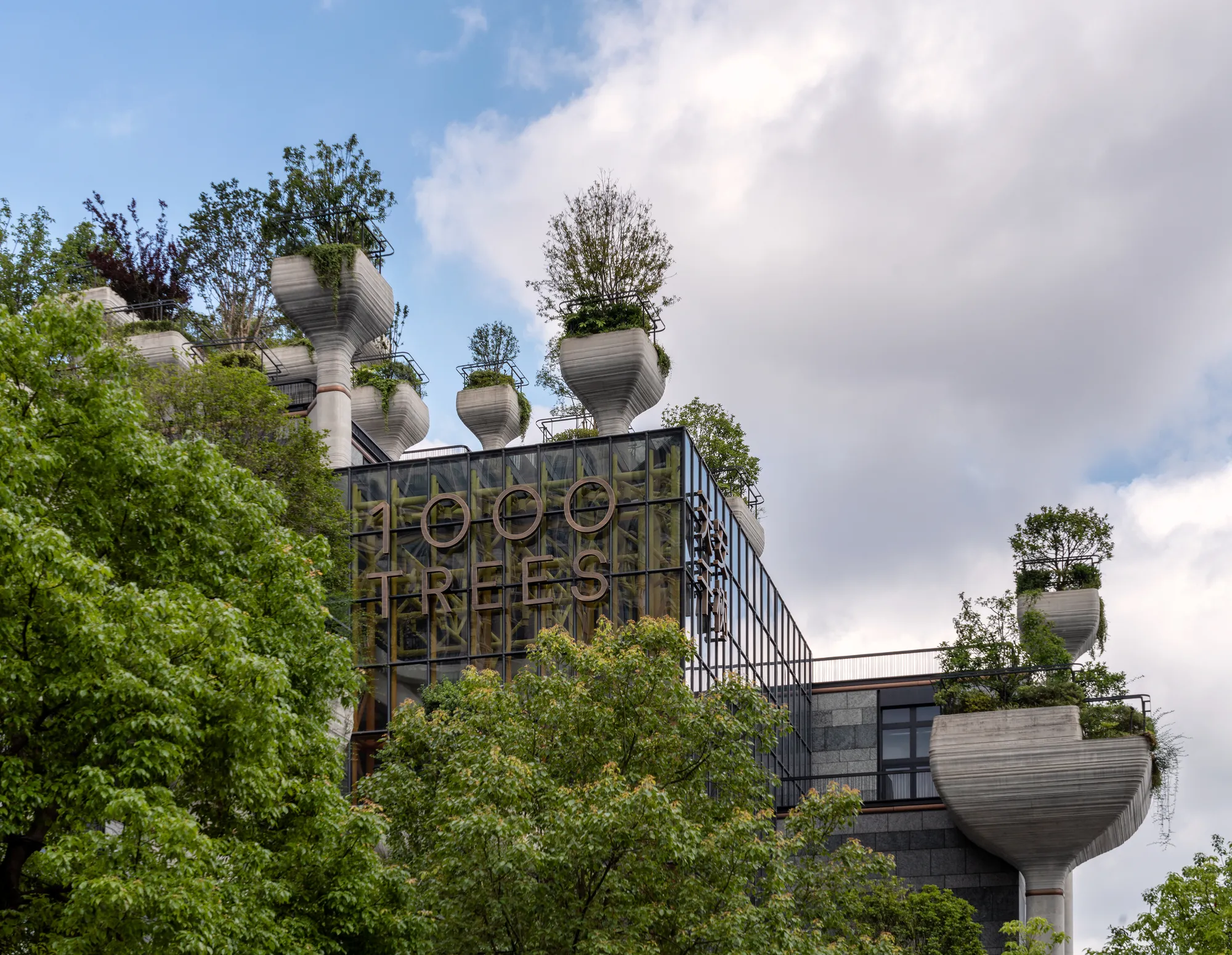
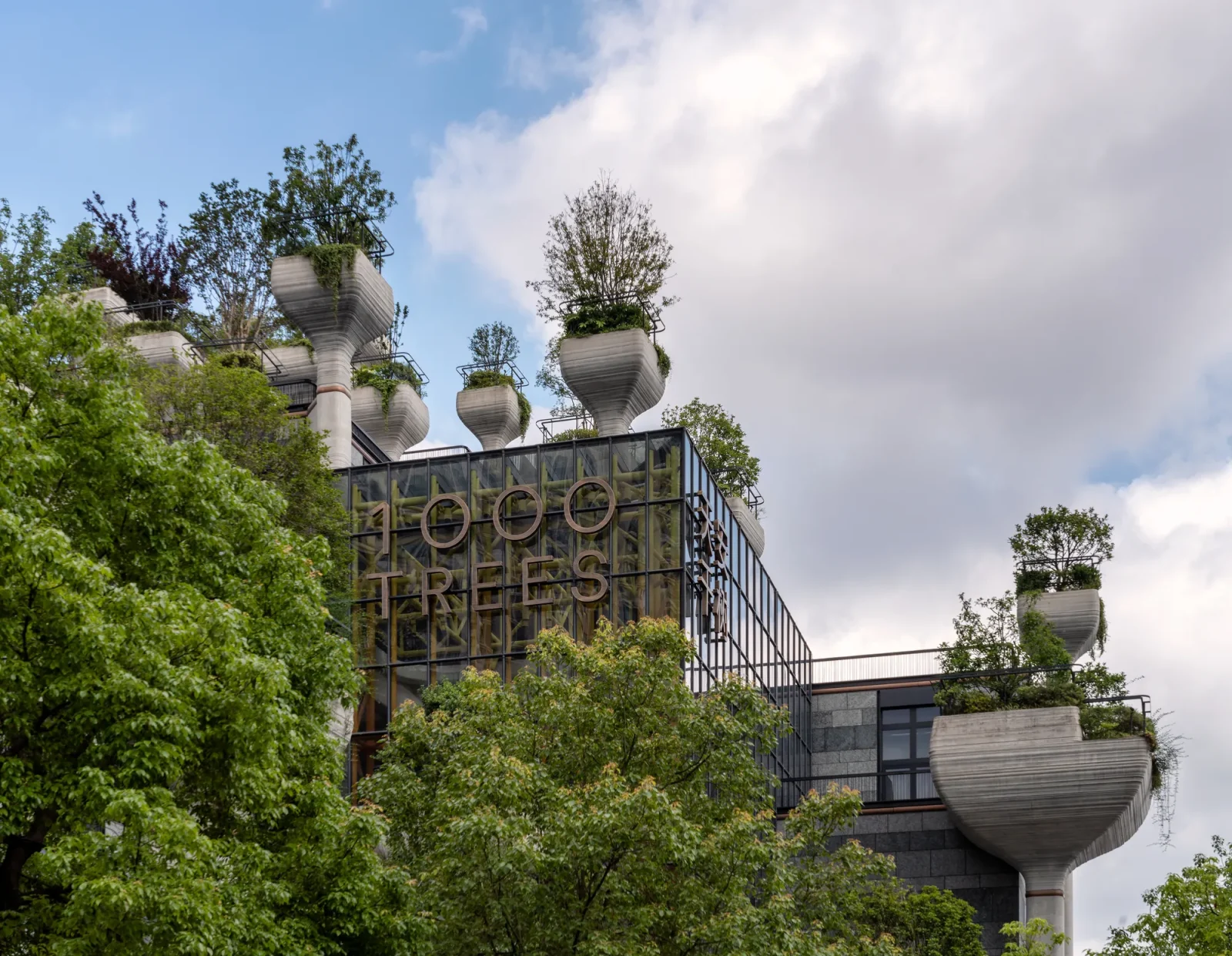
A notable feature of 1000 Trees is its 800 supporting structural columns, which do not simply carry the building load but also serve as integral elements of the landscaping strategy. Each column rises beyond the building envelope and terminates in a broad planter, collectively housing over 1,000 trees and more than 200,000 plants, including shrubs, grasses, flowering plants, and climbers. This approach transforms the building’s silhouette into a dynamic, living landscape that shifts with the seasons.
The planting strategy is naturalistic, using locally sourced species selected to thrive in the varied micro-conditions of the planters. This reduces maintenance needs while promoting biodiversity and ecological resilience within the urban context.
Enhancing Urban Connectivity and Public Space
1000 Trees goes beyond being just a commercial and retail hub to become an accessible public realm. The development opens previously inaccessible industrial land to the public, featuring active ground-level streetscapes, public plazas, promenades, and integration with heritage buildings. Pedestrian pathways weave around the terraces, enabling access on all sides and encouraging exploration and interaction.
Its location on a bend of Suzhou Creek and adjacency to the M50 arts district ensure strong cultural and community connections. The building’s southern facade serves as a large-scale canvas for curated street art by local and international artists, adding a vibrant cultural dimension that reinforces its ties to the neighborhood’s artistic identity.
4. Bogota EAN University: A Sustainable Design Hub Reflecting Colombian Craft and Nature
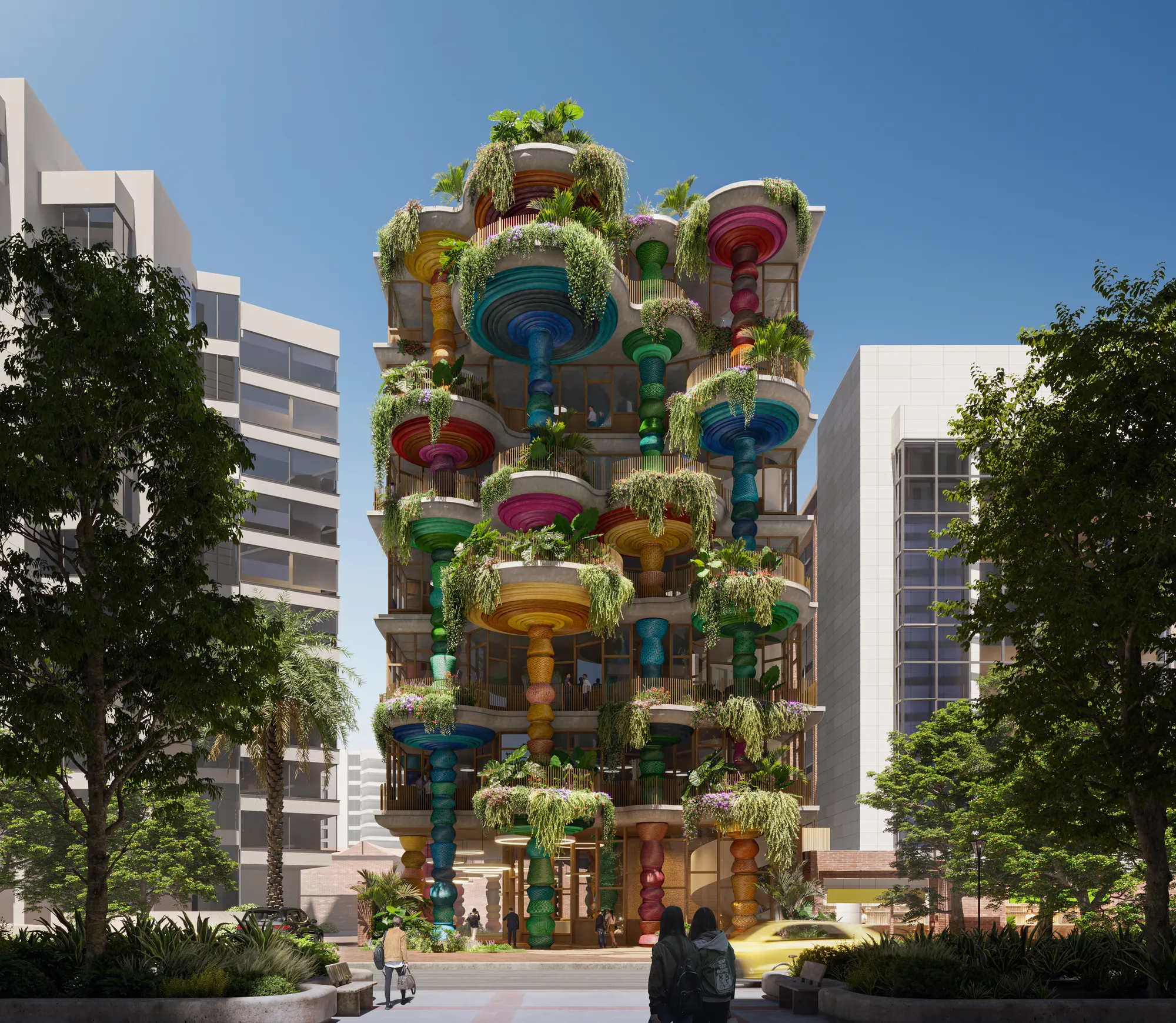
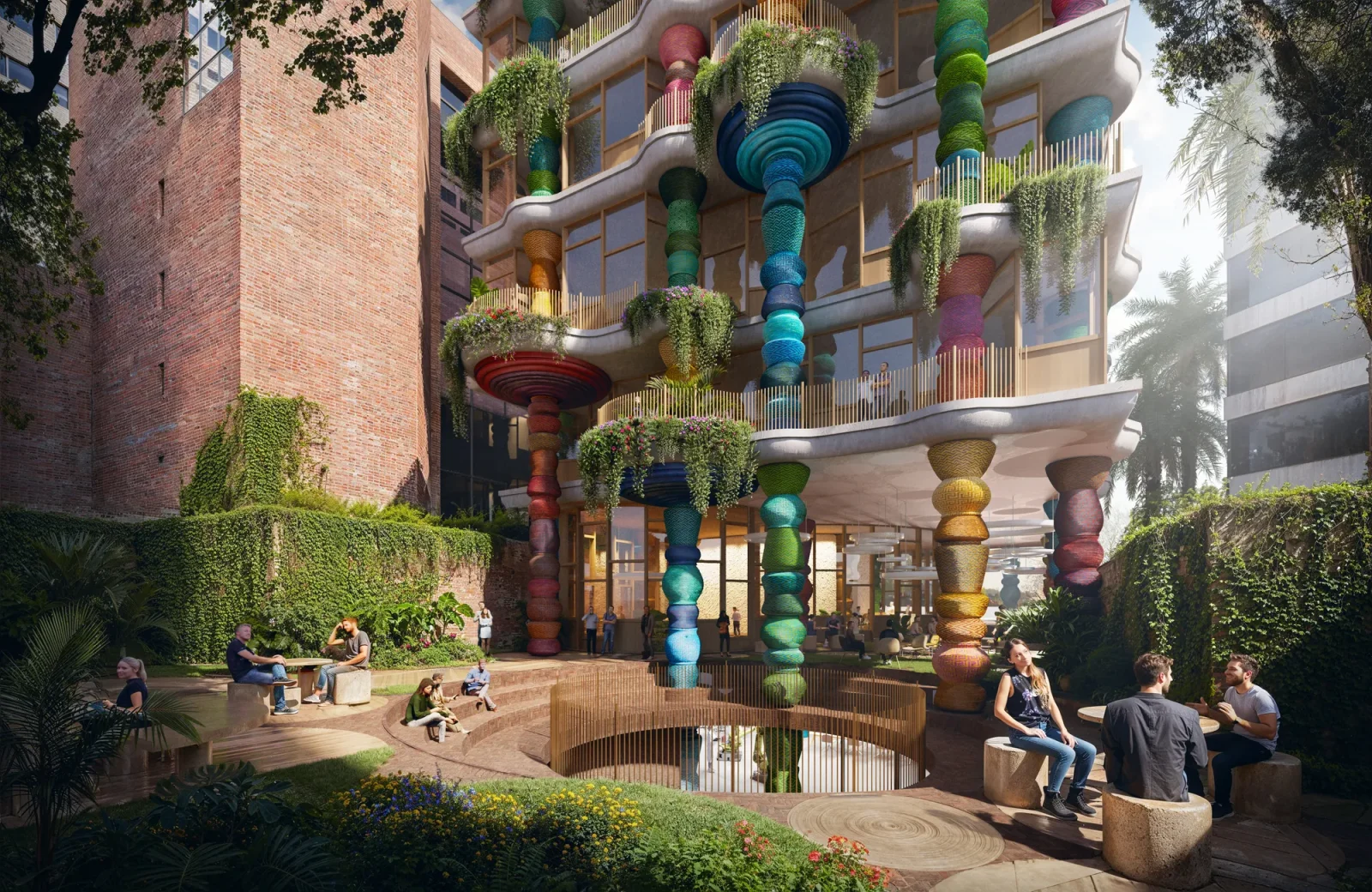
Heatherwick Studio is set to make its debut in South America with a compelling new educational building for Universidad EAN in Bogotá, Colombia. This seven-story facility, slated to begin construction in 2025, will serve as a design school and makers’ space dedicated to sustainable design, playing a significant role in the university’s existing central campus.
Architectural Inspiration and Cultural Context
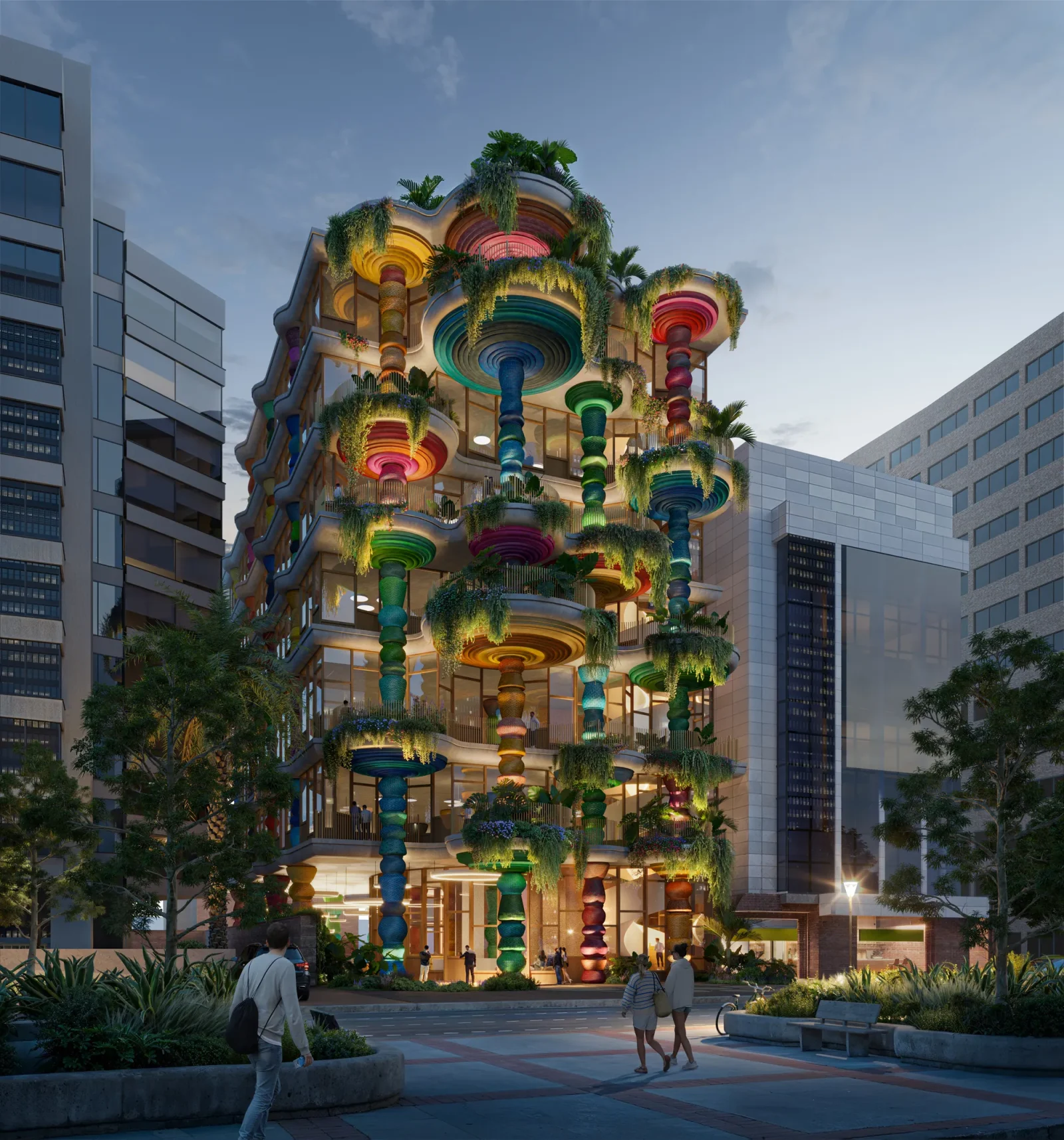
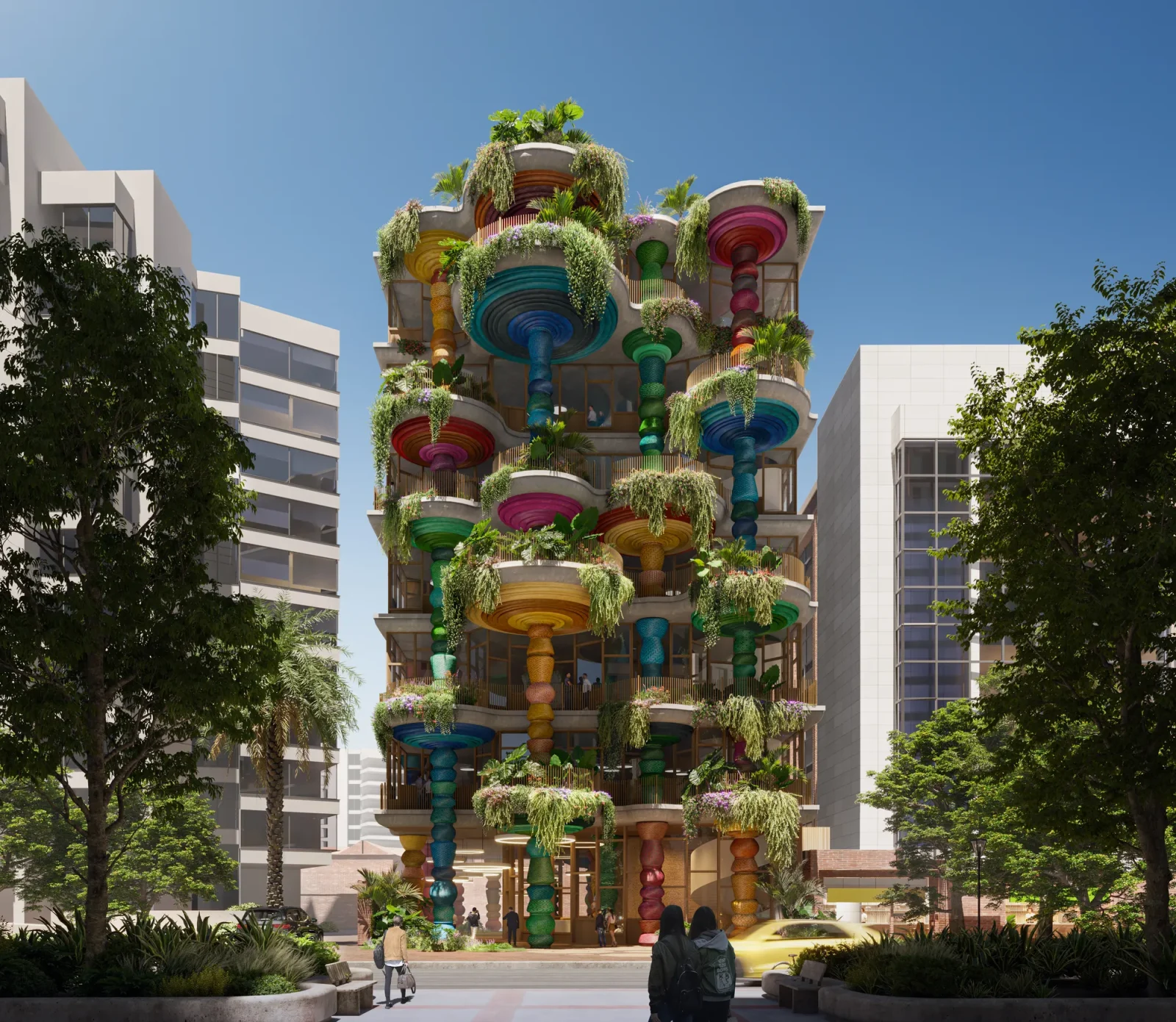
The design of the new building features a facade inspired by Werregue basketry, a traditional weaving technique unique to Colombia’s Wounaan indigenous community. This craft is characterized by colorful, oval-shaped woven patterns made from natural palm fibers dyed with vegetable colors. Heatherwick Studio translates these cultural motifs into an architectural language through undulating columns that rise the full height of the building.
The building’s facade is animated by these colorful, sculptural columns that are not purely decorative but also structural, contributing to the building’s identity. Open terraces positioned between these columns allow greenery to overflow, further integrating the building with nature and enhancing the spatial experience for occupants.
Biophilic Design and Sustainability
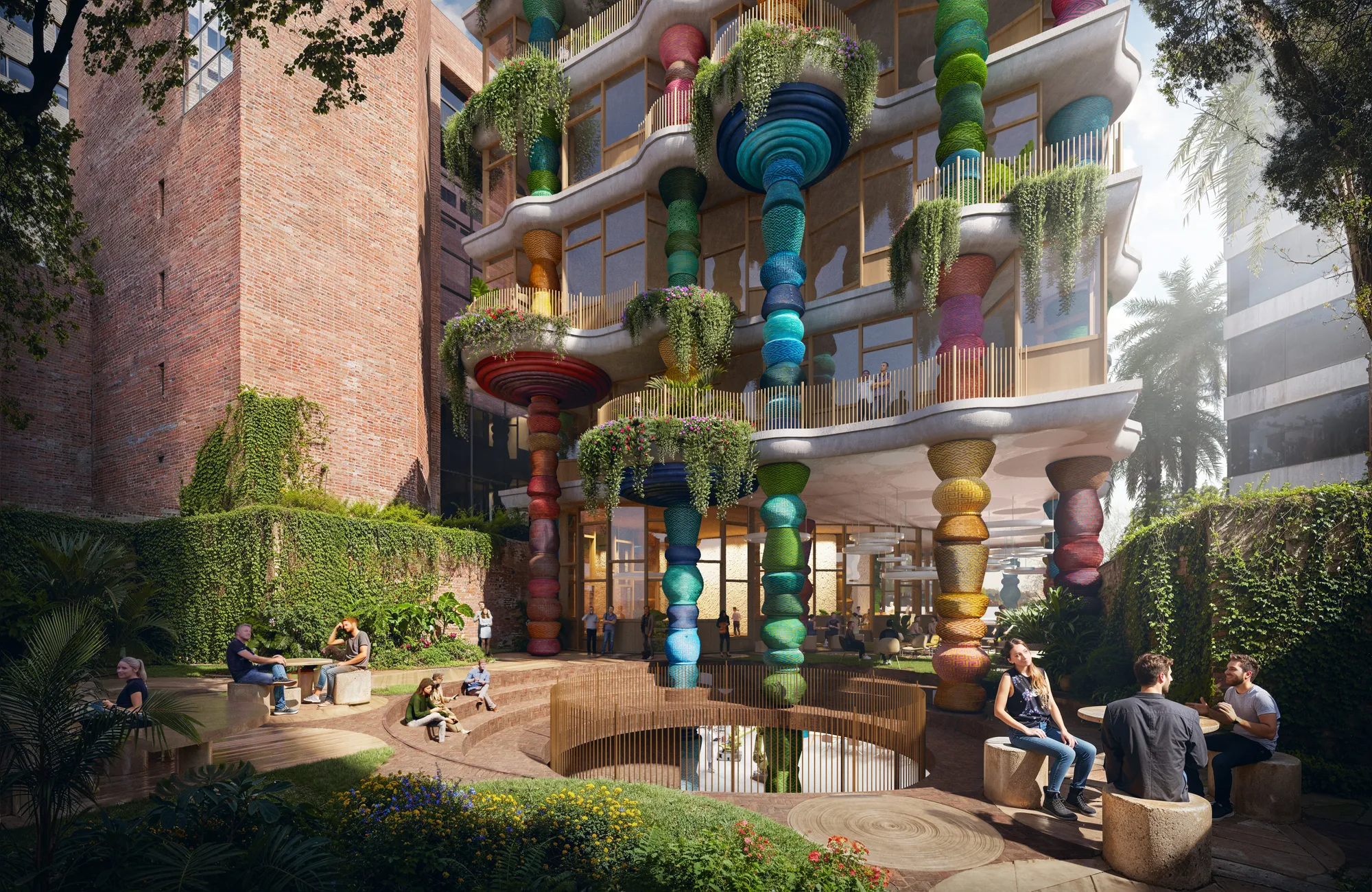
Bogota is notable for its high altitude, about 2,640 meters above sea level, and intense sunlight, both factors influencing material and facade decisions. Heatherwick Studio is developing innovative materials capable of withstanding these environmental challenges, guaranteeing durability and performance.
In line with Bogota’s leadership in sustainable urban development, the building’s biophilic design incorporates native plant species on the terraces. These plantings are selected from the surrounding cloud forests, the region’s biodiversity hotspot, and are intended to support urban ecology while creating natural microclimates for comfort. This approach aligns with the city’s commitment as a signatory of the C40 Urban Nature Declaration, aiming to bring more green spaces and nature into urban environments.
Urban Integration and Public Realm
The project emphasizes a strong relationship to its urban surroundings on Calle 72, one of Bogota’s main thoroughfares. The university building will complement the existing heritage structures on campus.
A key component of the design is the creation of a generous public square at the building’s entrance, designed as a communal oasis amid the often dense and hard urban context. This plaza includes circular seating and landscaping elements that echo the organic forms of the facade columns, providing a welcoming space. Heatherwick Studio’s partner Eliot Postma highlights this intent, stating a desire for students to feel proud of their campus before even entering the building and for passersby to experience a sense of community and respite.
5. The Learning Hub: A Contemporary University Building in Singapore
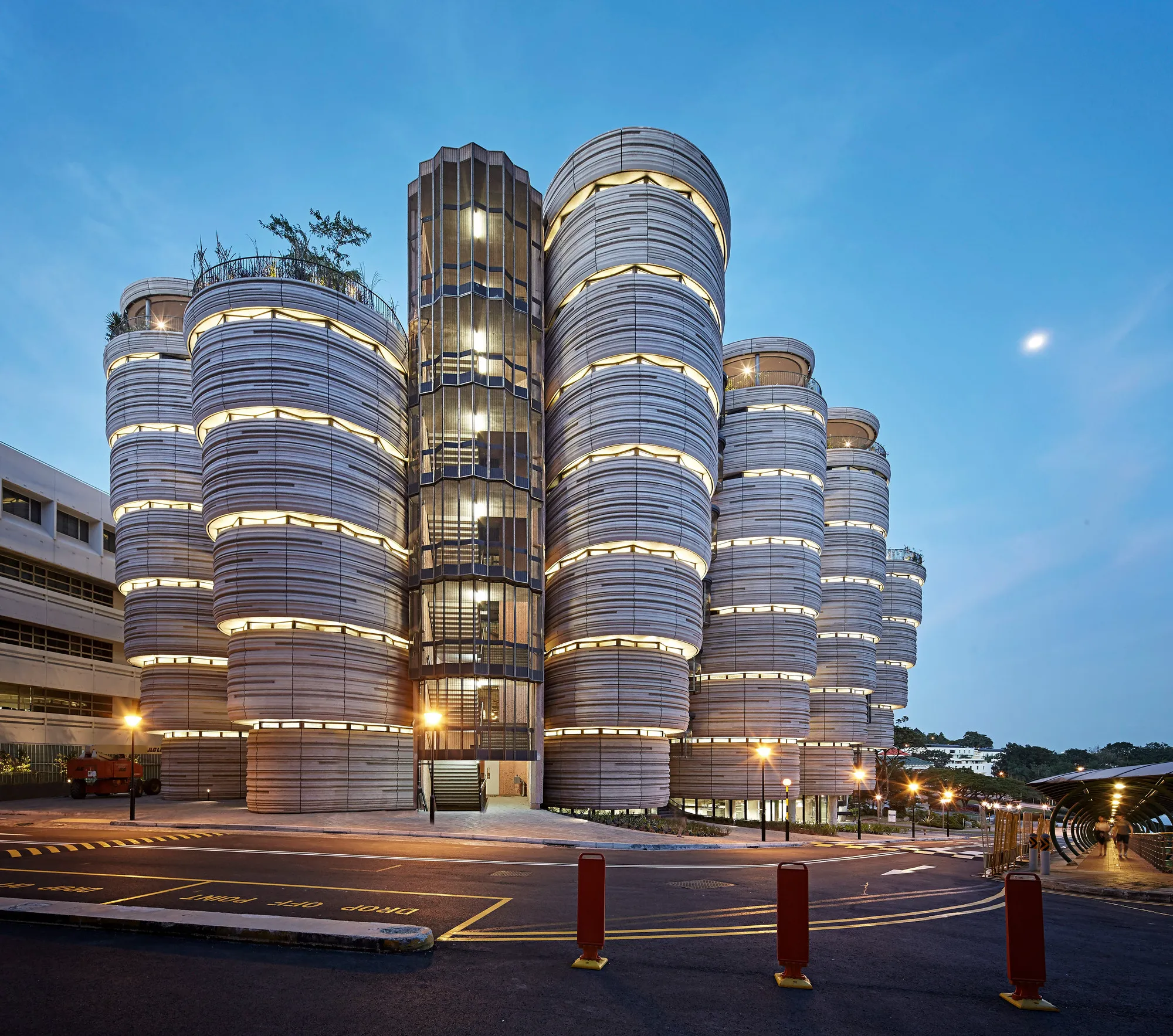
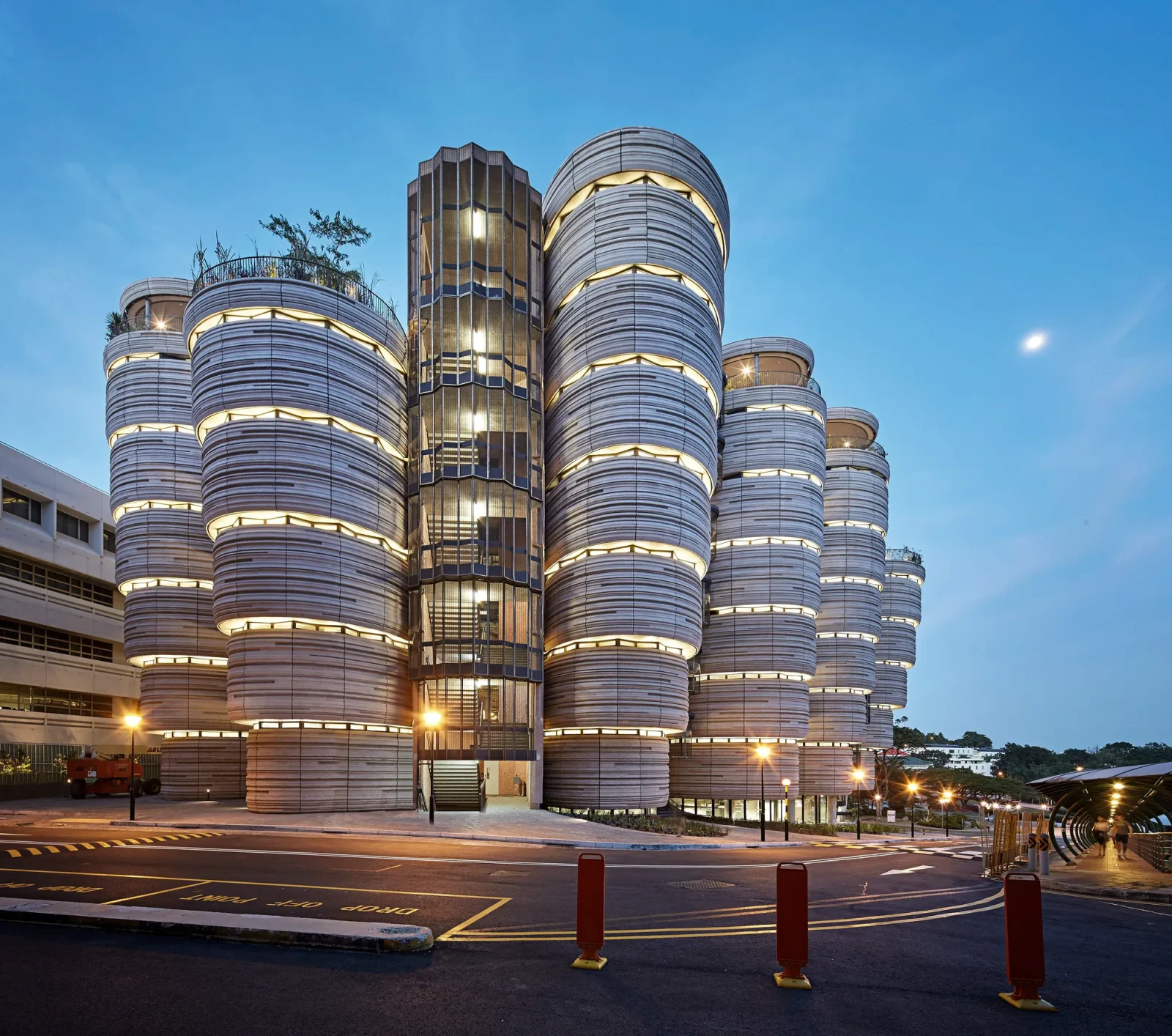
The Learning Hub, commonly known as The Hive, is an educational building designed by Heatherwick Studio, located at Nanyang Technological University (NTU) in Singapore. Completed in 2015 as part of NTU’s campus redevelopment, The Hive marks Heatherwick Studio’s first major project in Asia.
Design Process
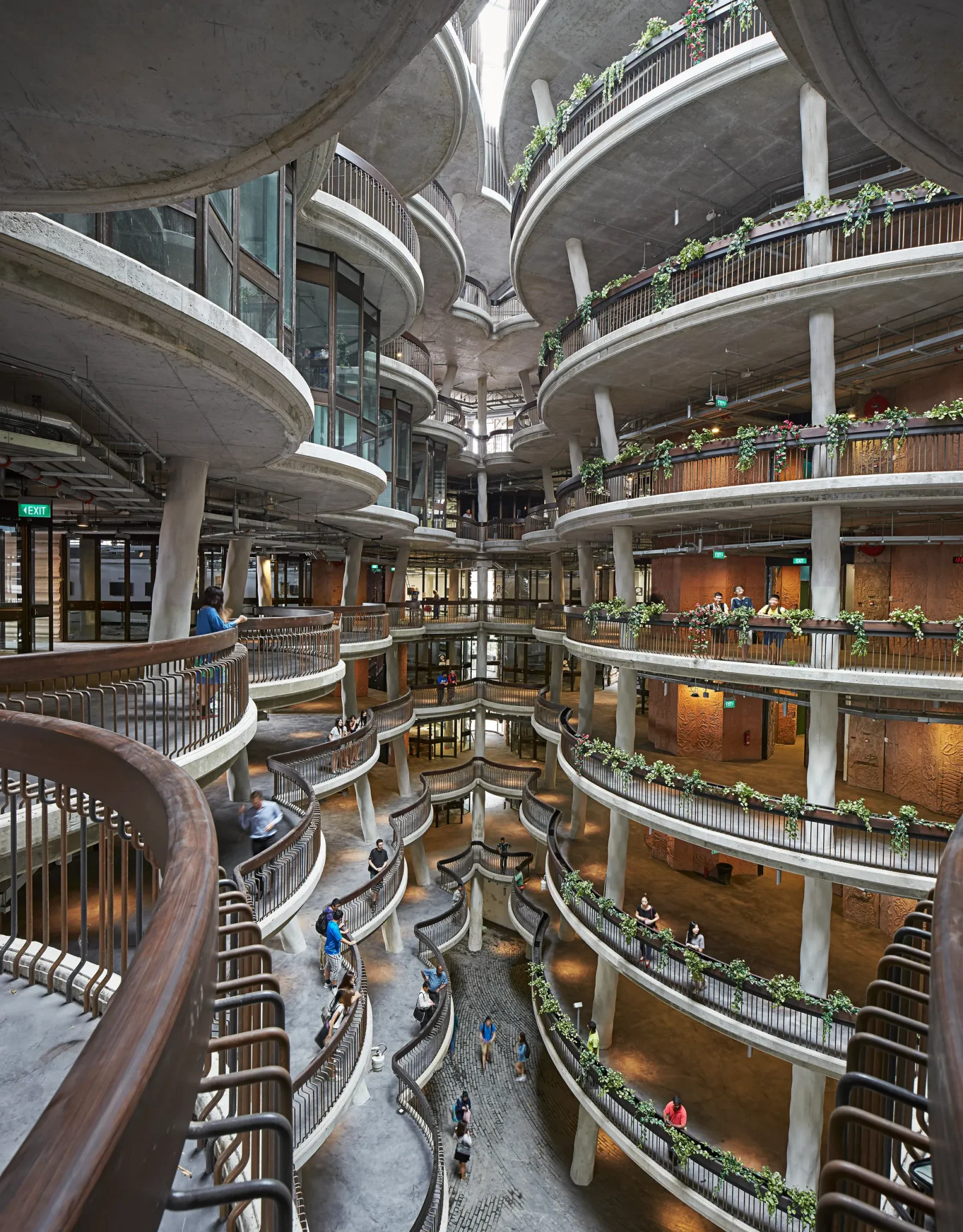
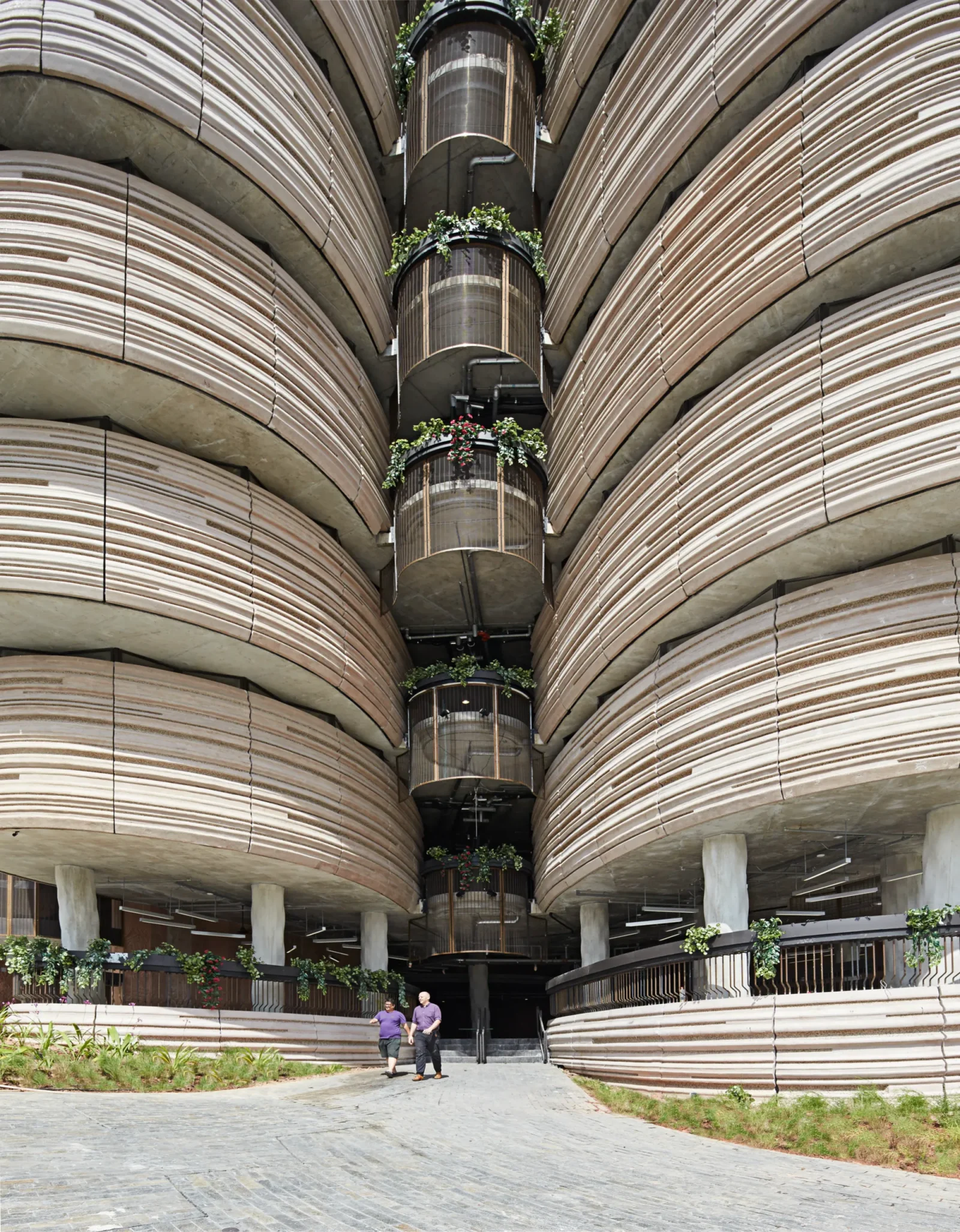
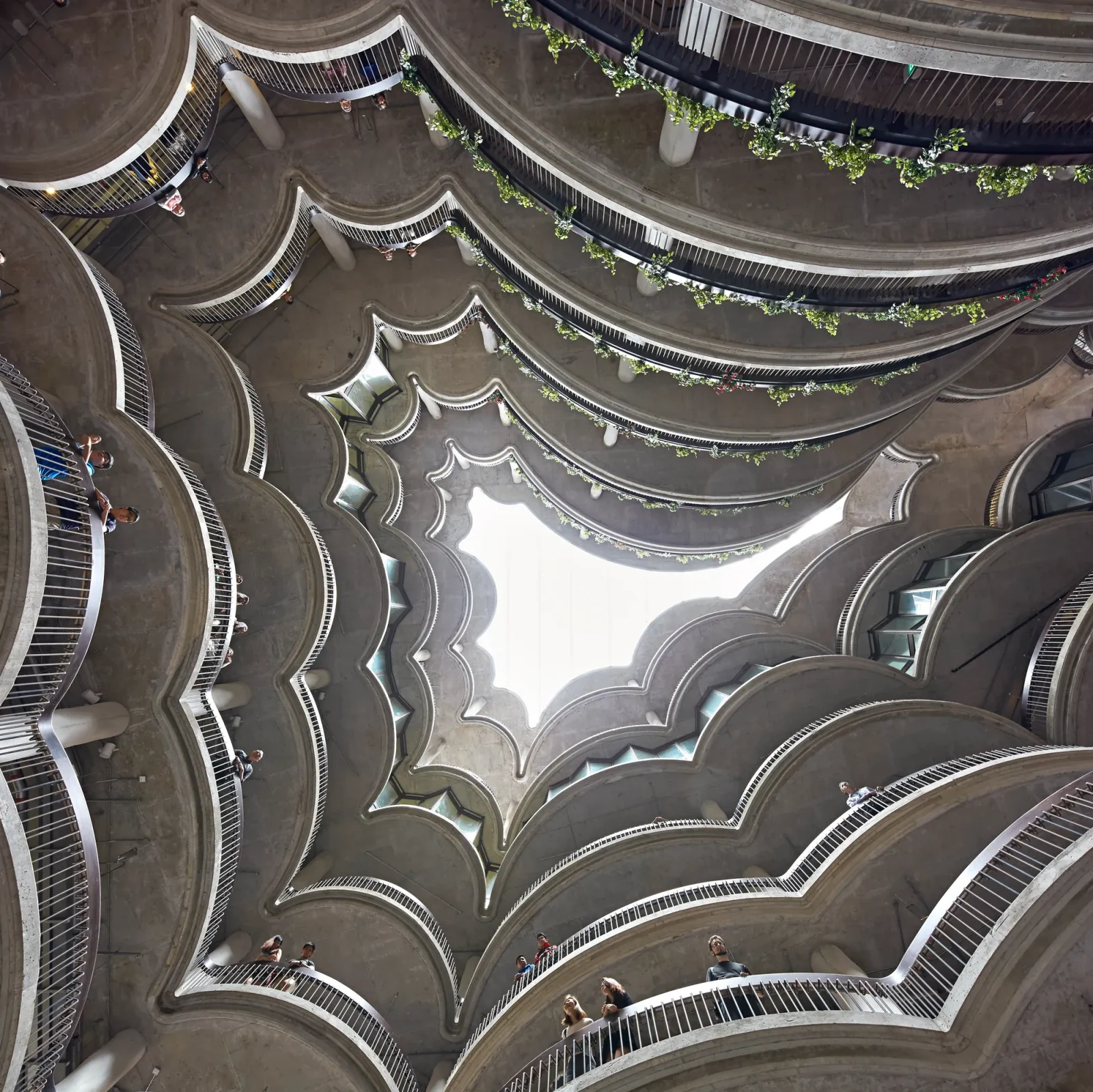
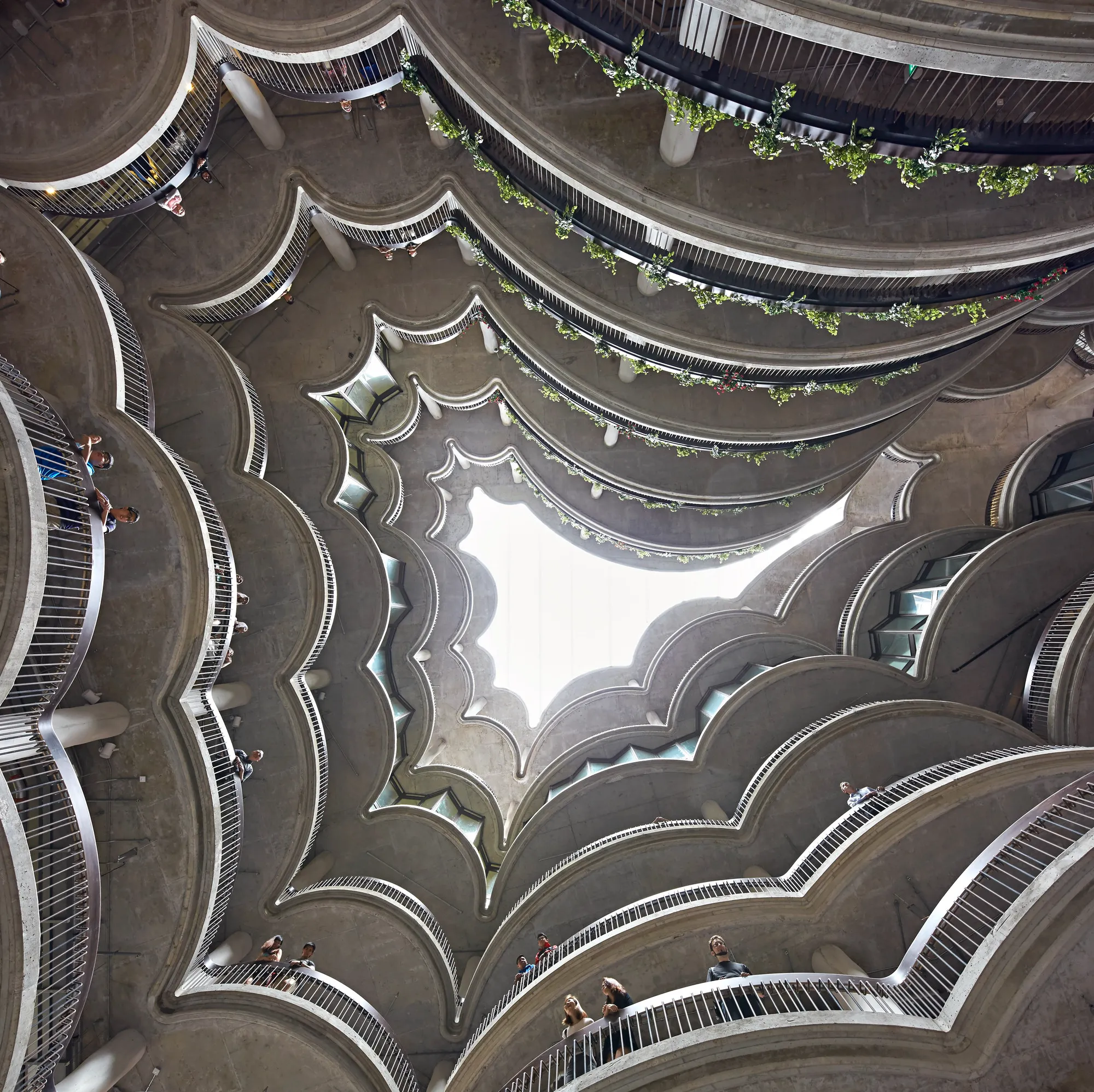
Breaking away from traditional layouts of long corridors and box-like lecture halls, The Hive responds to the needs of 21st-century education by emphasizing social interaction and collaborative learning. The building consists of 12 eight-story concrete towers, each tapering inward at the base, arranged tightly around a large central atrium. These towers house a total of 56 tutorial rooms, all designed without corners or distinct fronts and backs to encourage flexible and interactive teaching methods where students and tutors engage more fluidly.
The absence of corners in the classrooms reduces hierarchy and fosters equality among participants, supporting NTU’s vision of pedagogy. The rooms open onto shared circulation spaces, balconies, and informal garden terraces, weaving social spaces throughout the building.
Materiality and Craftsmanship
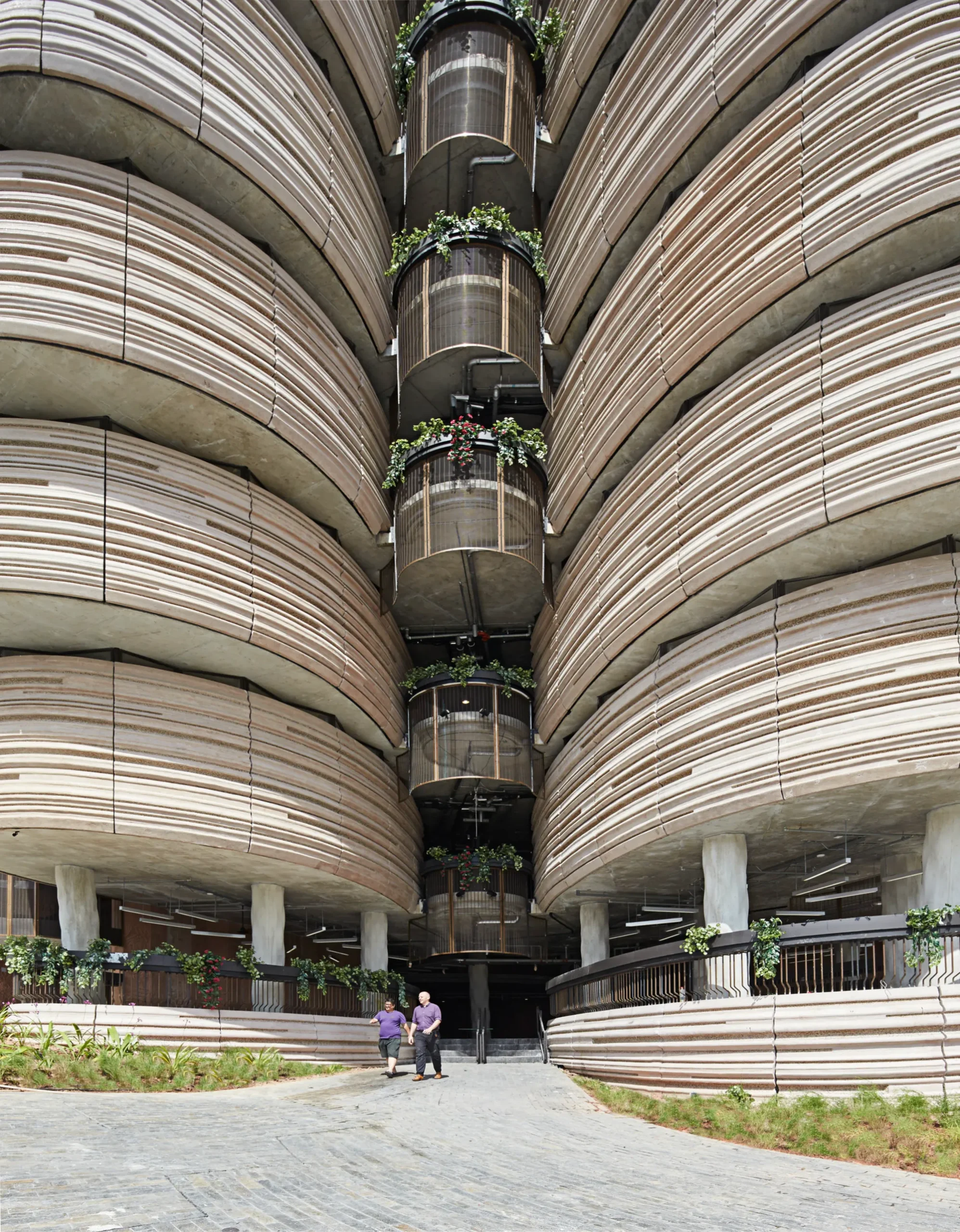
Due to Singapore’s humid tropical climate and strict building codes, reinforced concrete was chosen as the primary building material for its durability and robustness. However, Heatherwick Studio challenged the perception of concrete’s typical heaviness by treating it as if it were handmade clay. Curved concrete panels with irregular horizontal textures were created using adjustable silicone molds, producing a tactile, dynamic facade often likened to root vegetables or wet clay forms.
The structural columns have an undulating surface texture, adding to the sense of handcrafted detail. Integral to the design are also artistic embellishments: the stair and lift cores between the towers feature over 700 cast drawings by British artist Sara Fanelli. These illustrations, depicting scientific, artistic, and literary themes, add a layer of narrative and visual interest.
Sustainable Features and Environmental Considerations
A key environmental strategy is the naturally ventilated central atrium, which enables airflow throughout the building, critical in Singapore’s warm climate where temperatures typically range from 25°C to 31°C year-round. By maximizing ventilation and utilizing silent convection cooling in classrooms, The Hive minimizes reliance on energy-intensive air conditioning systems. This commitment to sustainability earned the building the Green Mark Platinum status, Singapore’s highest green building certification.
Heatherwick Studio is reinventing modern architecture with creative ideas that combine urban life, nature, and culture. From the famous Vessel in New York to ground-breaking projects in Bangkok, Shanghai, Bogota, and Singapore, the studio’s work focuses on sustainable materials, inclusive public areas, and aesthetics that are influenced by various cultures. Collectively, these pieces highlight Heatherwick Studio’s dedication to designing environments that uplift, unite, and thrive in the rapidly evolving global environment.
Explore Courses
.jpg "Ondrej Chybik - Rethinking Architecture")