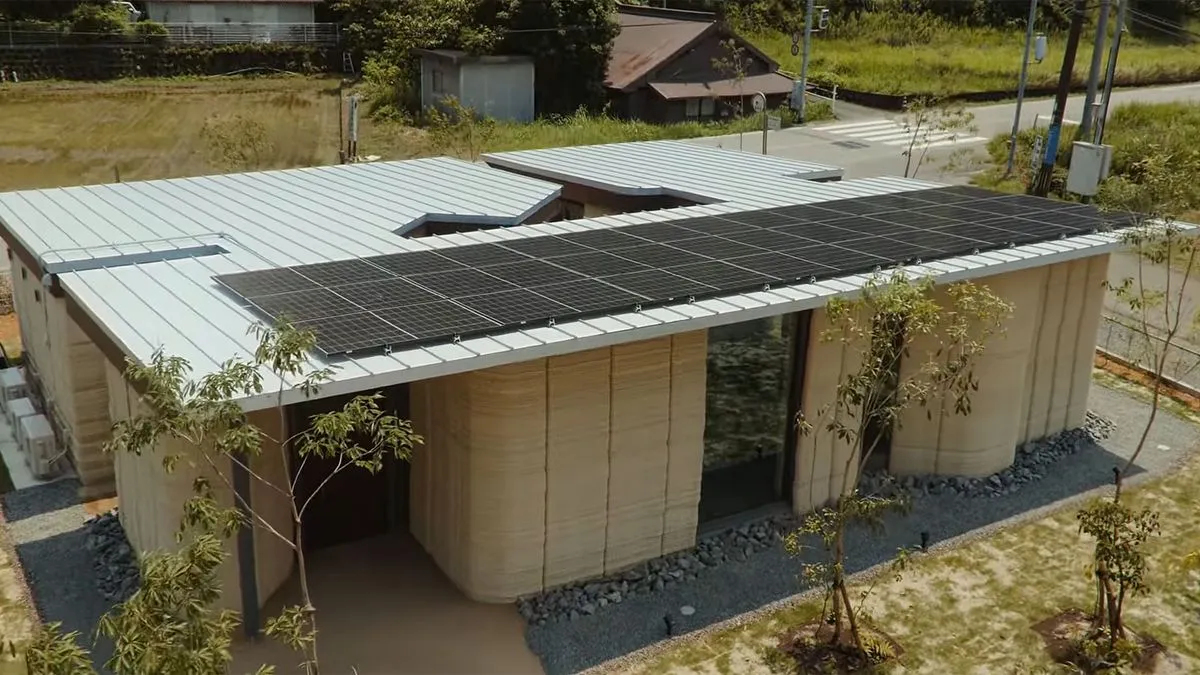
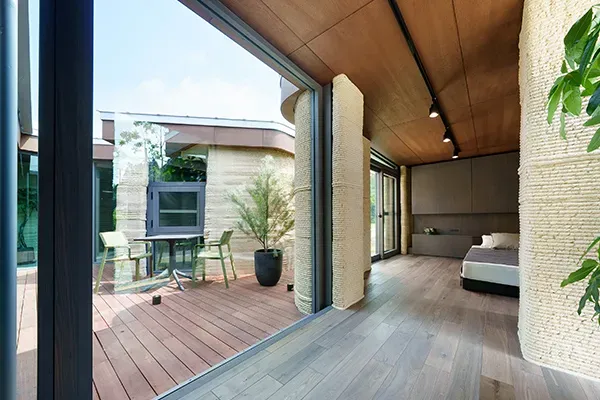
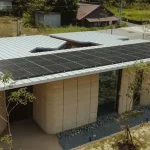
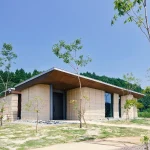
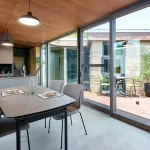
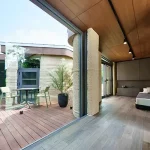
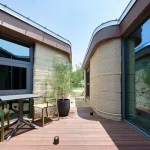
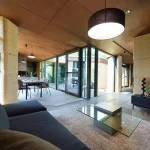
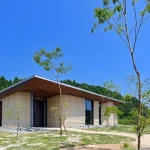
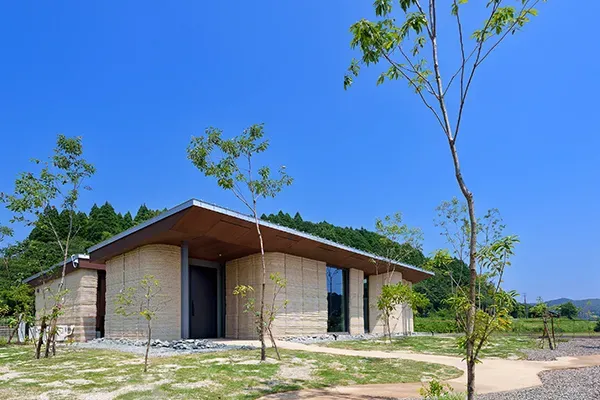
In the city of Yamaga, located in Japan’s Kumamoto region, a modest 100 m² home, the Lib Earth House Model B, marks a turning point in sustainable housing. Instead of concrete, the house is printed in layers using a specially blended mix made mostly of local earth and sand, bonded with lime, and threaded with plant fibers. These materials are abundant, renewable, and fully biodegradable. At the end of its lifecycle, much of the building can return to the ground with minimal waste.
A large‑scale 3D printer supplied by Italian firm WASP and engineering partner Arup lays down successive layers of the earthen blend directly on the prepared foundation. Once the shell is complete, builders install the timber frame, roof, windows, and interior finishes.
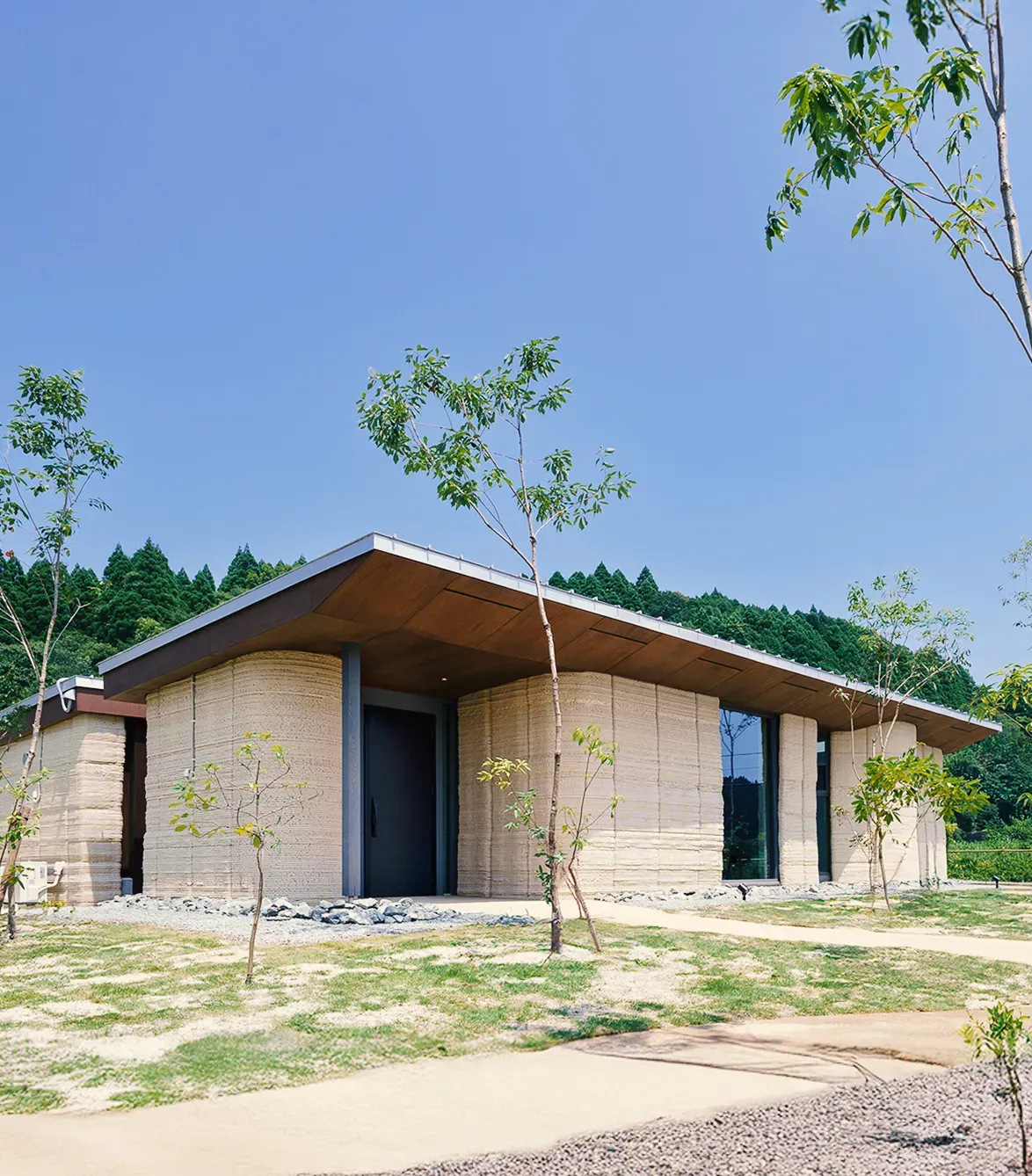
Despite being mostly soil, the finished walls meet Japan’s top seismic safety grade (Grade 3), capable of withstanding strong earthquakes. Compared with earlier prototypes, the material now offers roughly five times greater strength.
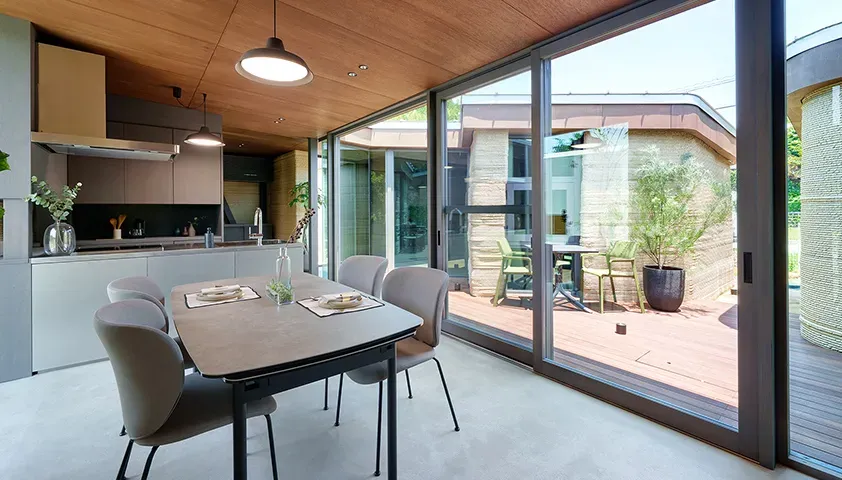
Lib Work reports that building with this method emits only about half the CO₂ normally released during construction, cutting emissions from roughly 45,000 kg to around 22,400 kg for a house of this size. That makes it even cleaner than wood‑framed homes in lifecycle assessments.
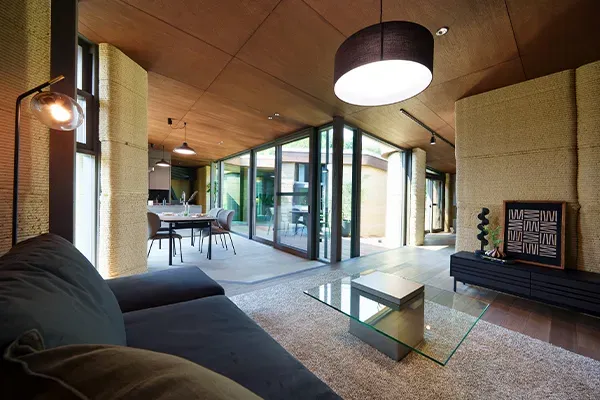
By leveraging 3D printing, designers accomplish thorough curves, soft contours, and irregular geometries not possible with bricks or boards. Model B is laid out in a cluster configuration, with fluid spaces organized around a small courtyard. Generous glazing invites light and air to flow naturally. Inside, the layout features living, dining, cooking, and sleeping areas, as well as a bathroom and a toilet. A facial‑recognition entry system adds a touch of smart convenience.
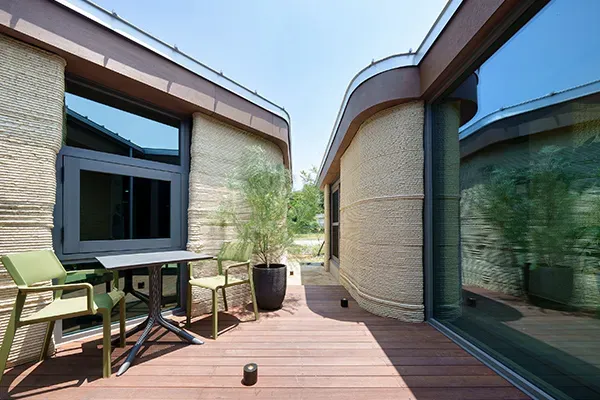
3D Printing with Earth: A Game-Changer for Eco-Friendly Construction in Japan
The house runs off the grid. Solar panels feed energy into a battery system (a Tesla Powerwall), powering climate control, lighting, and even the bath. Many of these functions can be adjusted from a phone or a dedicated device. Sensors embedded in the walls gather data on humidity, insulation, and longevity as the house is tested.
Lib Work aims to deliver 10,000 homes by 2040. Unlike traditional building, they envision automating the entire process from on‑site printing to finishing, making the method scalable, adaptable, and eventually global.
One of the most striking benefits of the Lib Earth House is its significantly reduced carbon footprint. By swapping out cement for a natural mix of soil, sand, and lime, the structure reduces emissions by nearly half compared to a conventional concrete home. They even speculate about building on Mars, using Martian soil with robotic printers to create off‑world habitats.
Want to build the future? Enroll in PAACADEMY’s 3D Printing Courses and master sustainable construction from the ground up.
Images courtesy of Lib Work