

The urban fabric of Baku, the capital of Azerbaijan, showcases one of the most complex and visually interesting architectural histories in the Eurasian region. Often described as a city of layers, Baku’s development is a physical narrative of the intersection between ancient Silk Road commerce, the explosive wealth of the nineteenth-century industrial revolution, the ideological monumentality of the Soviet era, and the neo-futuristic ambitions of a post-independence global oil power.
The Concentric Evolution of Urban Form
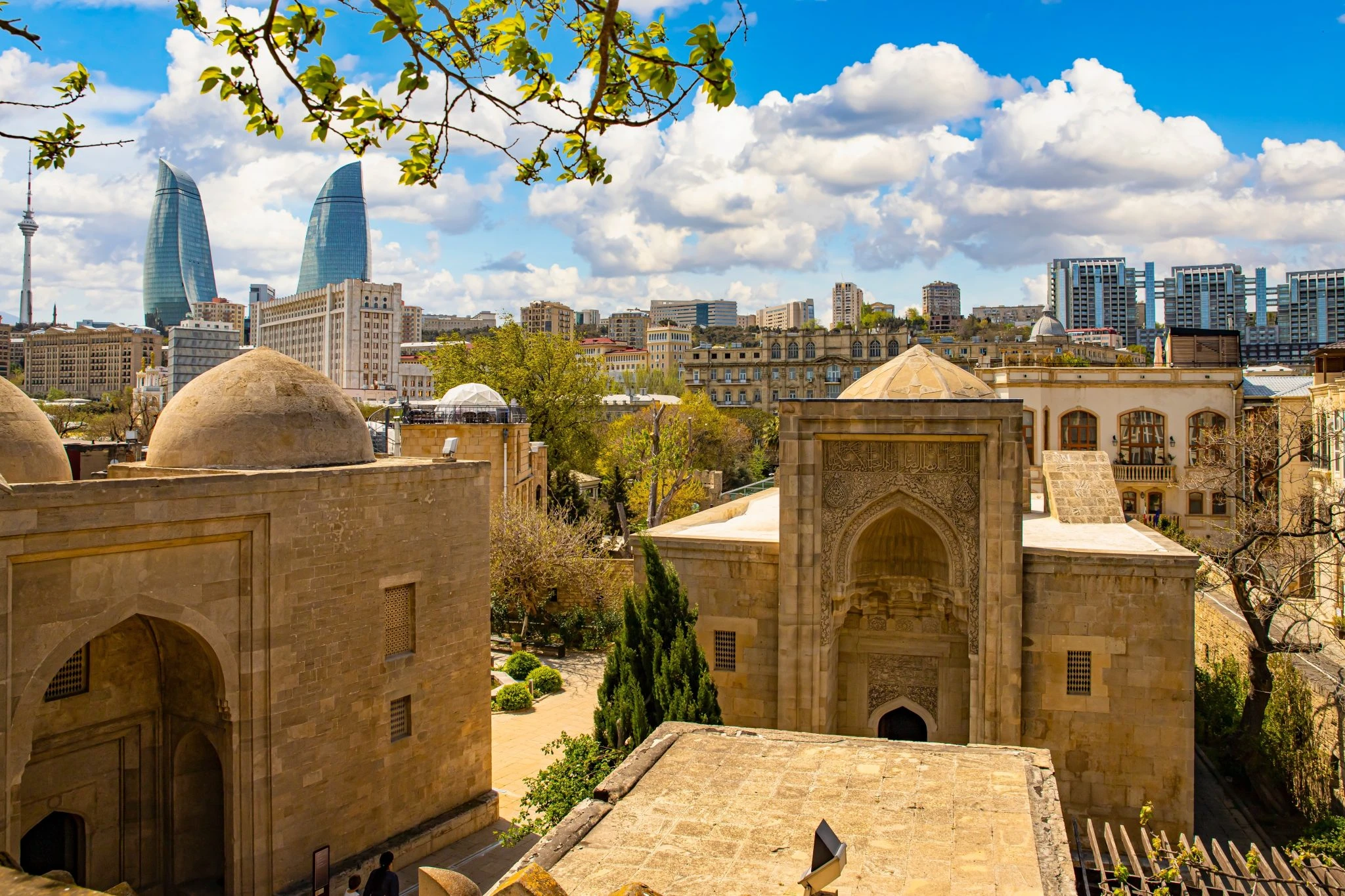
Baku’s growth can be analyzed through three primary concentric circles that define its historical and geographic heart. The first circle is the medieval core, Icherisheher (Inner City), which evolved as a compact, fortress-like environment of high-density limestone masonry. The second circle emerged during the First Oil Boom (1880–1920), expanding into the White City, a residential and administrative district modeled after European capitals, particularly Paris.
The third circle is the vast Soviet-era expansion (1920–1991), which prioritized industrial zoning and monumental public spaces to accommodate a burgeoning population that eventually exceeded two million residents. Since 1994, a fourth layer has emerged, defined by high-tech deconstructivism and glass-shelled skyscrapers that challenge the horizontal, stone-based dominance of the previous eras.
1. The Maiden Tower (Giz Galasi)
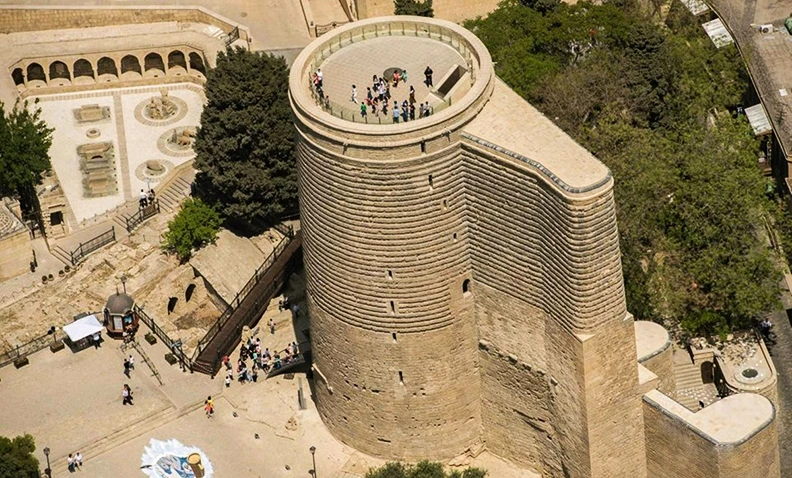
The Maiden Tower is the most enigmatic and iconic structure in Baku, anchoring the southeastern edge of the Icherisheher. Its architectural history is a matter of significant scholarly contention, with construction dates ranging from the 6th century BCE to the 12th century CE. The tower’s form, a massive cylinder with a distinctive eastern buttress, is unique in Islamic architecture, leading researchers to suggest it may have originally served as a Zoroastrian fire temple or a celestial observatory.
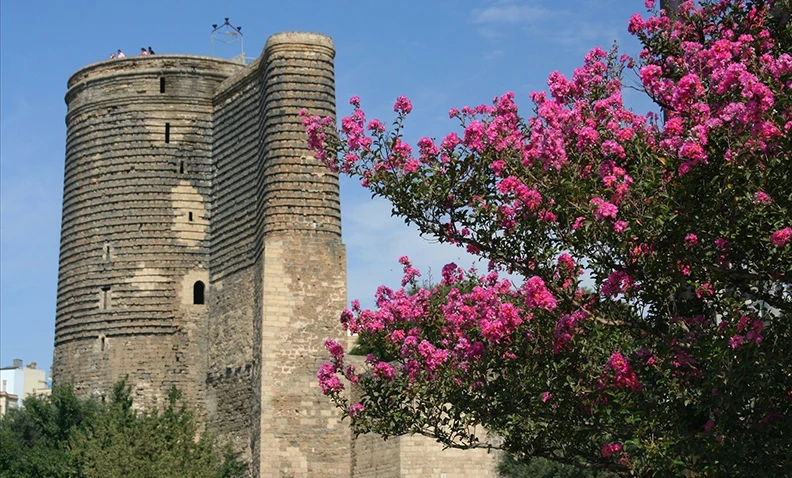
The structural integrity of the tower is derived from walls that reach 5 meters in thickness at the base, thinning slightly as they rise to a height of 29.5 meters. The tower is divided into eight levels, each connected by a winding stone staircase integrated into the wall’s thickness. The masonry consists of carefully drafted limestone blocks, and the absence of decorative elements on the exterior suggests a purely functional or symbolic purpose rooted in early medieval defense or spiritual ritual. Its inclusion as a UNESCO World Heritage site underscores its role as a masterwork of local engineering and a primary symbol of Azerbaijani identity.
2. The Palace of the Shirvanshahs
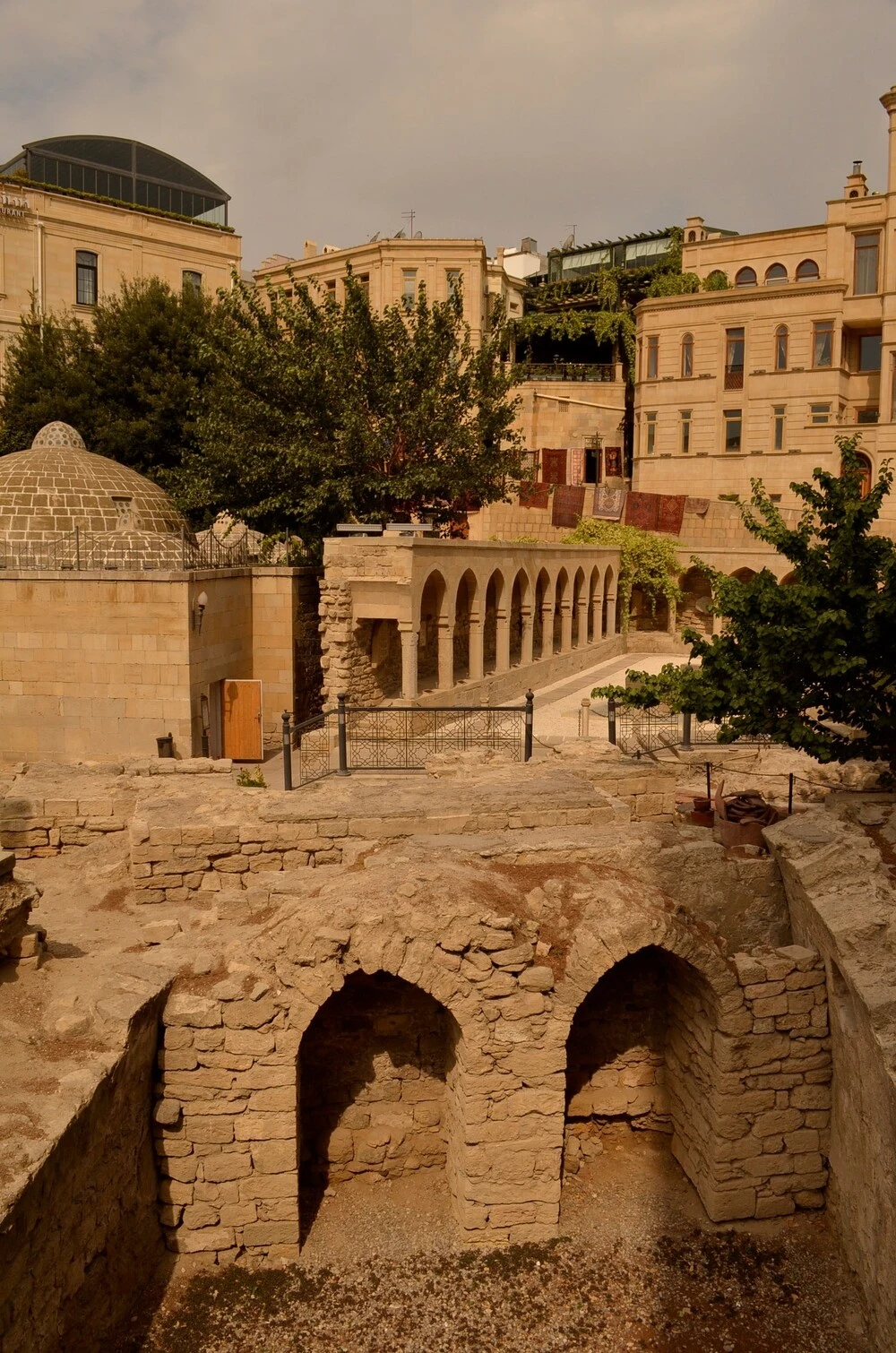
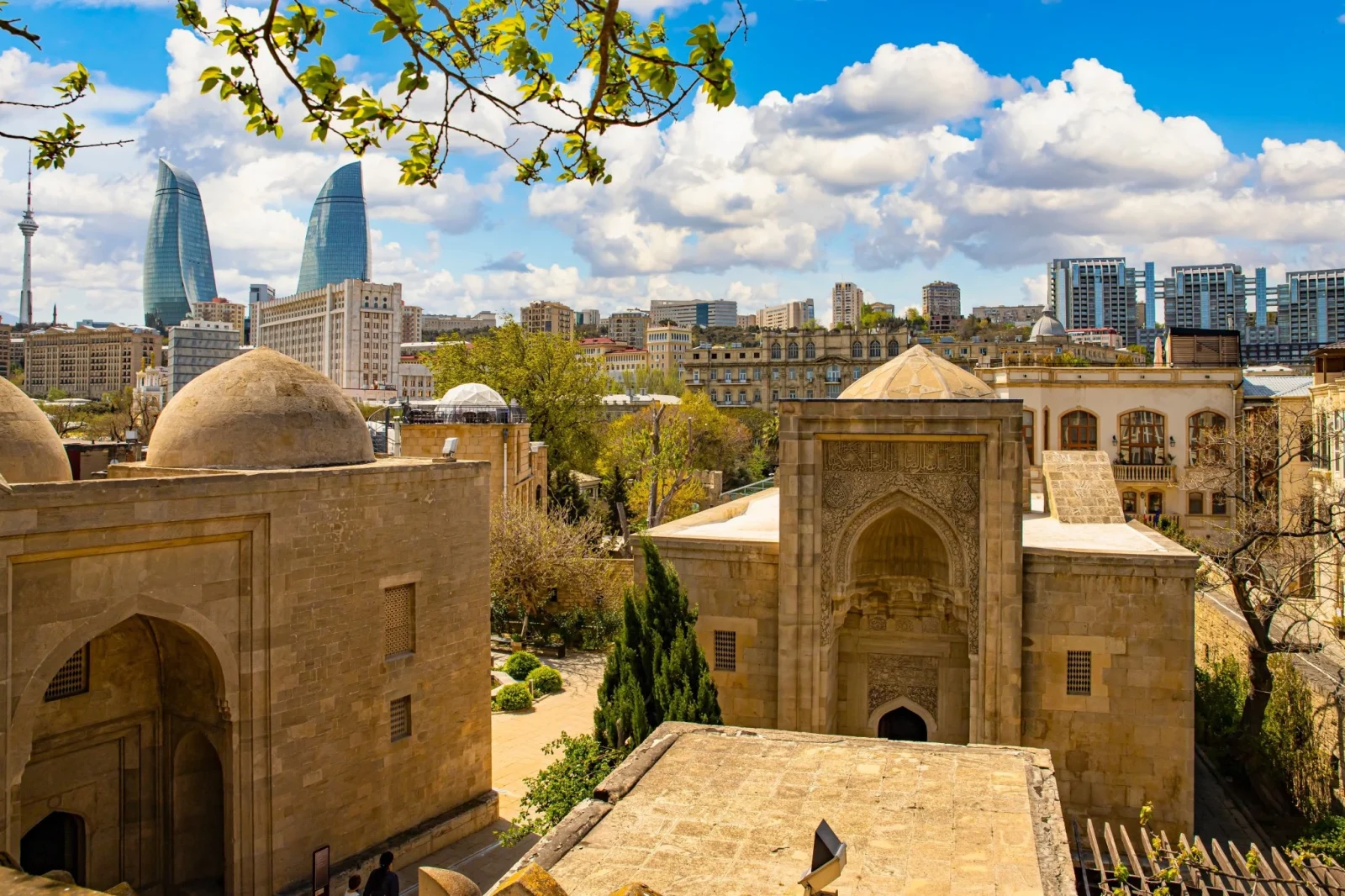
Completed in the 15th century when the Shirvanshah dynasty relocated the capital from Shamakhi to Baku, this palace complex represents the zenith of the Shirvan-Absheron school of architecture. The complex is not a single building but an ensemble of structures including the main palace, the Divankhane (reception hall), the burial vault of the Shirvanshahs, the Shah’s Mosque, and the palace baths.
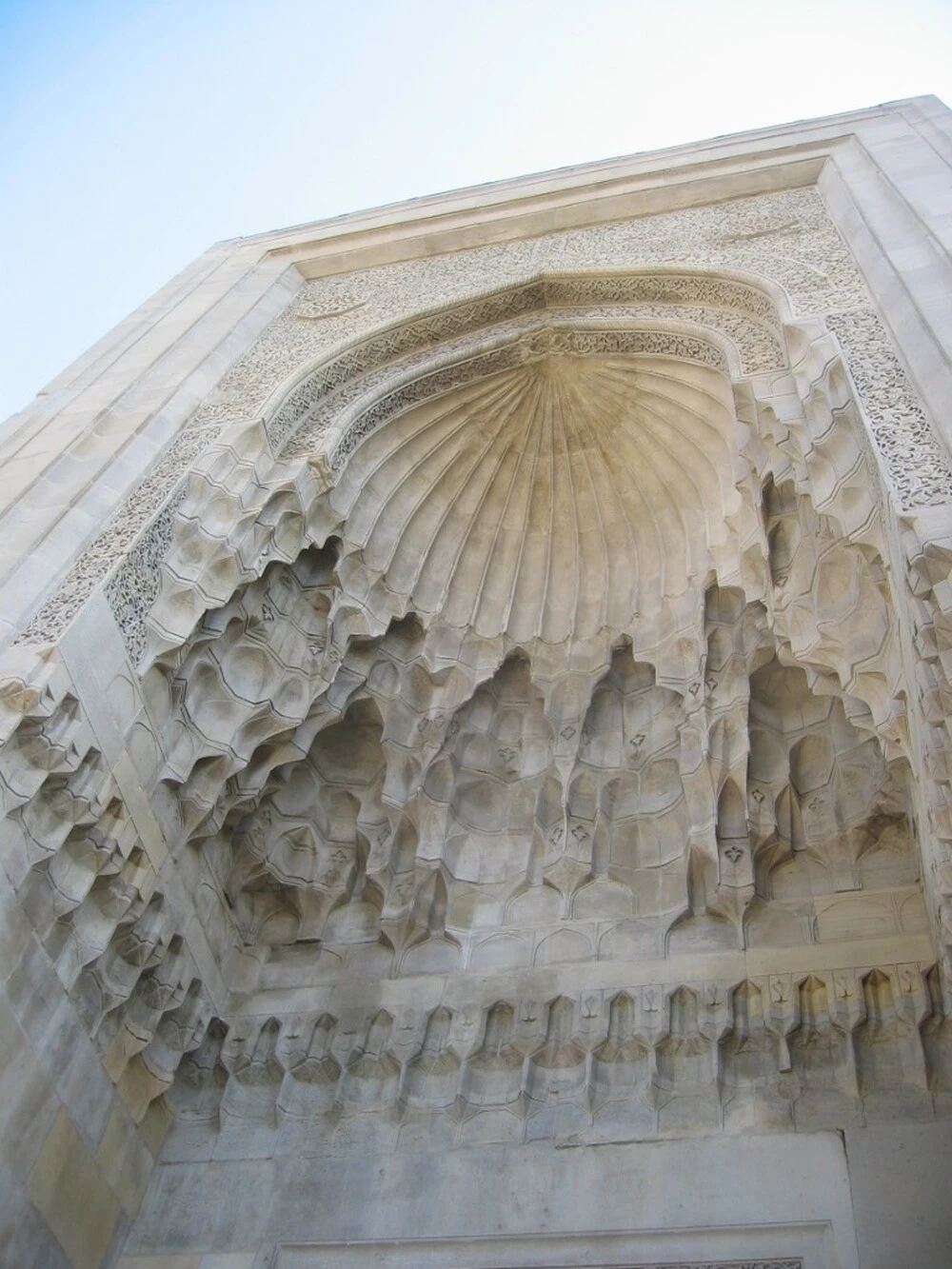
The Divankhane is particularly notable for its octagonal rotunda and the exquisite muqarnas carvings that decorate its limestone portals. The architectural philosophy of the complex emphasizes cubic volumes and horizontal layers, integrating the buildings into the natural hillside to provide panoramic views of the harbor while maintaining defensive seclusion. The use of aglay stone throughout the complex, carved with floral and geometric motifs, demonstrates a high level of artisanal skill that would later influence the revivalist styles of the 19th-century oil barons.
3. The Muhammad Mosque (Siniggala)
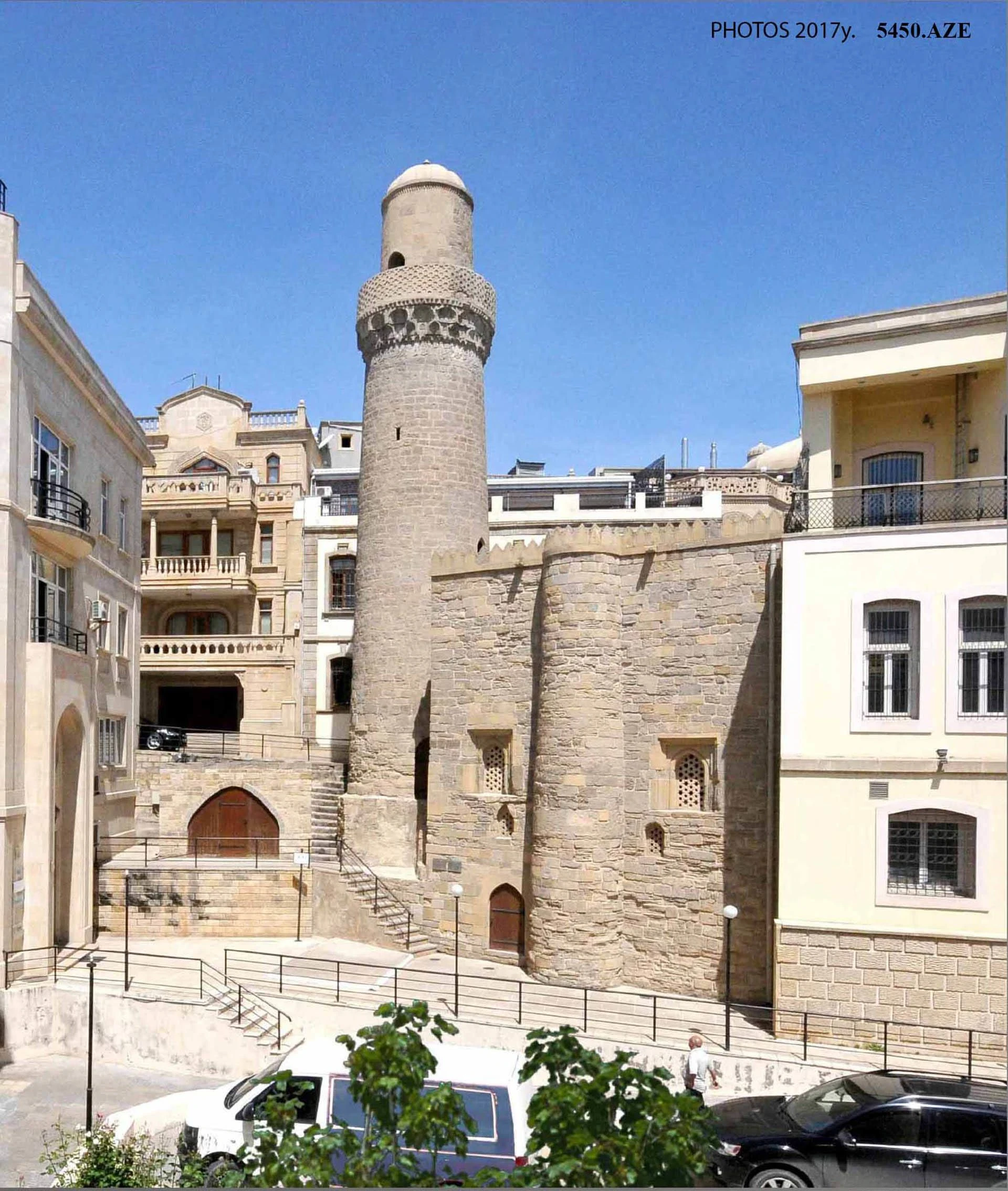
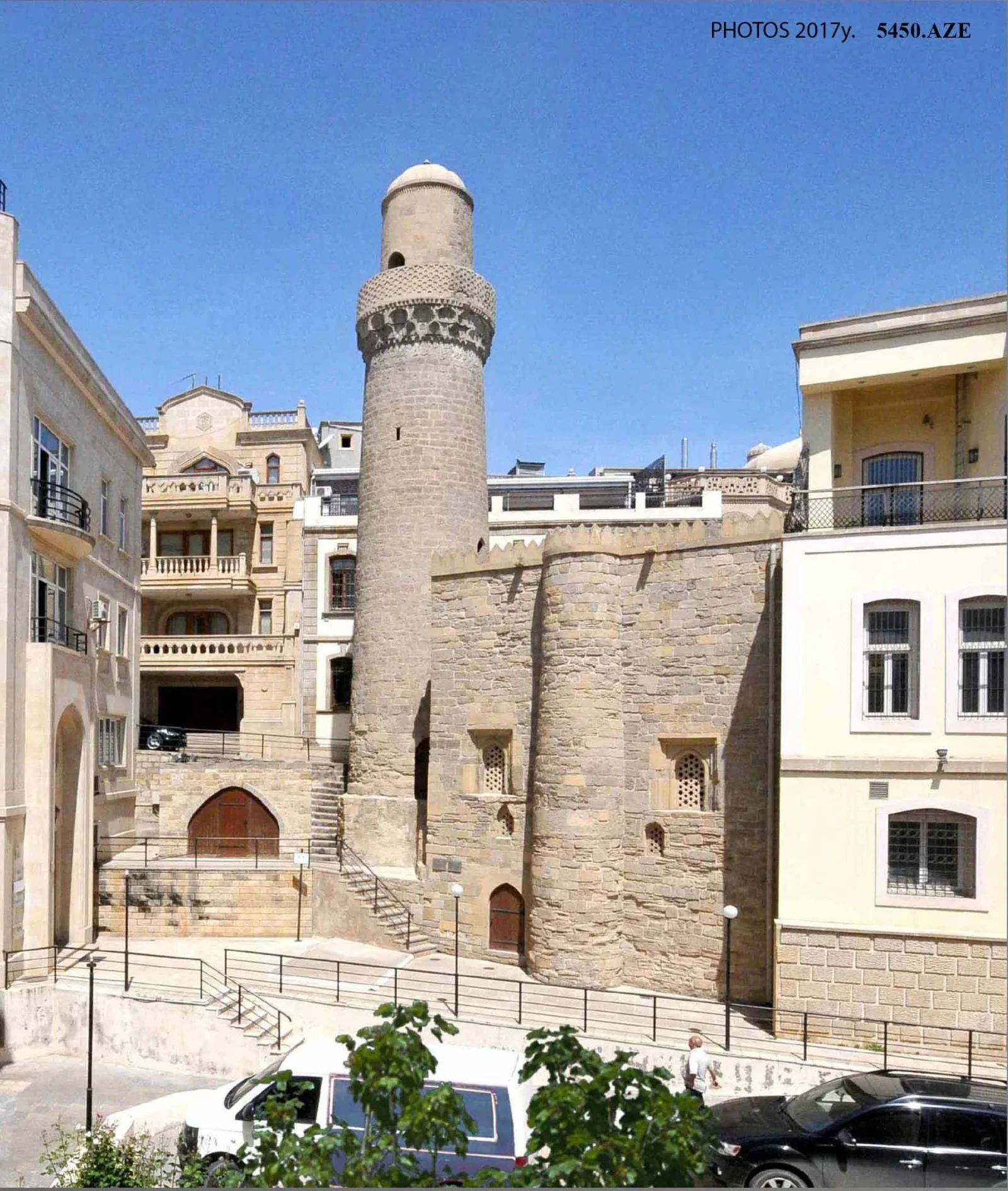
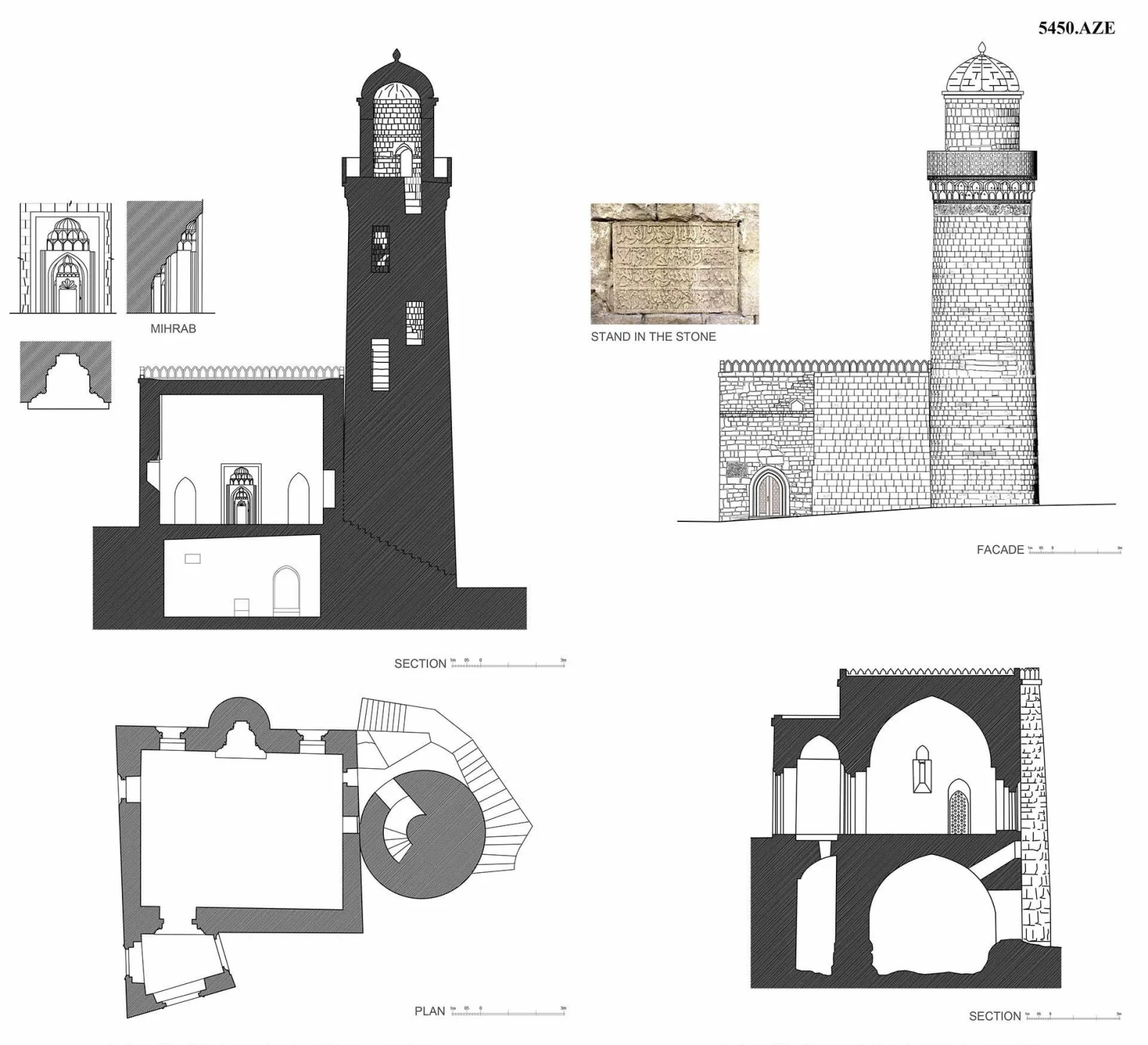
The Muhammad Mosque, constructed in 1078–1079 AD, is the earliest dated Islamic building in Azerbaijan. It is colloquially known as Siniggala, or the Broken Tower, a name it acquired after its minaret was partially destroyed during the 1723 Russian naval bombardment led by Admiral Matyushkin.
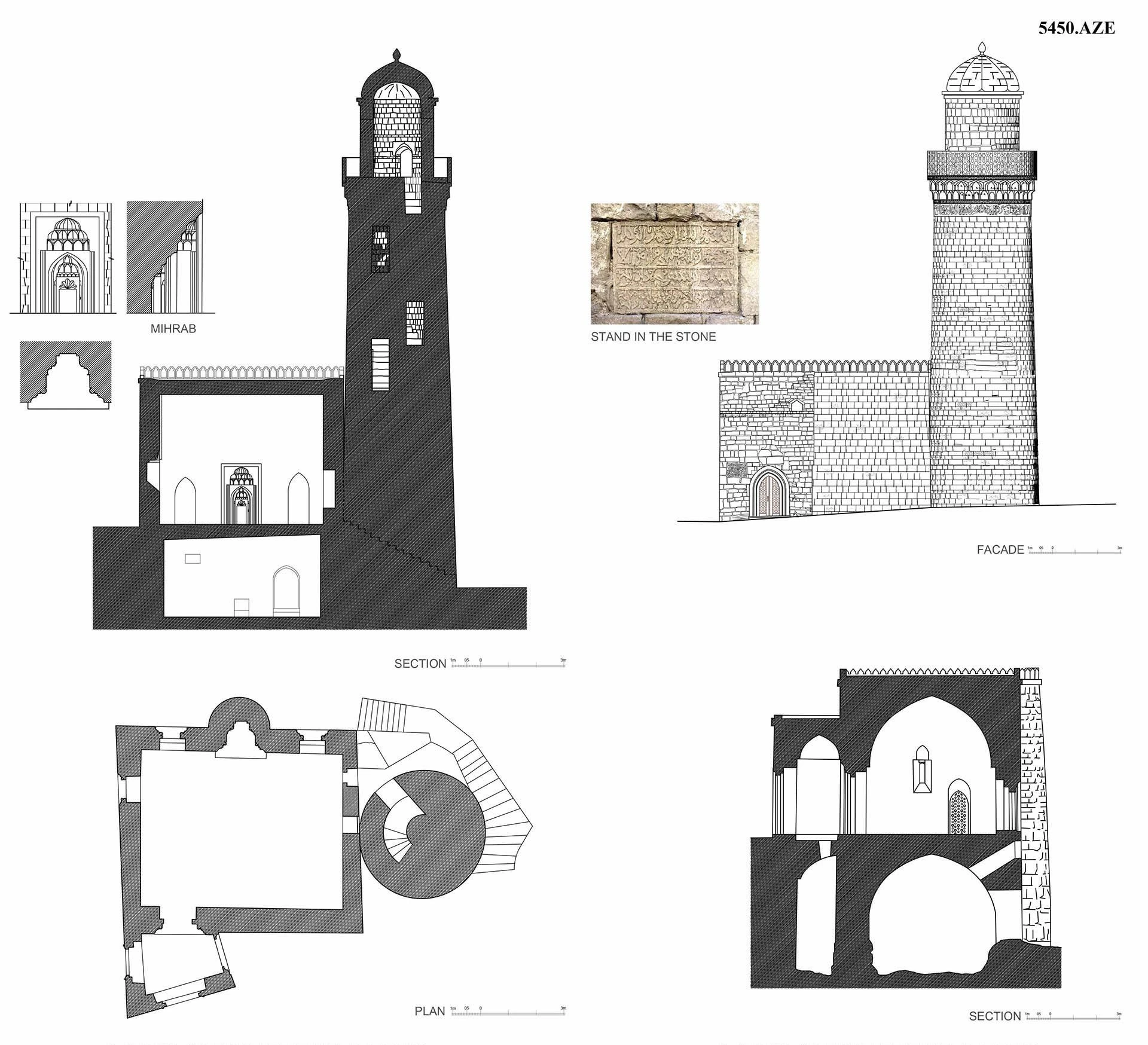
The mosque features a small, barrel-vaulted prayer hall and a strong, slightly thinning cylindrical minaret. The minaret is decorated with an archaic Kufic inscription under the balcony, which is supported by coarse limestone stalactites. This structure is a primary example of neighborhood-level religious planning in medieval Baku, where mosques served as both spiritual centers and defensive observation points within the labyrinthine streets of the Inner City.
4. Ismailiyya Palace
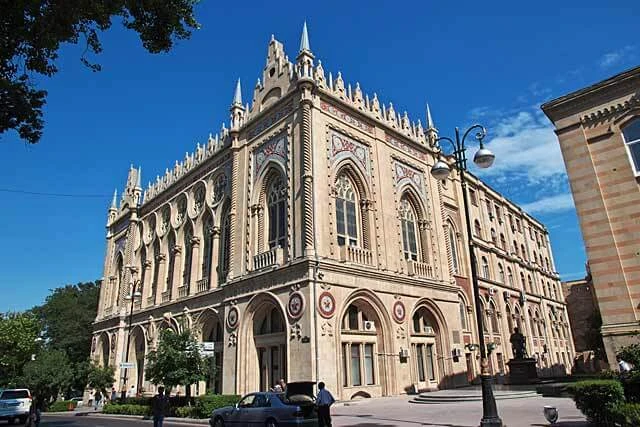
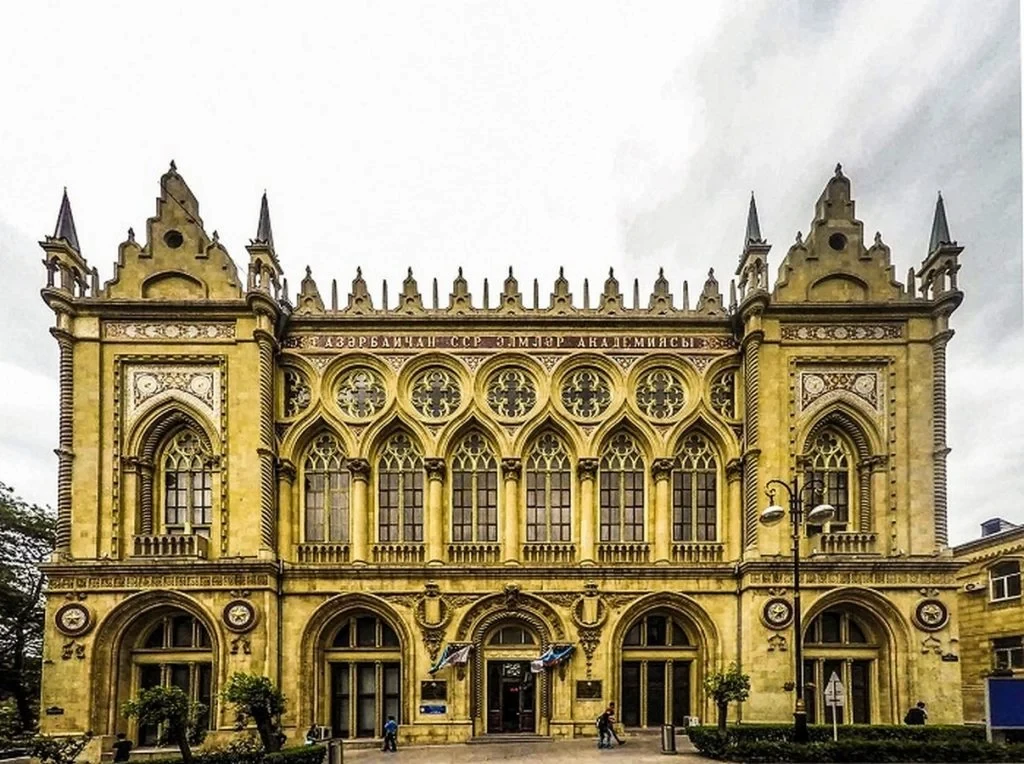
The Ismailiyya Palace, designed by the Polish architect Józef Płoszko and completed in 1913, is one of Baku’s most celebrated examples of Venetian Gothic architecture. Commissioned by the oil magnate Musa Naghiyev in memory of his son, the building was inspired by the Palazzo Ca’ d’Oro in Venice, which the magnate had admired during his European travels.
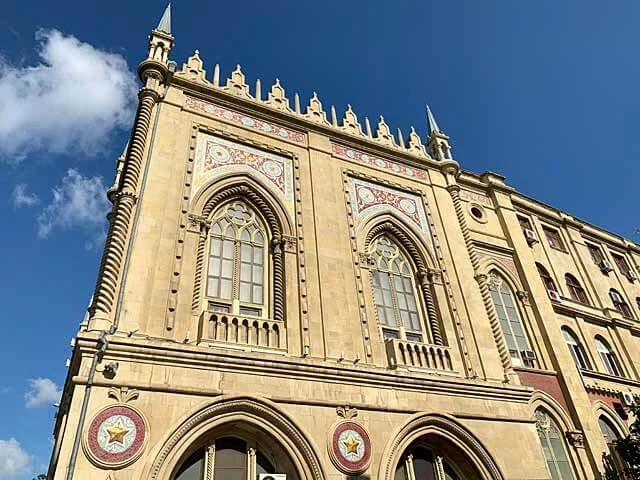
The palace’s facade is a study in European romanticism, featuring intricate tracery, pointed arches, and decorative columns carved from local limestone. Płoszko successfully integrated this Italianate aesthetic into the Baku cityscape by adjusting the scale to fit the street perspectives of the emerging White City. Originally the headquarters of the Muslim Charity Society, the building was set on fire during the March Days of 1918 and was later restored by Vartan Sarkisov. Today, it serves as the Presidium of the National Academy of Sciences, representing the enduring link between Baku’s industrial wealth and its scientific aspirations.
5. The Palace of Happiness (Mukhtarov Mansion)
Built between 1911 and 1912, the Palace of Happiness is perhaps the most romantic residential building of the Oil Boom era. Designed by Józef Płoszko for the oil baron Murtuza Mukhtarov, the mansion was a gift for his wife, Liza Tuganova, who had expressed admiration for a French Gothic building they encountered in Venice.
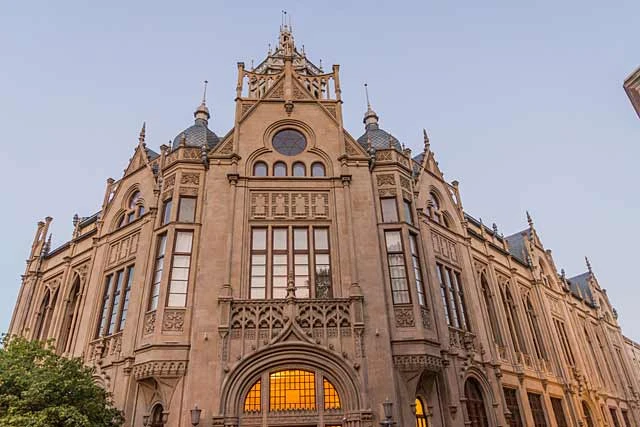
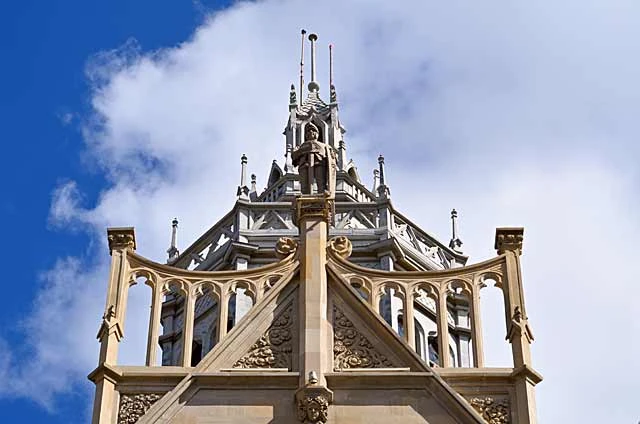
The architectural style is an exquisite blend of French Gothic and Rococo, characterized by tall spires, slender windows, and a statue of a medieval knight (the Polish knight Zawisza the Black) overlooking the entrance. The mansion was constructed in just nine months, demonstrating the rapid pace of development fueled by oil wealth. After the Soviet takeover, it was converted into a Wedding Palace, a function it maintains today, symbolizing the continuity of civic life across political regimes. A major 2012 restoration reinforced the structure with a seismic “damper” system capable of withstanding a magnitude 9 earthquake.
6. Azerbaijan State Academic Opera and Ballet Theater
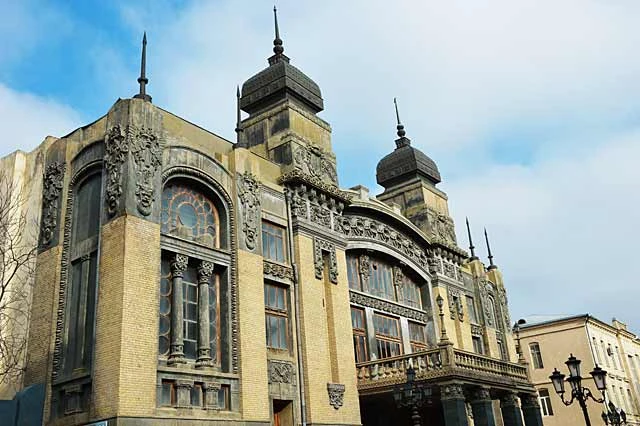
The Azerbaijan State Academic Opera and Ballet Theater was constructed in 1911 by architect Nikolai Bayev. The building’s origin is rooted in a bet between the Mailov brothers and the magnate Zeynalabdin Taghiyev regarding the possibility of completing a grand opera house in less than a year.
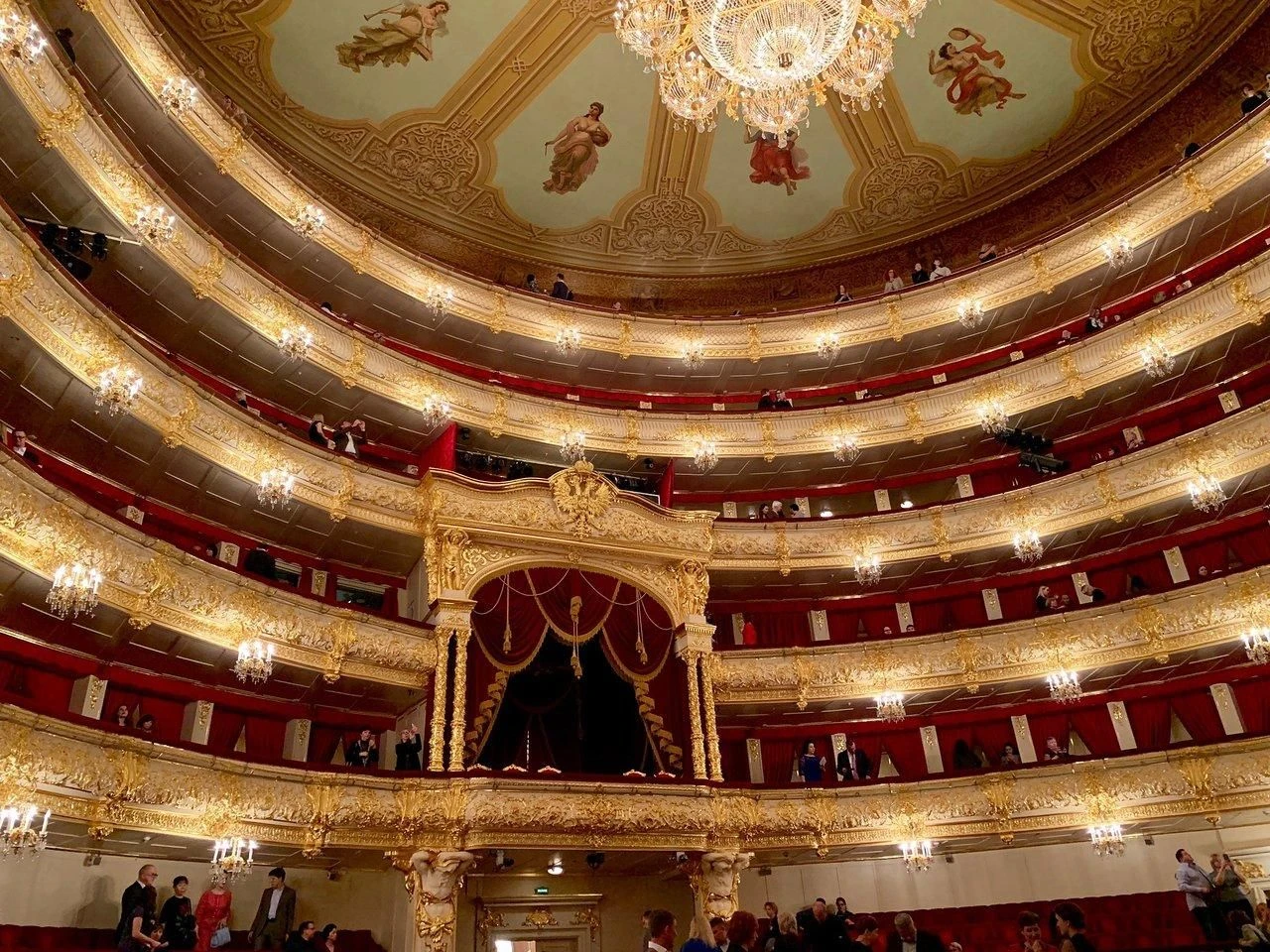
Bayev’s design is a vivid example of Art Nouveau and Baroque synthesis, incorporating Moorish elements that pay homage to the city’s Islamic heritage. The facade is highly plastic, with domes and cornices that project from the surface, creating a sense of depth and movement characteristic of “Oil Baron architecture”. The theater’s completion in ten months was a technical marvel for the early 20th century, requiring 200 workers to labor in three shifts. It remains the cultural heart of Baku, having hosted the premieres of the region’s first indigenous operas.
7. The Taza Pir Mosque
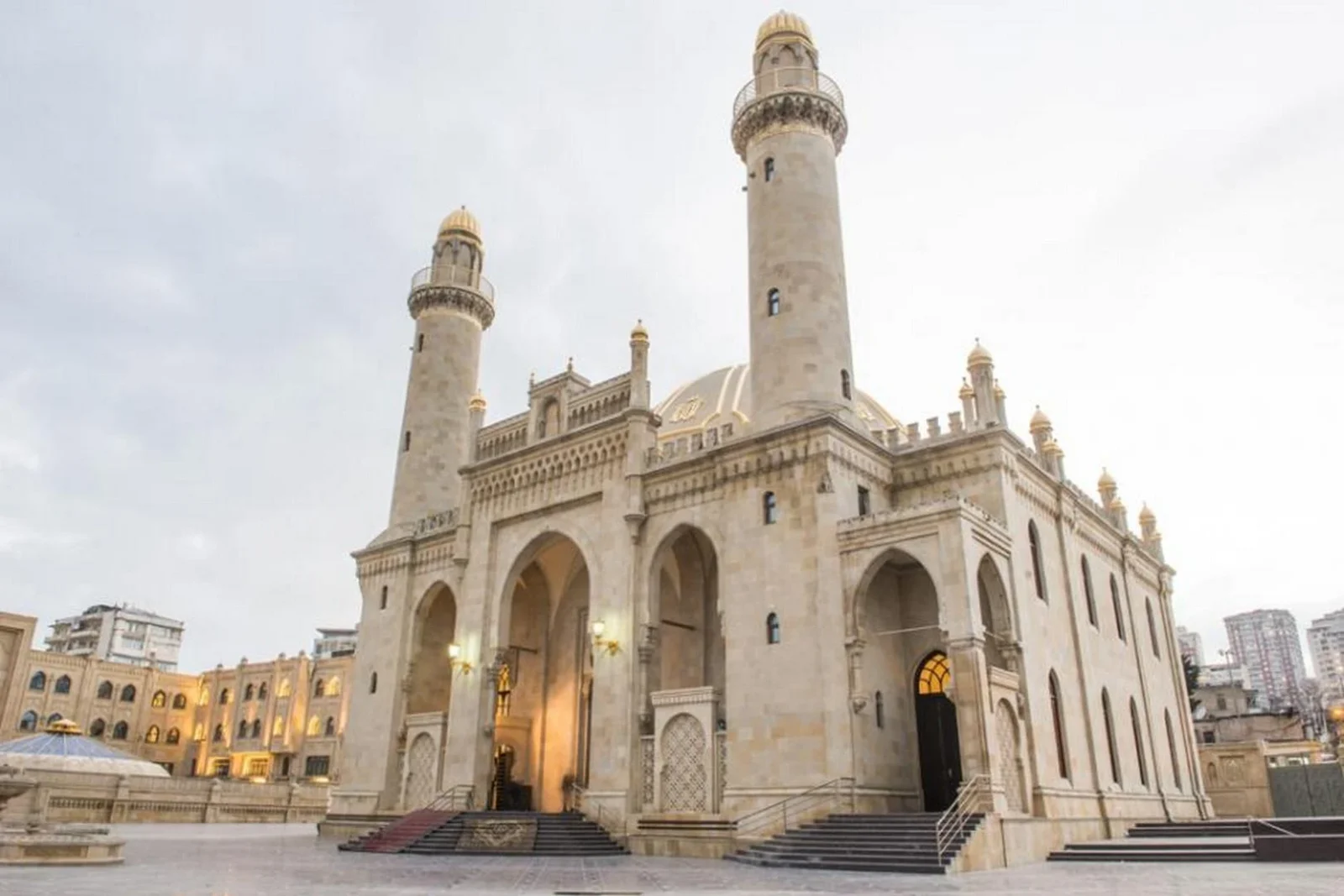
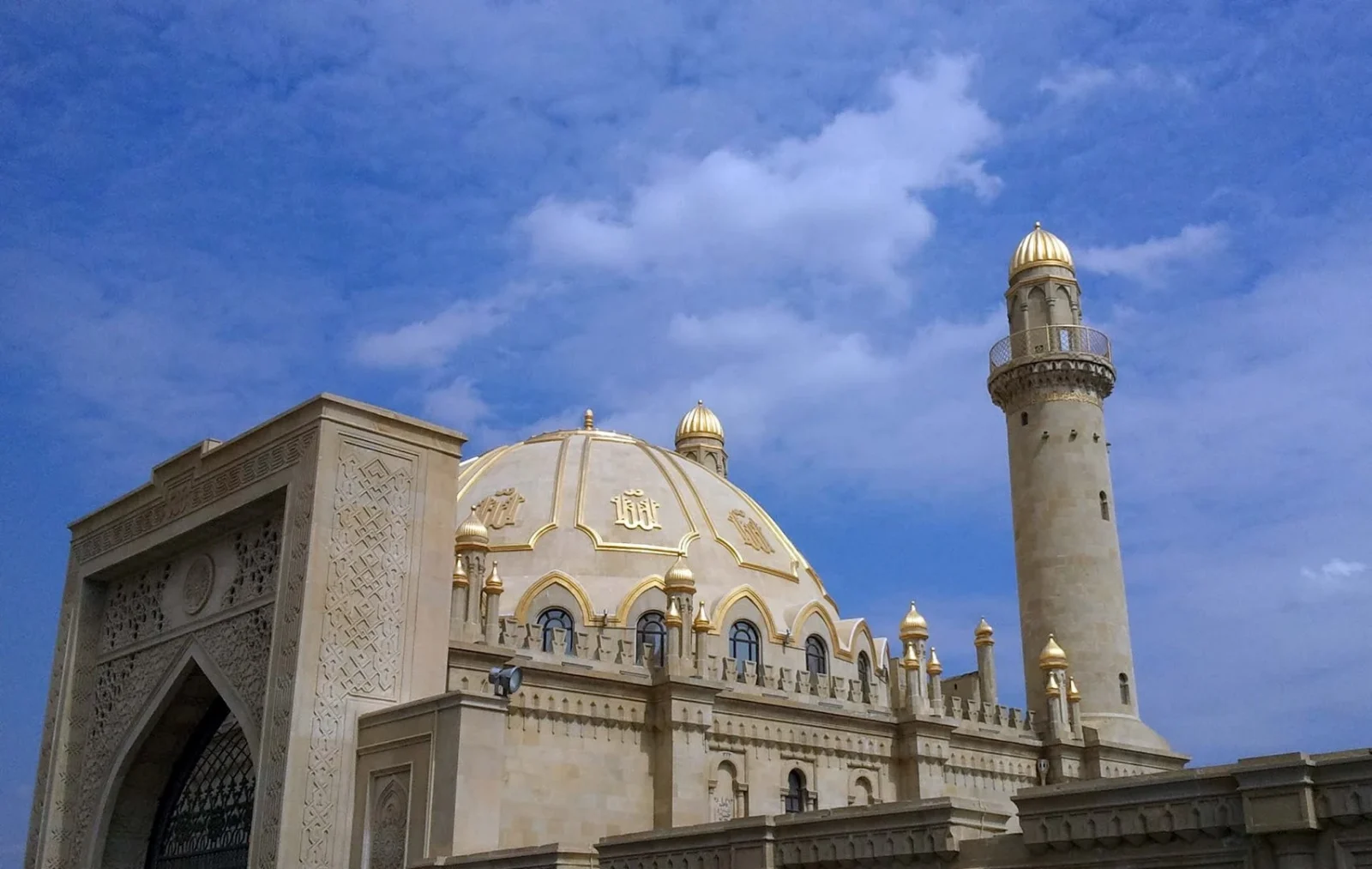
The Taza Pir Mosque, built between 1905 and 1914, is a defining work by the first professional Azerbaijani architect, Ziverbey Ahmedbeyov. The construction was funded by the millionairess Nabat Ashurbeyli-Rzayeva and was erected on the site of a 14th-century Sufi sanctuary.
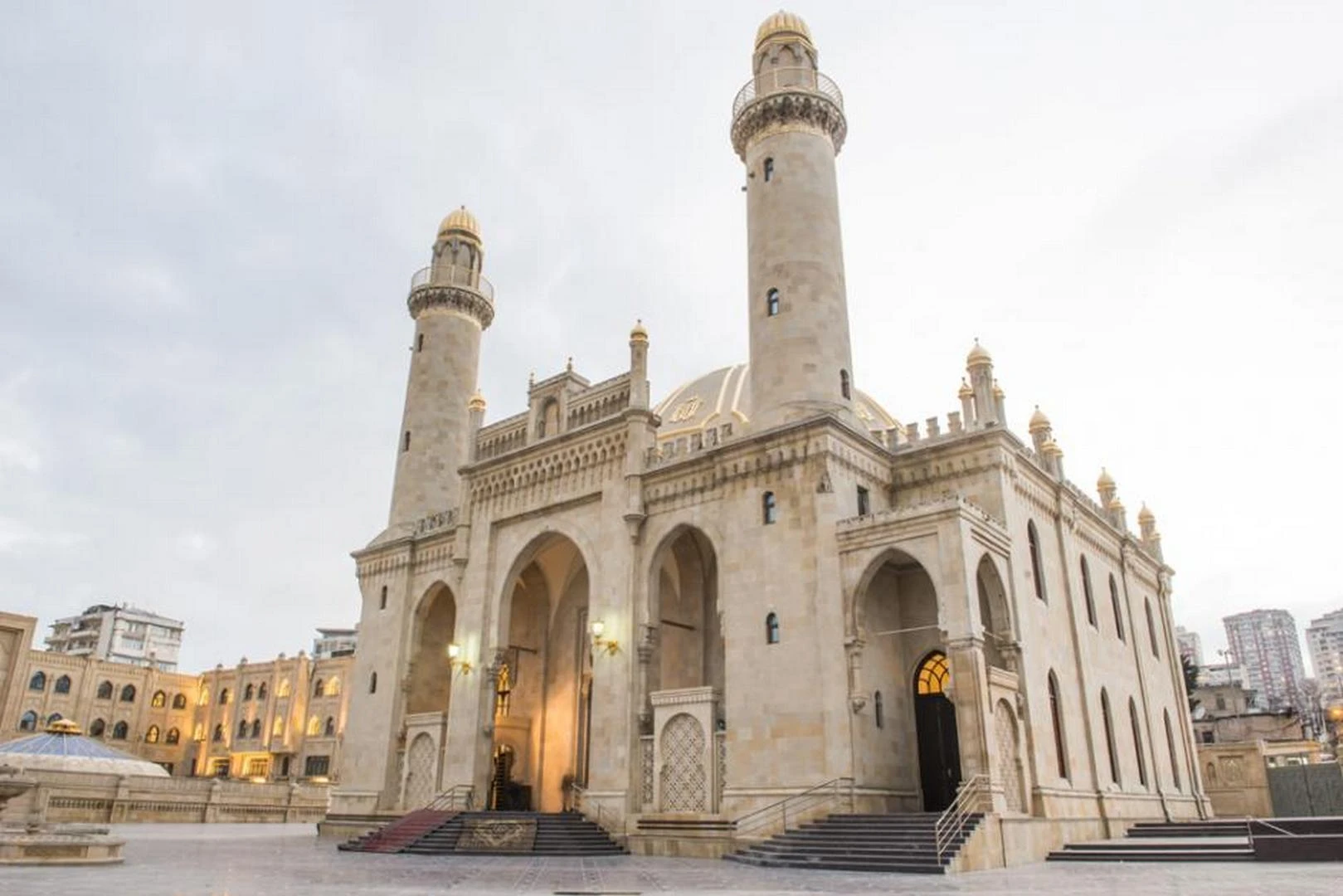
The mosque is a unique synthesis of Eastern architecture with contemporary construction standards of the early 20th century.
It features two symmetrical minarets with gold-plated tips and a large central dome. The interior is decorated with patterns from the Shirvan architectural school and features calligraphic inscriptions from the Quran. The Taza Pir Mosque is significant not only for its beauty but for representing the emergence of a native architectural voice that sought to reclaim Islamic forms using the same limestone materiality favored by foreign eclectic architects.
8. The Government House (Domsovet)
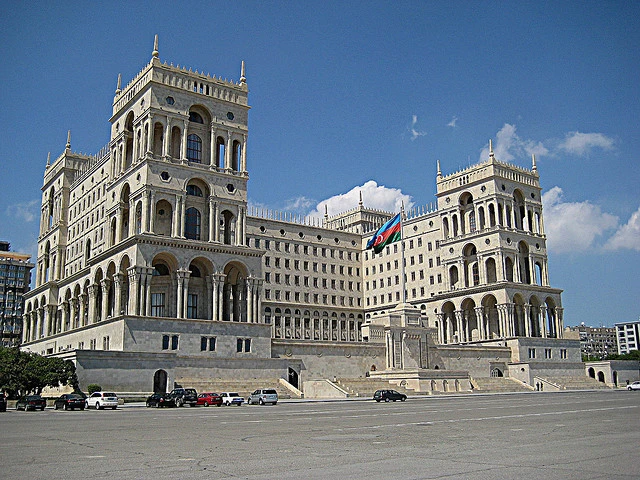
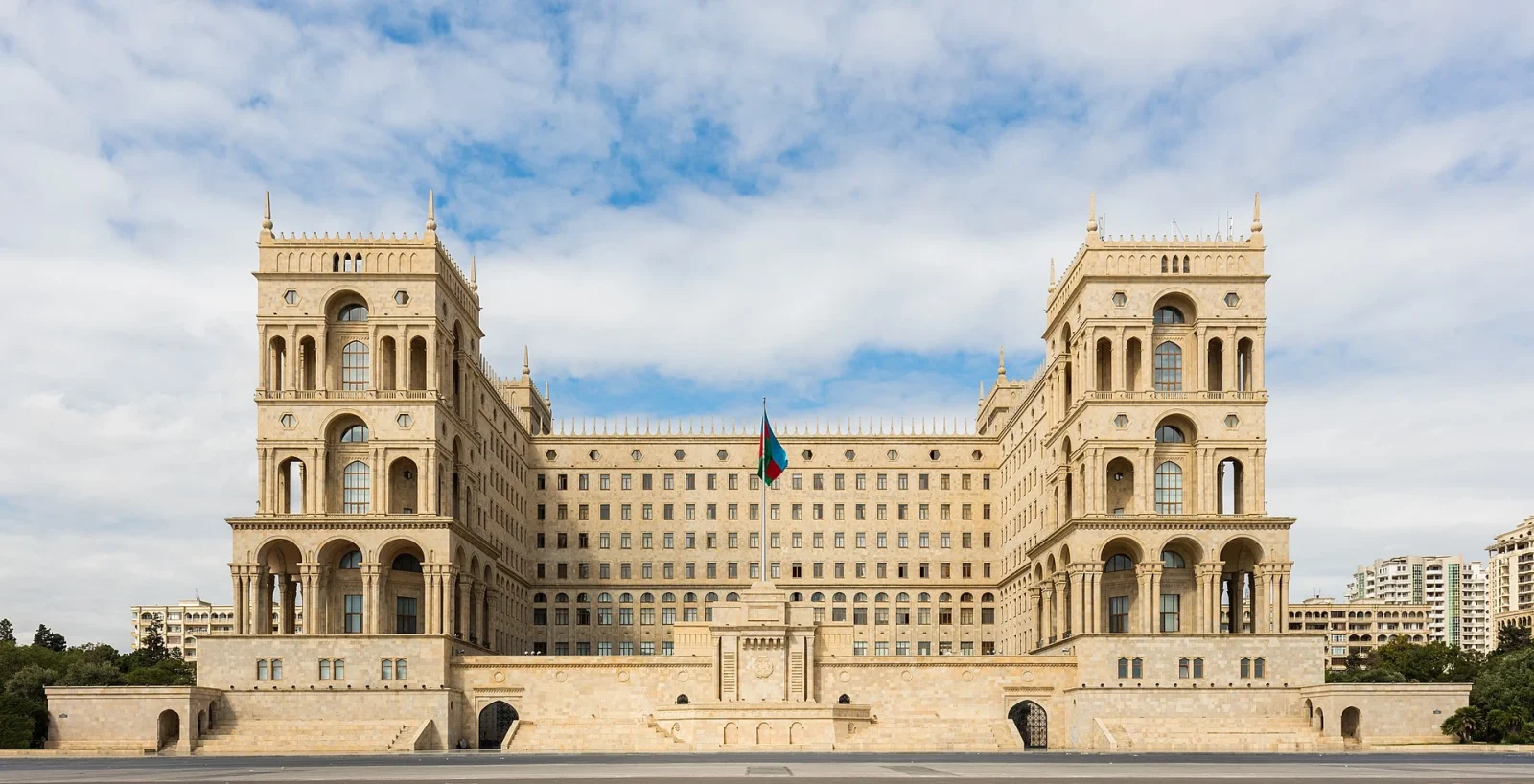
Situated on Freedom Square, the Government House is the most monumental administrative building of the Soviet period in Baku. Designed by Lev Rudnev and Vladimir Munts, construction began in 1936 but was interrupted by the war, eventually being completed in 1952.
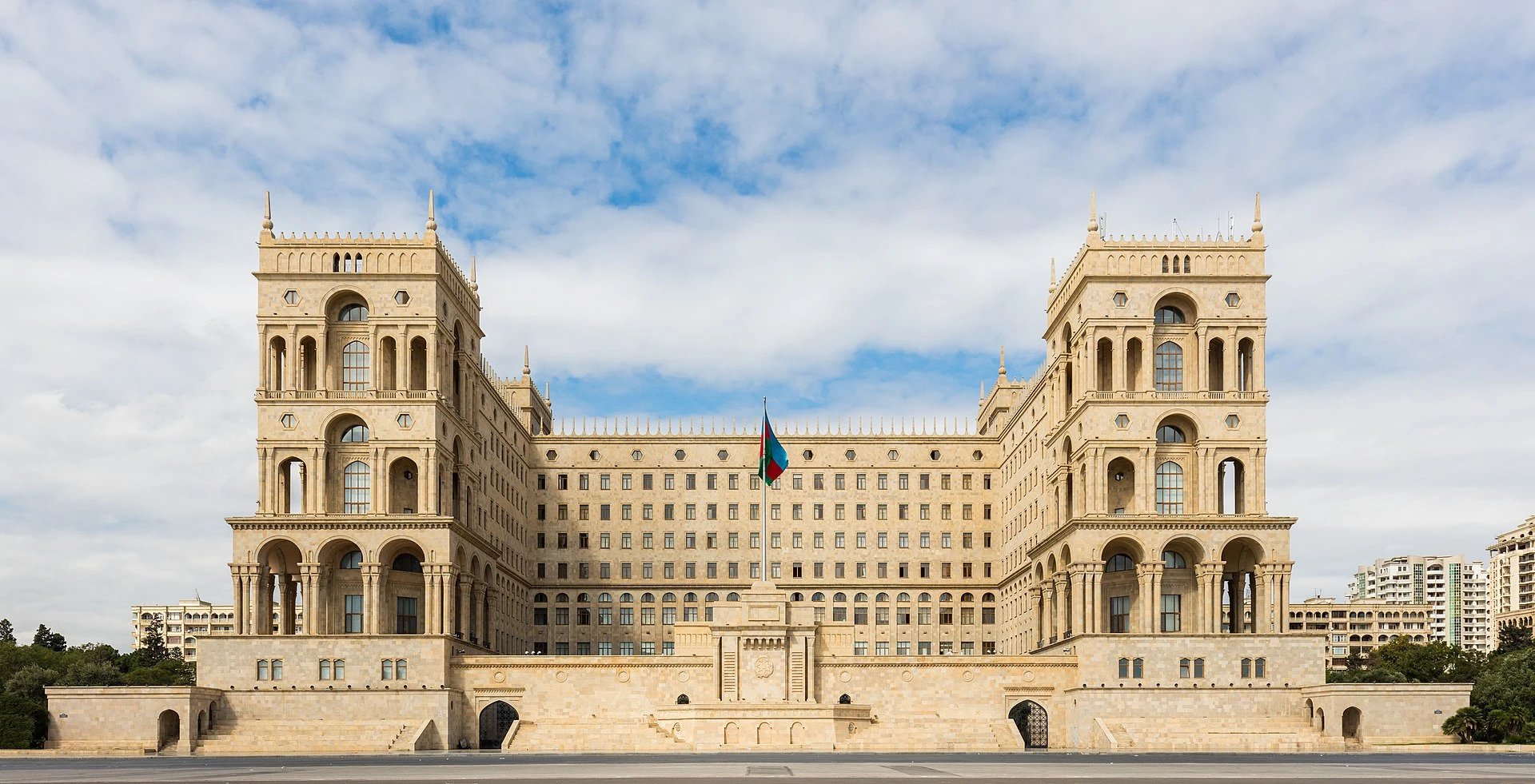
The architecture follows the Stalinist Empire style, which prioritized grandiosity, symmetry, and the integration of national motifs. The structure’s 200-meter facade is adorned with local limestone and features tiers of arches and turrets that explicitly reference the Palace of the Shirvanshahs. The building was designed to be the crown of the seaside, creating a ceremonial facade for Baku that the city had previously lacked. It currently houses several key ministries, maintaining its role as the center of Azerbaijani governance.
9. The Heydar Aliyev Center
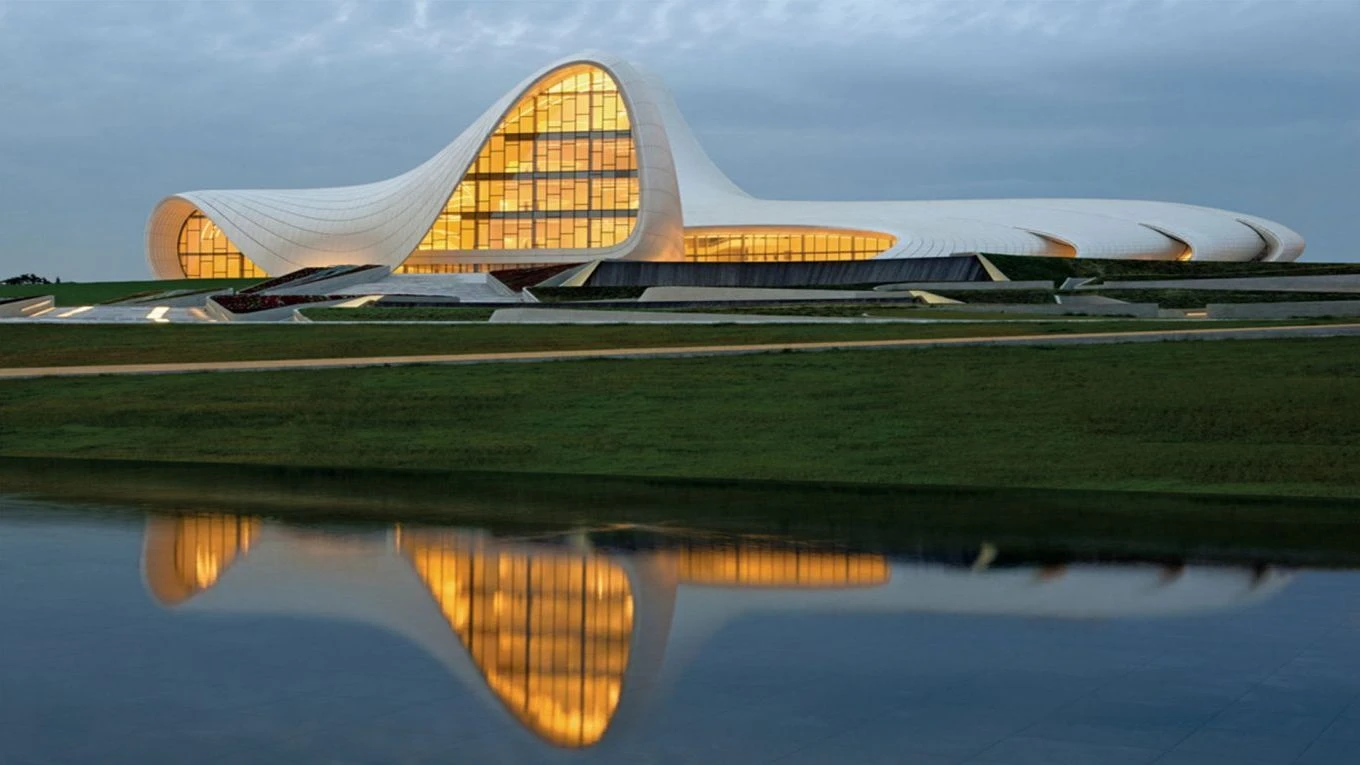
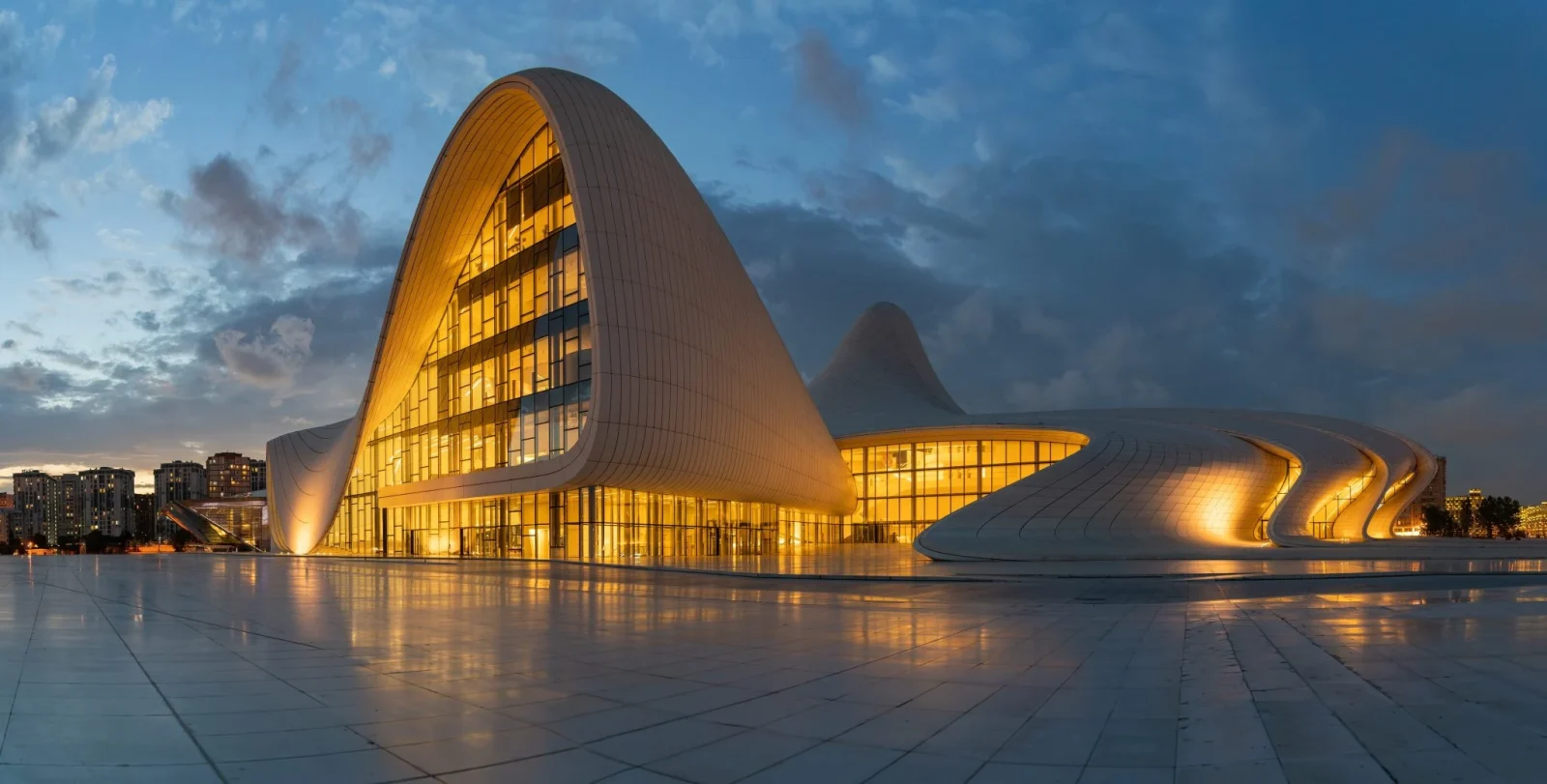
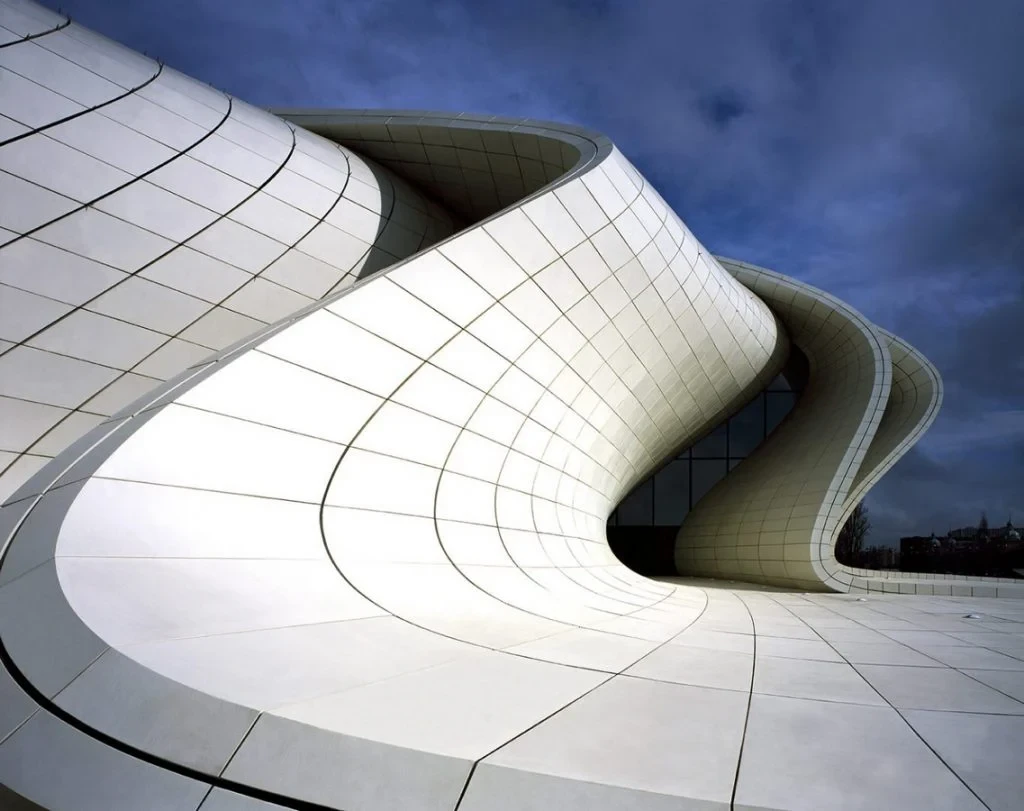
Designed by Zaha Hadid and completed in 2012, the Heydar Aliyev Center is the primary landmark of 21st-century Baku, representing a radical departure from the rigid, monolithic forms of the Soviet era. The structure is defined by its fluid, deconstructivist geometry, which appears to rise from the ground as a continuous wave.
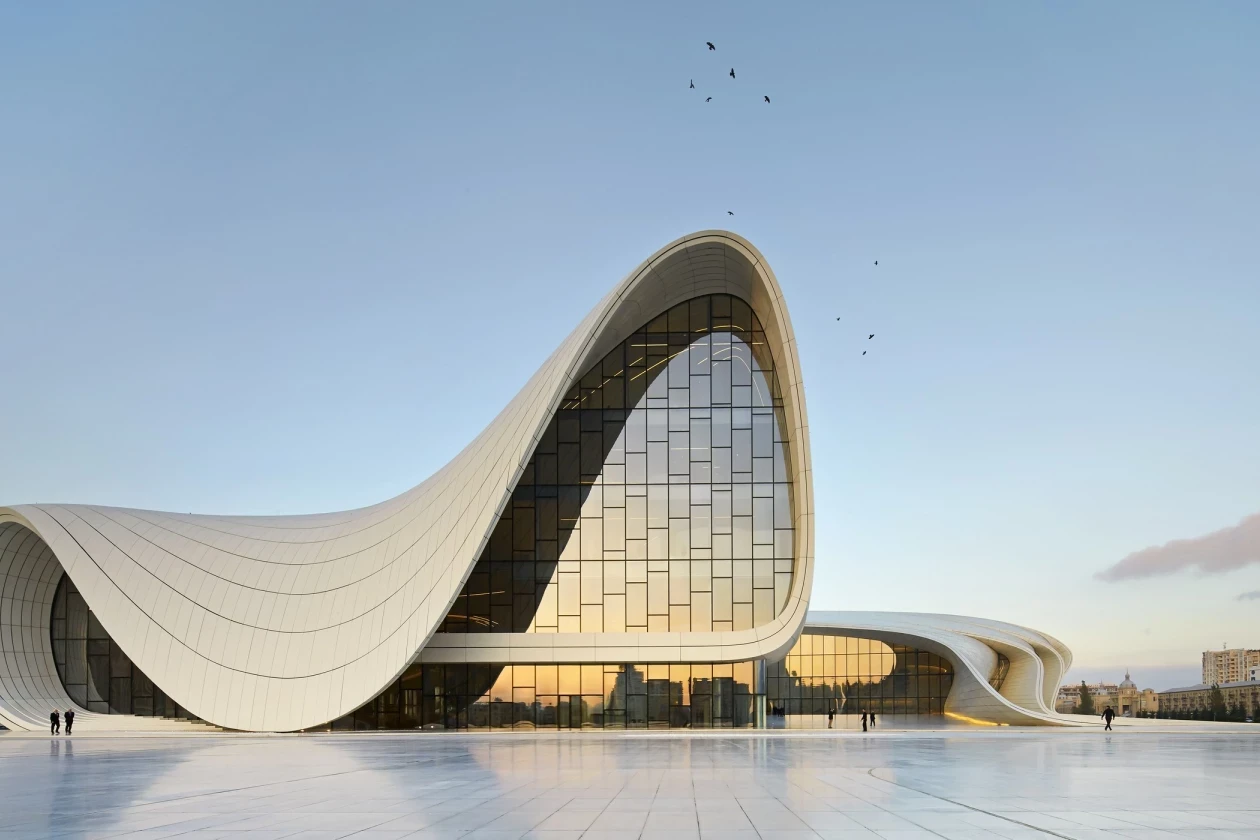
The building utilizes a space frame system and a concrete framework to create vast column-free interior spaces. Its exterior skin is composed of approximately 17,000 individual panels of Glass Fiber Reinforced Concrete (GRC) and Glass Fiber Reinforced Polyester (GRP). Each panel was manufactured to unique specifications using CAD and CNC technology to maintain the seamless curvature of the facade. The design is interpreted as a modern reimagining of Islamic calligraphy and traditional ornamentation, where surfaces flow seamlessly between the floors, walls, and ceilings.
10. The Flame Towers
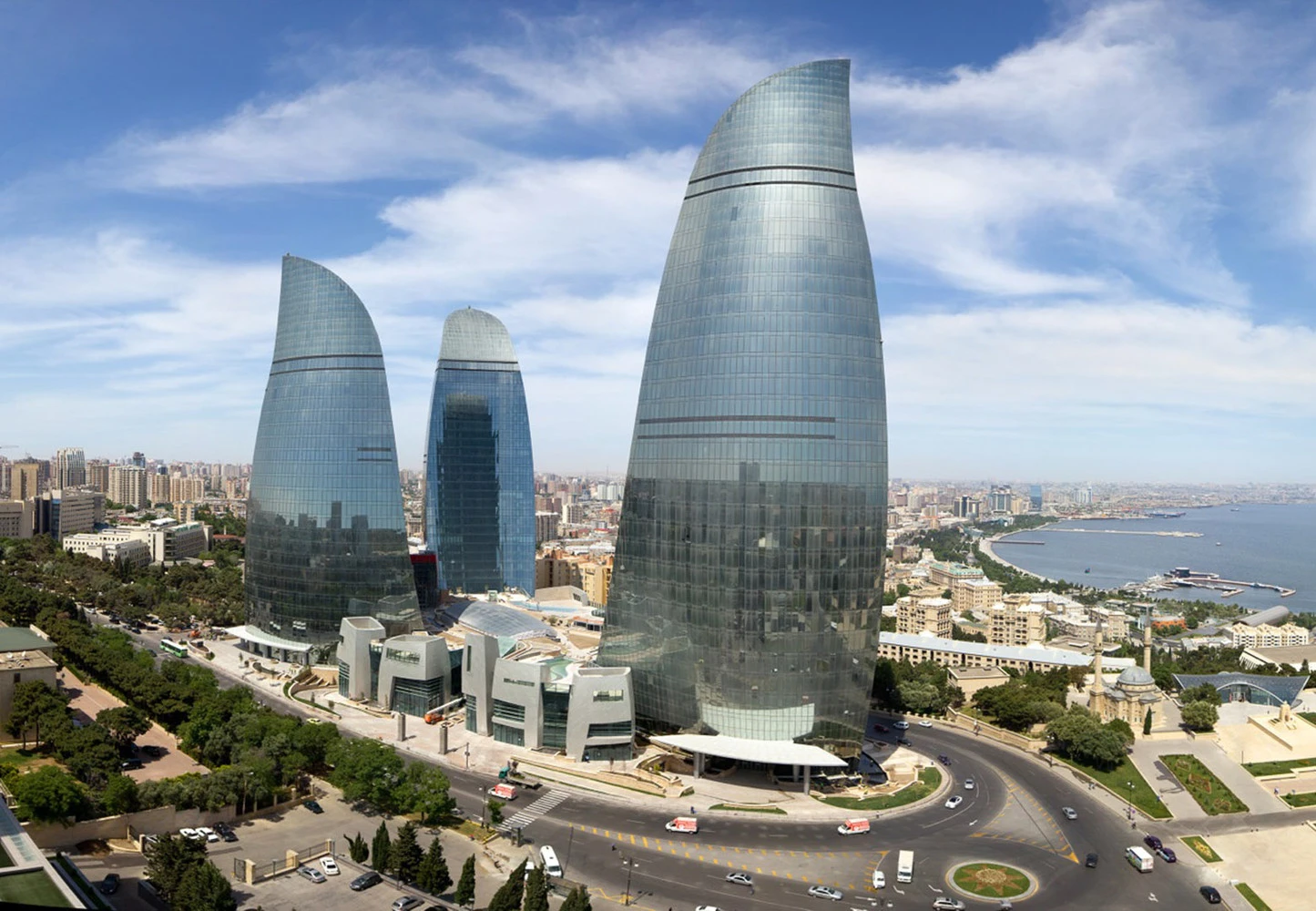
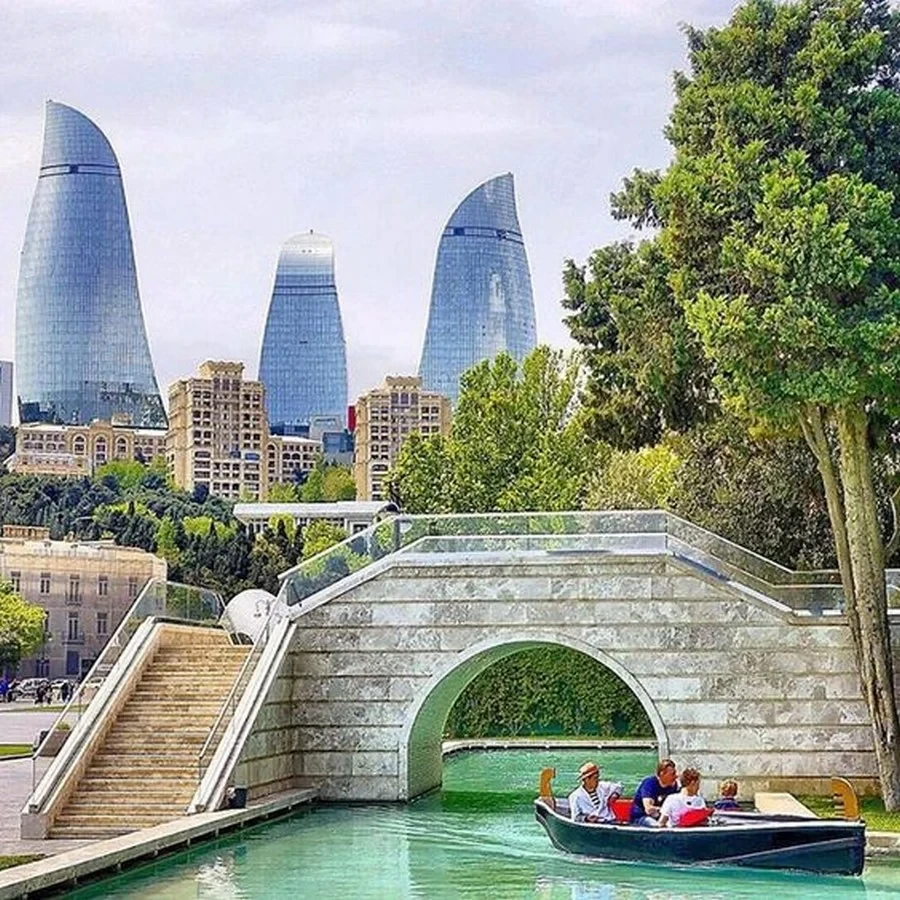
The Flame Towers are a trio of skyscrapers that serve as the visual center of Baku’s modern skyline. Designed by HOK and completed in 2012, the towers reach heights of 182, 165, and 161 meters. Their shapes are designed to evoke flickering flames, a reference to the Land of Fire and Azerbaijan’s ancient history of natural gas fires and fire temples.
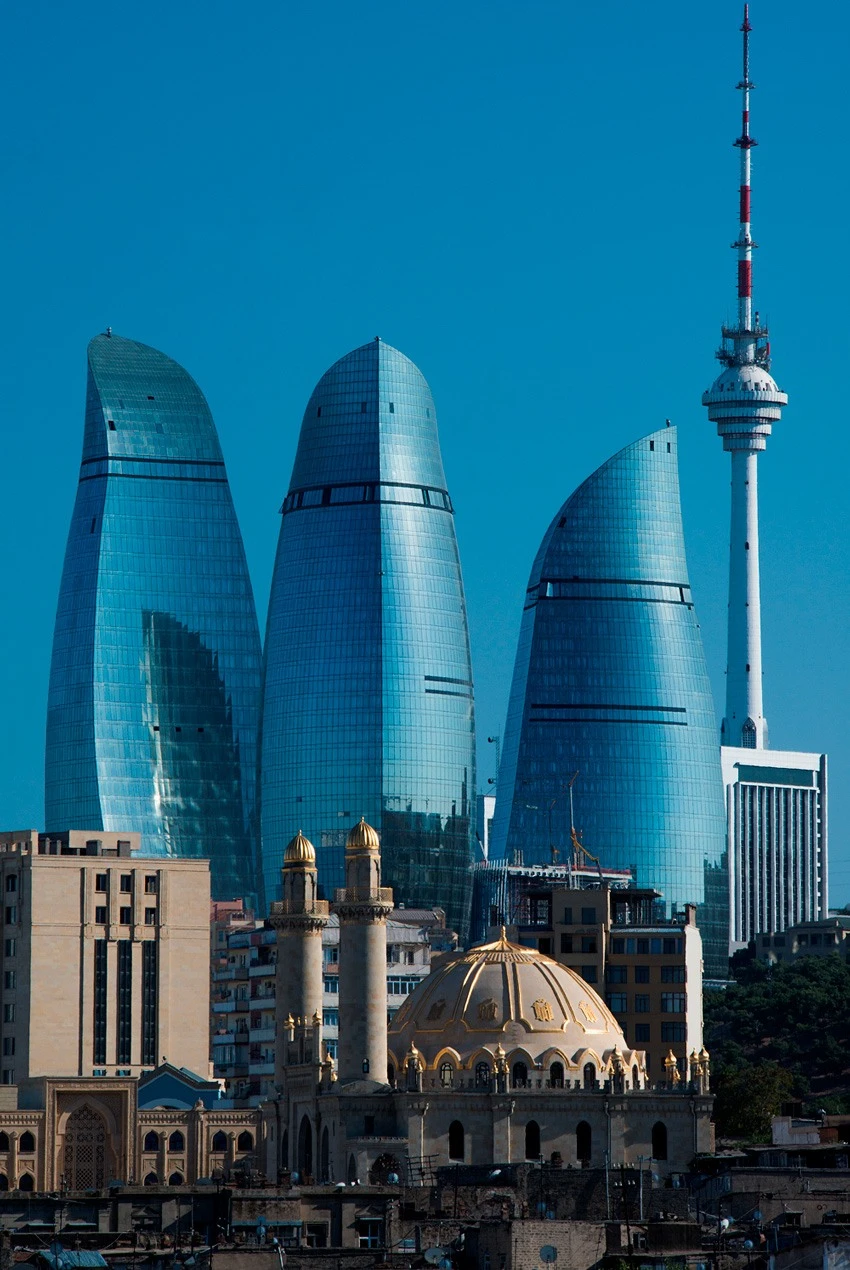
The glass-shelled towers are mixed-use, containing a hotel, luxury apartments, and offices. At night, the buildings are illuminated by 10,000 high-power LED lights that transform the facades into a massive screen showing moving fire or the national flag. The towers are strategically positioned on a hill above the city, making them visible from almost any point in the center and integrating them into the panoramic amphitheater of Baku’s coastal geography.
11. The Azerbaijan National Carpet Museum
The Carpet Museum’s current building, situated on Seaside Boulevard, was designed by Austrian architect Franz Janz and opened in 2014. The structure is a premier example of mimetic architecture, designed to resemble a giant rolled-up carpet.
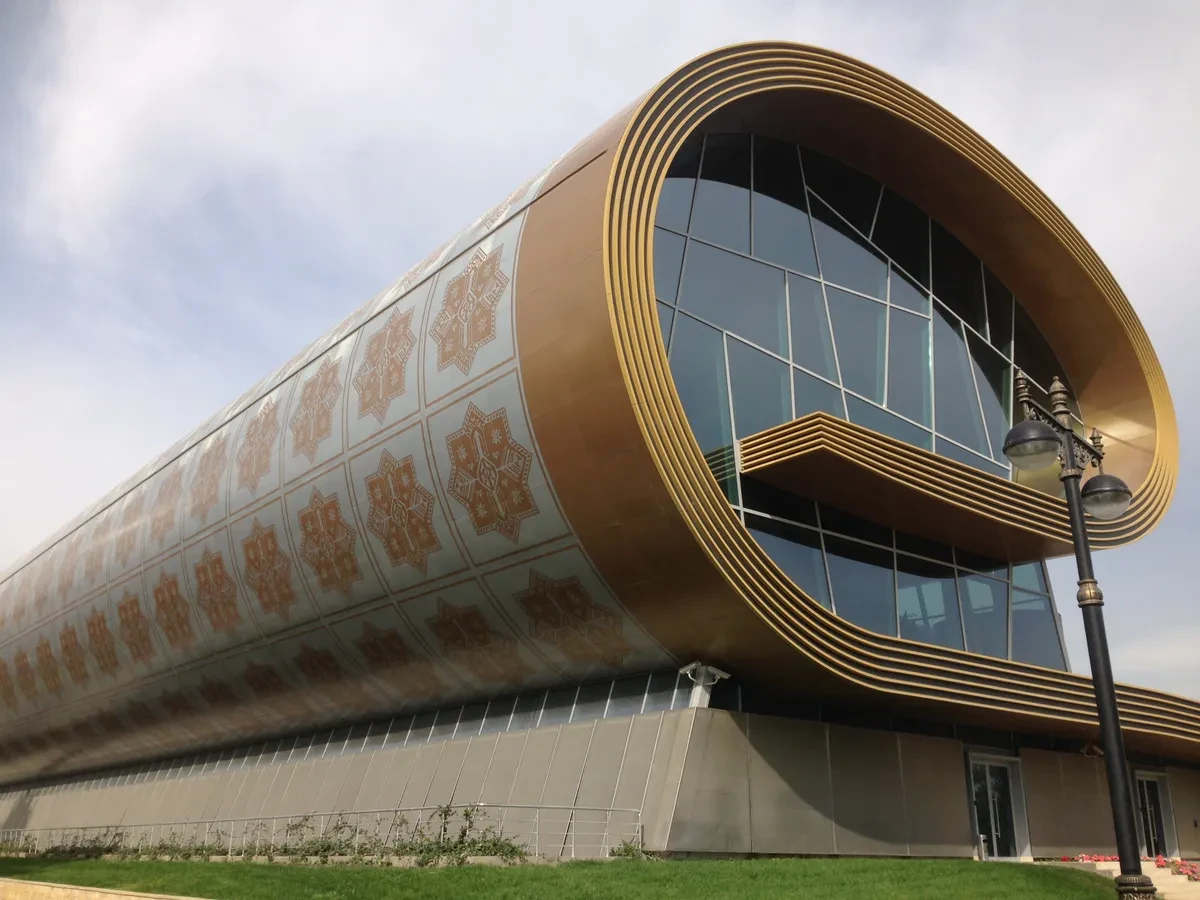
The museum’s form serves as a direct representation of its contents, the world’s largest collection of Azerbaijani carpets. The building’s facade features patterns that mimic the weave of traditional rugs, and its interior galleries spiral upward to follow the curvature of the structure. The design highlights the importance of the carpet as a national heritage symbol, merging contemporary architectural experimentation with intangible cultural history.
12. Baku Crystal Hall
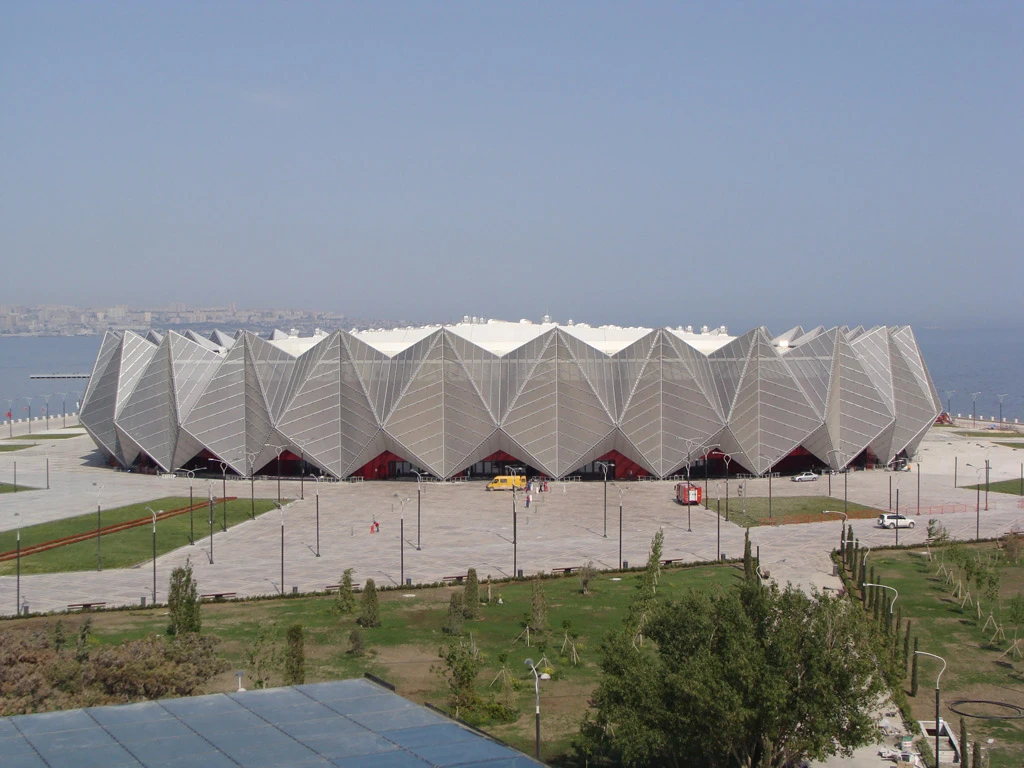
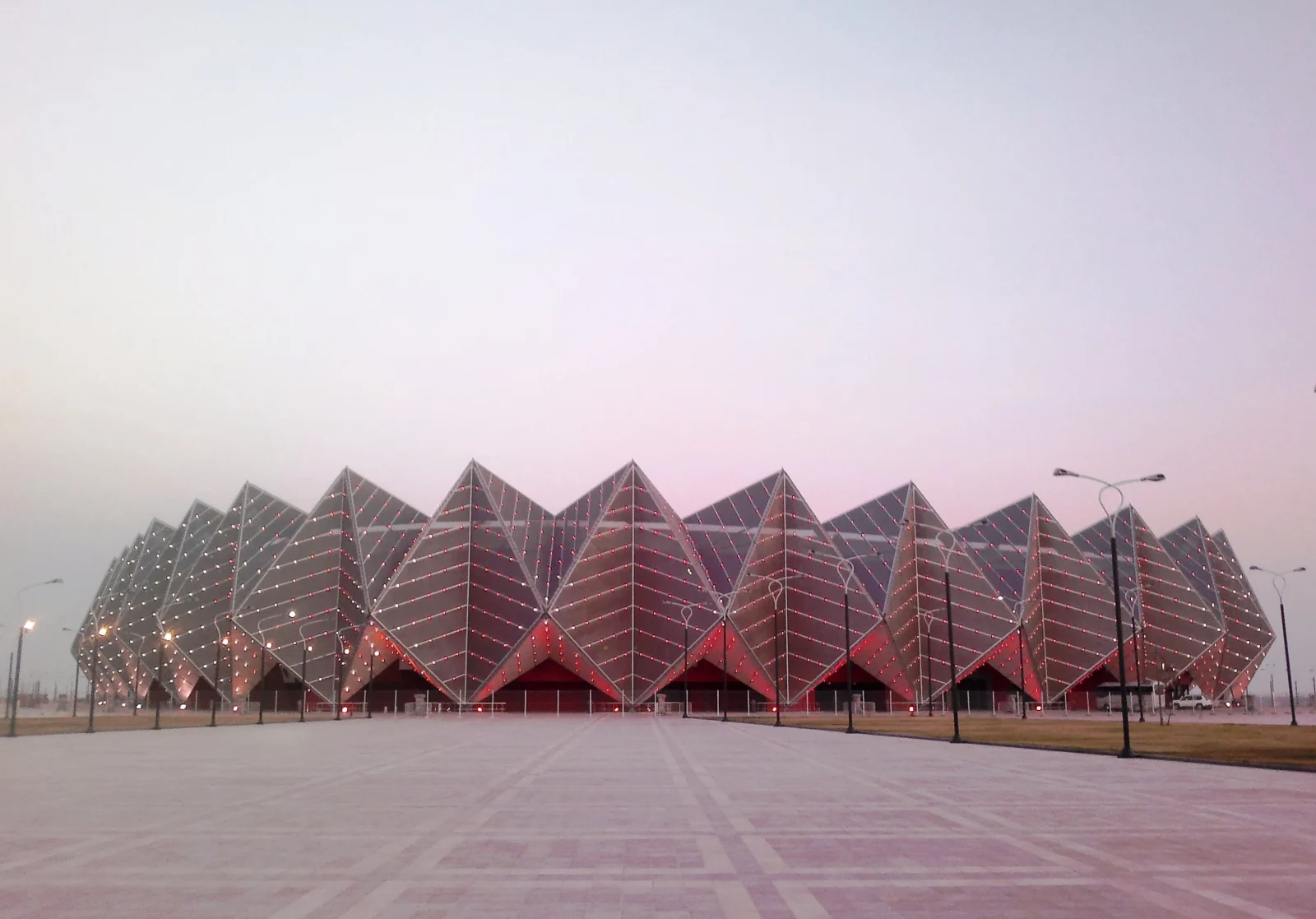
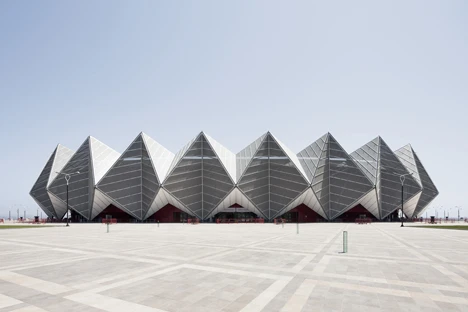
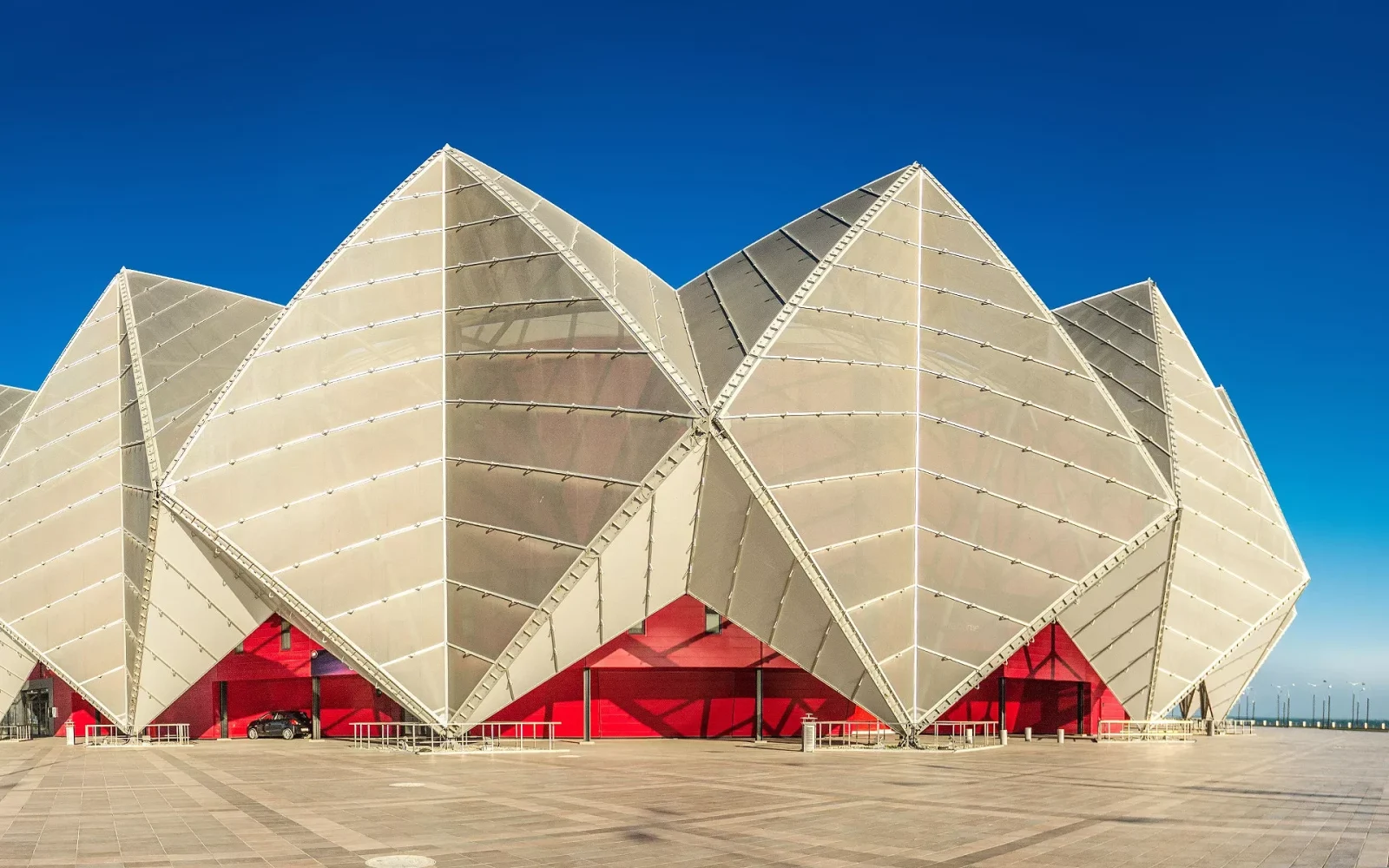
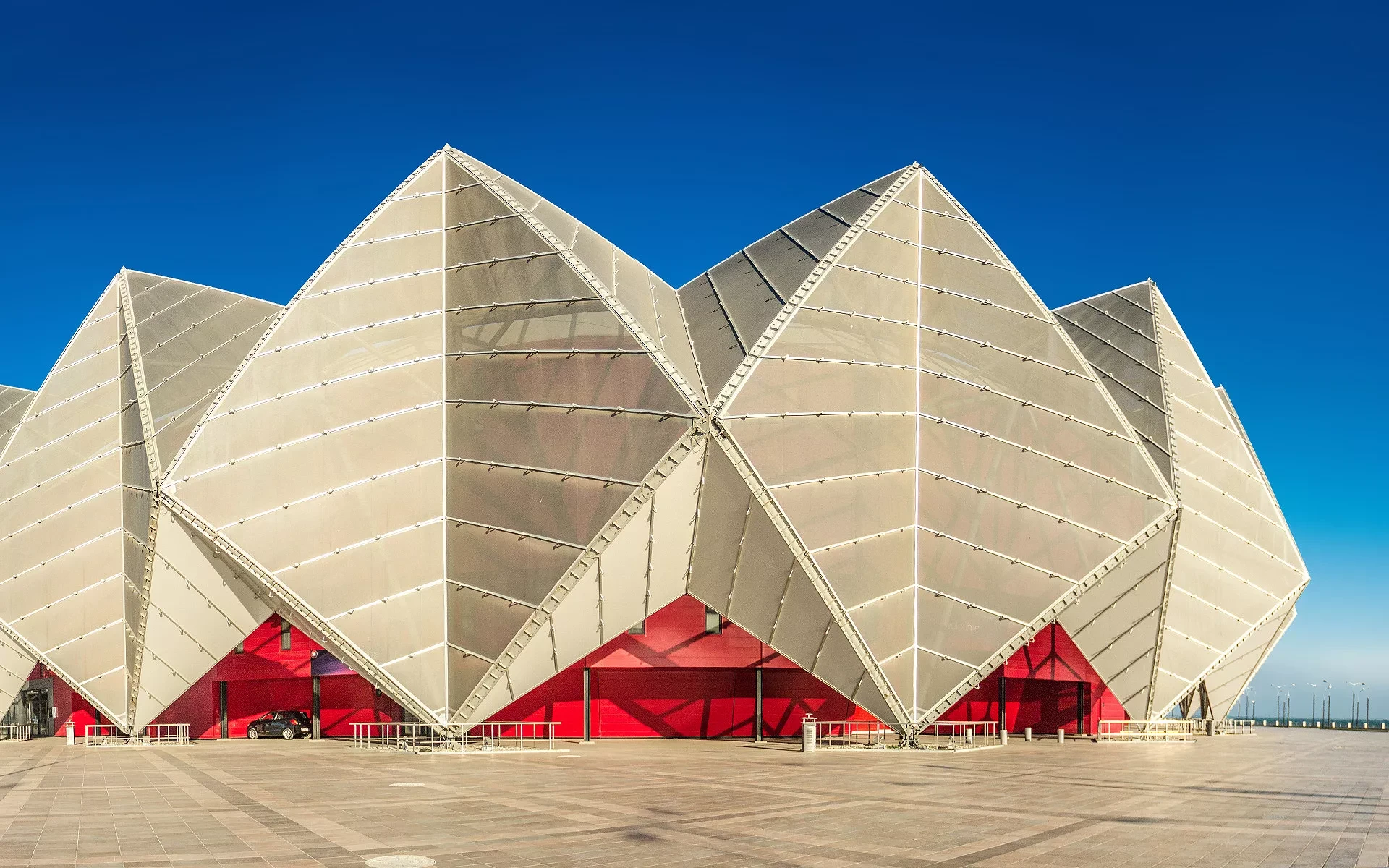
Baku Crystal Hall was built in a record ten months to host the 2012 Eurovision Song Contest. Designed by gmp Architekten and Nüssli International, the arena is located on a peninsula near the National Flag Square. Unlike traditional reinforced concrete arenas, Crystal Hall is a modular steel structure divided into three independent parts: the membrane facade, the modular stadium, and the interior roof.
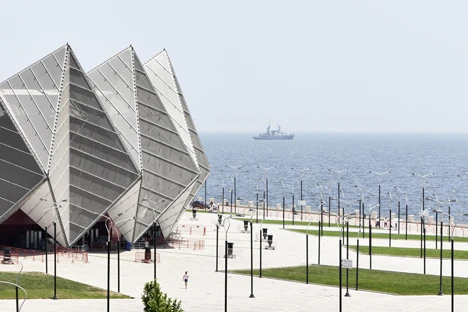
The facade consists of 180 diamond-shaped panels made of reflective PVC-PES mesh and polyester fabric. These panels are reinforced with aluminum clamping bars that house 9,500 LED lights, allowing the building to sparkle like a cut crystal at night. The structure was engineered to withstand the extreme wind loads of the Baku peninsula, which can reach 100 mph.
13. The Baku City Executive Power Building
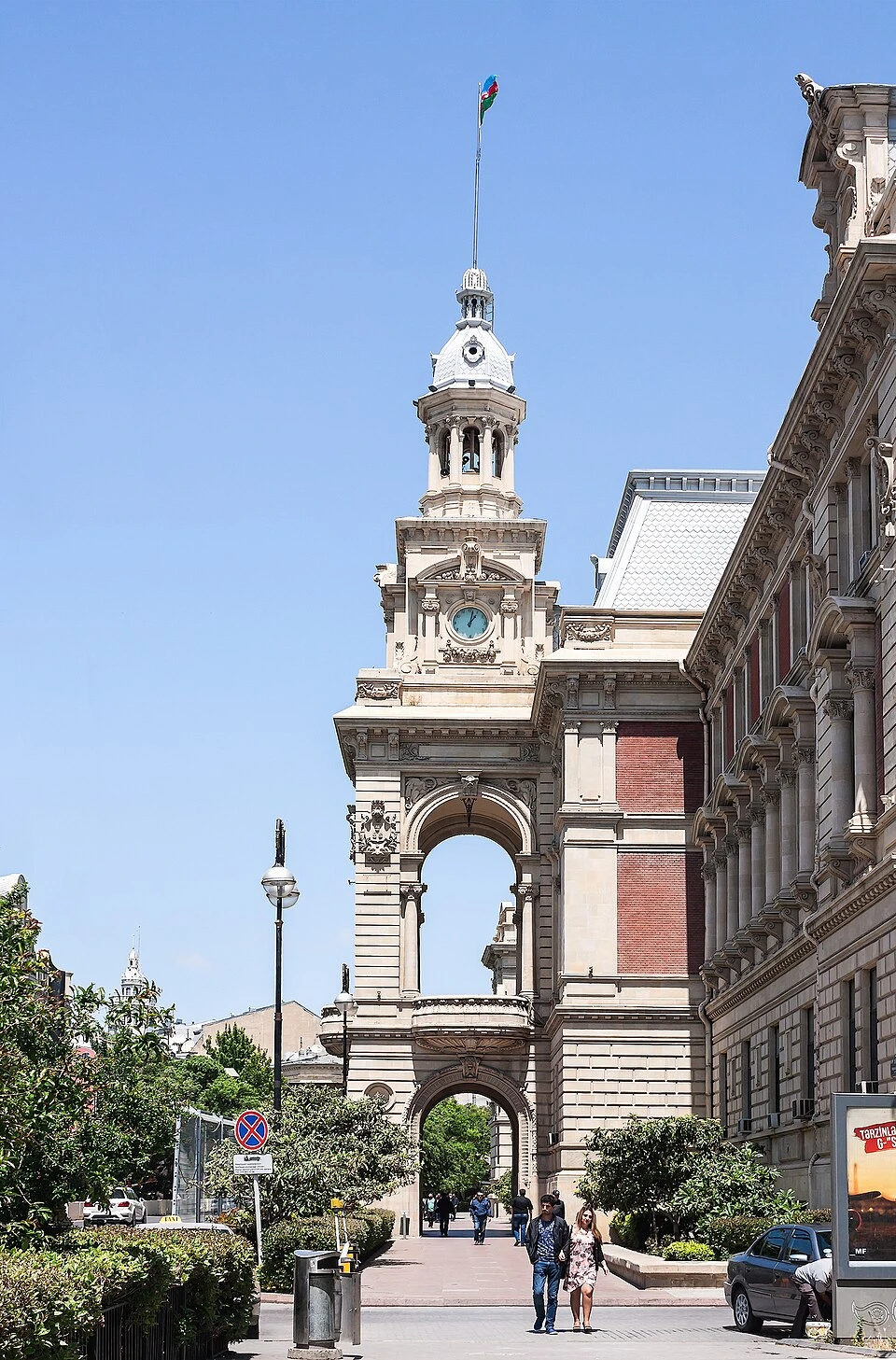
Another masterwork by Józef Goslavsky, the Baku City Hall (1900–1904) anchors the transition between the Old City and the European districts. The building is an imposing example of the Neo-Baroque style, characterized by its symmetrical facade and the use of red-colored decorative bricks imported from Italy to complement the local aglay limestone.
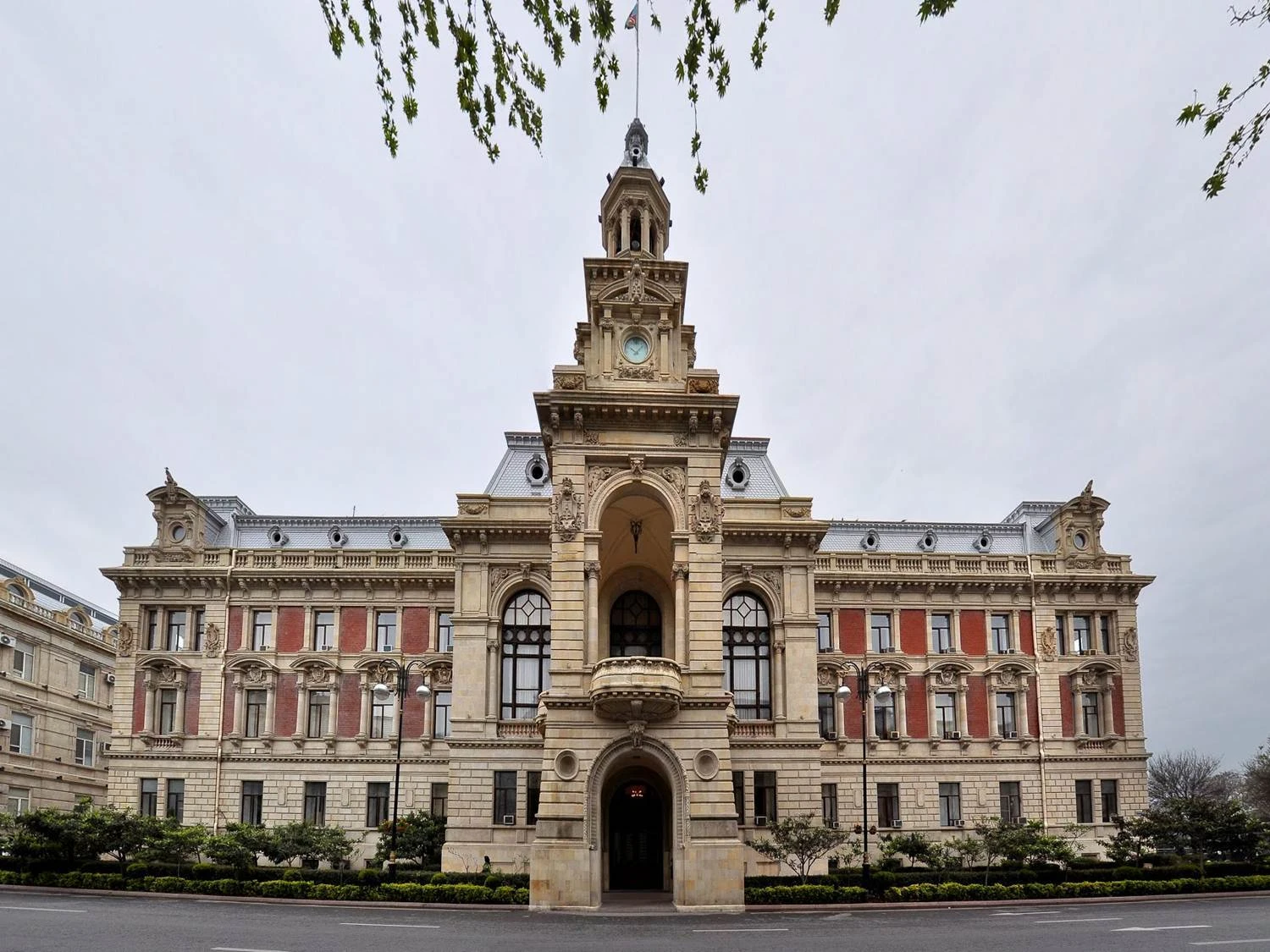
The structure features a central clock tower and elaborate stone carvings of the city’s coat of arms. Goslavsky’s work on the City Hall reflected his role as the chief city architect, where he sought to implement a planned urban vision that balanced administrative functionality with the grandeur required of an oil-wealth capital. The building remains one of the most recognizable landmarks on Istiglaliyyat Street, serving as a primary administrative hub for over a century.
14. The Gulistan Palace
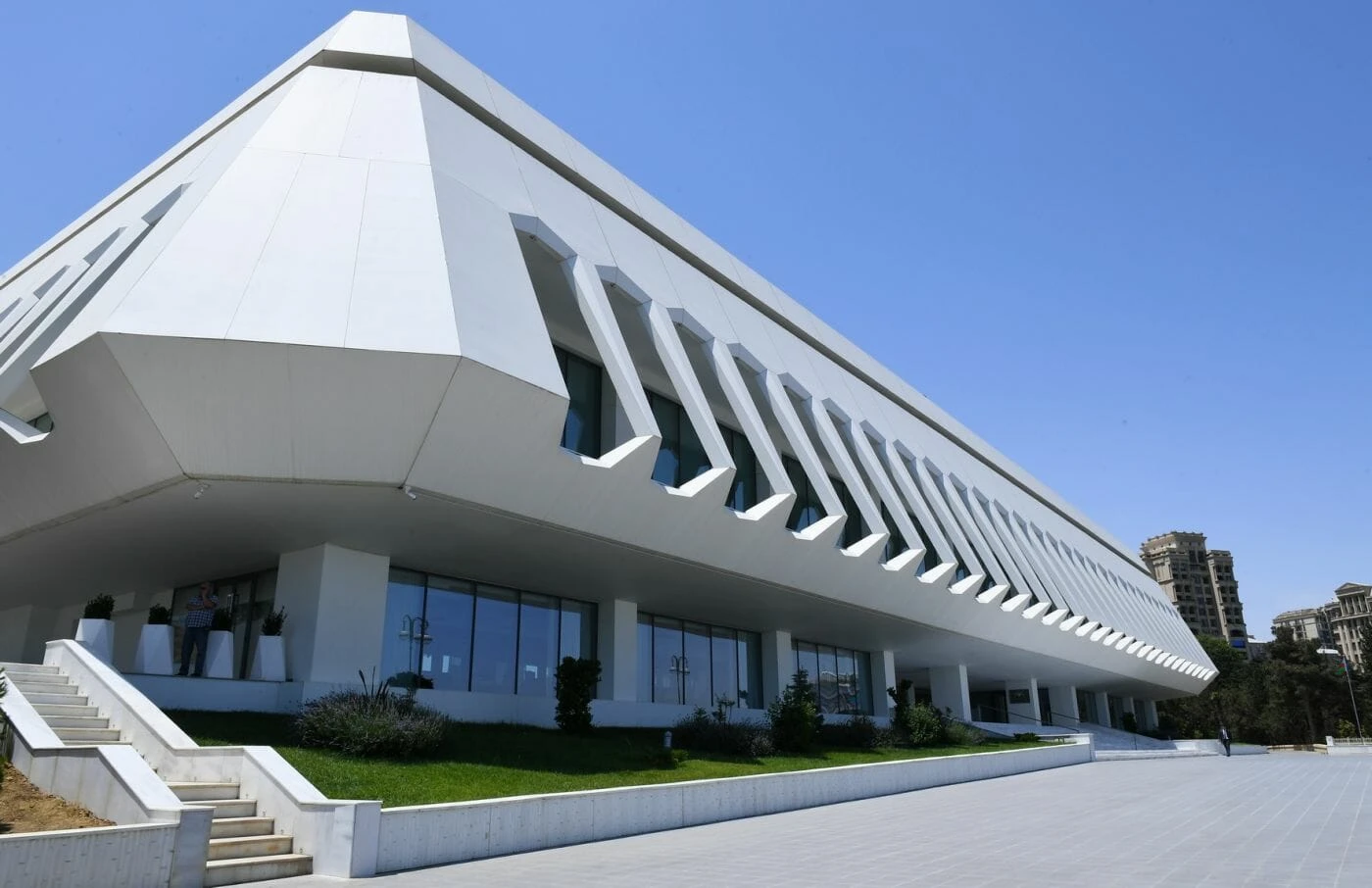
The Gulistan Palace (1980), designed by Nazim Hajibeyov and Hafiz Amirkhanov under the oversight of city architect Alish Lambaranski, is a masterpiece of late Soviet Modernism. It was built to host mass state events and cultural gatherings on the highland overlooking the Baku Bay.
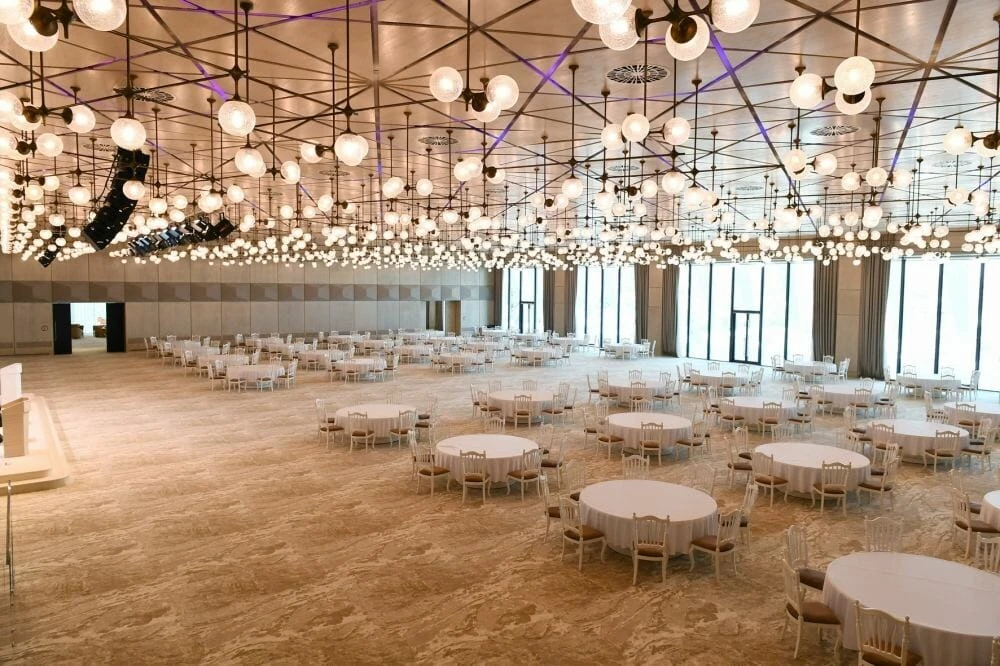
The building is notable for its use of traditional motifs, specifically arched balconies and console-supported walls, which create a play of shadows and light intended to soften the monumental Soviet structure. The palace became historically significant as the venue for the 1994 signing of the Contract of the Century, which signaled Azerbaijan’s re-emergence as a global petroleum player. Its design reflects a period of “national romanticism” within the Soviet framework, where architects were encouraged to incorporate local regional identifiers into their work.
15. The Nizami Museum of Azerbaijani Literature
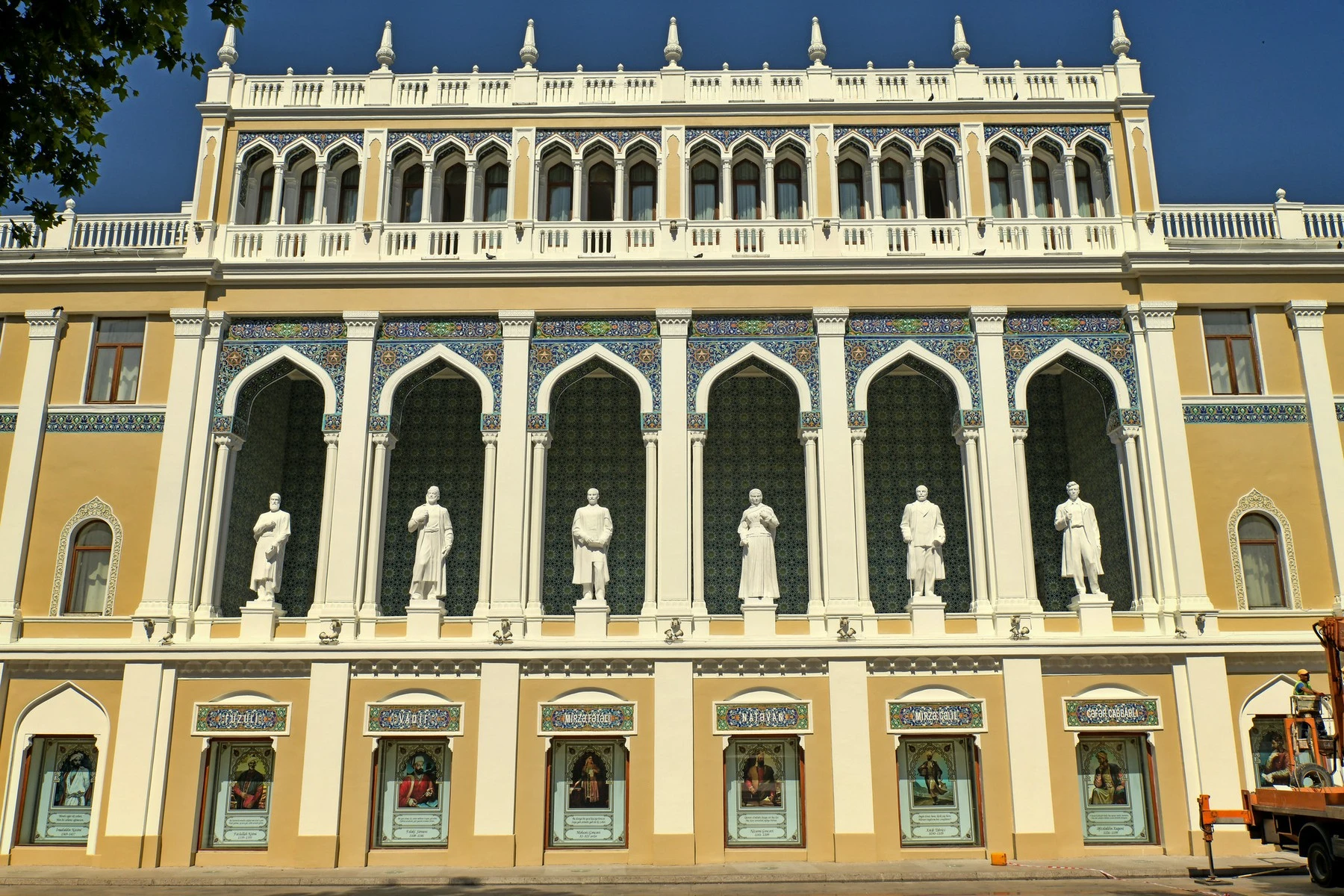
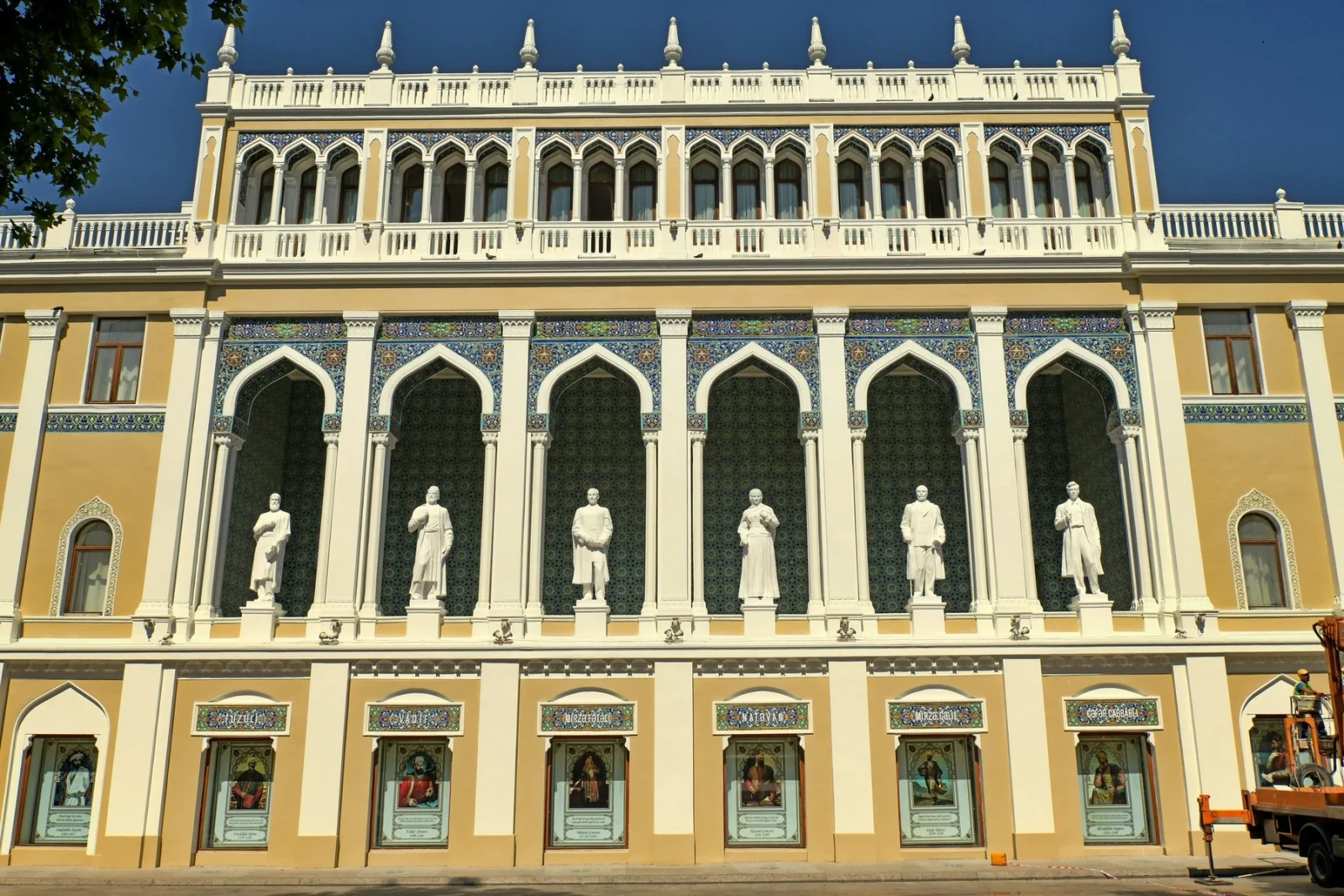
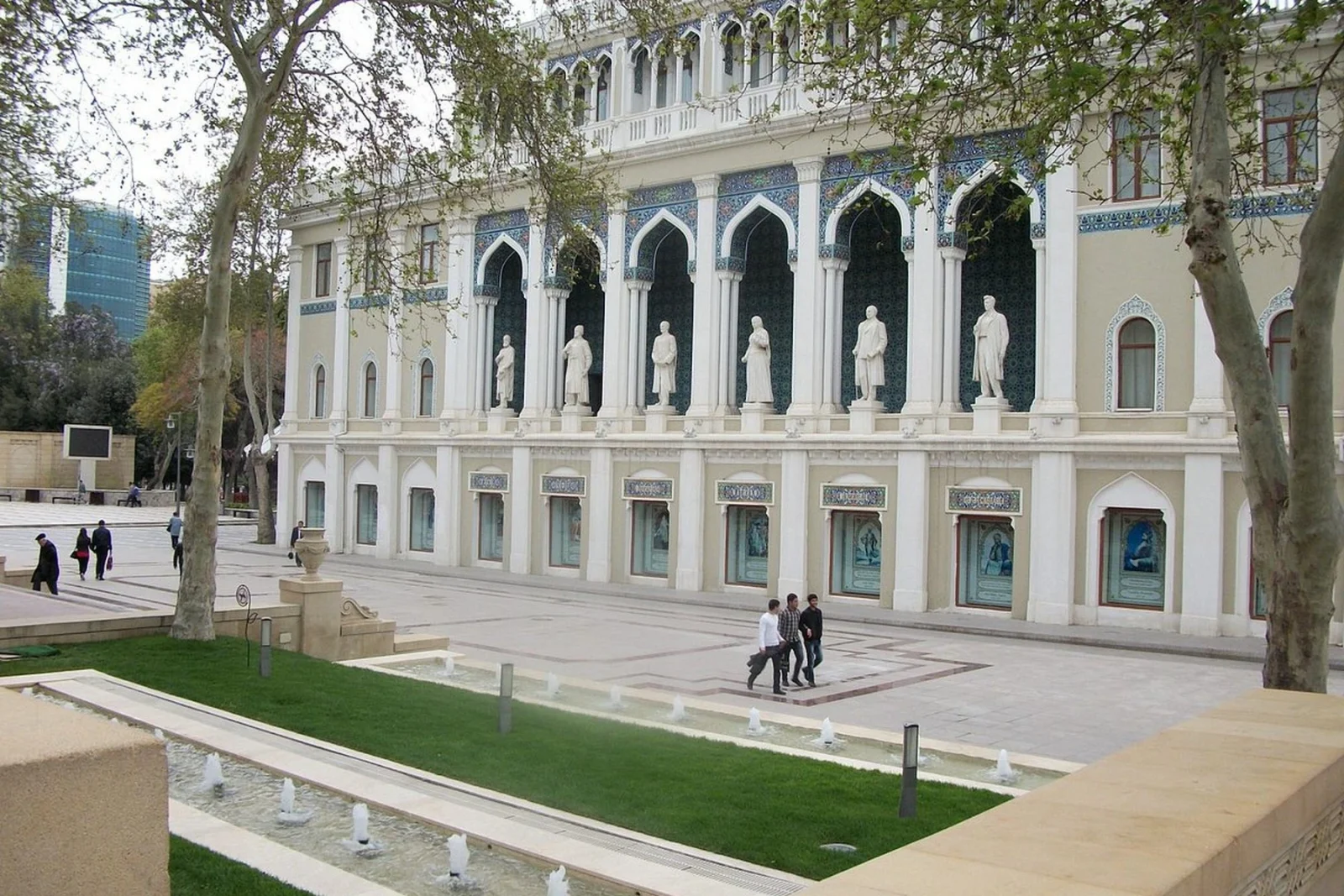
The Nizami Museum, located near Fountain Square, is a critical example of the architectural transition between the Oil Boom and Soviet periods. Originally built in the 1860s as a caravanserai (the Metropol Hotel), it was redesigned and expanded in the 1940s by architects Sadig Dadashov and Mikayil Huseynov.
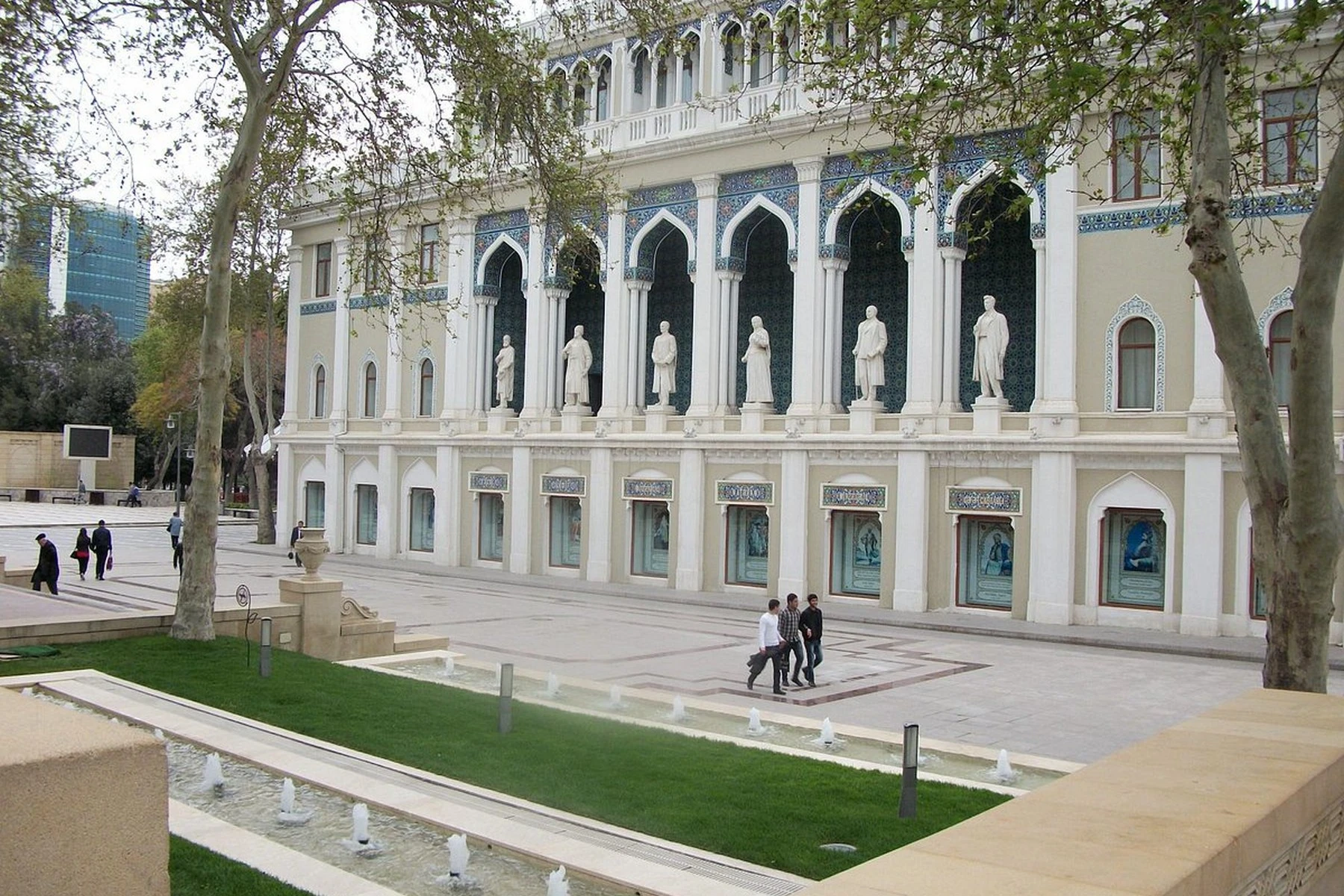
The building’s facade is decorated with blue and turquoise tilework and features a loggia with statues of prominent Azerbaijani poets and thinkers. This reconstruction was one of the first major attempts to apply the national in form doctrine, where the architects utilized classical proportions but adorned the facade with ornaments and sculptures that celebrated Azerbaijani literary history.
The Black City-to-White City Transformation
The most significant urban planning initiative in contemporary Baku is the Baku White City project, which aims to rehabilitate the former Black City industrial zone. In the late 19th century, the eastern section of Baku became a landscape of oil rigs, refineries, and dense worker housing covered in a thick pall of smoke, earning it the “Black” moniker.
The new White City master plan seeks to replace this industrial decay with a sustainable, multi-district urban system that includes parks, residential complexes, and modern transit. The architecture in this district often utilizes neoclassical stylization to match the 19th-century Oil Boom aesthetic, creating a visual link to the city’s most prosperous historical period while addressing modern ecological and spatial challenges.
Explore Courses
.jpg "Ondrej Chybik - Rethinking Architecture")