

Mixed-use developments, which focus on combining various functions such as residential units, retail spaces, offices, and parks within a single structure, make environments more accessible, elegant, and efficient. Bringing together living, working, relaxing, and entertaining areas, these structures allow people to lead more comfortable and connected lives. Offering an alternative to the decades-long dominance of single-use zoning, which impractically separates the many activities of daily life, today’s mixed-use designs serve as highly influential models for contemporary urban development. Unlike residential or commercial architecture, mixed-use developments must cope with complex issues such as the integration of various uses, pedestrian circulation management, and ensuring sustainability.
We examine the top 10 mixed-use developments that changed the language of large-scale architecture:
1. Global Harbor
Location: Shanghai, China
Architect: Chapman Taylor
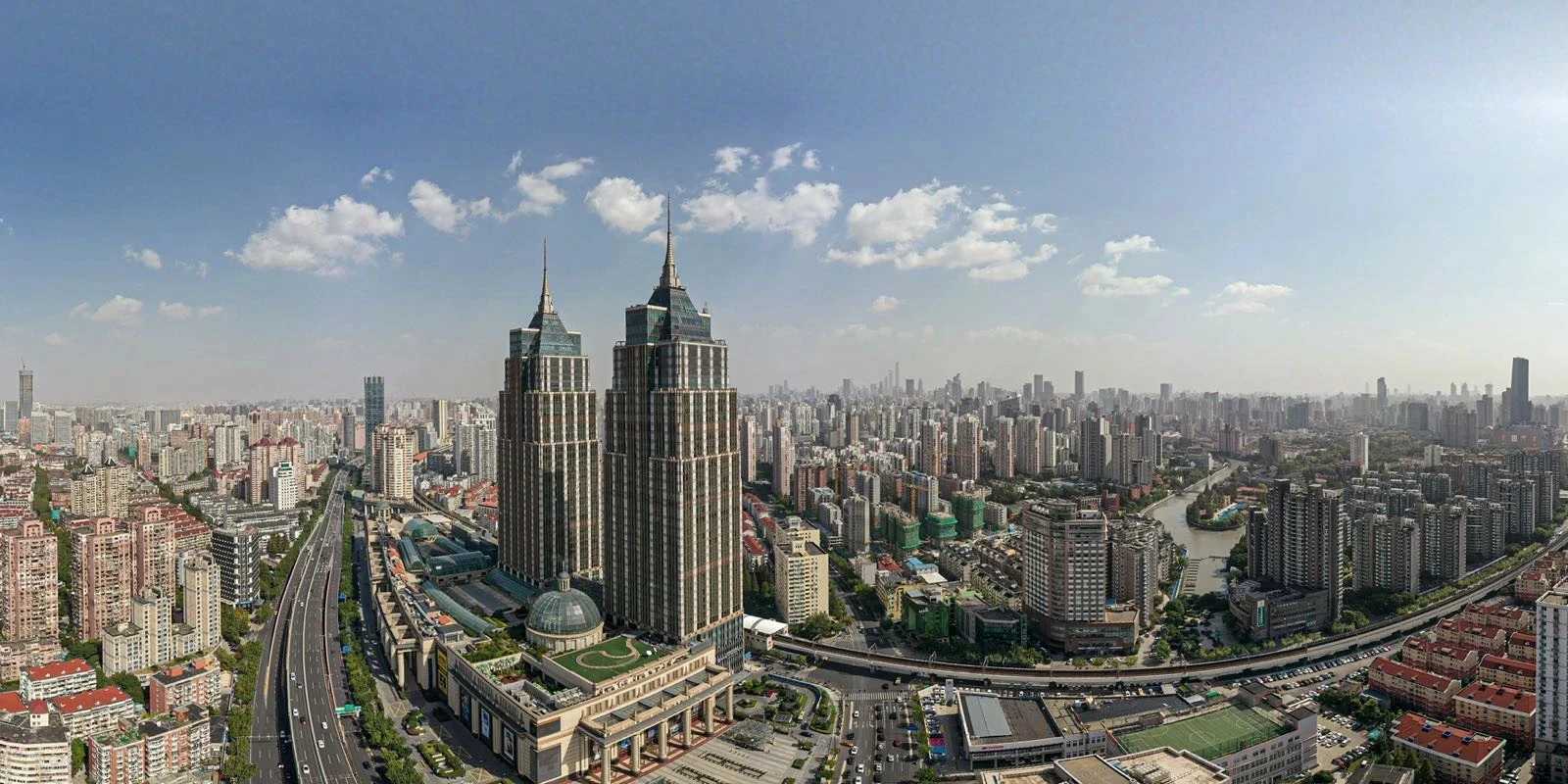
Located in Shanghai, China, Global Harbor is one of the world’s largest mixed-use, retail-focused developments. Opened in 2013, this complex includes a 270,000 m² shopping mall, two 245-meter-high office towers situated on a four-story podium, a 5-star hotel, and apartment towers. In addition, it houses a three-story basement, a two-story shopping area, and a parking garage. With a total area of 480,000 m², Global Harbor was awarded “World’s Best Retail Architecture” at the 2014–2015 International Property Awards.
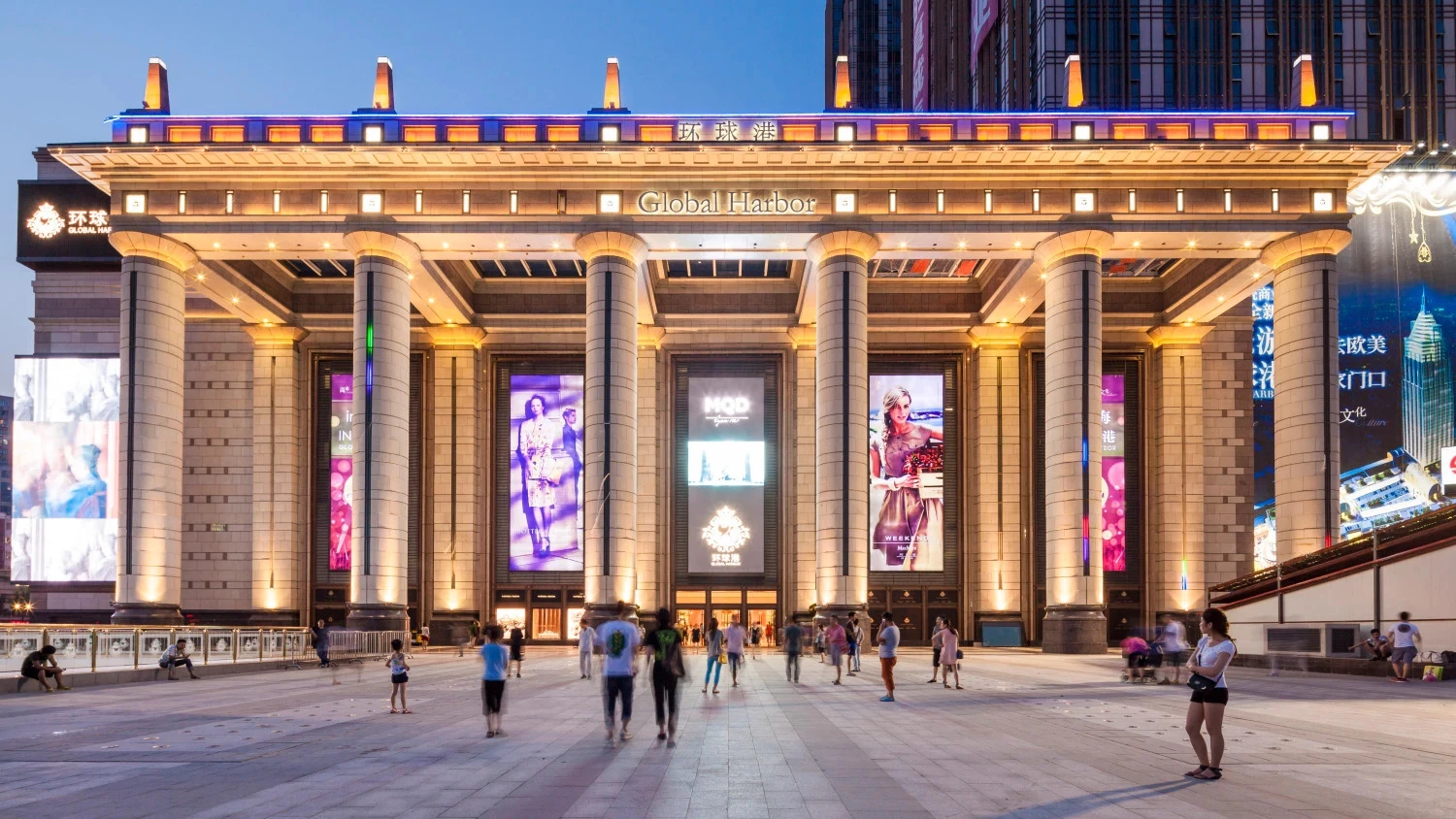
The architectural façade of Global Harbor presents a variation of the neoclassical design approach. Its expansive interior, divided into three distinct courtyard spaces, showcases elements of the Italian Renaissance alongside natural romantic styles. The Sun Square at the southern end adopts the classical language of ancient Greece and Rome, while the Central Square reflects the elegant and exotic character of Venice with its refined ornamentation. The Garden Courtyard in the north, enriched with natural green patterns, is designed to provide visitors with a calm and relaxing atmosphere.
2. Roppongi Hills
Location: Tokyo, Japan
Architect: Mori Biru
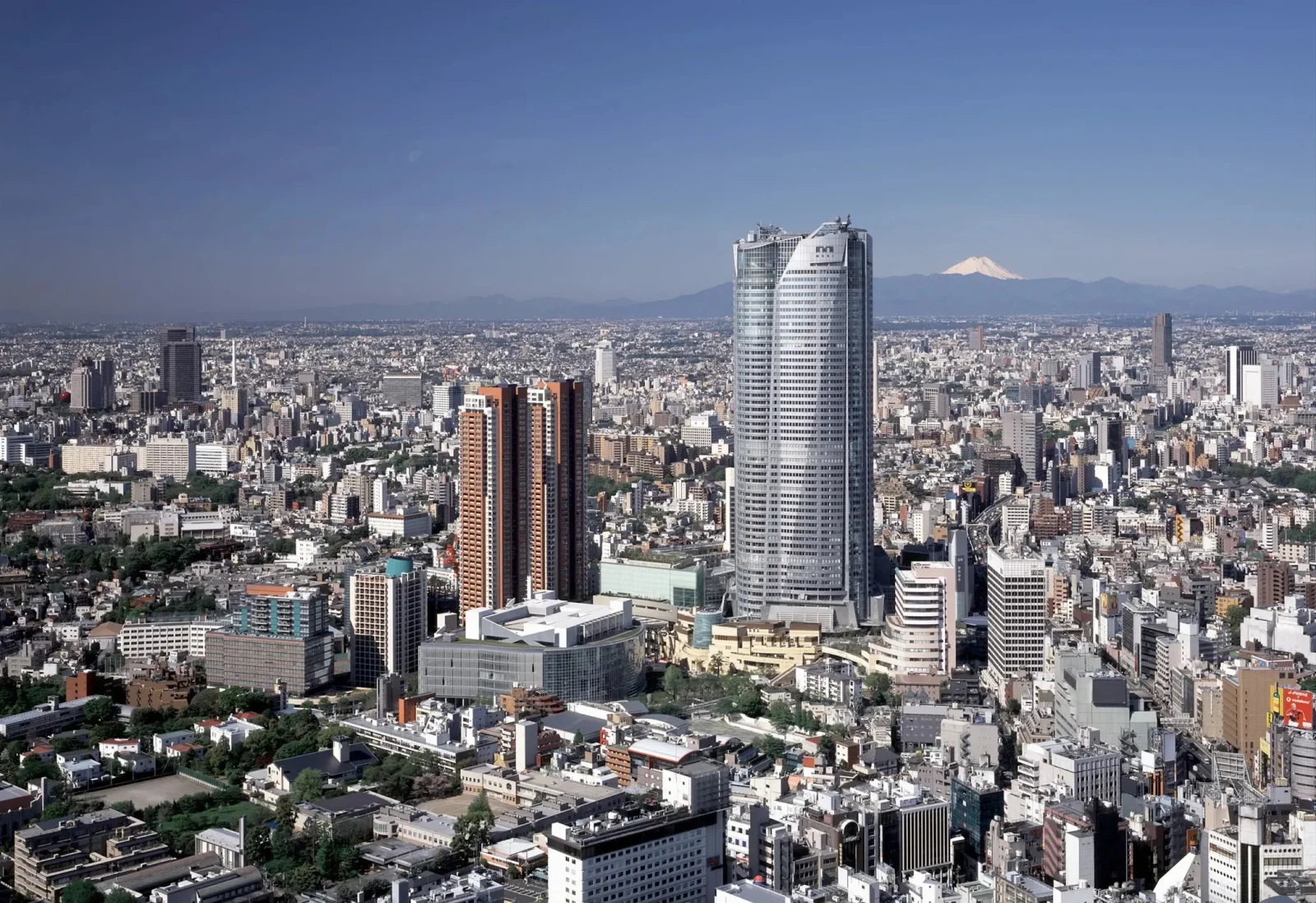
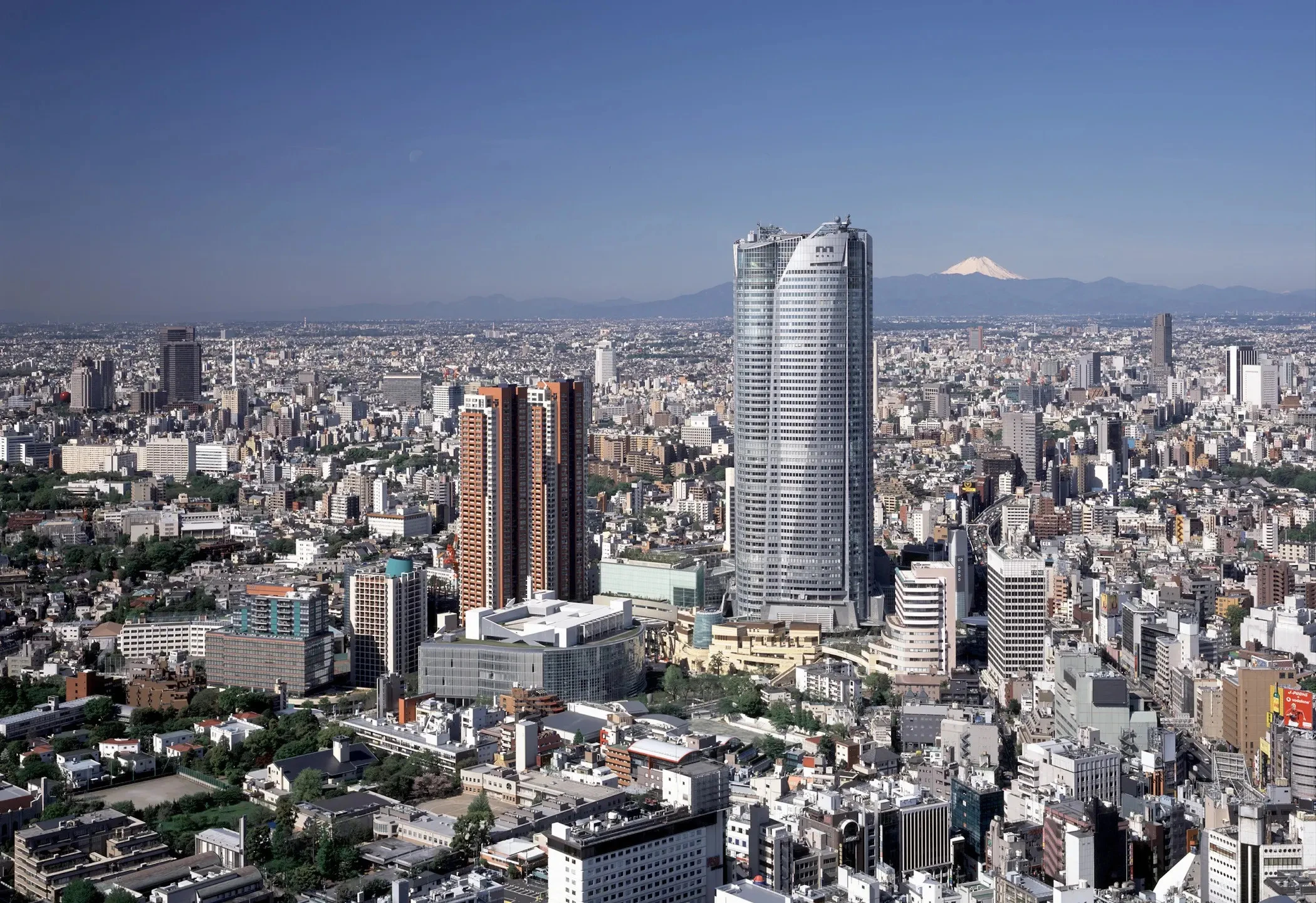
Roppongi Hills, one of the world’s most influential mixed-use neighborhoods, is Japan’s largest privately held urban regeneration project. Designed with the concept of a “city within a city,” this 28-acre complex offers a unique composition of indoor and outdoor spaces for working, entertainment, relaxation, and creativity. Roppongi Hills brings together a diverse range of uses, including offices, a world-class museum, residential towers, a luxury hotel, retail spaces, a metro station, and restaurants, all within a pedestrian-friendly community.
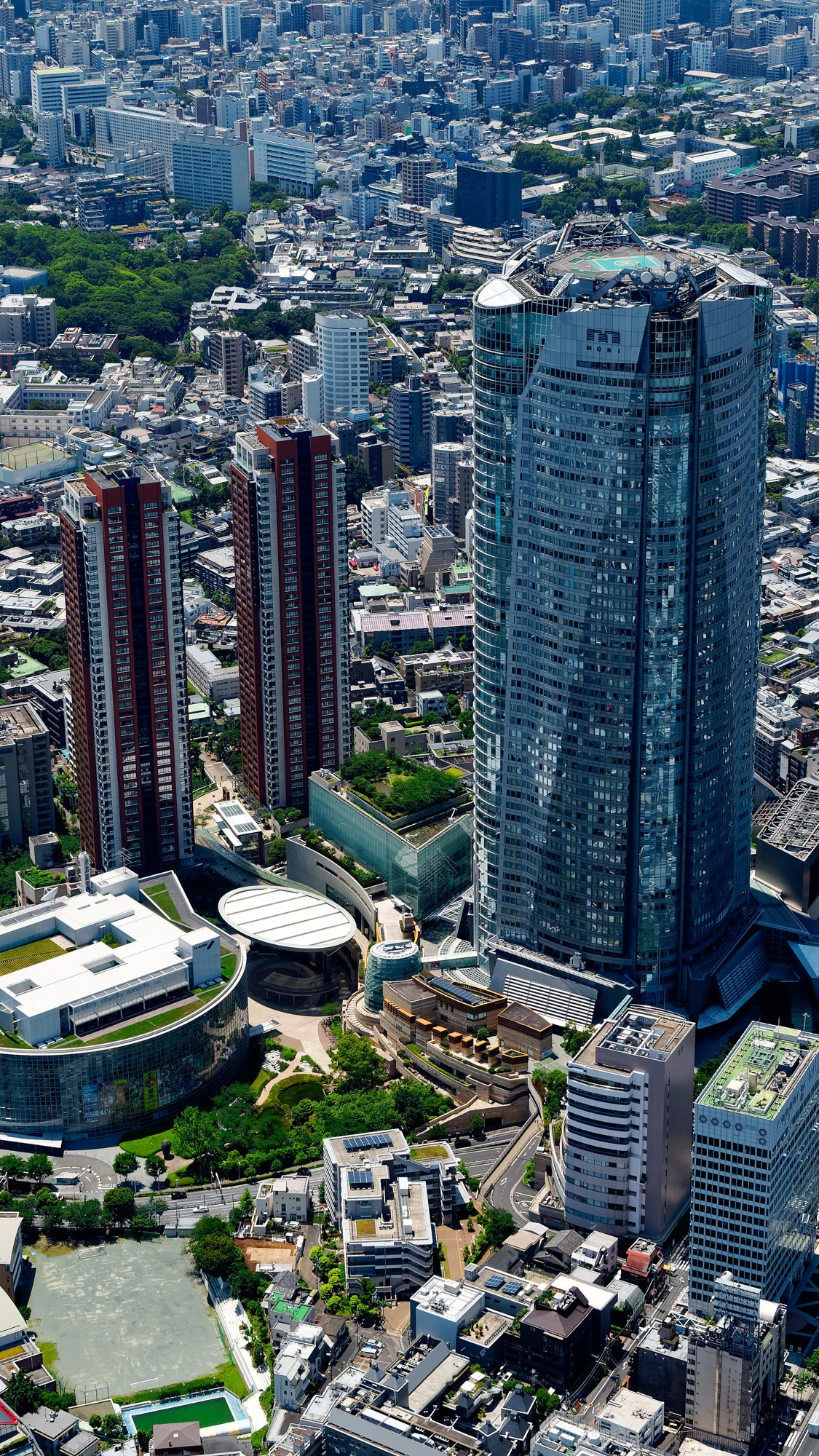
Often referred to as “Tokyo’s cultural heart,” Roppongi Hills serves as a hub where people from around the world gather in a cross-cultural environment, fostering new cultural production and the exchange of knowledge. The Hill Side area accommodates terraces hosting numerous restaurants as well as the museum entrance, while the Event Plaza creates a multifunctional open-air urban entertainment space. Meanwhile, the seven-story West Walk, which connects three buildings through a skylight-covered gallery, offers a spatial experience reminiscent of an urban canyon.
3. Zorlu Center
Location: İstanbul, Turkey
Architect: Tabanlıoğlu Architects + EEA
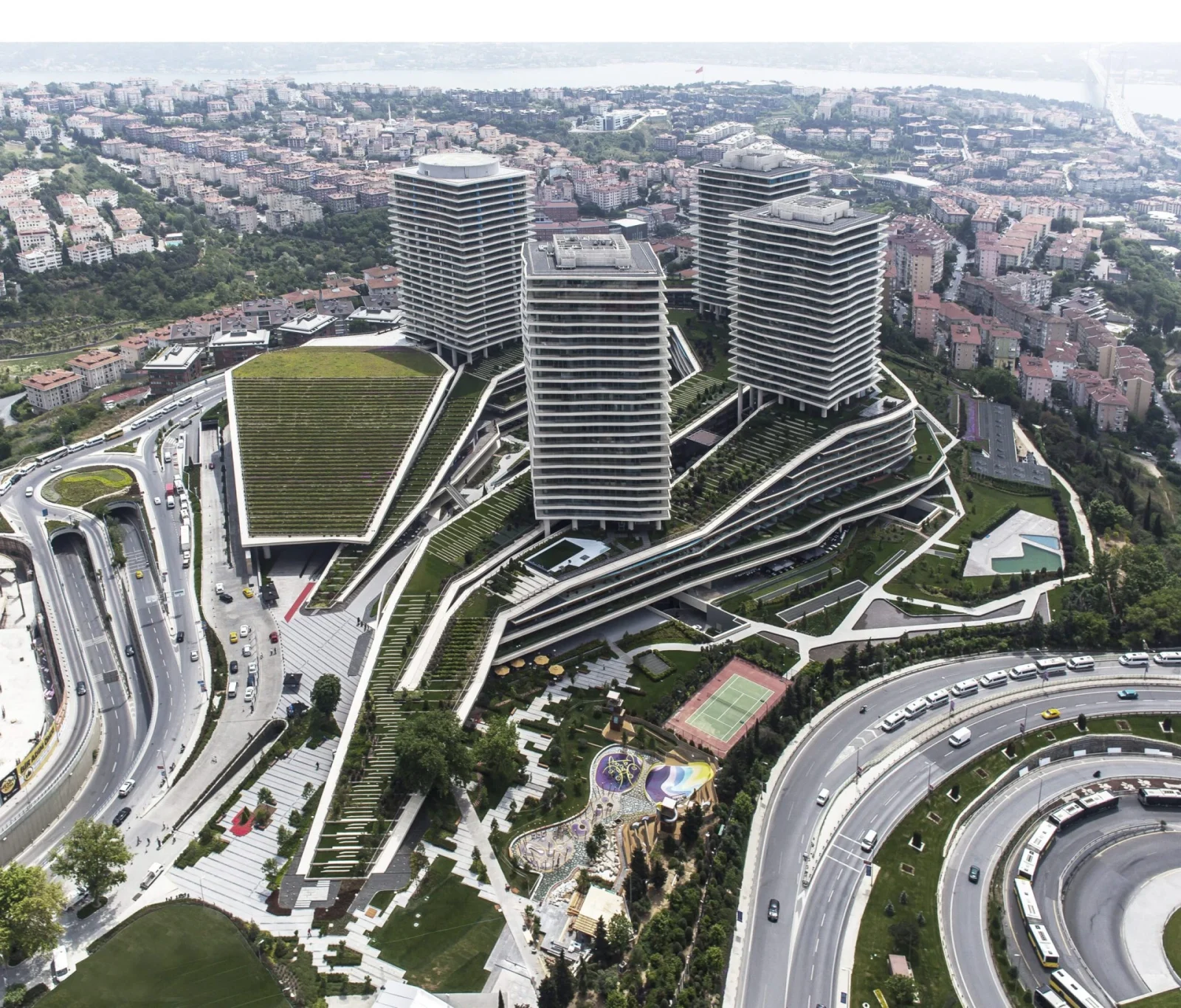
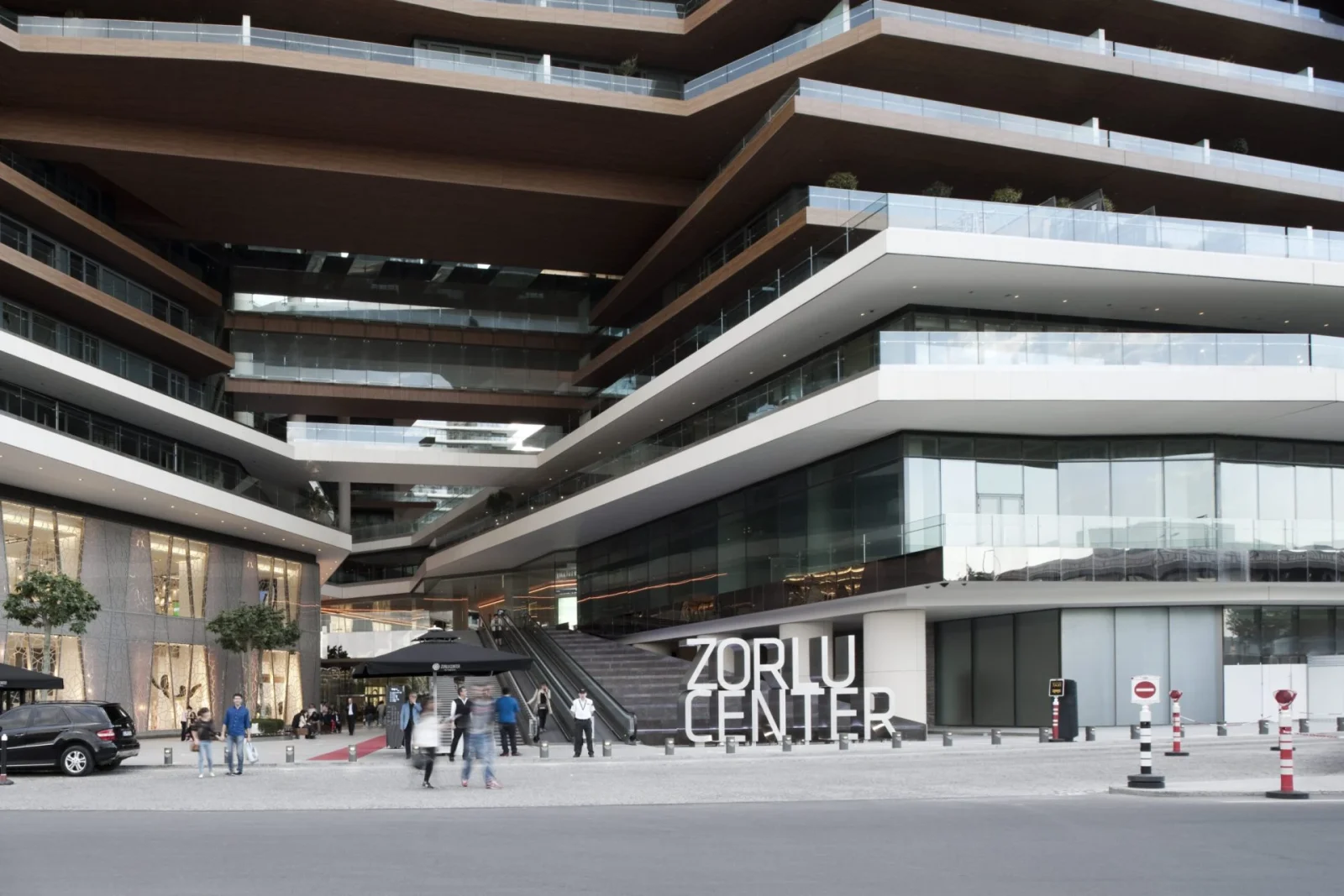
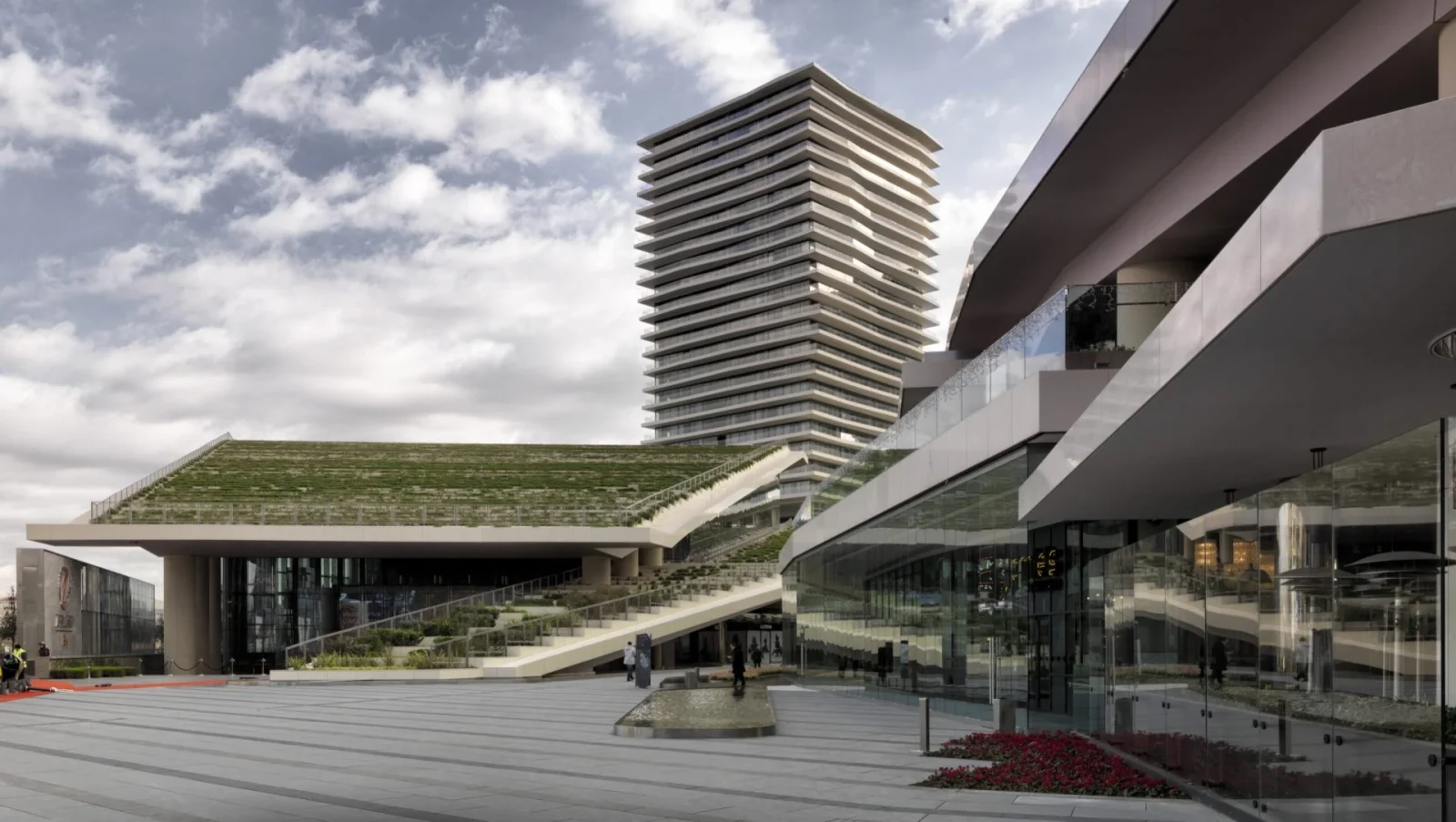
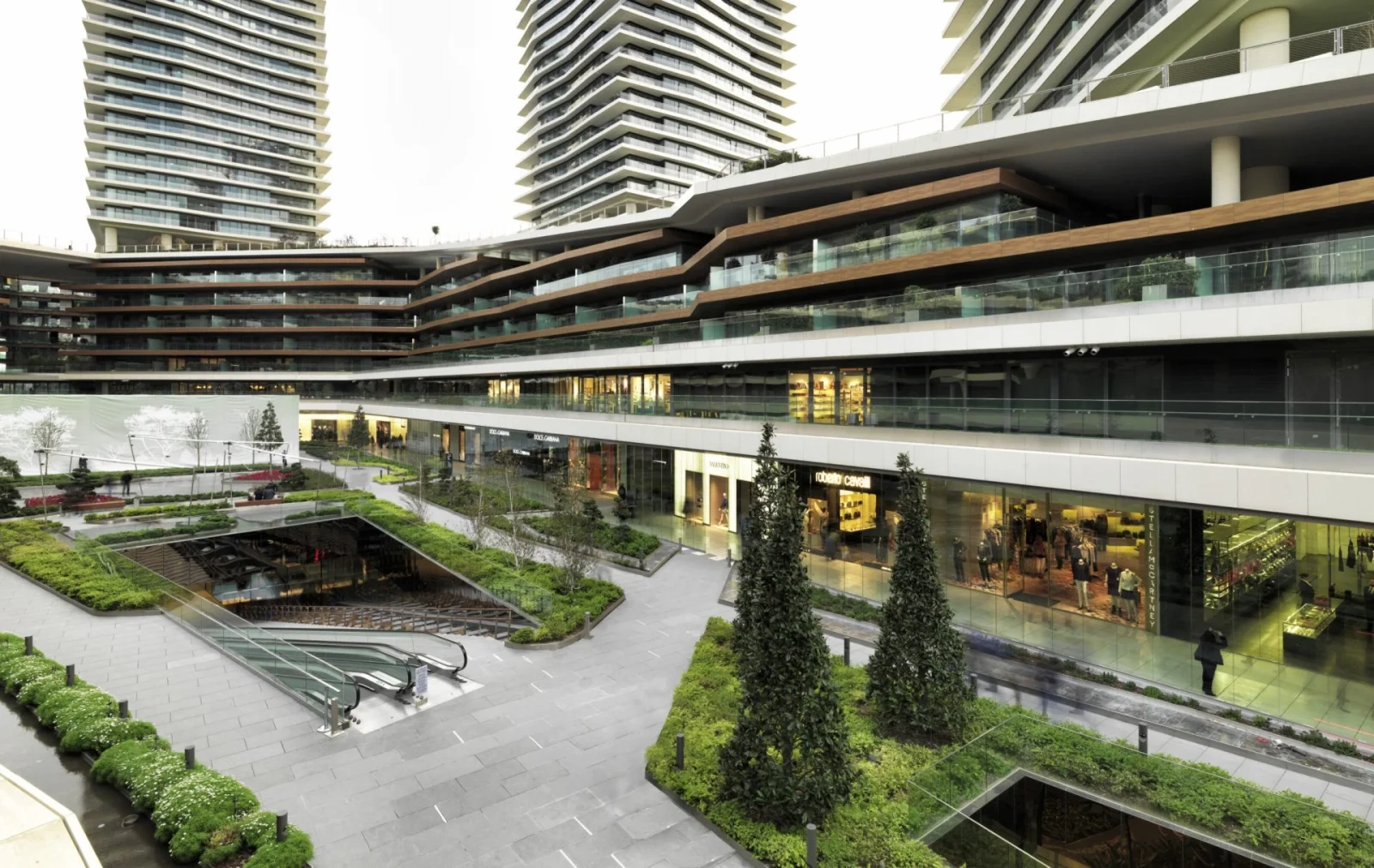
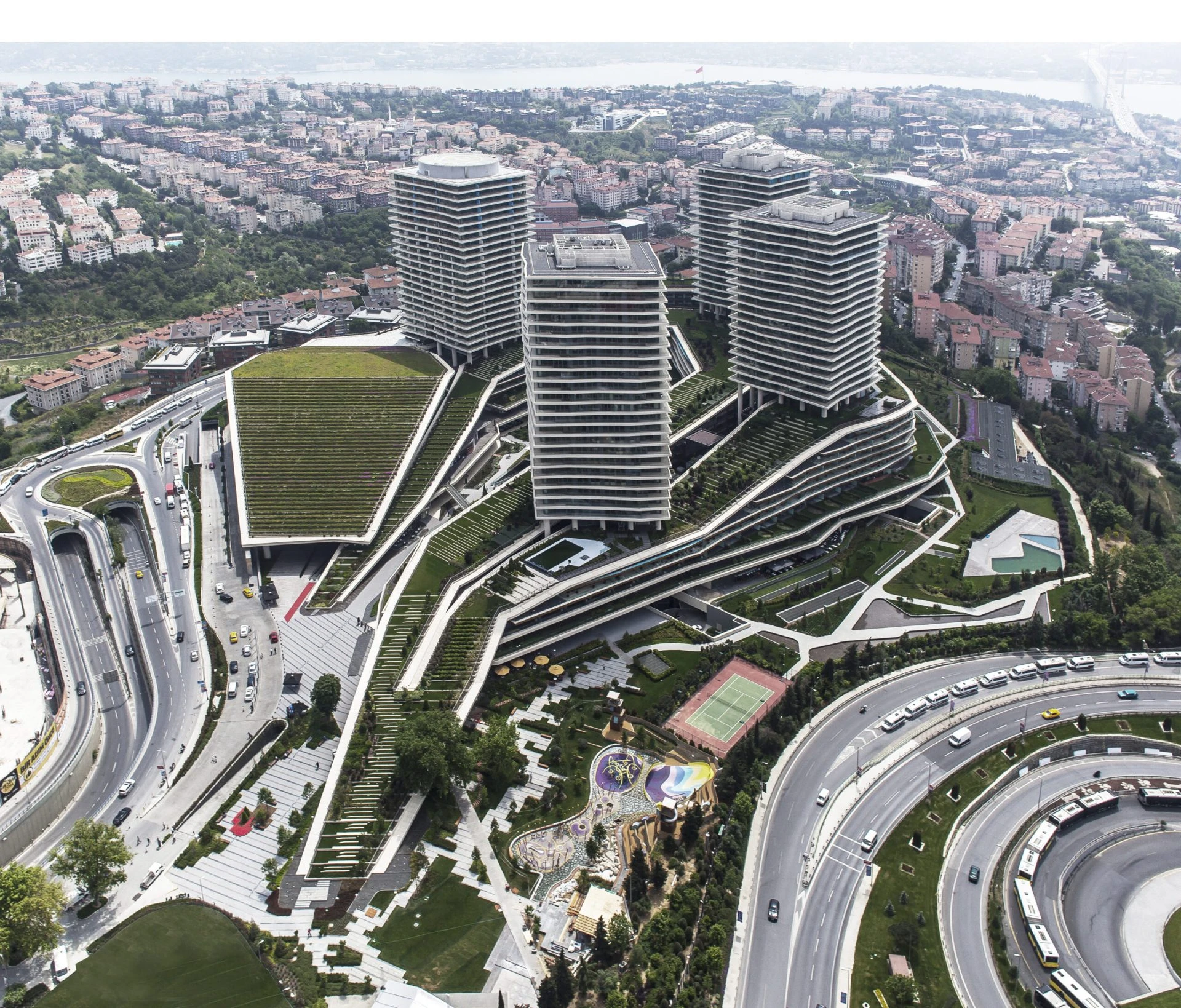
Designed by Emre Arolat and Tabanlıoğlu Architects, Zorlu Center is one of Europe’s largest mixed-use developments. Located at the exact intersection of the Büyükdere axis, which connects to Maslak’s prestigious business district, the complex addresses a series of contrasts such as monumentality and modesty, public and private, corporate and domestic, as well as social and exclusive. The topographically restructured ground serves as an intermediary layer for the complex’s different functions. This “shell,” rising from the public square, separates public and private spaces with a difference in level. While the internal route ascends to a 28-meter-high Urban Balcony overlooking the Bosphorus, the outer ring culminates at a height of 32 meters, forming the private topography of the residential units.
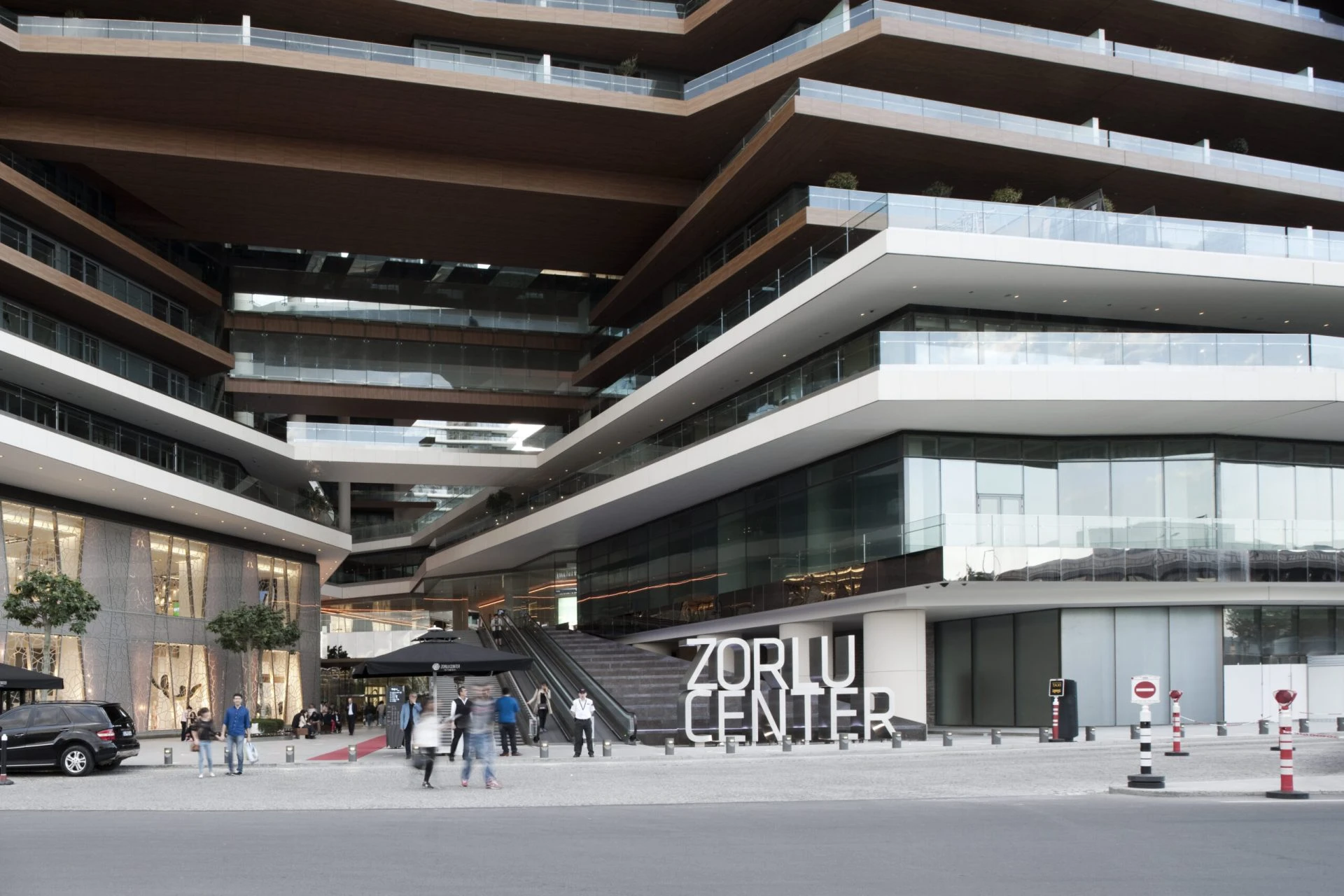
At the core of the complex, the Piazza, surrounded by retail units, creates an alternative public space. The lower retail level, connected to the metro, houses cinemas and entertainment facilities. Extending from the Public Square and the Piazza, the Performing Arts Center features a 2,300-seat main hall and a 740-seat theater. Accessible via a linear open-air courtyard, the terraced apartments beneath the shell offer spacious gardens on the ground floor and expansive terraces with Bosphorus views on the upper floors.
4. Marina Bay Sands
Location: Marina Bay, Singapore
Architect: Safdie Architecture
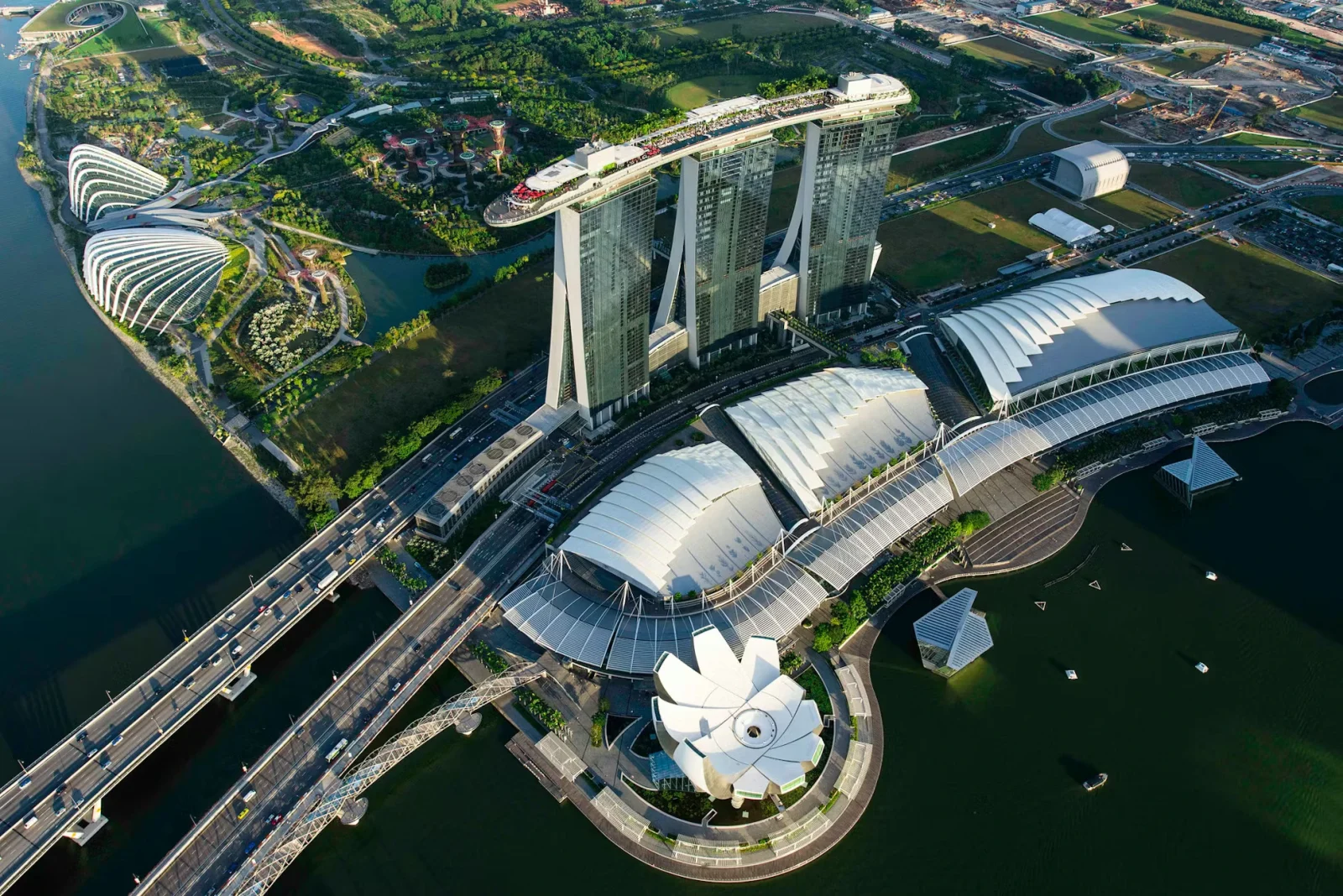
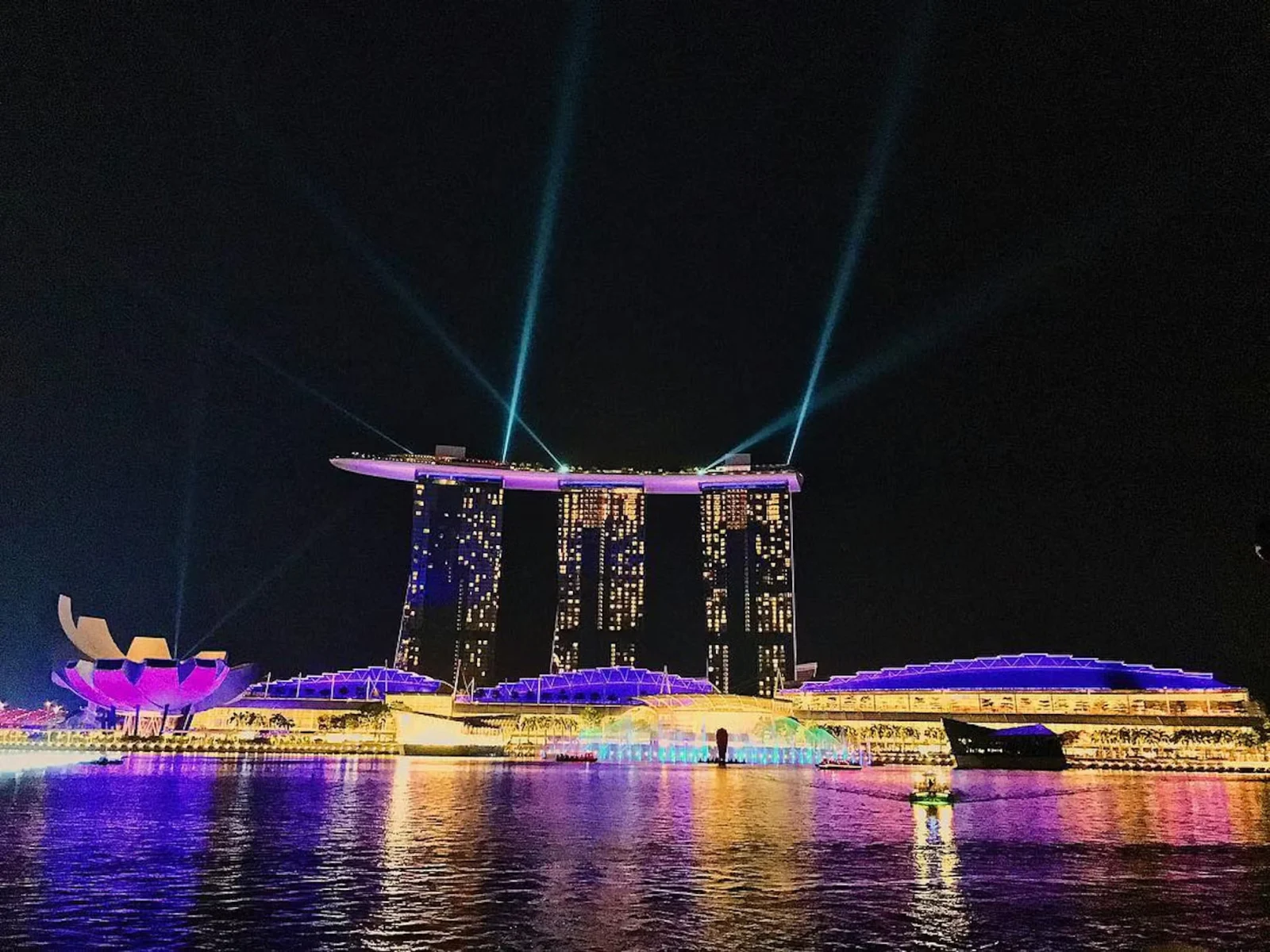
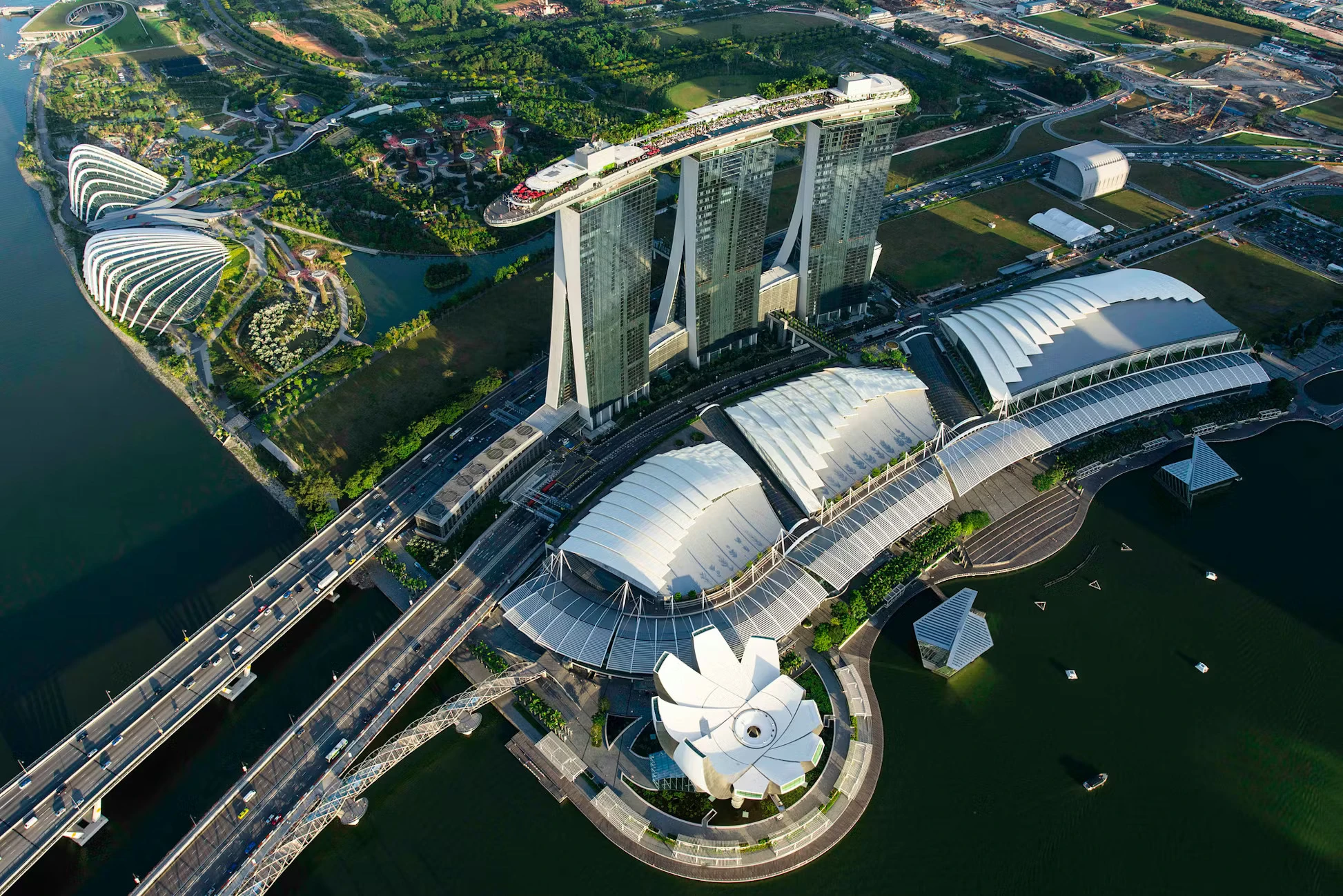
Located on a 16-hectare site in Singapore, Marina Bay Sands is an integrated mixed-use resort complex. Designed by Moshe Safdie, the project draws inspiration from the great Roman cities, characterized by strong spine-like urban organizations that became focal points of civic life. It includes a 55-story hotel with 2,600 rooms, a 1.2-hectare Skypark garden atop the towers, an Art & Science Museum on the headland, two state-of-the-art theatres, a casino, a Convention Centre and exhibition halls, a wide variety of shopping and dining options, and an outdoor events plaza.
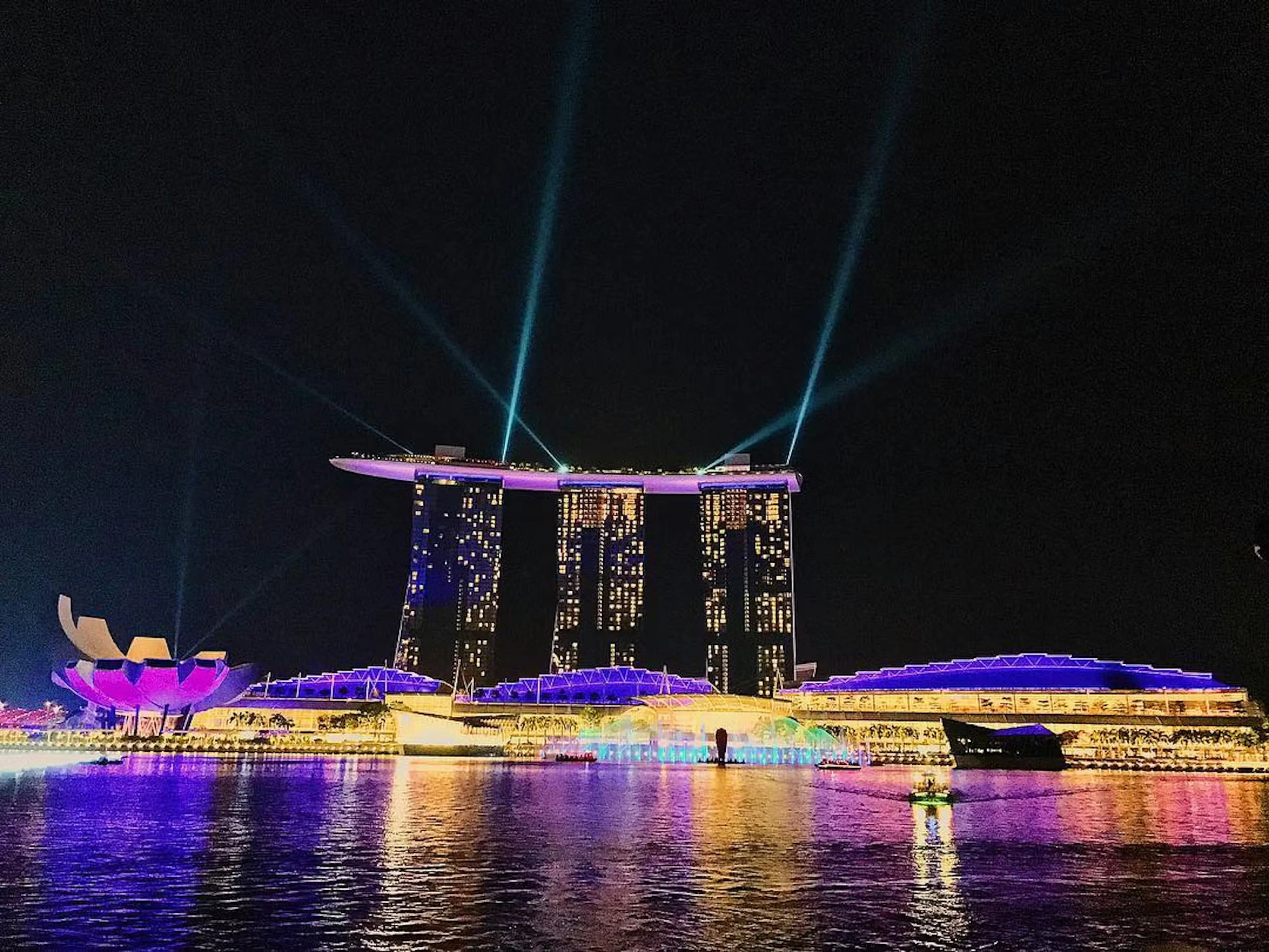
Embodying Singapore’s “City in a Garden” vision, Marina Bay Sands integrates lush landscapes across multiple levels from the palm-lined waterfront promenade to the podium-level public walkways shaded by Bucida trees, and up to the SkyPark garden on the 57th floor. Underground, a network of public corridors seamlessly connects the MRT systems and existing underground pedestrian networks, further completing the cycle of activity around Marina Bay.
5. Almagah 227
Location: São Paulo, Brazil
Architect: Königsberger Vannucchi Arquitetos Associados
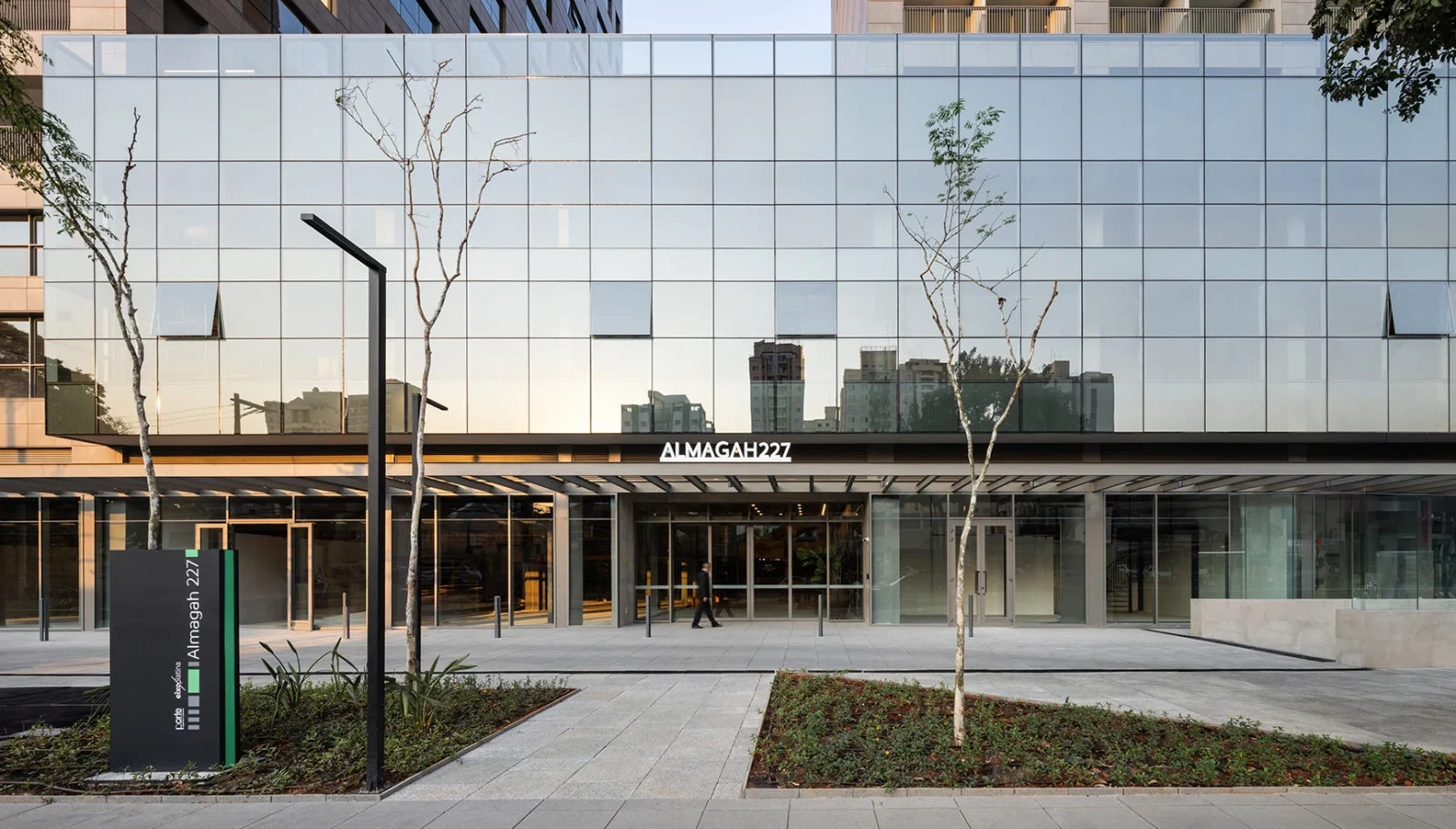
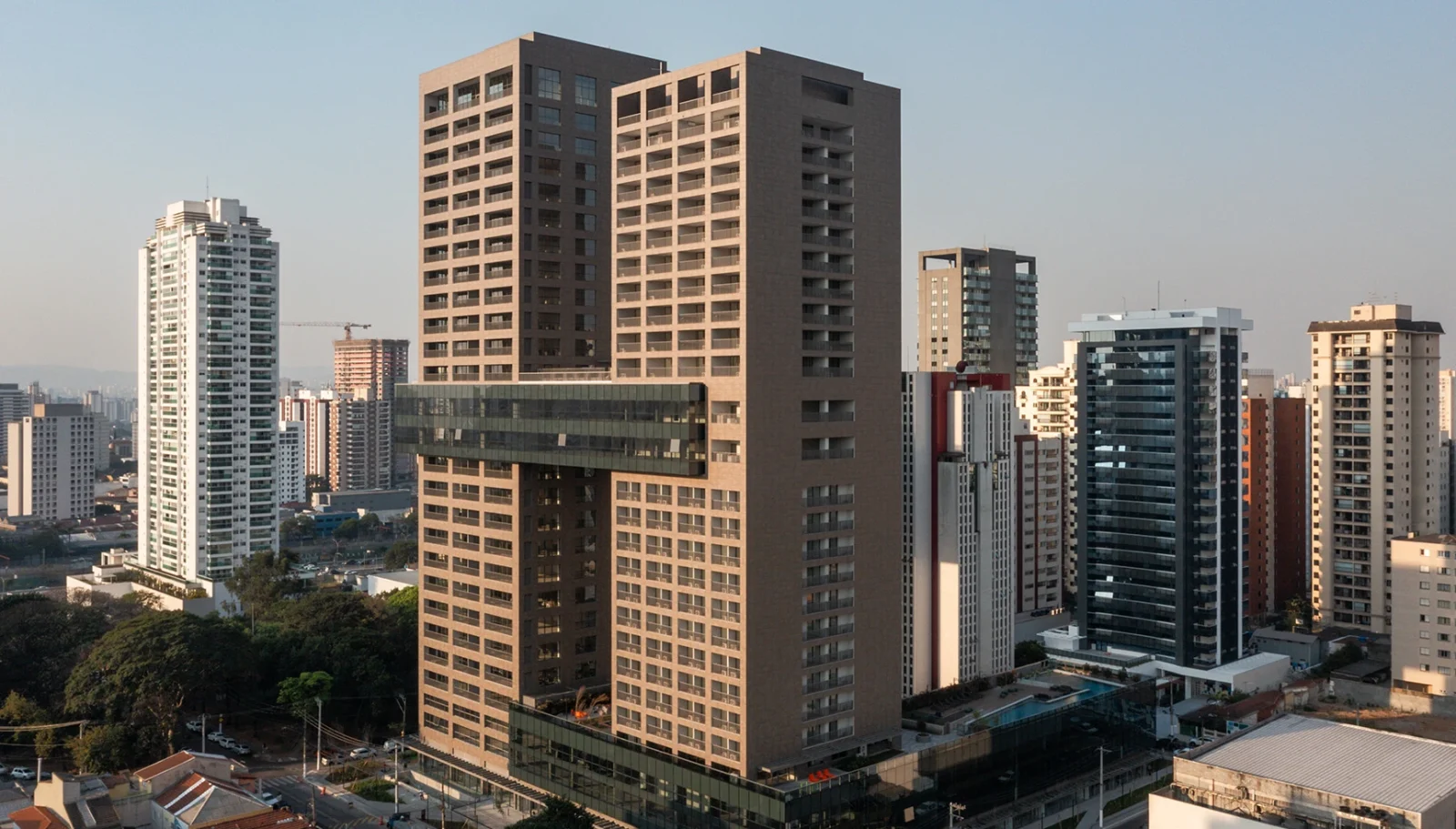
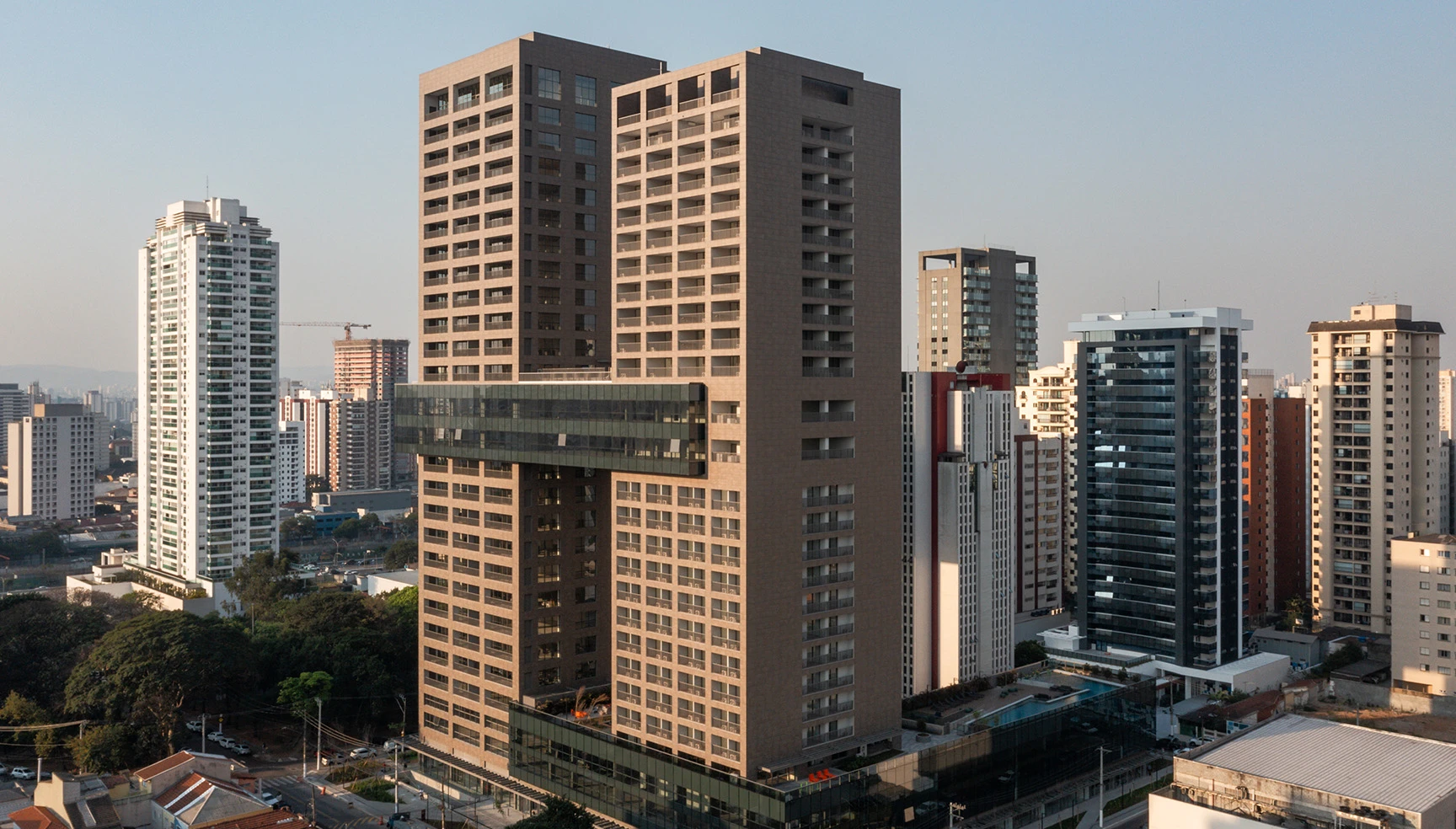
Located within Eixo Platina, an urban restructuring plan for São Paulo’s East District, Almagah 227 is designed to meet the growing demand for corporate and commercial spaces close to residential areas. Bringing together residential, business, and entertainment, the complex enhances the urban environment with diverse and interconnected infrastructure. Its mixed-use vertical presence, combined with an active ground floor and high-quality urban infrastructure, positions the project as a transformative element within one of São Paulo’s most densely populated districts.
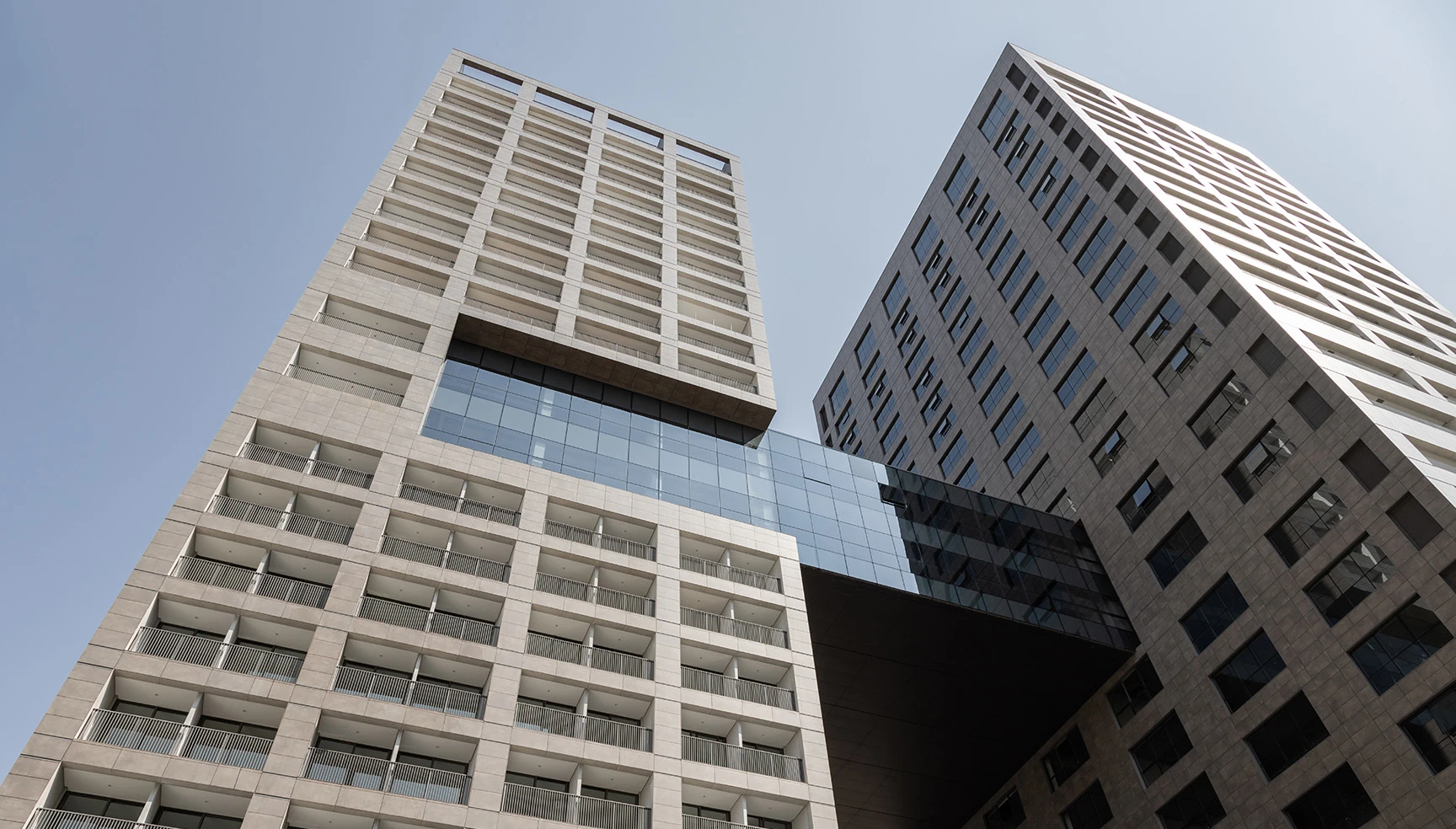
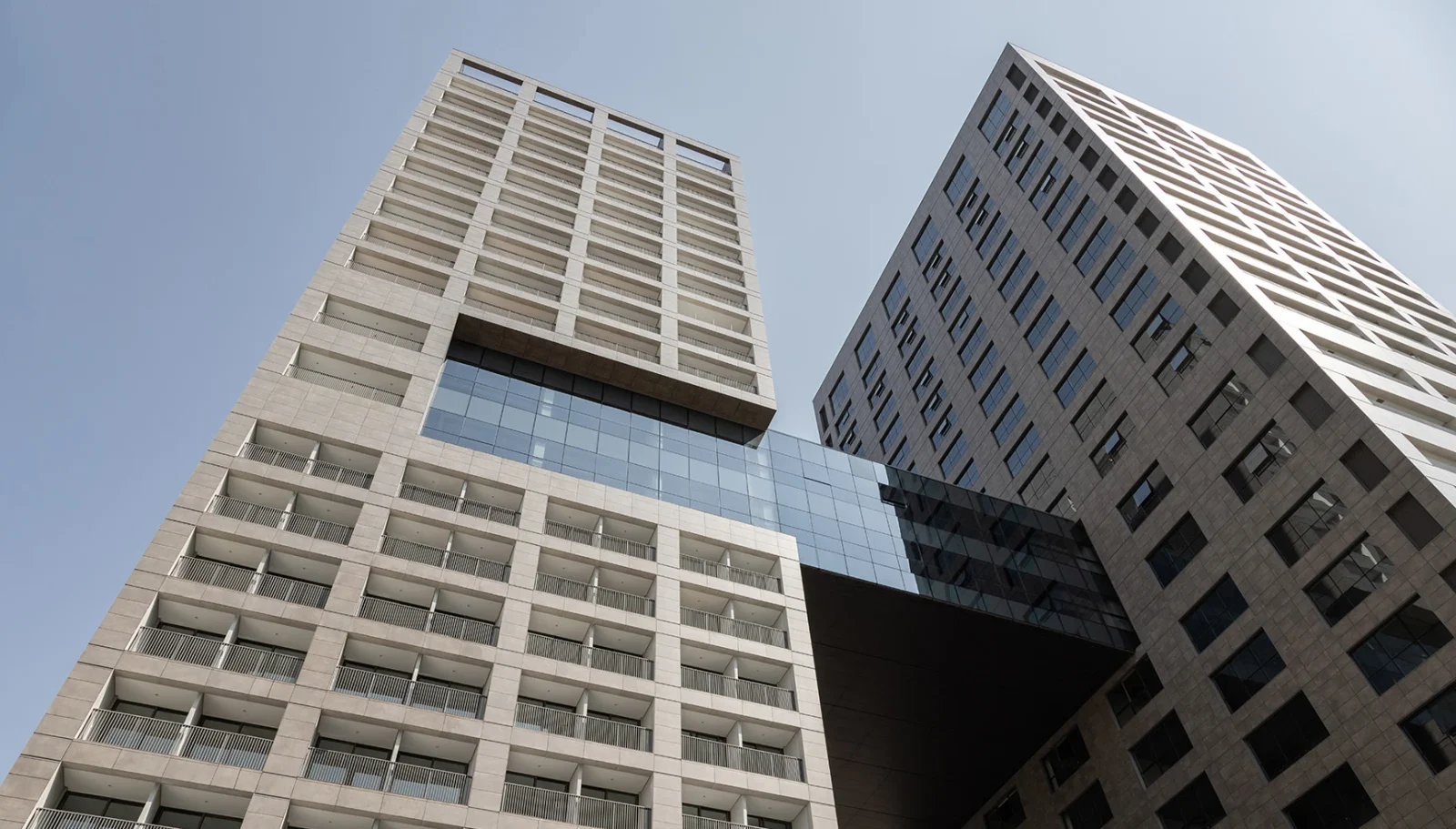
Almagah 227 consists of two towers with different functions, one corporate and the other residential. A 1,930 m² elevated glass bridge connects the towers. The bridge, notable for its material and color, contrasts with the towers’ facades. On the ground floor, the project strengthens its connection to the street through accessible retail spaces extending throughout the block, with storefronts overlooking tree-lined sidewalks. This approach not only provides shared, enjoyable spaces for neighborhood residents but also creates a transitional zone between public and private realms.
6. Linked Hybrid
Location: Beijing, China
Architect: Steven Holl
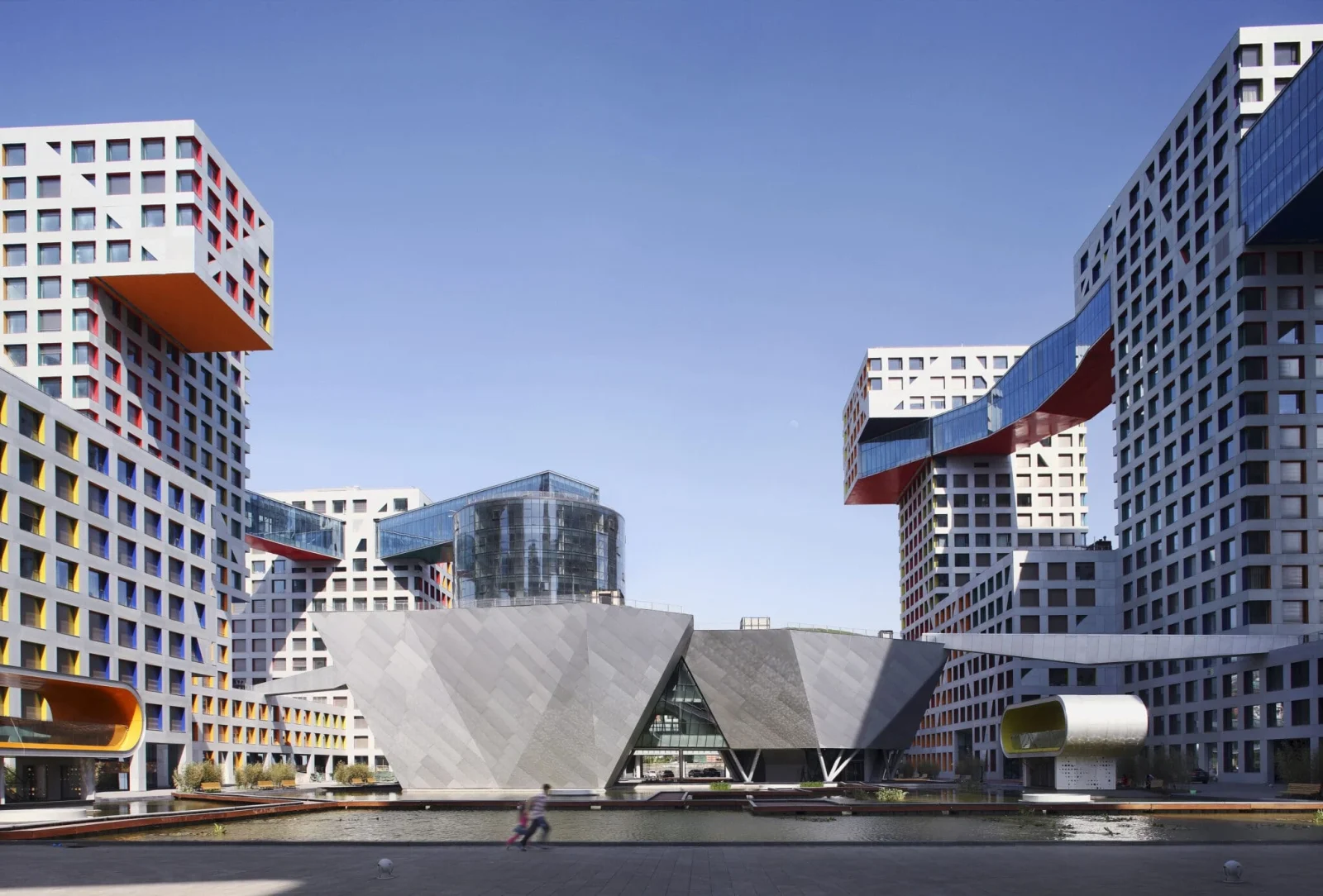
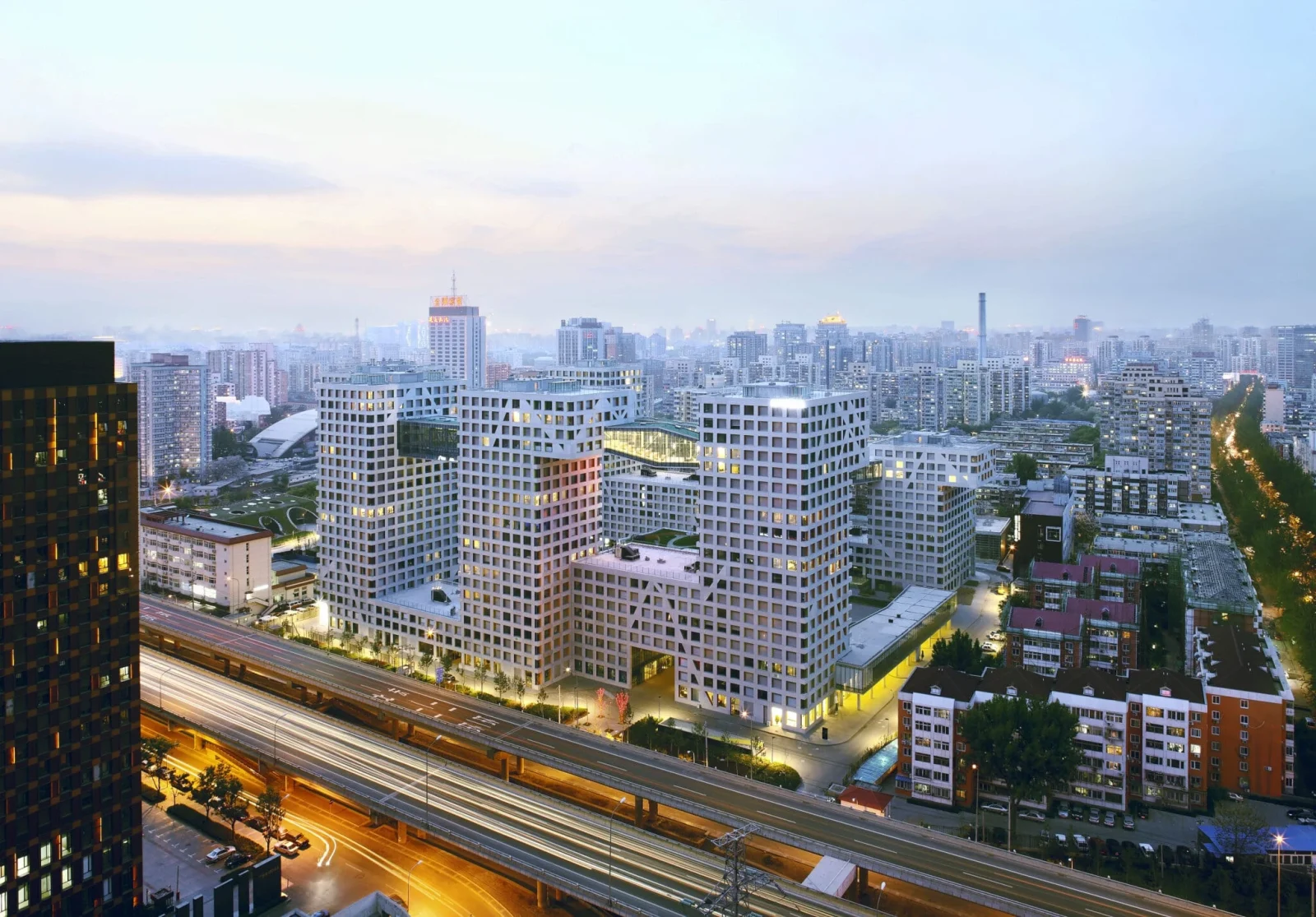
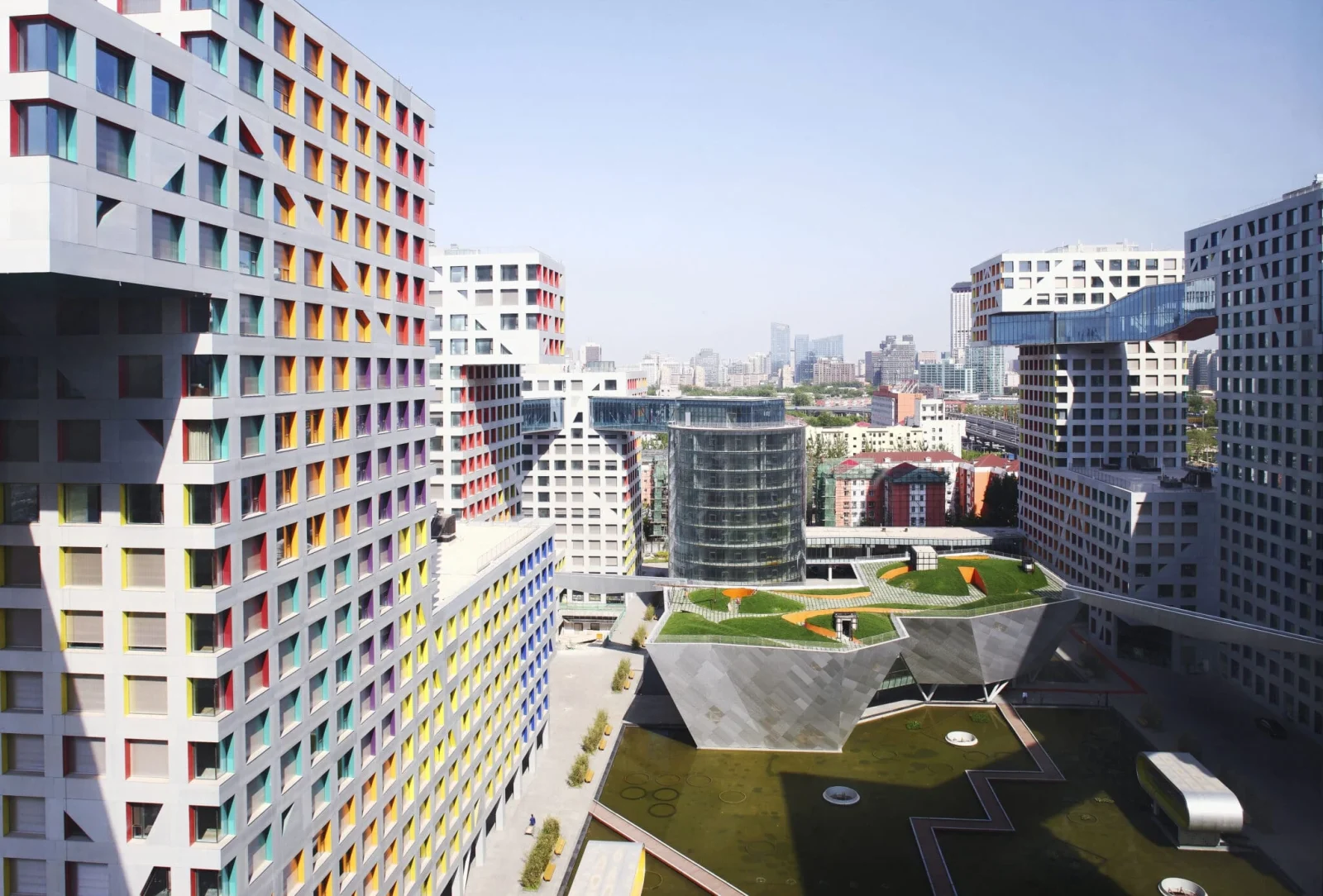
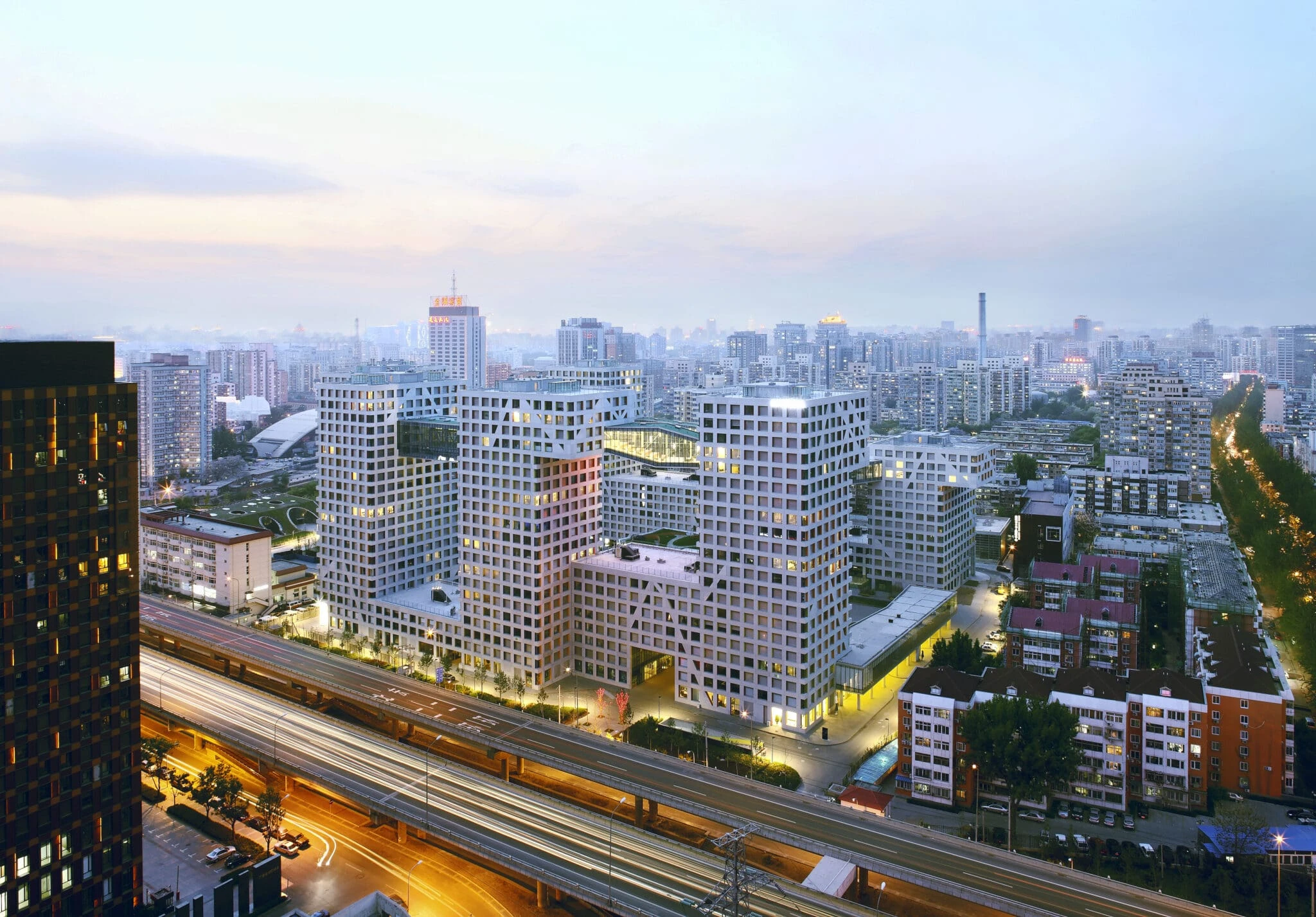
Linked Hybrid, located adjacent to Beijing’s historic city walls, challenges China’s prevailing privatized urban developments by creating an openly accessible and inviting public realm. This 220,000 m² complex comprises eight towers connected by a network of eight skybridges, housing various public functions. Designed by Steven Holl with the motto “an open city within a city,” Linked Hybrid encourages interactive relationships and encounters in public spaces comprising commercial, residential, educational, and recreational areas.
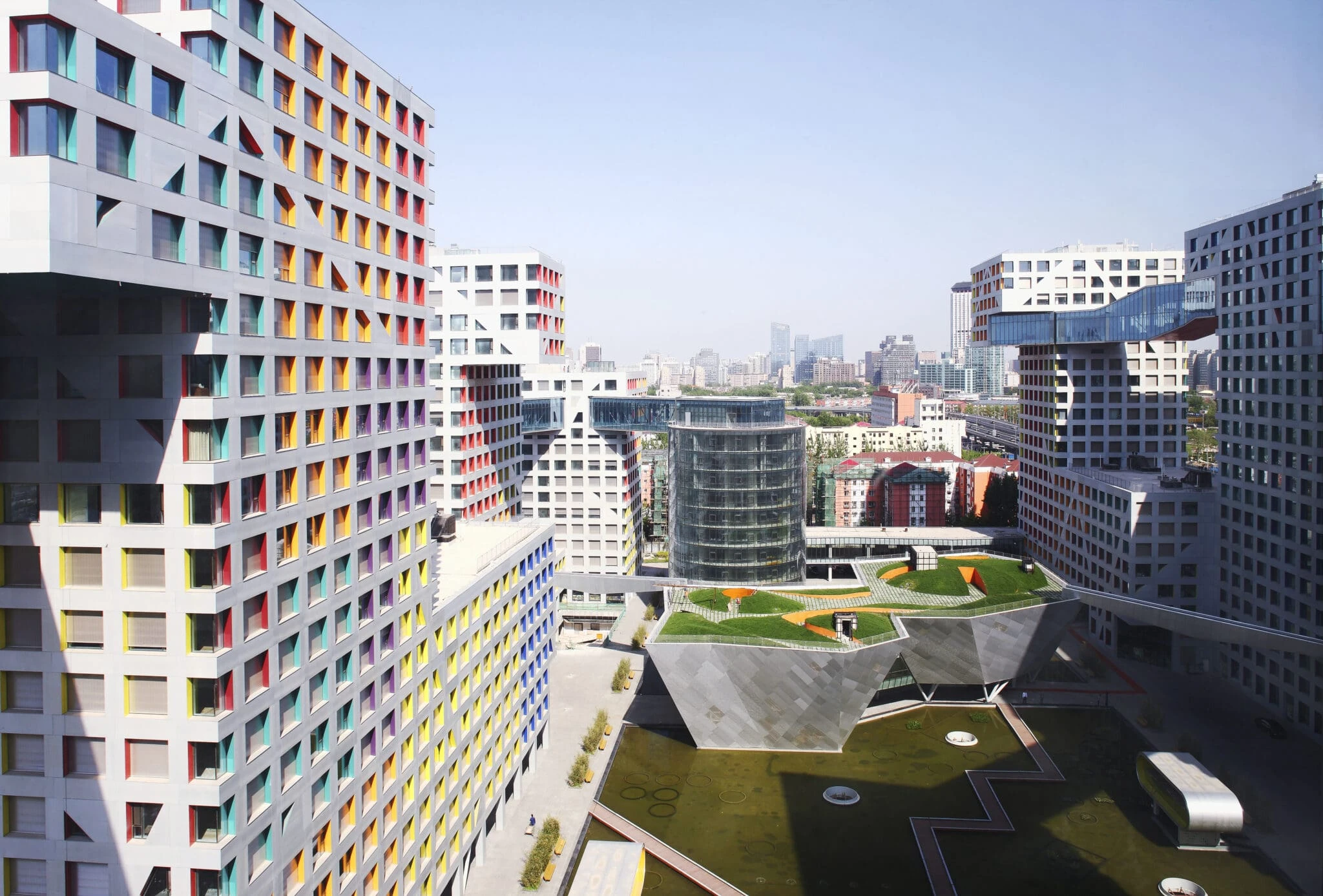
At ground level, numerous open passages accessible to both residents and visitors create a small-scale micro-urban environment. Retail outlets enliven the urban space surrounding a large reflective pool, while public functions such as restaurants, a hotel, a Montessori school, a kindergarten, and a cinema connect seamlessly to the surrounding green areas. From the 12th to the 18th floor, a series of multi-functional skybridges, featuring a swimming pool, fitness center, café, gallery, auditorium, and mini-hall, connect the eight residential towers and the hotel tower, offering spectacular city views.
7. The Clara
Location: Santa Clara, California, USA
Architect: Bohlin Cywinski Jackson
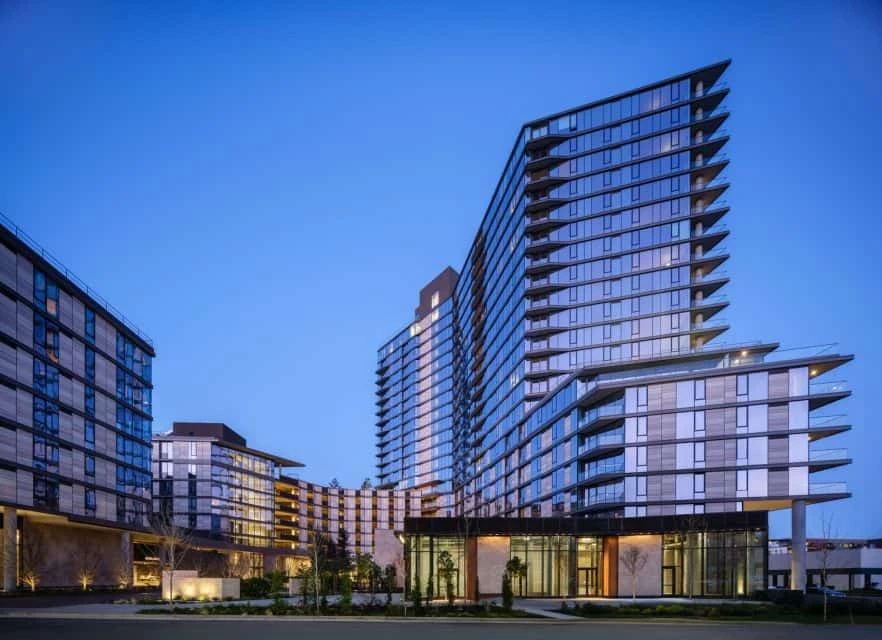
The Clara, a mixed-use residential project designed by Bohlin Cywinski Jackson, responds to the goal of creating high-density, transit- and pedestrian-oriented neighborhoods within walking distance of Silicon Valley’s core. The 850,000 m² complex comprises a 22-story tower and an 8-story mid-rise podium featuring neighborhood retail and a seven-story parking garage. Organized around a secure vehicular entrance, all sections of The Clara are accessed from this central point.
On the eighth floor, a shared amenity space above the central rooftop of the 508-space parking structure features a pool, indoor and outdoor fitness areas, bocce courts, and a wellness center with a private spa for residents. The 22nd-floor residents’ club offers a broad range of entertainment spaces, including a media room, library, bar and lounge, dining room, and game room. At the same time, the 23rd-floor outdoor terrace provides panoramic views of Silicon Valley and its surroundings.
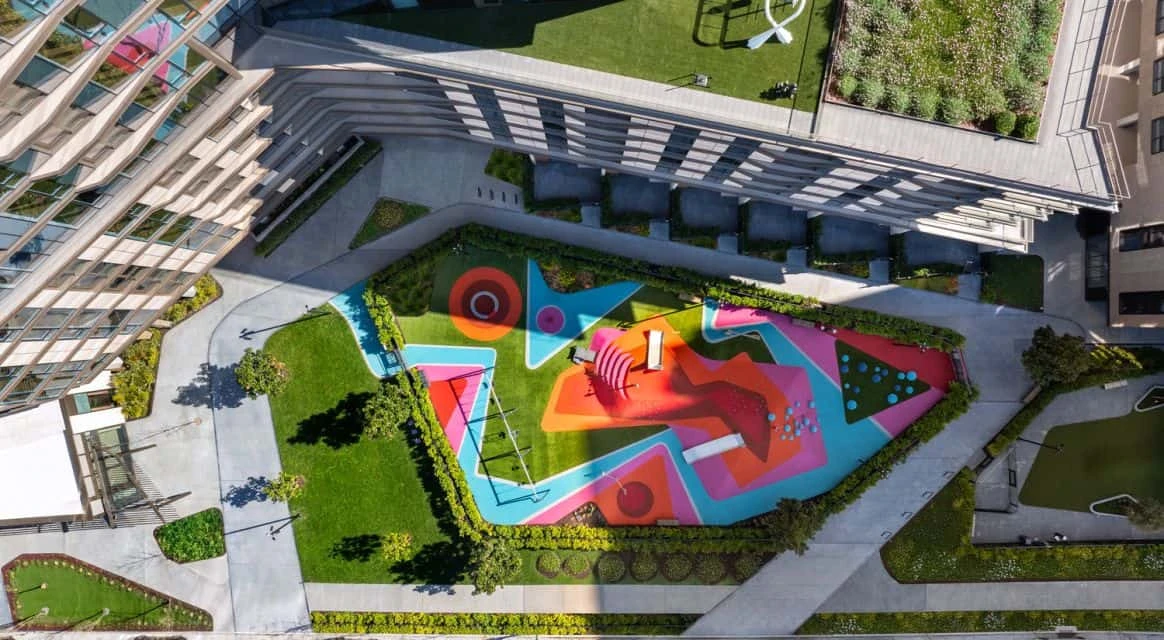
Organized as a series of layers, The Clara’s ground floor features a highly transparent retail storefront that integrates with the adjacent street, allowing the ground floor’s use to extend into the public space. This podium massing, designed with a distinct geometry from the tower above, emphasizes its unique program. The edges of the park are enlivened by retail storefronts and interact with a large residential lobby and townhouse facades. Above the ground level, the use of travertine further defines The Clara’s urban edge, adding material richness and tactile quality to the pedestrian experience.
8. De Rotterdam
Location: Rotterdam, Netherlands
Architect: OMA
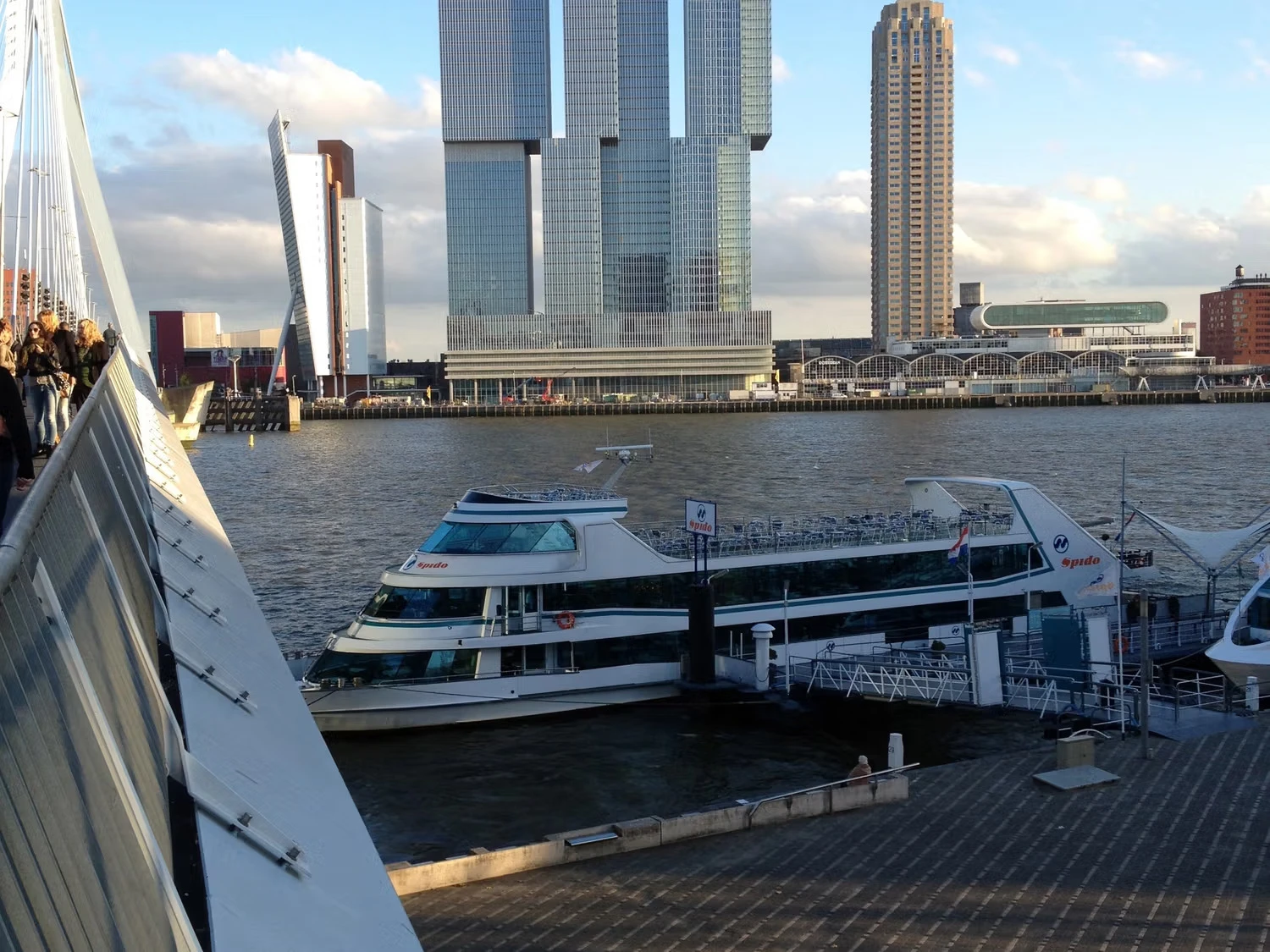
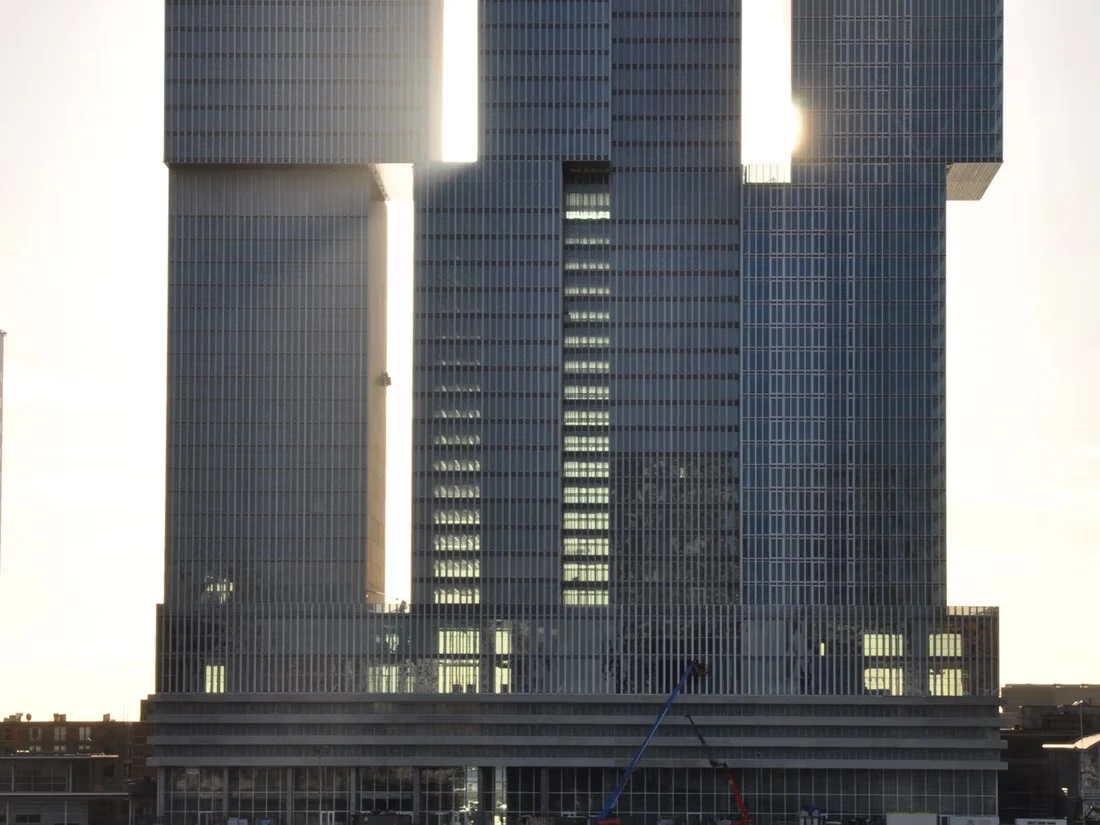
Designed by OMA as a vertical city, De Rotterdam consists of three interconnected mixed-use towers housing offices, apartments, a hotel, conference halls, shops, restaurants, and cafes. Part of the ongoing redevelopment of the former Wilhelminapier port area next to the Erasmus Bridge, the complex aims to revive the vibrant urban activity the neighborhood once knew.
With its three towers reaching a height of 150 meters and a gross usable area of 162,000 m², De Rotterdam is the tallest building in the Netherlands. Refusing to conform to a single form, the towers are arranged in a subtly irregular cluster, producing compelling views from different perspectives. Diverse programs are organized into separate blocks that both provide openness and encourage synergy: residents and office workers alike can access the hotel’s fitness facilities, restaurants, and conference halls, while ground-level waterfront cafés allow interaction with the general public. The lobbies of the offices, hotel, and apartments are situated on a long, elevated hall on a pedestal that serves as a general traffic hub for De Rotterdam’s diverse users.
9. Galaxy Soho
Location: Beijing, China
Architect: Zaha Hadid
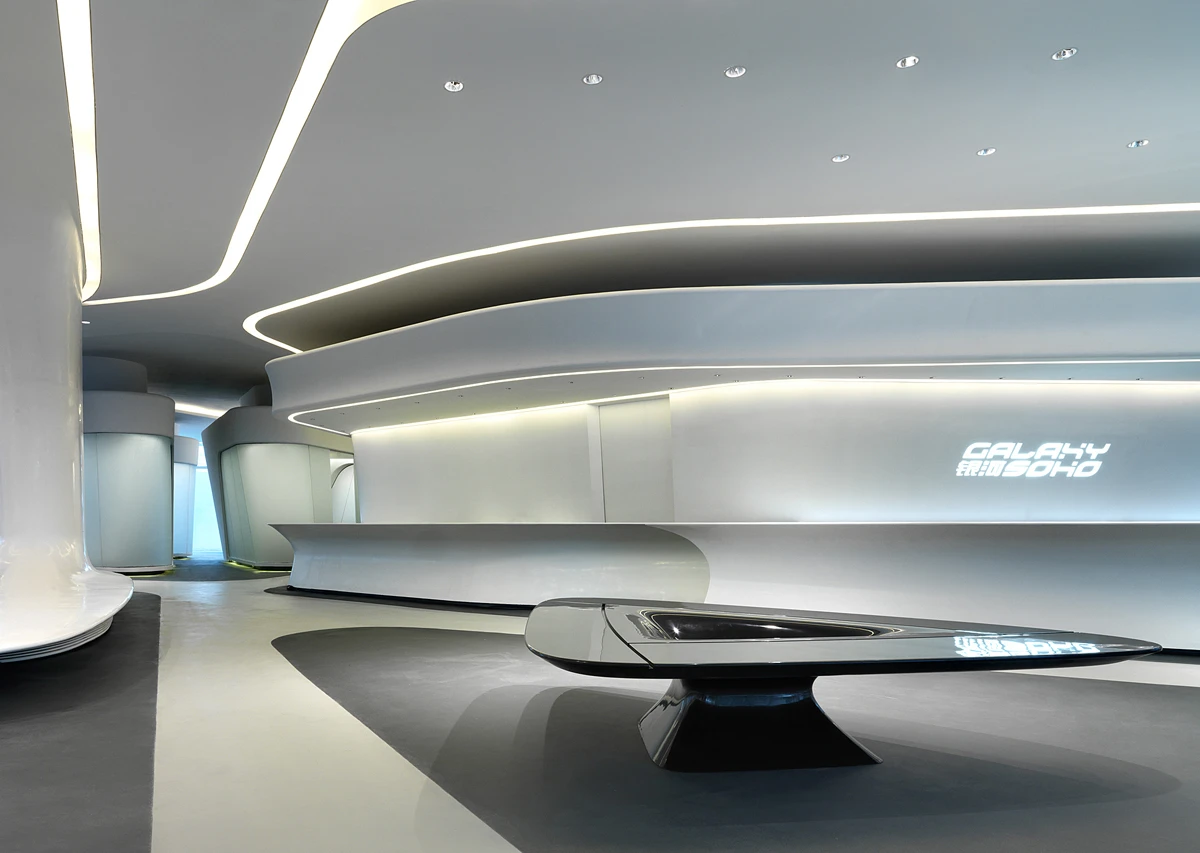
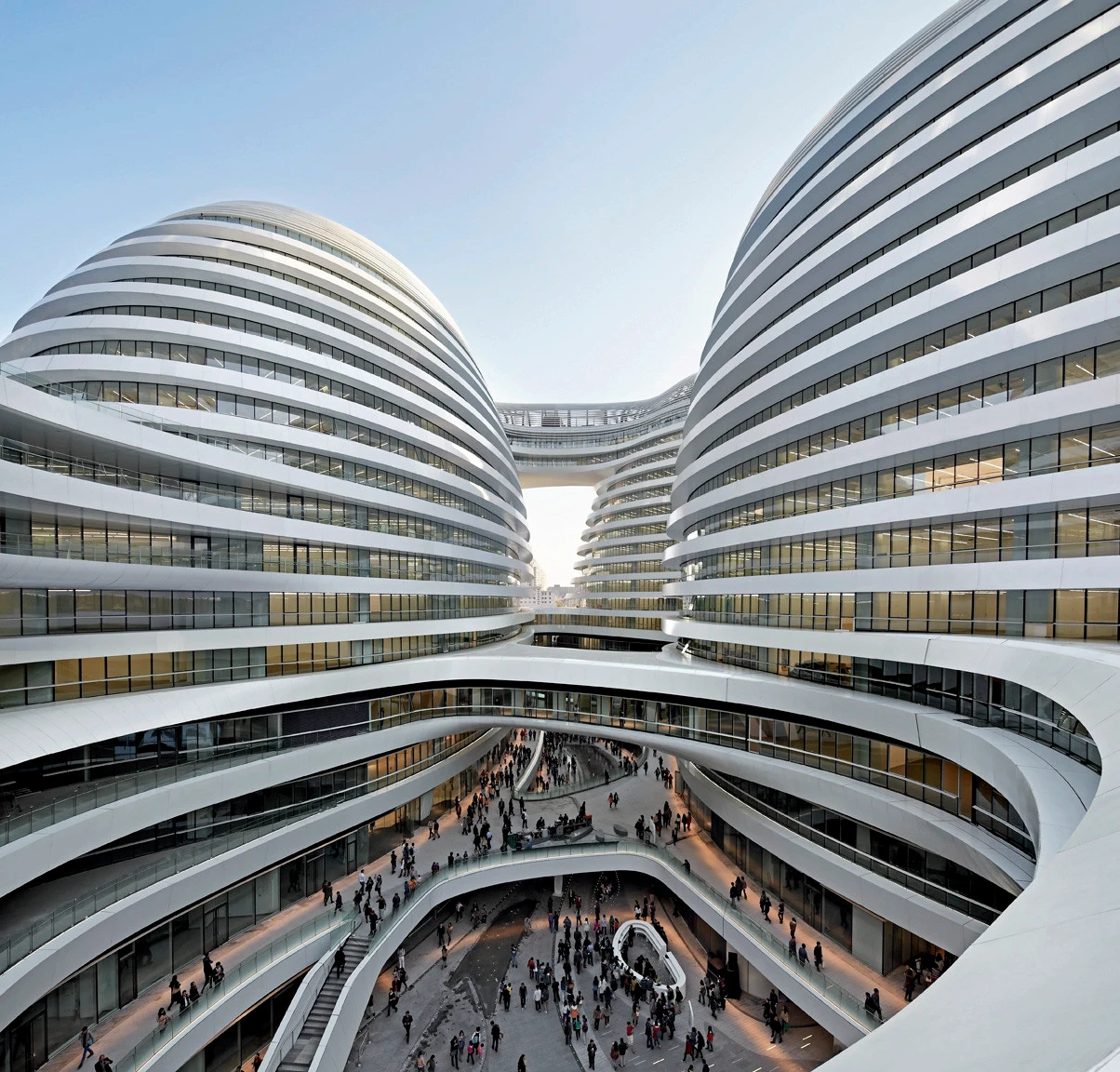
Galaxy Soho in Beijing, China, designed by Zaha Hadid, is a mixed-use complex that combines new office, retail, and entertainment spaces on a monumental scale. Spanning 330,000 m², the complex comprises five continuously fluid volumes separated, fused, or connected by extended bridges. These volumes harmonize in every direction, creating a panoramic architecture devoid of sharp corners or abrupt transitions that disrupt the fluidity of its formal composition.
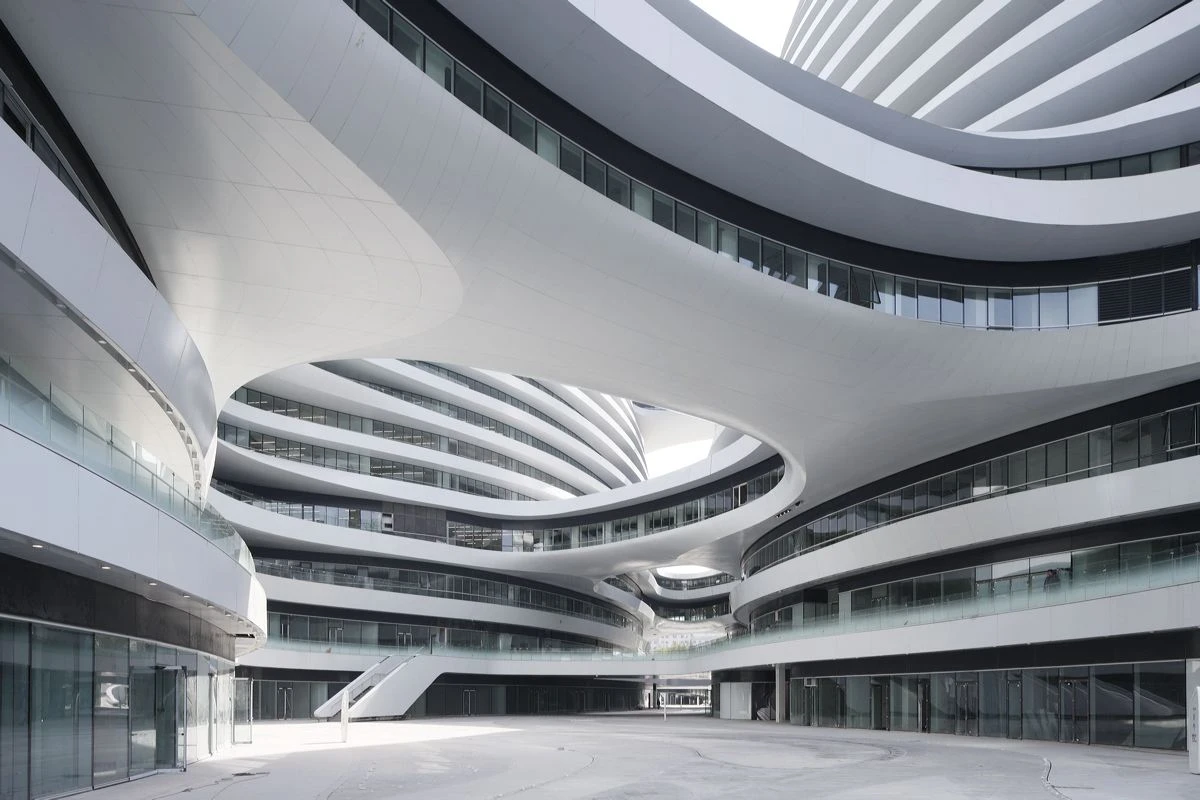
Reinterpreting the inner courtyards of traditional Chinese urban networks, Galaxy Soho forms an interior world of continuous open spaces. The interplay of the volumes, assembled to ensure constant mutual harmony and fluid movement, creates varying plateaus that evoke a sense of depth, immersion, and enclosure. Featuring retail and entertainment facilities on its lower floors, Galaxy Soho houses workspaces for a variety of innovative businesses on its upper levels. The top floors, boasting views of the city’s main avenues, are reserved for bars, restaurants, and cafes.
10. Valley Towers
Location: Amsterdam, Netherlands
Architect: MVRDV
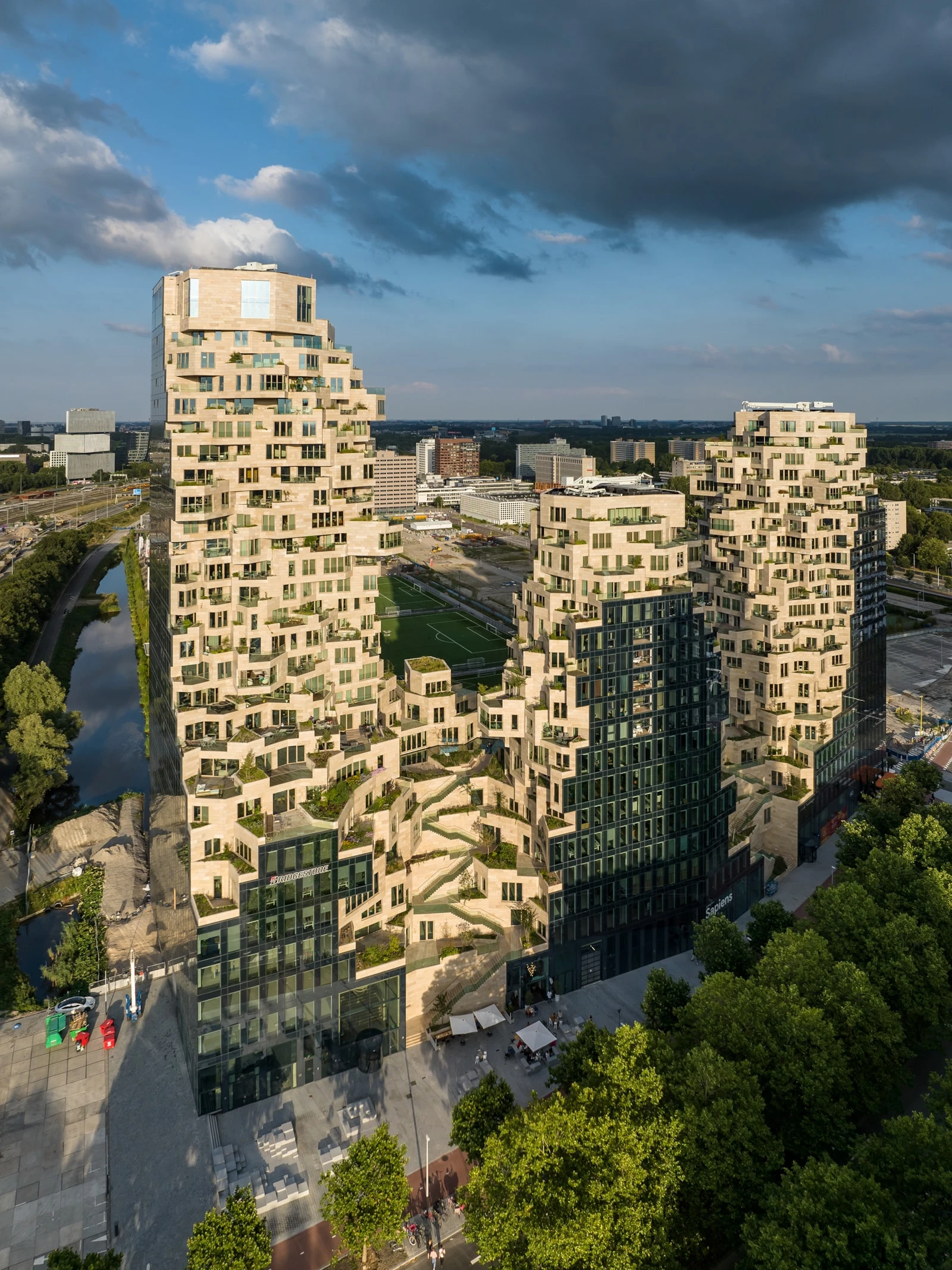
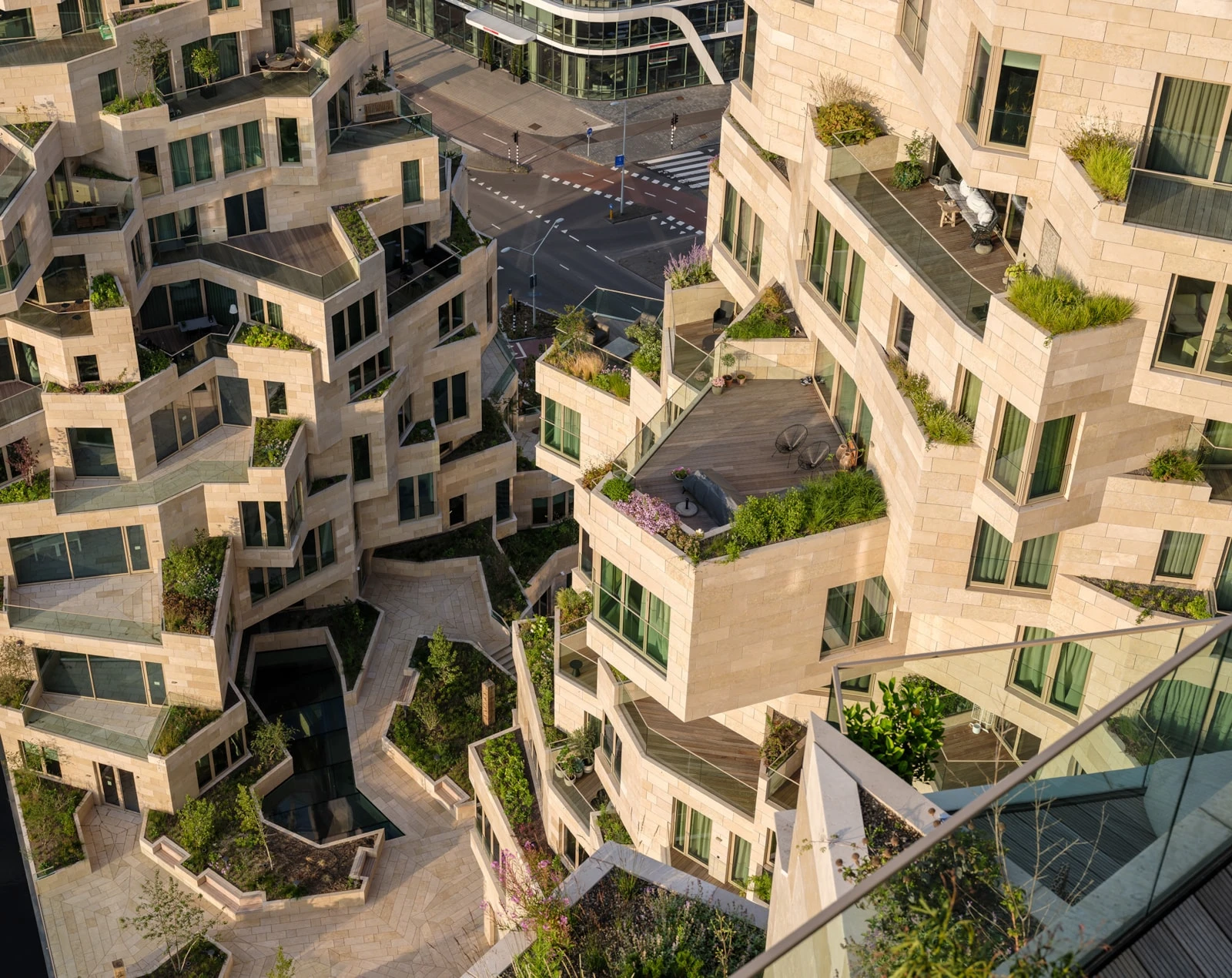
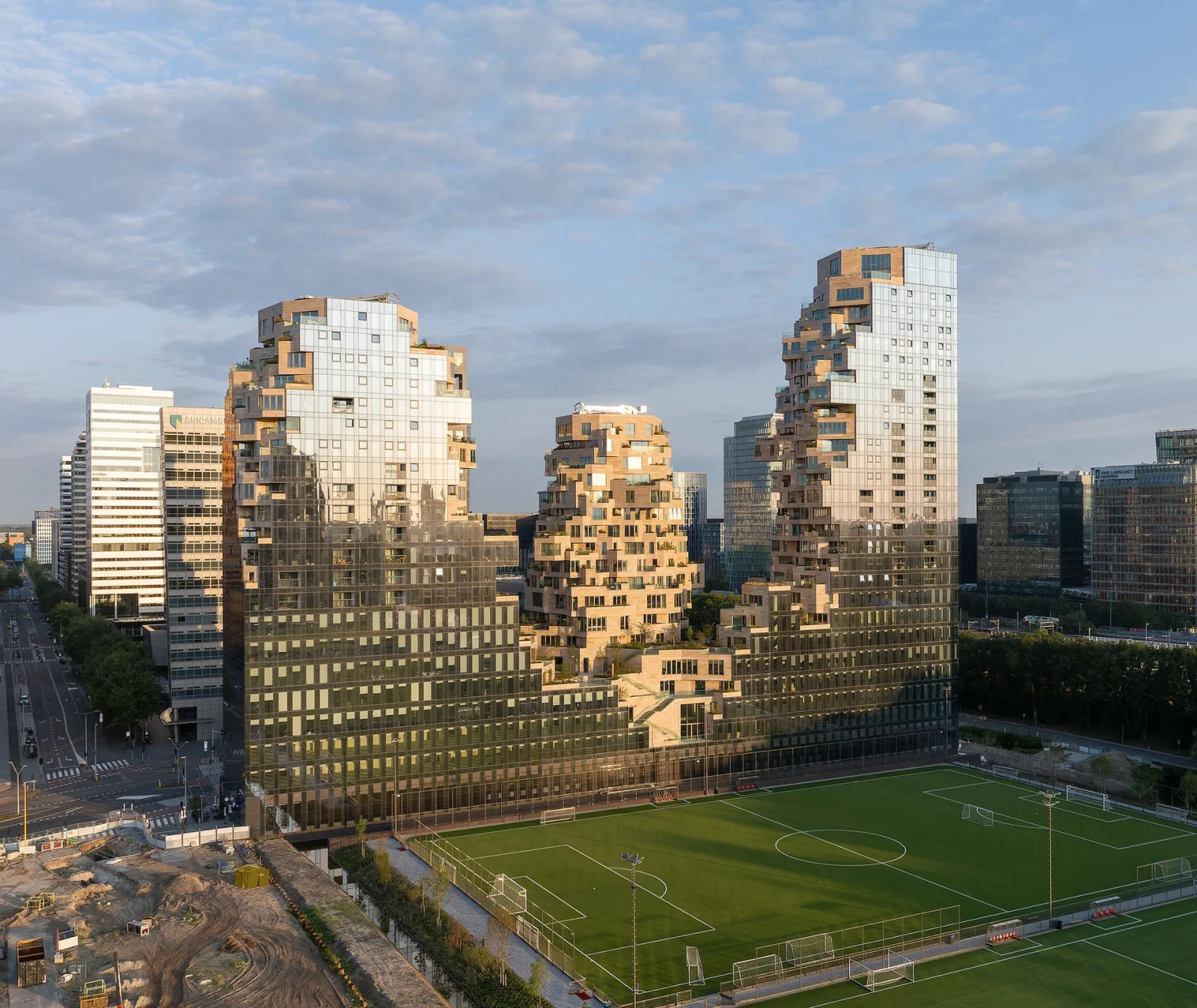
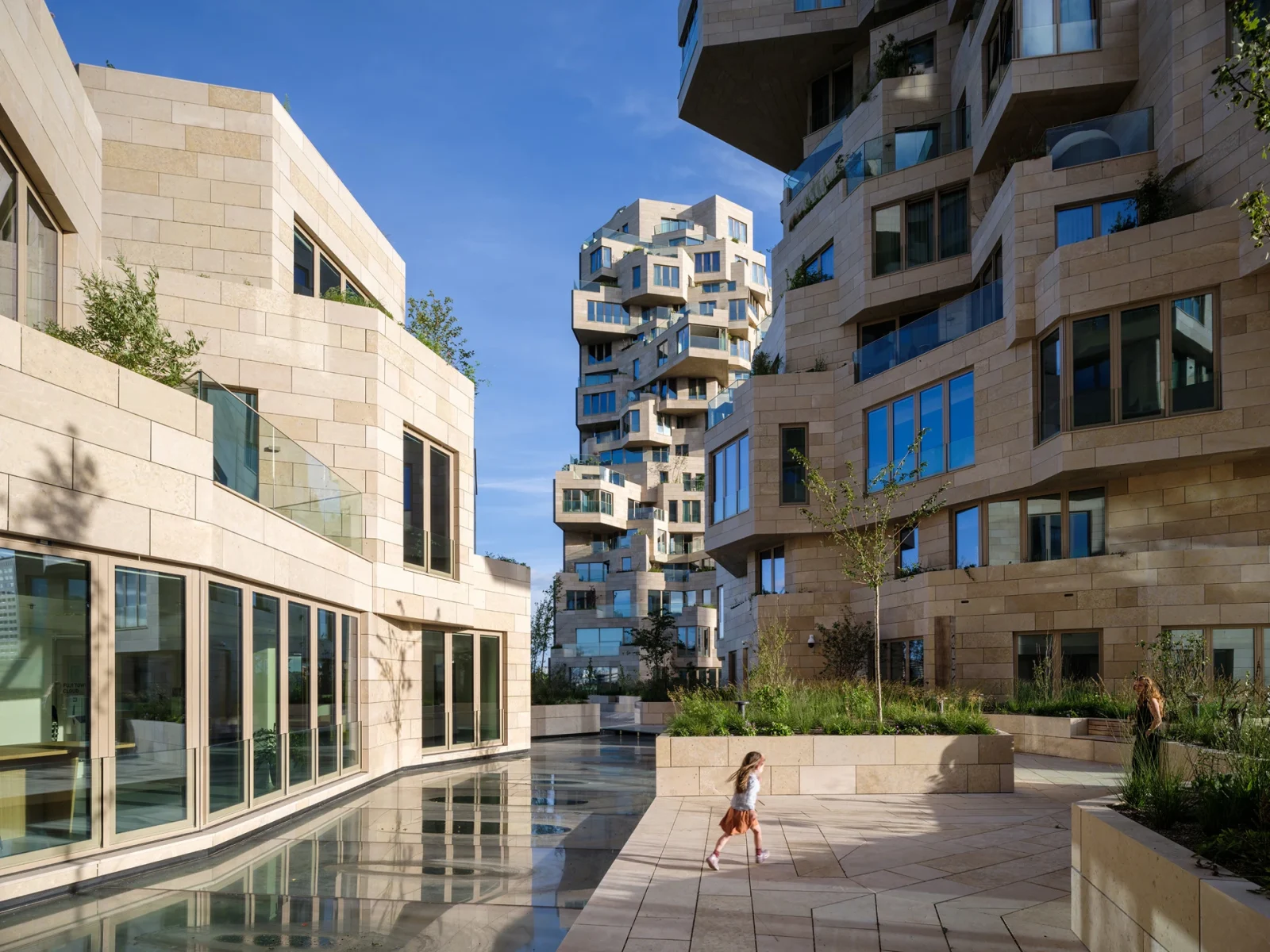
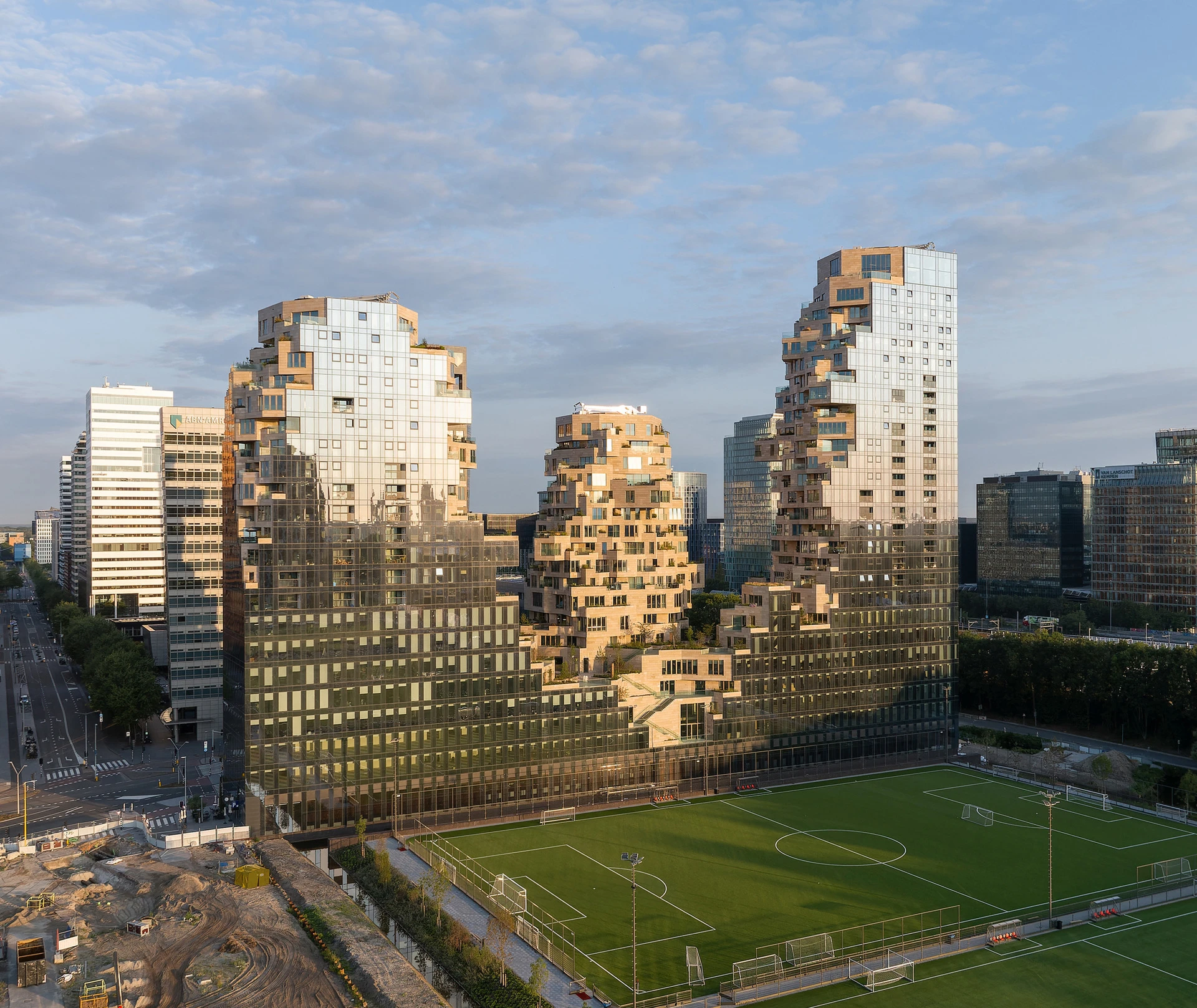
Valley, designed by MVRDV and inspired by geology, introduces a green and human-centered dimension to the otherwise unwelcoming office environment of Amsterdam’s Zuidas district. Featuring three towers of 67, 81, and 100 meters and magnificent cantilevered apartments, this mixed-use complex boasts a smooth, mirrored glass shell along its exterior edges that blends seamlessly with the context of the business district. Inside this shell, the building takes on a completely different, more inviting, natural appearance.
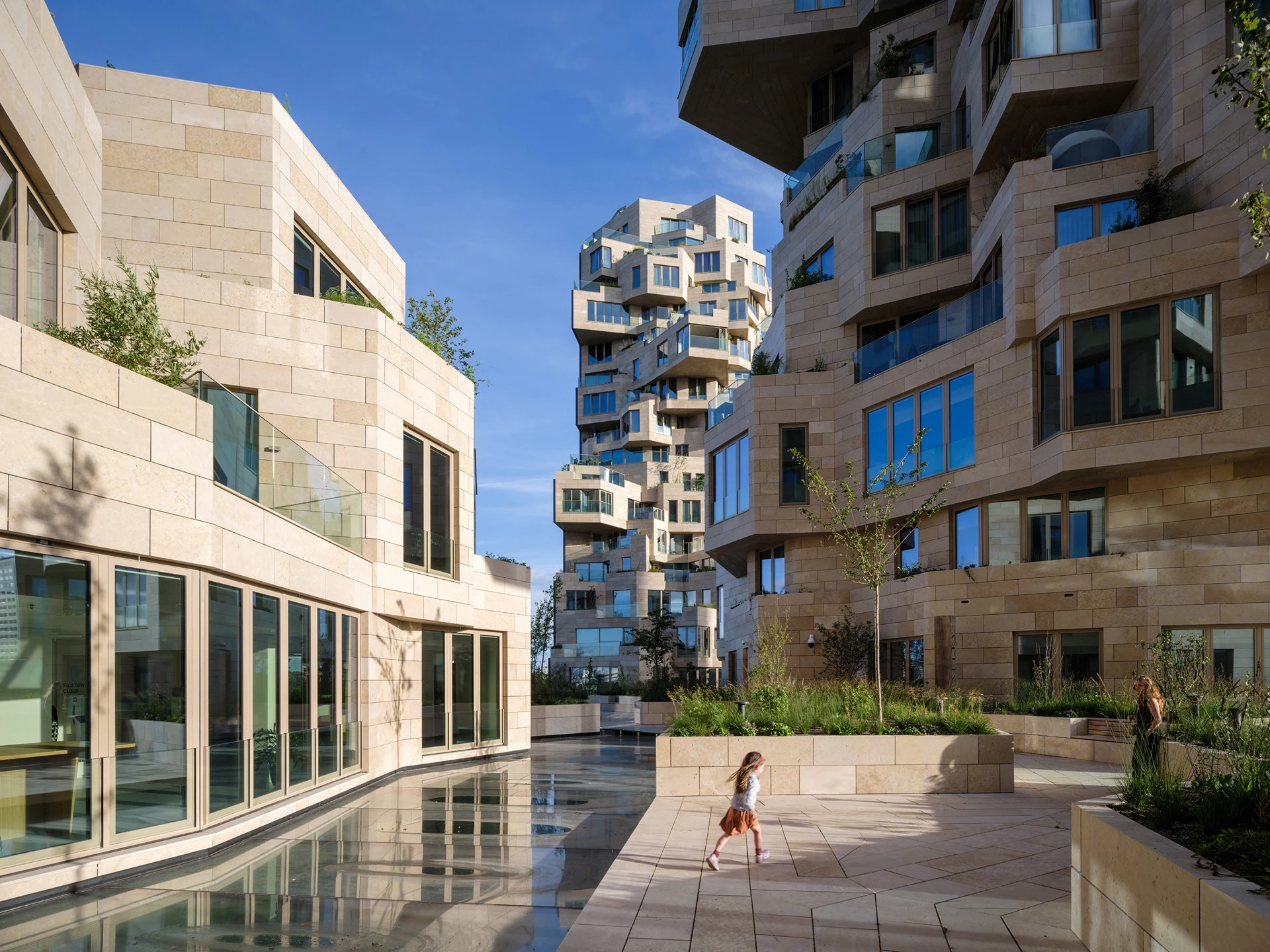
Programmed for a mix of residents, workers, and visitors, the building includes a three-level underground parking garage, offices on the lower seven floors, and apartments starting from the eighth floor. The rooftop sky bar atop the towers is accessible via the Molteni flagship store on the ground floor. Much of the Valley is publicly accessible, from the zigzagging pedestrian path leading from street level toward the central valley, to the atrium on the first floor that forms a covered “street” called the Cave. The Cave is connected to the outside by two large skylights that act as shallow pools of water at the valley level above.
Mixed-use developments, which integrate homes, shops, offices, and public spaces into functional and harmonious areas, create communities where people can live, work, and socialize in one place. The mixed-use project examples examined in this article have revitalized their locations and become landmarks of their cities. Looking at these examples, we can say that today’s large-scale architecture cannot be measured solely by density or ostentation; it is questioned through parameters such as the way it establishes relationships and the ability of different units to coexist seamlessly.
Explore Courses
.jpg "Ondrej Chybik - Rethinking Architecture")