

Architecture is not a backdrop to learning, it is an active agent that shapes how knowledge is produced, shared, and experienced. Today’s campuses operate as cultural microcosms, testing grounds, and innovation ecologies. They merge landscape, materiality, social space, and technology to create environments that are no longer static buildings but dynamic ecosystems.
From adaptive typologies to climate-intelligent design, universities are shifting beyond classrooms into spatial laboratories where collaboration, research, and public life blend. Contemporary campus architecture doesn’t only house education, it reframes what learning can be, where it happens, and how it connects to the world.
Here are 10 schools pushing the future of campus architecture:
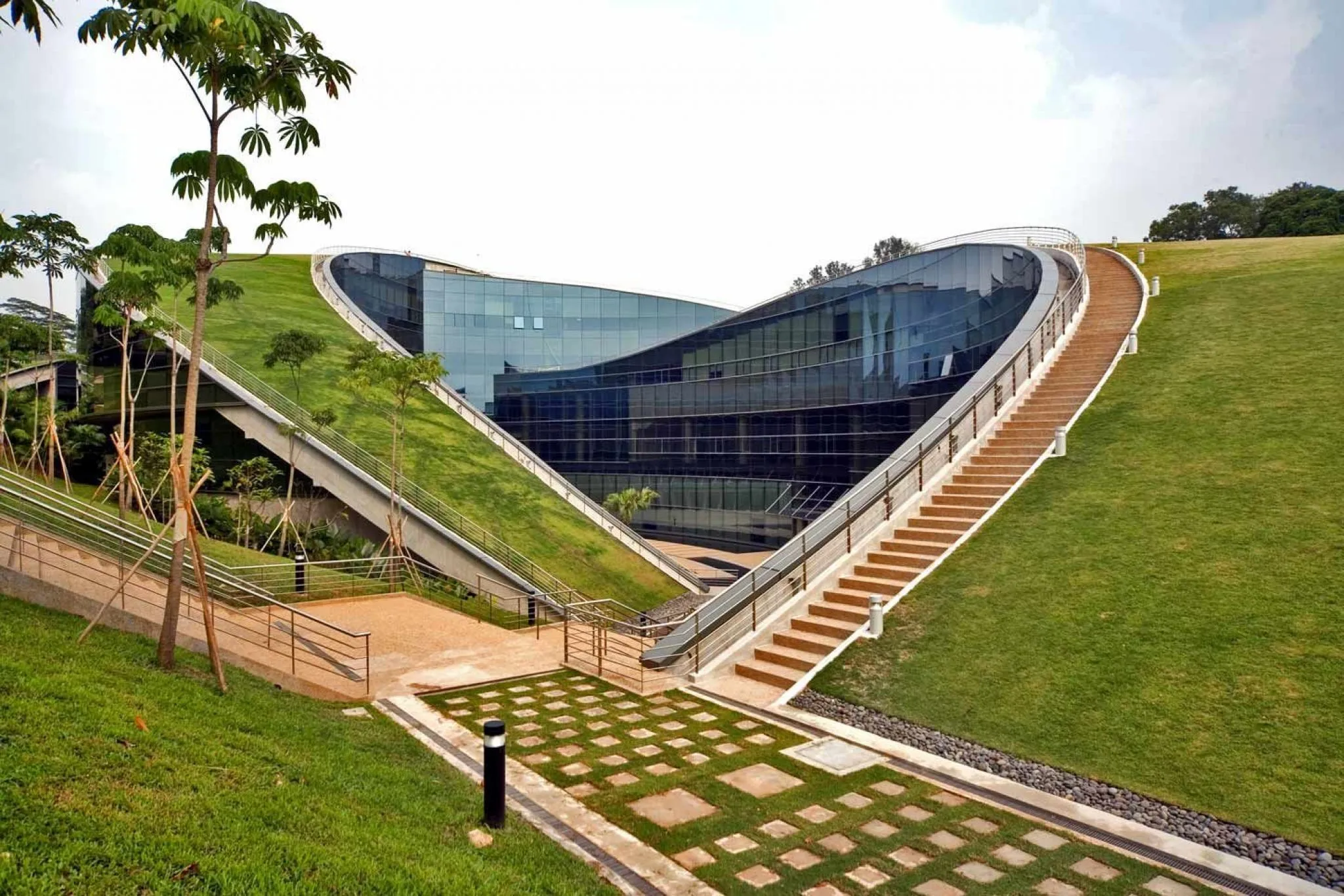
1. School of Art, Design, and Media (Nanyang Technological University), Singapore
Design Characteristic: Campus Architecture Sustainability Integration
Architect: CPG Consultants
Location: Singapore
Completed: 2006
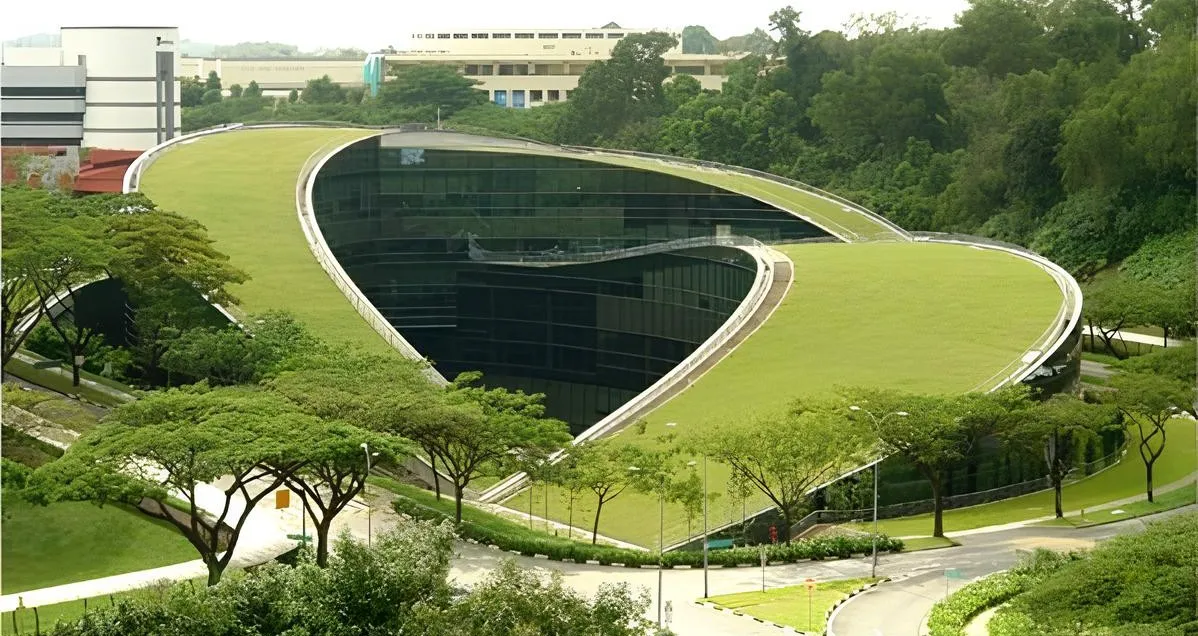
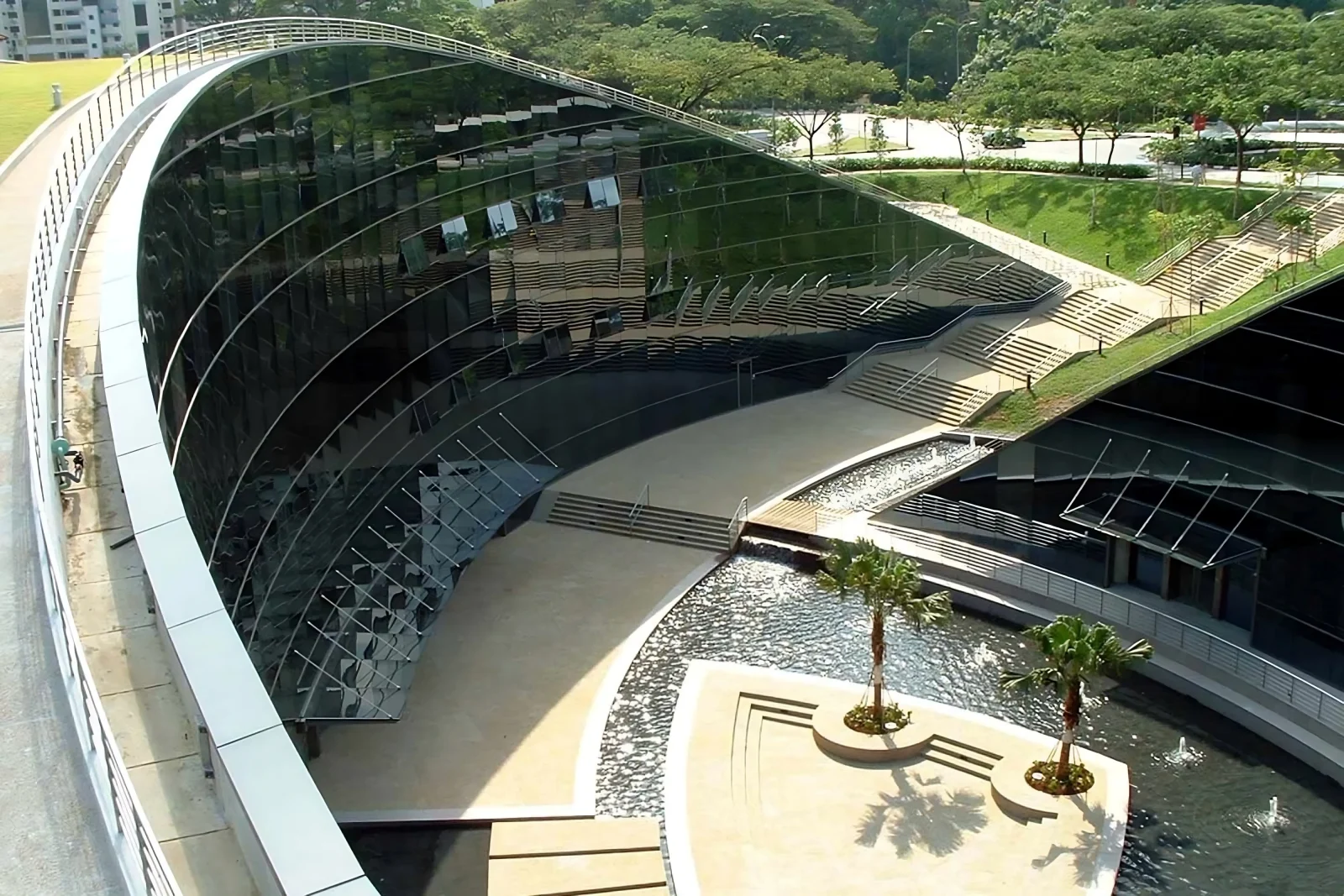
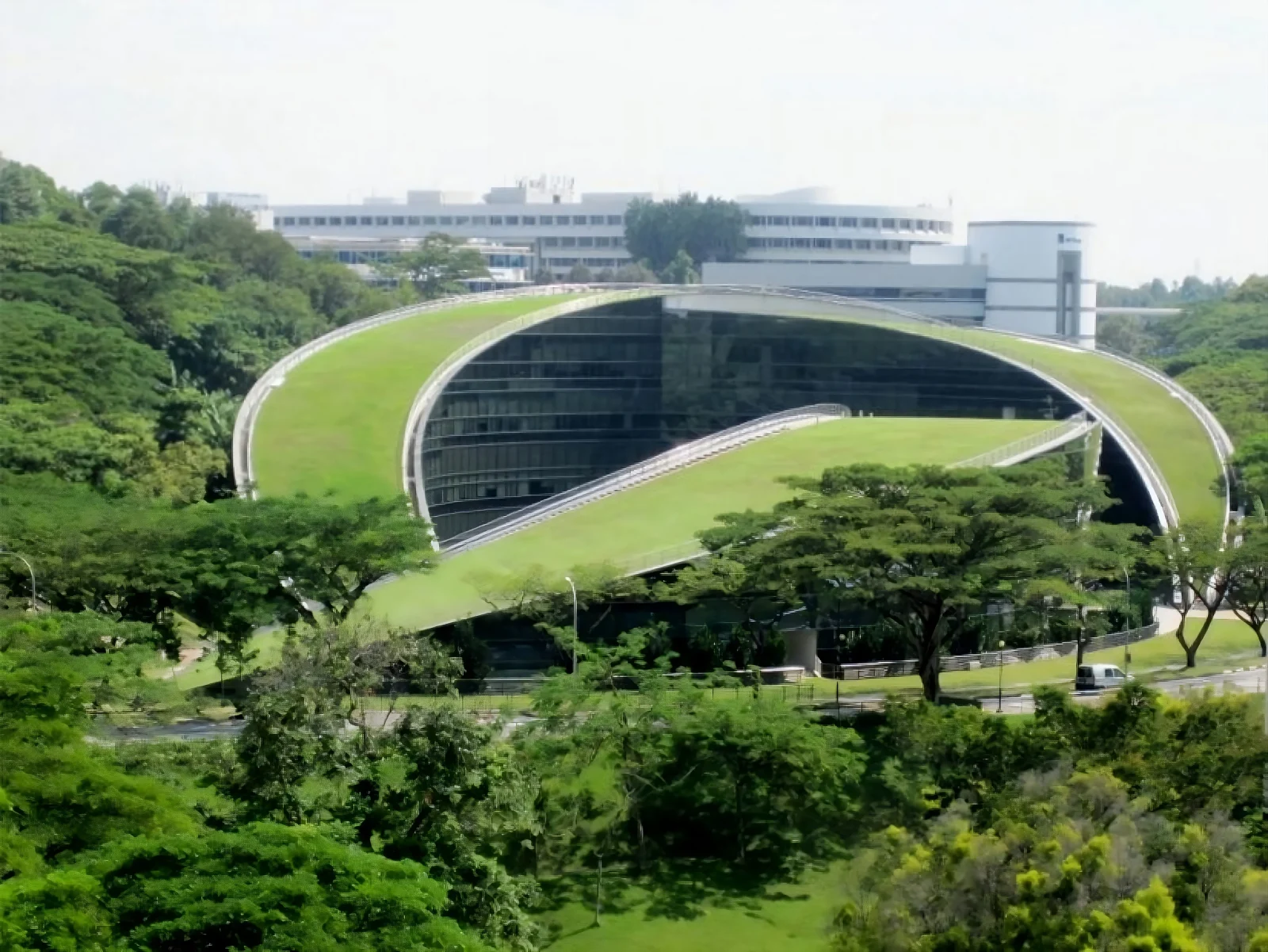
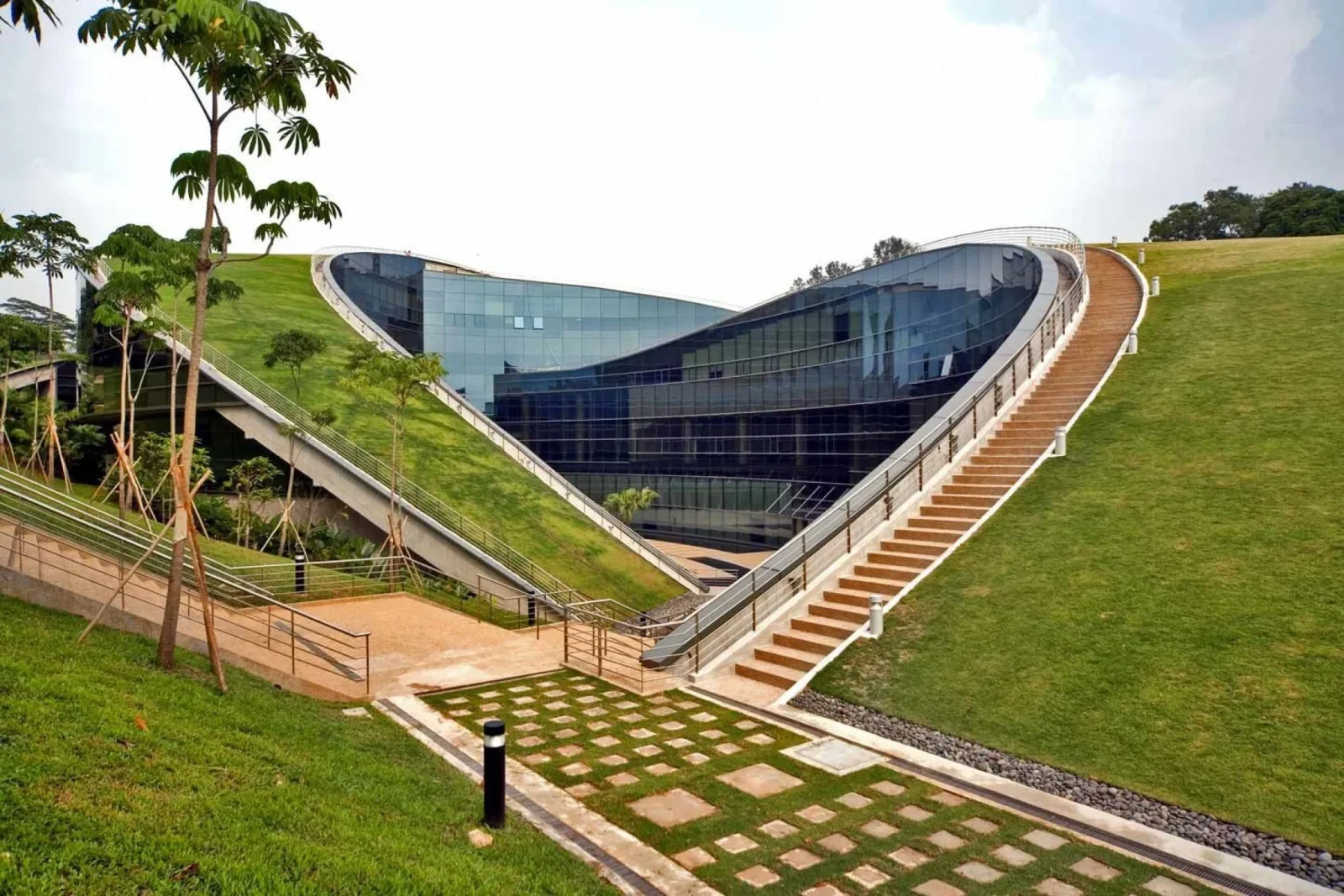
The School of Art, Design & Media at Nanyang Technological University is one of the greenest and most iconic buildings on campus. This striking five-storey building is a true example of how “architecture can seamlessly blend with sustainability.” Designed by CPG Consultants and completed in 2006, the five-storey structure has become an award-winning model of green architecture, reflecting NTU’s vision of blending creativity, learning, and sustainability. It is more than just a university building; it demonstrates how design can inspire innovation while remaining deeply rooted in environmentally friendly architecture.

The school’s significant green roof is a masterpiece, featuring two sweeping curves that gently meet the ground, seamlessly merging the building with the surrounding landscape. This lush living roof is not only a striking visual statement but also a functional ecosystem, acting as natural insulation, reducing heat, harvesting rainwater, and enriching campus biodiversity. The architecture of the buildings blurs the lines between function and community, creating a learning space integrated with community interactions and outdoor spaces.
2. Otemon Gakuin University Academic – Ark, Japan
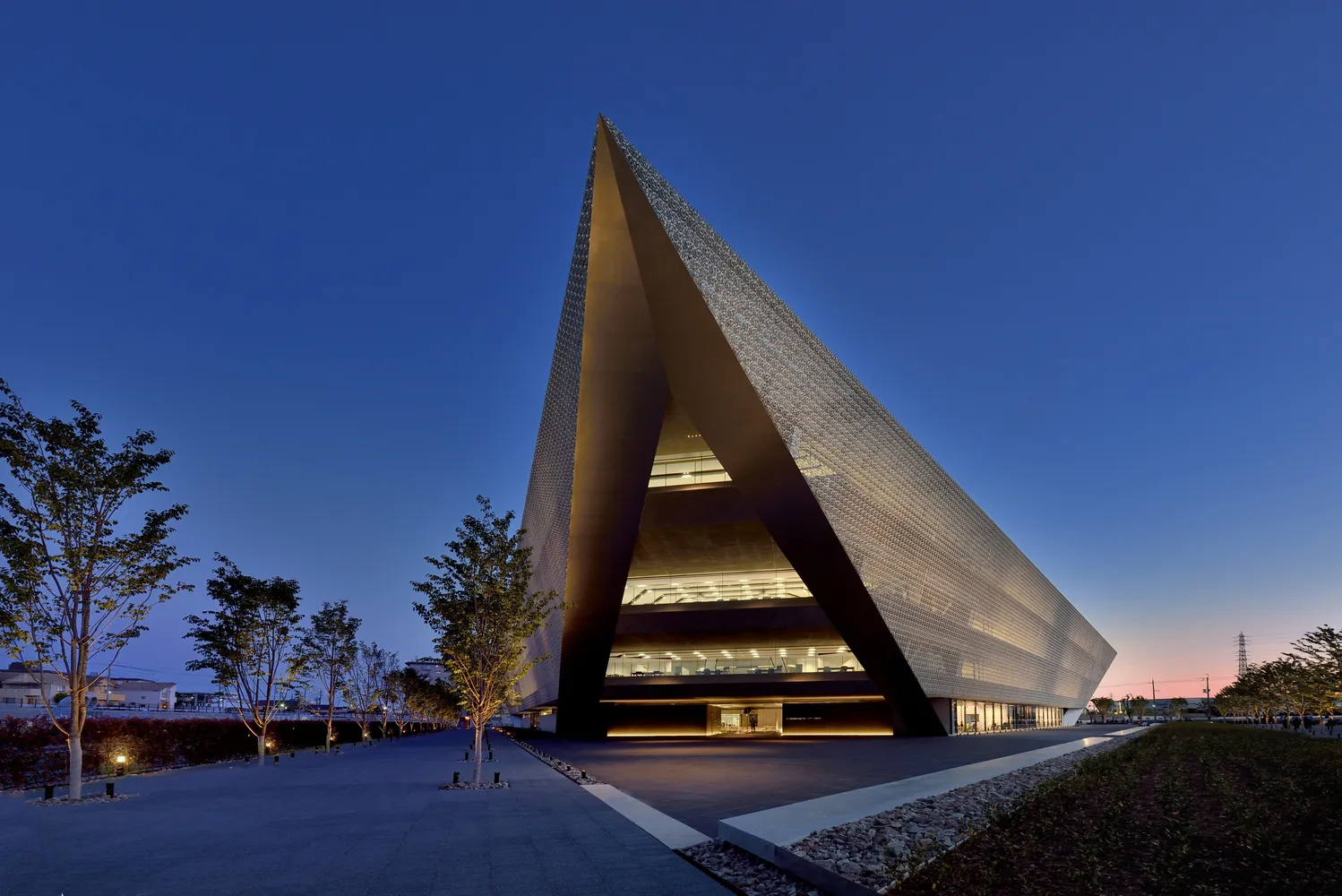
Design Characteristic: Futuristic Approach to Campus Architecture
Architect: Mitsubishi Jisho Sekkei
Location: Ibaraki, Japan
Completed: 2019
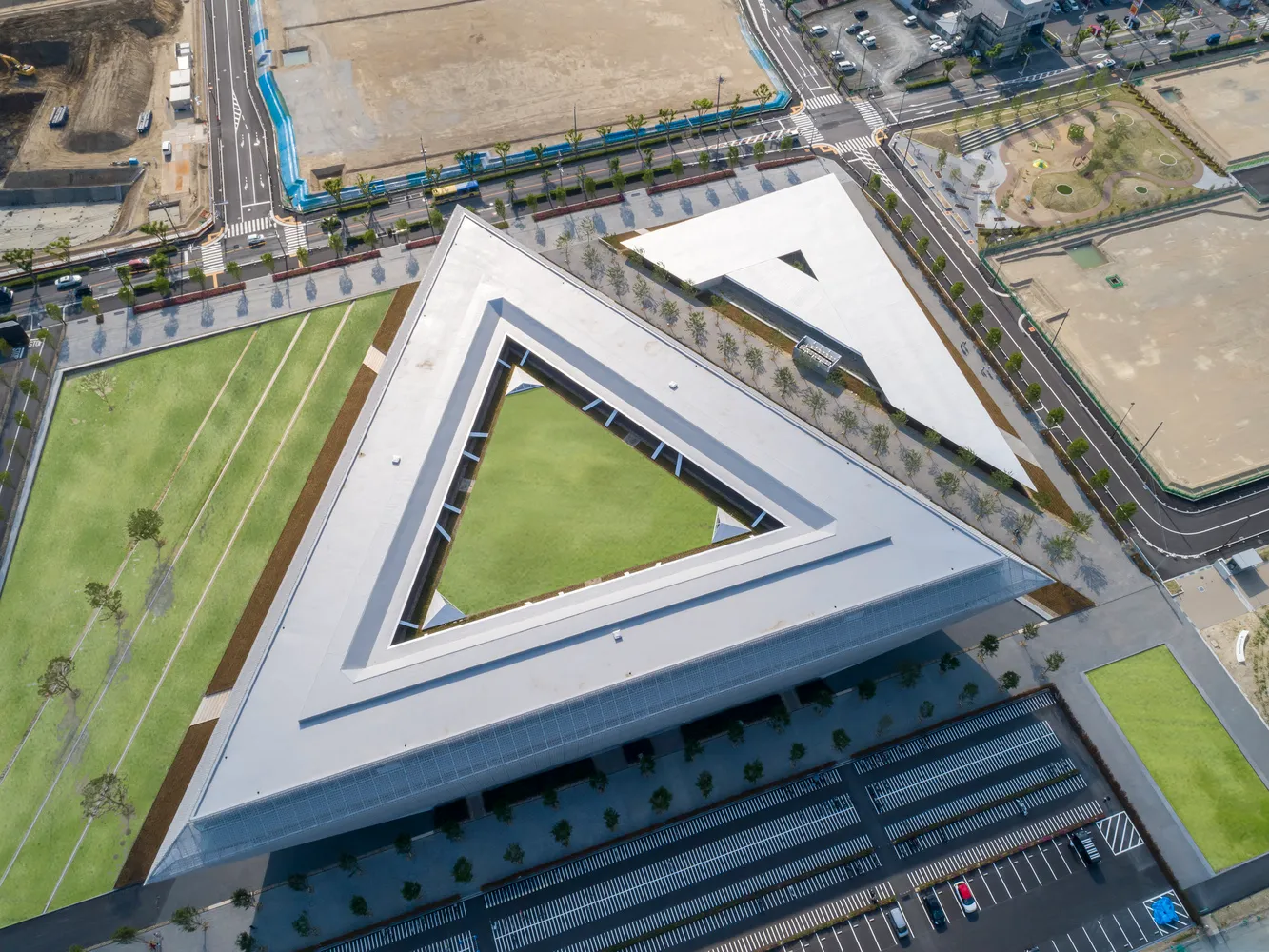
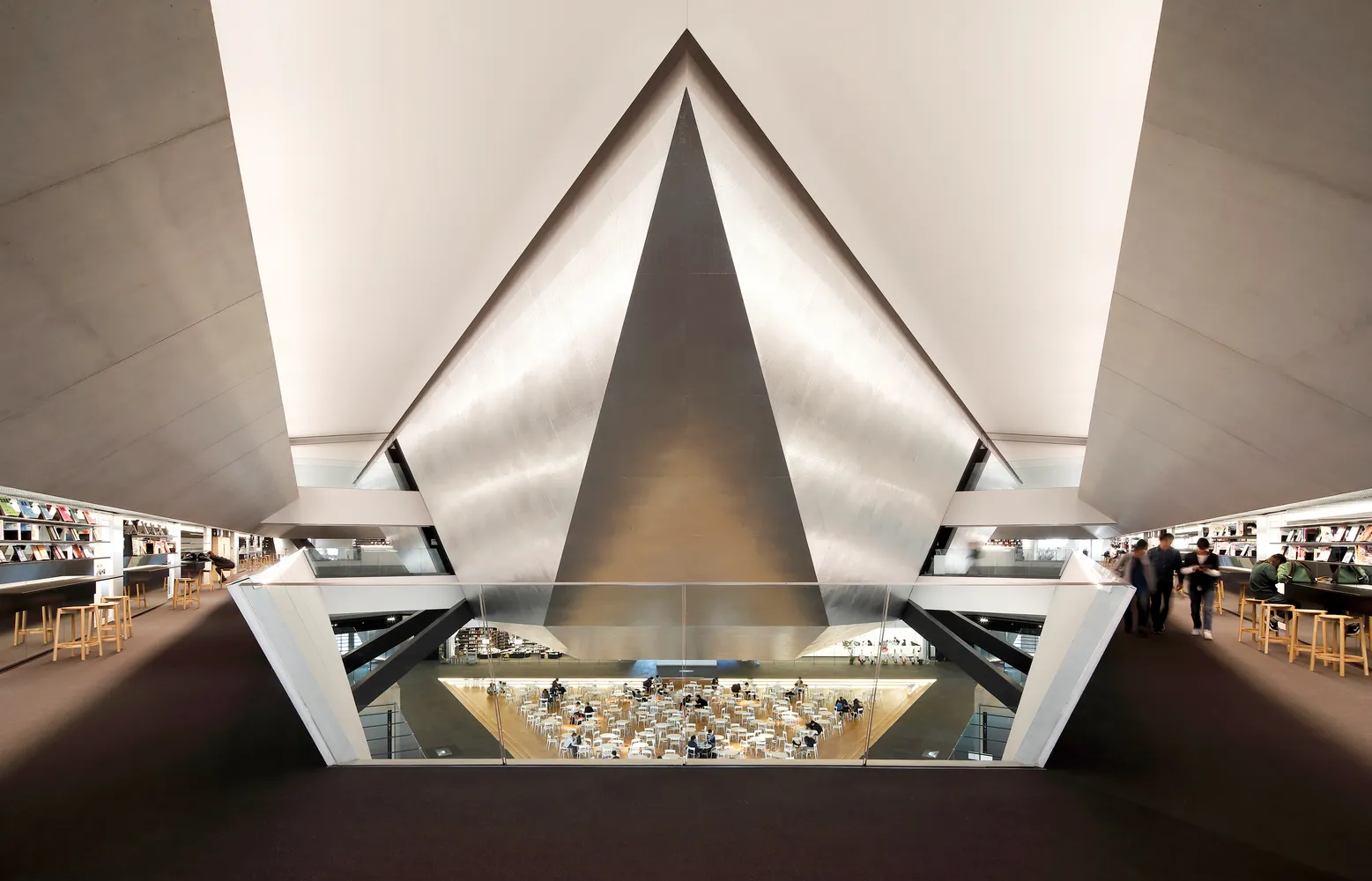
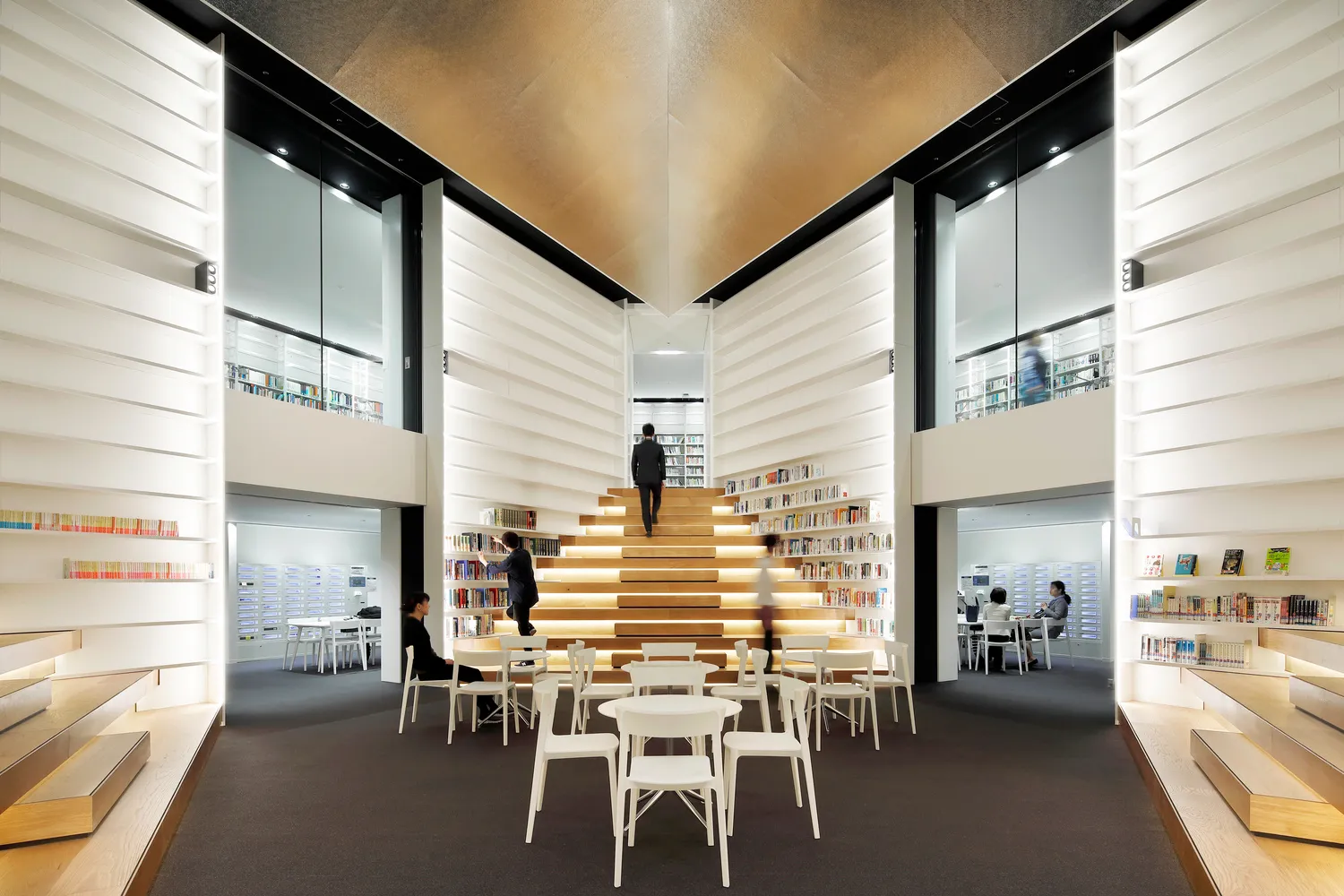
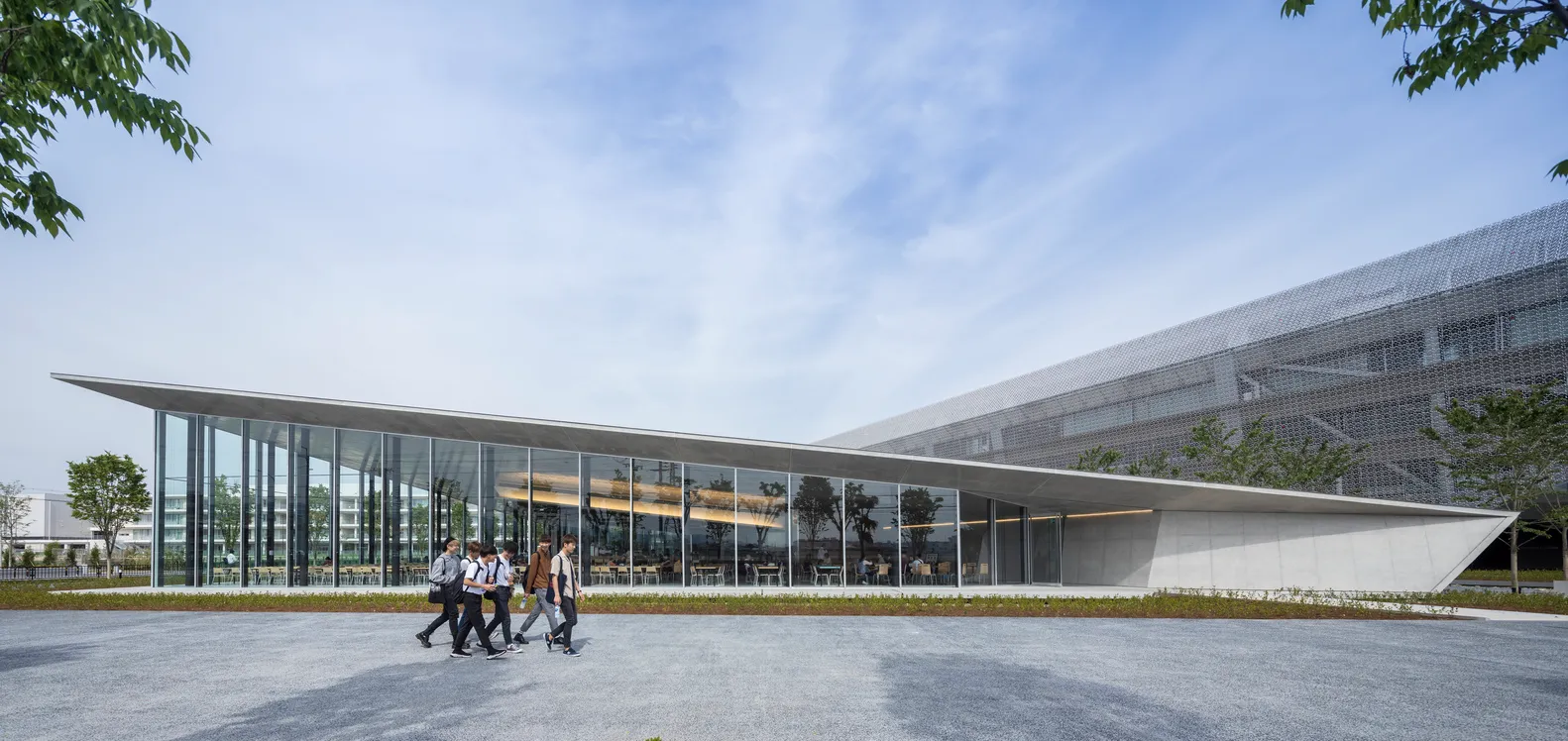
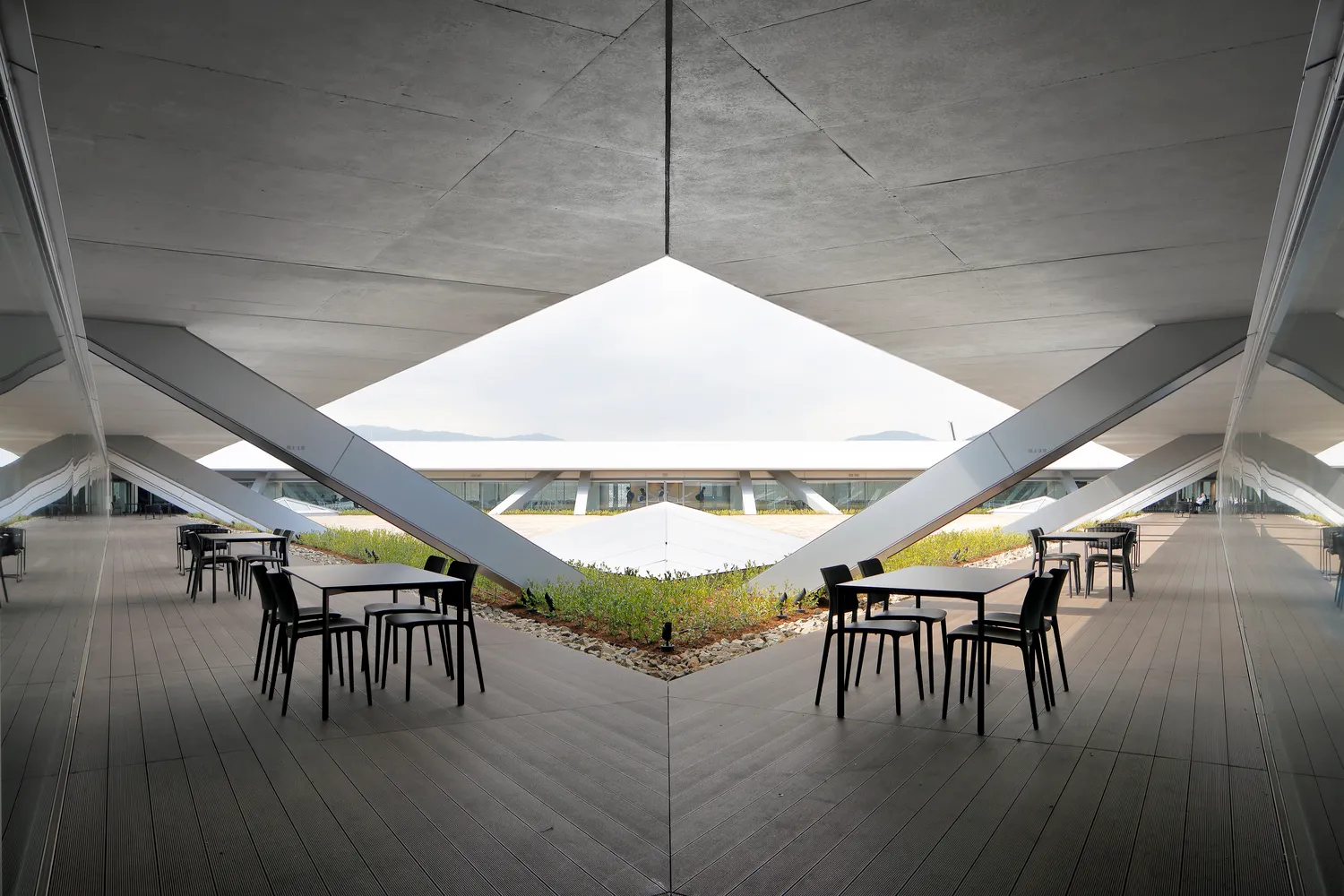
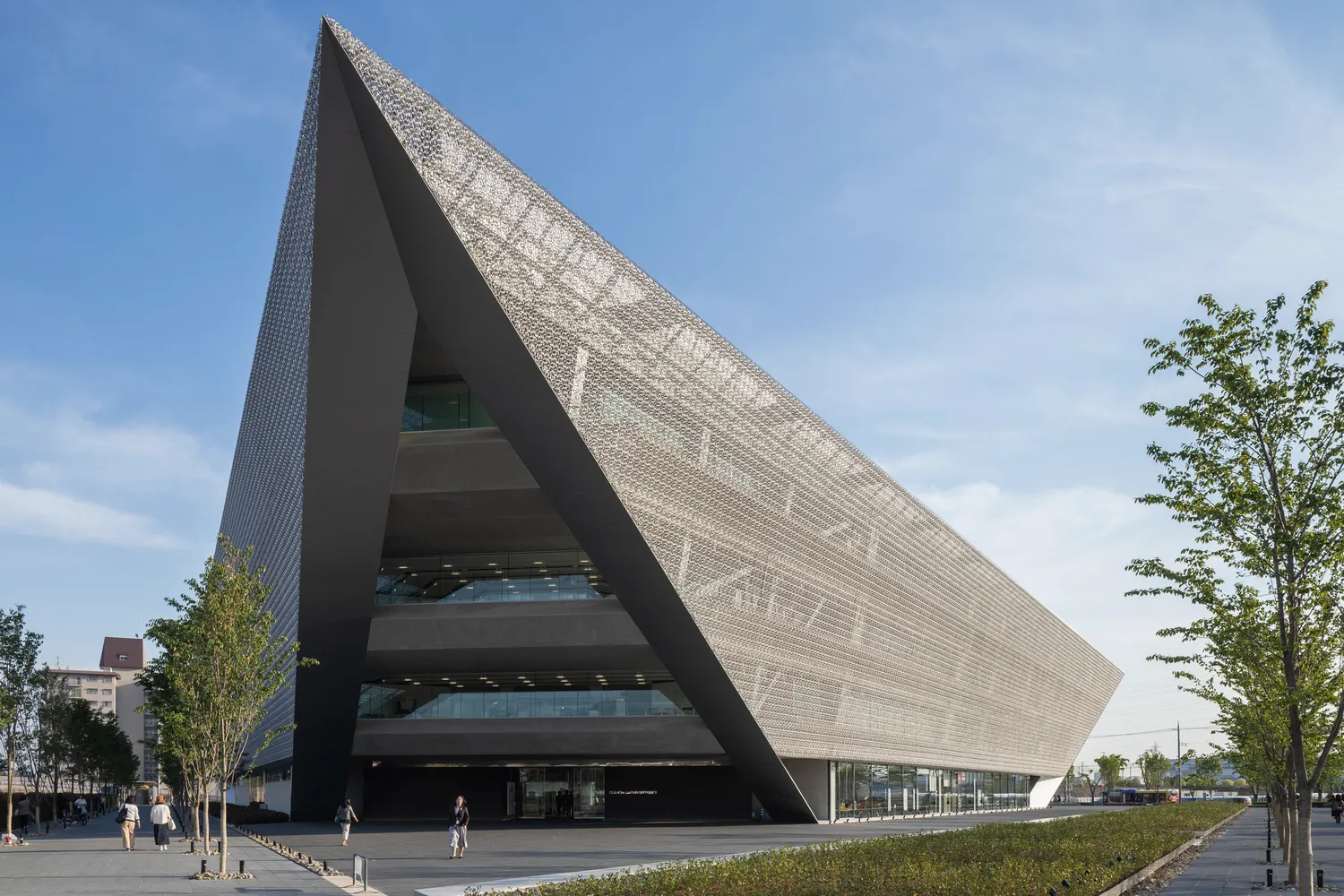
In Osaka’s leafy Ibaraki city, the new Otemon Gakuin University campus, designed as a striking inverted triangular pyramid, was completed in 2019 as part of the Ibaraki Smart Community. Envisioned as “a learning space for the Internet age,” spanning 40,000 square meters, the building draws inspiration from Japan’s historic temples, centers of gathering and exchange, while reimagining the architecture for a digital era. Designed as a single integrated structure for 3,600 students, the campus fosters interaction and communication at a time when technology often replaces face-to-face connections.
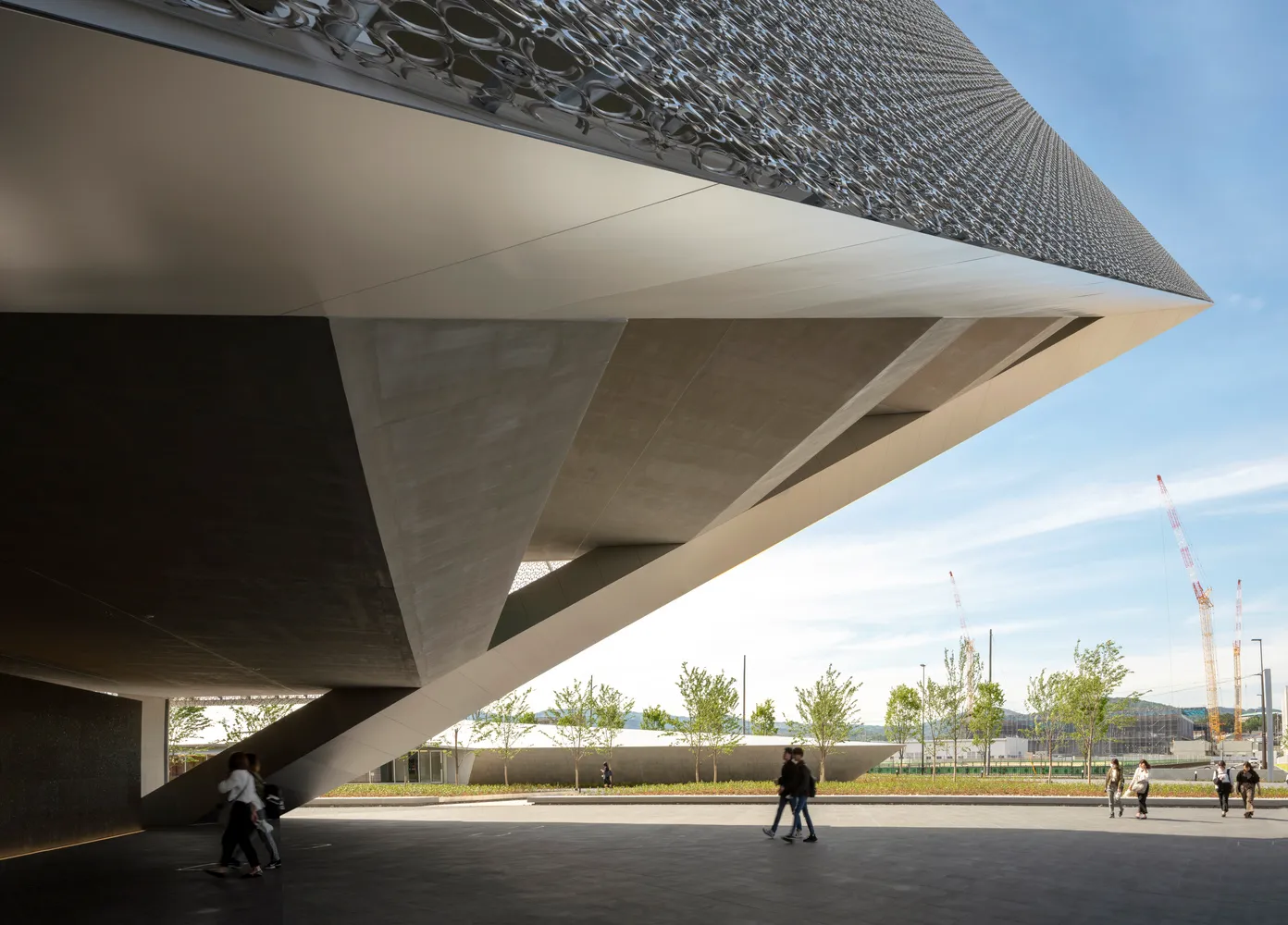
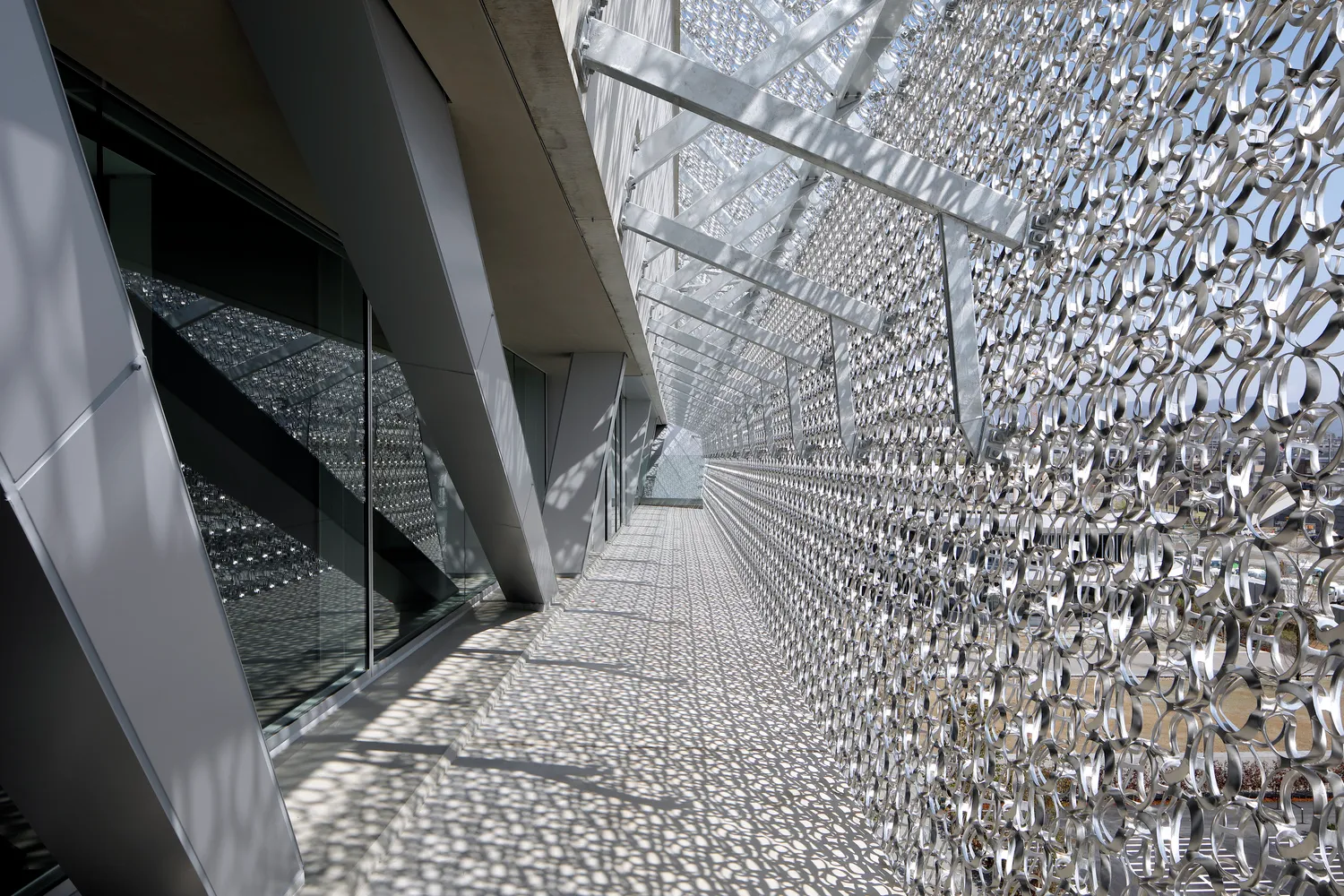
Inside, the building integrates various functions within its bold inverted triangular pyramid form: a vast library, large classrooms, intimate stacked study zones, and a dramatic central void that visually connects all levels. Sustainable features, including a rooftop garden and a stainless-steel façade etched with cherry blossom motifs, reduce heat gain while adding cultural symbolism. Designed as more than just a university building, it is futuristic, forward-looking architecture that merges tradition, technology, and sustainability into a single landmark of learning and community.
3. The New School University Center, United States
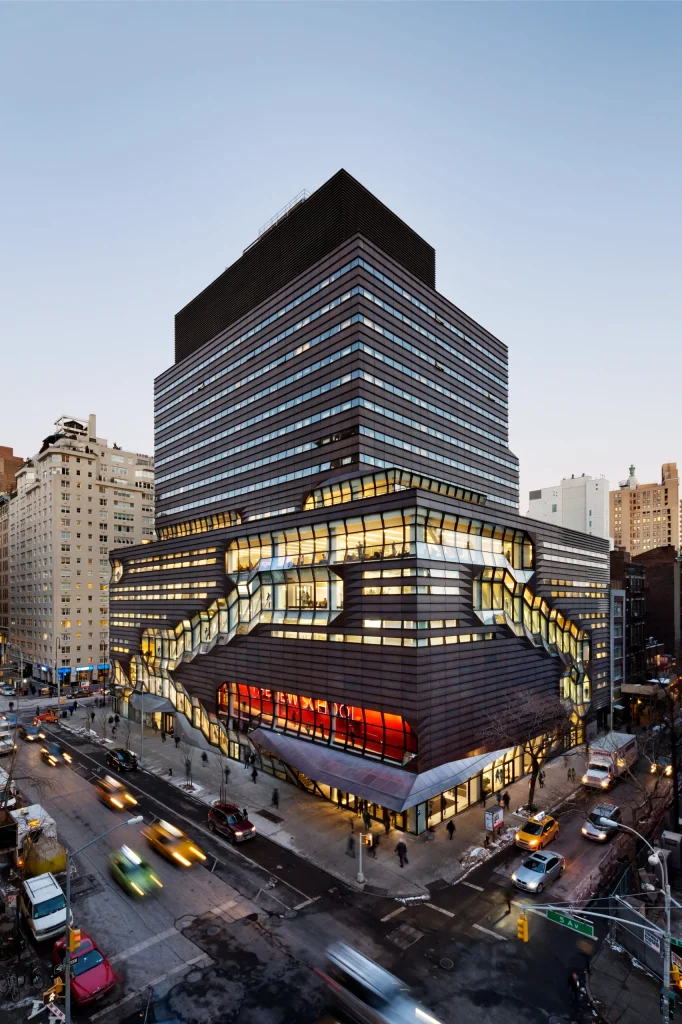
Design Characteristic: Campus within the Building, Encouraging Connections within the Architecture
Architect: SOM (Skidmore, Owings & Merrill)
Location: New York, United States
Completed: 2014
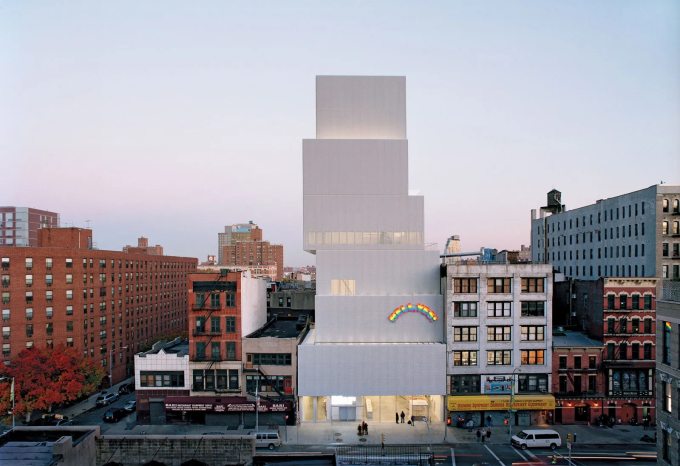
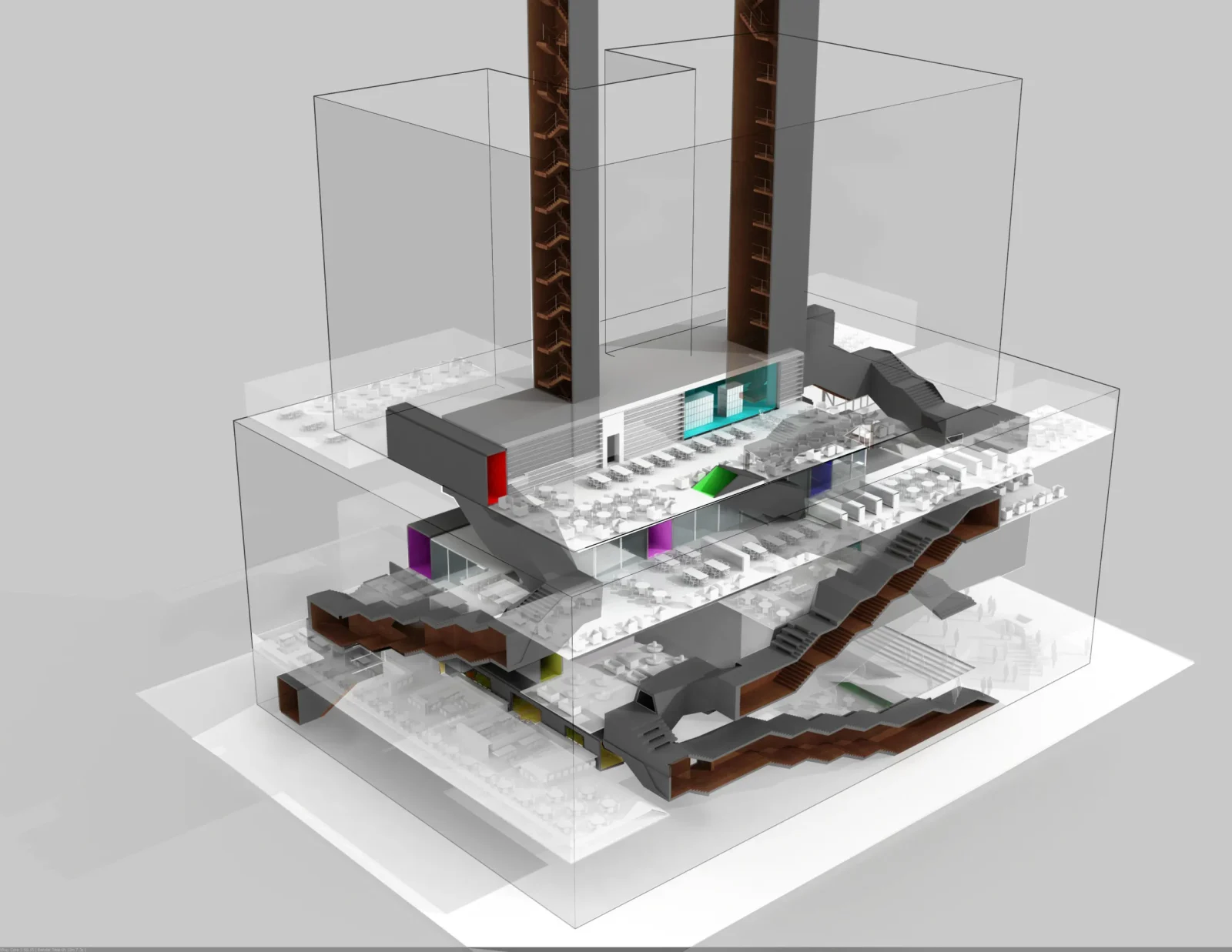
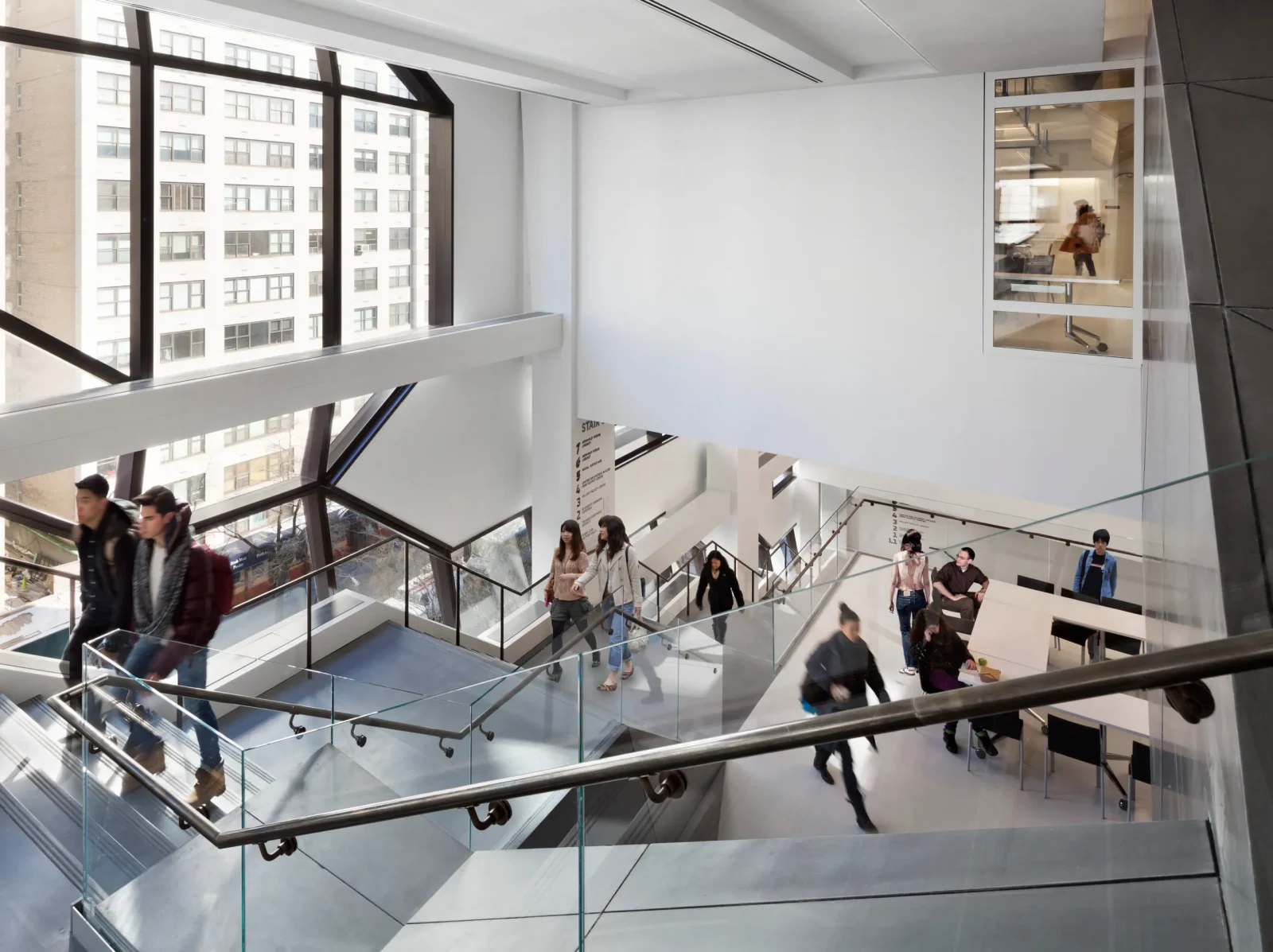
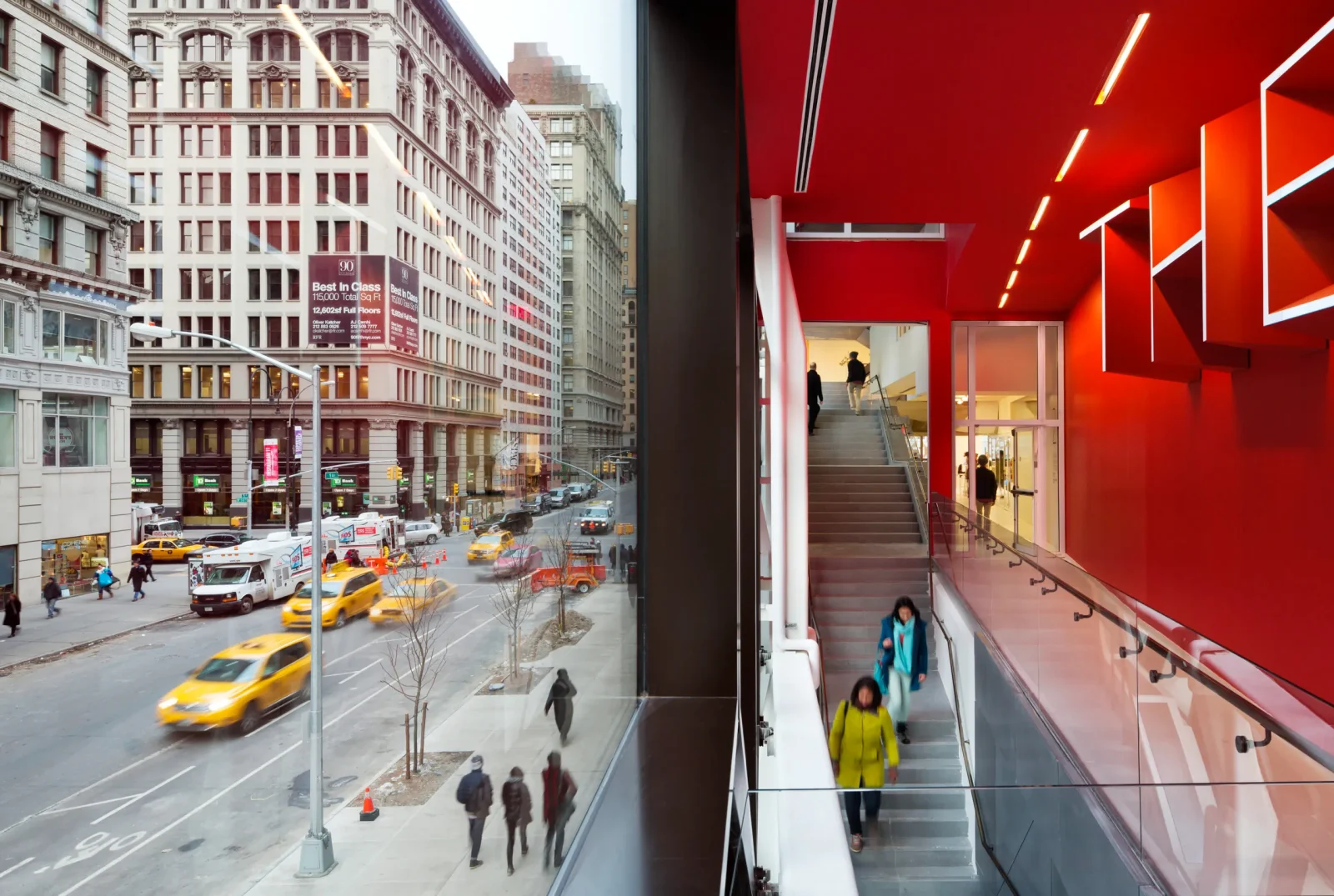
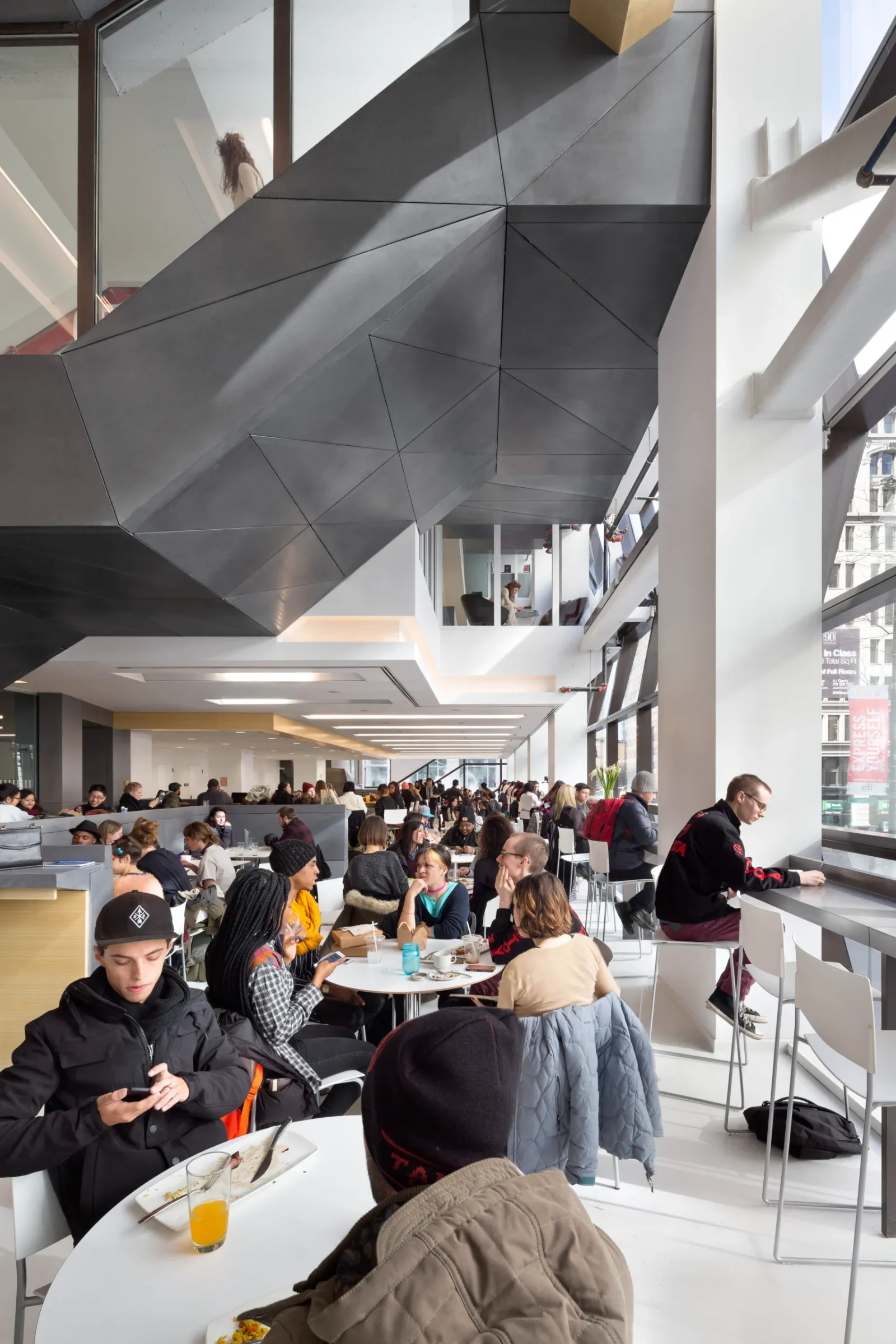
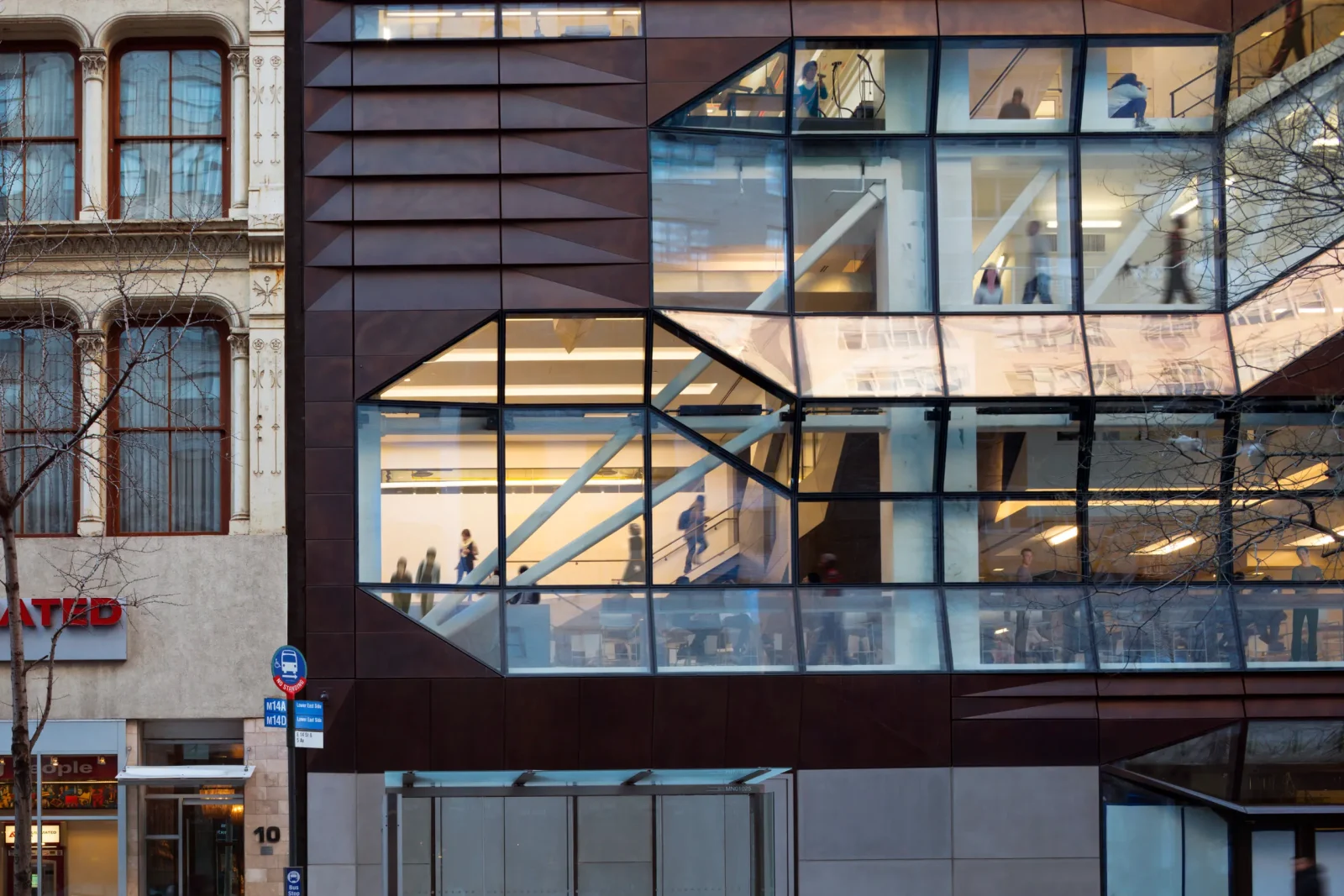
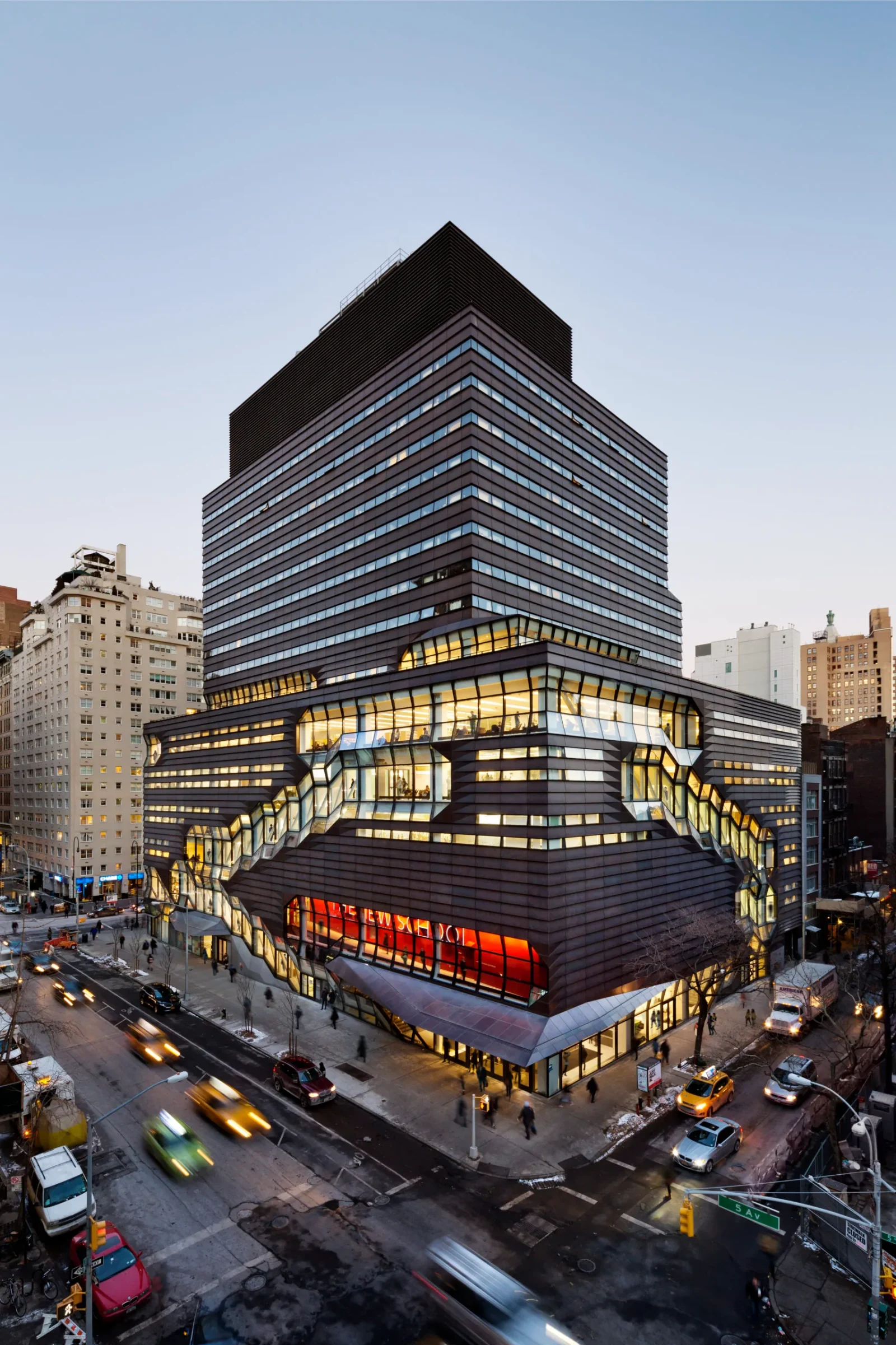
The New School University, rising 16 storeys high and situated near Manhattan’s Union Square, is designed as a dynamic hub. Designed by Skidmore, Owings & Merrill in 2014, the building reimagines the idea of a “Campus within a Building,” creating a vibrant hub for one of New York City’s most distinctive institutions. The building’s layered glass façade and bold volumes not only make it a city landmark but also reflect the school’s forward-looking spirit and sustainable vision, with a design that aims for LEED Gold Certification. It is more than just an architectural icon; the building symbolizes The New School’s evolution into a leading, forward-looking institution.
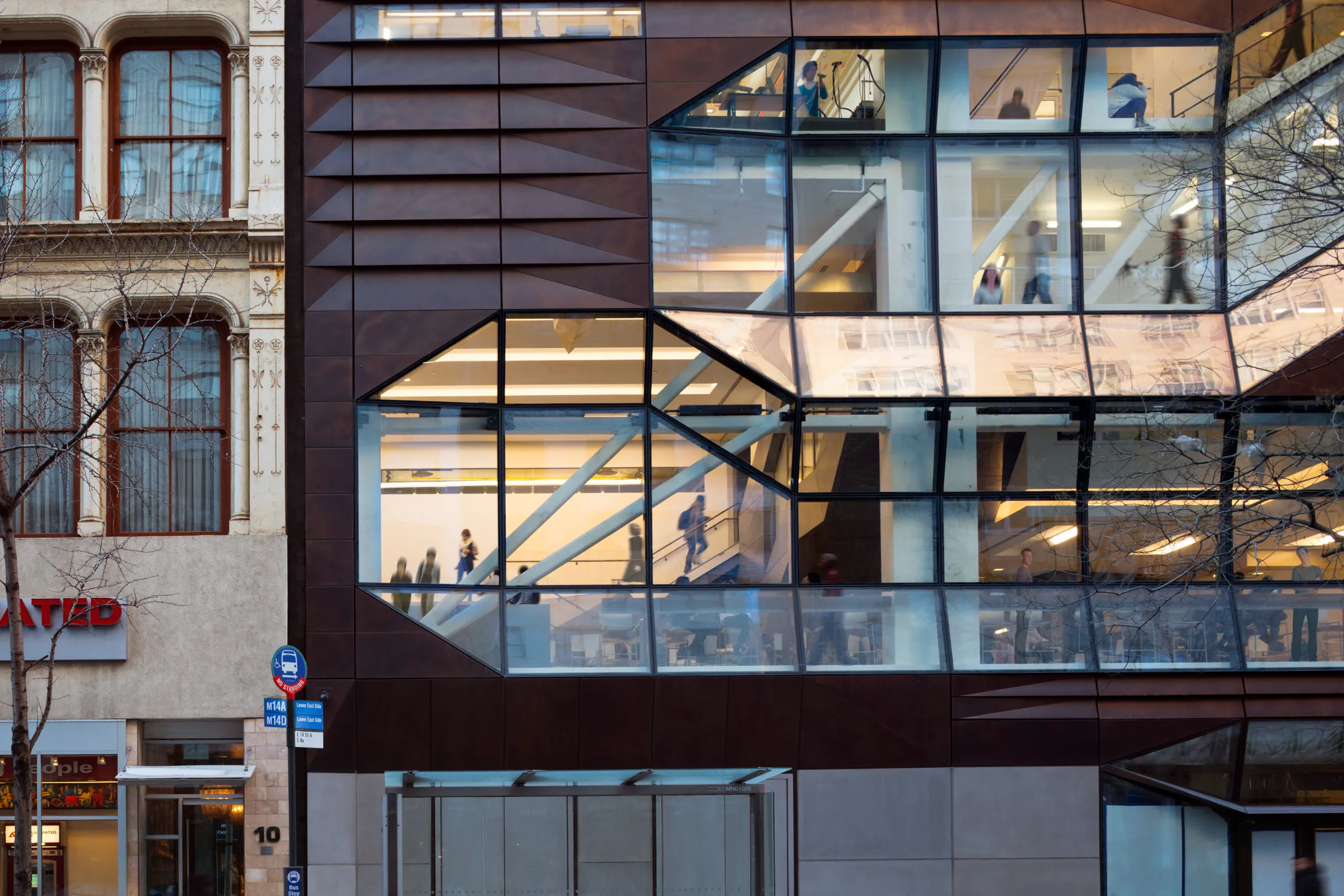
Inside the building, the lower seven floors house classrooms, studios, labs, a library, lounges, a cafeteria, faculty offices, and an 800-seat auditorium, all connected through stacked staircases and “Sky Quads” that foster social connections and community interaction. Hand-finished brass shingles and glazed glass express the interior dynamics on the exterior. At the same time, the design itself showcases inclusivity, innovation, and the vibrant exchange between the university and its urban context.
4. Mori Hosseini Student Union at Embry-Riddle Aeronautical University, United States
Design Characteristic: Campus Architecture as an Expressive Form
Architects: ikon 5 architects
Location: Daytona Beach, United States
Completed: 2018
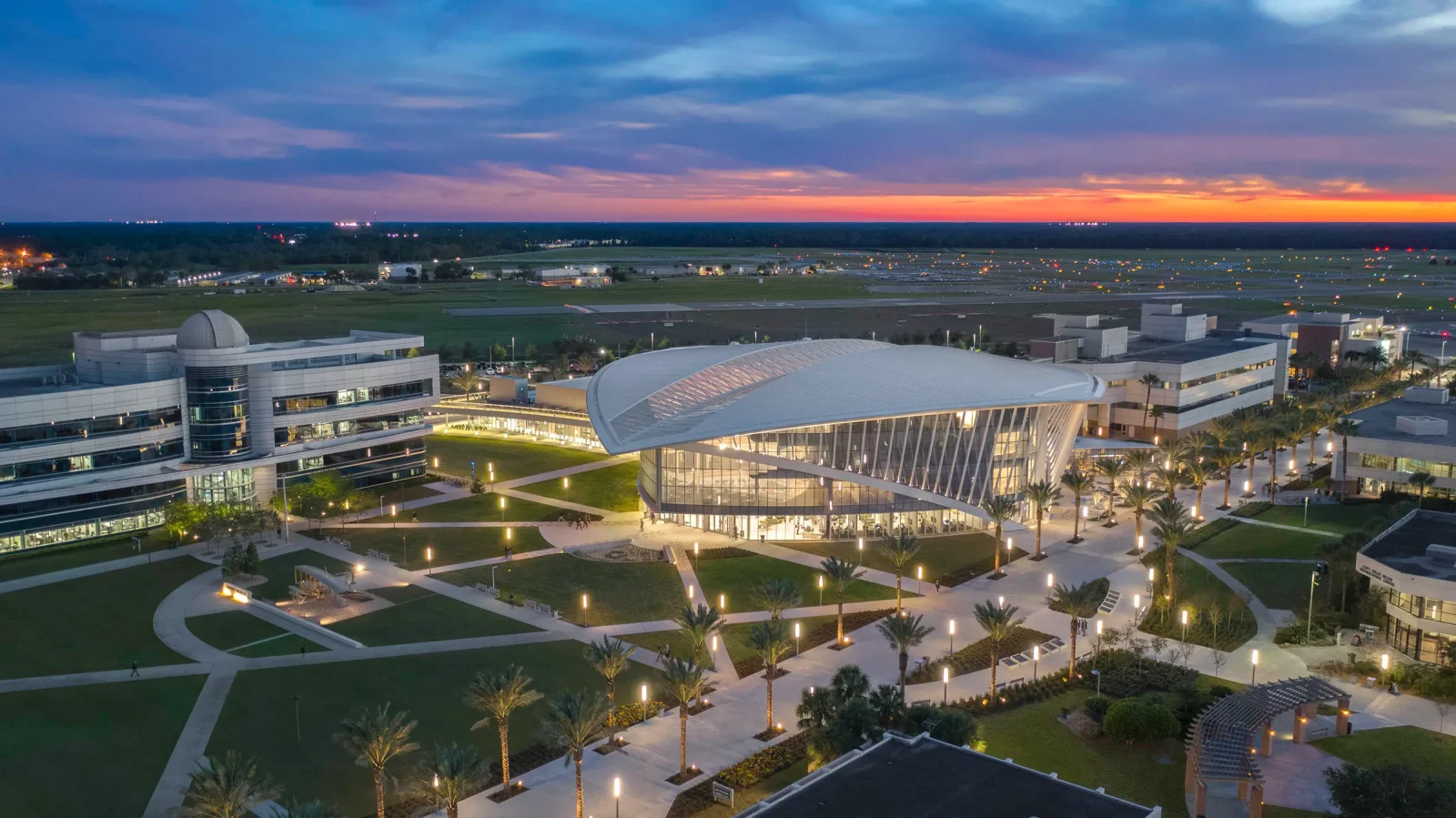
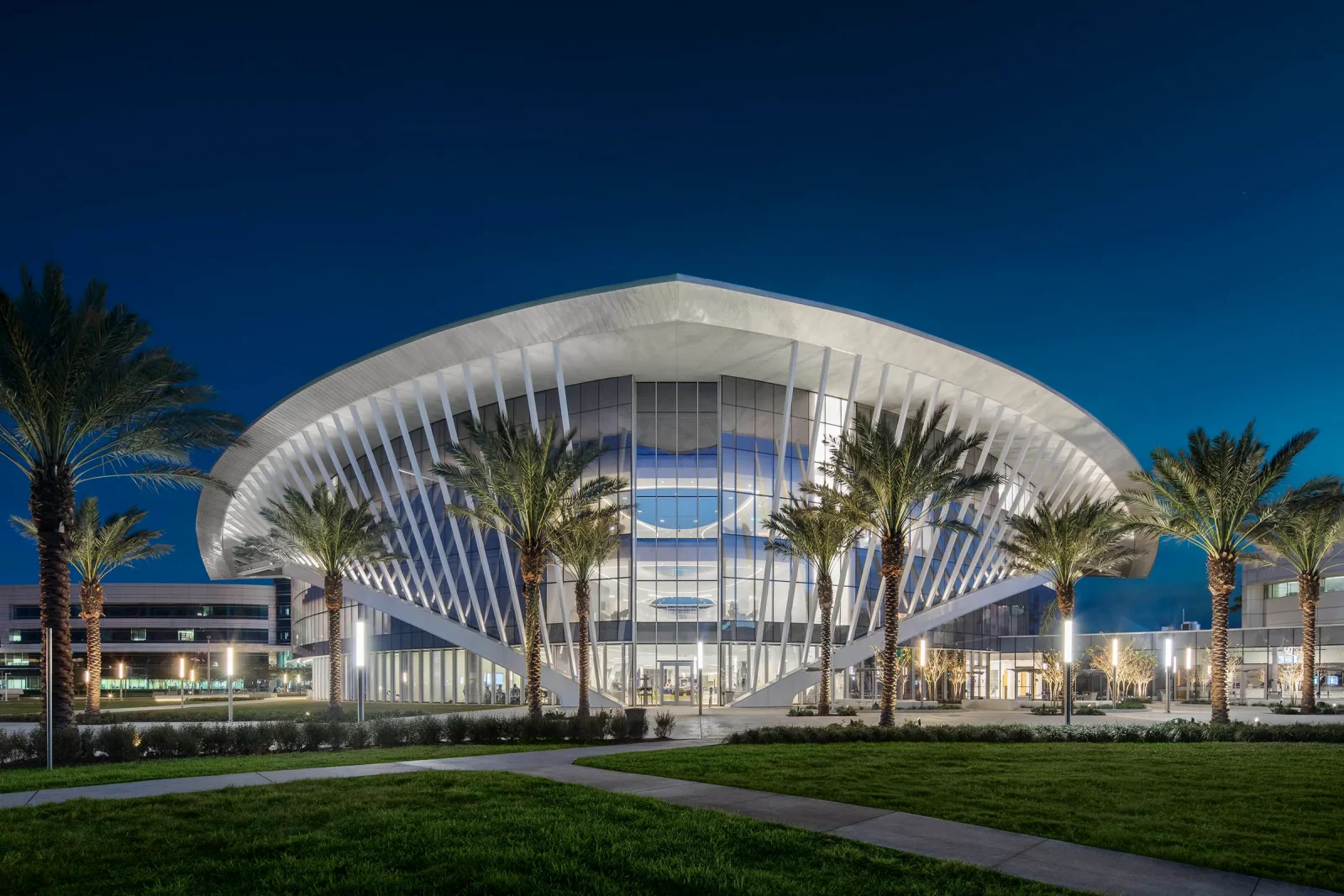
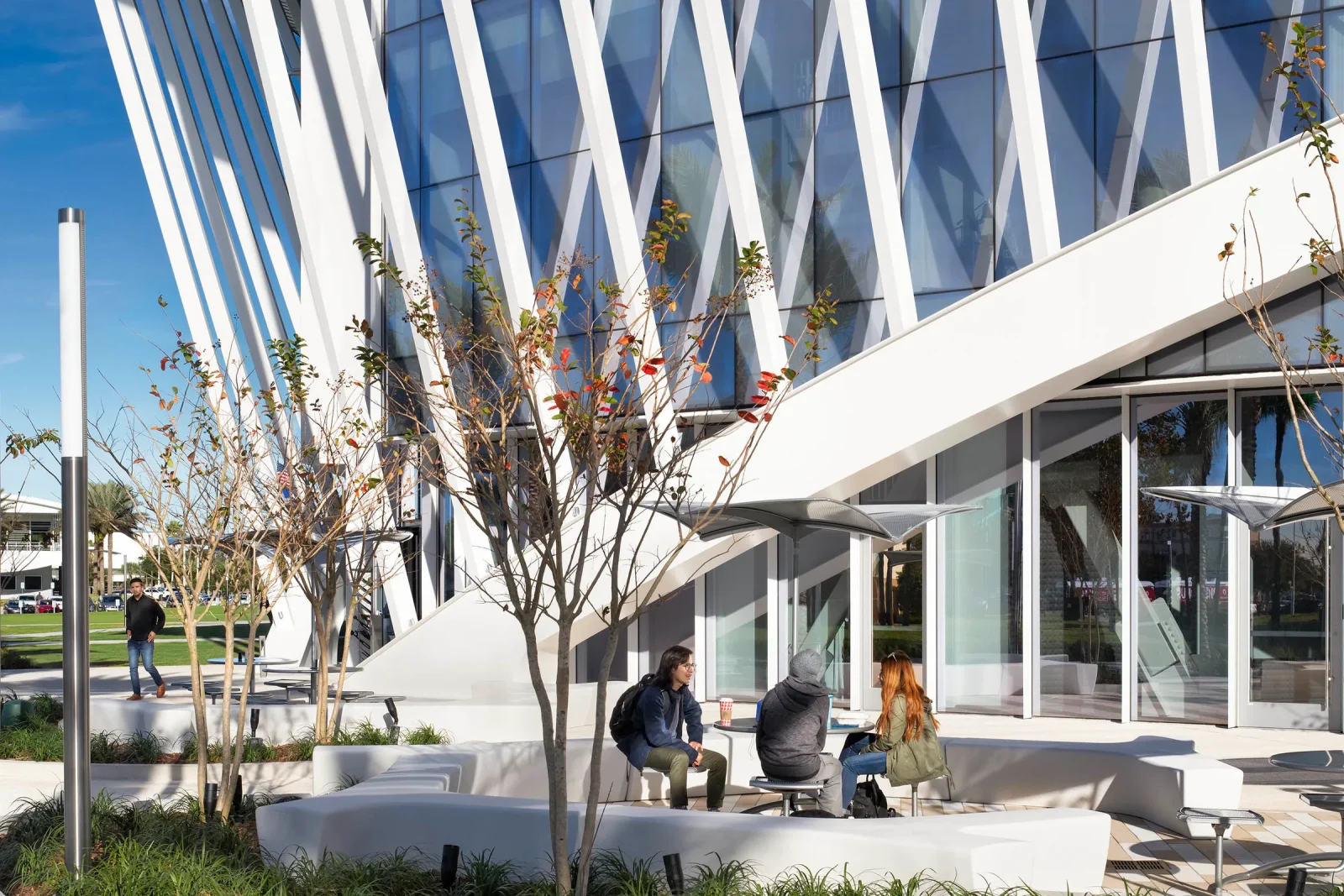
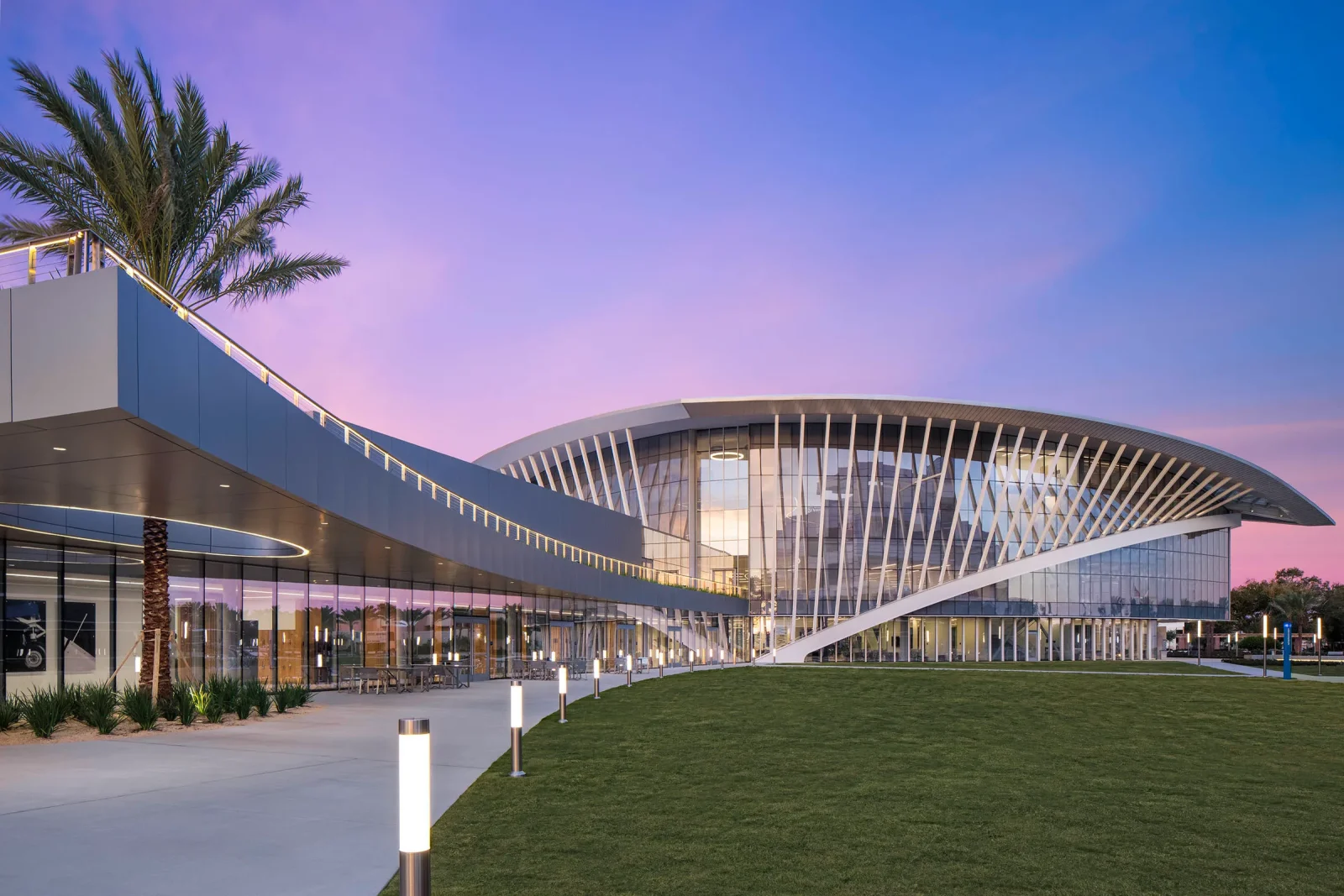
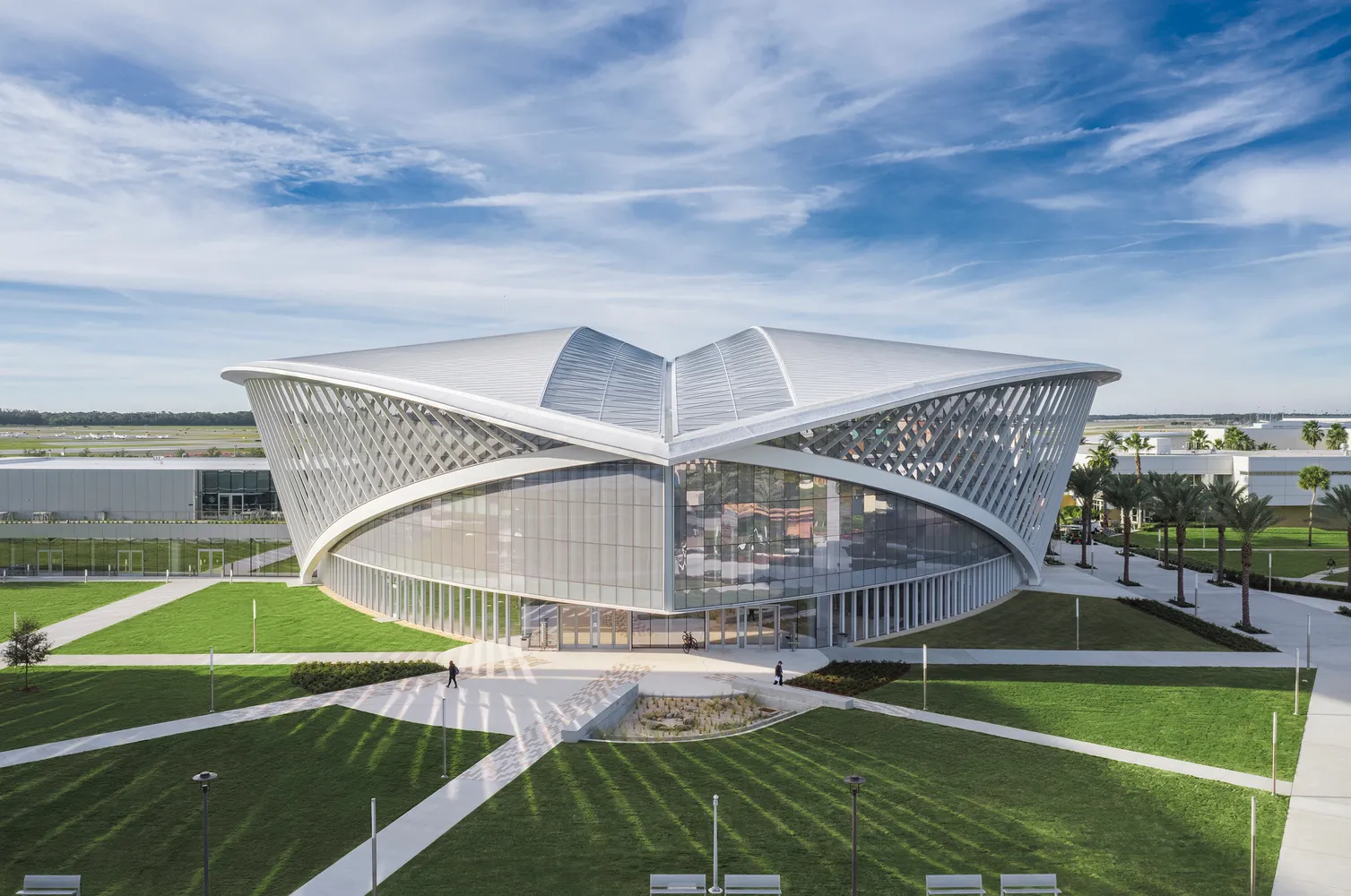
At Embry-Riddle Aeronautical University, the Mori Hosseini Student Union soars like a bird in flight, designed by ikon 5 architects, whose architecture is inspired by the dynamism of aviation and the Biomimicry of birds’ flight. Designed as more than just a student hub, the building embodies the university’s vision of advancing the science, practice, and business of aerospace. The building’s bold, iconic design stands as both a landmark and a reflection of the university’s spirit, inspiring students to be courageous, curious, and eager to explore.
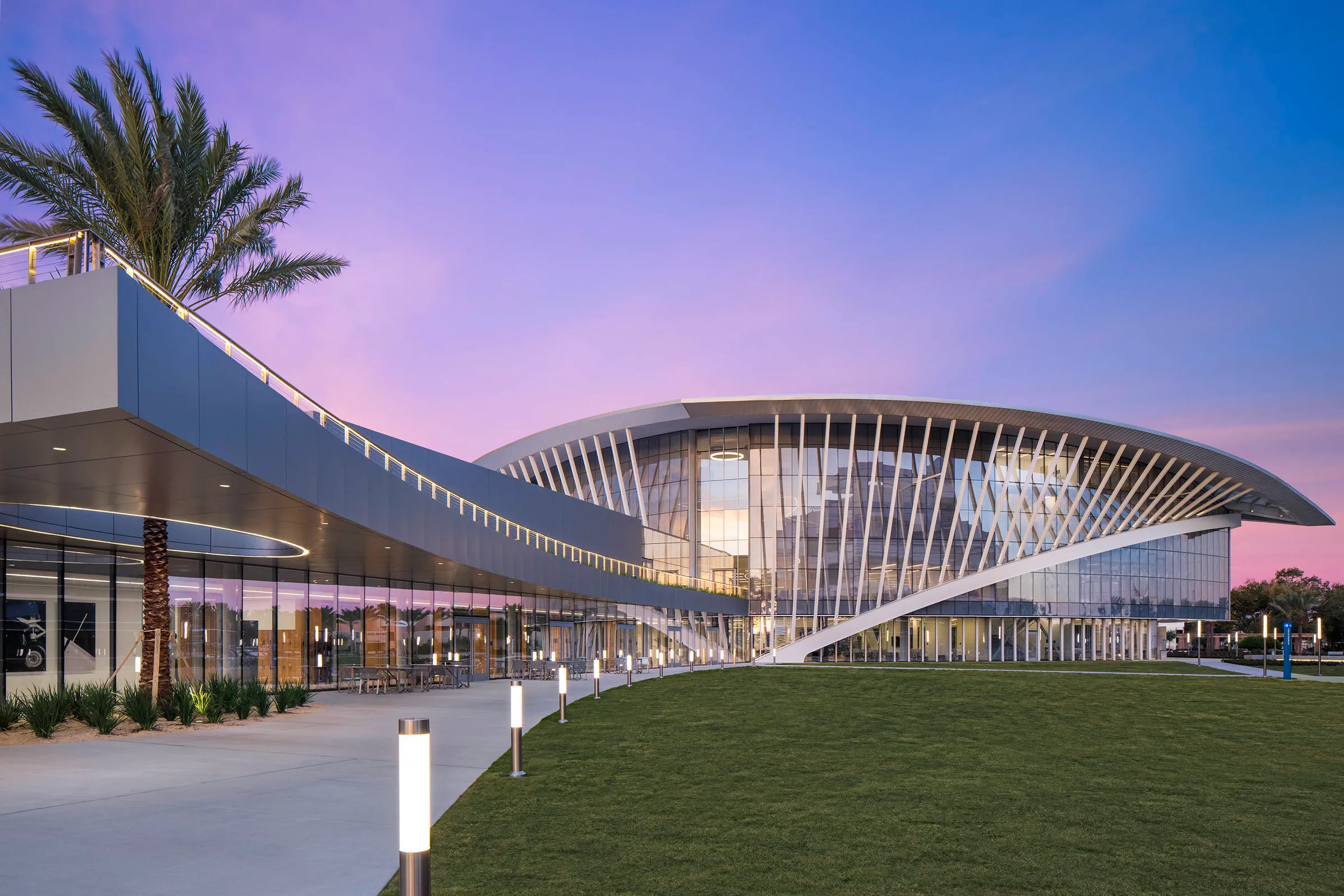
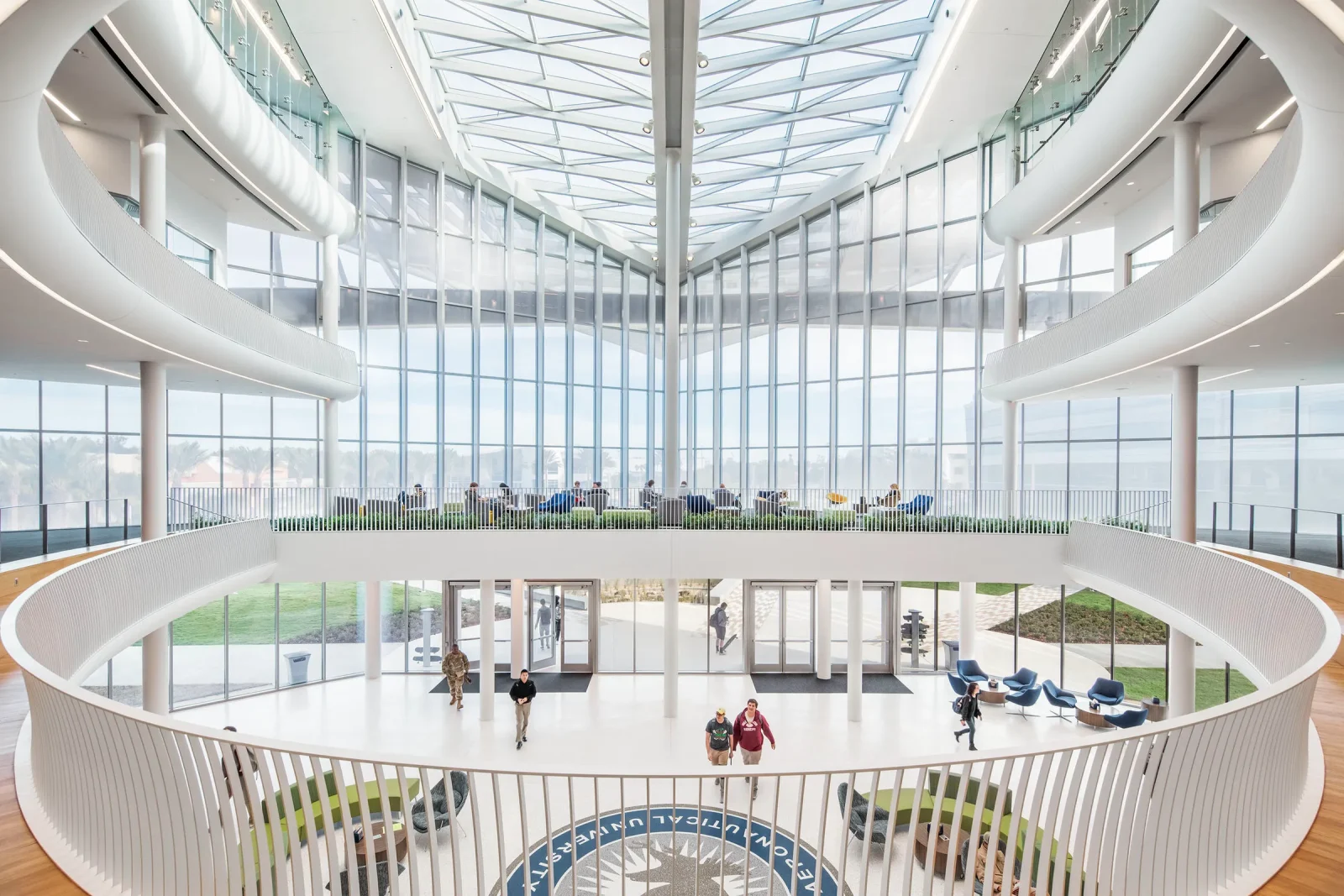
Programmatically designed as an aeronautical athenaeum, the building integrates social learning spaces, dining areas, student services, club offices, and a 900-seat events center. Its distinctive feature is a dramatic triple-height common space that serves as a vibrant, social hub for gathering and learning.
The upper levels house classrooms, computer labs, and student club offices, while the top floor library sits beneath a 200-foot skylight that floods the space with daylight. A roof terrace offers sweeping views of the adjacent Daytona International Airport runway, making the union a true blend of architecture, community, and aviation spirit.
5. Kuggen Building – Gothenburg University, Sweden
Design Characteristic: Green Architecture
Architects: Wingårdh Arkitektkontor AB
Location: Gothenburg, Sweden
Completed: 2011
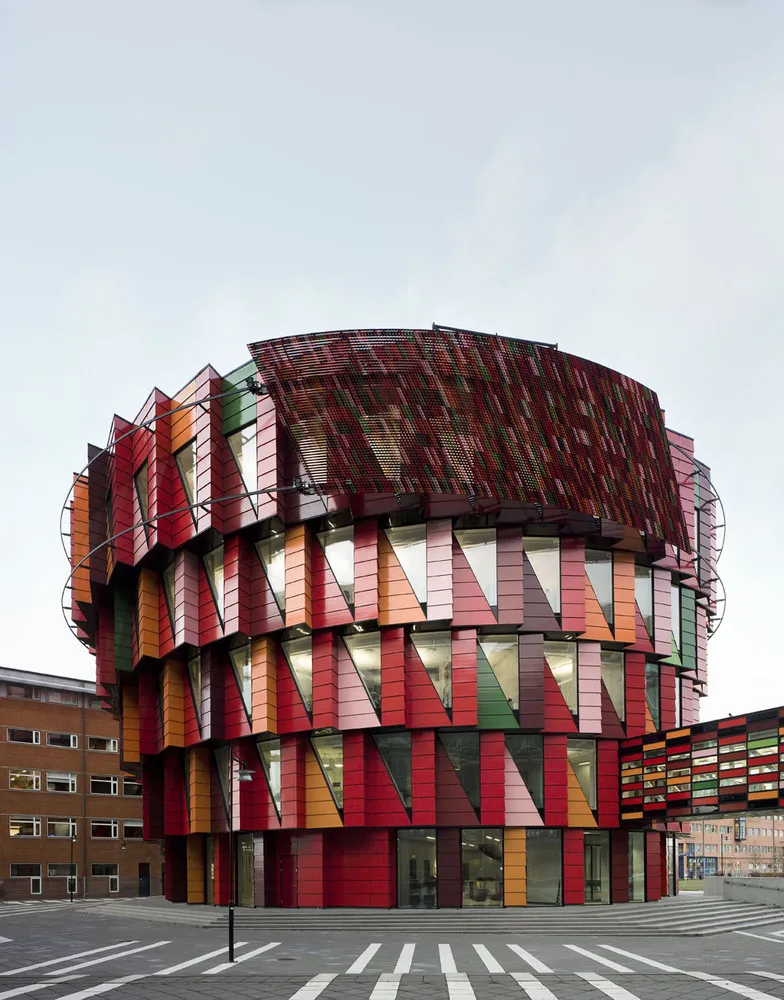
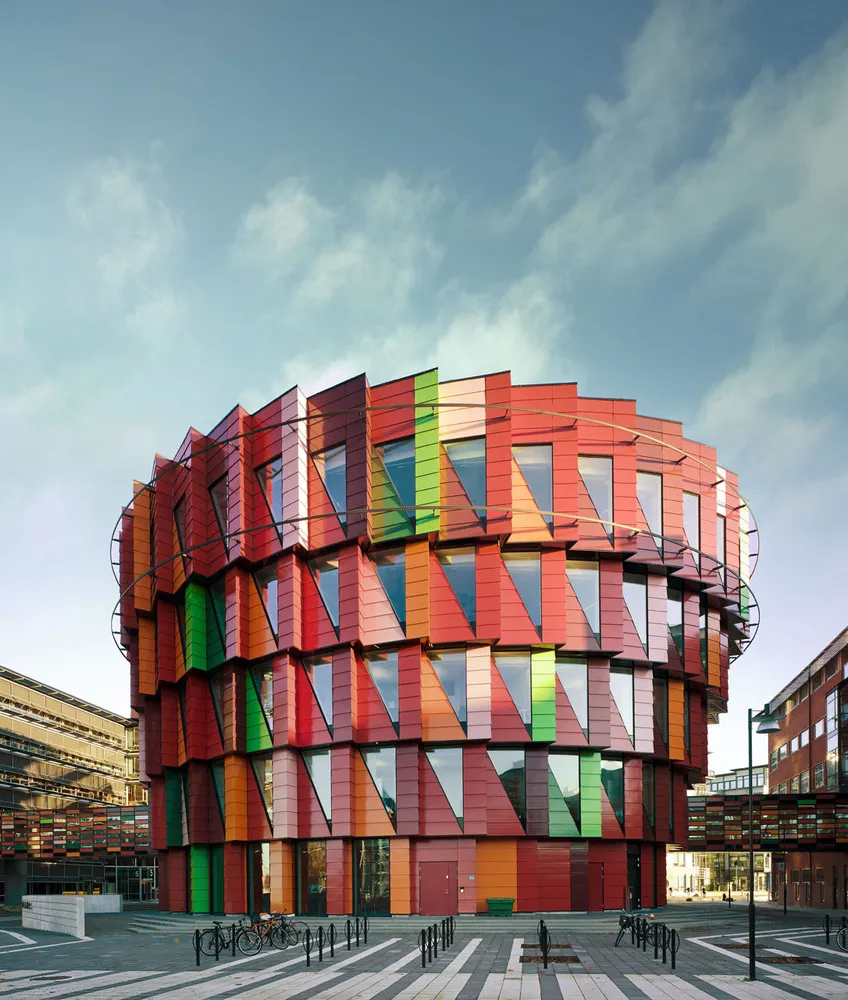
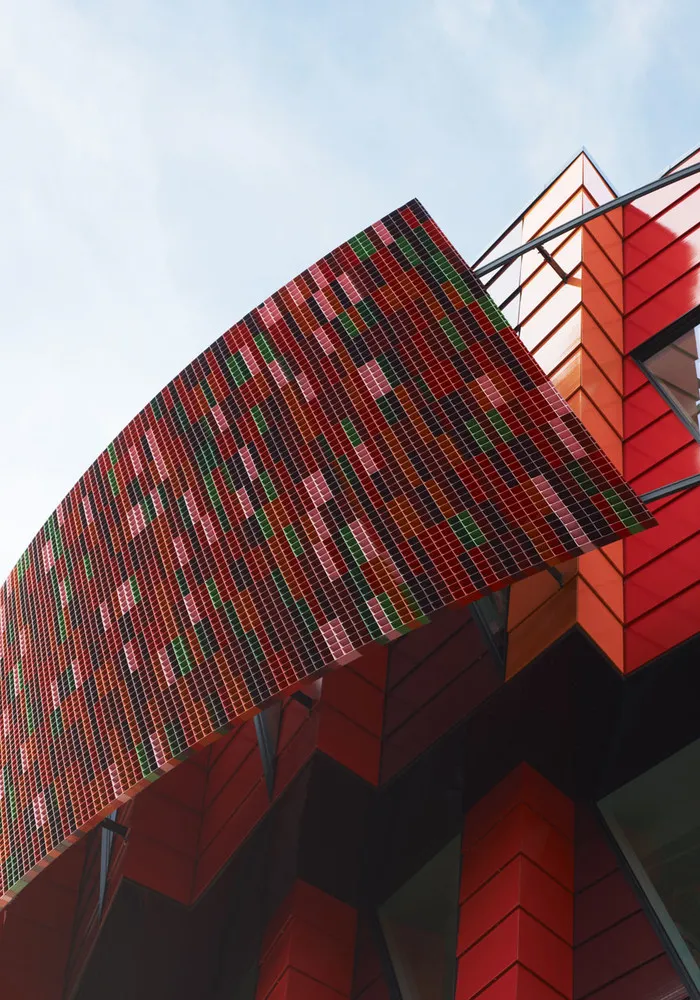
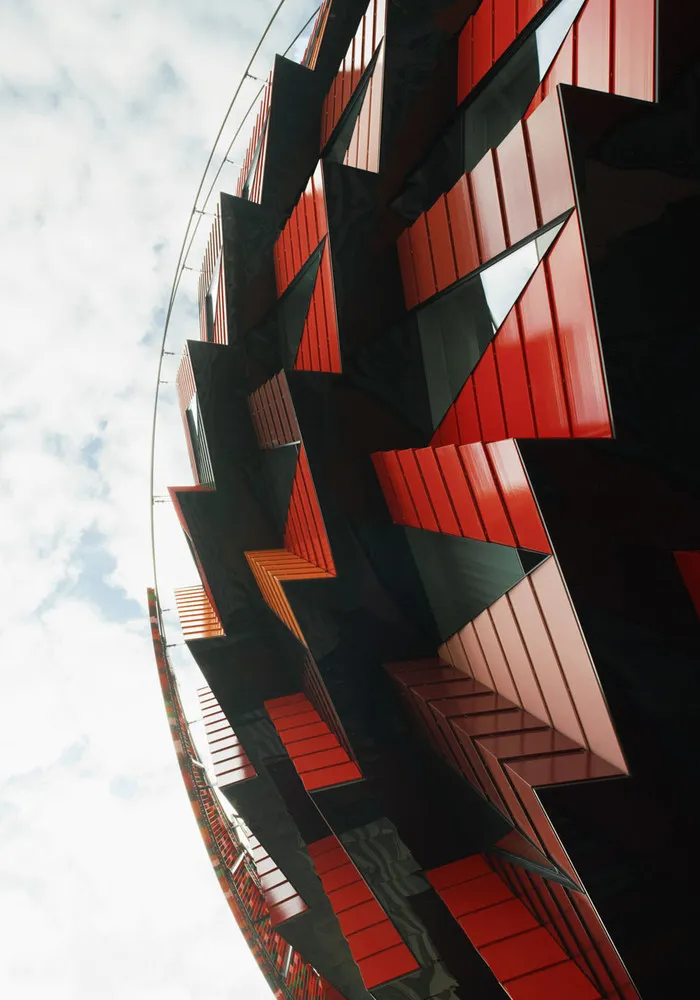
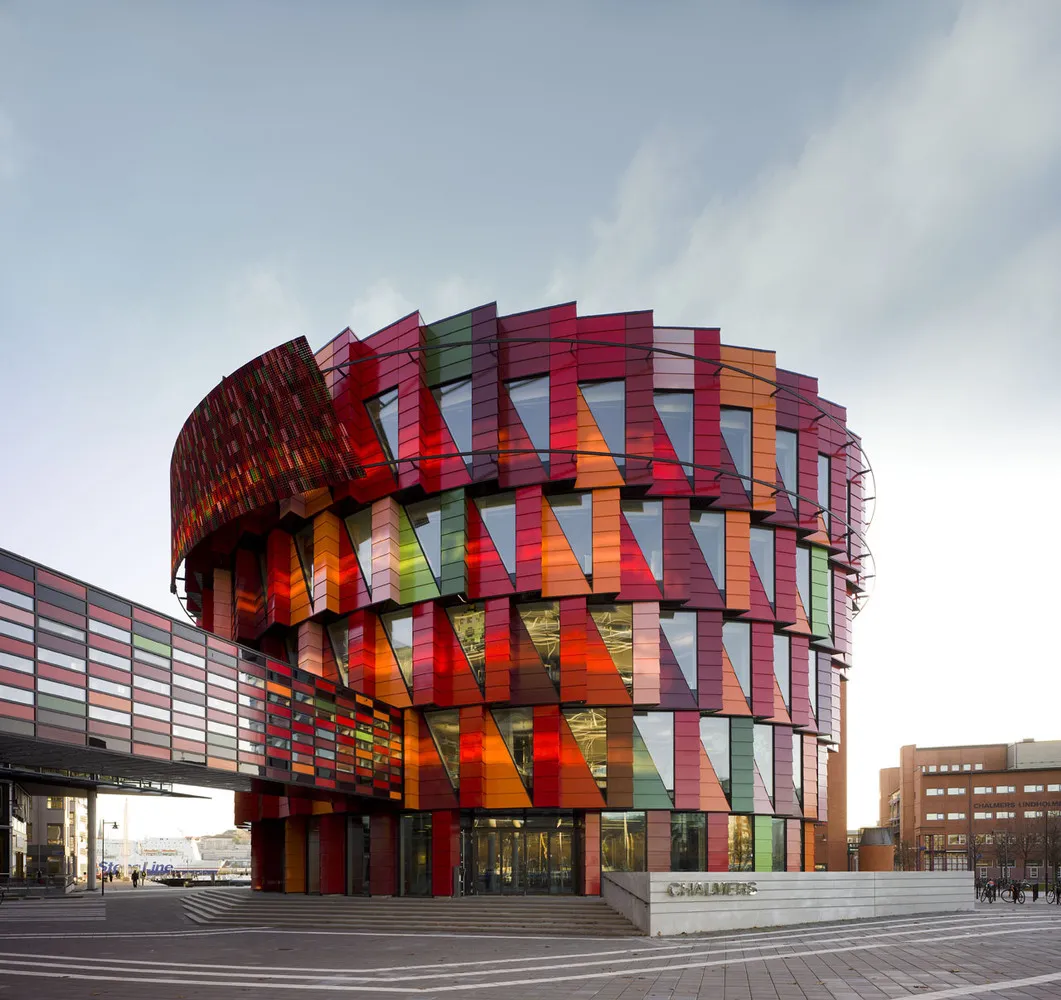
In the heart of Gothenburg’s Lindholmen district, the Kuggen building blooms like a colorful blossom, bursting with vibrant hues against a backdrop of muted offices. Its bold red cylindrical form is not just for show. “Kuggen,” meaning “cog wheel” in Swedish, reflects its role as a connector between academia and the digital media industries that thrive inside. Housing the Chalmers library and the master’s program in design and game development, it was designed as a hub of creativity and collaboration. It is a beacon showcasing sustainability, weaving green technology into its architecture.
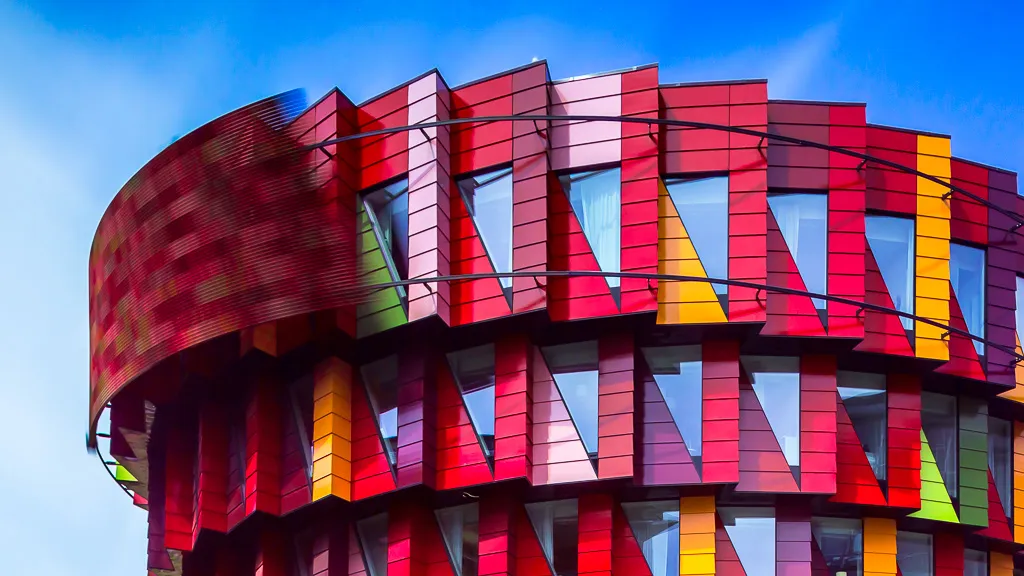
The building’s dynamic color and form shift with light and perspective, while its upper floors project outward to create natural shading, making it both a striking landmark and a lively center of campus life. The façade, wrapped in red ceramic tiles and distinct triangular windows, features glazed terracotta panels that transform with changing daylight and viewing angle. The shape allows for passive heat gain and cooling throughout the day, minimizing the need for artificial lighting. The distinctive feature is the rotating photovoltaic screen on the top floor that tracks the sun to optimize shading and energy generation.
Motion-activated lighting, smart ventilation, and other green strategies further cut energy use, proving that Kuggen is more than just eye-catching architecture; it is a living model of sustainable innovation.
6. The Hive – Nanyang Technological University
Design Characteristic: Modern Approach to Campus Architecture and Design
Project: Nanyang Technological University (The Hive)
Architects: Heatherwick Studio
Location: Singapore
Completed: 2015
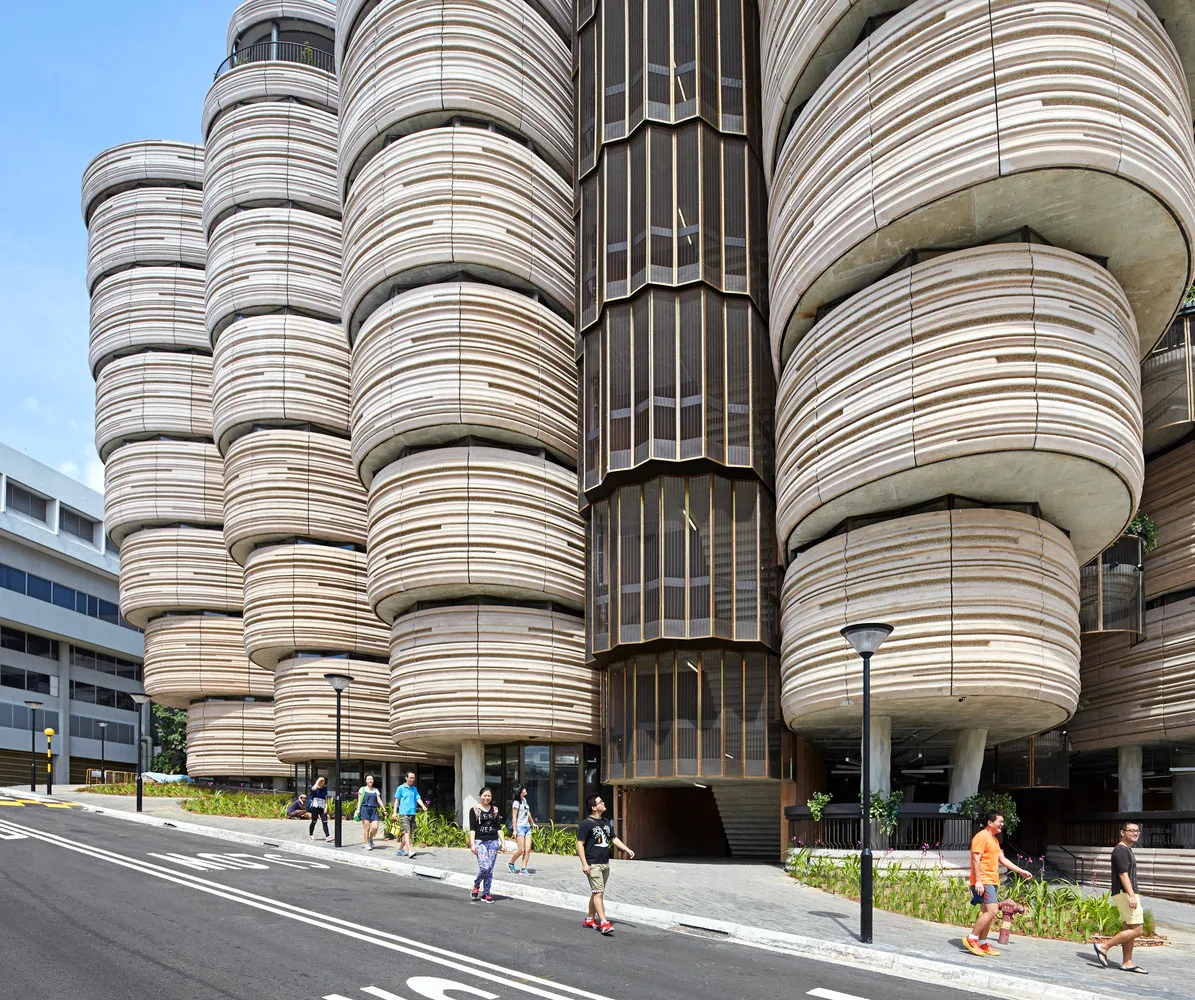
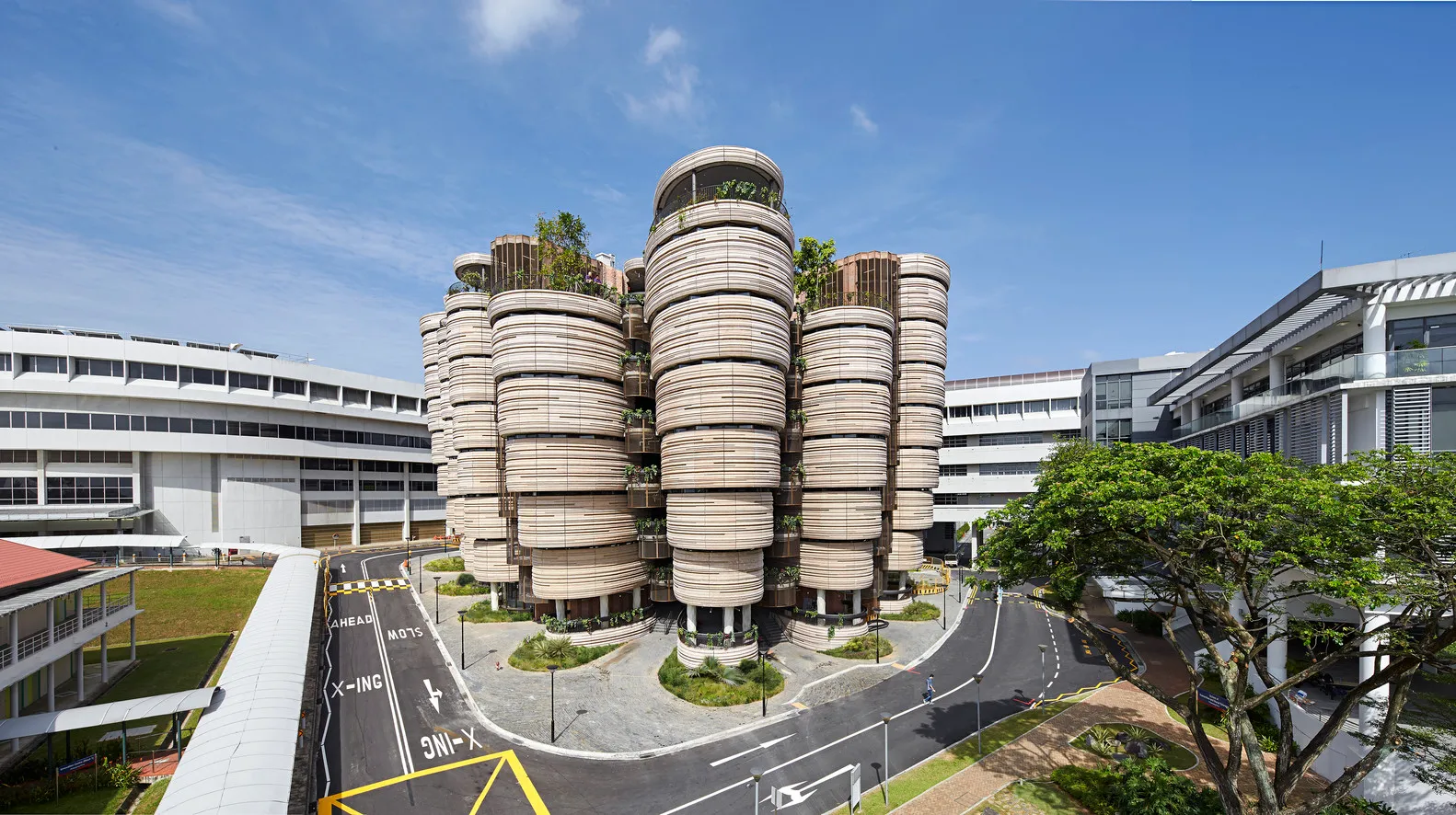
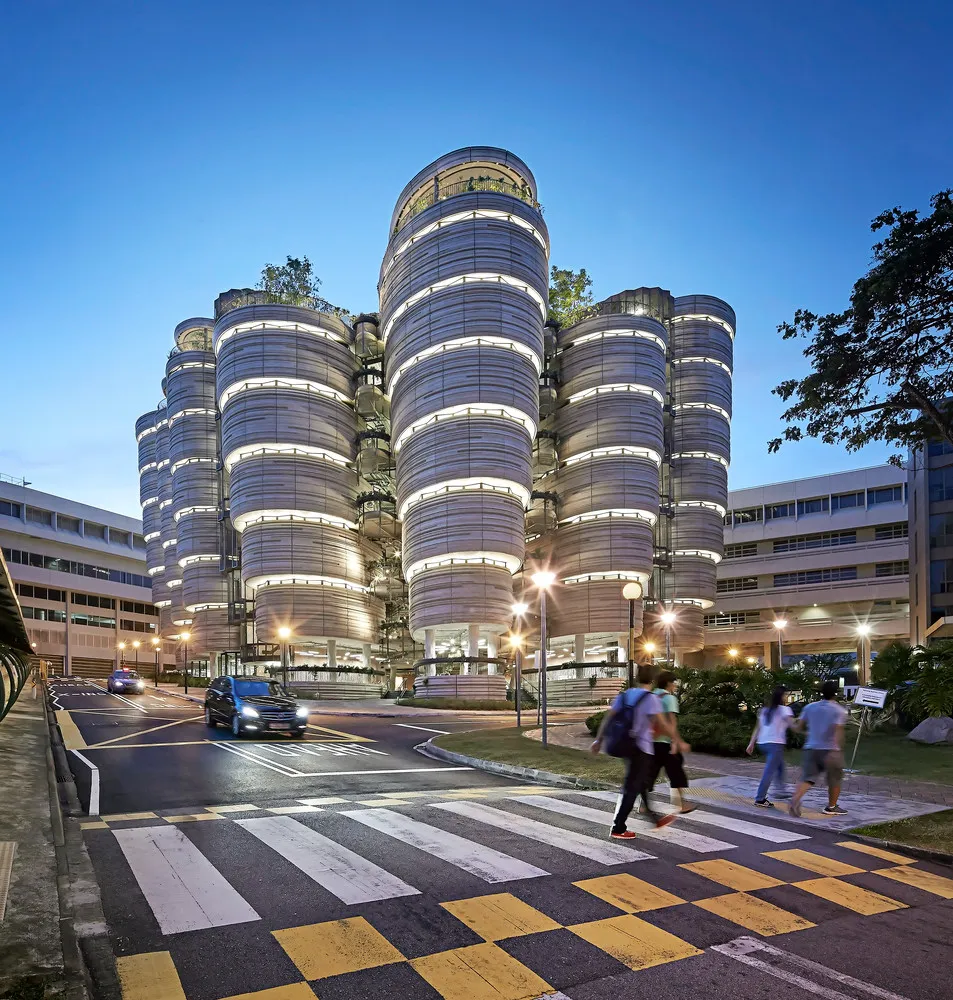
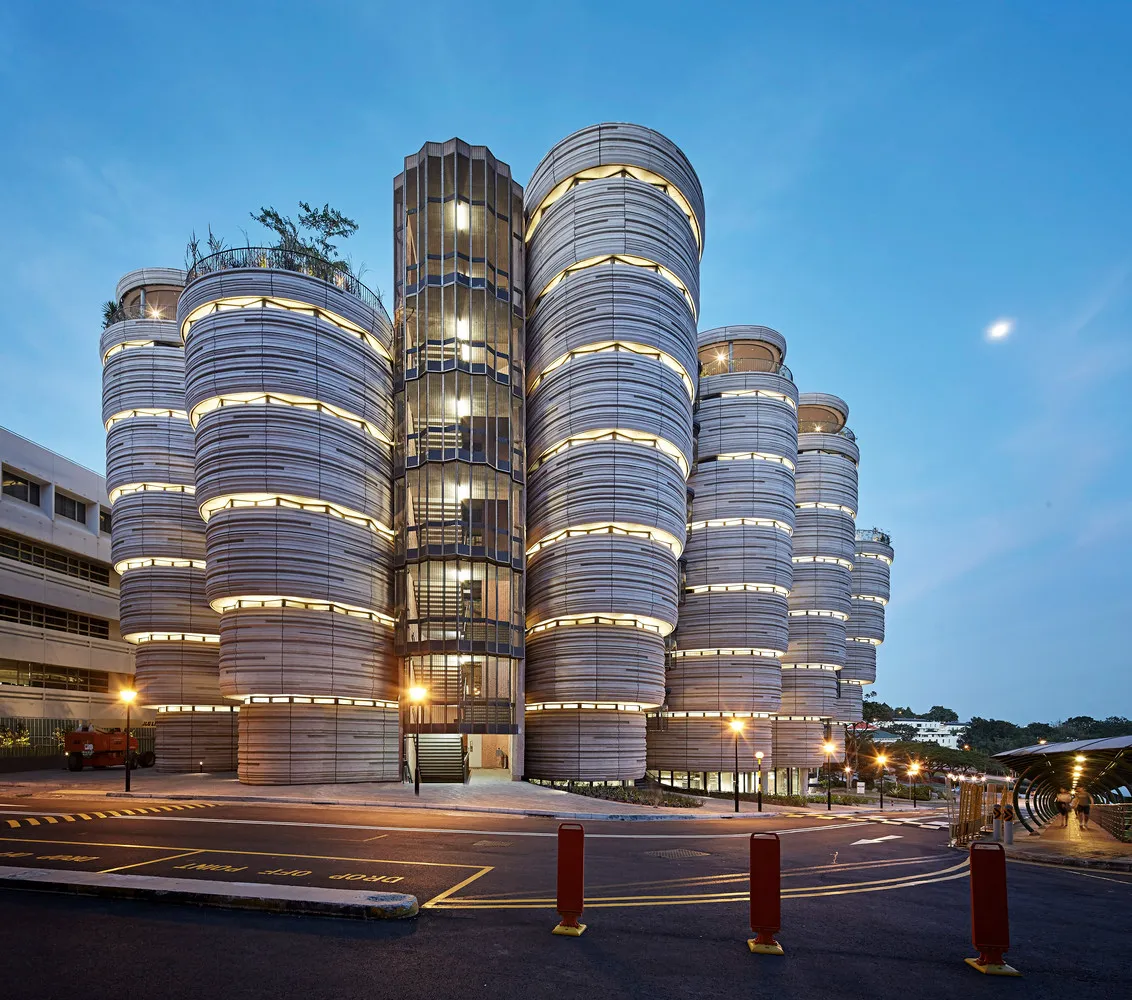
The Learning Hub, situated in the Nanyang Technological University Campus, was designed by the renowned architectural firm Heatherwick Studio and executed by the lead architect CPG Consultants. It is a new educational landmark in Singapore, designed as a multi-use building for NTU’s 33,000 students as part of the campus’s redevelopment plan.
The studio won the competition to design a building with a brief to create a new kind of learning environment and architecture for the digital age, rather than a traditional building. The outcome is campus architecture with a modern approach that interweaves social and learning spaces in a more dynamic environment.
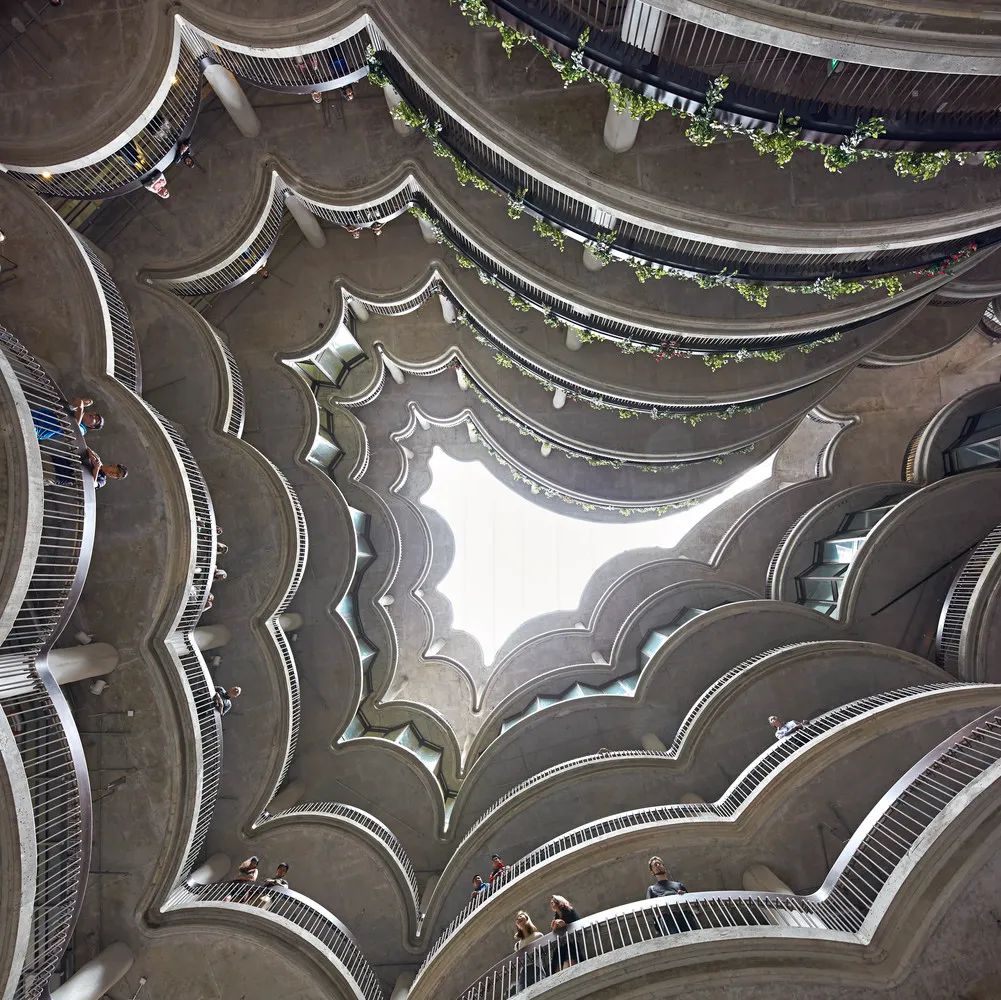
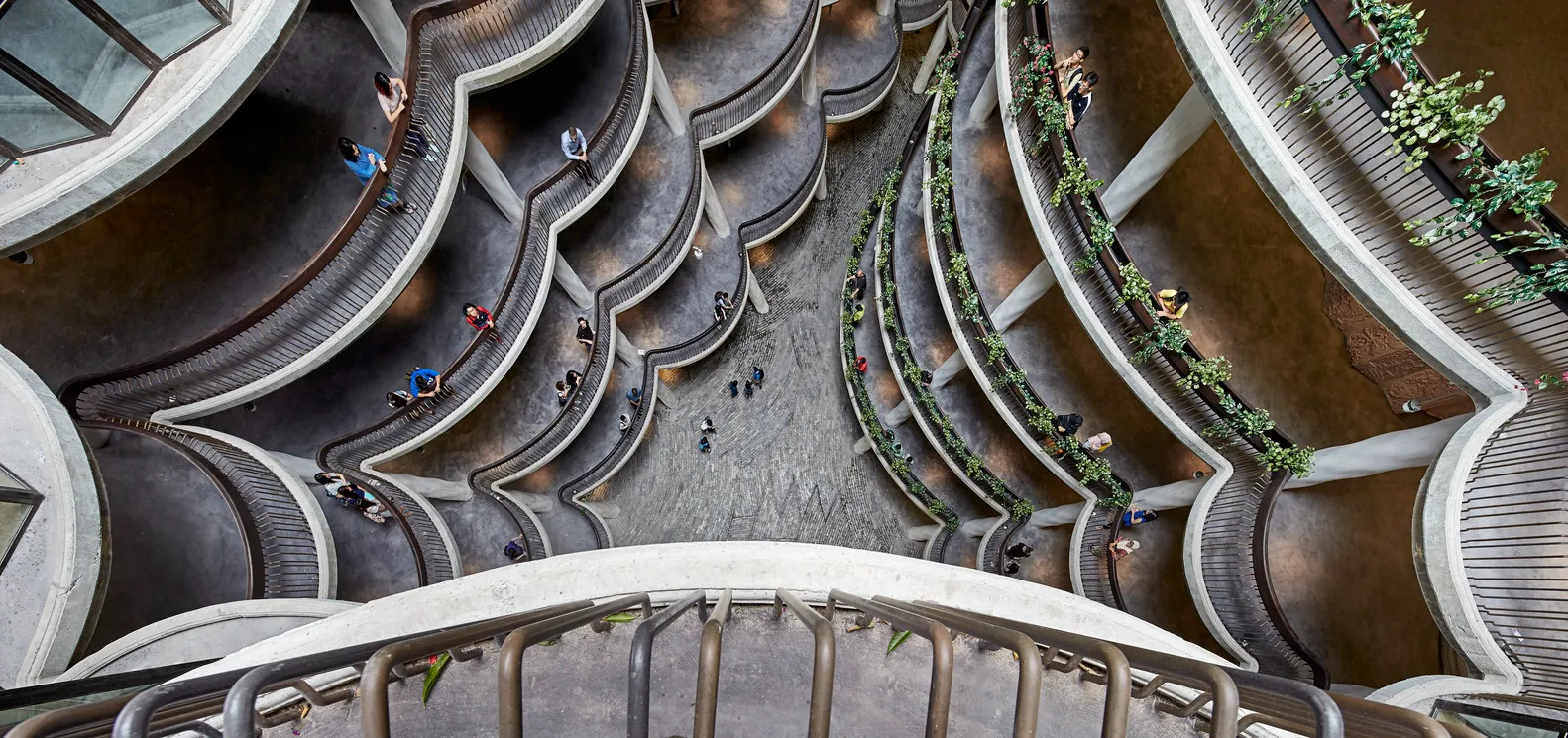
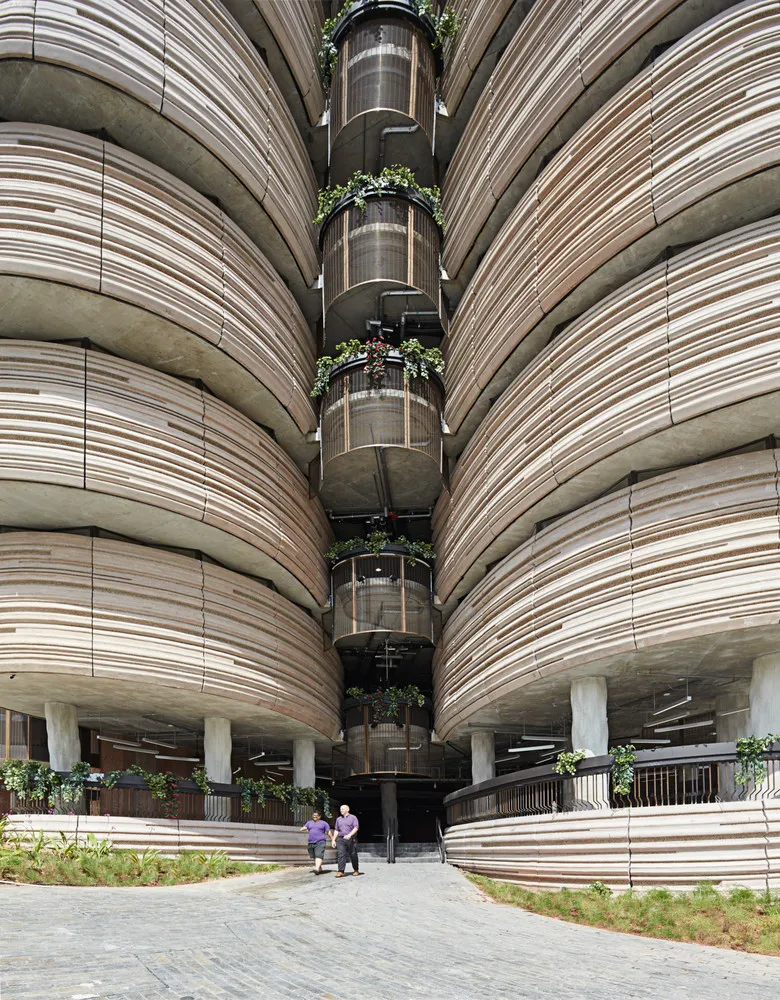
The new learning hub is designed to spark connections in the texting era by bringing teachers and students together in a vibrant social setting of the Hive. The Hive is formed by 12 towers, with each tower a stack of rounded tutorial rooms that taper inwards at the base around the public atrium. The building is designed with openness, with 360-degree access, and creates constant social interaction.
With its organic design and petal-shaped spaces, the center blends learning, community, and recreation, fostering innovation and discovery. Built from reinforced concrete shaped like handmade clay, its warm, curved panels cast with silicone molds create textured, tactile surfaces that make the space feel alive.
7. Melbourne School of Design, Australia
Design Characteristic: Human Centered Architecture and Design
Architects: NADAAA + John Wardle Architects
Location: Melbourne, Australia
Completed: 2014
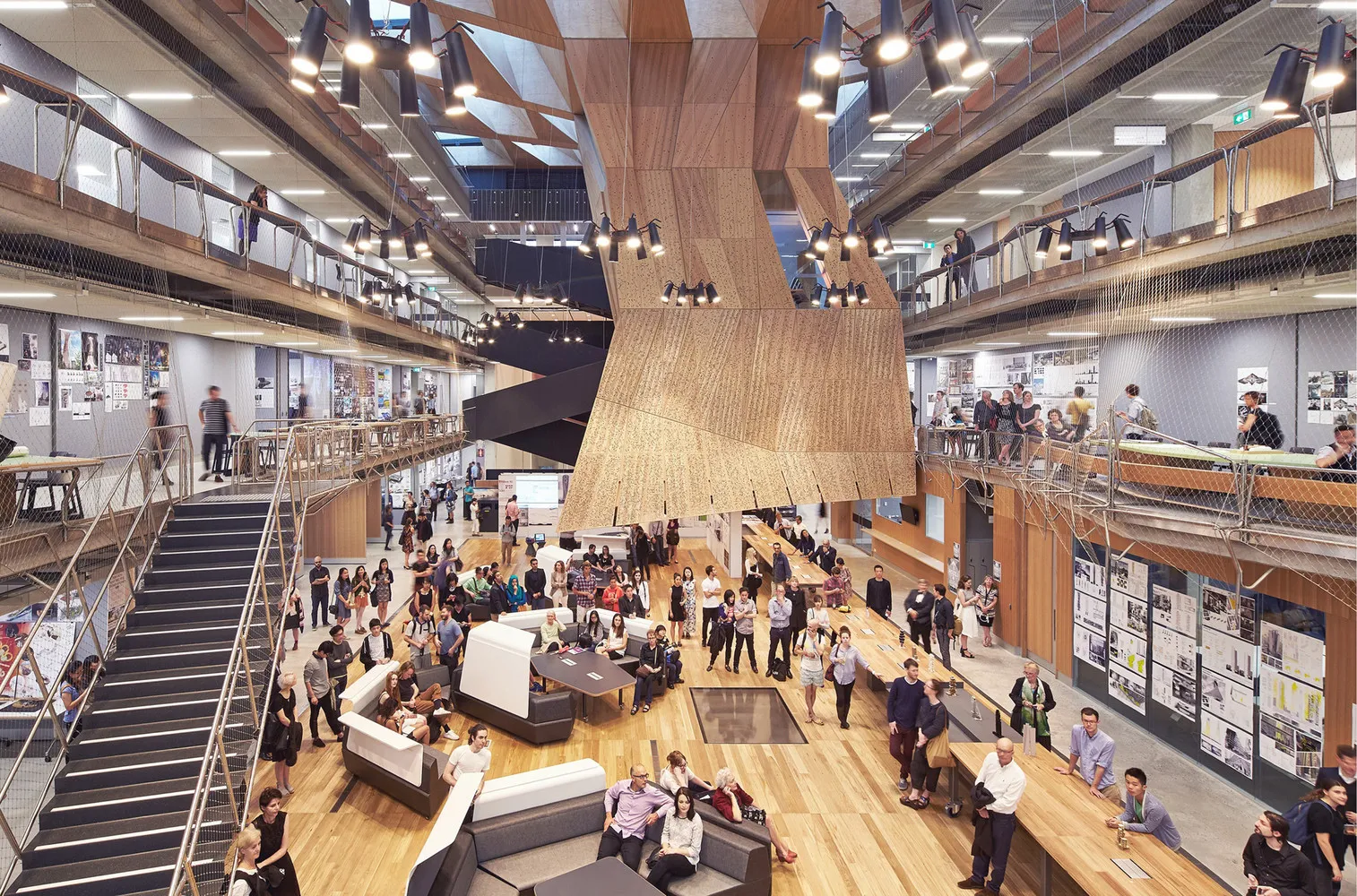
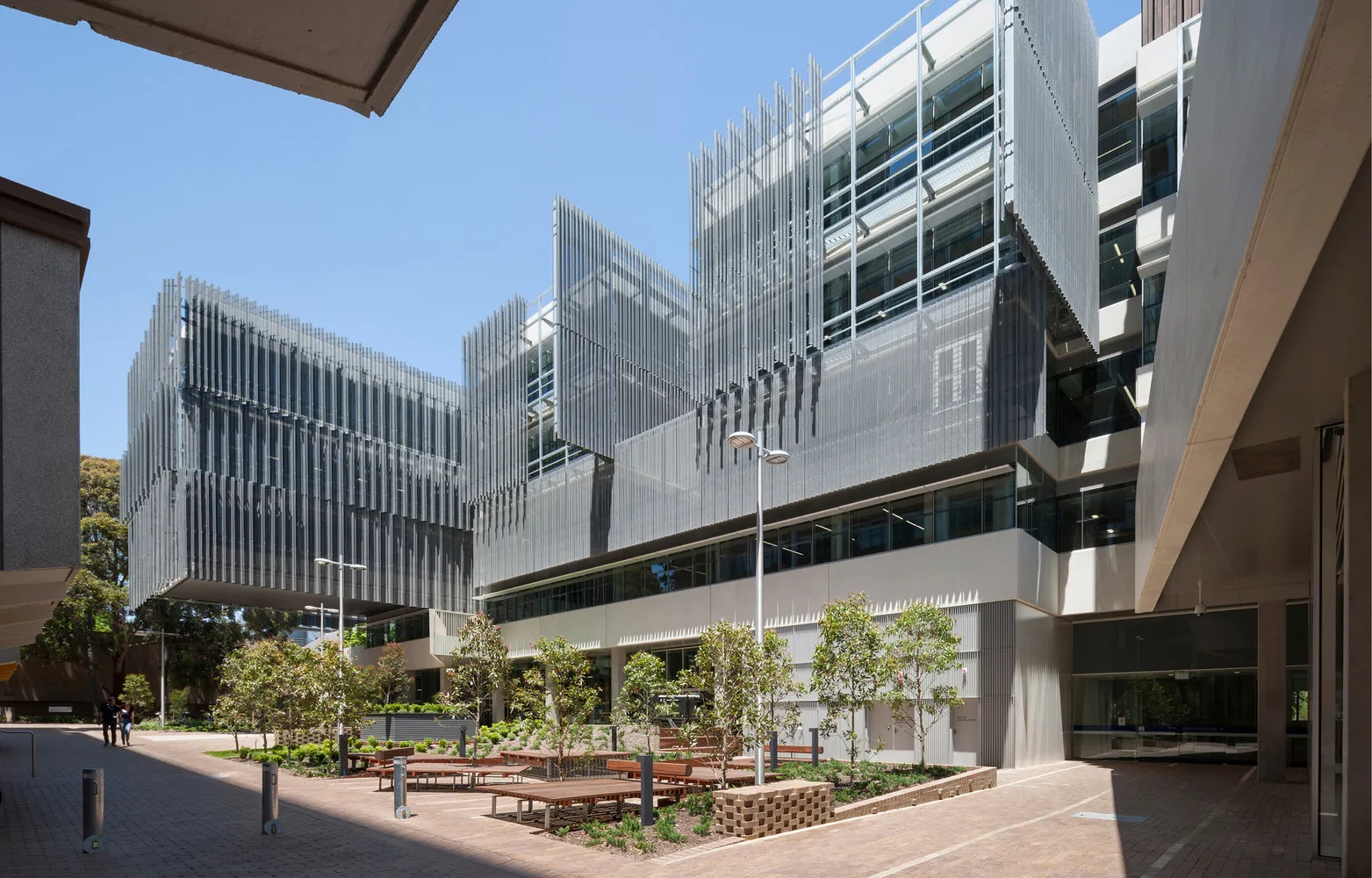
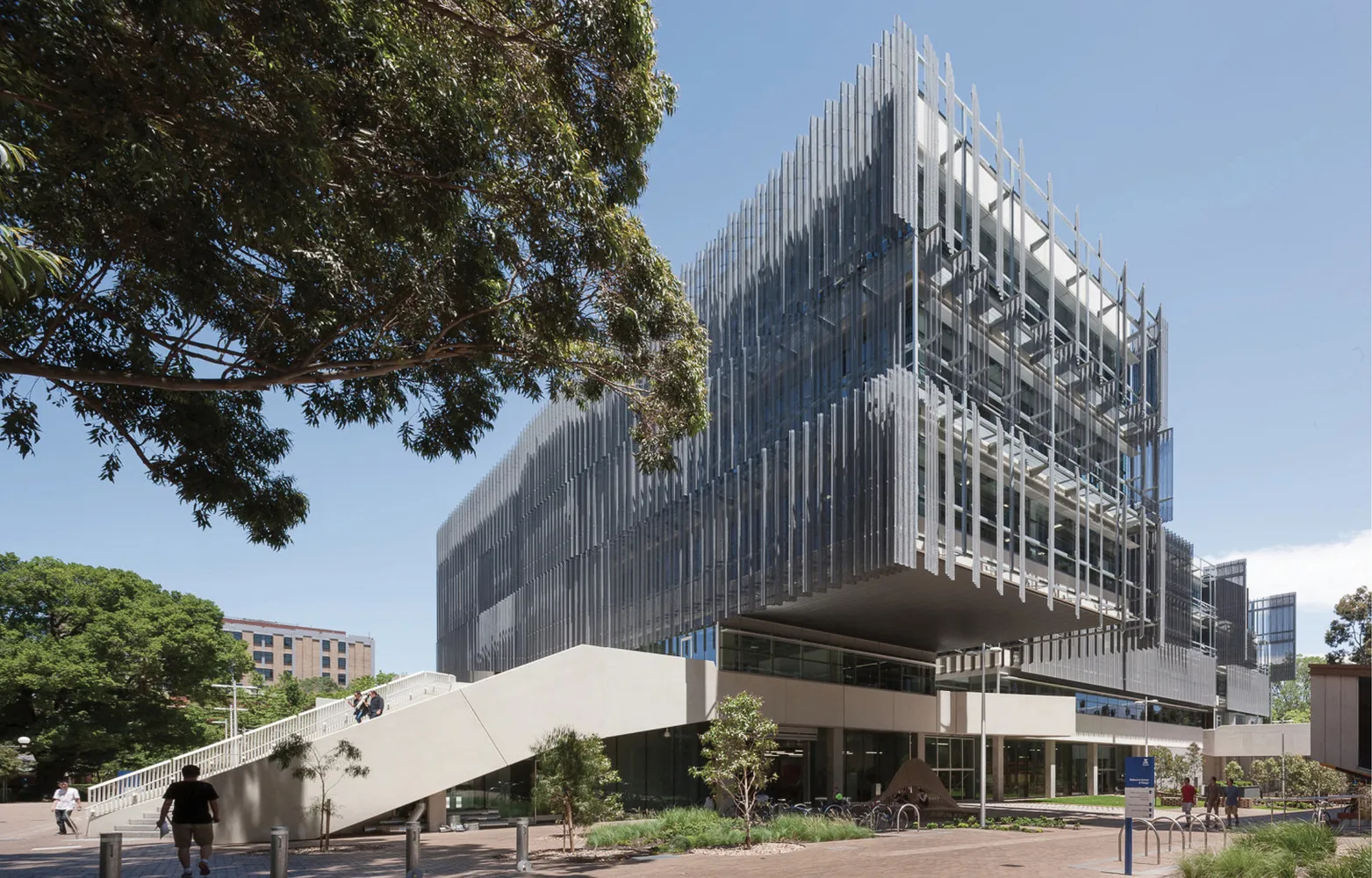
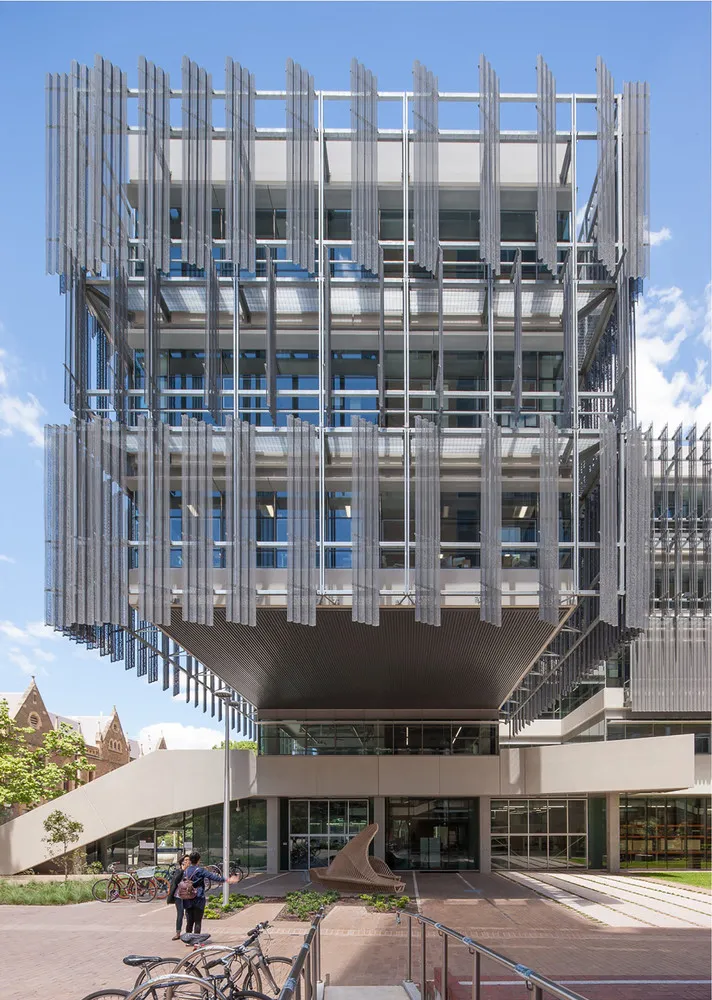
The Melbourne School of Design is a result of an international design competition organized in 2009. It was not just about creating a new campus building; it aimed to redefine what architectural education could be. Designed by NADAAA and JWA, the project evolved from four themes: academic environment, suspended studio, living building, and built pedagogy, all of which revolved around people, innovation, and future ambition.
The architecture is the result of collaborative designs by two practices, resulting in an unusual and creative structure. The result from the collaborative design is a space that feels alive; a structure where sustainability, technology, and creativity are the DNA of the design.
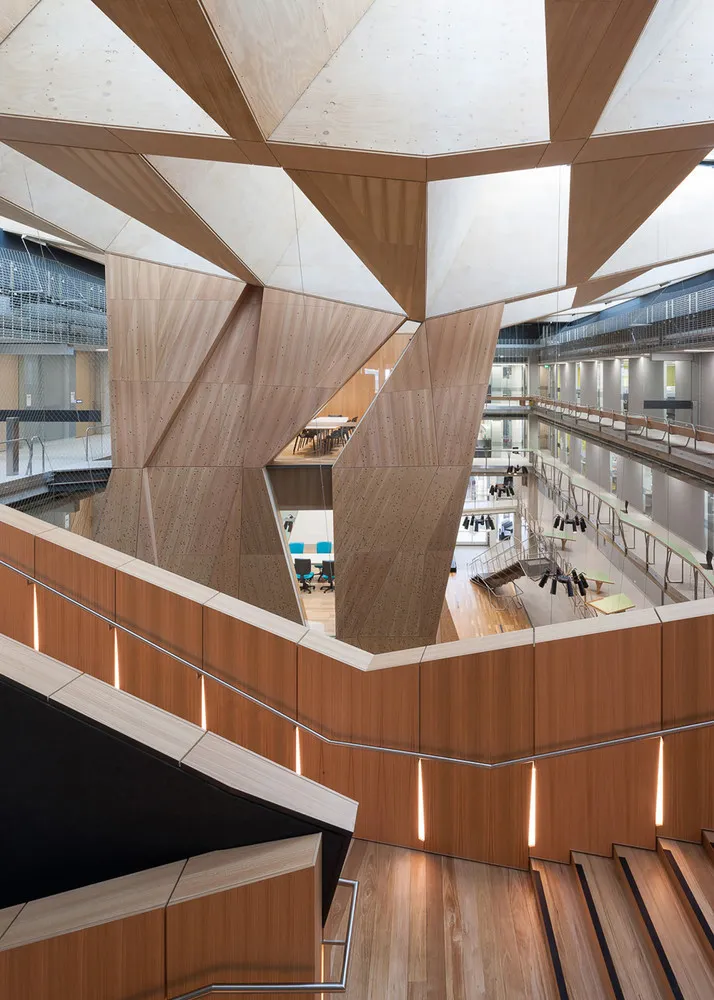
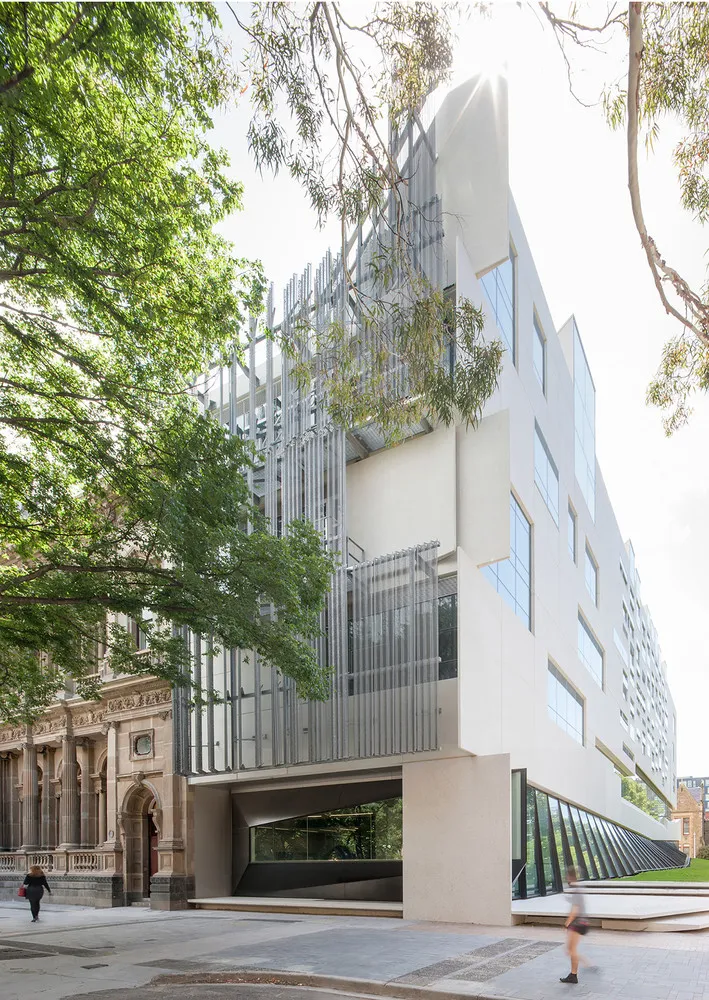
Spread across 17,000 square meters, the building is a striking interplay of concrete, glass, zinc, and steel, wrapped around flexible studios, lecture halls, and research spaces. The building revolves around showcasing new levels of ‘Human Centered Designs,’ that seamlessly combine technology, sustainability, and creative architecture and designs. The building feels more like an experiment in living and learning than a static structure, constantly engaging students in its design principles.
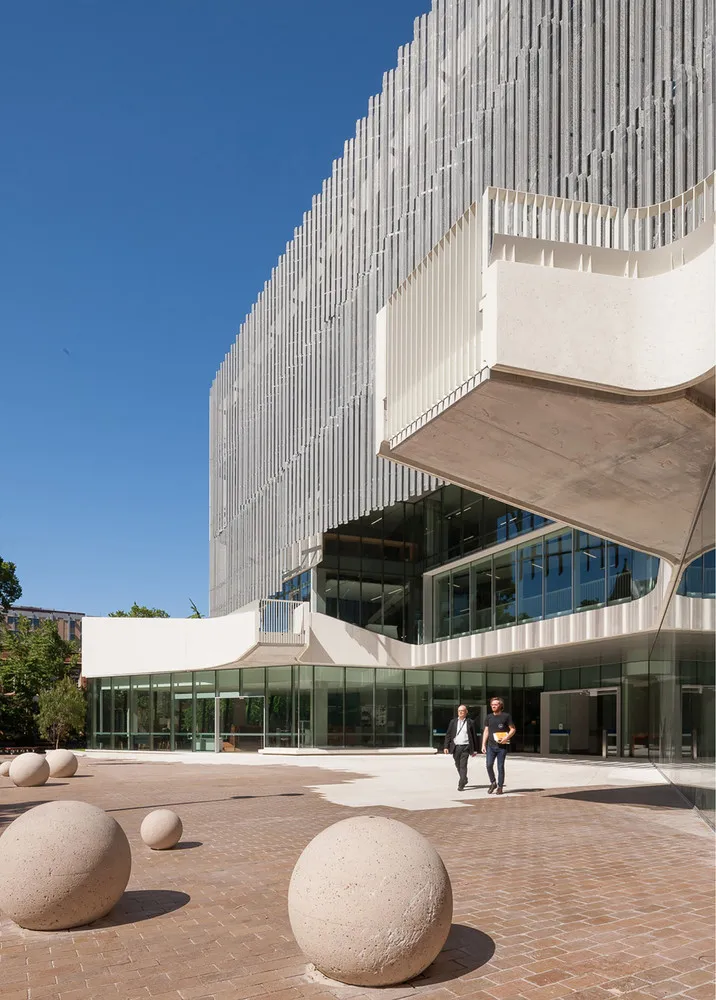
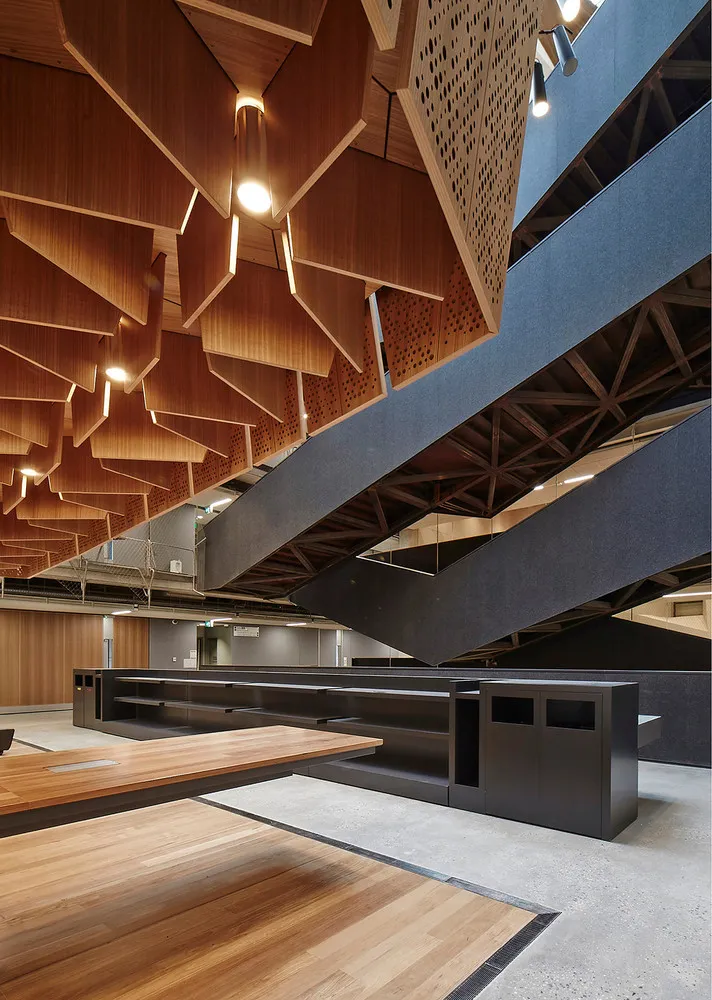
The studio hall sits beneath a coffered timber roof that breathes light and air into the interior, while diverse ceiling treatments give each space a unique character. The school stands as both a landmark and an architectural blueprint for the future of education.
8. Nanyang Primary School, Singapore
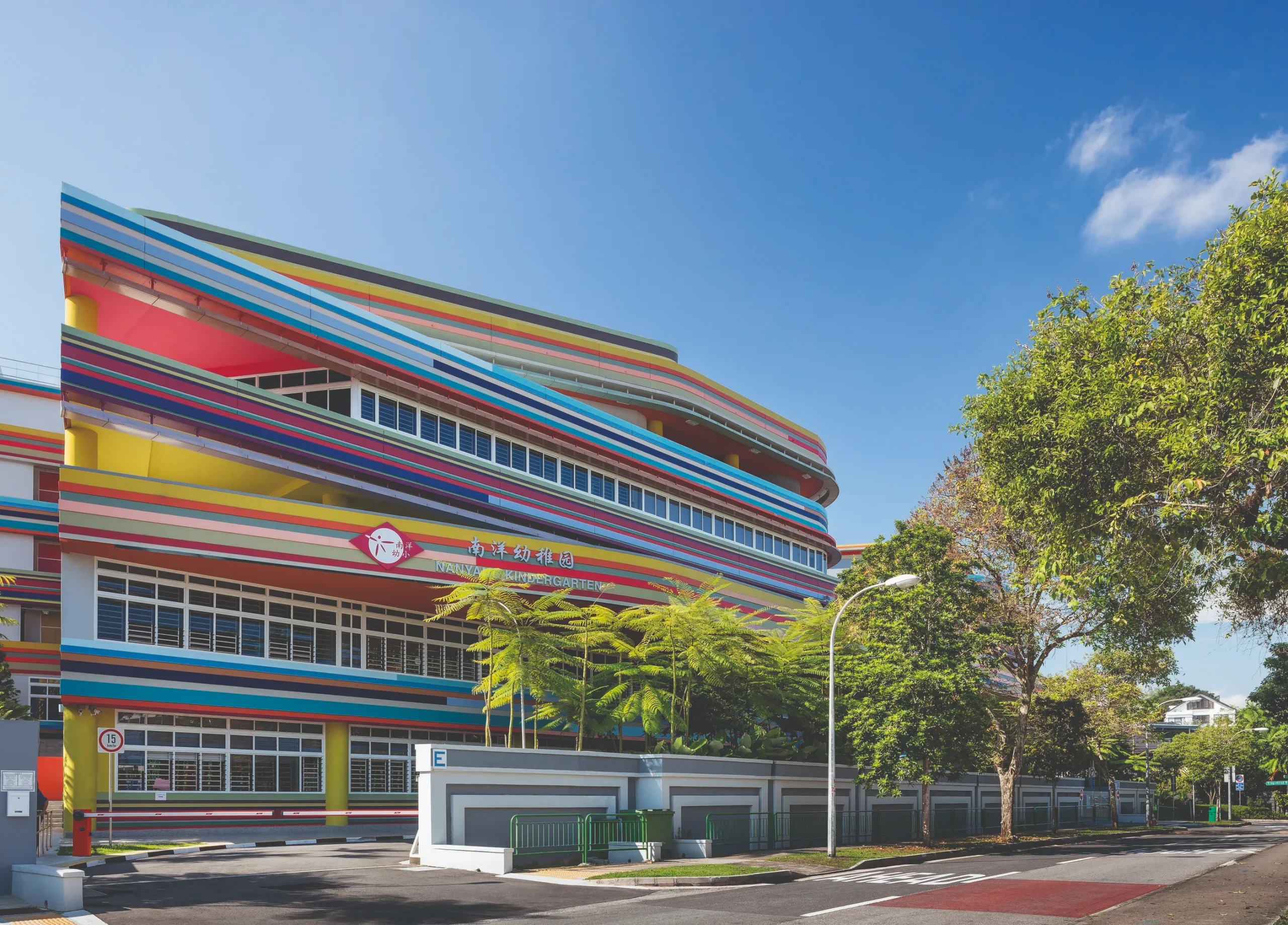
Design Characteristic: Color – A Bold Architectural Feature
Architects: Studio505
Location: Singapore
Completed: 2015
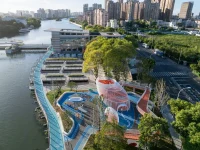
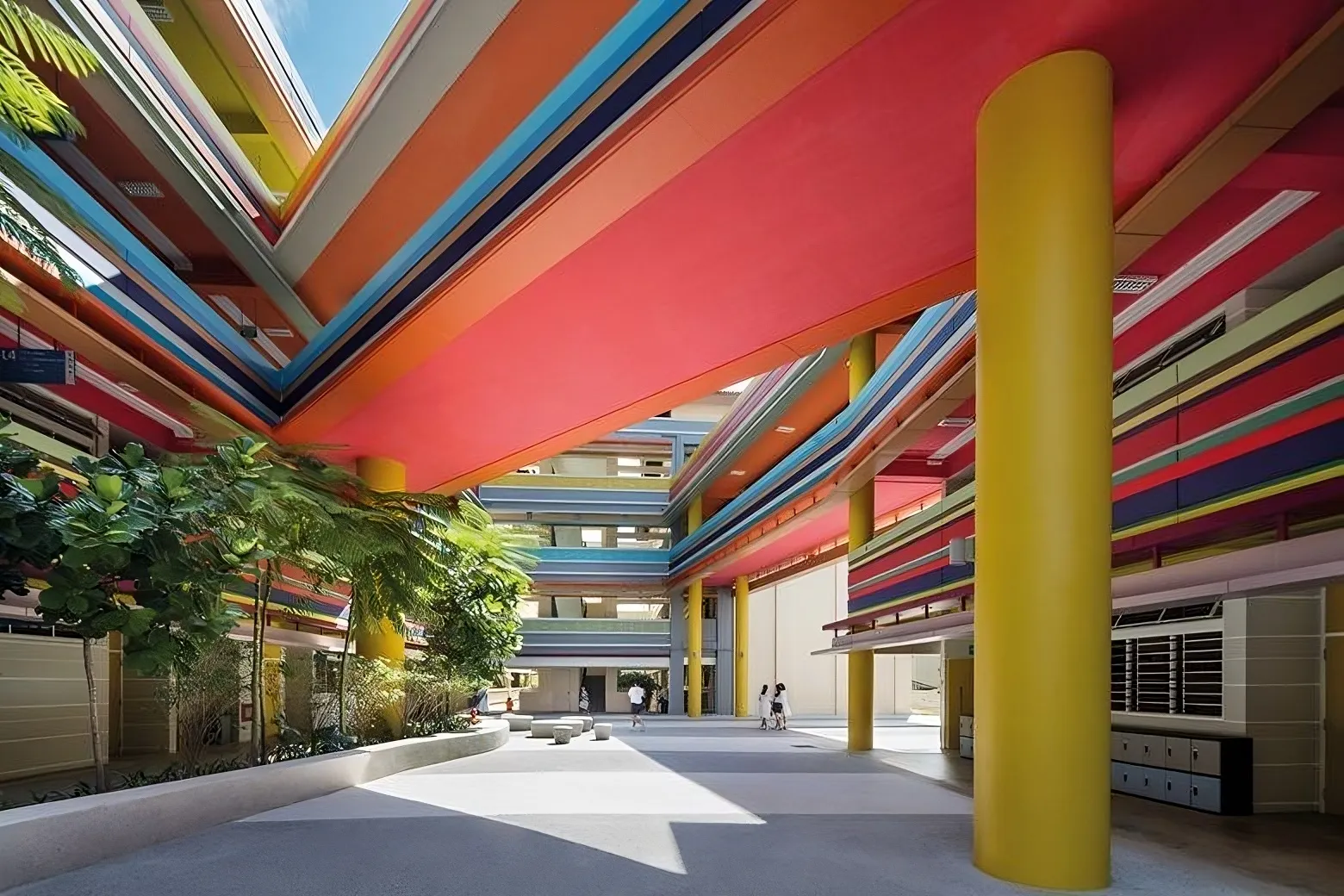
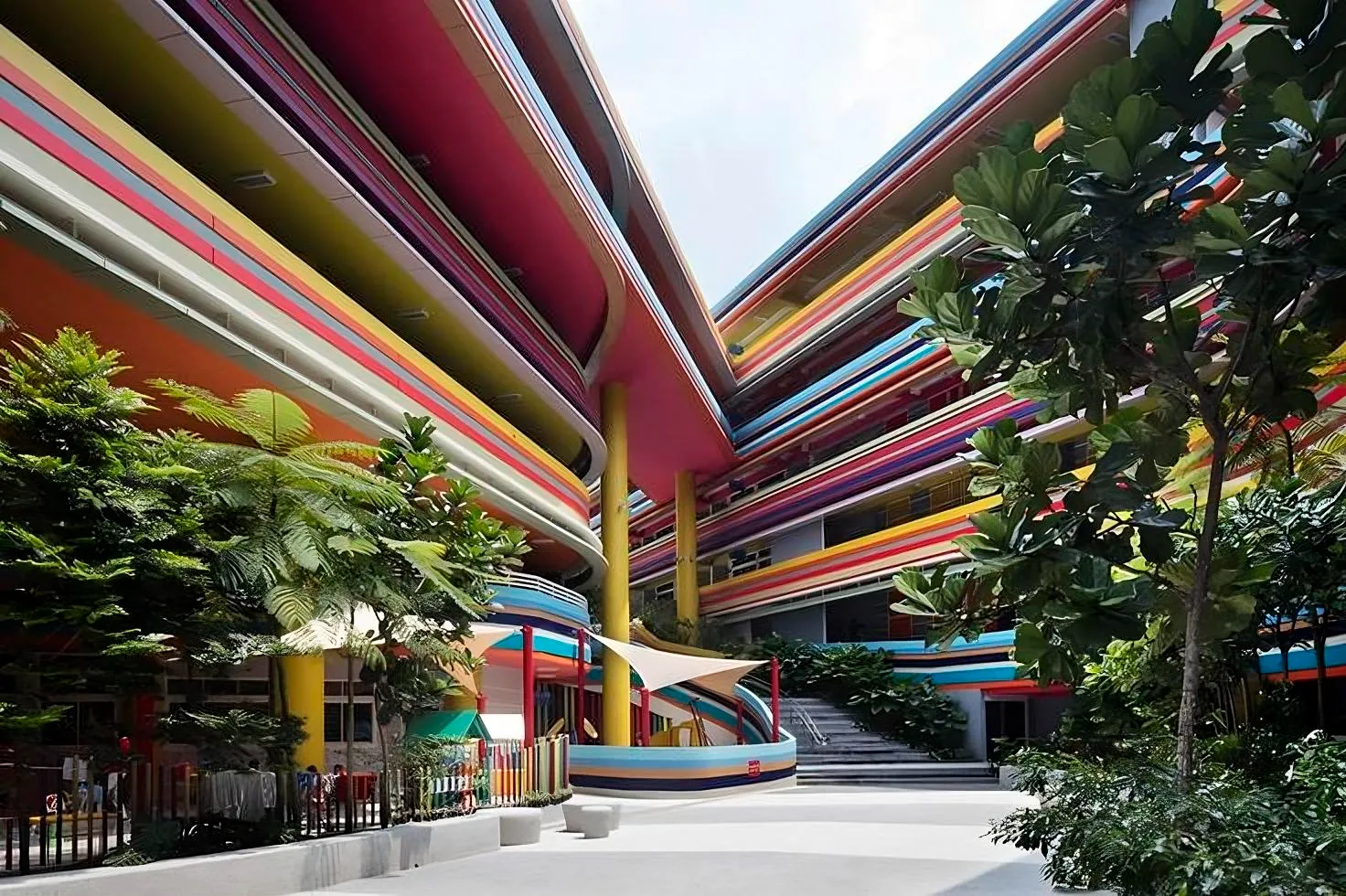
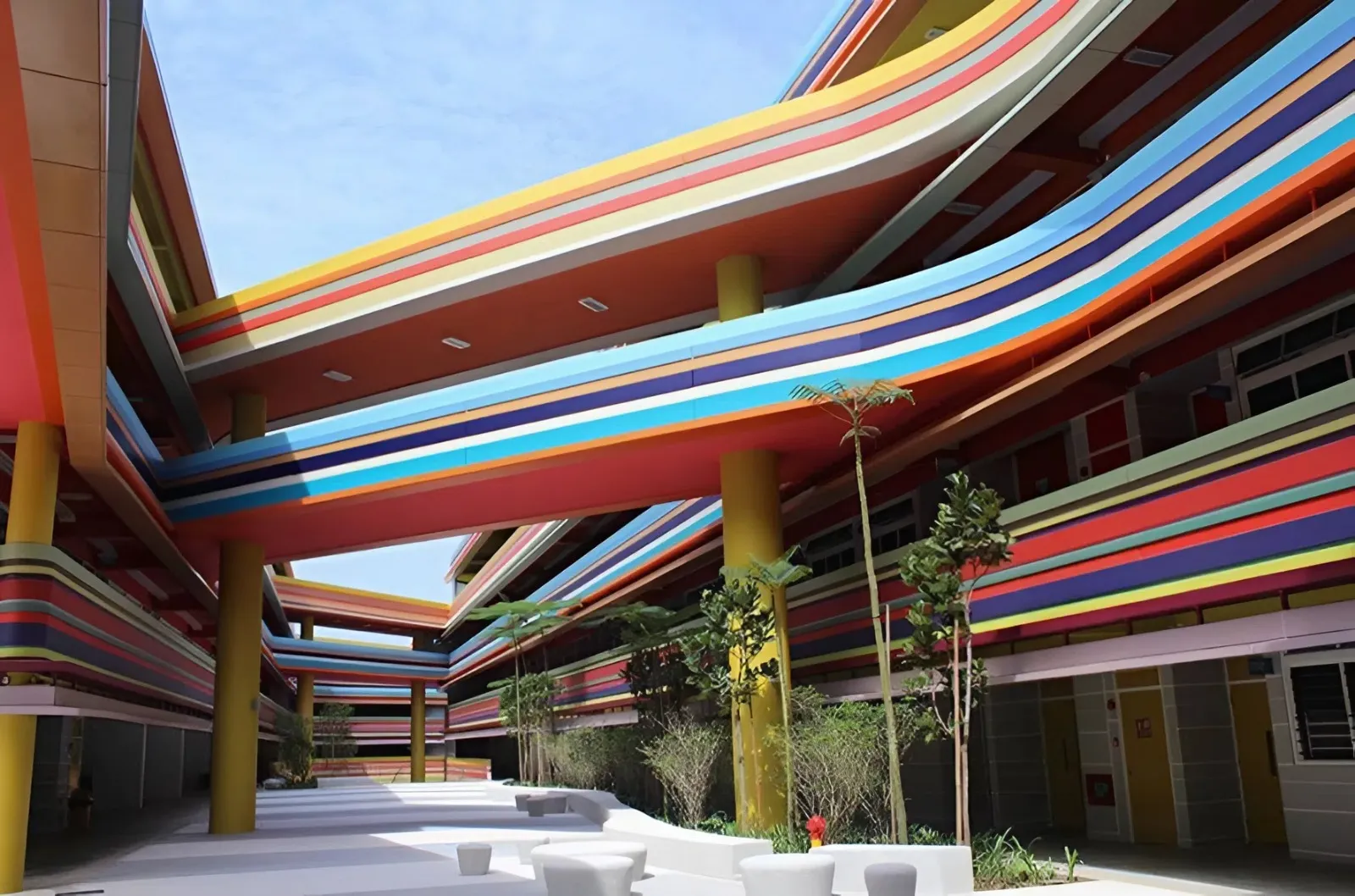
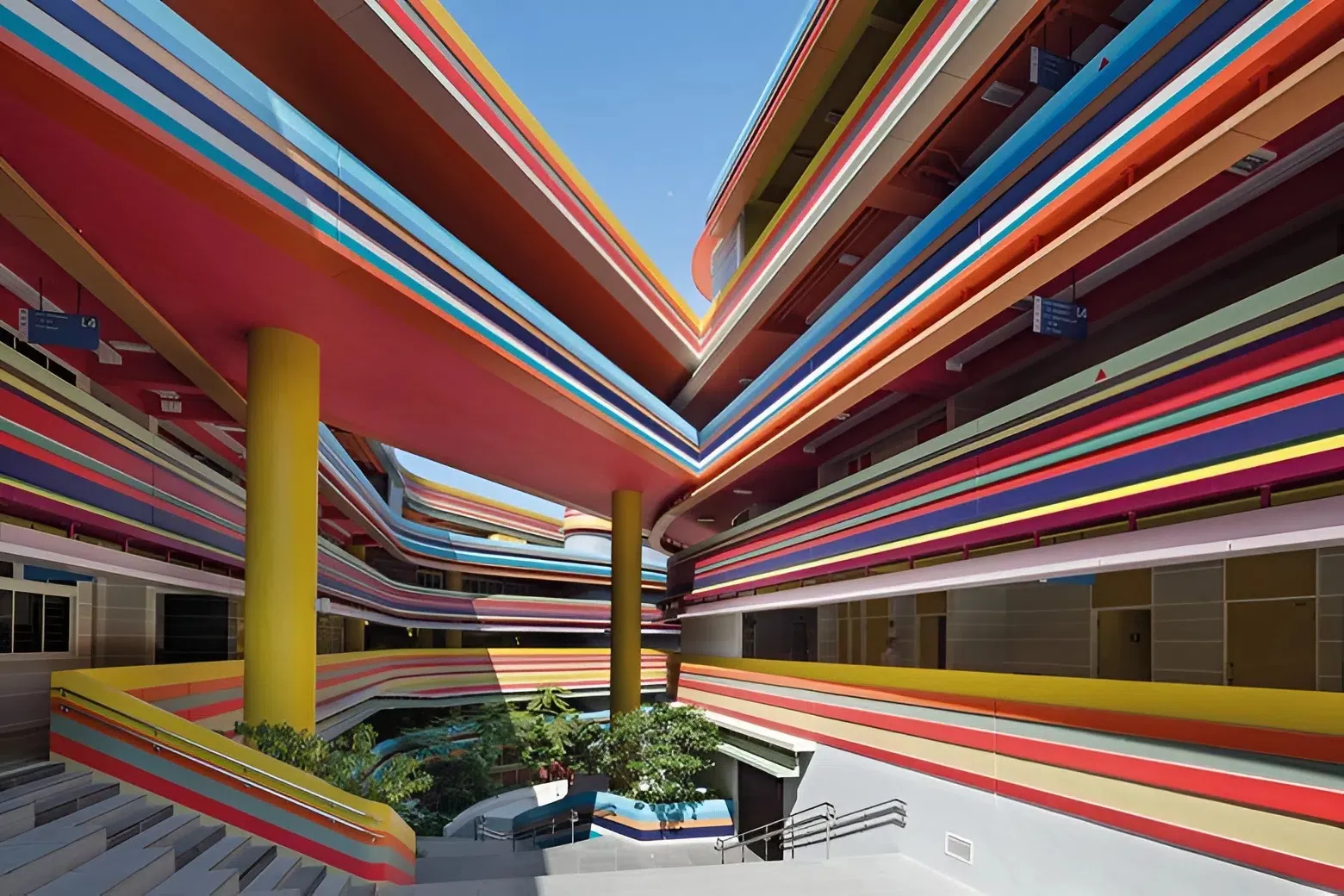
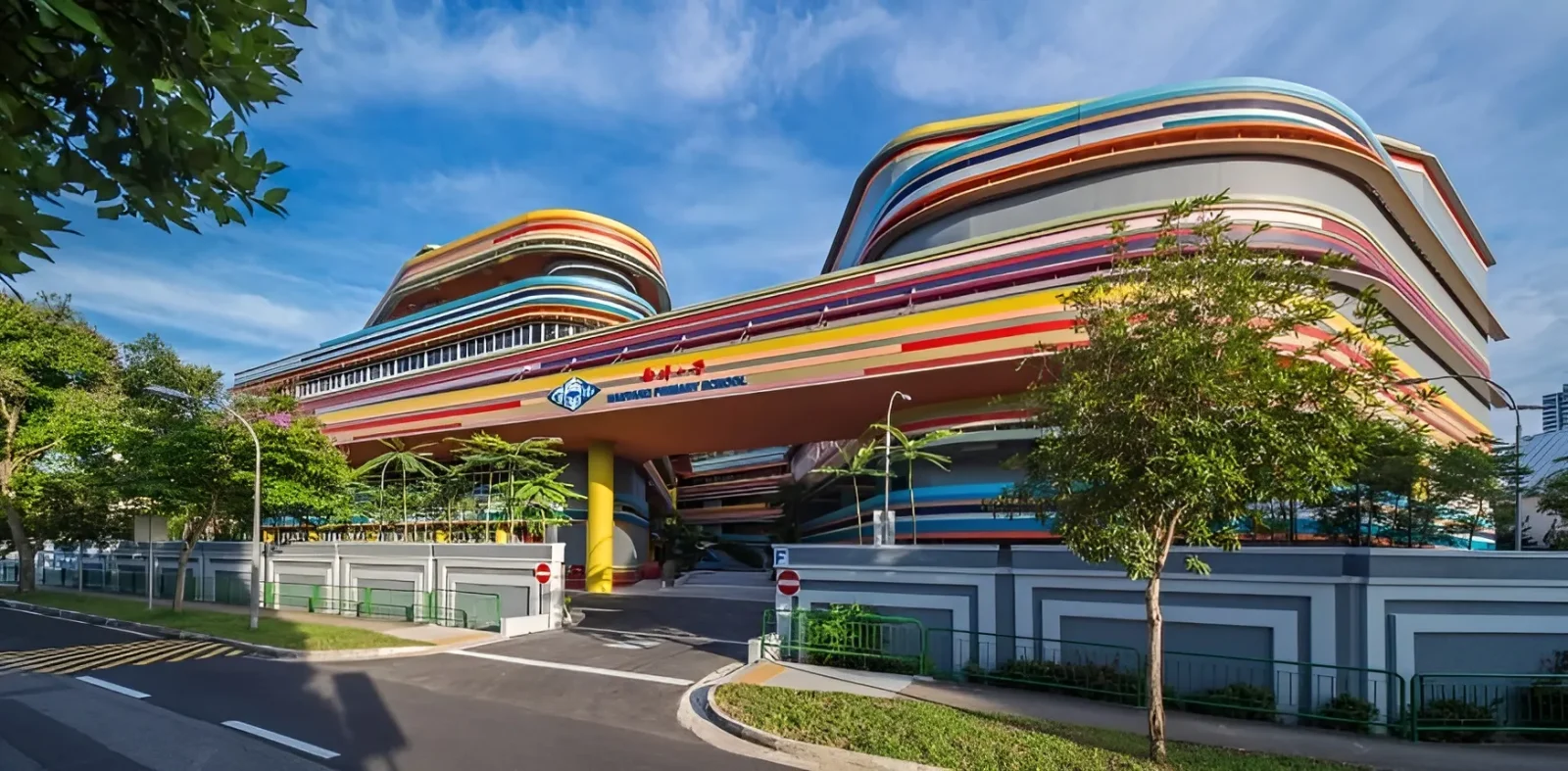
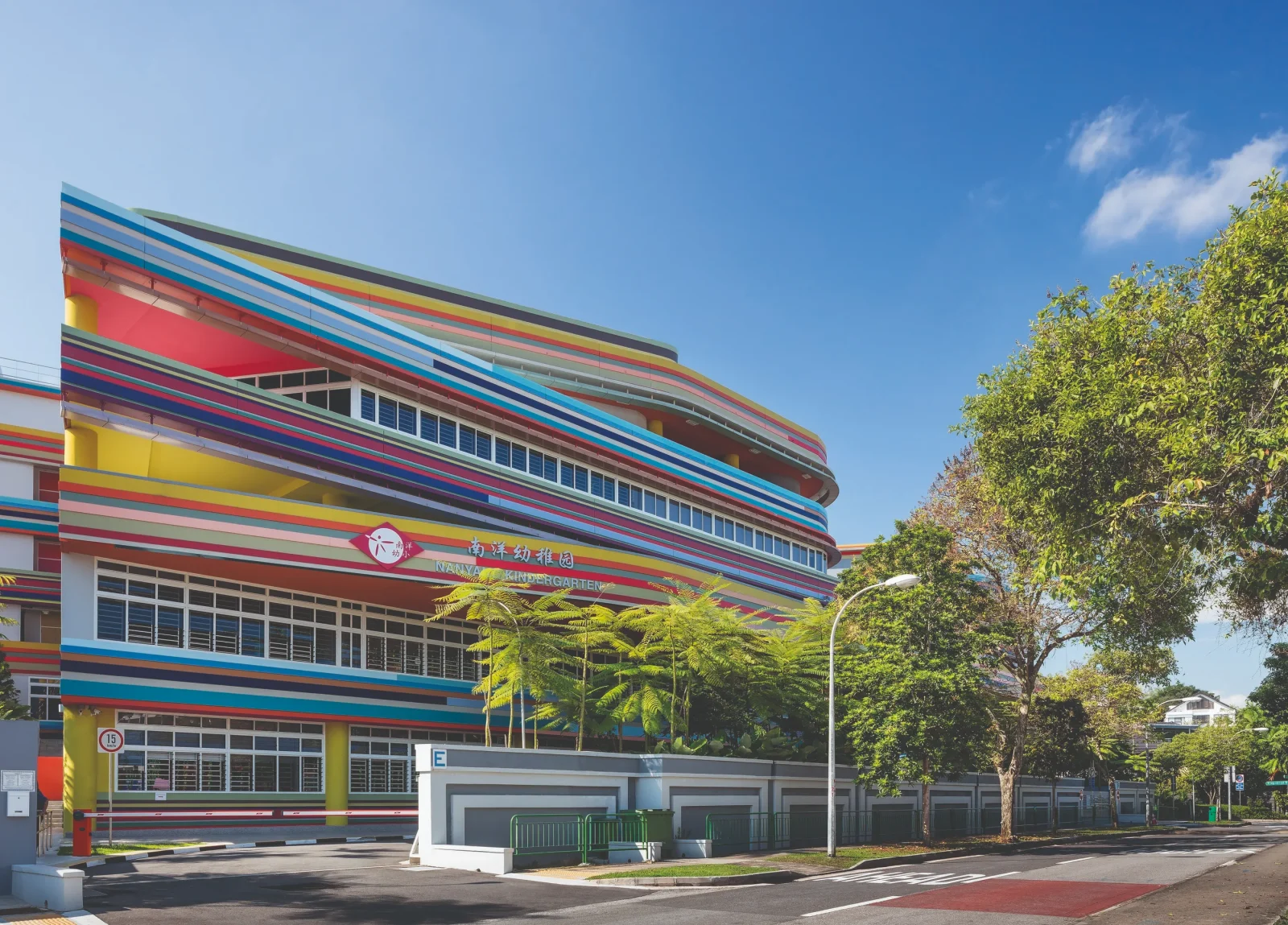
The new extension of Nanyang Primary School and Kindergarten in Singapore, designed by Studio505, bursts with bold colors and playful curves, transforming the campus into a vibrant communal hub. At its heart lies an internal valley open to the sky, hidden from the street yet full of energy once entered.
When one enters the valley from street level, due to the strategically placed curves at the center, where a landscaped staircase is located, the entire structure cannot be seen from the entrance. A landscaped staircase, framed by exposed yellow columns and connecting bridges, becomes the school’s vertical spine, encouraging chance encounters, easy circulation, and a sense of togetherness.
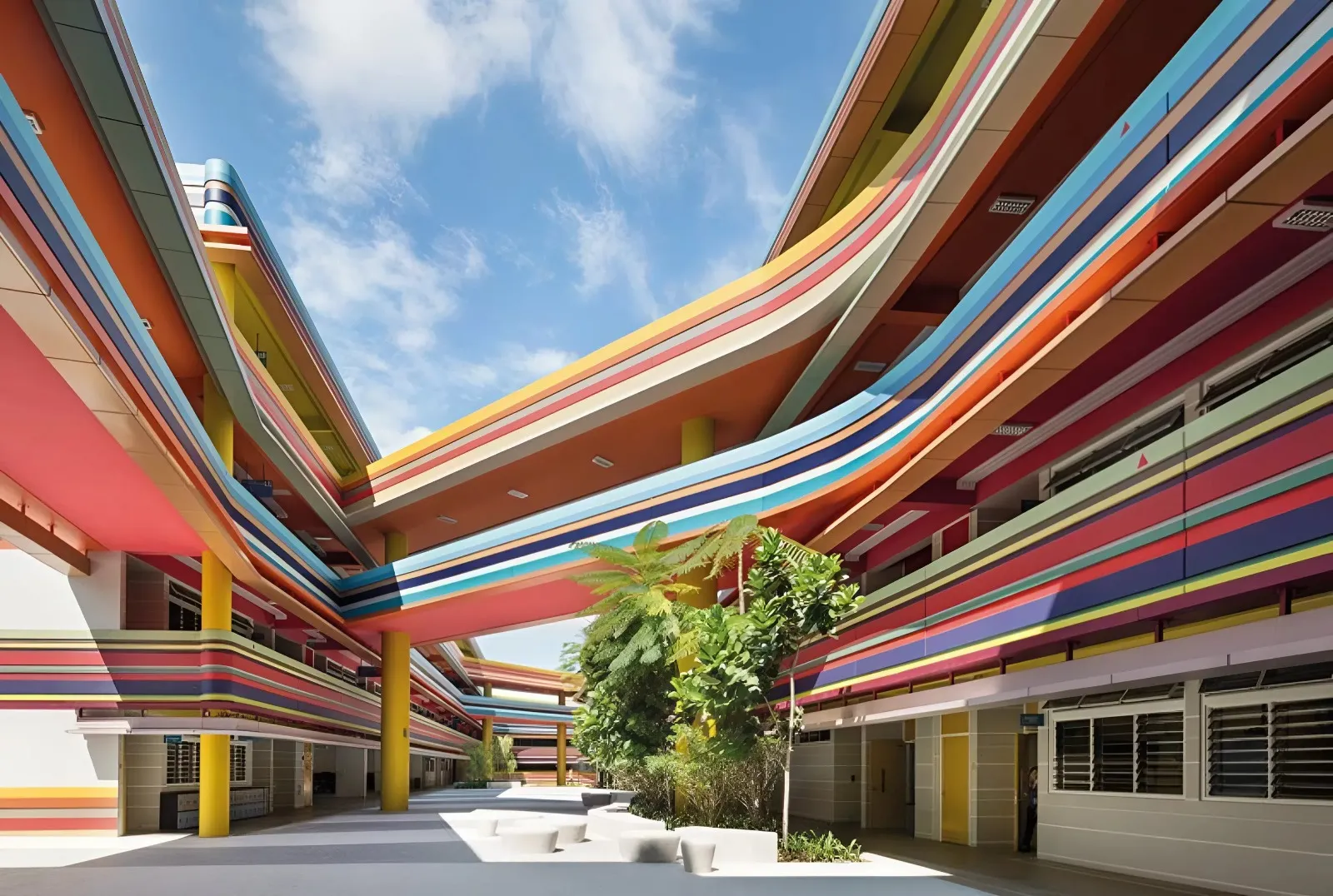
The primary concept revolved around creating communal spaces that foster social interaction, showcase active free thinking, and bring excitement to both children and teachers. The architecture thrives on color, expressed through bundled horizontal stripes painted in cheerful hues, sparking imagination and conversation.
Closer to Coronation Street, the kindergarten and indoor sports facilities are tucked around the valley, with classrooms oriented toward quieter residential edges to create calm learning zones.
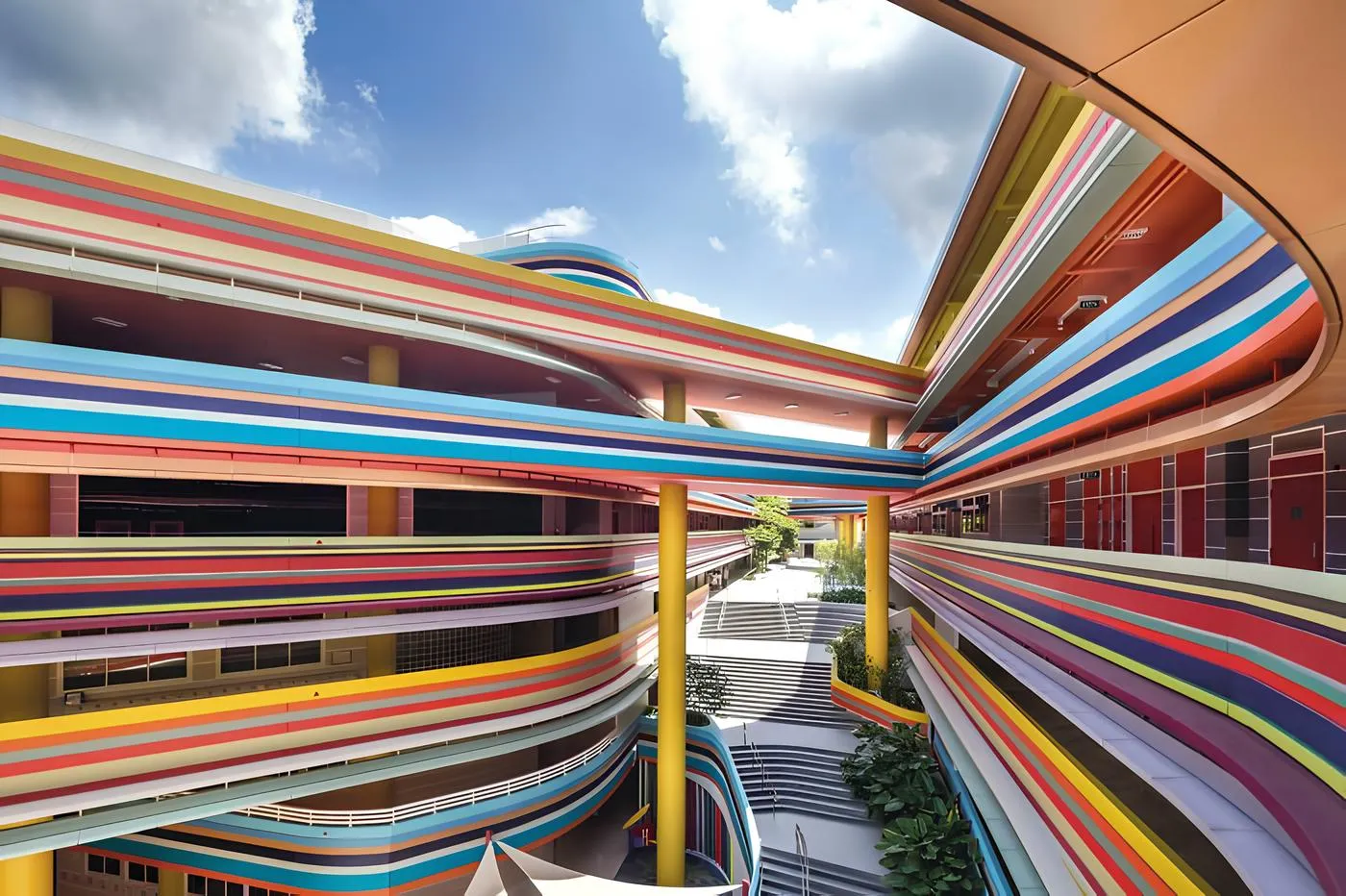
All circulation is open to the air and oriented towards the inner central valley space, with covered walkways featuring double layers for weather protection. The design balances play and study, encouraging children to claim their own corners as they grow, while the valley itself remains a lively stage for interaction, exploration, and shared memories. The design caters to children’s growth through different classes, allowing them to claim their own spaces.
Honorable Mentions of Eco-Friendly Campus Architecture
1. APAP School, South Korea
Design Characteristic: Adaptive Re-use Architecture
Architects: LOT-EK Architecture & Design
Location: Anyang-si, South Korea
Completed: 2010
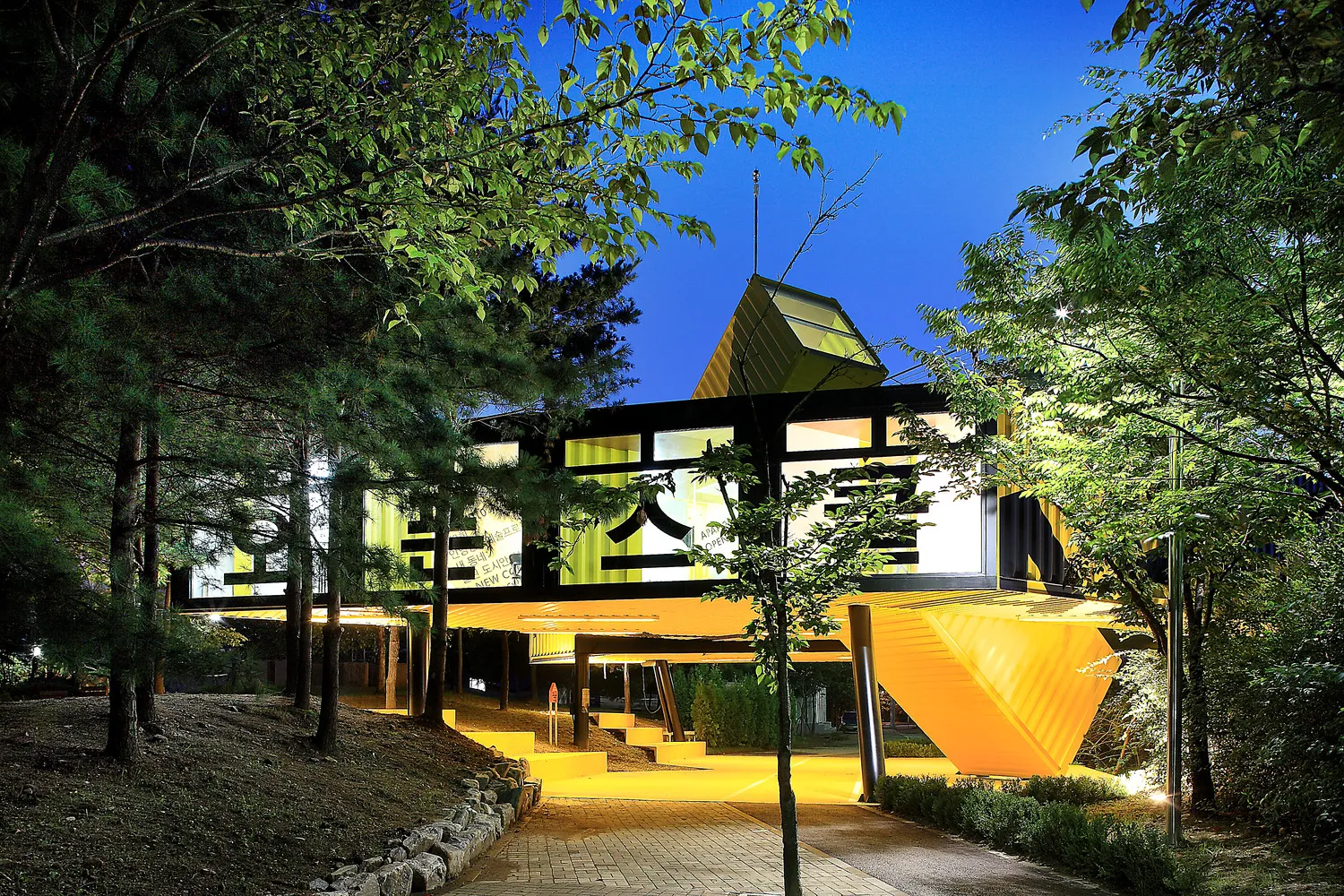
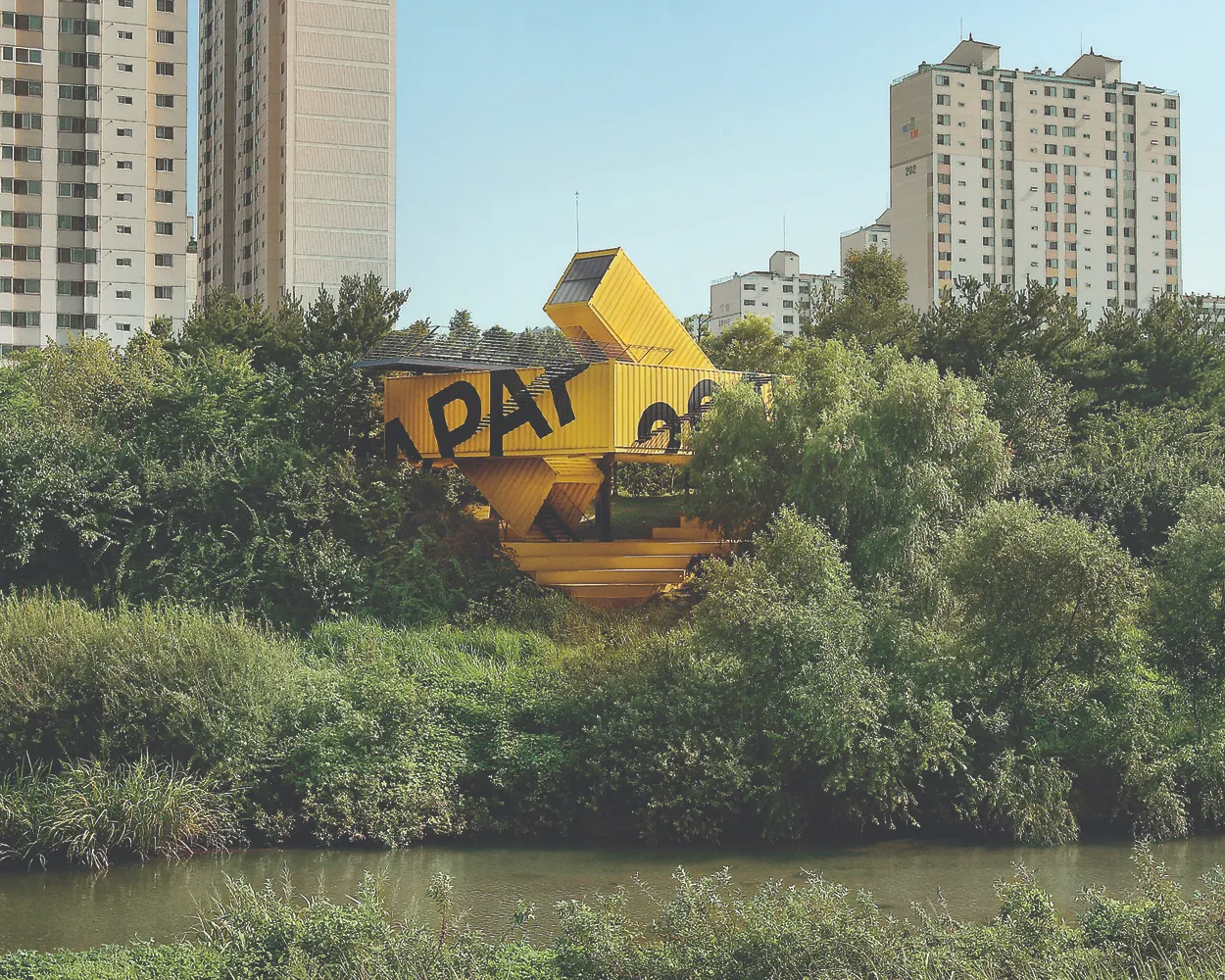
Situated along the river’s edge in South Korea, the APAP School transforms the humble shipping containers into a bold statement of ‘Adaptive reuse’ and ‘Sustainable design’. The river context allows recreational spaces along the riverfront to facilitate social interaction among users, including visitors, spectators, and participants at public events at the APAP School.
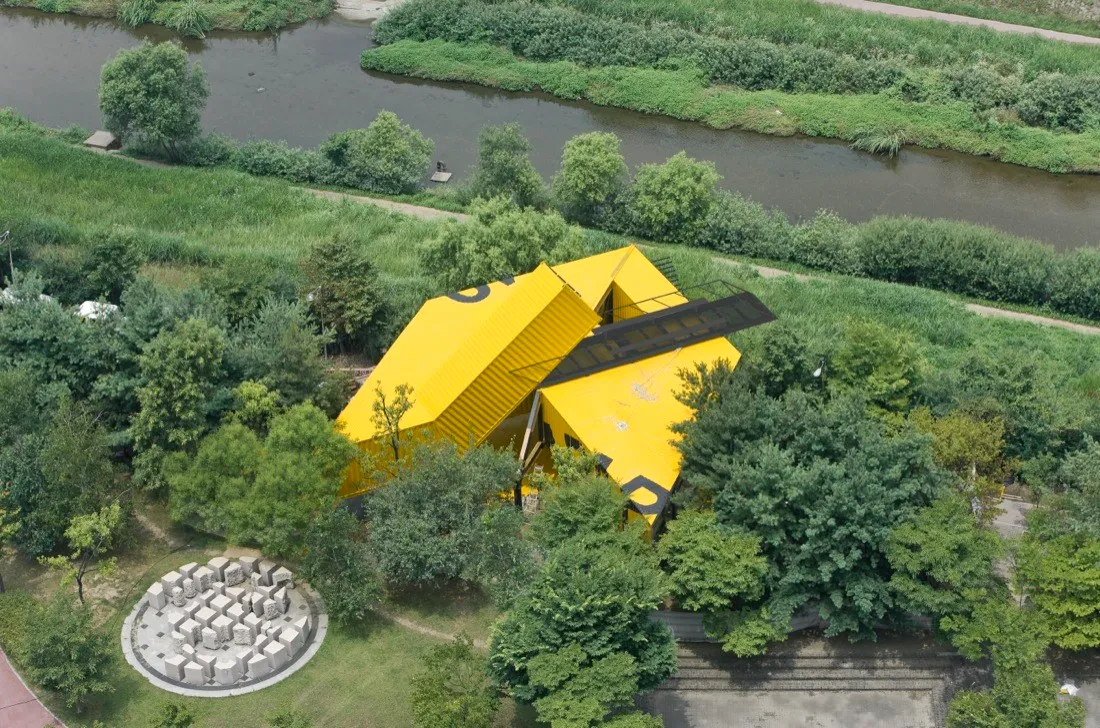
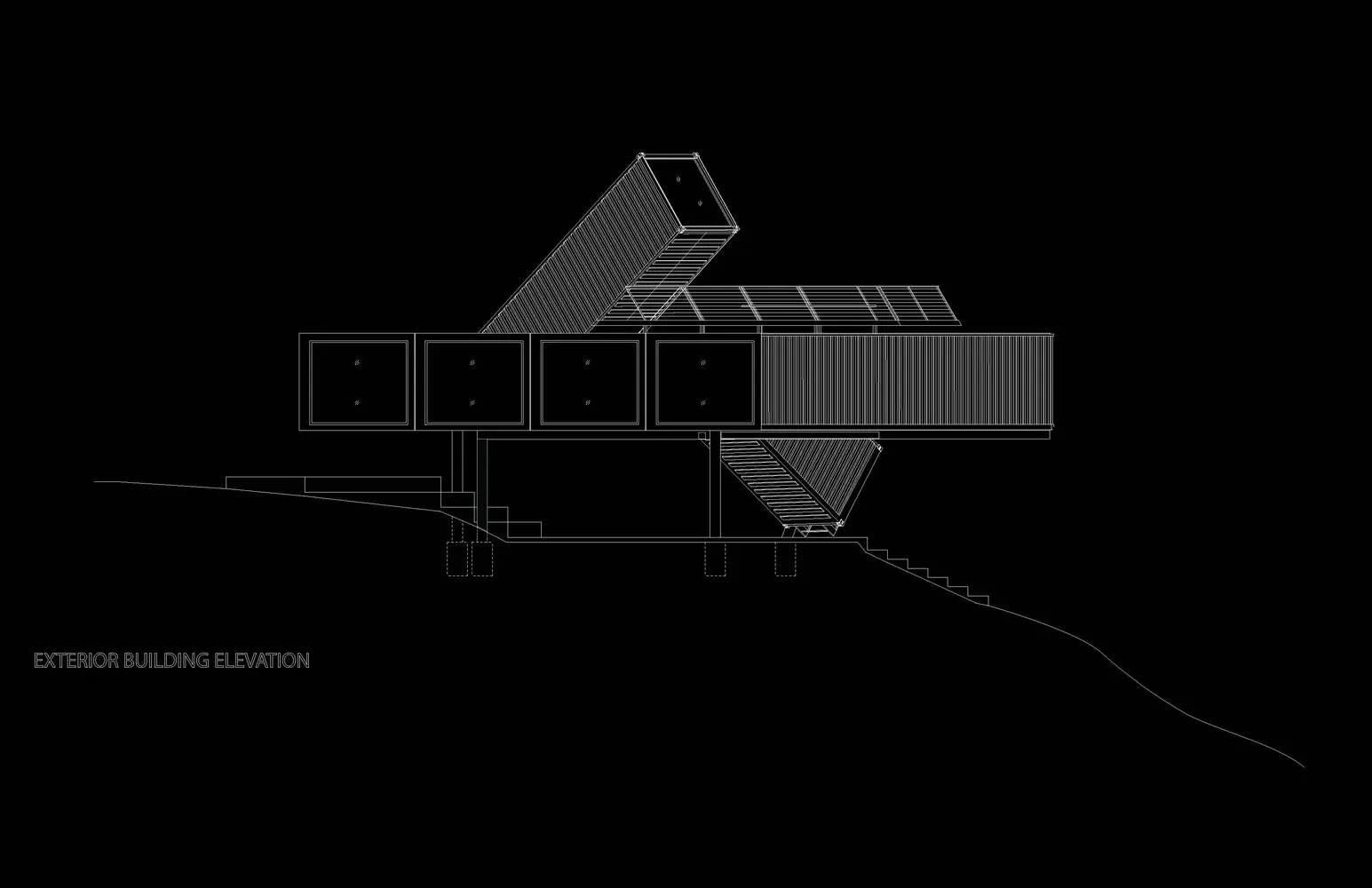
Composed of eight bright yellow containers angled in a striking fishbone pattern, the structure hovers three meters above Hakwoon Park, drawing the public in with its arrow-like art form. Designed as a sustainable structure built using various sustainable materials and energy, reducing the energy consumption as well for the entire form.
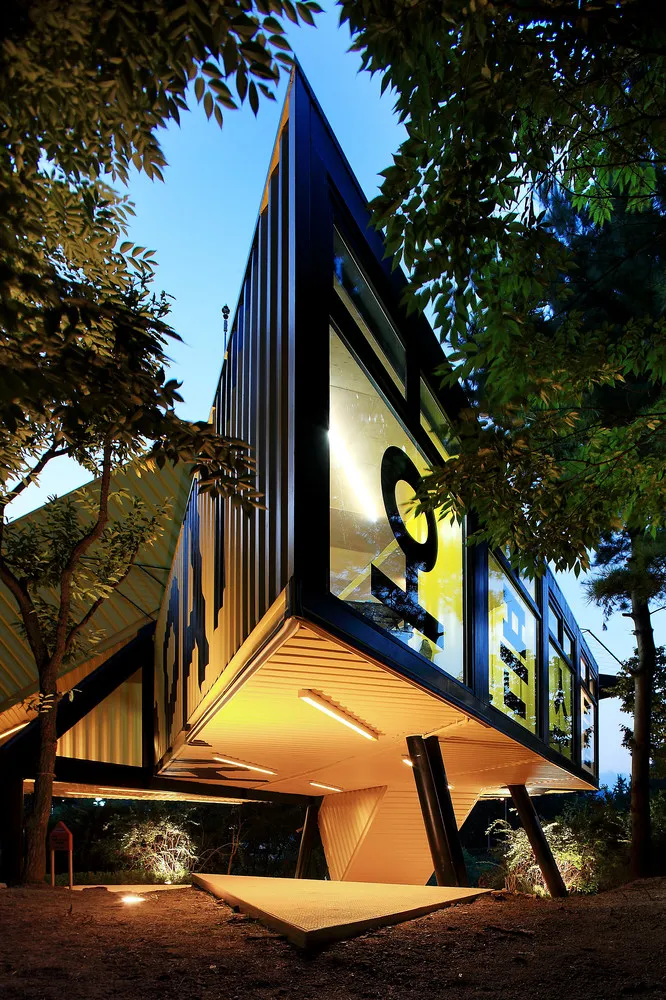
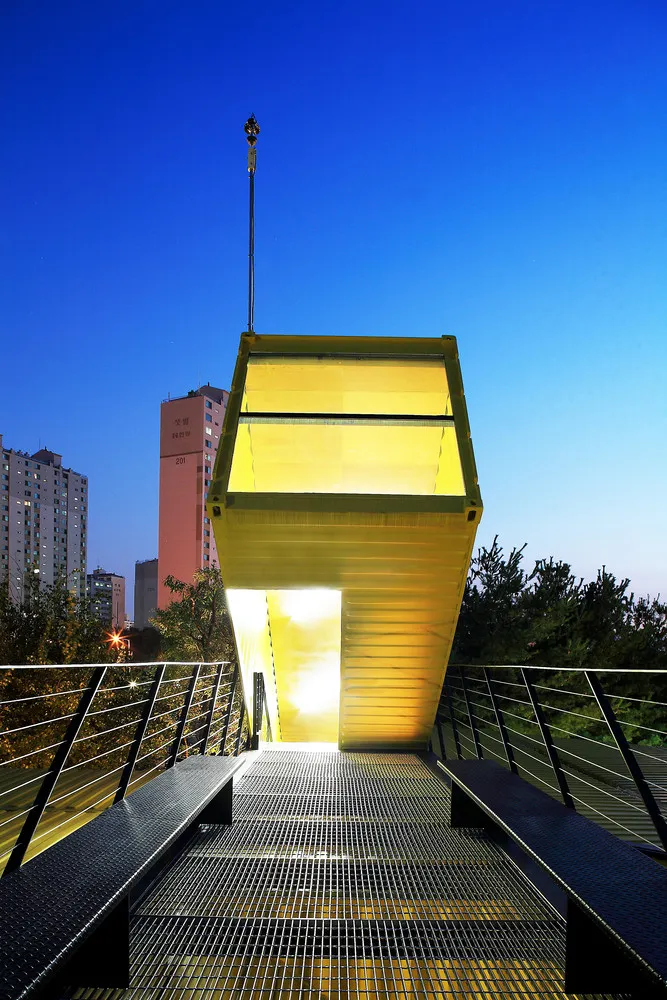
The Open School’s setting, surrounded by greenery and open spaces that also serve as an amphitheater, blurs the lines between art, architecture, and nature. Its bold design celebrates art, nature, and architecture through a functional, interactive, and sustainable study environment. The bright and bold yellow eight shipping containers are tilted at a 45-degree angle and arranged in a fishbone pattern, creating a large, arrow-like volume that hovers three meters above the Hakwoon Park pedestrian walkway, serving as a focal point of gathering.
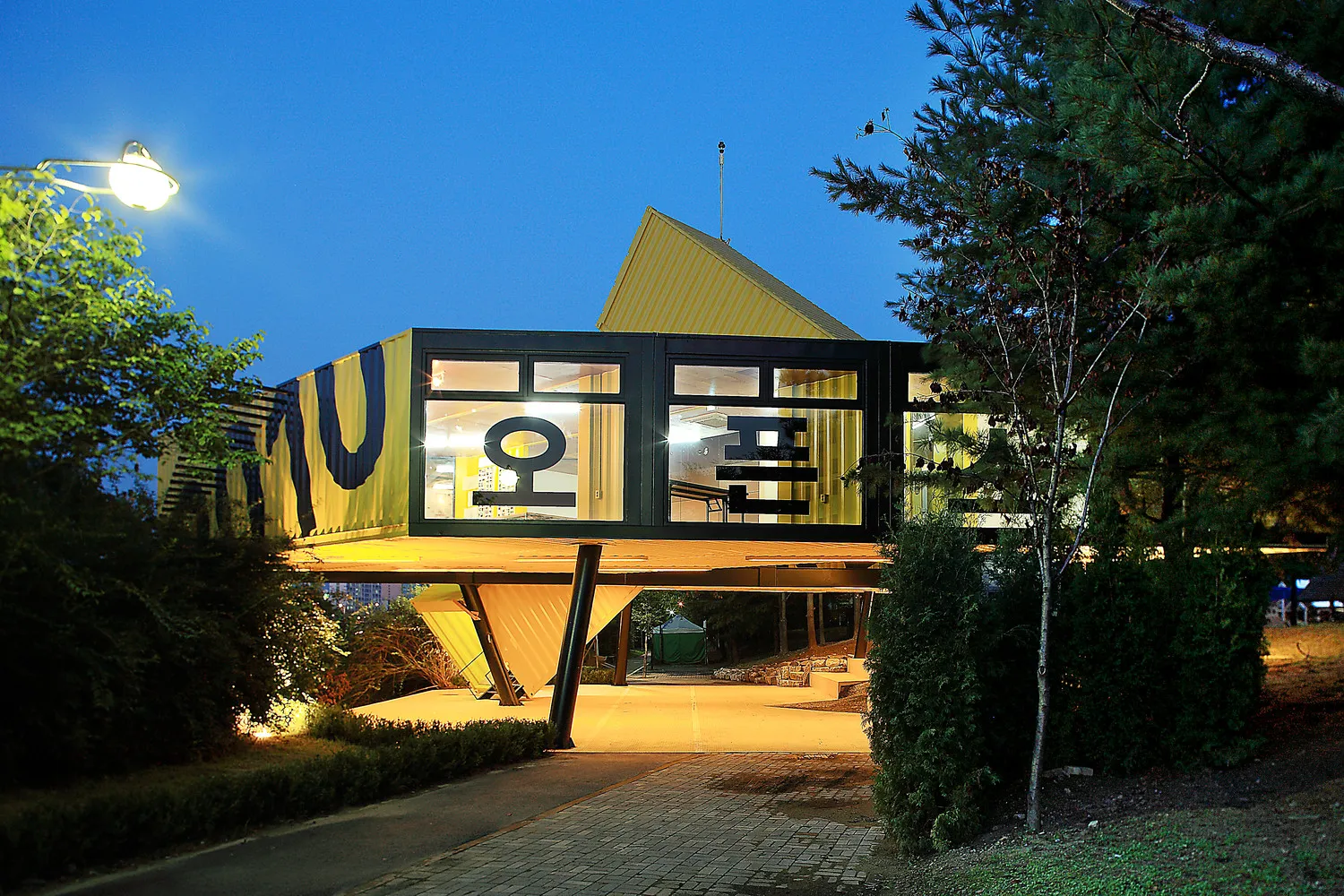
Inside, the school unfolds across three dynamic levels. The ground plane functions as a public amphitheater, and hovering containers above on the second level with house studios, exhibition spaces, and meeting rooms, creating a lively hub for artists in residence. The third level, consisting of an extended deck, crowns the structure, offering sweeping views and a place of connection high above the park. By reimagining shipping containers into an expressive, light-filled, and communal learning space, the APAP School stands as a futuristic icon of creativity and sustainability.
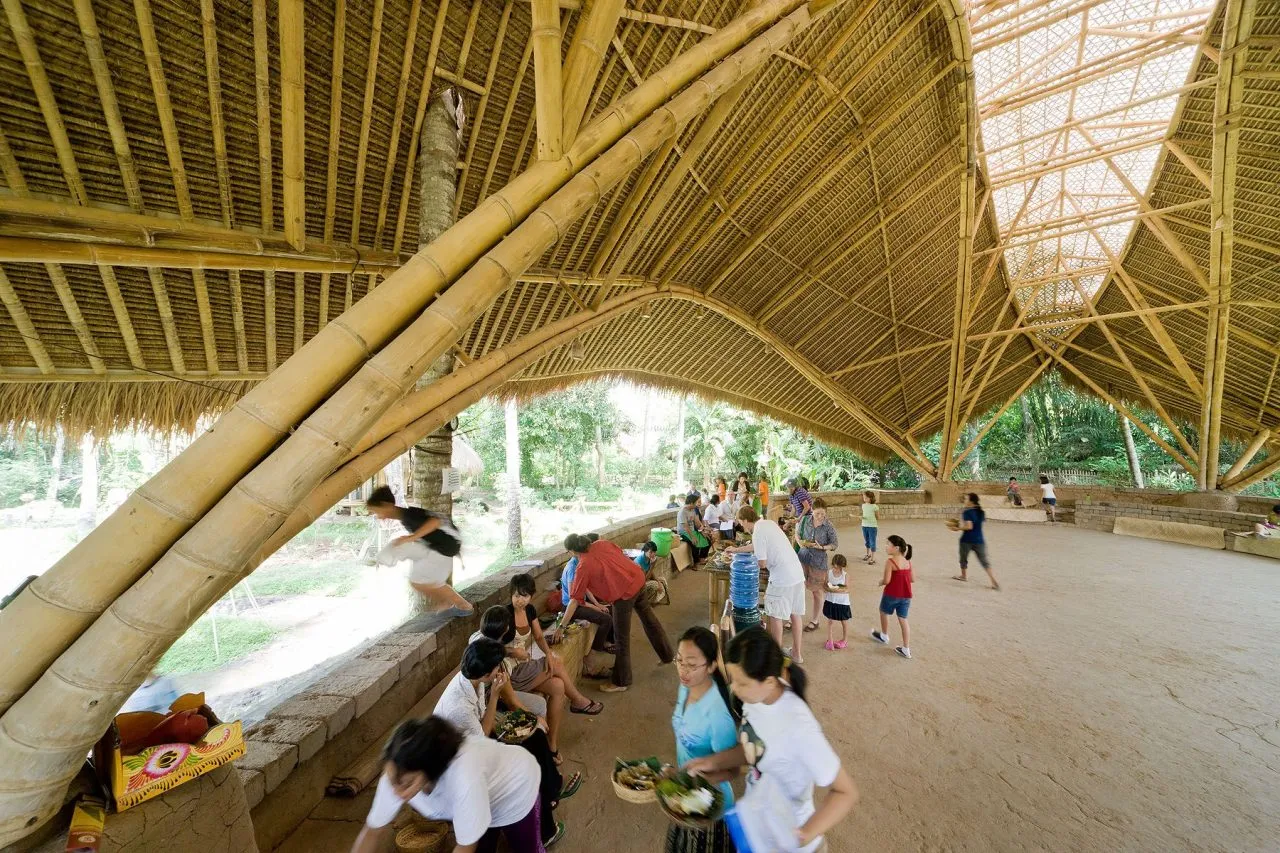
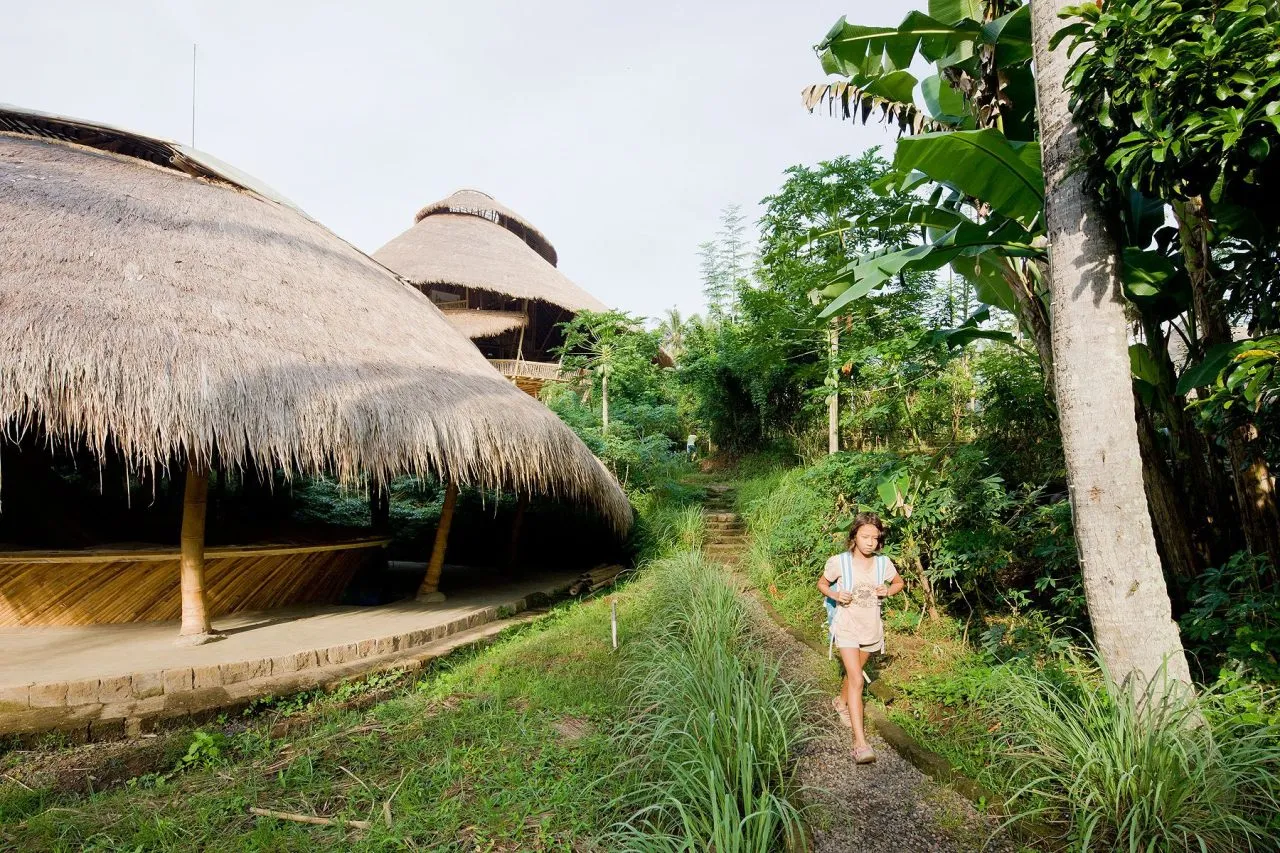
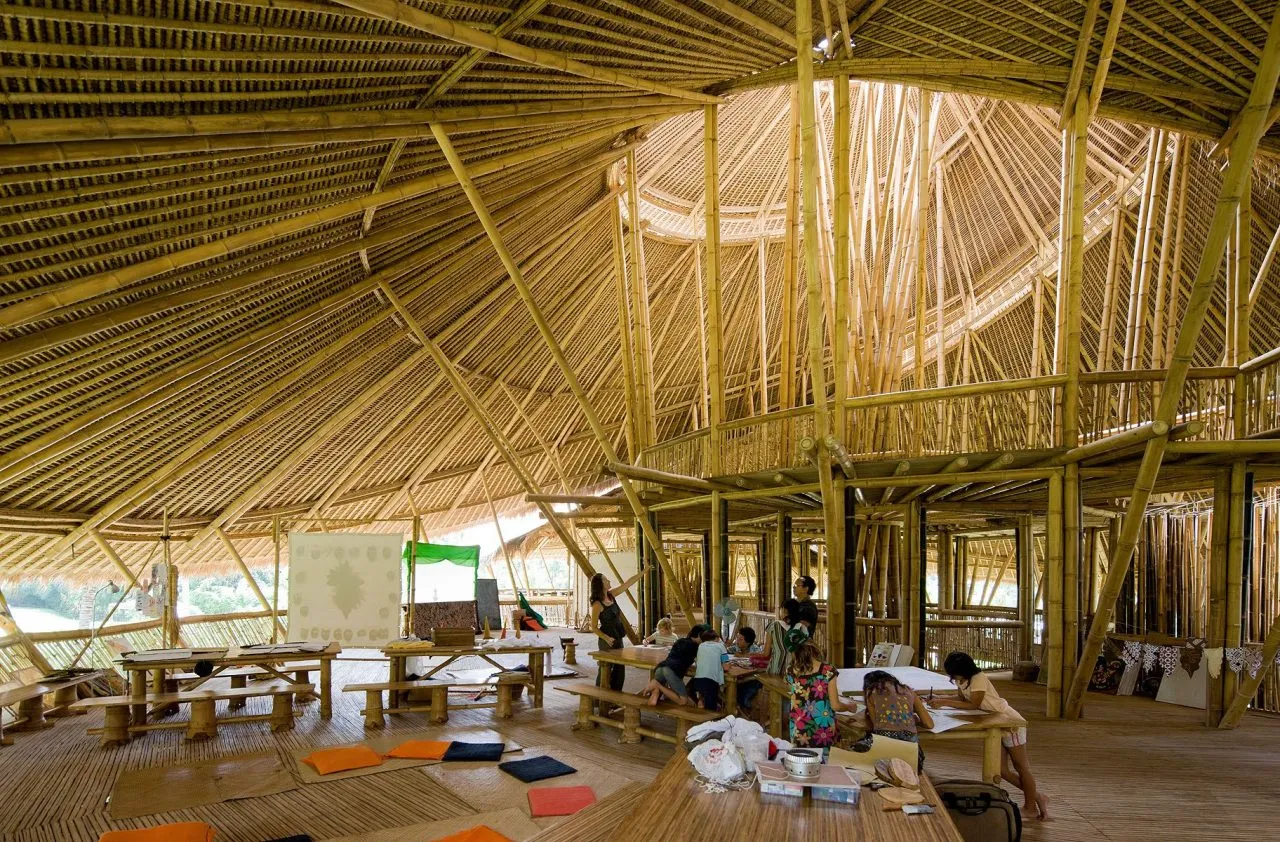
2. The Green School, Bali
Design Characteristic: Sustainable and Eco-friendly Architecture
Architects: IBUKU, PT Bambu
Location: Bali, Indonesia
Completed: 2007
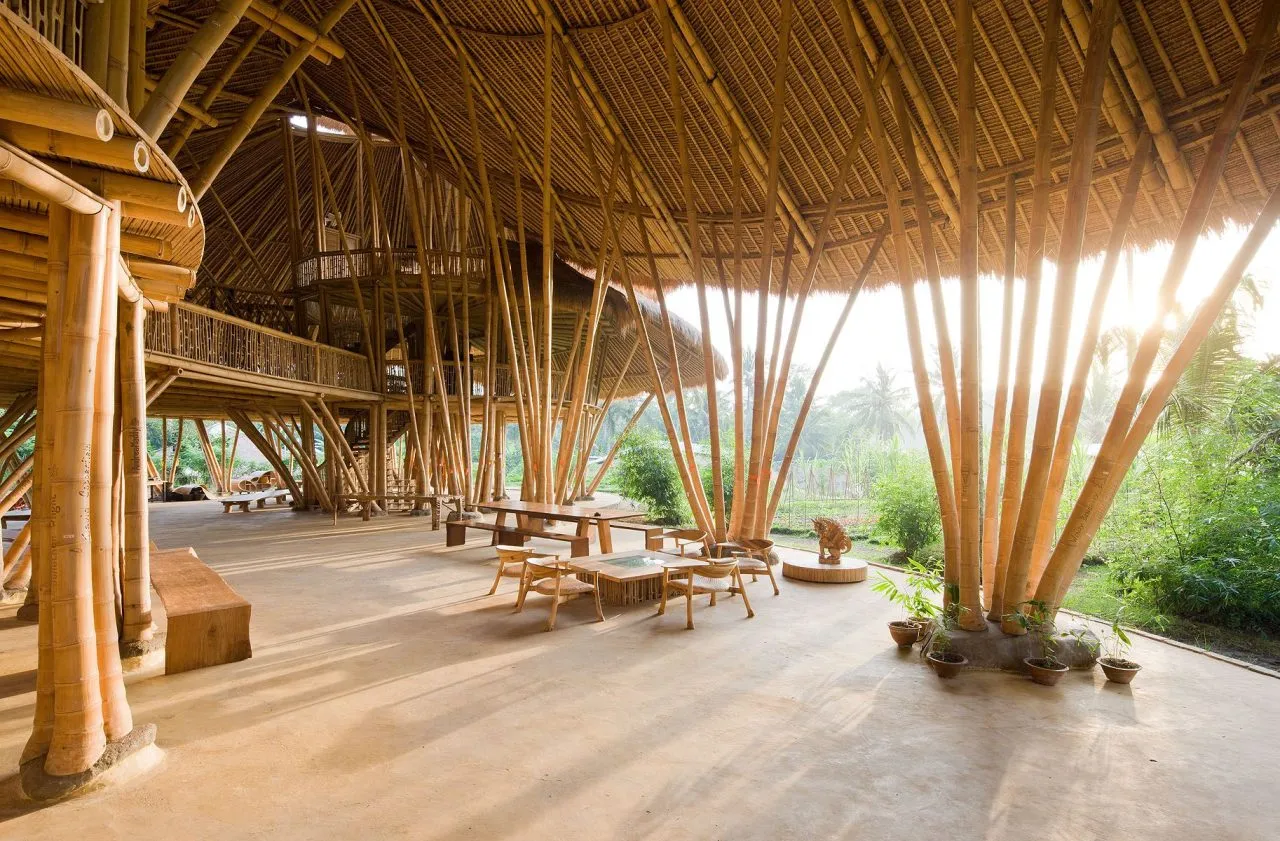
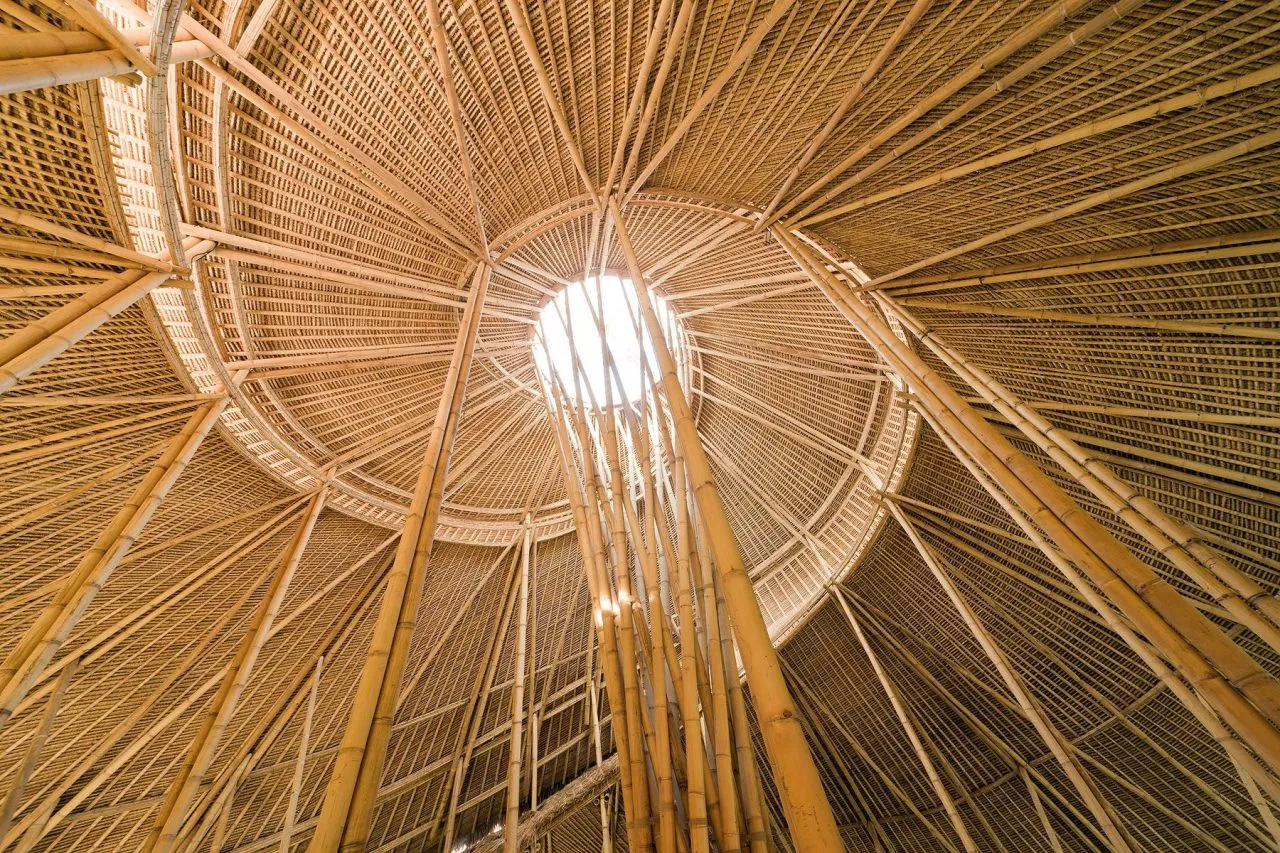
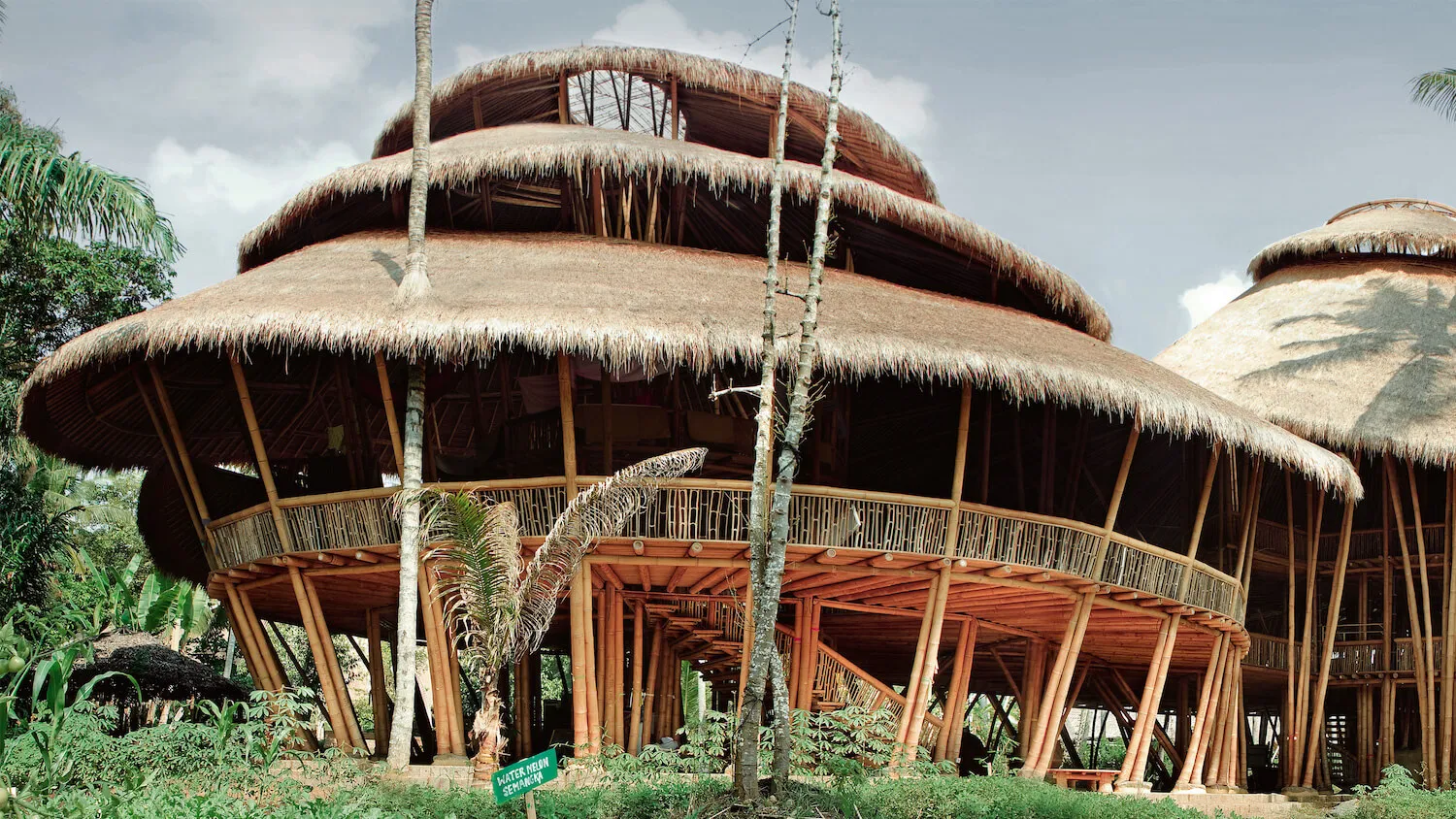
The Green School in Bali is one of the most renowned Eco-friendly schools around the world, established by the couple John and Cynthia Hardy. Designed by IBUKU, it has become an architectural landmark that focuses on sustainable living through the unique application of bamboo across the entire school.
Constructed by PT Bambu, the campus spans the Ayung River and is powered by alternative energy sources, including hydro power, solar panels, and bamboo sawdust systems. Environmental consciousness is the primary aim of the Green School initiative, to promote sustainable awareness among others, and for years to come.
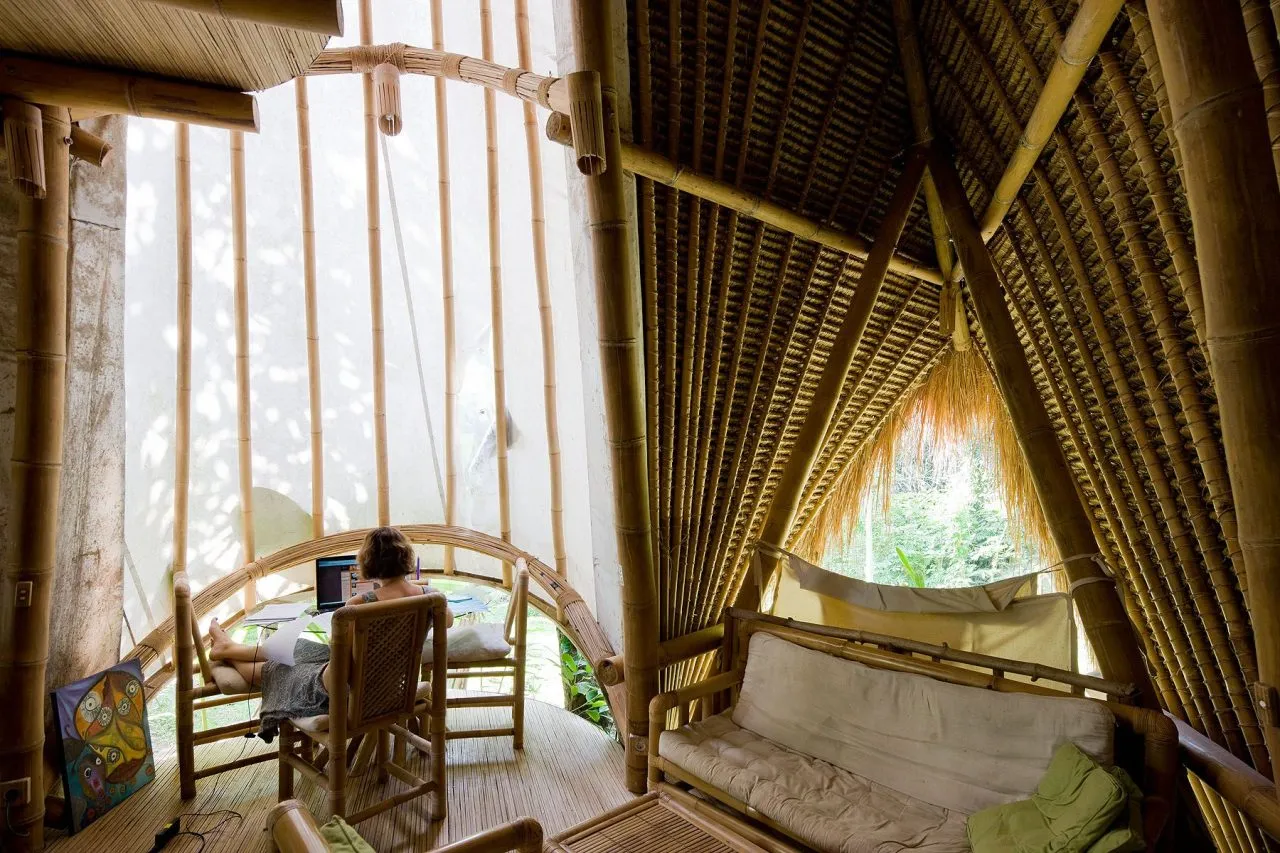
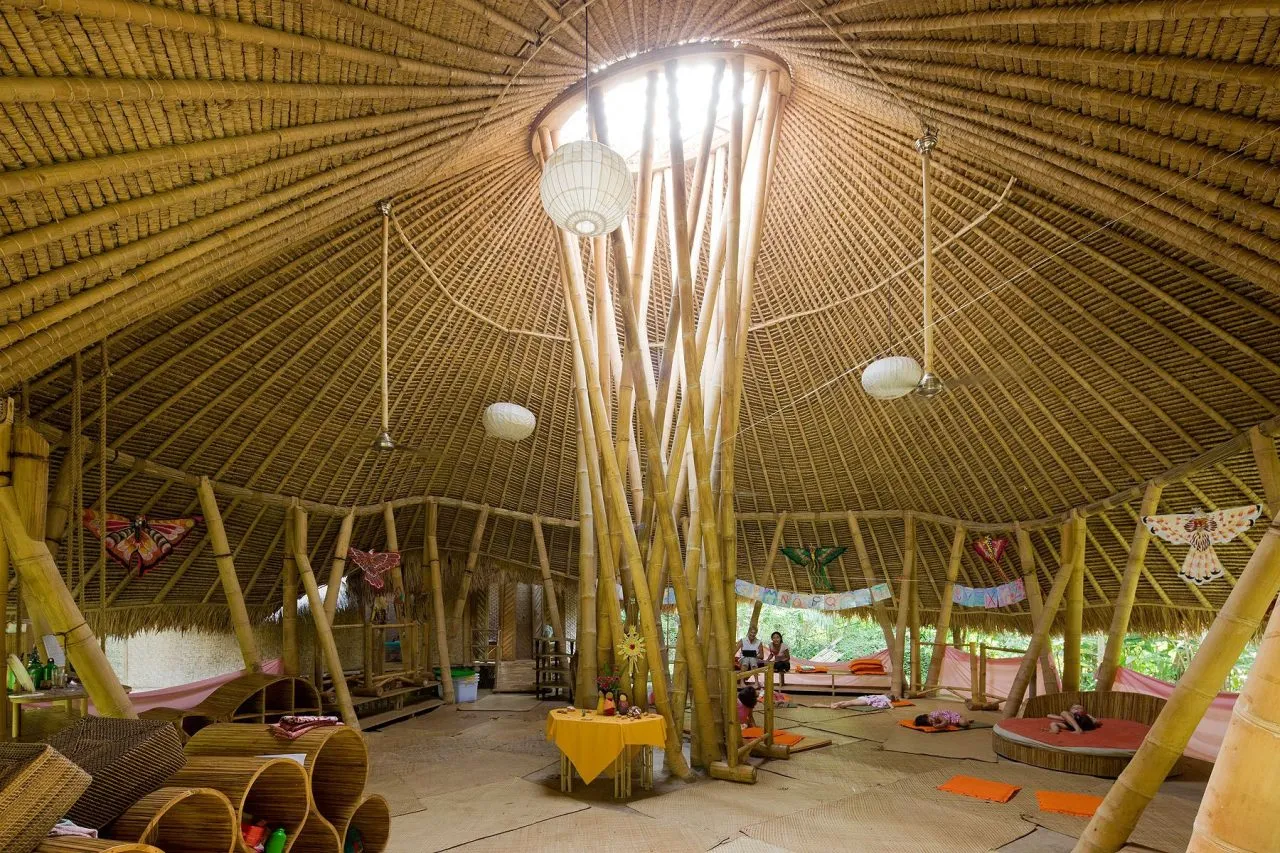
Bamboo can be distinctly observed as a widely used eco-friendly material across the school’s various structures. The sustainable architecture is one of the exceptional features of this campus, promoting a distinctive, 100% eco-friendly school. Nestled within a lush jungle, the campus features a variety of buildings and facilities, including classrooms, gyms, faculty housing, assembly spaces, offices, cafes, and bathrooms.
The architectural designs of the organic structure include interweaving bamboo light columns with a fluid, helical thatched roof, creating multifunctional spaces that showcase sustainable architecture and the environment. The Green School serves as one of the most inspiring ‘Global Models’ for Sustainable and Innovative Campus Architecture and Design.
Explore Courses
.jpg "Ondrej Chybik - Rethinking Architecture")