

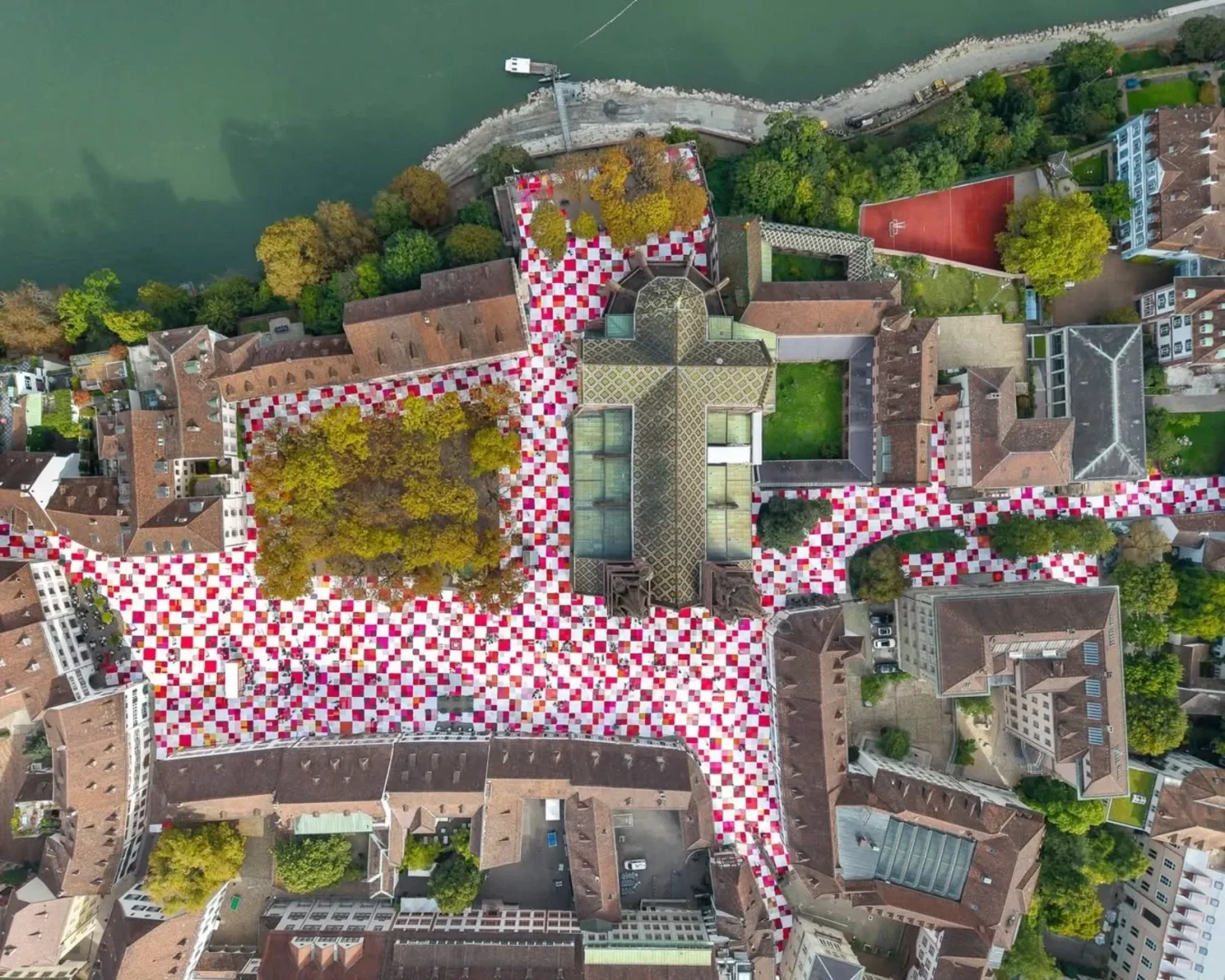
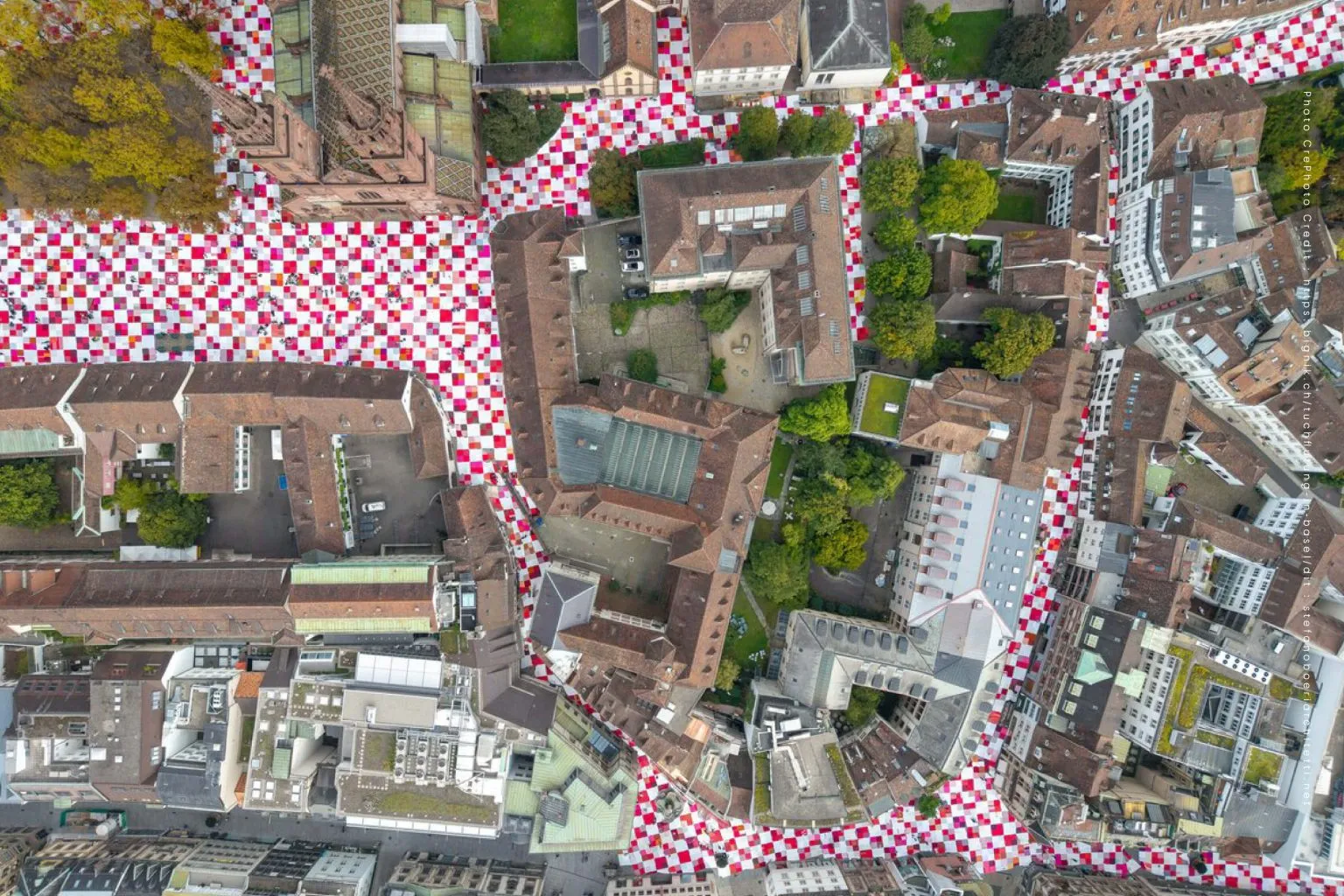


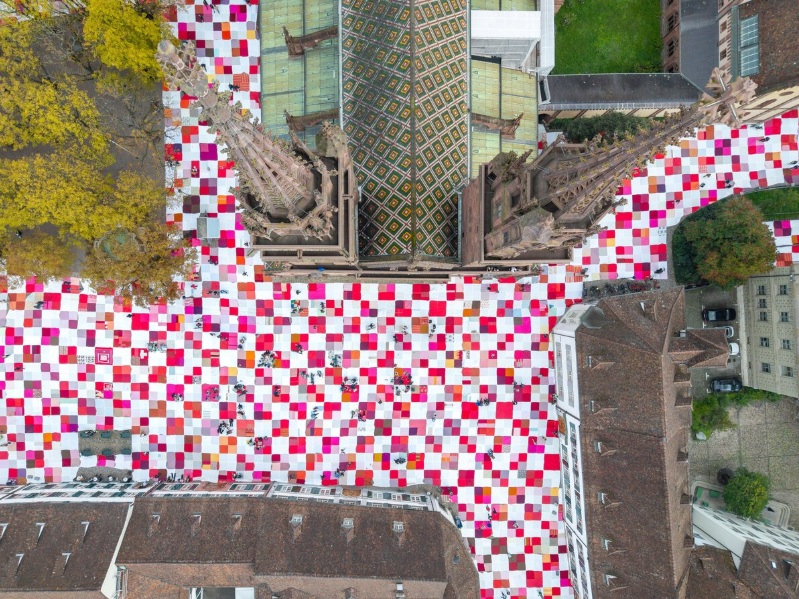


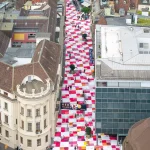
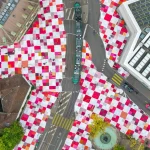
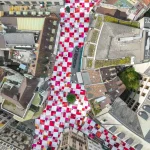
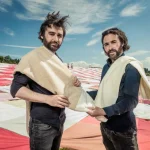
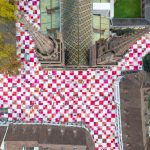
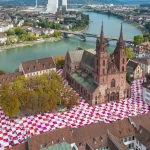
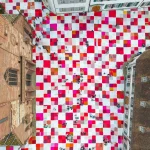
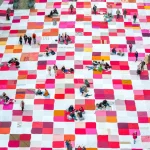
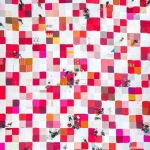
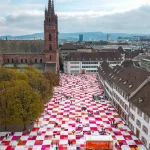
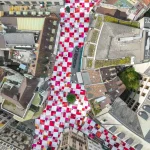
Stretching across the streets of Basel, the BIGNIK project unfolded as the city’s first large-scale cloth installation, transcending traditional definitions of public art into surreal reality. Created by Swiss artists Frank and Patrik Riklin, the installation encouraged public participation and reimagined the dense urban fabric as a site of collaboration, transforming ordinary surroundings into a dynamic expression of community and creativity.
The BIGNIK Project: A Manifestation of Participatory Utopia
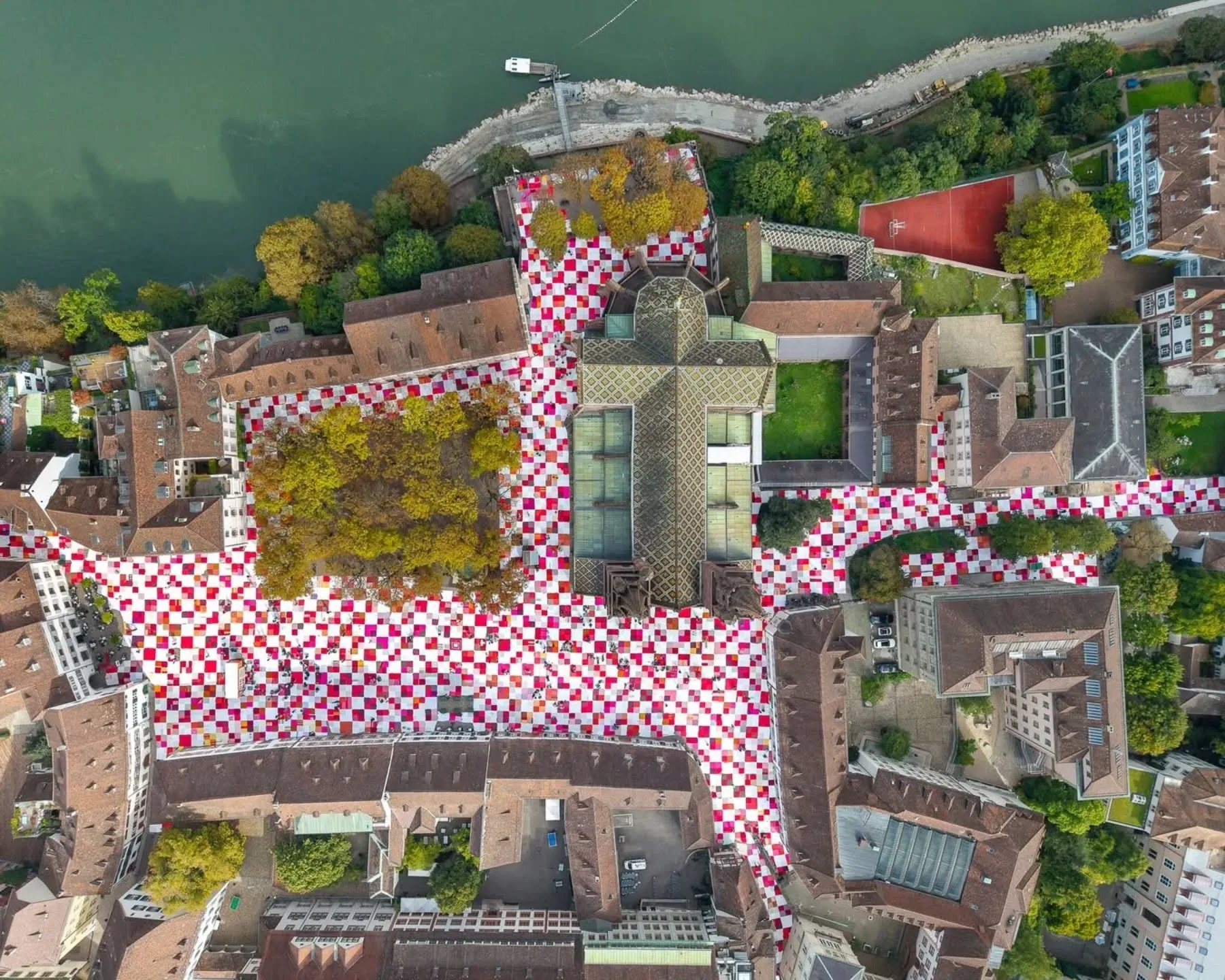
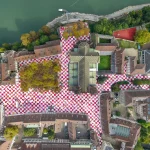
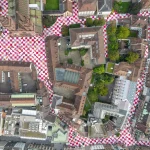
The BIGNIK installation in Basel, held on September 28, 2025, marked a new phase for the project. Transitioning from the peaceful landscapes of Appenzell to the dynamic city center, the project explored how temporary art could interact with dense urban spaces. Strategically located at the historic center of Grossbasel, between Münsterplatz and Barfüsserplatz, it connects cultural, historical, and civic sites.
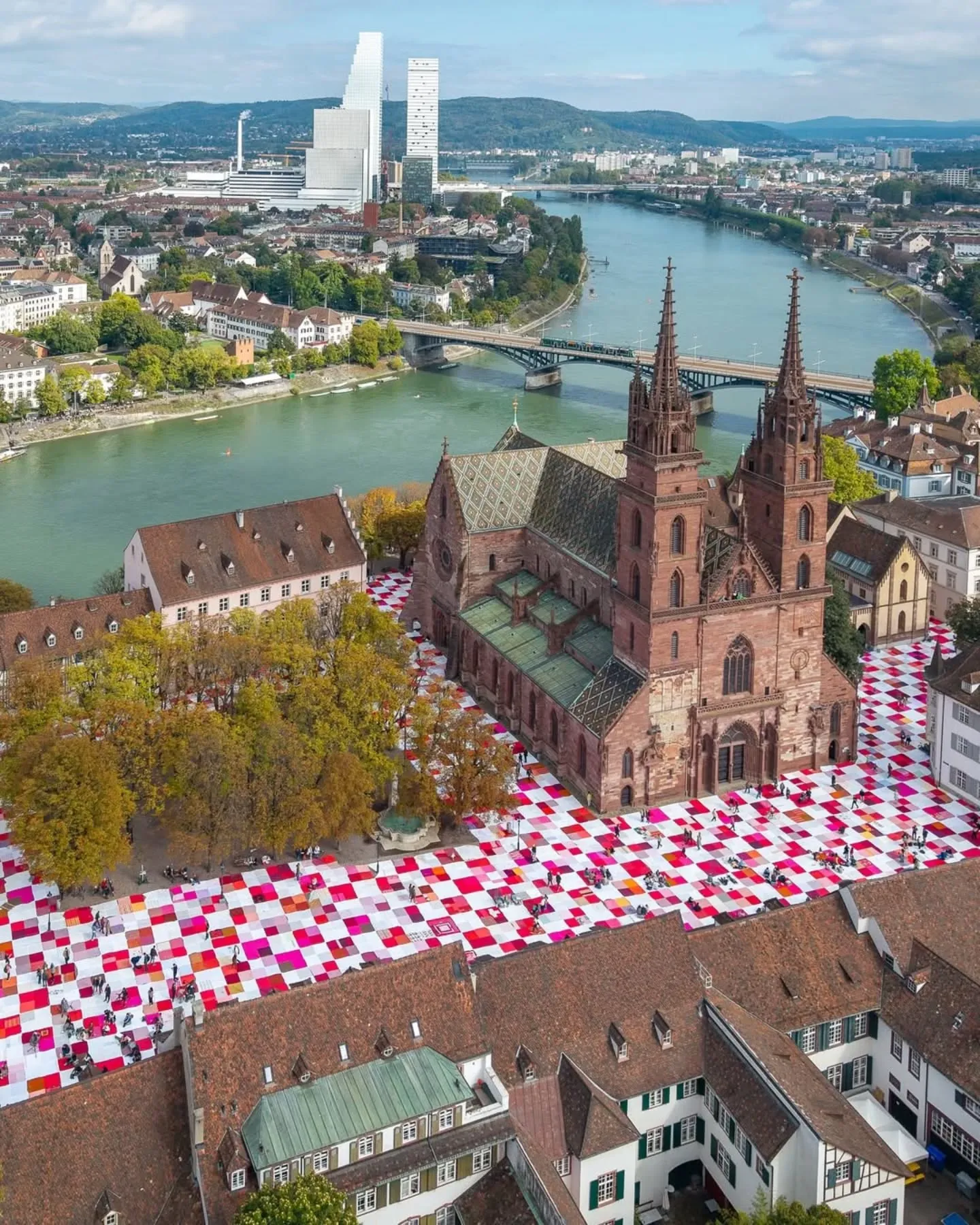
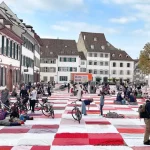
Spanning 24,000 square meters within Basel’s urban core, the installation brought its flooding metaphor to life, immersing the city in waves of fabric that redefined its spatial experience. The Northwestern Switzerland regional group of the Bund Schweizer LandschaftsarchitektInnen (BSLA) initiated the Basel installation as part of the association’s 100th-anniversary celebrations. With transformation as its central theme, the BSLA transformed BIGNIK into a real-time experiment, exploring how collective action can reshape the city’s spatial order.
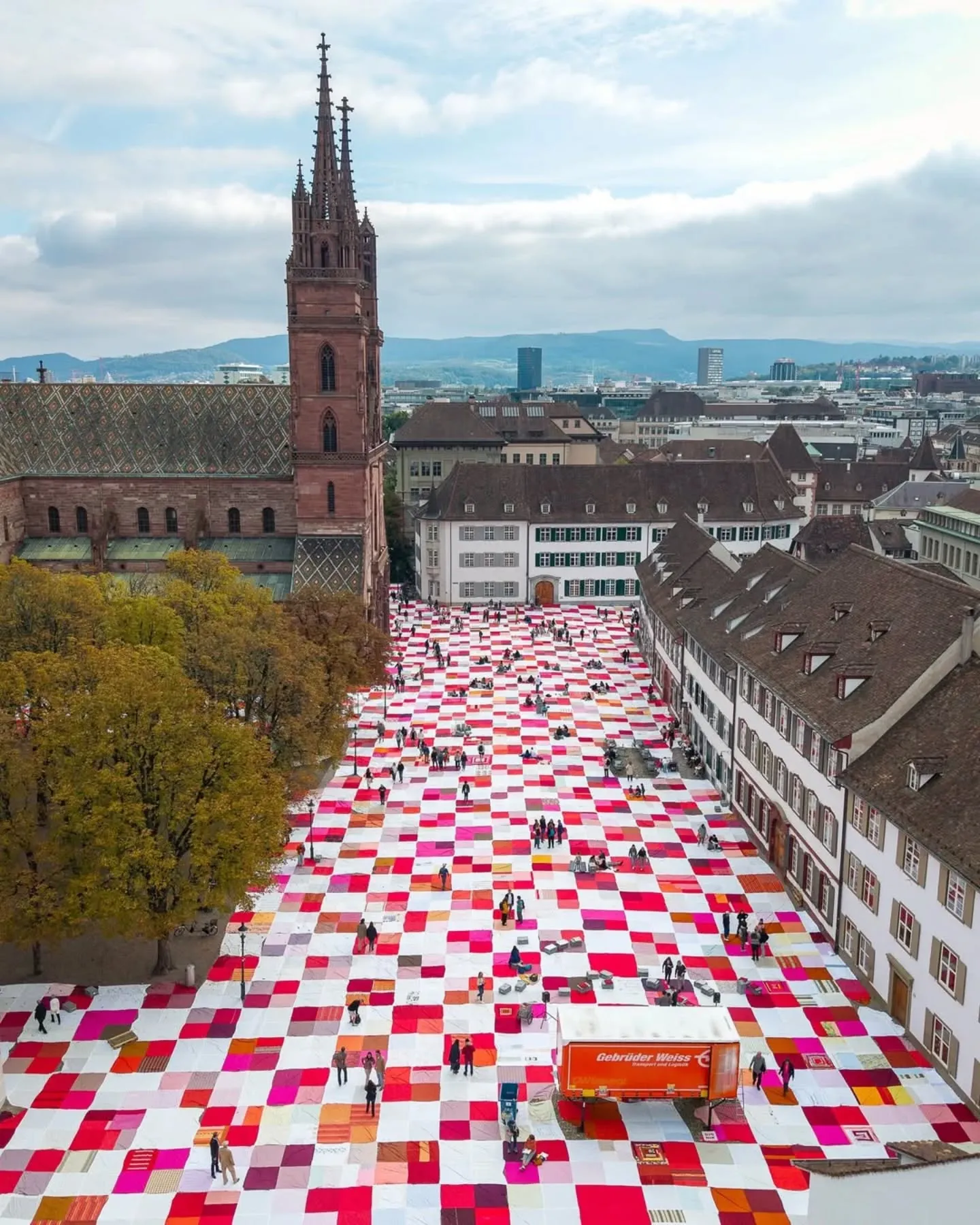
The Riklin brothers centered their work on a philosophical idea of large-scale thinking and action within society, challenging the notion that small-mindedness has reached its limits. The BIGNIK concept was initiated in 2012 and plans to continue its participatory production process until 2053, spanning over four decades. Built on the idea of a giant picnic cloth composed of numerous fabric modules, the BIGNIK project engages with notions of public space and shared experience.
The Materiality of Memory: Upcycling and Modularity
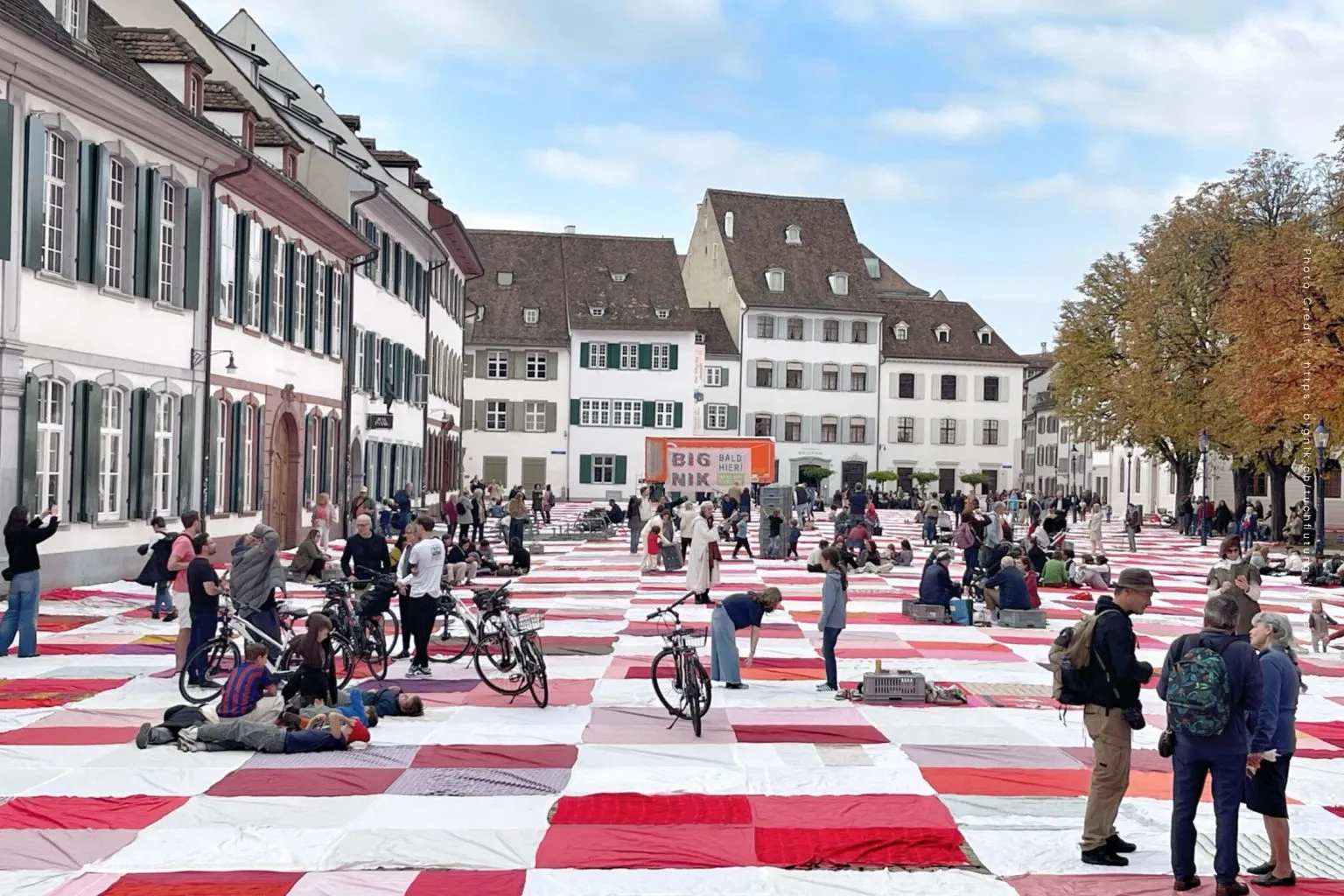
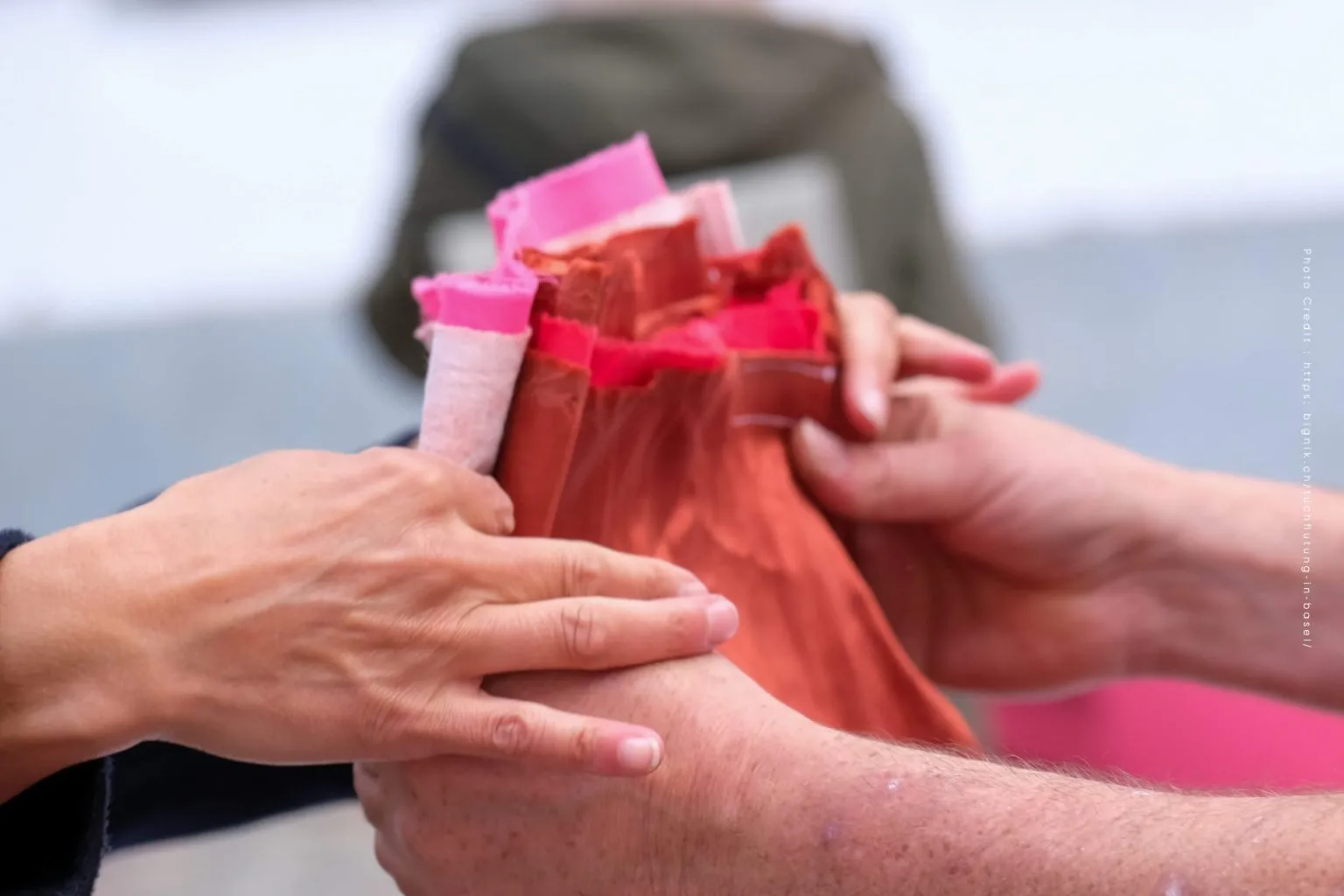
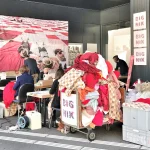
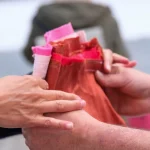
The project began with the cloth hunt, where artists and organizers collected fabrics from the locals. These were later processed during communal sewing sessions held on September 12 at Aeschenplatz. The striking element of the project lies in its materiality, relying on donated, upcycled reddish and whitish fabrics, including curtains, towels, and bed sheets. This thoughtful approach converts private artifacts into public infrastructure, emphasizing the artwork with fragments of communal memory and everyday narratives of life.
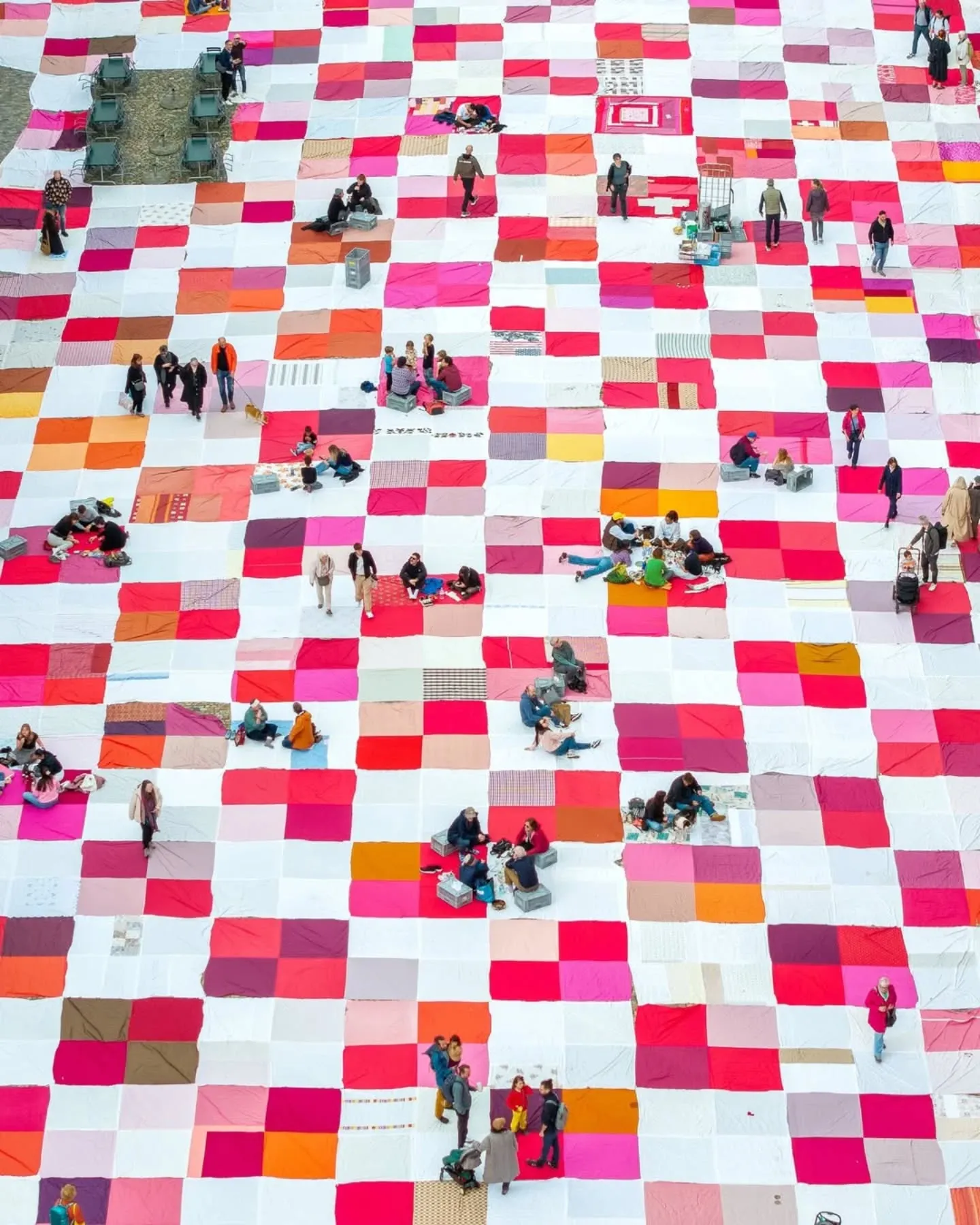
Employing technical modularity, each fragment of cloth measures 2.70 by 2.70 meters and is composed of four individual pieces cut to size, allowing for easy assembly of 3,000 modules for the Basel event. Low-tech Velcro fasteners were installed at the corners of each cloth section, a deliberate design decision for effective work. This approach establishes an open-source model, ensuring no master or technical expert is needed for assembly, fulfilling the project’s collaborative ethos. To achieve the project’s vision of BIGNIK cloth laying, approximately 200 volunteers participated in spreading the 3,000 fabric modules across the historic ground.
A Collective Unfolding
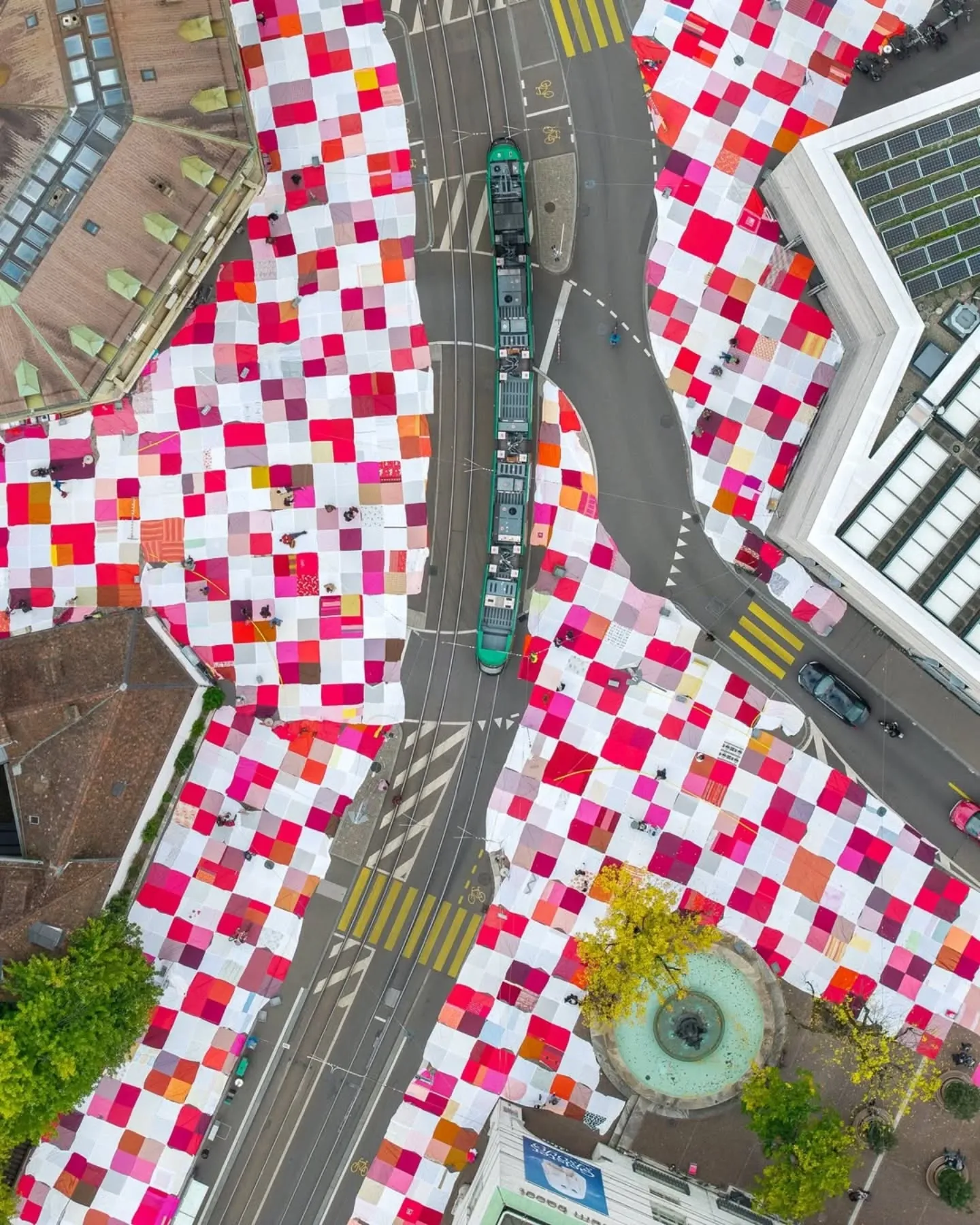
The Riklin brothers describe BIGNIK as an artistic intervention and a public service. This community-focused spatial act prioritizes the integrity of the collective experience over individual freedoms of movement and use. The flooding metaphor evokes the sense of diffusion by covering the entire ground plane; the artwork temporarily dissolves the elements of the urban city that dictate movement, access, and spatial function. It symbolically erases spatial hierarchies and the order of urban life.
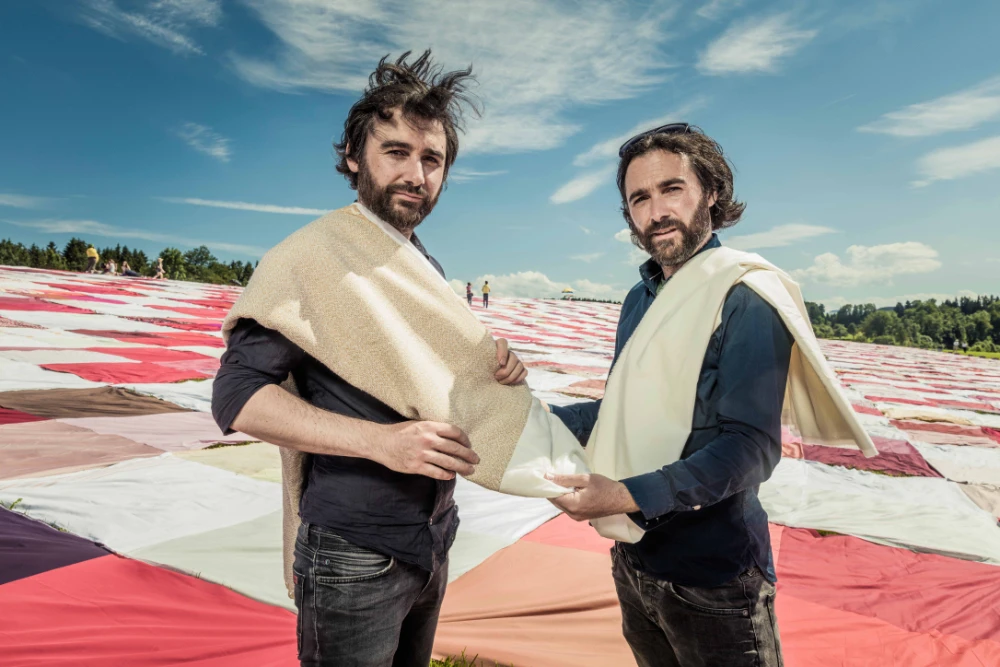
Photo Credits (Aerial Photographs): © Raphael Alù
Photo Credits (Ground Photographs): © KEYSTONE, Atelier für Sonderaufgaben and Pascal Eisner