
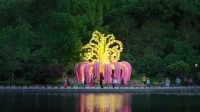

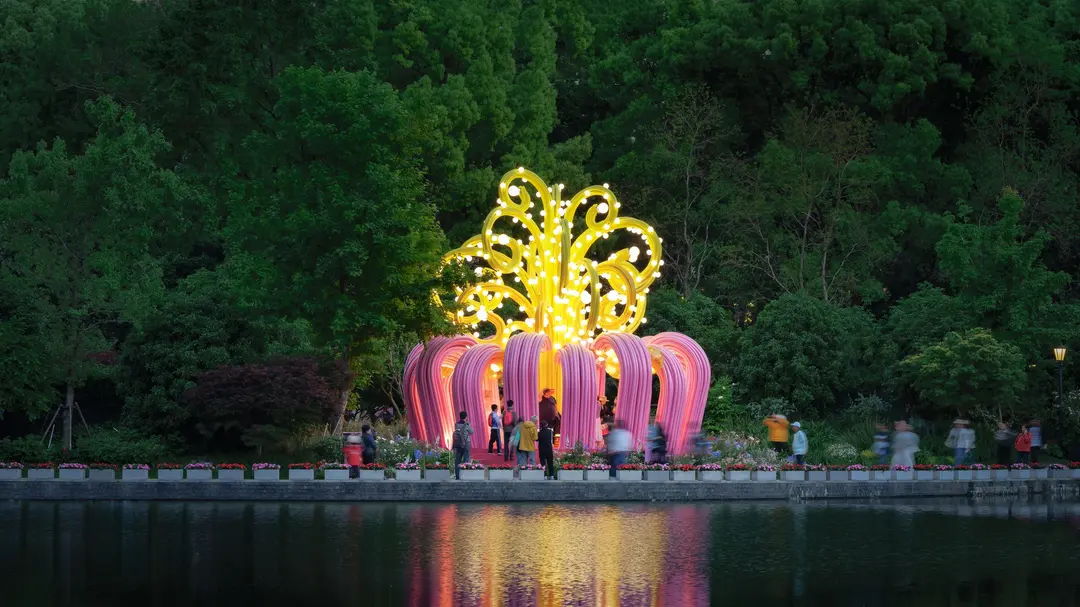
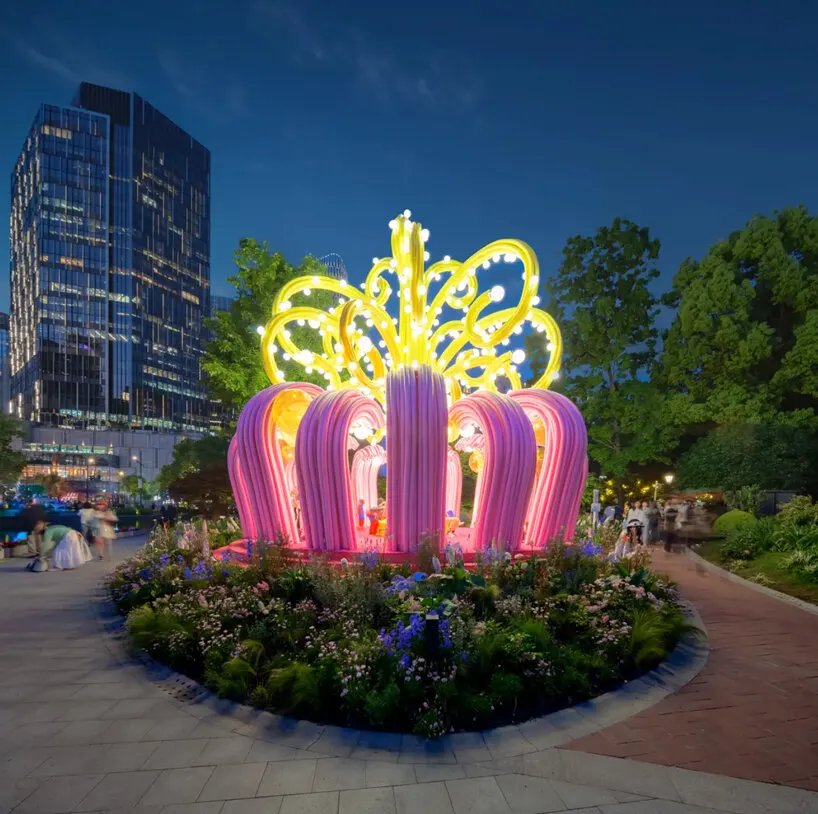
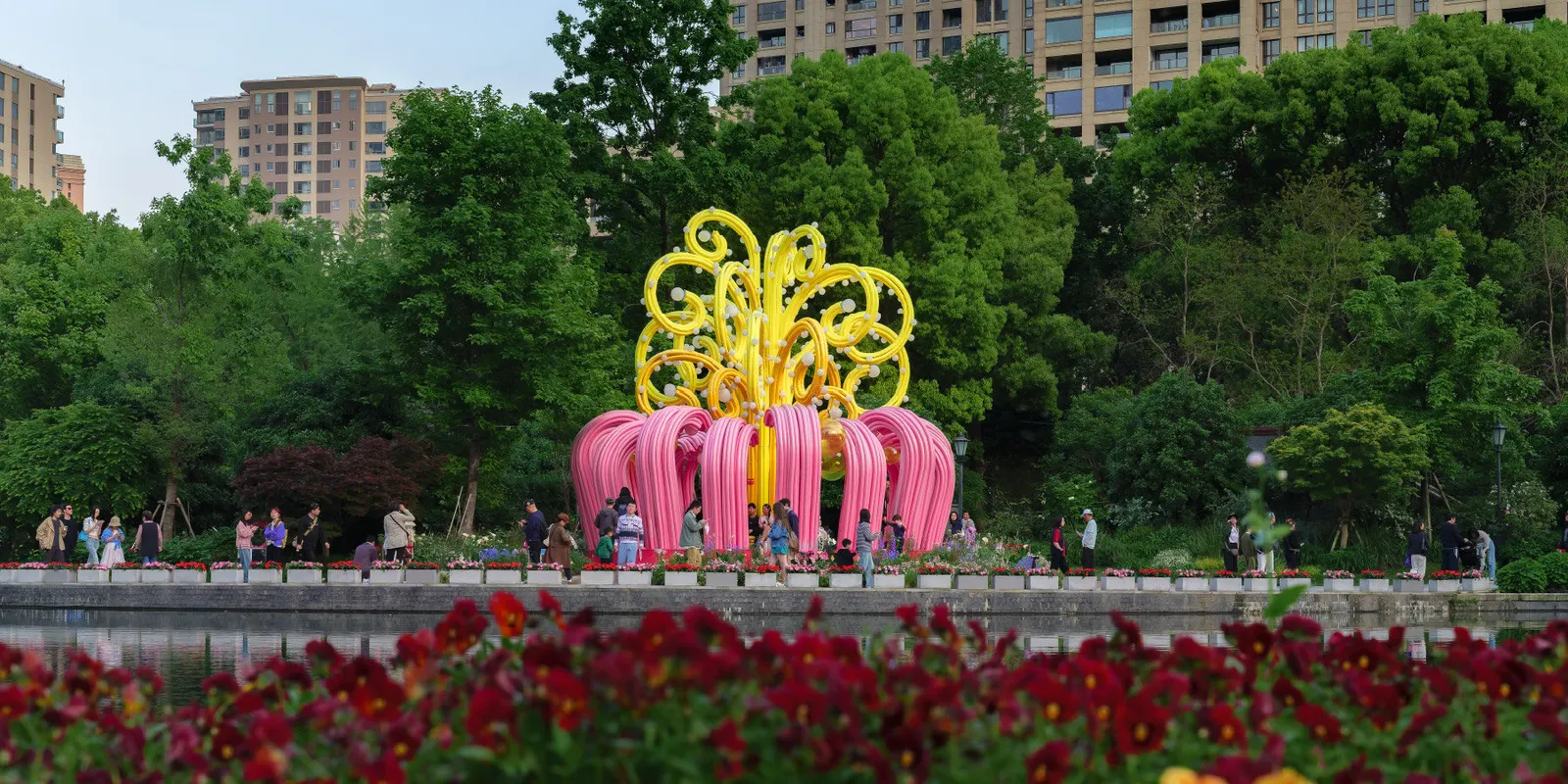
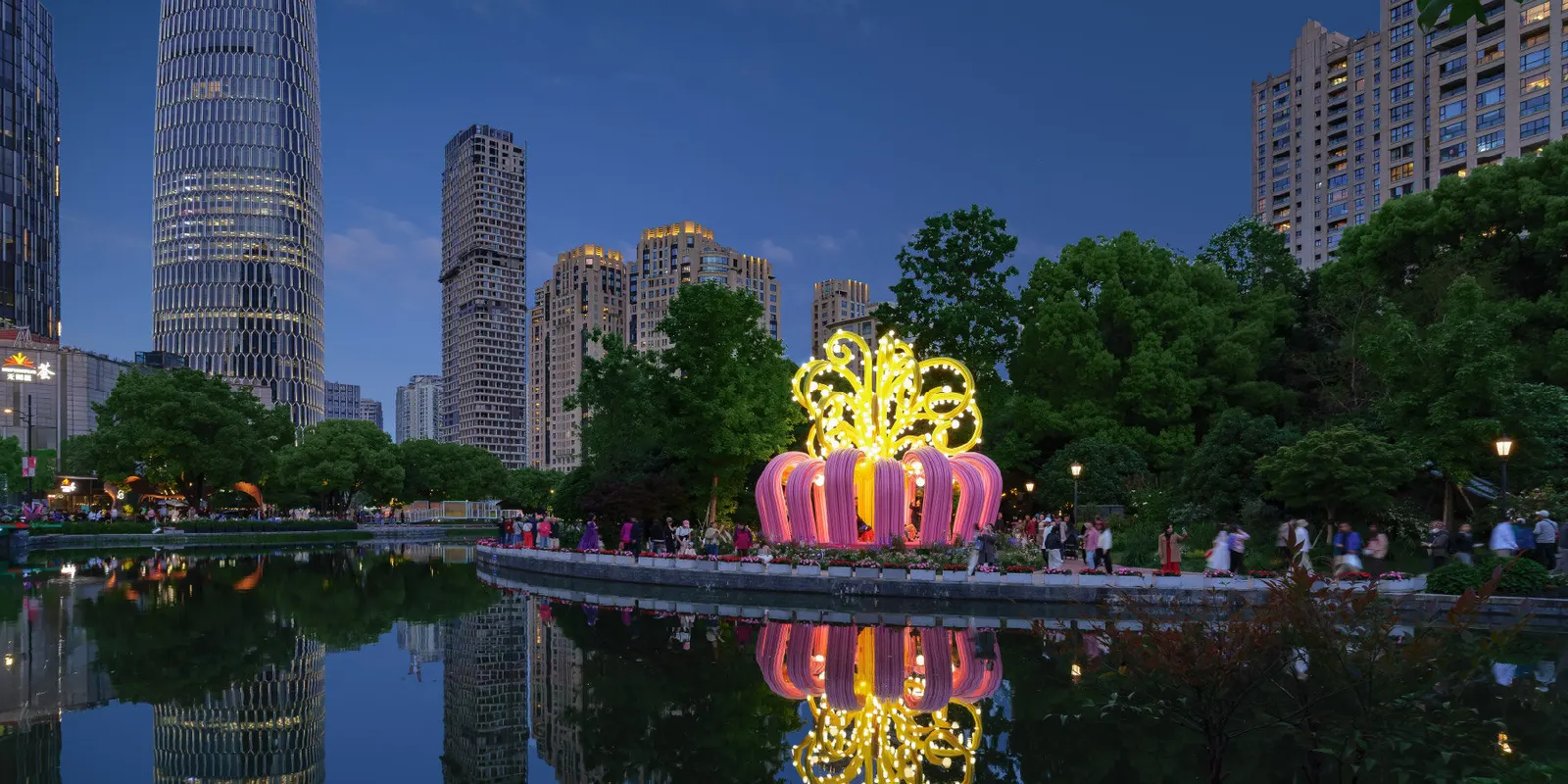
Created by Martha Schwartz Partners (MSP) for the 2026 Shanghai International Flower Show, Pollinator Machine is a floral installation rising within Taipingqiao Park in Shanghai’s Huangpu District. The 90-square-meter installation transforms the city’s official flower, the Magnolia denudata, into a monumental symbol of resilience, adaptation, and ecological intelligence.
The installation explores how one of Earth’s oldest flowering plants has survived catastrophic environmental changes for millions of years. Through its scale, form, and scientific narrative, Pollinator Machine encourages visitors to reconsider humanity’s relationship with nature at a time when biodiversity faces unprecedented decline.
Reimagining Shanghai’s Official Flower
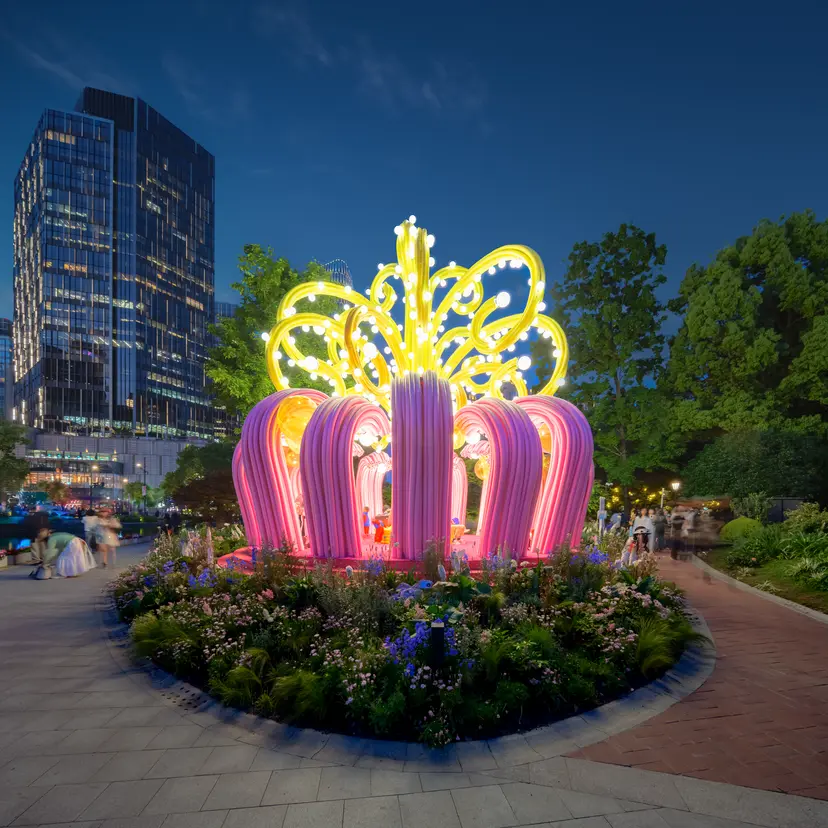
At first glance, the installation appears as an oversized magnolia blossom emerging from the landscape. However, its purpose extends beyond botanical representation. MSP uses the magnolia as a storytelling device to communicate one of evolution’s most remarkable survival stories.
The Magnolia denudata, Shanghai’s city flower, belongs to one of the oldest flowering plant families on Earth. Long before bees became dominant pollinators, magnolias evolved alongside beetles, developing specialized pollination strategies that enabled the species to thrive through scenic environmental transformations.
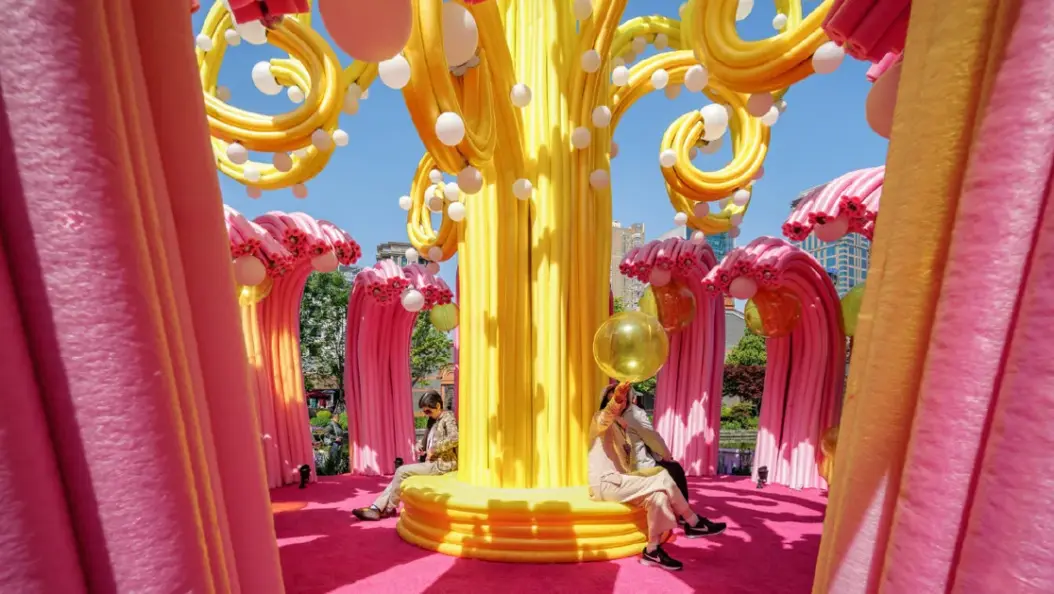
By enlarging the flower into an inhabitable public installation, the designers invite visitors to physically experience a plant that has quietly outlasted mass extinction events spanning millions of years.
Design Inspired by an Ancient Pollination System
The concept behind the Pollinator Machine is rooted in the magnolia’s unique reproductive process.
Unlike many flowering plants, magnolias evolved before bees. Instead, they rely primarily on beetles, ancient insects that consume large quantities of pollen while inadvertently transferring it between flowers.
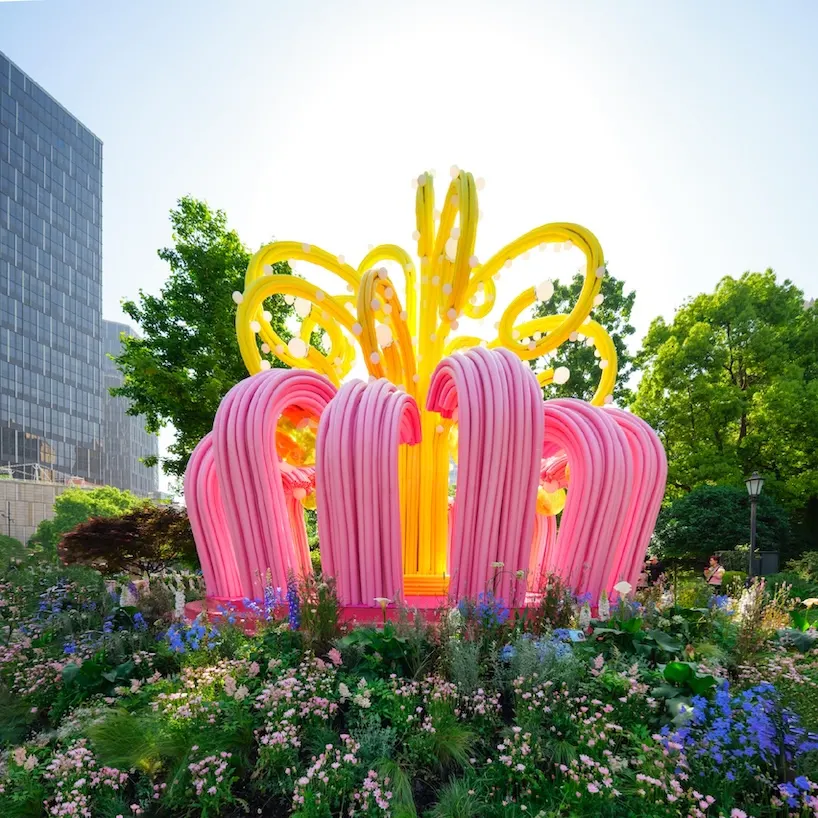
The flower’s reproductive cycle demonstrates remarkable evolutionary intelligence:
- Female reproductive organs mature before male structures, reducing self-pollination.
- Large quantities of pollen compensate for beetles’ inefficient feeding habits.
- The flower temporarily traps beetles inside, allowing sufficient time for pollination.
- Thick floral tissues withstand the insects’ feeding behavior without damaging reproduction.
MSP transforms this biological mechanism into an architectural narrative, presenting the flower not as a passive natural object but as an active, adaptive system engineered through evolution.
Architecture as Environmental Storytelling
The installation acts as an educational landscape intervention. Its monumental floral form attracts visitors through visual curiosity while encouraging reflection on ecological processes often overlooked in everyday urban life. By embedding scientific knowledge within public art, the project bridges design, biology, and environmental awareness.
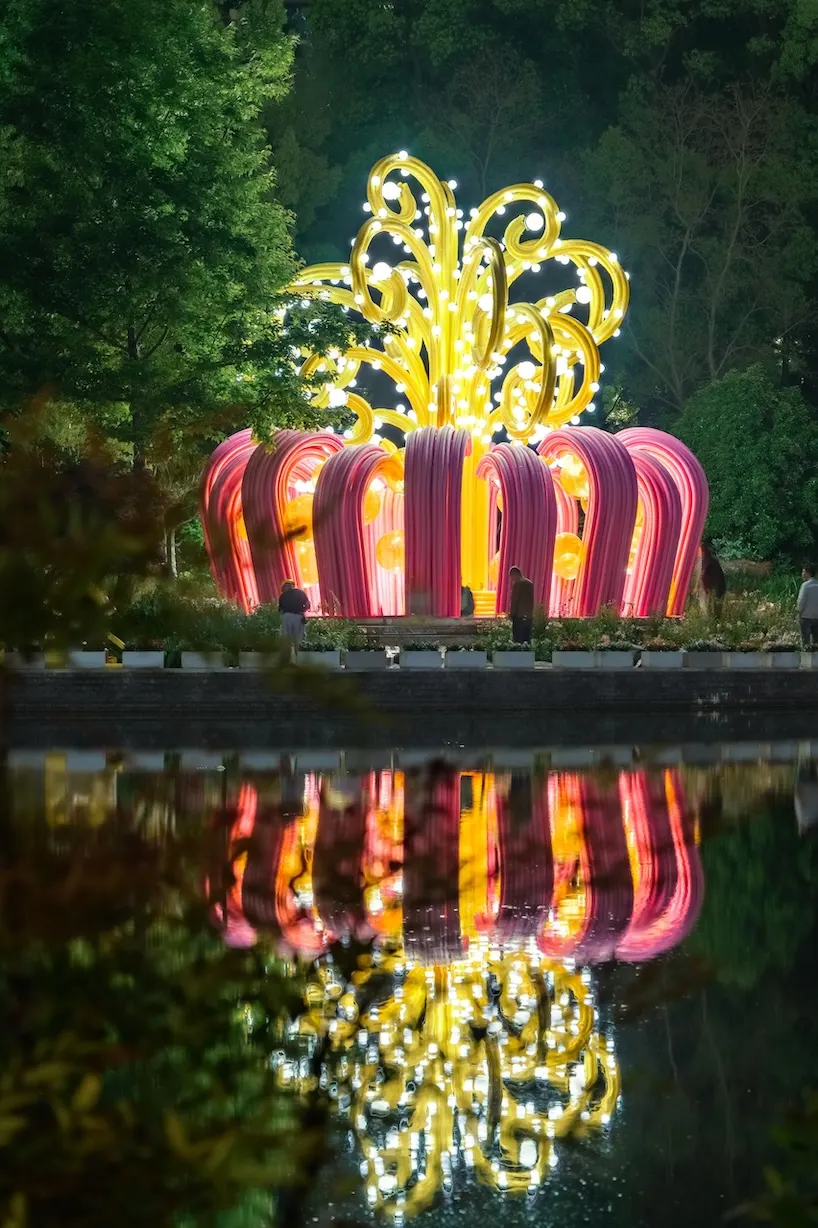
The installation suggests that survival is not achieved through dominance but through continuous adaptation, cooperation, and responsiveness to changing ecosystems.
Instead of presenting nature as something separate from urban life, Pollinator Machine positions the magnolia as a teacher demonstrating how long-term resilience depends on living in harmony with surrounding environmental systems.
Reflecting on Humanity’s Future
One of the installation’s central themes is humanity’s place within an ongoing biodiversity crisis.
Scientific research suggests Earth is experiencing a sixth mass extinction, with species disappearing at unprecedented rates due to habitat loss, climate change, and human activity. Against this backdrop, the magnolia becomes a powerful contrast.
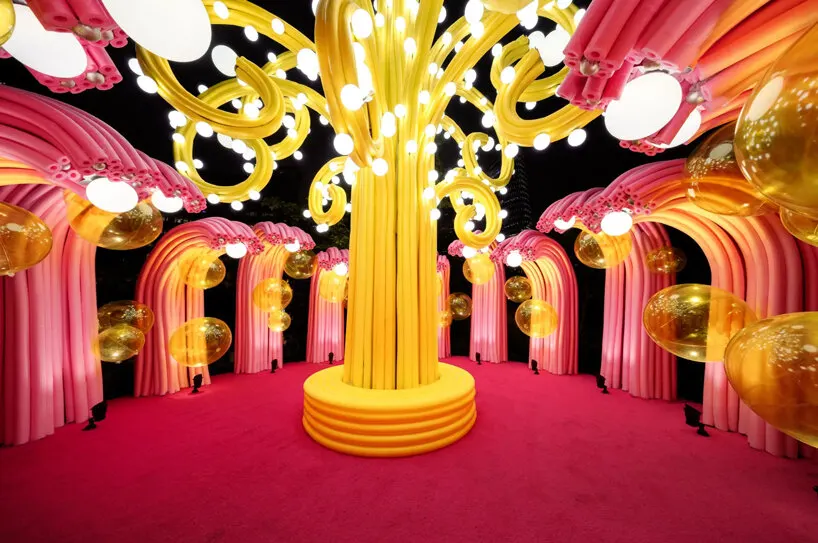
Having survived the asteroid impact that ended the age of dinosaurs approximately 66 million years ago, as well as subsequent climatic shifts and continental changes, the magnolia represents an evolutionary lineage that has persisted through repeated global upheavals.
The installation asks visitors to consider a profound question: if an ancient flowering plant has endured by continually adapting to its environment, can humanity learn to do the same? The project frames adaptation, ecological understanding, and coexistence as essential qualities for future survival.
Public Art That Extends Beyond the Flower Show
Installed during the month-long Shanghai International Flower Show, the project reaches one of China’s largest public audiences for horticultural and environmental exhibitions.
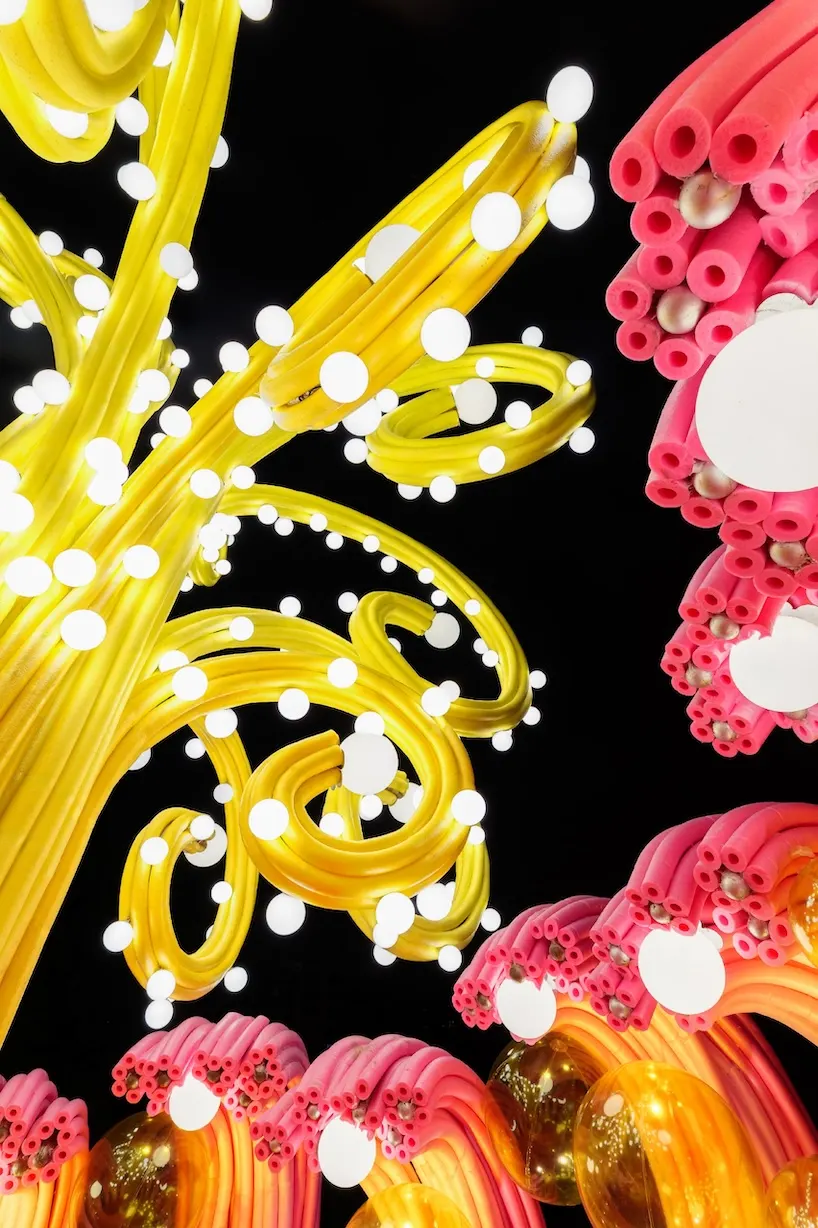
Its accessible location within Taipingqiao Park allows the installation to engage visitors of all ages, transforming botanical science into an immersive public experience. By combining monumental scale with ecological storytelling, MSP demonstrates how temporary installations can spark conversations about biodiversity, urban ecology, and environmental responsibility beyond the exhibition itself.
Pollinator Machine Project Facts
Project: Pollinator Machine
Designer: Martha Schwartz Partners (MSP)
Location: Taipingqiao Park, Huangpu District, Shanghai, China
Completed: 2026
Installation Size: 90 square meters
Sector: Art Commissions
Commissioned For: Shanghai International Flower Show 2026
Clients: Shanghai International Flower Show, Huangpu District Government, Liangheng Urban Renewal Construction
Project Type: Public art installation
Photography: Courtesy of Martha Schwartz Partners
Explore Courses


.jpg2.jpg "Carlo Ratti - Rethinking Architecture")
.jpg "Architecture Diagram Mastery: Concept to Portfolio")
.jpg%202.jpg "Building Performance with Forma & Opossum")