




Building on cliffs is one of the most challenging yet creative aspects of architecture, which allows us to see the world in different ways. Houses built on cliffs offer residents breathtaking views by tackling the challenges of steep slopes and dizzying cliffs. The natural topography of the slopes becomes both a unique source of inspiration and a demanding parameter for new designs. Adapted to the sloping terrain, these houses become structures that integrate with nature, utilize the advantages of views and light to the fullest, and push the boundaries of design.
In this article, we will examine 10 cliff houses that push the boundaries of architecture:
1. House on The Cliff
Location: Alacant, Spain
Architect: Fran Silvestre Arquitectos
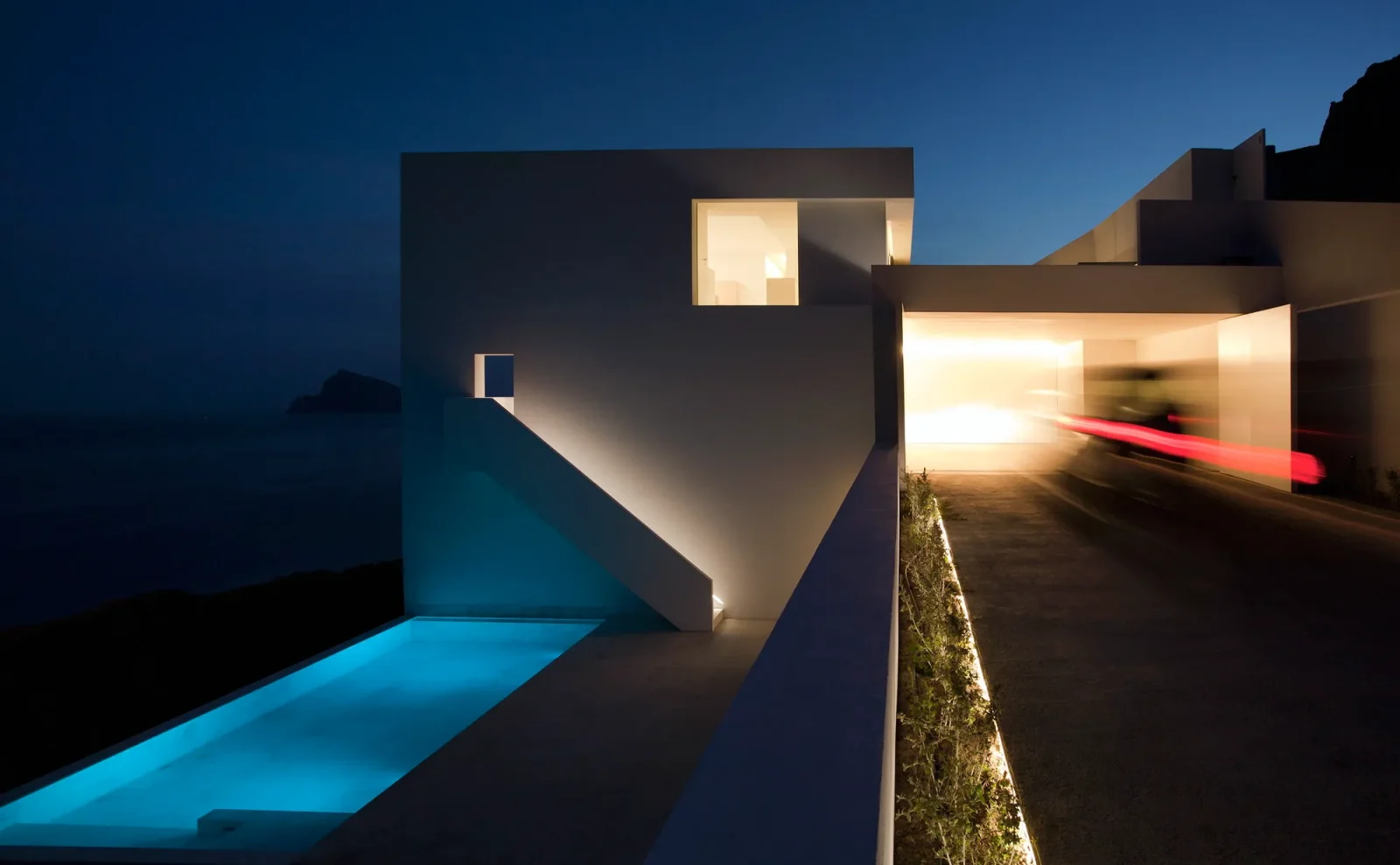
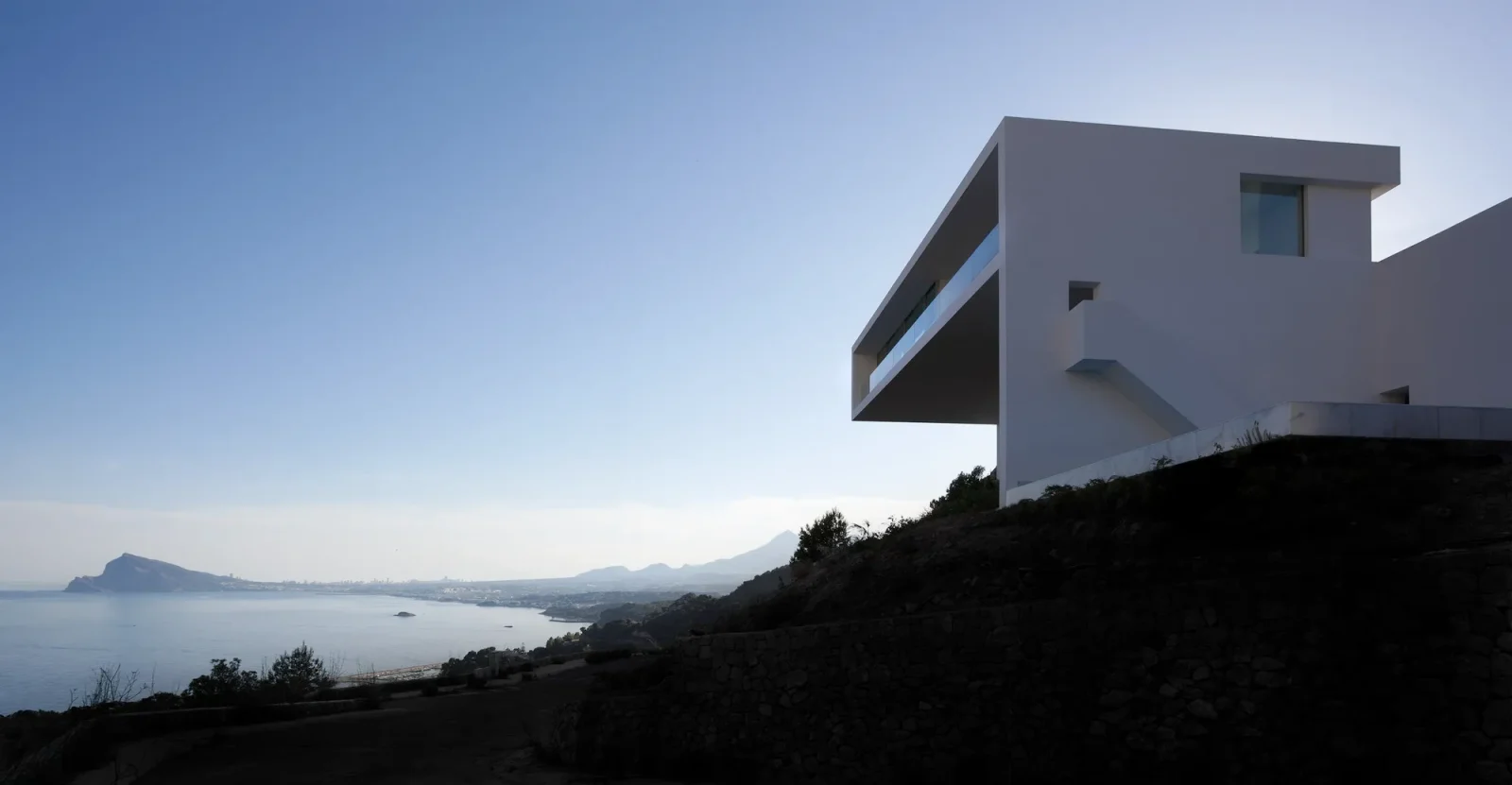
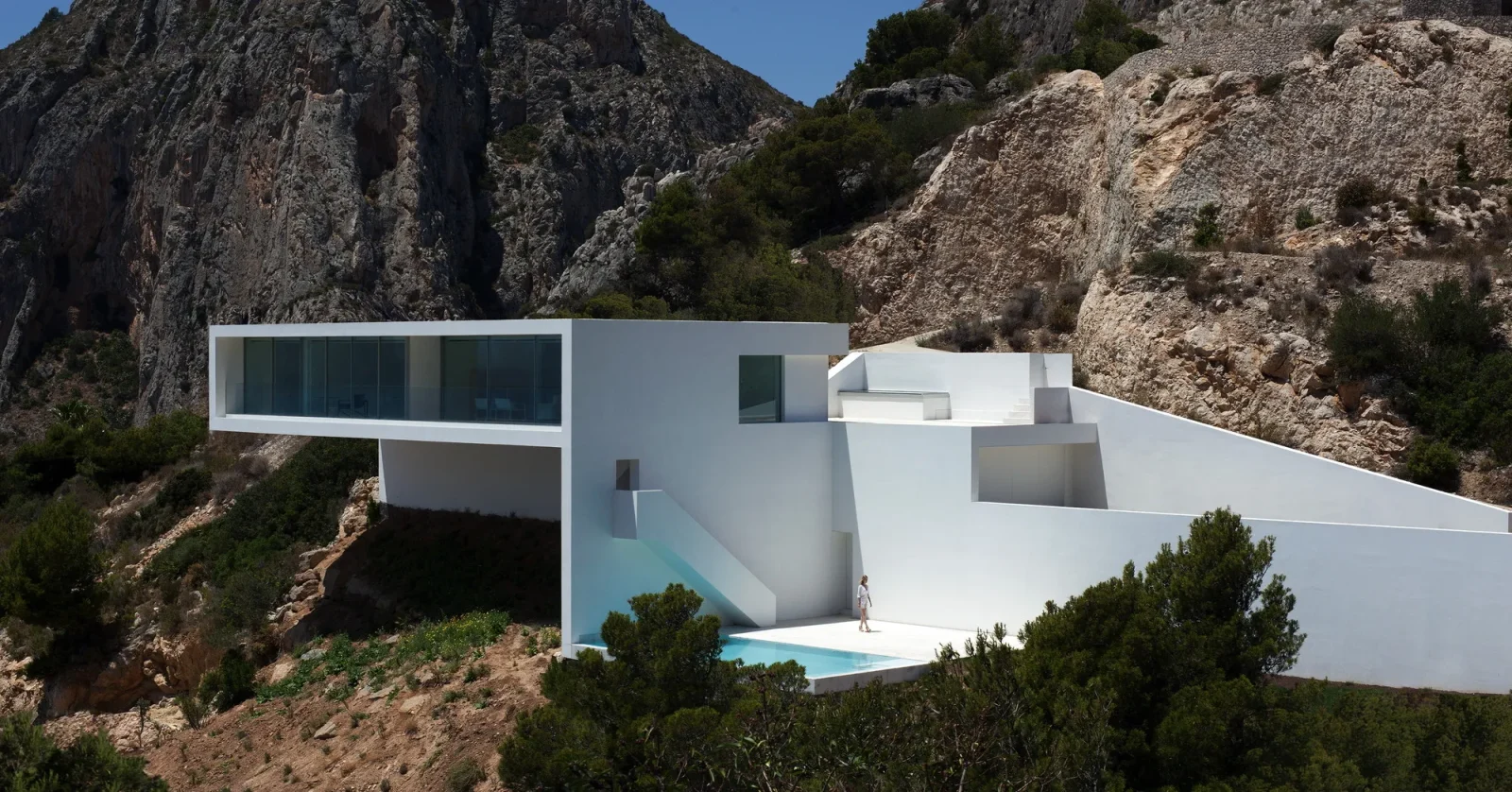
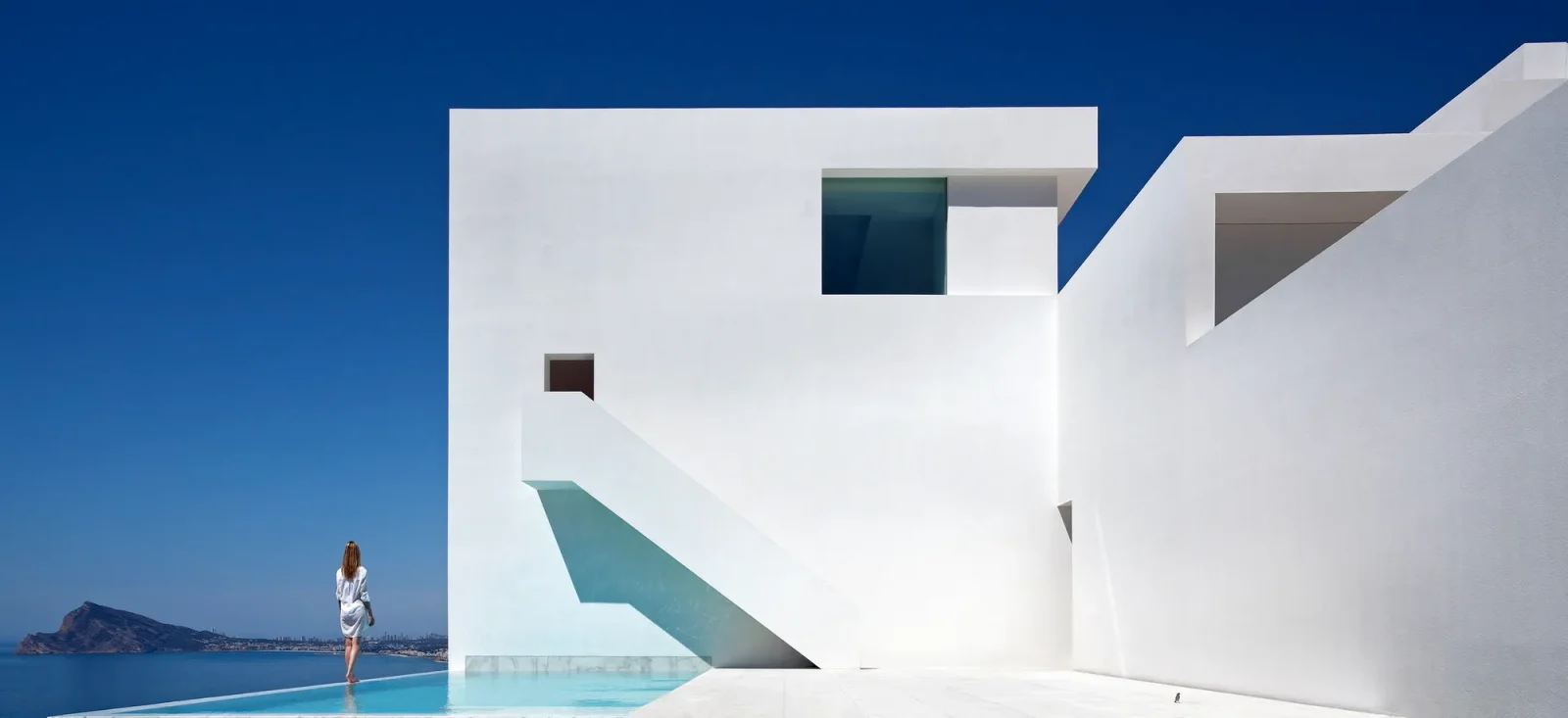
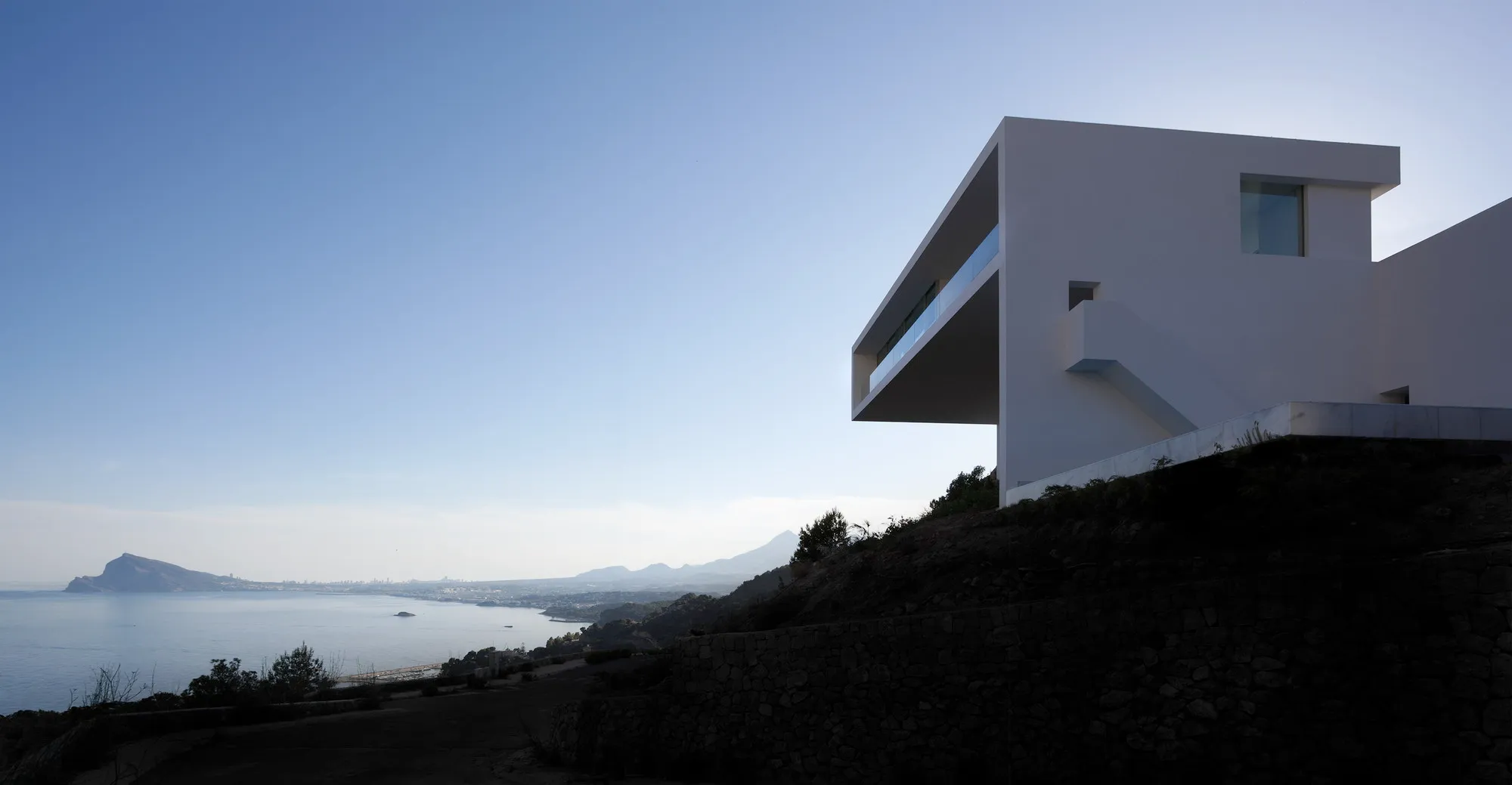
Designed by Fran Silvestre Arquitectos, House on the Cliff sits on a Mediterranean-facing slope, appearing as an extension of the natural terrain beneath it. Due to the uneven structure of the plot and the desire to gather the entire house on a single level, a three-dimensional system of reinforced concrete slabs and walls was chosen to adapt to the topography, minimizing earthworks. Leaning against the rocky surface and projecting towards the coastline, this house is designed as a single monolithic volume. The monolithic structure, anchored by stone, forms a horizontal platform from the entrance level.
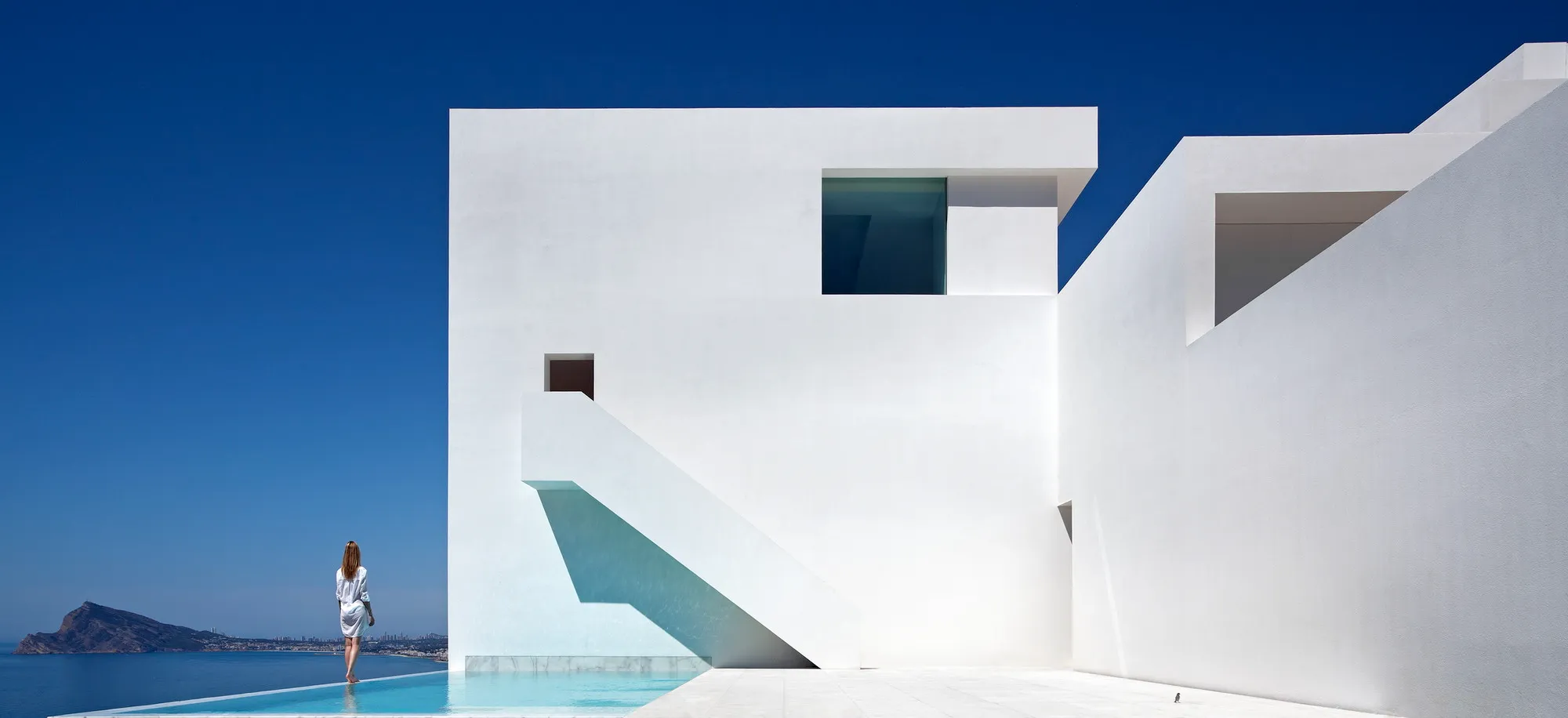
House on the Cliff’s spacious 18-meter balcony extends out over the Balearic Sea, while the infinity pool offers impressive views. A staircase running through the exterior wall connects the infinity pool and terrace to the rooms on the upper floor. The living room and bedrooms on the cantilevered upper floor offer panoramic views thanks to the fully glazed façade. Constructed entirely of concrete, the house’s walls are finished in plaster, creating a clean white aesthetic.
2. Cliff House
Location: Brooklyn, Victoria, Australia
Architect: Modscape
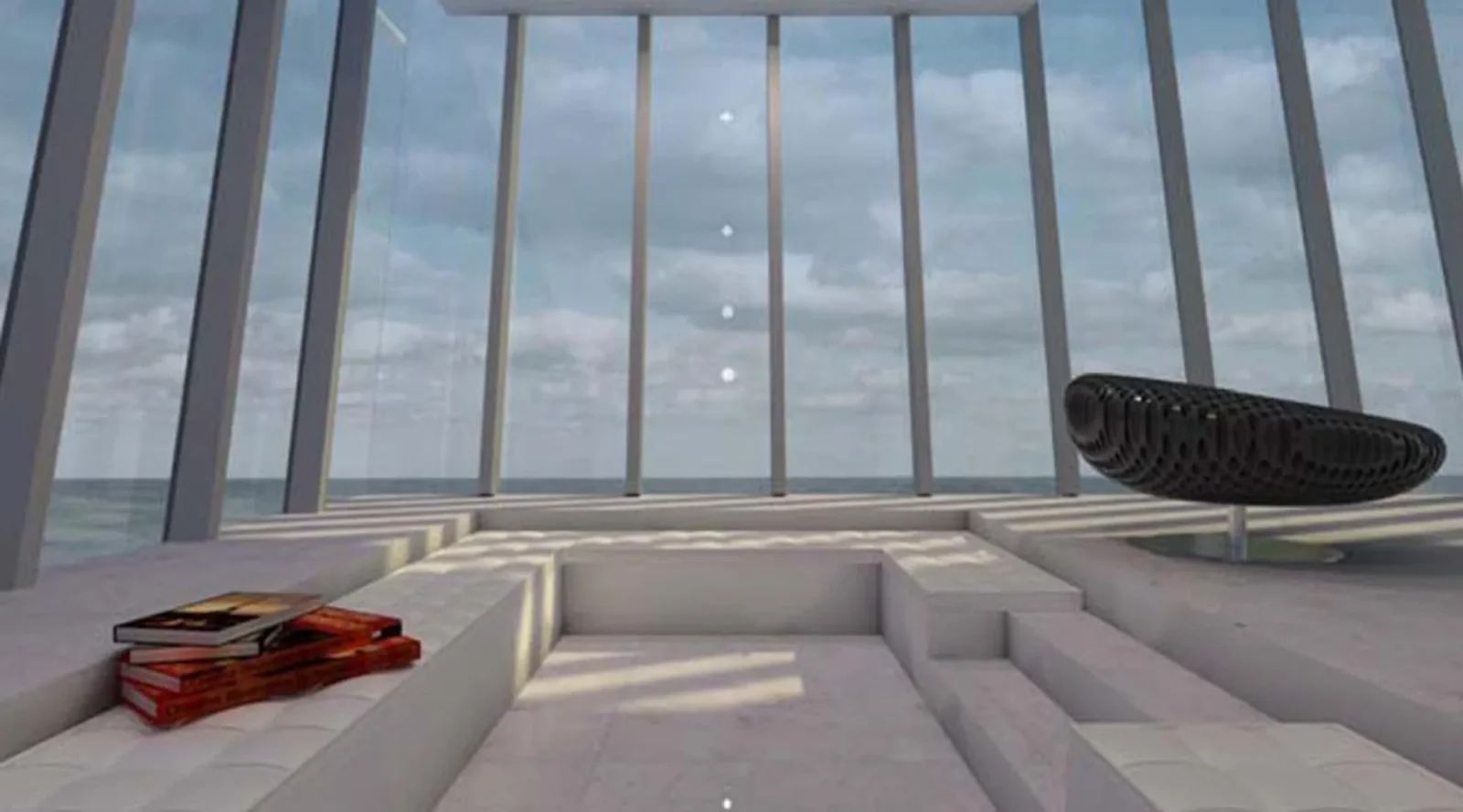
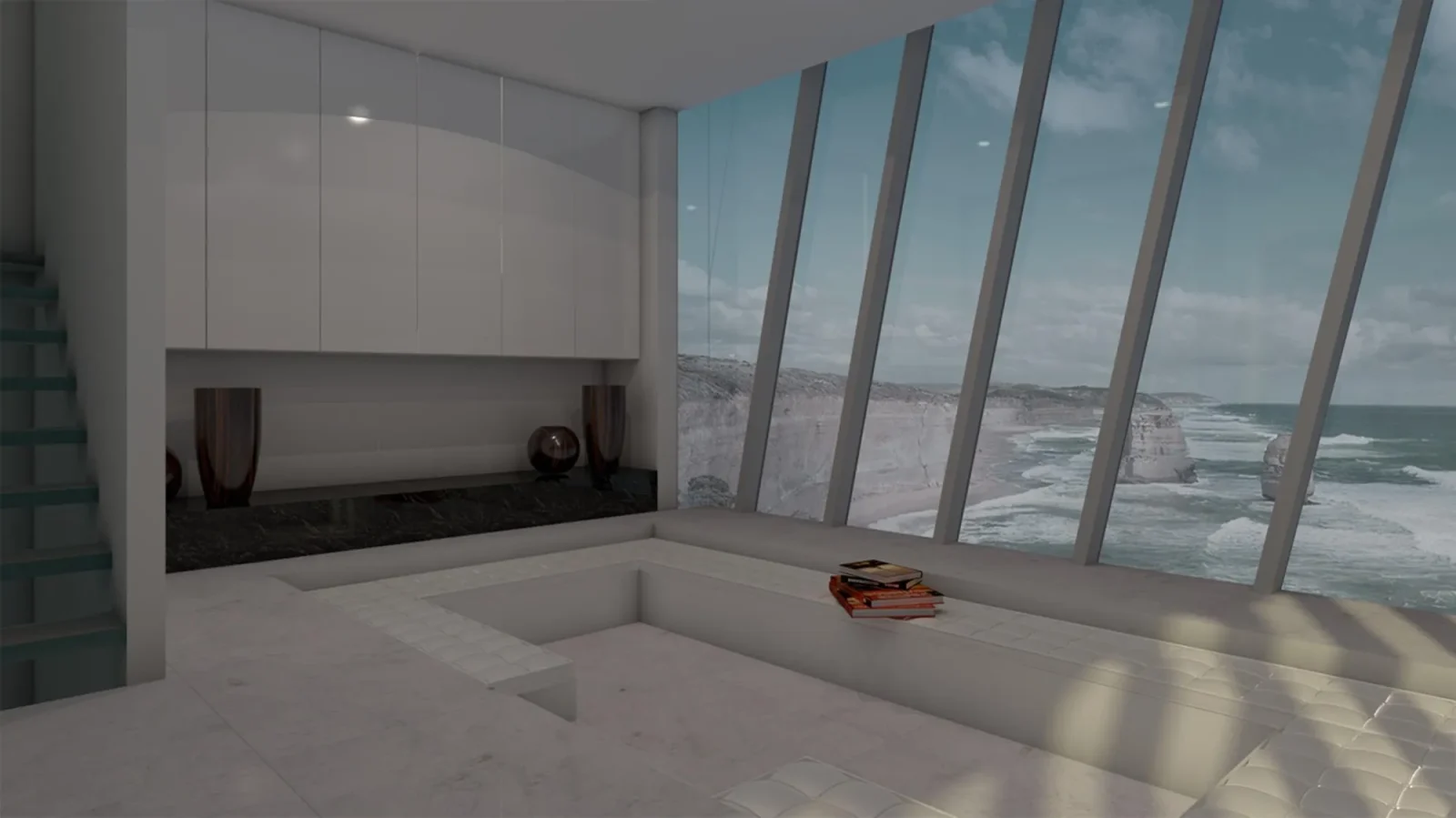
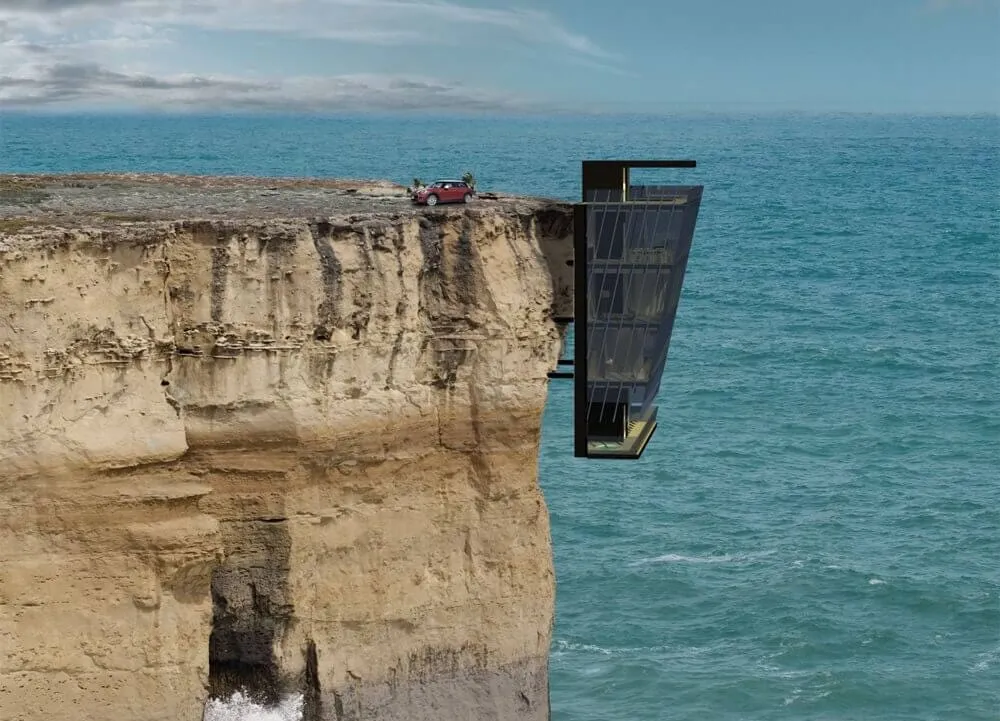
Designed to cling to the cliffside like seashells attached to the hull of a ship, the Cliff House was developed by Modscape in response to a client’s request for a residence in an extreme coastal location. Designed as a natural extension of the cliff rather than an add-on to the landscape, this home establishes a profound connection with the ocean, allowing residents to embrace the rugged coastal beauty.
This five-story, modularly designed home is a striking example of modular architecture. Built using Modscape’s modular design and prefabrication technologies, the home consists of a series of stacked residential modules anchored to the cliff face using engineered steel pins. This frees the design from the constraints of traditional construction, ensuring integrity and stability.
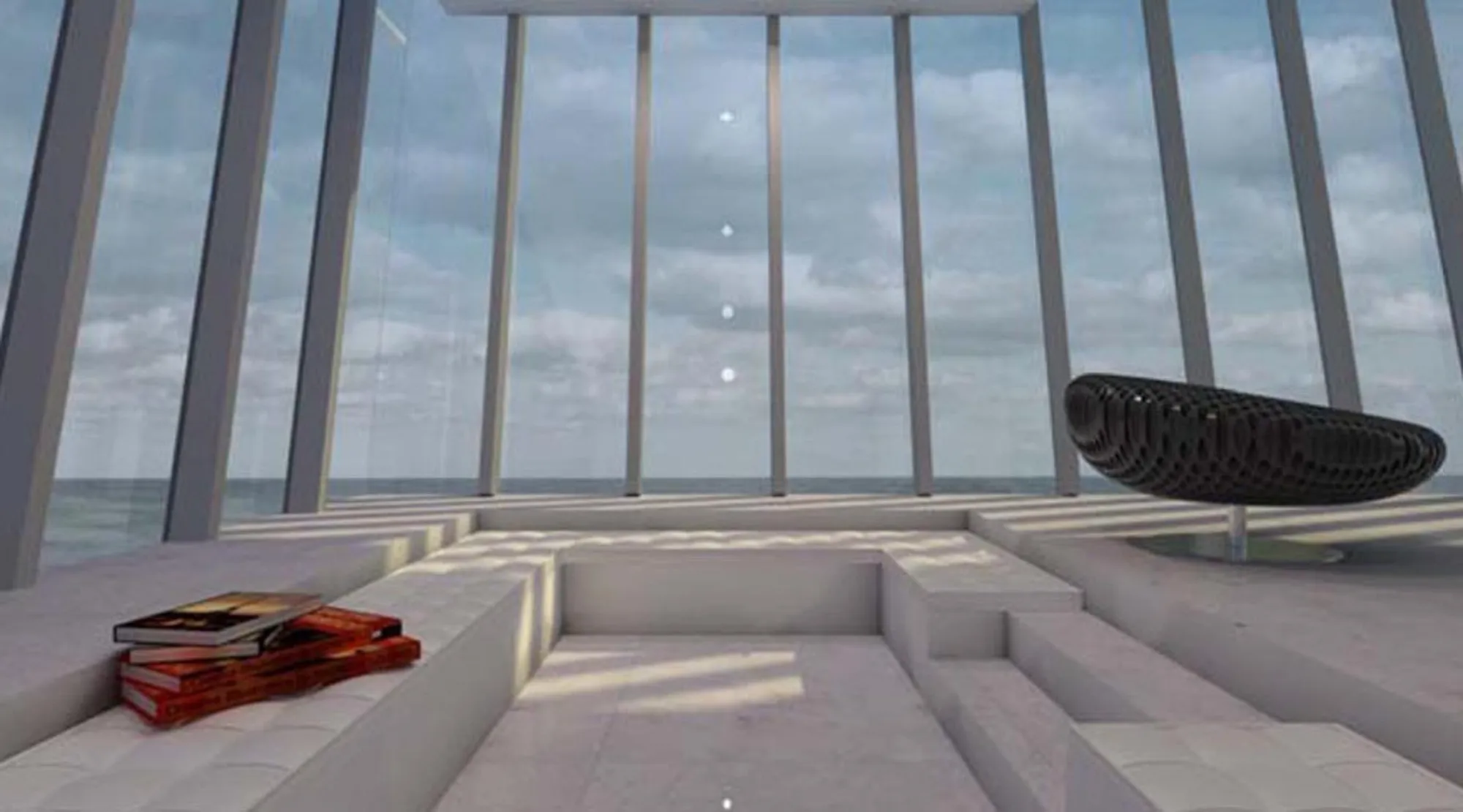
Entry to the Cliff House is through the top-floor garage, where an elevator provides vertical access to each of the descending living spaces. The open-plan interiors, combined with the home’s glass-clad facades, bring breathtaking views into the home. Minimalist furnishings ensure that the stunning ocean views and the unique spatial experience are integral focal points of the design.
3. The Air
Location: Portugal
Architect: Yakusha Design
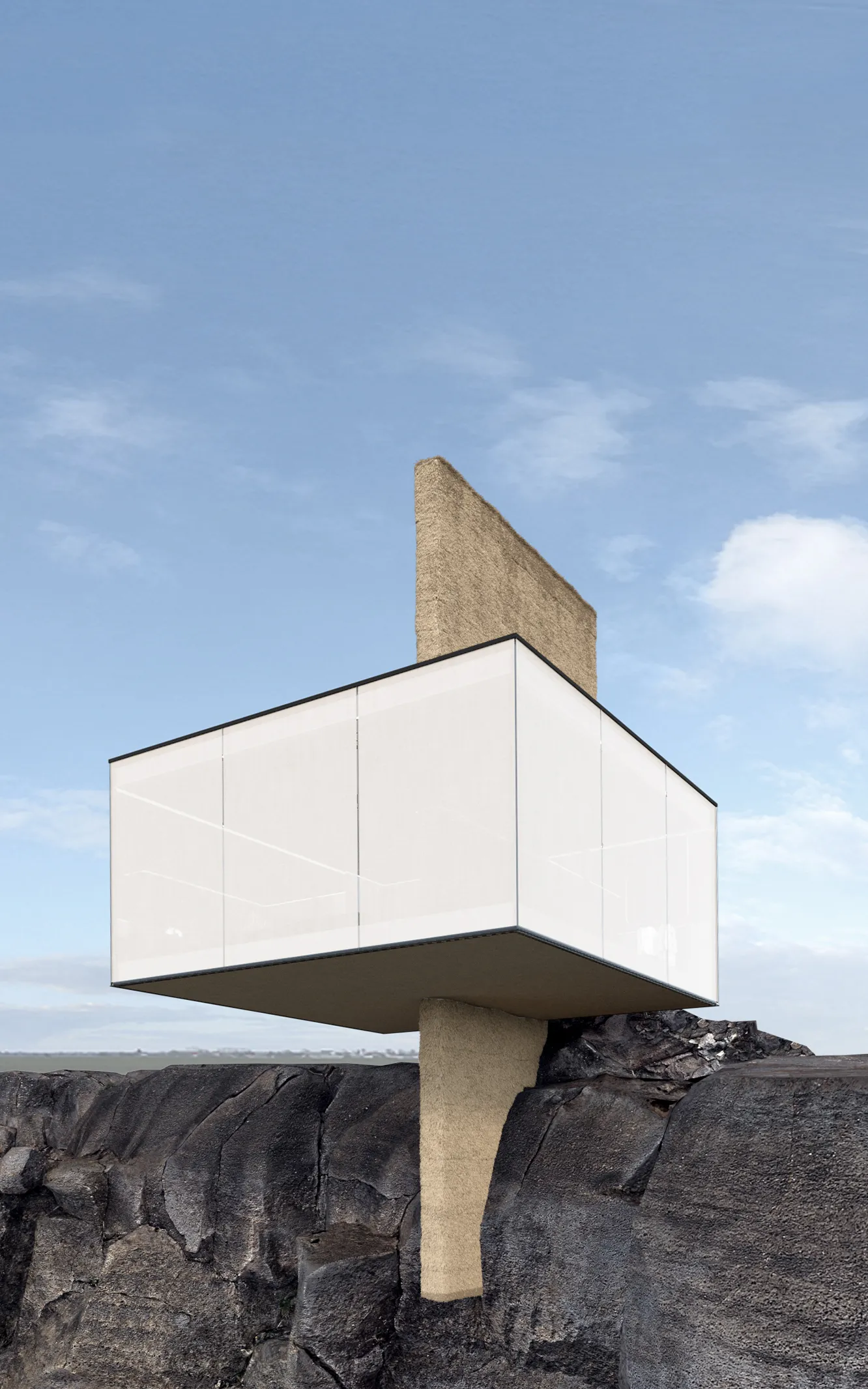
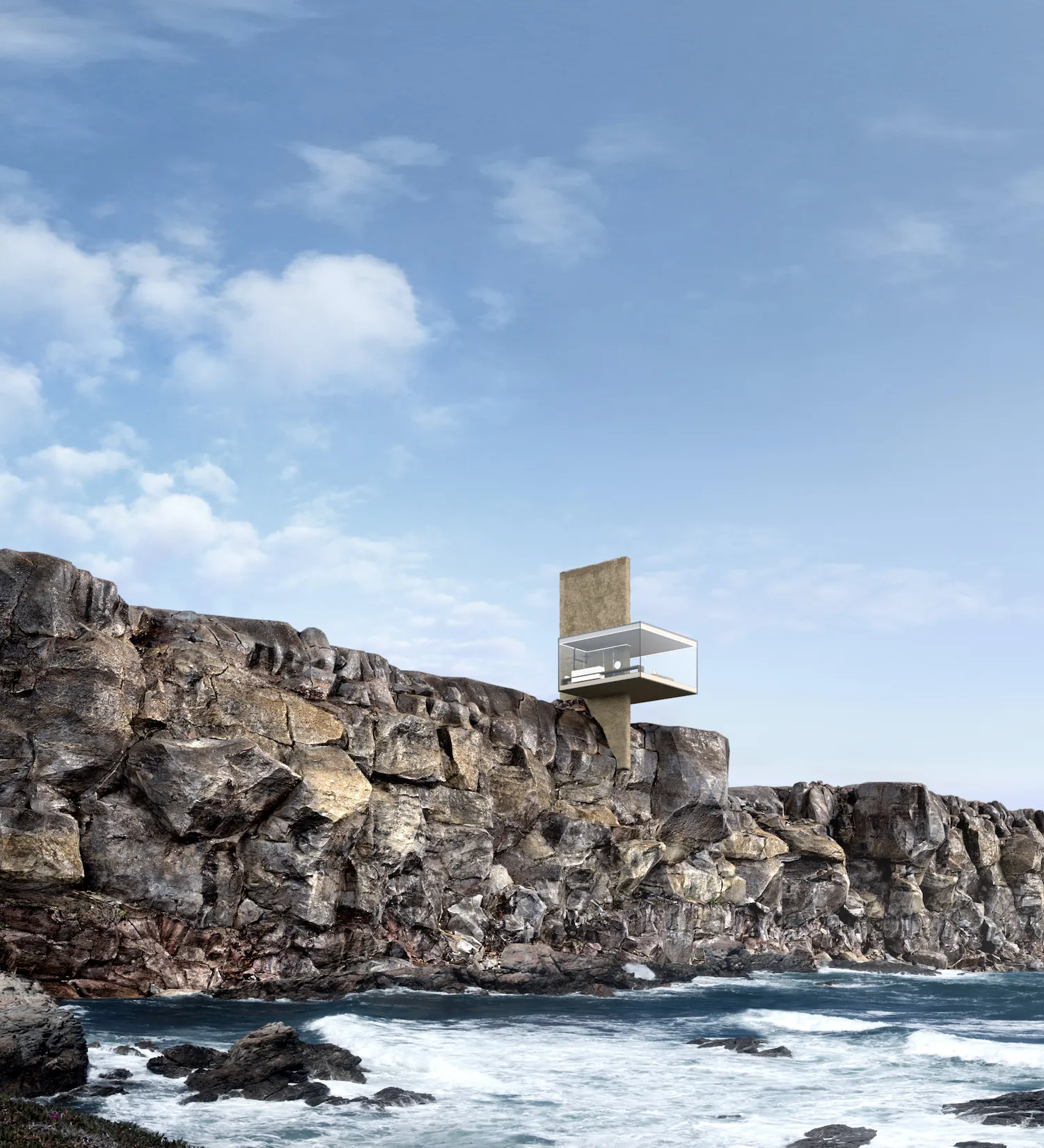
Designed with the sensation of “impossible” architecture, The Air is a striking 270-degree glass cabin embedded into the rock and projecting slightly beyond the cliff. Aiming to create a weightless feeling, as if floating in the air, this house, like a lighthouse, faces the sea breeze daily.
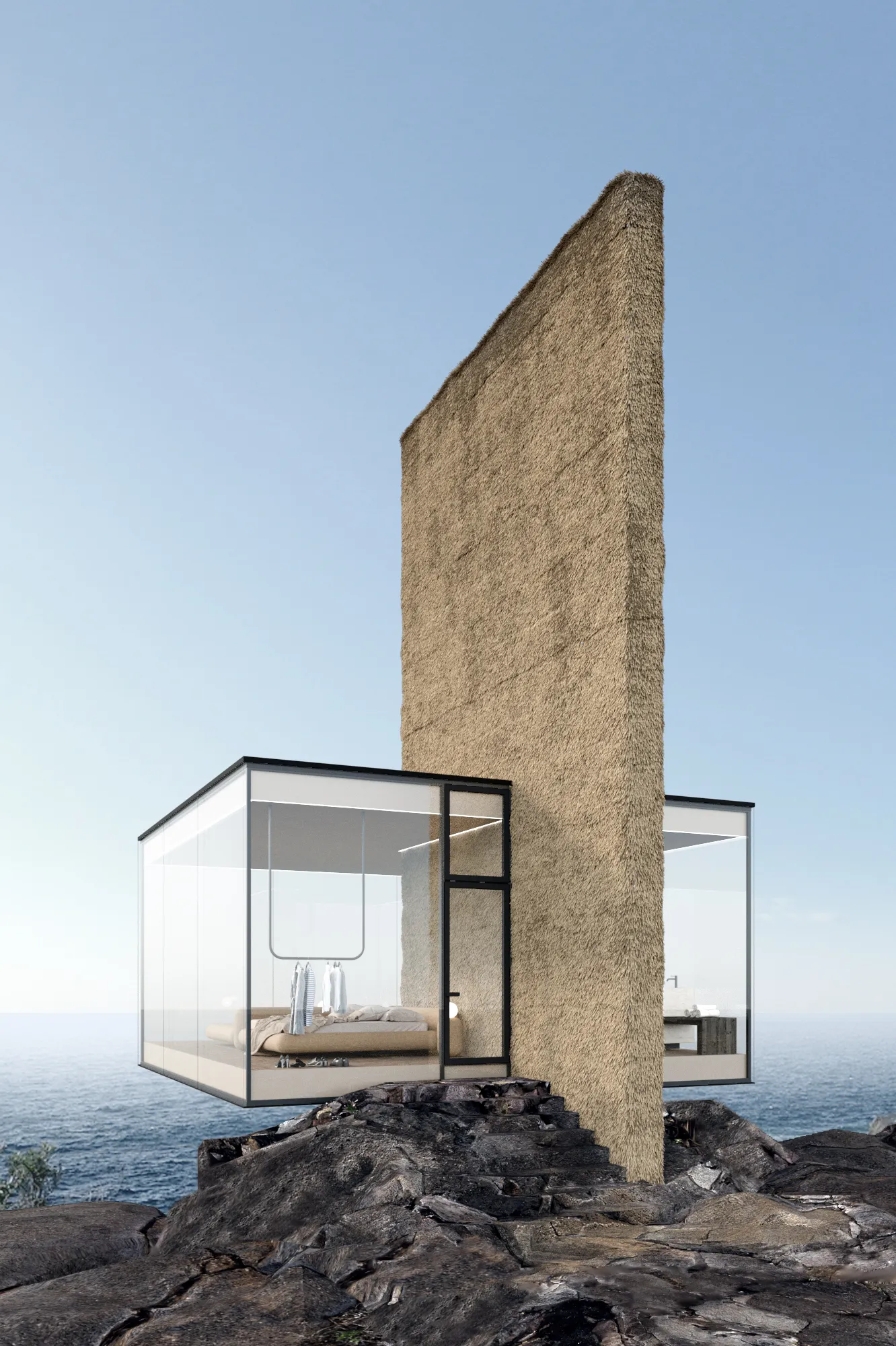
Anchored by a foundation made of recycled concrete, The Air rests on a vertical column. This vertical wall stands not only on the rock but also in front of it. The central column, which occupies a small space within the interior, also houses most of the engineering and communication, maximizing the views of the Atlantic Ocean.
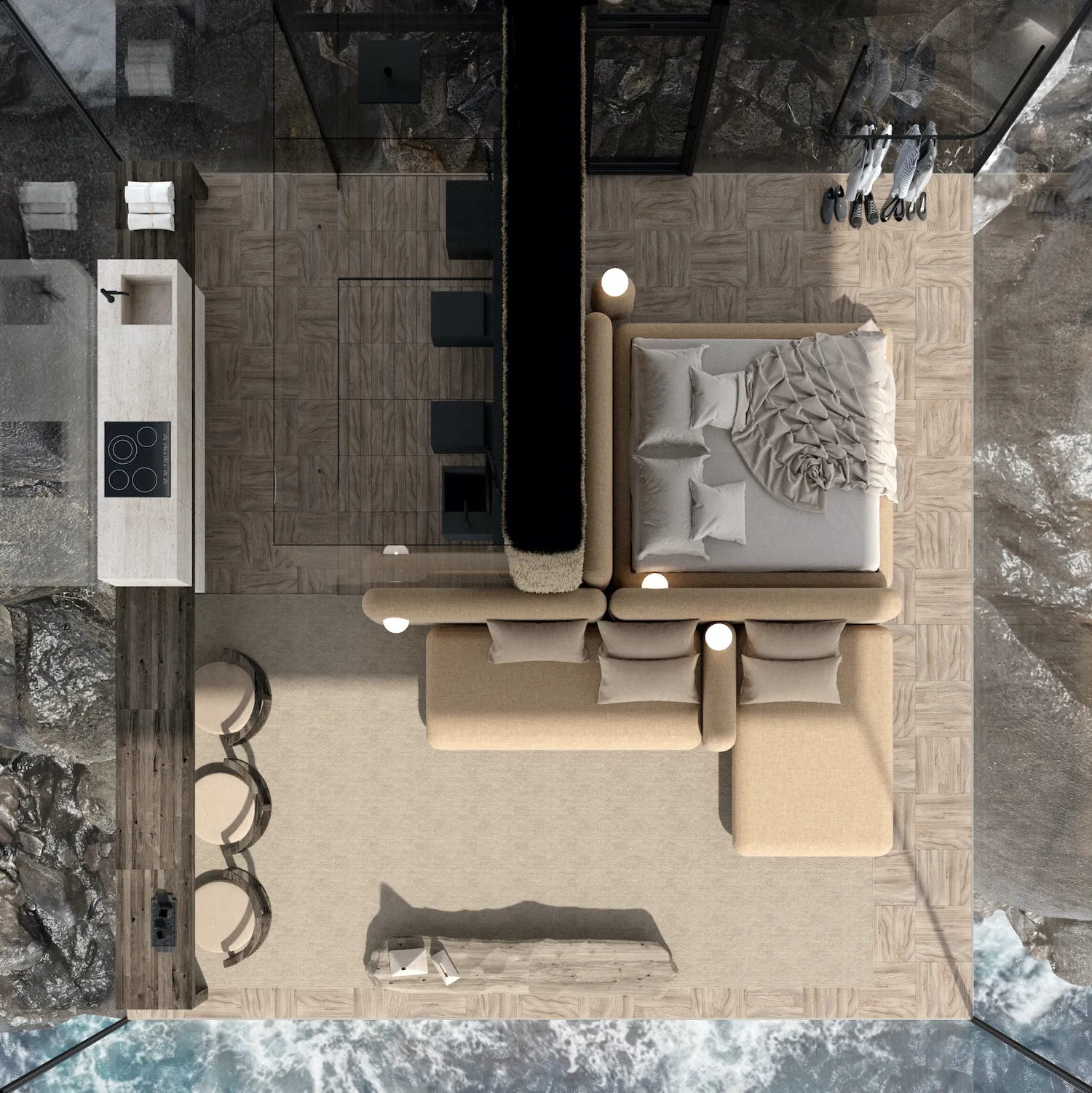
Measuring a total of 48 m², the home’s minimalist, open-concept interior consists only of essential furnishings. The Air, where geometric shapes and vibrant primitive design blend with a modern style, features straight lines, rounded sofas, round lamps, wicker wall panels, roughly hewn logs, ceramic decor, and low dining chairs. Functional areas such as the living room, kitchen, and bedroom flow seamlessly into one another, while bathroom privacy is maintained through a special glass with adjustable transparency.
4. La Binocle
Location: Quebec, Canada
Architect: NatureHumaine
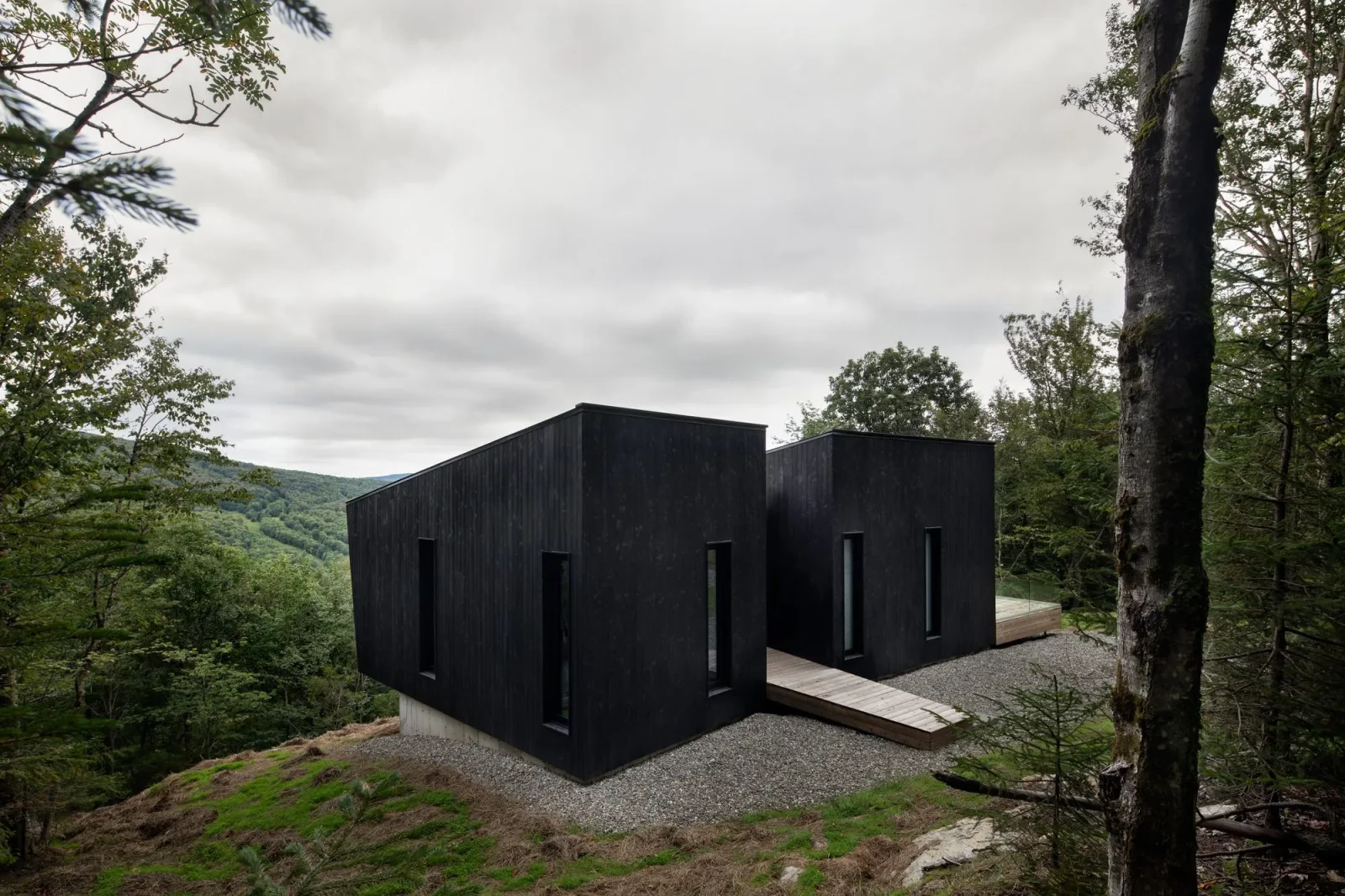
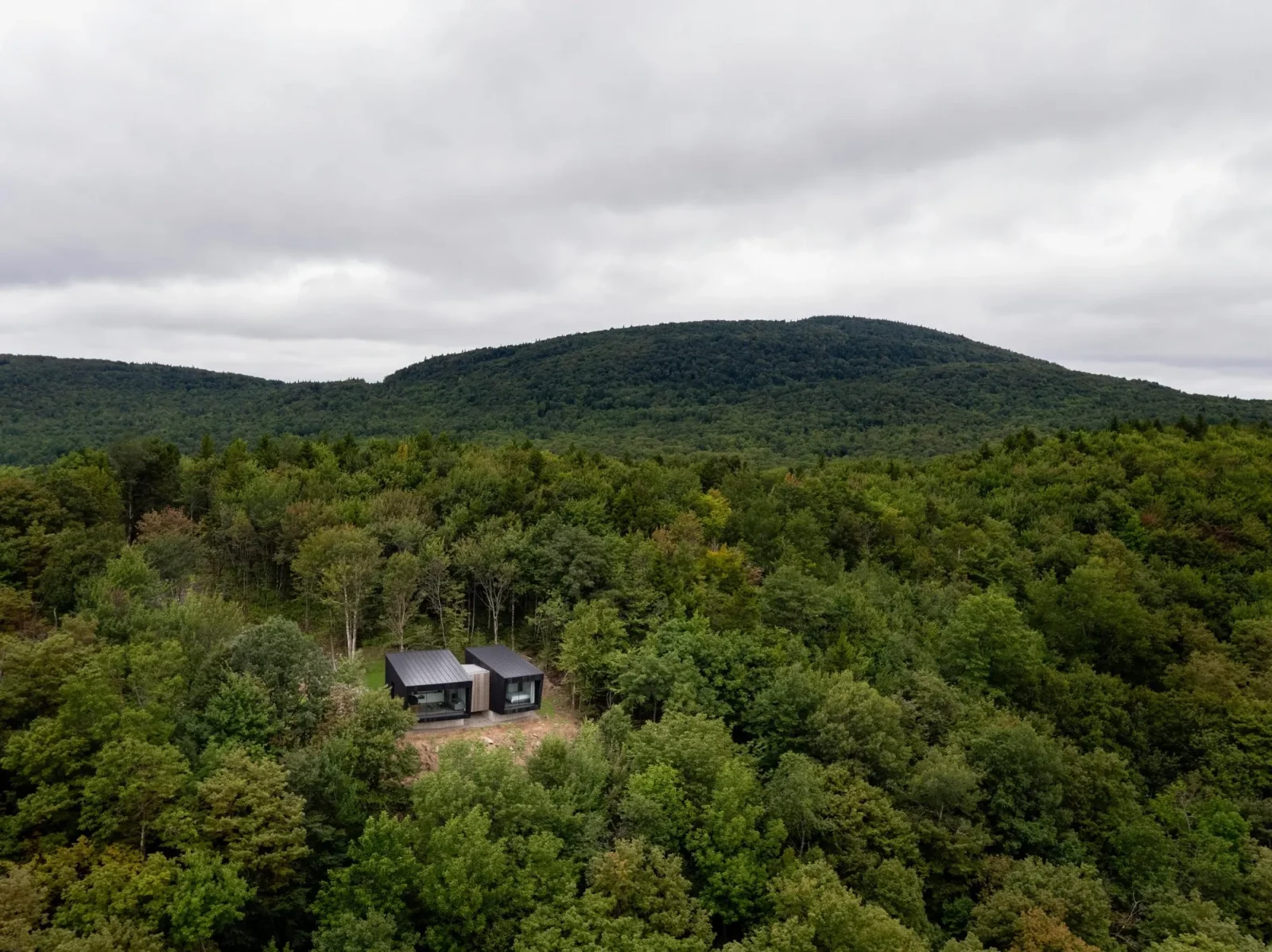
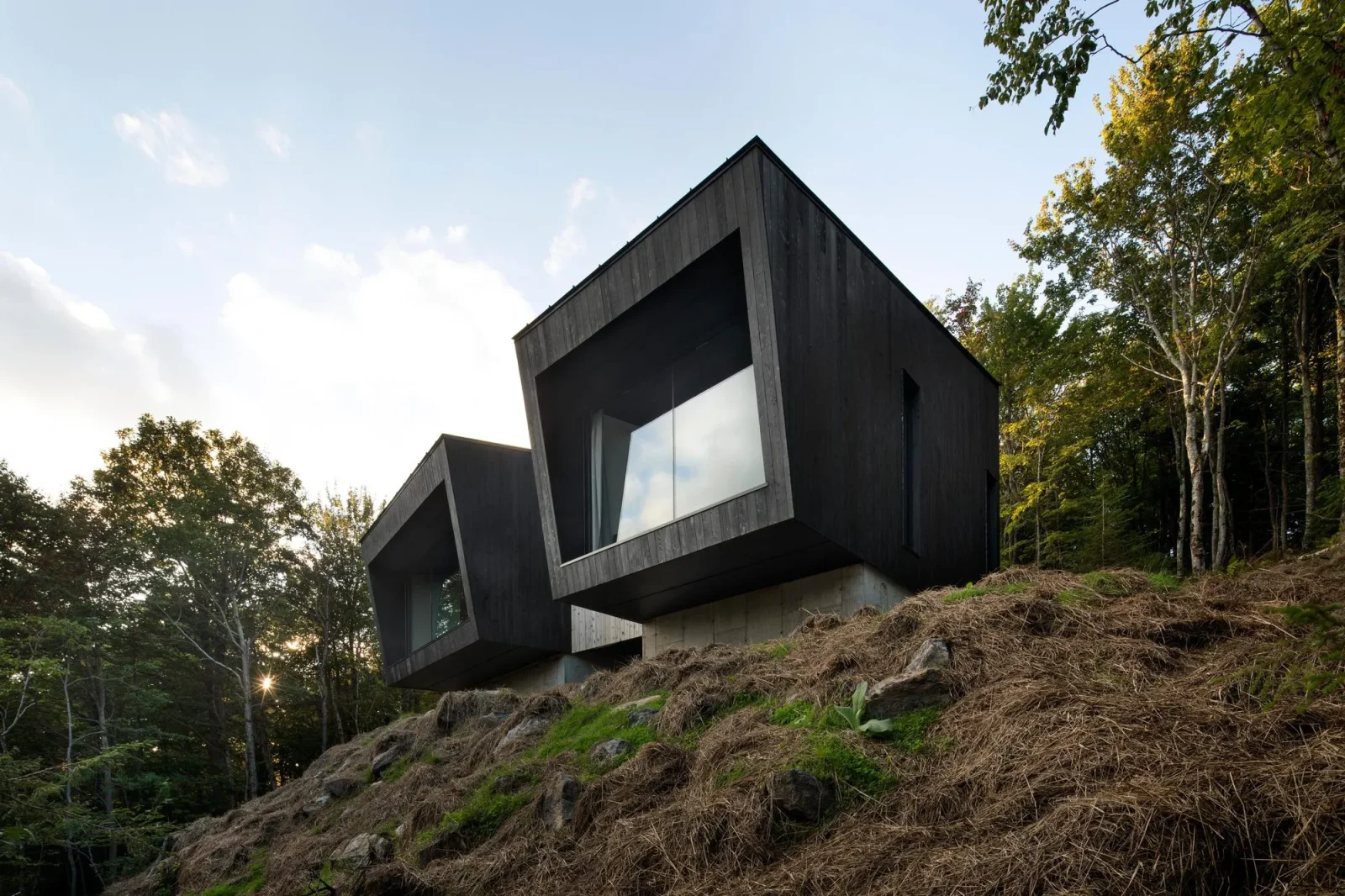
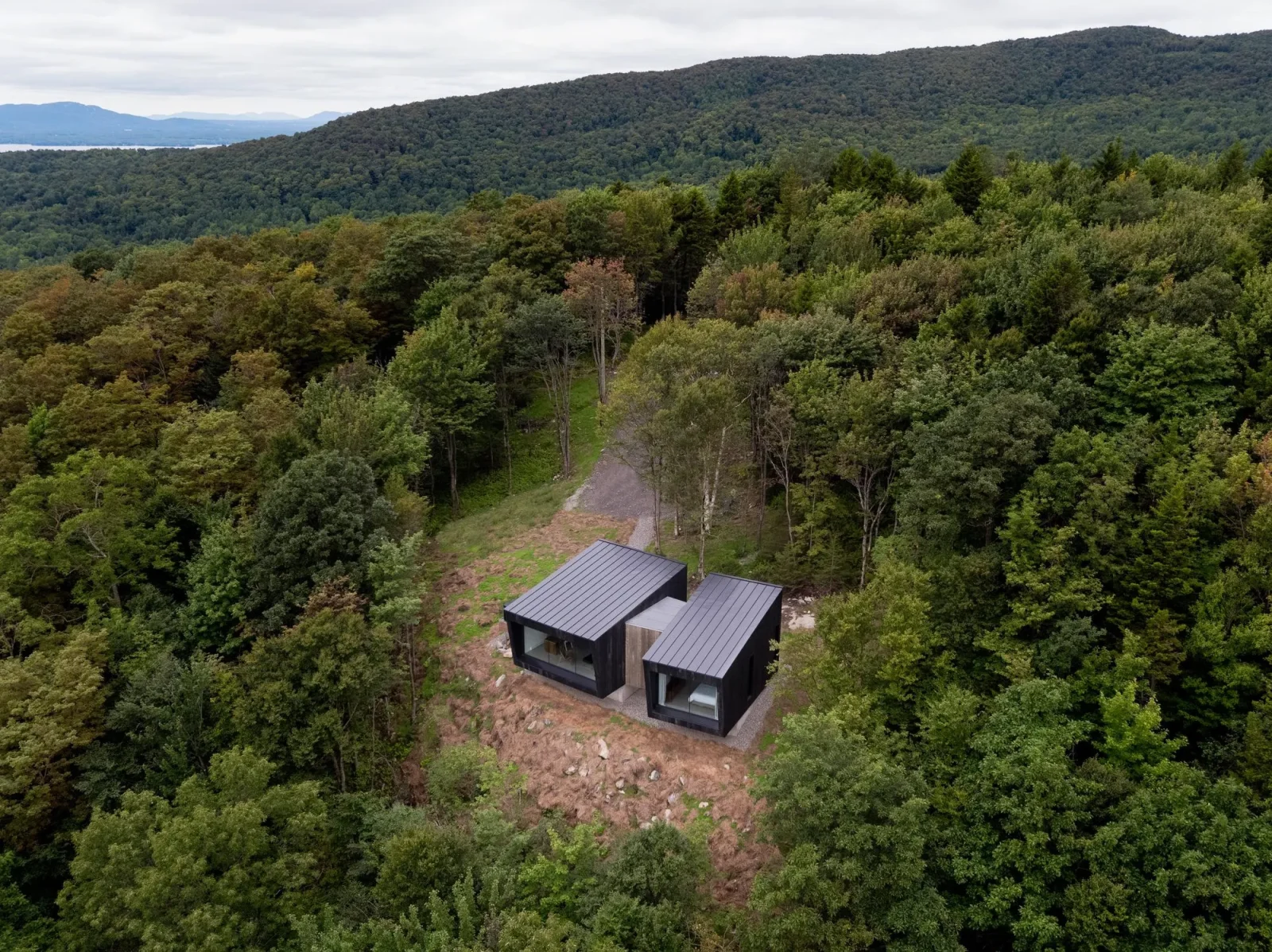
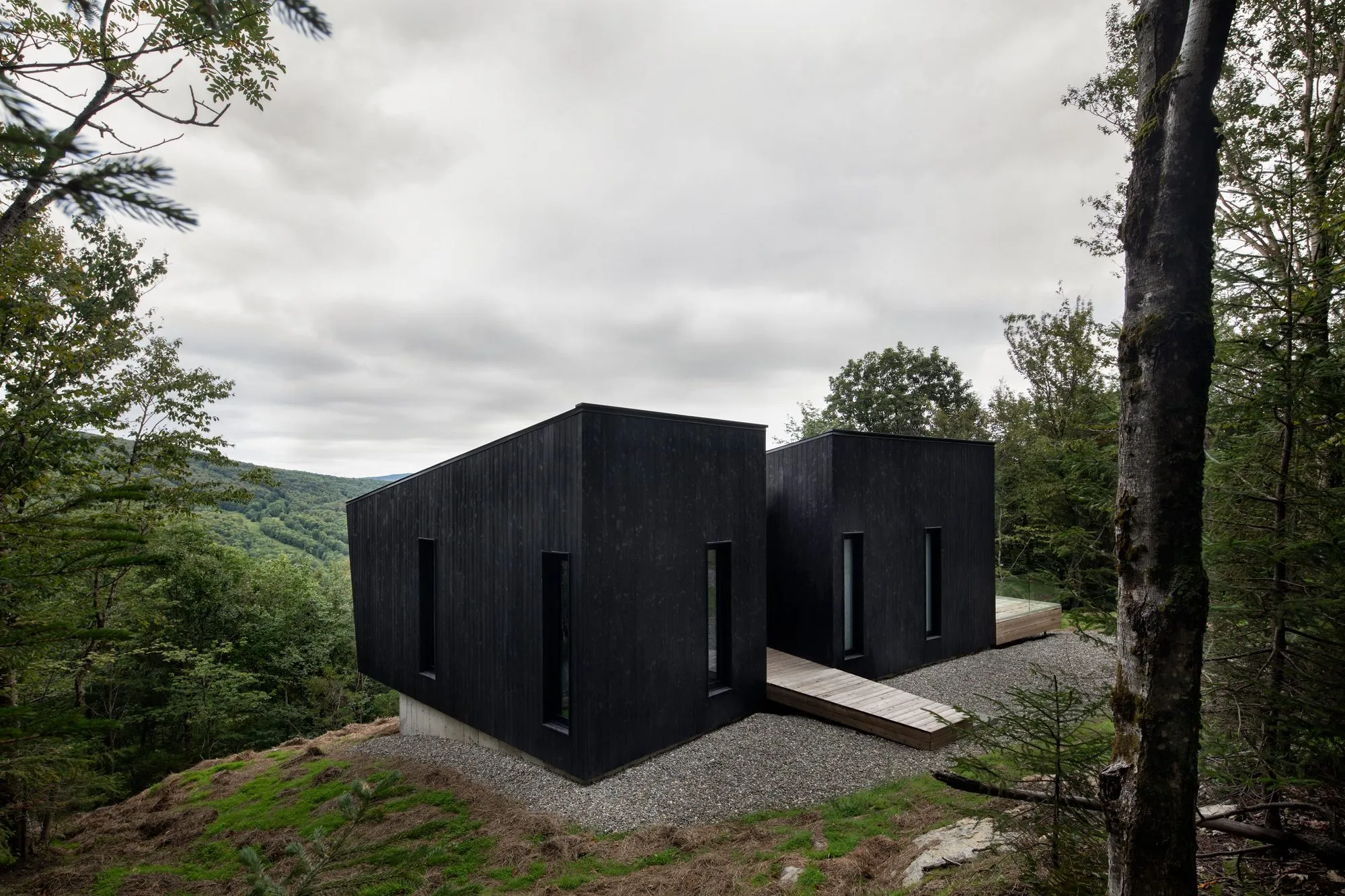
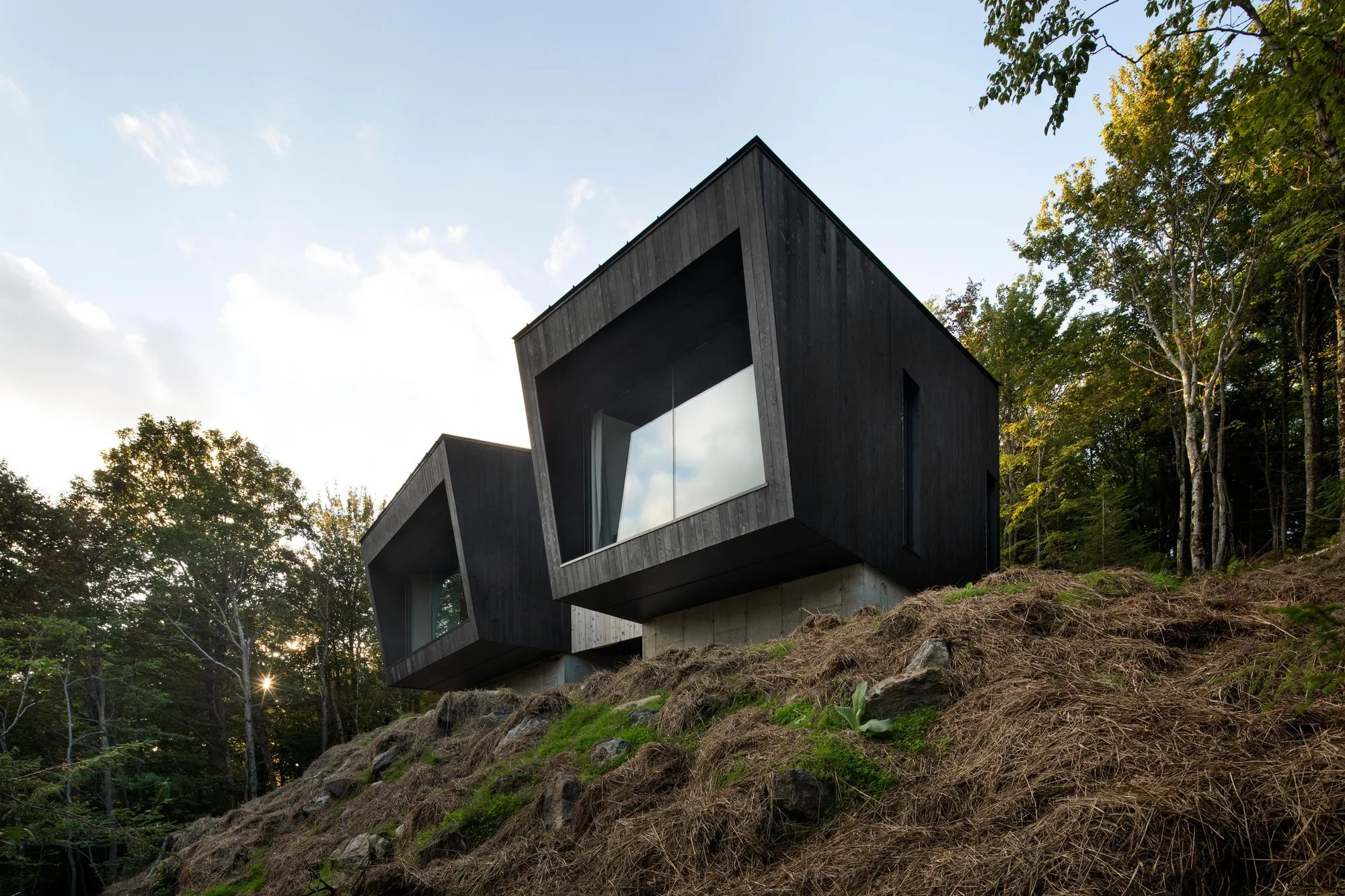
Pushing the boundaries of architecture, La Binocle consists of two darkened wooden cabins designed to appear as if they are sliding down the cliff below. Designed by Naturehumaine, this holiday home is based on the concepts of timelessness and minimalism. With its angular form emphasizing the beauty of the landscape, the project uses the rocky promontory to reinforce the raw concrete foundations on which the two volumes extend toward the treetops.
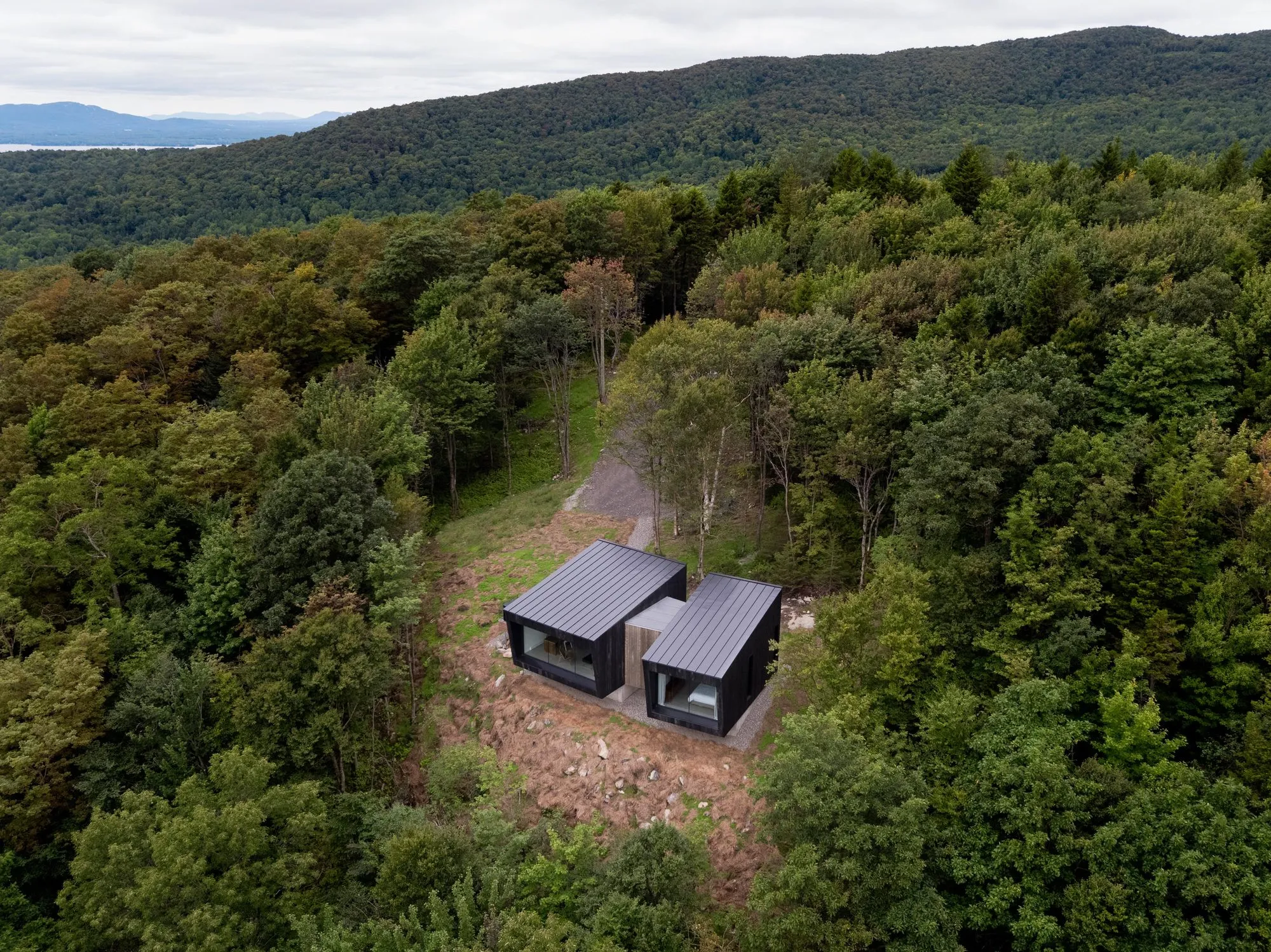
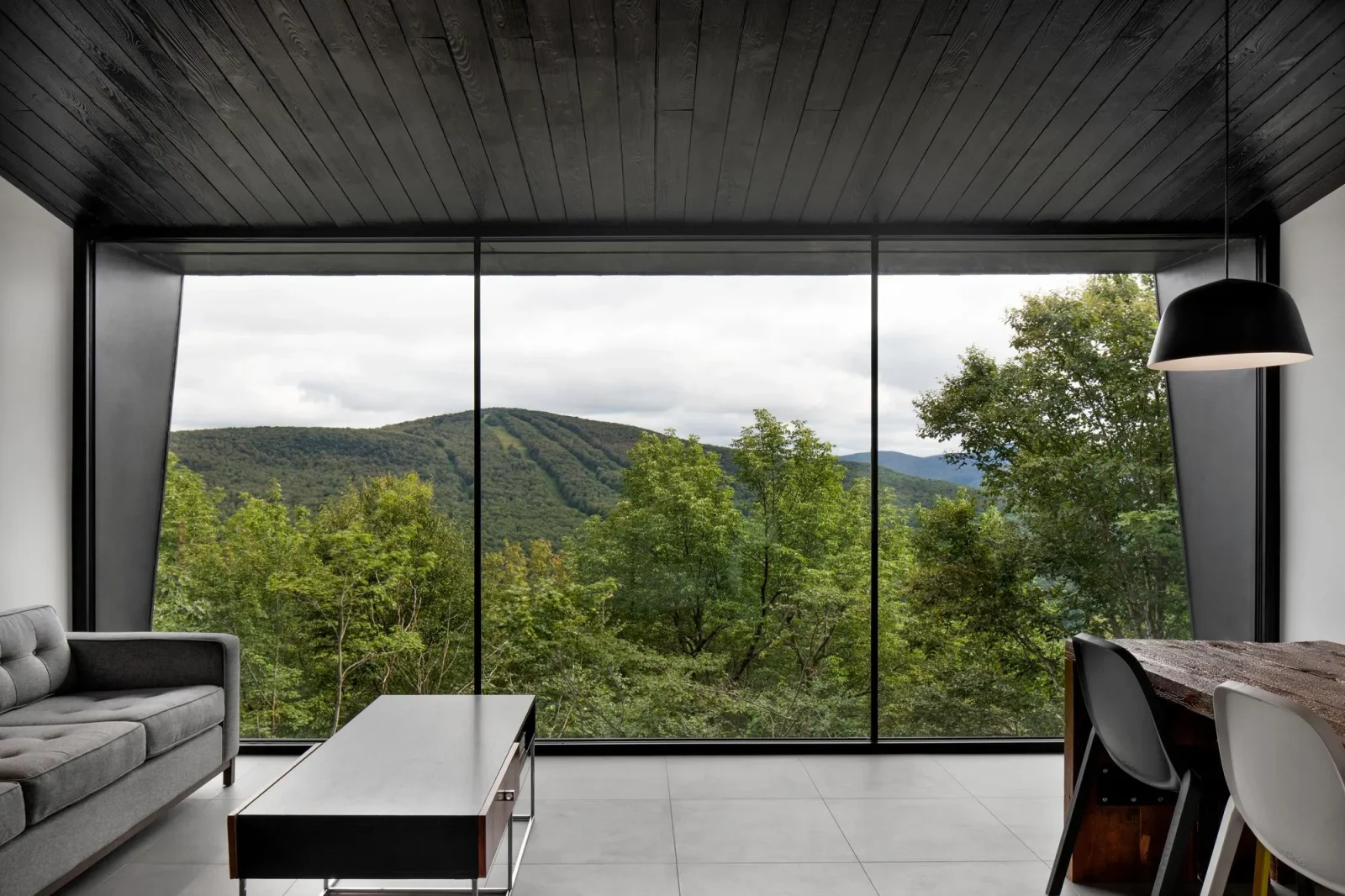
At La Binocle, where the first module houses the living spaces and the second the bedrooms, the entrance creates a transitional space between the modules with different orientations. The sloping roofs complement the natural slope of the ground, enhancing the feeling of sliding off the cliff. The cantilevered roofs on the southern side not only highlight the view but also limit sun exposure during warmer seasons. The wooden platform, located beyond the kitchen, faces west towards the sunset. The facades are clad in burnt wood and pre-woven fir planks, creating a natural color palette.
5. Patio House
Location: Karpathos, Greece
Architect: OOAK Architects
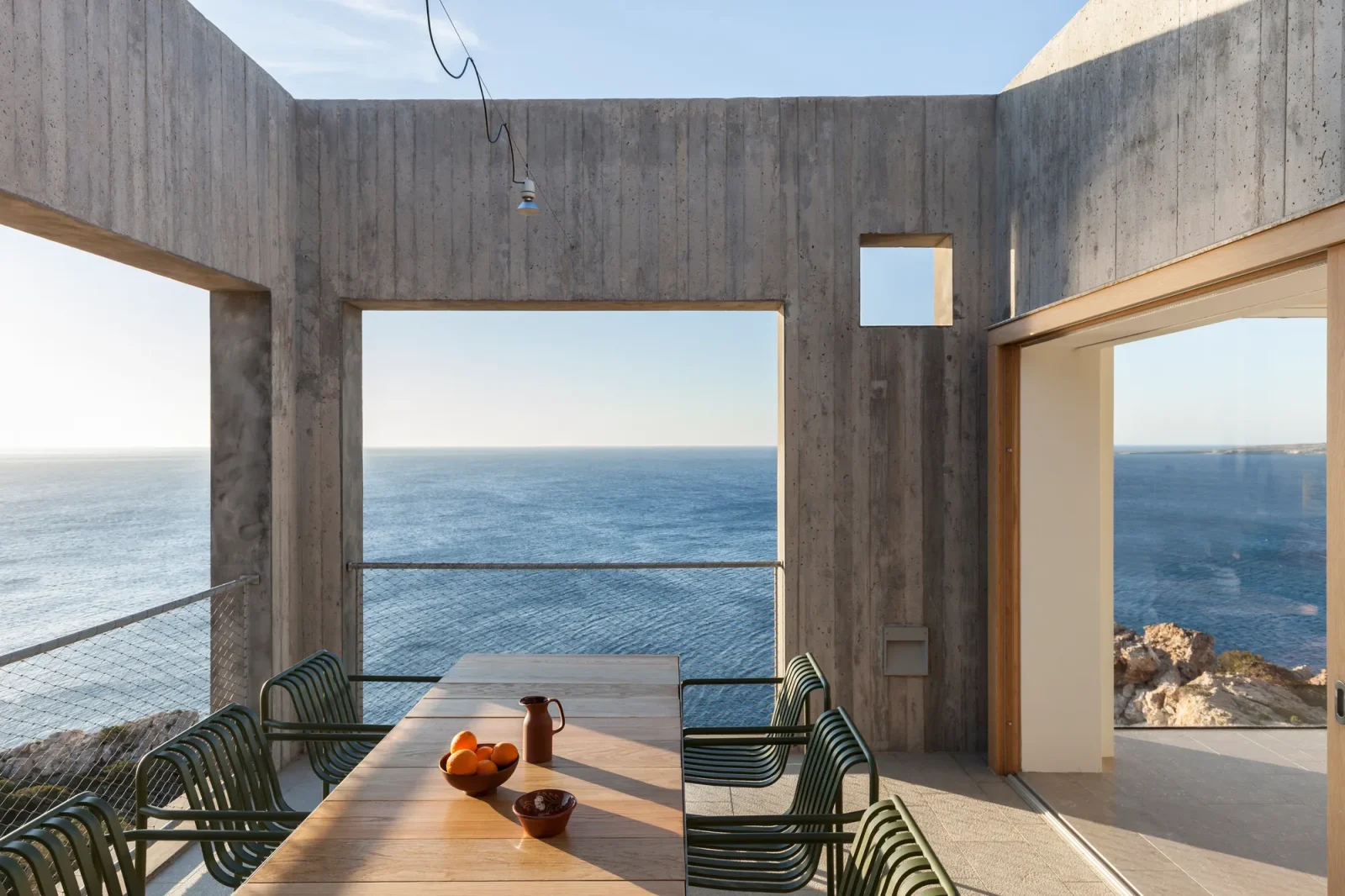
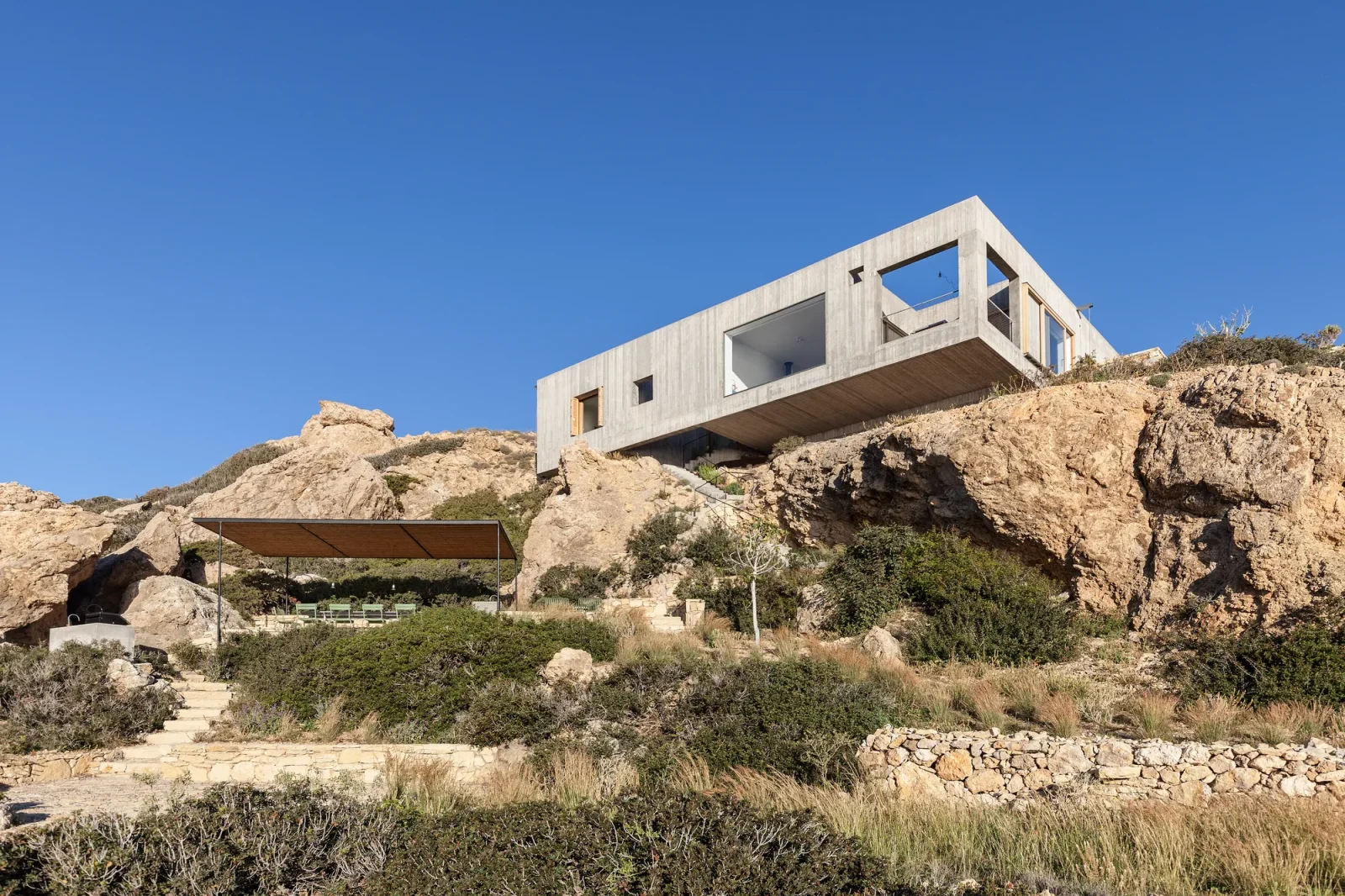
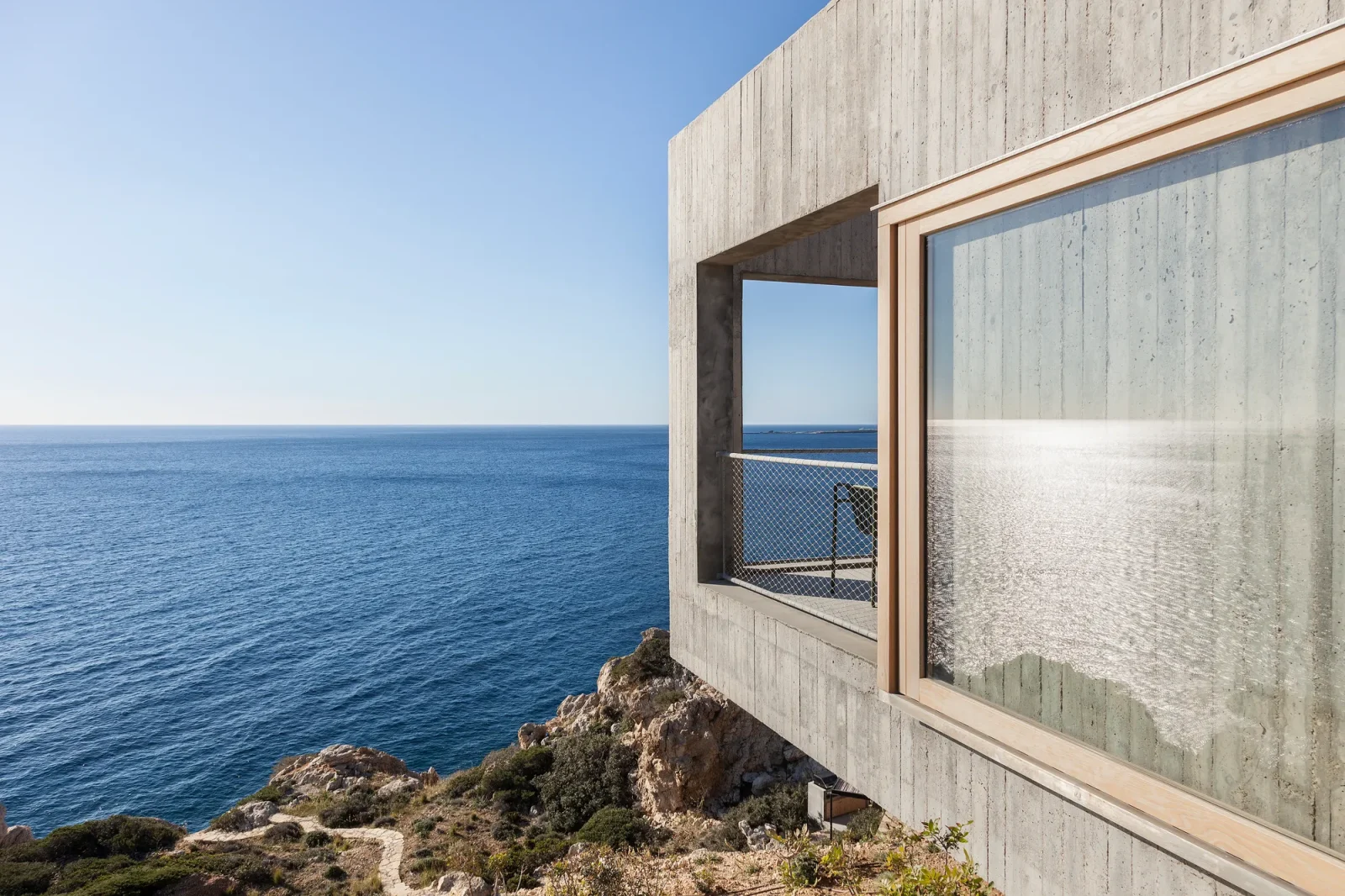
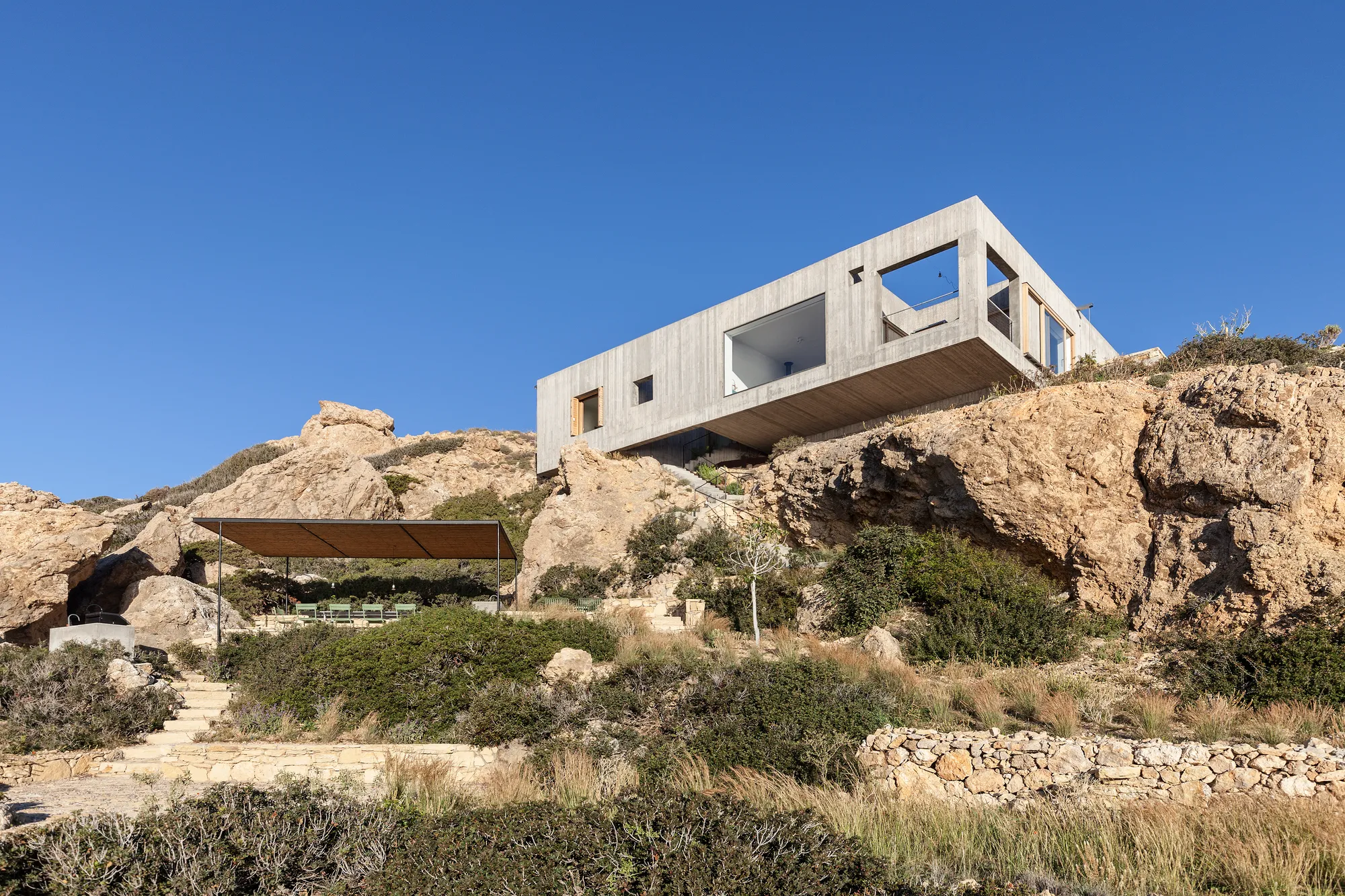
Located on a plot of rugged, textured cliffs that slope down to the vast Aegean Sea, Patio House was designed for a French-Swedish couple from Paris who enjoy windsurfing. Offering direct views of the Aegean Sea and windsurfers on Afiarti Beach, the house’s design was inspired by this sparse, wild, and impressive landscape. On this land, where any human-made intervention would be noticeable, Patio House was gently placed as an object rather than attempting to imitate the landscape. This way, the surrounding landscape remains as untouched as possible.
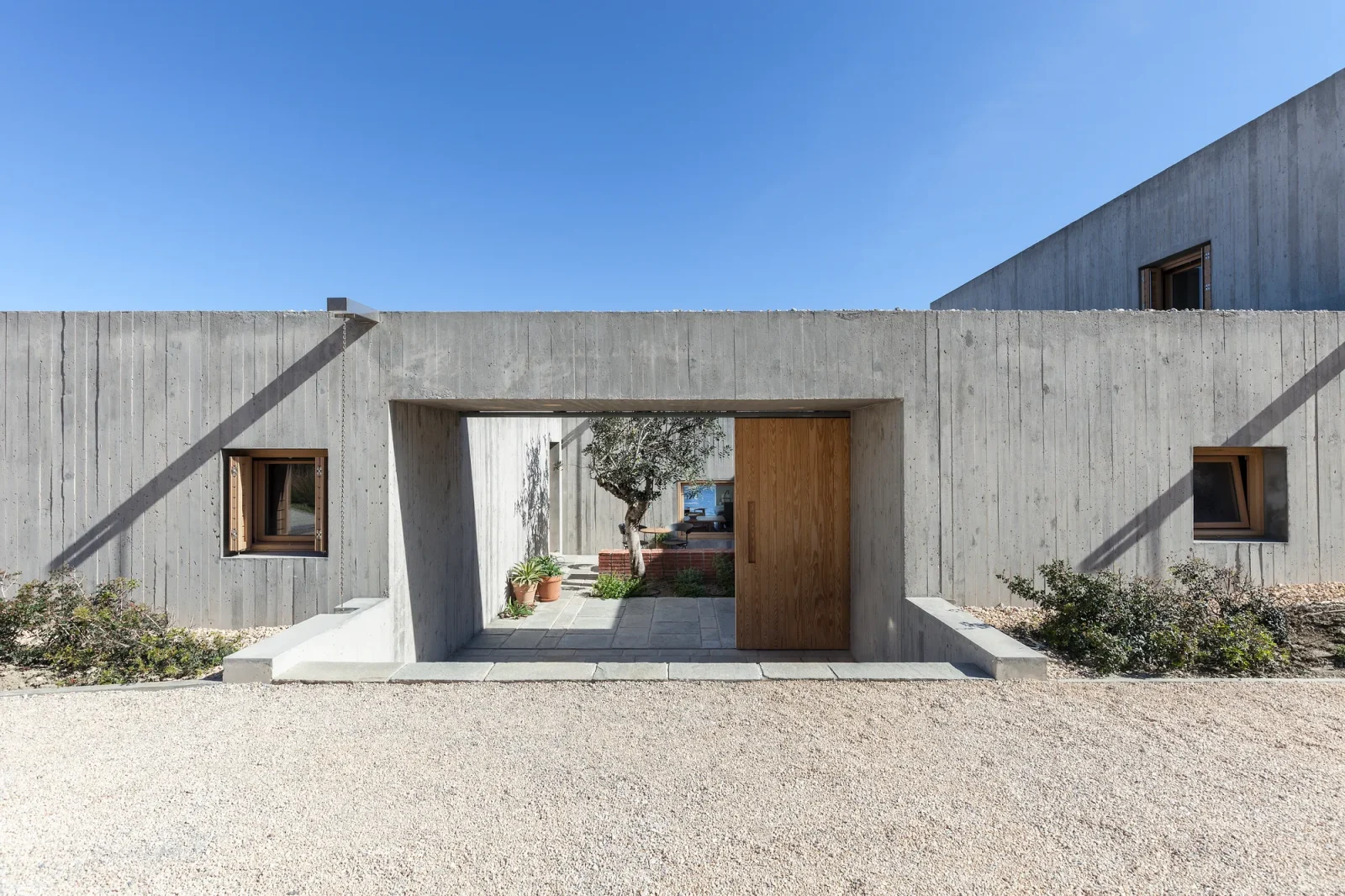
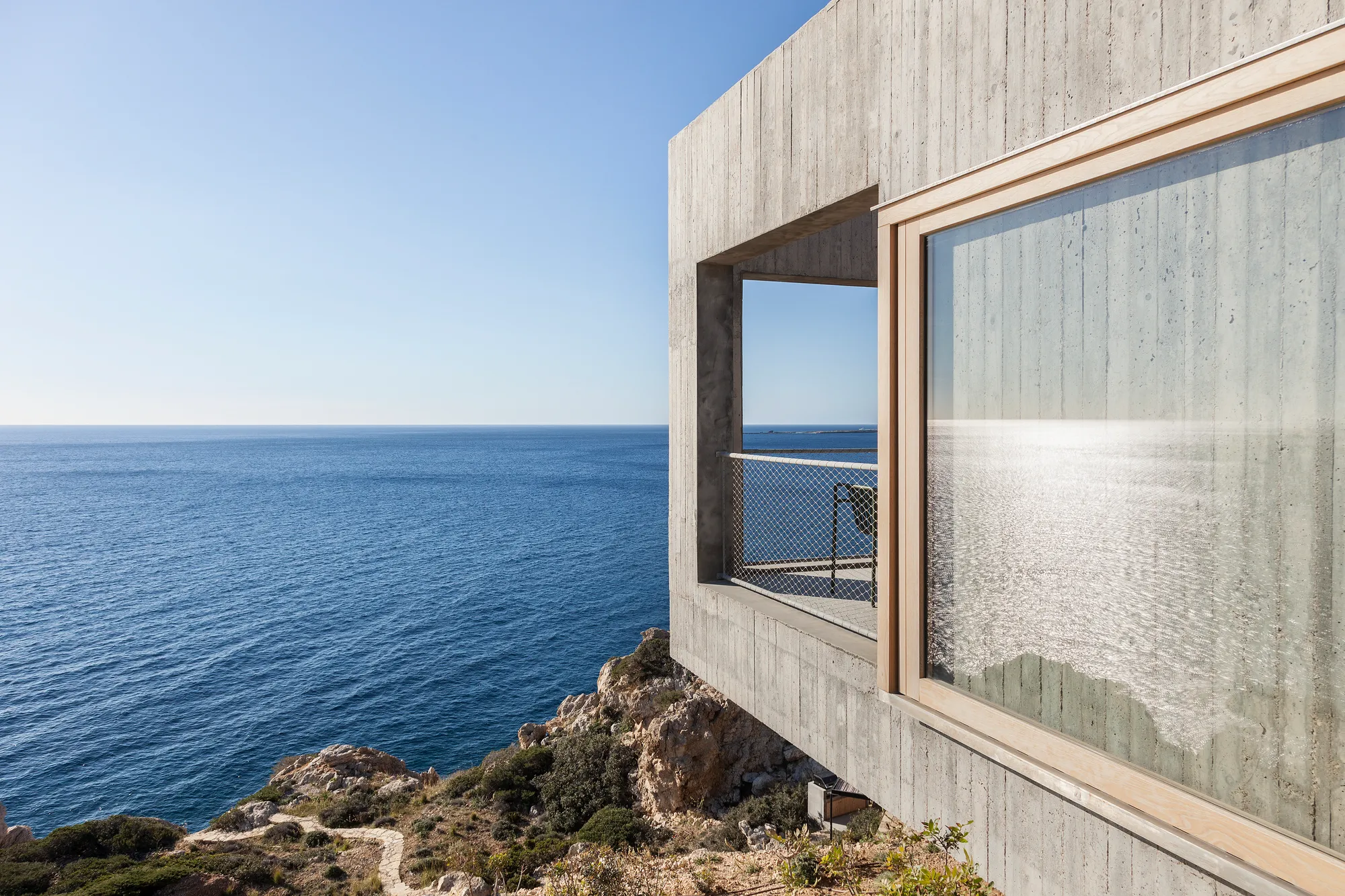
The site, which boasts two natural plateaus, one high and one low, extends beyond the high plateau, suspending the Patio House above the landscape. This cantilever effect enhances the building’s experience from both inside and out. From the interior, it creates the illusion of the house suspended above the sea, while from the exterior, it emphasizes the contrast between the man-made and the natural. Constructed entirely from cast reinforced concrete, the Patio House’s cantilevered section is composed of Vierendeel beams. The exposed concrete exterior contrasts with the soft, bright interior.
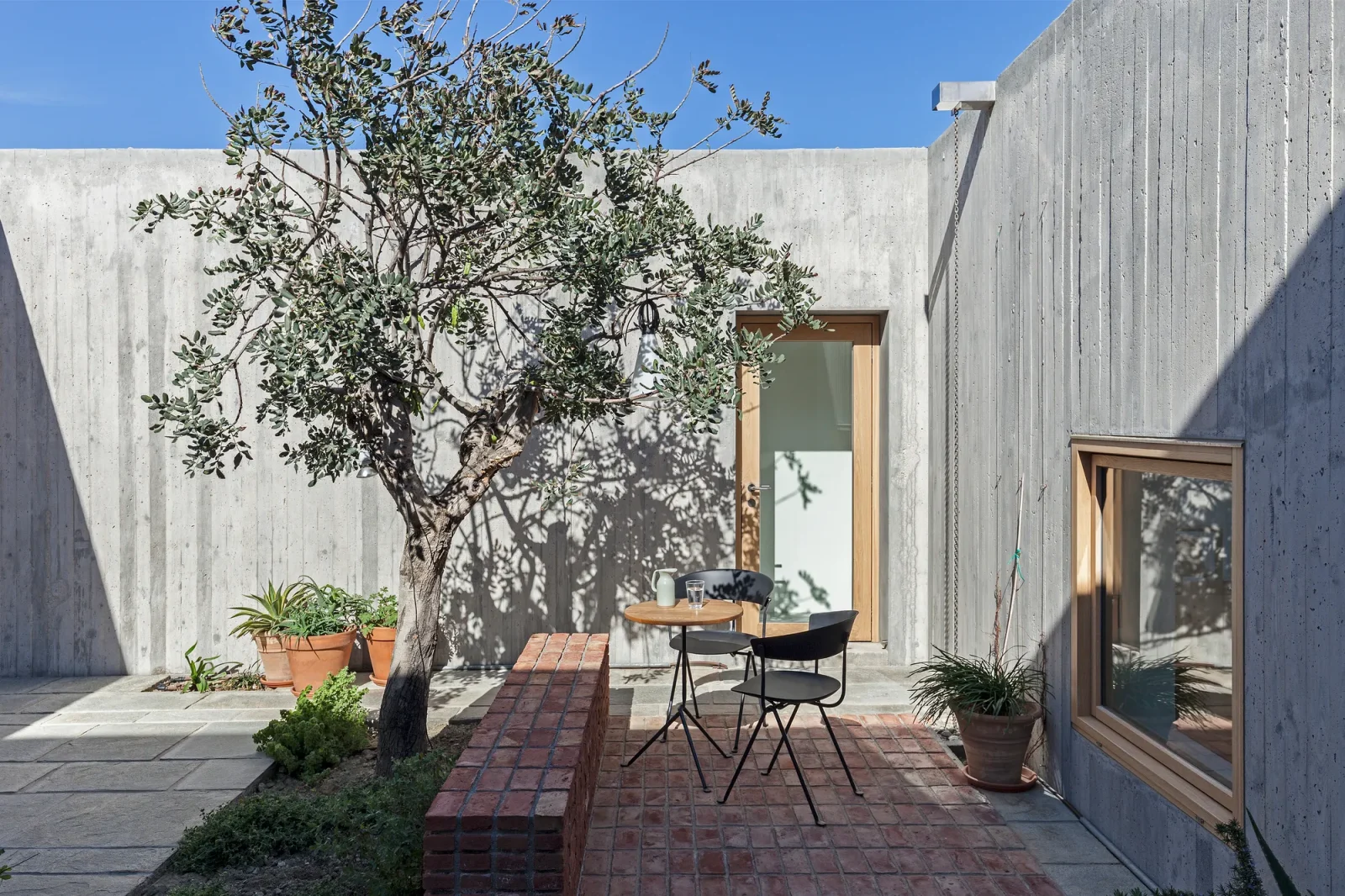
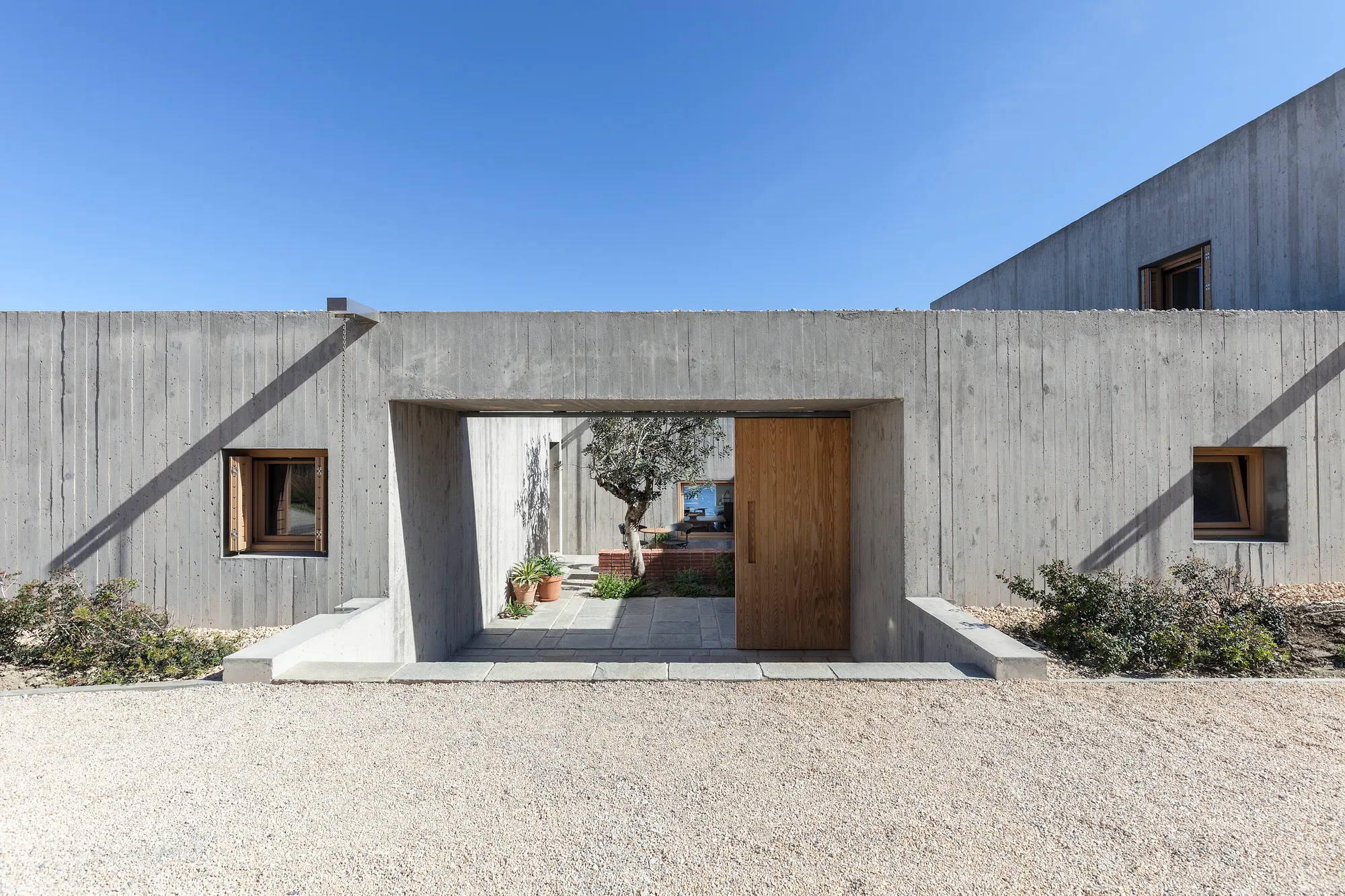
Covering a total of 200 m², the home’s main program consists of a single-story structure arranged around an inner courtyard. A series of voids blurs the gap between interior and exterior spaces, while an open void running through the building connects the house to the open-air terrace on the lower level of the site. A raised portion of the house, designed to accommodate the site’s elevation difference, forms an independent wing for guests.
6. Bivacco Bredy
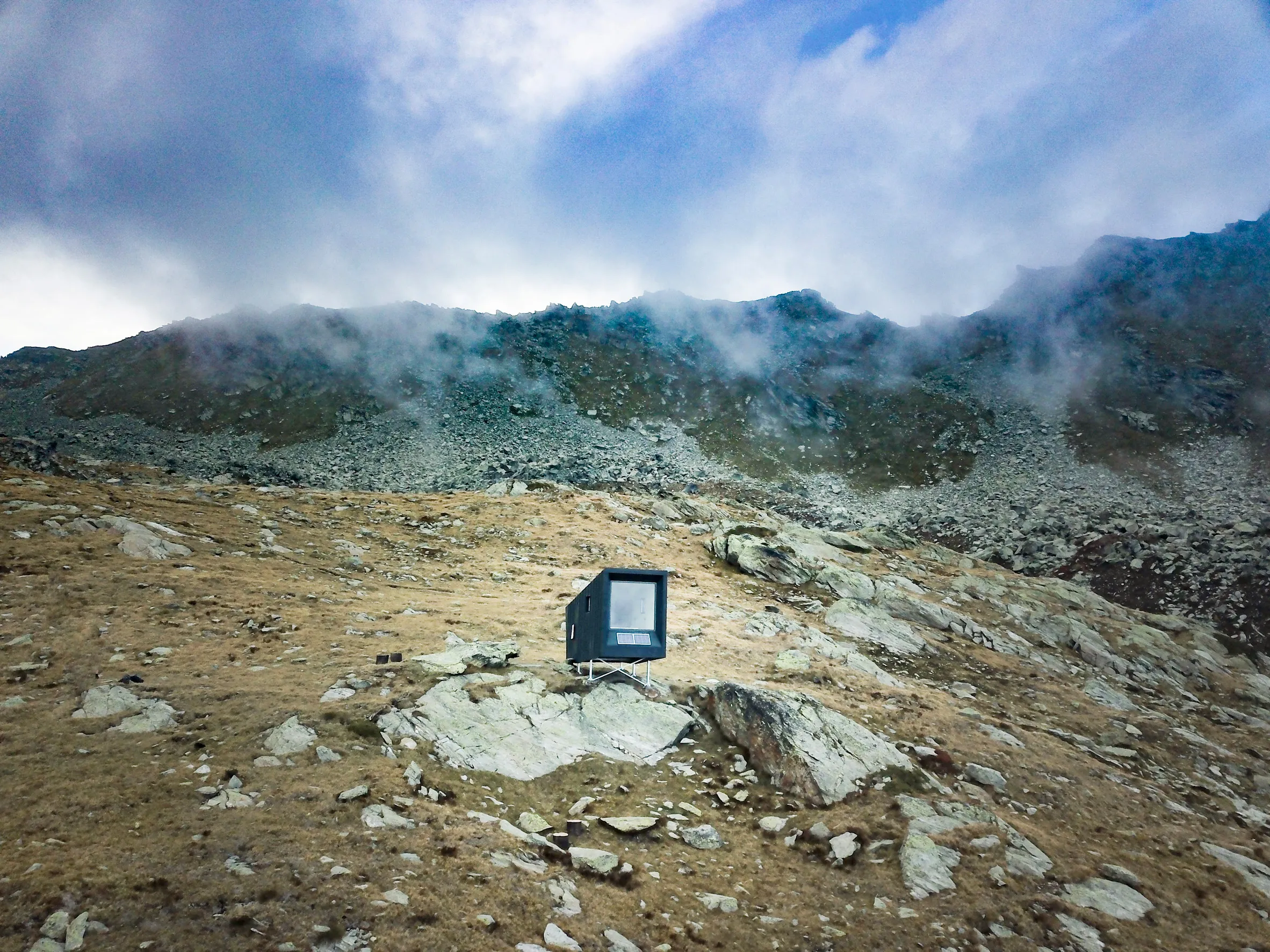
Location: Aosta, Italy
Architect: BCW Collective
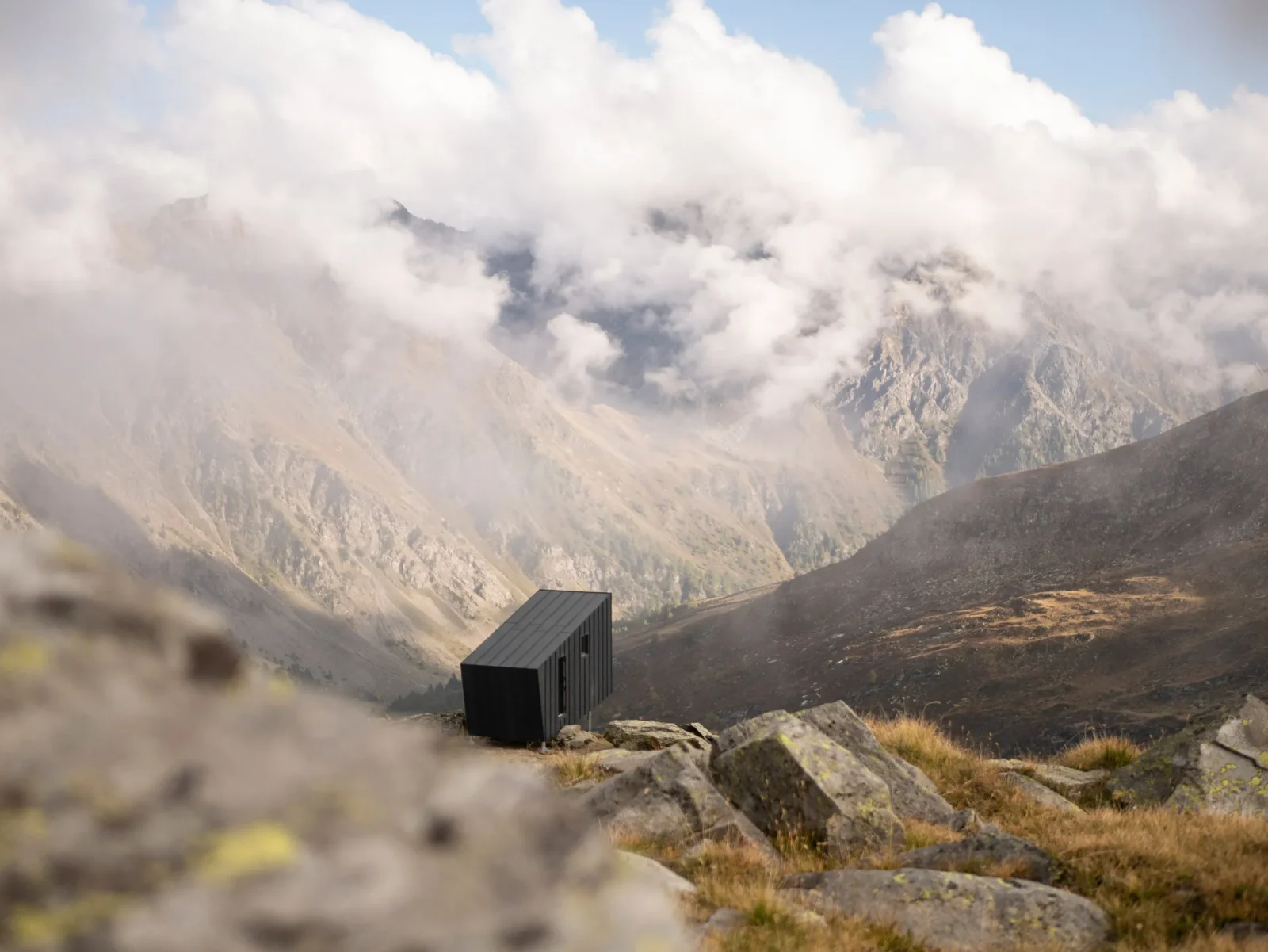
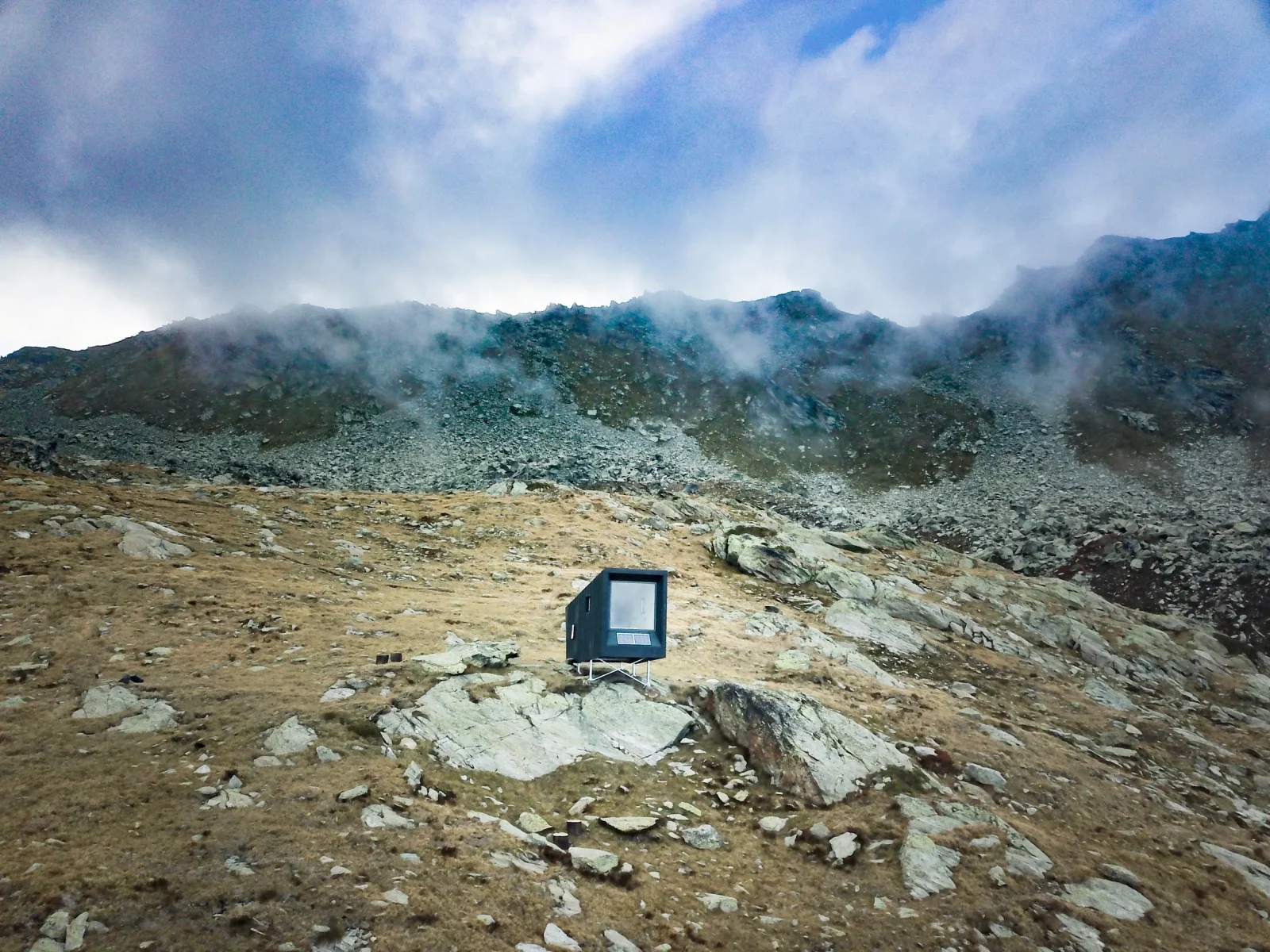
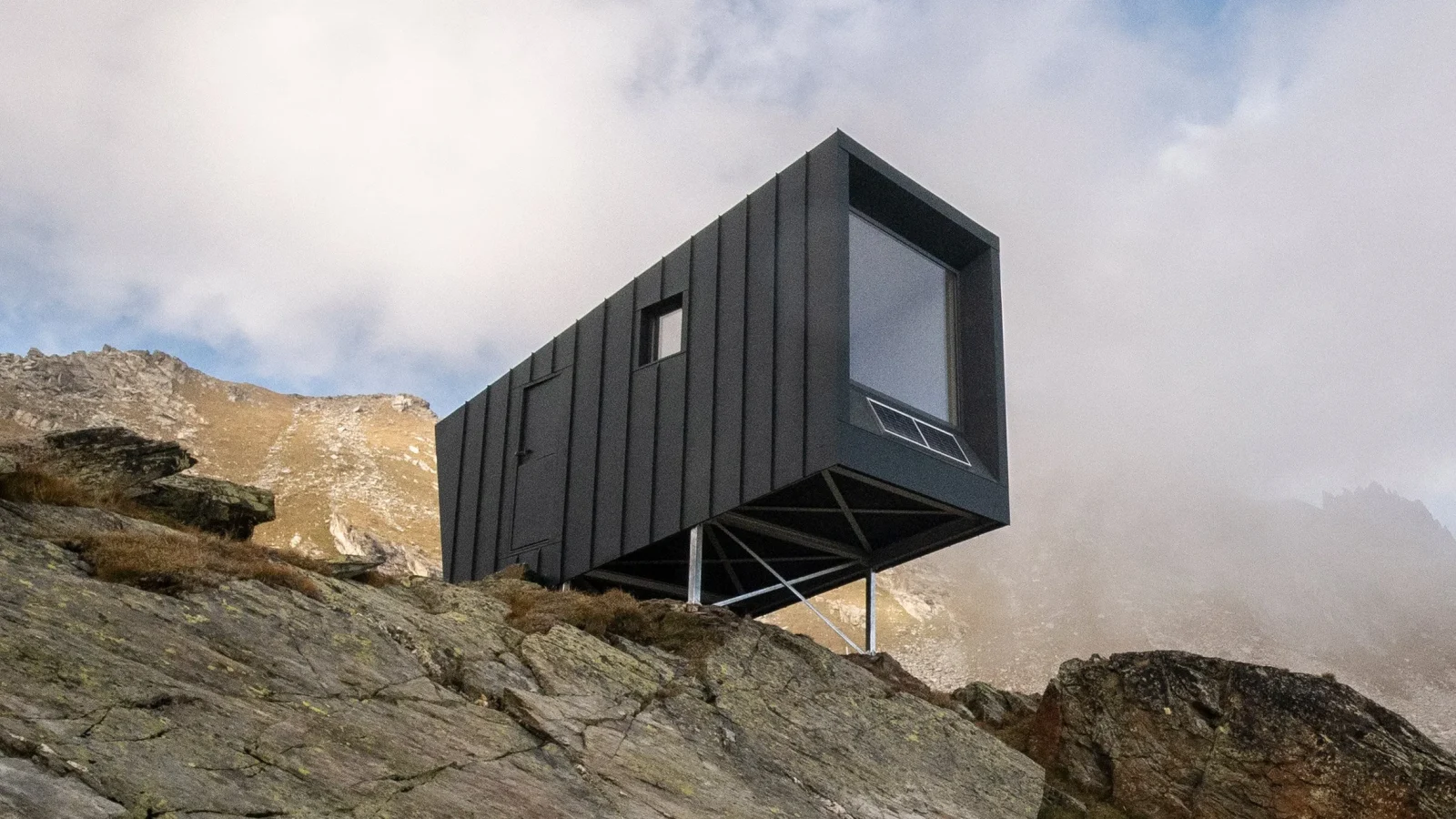
Winner of a competition organized in honor of the Bredy family, Bivacco Bredy is a mountain shelter located in a high-altitude area near Laghi di Dzioule, two small alpine lakes situated 2,500 meters above sea level in Italy. Inspired by Claudio Bredy’s life and his passion for the mountains, this structure, with a minimalist approach, expresses both openness of spirit and introspection.
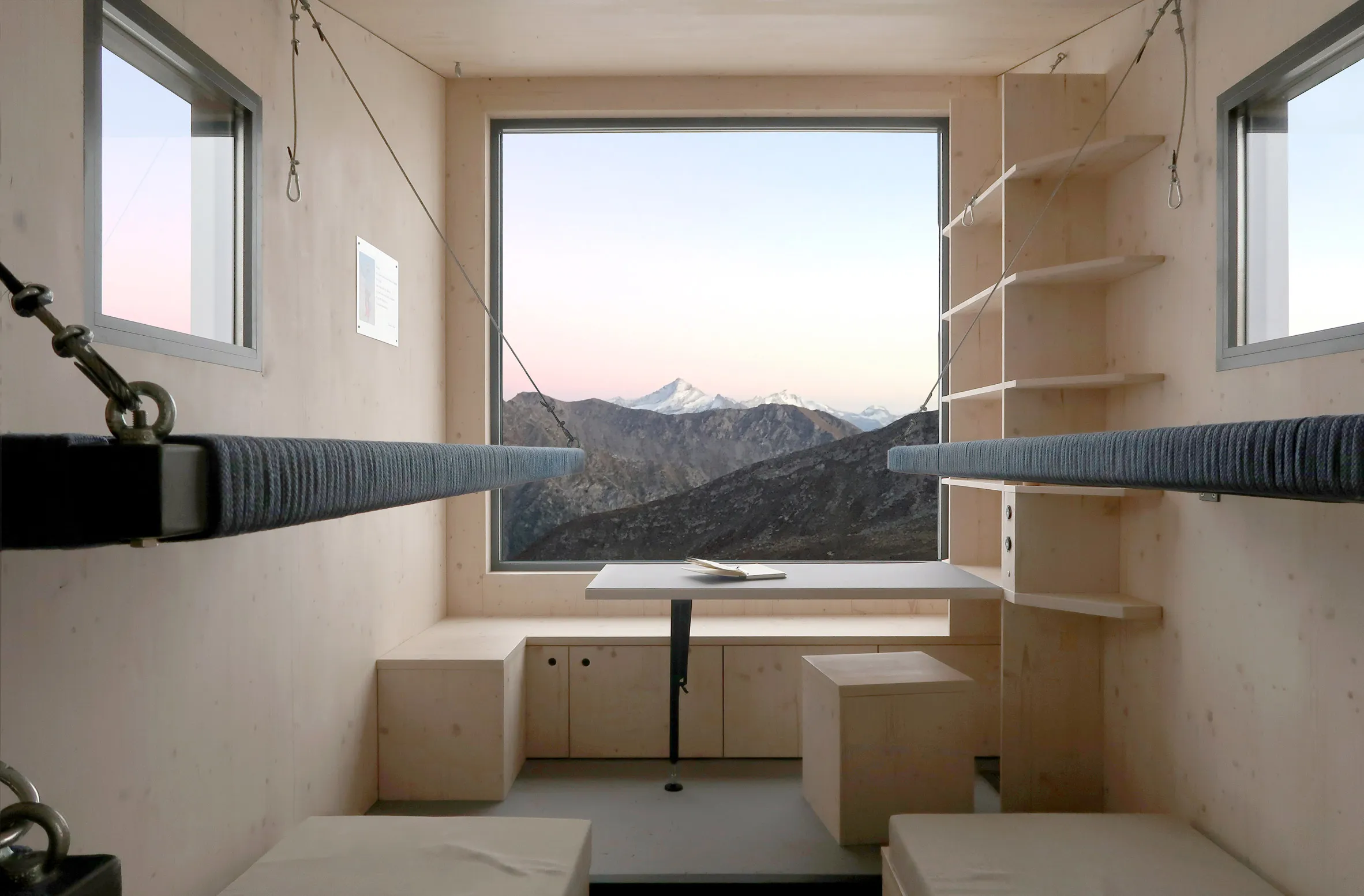
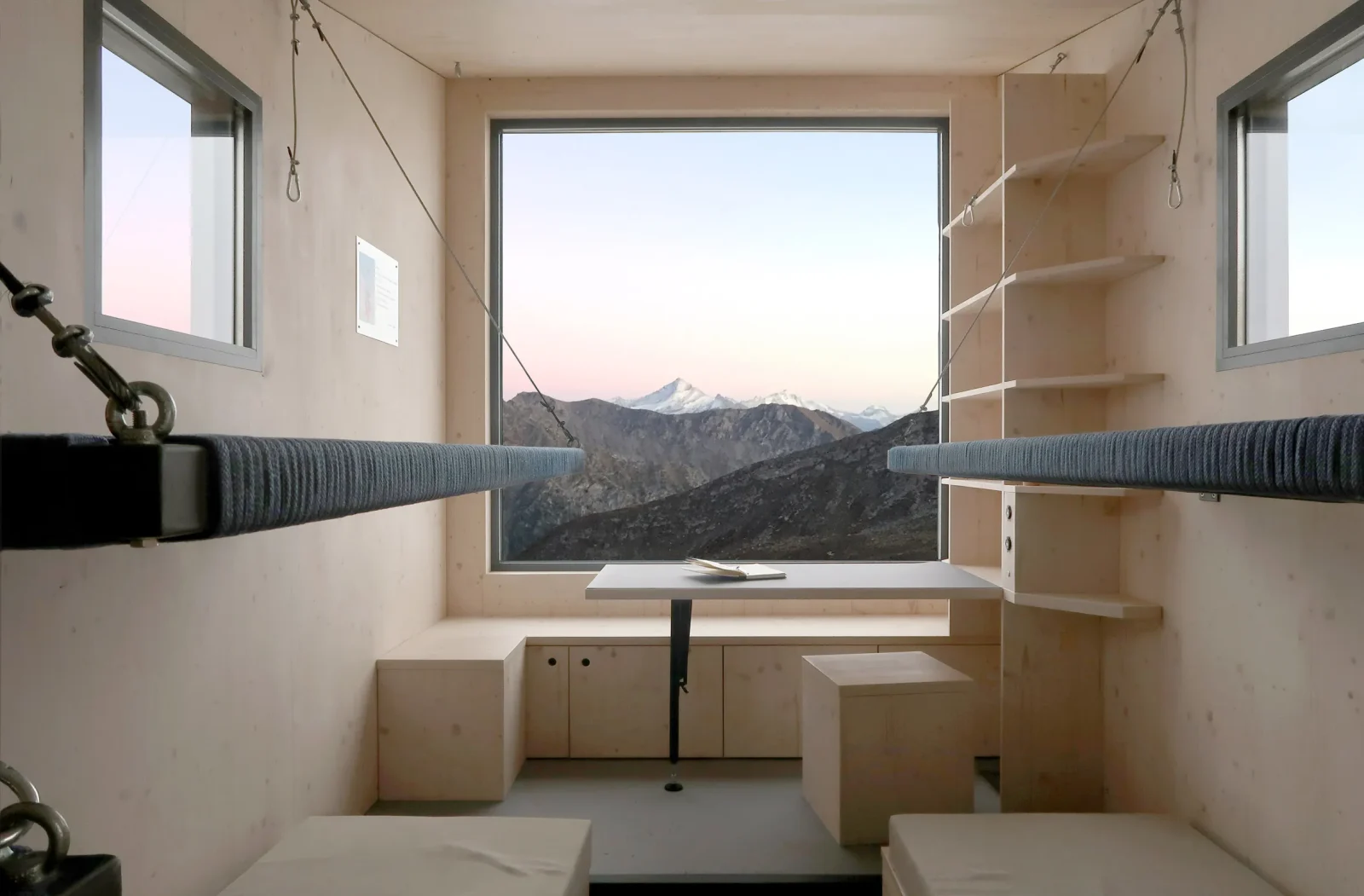
The entire structure forms a telescope opening onto the views to the south, while a large opening frames the 4,000-meter Gran Paradiso peak, the mountaineer’s most successful climb throughout his career. This orientation also maximizes solar gain, providing a warm interior even in the colder months. Durable zinc cladding on the insulated panel walls helps capture and retain heat.
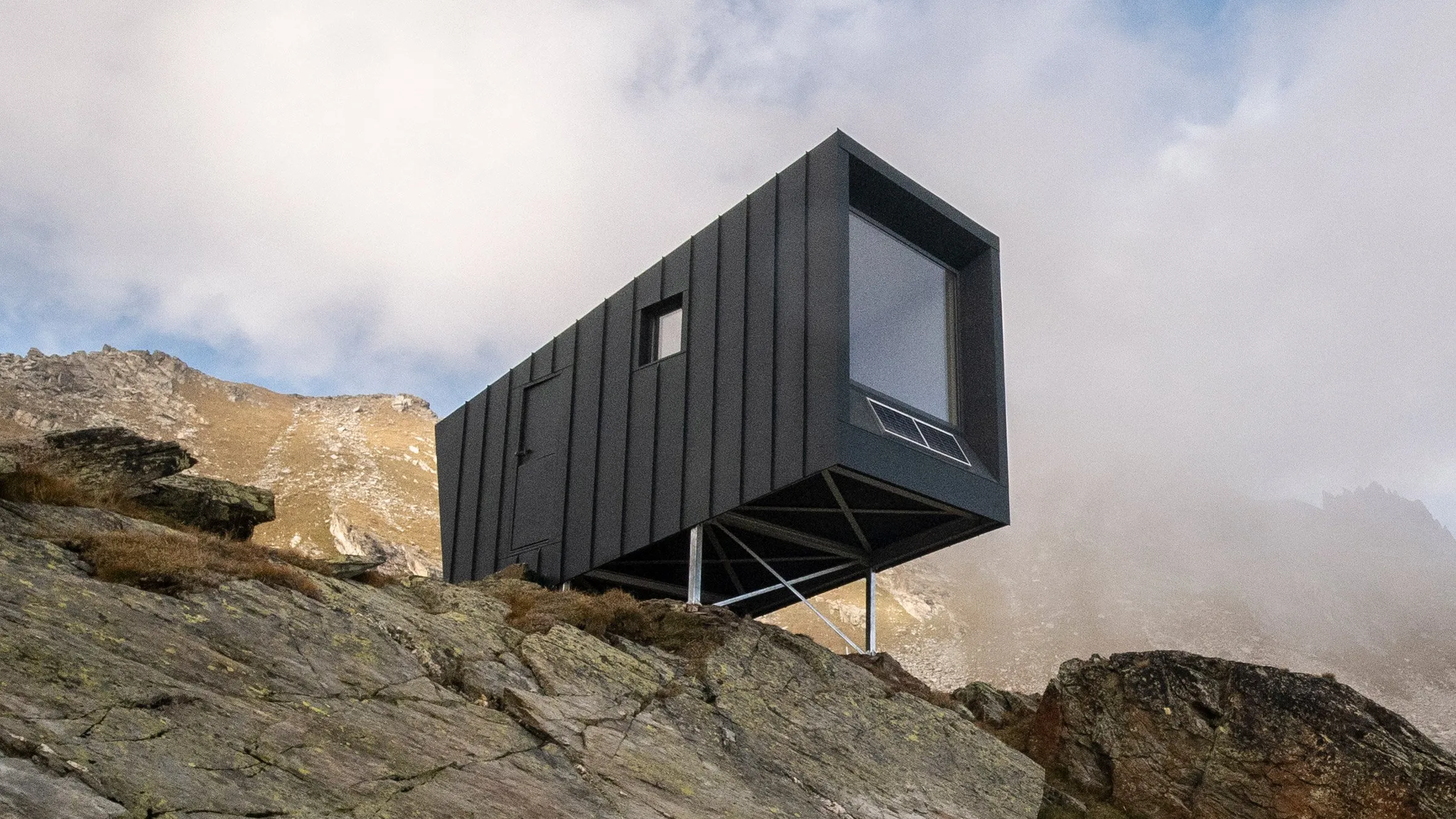
Prefabricated off-site and transported by helicopter, the cabin was assembled within a few days, anchored directly to the rocky terrain by a metal-framed foundation. The cabin interior features three bunk beds, a window seat, a desk built around a north-facing window, and a vestibule with built-in storage for hiking equipment at the south entrance. The space is paneled in pale wood, and two windows above the bunk beds help create a sense of immersion in the landscape.
7. Lake House
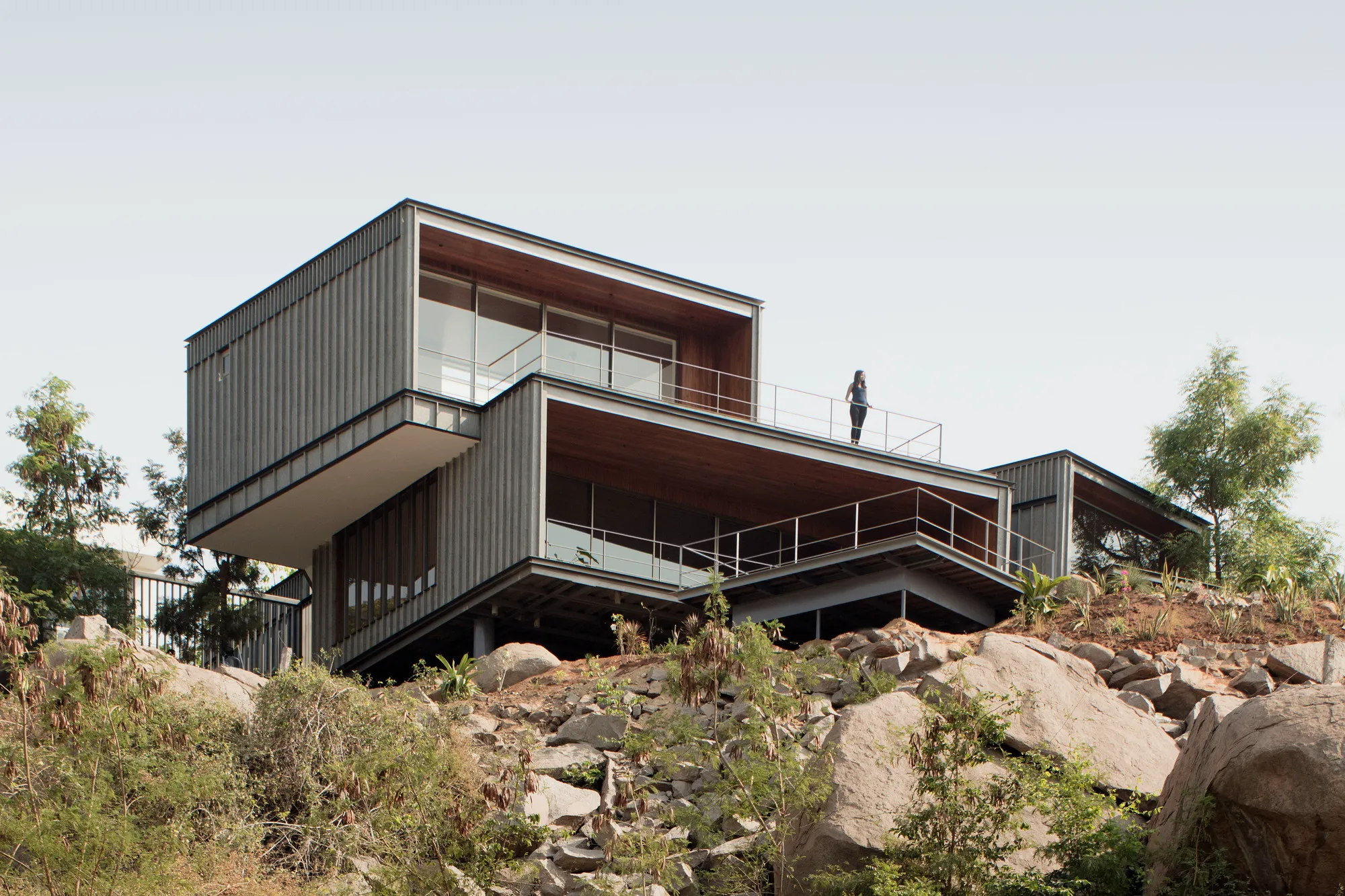
Location: Hyderabad, India
Architect: Collective Project
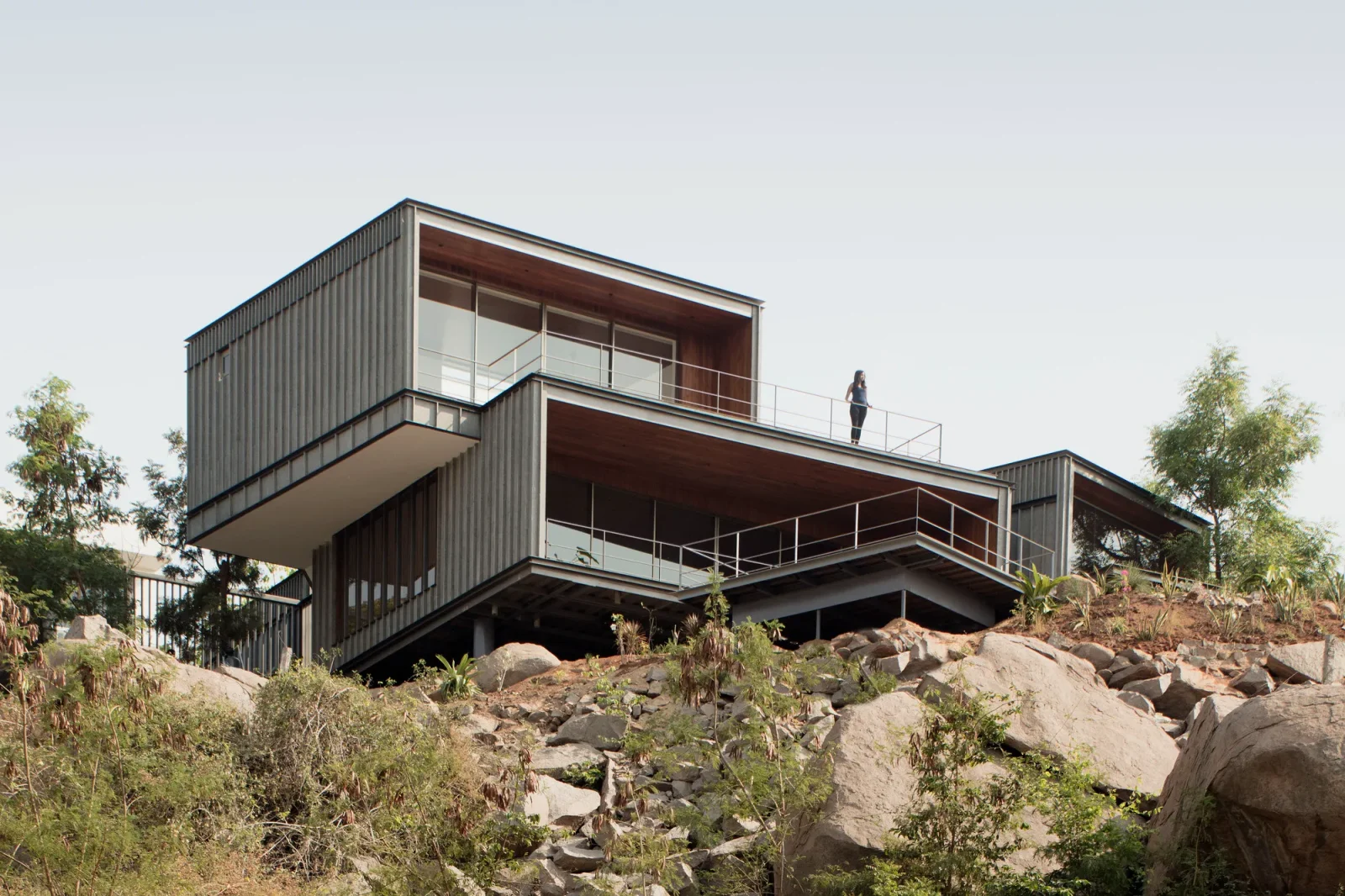
Designed as a private retreat offering a break from entertainment and urban life, Lake House is located on a steep and rocky slope overlooking Durgam Cheruvu Lake. Despite its location in the heart of the city, the house feels completely isolated, and thanks to its topography, it offers stunning views across the water to a nature reserve and the contrasting density of HiTec City in the distance. Rejecting the idea of leveling or clearing the land, Lake House stands elevated above the terrain, transforming the natural landscape into a central focal point of the architectural experience.
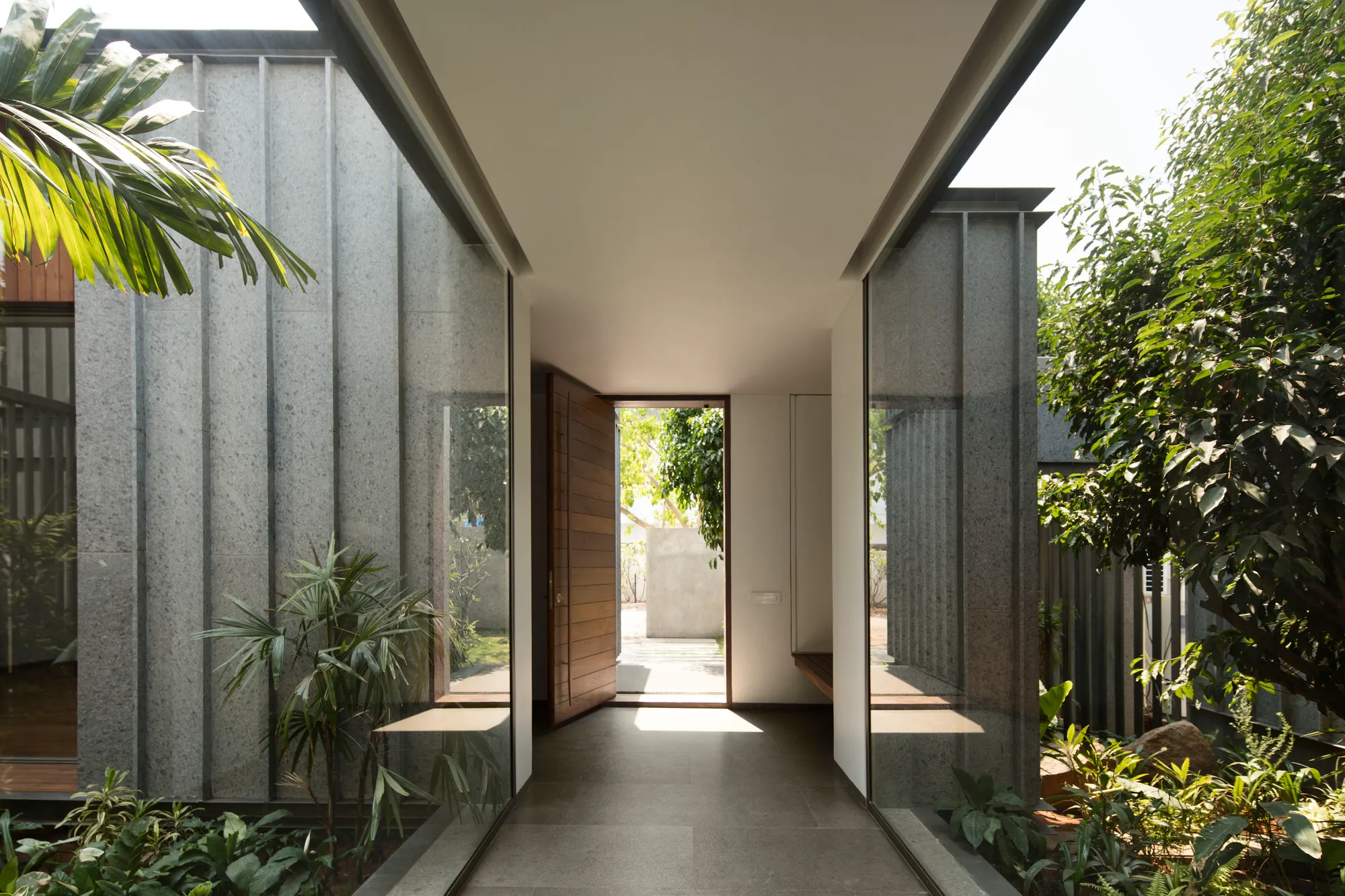
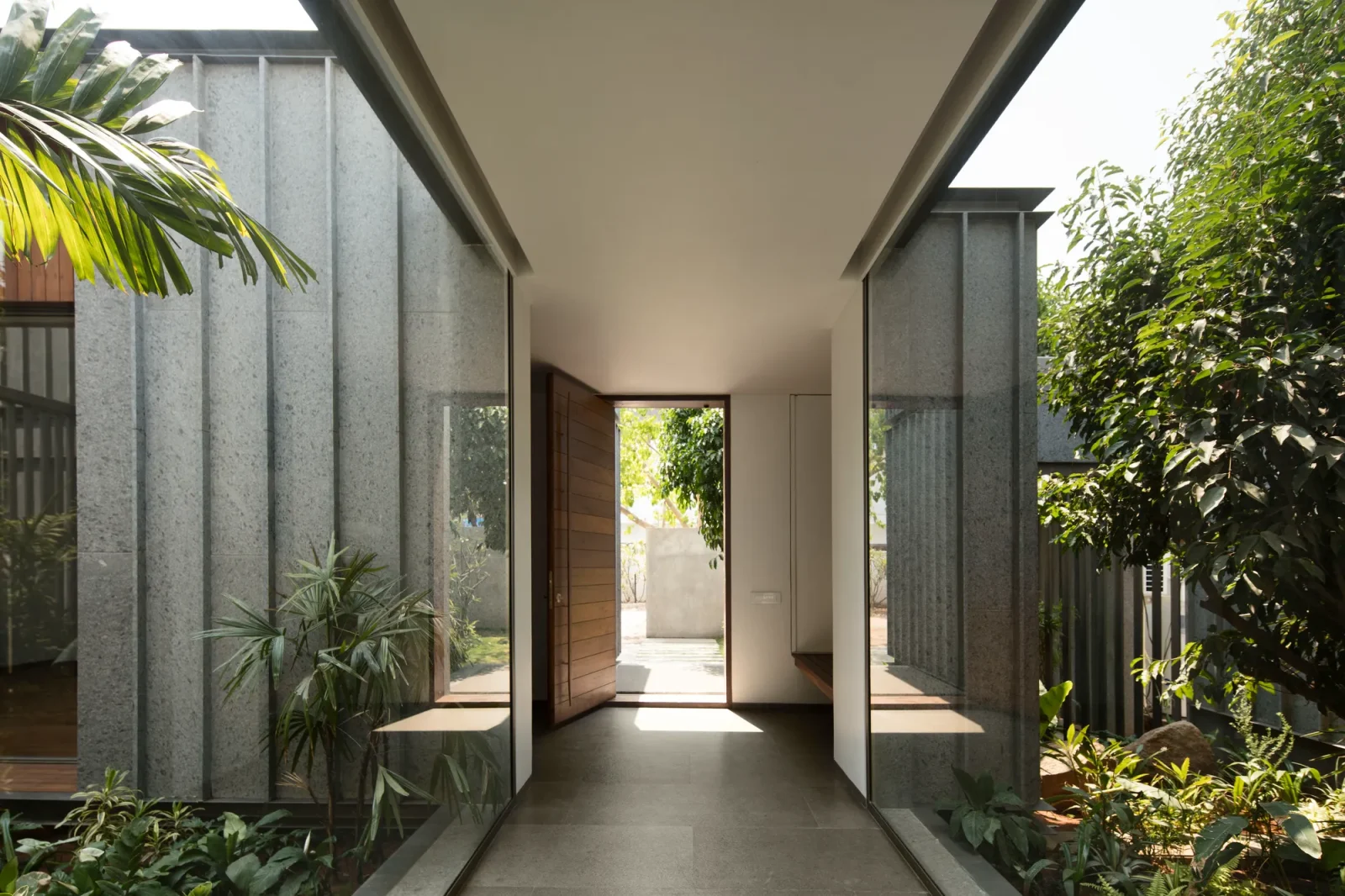
Opening through a portal of three large teak trees that rotate and slide, the house offers spectacular views. Along the pathway and side walls, the lightweight steel structure is clad in panels and thin ribs of local gray granite to preserve privacy from neighbors while creating a delicate play of shadows. Heavy and light materials create a strong material and spatial logic. Floating stone-clad volumes are combined with wood cladding, creating continuity between interior and exterior.
8. PR House
Location: Cunco, Chile
Architect: Triangular
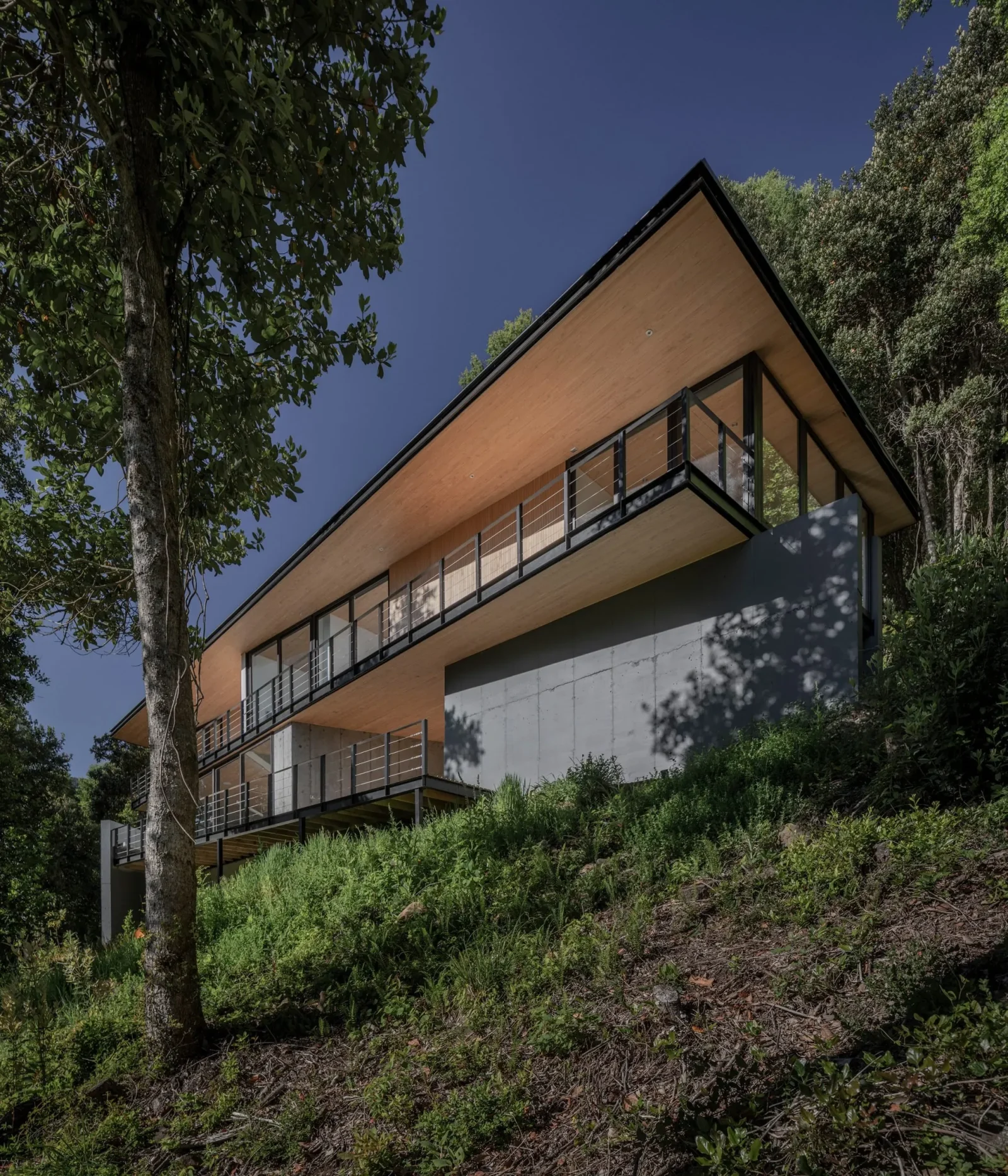
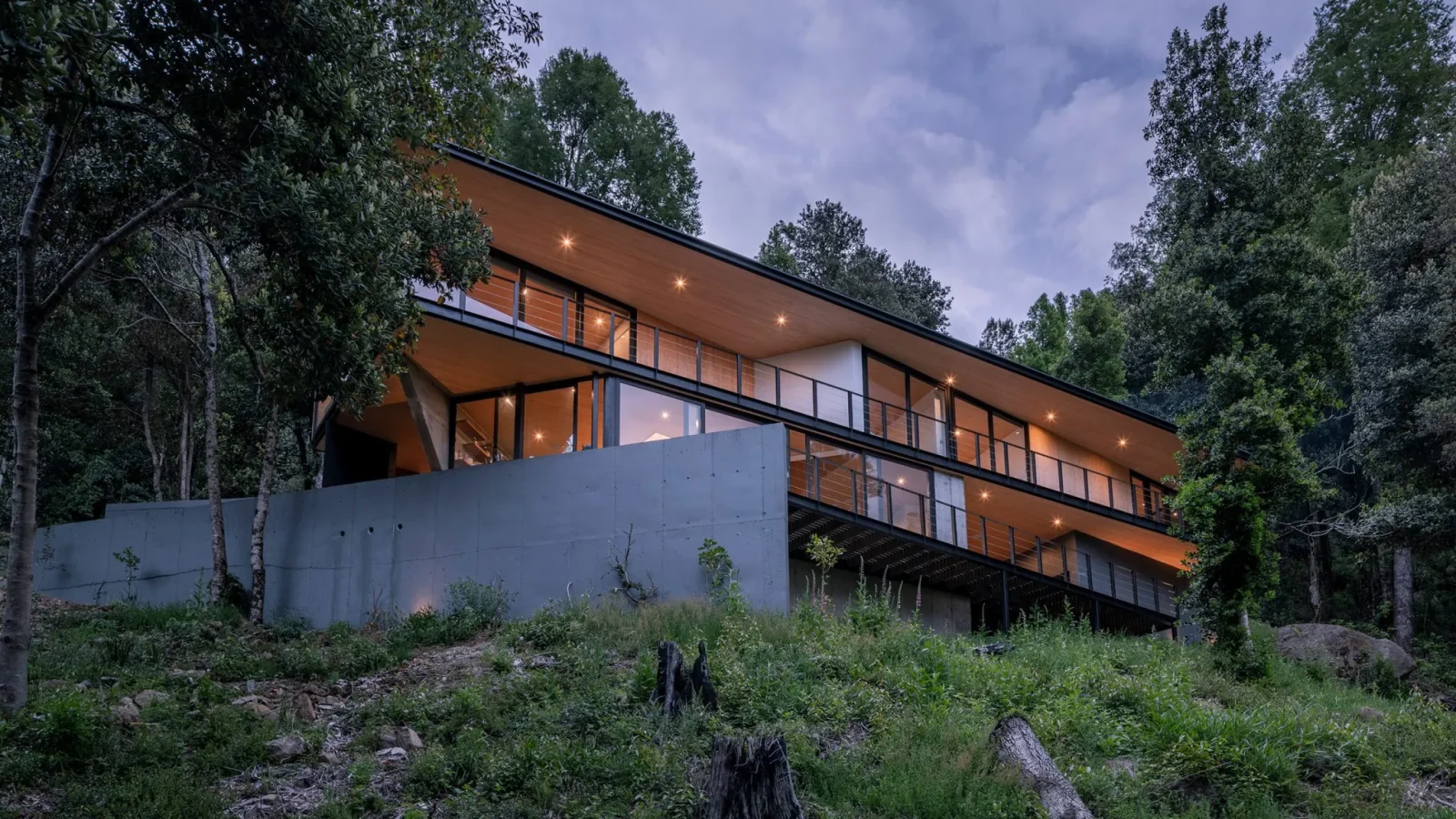
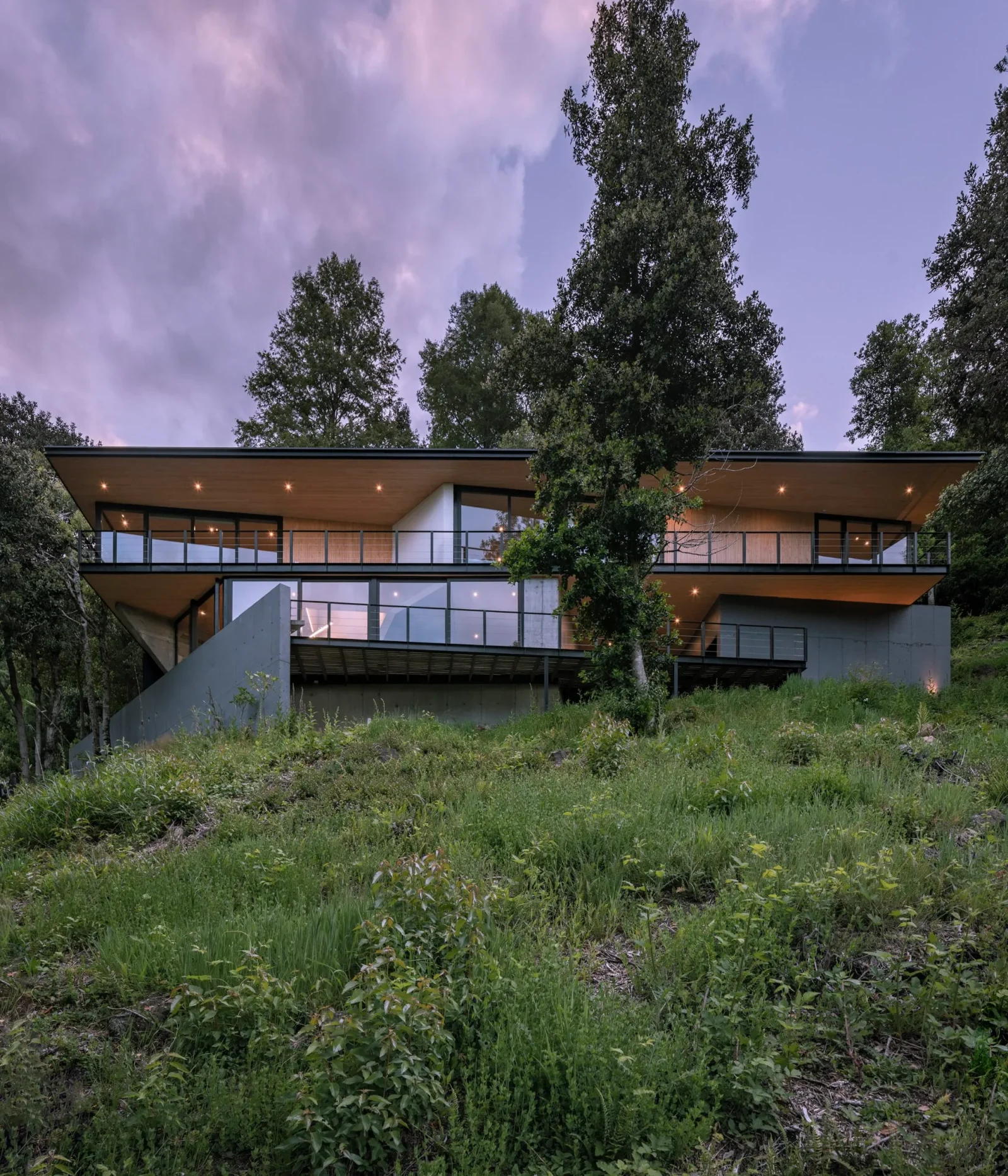
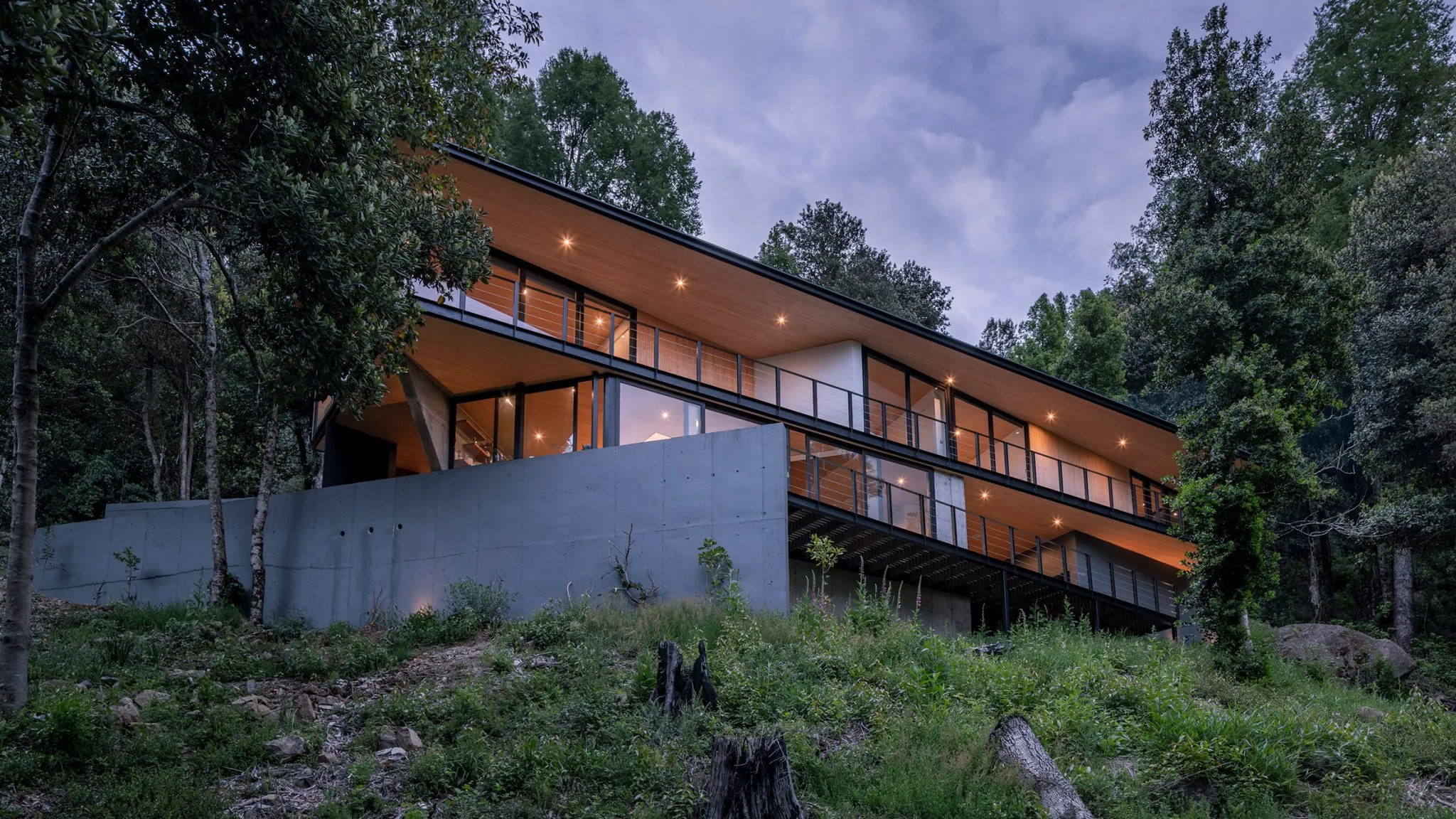
PR House, nestled as a triangle on a forested hillside in Chile, boasts a design that pushes the boundaries of architecture. Positioned on a 40–50% incline to capture the site’s only panoramic view toward Lake Colico, the house uses a series of concrete retaining walls. This concrete retaining wall strategy minimizes interference with the terrain and natural vegetation while creating terraces at different levels that follow the slope.
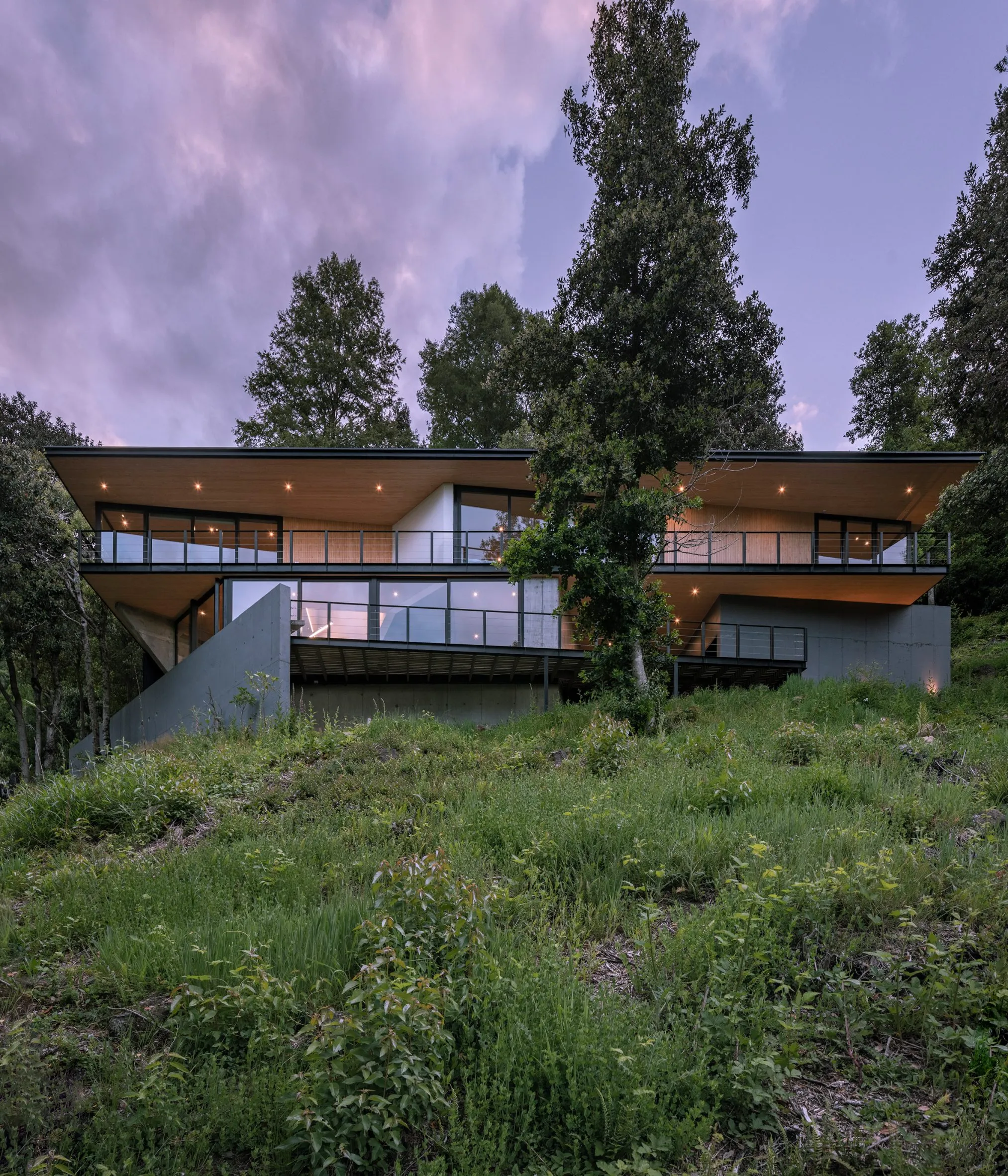
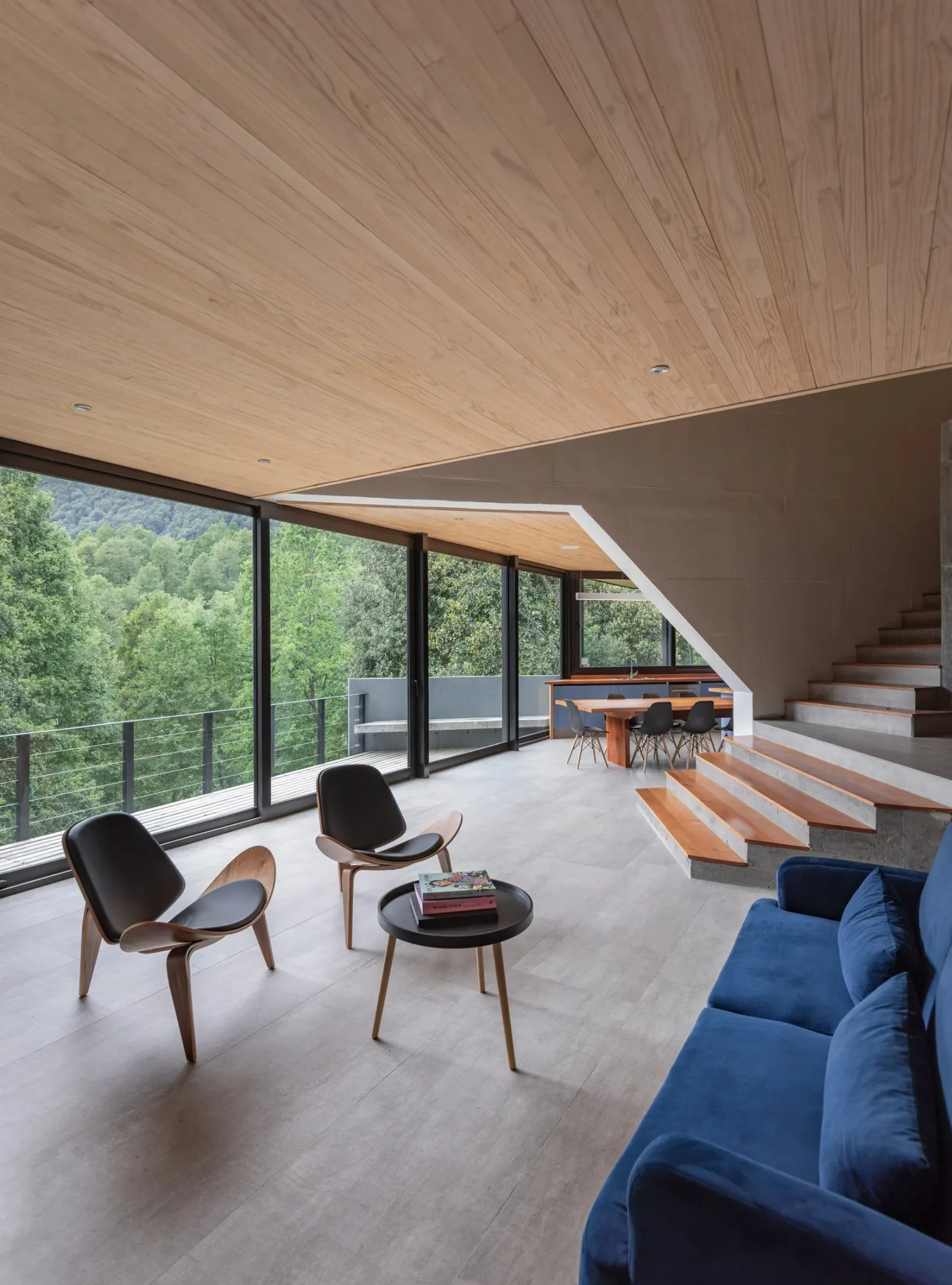
Designed for a family from Santiago, this vacation home features a V-shaped plan of 240 square meters and two stories. The entrance is through two concrete slabs, ending in a hall overlooking Lake Colica. The hall distributes and separates the home’s three defined areas, featuring a double-height space: shared areas on the first floor, children’s and guest rooms on the second floor facing west, and the master bedroom on the second floor facing east.
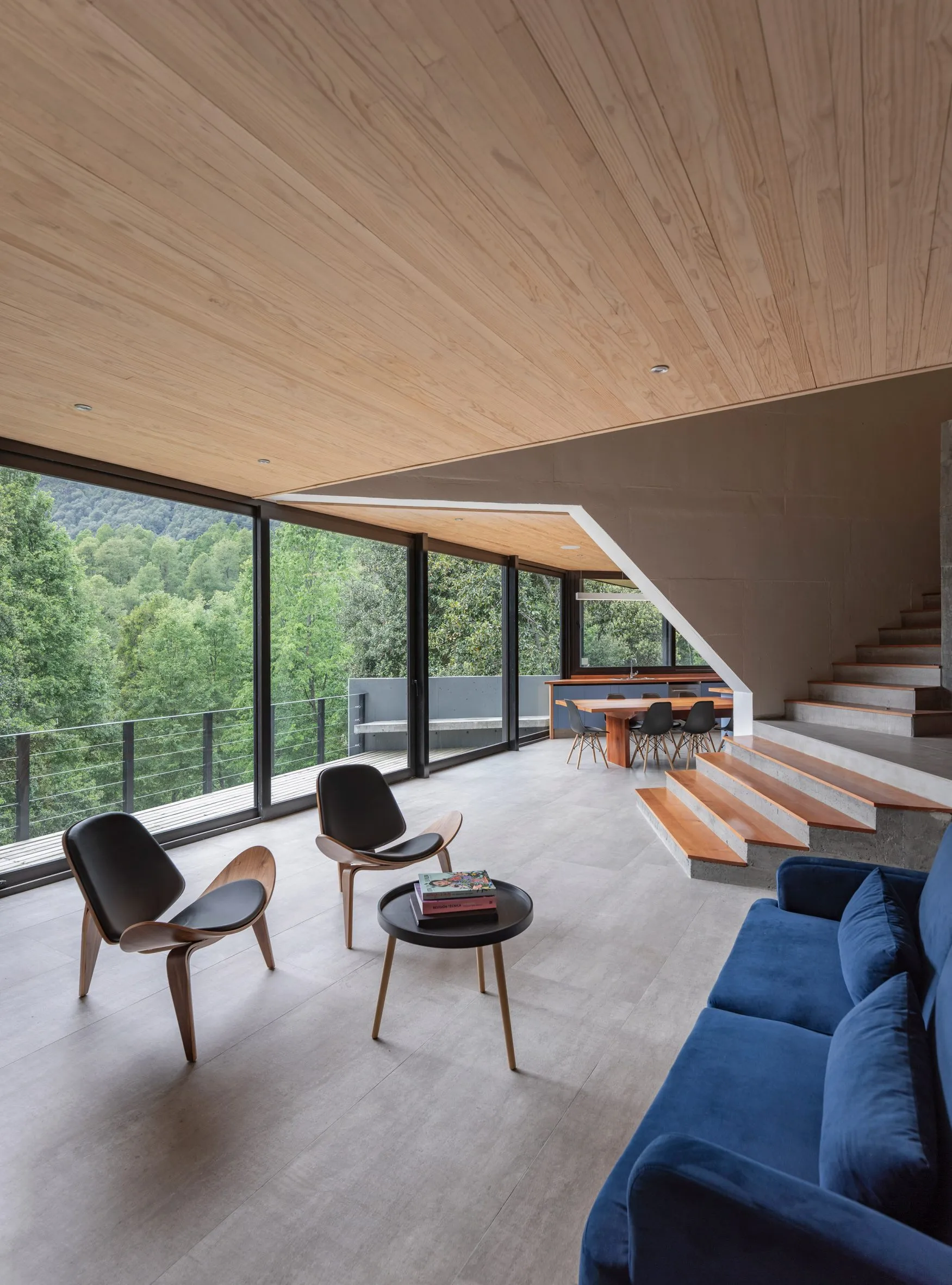
Material choices were made with durability and harmony with the natural environment in mind. The facades are clad in high-performance wood chemically modified with acetylation. The curved, pre-painted metal roof, which has no gutters, allows rainwater to drain away. PR House also features several terraces with pine decks and metal railings.
9. House MF
Location: Calamuchita, Argentina
Architect: alarciaferrer arqutectos
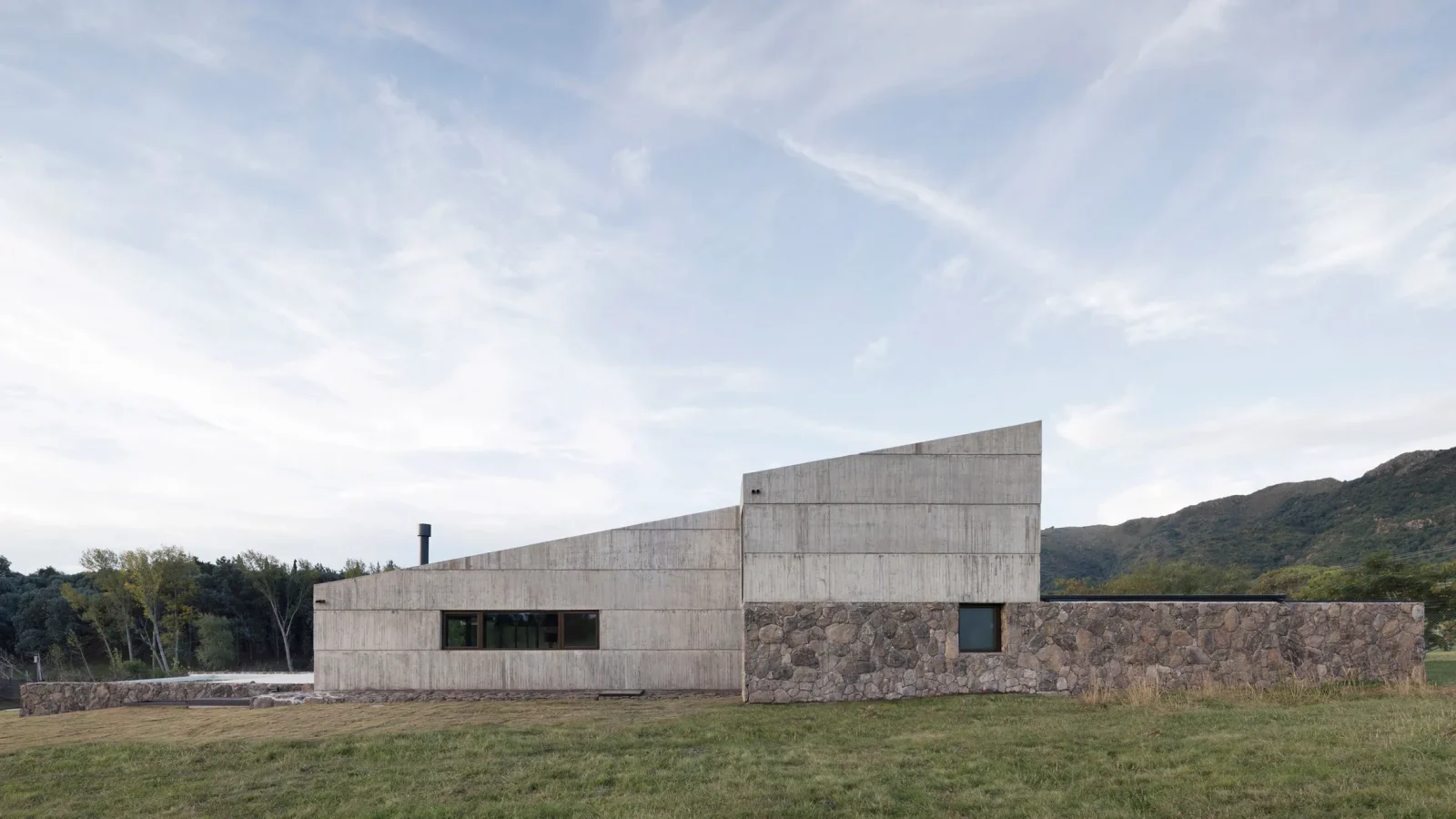
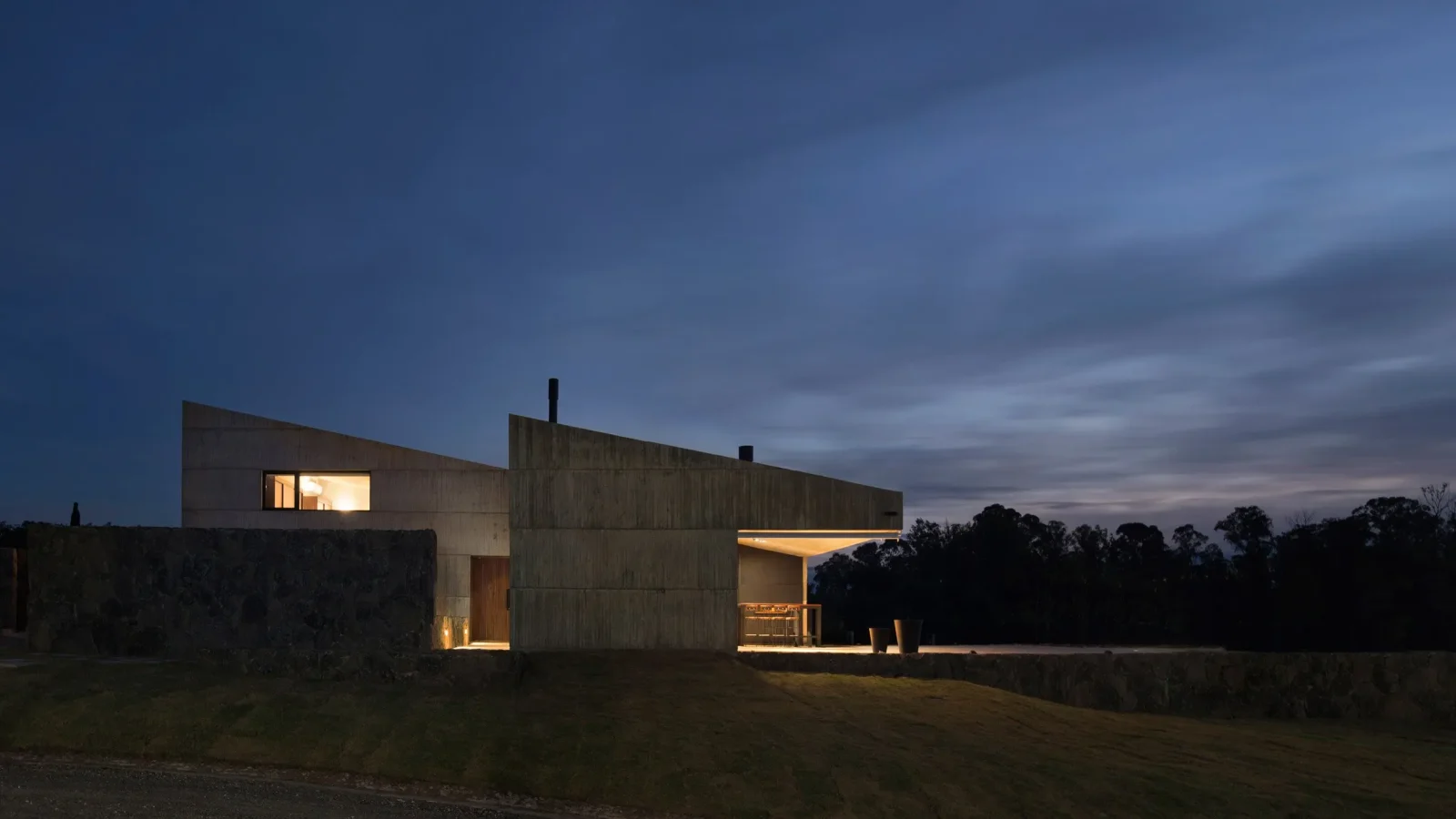
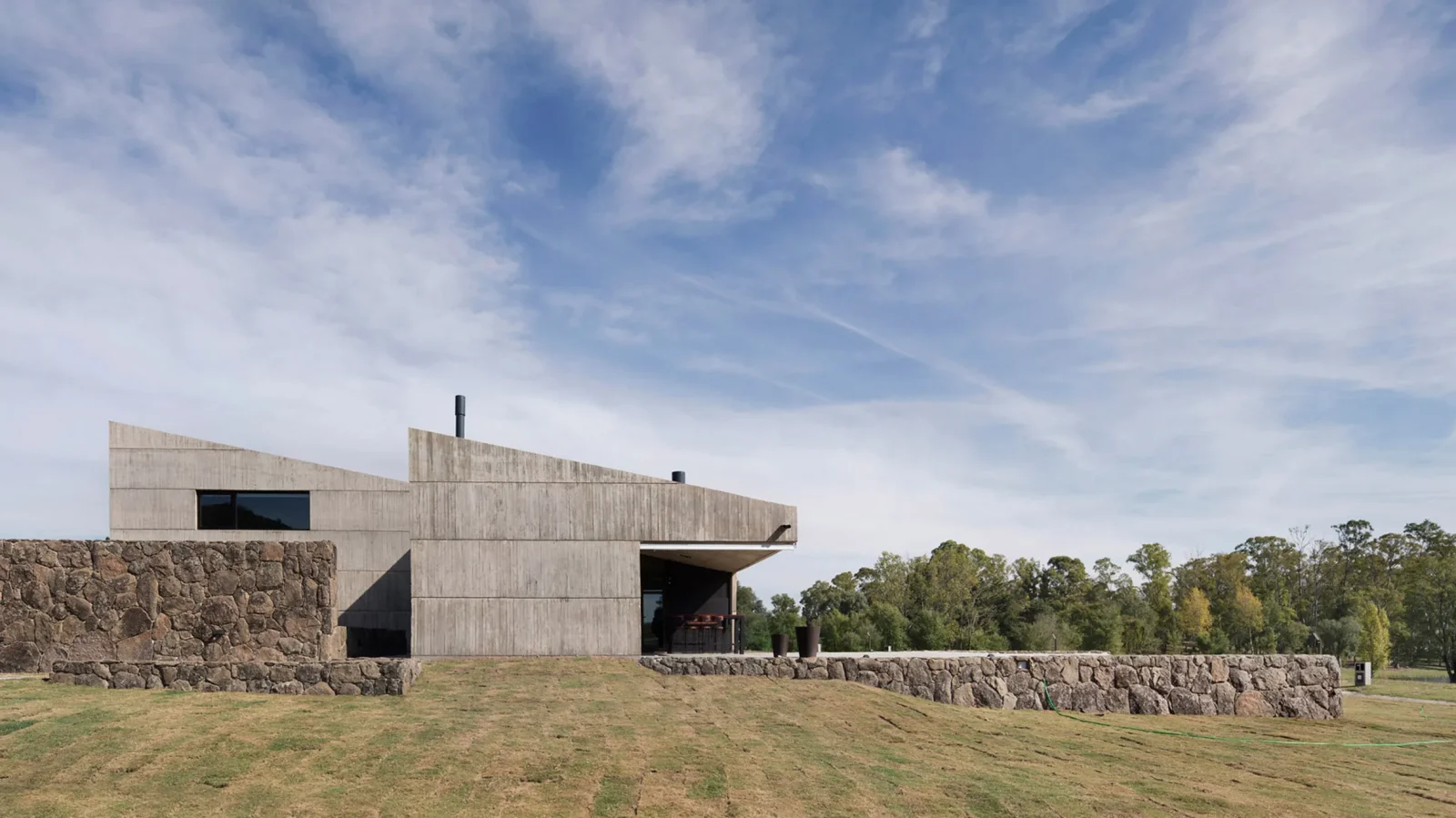
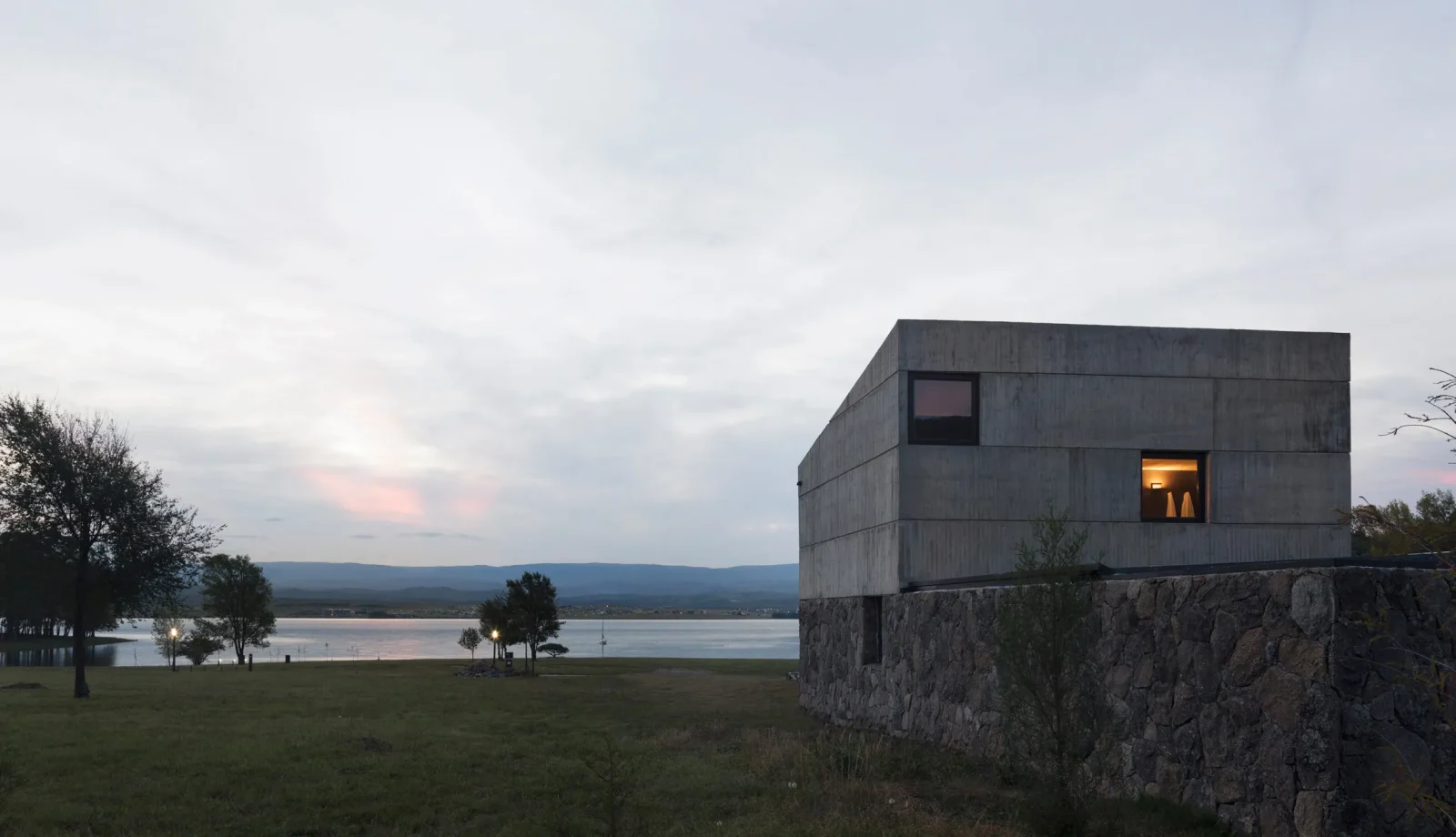
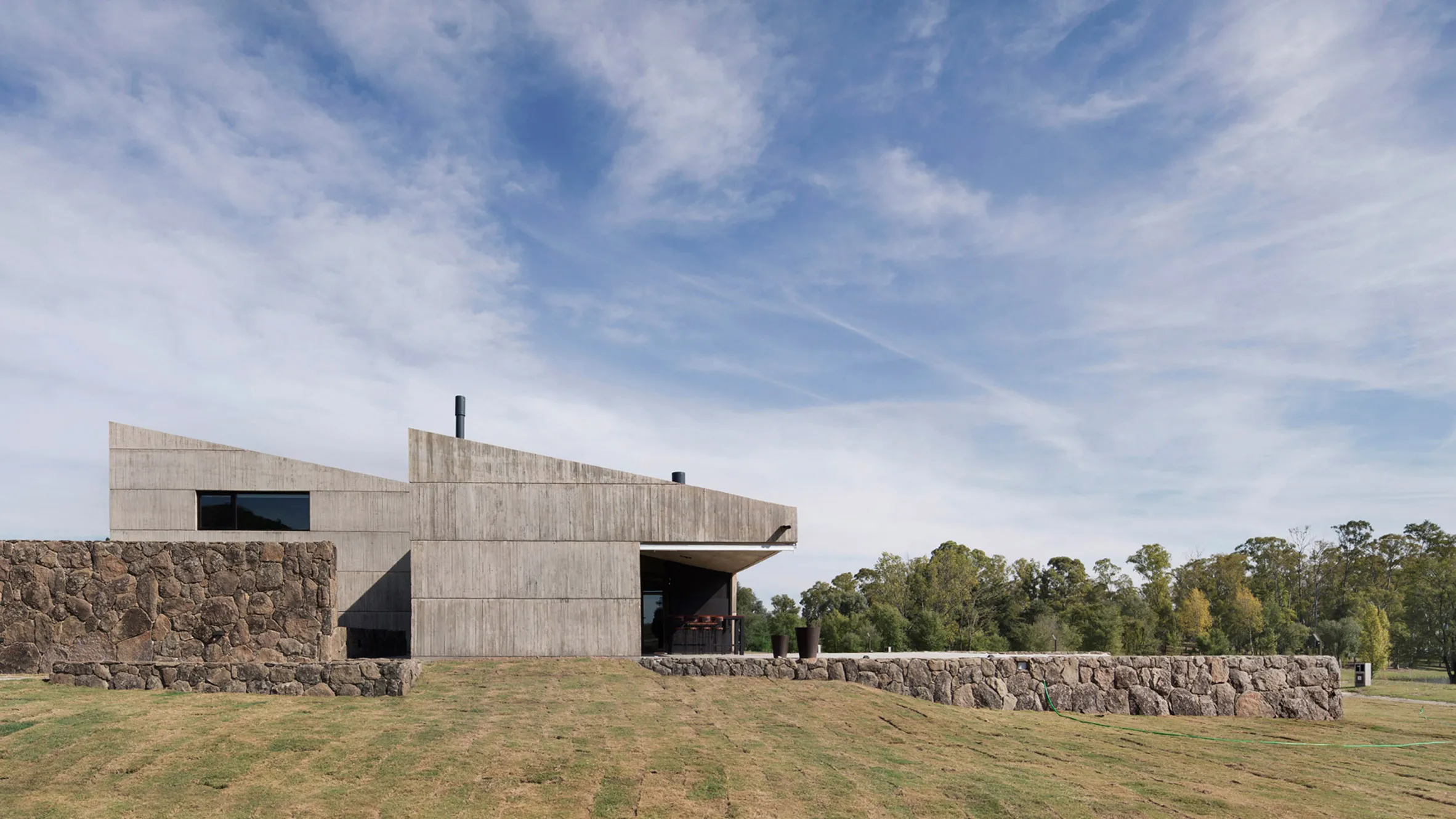
Nestled on a small slope amidst the small mountains and ranges of the Calamuchita Valley, the two-story House MF, with its linear and modern design, provides optimal orientation, utilization of the views, and interior organization of the spaces. The upper floor, extending toward the horizon through a cantilevered structure, houses the social areas and the main living room. The lower level, housing the guest areas, suggests a more measured and introspective relationship with its surroundings.
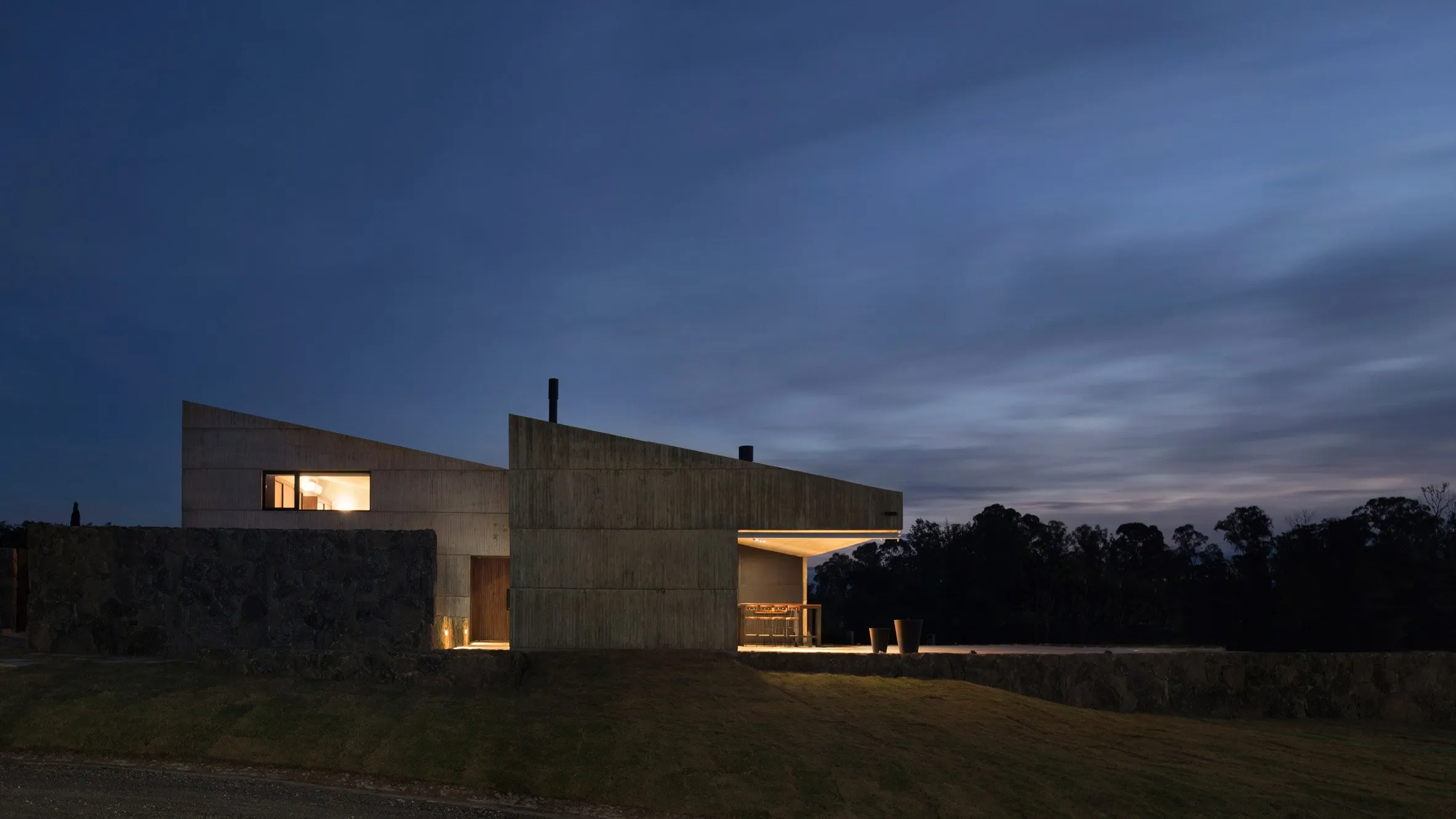
The pool located on the lower level transforms the upper area into a true extension for outdoor activities. Inside, a series of skylights defines circulation paths and creates distinct atmospheres. Constructed entirely from pink-pigmented concrete, House MF achieves a subtle harmony with the mineral tones of the surrounding mountains.
10. House in Port De La Selva
Location: El Port De La Selva, Spain
Architect: Jose Antonio Molina, Maria Castello Martinez
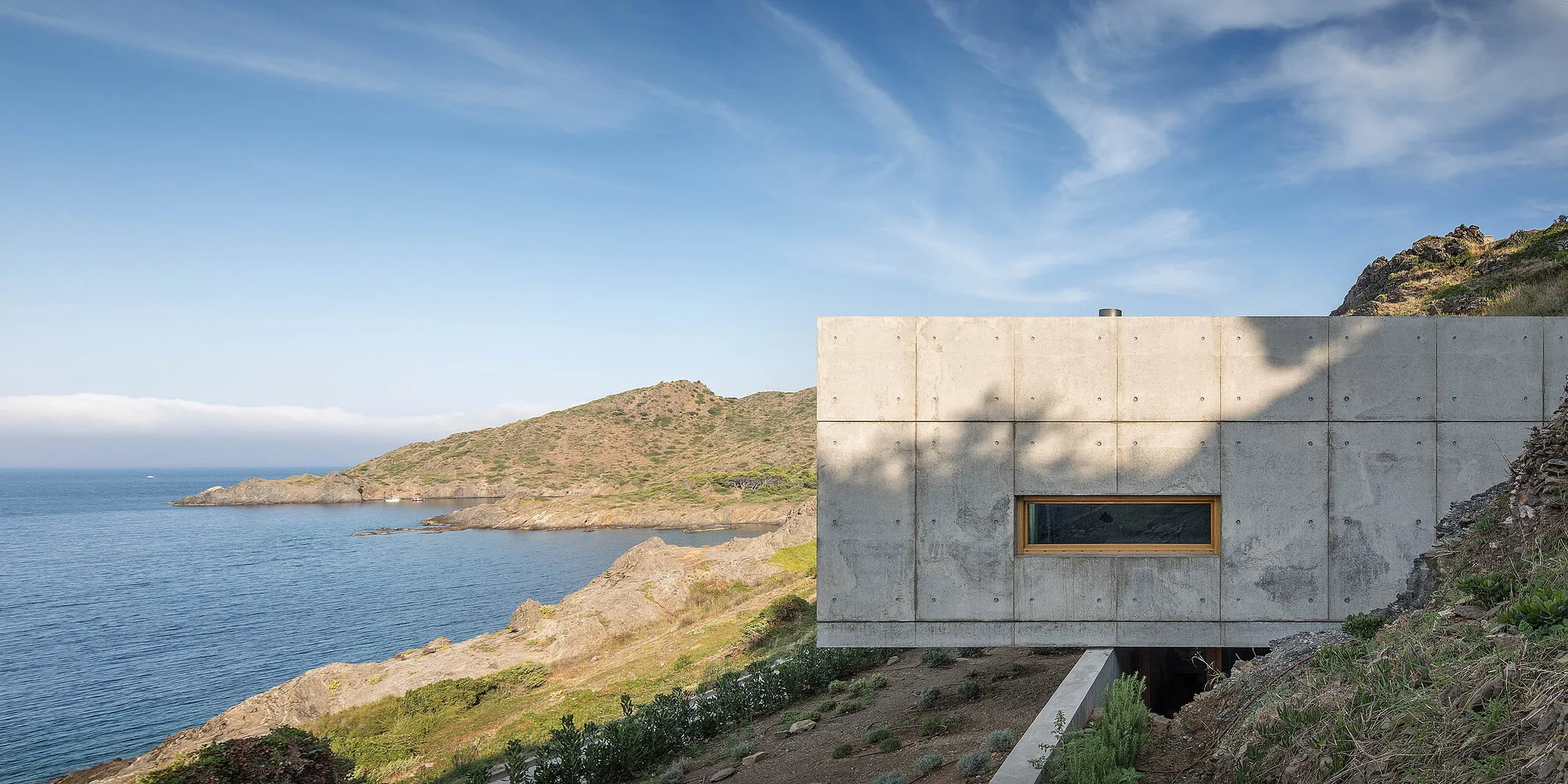
Located on a rocky site overlooking the sea on the Costa Brava, House in Port De La Selva is a family home comprised of two concrete volumes connected by a glazed corridor. Designed as part of the steep, sloping landscape extending down to the coast, this house is characterized by dark volcanic rock outcrops.
The lower level, carved into the land, merges with the cantilevered volumes facing the sea, establishing a balance between openness and privacy. This arrangement also minimizes the visual impact of the residence while creating a series of verandas with varying light conditions. The ground floor features the master bedroom, a bathroom, and a living area, which open onto private verandas surrounded by steep rocky outcrops.
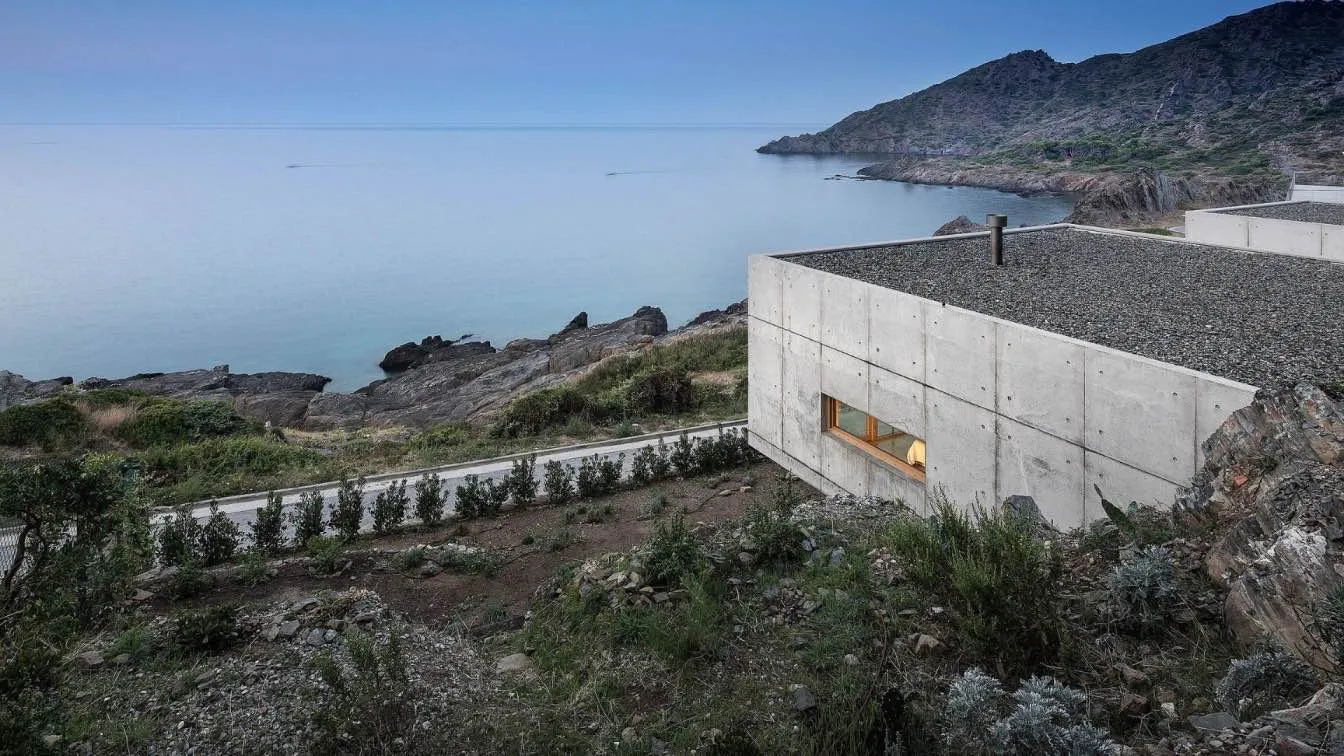
The children’s bedrooms and a small swimming pool are located on the east side of the house, while the kitchen and dining area are located on the west side, along with an additional sleeping area. The glazed corridor connecting the two volumes creates an outdoor space that is protected from the wind yet visually permeable toward the sea.
Explore Courses
.jpg%202.jpg "Building Performance with Forma & Opossum")
.jpg "Ondrej Chybik - Rethinking Architecture")