



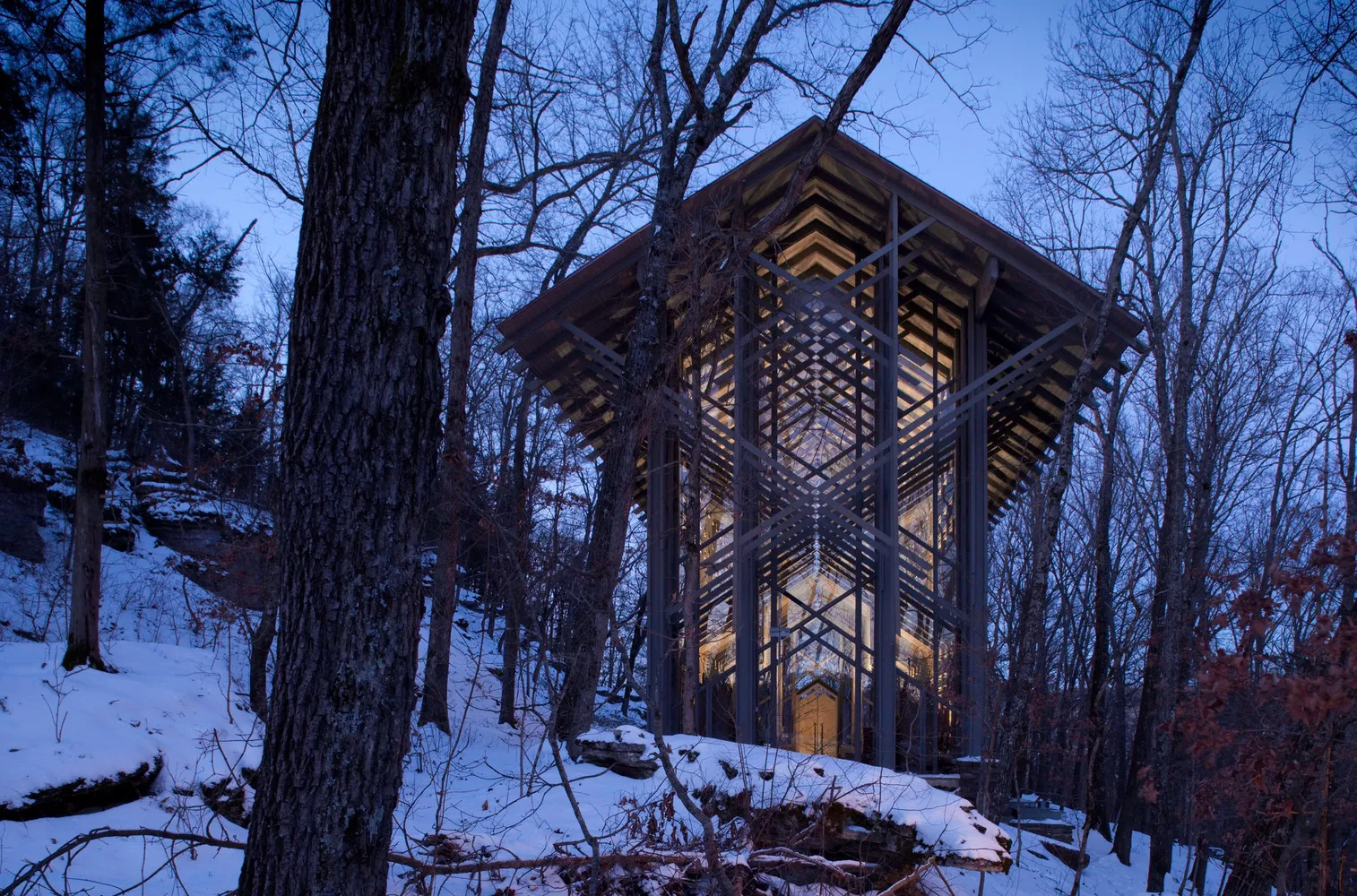
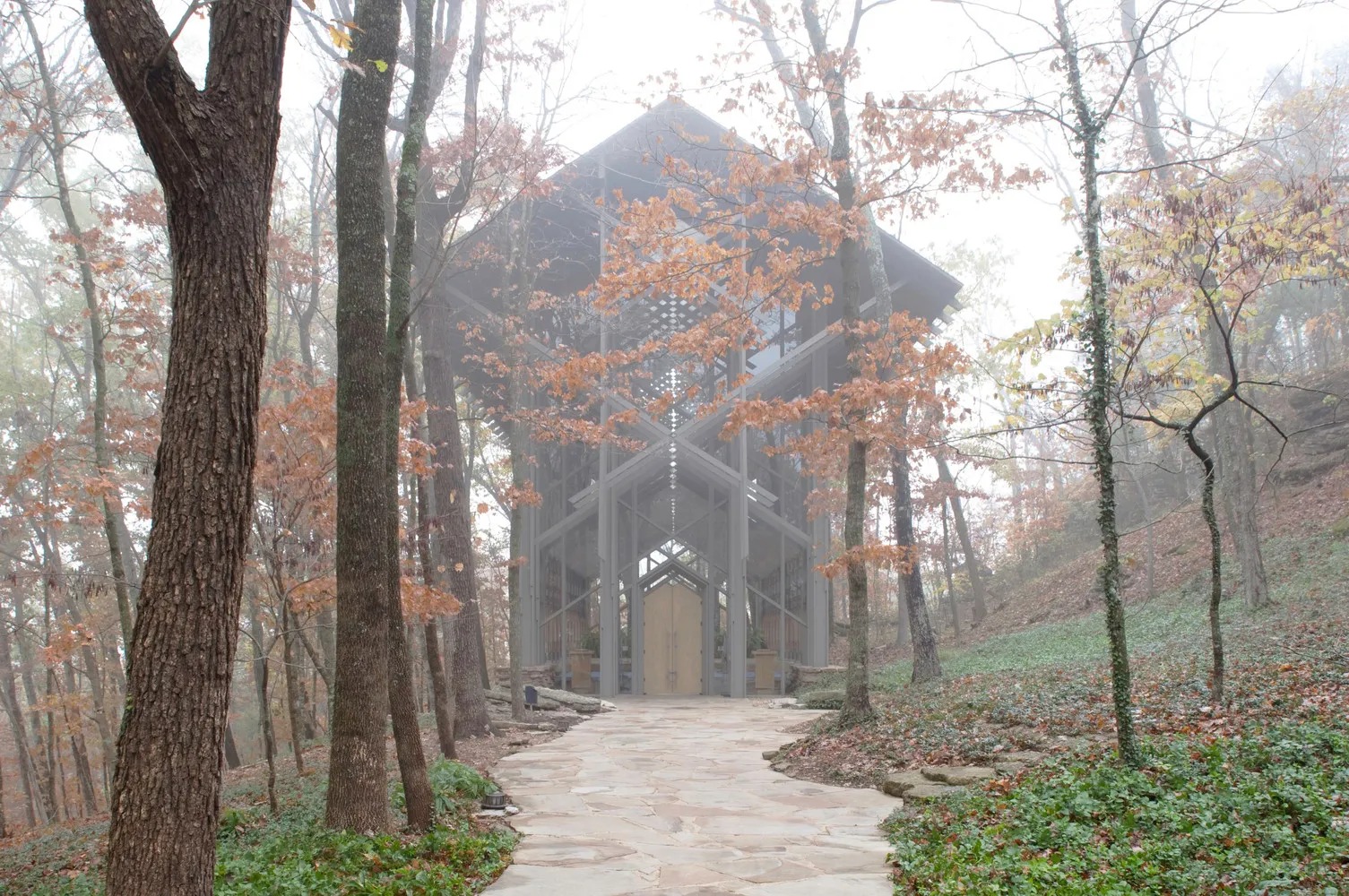
Architect E. Fay Jones designed the award-winning Thorncrown Chapel nestled in the Ozark Mountains near Eureka Springs, Arkansas, which celebrates organic and contextual architecture. Completed in 1980, this chapel has welcomed visitors from around the world, offering serene surroundings and tranquil spiritual architecture that harmonizes with its natural surroundings. The natural ecosystem guided every design decision to create an intimate dialogue between built form and nature, responding to the environment.
Design Philosophy and Inspiration
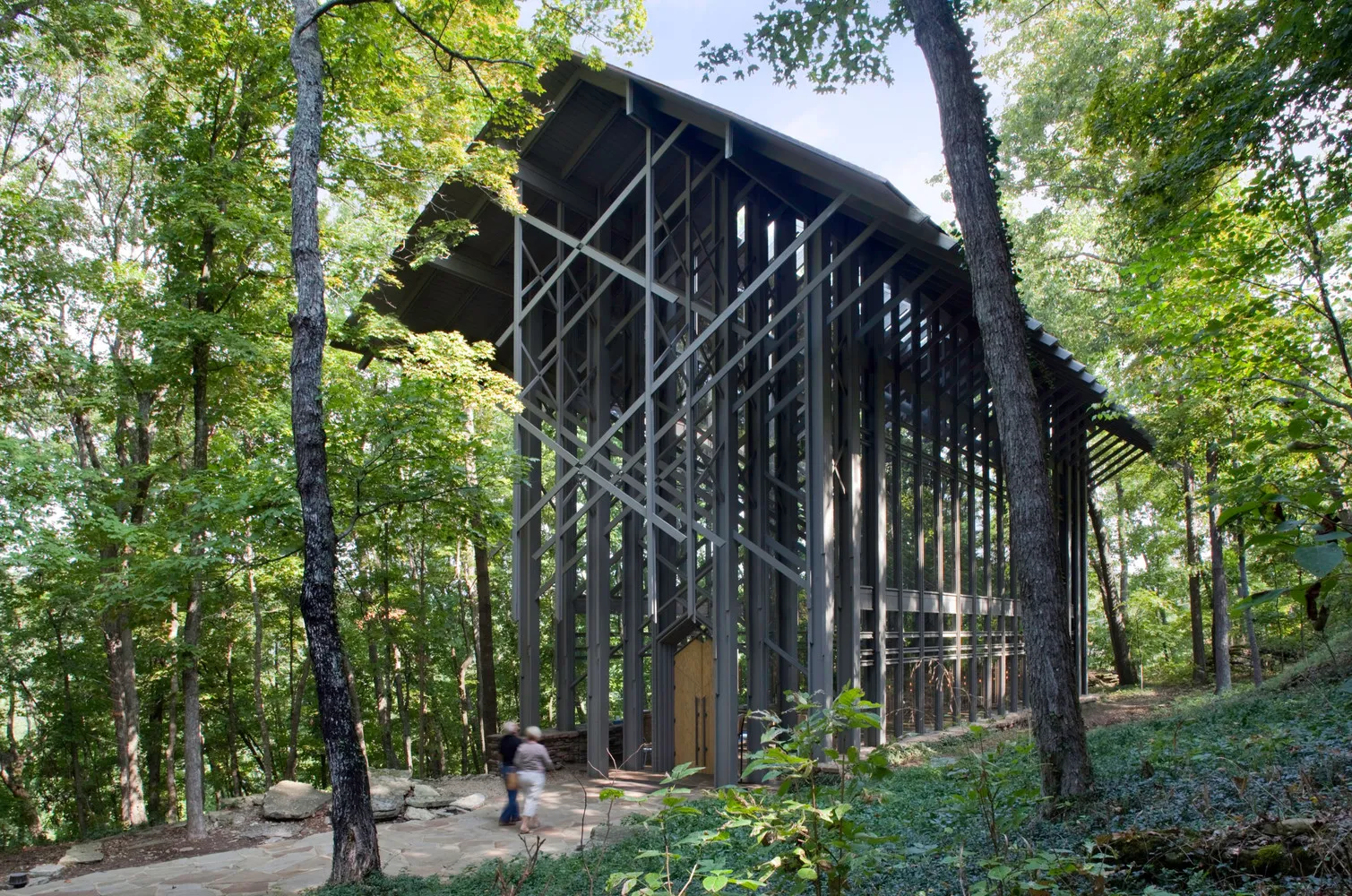
Inspired by his mentor, Frank Lloyd Wright, Fay Jones translated his vision, which resembles an extension of the surroundings. Conceptualized on the philosophy of “forest within a forest,” the design language was clearly rooted in organic principles, where architectural elements, light, shadow, and materials converge to create a spiritual value. Drawing inspiration from the 13th-century exquisite Gothic cathedral Sainte-Chapelle in Paris, he reinterpreted Gothic ideals through a modern lens, adapting it in the Ozark landscape, terming the style Ozark Gothic.
Organic Architectural Principles
Blurring the boundaries of inside and outside, the form emerged from the site, merging with the surroundings. The aim was to dissolve the boundaries of the structure, making it light and delicate to create visual balance between exterior and interior. The design evolved by preserving the Ozark landscape, ensuring that visitors experience the journey through the forest before entering the sacred interior.
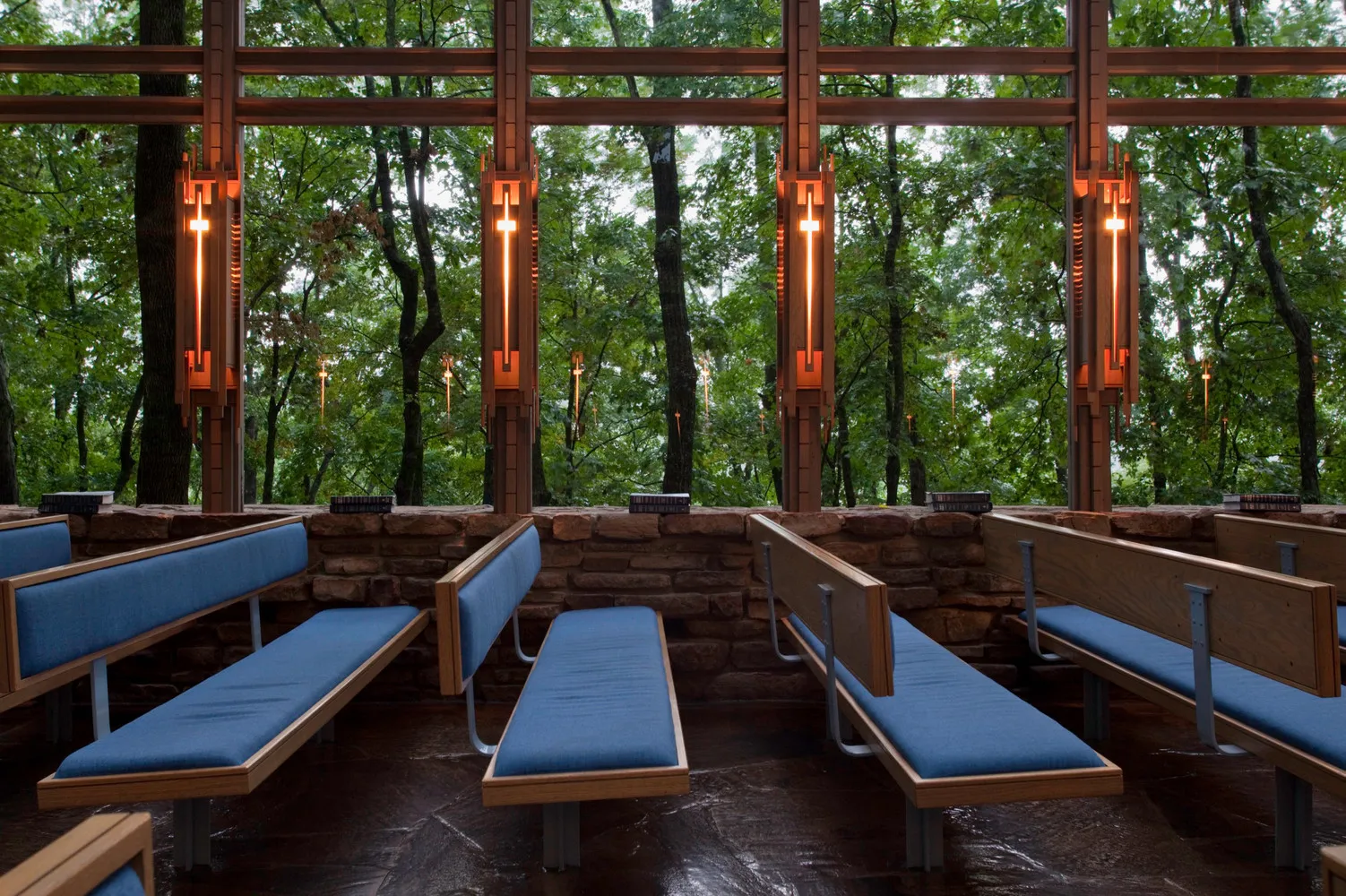
Crafted from 6,000 square feet of clear glass, the chapel connects inside and outside spaces, allowing visitors to experience changing light, vibrant greenery, and the beauty of seasons, enhancing the spiritual experience.
Form and Spatial Experience
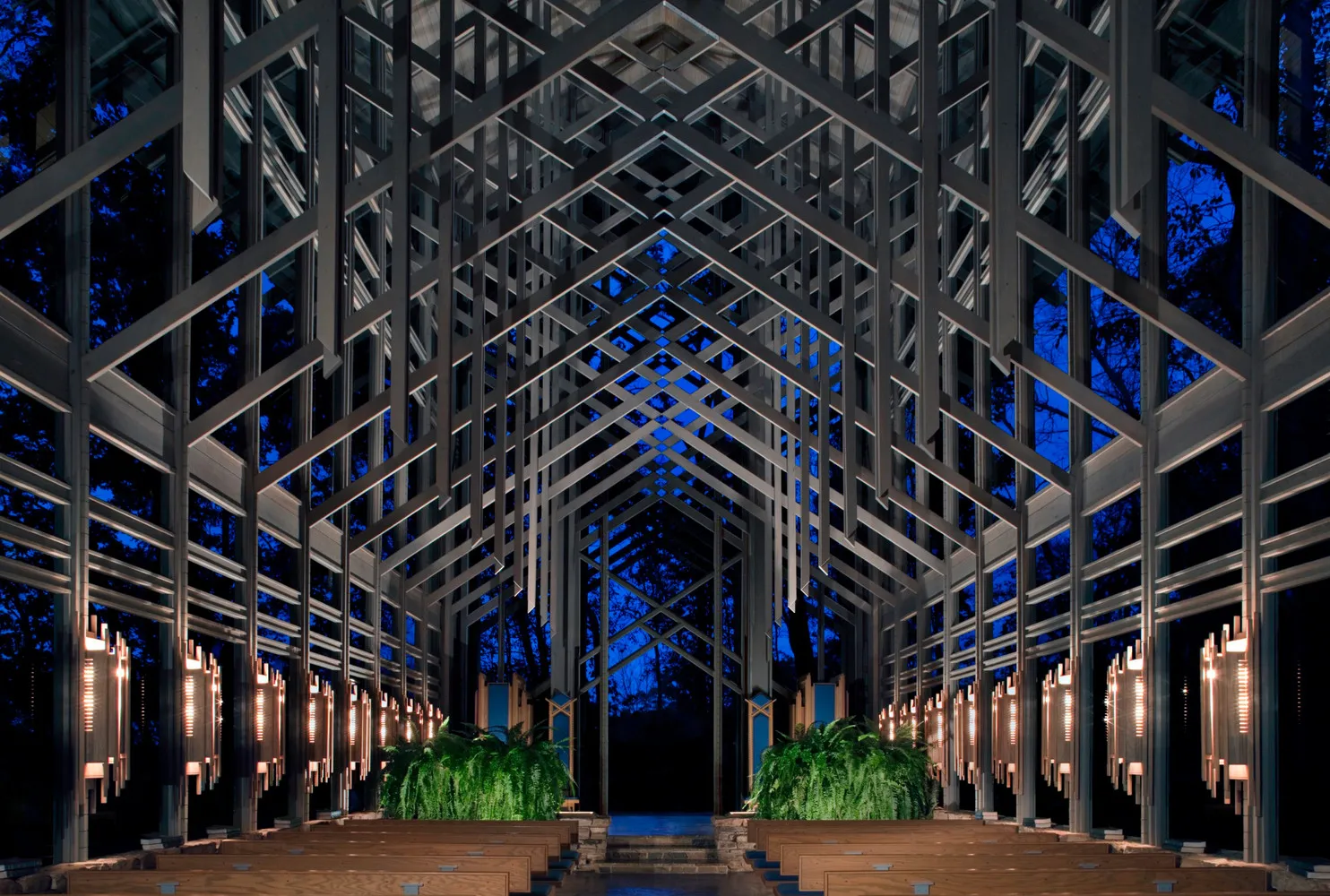
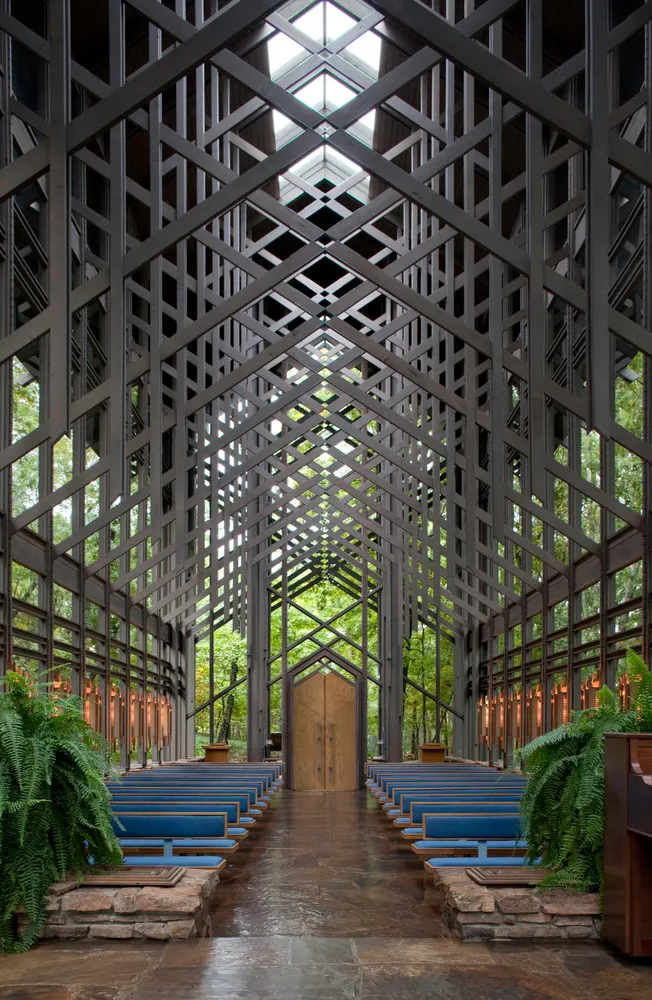
The proportion of the rectangular layout echoes the verticality of Gothic cathedrals, measuring 48 feet high, 60 feet long, and 24 feet wide, seating approximately 100 visitors enclosed by a gable roof. The slender timber frame adds warmth and lightness, while repetitive diamond-pattern trusses, assembled on-site, create a crystalline lattice, reinforcing the chapel’s resemblance to a forest ceiling.
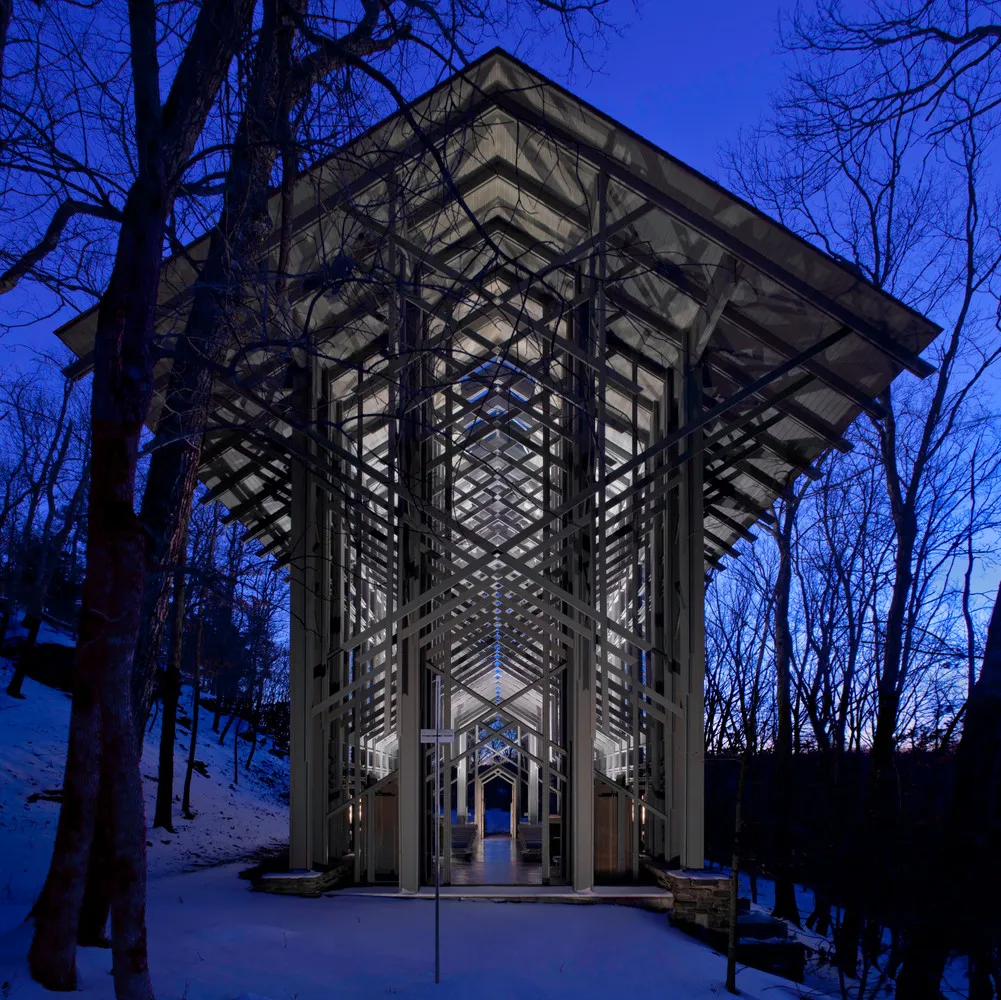
Adding spatial rhythm to the interiors, the continuous ridged skylight and glazed walls with 425 windows fill the space with natural light. Diamond-shaped steel connectors stabilize the wooden structure and elements that dissolve with the surroundings. The interior evokes the strong trunks of trees, while the delicate, crisscrossing beams overhead suggest a protective canopy of branches.
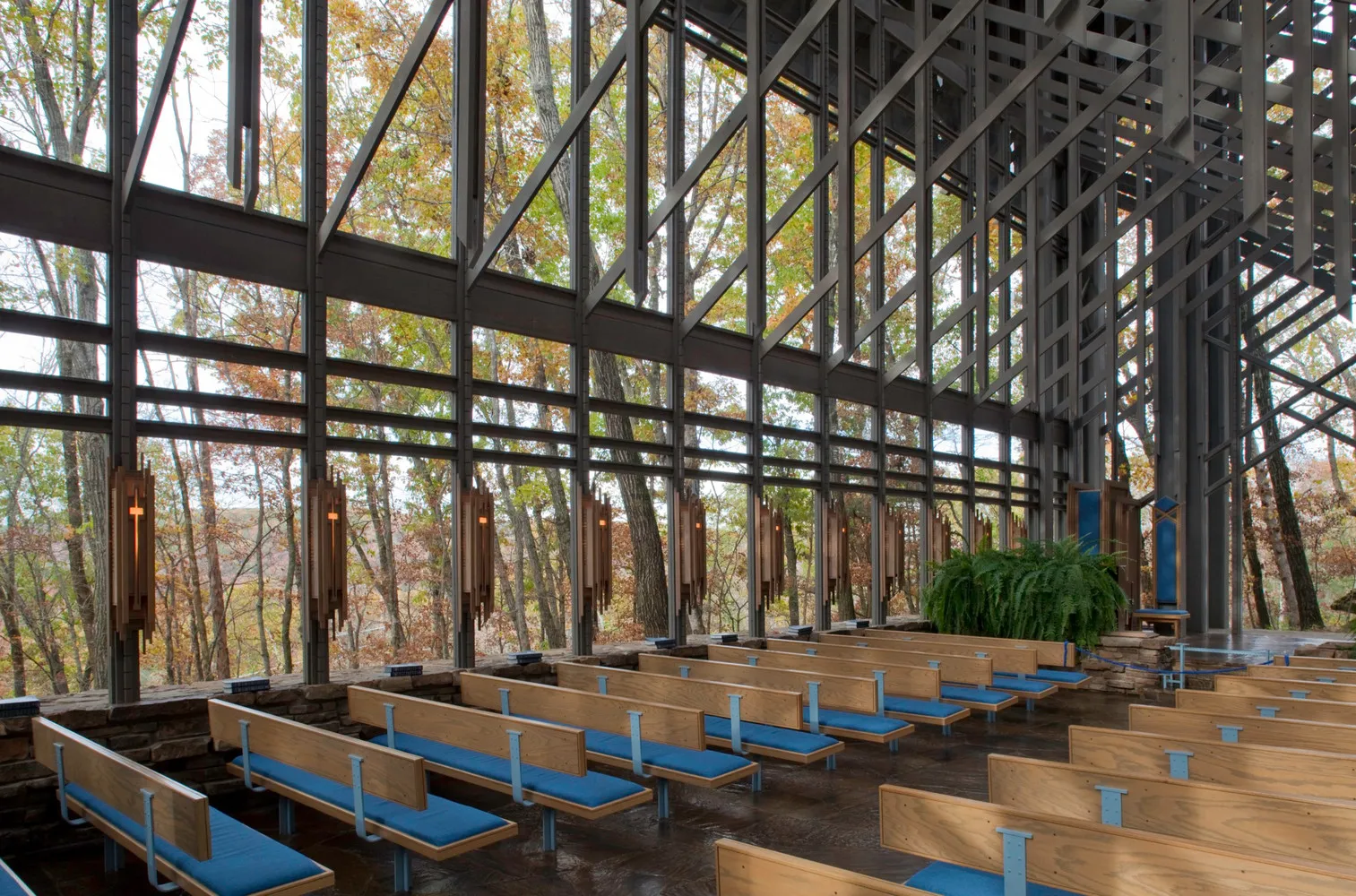
Materiality and Construction: Respecting the Earth
The construction of the Thorncrown Chapel was thoughtfully executed without disturbing the natural surroundings with heavy machinery. Fay Jones decided that all building materials be of a size that could be carried by two men, ensuring a robust foundation and grounding the structure on the rocky terrain. The interplay of light and shadow with repetitive elements creates a dynamic rhythm and playful character for the visitors. Thorncrown Chapel represents clarity of form, simplicity, local materials, and the play of intrinsic elements that enhance the organic architecture.
A Lasting Legacy
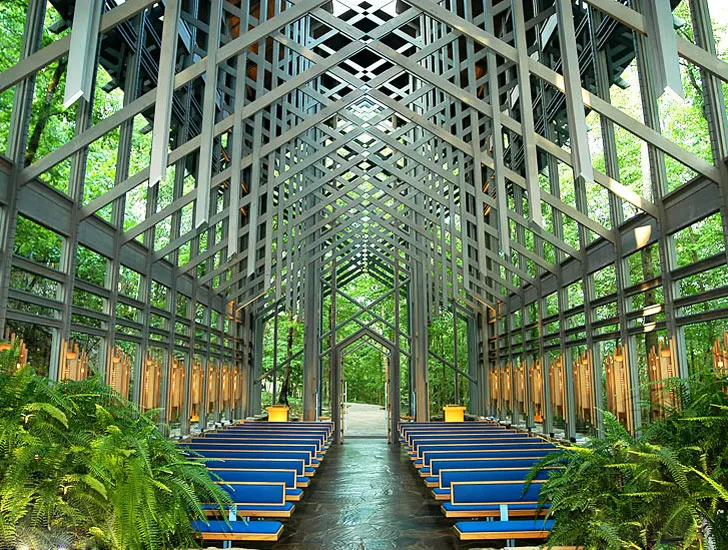
Thorncrown Chapel showcases a profound relationship between nature, human spirit, and spiritual architecture fosters material authenticity, structural creativity, and deep emotional resonance. One of the great examples of spiritual architecture around the twentieth century, it exemplifies the site-sensitive design blending material, simplicity, and structural integrity that resulted in an environmentally respectful design.
Thorncrown Chapel Project Details
Location: Eureka Springs, Arkansas, USA
Architect: E. Fay Jones
Area: 120 m²
Year Completed: 1980
Client: Jim Reed
Image Credit: © Randall Connaughton, E. Fay Jones
Explore Courses

.jpg "Ondrej Chybik - Rethinking Architecture")