


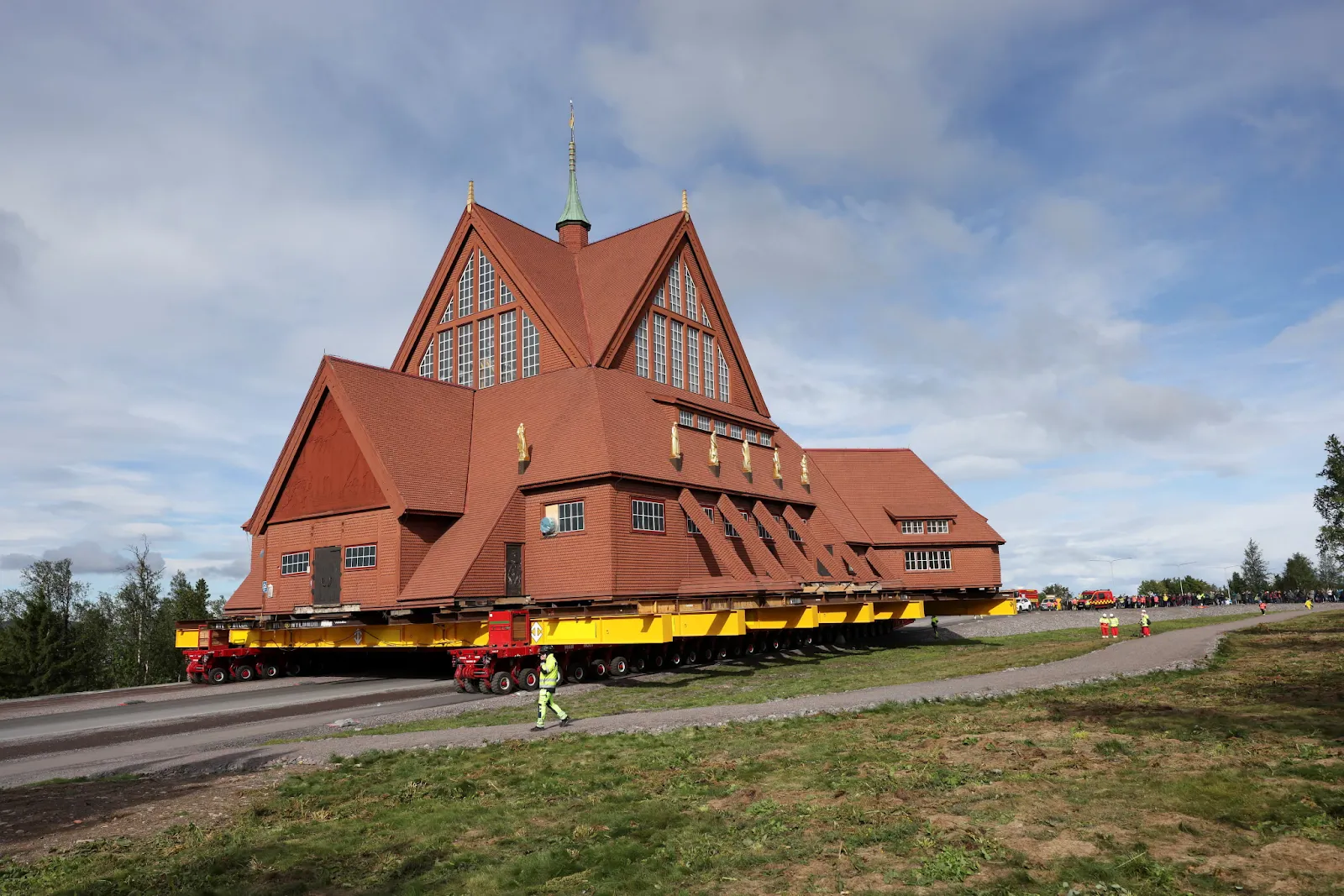
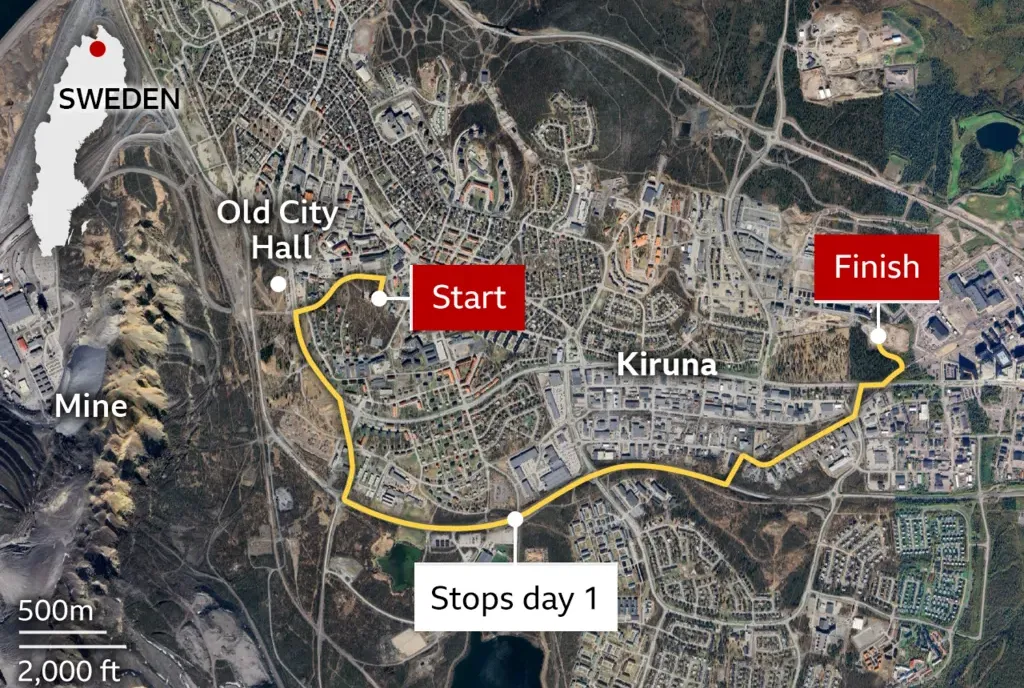
In a historic feat of engineering and preservation, Kiruna Church, one of Sweden’s most cherished landmarks, was successfully relocated in August 2025. The century-old structure, weighing more than 670 tons, was moved intact over a distance of five kilometers (three miles) to protect it from ground damage caused by iron-ore mining beneath the town.
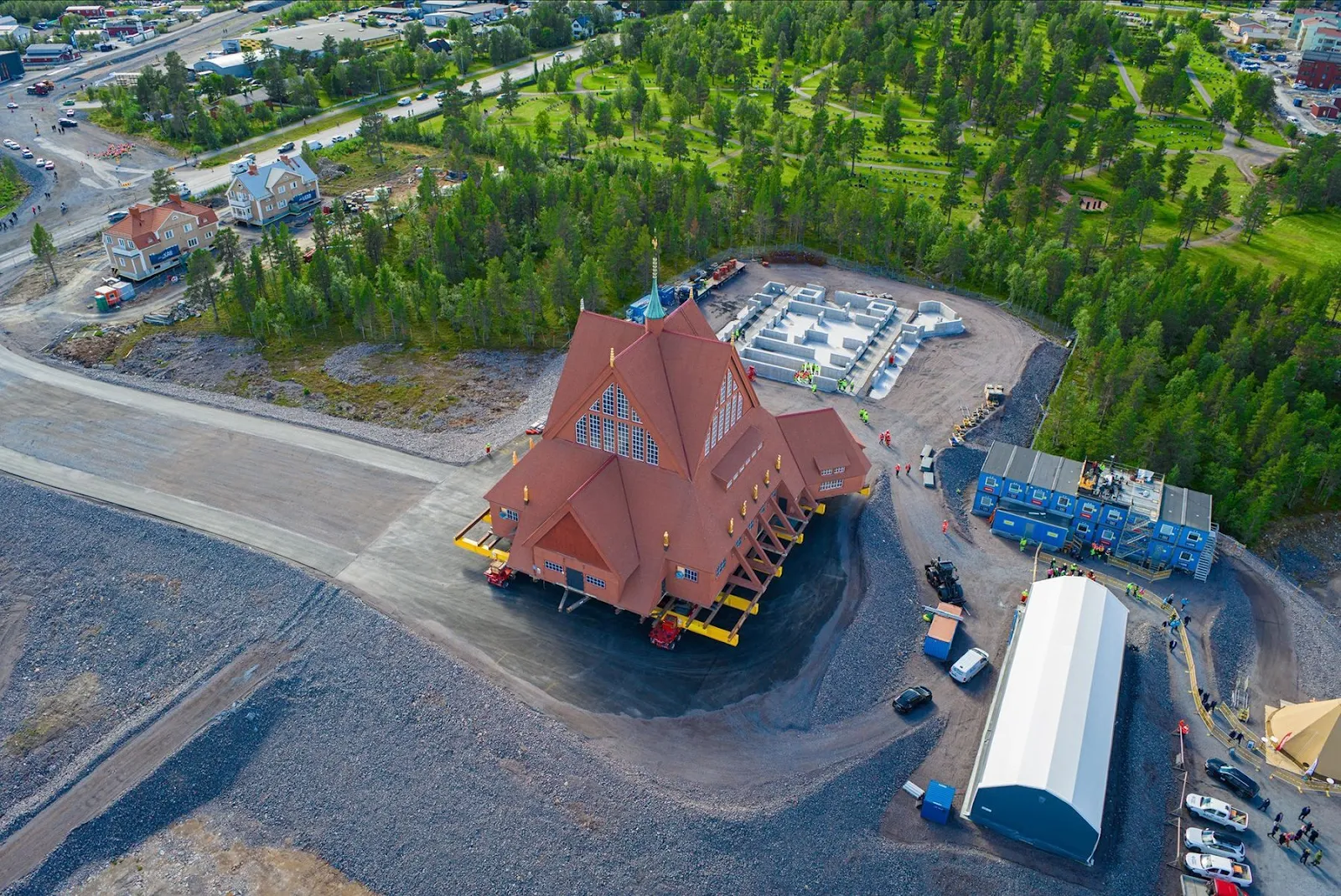
Historic Kiruna Church in Danger from Expanding Iron Mine
Kiruna Church was built between 1909 and 1912 and consecrated in December 1912. Designed by architect Gustaf Wickman, the wooden church combines the neo-Gothic style with Sami cultural influences. Inside, it houses an Art Nouveau altarpiece by Prince Eugen and an original organ that has been part of its history for over a century.
The building is deeply admired across Sweden. In a 2001 national poll, it was voted the country’s most beautiful pre-1950 structure. For the community of Kiruna, located north of the Arctic Circle, the church has long been a spiritual and cultural centerpiece.
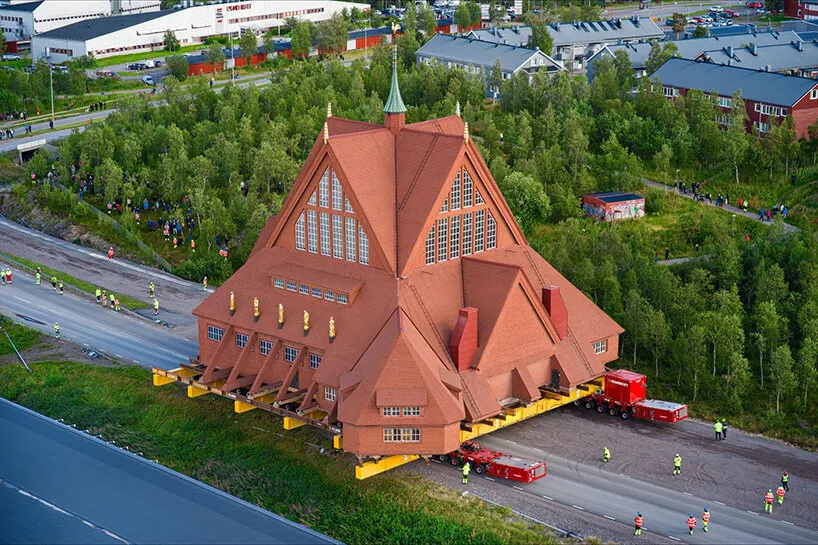
But the very industry that built the town’s prosperity put its survival in question. Decades of iron-ore extraction by state-owned miner LKAB have destabilized the ground. Cracks and subsidence forced authorities to undertake one of the most ambitious urban relocation projects in modern Europe, moving much of the city to new ground.
Why Moving Was Necessary
Swedish law forbids mining under standing buildings, yet the lucrative iron deposits extend beneath Kiruna’s old town. Over the past decade, thousands of homes, businesses, and public facilities have been shifted to a new city center. For the church, demolition was never an option. Its cultural and architectural significance demanded a preservation effort that could only be achieved by moving it whole.
The Two-Day Move
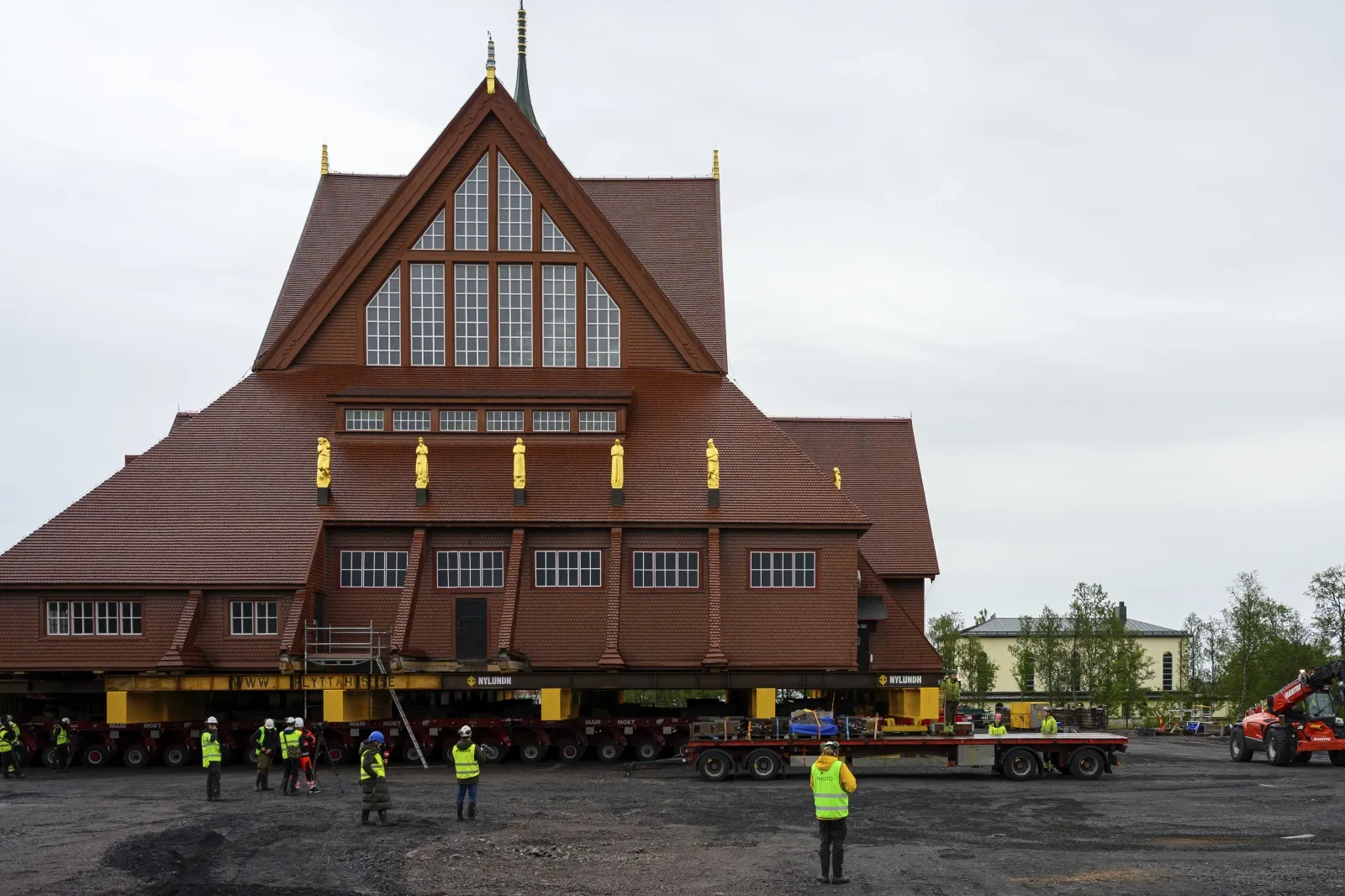
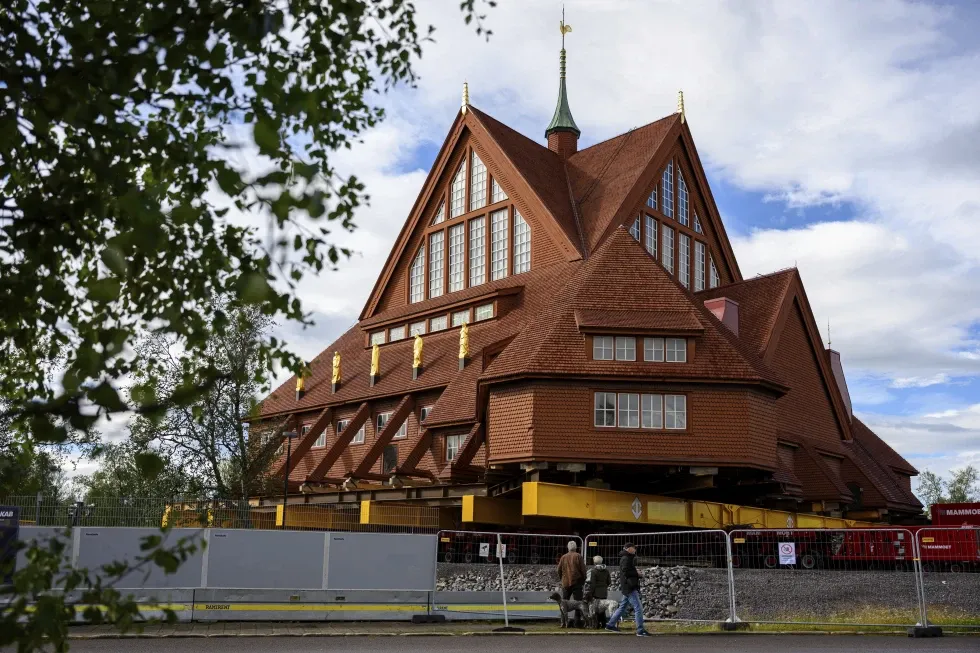
The relocation, carried out on August 19–20, 2025, was years in planning. The church was first lifted 1.3 meters from its foundation and set onto a framework of steel beams. It was then placed on self-propelled modular transporters (SPMTs), two connected vehicles with 224 computer-controlled wheels designed to balance the immense weight.
Engineers utilized advanced sensors to maintain the structure’s level, ensuring it never tilted more than 7.5 centimeters during transport. To clear the path, roads were widened from nine meters to 24 meters, and obstacles such as traffic lights and even a viaduct were temporarily removed.
The convoy crept forward at less than 1.5 km/h (0.9 mph), requiring nearly twelve hours of motion on each day. Spectators lined the route, watching as the church slowly made its way to its new site in Kiruna’s developing city center.
Cost and Wider Context
The relocation cost is estimated at around 500 million Swedish kronor (roughly €45 million or $50–52 million). While some sources cite higher figures, those likely reflect the broader costs of Kiruna’s ongoing urban transformation, which involves relocating over 3,000 homes and 6,000 residents.
The church’s move is the most symbolic element of this transformation. Yet it is not without controversy. Sami leaders have voiced concern that both the mining expansion and the town’s relocation further fragment reindeer herding lands that are vital to their cultural heritage.
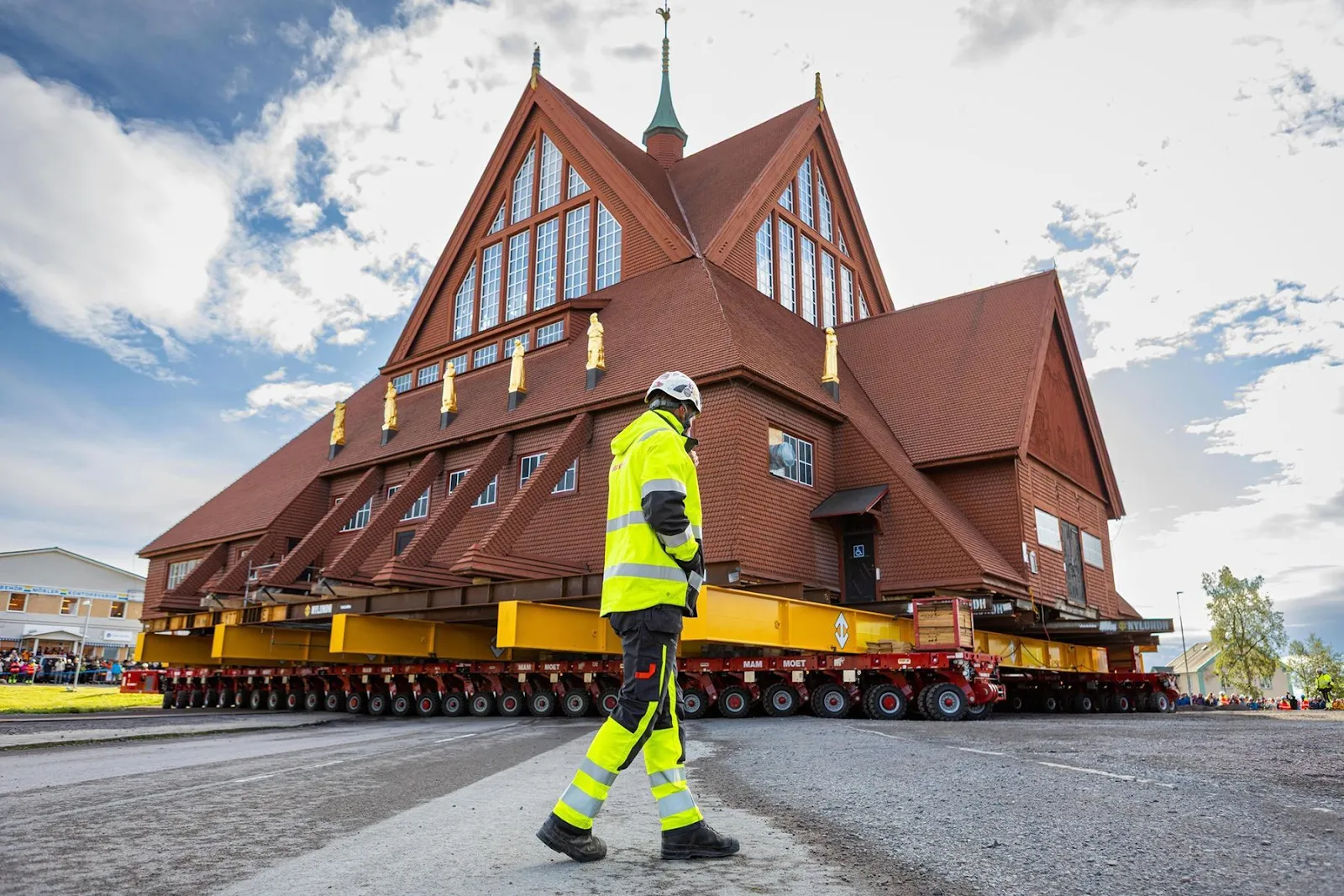
Crowds Celebrate Historic Relocation of Kiruna Church in Sweden
The move was not only an engineering project but also a national event. The ceremony opened with blessings from Vicar Lena Tjärnberg, whose microphone briefly failed in the Arctic winds, drawing laughter from the crowd. King Carl XVI Gustaf attended, along with thousands of onlookers, braving cold August weather. Swedish television broadcast the entire event live under the title “The Big Church Move.”
Adding to the festive mood, musical performances, including Sweden’s Eurovision entry, accompanied the journey, making the relocation both a logistical operation and a cultural celebration.
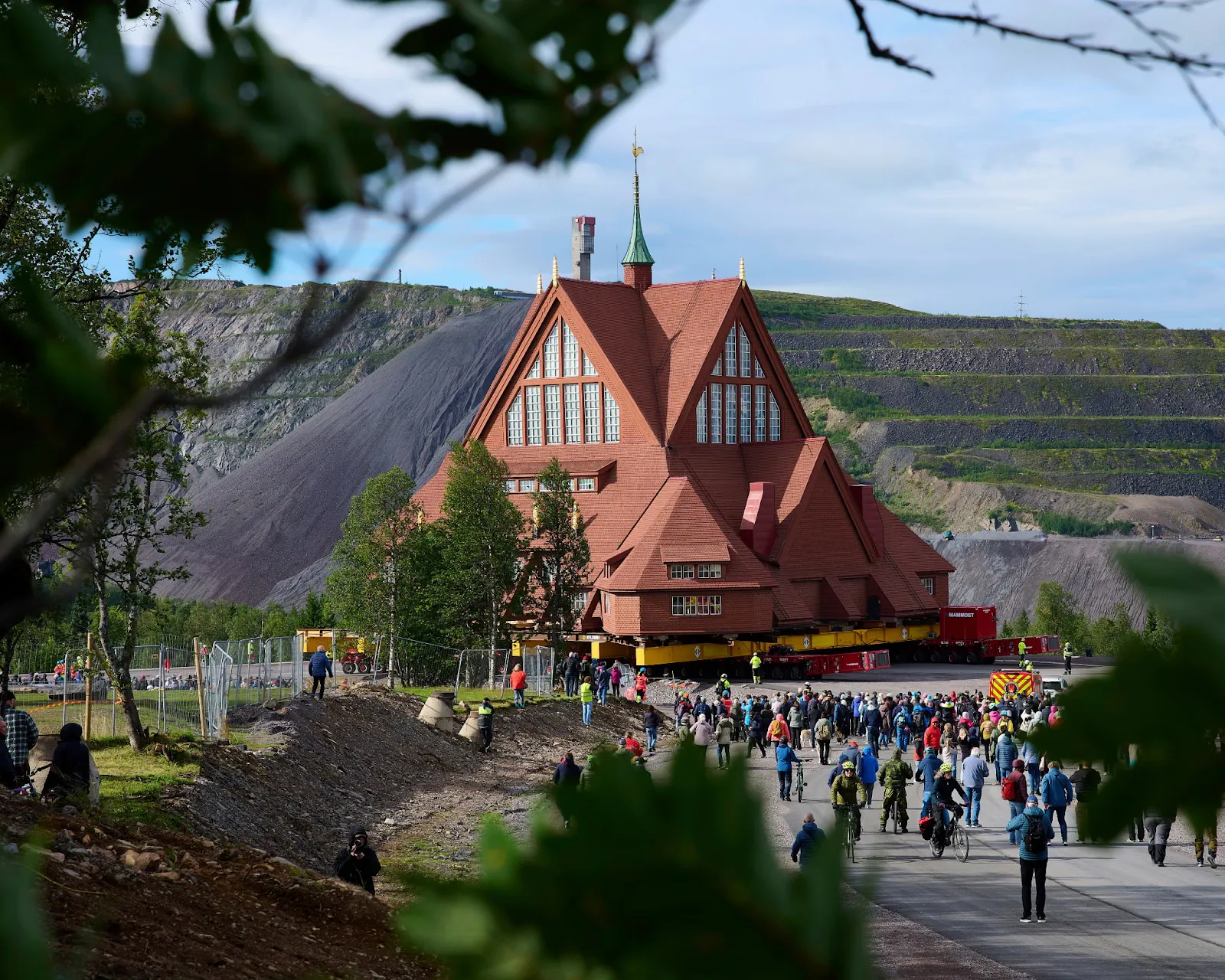
The church now rests safely in its new location, where restoration work will continue until its planned reopening in 2026. Its separate bell tower, still standing at the old site, is scheduled to be transported later this year.
The project demonstrates how Sweden balances industrial necessity, cultural heritage, and community identity, ensuring that Kiruna Church will continue to stand as both a place of worship and a symbol of resilience in the Arctic north.
Explore Courses

.jpg "Ondrej Chybik - Rethinking Architecture")