

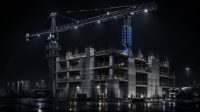




India has taken a major leap in infrastructure and aviation with the inauguration of the Navi Mumbai International Airport (NMIA). Opened by Prime Minister Narendra Modi, the project marks a defining moment in India’s vision to become a global aviation and logistics hub. PM Modi described NMIA as a symbol of a “living flower of culture and prosperity,” emphasizing its role in shaping India’s future economy.
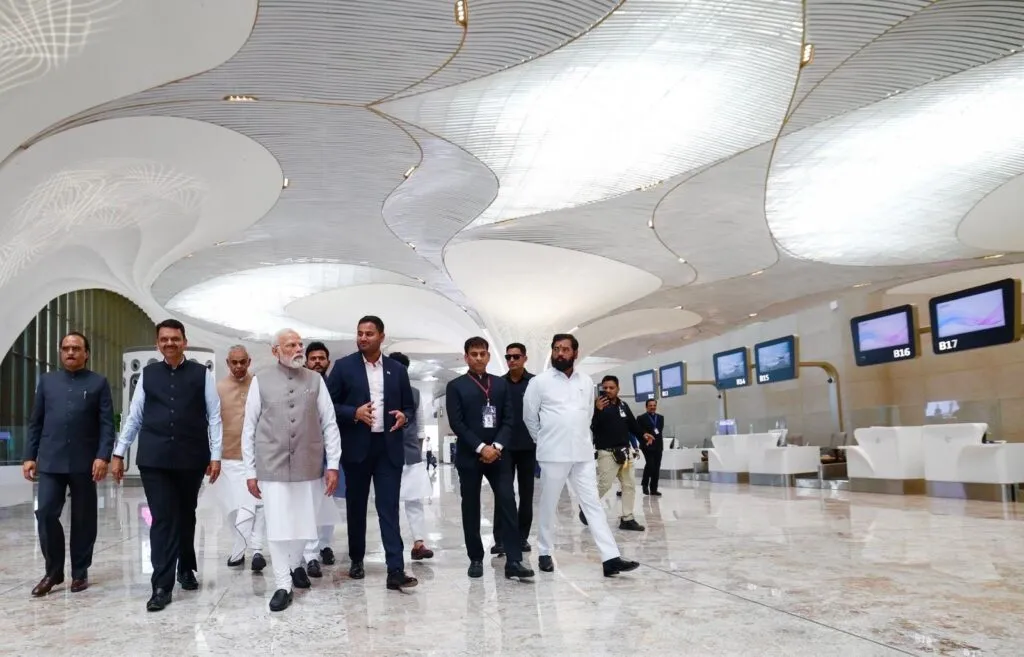
Designed by the globally renowned Zaha Hadid Architects (ZHA), located in Maharashtra, the airport is set to ease congestion at Mumbai’s existing Chhatrapati Shivaji Maharaj International Airport (CSMIA) and strengthen the region’s connectivity across Asia.
The NMIA has been developed through a public–private partnership between Adani Airport Holdings Ltd. (AAHL) and the City and Industrial Development Corporation (CIDCO). Designed to initially handle 20 million passengers annually, it will scale up to 90 million in future phases, making it one of the largest airports in India. The airport will integrate with major transport networks like the Mumbai Trans Harbor Link, suburban rail, metro systems, and ferry services, significantly improving accessibility and reducing travel time across western India.

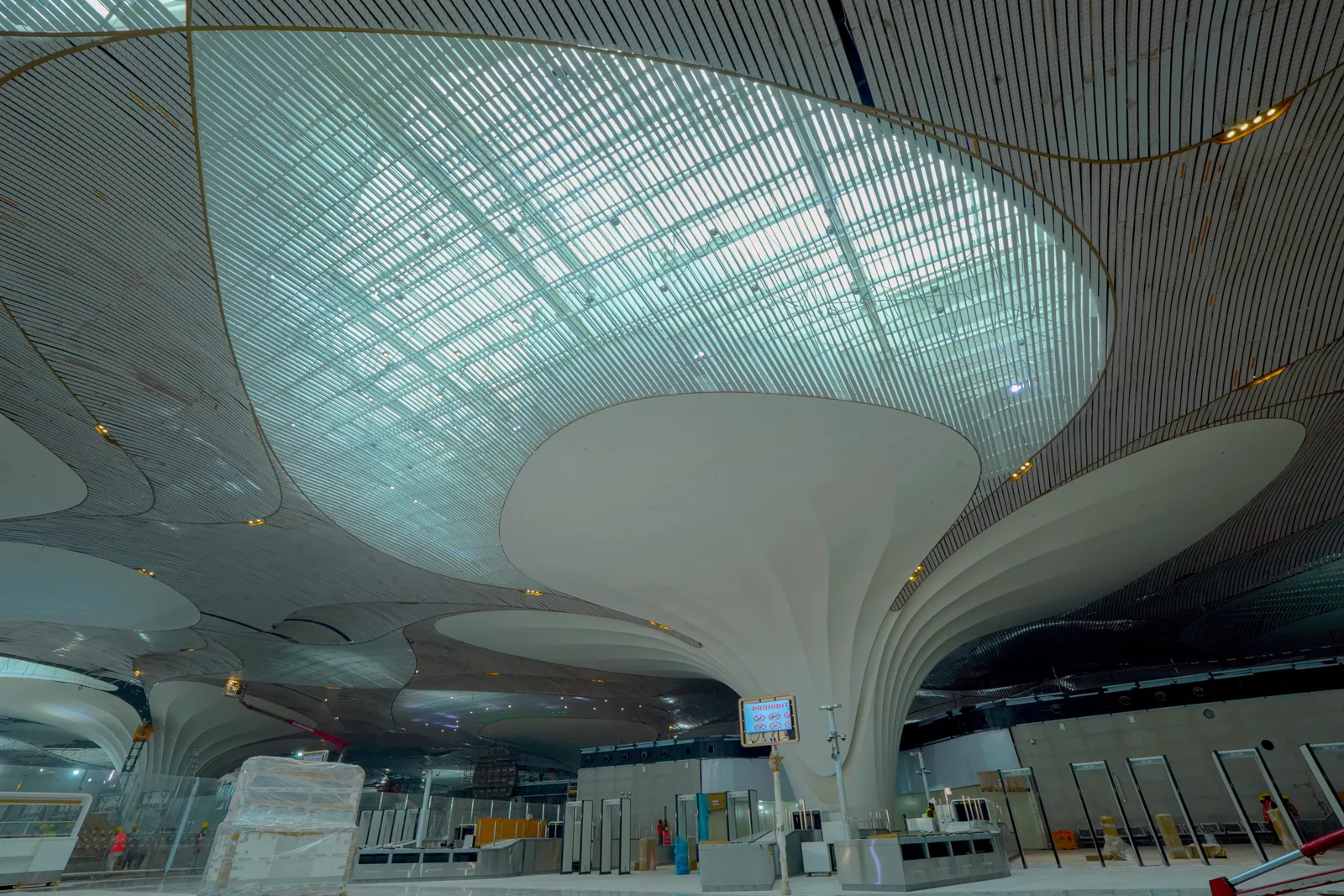
Zaha Hadid Architects’ INR 19,650 crore design for NMIA draws inspiration from the Indian lotus, transforming it into a structural and symbolic core of the terminal. Using the lotus as decoration, ZHA reimagined it as a geometric concept that shapes the building’s roof and spatial flow. The concentric petal-like shells of the terminal’s roof manage daylight, ventilation, and rainwater flow, while the central atrium acts as the “pond” from which concourses radiate.
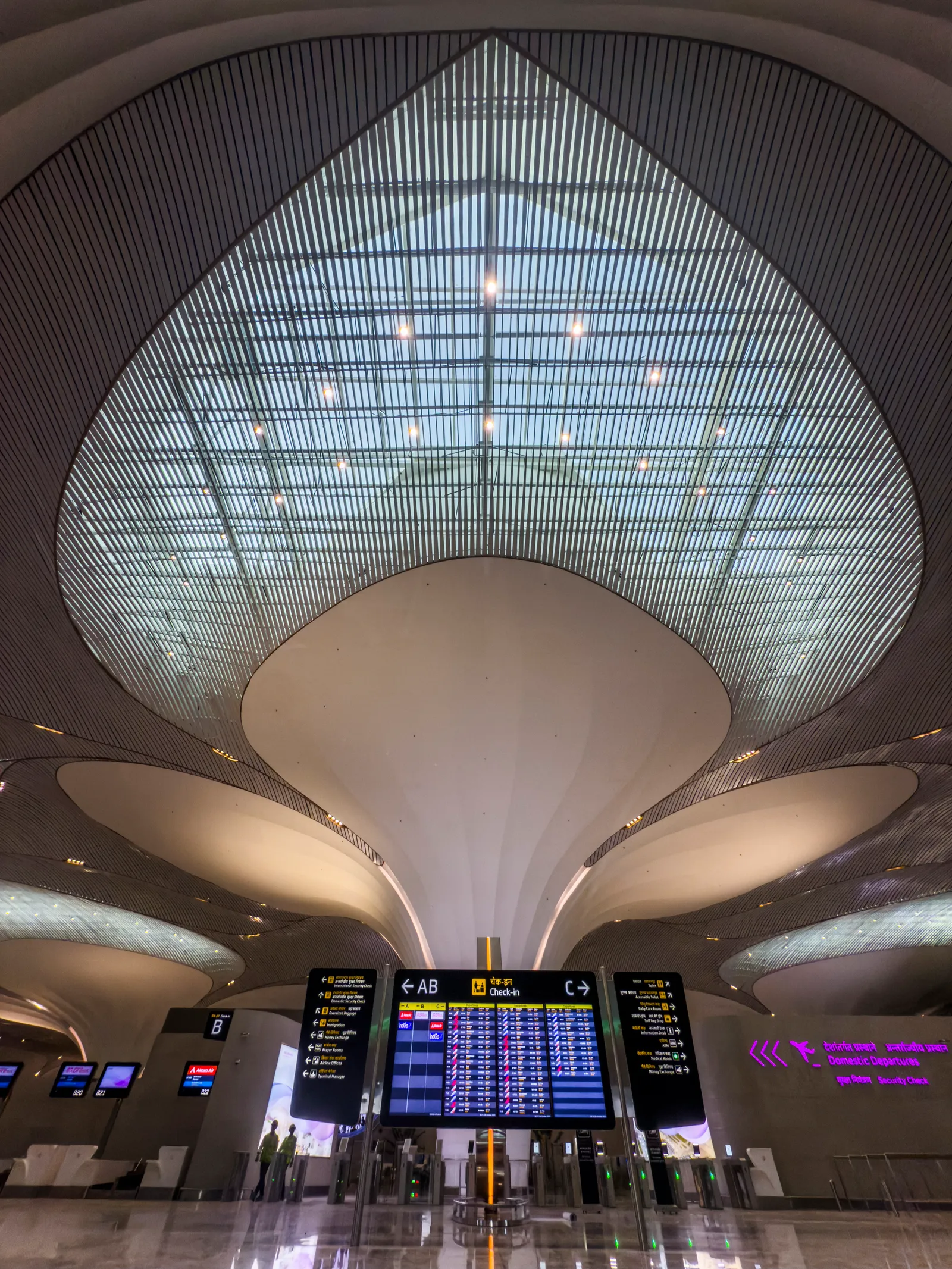
This innovative translation of cultural symbolism into architectural form represents a dialogue between India’s heritage and modern engineering. The roof, built with modular steel units and reinforced concrete, combines precision modeling with handcrafted assembly. The result is a structure that appears fluid and organic yet is anchored by complex engineering and climatic performance.
NMIA’s Iconic Terminal Structure
One of the airport’s most striking design features is its two-tier column system. The front layer features twelve sculptural columns shaped like unfolding petals, which serve both aesthetic and functional purposes. They diffuse natural light into the terminal and help orient travelers. Behind them, seventeen hidden mega-columns bear the structural load, supporting the 370-meter roof and withstanding wind and seismic pressures.
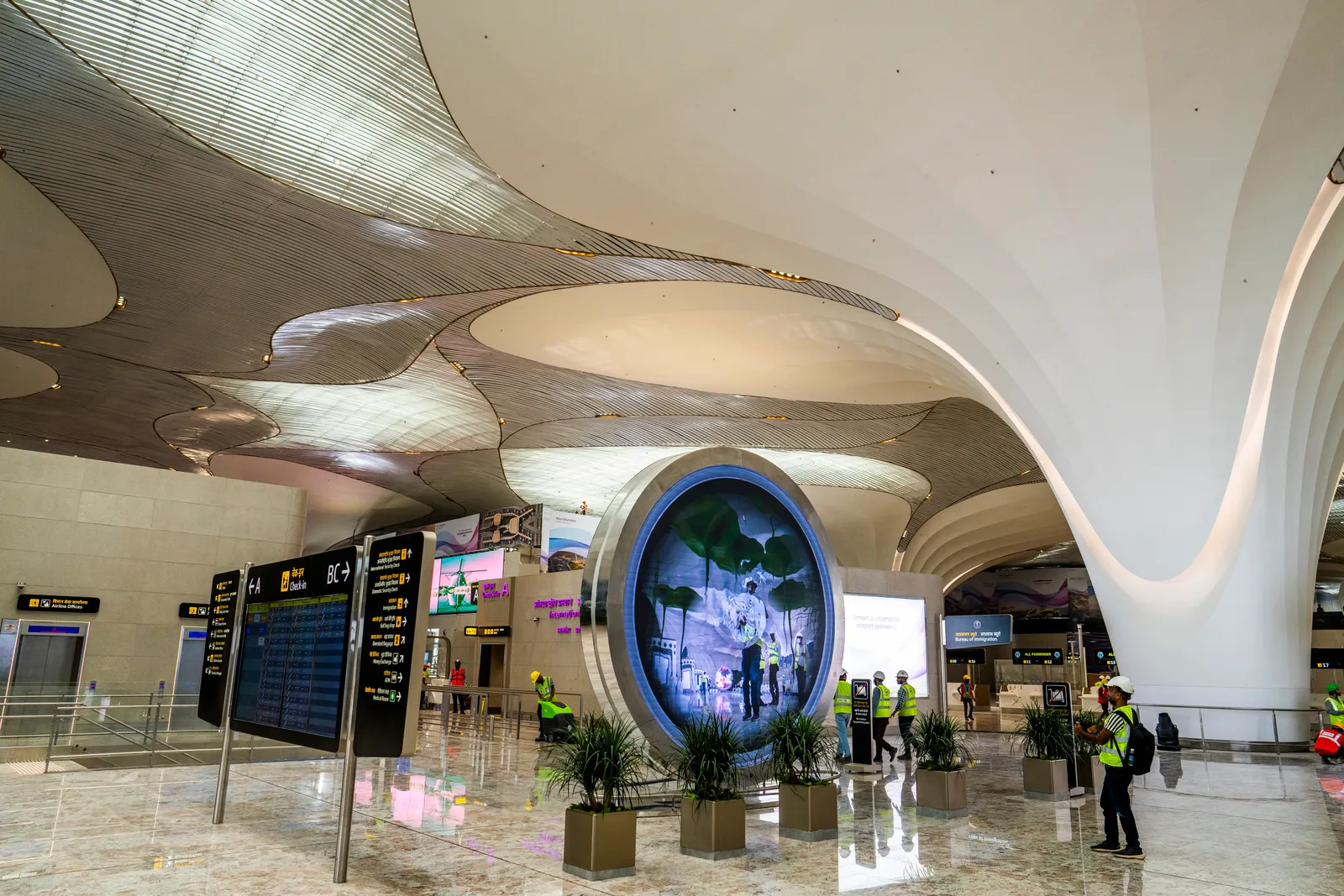
Daylight plays a central role in the airport’s interior experience. Continuous skylight strips run across the roof petals, calibrated to maximize natural light and minimize glare. These skylights, along with the hollow feature columns that act as light wells, create an environment where the terminal seems to glow naturally during the day. This not only enhances passenger comfort but also reduces dependence on artificial lighting.
Future-Ready and Eco-Conscious: How NMIA Is Built to Grow with the City
Sustainability is woven into NMIA’s blueprint. The design emphasizes energy efficiency, climate resilience, and adaptability. The modular system allows the airport to expand in phases without interrupting operations. Plans include additional terminals, a second runway, and a dedicated cargo complex.
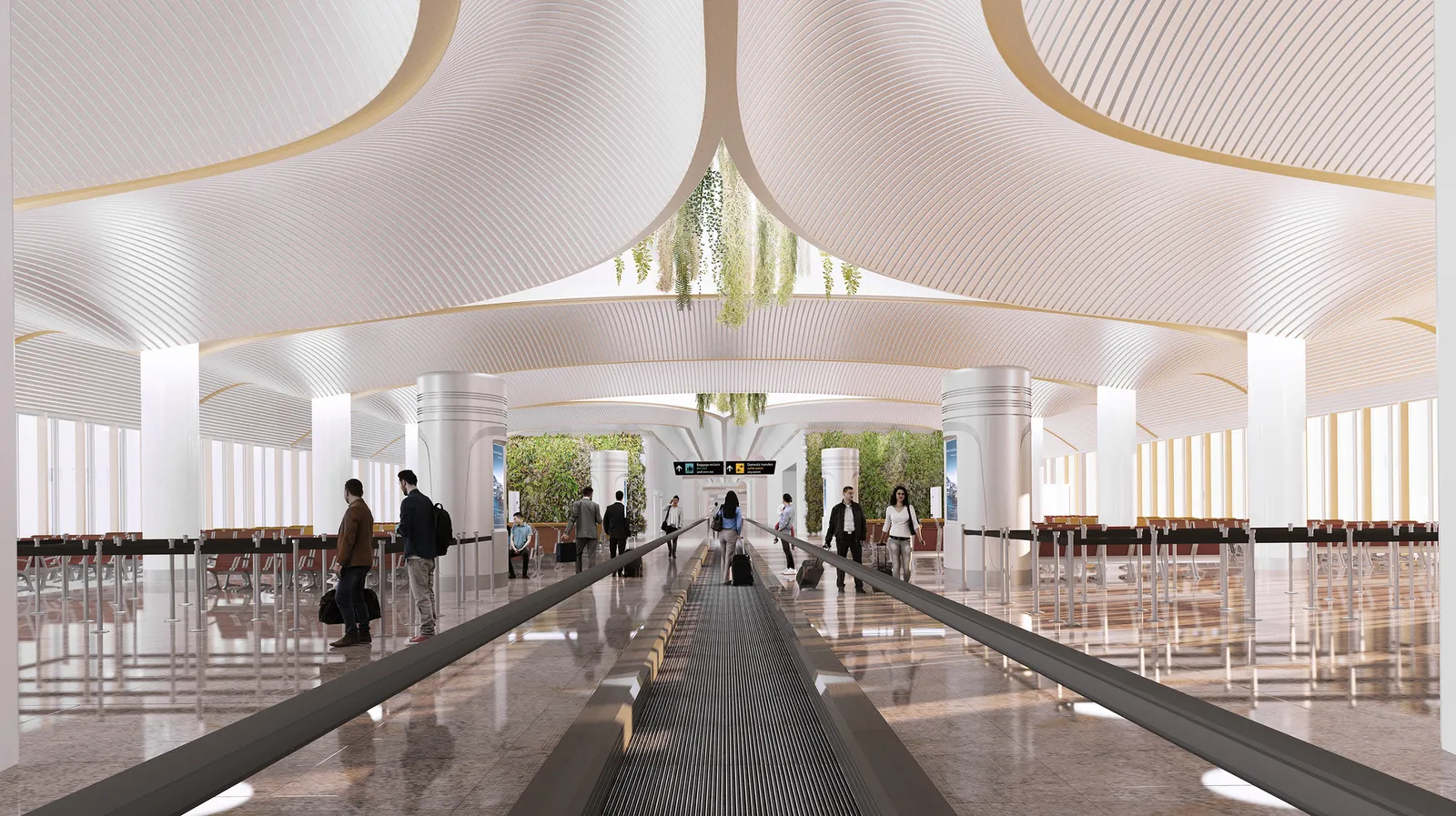
ZHA’s architectural philosophy blends digital innovation with environmental logic, ensuring that every element, from the materials to the roof geometry, serves both aesthetic and ecological purposes. The integration of modern construction methods with India’s architectural lineage, such as the rhythm of temple mandapas and the play of filtered light, roots NMIA deeply in cultural memory while maintaining a global outlook.
NMIA Marks a Milestone in India’s Modern Infrastructure
According to Gautam Adani, Chairman of the Adani Group, NMIA represents more than an airport; it is a symbol of India’s growing confidence and ambition. “This infrastructure does not just serve today’s demand; it creates tomorrow’s possibilities,” he said, underscoring the project’s role in shaping India’s global presence.

Jeet Adani, Director of Adani Airport Holdings Ltd., highlighted NMIA as a new benchmark in India’s aviation journey, one that combines technology, sustainability, and passenger experience. With its advanced facilities and architectural brilliance, NMIA is poised to transform India’s connection with the world.
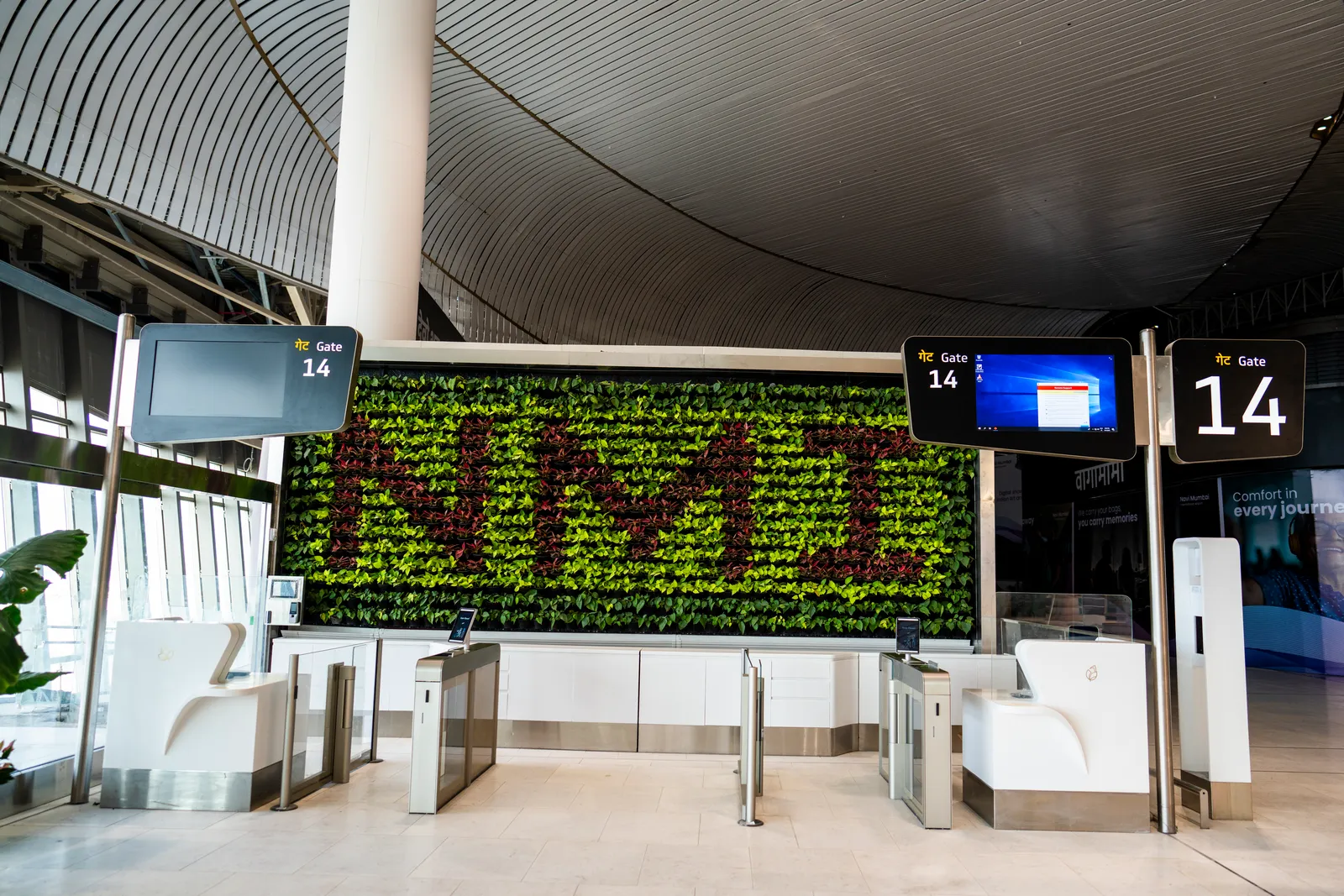
NMIA will begin international operations in December, marking a new era for air travel in the Mumbai Metropolitan Region. Once fully operational, the airport will feature four runways, multiple terminals, and an advanced multimodal connectivity system, positioning it among the world’s top aviation hubs.
Image credit: NMIA/ZHA
Explore Courses
.jpg%202.jpg "Building Performance with Forma & Opossum")

.jpg "Ondrej Chybik - Rethinking Architecture")