

Contemporary mosque architecture is evolving through advanced materials and construction techniques—from timber systems and monolithic concrete to cutting-edge 3D-printed structures.
Mosque architecture has always been shaped by the materials available to it, from stone courtyards and brick domes to intricate tilework and carved wood. Today, we can see a decisive shift where materials not only carry tradition but also drive innovation. Construction techniques, environmental performance, and digital fabrication are redefining how sacred spaces are built and experienced.
Contemporary mosque architecture moves beyond form and ornament, focusing on how materials perform or how they filter light, regulate temperature, and shape spatial experience. This shift reflects a broader architectural direction where sustainability, efficiency, and sensory quality take center stage. Diverse material strategies respond to climate, culture, and advancing technology, gradually redefining the essence of spiritual space.
Timber Systems and Layered Craft Used in Mosque Architecture
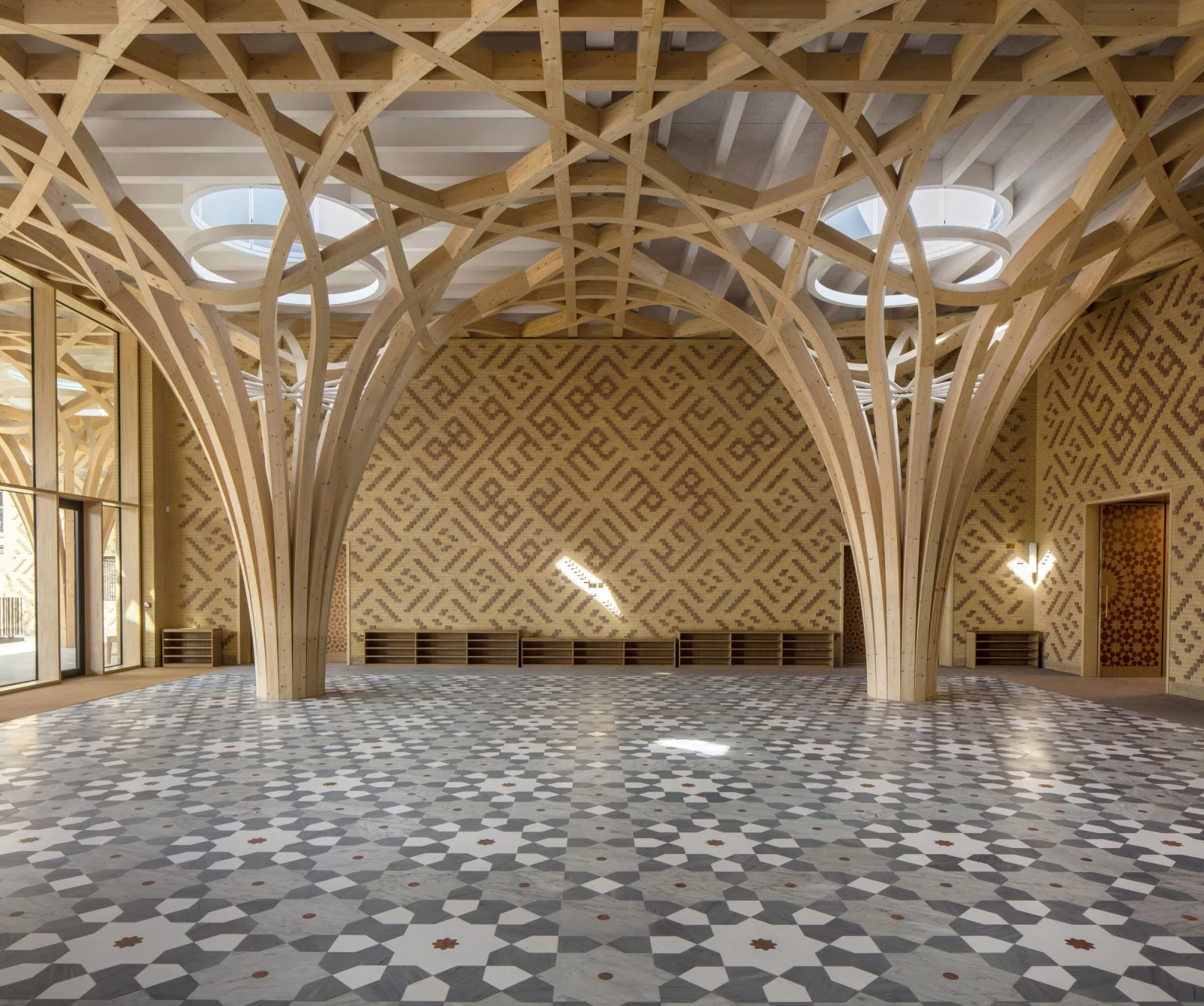
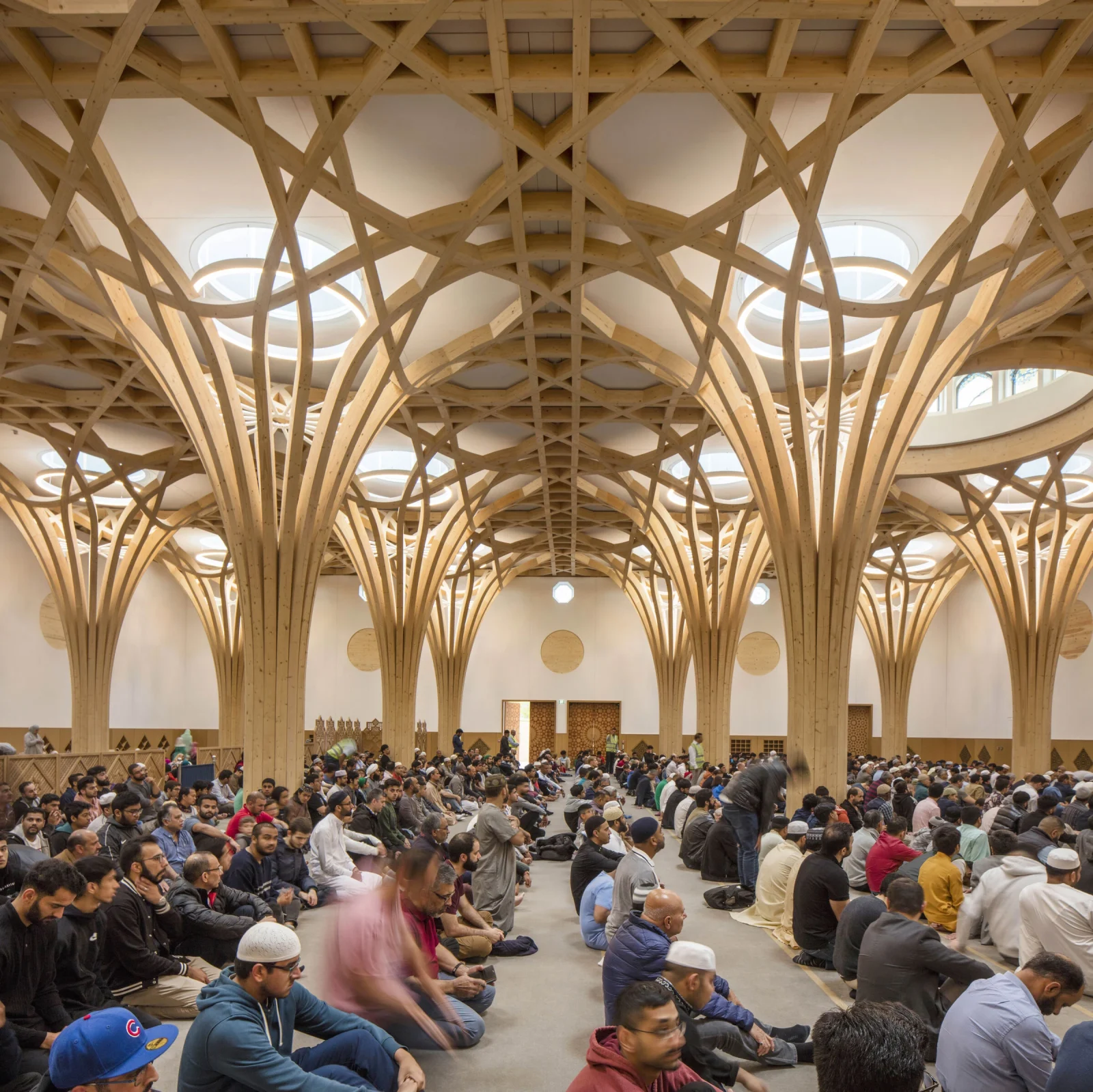
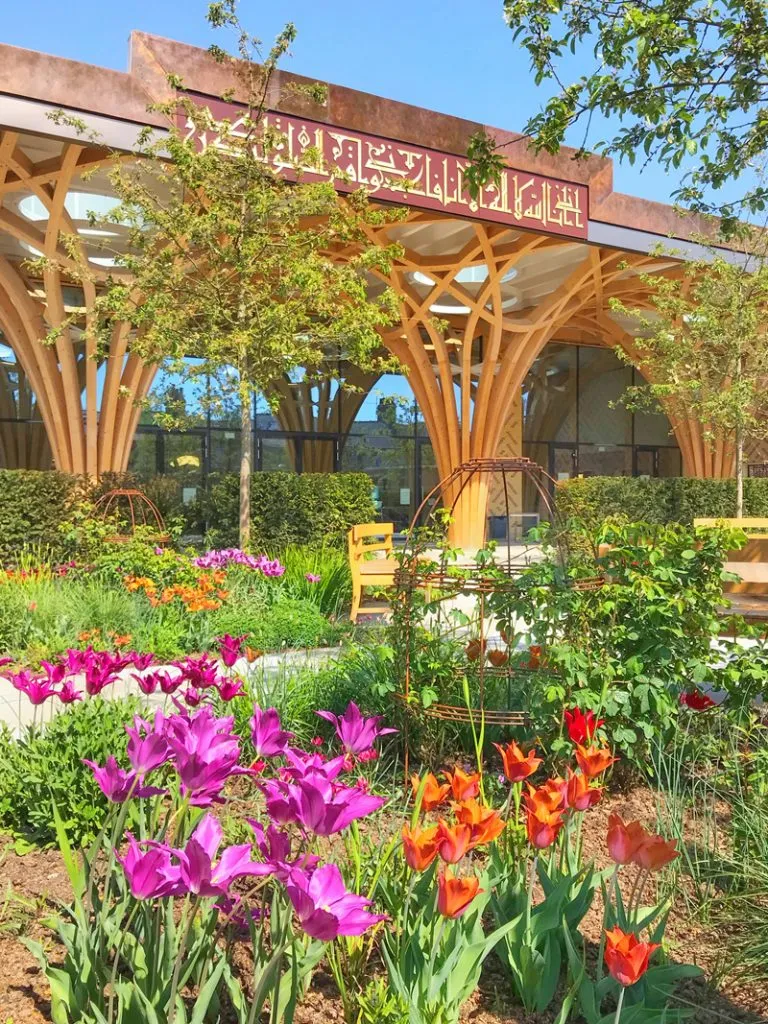
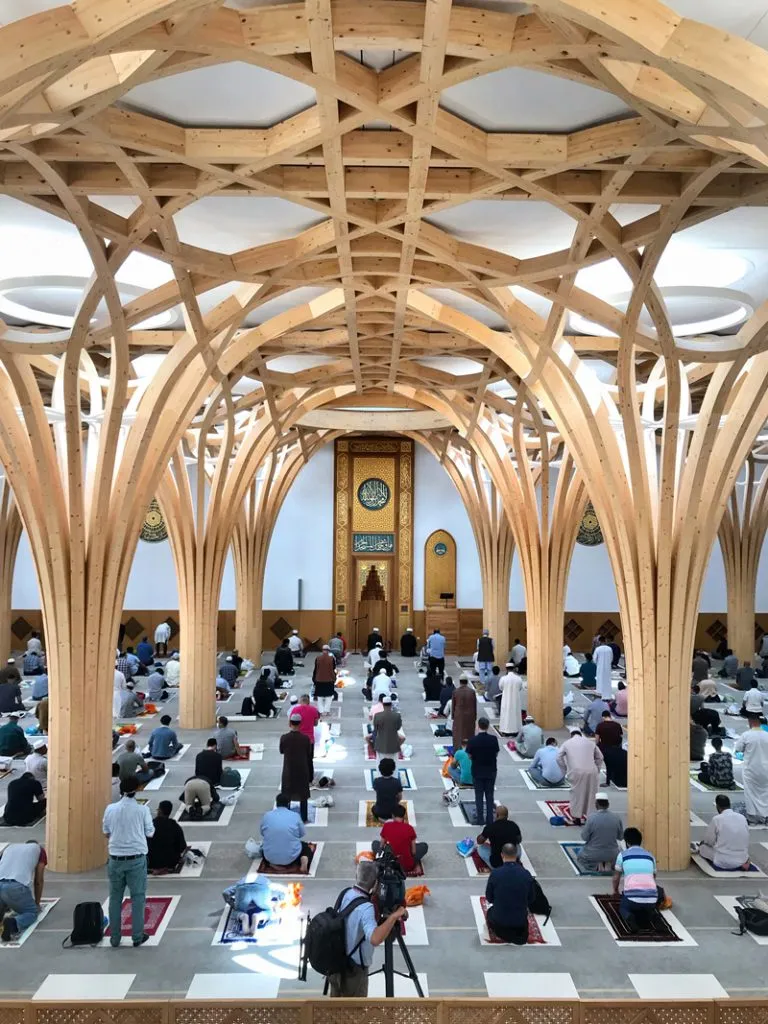
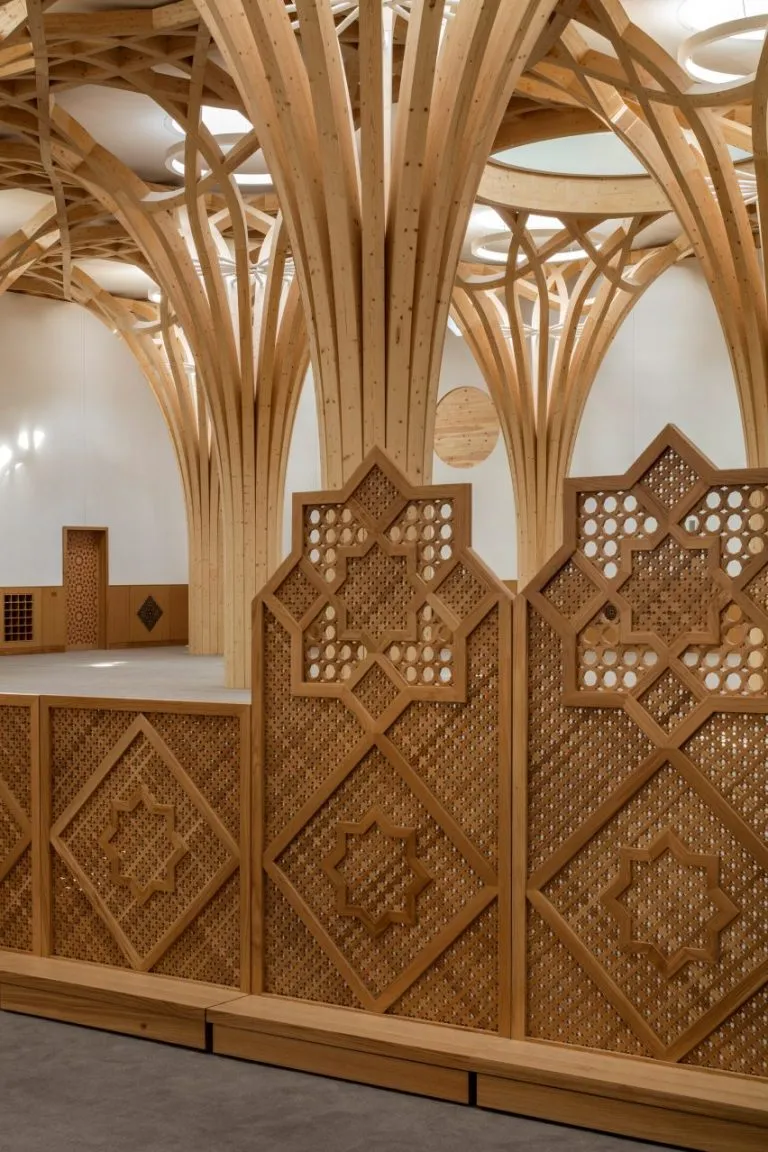
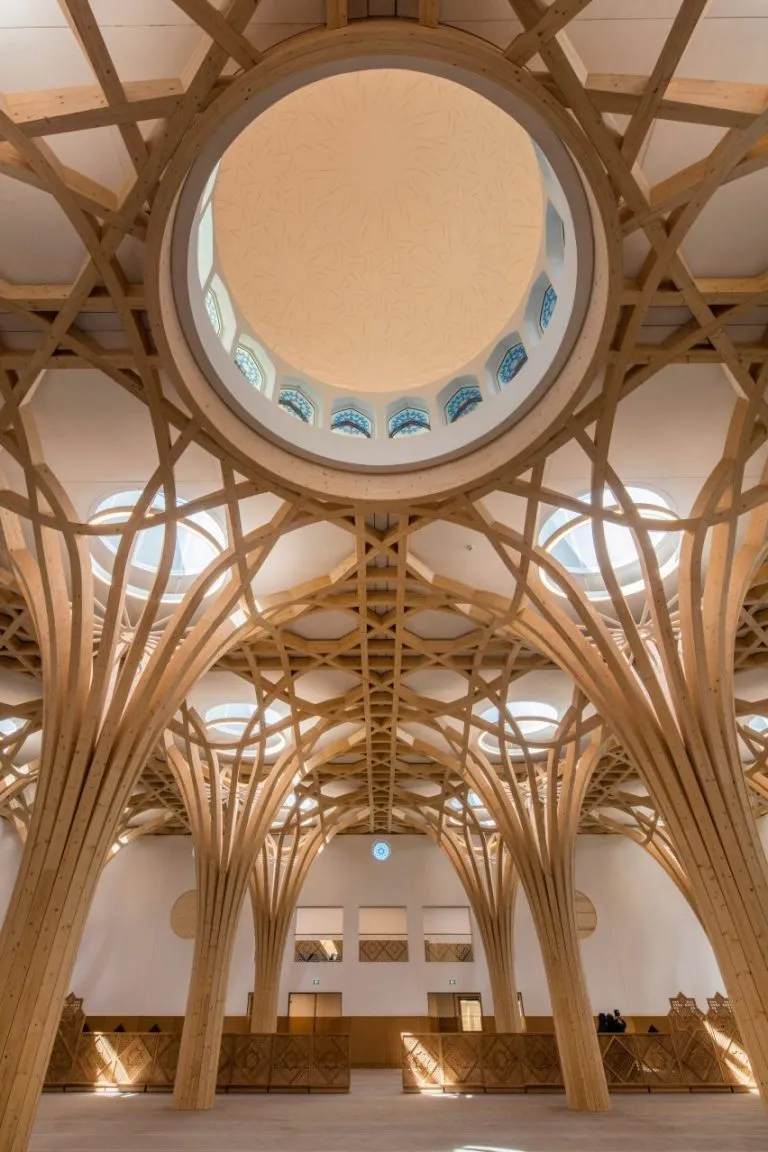
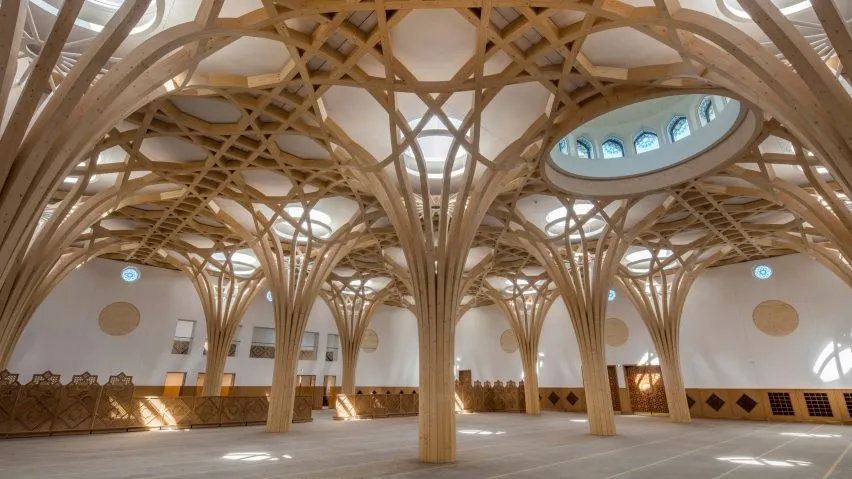
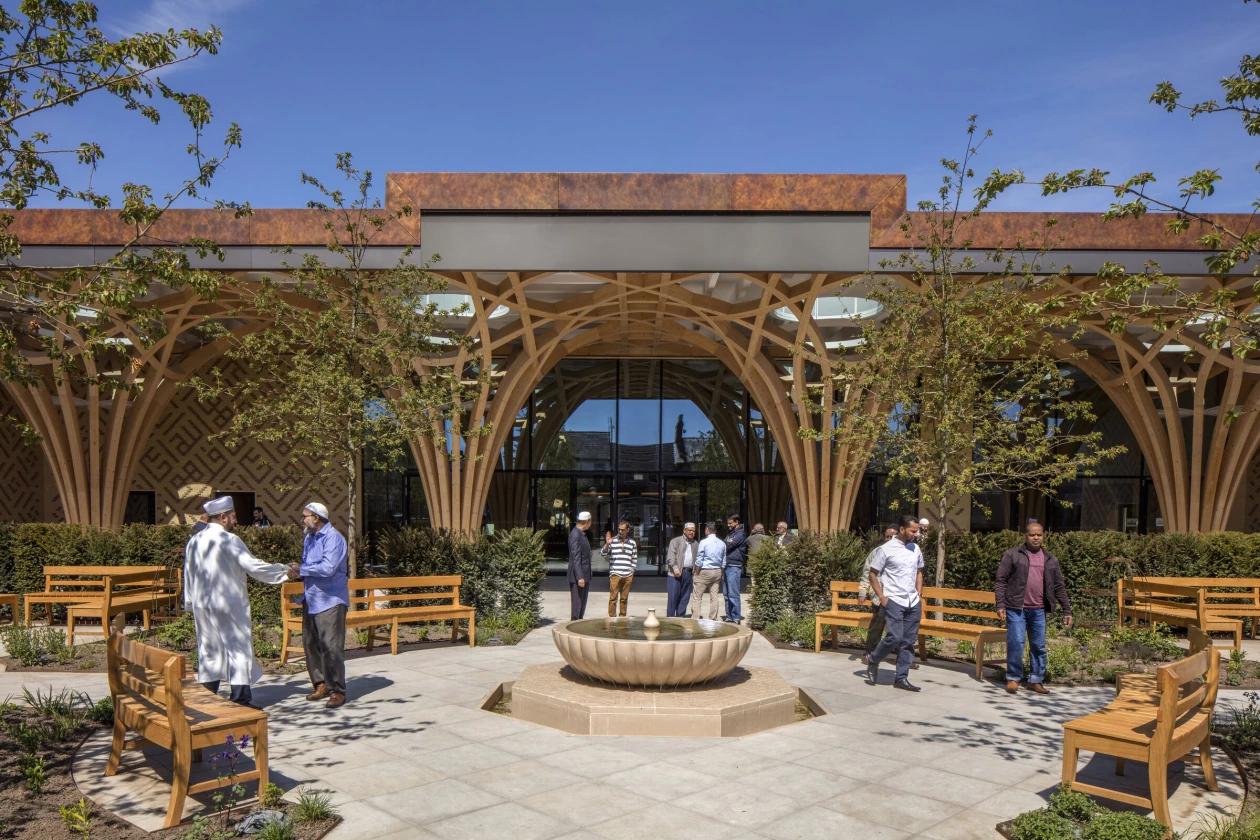
At the Cambridge Mosque, timber becomes the primary structural and spatial language. Laminated spruce is engineered into branching columns that rise like trees, supporting a complex lattice roof. This system is based on glulam technology that ensures strength and flexibility while enabling curved geometries that would be difficult to achieve with conventional materials. The result is a column-free prayer hall where structure and ornament merge into a unified architectural expression.
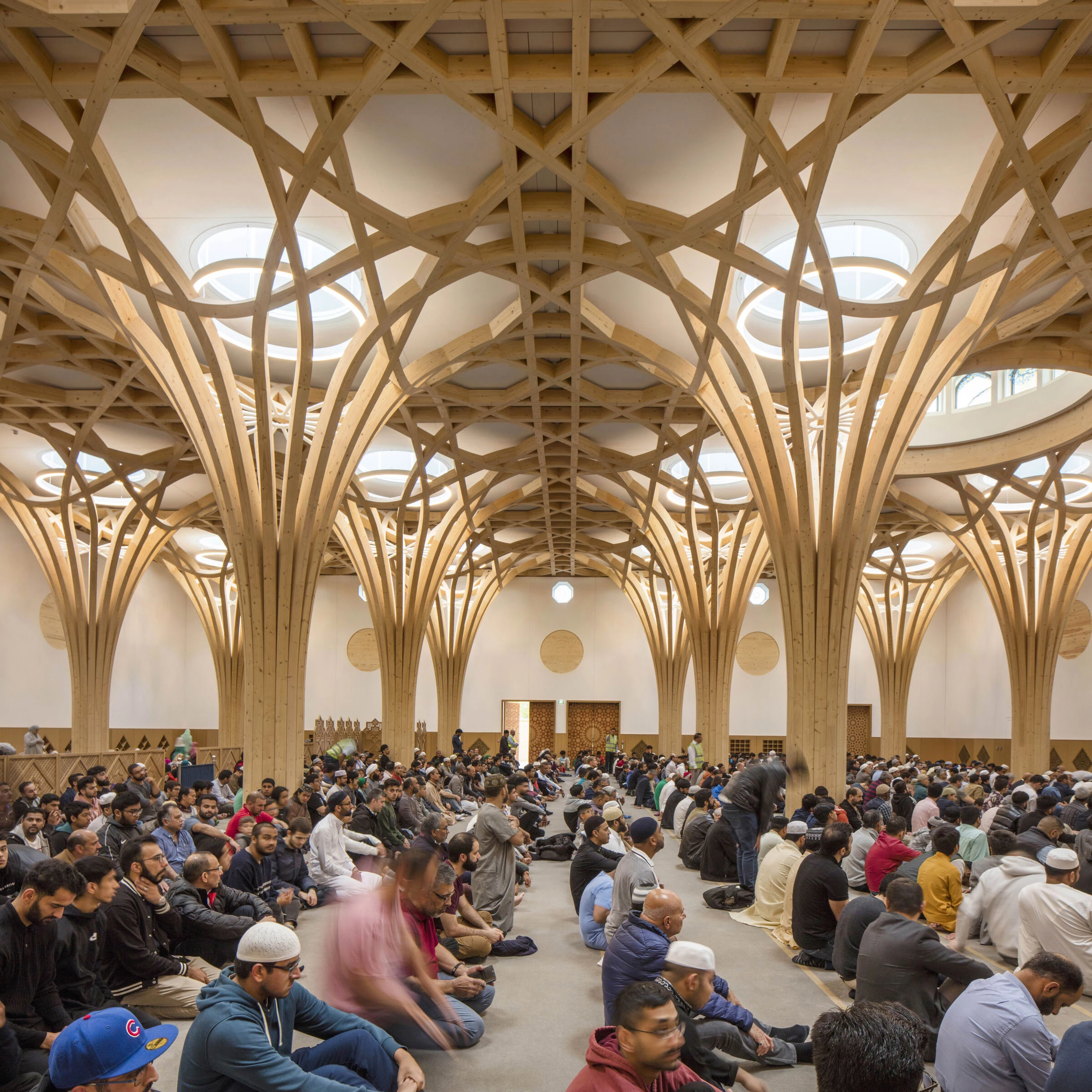
Beyond structure, timber plays a critical environmental role in mosque architecture. It regulates humidity, improves acoustics, and creates a warm, tactile interior that enhances the spiritual experience.
The use of natural materials also reduces the building’s carbon footprint, aligning construction with sustainability goals. Complementing the timber, Gault clay brick tiles wrap the exterior, grounding the mosque in its local context while maintaining a refined material palette.
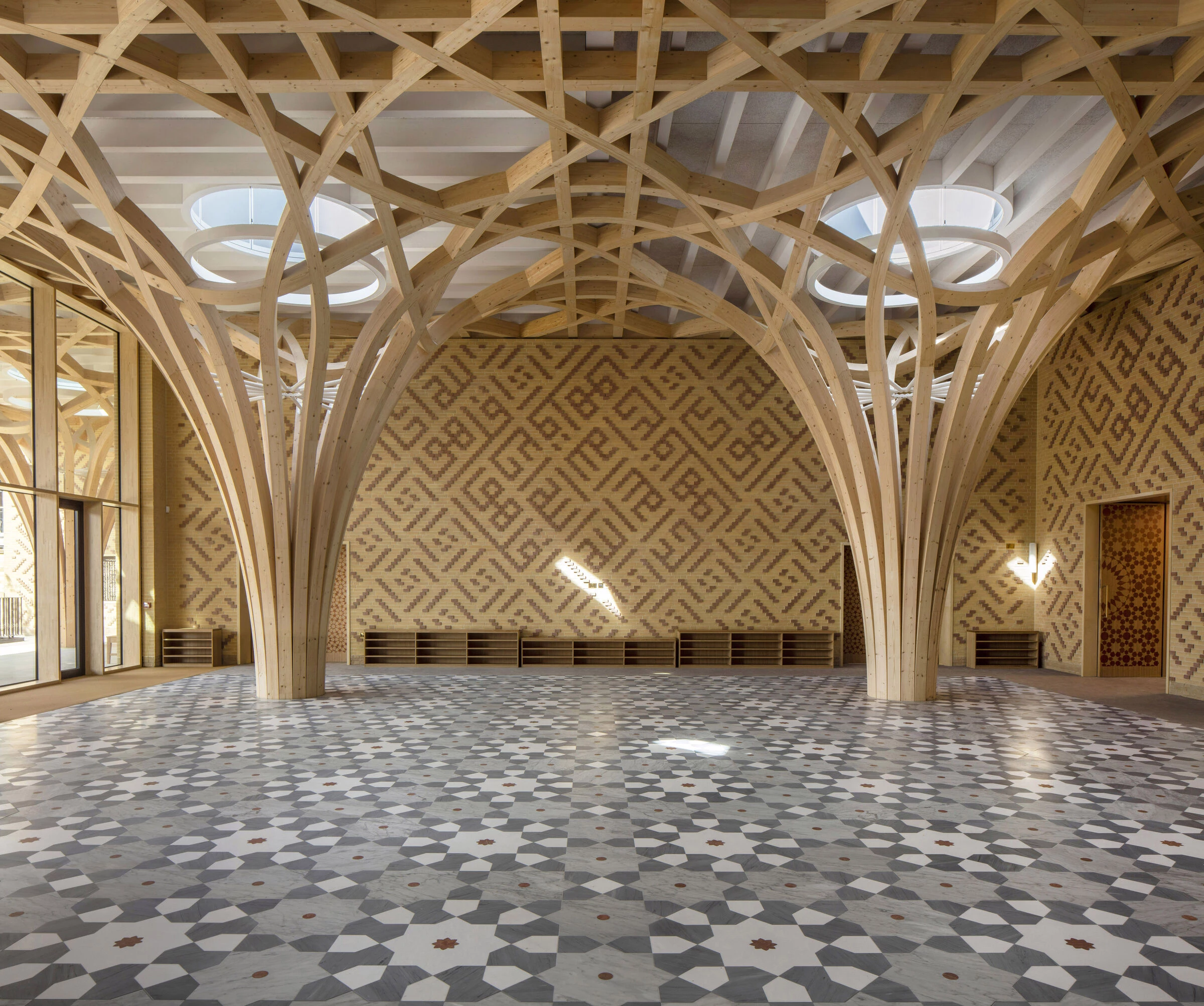
This approach reflects a broader shift toward renewable and performance-driven materials. Construction is no longer about assembling parts but about creating integrated systems where material, structure, and environment work together. The mosque becomes a living framework, responsive to climate and human presence, while maintaining a strong sense of identity through its crafted details.
Concrete Mass and Climate Control
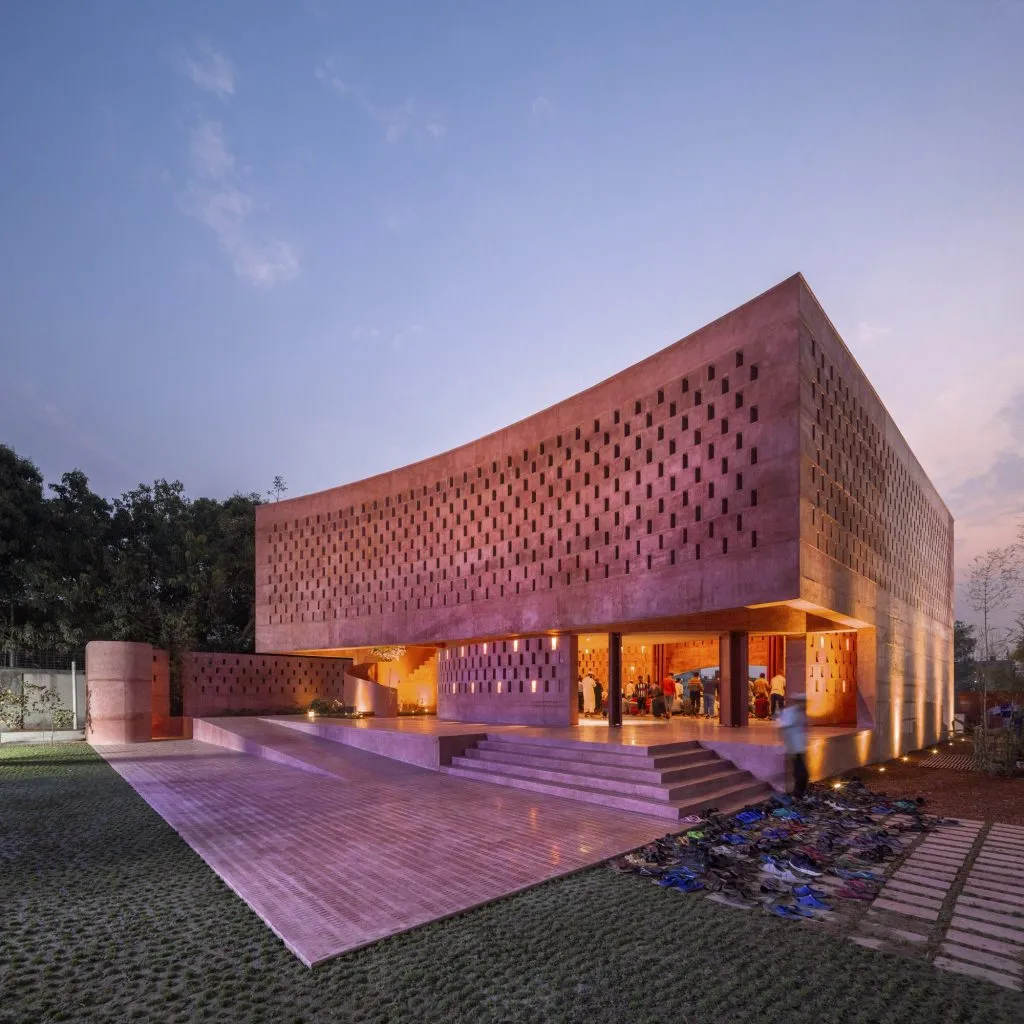
The Zebun Nessa Mosque in Bangladesh by Studio Morphogenesis presents a contrasting material strategy, where concrete is used as a monolithic and expressive medium. Instead of lightness and layering, the design emphasizes mass, thickness, and permanence. Pink pigmented concrete defines the entire structure, referencing traditional terracotta while reinterpreting it through a contemporary lens. The building reads as a single sculpted volume, where construction and form are inseparable.
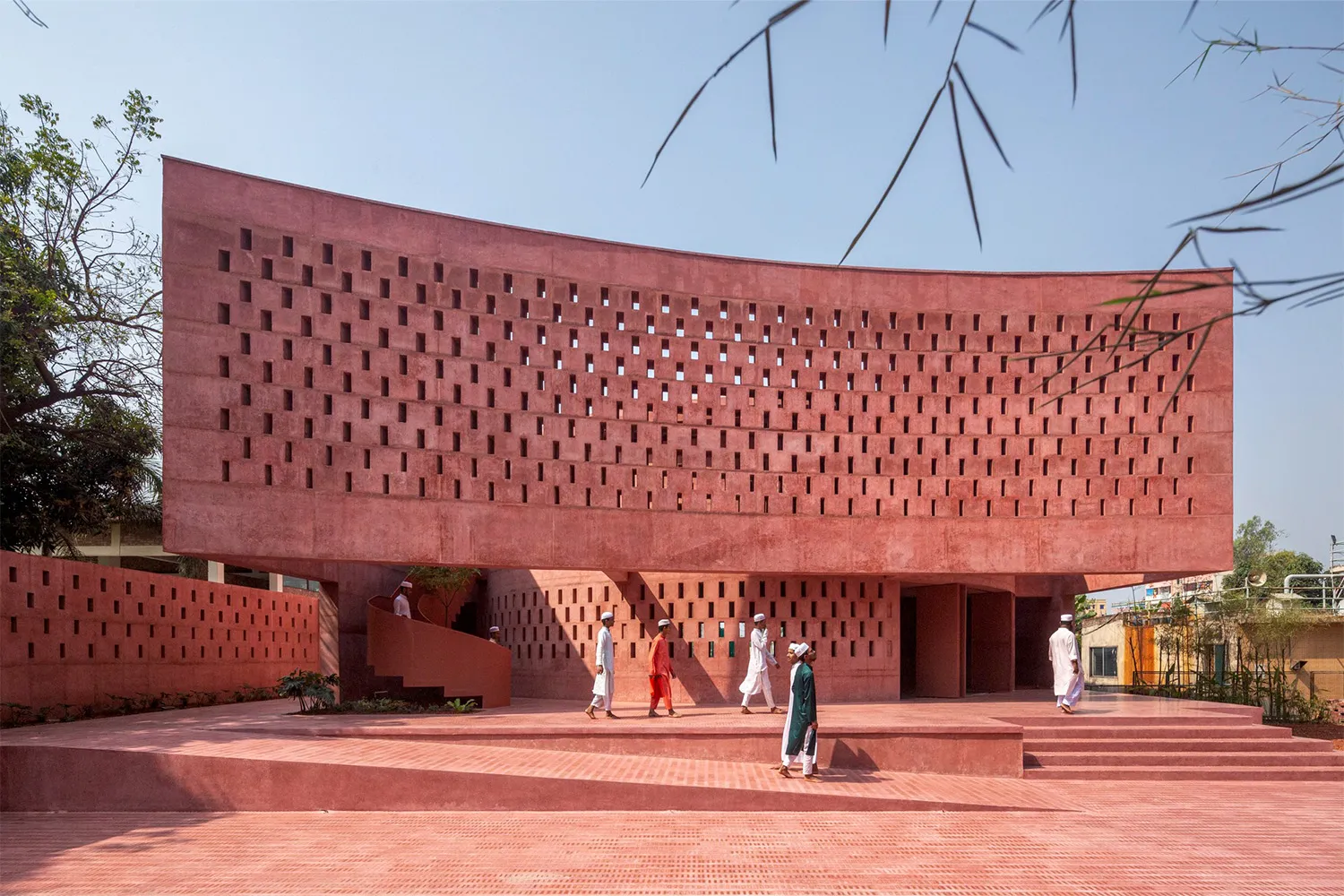
Thermal performance is central to this approach. Thick, double-layered concrete walls act as buffers against heat, stabilizing indoor temperatures in a challenging climate. Openings are carefully perforated into the structure, allowing light and air to enter in a controlled manner. This reduces reliance on mechanical cooling systems while creating a dynamic play of shadow and illumination within the prayer space.
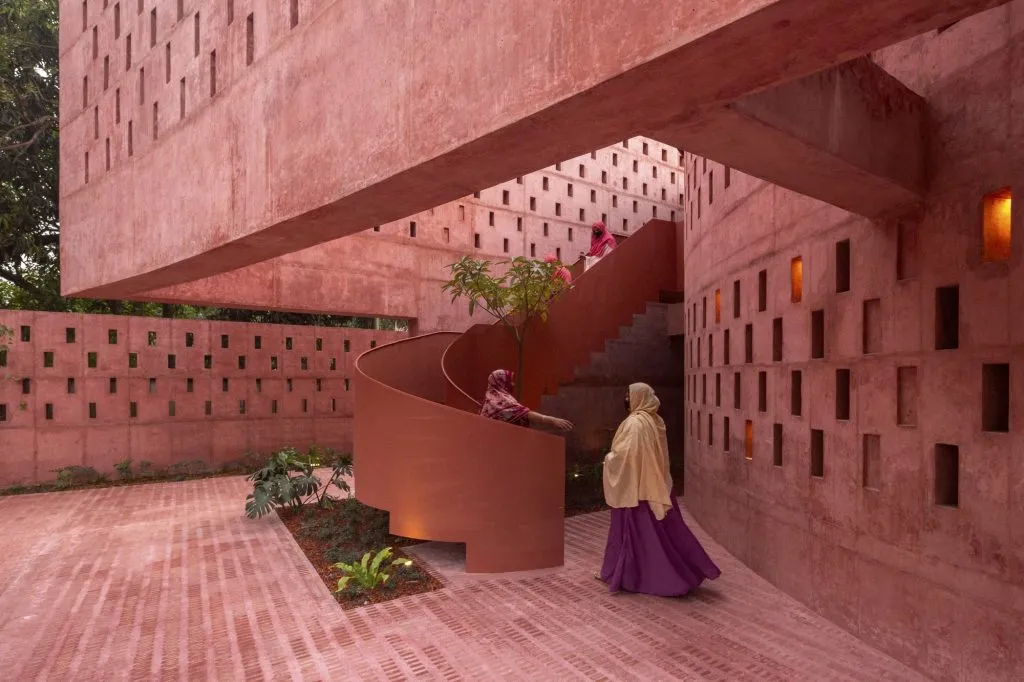
The dome, formed as a thin concrete shell, demonstrates structural efficiency while preserving spatial continuity. It spans the prayer hall without intermediate supports, reinforcing the sense of openness and unity. Interior elements, including mosaic surfaces and reflective water features, contrast with the raw exterior, adding depth to the material experience.
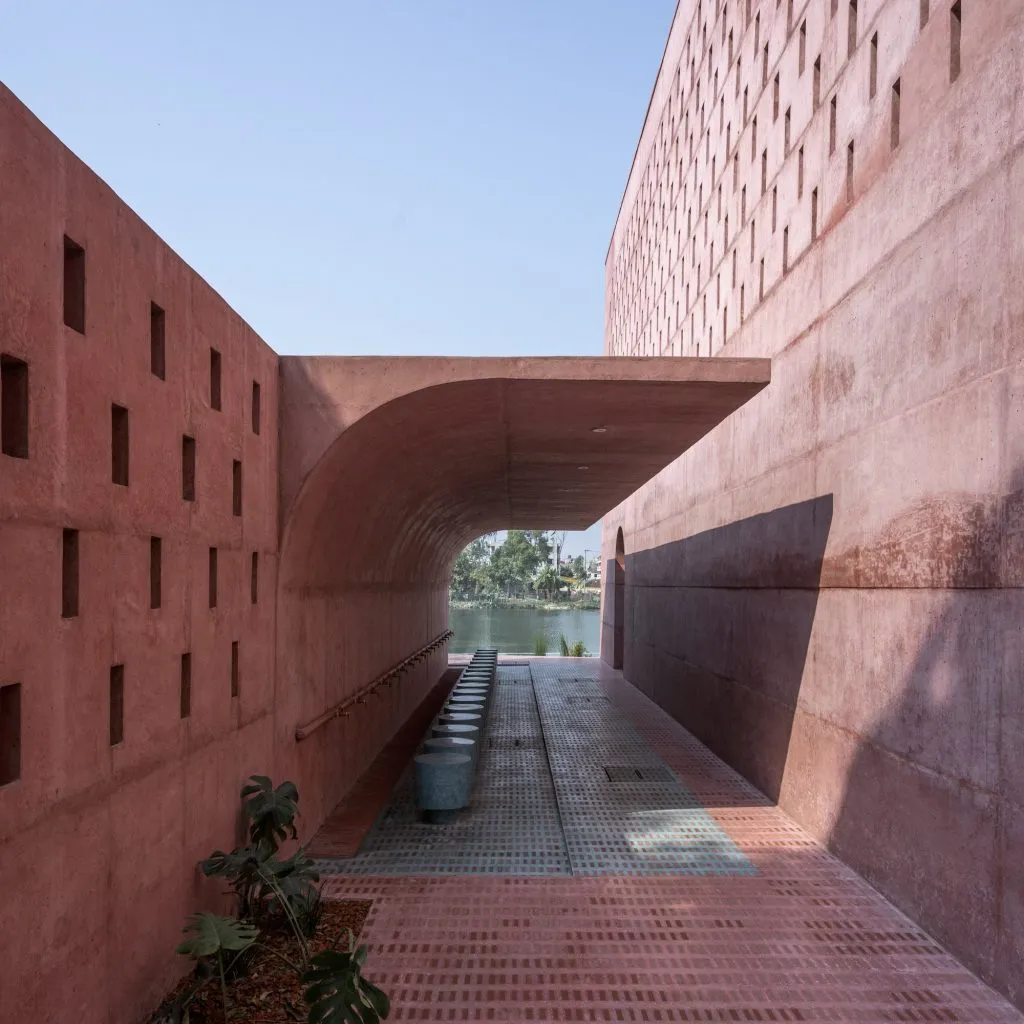
This construction technique relies on the inherent properties of concrete, with its weight, density, and plasticity. Instead of concealing the material, the design amplifies its presence, creating a space that feels grounded and introspective. It shows how traditional ideas of mass and enclosure can be reinterpreted through modern construction methods.
3D-Printed Concrete and Digital Fabrication
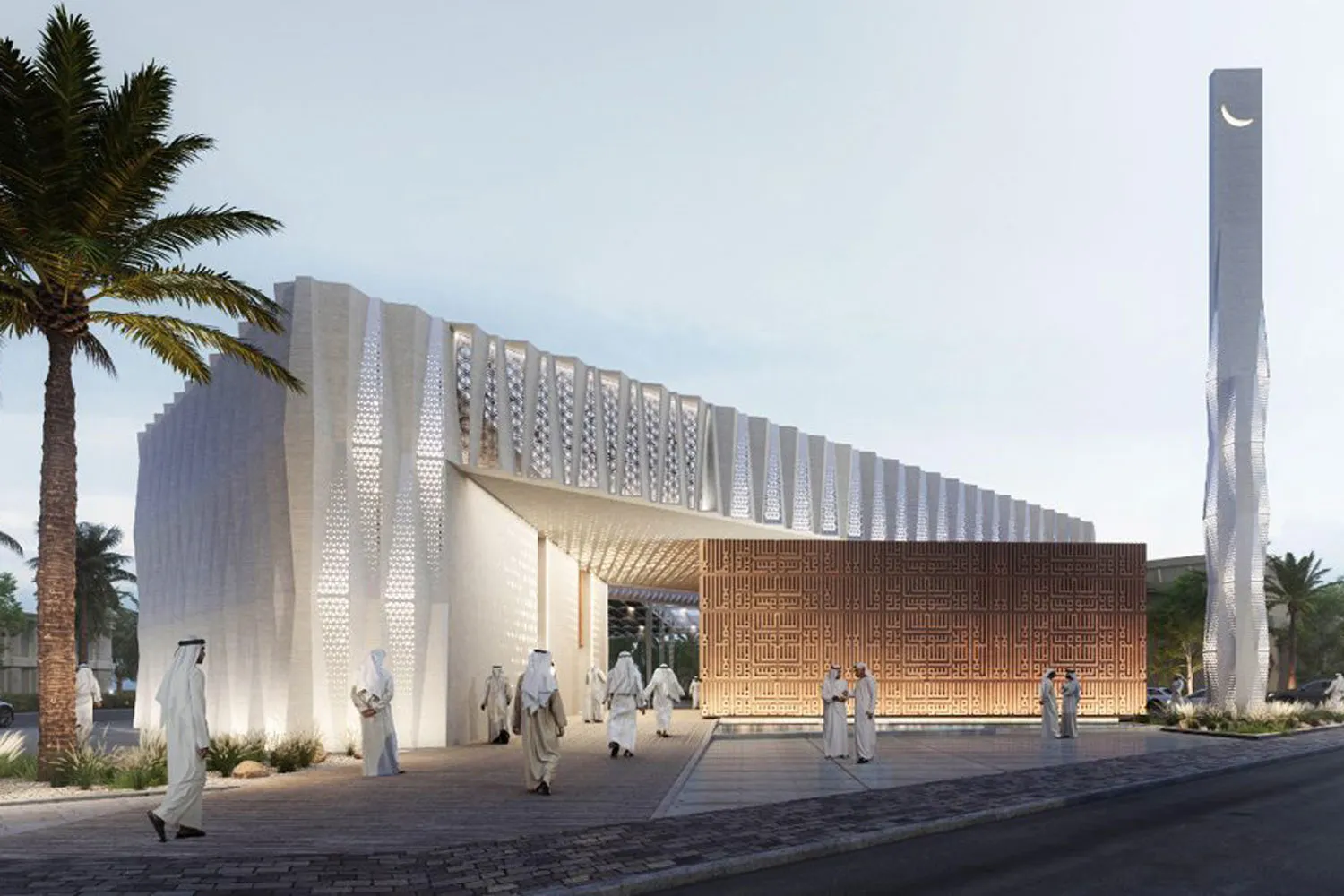
Dubai’s upcoming 3D-printed mosque introduces a radically different construction approach, where digital processes define how materials are used. The structure is created through additive manufacturing, where concrete is extruded layer by layer using robotic systems, forming walls and structural elements directly from a digital model.
This method eliminates the need for formwork, significantly reducing material waste and construction time. It also allows for a high degree of precision, enabling complex geometries that would be difficult or expensive to achieve through traditional techniques. Walls can incorporate structural reinforcement, ventilation channels, and surface articulation within a single printed system, merging multiple functions into one continuous process.
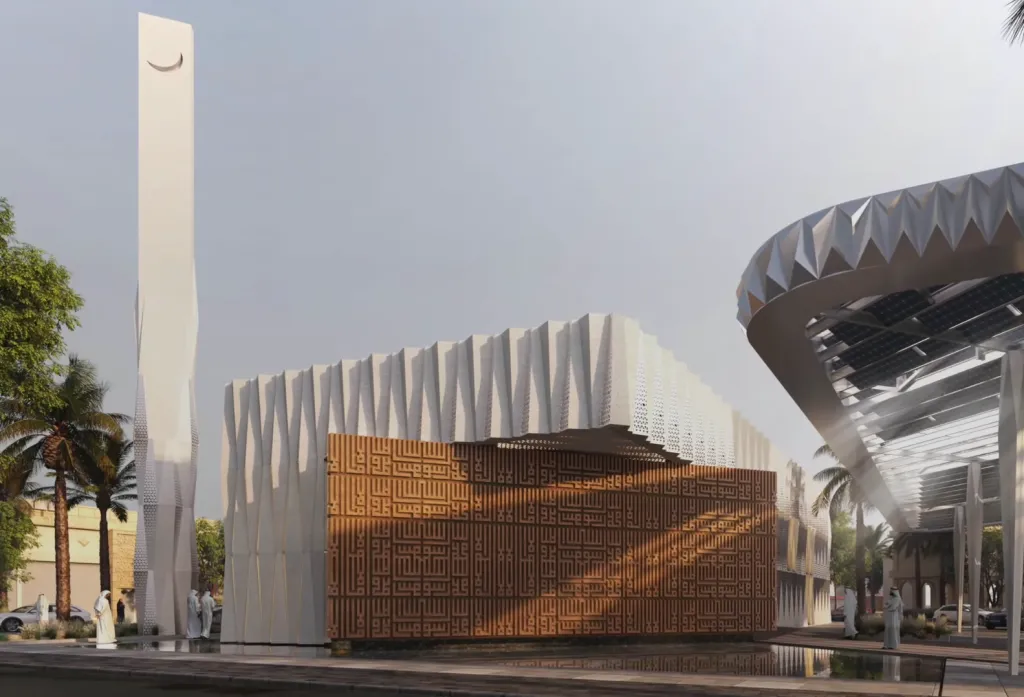
The layered texture of printed concrete becomes a visible design feature, revealing the construction process. This creates a new aesthetic language, where texture and form are directly linked to the method of fabrication. Additionally, technology opens possibilities for scalability, making it easier to replicate or adapt designs in different contexts.
This approach signals a move toward computation-driven architecture, where design and construction operate within a continuous workflow. The mosque emerges from a fusion of material science and digital innovation, shaping a future where buildings are produced with greater precision and efficiency.
Contemporary mosque architecture is shaped by how materials perform as much as how forms appear. As you observe these shifts, it becomes clear that materials actively influence light, temperature, acoustics, and movement, redefining how sacred spaces are perceived and inhabited.
Explore Courses
.jpg "Ondrej Chybik - Rethinking Architecture")