




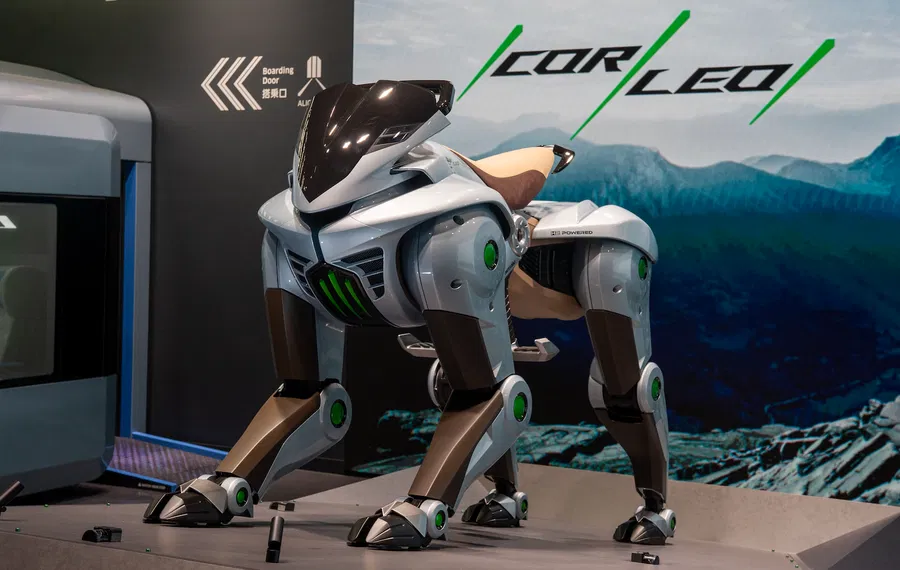
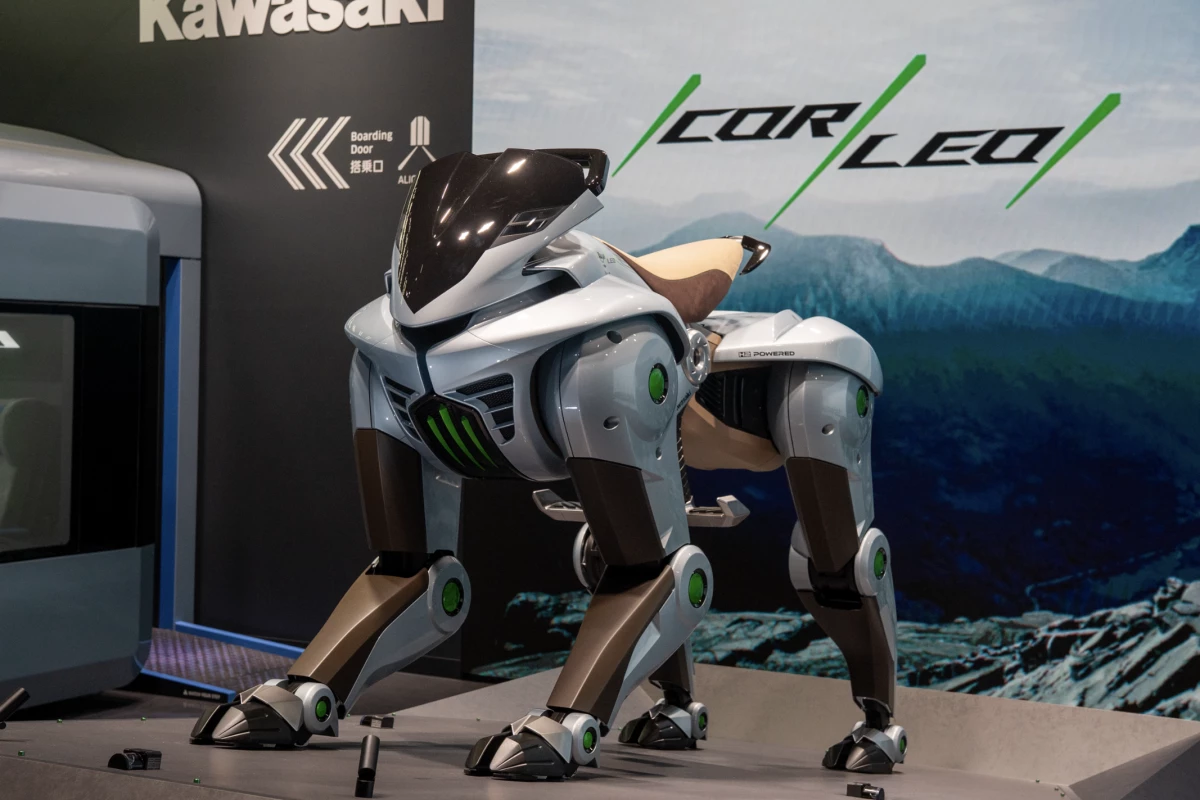
Kawasaki Heavy Industries is successfully bridging the gap between its century-long expertise in heavy machinery, aerospace, and motorcycles and the emerging field of advanced quadrupedal robotics. They recently announced a four-legged robot horse vehicle, known as the Corleo, which is transitioning from a conceptual 2050 pipe dream into a concrete production track with a 2035 commercialization target, marking a significant pivot in the company’s long-term strategic vision.
Synthesis of Robotics and Motorcycle Engineering

Kawasaki’s four-legged robot-horse vehicle is the culmination of the Robust Humanoid Platform (RHP) research initiative, a broader corporate commitment to a hydrogen-based energy society, and a response to systemic demographic challenges that demand innovative solutions for mobility and labor.
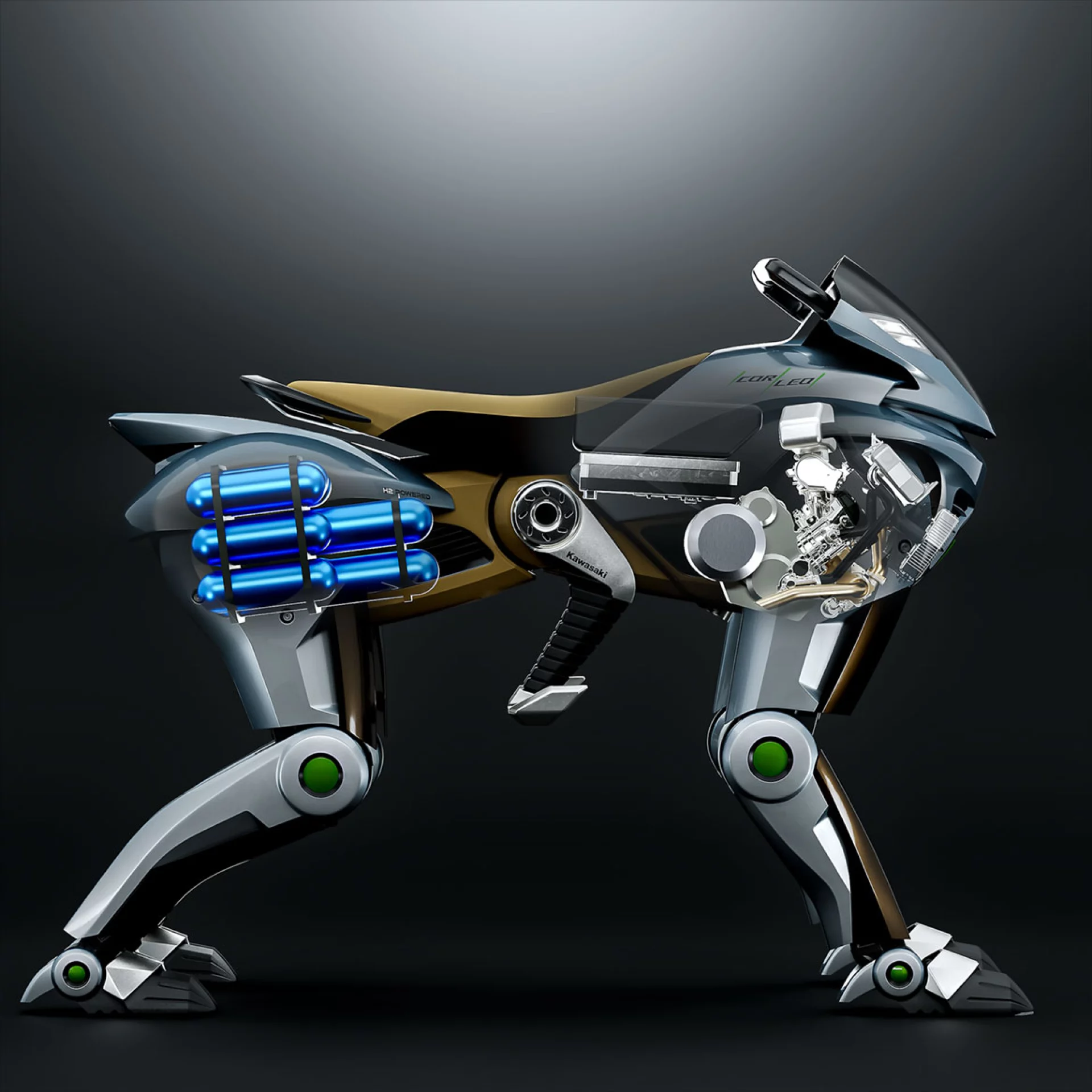
With the establishment of its robotics division in 1989, Kawasaki refined the precision and reliability of its machines. The specific shift toward legged mobility emerged from the Kaleido program, an initiative focused on the development of robust bipedal humanoid robots intended for disaster relief and heavy lifting. Bex, a robotic goat unveiled at the 2022 International Robot Exhibition in Tokyo, was designed as a multifunctional utility machine capable of both walking on rough terrain and zipping across smooth surfaces using a unique hybrid wheel-on-knee system.
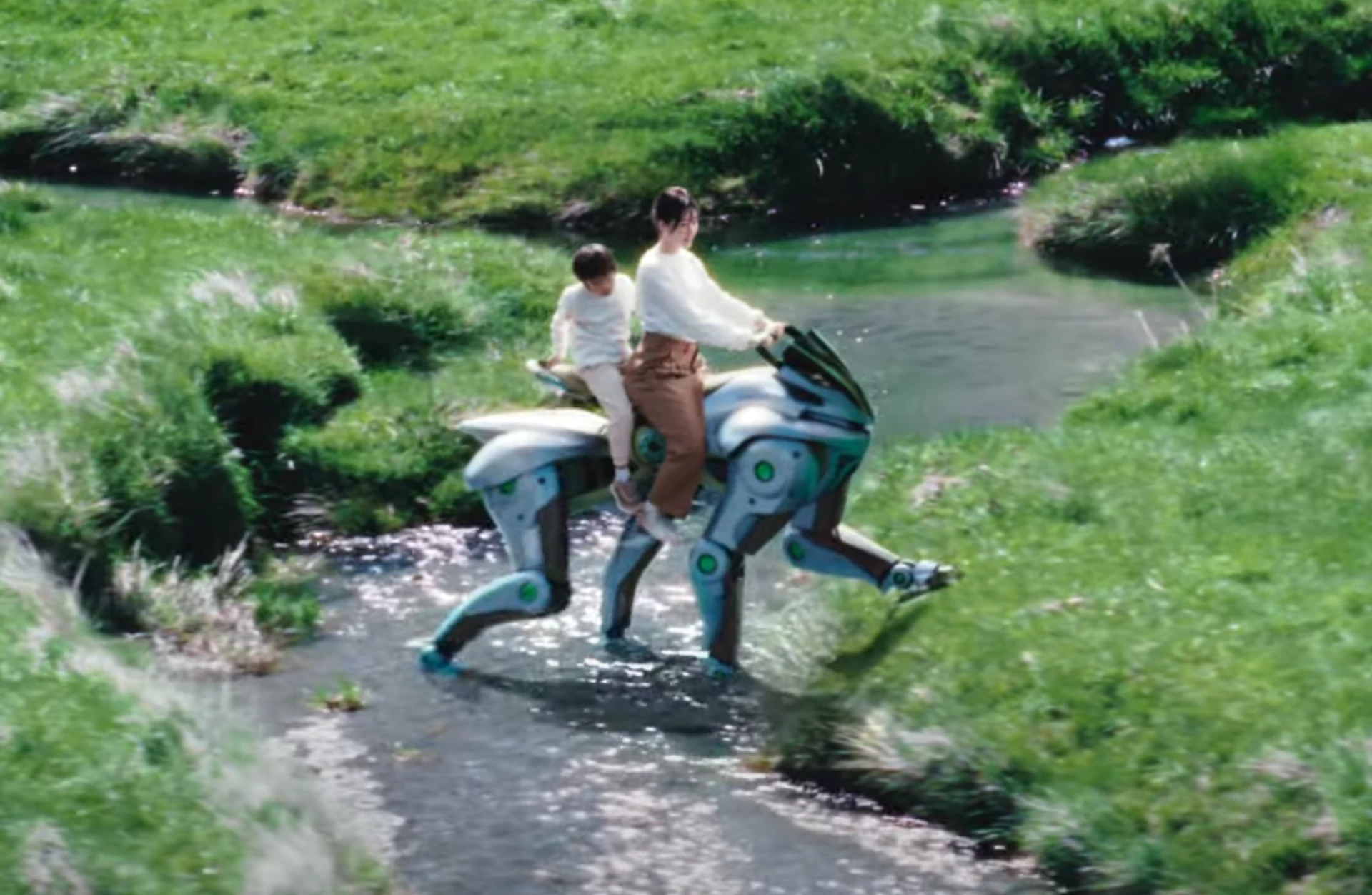
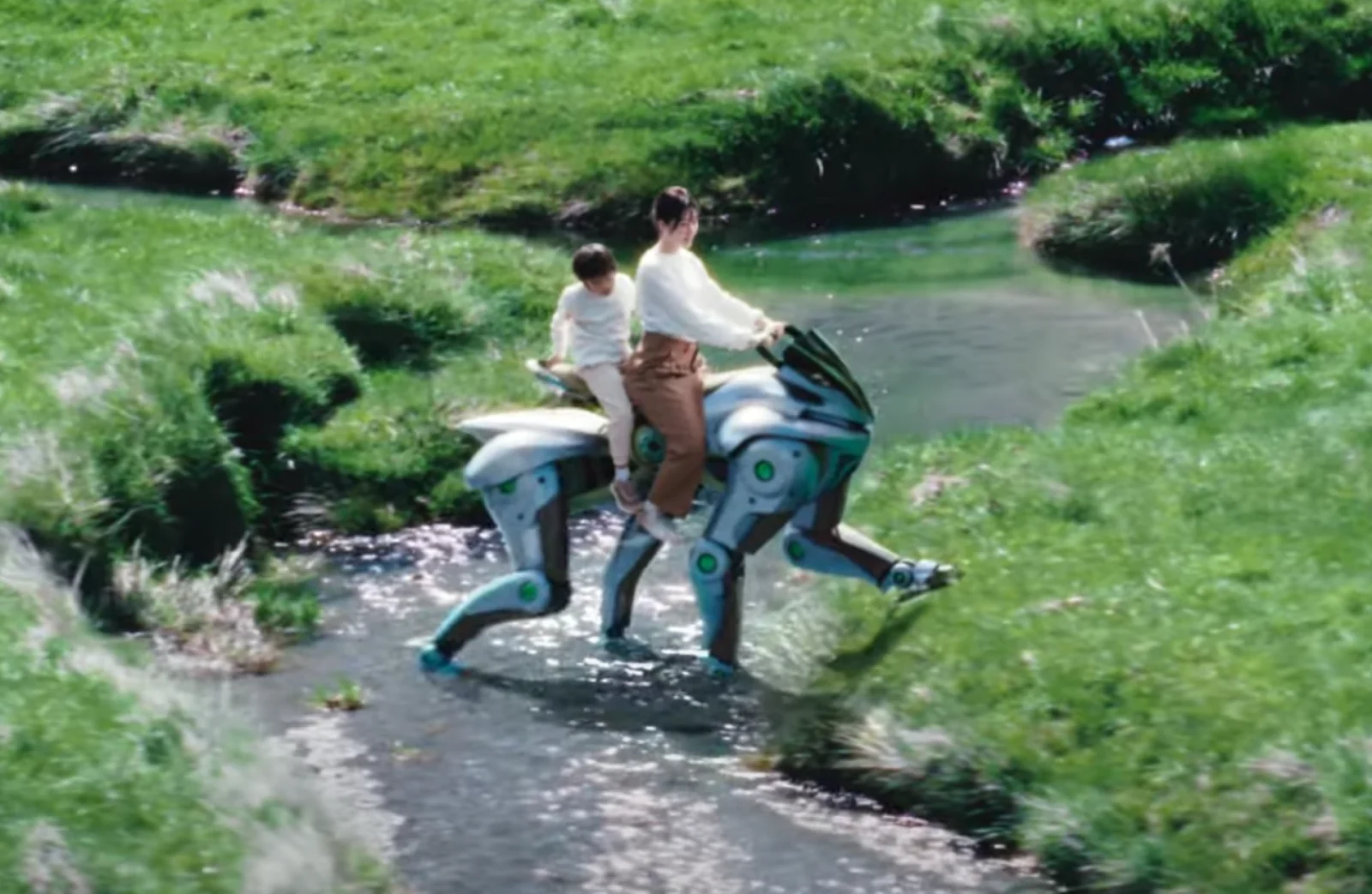
By 2025, the utility-focused Bex had evolved into the Corleo, a more refined, rider-centric off-road mobility vehicle showcased at the Osaka-Kansai Expo. The Corleo represents a transition from the worker persona of Bex to an explorer persona, aimed at providing a fun-to-ride experience that leverages the handling and stability of Kawasaki’s motorcycles.
Kinematics and Locomotion Systems

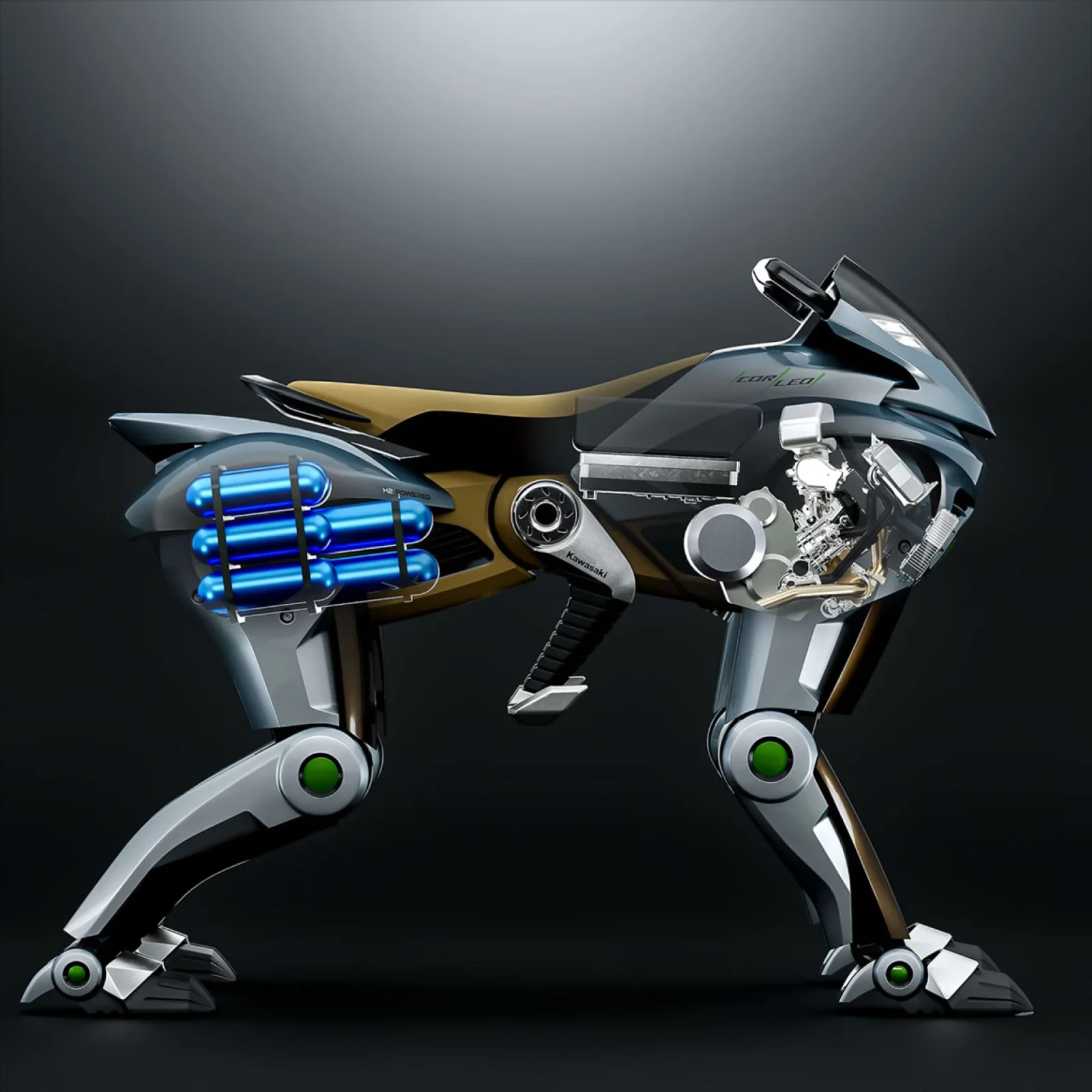
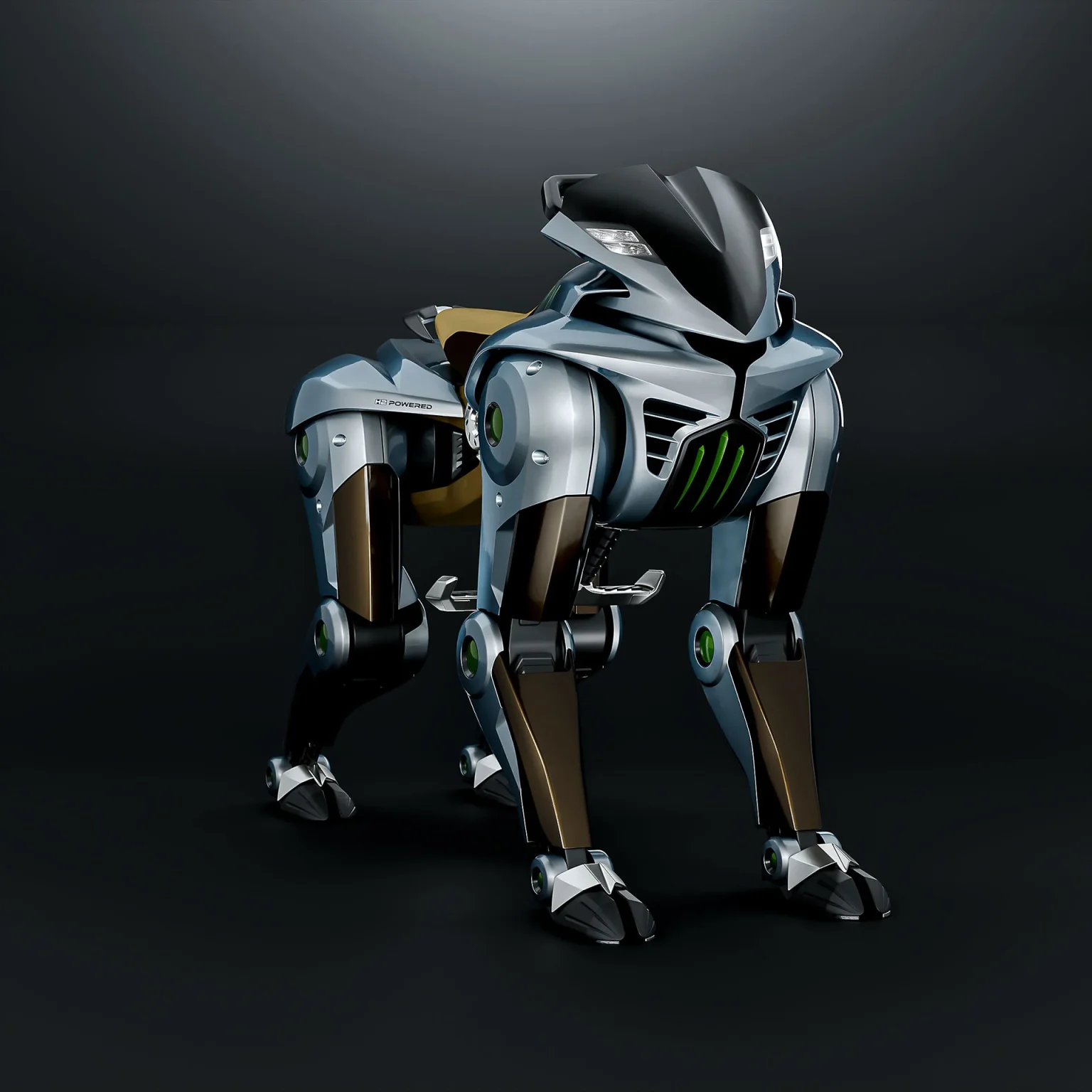
The hooves are constructed from slip-resistant rubber with a left–right divided structure, allowing them to adapt to and grip irregular surfaces such as rocky slopes, grasslands, and rubber fields. The swingarm, a design element that allows the rear leg units to articulate vertically independently of the front units, effectively absorbs the kinetic shocks of walking and running.
The unique transition from Bex to Corleo involves the implementation of a hydrogen-based drivetrain, which utilizes a 150cc hydrogen-powered internal combustion engine (ICE) to generate electricity that is distributed to individual drive units located in each of the four limbs.
Human-Machine Interaction and Autonomous Capabilities
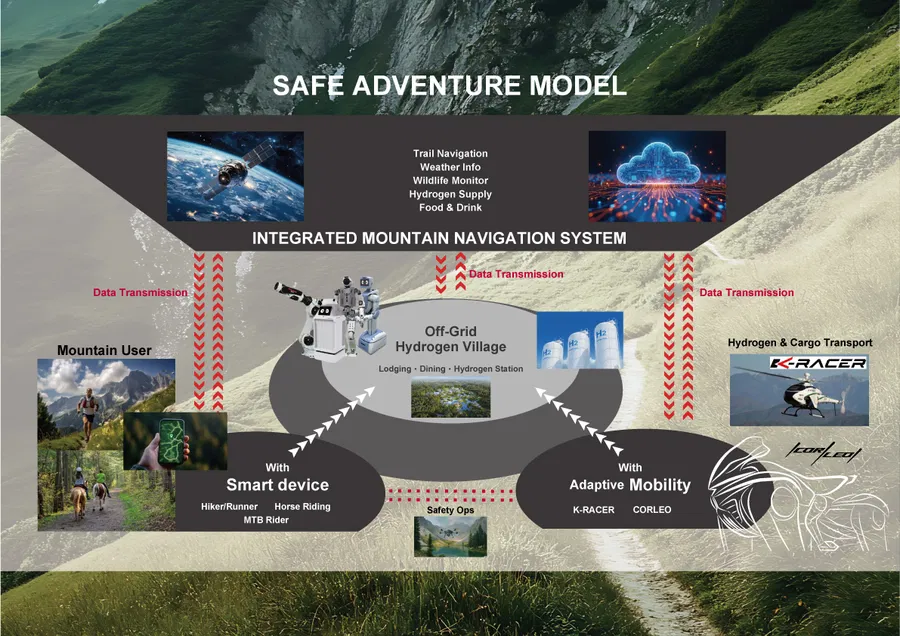
The design philosophy driving the Corleo is unity, a concept that enables the machine to monitor the rider’s movements, creating a connection between human intent and robotic response. The Corleo is equipped with an instrument panel displaying hydrogen levels, optimal route guidance, and the current centre-of-gravity position.

Corleo is a high-fidelity blend that combines the stability of four legs while preserving the intuitive control of a two-wheeled machine. The architecture of its mobility lies in four independent robotic legs, which use a combination of hooves and a specialized swingarm mechanism
The 2035 Production Timeline

- 2027 Milestone: Kawasaki plans to complete full-riding capability for the Corleo—a strategic move to monetize early-stage data development by deploying motion data, 3D models, and control logic to the gaming and e-sports industries.
- 2030 Deployment: The vehicle is targeted for use as an on-site mobility solution at Expo 2030 in Riyadh, Saudi Arabia. This real-world deployment will serve as a large-scale pilot program, testing the robot’s performance in a high-demand, public-facing environment.
- 2035 Commercial Launch: Kawasaki aims for mass production and market availability for both individual consumers and institutional entities.
Photo Credits: © Kawasaki
Explore Courses
.jpg%202.jpg "Building Performance with Forma & Opossum")
.jpg "Ondrej Chybik - Rethinking Architecture")