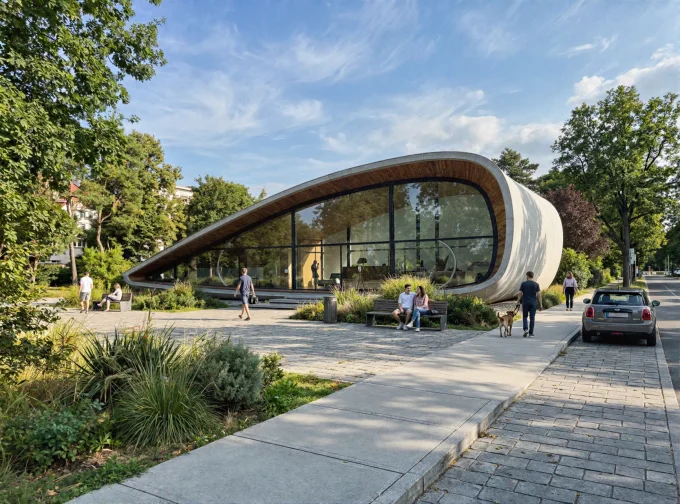


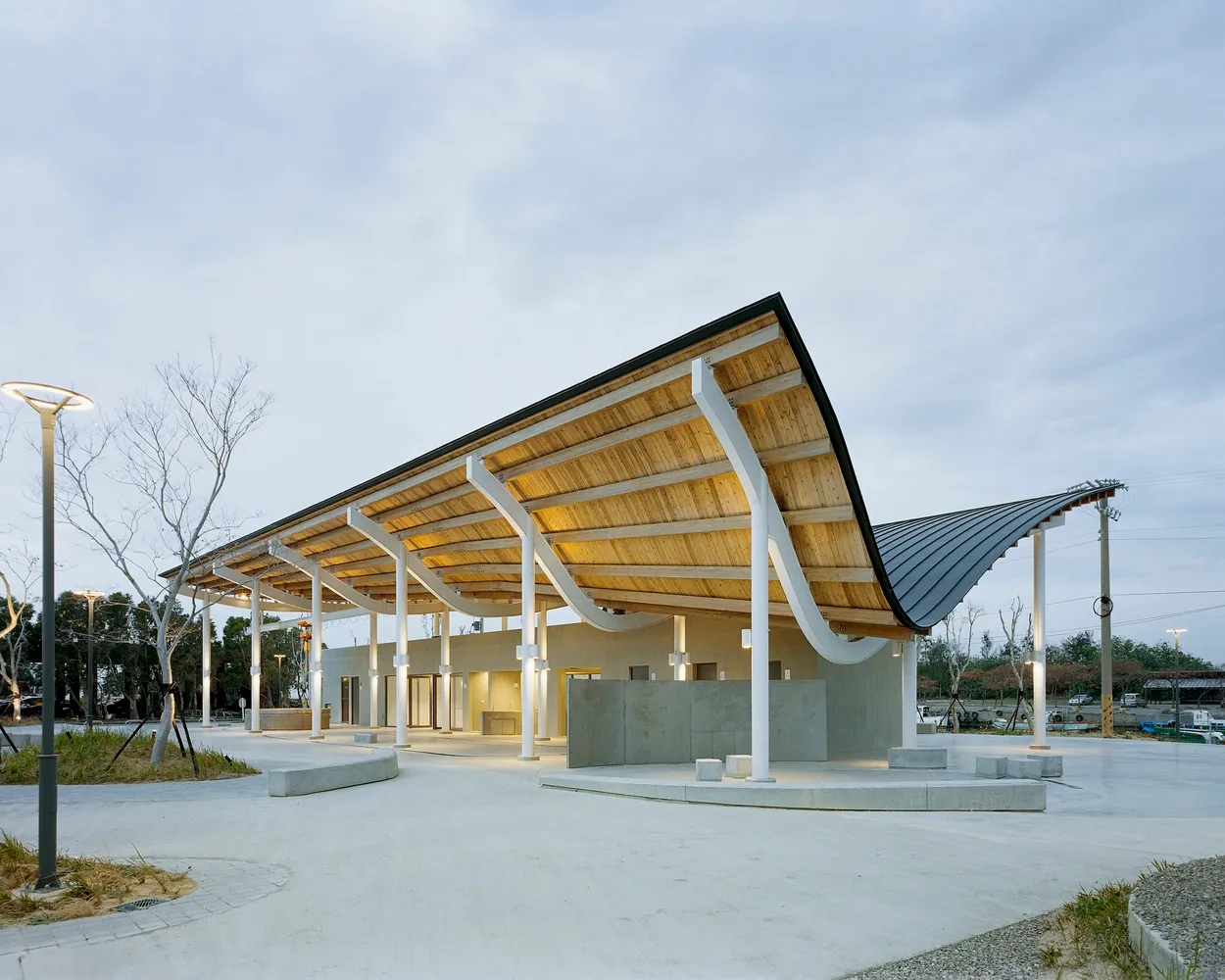
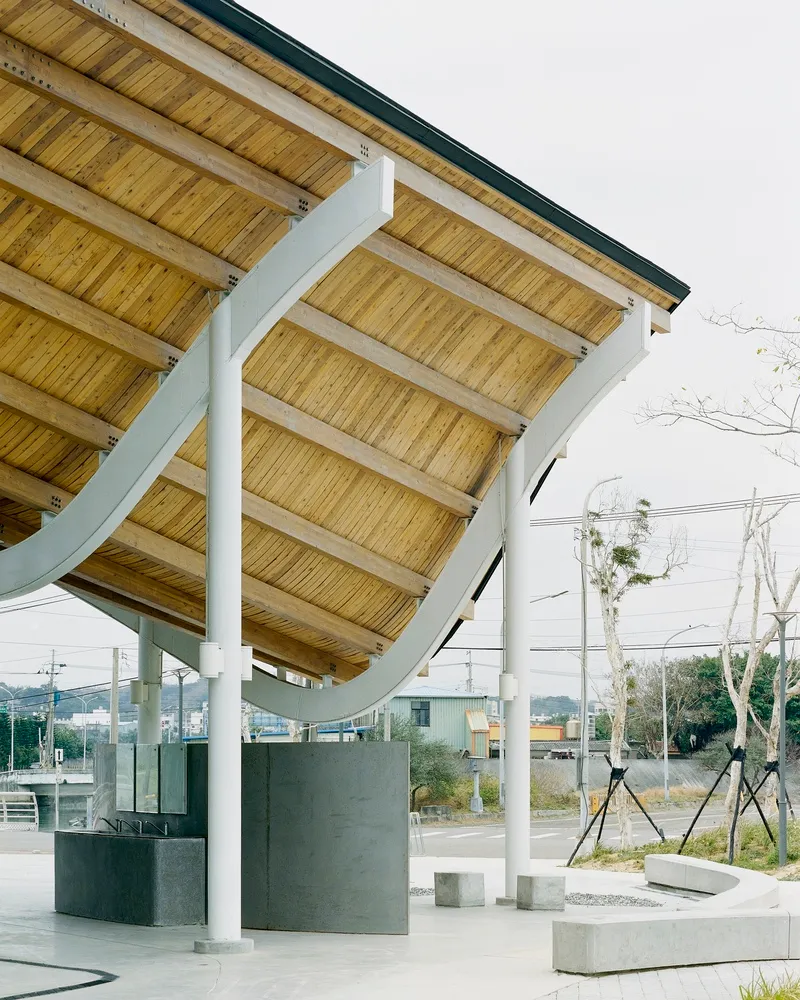
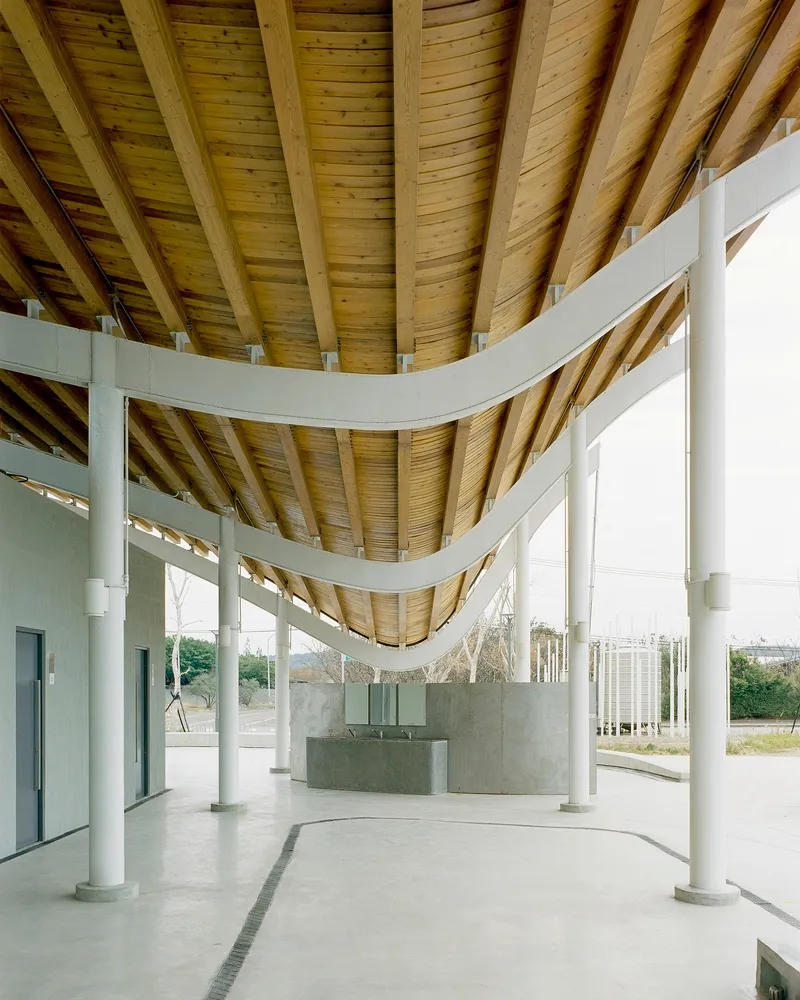
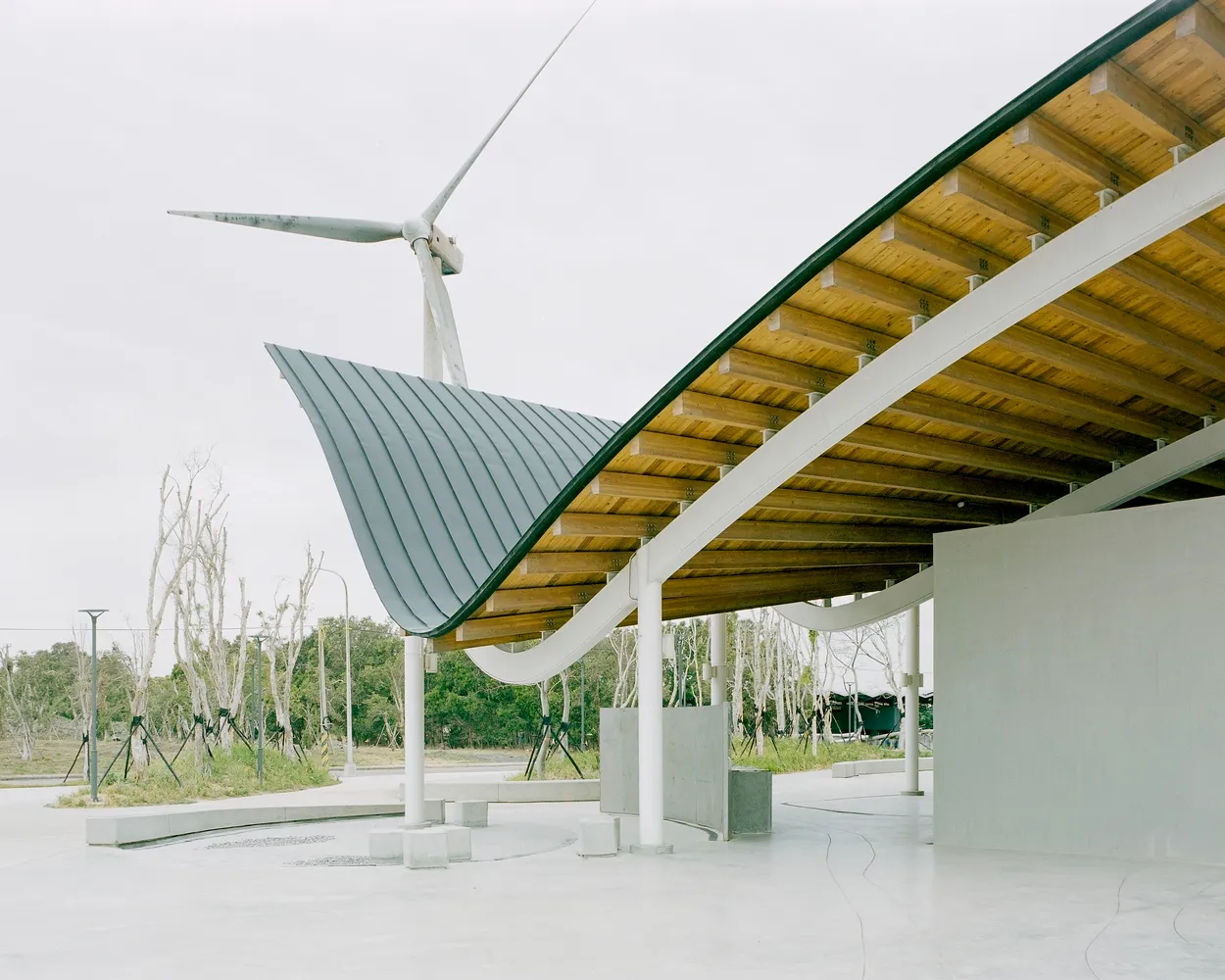
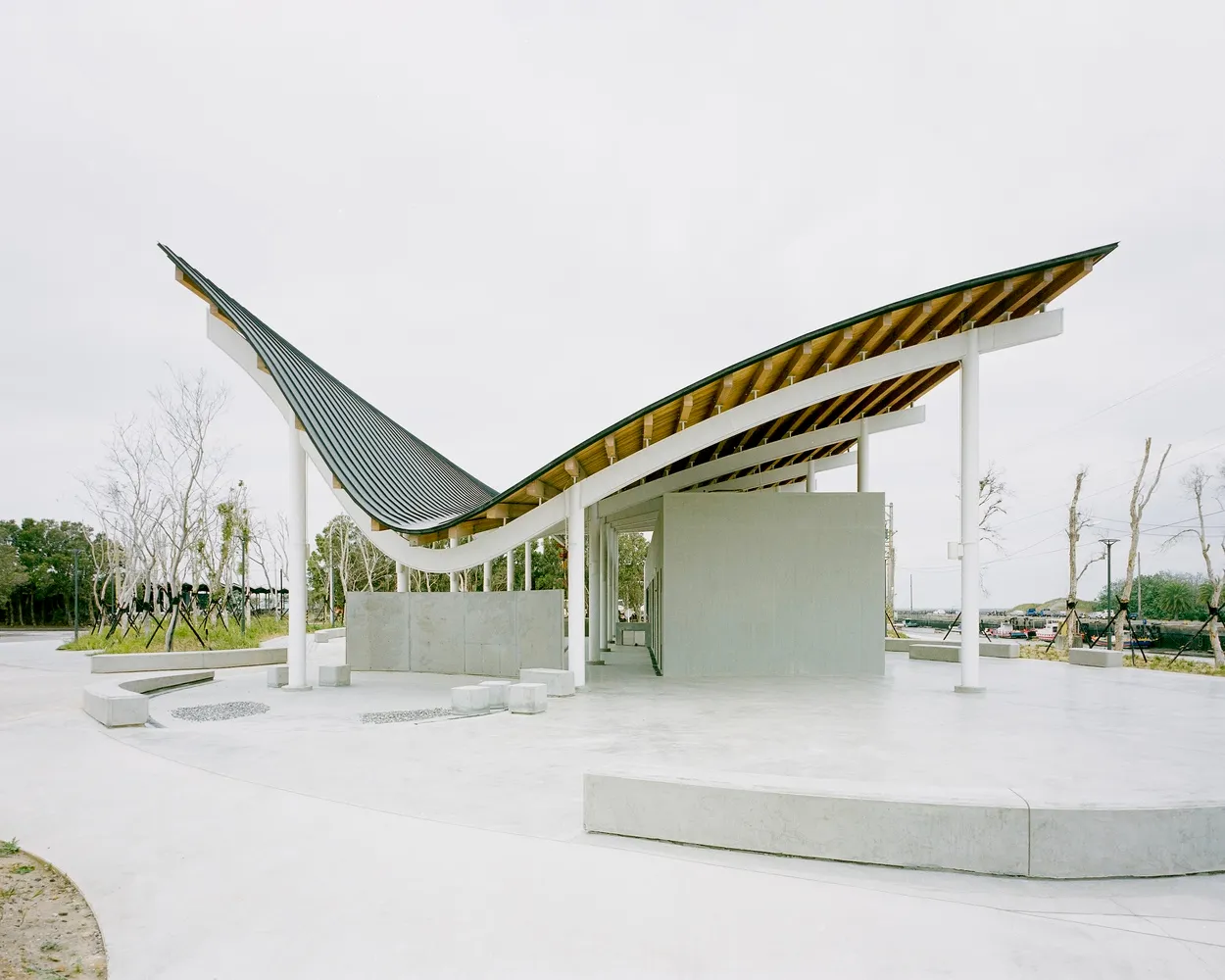
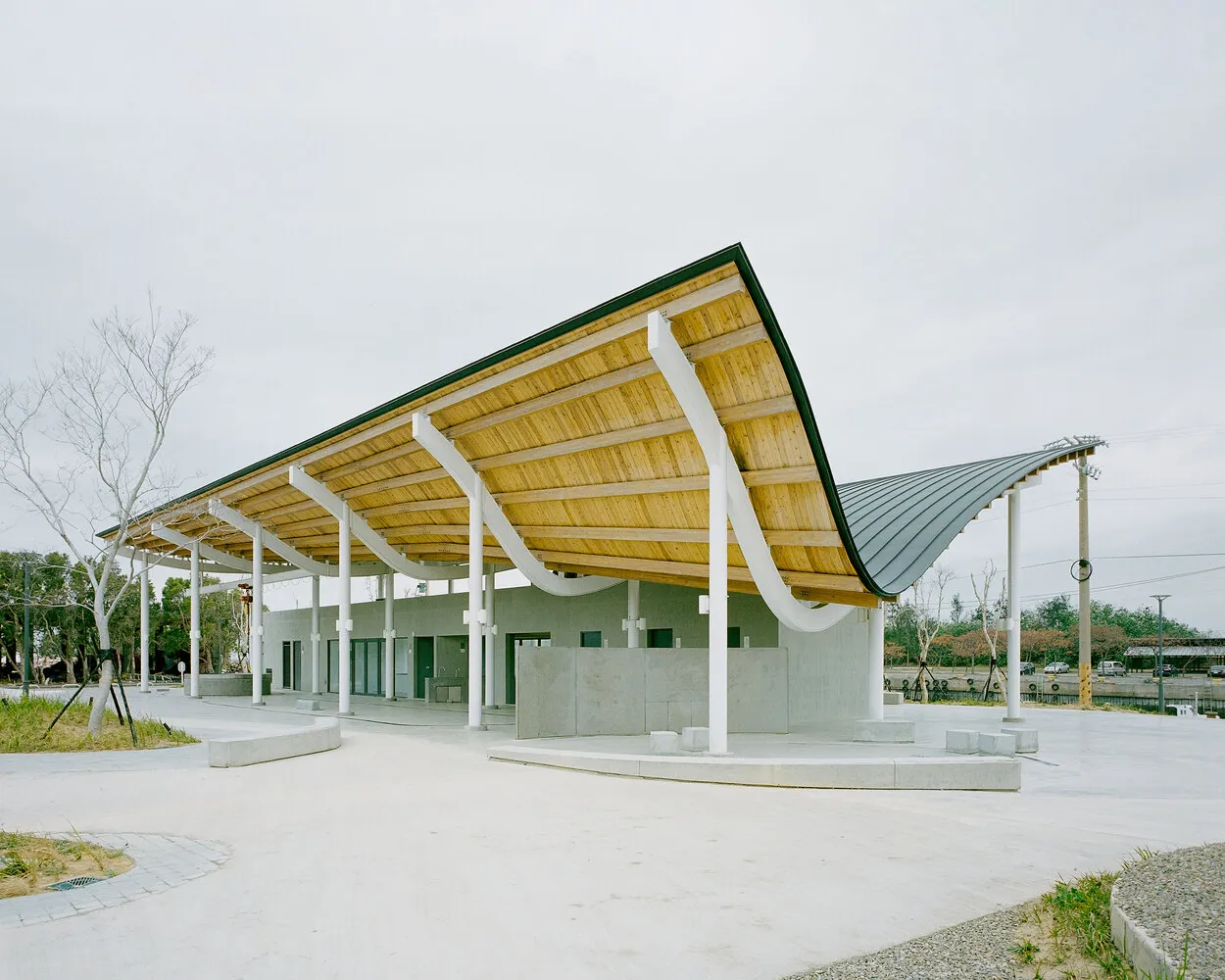
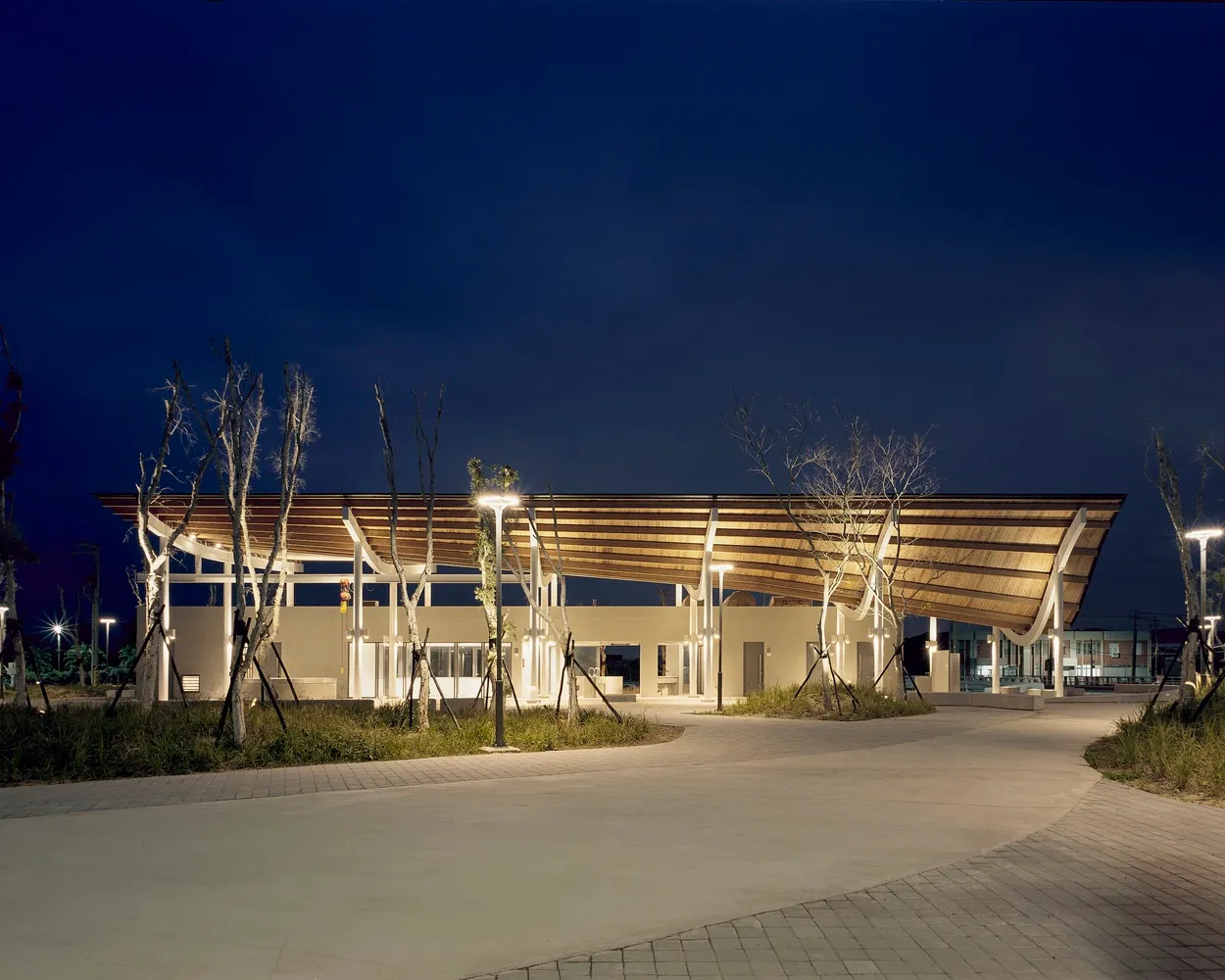
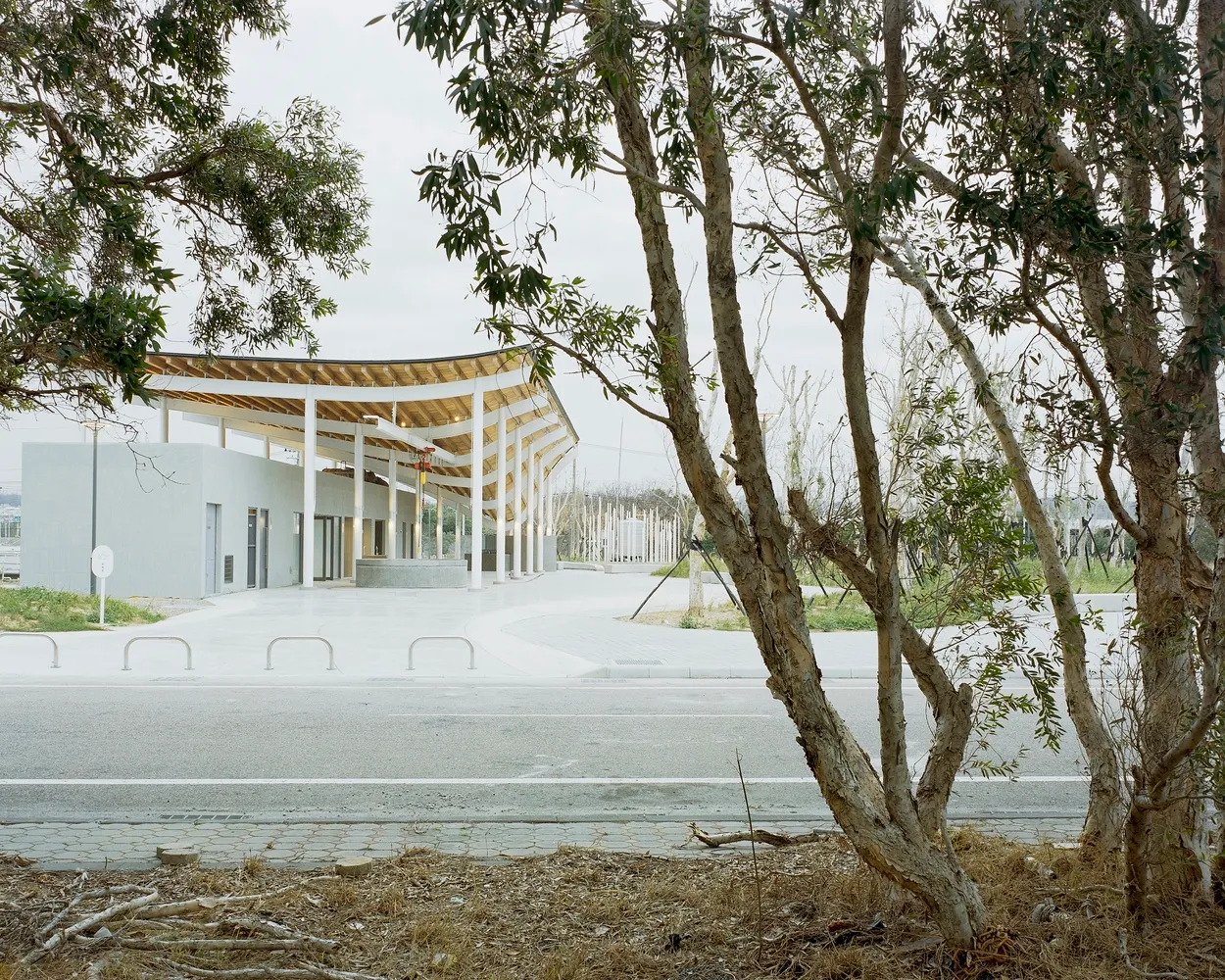
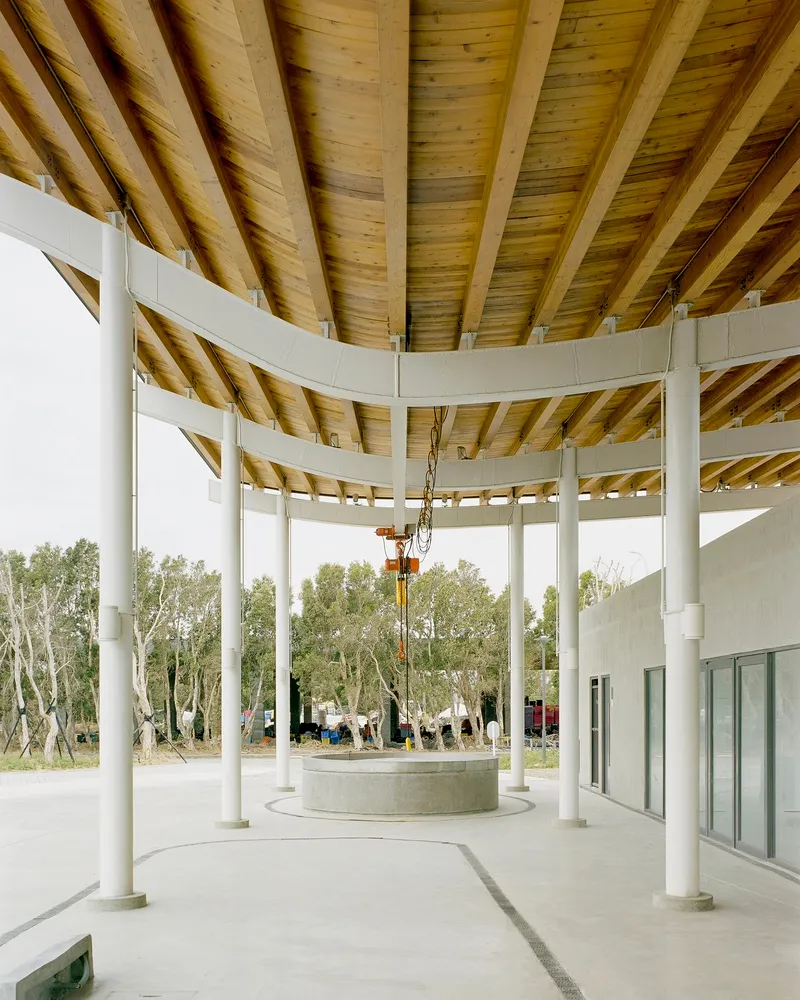
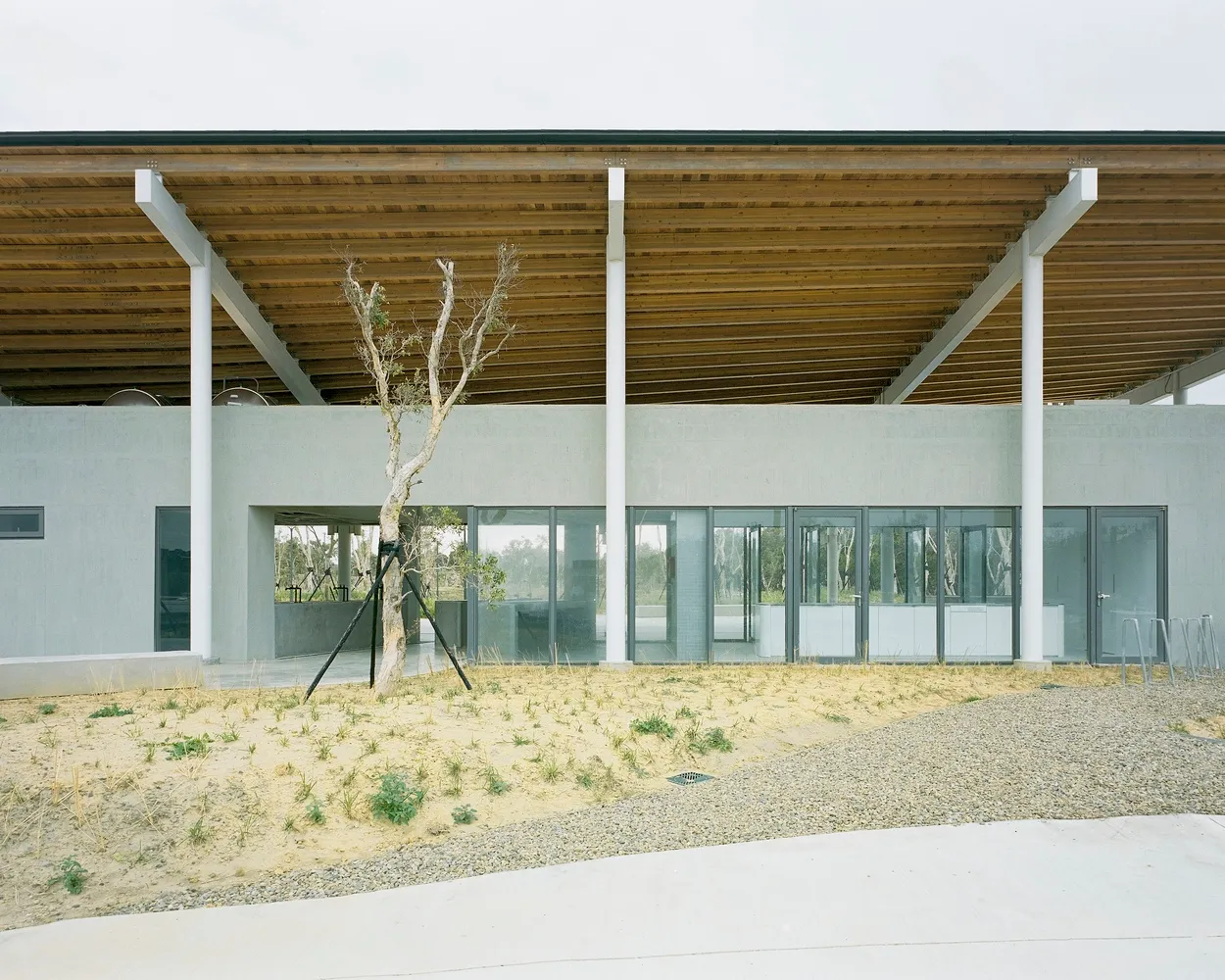
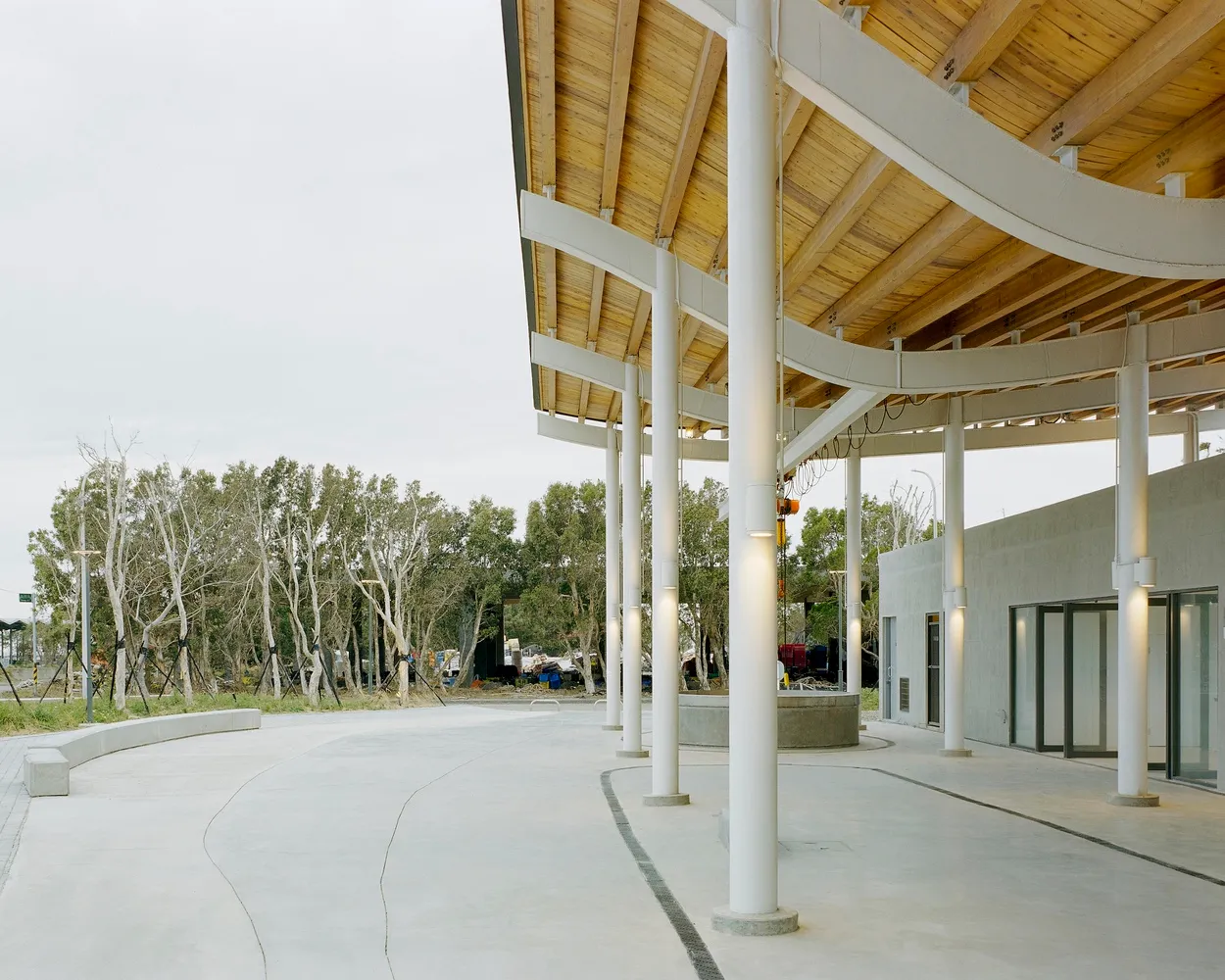
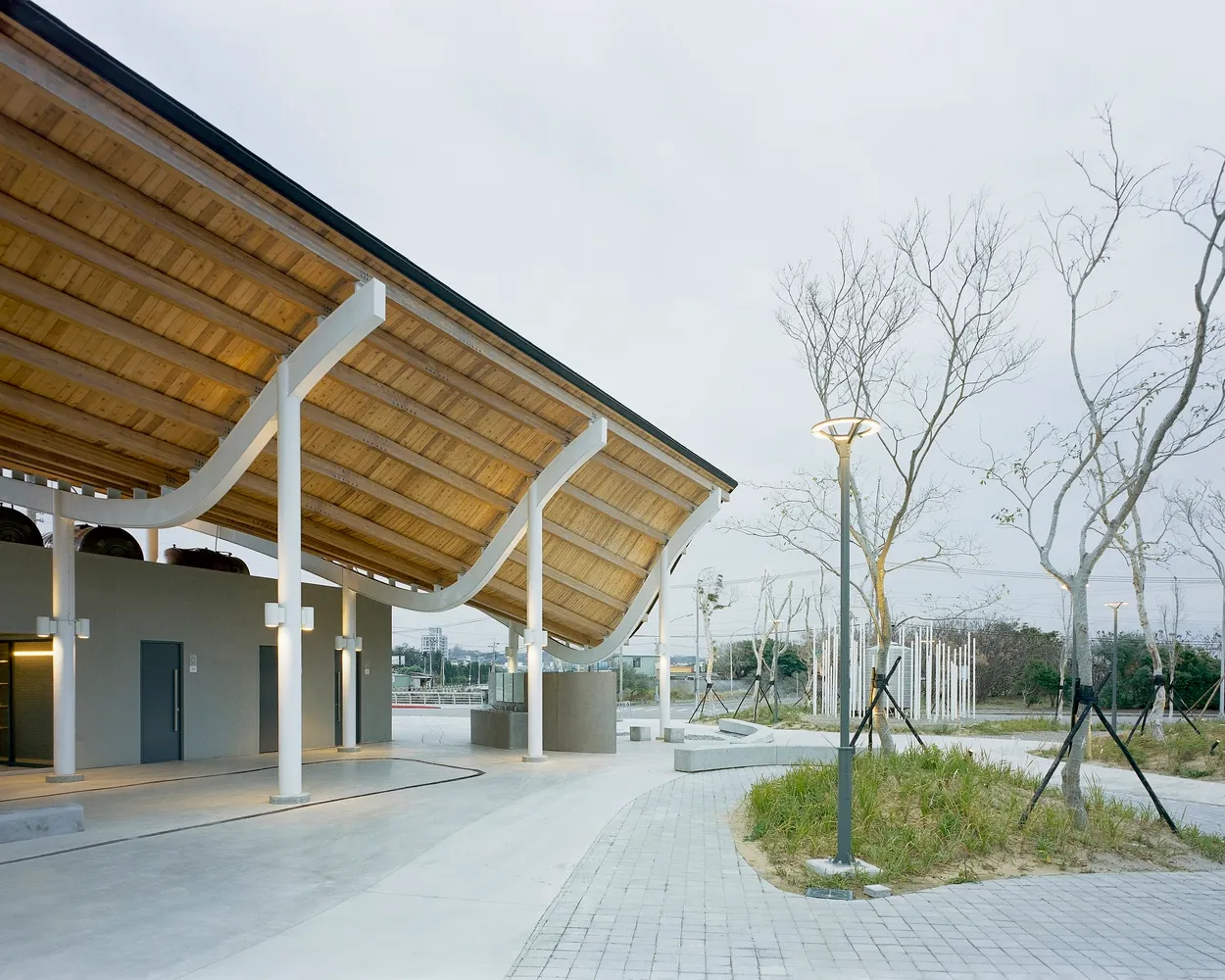
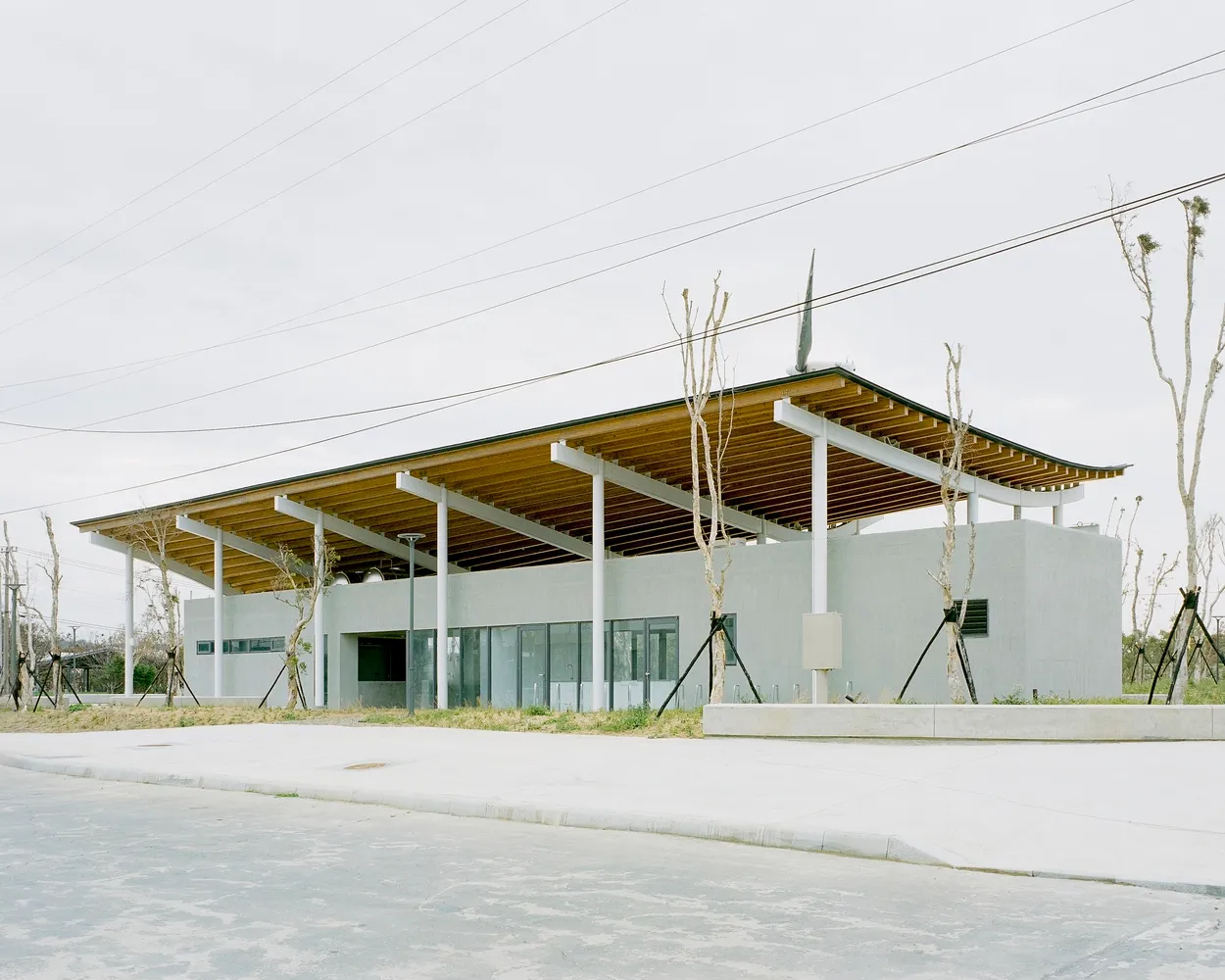
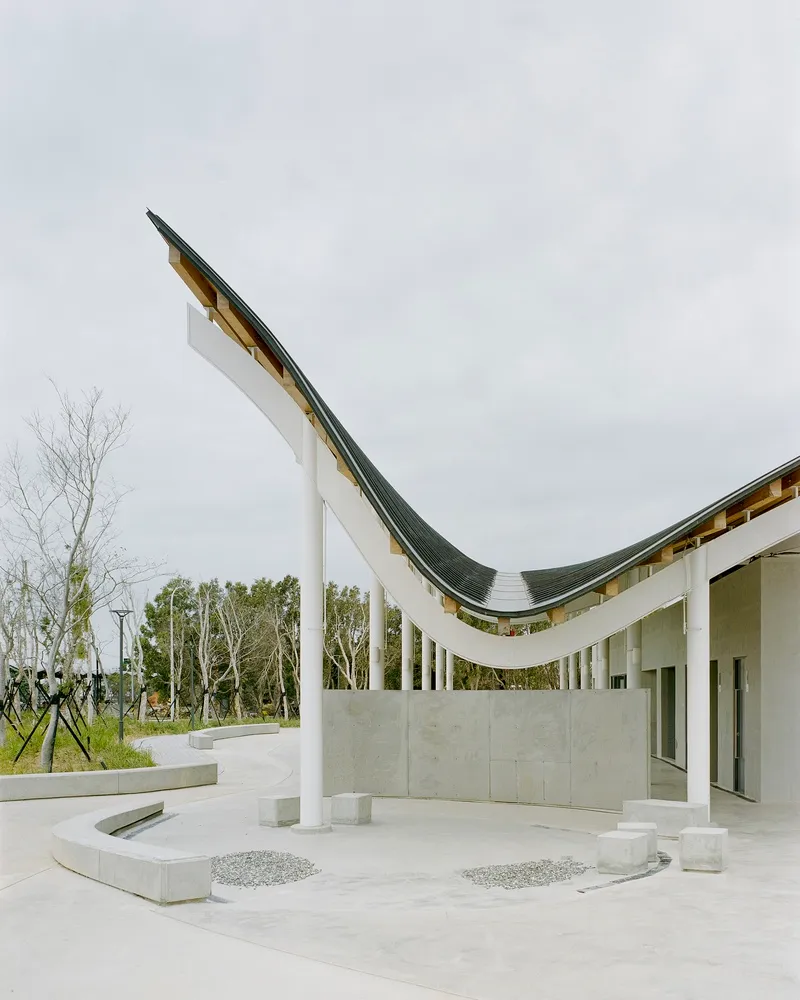
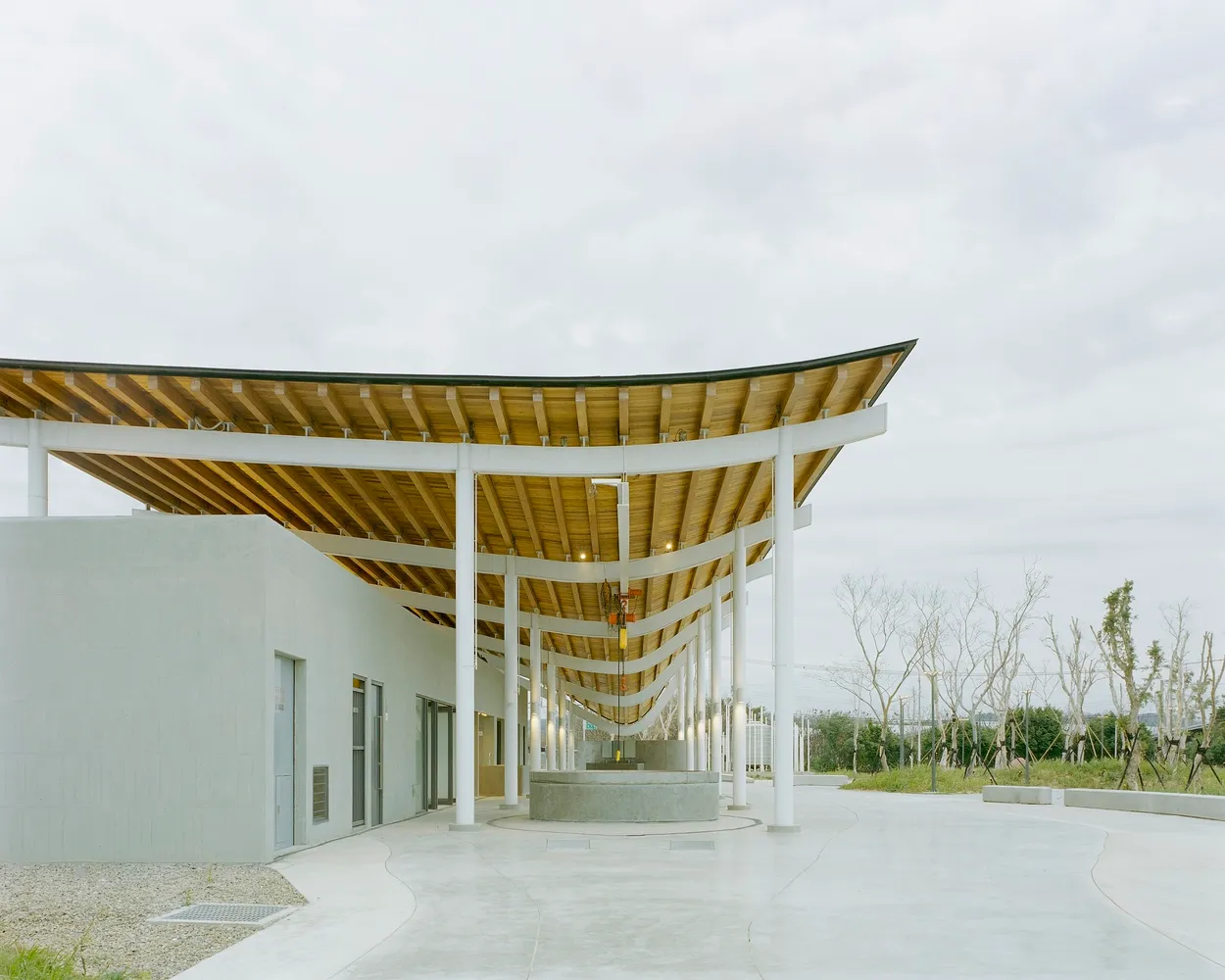
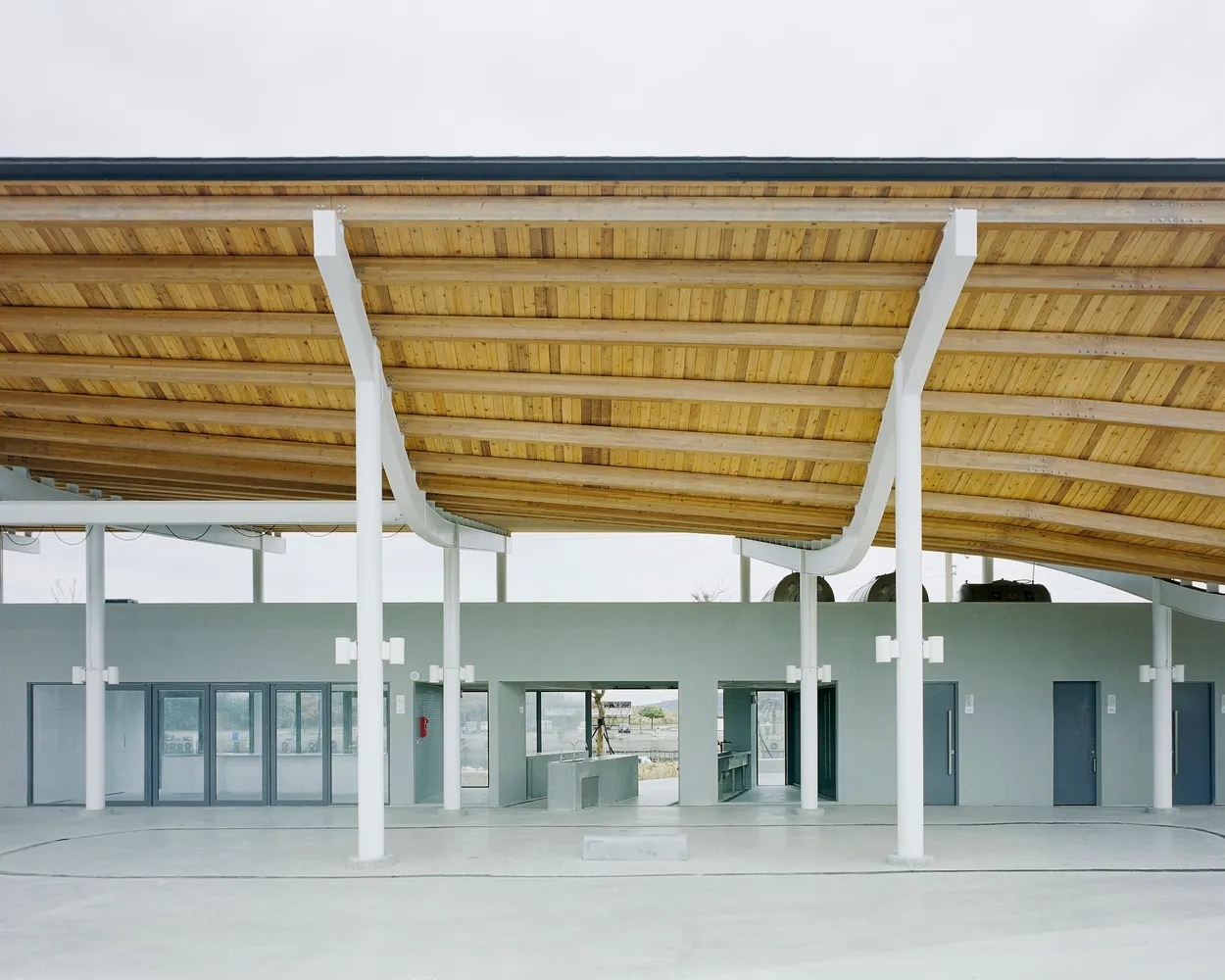
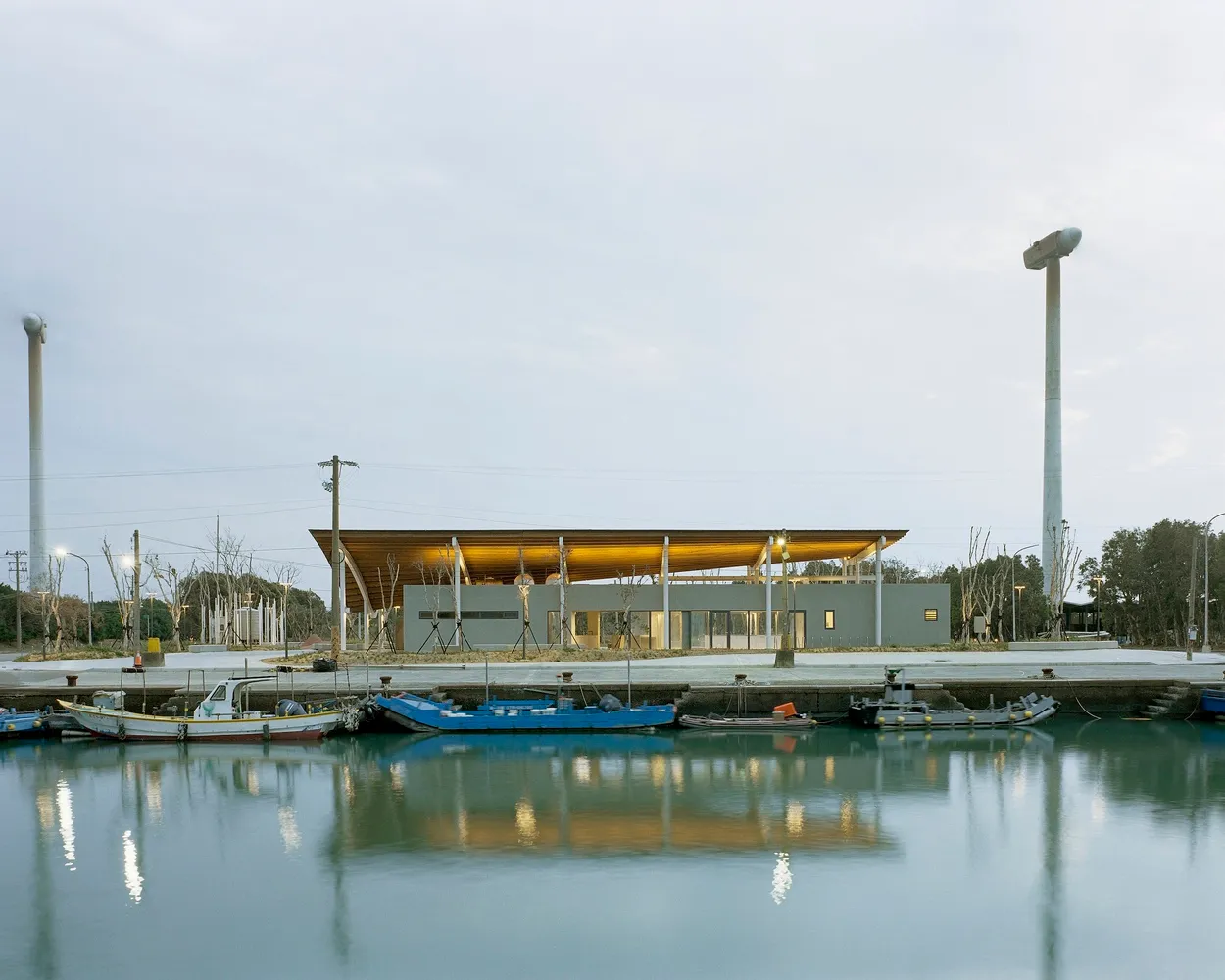
Nestled on the waterfront of Hsinchu, the Harbourside Canopy by B+P Architects transforms a simple fishing pavilion into a layered civic space. Completed in June 2025, located in Hsinchu, Taiwan, the canopy serves as a multifunctional space that connects commerce, culture, and community.
The Harbourside Canopy as Living Landscape
B+P Architects, recognized for its design-focused, sustainable, and context-driven architecture, integrates the project thoughtfully with its coastal surroundings while celebrating local maritime life. With a material language rooted in concrete, timber, and steel, the architecture mediates between land and sea, labor and leisure, and is designed to evolve with its community.
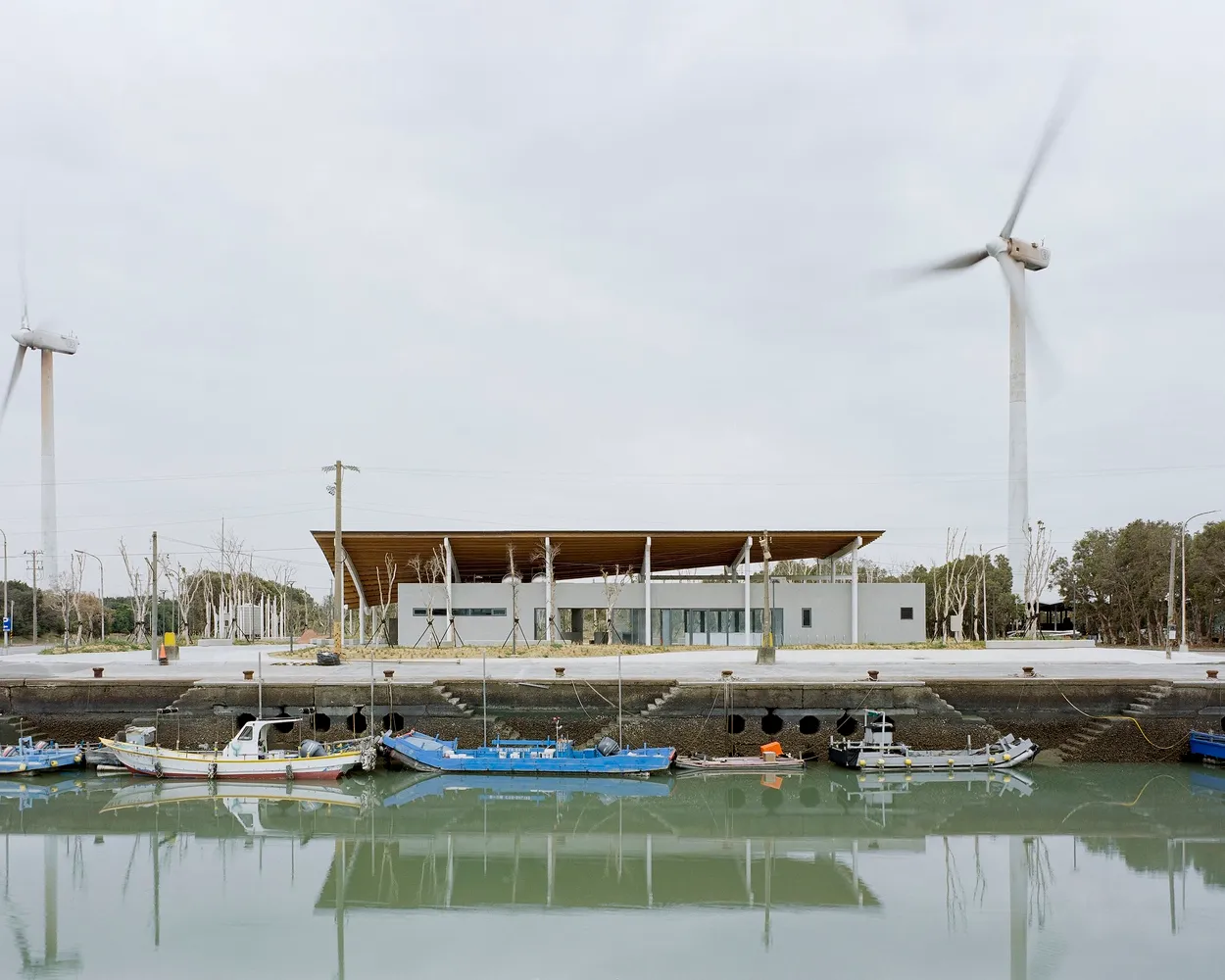
Formerly known as the Haishan Fishing Market, Harbourside Canopy represents public architecture situated within the challenging coastal environment of Hsinchu City, Taiwan. It sits at the intersection of architecture, ecology, and civil engineering. The structure’s greatest impact lies in its functional transparency, and the open-volume strategy ensures that the design acts as a spatial connector, helping to stabilize the local fishing economy.
Design Strategy: The Open Volume for Connection
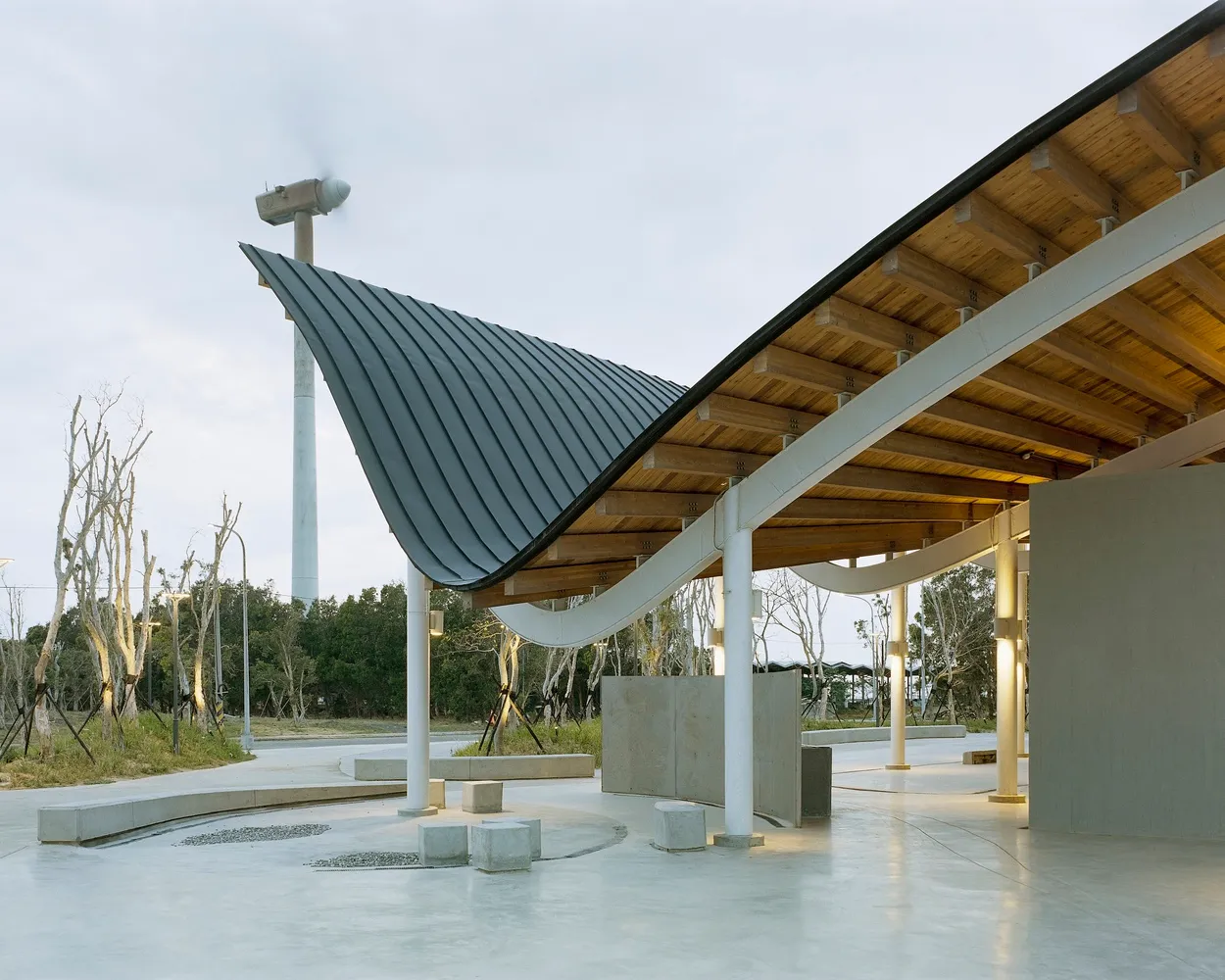
The primary objective of the project was to create an open volume that serves as a mediator and active connector, linking industrial fishing activity occurring at the dockside with the civic and commercial activity of the inland marketplace. This thoughtful approach defies traditional market design, embodying an innovative layout integrated into the structural fabric itself.
Multi-Layered Functional Spaces
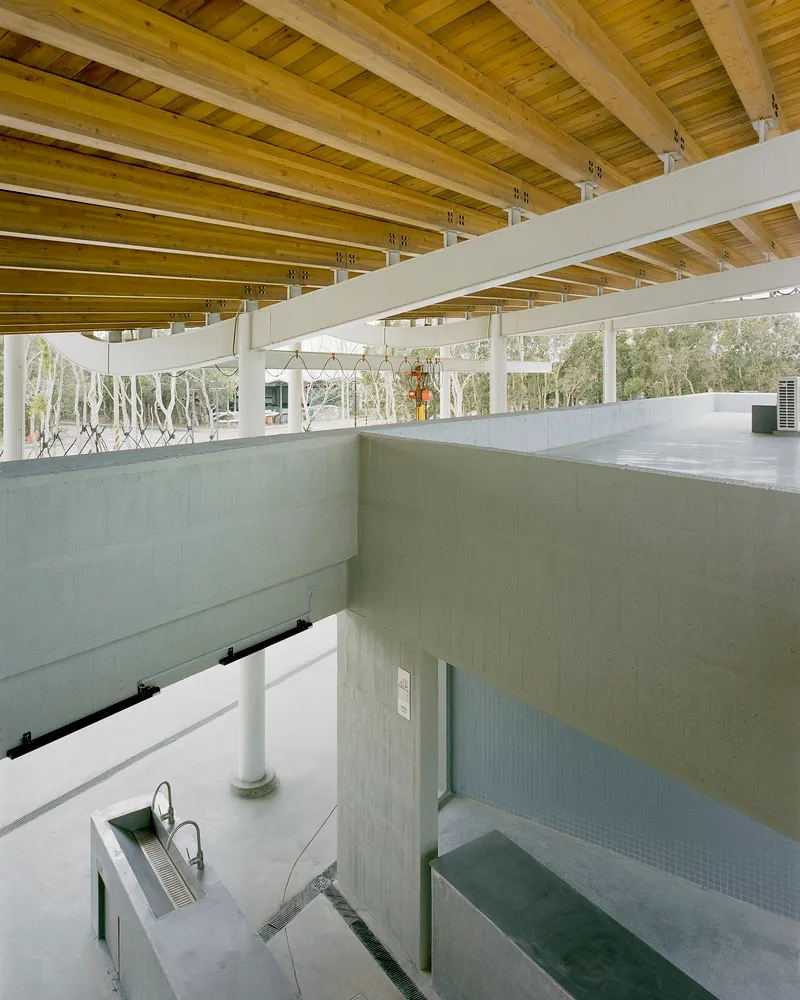
Designed for three distinct user groups and functions: industrial logistics, retail commerce, and civic education, the Harbourside Canopy allows visitors to directly witness the labor and commerce of the fixed-net industry.
The architectural spaces support industrial fixed-net operations, provide facilities for retail fish stalls, and offer educational programs while promoting the region’s unique fishing culture. The educational facilities add a cultural layer, preserving the traditions of fishing and allowing the public to understand its importance.
Concrete Wall as Wind Barrier
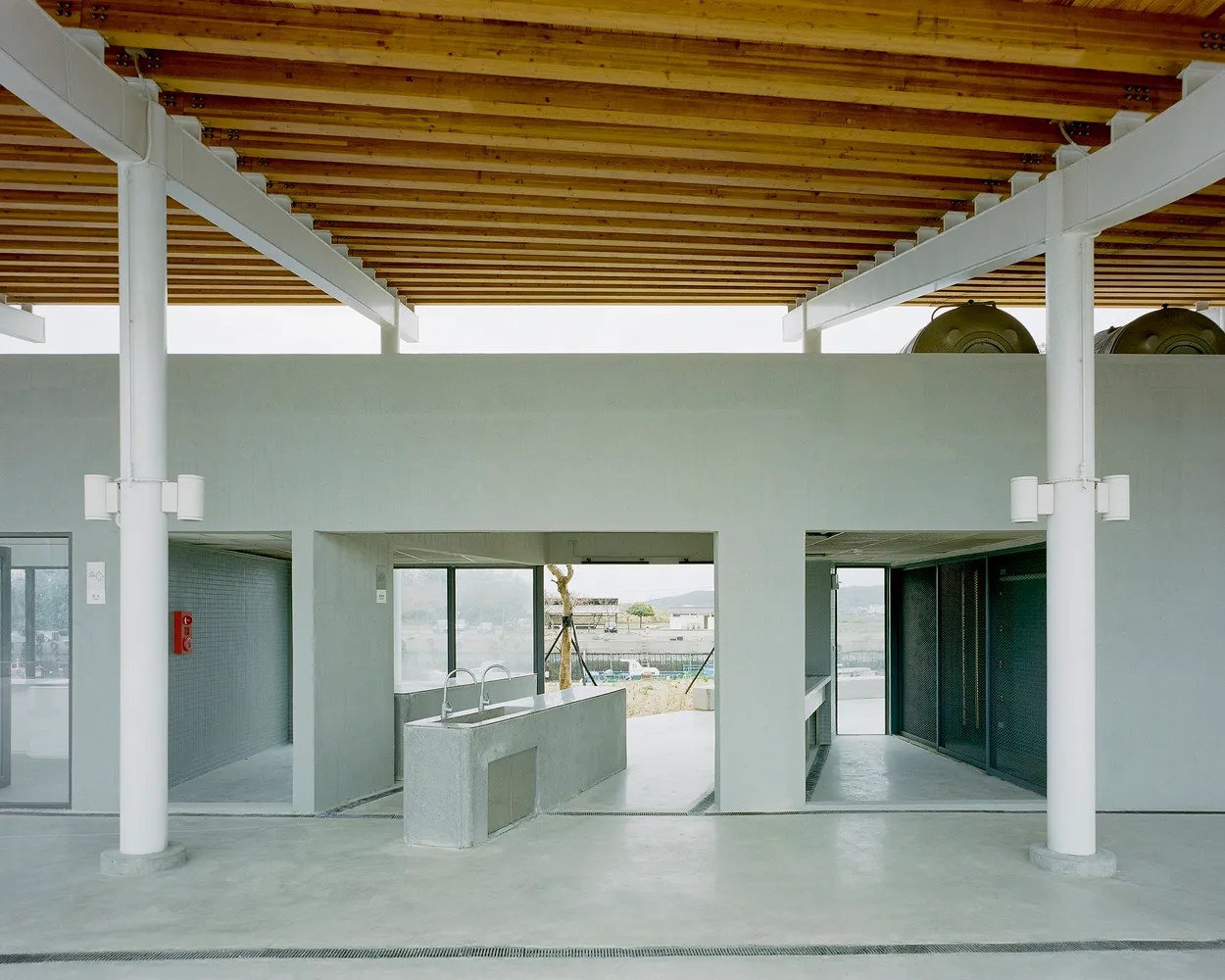
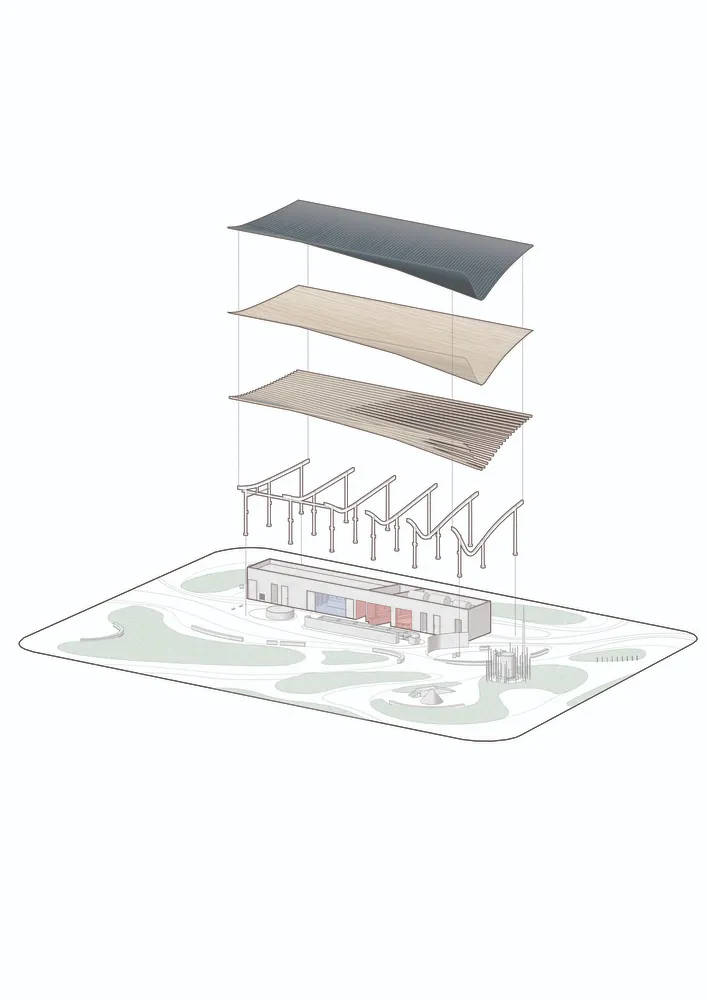
The design responds to the extreme coastal surroundings with careful structural integration of heavy and light materials. The north-facing concrete wall acts as the primary structural element that anchors the faculty and becomes the barrier against strong winds.
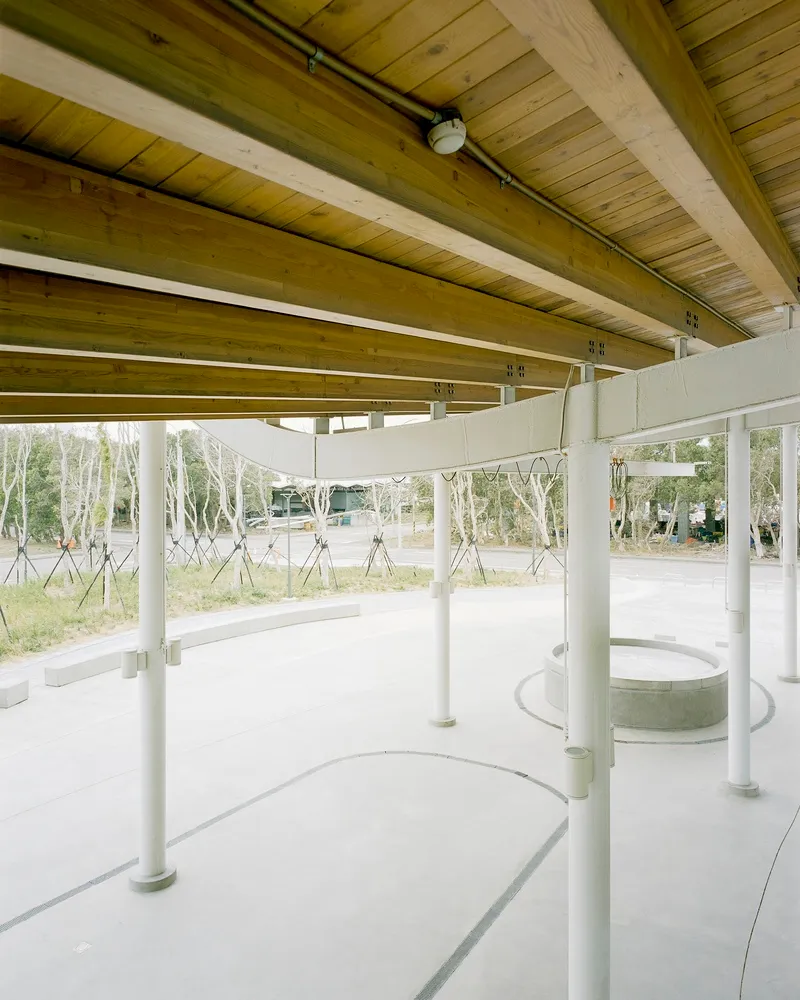
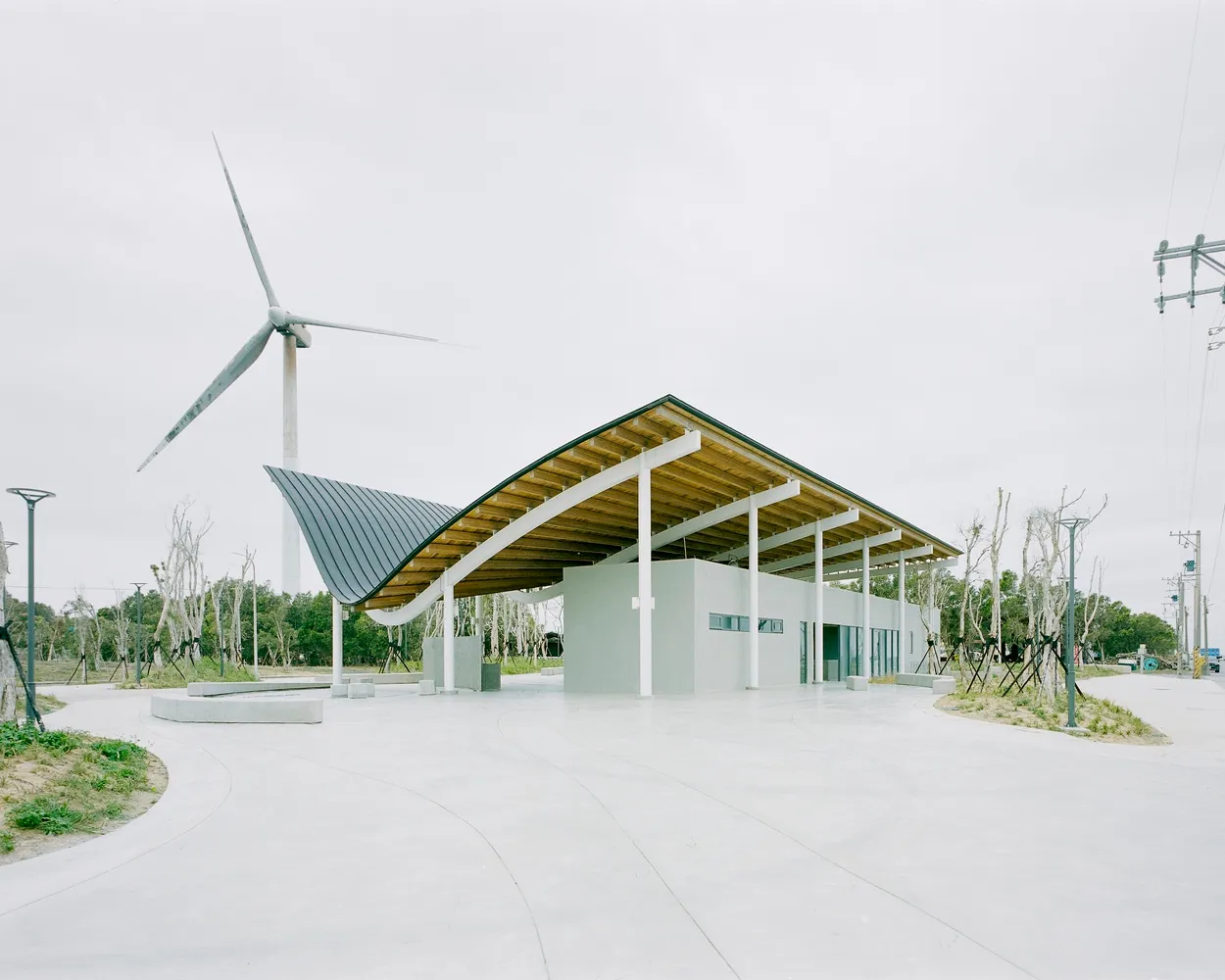
The timber-framed roof of the market shelters functional zones, counterbalancing the rigidity of the concrete wall. Forming the architectural identity of the structure, it fosters the dialogue between timber and concrete, light and mass.
Steel-Beam Crane Structure

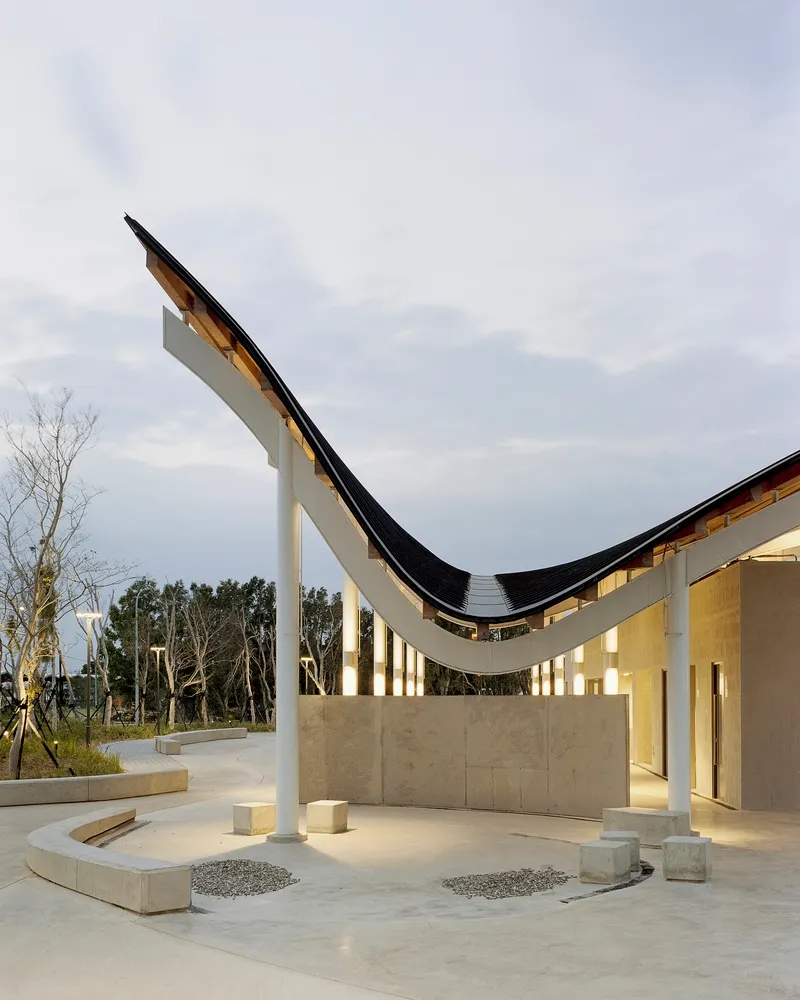
A steel-beam, crane-like structure spans the working zone, serving not only a functional role but also guiding spatially by emphasizing technical logistics for rapid, hygienic processing and handling of products. The timber-framed roof is engineered to channel rainwater to the ground in a controlled manner, where it forms small, shallow pools, an invitation to gather, reflect, and pause.
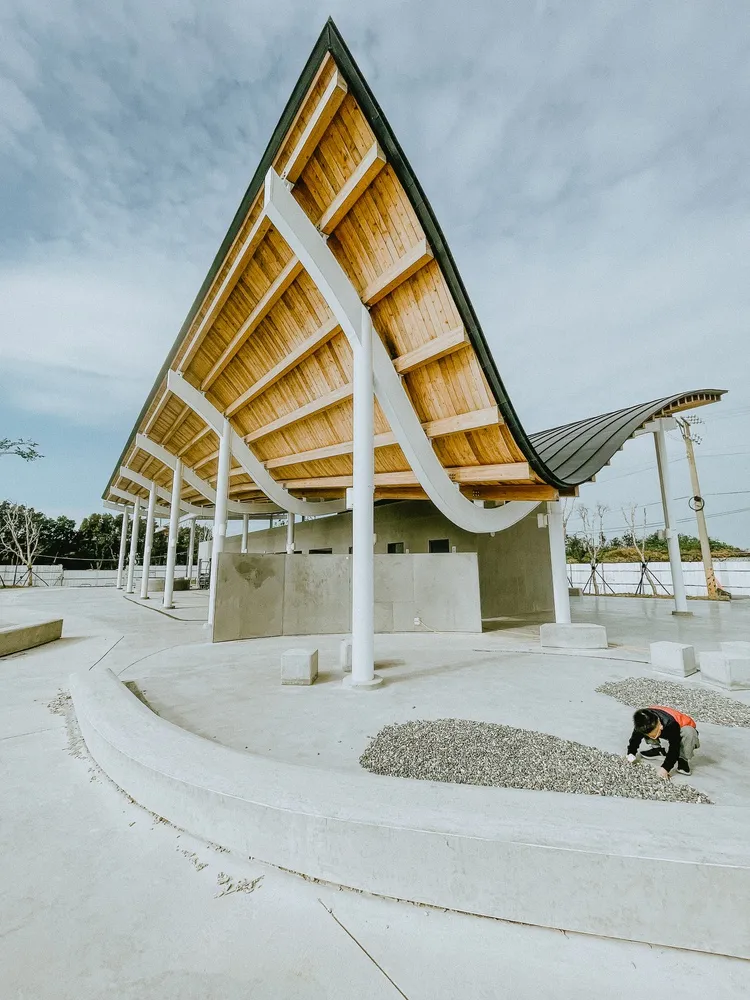
The project employs earth berms and windbreak forests as integral structural and environmental components while establishing a layered transition between the interior and exterior. This layered strategy, with the hard concrete barrier transitioning to the semi-soft berms and culminating in the vegetative windbreak forests, reinforces the ecological sensitivity. The landscaping and green spaces act as a buffer and also provide a filter for views, light, and wind.
Building with Nature
Through its sensitive use of materials, environmental responsiveness, and spatial clarity, Harbourside Canopy has evolved into a community space where fishing remains visible and functional activities are not hidden. The modern design of Harbourside Canopy incorporates nature-based solutions (NBS), aligning with ecological principles of low-impact development (LID) techniques over traditional hard engineering.
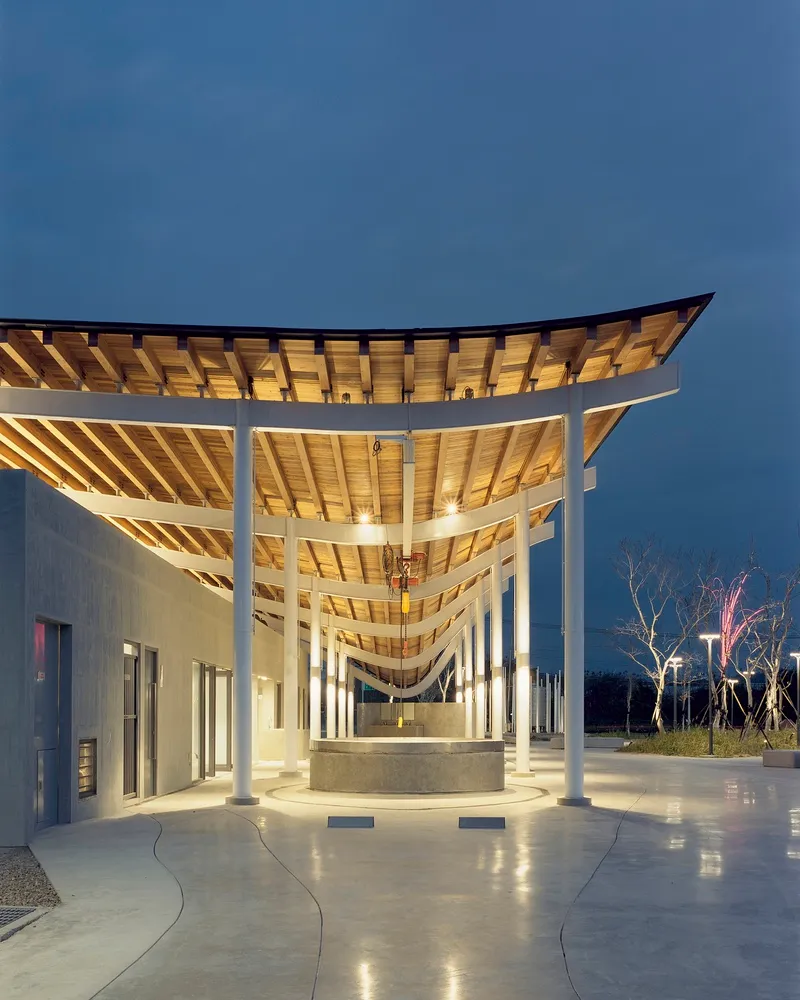
Harbourside Canopy Project Details
Architects: B+P Architects
Location: Hsinchu, Taiwan
Photo Credits: © Studio Millspace
Area: 496 m²
Explore Courses
.jpg "Ondrej Chybik - Rethinking Architecture")