

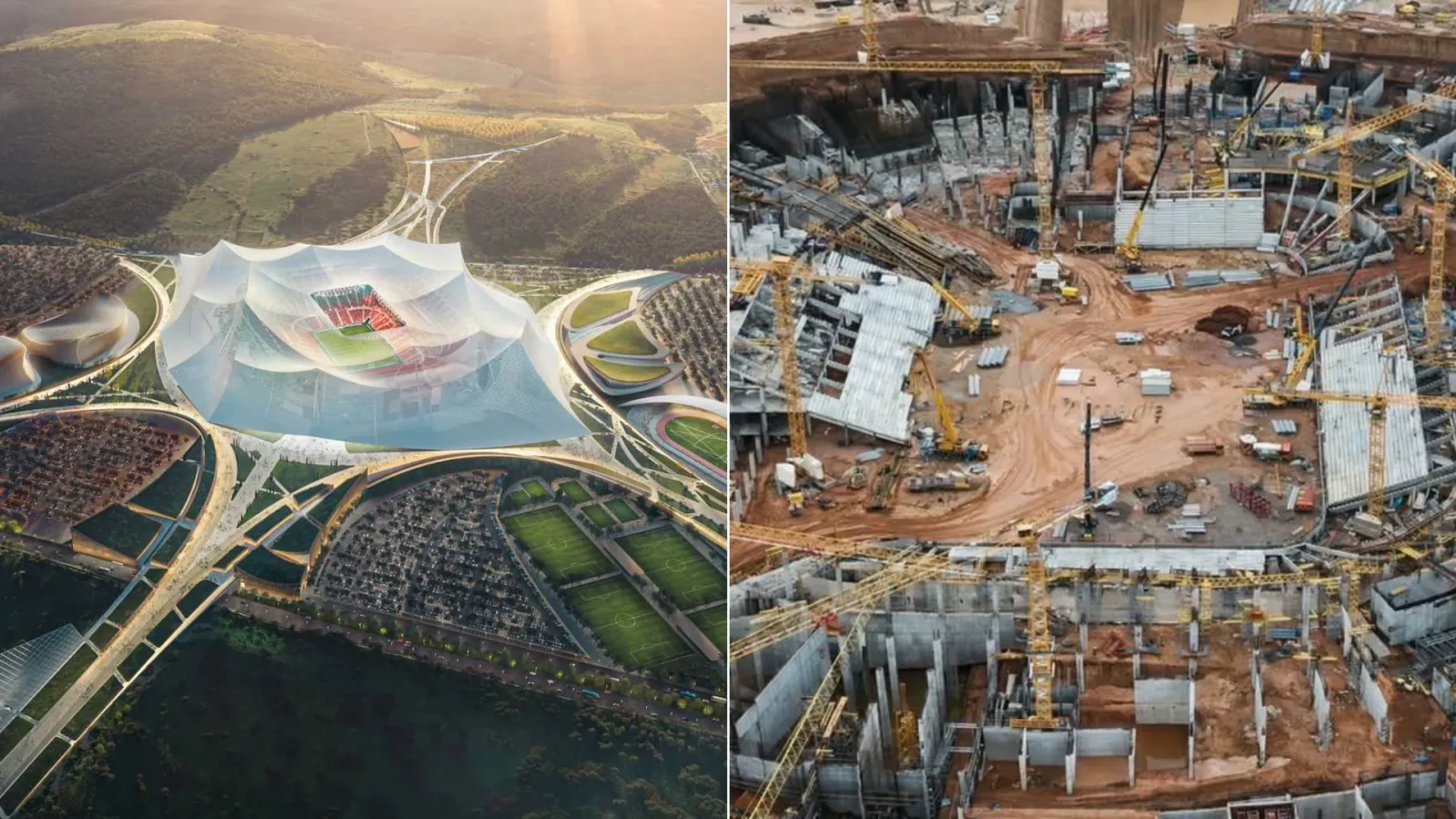
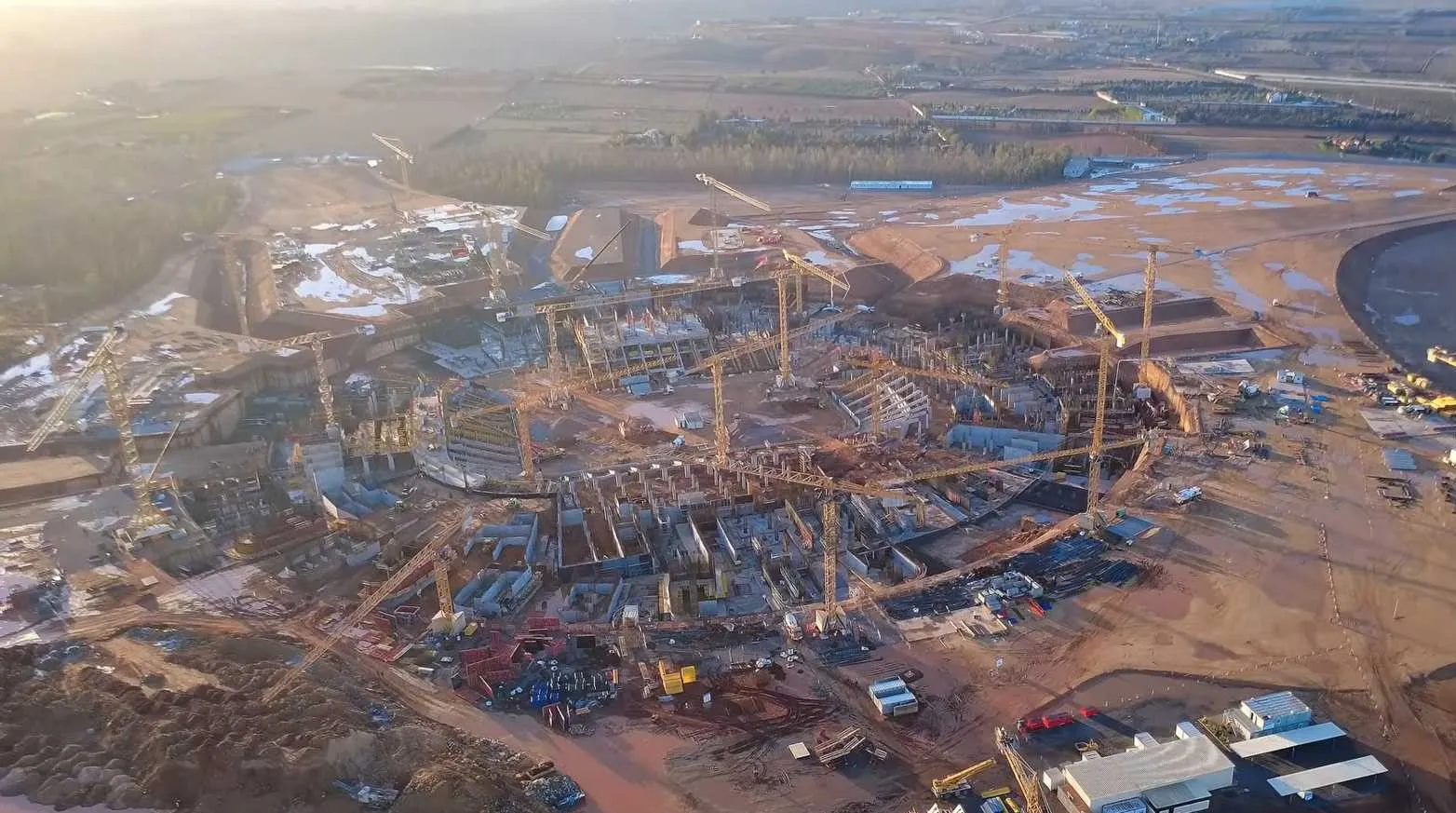
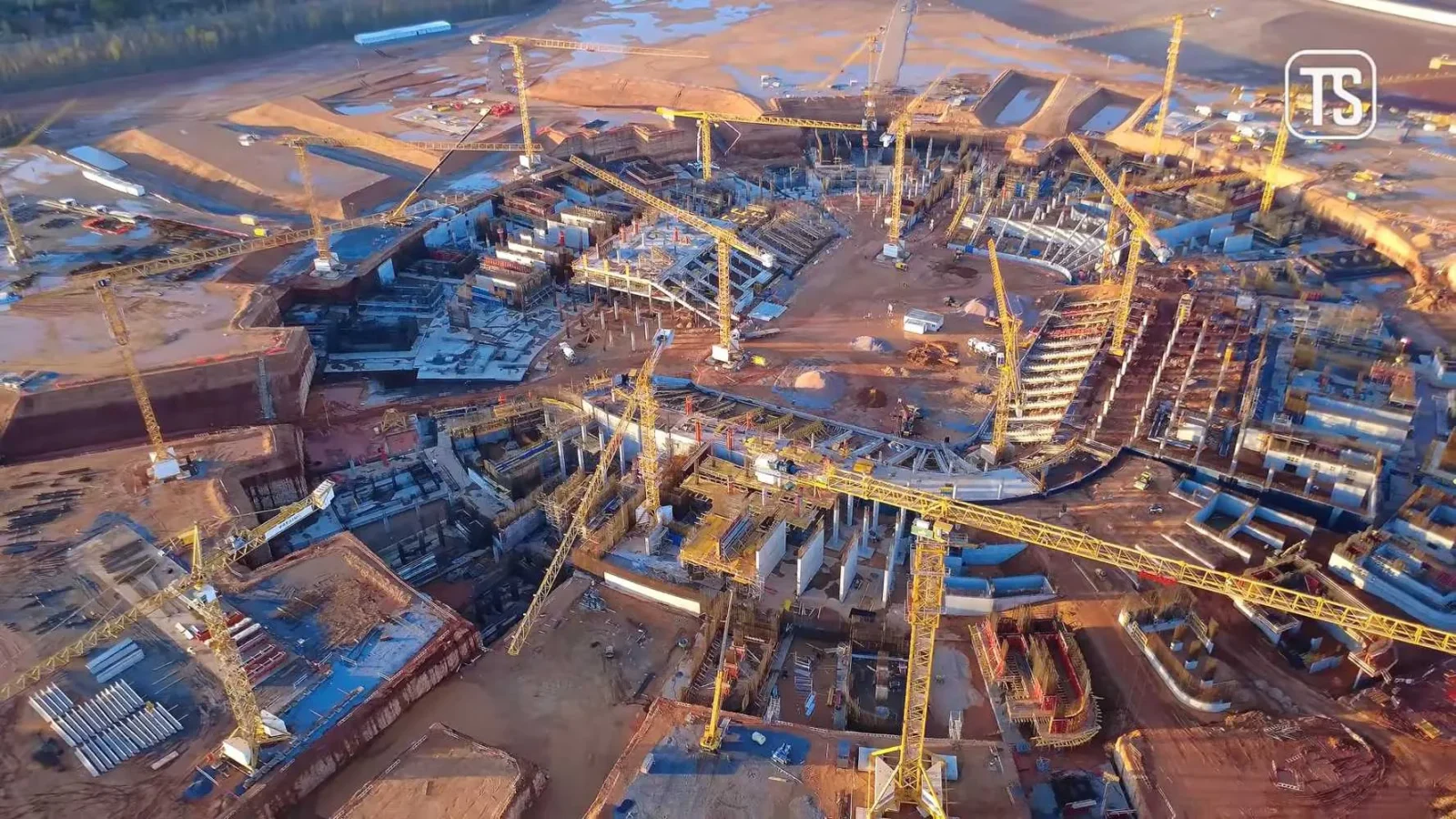
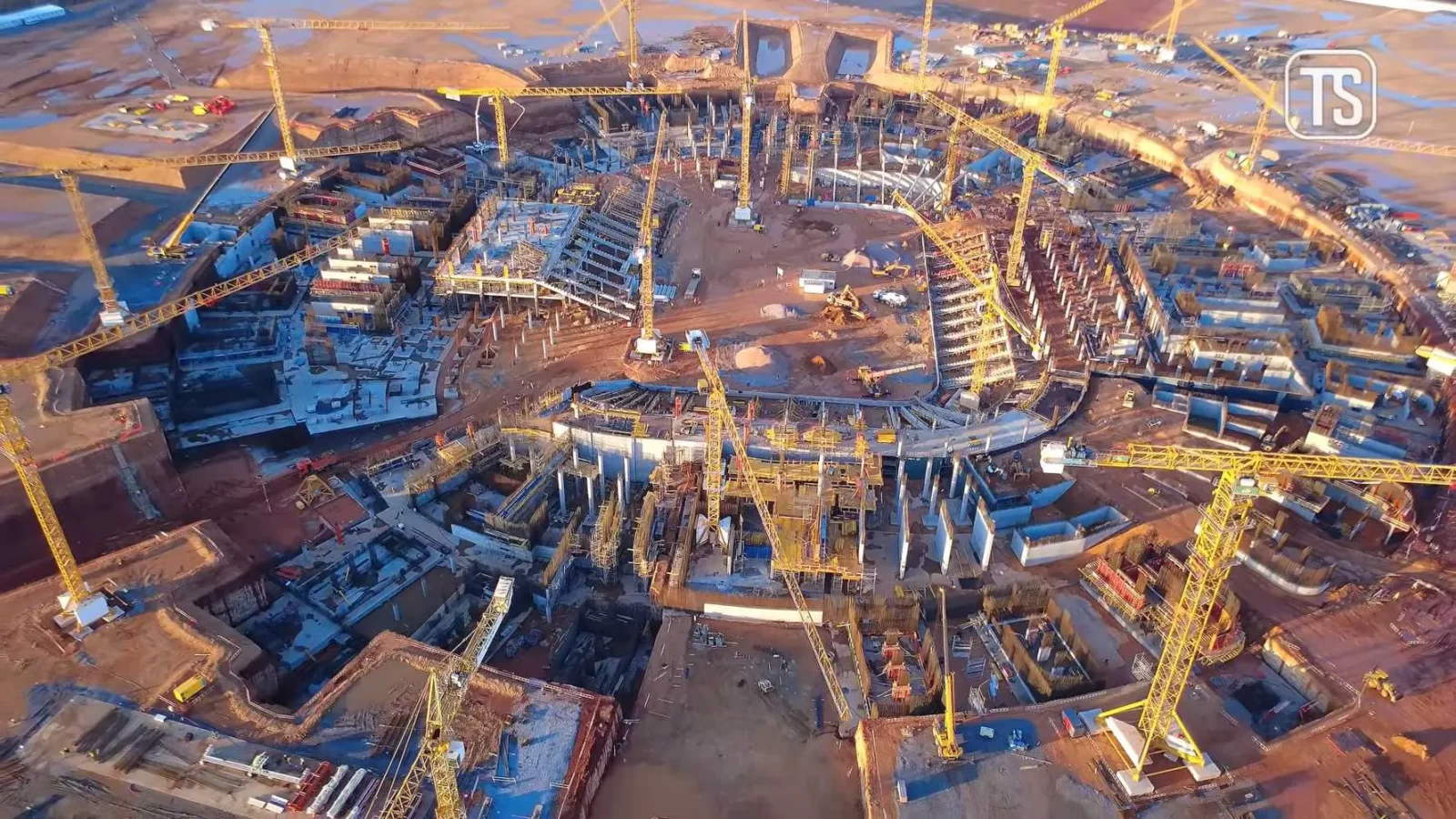
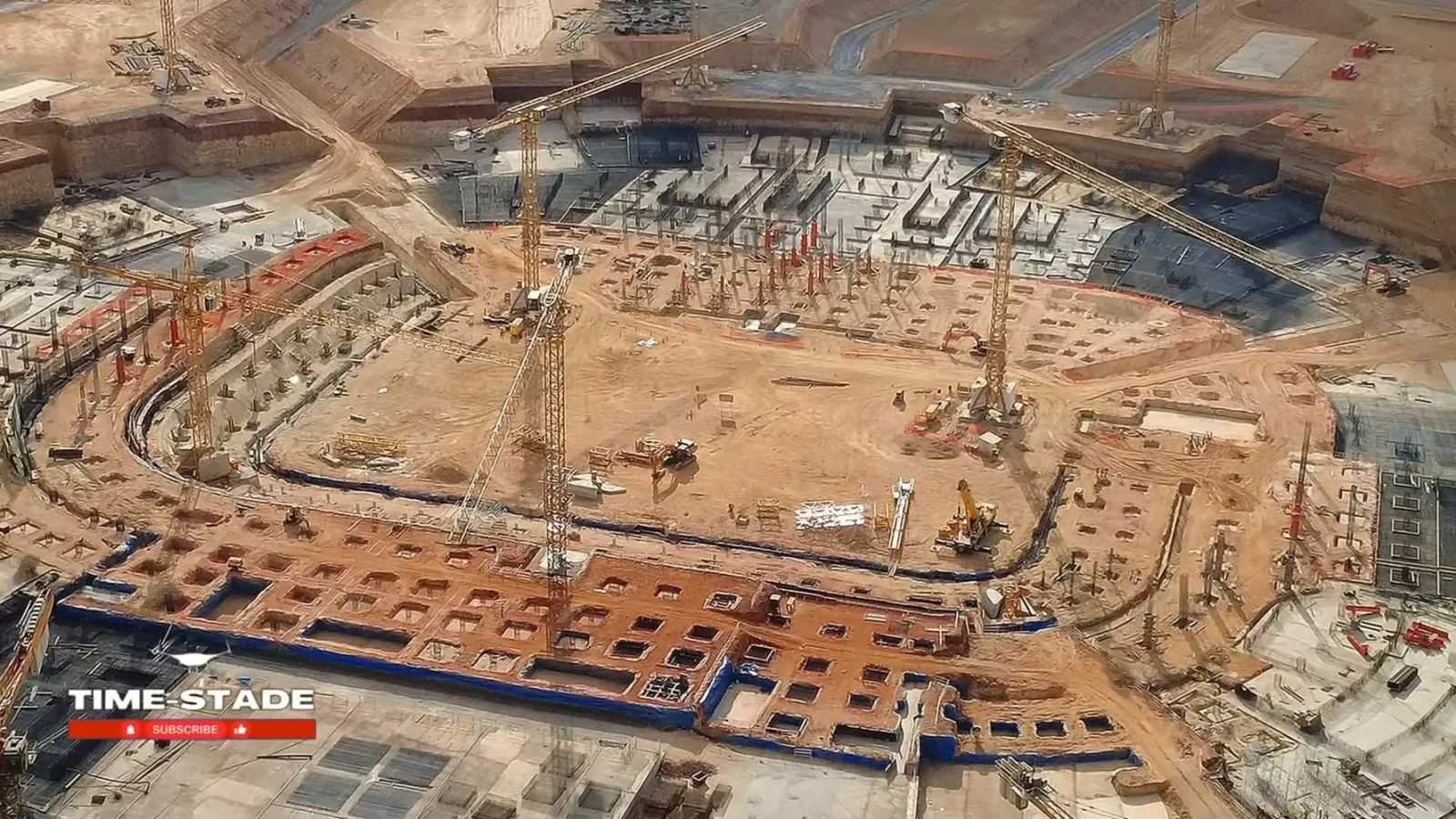
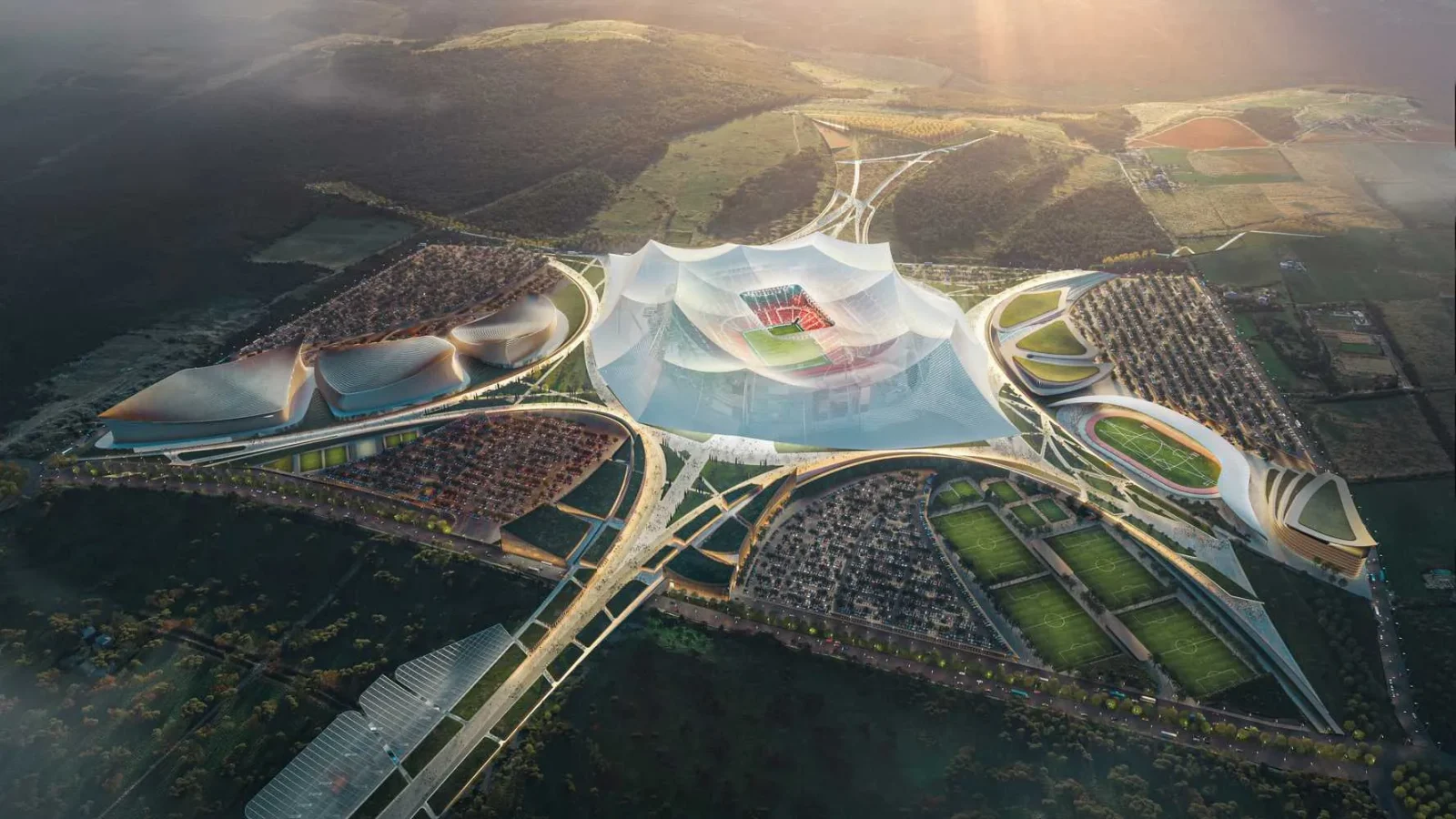
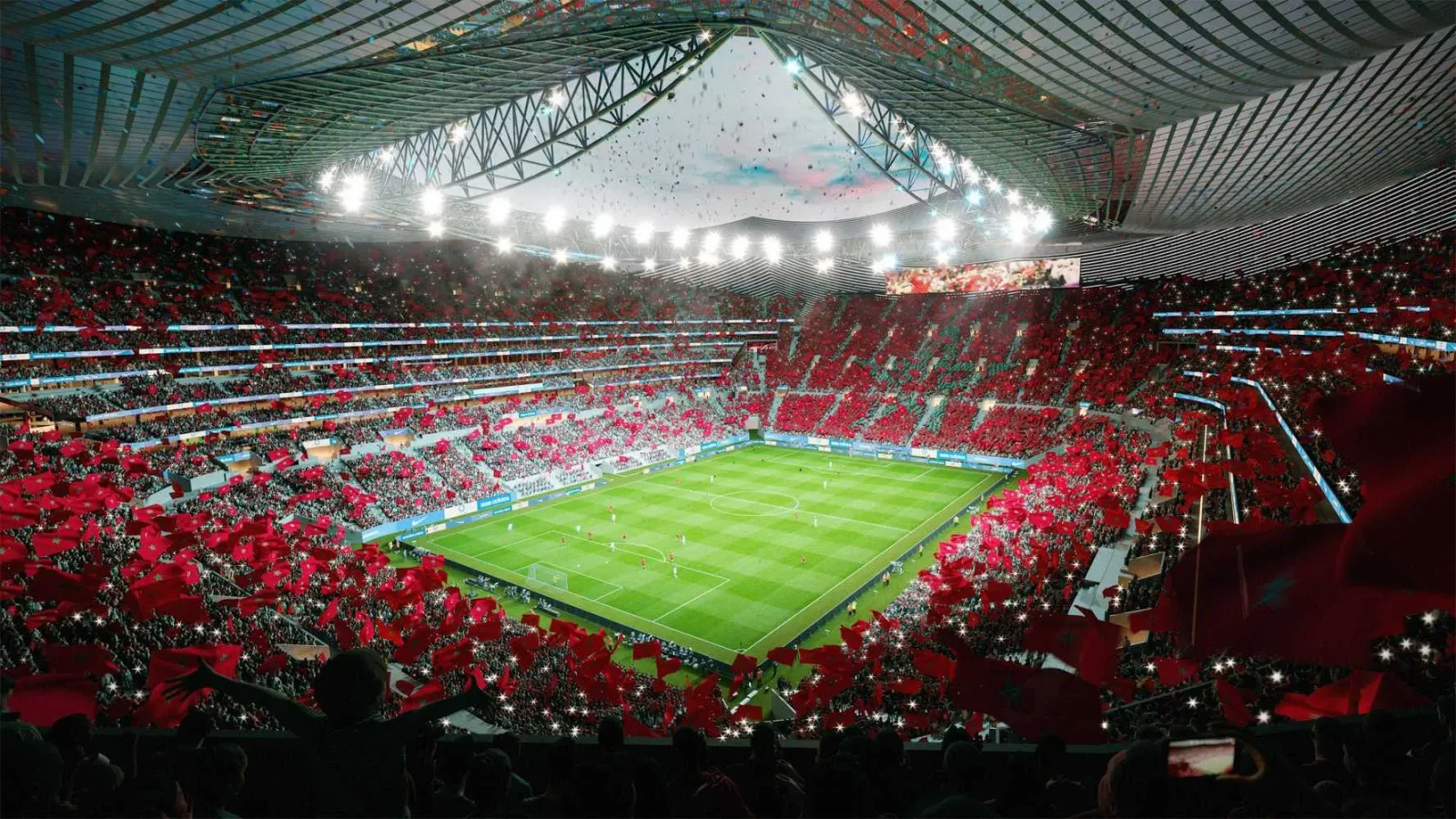
Morocco is building a stadium that changes the scale of football infrastructure in Africa and the world. Grand Stade Hassan II, currently under construction north of Casablanca, is designed to hold 115,000 spectators, making it the largest football stadium ever planned.
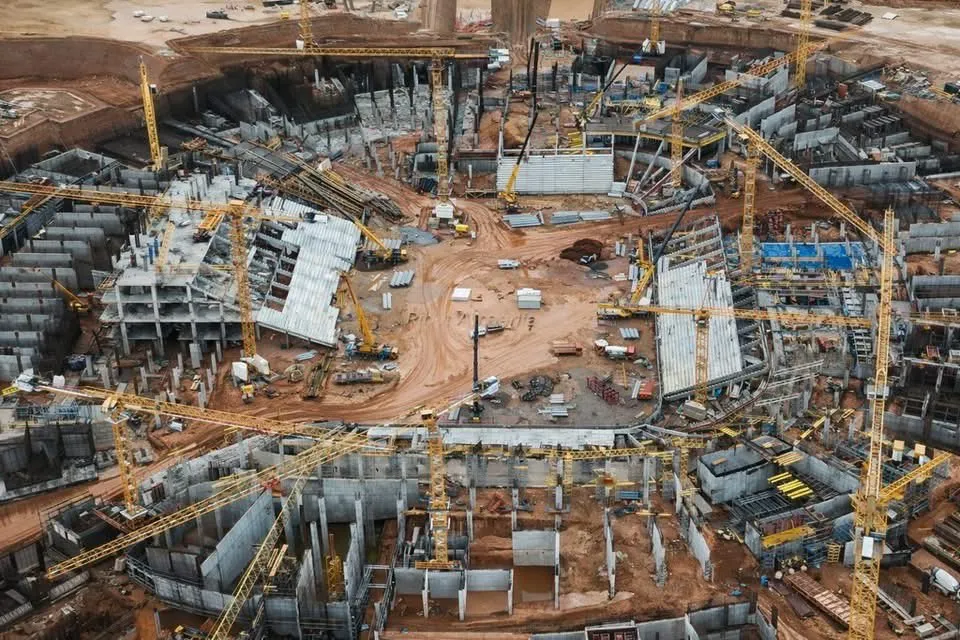
Grand Stade Hassan II Construction Progress
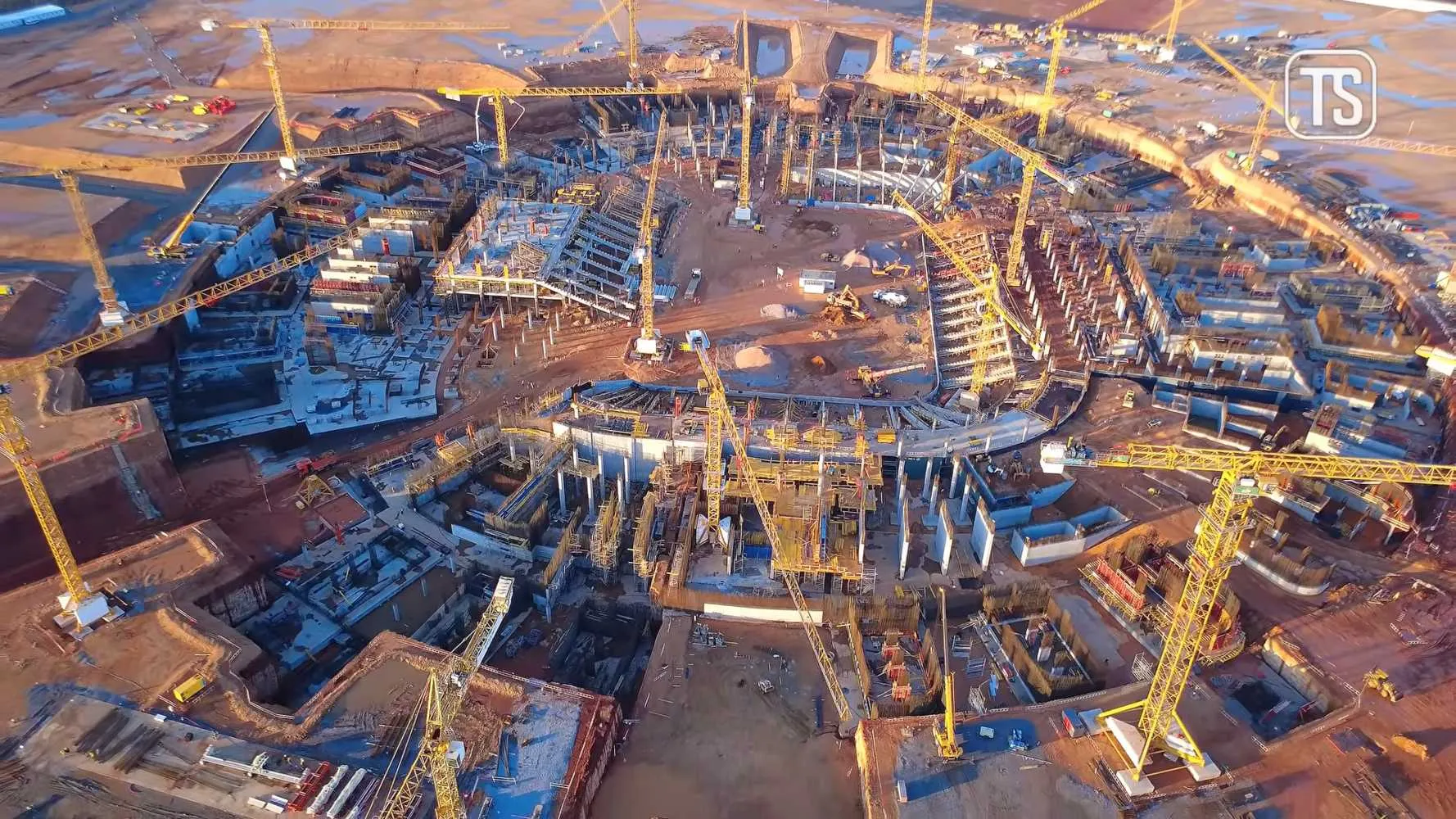
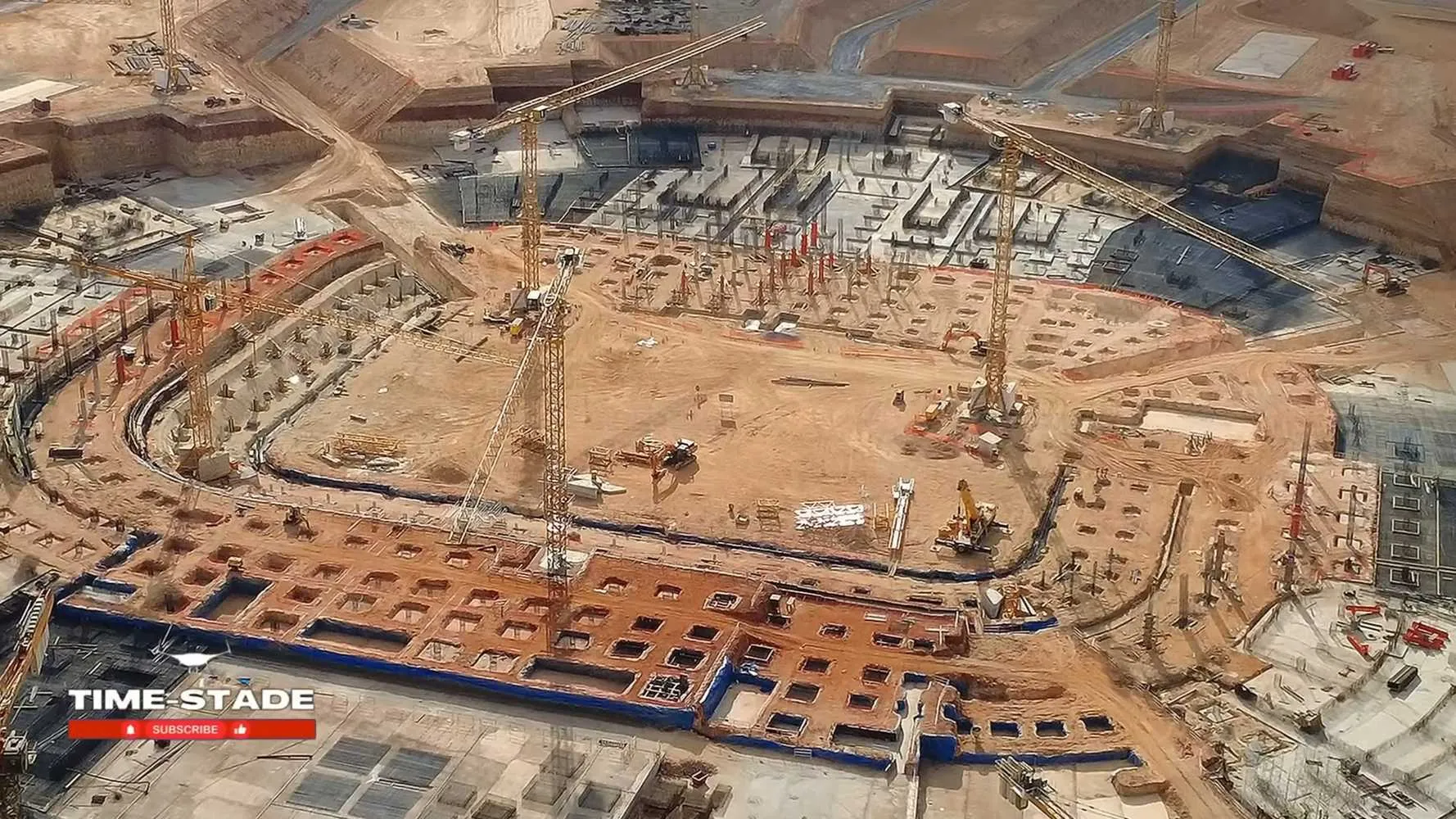
Construction of Grand Stade Hassan II started in August 2024 with earthworks after site preparation contracts were awarded to Moroccan builders such as Société Générale des Travaux du Maroc (SGTM).
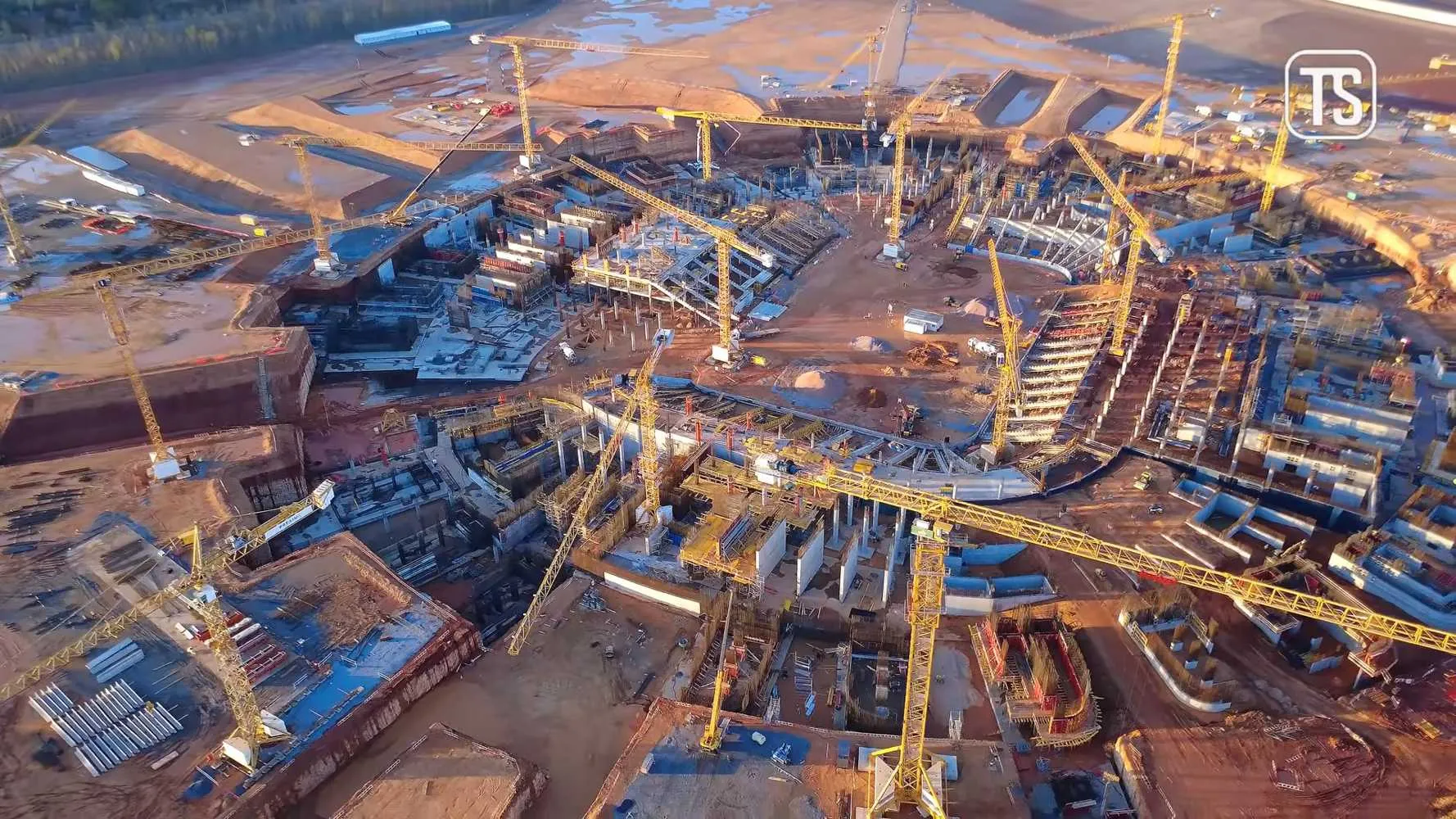
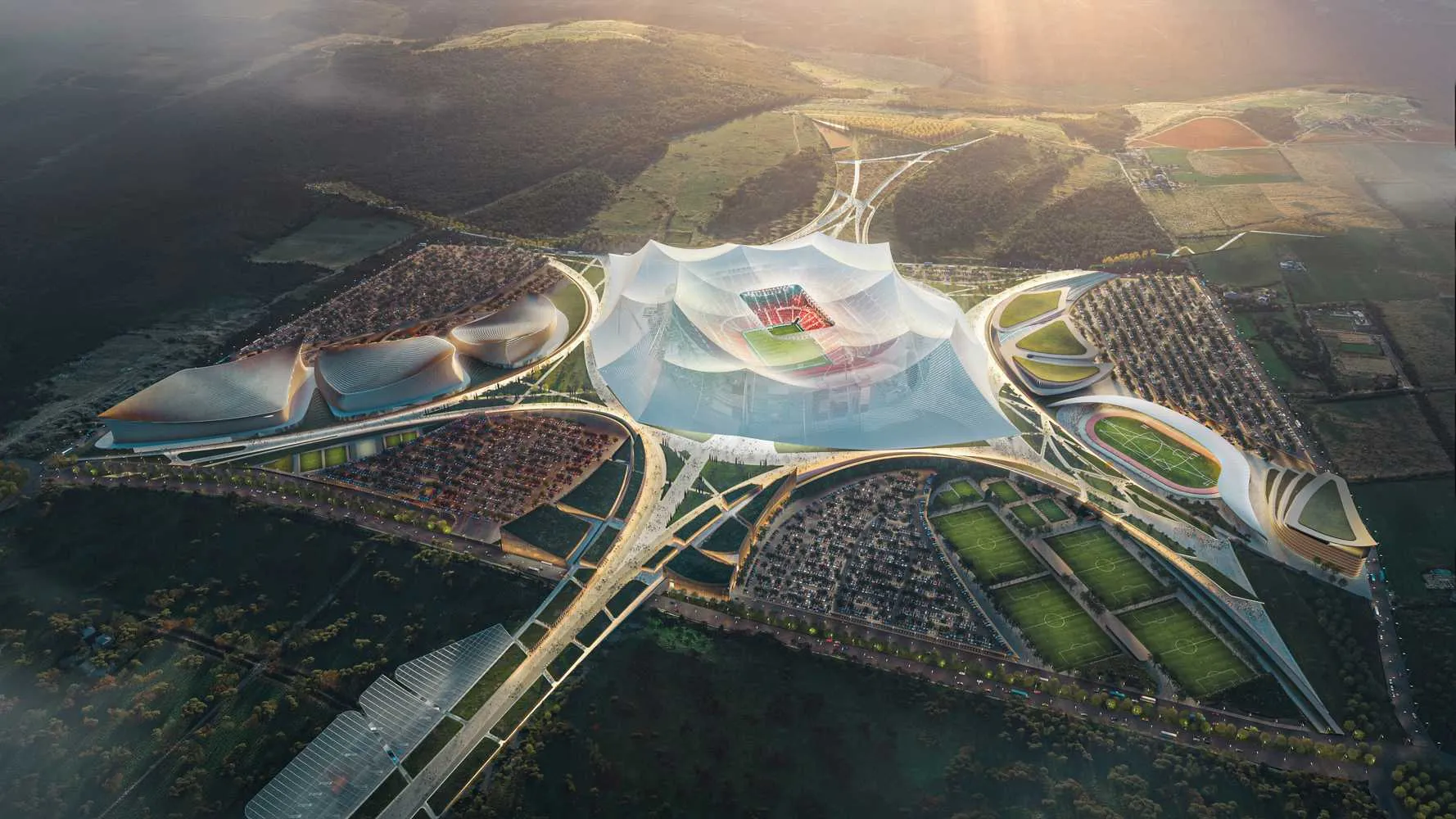
The stadium is being built on a 100-hectare site near El Mansouria, roughly 38–40 km north of Casablanca, as part of a larger sports and entertainment complex. The construction plan targets completion by late 2028, with earlier milestones like phase two works beginning during 2025. The overall investment is around 5 billion dirhams (about US $500 million), funded by the Moroccan government and the Caisse de Dépôt et de Gestion.
To support stadium access, authorities are upgrading infrastructure, including new highways, rail links, and public transport connections from Casablanca. Once complete, this will be the largest football stadium in the world, with an official seating capacity of 115,000 spectators, surpassing existing large venues.
Architecture and Stadium Design Features
The stadium’s architecture is a joint design by Oualalou + Choi (Paris) and Populous, a global sports design firm.
Roof and Structure
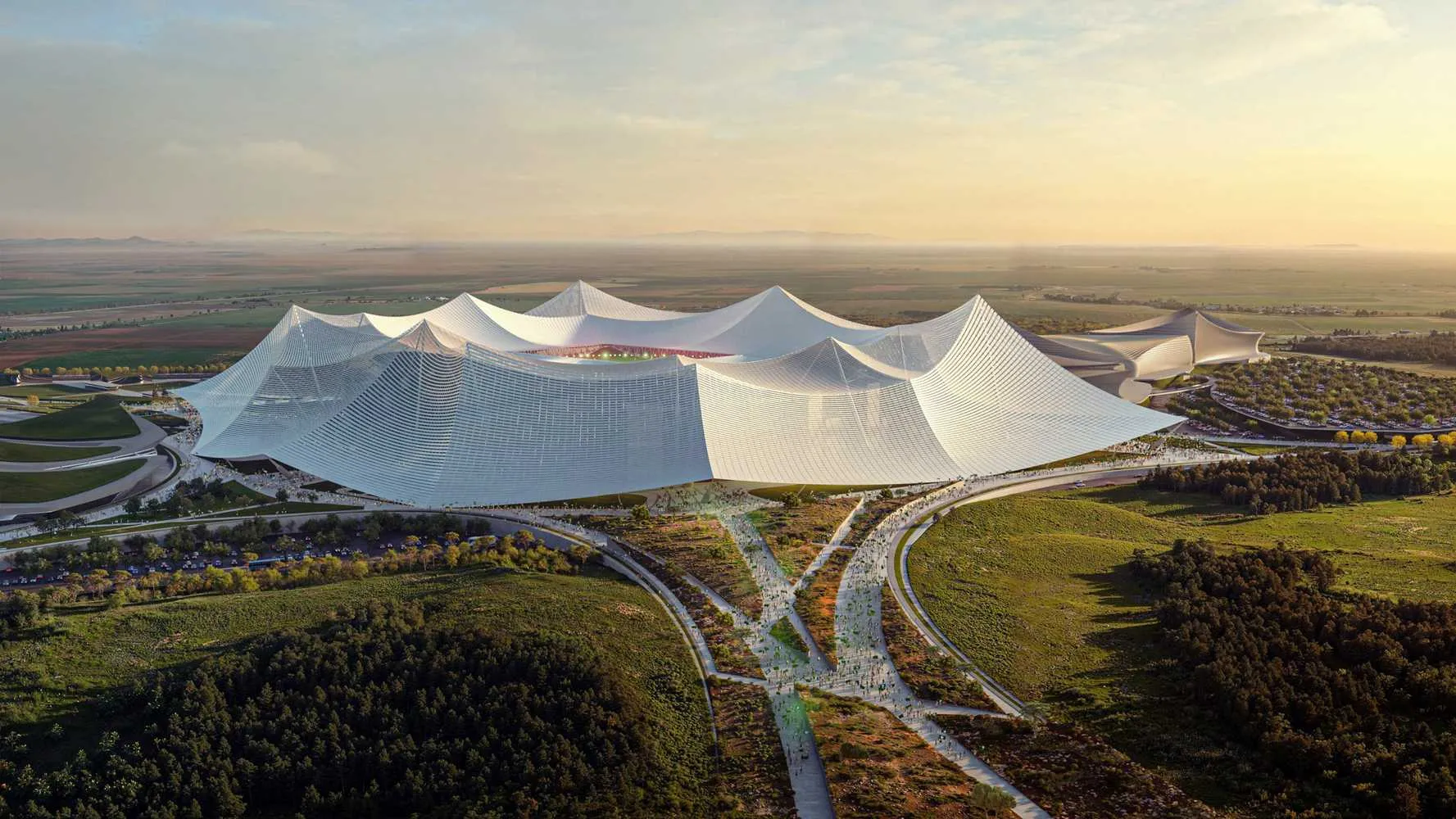
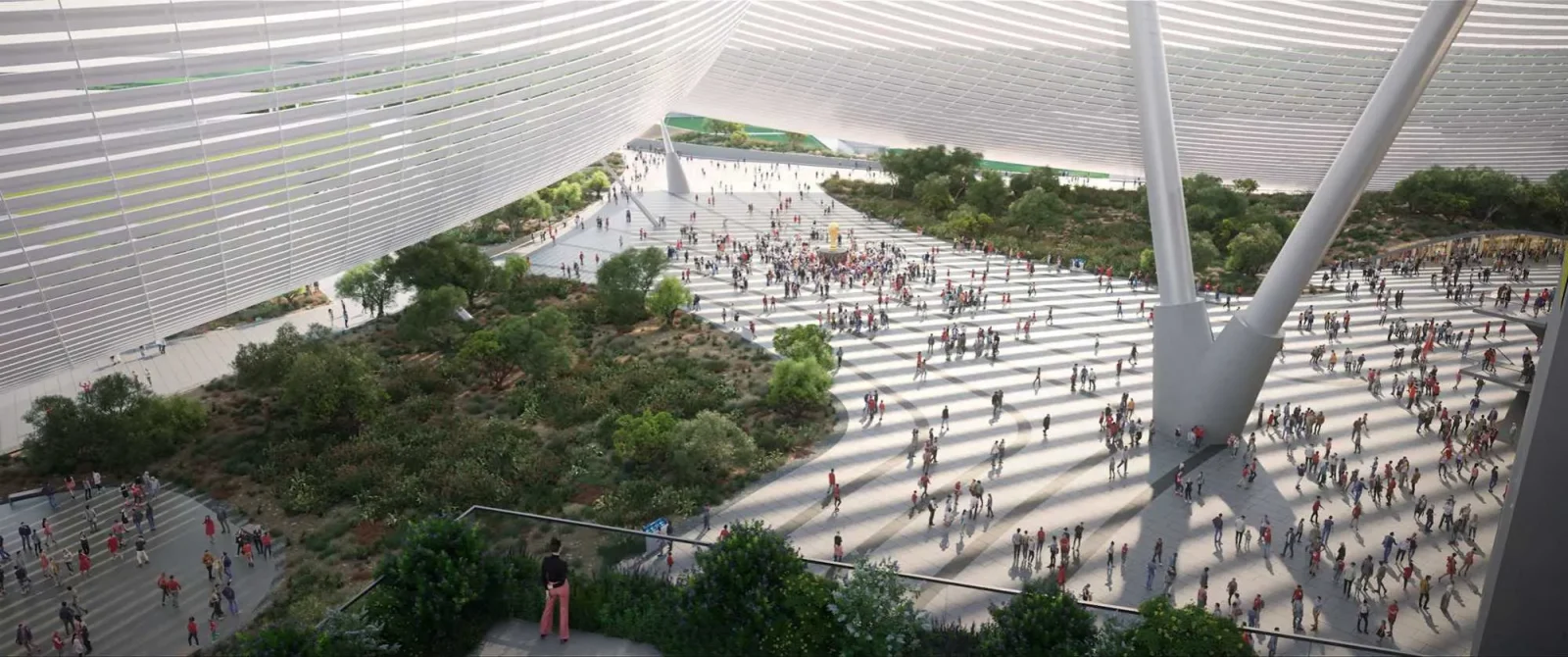
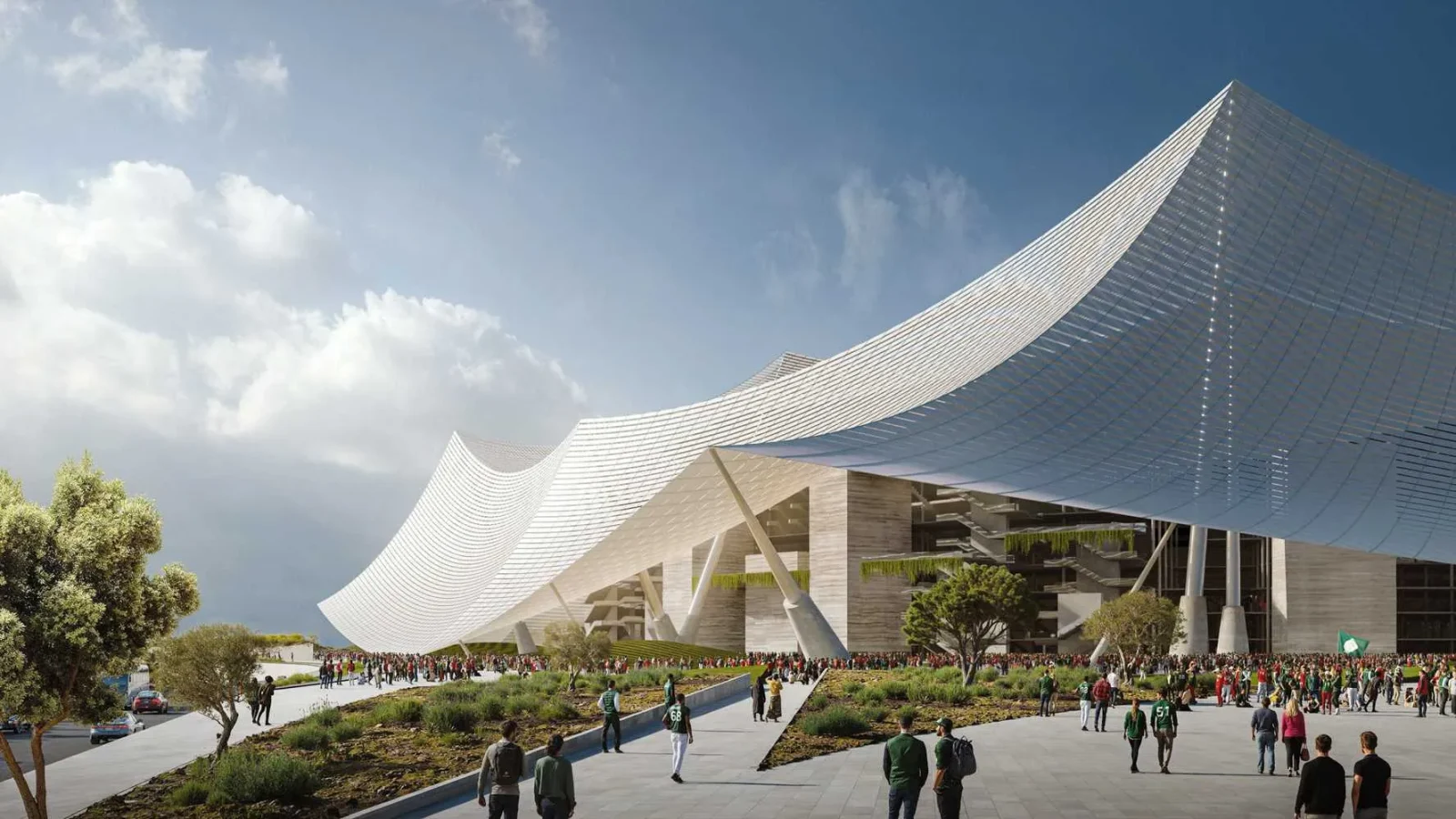
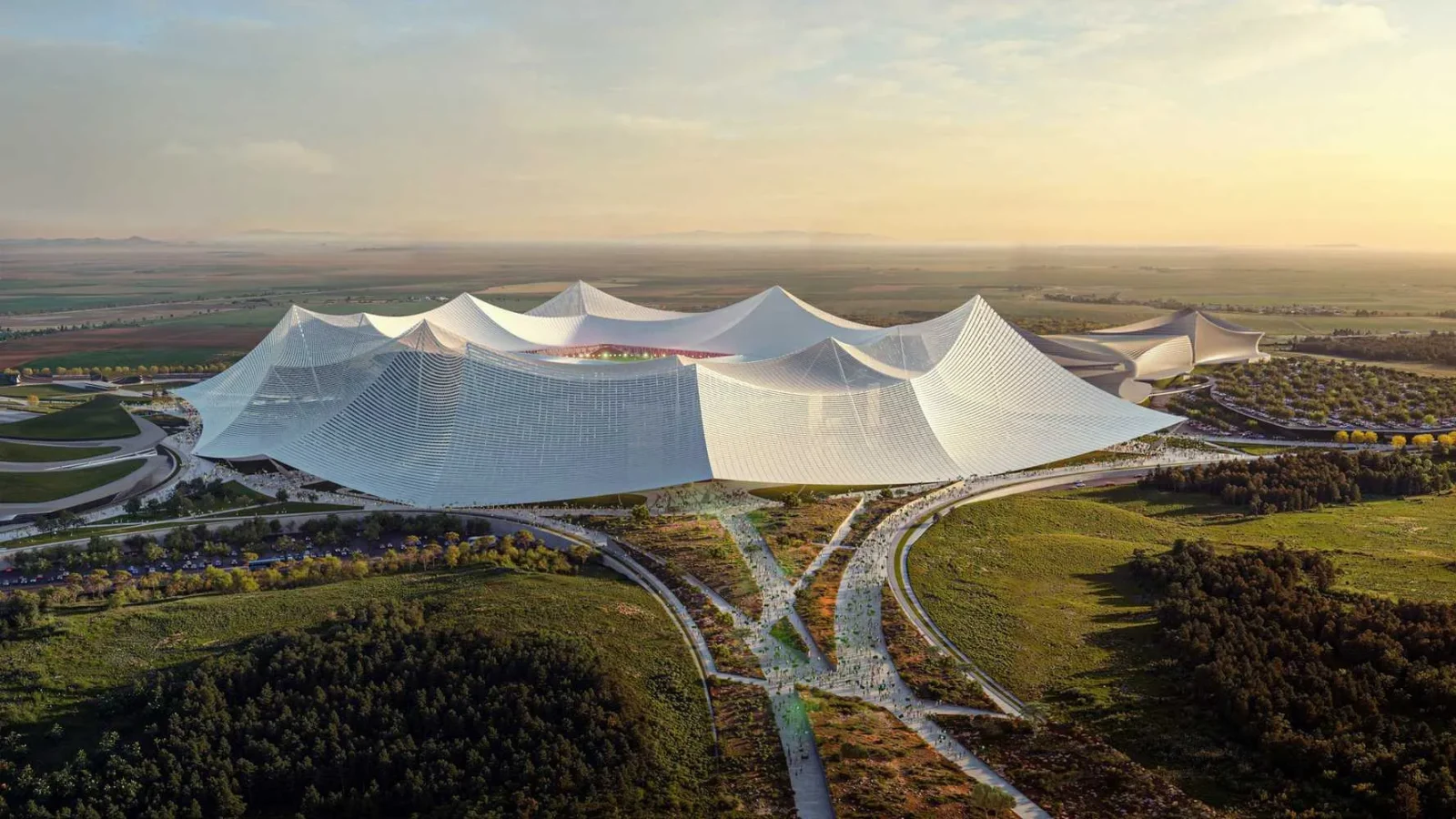
A defining feature is its grand tent-like roof, inspired by Morocco’s traditional moussem festival tents. The roof is constructed from translucent aluminum mesh, allowing light into the bowl while creating a distinctive silhouette over the landscape. A structural ring of 32 stairways supports both the roof and the stadium bowl, forming monumental gateways. Elevated platforms around these gateways will host lush garden spaces 28 meters above ground, creating open and green public areas both inside and outside the seating bowl.
Seating and Spectator Areas
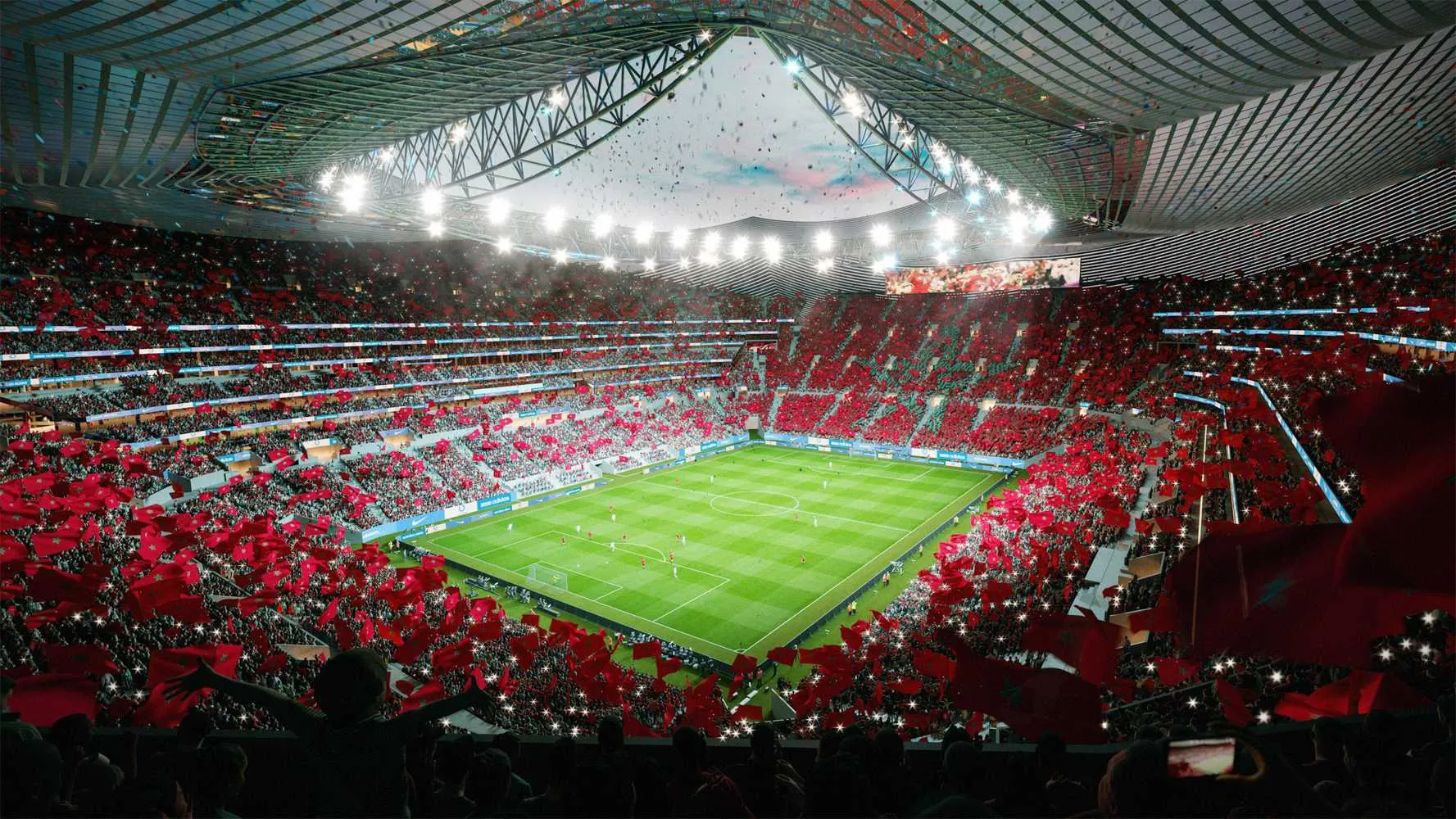
The stadium’s seating layout is designed to create strong sightlines and a vibrant atmosphere:
- Three steep tiers behind each goal section house nearly 60,000 fans, focusing on an immersive general admission experience.
- Along the sides, five levels of hospitality and premium seating, including VIP, VVIP, hospitality lounges, and a Royal Box, accommodate around 12,000 guests in comfort and style.
This combination balances capacity with fan experience and premium amenities.
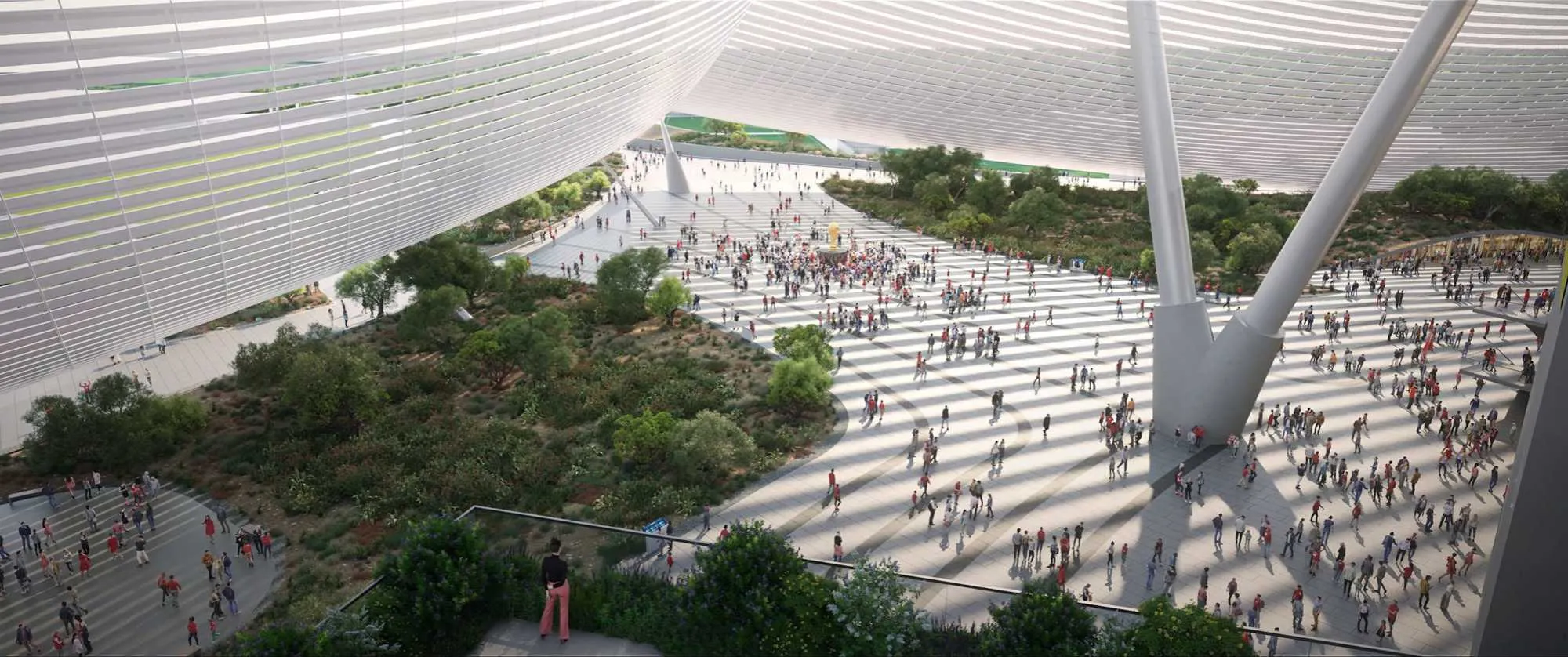
Native gardens and botanical landscaping are integrated into the stadium’s design, reinforcing a connection to nature. These green spaces serve as relaxing concourses and visual buffers beneath the roof structure. Beyond the main stadium, the 100-hectare project includes additional facilities such as a hotel, retail areas, training pitches, parking for over 10,000 vehicles, conference spaces, and a sports village with leisure amenities.
Design Intent and Cultural Context
The architectural concept is rooted in Moroccan culture. The stadium’s form references:
- Traditional moussem festivals, where large social tents bring people together.
- The landscape and topography of Morocco.
- Symbolic elements like tents and gardens merge modern construction with cultural meaning.
According to design leads, this fusion aims to make the stadium a space that feels both contemporary and locally grounded, reflecting Moroccan identity while meeting global sporting standards.
Upon completion, Grand Stade Hassan II will be home to the Morocco national team and local clubs Wydad AC and Raja CA and will also play a key role in international tournaments, including matches in the 2030 FIFA World Cup co-hosted by Morocco, Spain, and Portugal. Although hosting the World Cup final itself is subject to FIFA decisions and competition with Europe’s largest stadiums, this facility will be a venue for major sports events and large-scale cultural gatherings
Explore Courses
.jpg "Ondrej Chybik - Rethinking Architecture")