


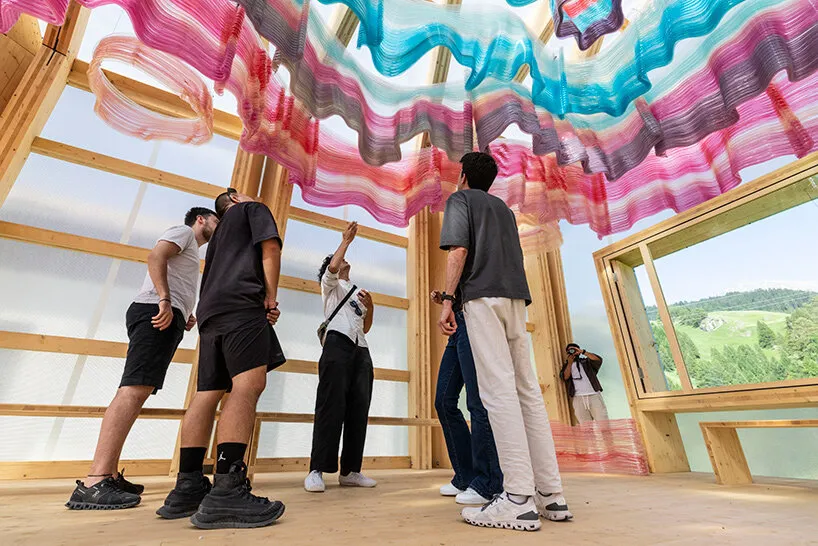
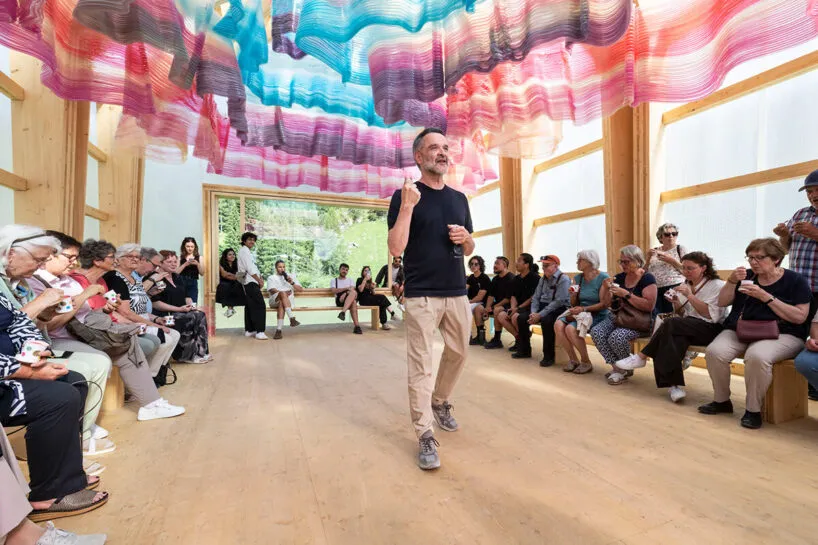
In the Alpine village of Mulegns, Switzerland, ETH Zurich has brought advanced digital fabrication into the spotlight with a project that merges recycled materials, robotic precision, and architectural experimentation. Designed and built by students from ETH Zurich’s Master of Advanced Studies in Architecture and Digital Fabrication (MAS ETH DFAB), the Gelateria is an ice cream shop and a scalable prototype exploring new pathways in sustainable construction and computational design.
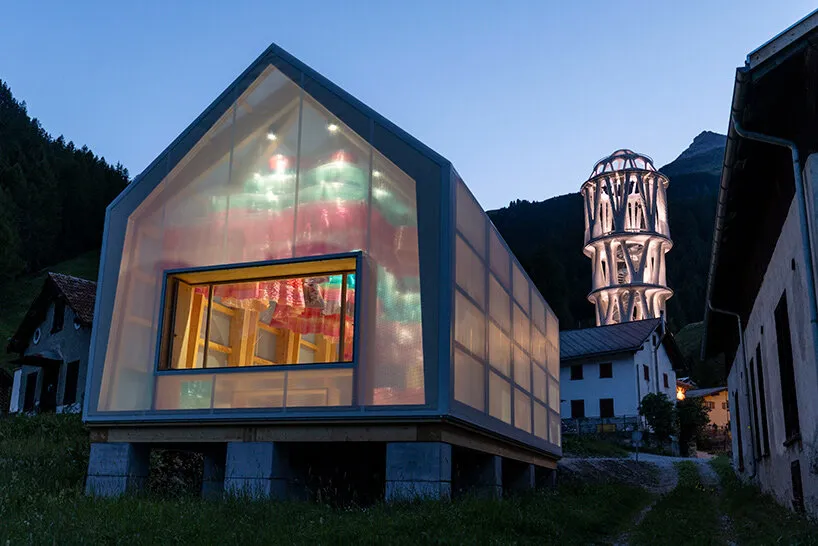
This structure is a response to a pressing architectural challenge: how to develop ecologically conscious buildings that are adaptive, demountable, and rooted in place. The Gelateria serves as a tangible example of circular design, featuring a reclaimed timber framework and a 3D-printed interior crafted from recycled plastic. It combines vernacular references with high-tech execution, positioning Mulegns as a small town with global architectural relevance.
Material Intelligence Meets Robotic Fabrication
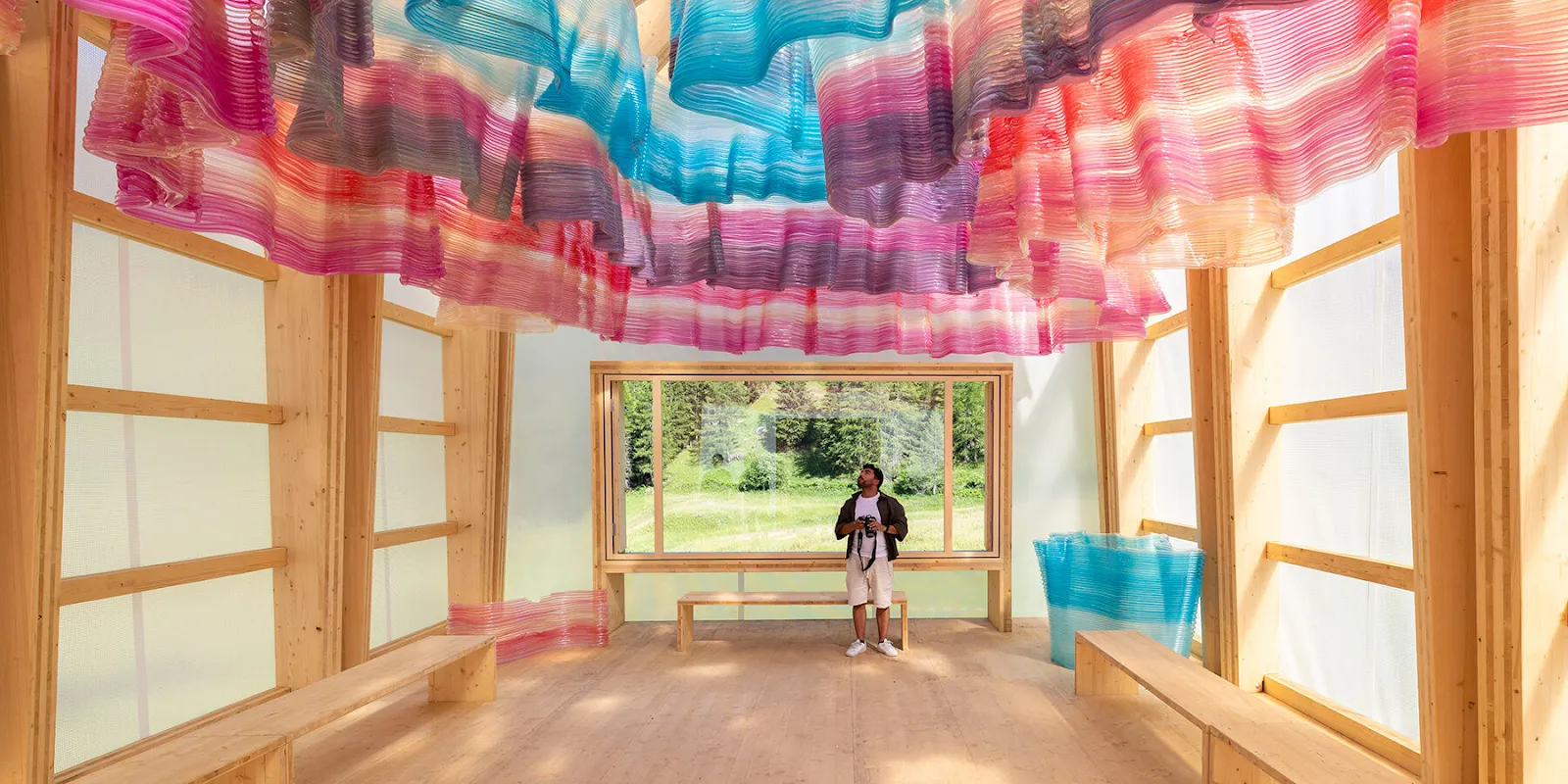
The building’s envelope is constructed from locally-sourced mass timber elements, pre-cut and assembled into a faceted form that suggests folded origami. This geometrical logic reflects computational efficiencies and structural lightness. The timber shell is wrapped in a translucent membrane, filtering daylight and turning the building into a subtle beacon within the landscape. This system highlights passive lighting strategies while allowing the interior’s color-rich volume to become visible from outside.
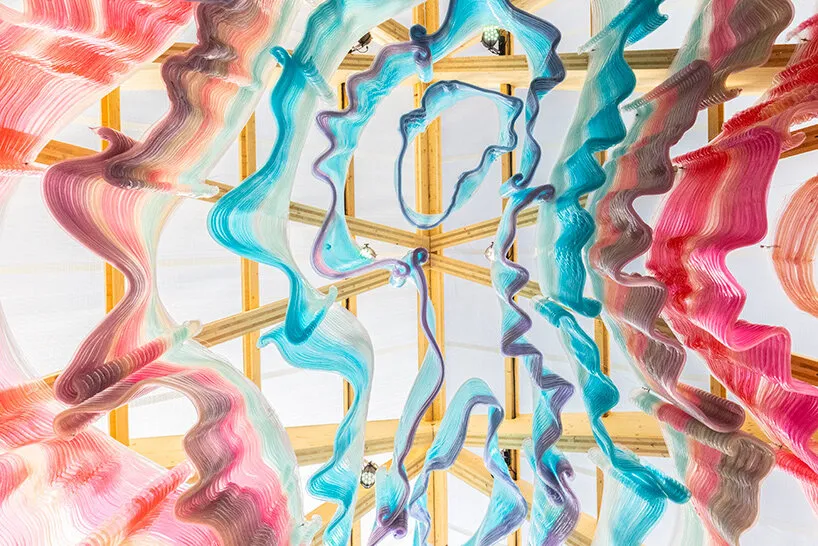
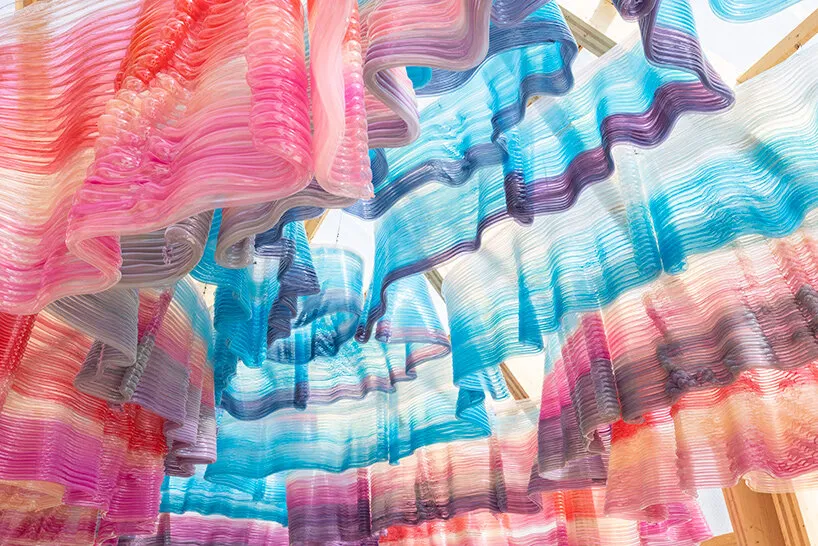
At the core of the structure is a vivid 3D-printed vaulted ceiling, produced using an experimental extrusion process known as Hollow-Core. Originally intended for façade applications, this technique was repurposed at ETH Zurich’s Robotic Fabrication Lab to fabricate a large-scale, lightweight enclosure. The result is a 250-square-meter interior structure that weighs under one metric ton. The material used, recycled PETG, a thermoplastic widely used in food containers, was selected for its printability, durability, and circular potential.
Digitally Driven Design with Sustainable Goals
By integrating additive manufacturing into architectural practice, the project foregrounds a shift toward fabrication-driven design. Unlike conventional 3D printing, Hollow-Core extrusion uses minimal material by creating hollow yet load-bearing elements. This enables the team to produce large volumes with minimal weight and a reduced environmental impact. The printed texture, defined by each extruded layer, is deliberately preserved, giving the interior surfaces a tactile and stratified appearance.
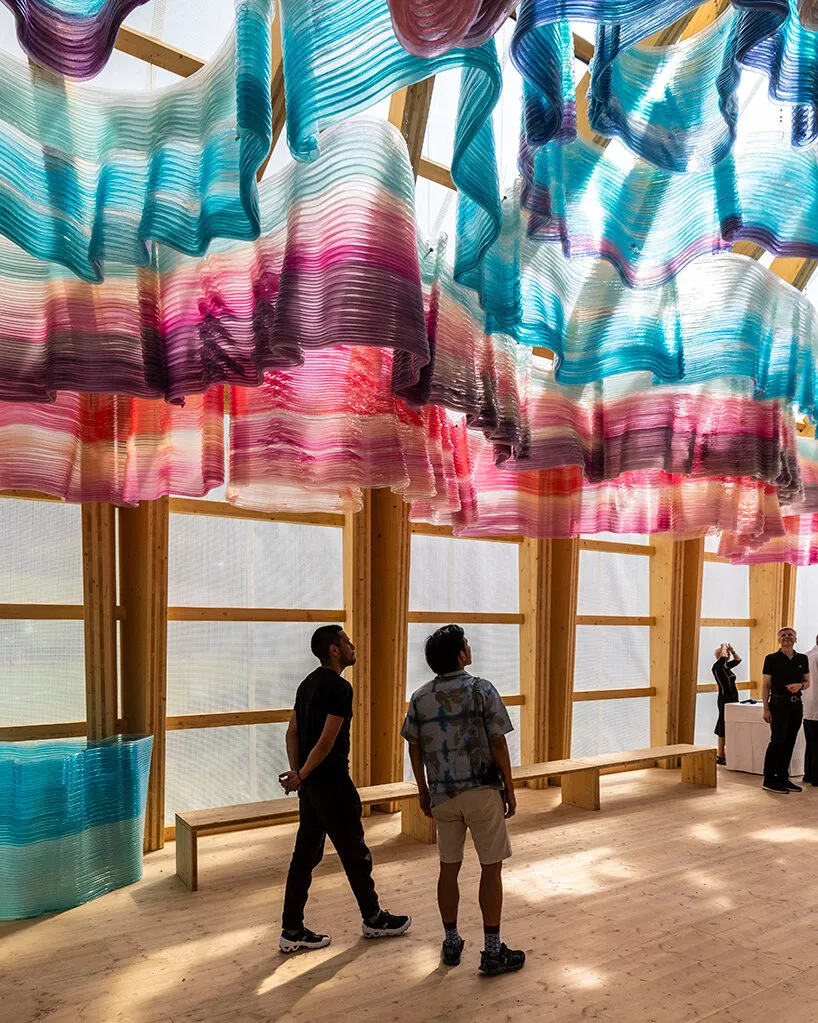
Instead of striving for smooth perfection, the design celebrates the visual logic of its making. The reduced geometric resolution of the digital model also served to accelerate production, a practical decision that did not compromise visual richness. The formal language borrows from Belle Époque and Baroque architectural ornament, but it’s reinterpreted algorithmically, creating a hybrid of old-world grandeur and contemporary ecological awareness.
A Reversible System Designed for Circular Lifecycles
Circularity underpins the entire construction system. All components are demountable. The timber frame can be disassembled and reused. The plastic cupola, once its life cycle ends, can be shredded and recycled into new architectural elements. This approach positions the Gelateria as a testbed for rethinking building lifespans and resource stewardship.
The structure functions as a cultural and economic stimulant within Nova Fundaziun Origen’s wider vision for Mulegns. Alongside the previously completed White Tower nearby, the Gelateria is part of an initiative to renew the region through architecture that engages with history, innovation, and community.
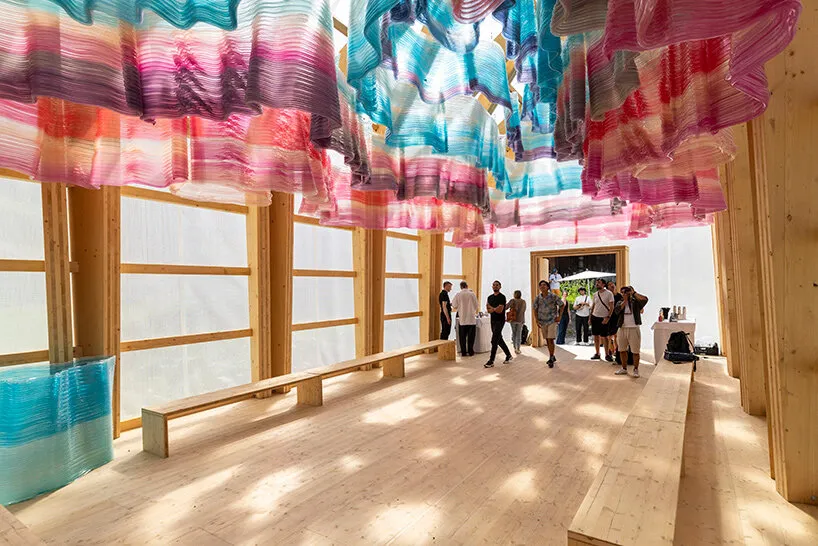
The Gelateria represents an advanced synthesis of computational design, robotic craft, and ecological responsibility. It is architecture shaped by design intent, fabrication logic, and sustainable material strategy. While many experiments remain confined to academic laboratories, this project has been realized at full scale, occupied by people, and activated within a real village context.
Image credit © ETH Zurich
Explore Courses
.jpg%202.jpg "Building Performance with Forma & Opossum")
.jpg "Ondrej Chybik - Rethinking Architecture")