

Every year, millions of tonnes of sawdust are generated worldwide, most of which is burned for energy, releasing stored carbon back into the atmosphere. A research team from ETH Zurich and Empa, based at the Chair of Wood Materials Science, has developed a more sustainable alternative. Led by doctoral researcher Ronny Kürsteiner, the team has created a recyclable, fire-resistant building material by combining sawdust with the mineral struvite, offering a new way to reuse wood waste in construction.
How the Material Works
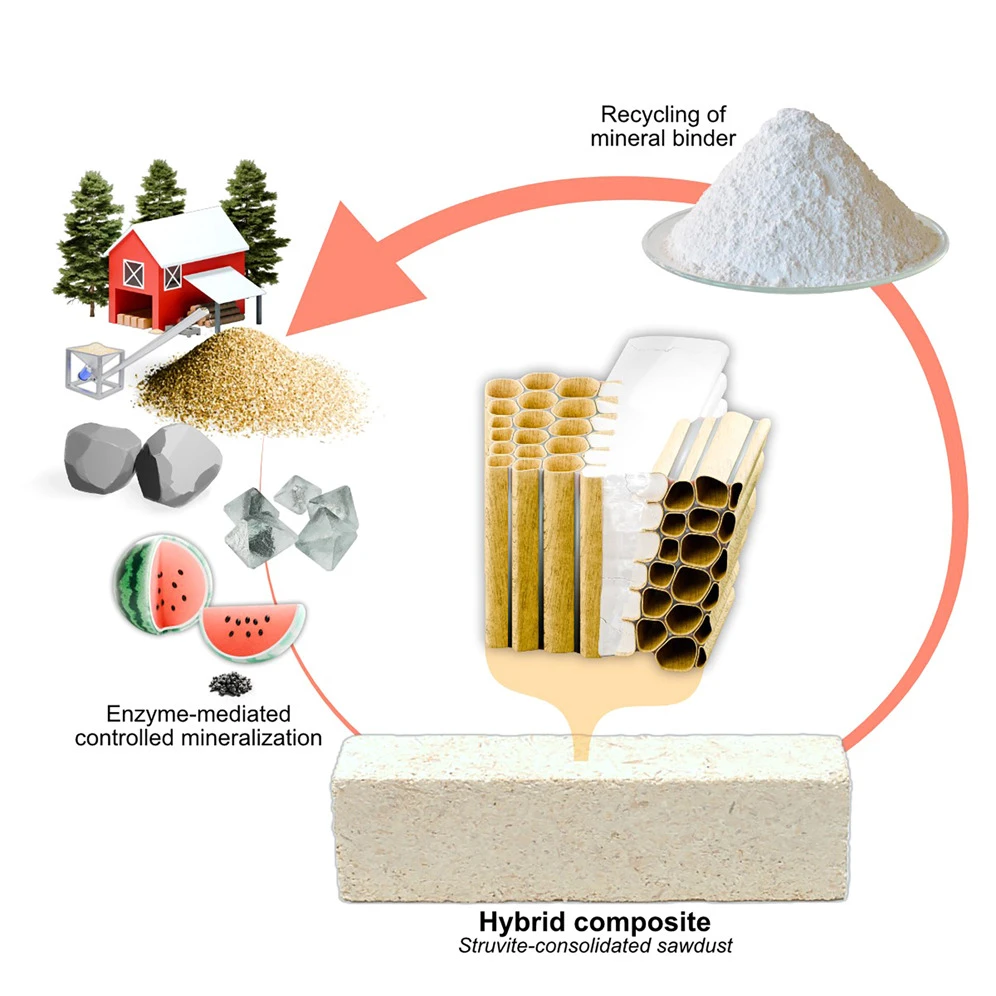
The innovation relies on combining sawdust with struvite, a mineral commonly found as deposits in wastewater systems. While struvite is known for its fire-resistant properties, it has traditionally been difficult to integrate into wood-based materials. The research team solved this by using an enzyme derived from watermelon seeds to control how the mineral crystallizes. This process allows large crystals to form between the sawdust particles, binding them into a solid, cohesive structure.
The resulting composite is molded and dried at relatively low temperatures, making the production process less energy-intensive compared to conventional building materials.
Built-In Fire Protection
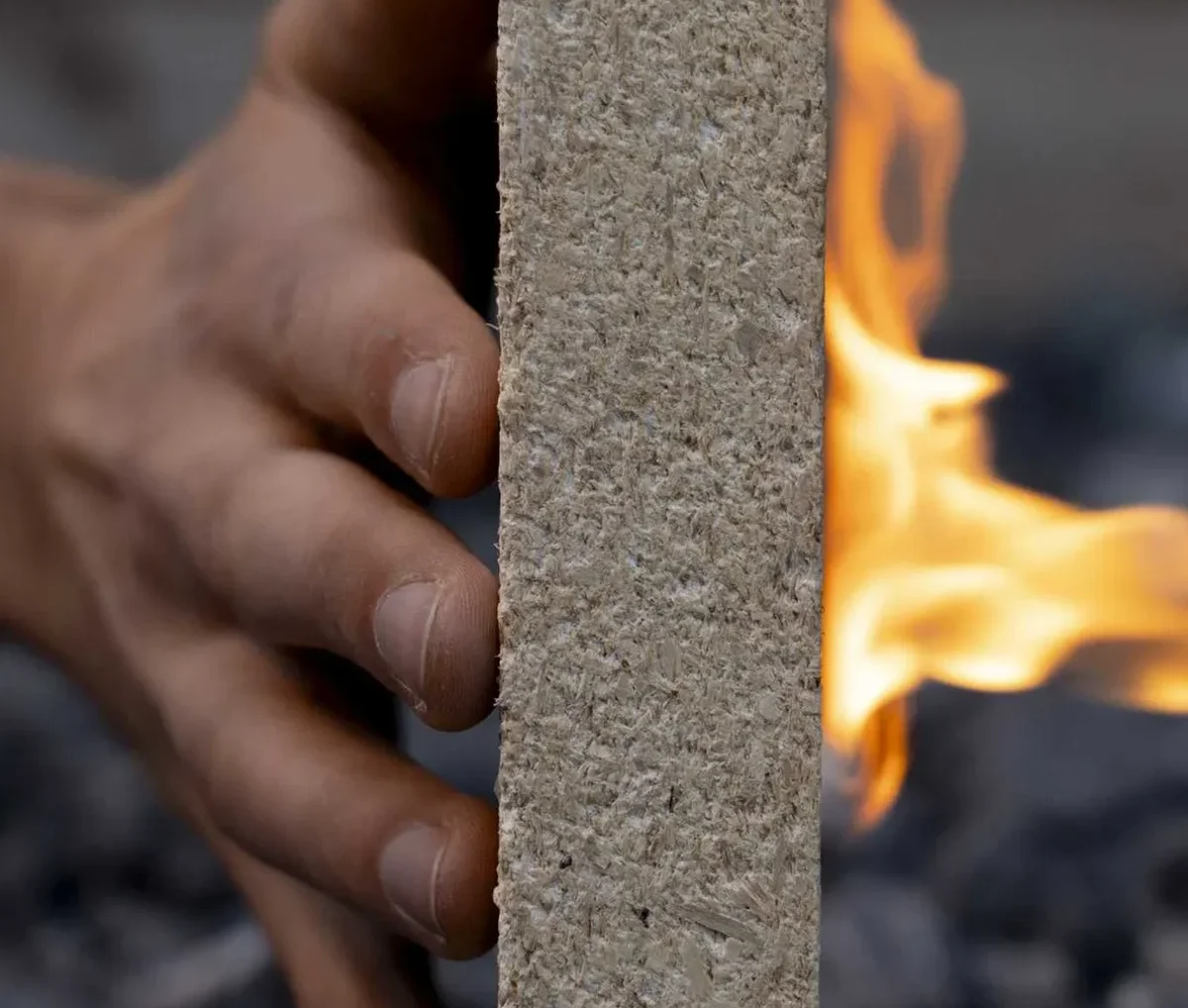
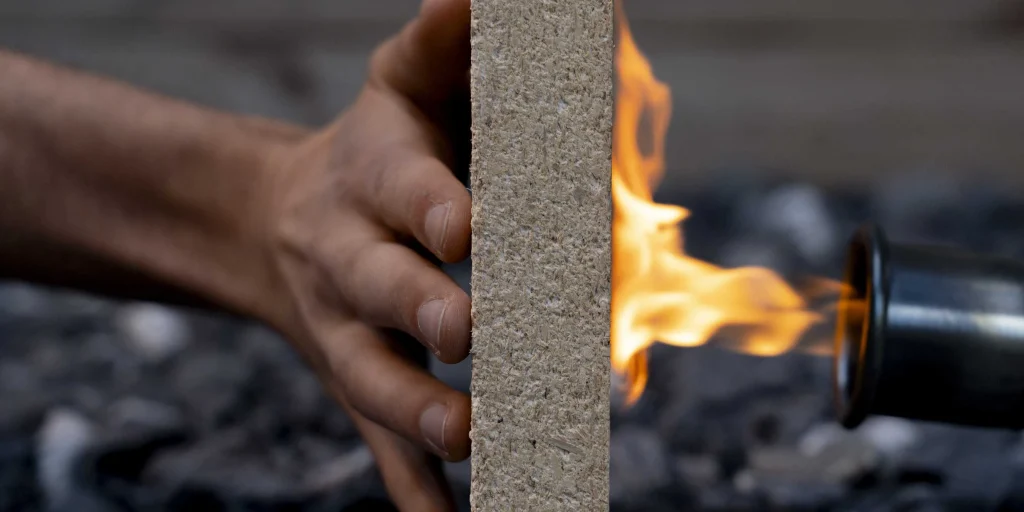
What makes this material stand out is how it behaves under heat. When exposed to high temperatures, the struvite breaks down and releases water vapor and ammonia. This reaction absorbs heat and reduces the oxygen available for combustion, effectively slowing down fire spread.
Tests show that the material takes more than three times longer to ignite than untreated wood. Once it does ignite, it quickly forms a protective layer of char and inorganic residue that shields the inner structure from further damage.
Researchers describe this as a “self-protecting” behavior, where the material actively resists fire rather than simply enduring it.
Strength and Practical Use
Beyond fire resistance, the composite also demonstrates strong mechanical performance. In some cases, it performs better under compression than the original wood it comes from. This makes it suitable for interior applications such as wall panels and partitions, where both strength and fire safety are critical.
Early assessments suggest it could match the fire protection class of cement-bonded particleboards, which are widely used today but come with higher weight and environmental costs.
Sustainability and Circular Potential
One of the most compelling aspects of this development is its environmental impact. The material is designed to be recyclable. When broken down, its components can be separated and reused to create new panels, keeping both wood waste and mineral resources in circulation for longer.
It also offers a dual benefit by potentially sourcing struvite from wastewater treatment plants, where it is usually considered a nuisance due to pipe blockages. Turning this byproduct into a useful resource could support both waste management and sustainable construction.
Challenges Ahead
One of the main hurdles is cost, particularly the availability and processing of struvite at scale. Researchers note that making the process economically viable will be key to bringing the material into mainstream construction.
This innovation highlights a broader shift in materials science, where waste streams are being reimagined as valuable inputs. By combining fire safety, recyclability, and lower environmental impact, the sawdust-based composite developed by ETH Zurich and its partners points toward a future where building materials are not only stronger but also smarter and more sustainable.
Credit: ETH Zurich / cell.com
Explore Courses
.jpg "Architecture Diagram Mastery: Concept to Portfolio")
.jpg%202.jpg "Building Performance with Forma & Opossum")
.jpg "Ondrej Chybik - Rethinking Architecture")