

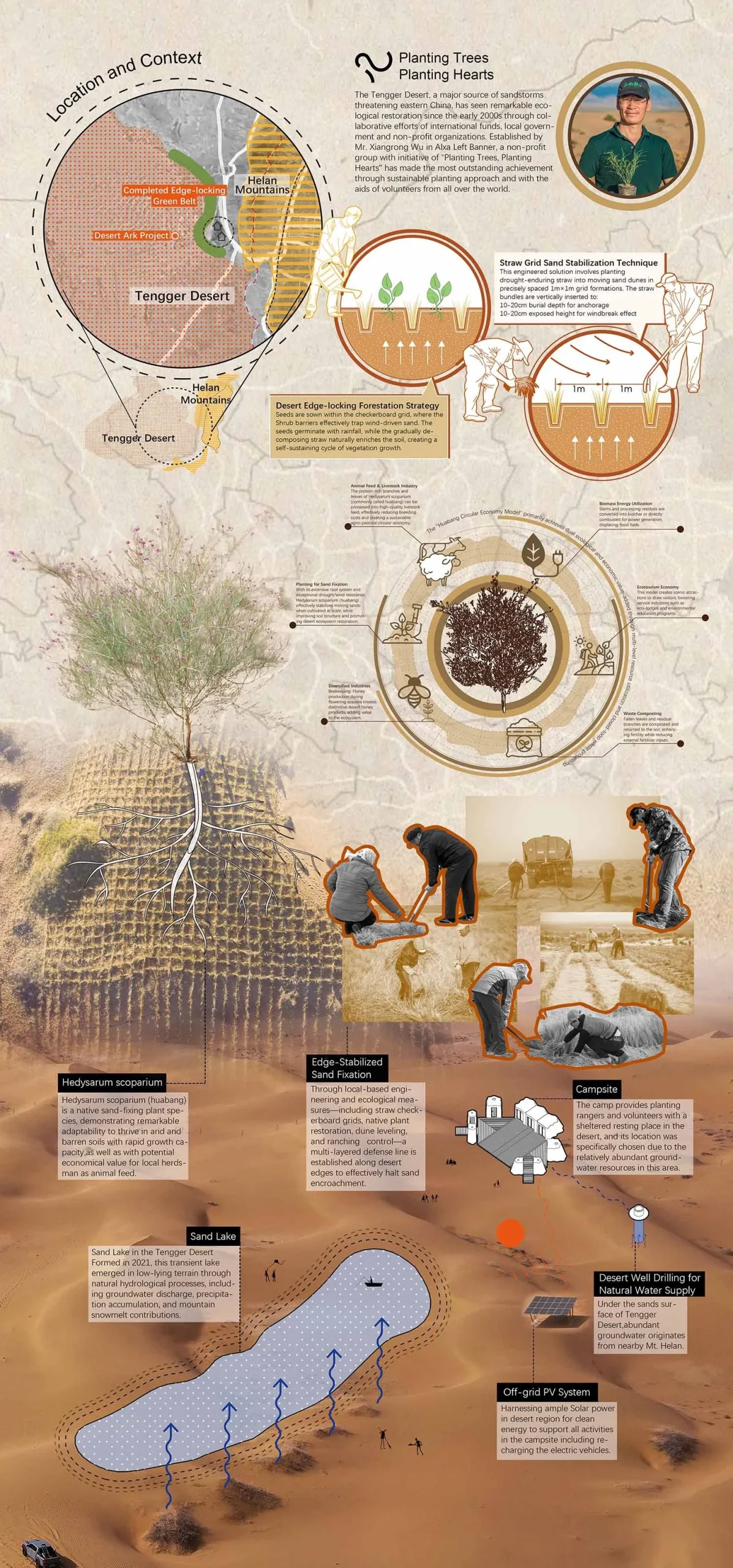
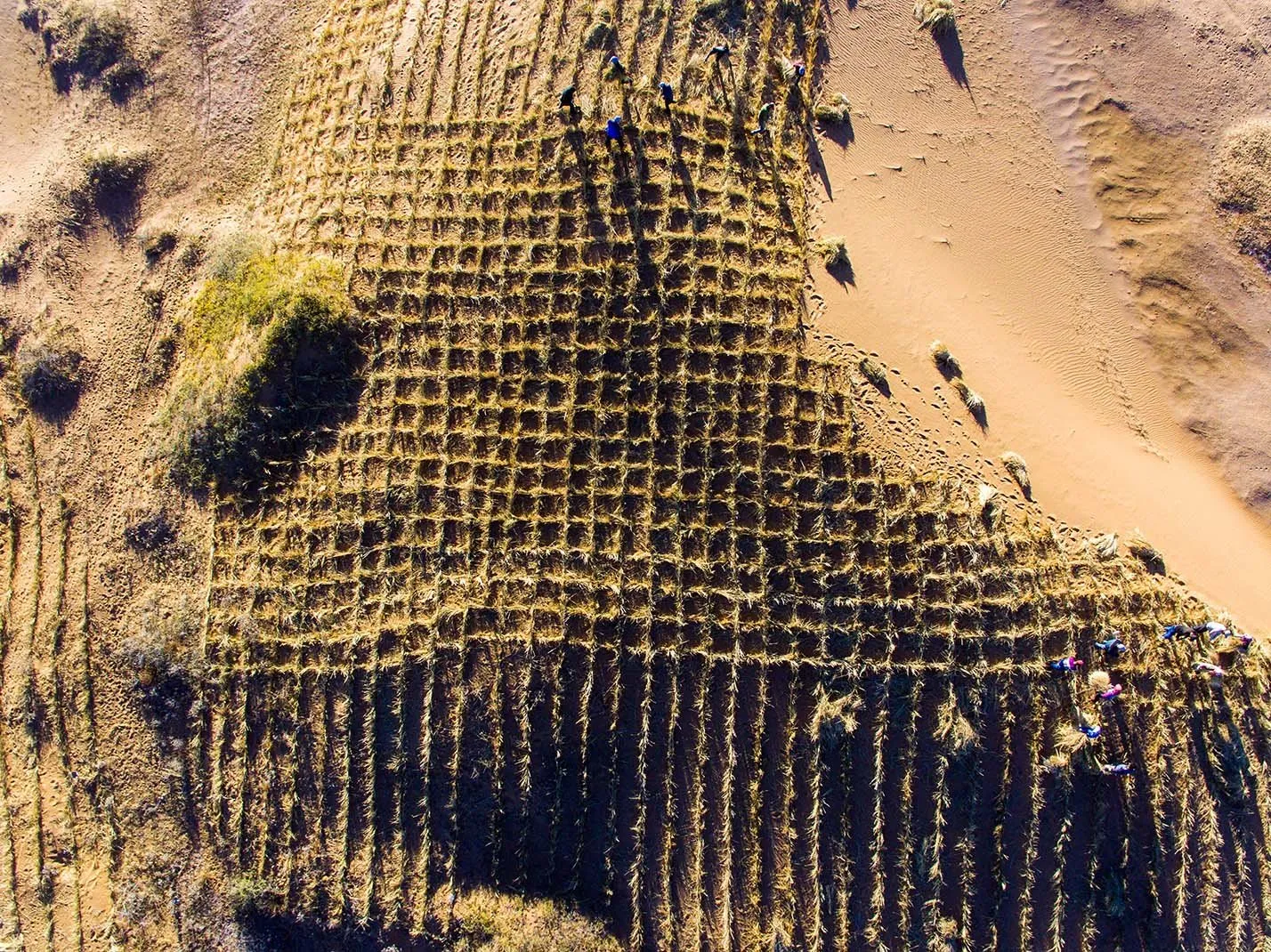
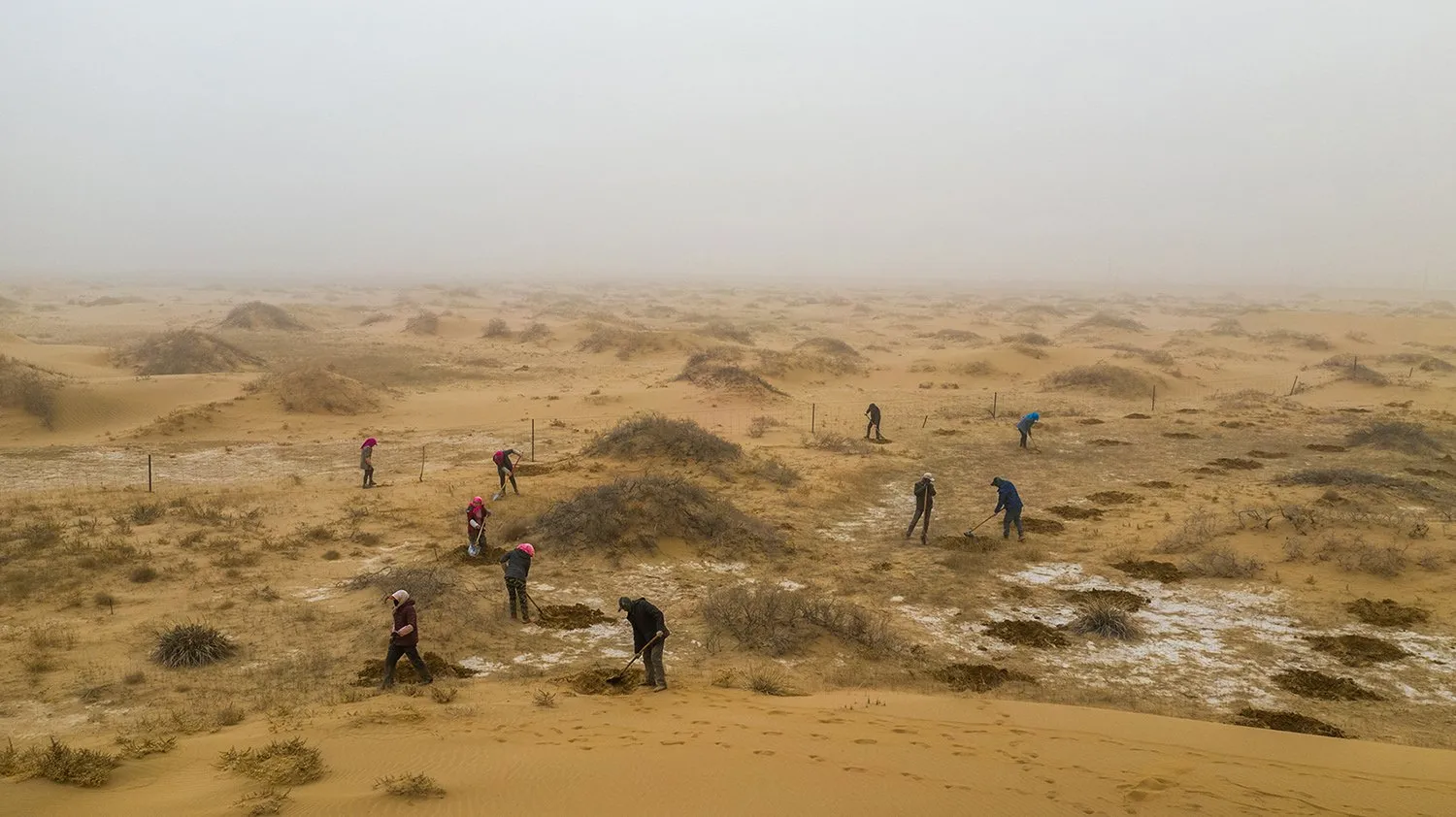
Desert Ark is a modular shelter system developed by the architecture studio designRESERVE to support tree-planting and reforestation volunteers working in the Tengger Desert, located in Alxa Left Banner (Alxa League), Inner Mongolia Autonomous Region, in China. The desert is one of China’s largest arid regions and has been subject to desertification and eastward sand movement, making restoration work urgent.
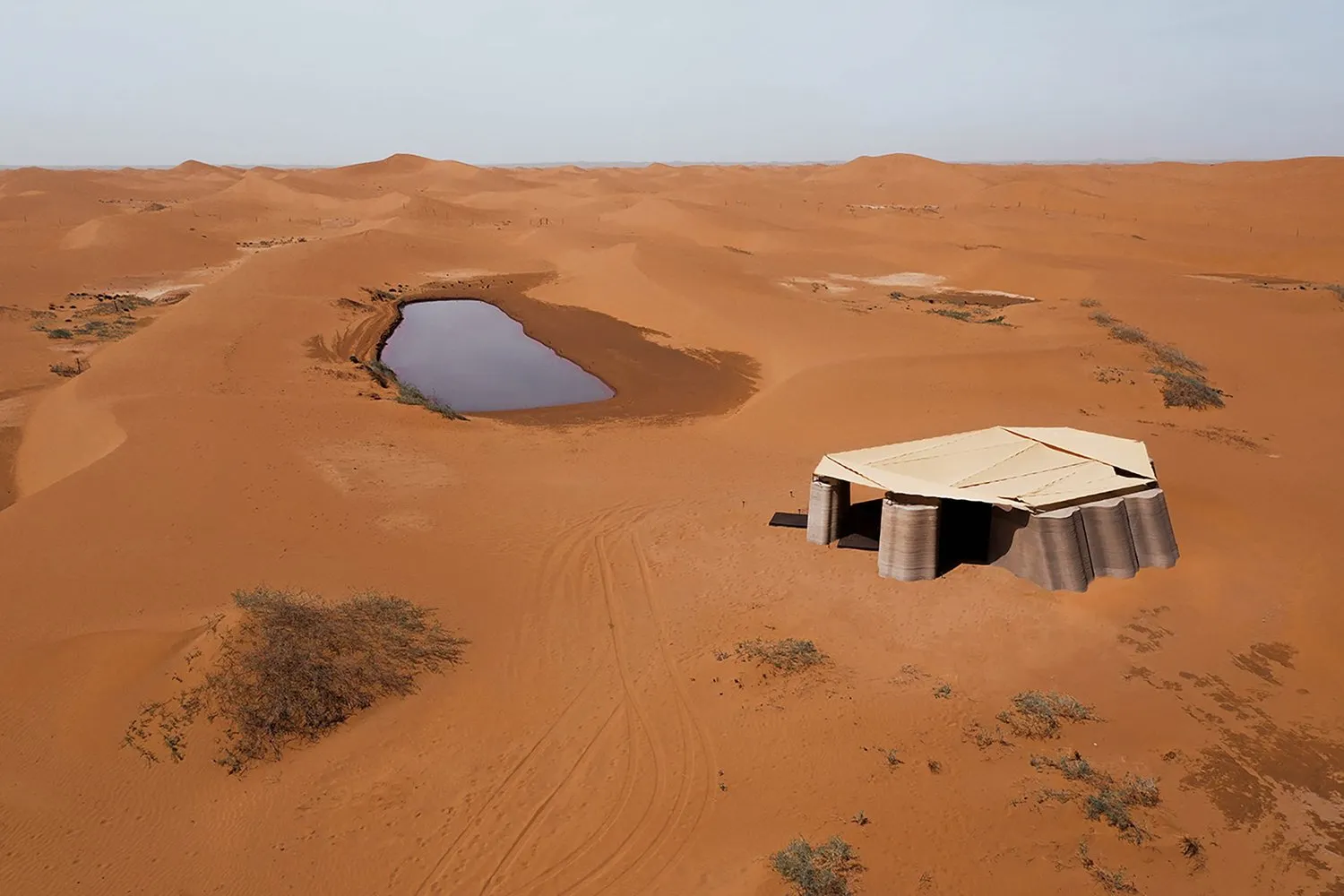
The project was commissioned by a non-profit group (the Alxa Tengger Desert Ecology Fund) engaged in long-term “desert-locking forest” efforts. The primary purpose of Desert Ark is twofold: to provide functional accommodation and operational facilities for volunteers in a remote, extreme environment setting, and to act as a prototype for rapid, low-impact architecture (especially using 3D-printed concrete) in harsh terrains.
Key Design
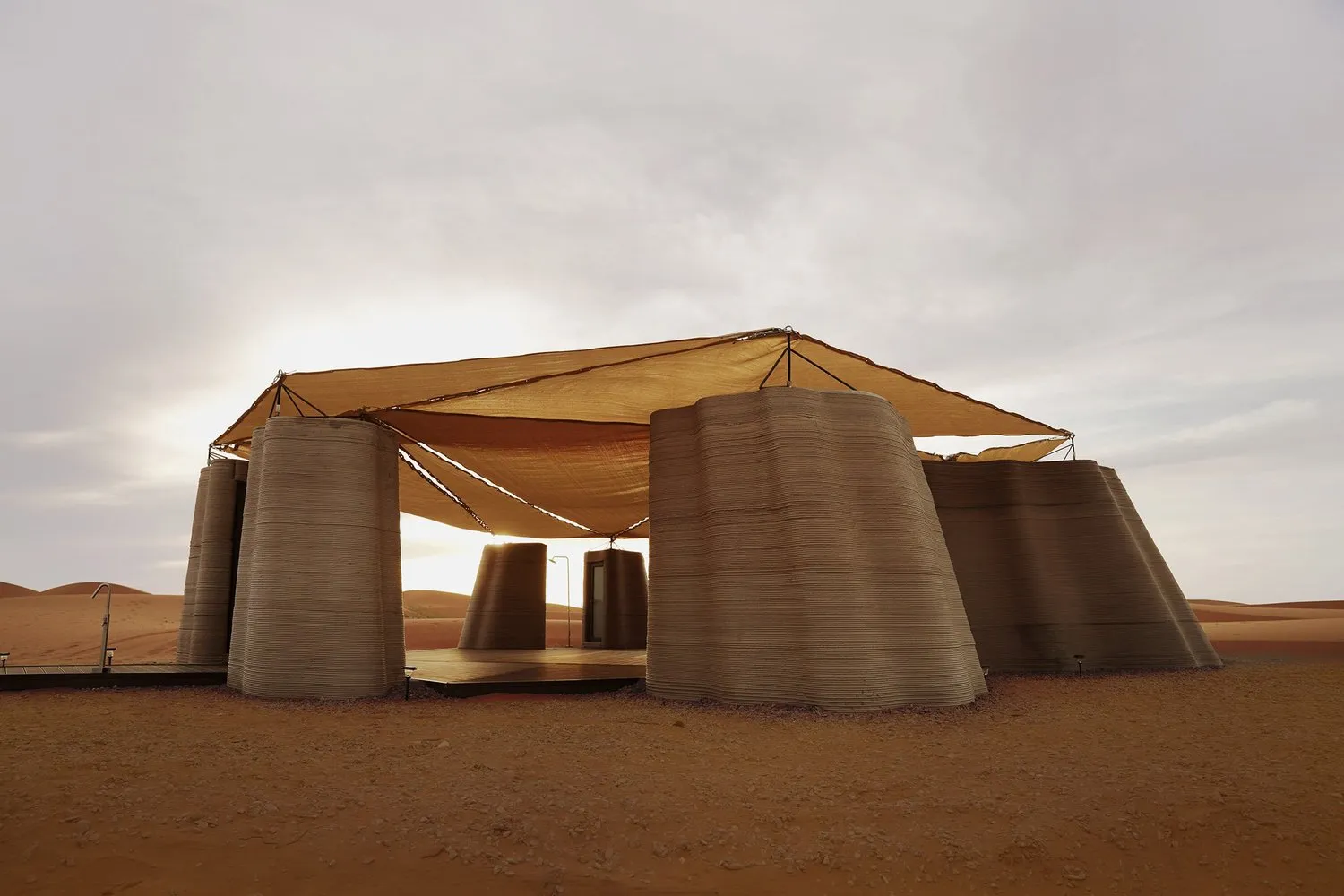
The camp comprises nine separate modular units arranged around a central communal deck/space. These units include living rooms/sleeping zones, kitchen and dining areas, showers and sanitation, storage rooms, and support spaces.
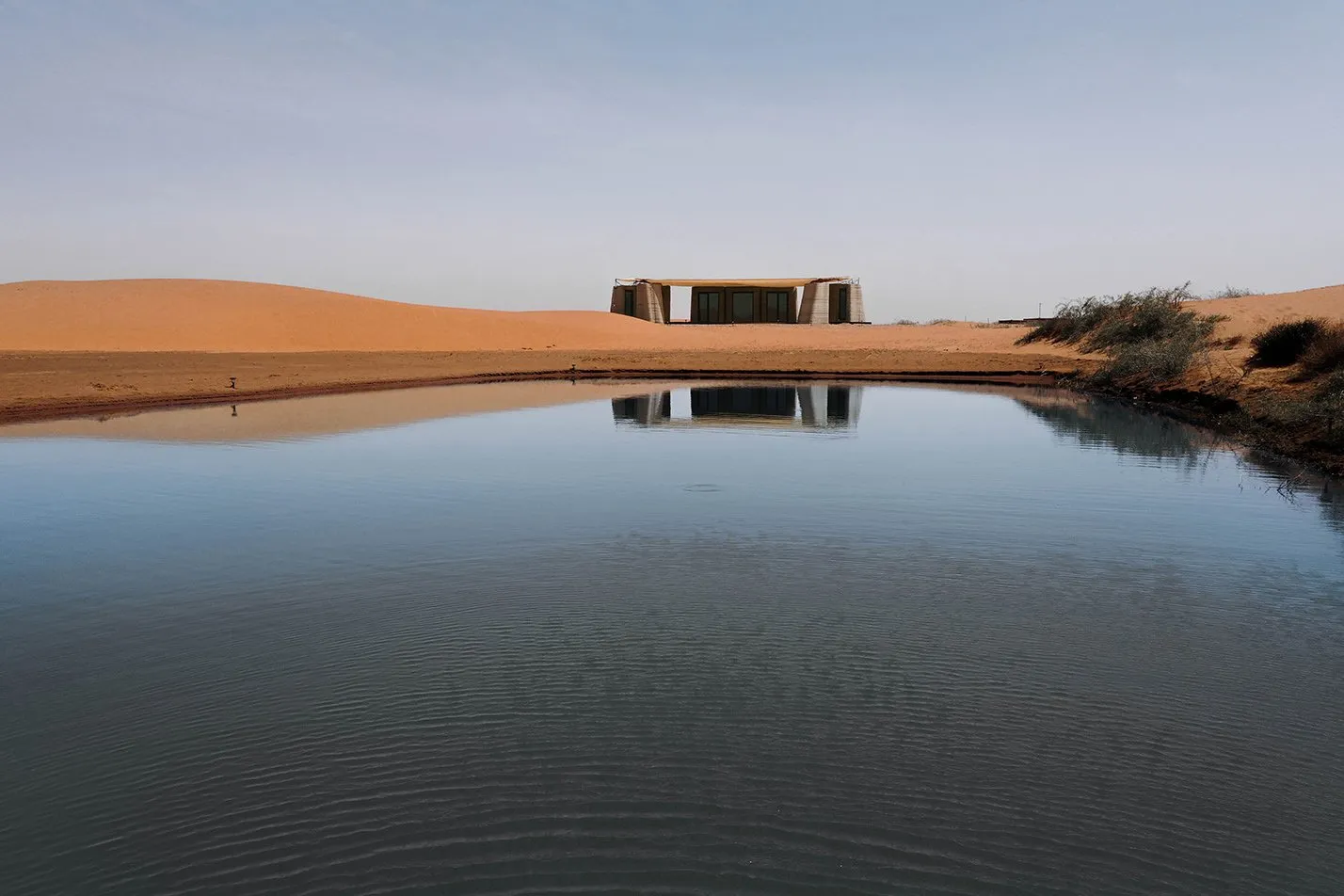
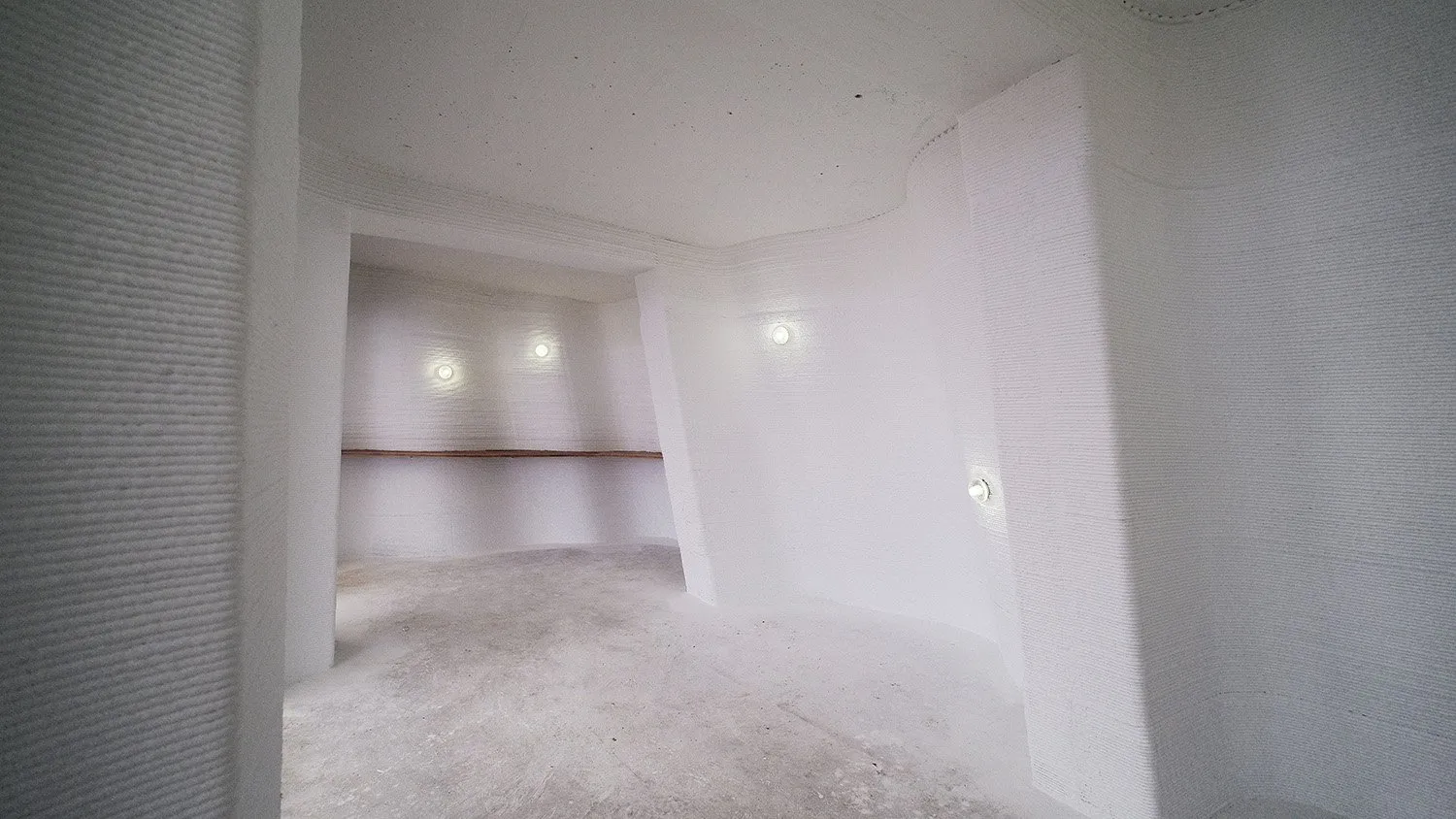
The total built area for the assembled camp is approximately 150 m² (about 1,600 ft²), according to multiple sources. The layout places the modules radially (or in a circular cluster) around a wooden deck platform, which acts as the main communal area and circulation zone.
Construction Method and Materials
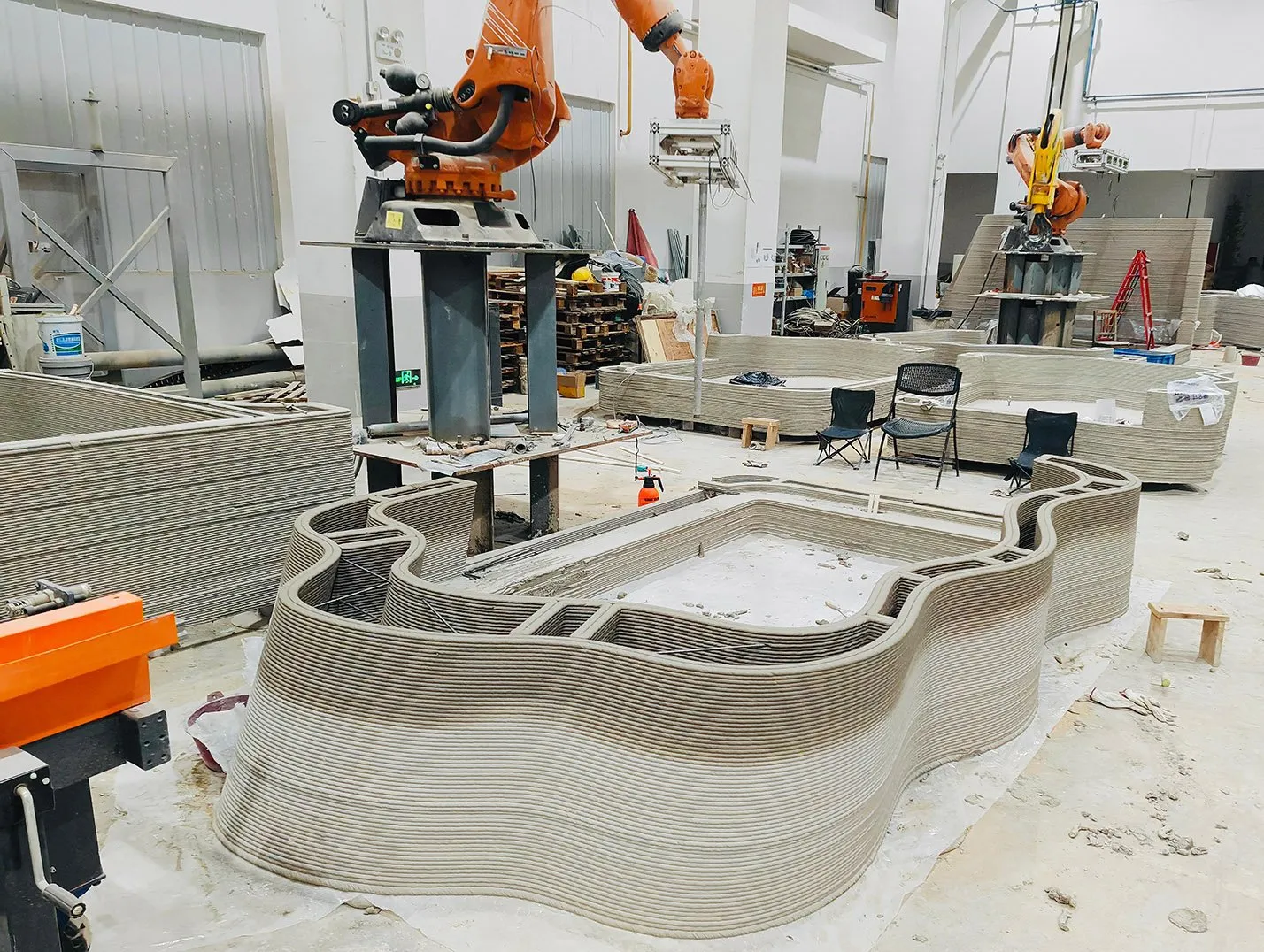
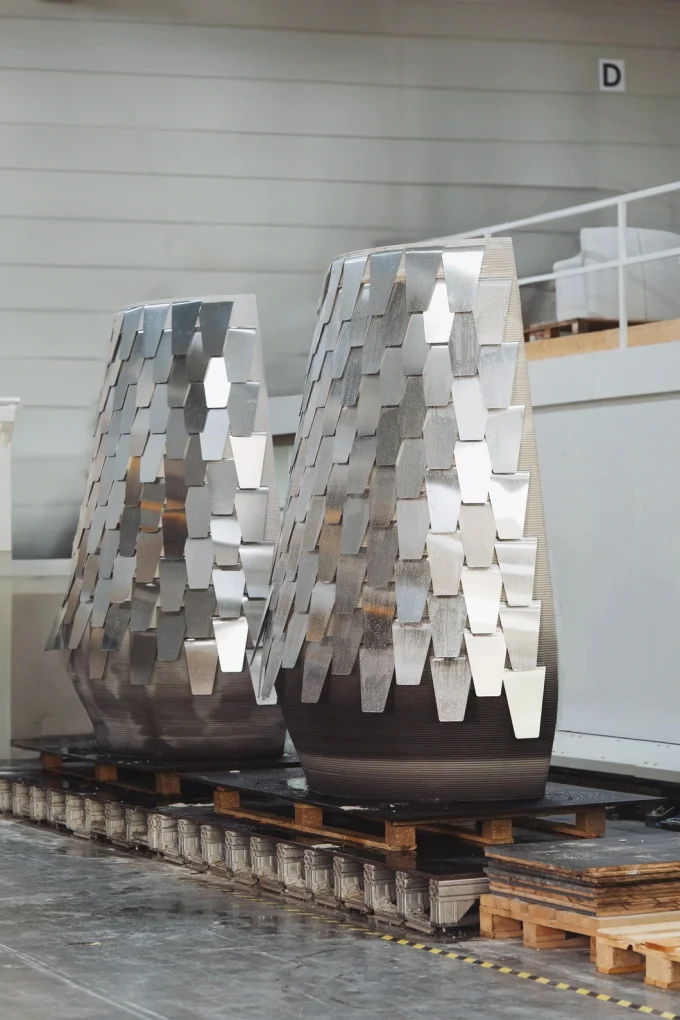
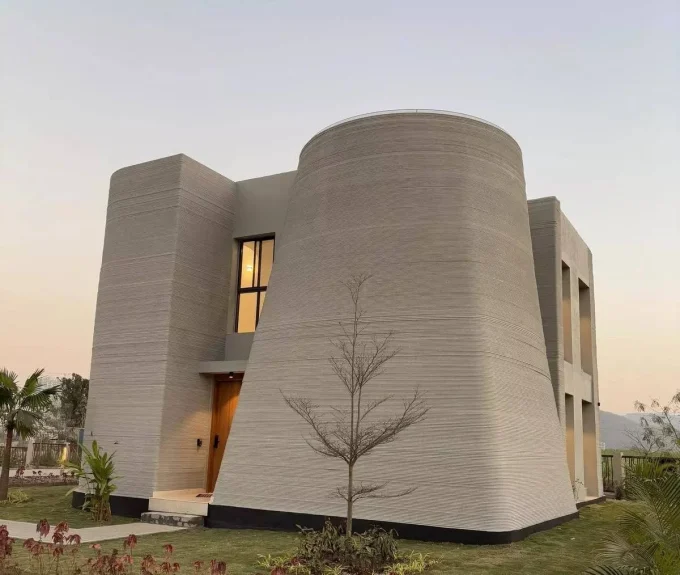
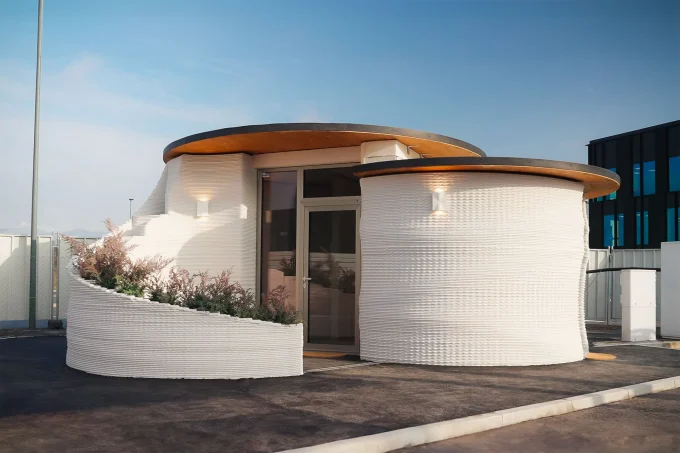
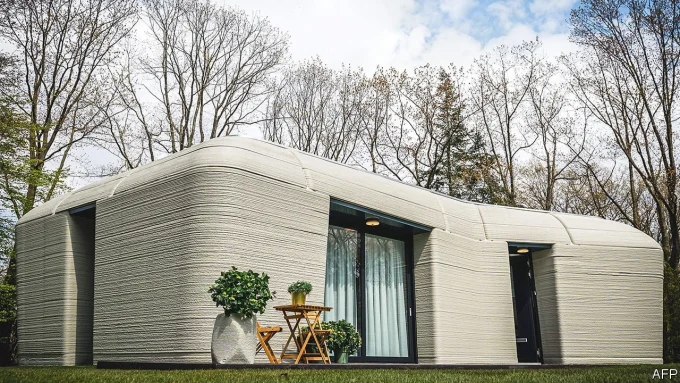
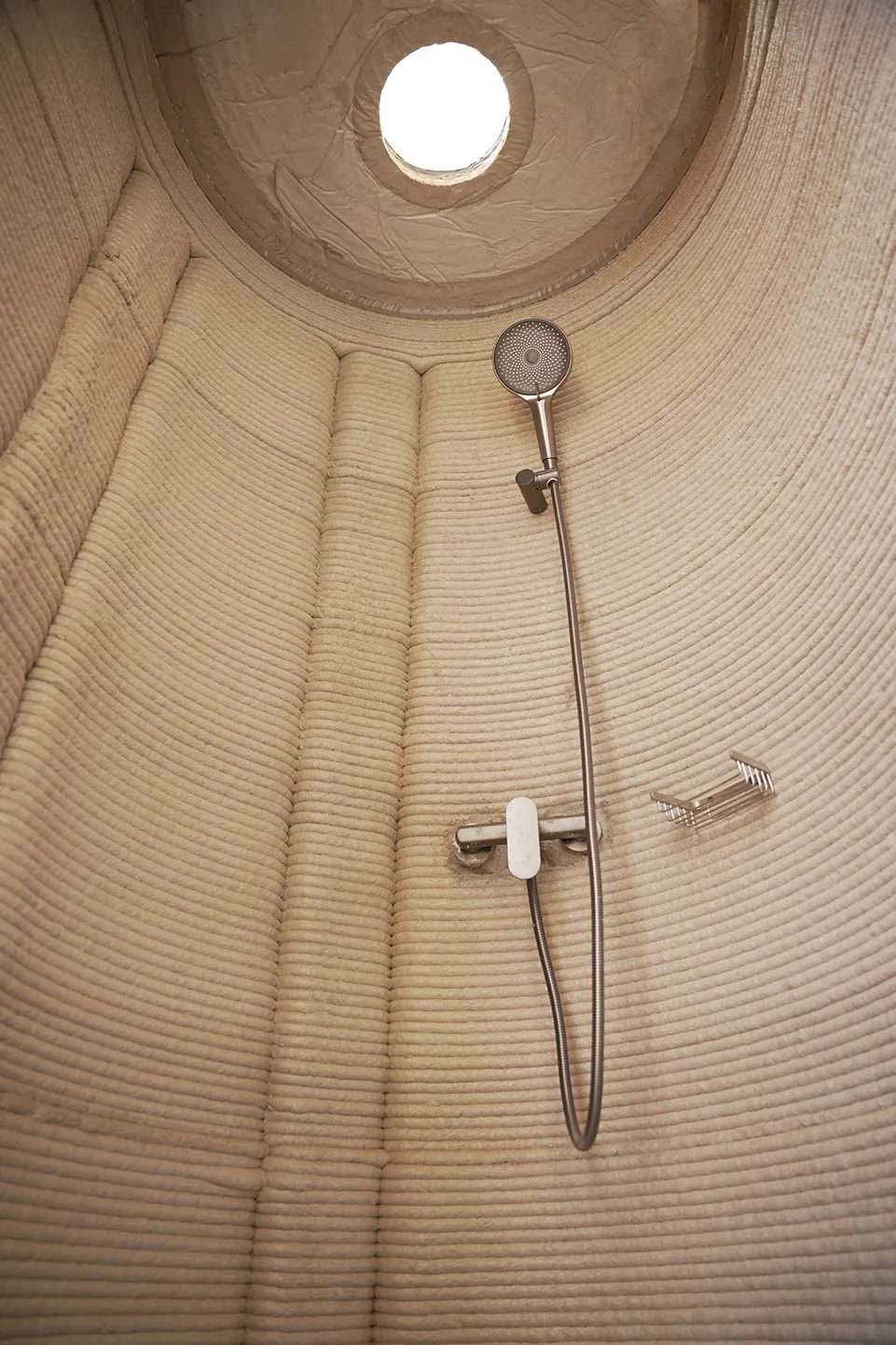
The modules are fabricated using robotic 3D concrete printing (R3DCP) technology. The printing material is a sand-based concrete mixture, selected to align materially and visually with the desert environs. The modules were prefabricated in sections at a facility in Wuxi, China, and then transported by truck to the desert site for final assembly.
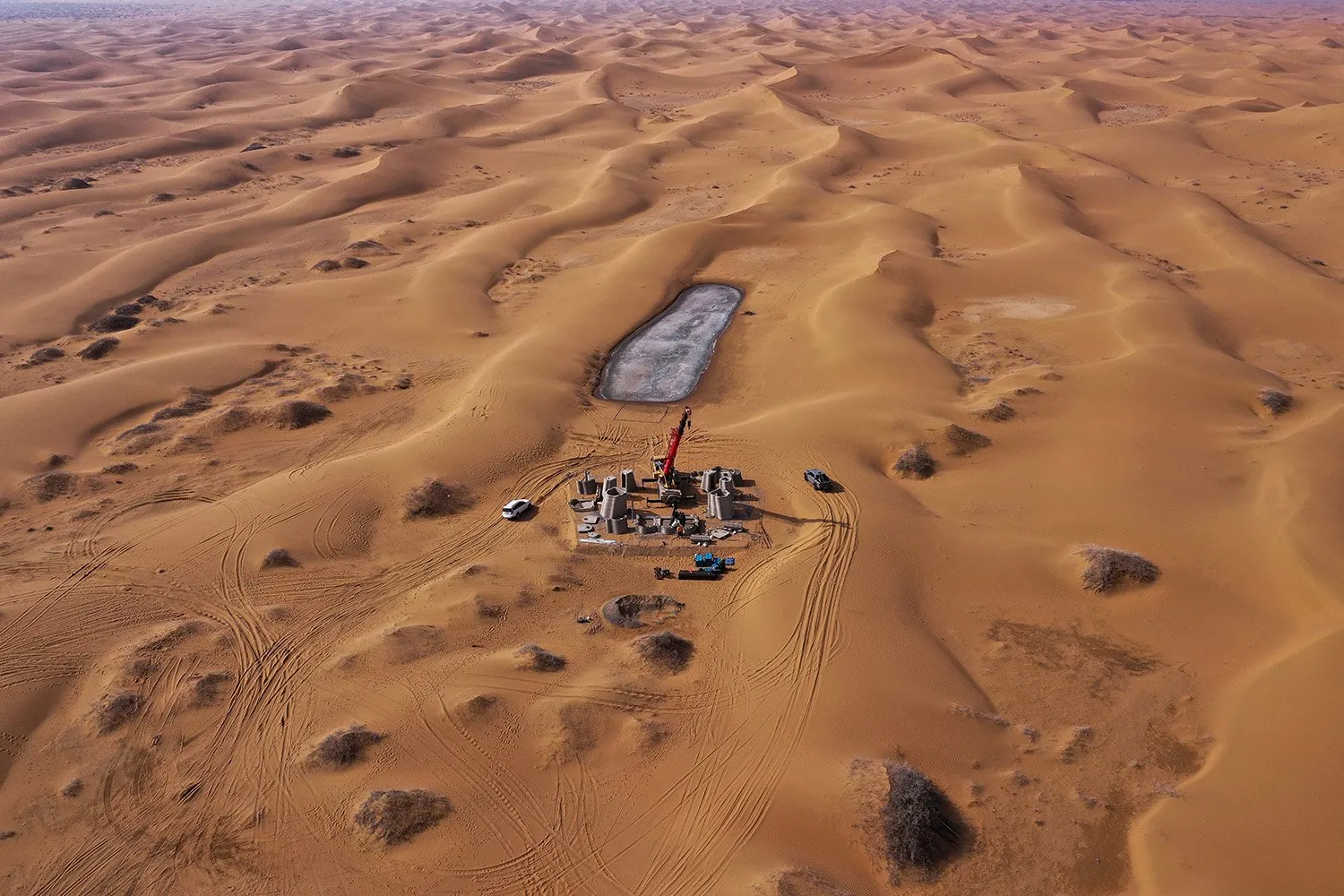
On-site, the modules were assembled on a temporary foundation system: crushed stone, concrete canvas, and plastic pallets tied with galvanized steel pipes. The foundation allows placement directly on sand without deep excavated footings.
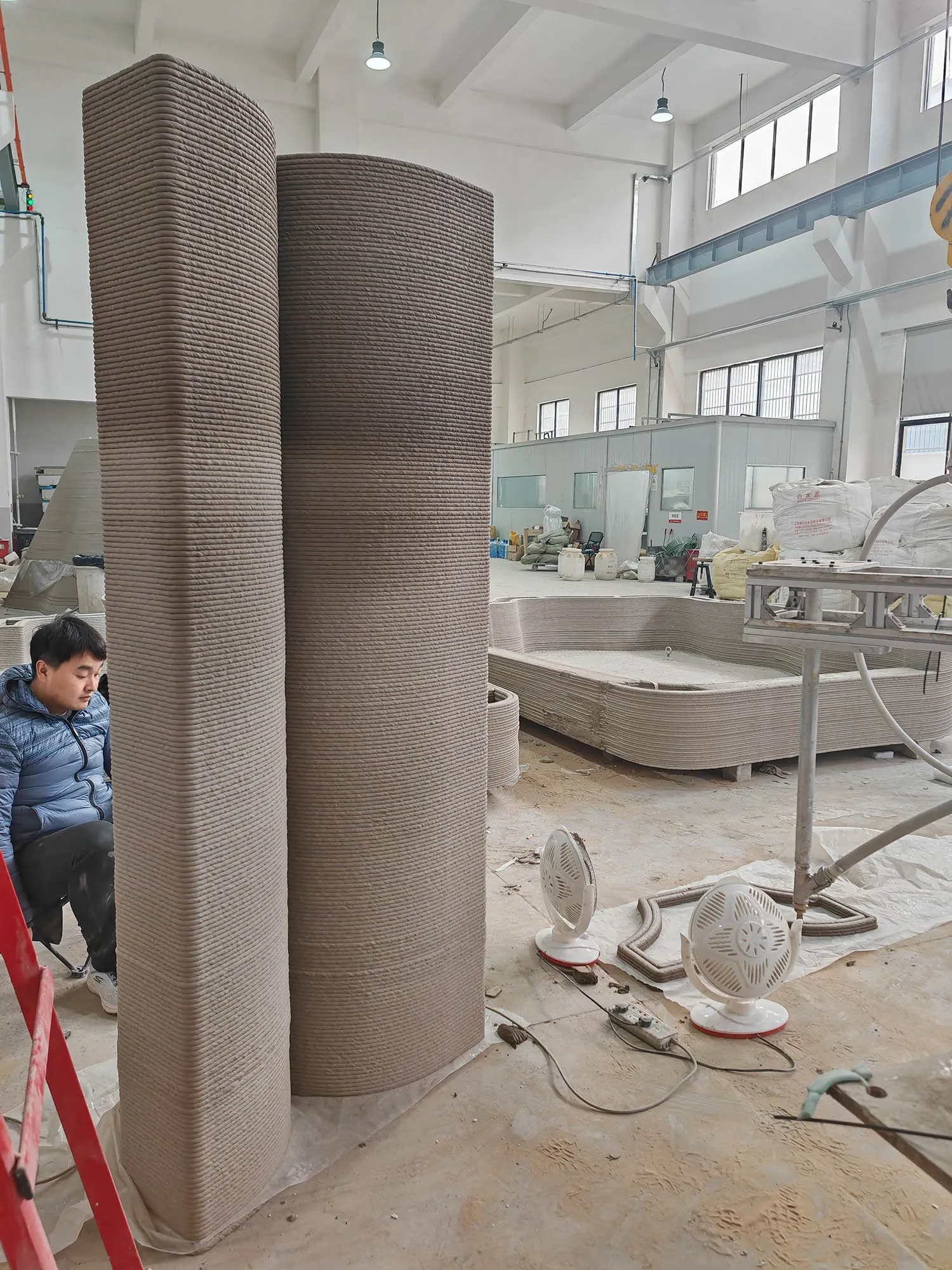
Modular Fabrication, Transport, and On-Site Assembly
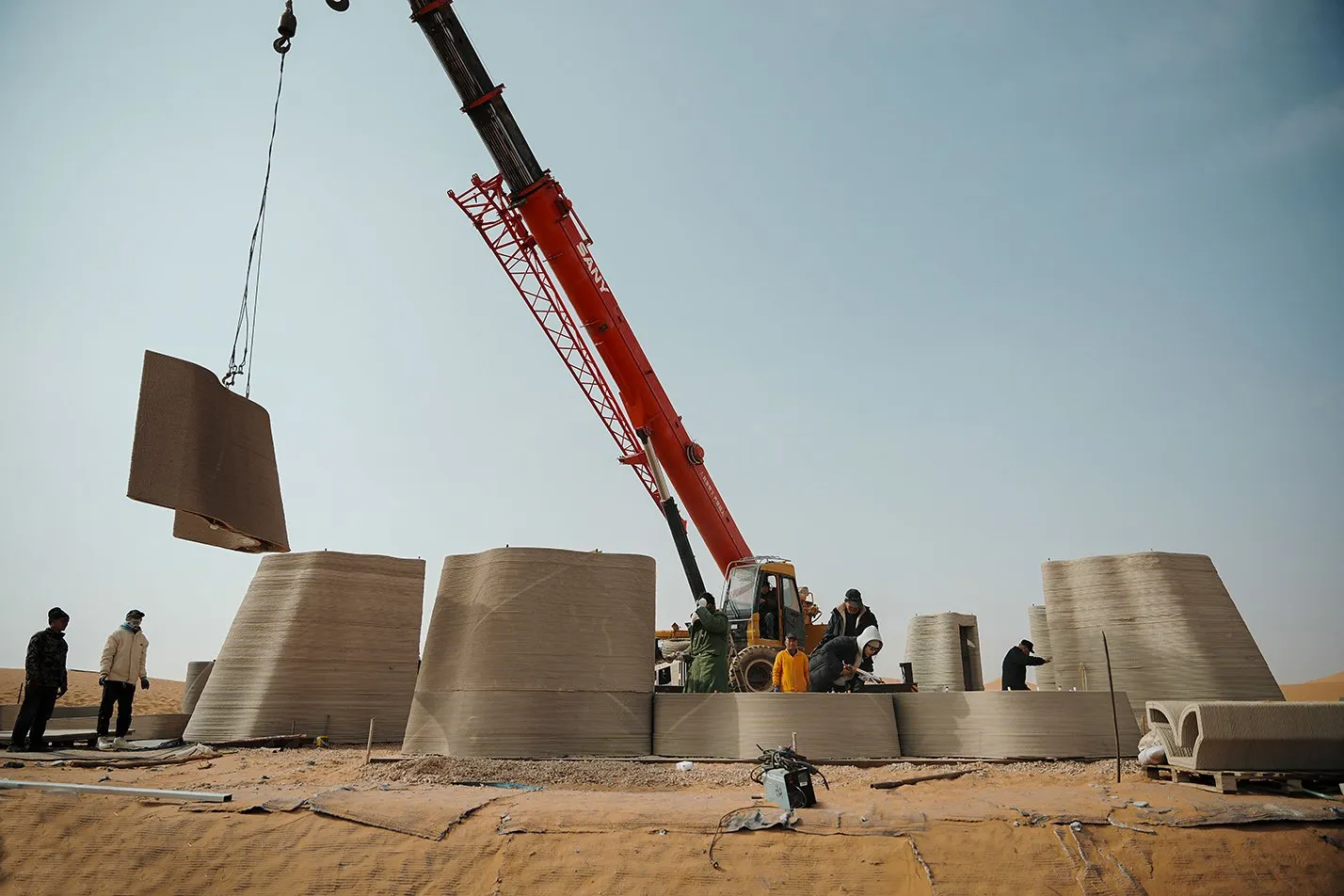
Rather than printing everything on-site in the desert, the design strategy opted for prefabrication in controlled factory conditions, the transport of modular concrete-printed pieces, and rapid on-site installation. The on-site assembly time is reported as two days for the modules to be installed and operational. The modules are designed to be disassembled and relocated in the future, consistent with the mobile nature of reforestation field camps.
Structural Form and Environmental Performance
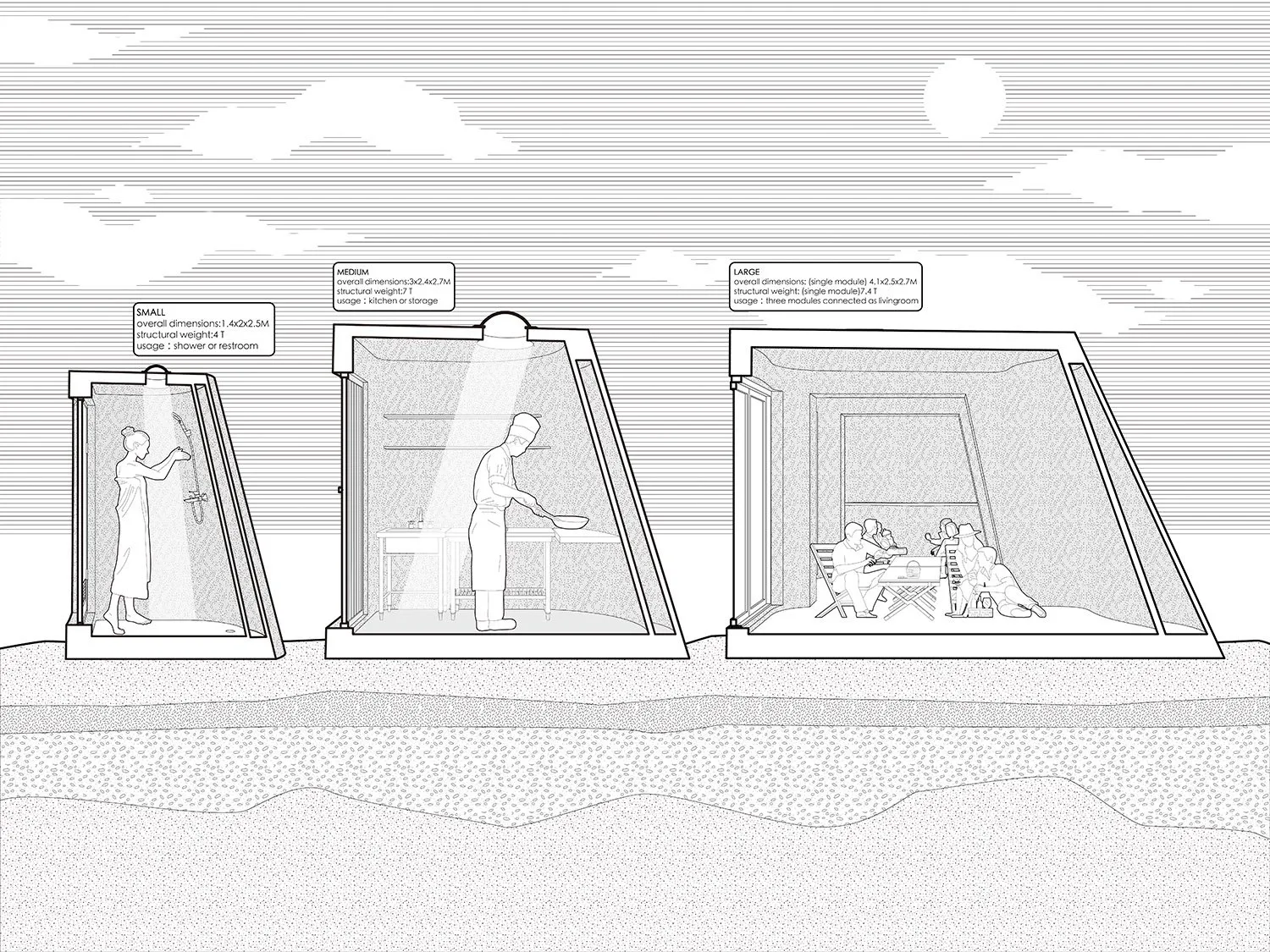
Each module has a wavy, undulating external profile, which the design team reports as a method to reduce wind load, given strong desert winds (up to ~34 m/s) in the site region. The layered texture produced by the printing process helps visual integration with the sandy surroundings.
The printed concrete walls include a cavity for insulation, intended to moderate the extreme temperature fluctuations: winter lows down to about −30°C and summer highs up to 45°C. The foundation system of pallets and an elevated deck helps reduce disturbance to the sand substrate and adjusts to the shifting desert surface.
Site Systems and Off-Grid Features
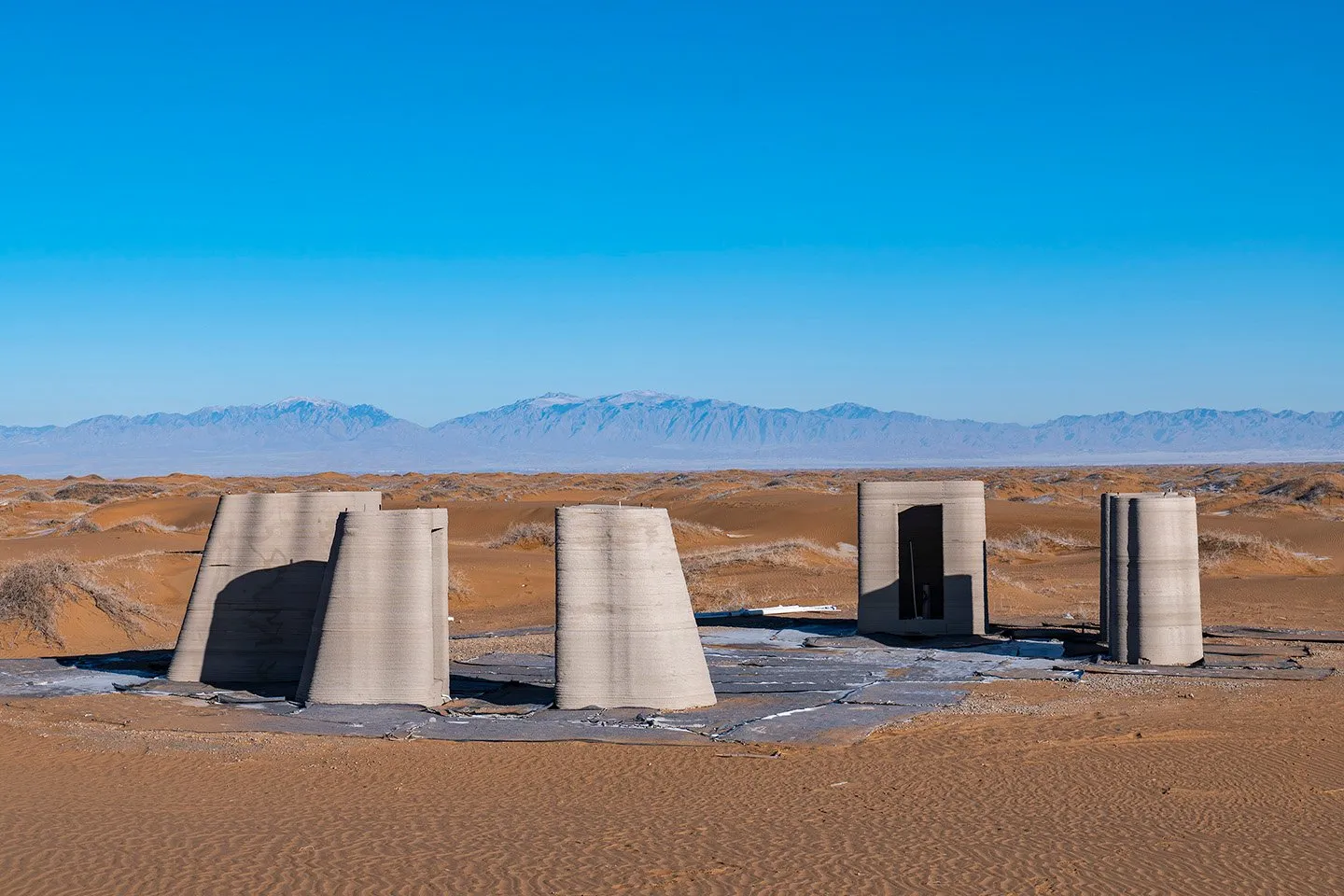
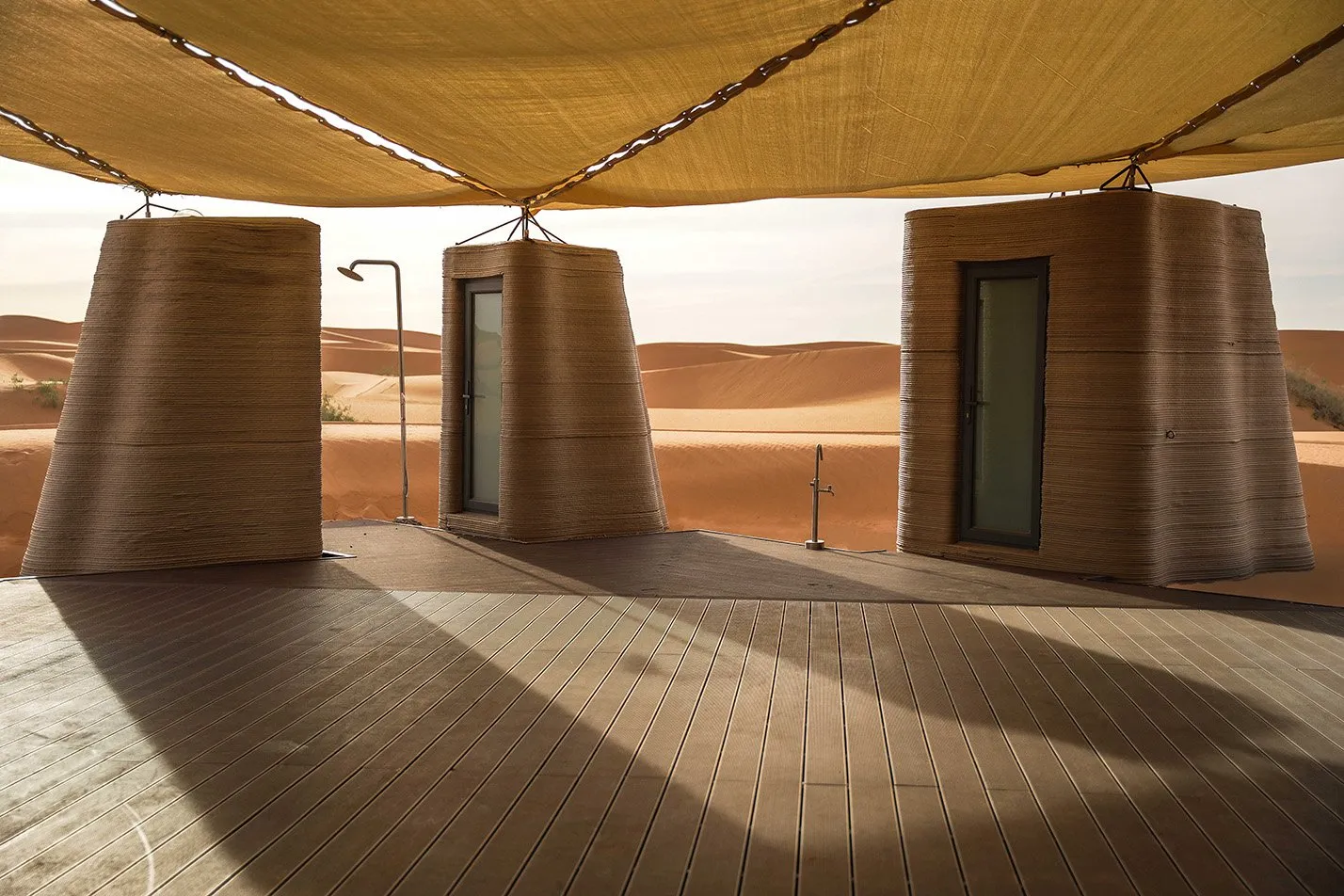
Desert Ark incorporates off-grid systems to allow field operation in a remote desert environment.
The deck is covered by a retractable canopy for additional shading of the communal deck and modules. The facility is powered by photovoltaic solar panels, enabling low- or zero-carbon energy operation.
A wastewater/septic system (biodegradation tank) is used to collect and filter all grey/black water, which can then be reused for the irrigation of planted trees.
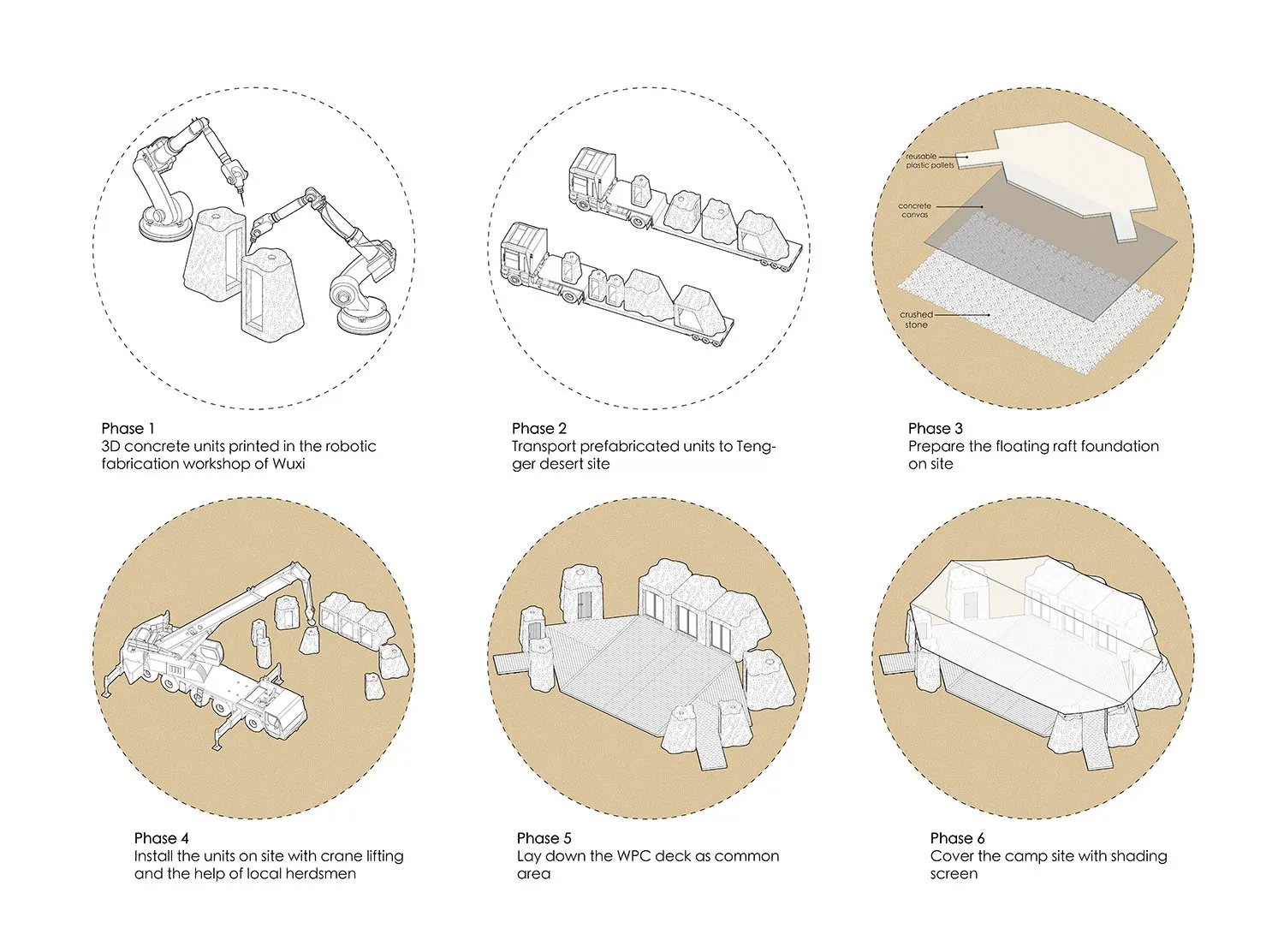
Modules are designed to sit directly on sand without deep foundations, reducing structural and environmental impact.
Durability, Maintenance, and Relocation Considerations
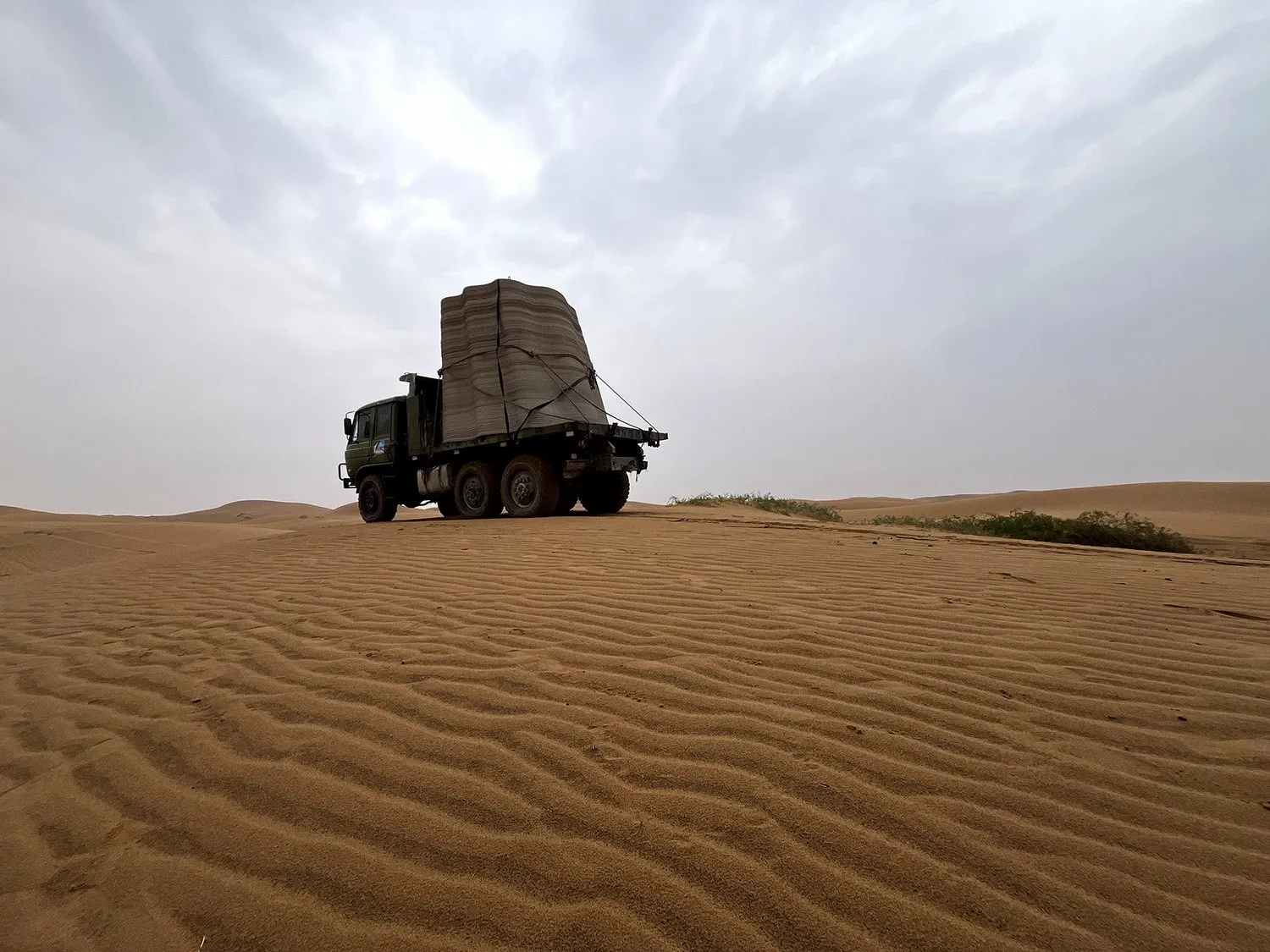
The design emphasizes reversible construction and minimal impact on the desert substrate. The temporary foundation system uses reusable cargo pallets, steel pipes, and crushed stone, meaning that the camp can be dismantled and relocated as the reforestation effort moves.
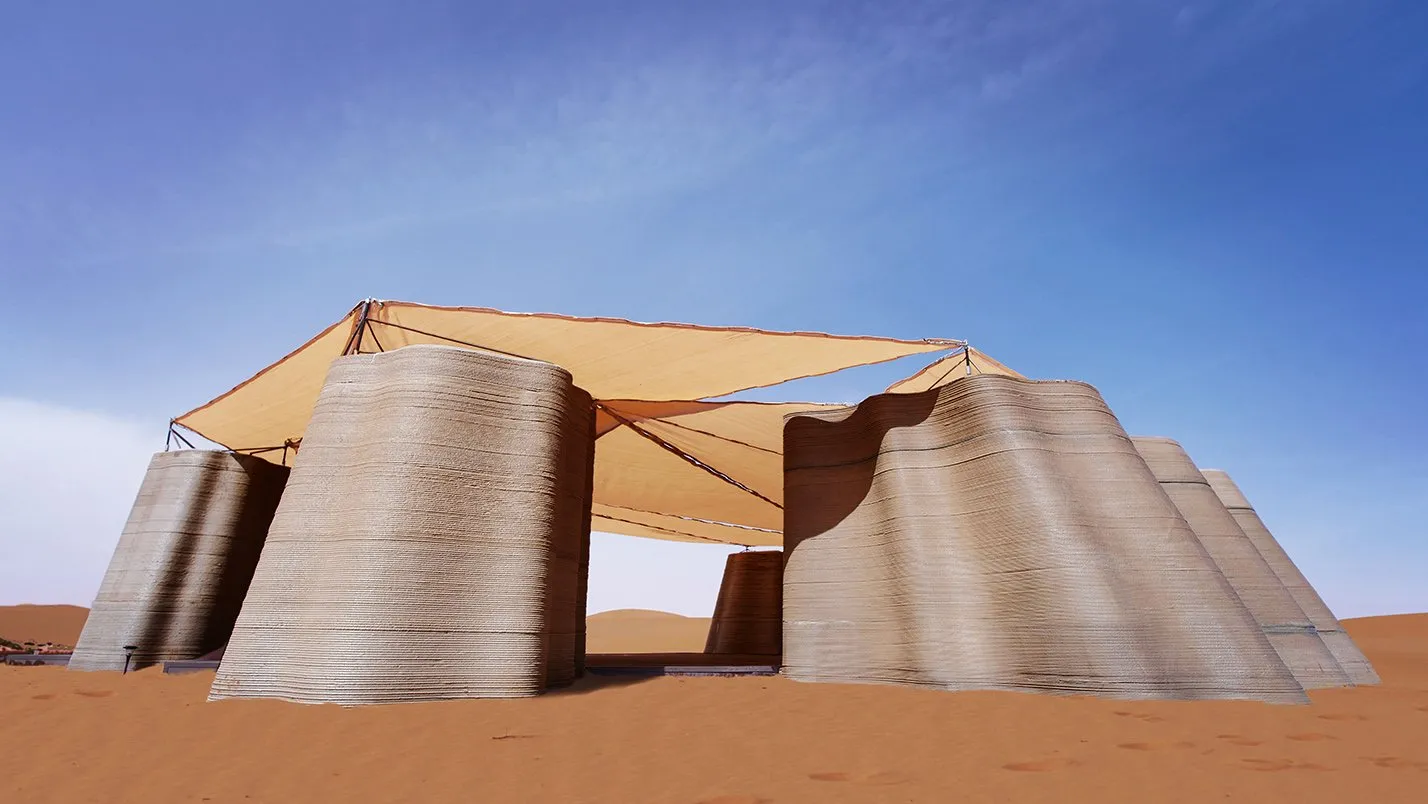
The use of printed concrete modules prefabricated in an off-site factory reduces labor demands on the remote site and mitigates risks of material waste or site delays. Additionally, because the modules are designed for transport and quick assembly, the maintenance and logistical burden for volunteers on the ground is minimized.
Design Innovation: The Broader Impact of Desert Ark’s 3D-Printed Architecture
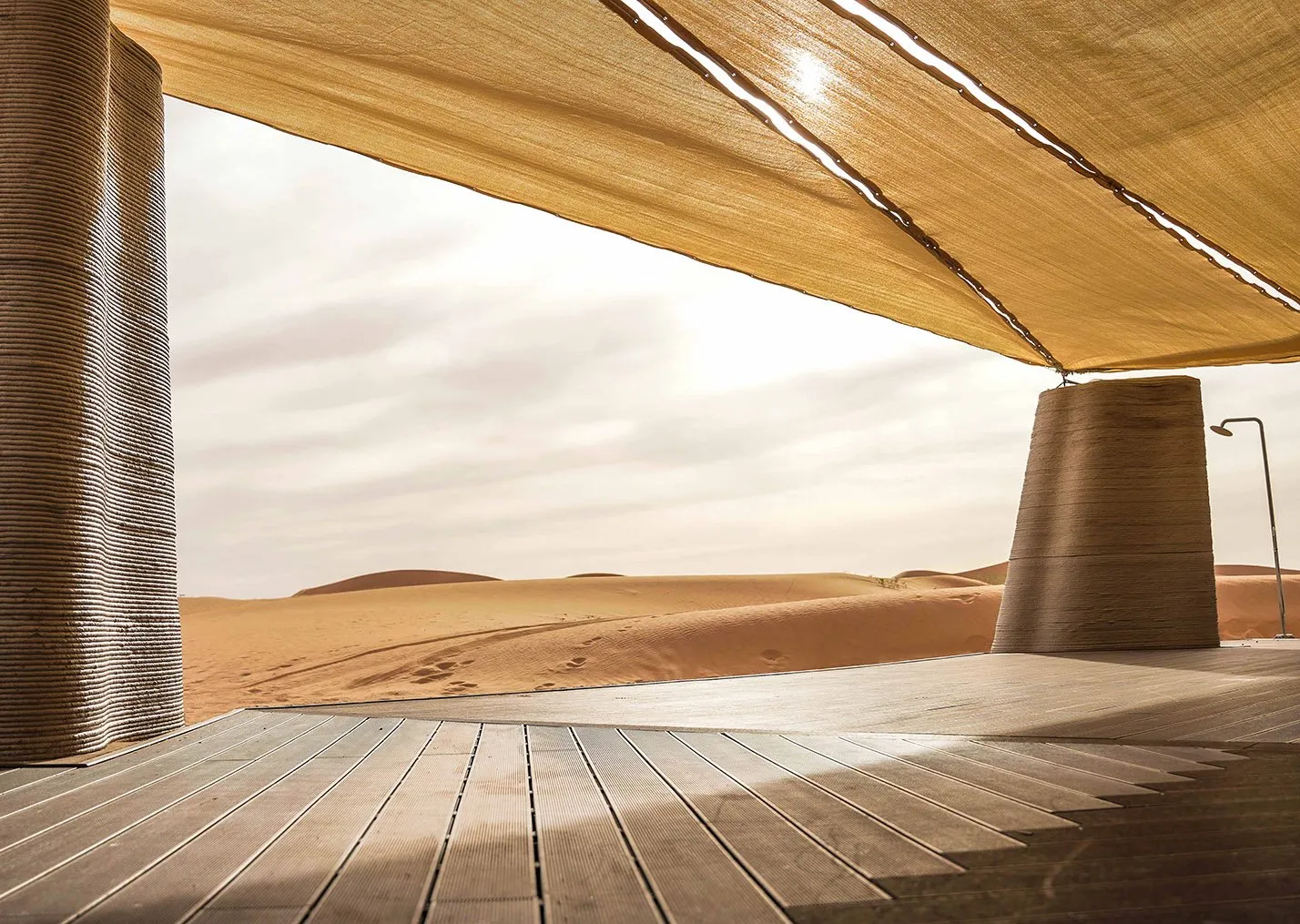
Desert Ark is described as “China’s first 3D concrete-printed structure in a desert environment.” Beyond its immediate role supporting reforestation volunteers, the project is framed as a prototype architecture for extreme environments, remote deserts, and potentially extraterrestrial habitats (Moon/Mars analogs). The project thus occupies an intersection between ecological restoration, advanced construction technology (3D printing), and off-grid modular building systems in harsh terrain.
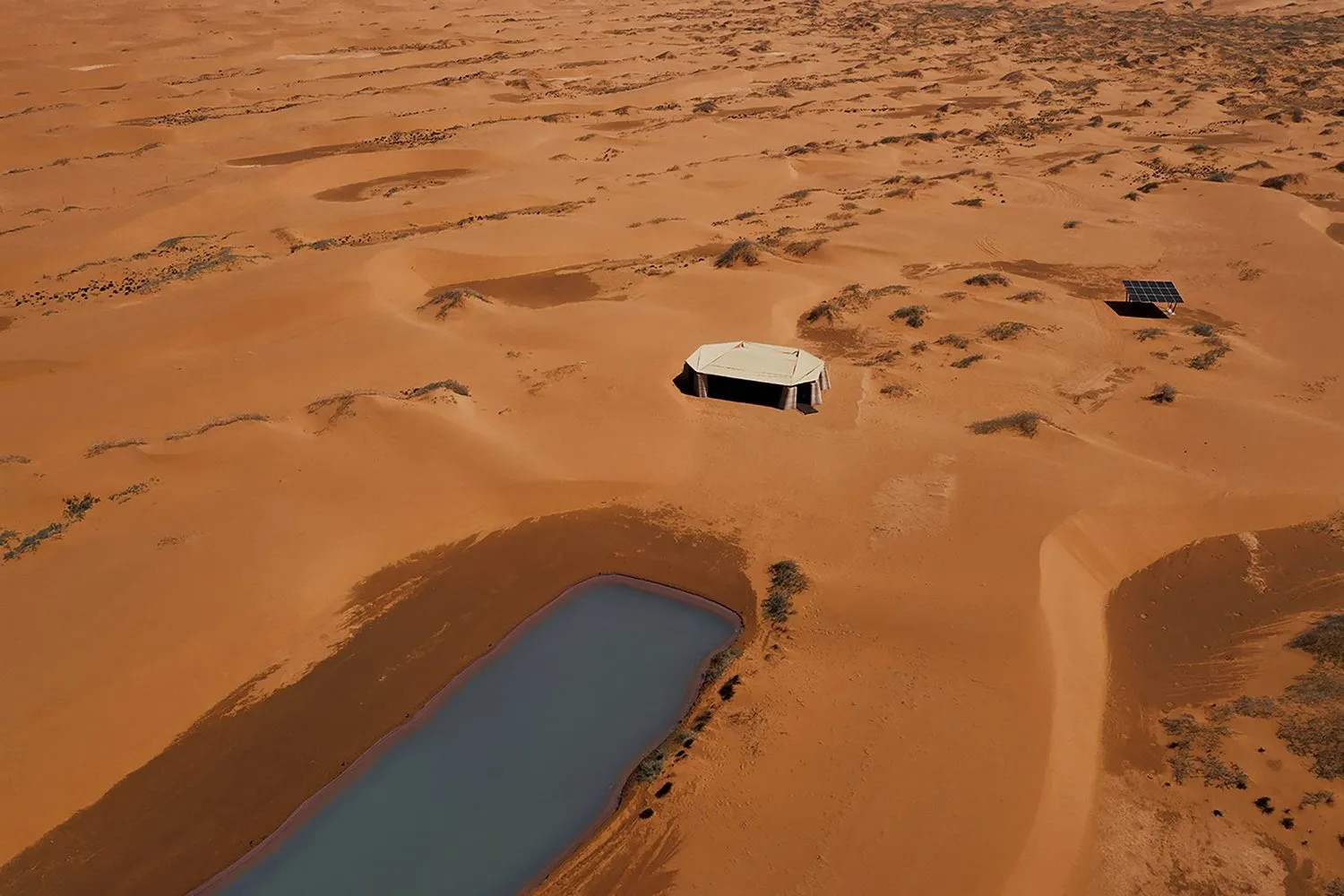
The Tengger Desert is the fourth largest desert in China, covering tens of thousands of square kilometers; it is known for its shifting dunes, lake basins, and plains, and presents a major challenge for sand control and ecological restoration. The site for Desert Ark lies at the desert’s fringe, where reforestation volunteers are working to arrest the eastward expansion of sand.
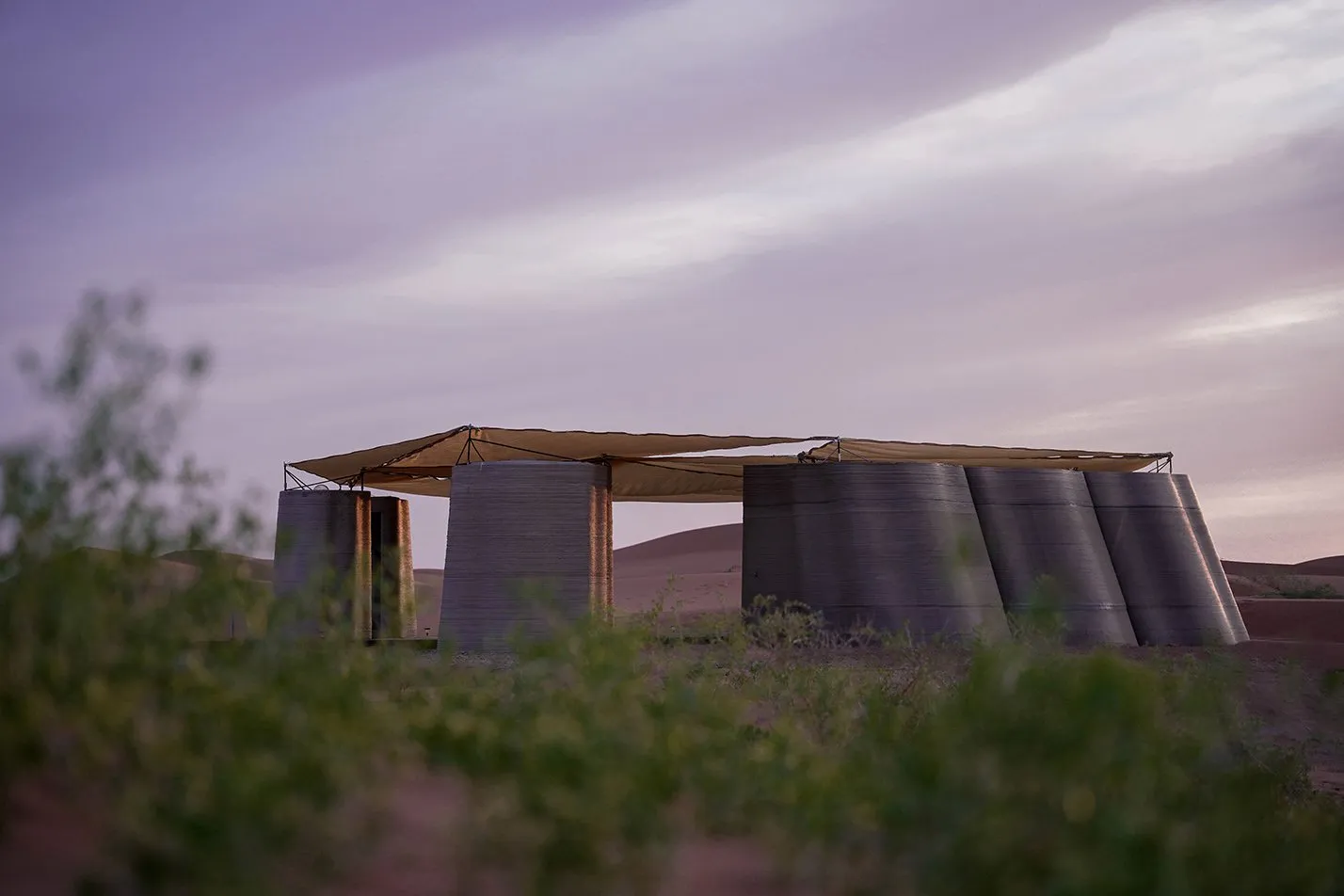
Desert Ark by designRESERVE is an architectural project that combines modular design, 3D-printed concrete fabrication, off-grid utilities, and environmental restoration programming into a single package.
Located at the fringe of the Tengger Desert in Inner Mongolia, it supports volunteers combating desertification with a functional camp that can be relocated, assembled quickly, and operated autonomously. It also serves as a proof-of-concept for building in extreme conditions using additive construction, hinting at future possibilities beyond Earth.
Image credit: QI Wu, Zhipeng Lin
Explore Courses
.jpg "Ondrej Chybik - Rethinking Architecture")