


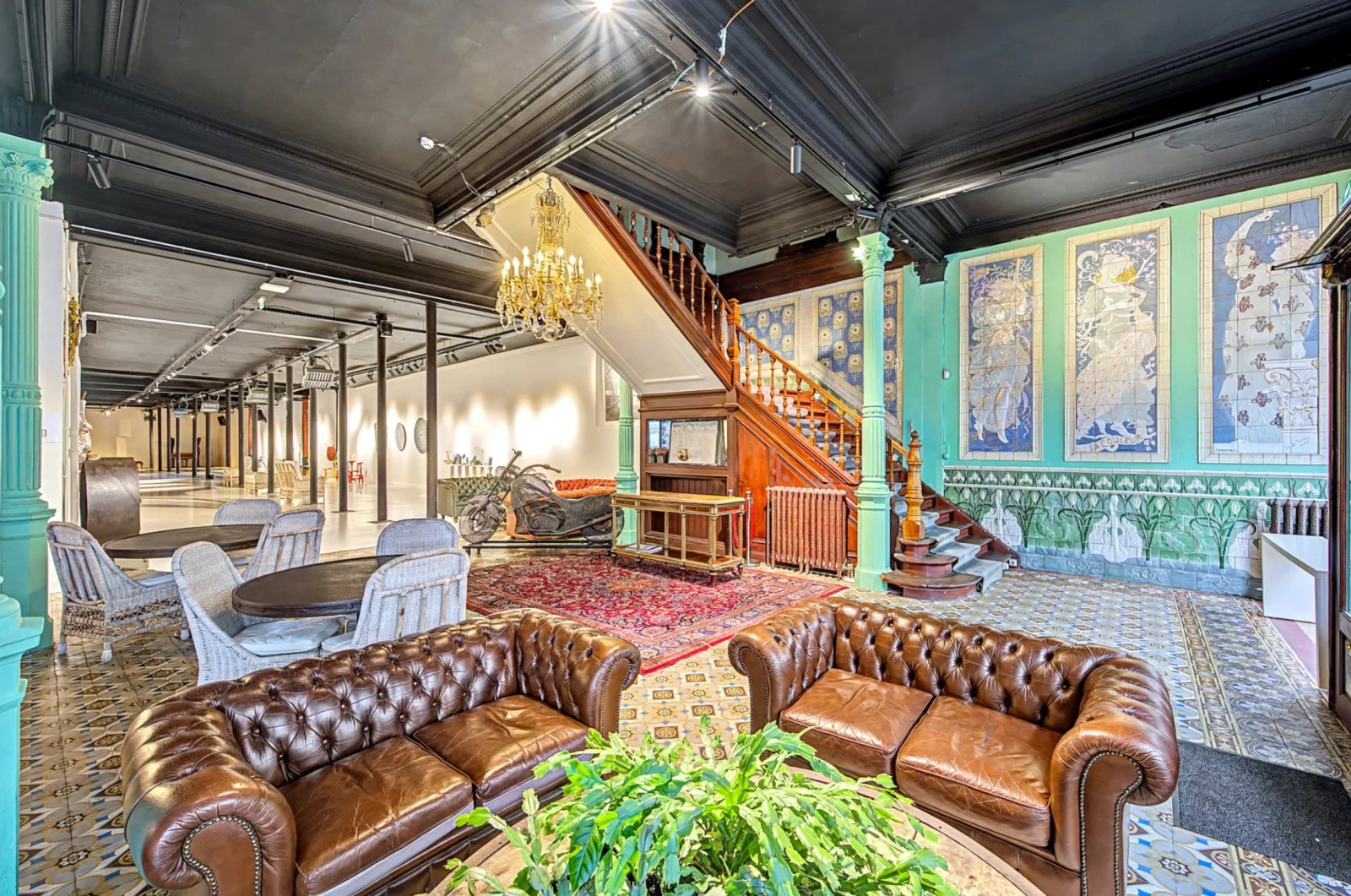
The Demeuldre-Coché porcelain factory showcases the industrial, artistic, and social evolution of Belgium from its independence in 1830 to the present day. Listing the property at an asking price of €3.5 million also allows a deeper examination of how industrial heritage can be repurposed for contemporary luxury standards. It demonstrates how adaptive reuse can be achieved without sacrificing architectural integrity.
Luxury Real Estate in Ixelles
Located at Chaussée de Wavre 141–143, the Demeuldre-Coché porcelain factory comprises approximately 3,000 square meters of habitable space on a 1,000-square-meter plot. Managed by Brigitte Salama Immobilière, the history of the Demeuldre-Coché site is inextricably linked to the birth of the Belgian state.
Founded in 1830, around the time of the Belgian Revolution, the factory was established by French porcelain maker Charles-Christophe Windisch. Coché-Mommens, editor of Le Courrier des Pays-Bas. This suggests the production of fine porcelain was seen not just as a business, but also as a symbol of national pride, economic independence, and cultural prestige.
The 1905 Bisschops Facade: Architecture as Advertisement
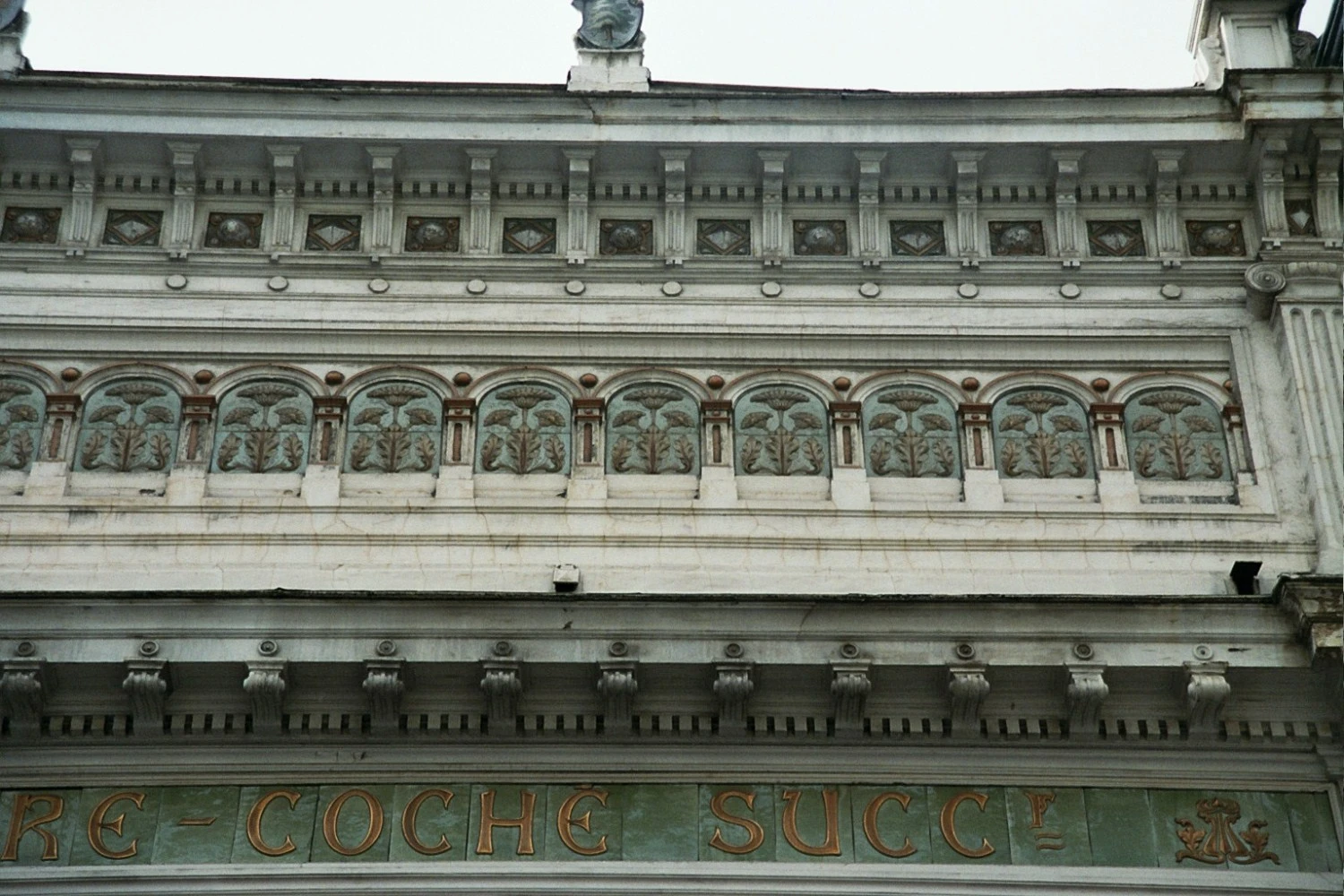
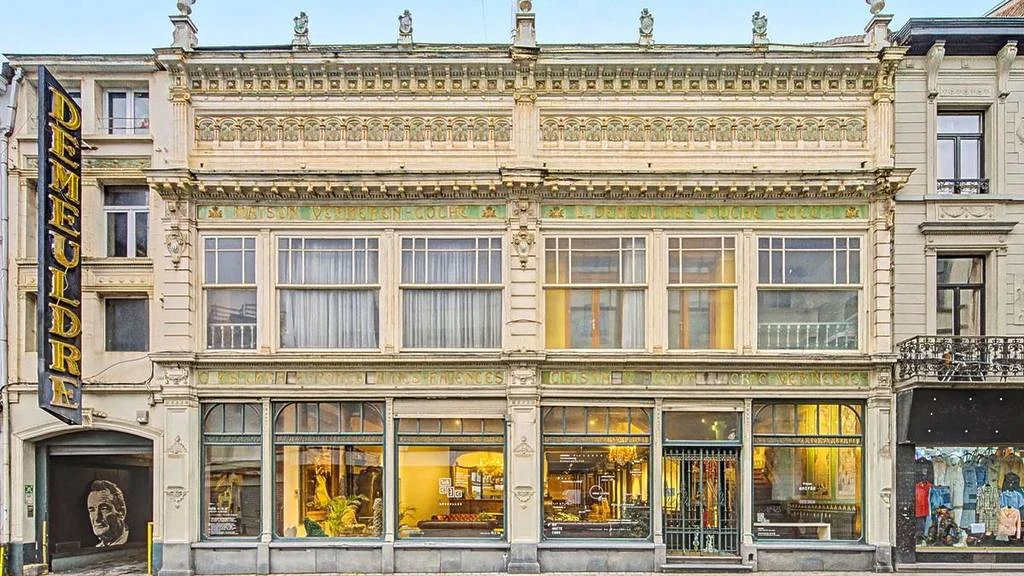
The factory entered a golden age in the late 19th and early 20th centuries, becoming a prominent producer of porcelain, crystal, and decorative ceramics. The architectural significance of the Chaussée de Wavre complex lies in its hybrid nature, blending the functional requirements of a 19th-century industrial site with the decorative exuberance of early 20th-century retail design.
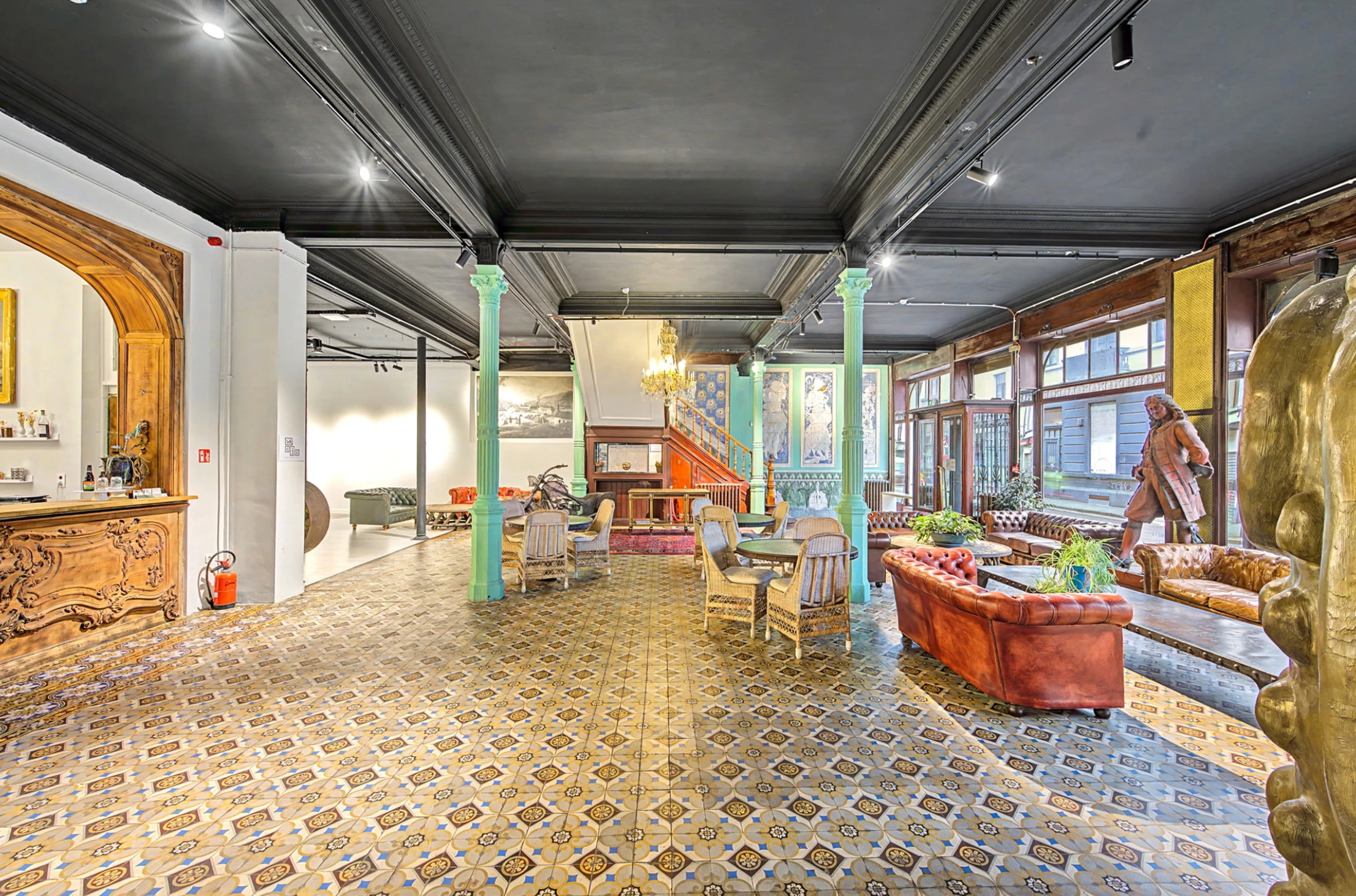
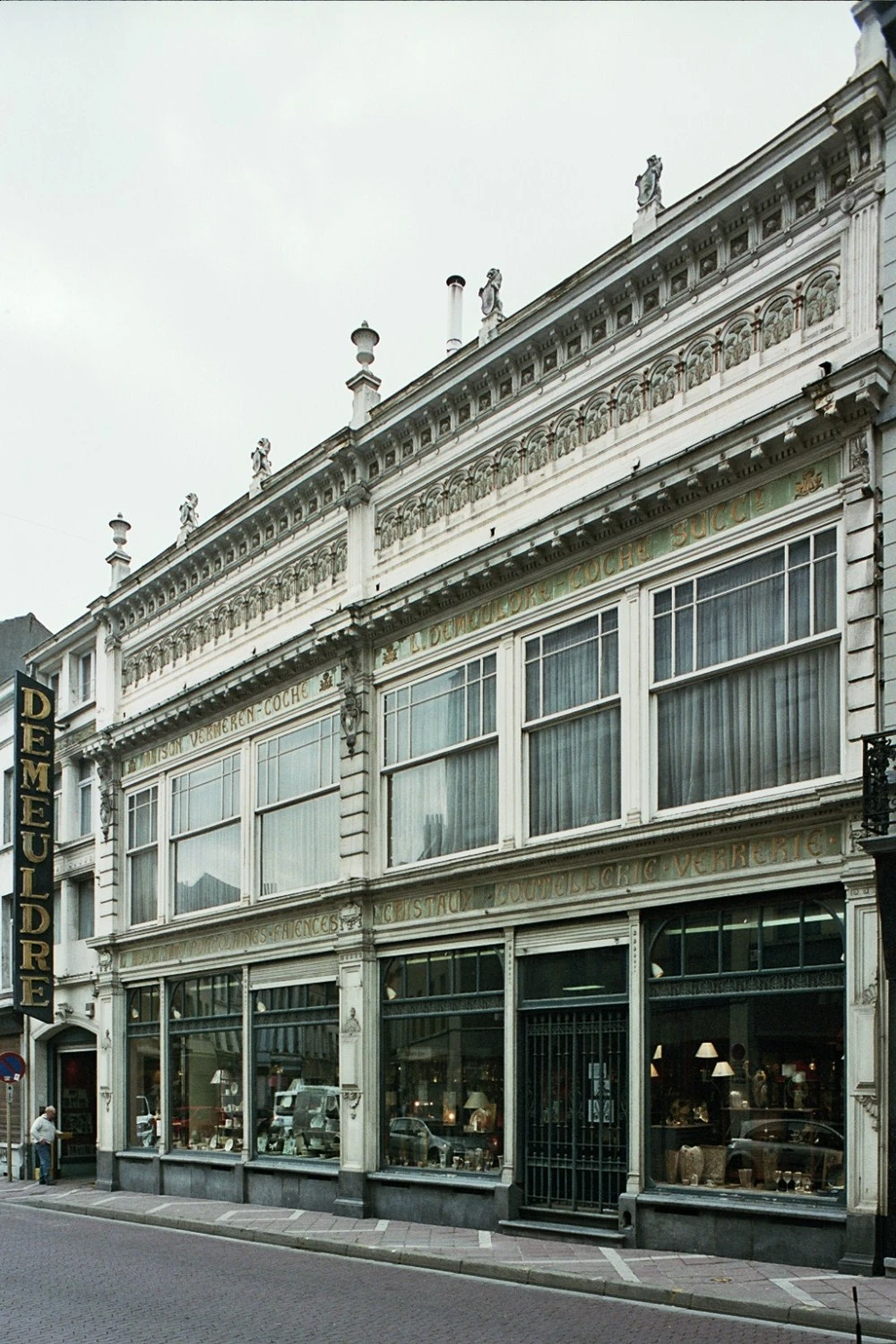
The property is essentially divided into two primary structural components, which are the 1905 retail facade designed by Maurice Bisschops and the 1874 exhibition hall. Drawing inspiration from Italian Neo-Renaissance, the street-facing element captures the attention of passersby, functioning as a facade-affiche.
The 1874 Exhibition Hall
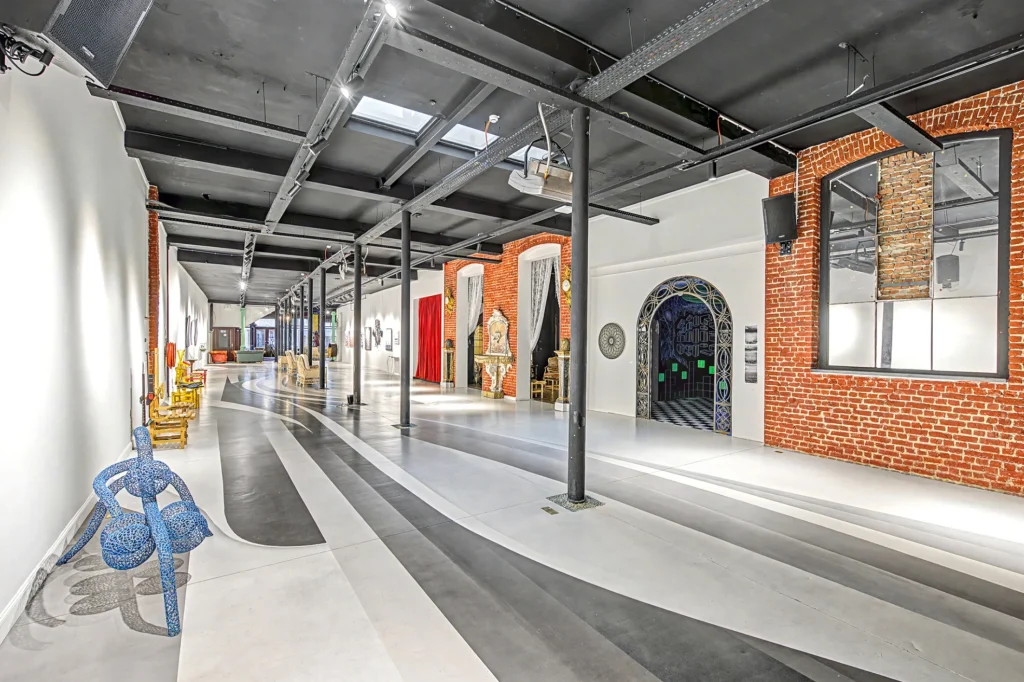
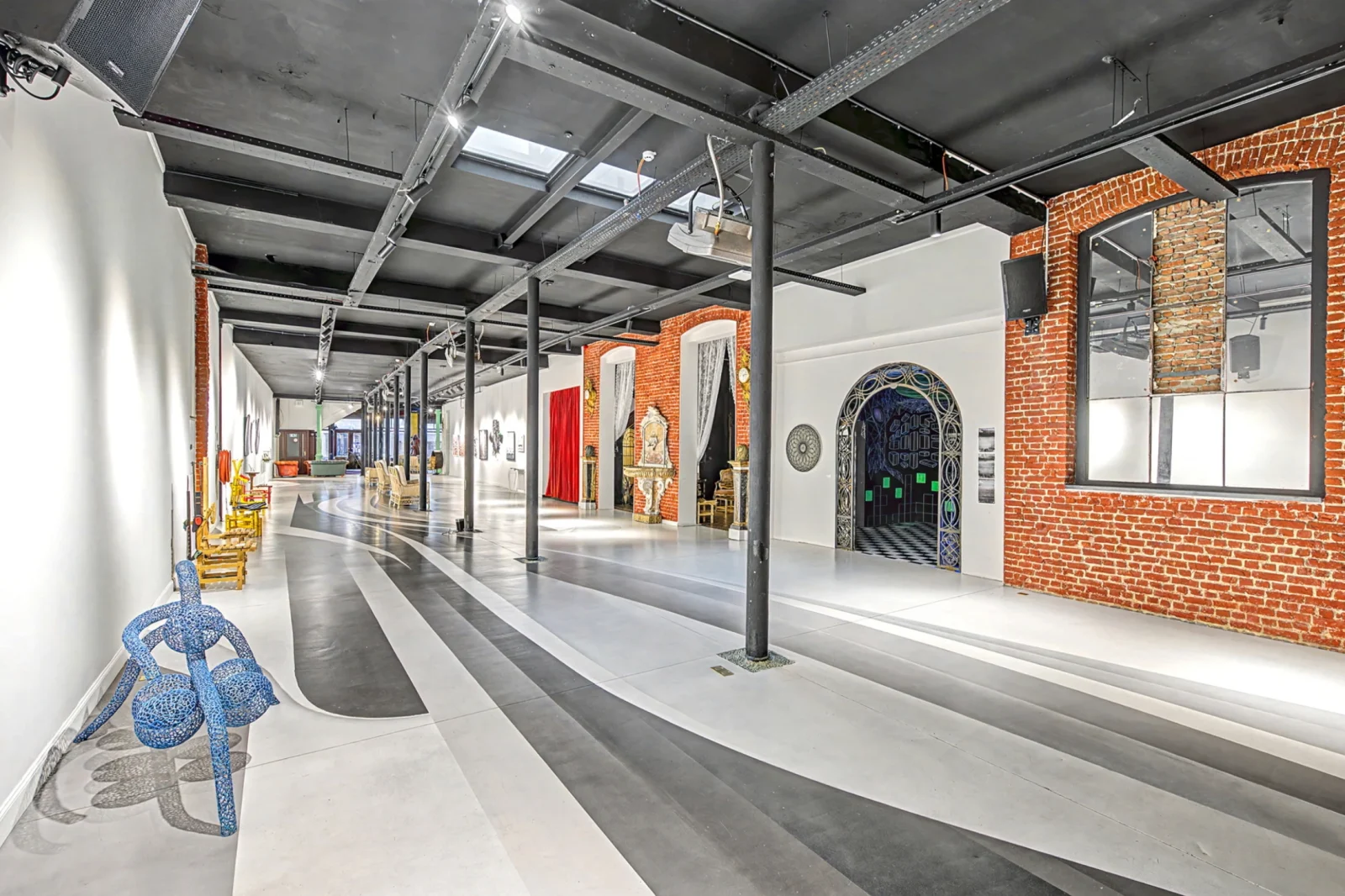
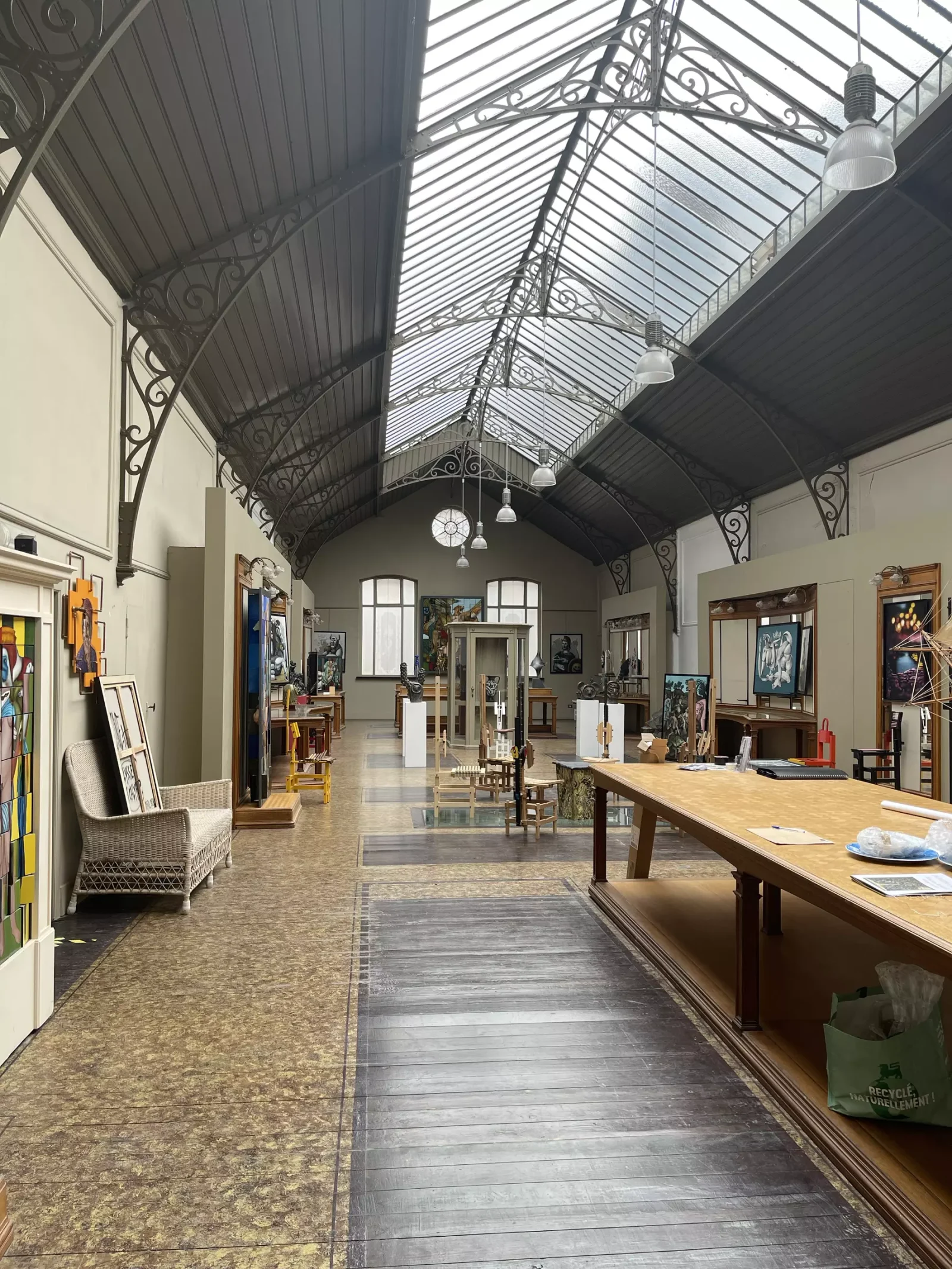
Tucked behind the retail frontage lies the exhibition hall, constructed in 1874. The hall is defined by its metal framework, adorned with delicate floral ironwork, highlighting the aesthetic possibilities of industrial materials. Its vast skylight roof floods the exhibition space with natural light, highlighting the architectural and artistic details within.
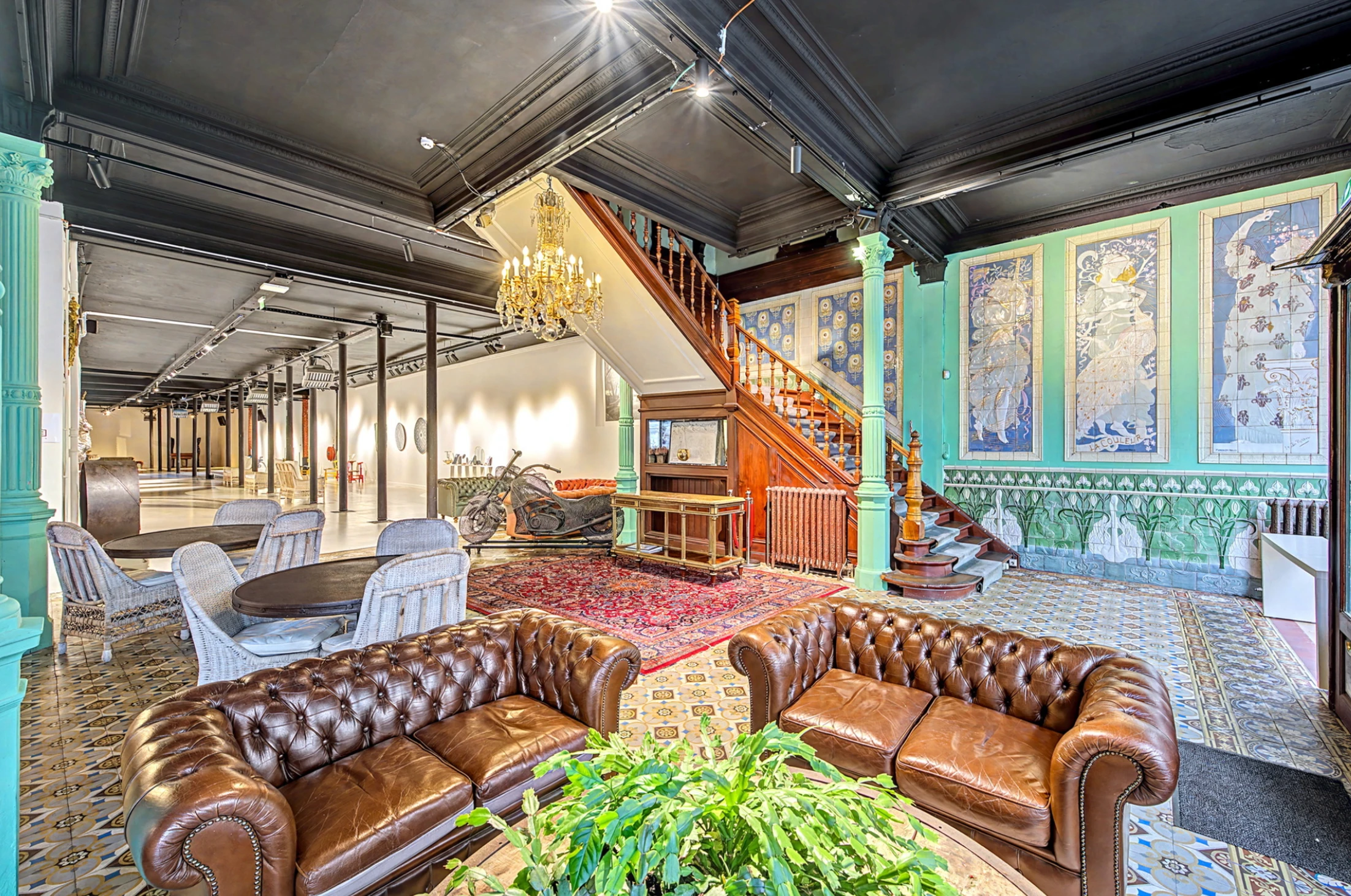
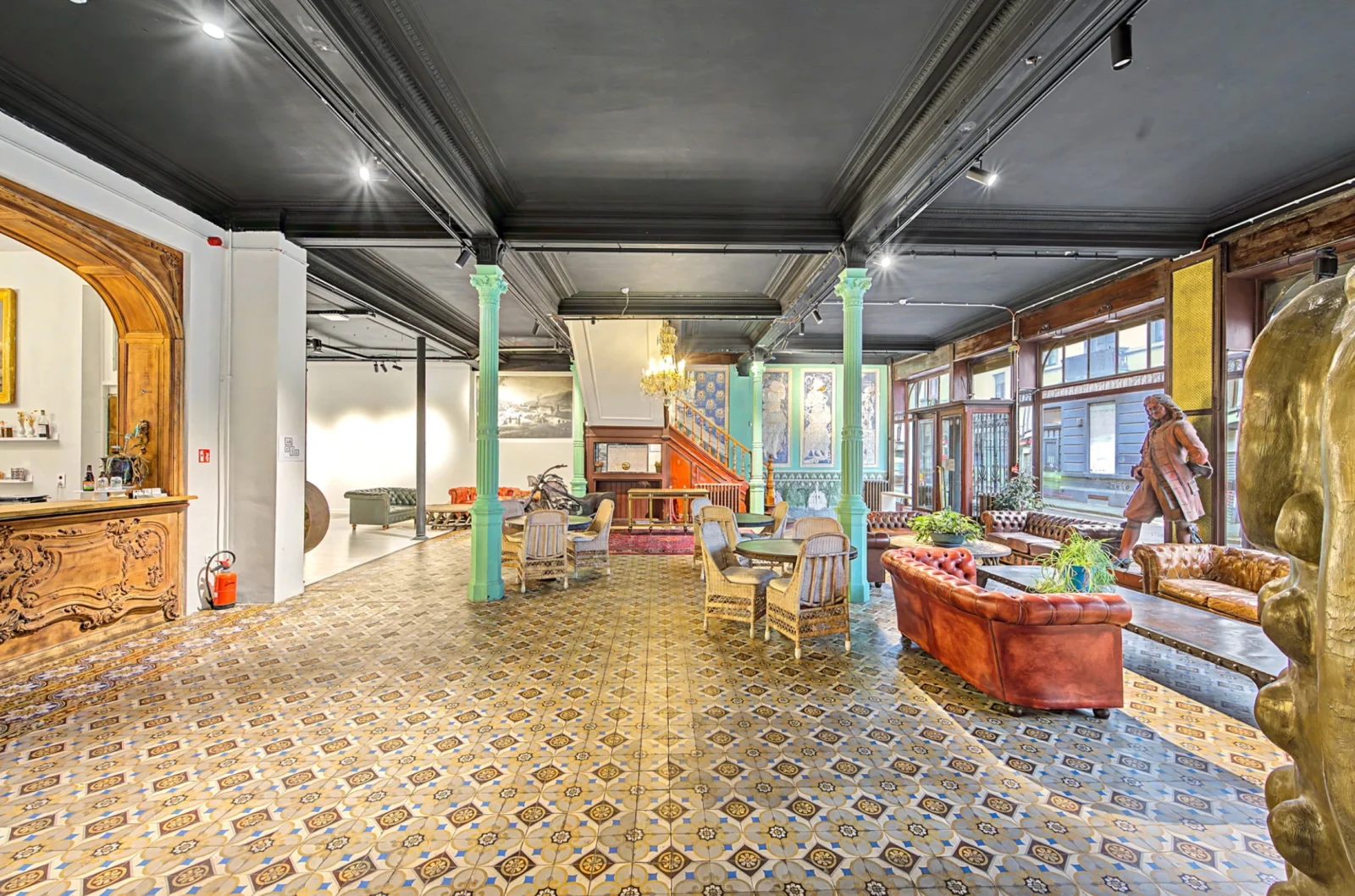
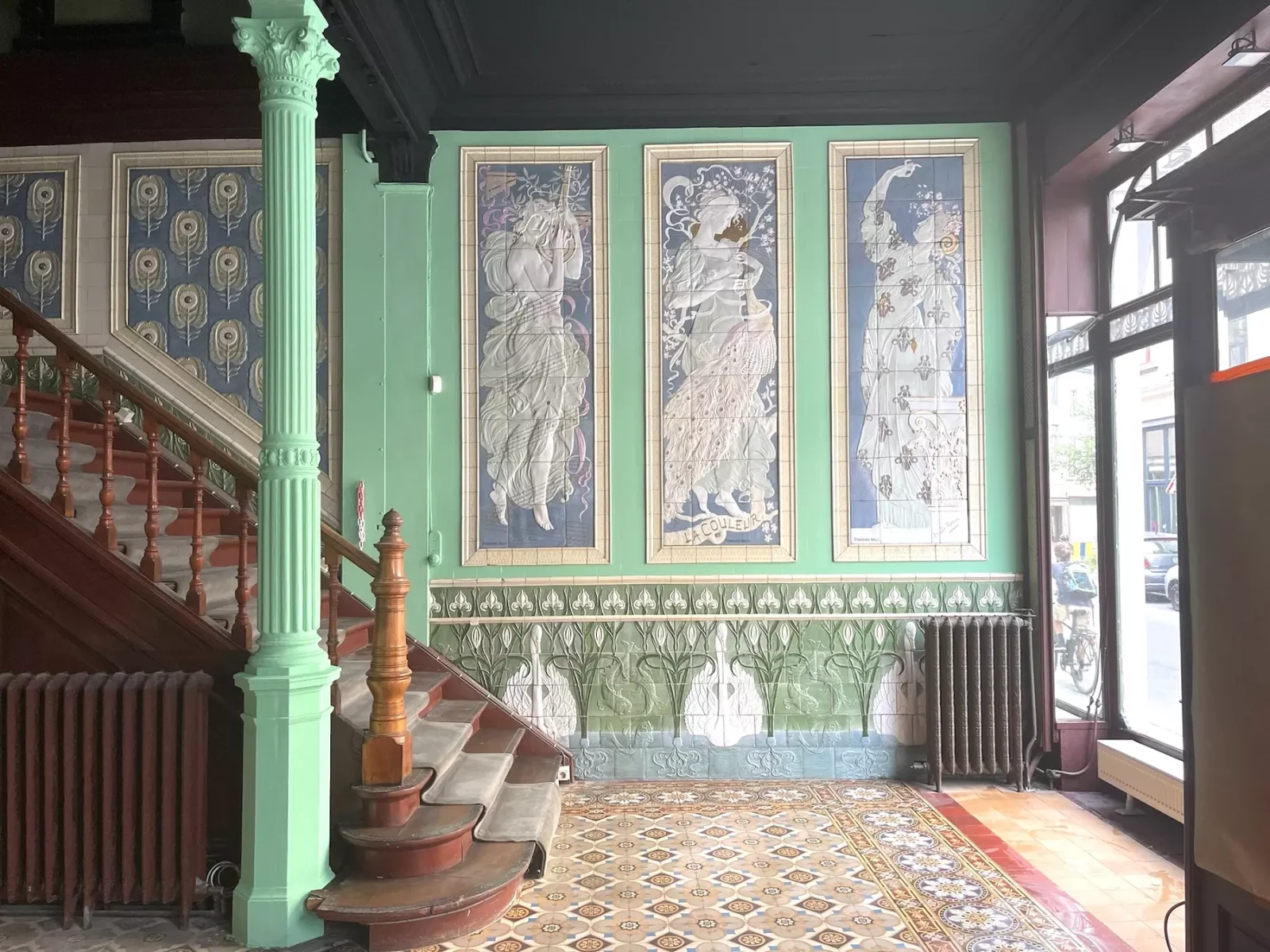
The ground floor is characterized by expansive bay windows that reveal a lavish interior decorated with original wood paneling, a design choice that blurred the boundaries between the public street and the private, high-end retail environment. Above the ground floor, the facade features polychromatic ceramic friezes that directly advertise the factory’s products. The use of black marble for the base further elevates the overall value of the building.
Artistic Collaborations
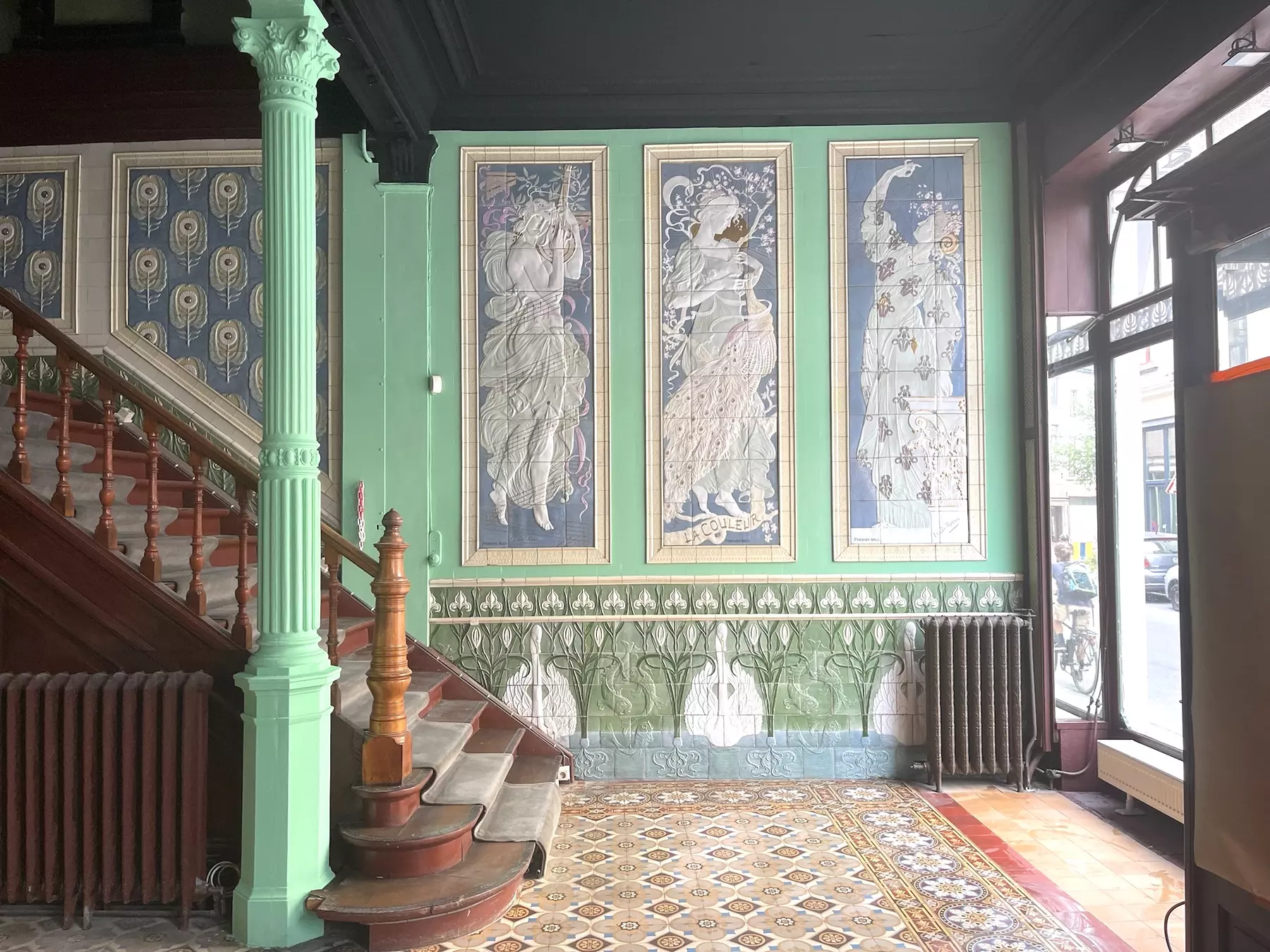
A defining feature is the integration of significant artworks into the architectural fabric. The factory’s golden age included collaborations with renowned artists, most notably sculptor Isidore De Rudder. In recent years, the Demeuldre-Coché building has undergone a second life as a cultural hub, managed by the Parisian organization TALK C.E.C. (Cultural Experiences Creators).
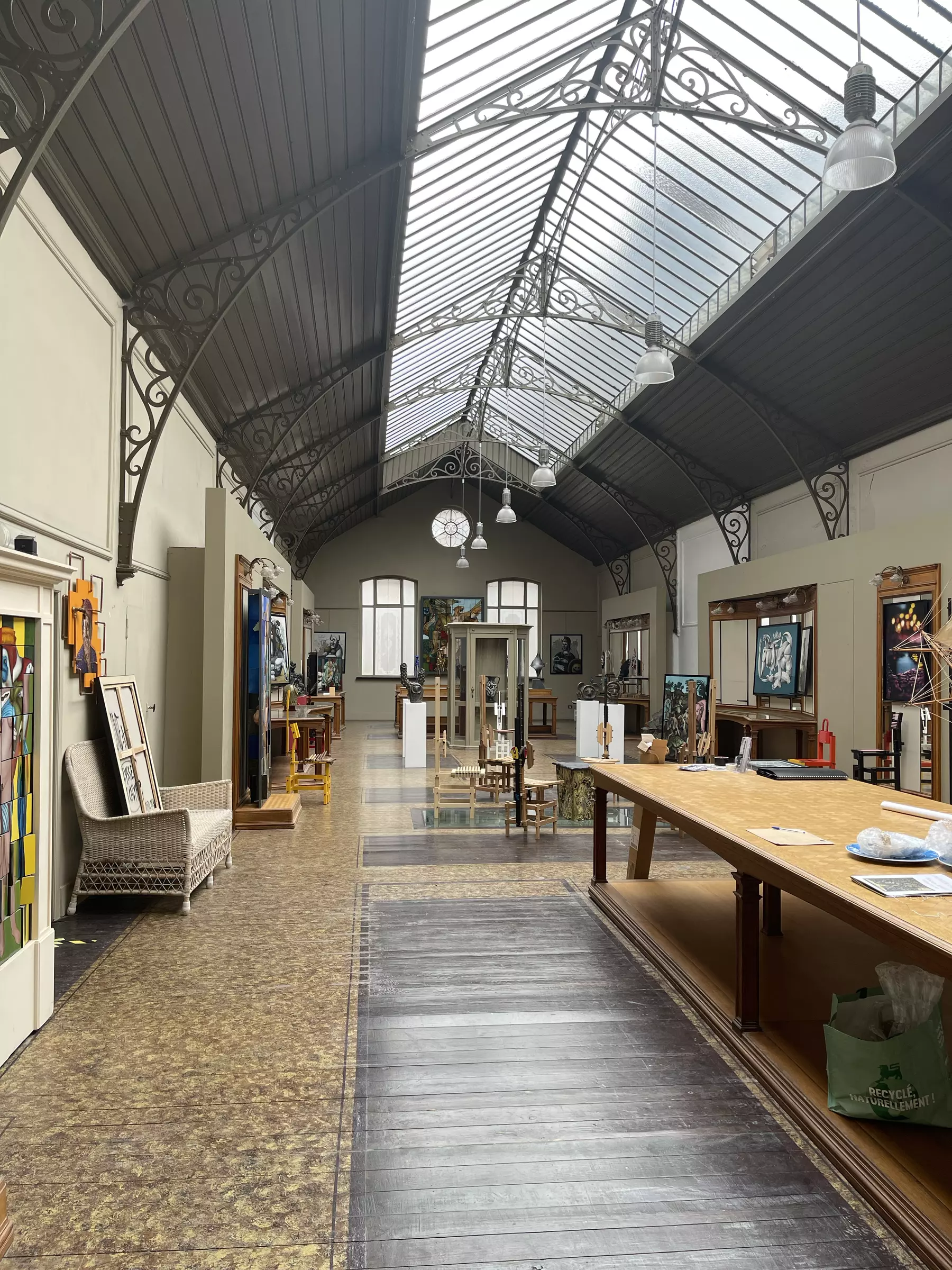
In September 2021, the site hosted an ambitious project in which 40 international artists transformed various sections of the factory into immersive artworks centered on Culture, Humanism, and the Environment. Its sale for €3.5 million represents a critical moment in the ongoing narrative of Brussels as a city that celebrates its industrial past while actively reinventing it for the future.
Explore Courses
.jpg "Ondrej Chybik - Rethinking Architecture")