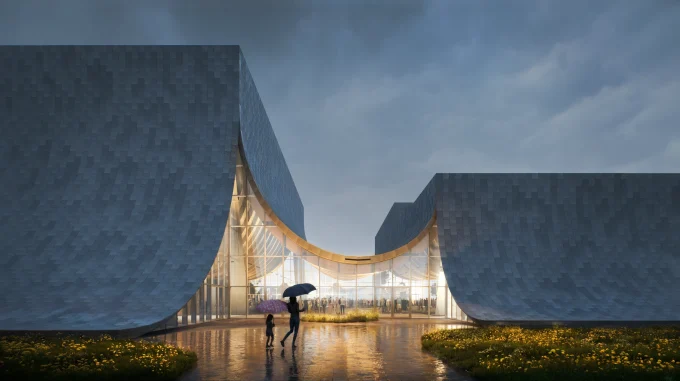


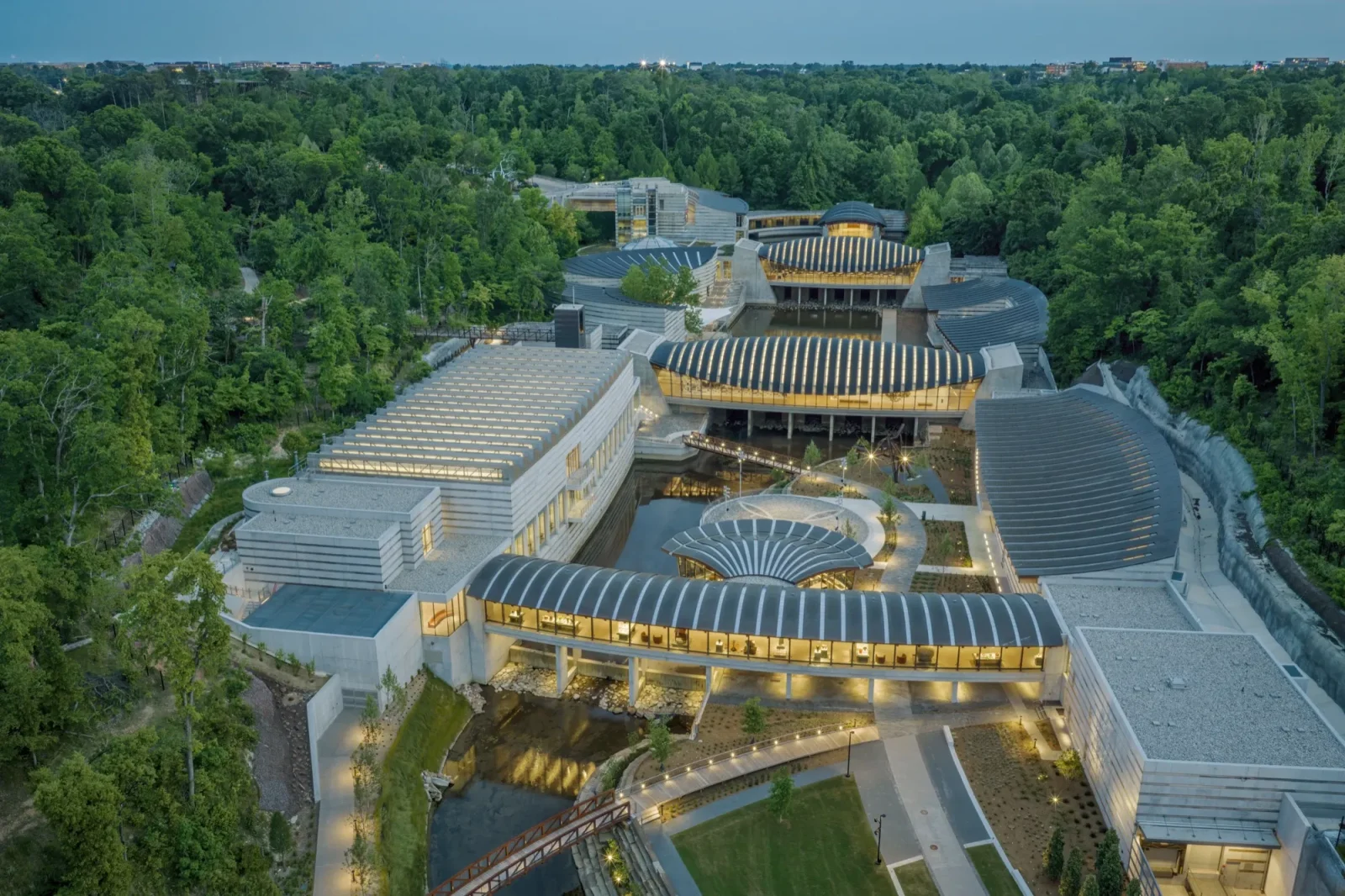
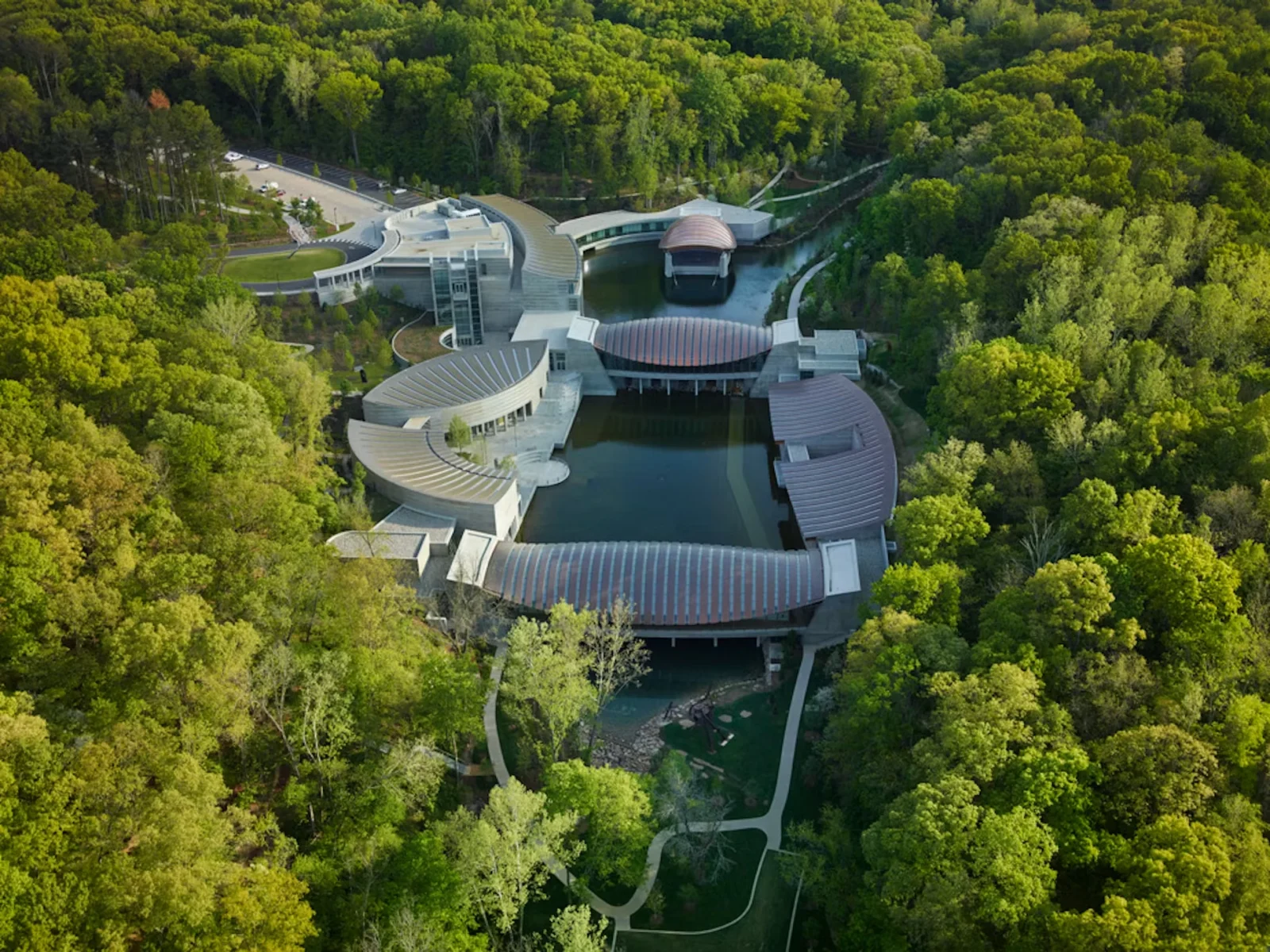
Fifteen years after opening the original museum, Safdie Architects has completed a major expansion of the Crystal Bridges Museum of American Art in Bentonville, Arkansas. Adding 114,000 square feet to the institution, the project strengthens the museum’s role as a cultural and educational destination while deepening its connection to the wooded Ozark setting that shaped the original design. The expansion opens to the public in June 2026 and forms part of a long-term vision to increase gallery space, learning facilities, and community-focused programming across the museum’s 134-acre campus.
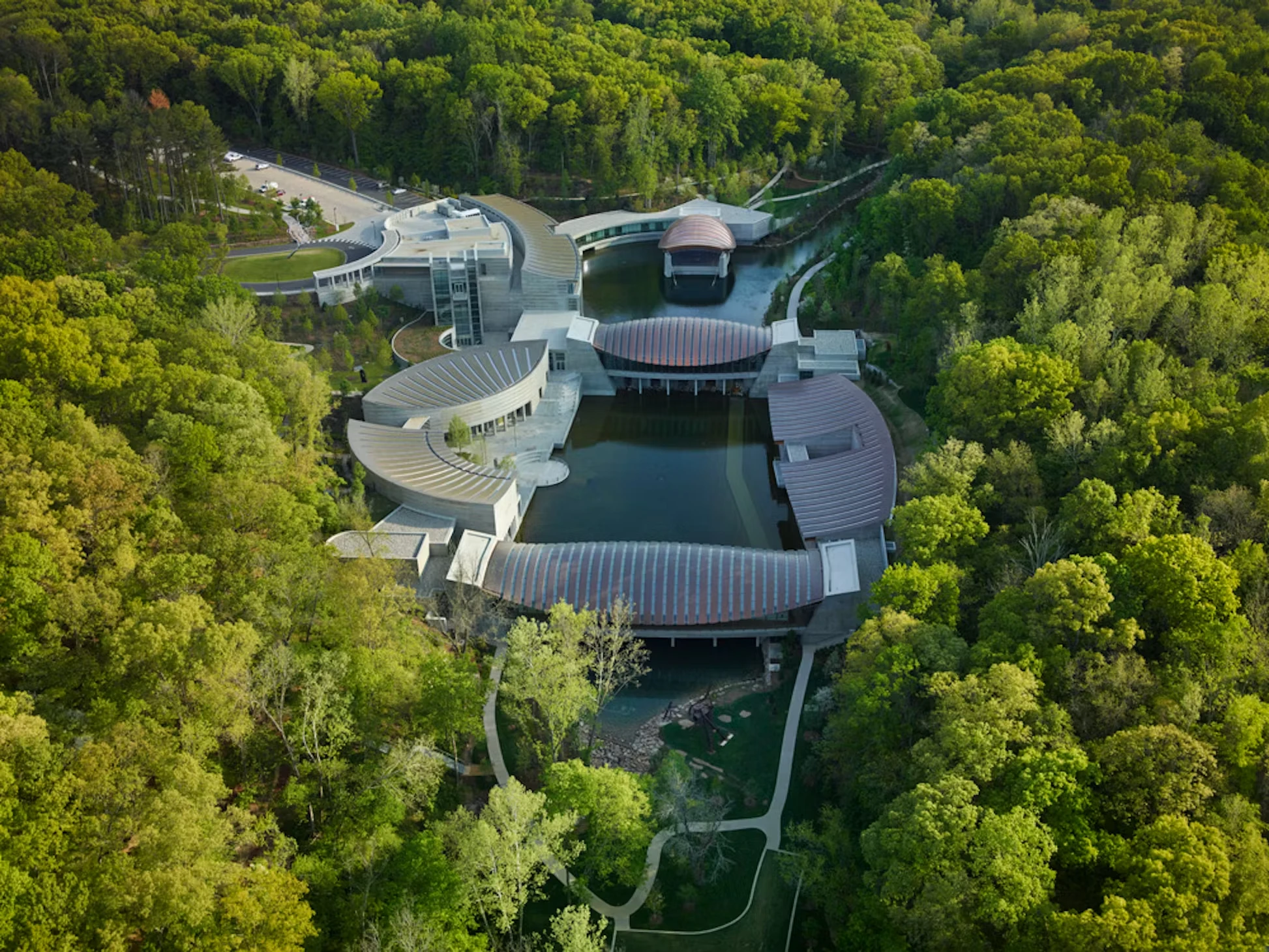
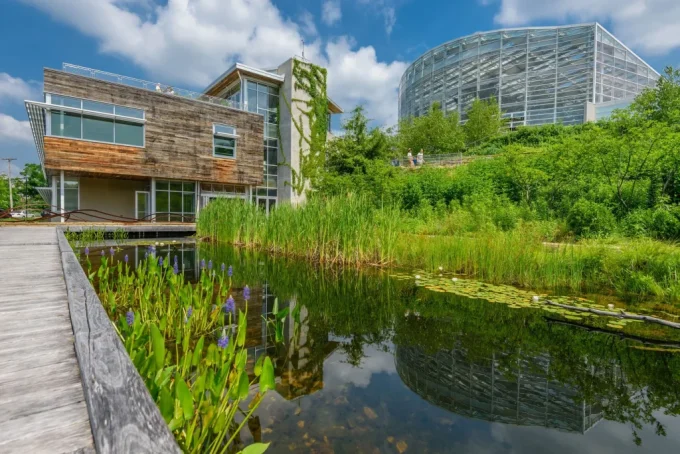
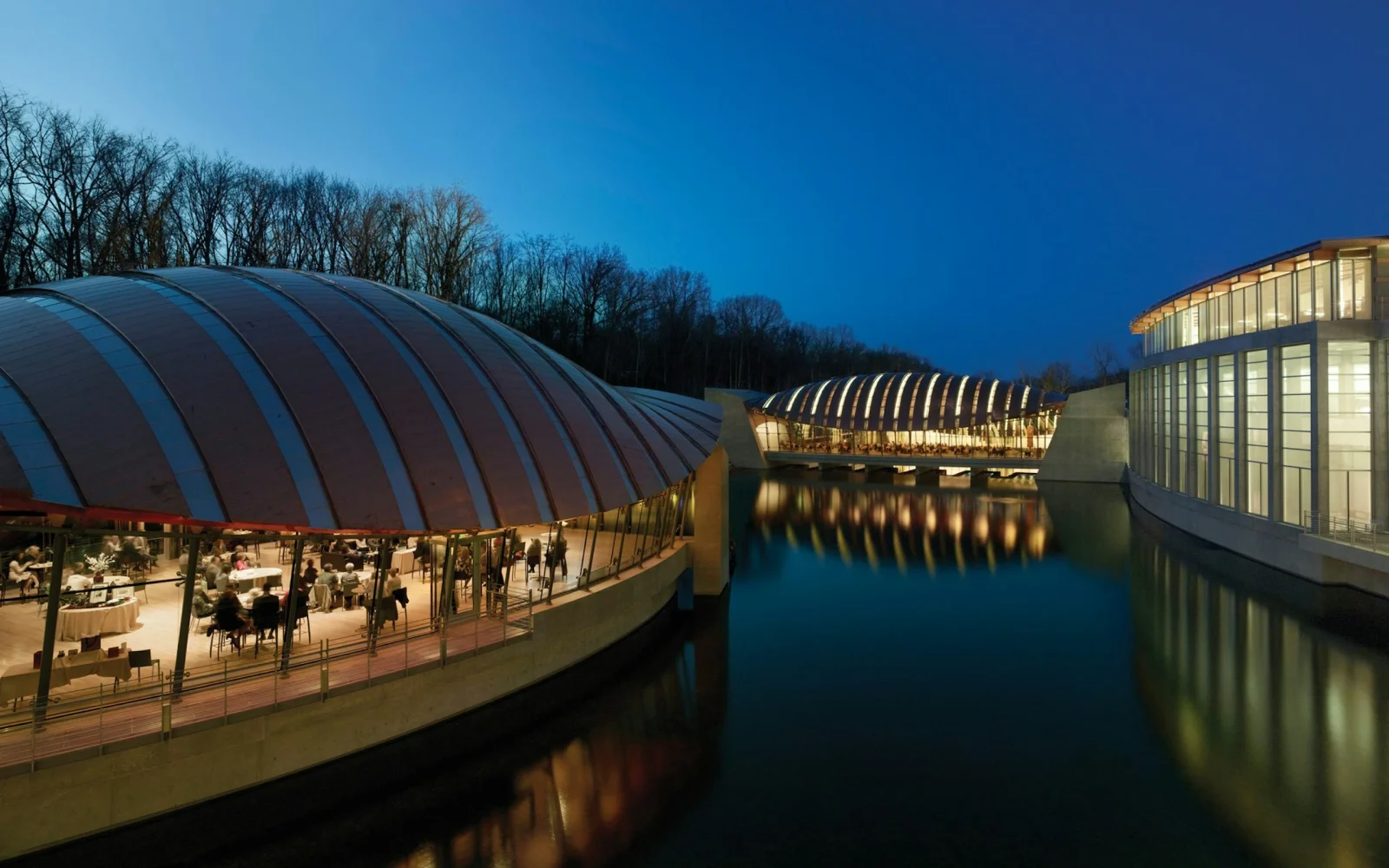
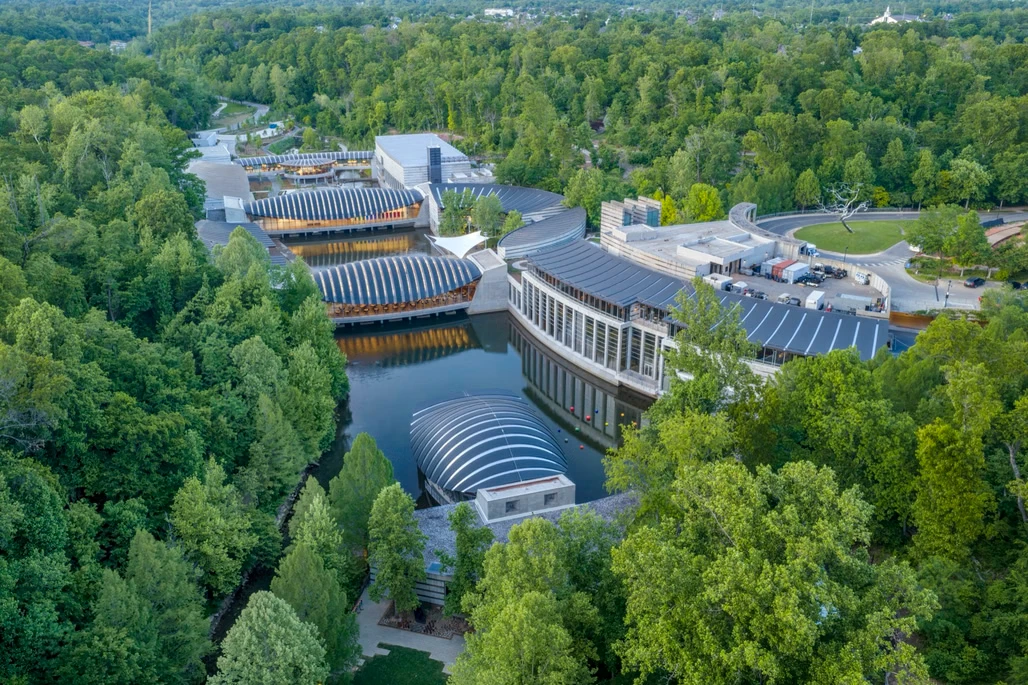
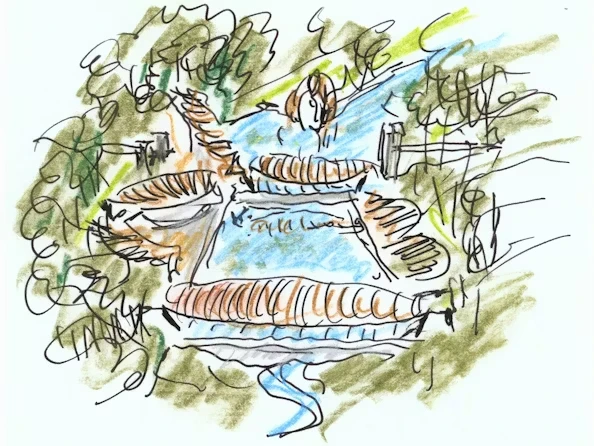
Founded by philanthropist Alice Walton and originally designed by Moshe Safdie in 2011, the Crystal Bridges Museum has become known for integrating architecture, art, and nature. The new intervention continues the design principles of the original museum. The addition completes the campus’s circulation system as a figure-eight configuration spanning two stream-fed ponds, extending visitors’ movement through a sequence of pavilions, bridges, galleries, and landscape connections. A new north entrance further improves access to the museum grounds and the surrounding trail network.
Crystal Bridges Museum Expansion Adds New Galleries and Public Spaces
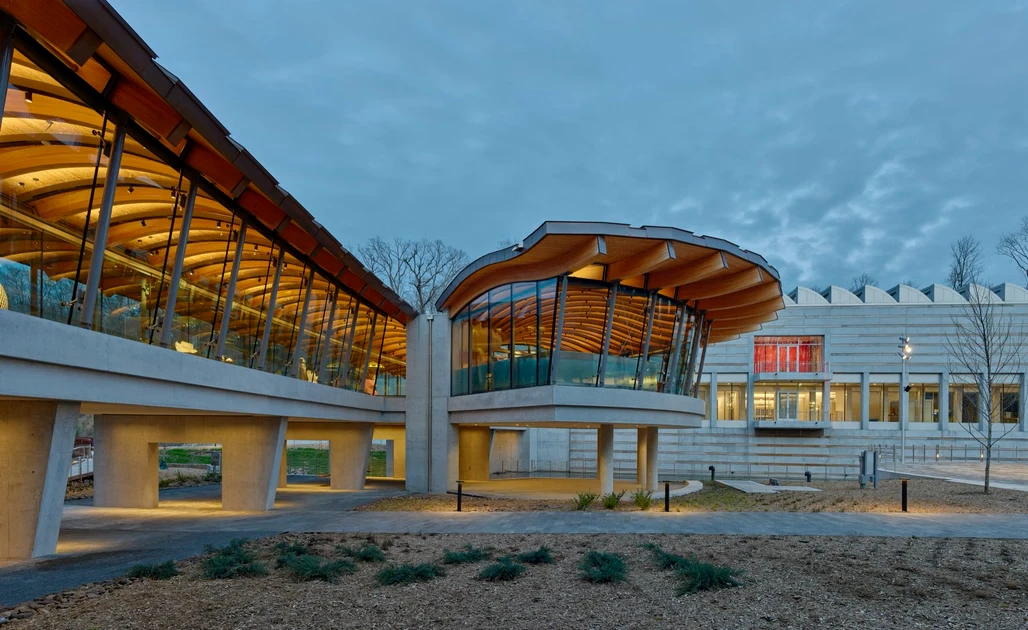
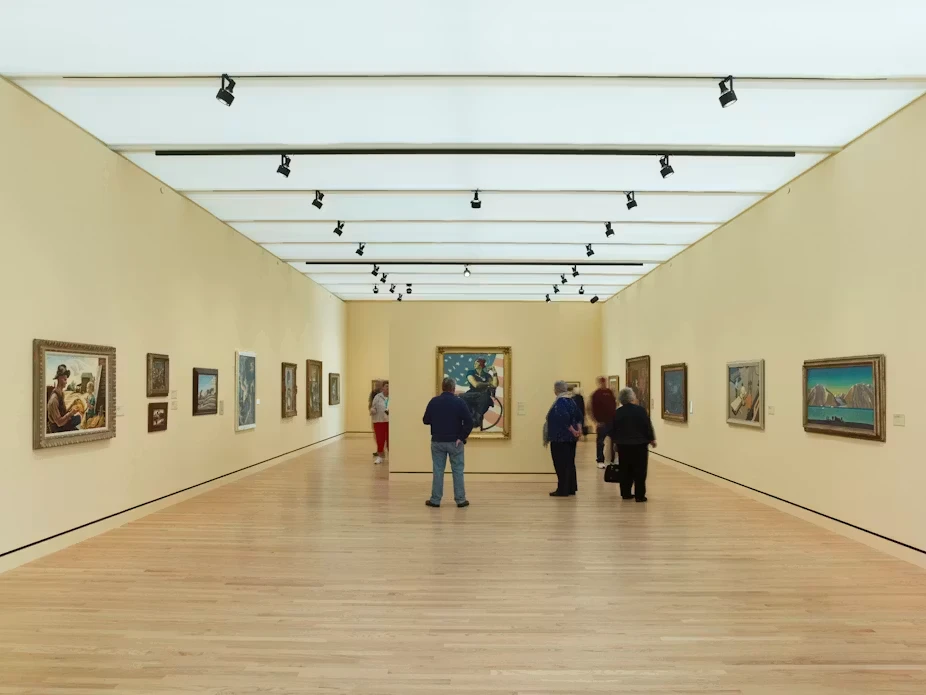
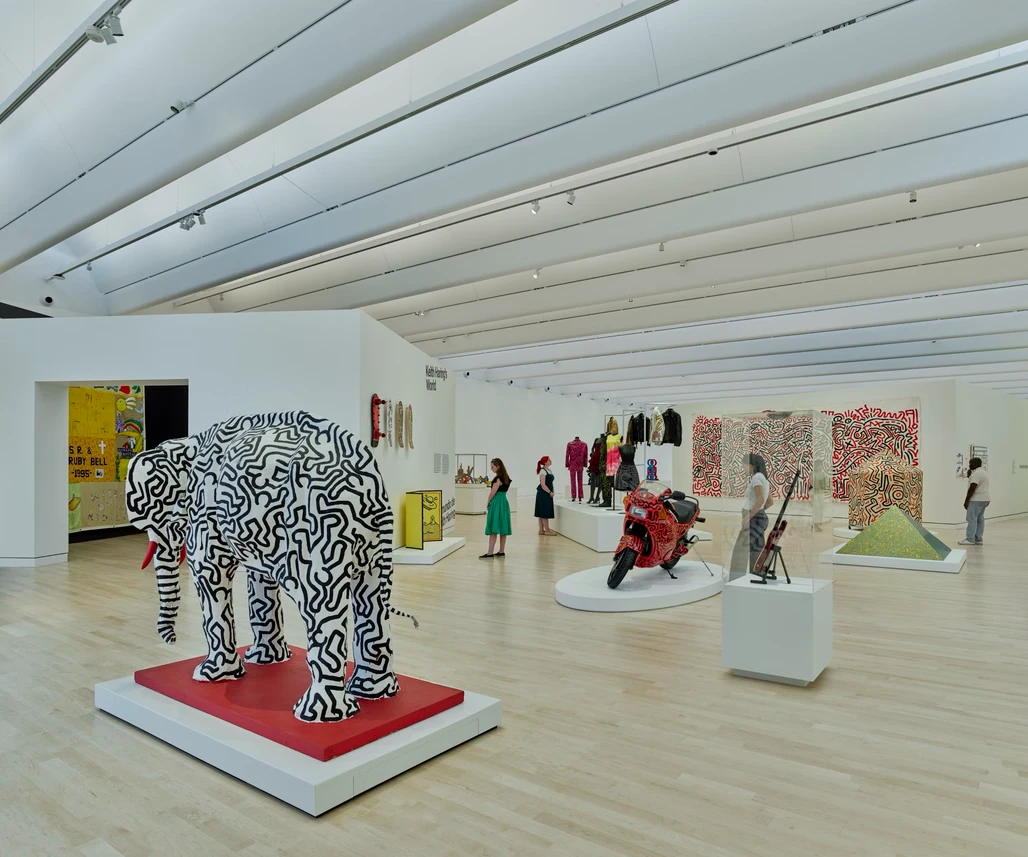
In the project, two new gallery buildings will significantly increase exhibition capacity. Together they provide approximately 29,000 square feet of dedicated gallery space, including a 14,000-square-foot temporary exhibition hall equipped with a custom skylight system that introduces controlled natural daylight while meeting conservation requirements. This flexibility allows the museum to host multiple temporary exhibitions simultaneously and accommodate larger-scale installations.
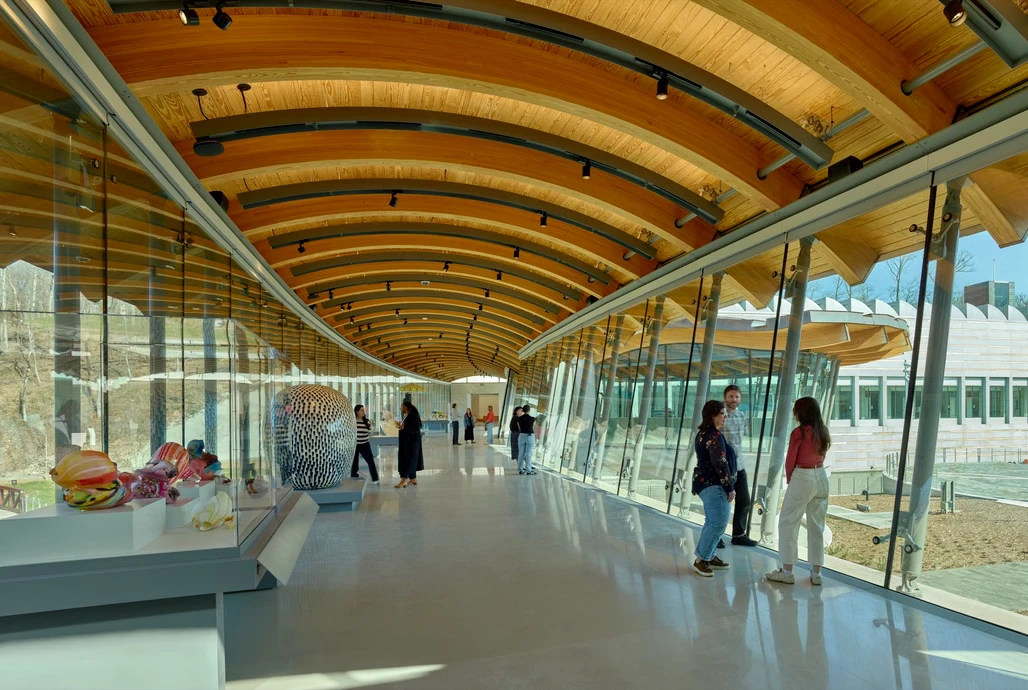
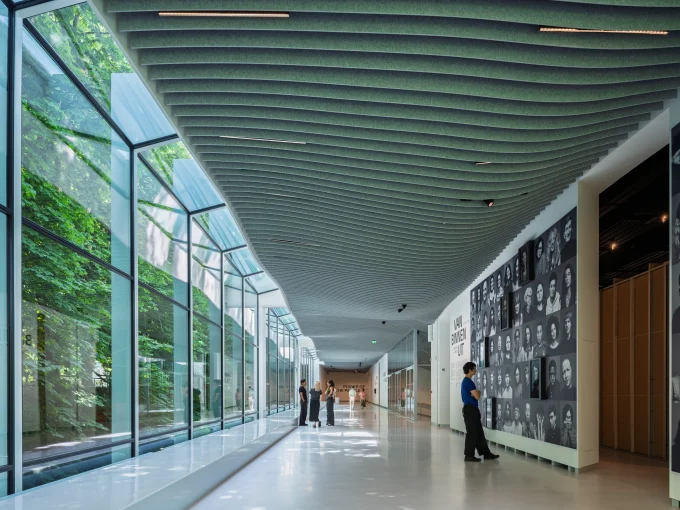
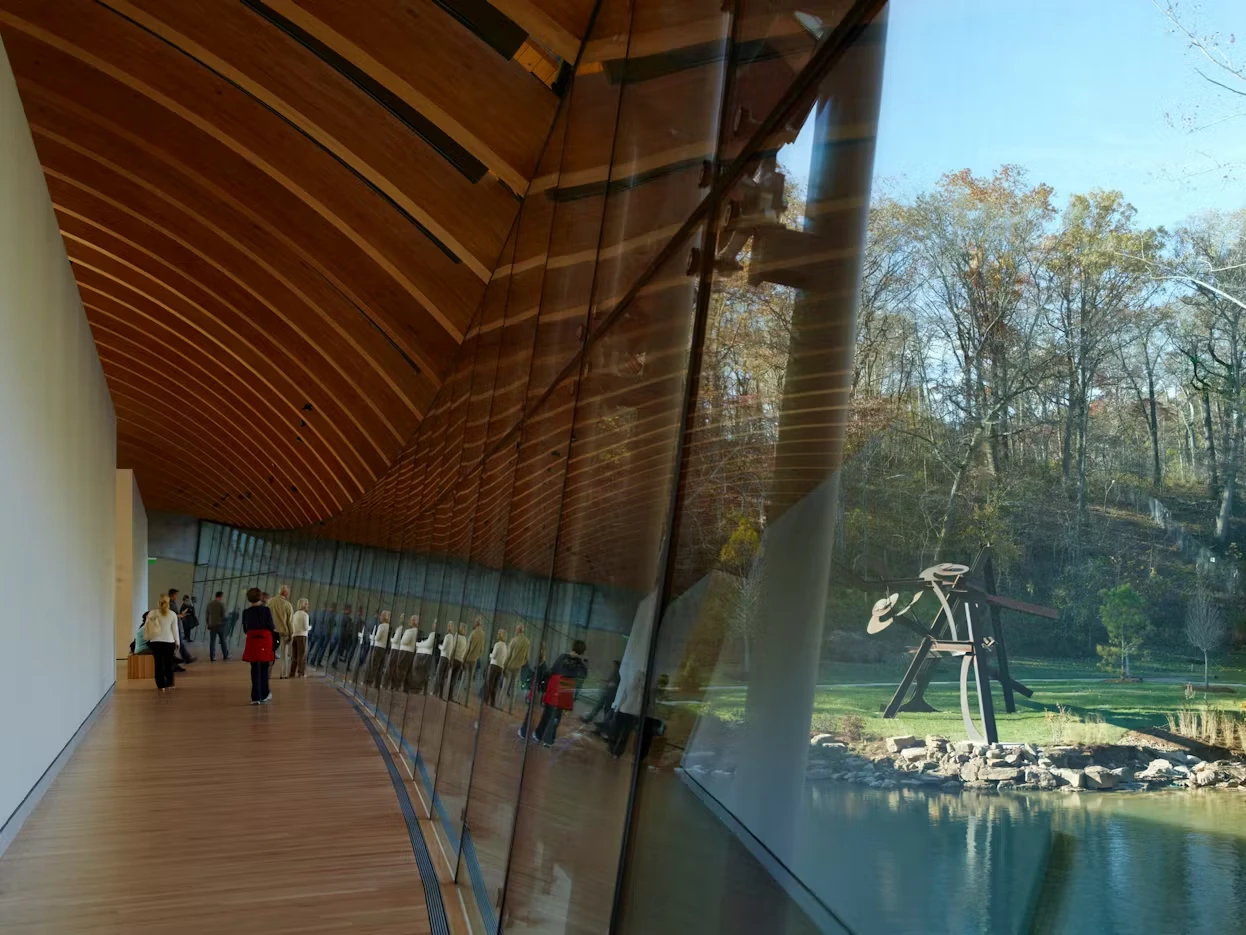
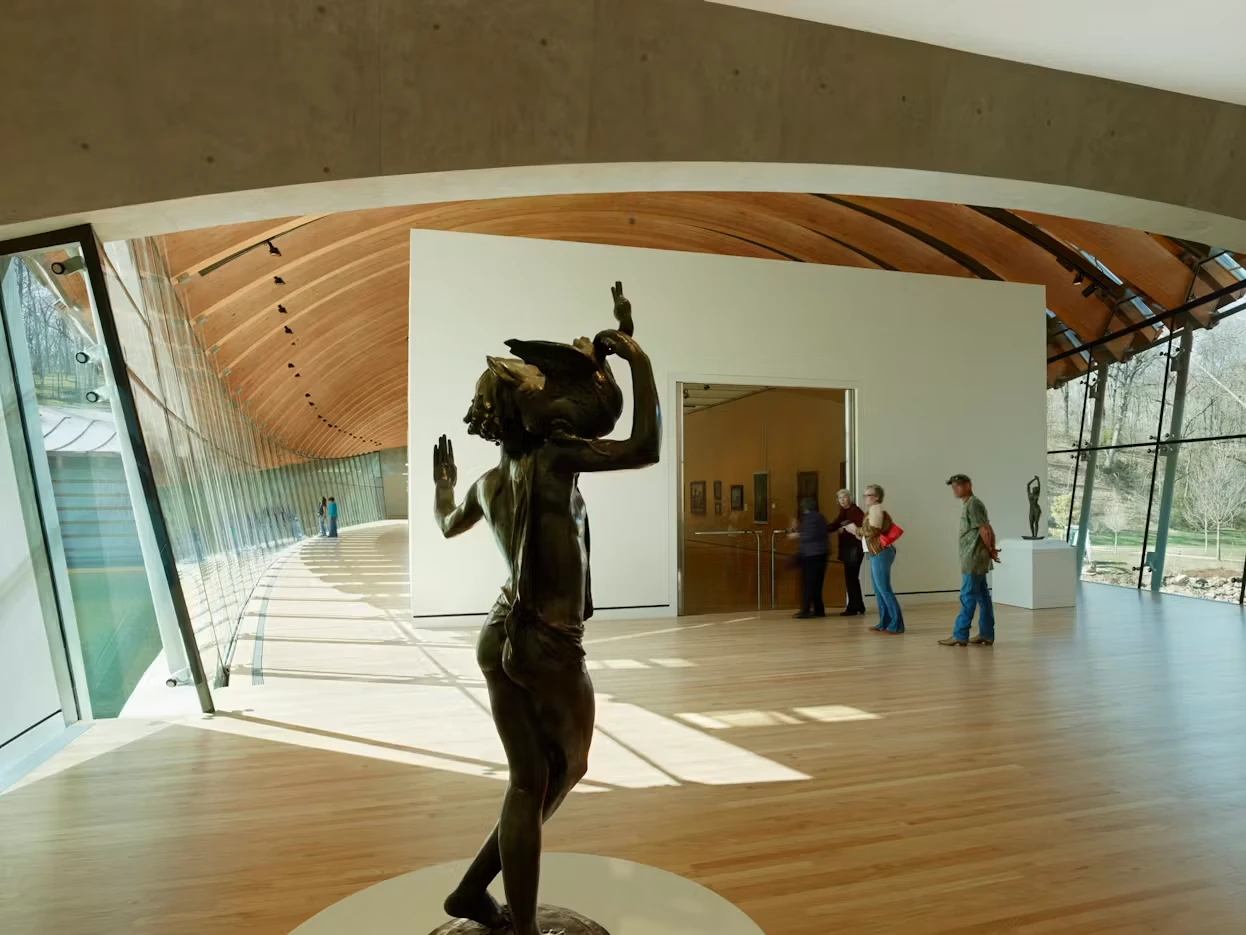
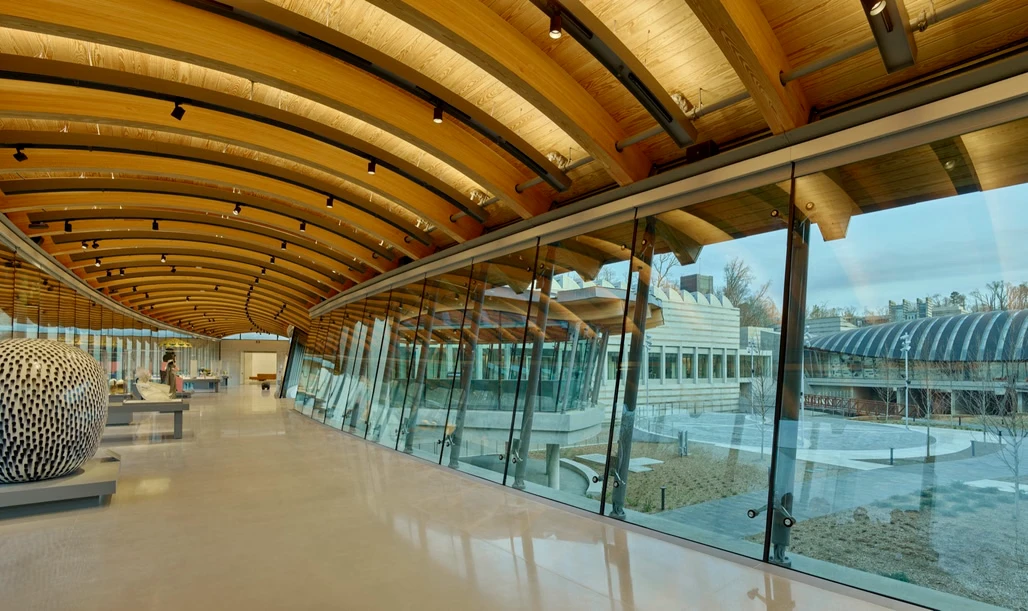
The expansion also introduces a Contemporary American Art Gallery showcasing postwar and contemporary works, including installations by artists such as Yayoi Kusama and Teresita Fernández. Linking the galleries is a new bridge gallery that functions as both a circulation space and an exhibition venue. Positioned above the water, the bridge offers panoramic views of the landscape while accommodating displays of sculpture, ceramics, and glass artworks. A 40-seat café is integrated within the structure, transforming the crossing into a destination.
Architecture Rooted in Landscape and Learning
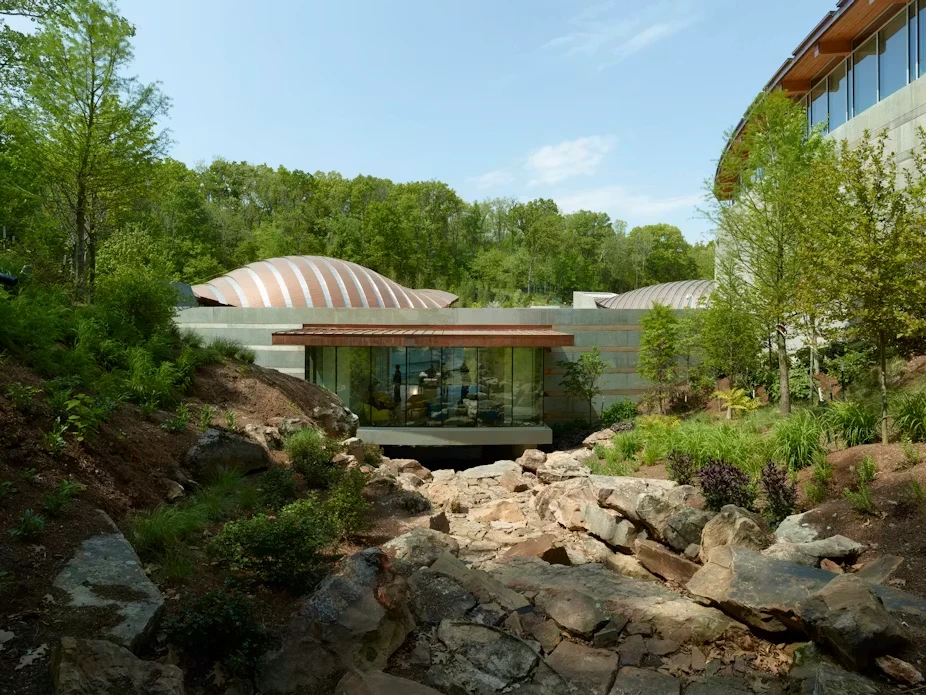
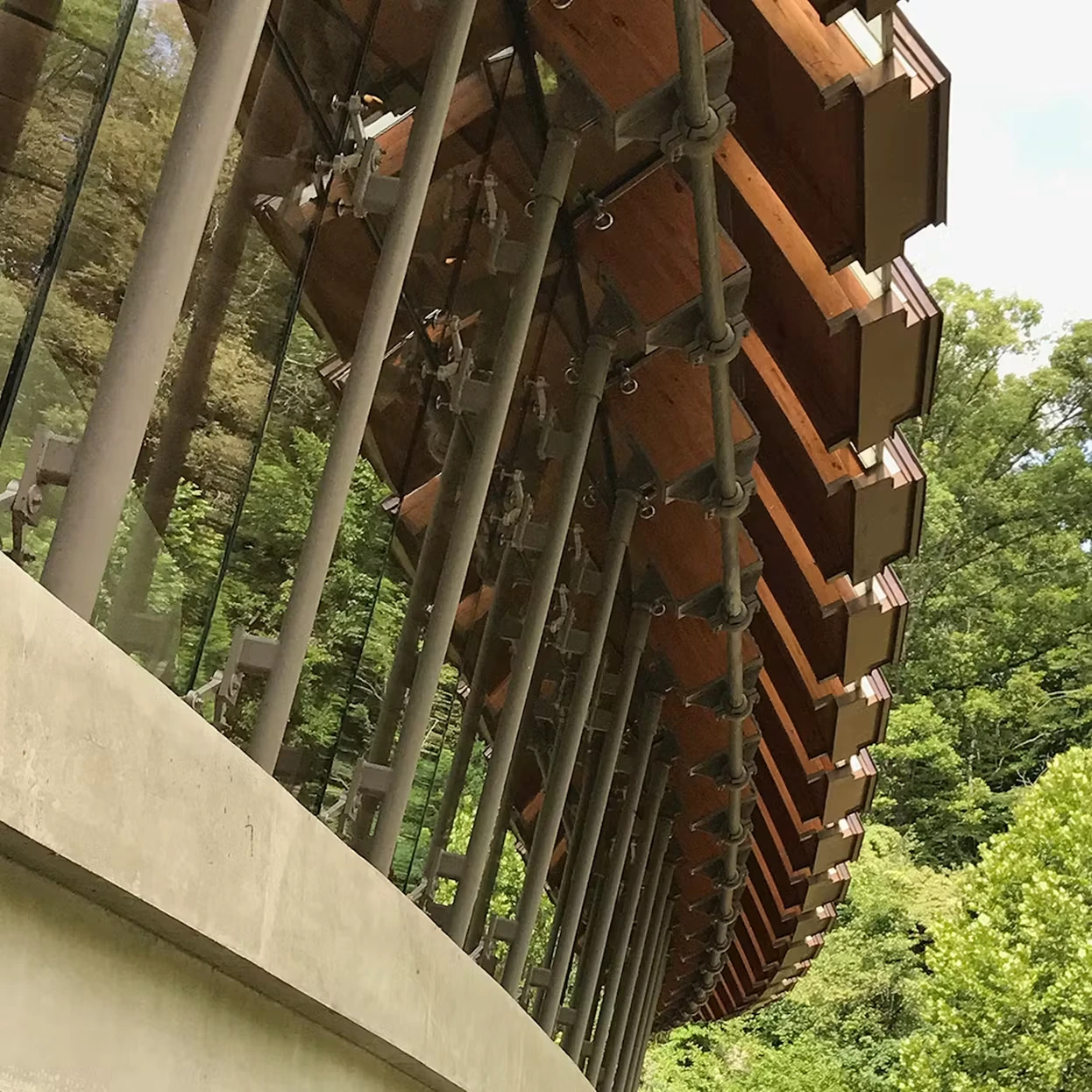
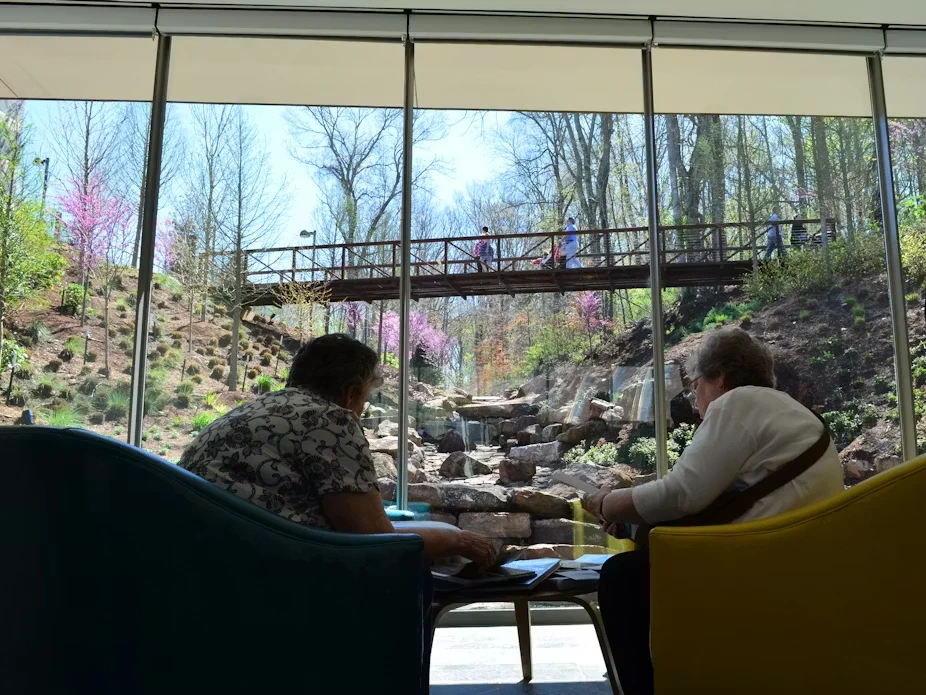
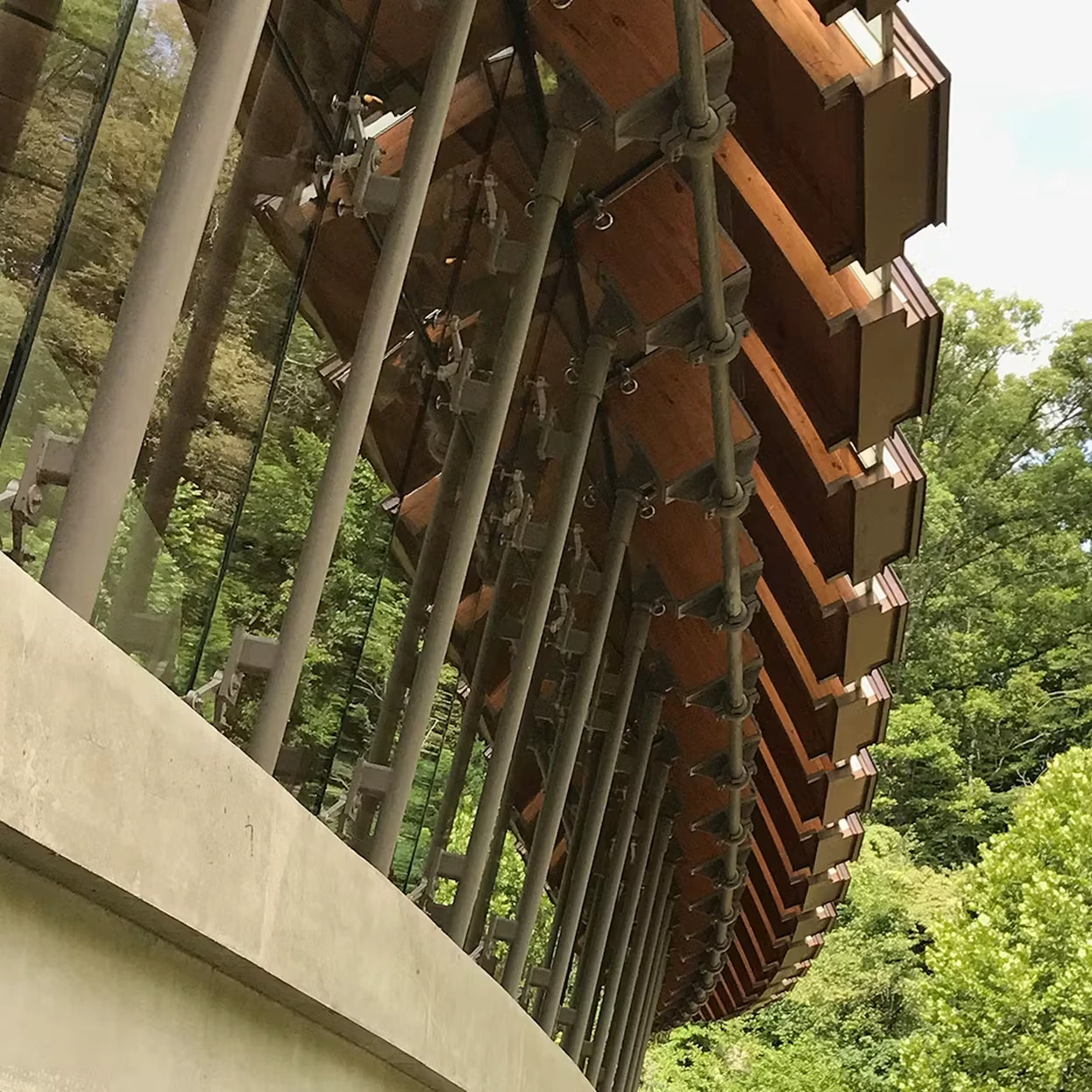
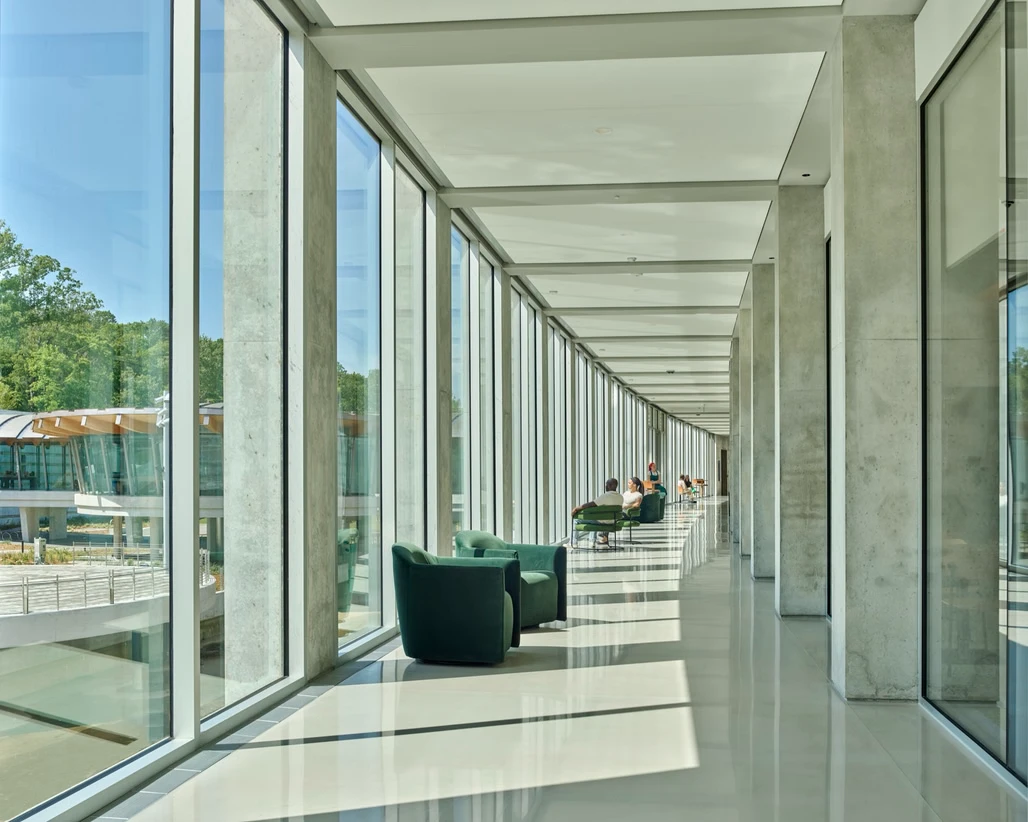
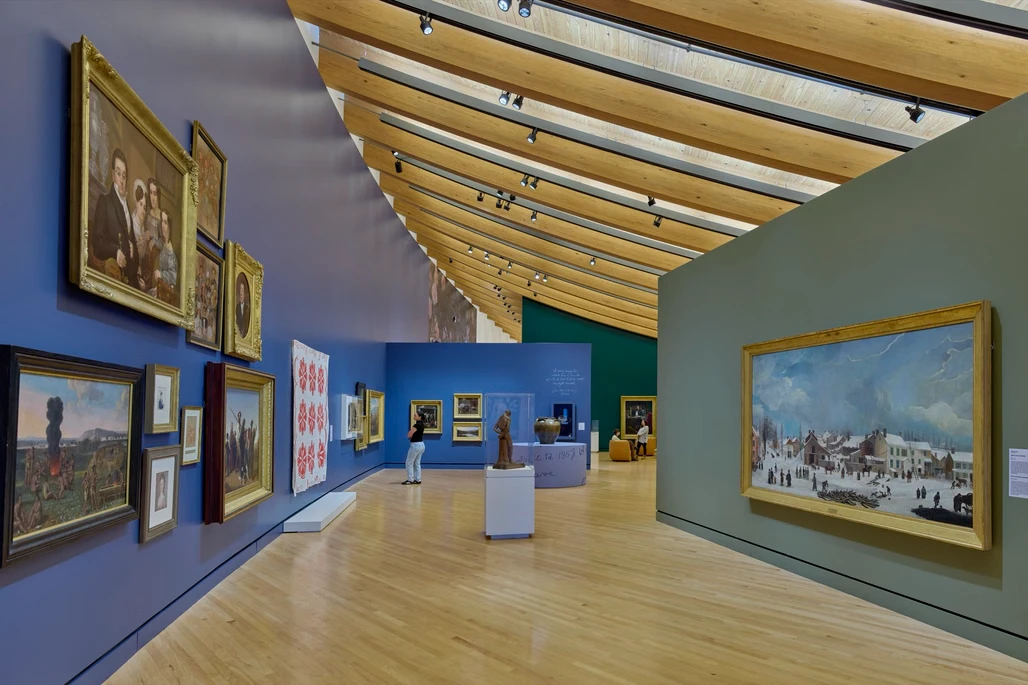
Exposed southern yellow pine glulam beams, copper cladding, reinforced concrete, steel trusses, and extensive floor-to-ceiling glazing reference regional building traditions while framing views of the surrounding forests and ponds. Deep roof overhangs and sloped forms respond to the local climate, while high-performance glazing, radiant heating and cooling systems, LED lighting, and water-efficient fixtures contribute to the Crystal Bridges Museum Expansion project’s environmental performance. Portions of the building are embedded into the landscape to reduce thermal loads and minimize visual impact.
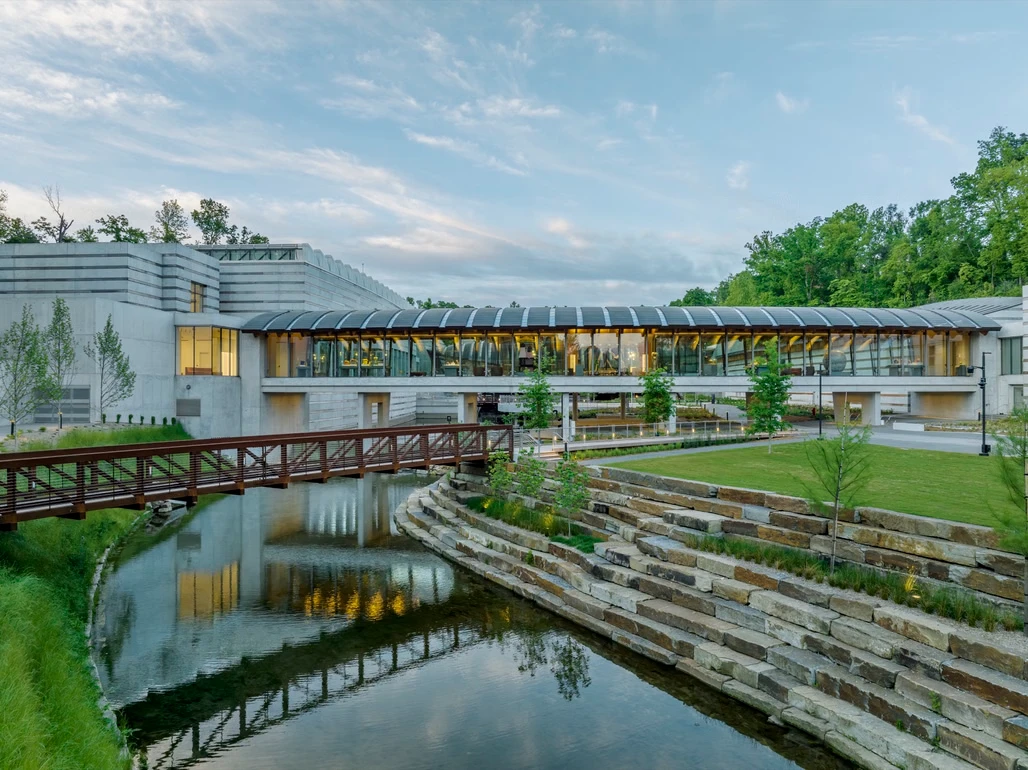
Beyond exhibition spaces, the project places significant emphasis on education and community engagement. The new Learning and Engagement Hub includes classrooms, artist-in-residence studios, community gathering spaces, a digital art studio, a ceramics studio, and flexible artmaking environments designed for visitors of different ages and abilities. Outdoor event areas, performance-support facilities, and public plazas further expand the museum’s role beyond that of a traditional gallery institution.
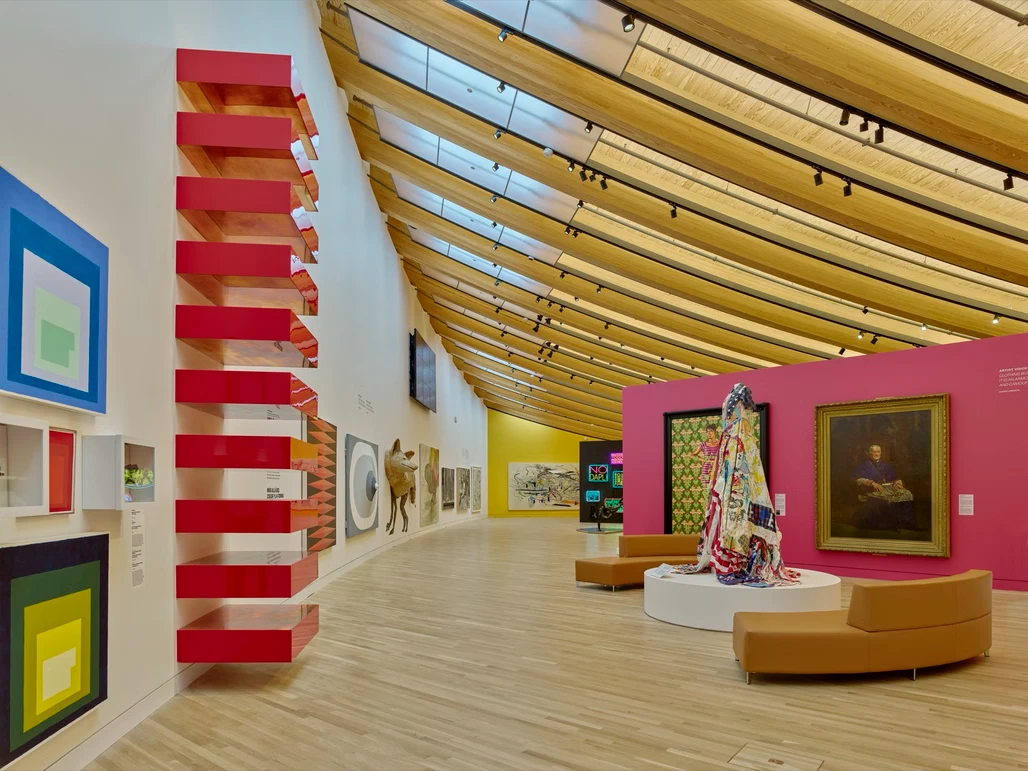
The completion of the Crystal Bridges Museum expansion coincides with a comprehensive reinstallation of the museum’s collection. Nearly every artwork has been repositioned as part of a curatorial reorganization that broadens the interpretation of American art through multiple cultural perspectives. Around 600 works from the museum’s collection of more than 4,100 objects are now on display, including nearly 200 pieces exhibited for the first time. Indigenous art has been integrated throughout the galleries, reflecting recent acquisitions and a broader commitment to representing historically underrepresented voices.
By extending its network of pavilions across ponds and woodland terrain, the Crystal Bridges Museum expansion reinforces the architectural idea that art is experienced through a continuous dialogue with the landscape.
Image credit: Safdie Architects
Explore Courses
.jpg "Ondrej Chybik - Rethinking Architecture")