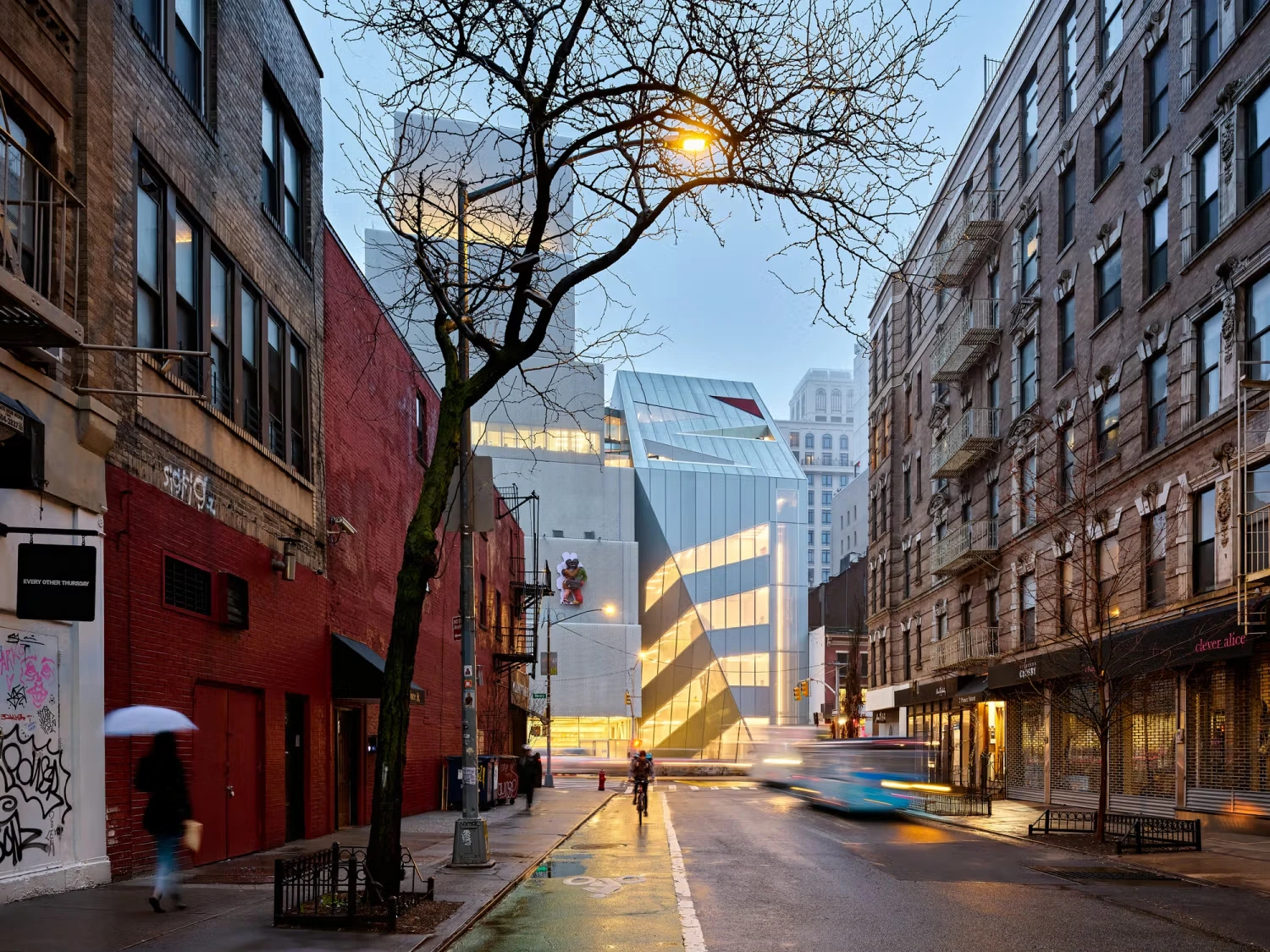


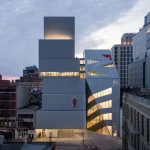
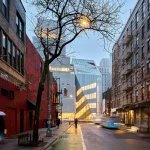
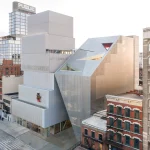
OMA’s New Museum in New York brings contrast and connection into a cohesive whole, as the Bowery landmark, long set apart from its surroundings, redefines itself through openness. When SANAA completed its stacked, shifting white volumes in 2007, the building quickly became an icon, distinct yet internally constrained, with tight circulation, limited gallery flexibility, and increasing program demands.
Nearly two decades later, OMA’s intervention responds by rethinking the museum as a connected system of spaces. The project reorganizes movement, expands spatial possibilities, and creates a seamless dialogue between old and new, reshaping how the building functions both internally and within the city.
Why the New York’s New Museum Needed to Expand
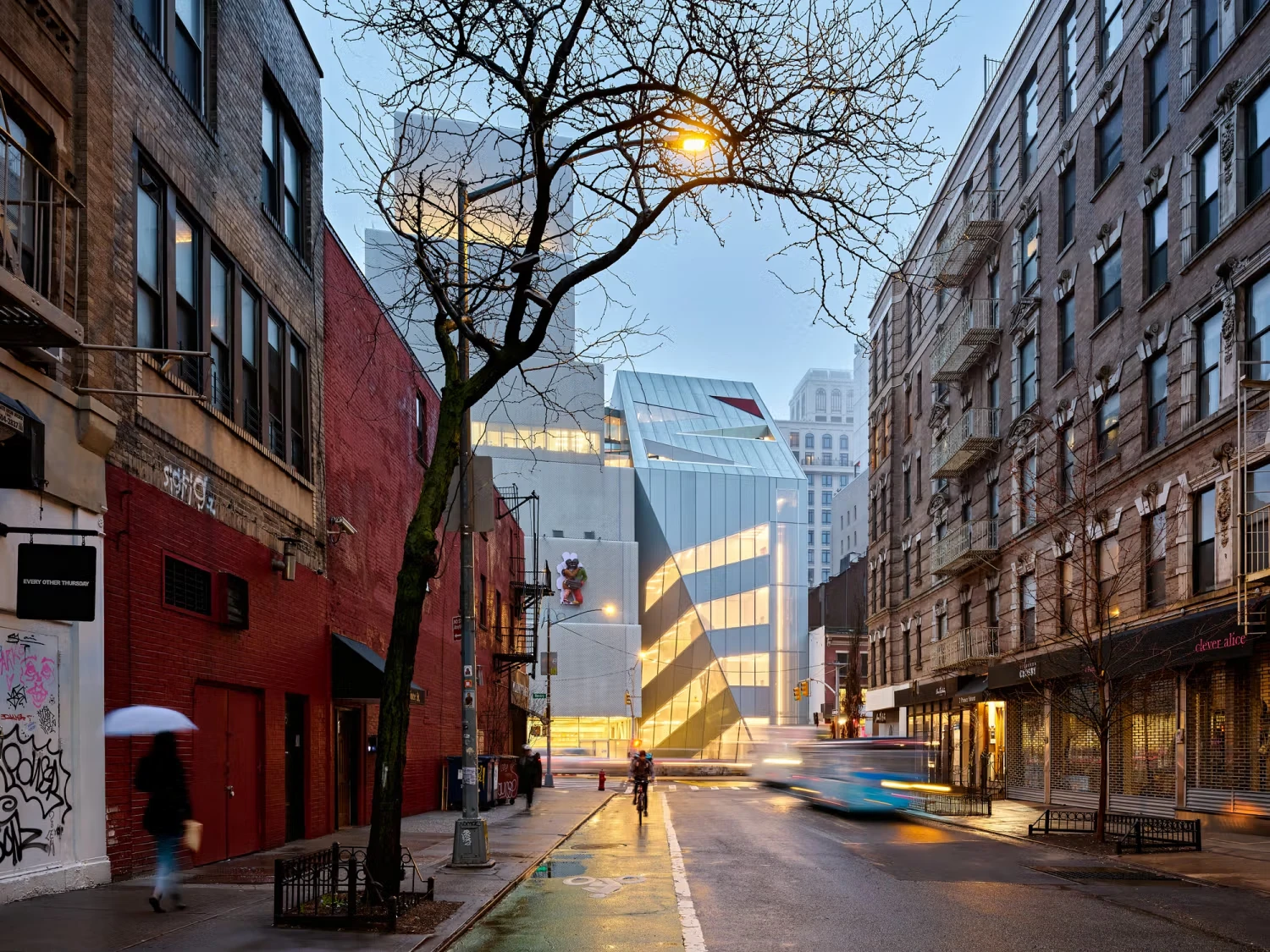
The New Museum never intended to remain static. Since its founding in 1977, it has focused on new art, new ideas, and emerging voices. Over time, its spatial limits became clear. The original building featured vertical galleries and flexible floor plans. Circulation between levels was often inefficient, and public amenities remained limited. Large-scale works, interdisciplinary exhibitions, and simultaneous programming often had to negotiate spatial constraints.
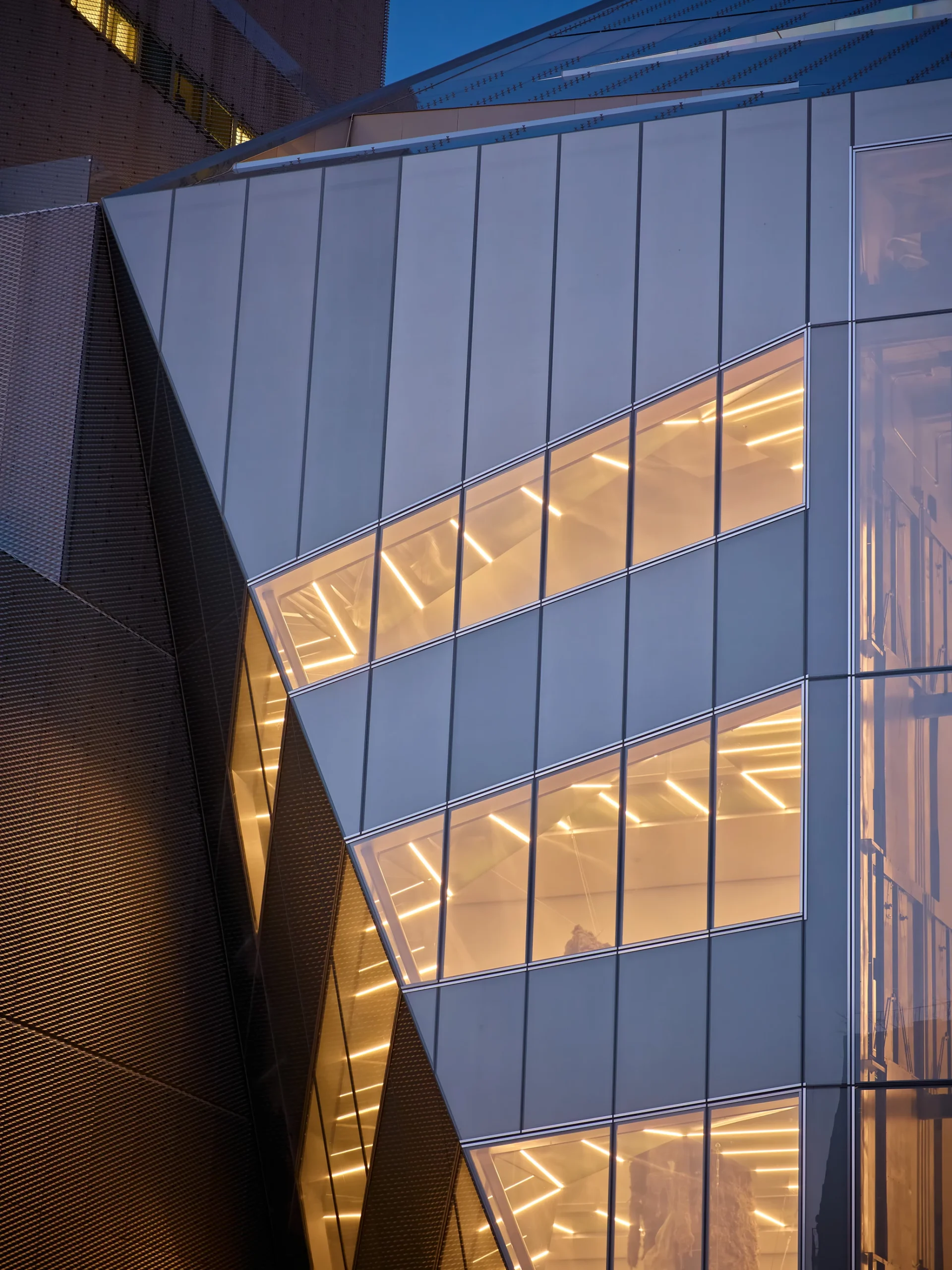
Circulation reinforced this limitation since movement through the building followed a prescribed path, with limited visual connection between floors. Public areas remained compressed, and the threshold between street and museum lacked openness.
OMA proposed to double the museum’s capacity without erasing what already exists. The expansion project, first imagined in 2016, aimed to address these constraints while preparing the institution for future growth.
A New Contrasting Form Beside the Original Museum
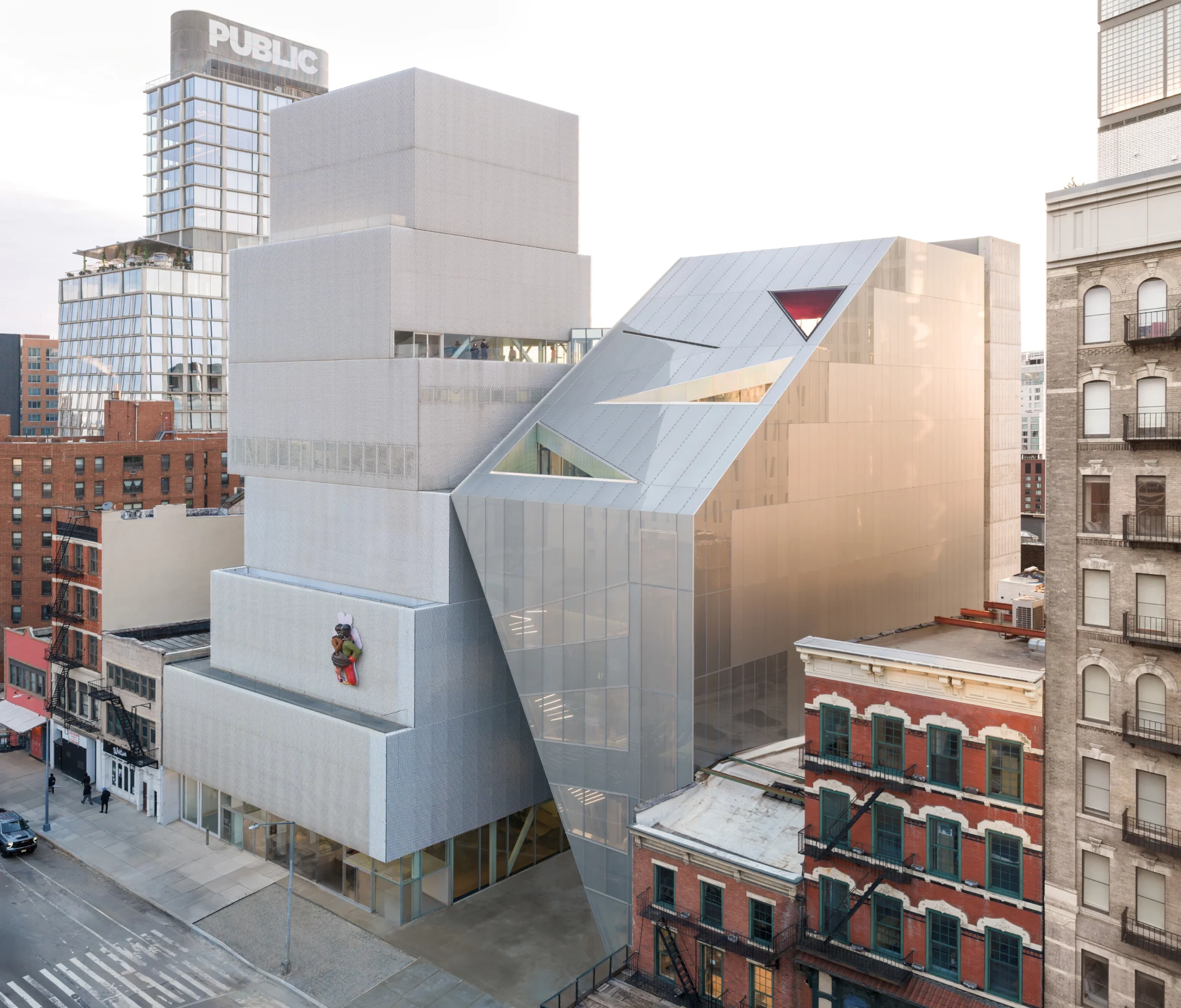
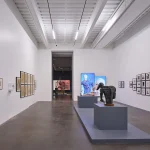
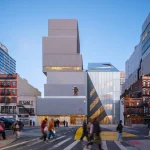
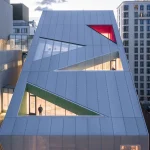
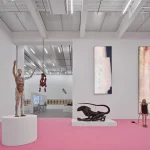
OMA designed a distinct seven-story building adjacent to the original. It is a strategic move that allows the museum to redistribute its program. Where SANAA’s building is vertical and stacked, OMA’s addition introduces broader, more open floor plans. The new structure immediately changes the possibilities for exhibition-making. Curators are no longer bound to narrow vertical volumes, as they can now work across broader, continuous spaces.
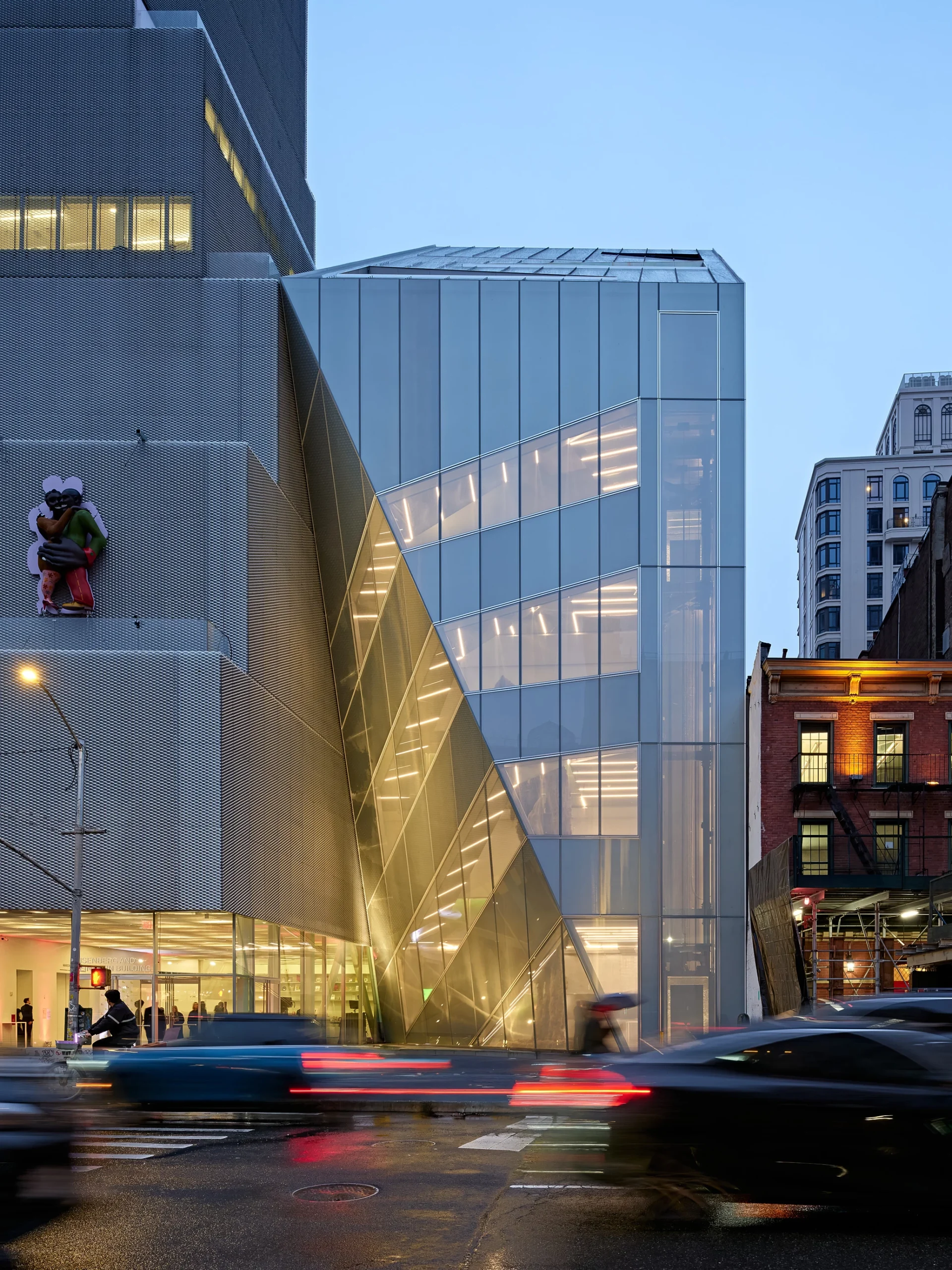
Architect Rem Koolhaas described it as two parts forming a single institution, each with its own character yet working together. Movement becomes less constrained, more fluid, and less tied to a strict vertical sequence.
At the same time, the addition is carefully aligned with the existing building at key levels. The museum, which once functioned as a stack, begins to operate as a network.
Optimizing Space for Exhibitions, Circulation & Programs
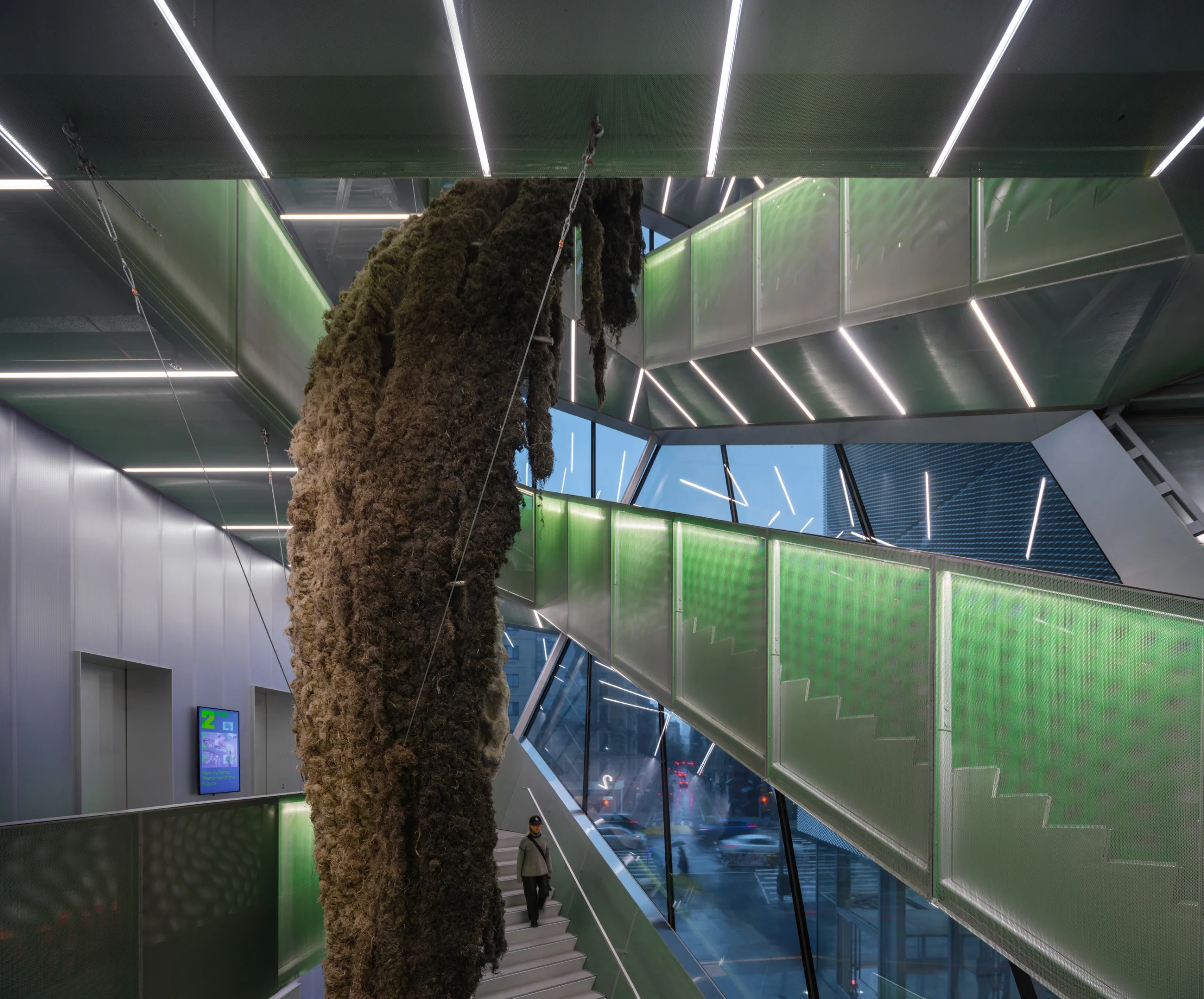
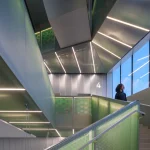
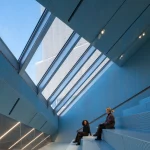
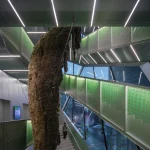
One of the most decisive changes lies in how movement is organized and is more functional for exhibitions. A new atrium stair connects several levels, making it easy for visitors to move between floors while still being able to tell where they are. Additional elevators improve accessibility for all visitors, and the floor plates are intentionally flexible, so galleries can be reconfigured to accommodate different types of exhibitions.
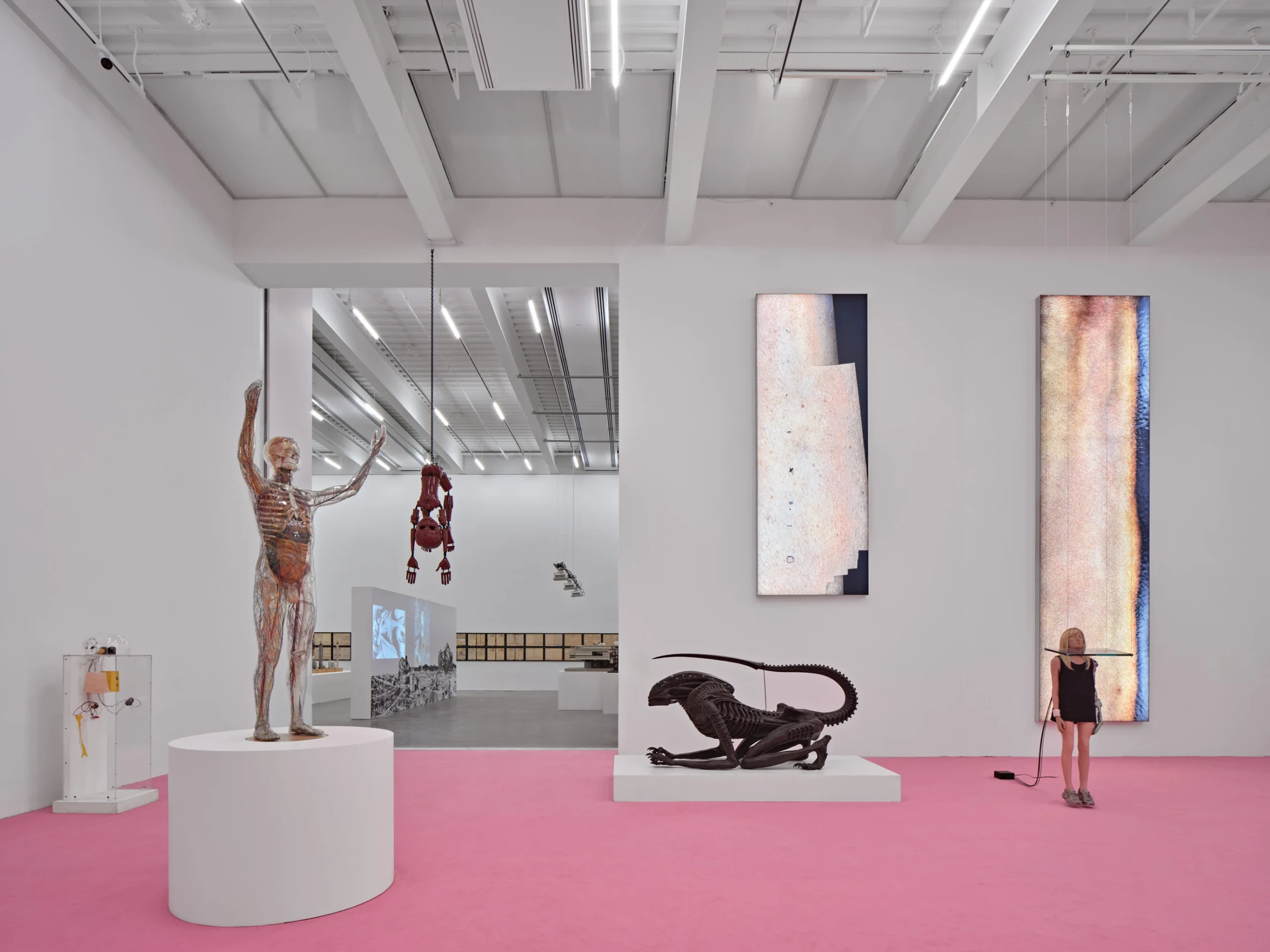
These design choices resolve the original building’s limitations, transforming it from a series of isolated rooms into a fluid, connected network of spaces. Three floors of new galleries are aligned with the original structure, allowing curators to plan larger shows and more complex programming without the constraints of the previous vertical layout.
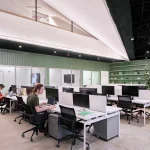
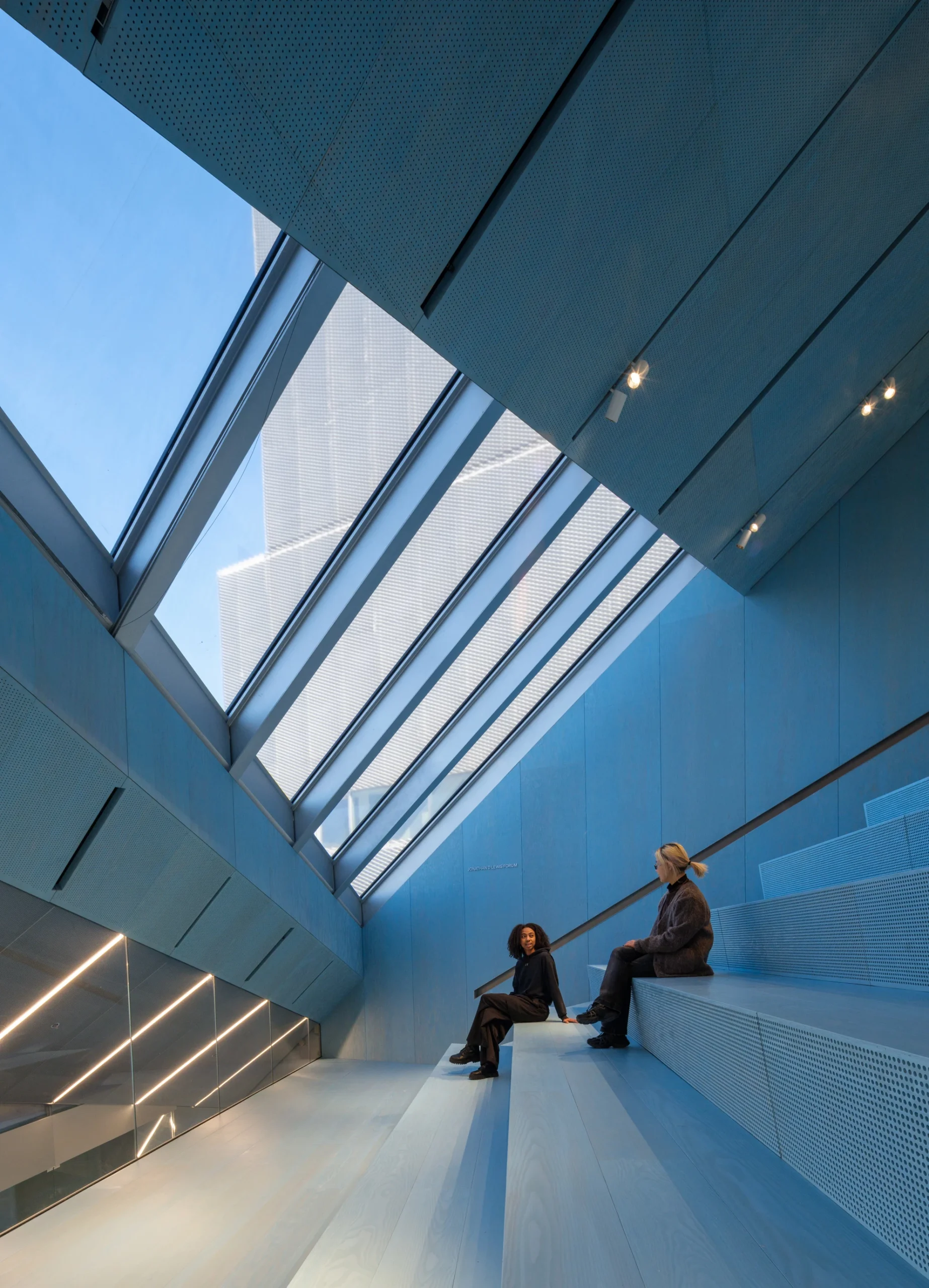
The expansion integrates spaces that support production, research, and public engagement. Artist studios and residency areas are embedded within the building, allowing creative work to exist alongside its presentation. The expansion gives a permanent and more visible presence to NEW INC, the museum’s incubator. A forum introduces a dedicated setting for talks, screenings, and discussions, reinforcing the museum’s position as a place of exchange. These elements shift the museum from a display space to a working cultural platform.
Engaging the Urban Context
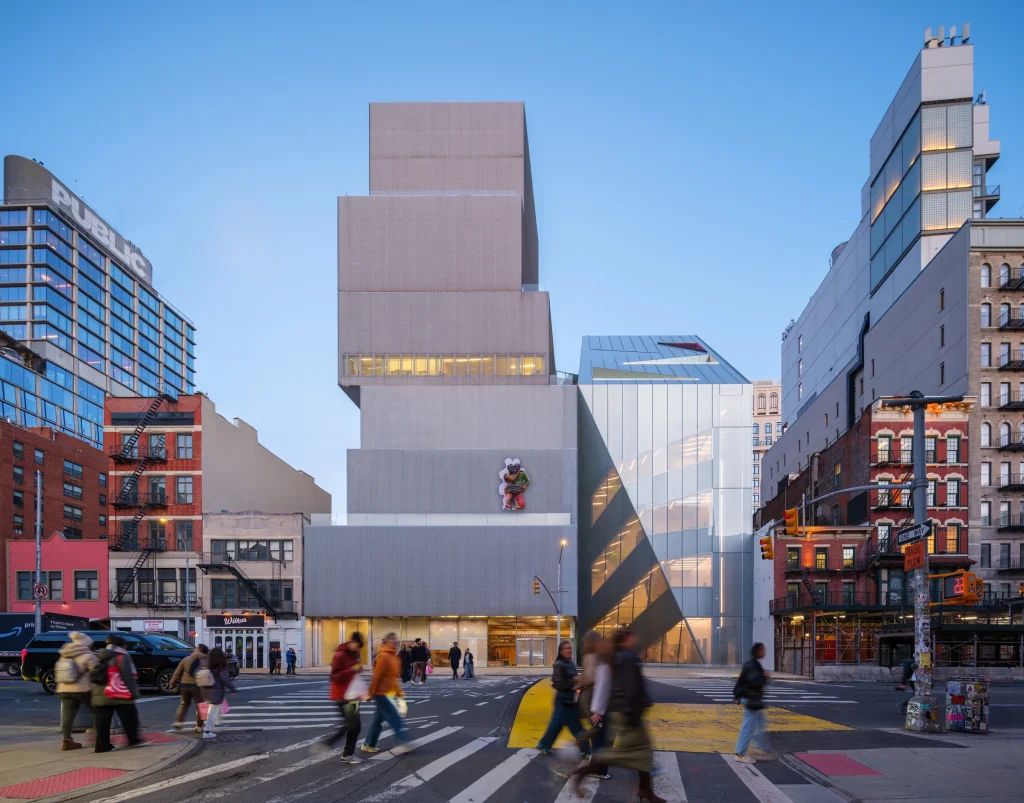
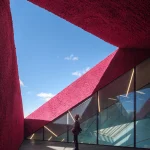
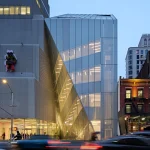
The most significant changes unfold along the street-facing side, where the once-contained entrance with limited spatial generosity has been reimagined. The expansion introduces a public plaza that extends the museum outward, creating a more open, inviting approach.
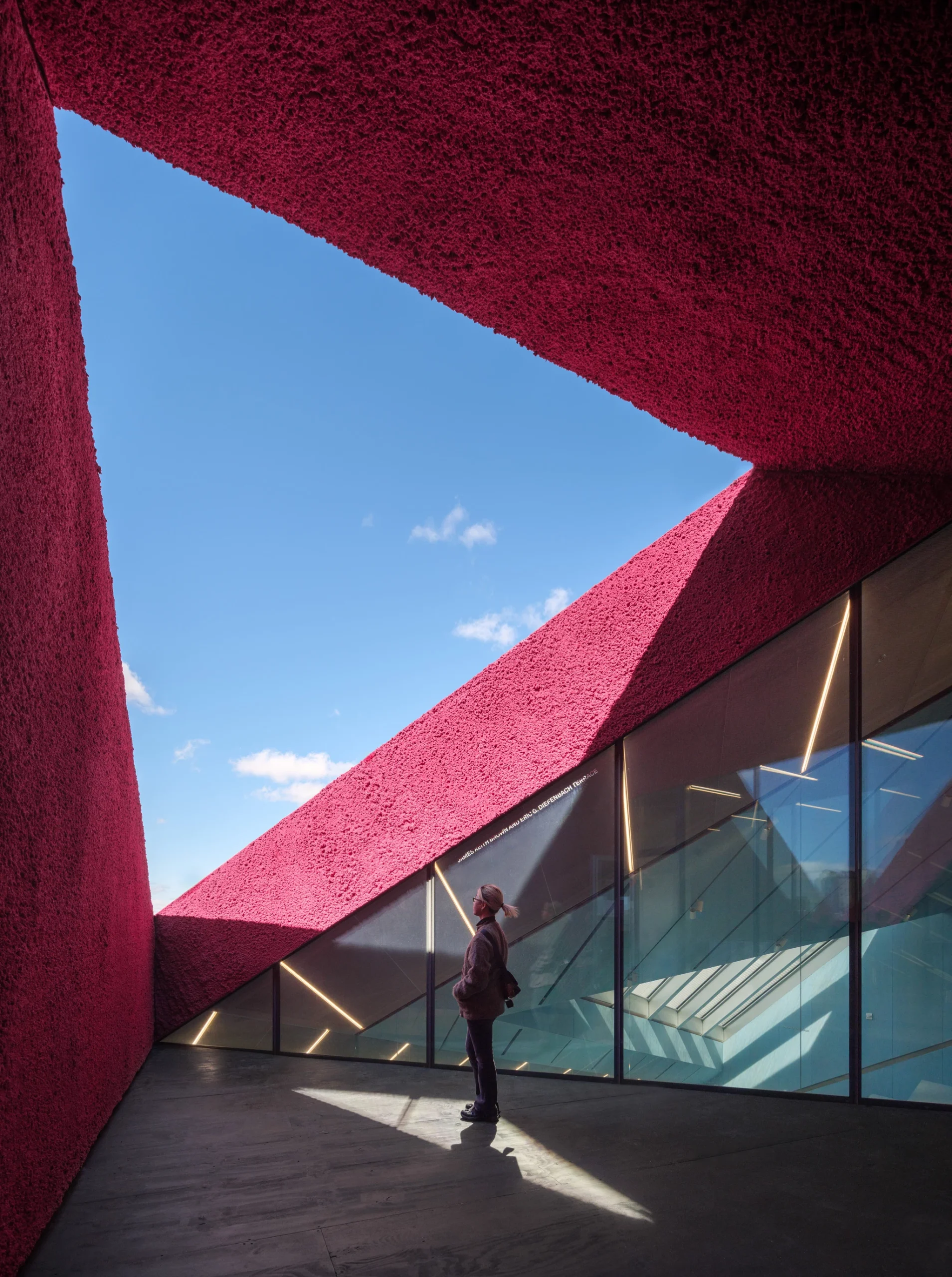
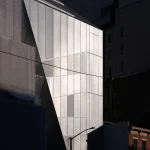
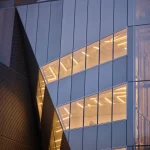
A mesh-like glass façade references the original building while increasing transparency. This new edge establishes a clearer, more coherent entry sequence and allows the ground plane to connect the museum directly with its surroundings. It maintains a subtle continuity with the original building while increasing visual and physical permeability.
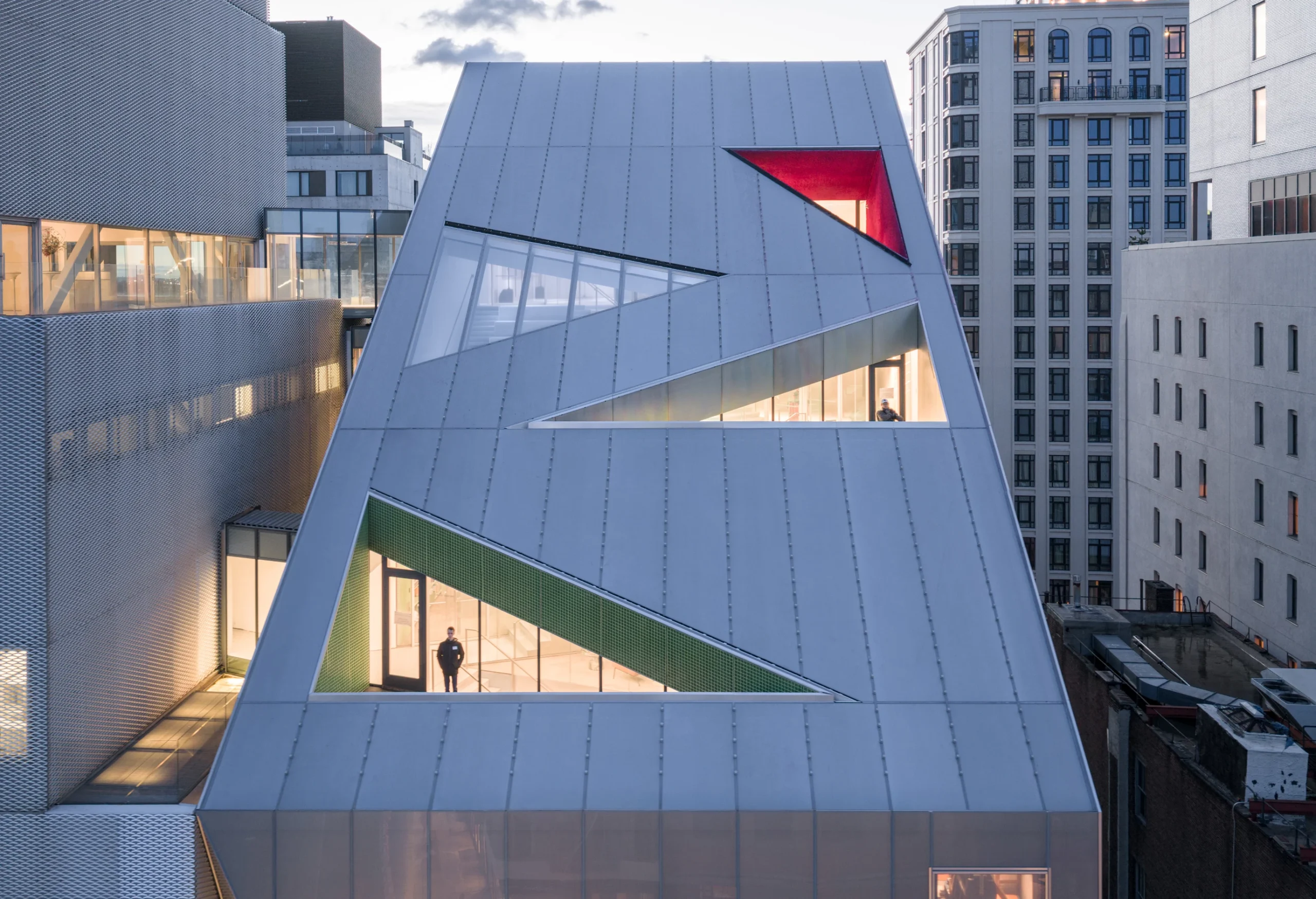
The project unfolded over an extended period, reflecting its complexity and the evolving needs of the institution. The project took nearly a decade from announcement to completion. Construction intensified around 2022, requiring the museum to close in 2024. Originally planned for earlier completion, the expansion finally opened to the public on March 21, 2026, marking a major milestone for the institution.
New Museum Expansion Project Details
Project Name: New Museum Expansion
Location: 235 Bowery, New York City, USA
Design Architect: OMA (Office for Metropolitan Architecture)
Lead Architects: Rem Koolhaas, Shohei Shigematsu
Executive Architect: Cooper Robertson (now Corgan)
Original Building Architect: SANAA (2007)
Project Type: Museum Expansion / Cultural Building
Completion / Opening: March 21, 2026
Total Expansion Area: 5,750m²
Image Credit: © Jason O’Rear/© Jason Keen