




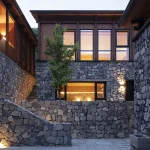
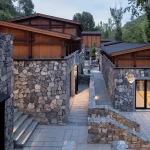

Architecture is reassessing one of its core assumptions, and that is the separation of structure and surface. As the carbon cost of concrete and steel becomes untenable, stone is returning, not as cladding, but as load-bearing matter. Enabled by digital fabrication and post-tensioning, it is no longer archaic, but precise and performative. Stone consolidates structure, enclosure, and expression into a single system, demanding a design that negotiates with material limits.
Re-emergence of Stone Construction
Stone’s resurgence is best understood through the forces that displaced it. For millennia, it defined structural logic, its compressive strength shaping walls, arches, and vaults, from the megalithic precision of Stonehenge to the refined stereotomy of Renaissance construction. In the Gothic era, this intelligence reached its apex: ribbed vaults and flying buttresses extended stone’s structural capacity while releasing walls for light, demonstrating a precise negotiation between mass and openness.
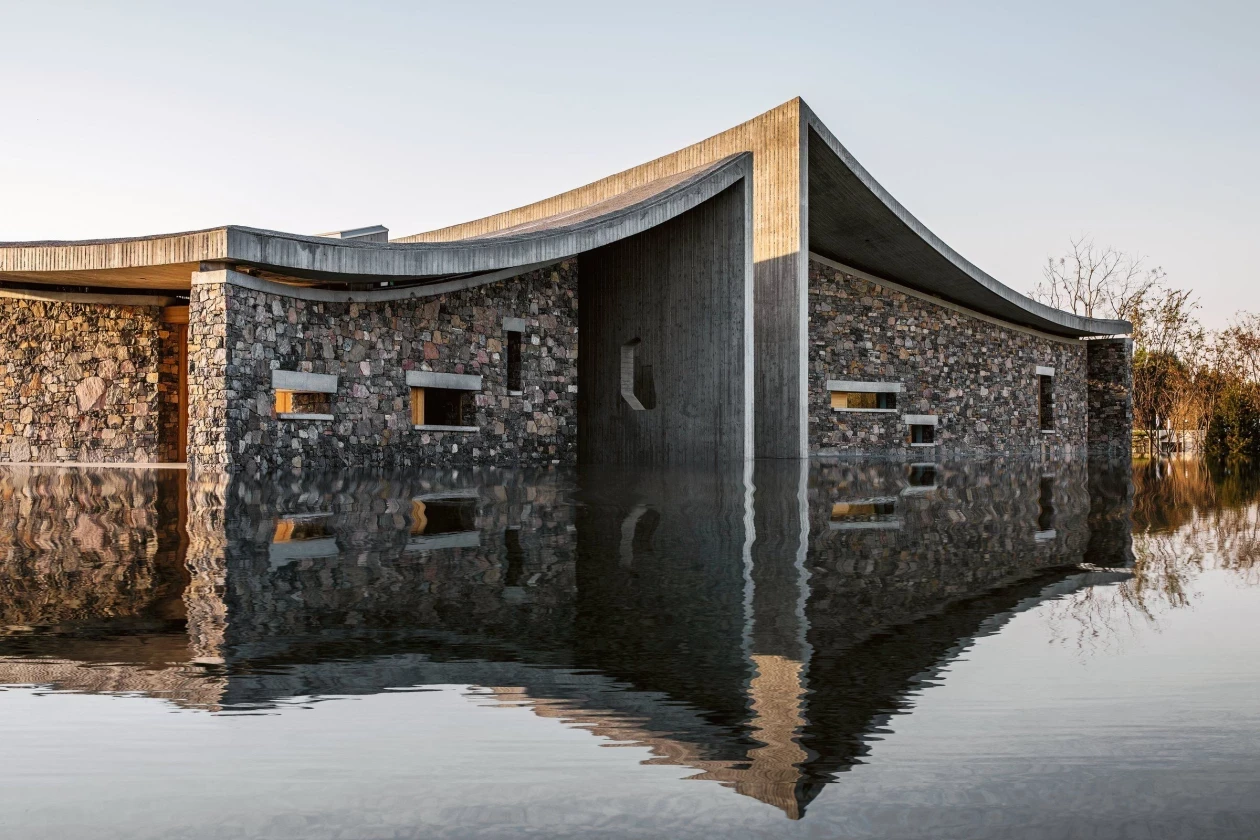
Architects such as Le Corbusier advanced the free plan, where reinforced concrete frames liberated walls from load-bearing roles. In this new order, stone was reduced to a thin, decorative layer, applied rather than integral. The consequence was both material and cultural: a growing detachment from quarries, craft, and the logic of compression, alongside significant waste in extraction processes.
Reframed through digital fabrication and contemporary engineering, stone is once again treated as a primary structural resource. Its low processing demands and inherent durability position it as a viable alternative to energy-intensive materials, aligning architectural practice with the urgent imperatives of climate responsibility and material accountability.
Decarbonization and Life Cycle Assessment
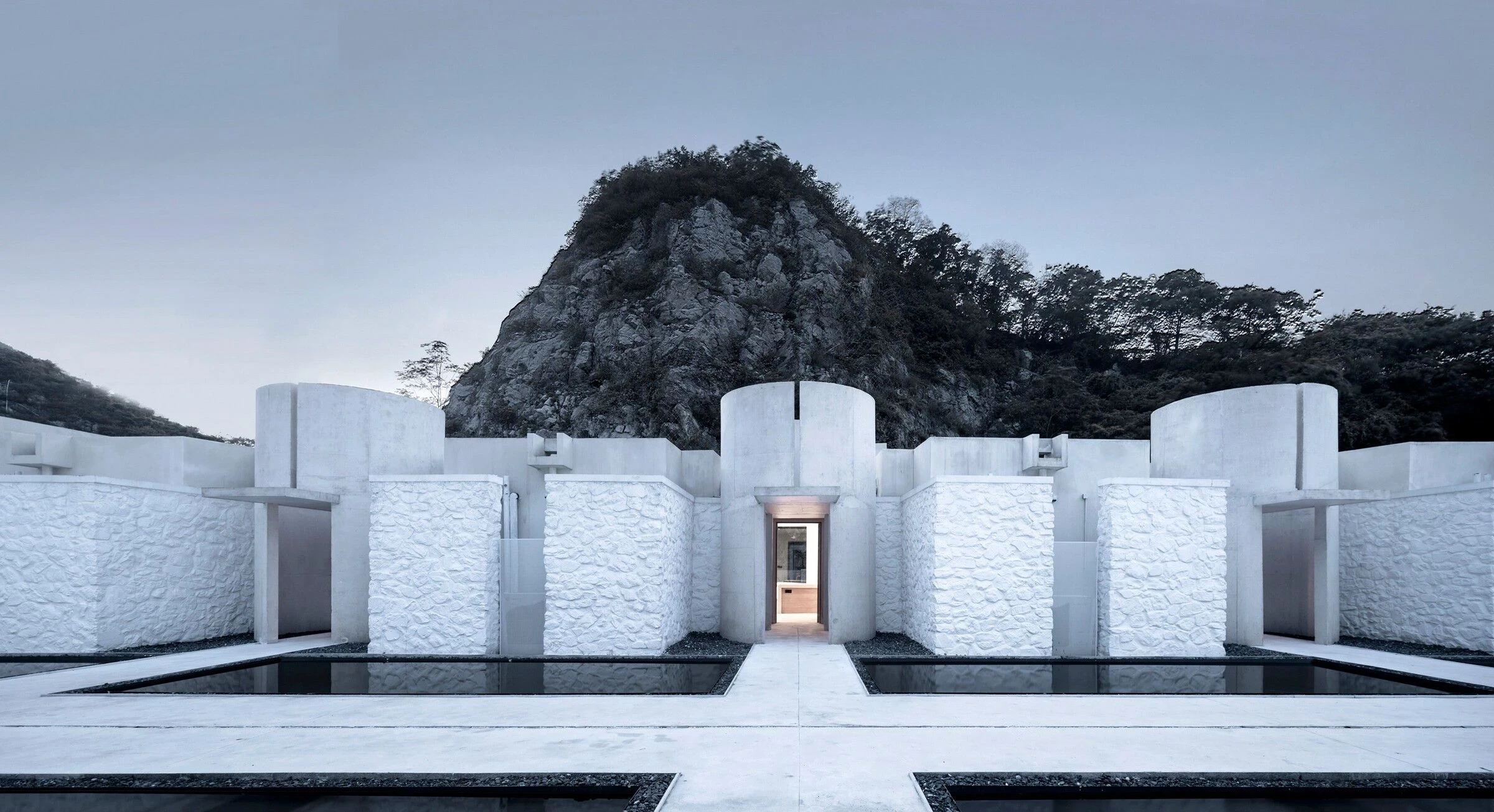
The renewed interest in structural stone is driven, above all, by its radically lower embodied carbon. Unlike operational emissions, which can be reduced over time, embodied carbon is fixed at the point of construction, making material choice critical. Concrete remains one of the largest contributors to global emissions, with cement production alone responsible for a significant share of CO₂ output. Stone, by contrast, requires no high-temperature kilns or chemical transformation and relies on extraction alongside precise shaping.
Lifecycle assessments of early-stage production indicate that structural stone can reduce embodied carbon by up to 90% compared to conventional steel or concrete systems. Methods such as Massive Precut Stone consolidate structure, enclosure, and finish into a single material layer, eliminating the need for additional cladding, insulation, or fireproofing.
Precision via CNC and Robotic Milling
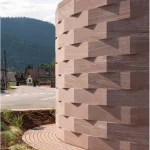
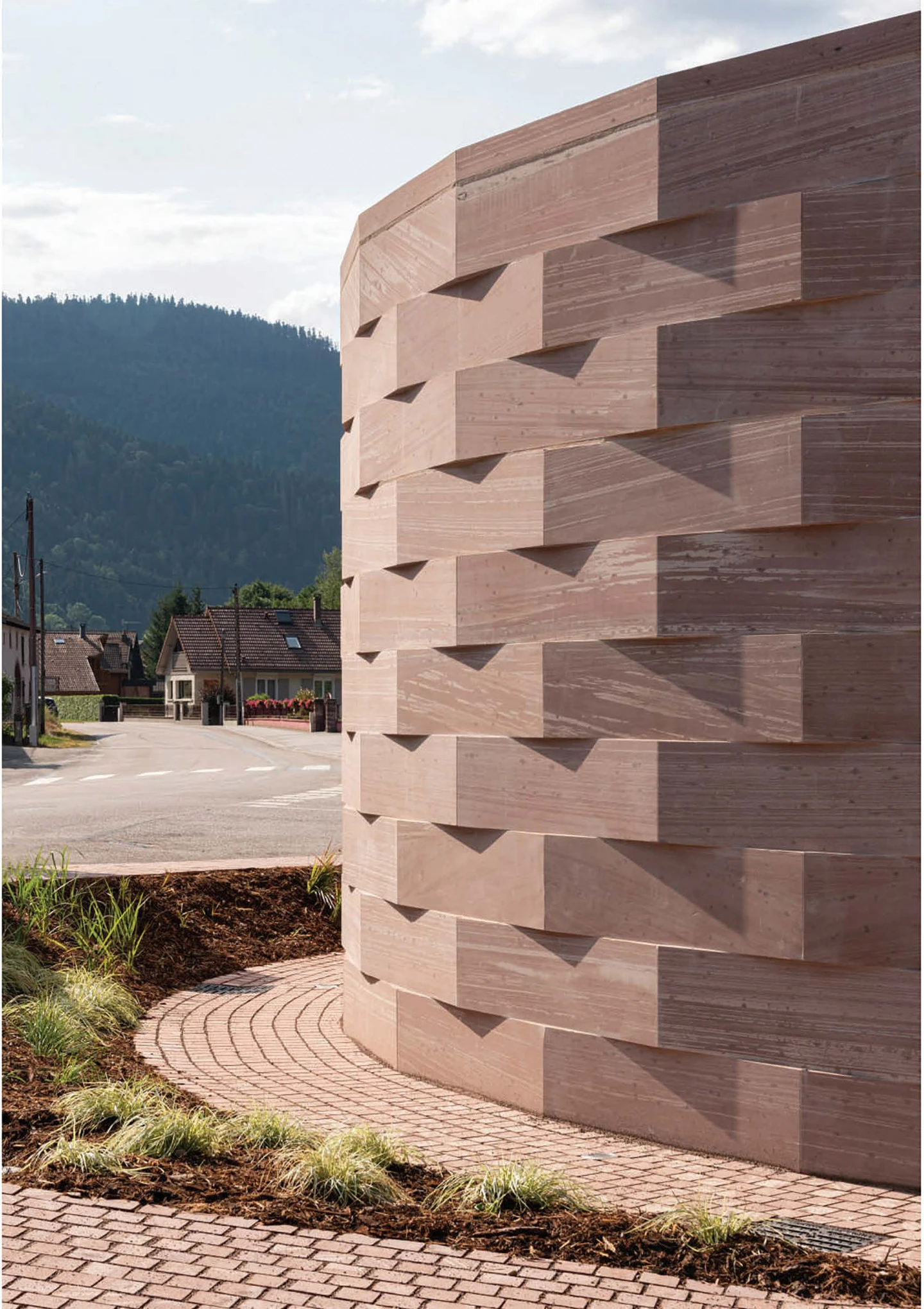
Advances in fabrication have repositioned stone from craft to precision engineering. Five-axis CNC machines and robotic arms now cut with tolerances as fine as ±0.1 mm, reducing setup time dramatically while accelerating production far beyond traditional methods. This level of control enables complex geometries, previously impractical or prohibitively expensive, to be executed with structural reliability, as seen in the sculpted stone walls of Delas Frères Winery.
Equally transformative is the return of stereotomy through digital means. Parametric design and CAD/CAM workflows allow each stone unit to be computationally optimized, ensuring precise load distribution while minimizing waste. This integration establishes a continuous link between design, fabrication, and assembly, effectively extending the architect’s authorship to the quarry itself.
Building Information Modeling (BIM) and Robotics
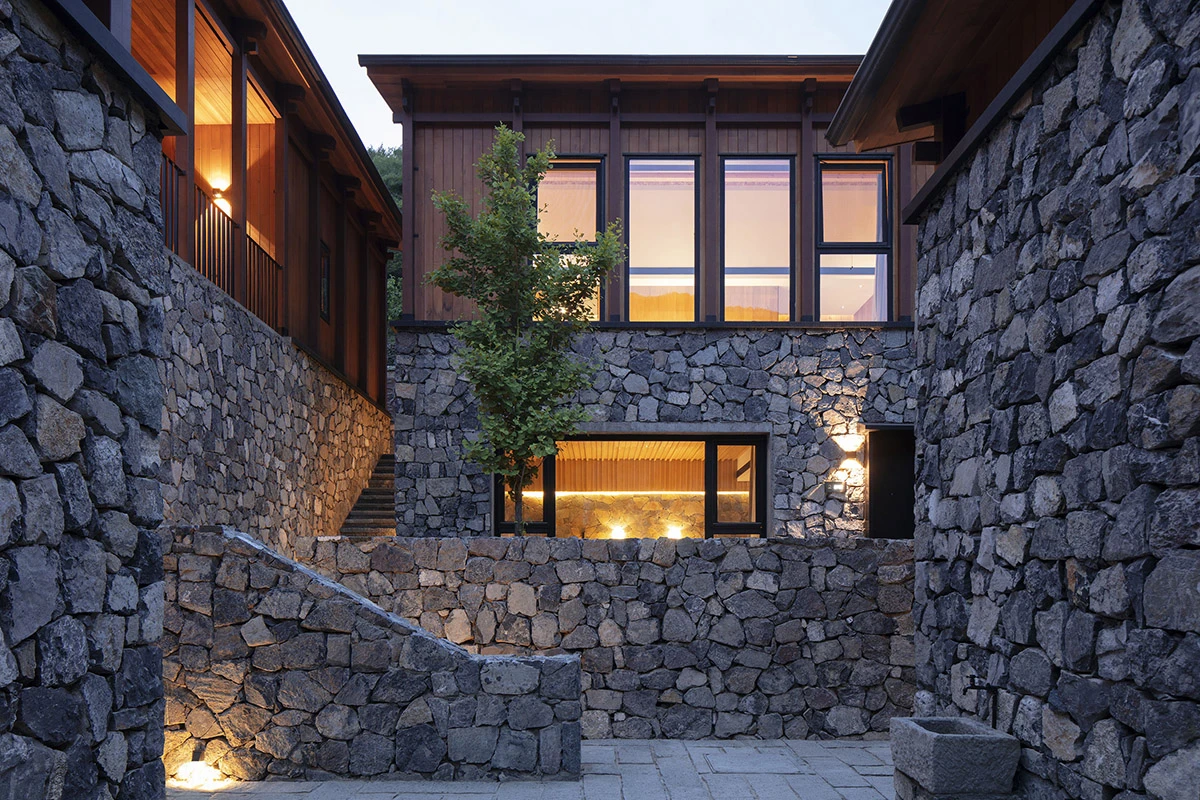
The integration of Building Information Modeling (BIM) consolidates the entire workflow into a shared data environment, aligning stakeholders from the quarry to the construction site. For massive precut stone systems, BIM enables precise sequencing, logistics, and crane-assisted placement, effectively transforming construction into an assembly process instead of prolonged on-site masonry.
Hybrid Systems: Stone and Timber
A parallel trajectory within this material shift is the hybridization of stone and timber. Each operates where it performs best: stone in compression, forming walls and columns; timber in tension, spanning floors and beams. This complementary logic reintroduces structural clarity while reducing dependence on high-carbon systems.
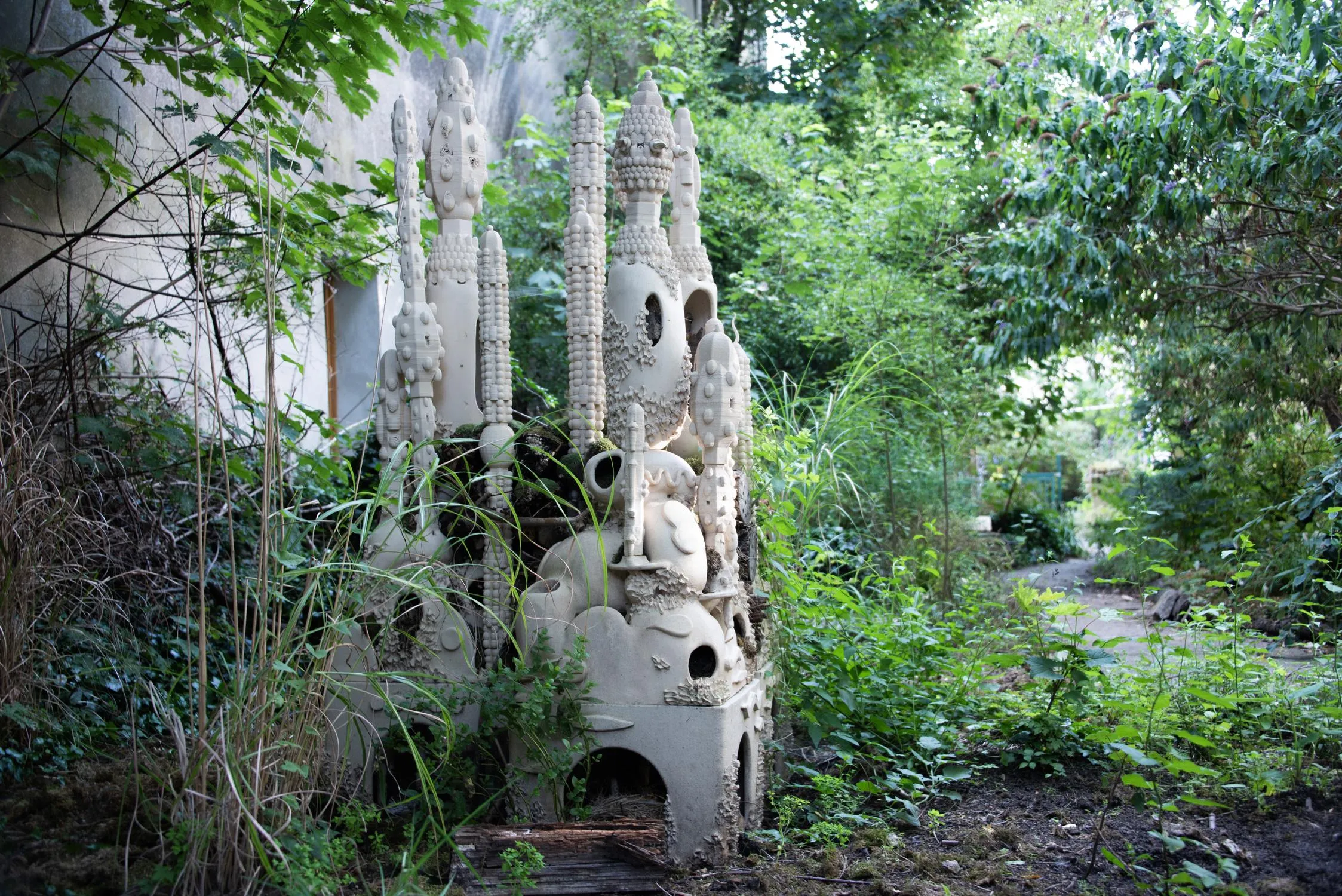
Prototypes presented at the New Stone Age exhibition demonstrate how a stone exoskeleton paired with cross-laminated timber (CLT) floor plates can form an integrated, low-carbon assembly. In such configurations, the timber’s capacity to sequester carbon offsets the emissions associated with stone extraction, positioning the building not only as carbon-neutral but also potentially carbon-negative.
1. 15 Clerkenwell Close
Location: London, United Kingdom
Architects: Amin Taha / Groupwork
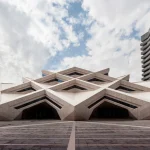
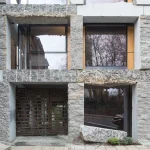
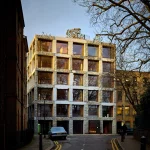
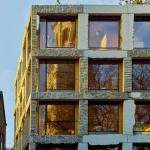
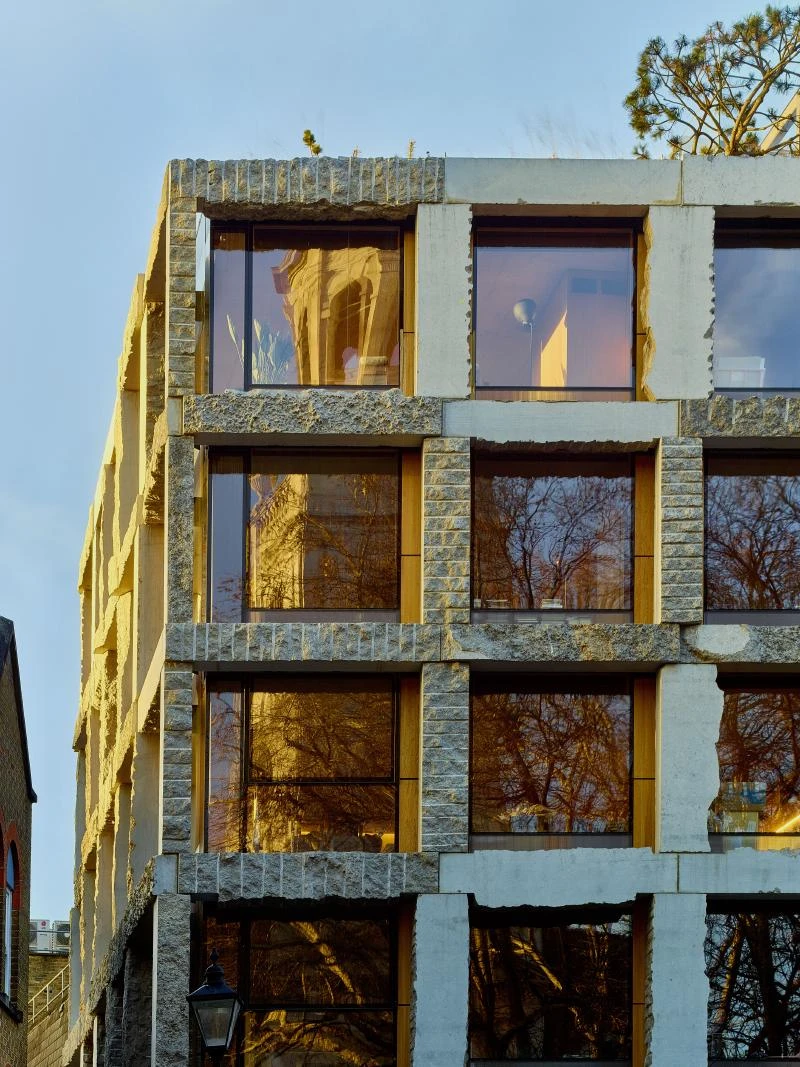
Completed in 2017 by Amin Taha and his practice Groupwork, 15 Clerkenwell Close is widely considered the pivotal project of the contemporary stone resurgence. The building features a load-bearing exoskeleton made of limestone sourced from a quarry in Normandy, the same geological bed that provided the stone for the site’s original 11th-century Norman abbey.
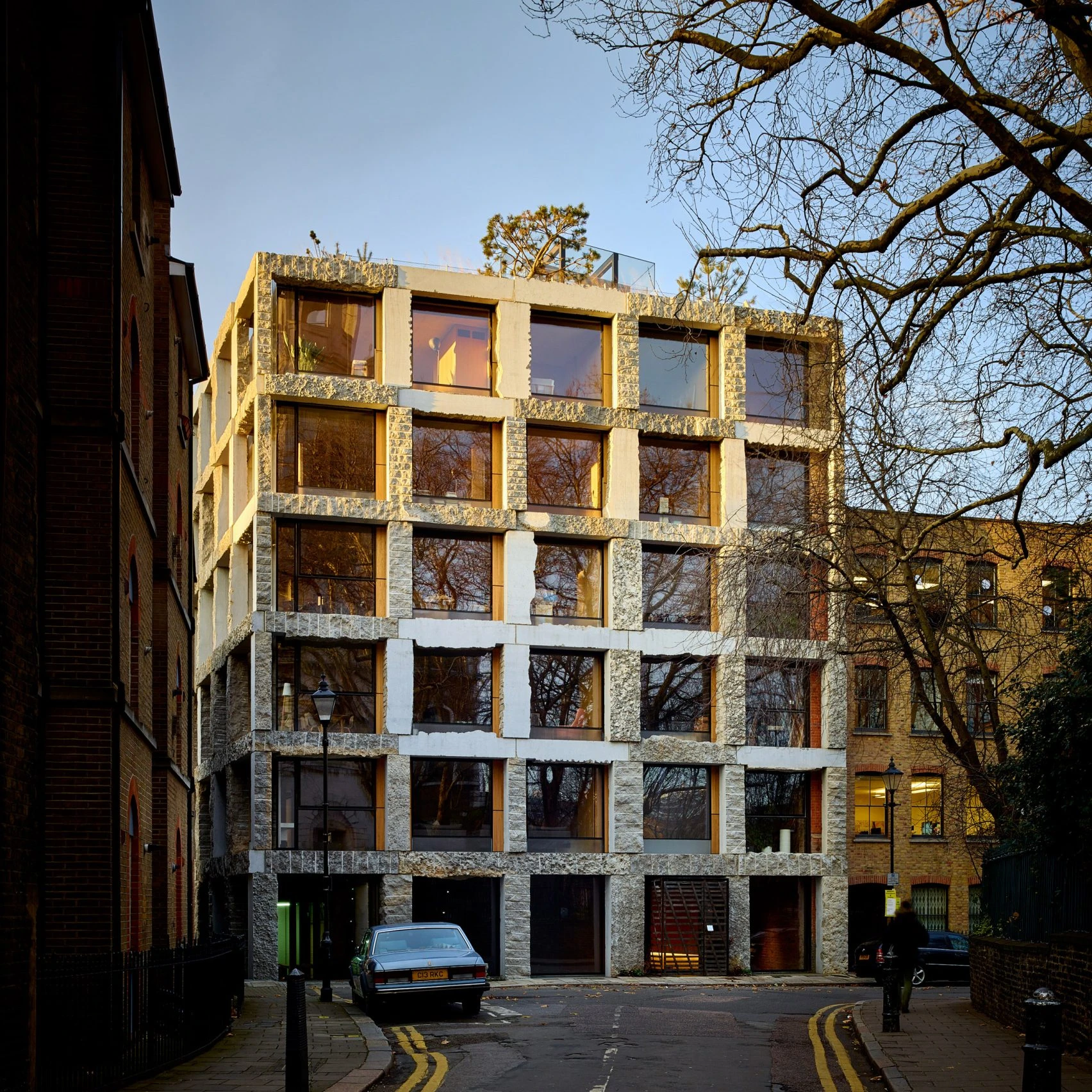
Taha’s design is a deliberate rejection of the veneer culture. The limestone blocks are used as the primary superstructure, acting as the supporting finish and the primary load-bearing system. By treating the stone as a raw material, the building reveals fossils, ammonite shells, and quartz pockets that are typically hidden behind polished finishes
The building utilizes a trabeated system (post-and-lintel) of massive precut stone blocks. This exoskeleton allows the interior of the apartments and offices to remain completely free of columns, maximizing spatial flexibility. The engineering for this project, completed in collaboration with Webb Yates, introduced two critical innovations to reduce costs:
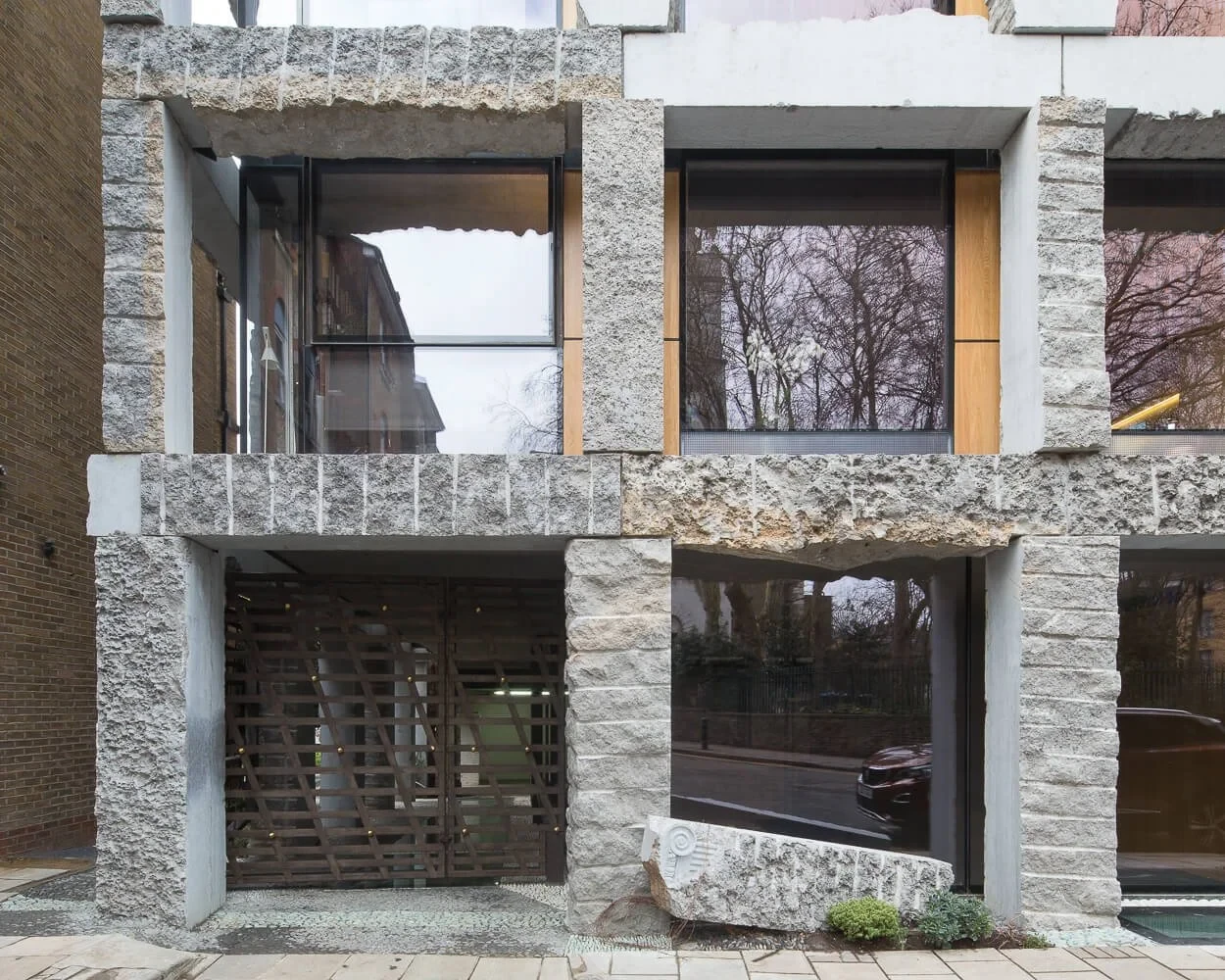
Partial Dimensioning: The stone blocks are only precisely dimensioned at their joining ends. The rest of the block retains its natural, rusticated quarry surface, reducing cutting costs and material waste.
Exoskeletal Efficiency: By placing the structural load on the exterior skeleton, the architects could use an inexpensive, lightweight curtain wall for weatherproofing behind the stone, rather than a heavy masonry wall.
2. Rajkumari Ratnavati Girls’ School
Location: Jaisalmer, Rajasthan, India
Architects: Diana Kellogg Architects
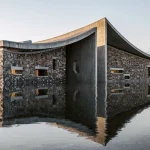
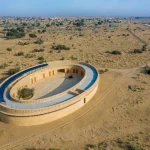
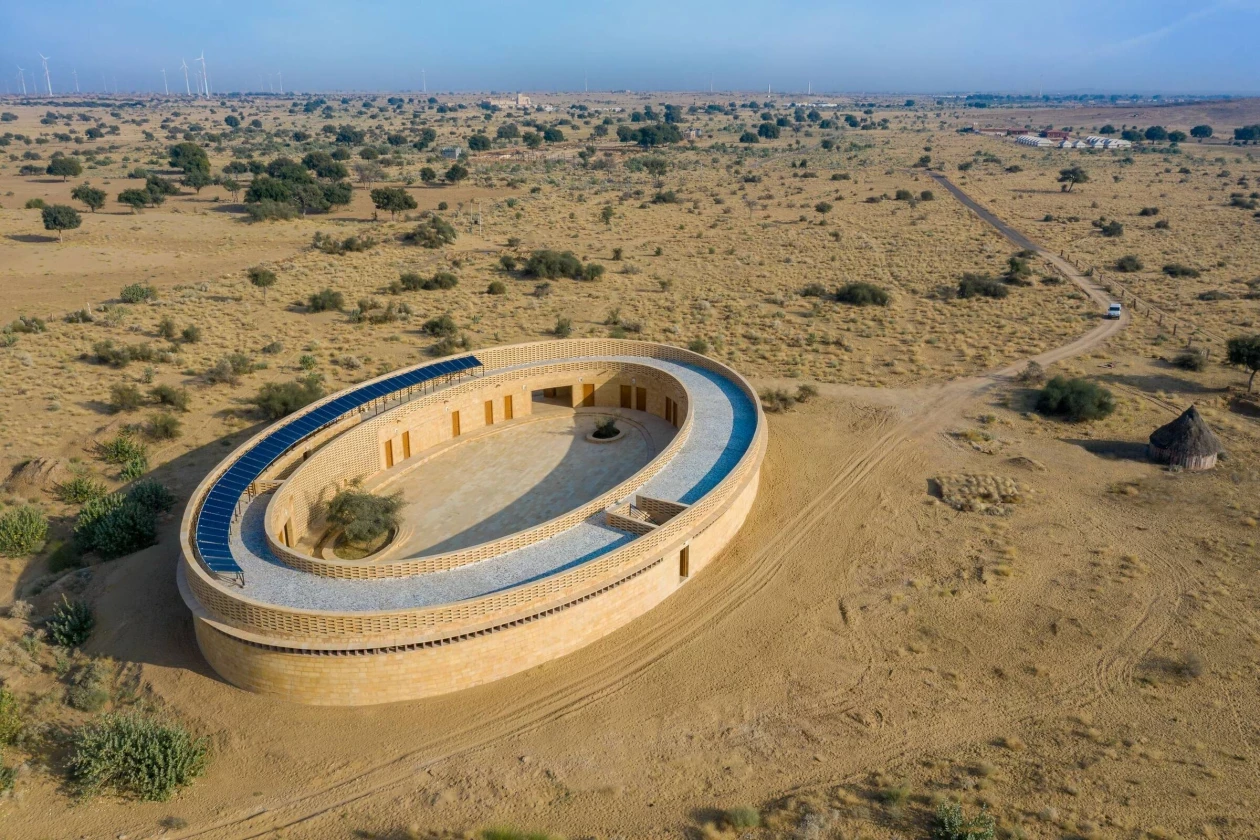
In the Thar Desert of Rajasthan, India, the Rajkumari Ratnavati Girls’ School by Diana Kellogg Architects serves as a masterclass in how stone can be used for climate resilience and social empowerment. The school is an oval-shaped structure built from hand-carved yellow sandstone, a material synonymous with the regional architecture of Jaisalmer. The architect’s goal was to create a building that grew out of the natural landscape. The oval form was chosen for its symbolic connection to femininity and its ability to temper the desert winds and manage solar gain.
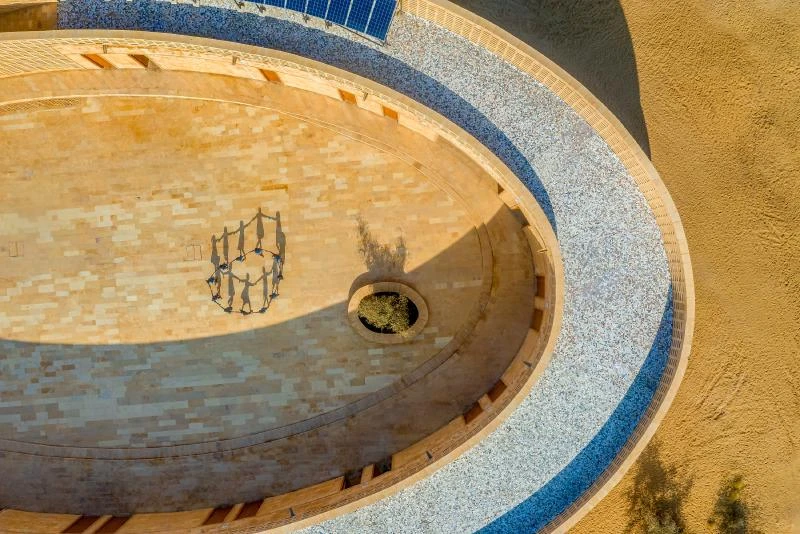
A critical feature of the school is its use of perforated stone walls, which reinterpret the traditional Jali latticework. This slow architecture approach stands in stark contrast to the rapid, standardized construction of modern urban centers in India. The yellow sandstone floor, combined with a blue tiled-mosaic roof walkway, provides a visual and thermal contrast that anchors the building in its desert context.
3. Delas Frères Winery
Location: Tain l’Hermitage, France
Architects: Carl Fredrik Svenstedt Architect
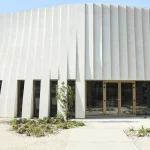
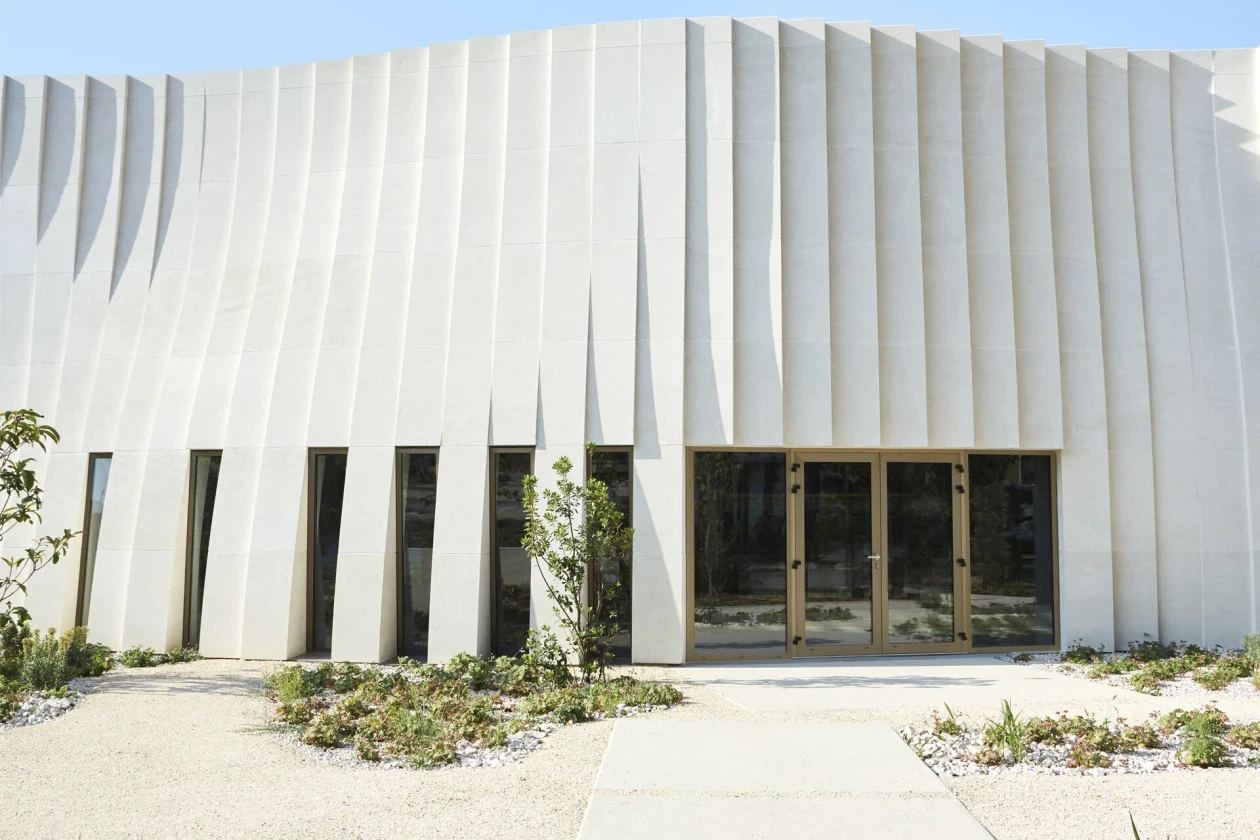
The Delas Frères Winery, designed by Carl Fredrik Svenstedt Architect, is a landmark project that demonstrates the fluid, sculptural possibilities of structural stone when combined with robotic fabrication.
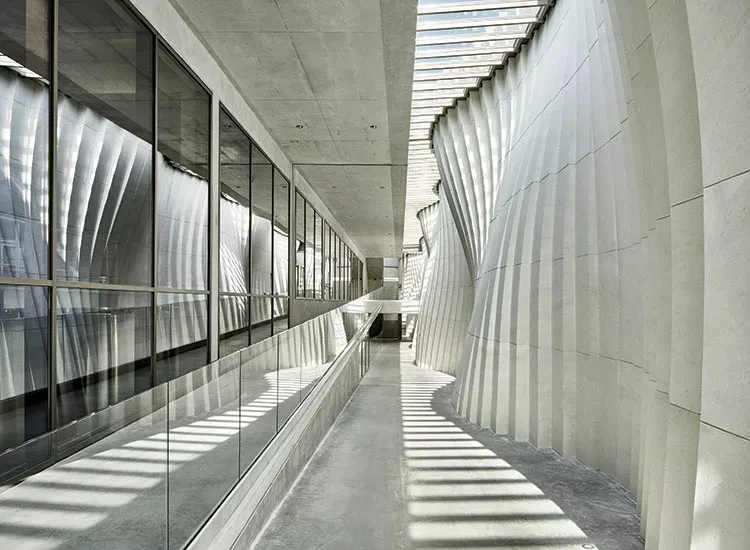
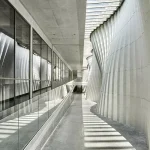
The winery features an 80-meter-long, 7-meter-high wall made from 50-centimeter-thick Estaillade stone blocks. Unlike the static, rectilinear stone walls of the past, this wall ripples and waves across the site. Each block weighs over 2 tons and was wire-cut and sculpted individually by a robot. The sandstone was chosen because it is tender and soft when freshly quarried, making it ideally suited for complex robotic milling before it calcifies and hardens upon exposure to air.
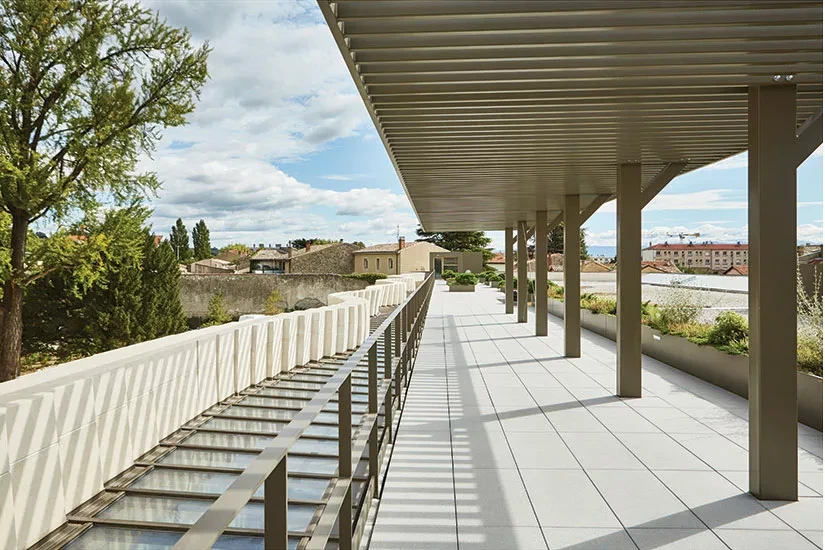
Despite the high-tech machining, the assembly was performed by a father-and-son team of stonemasons using traditional mounting techniques. This project serves as a convergence of the whole project, where the stone wall acts as a thermal buffer for the wine aging inside, a reflector for soft natural light, and a tactile element that is built to be touched.
4. Jetavan Spiritual Centre
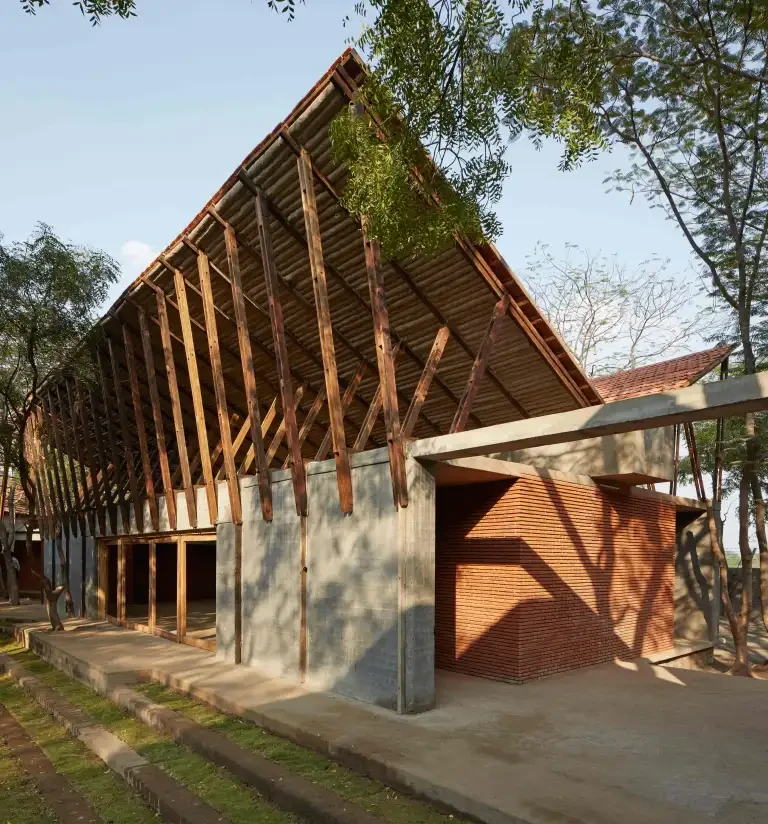
Location: Sakharwadi, Maharashtra, India
Architects: Sameep Padora & Associates (sP+a)
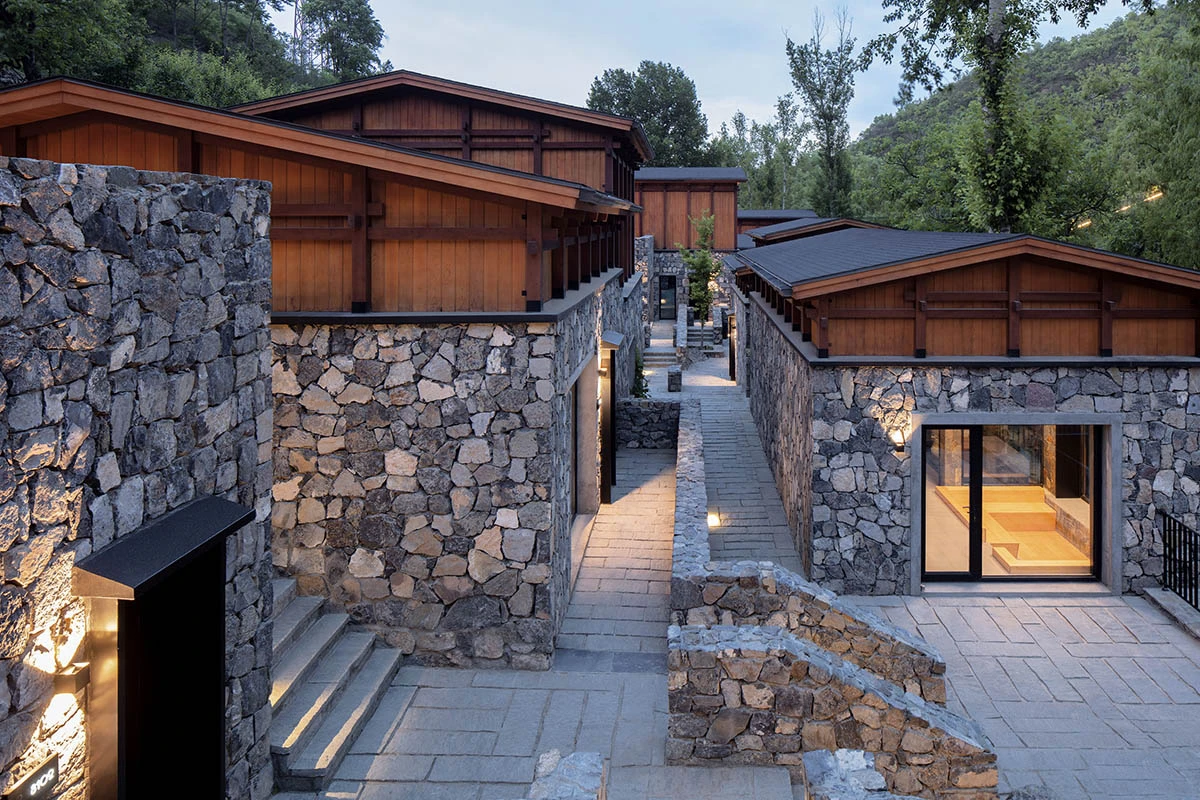
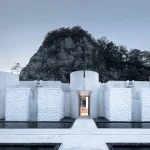
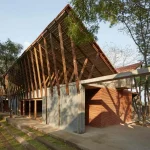
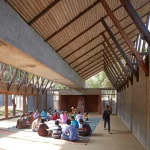
In Sakharwadi, Maharashtra, Sameep Padora & Associates (sP+a) explored a different dimension of stone’s resurgence: the upcycling of industrial waste. The Jetavan Centre was built for the local Buddhist community with a mandate to avoid harming a single tree on the site. The structural walls are made of rammed stone, a composite material consisting of basalt stone dust and fly ash.
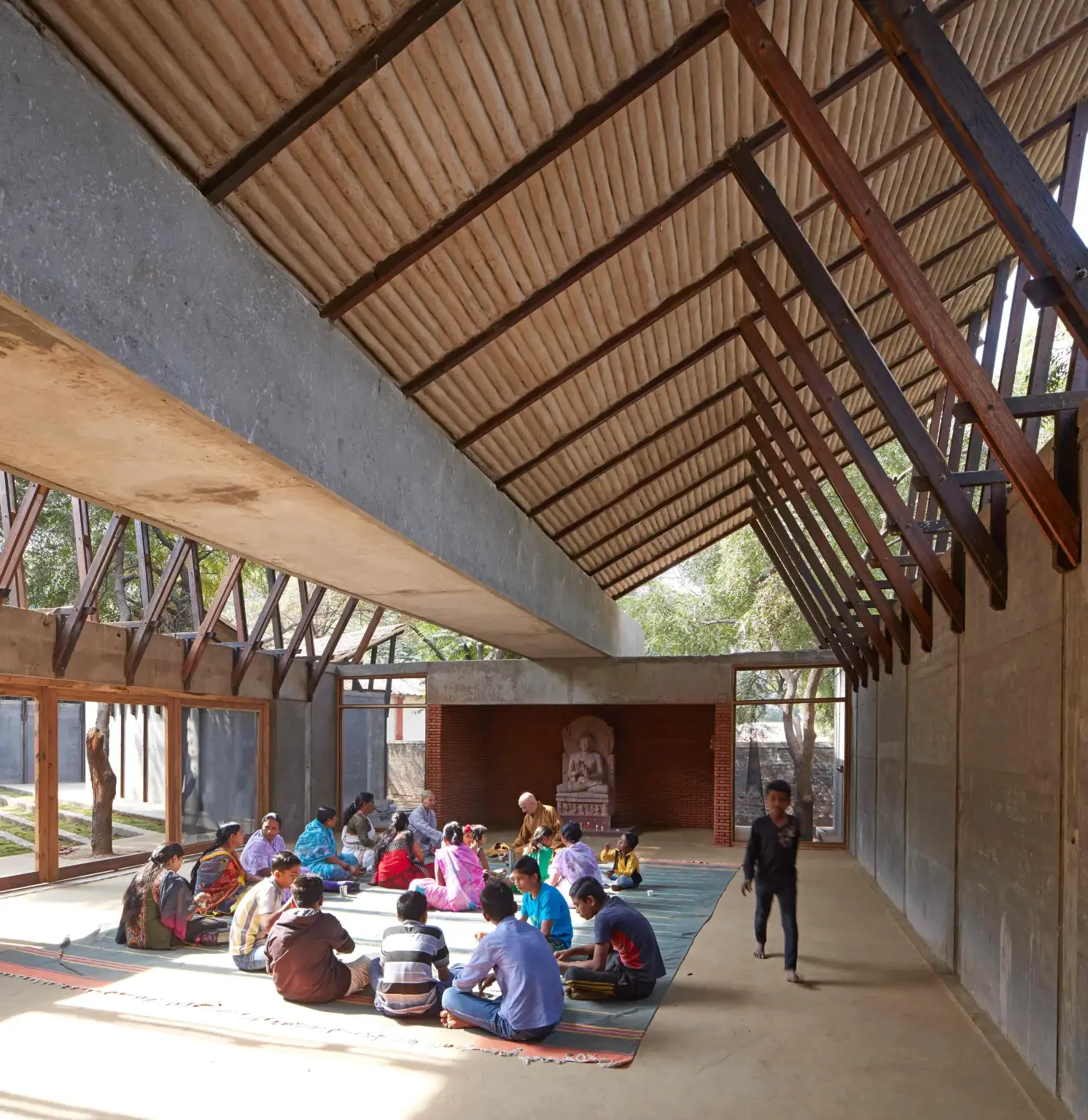
This project shows how stone can be used circularly, transforming industrial remnants into high-performance structural elements. The building’s aesthetic is modern and rectilinear, but its tectonics are imbued with narrative. Padora utilized recycled wood from old shipping vessels for the roof structure and Mangalore clay tiles from demolished buildings for the roofing. This approach challenges the pervasive image of what defines local architecture, moving away from stereotypes of primitive mud construction toward a modern regionalism.
5. Bapagrama Stone House
Location: Bangalore, India
Architects: Pragrup
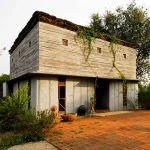
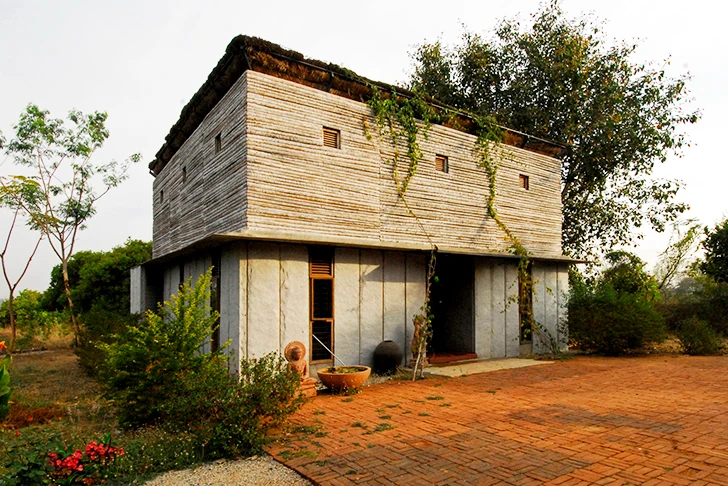
The Bapagrama Stone House by Pragrup Architects is a minimalist 1,200-square-foot guest house that uses massive local stone slabs as the primary structural and aesthetic element.
The walls of the house are formed by 14-foot-tall grey stone slabs. This use of large-format stone creates a tranquil aura and an open interior that requires no partition walls. The structure is capped with an inverted pyramid thatched roof made of biodegradable reed, which descends toward a central courtyard to harvest rainwater.
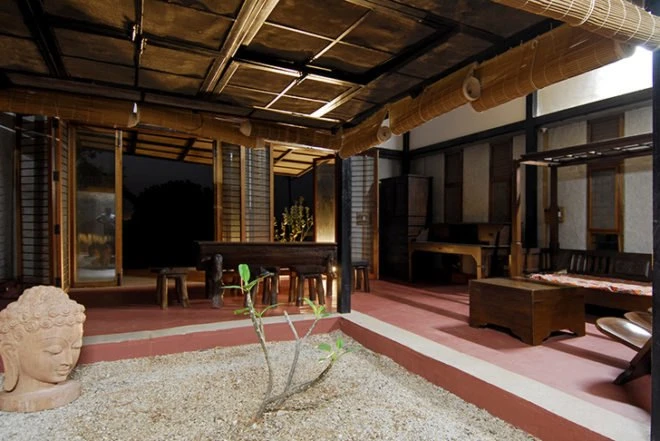
By using local materials and biodegradable finishes like compacted mud and oxide for the floors, the architects achieved a structure that sits in perfect harmony with its environment. The new confidence here is the willingness to let the material speak for itself, with nothing clad or concealed.
The Tectonic Future
The reappearance of stone in contemporary architecture is a tectonic renaissance. It is a movement that bridges the gap between ancient wisdom and the digital future. By leveraging the material’s inherent compressive strength, thermal mass, and low carbon footprint, and augmenting these properties with post-tensioning and robotic precision, architects are creating a new architectural language that is poetic and practical.
In an era defined by the climate emergency, the return to stone is not just an aesthetic choice; it is a fundamental reconfiguration of the relationship between building, material, and the earth. The New Stone Age has truly begun, and it promises an architecture that is as enduring as the ground from which it was quarried.