



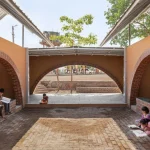
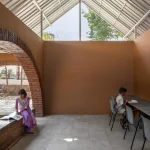
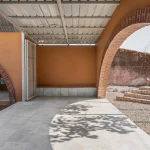
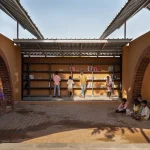
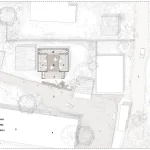
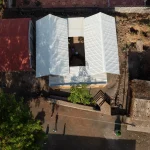
In Kochargaon, a small village in the Nashik district of India, knowledge did not begin with books, but it began with a question: What does learning look like in a place where community life happens outdoors, under trees, in temple courtyards, and along verandahs? Instead of importing an institutional idea of a library, PK_iNCEPTiON chose to ask a more relevant question: how can architecture make learning feel like a natural extension of village life?
The Rural Library as a Community Infrastructure
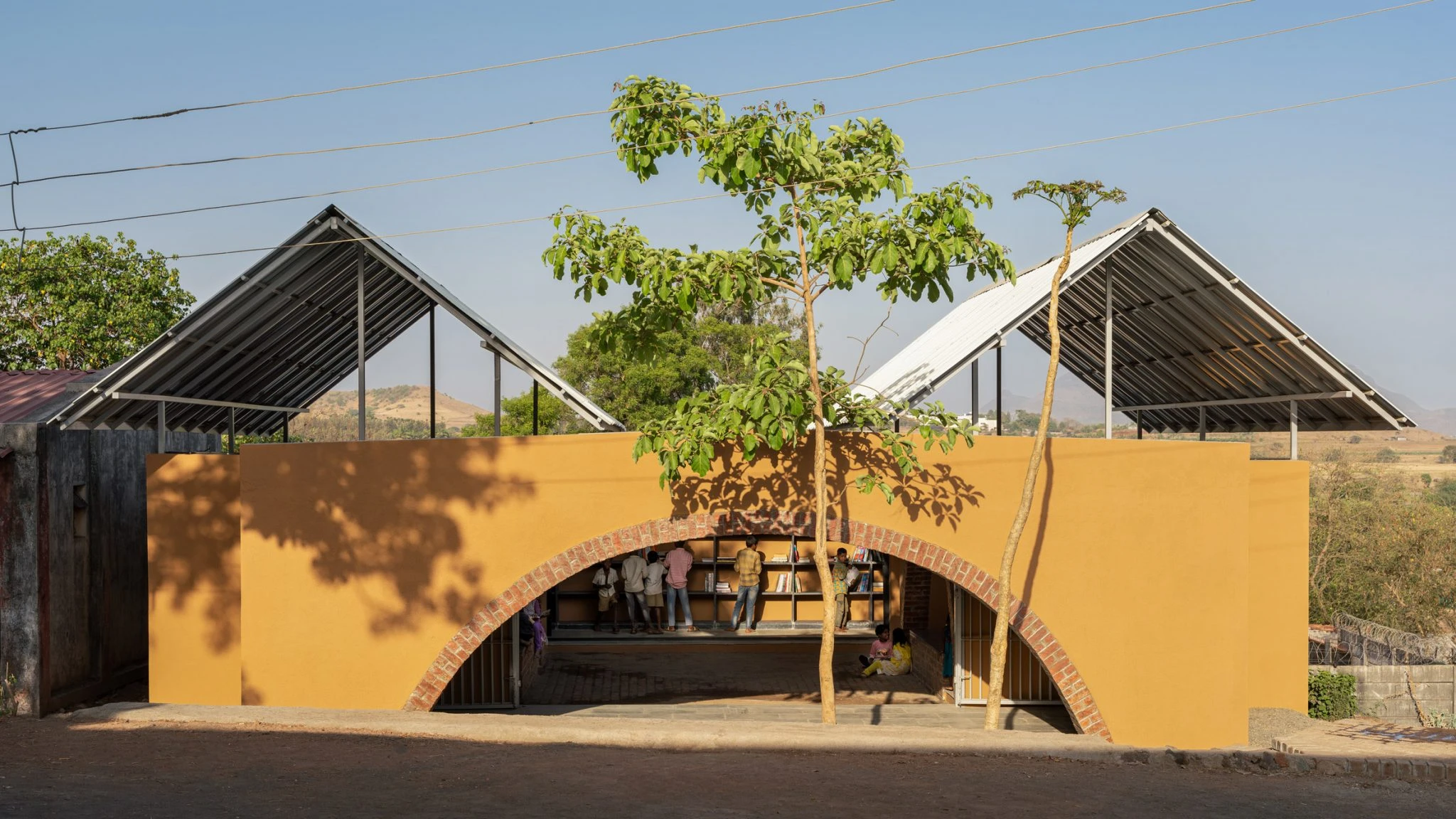
Spread across just 1,162.5 square feet, the project is not defined by its size but by its intention. This is not architecture trying to impress; it is architecture trying to belong. The studio approached the design as a social instrument where the library becomes less of a building and more of a shared social infrastructure. Instead of treating books as static objects, the design reframes the library as a living platform for exchange, interaction, and informal learning. The architecture quietly dissolves the boundary between reading and gathering alongside silence and conversation.
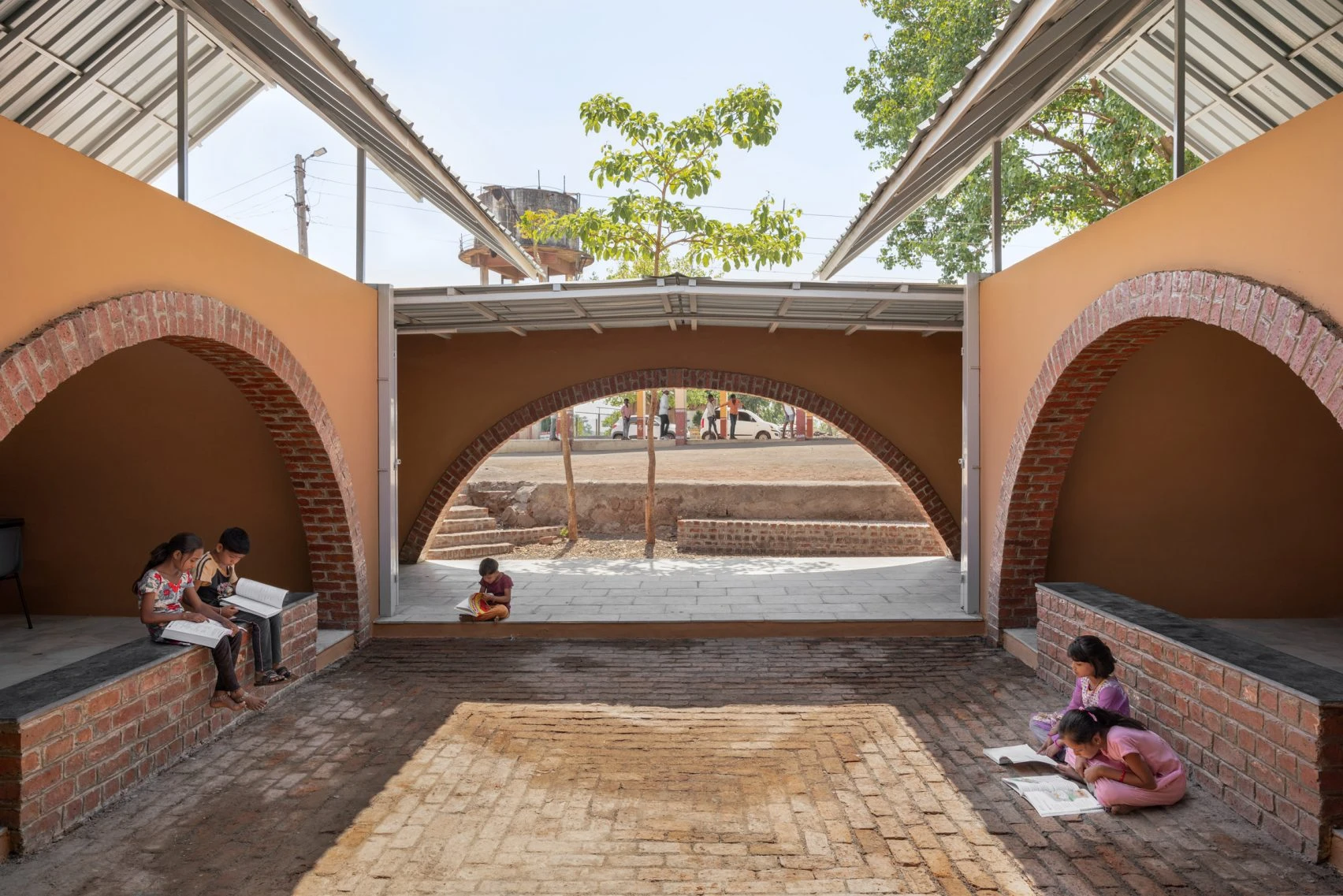
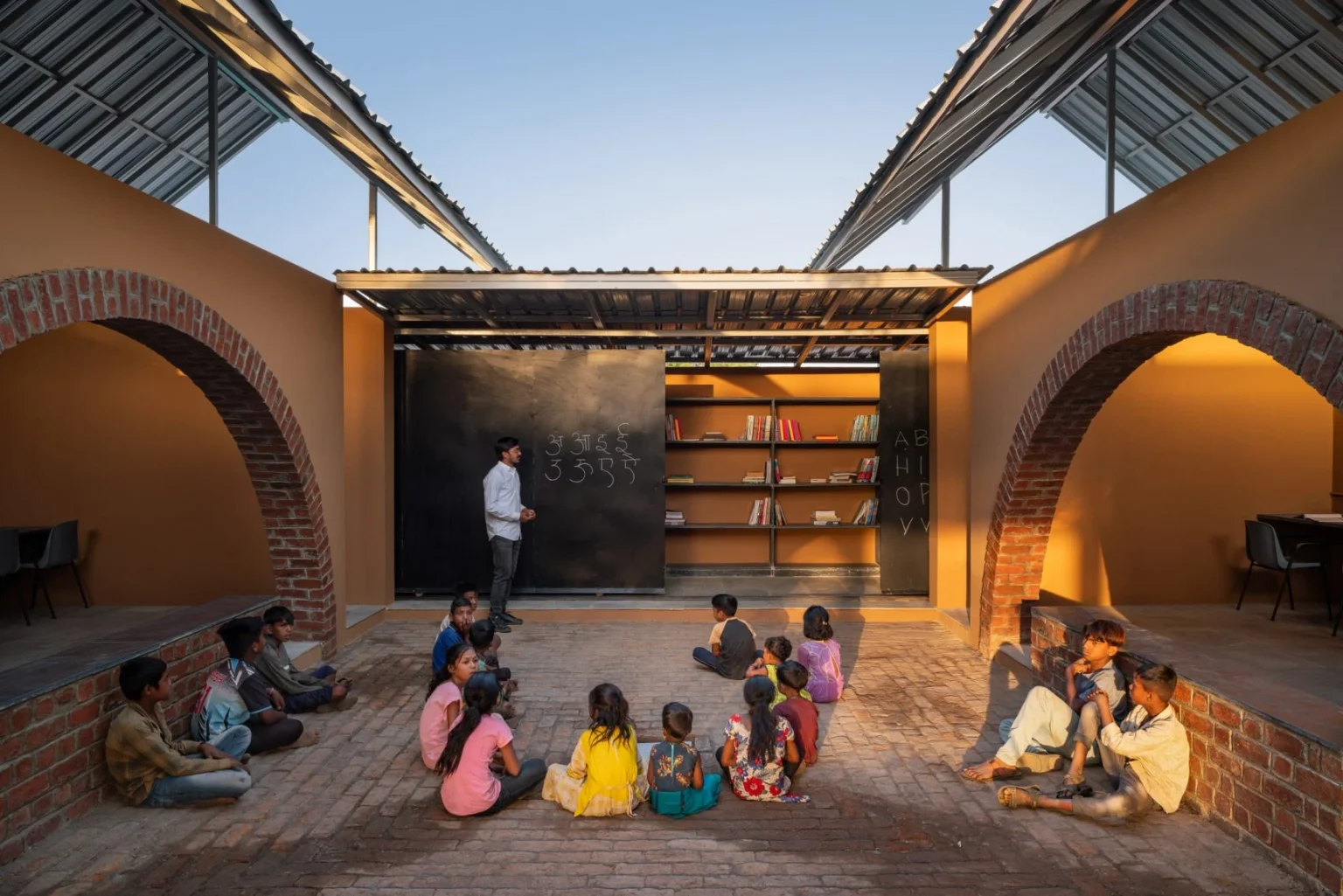
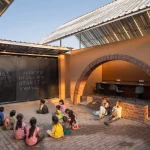
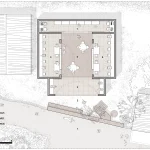
At the heart of the project is its most powerful idea, not a room, but an absence of one. An internal courtyard inspired by the traditional Indian ‘Aangan’ becomes the intellectual and social heart of the project. Around it, three modest pavilion-like structures form a porous edge between inside and outside. This design intelligence is rooted in climate, culture, and behavior. The courtyard brings daylight deep into the plan, encourages cross-ventilation, and turns learning into a visible, collective act and not just a private activity.
The Architecture of Inclusivity
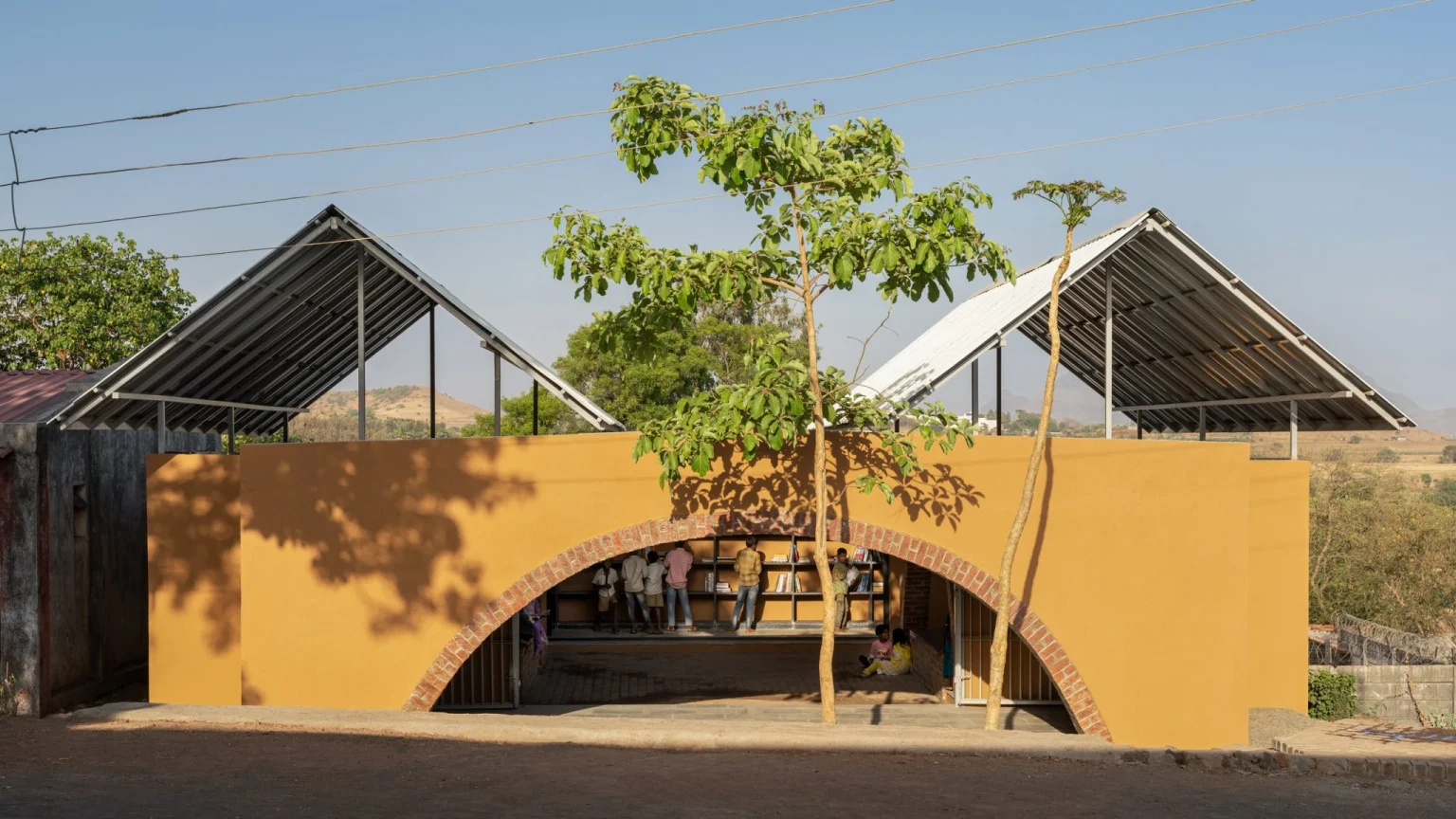
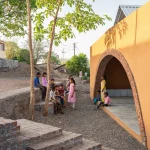
The foundation of the structure was built on an existing collapsed childcare center located near the village’s main temple complex. Entering through the verandah, which is flanked by benches, it becomes the first pause point for the villagers to gather before entering the built form. Inside, the book storage occupies a prominent position, serving as a visible backdrop that reinforces the symbolic presence of knowledge in everyday life.
Adaptive Reuse and Material Innovation in Rural Design
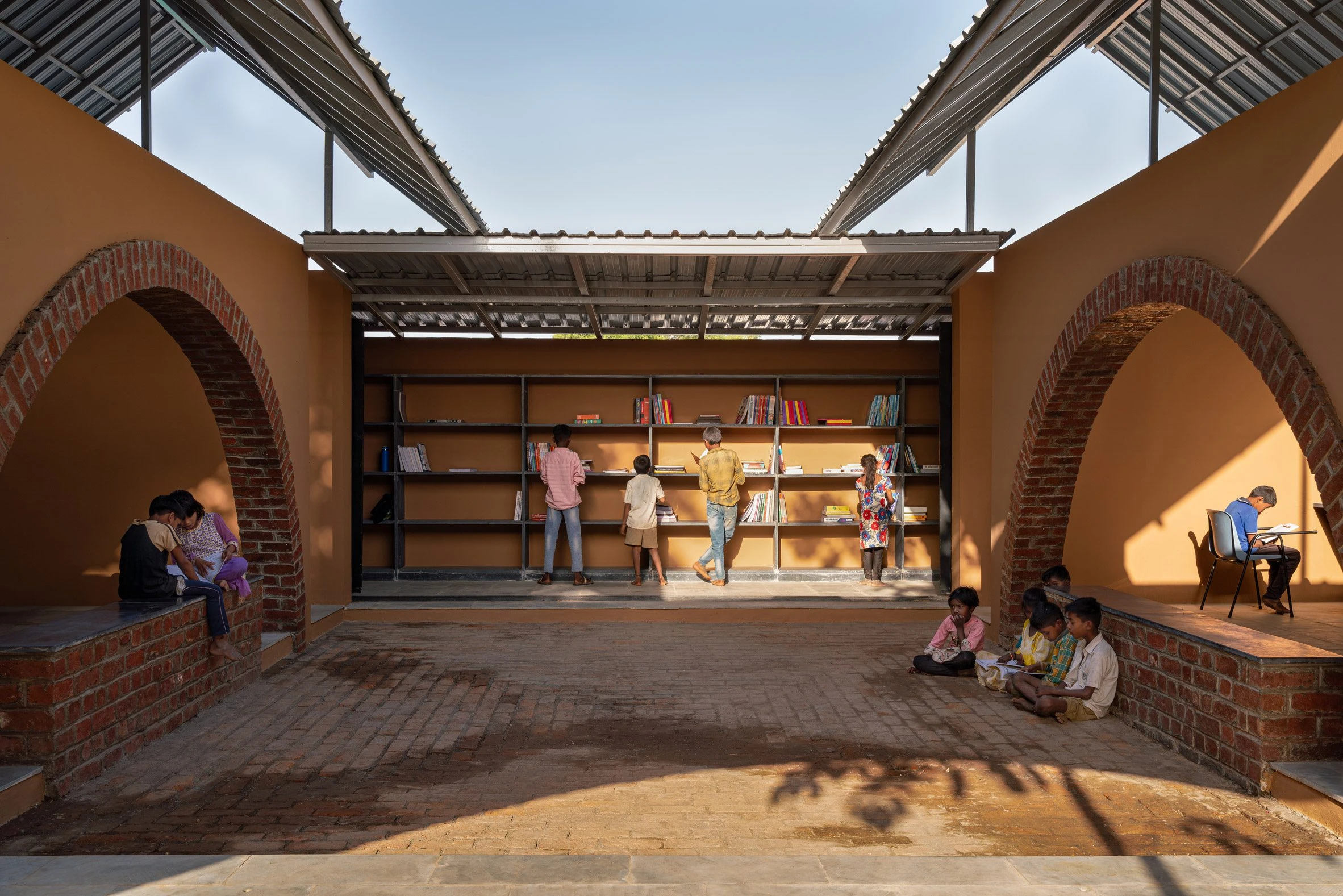
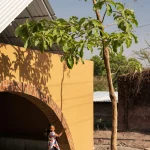
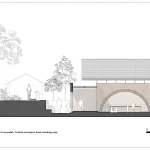
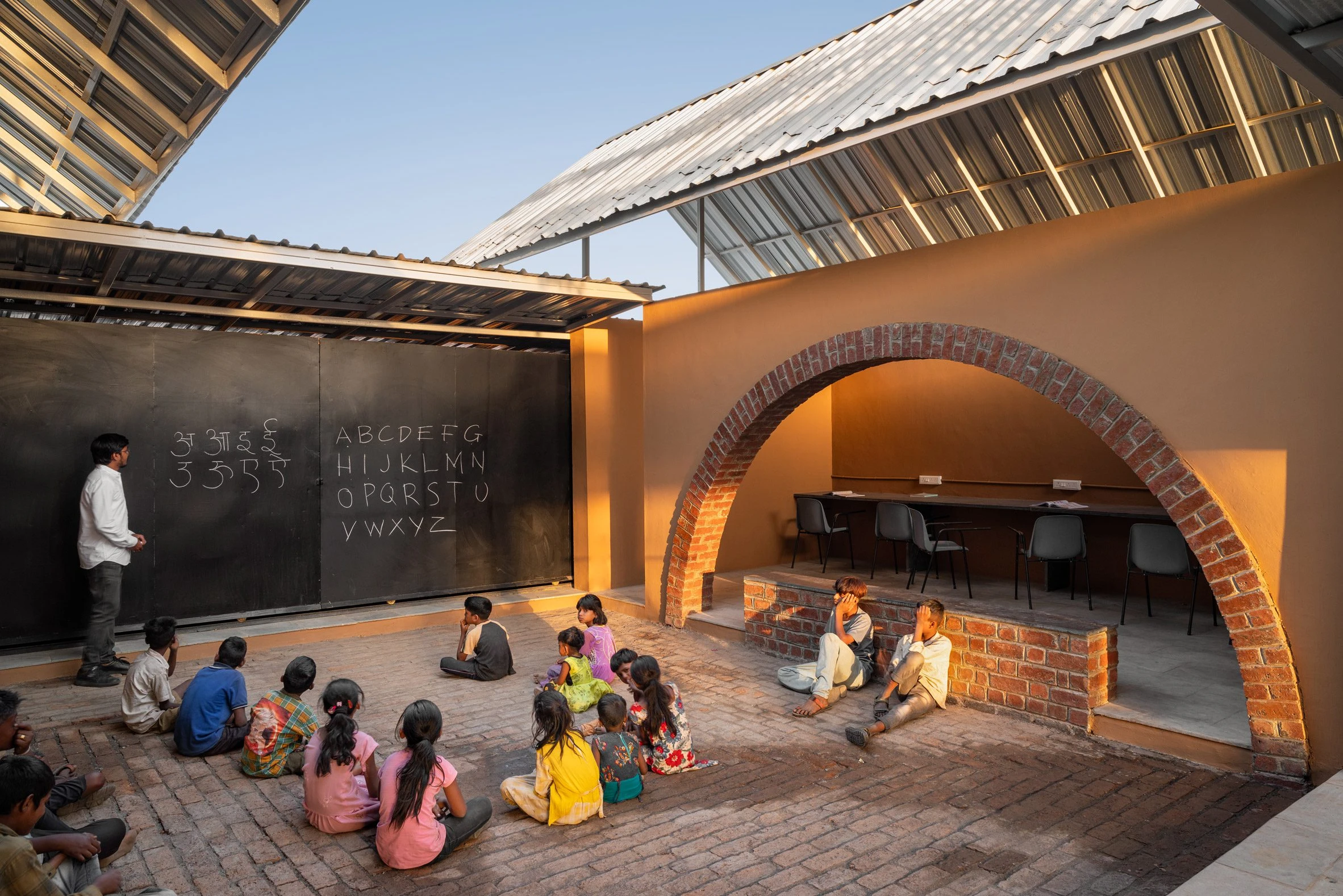
This approach fosters the idea of an architectural choreography of visibility, ensuring the presence of knowledge is celebrated through color, openness, and fostering community engagement. The flexibility of the layout centers on the courtyard, placed outside the enclosed reading rooms, transforming a quiet space into a continuous public stage. The structure includes enclosed reading rooms connected to the central court by large arched openings.
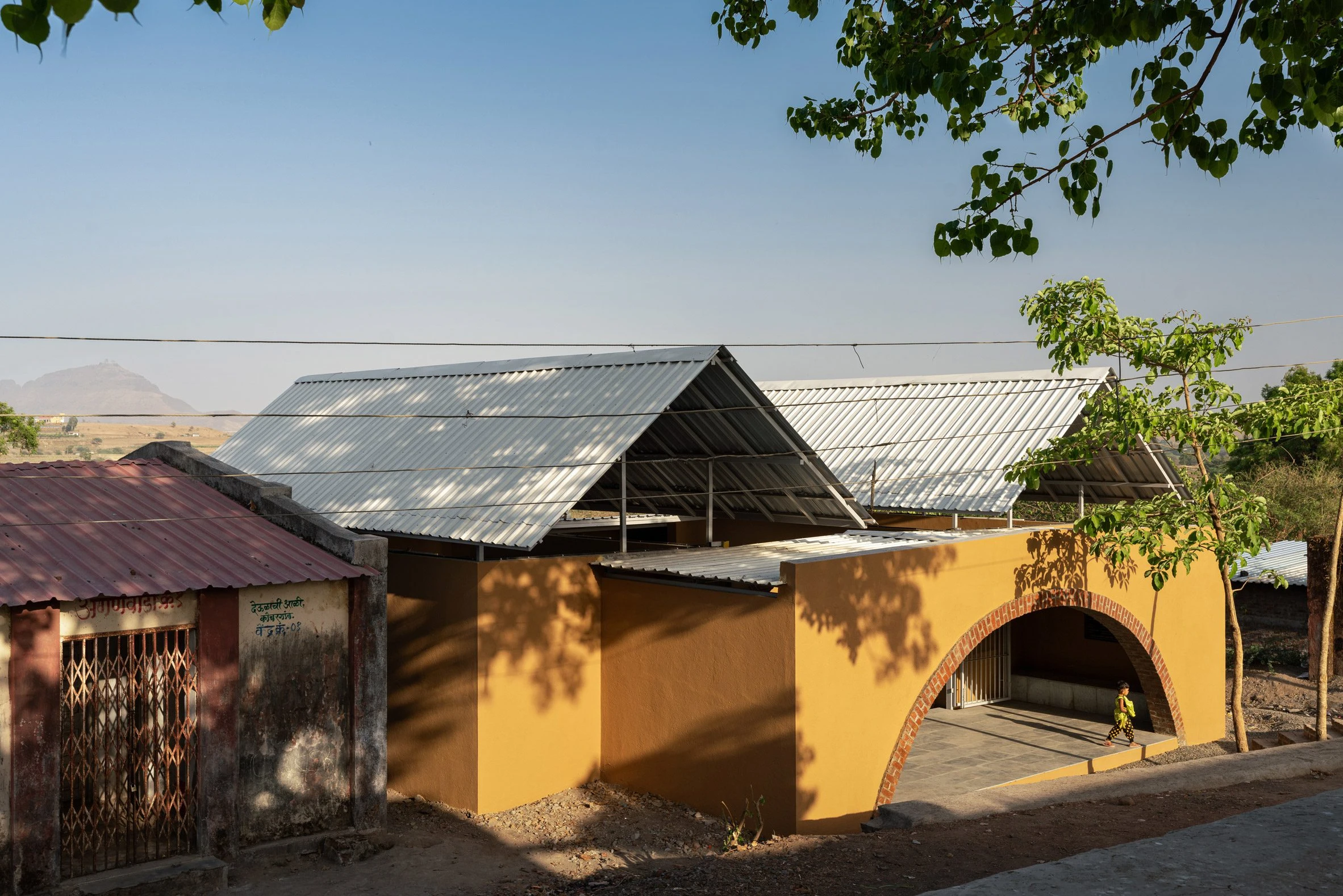
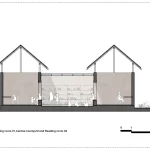
The standout detail of the project is the mechanism used to enclose the book stacking area, opening onto the courtyard via two large sliding shutters. When these shutters are closed, they function as writable blackboards. The floors and benches in the covered pavilions are tiled with locally sourced stone that helps in thermal regulation.
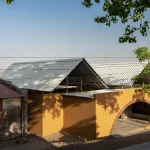
The low-cost roofing solution optimizes climate response while featuring two enclosed reading rooms covered by a pair of pitched corrugated metal roofs. This configuration facilitates the stack effect, which allows hot air to escape rapidly and ensures continuous ventilation within the spaces.
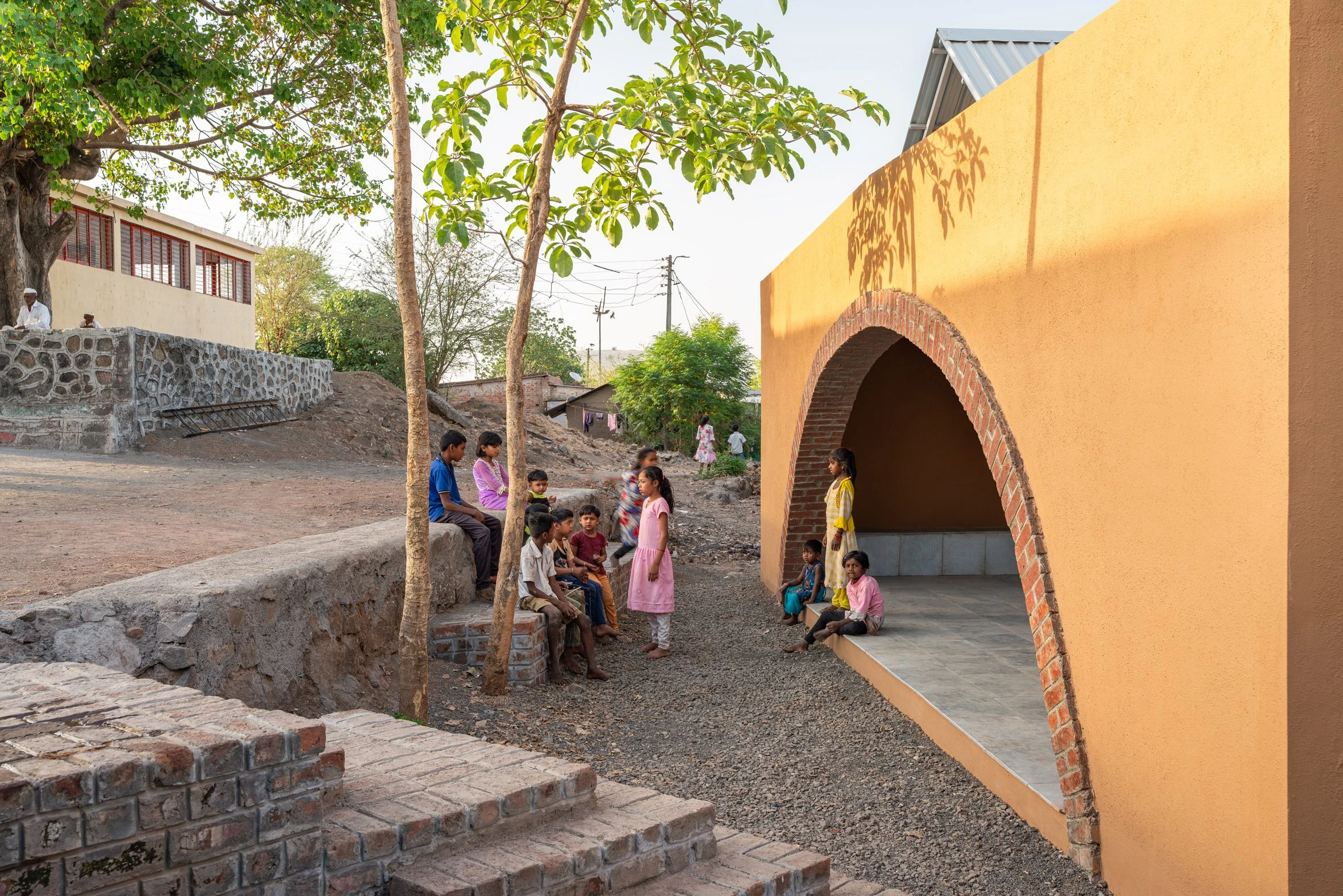
The overall design is highly efficient, low-maintenance, and cost-effective, achieved through strategic planning and the use of local resources and traditional construction techniques.
Rural Library Project
Architects: PK_iNCEPTiON
Location: Kochargaon
Area: 108 m²
Photographs: Pranit Bora
Lead Architect: Pooja Khairnar
Concept Development: Swasti Rangani, Shantanu Tribhuvan
Design And Working Drawings: Tanishq Tejnani, Tejaswini Kawale
Detailed Drawings: Bhavik Chopada, Shantanu Tribhuvan
Models: Shantanu Tribhuvan, Swaroop Sope
Graphics And Presentation Drawings: Bhavik Chopada