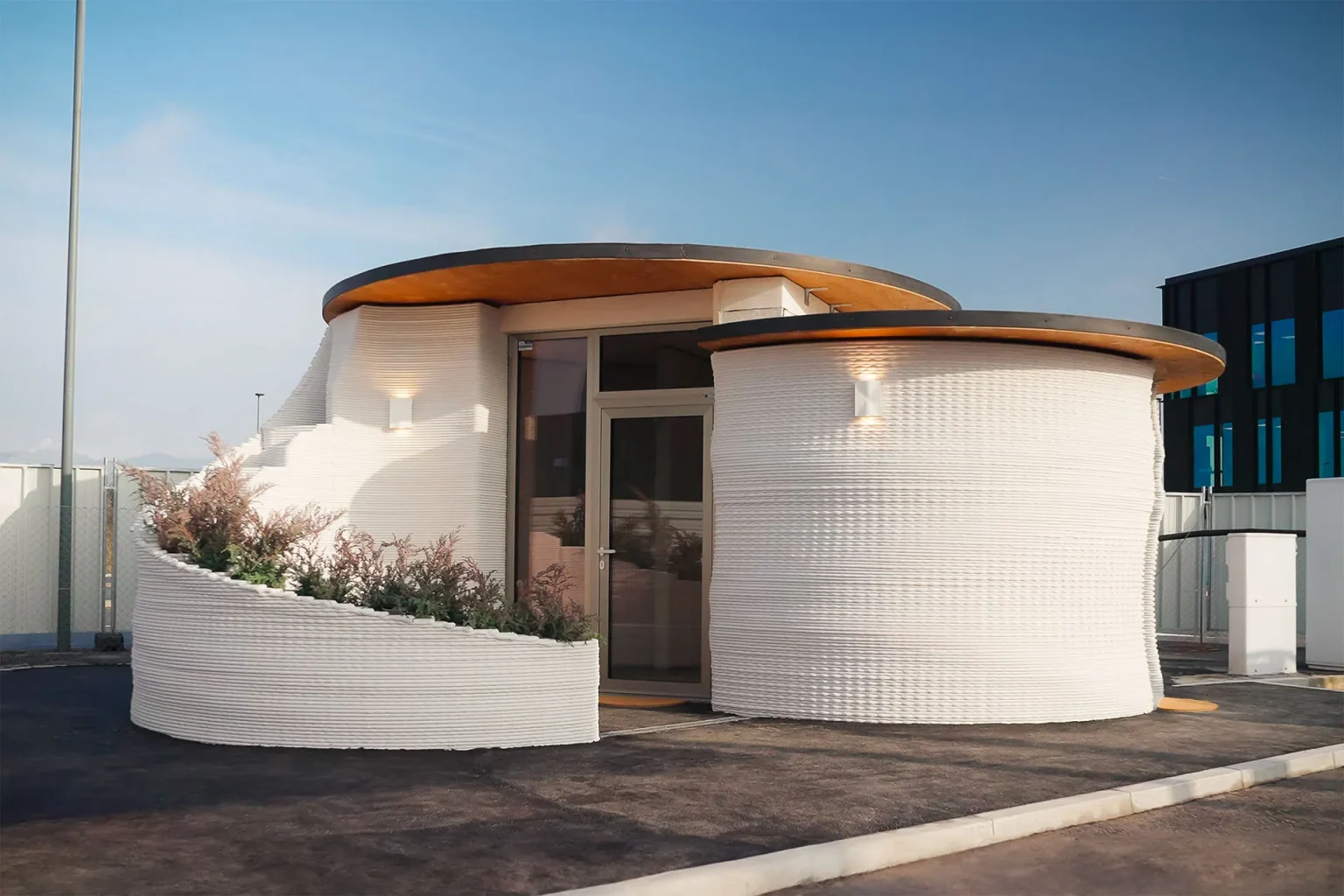


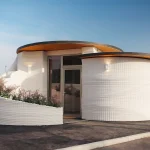
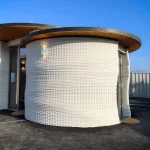
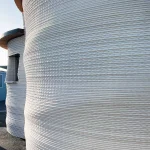
WASP used 3D-printed architecture to create a lime-based service building at Milan Bergamo Airport through robotic fabrication and low-carbon construction methods. Named Ol Casél, or ‘the little house’ in the Bergamo dialect, the project brings together additive fabrication, low-carbon material research, and small-scale infrastructure within a highly controlled operational setting.
Small Utility Building Takes Shape Through Robotic Construction
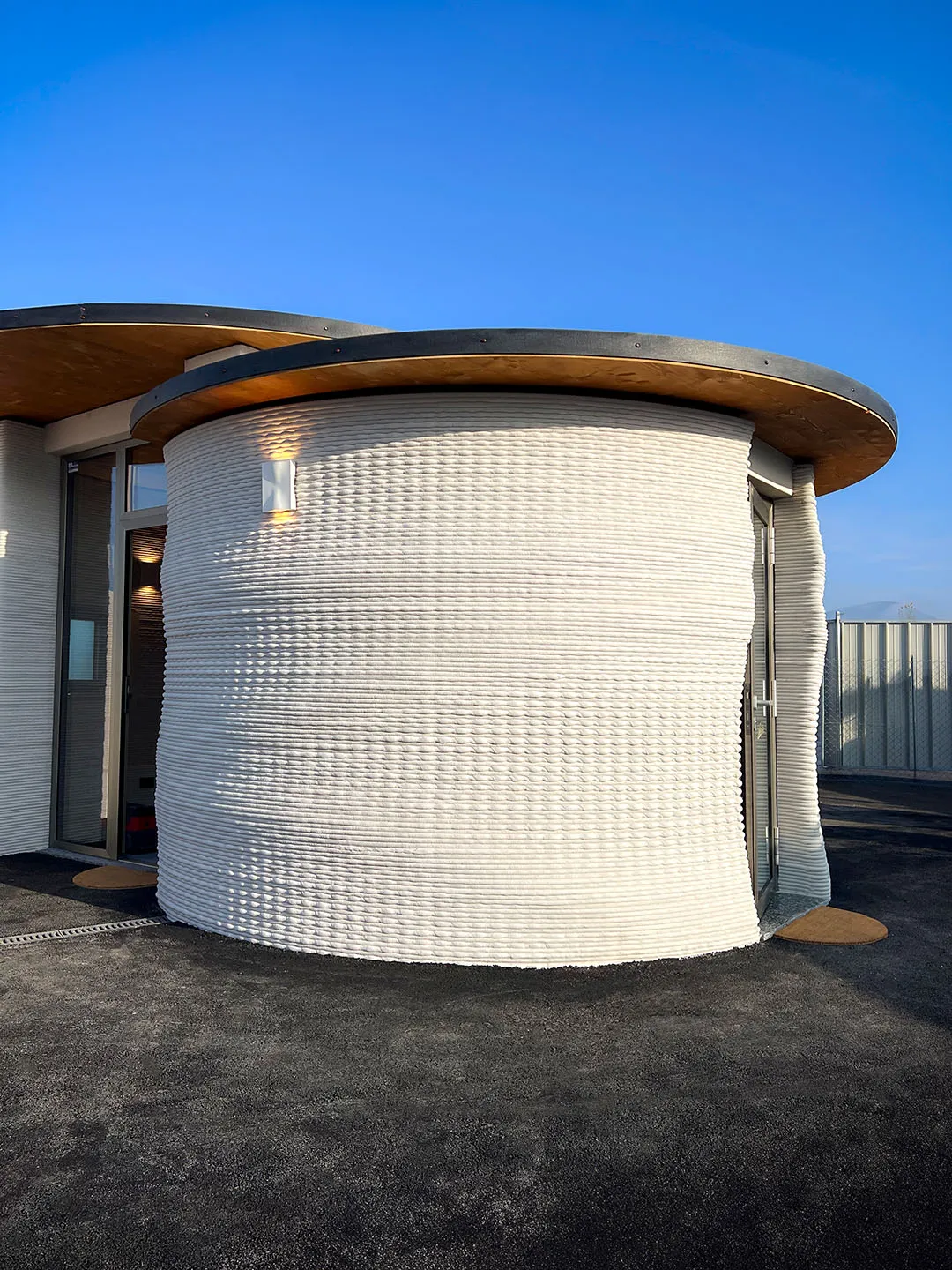
The project is designed as a working piece of airport infrastructure. Located within the logistics zone of Milan Bergamo Airport, the structure accommodates restrooms and a rest area for customs personnel.
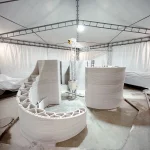
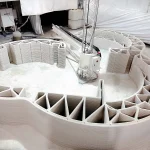
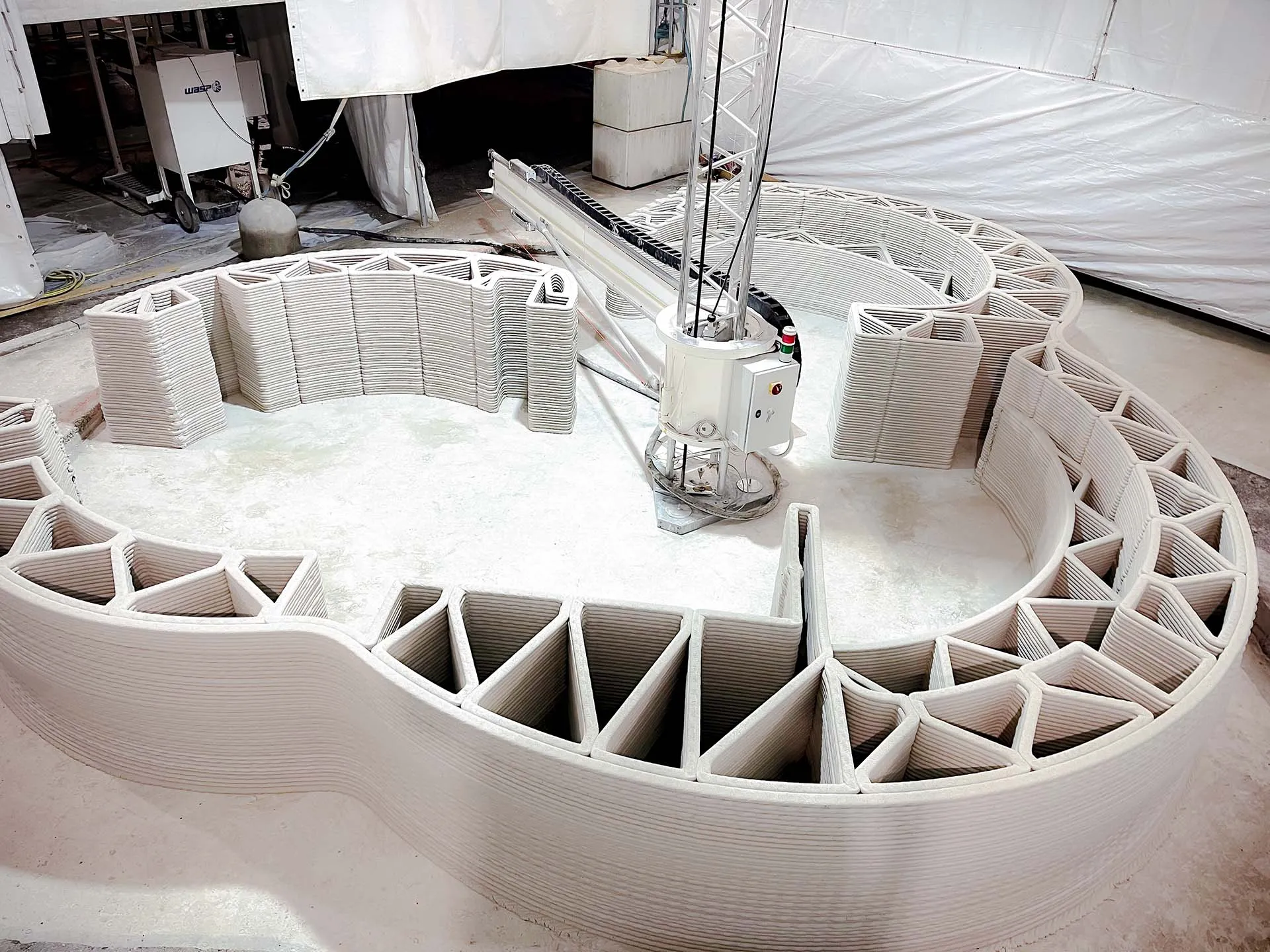
The walls of the building were printed directly on site using a crane-based robotic system equipped with a central mast and an extending arm, advancing the possibilities of 3D-Printed Architecture. As the print head extruded material in continuous layers, the walls were formed from the ground up without conventional formwork. The entire process, from initial setup to final delivery, was completed in just 19 days, while the wall printing itself took seven.
Lime-Based Walls Introduce a Lower-Impact Material Strategy
A defining aspect of the project lies in its material composition. Instead of a standard cement-based mix, WASP used a lime-based mixture for the printed walls, reducing the environmental burden typically associated with concrete construction within 3D-Printed Architecture.
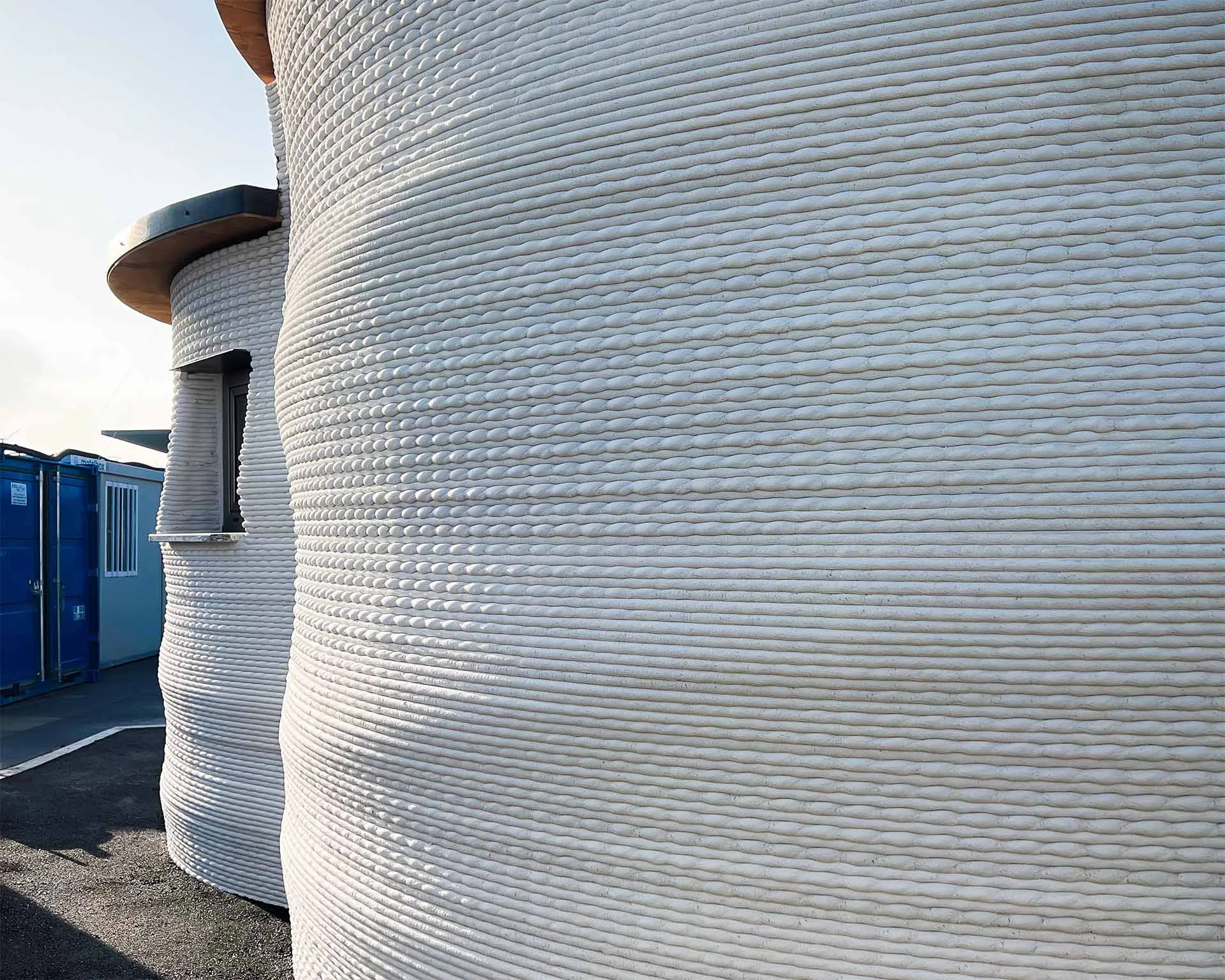
Lime-based materials are also linked to carbonation, a curing process that allows them to absorb carbon dioxide from the air over time. While the printed walls define the main structure, elements such as the roof, windows, and doors were completed using conventional construction methods.
Ol Casél Positions 3D Printing Within Airport Infrastructure
Developed by WASP in collaboration with EDILCO Srl and SACBO, the operator of Milan Bergamo Airport, the project places additive construction within one of architecture’s more regulated environments through 3D-Printed Architecture. Ol Casél functions as a completed service building that responds to the operational and technical requirements of an airport setting.
Rounded Geometry Softens Industrial Infrastructure Forms
Architecturally, the building departs from the rigid geometry often associated with service structures. Its softly rounded form and layered wall texture give the project a more tactile and expressive presence, even within the industrial context of the airport’s logistics park.