

The Industrial Revolution brought about significant changes; it changed the way products were made, the number of products made, and how those products were distributed and used. It introduced the word ‘manufacture’ and dramatically transformed society, and affected every facet of life. The design and construction realm was no different. It initiated the manufacturing of building parts in the industry using machines and produced what is known as prefabricated materials today. It made repetitive structures like housing and spaces like hotel rooms easier and faster to construct. The Industrial Revolution has several positive and negative impacts on the environment. Are prefabricated materials relevant and sustainable today?
What is Prefabrication?
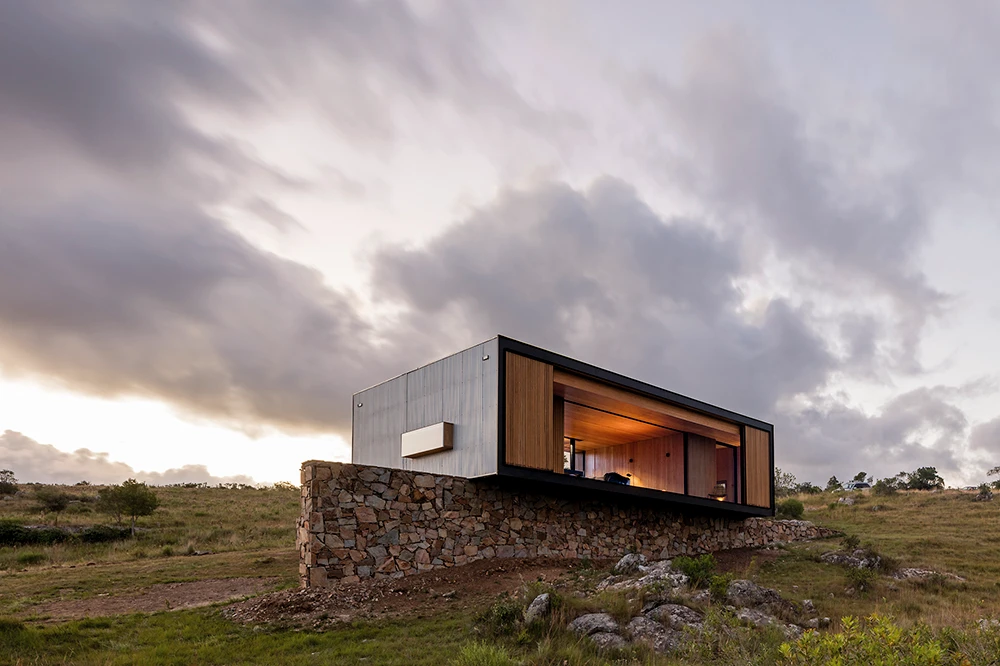
Prefabrication is the process of manufacturing or ‘pre-building’ elements, parts, or the whole of a structure off-site, usually in a factory, and then transporting them to the site to be set up to form the final structure. This helps to relieve the site from having to involve the work of compiling, preparing, constructing, and then erecting the structure. Modular construction is a type of prefabrication where all the ‘modules’ of a project that has repeatable units in terms of its parts and design are constructed off-site and then transported to the site and arranged according to the design.
All forms of prefabricated structures have proven to be cost-effective, time-efficient, uniformly constructed, and labor-saving. And all these advantages add to optimizing the carbon footprint of the whole project. Moreover, the prefabricated units can be reused and/or recycled upon demolition for other projects.
Today, prefabrication is extensively used in several sectors:
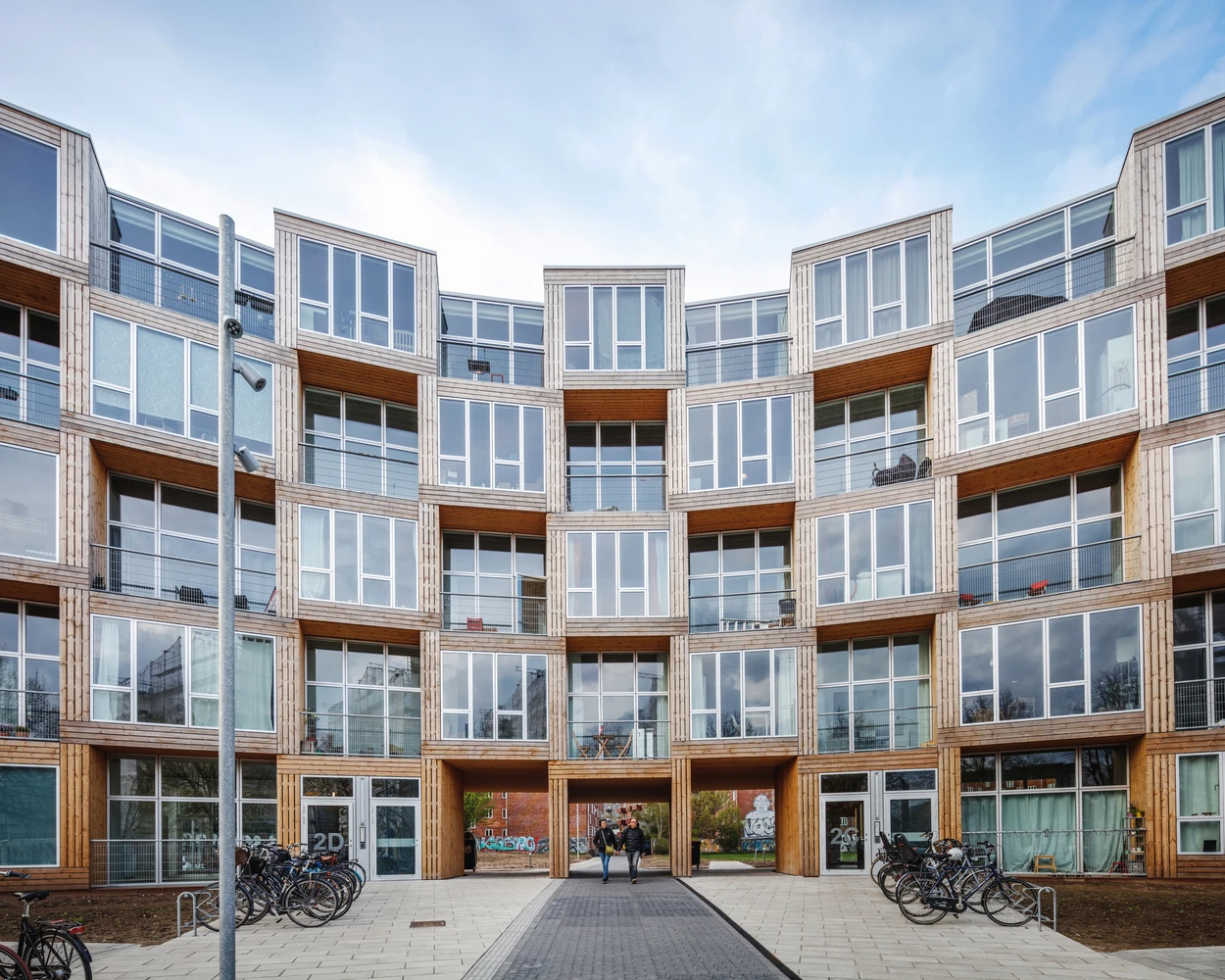
- Residential – modular housing and units that require repetitive units
- Commercial – office buildings and shopping centres that utilise recurring designs
- Infrastructure structures—factories, logistics centres, hospitals, and educational spaces—are repeated
Can prefabrication be sustainable? How?
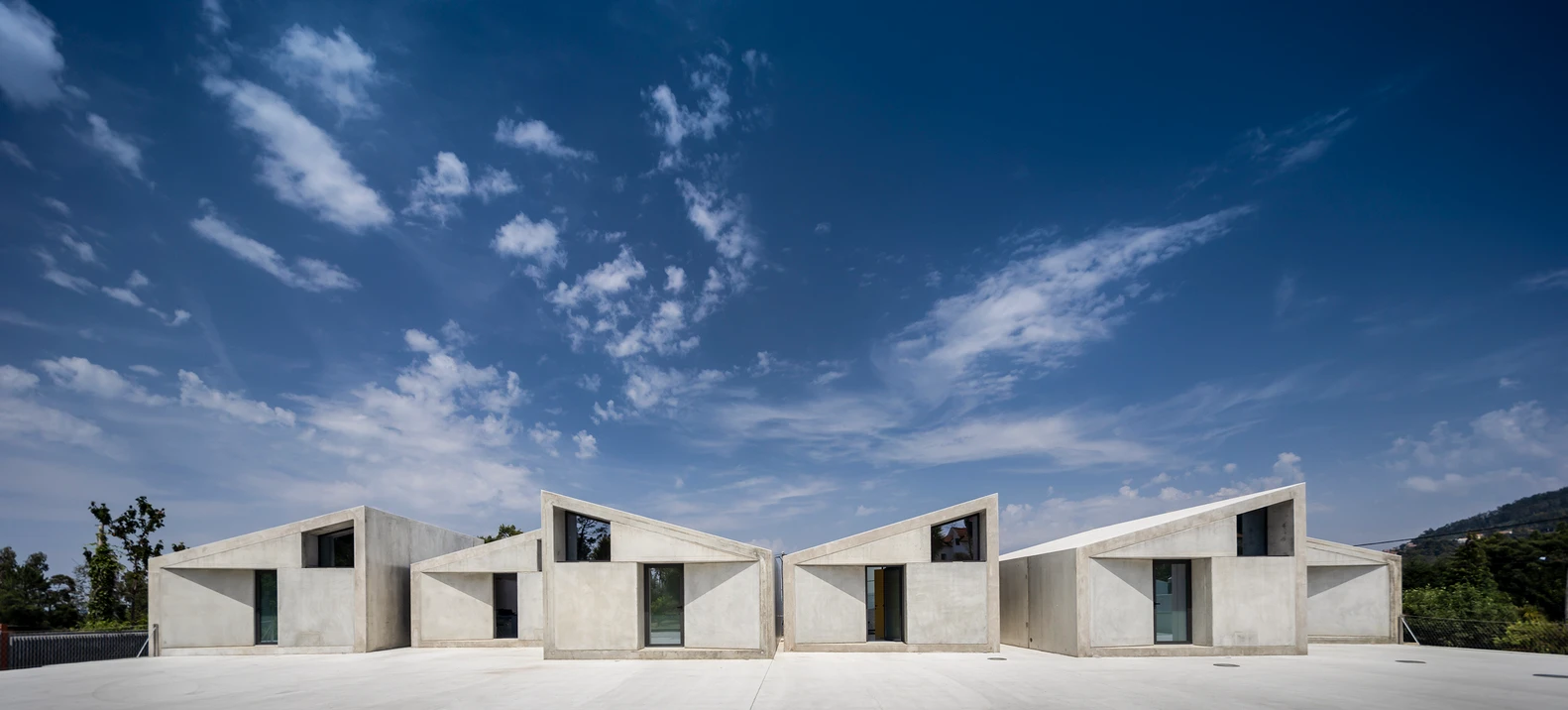
Where all industries and many communities are gearing towards circularity and announcing it without abandon, prefabrication can help build environments advanced towards this goal. The benefits of prefabrication and modular architecture are intimately tied to their sustainability features and are one of the major, if not the major, reasons why architects choose this method of construction over others. Reusing and repurposing building components is one of the core objectives of prefabricated construction, and it enables a reduction in carbon footprints and the promotion of sustainable resource cycles.
Other beneficial features that make this method undeniably a boon to sustainable architecture include:
- Productivity and Efficiency – Prefabrication immediately boosts production and can initiate a faster rate of construction. According to McKinsey & Company, volumetric modular construction can shorten a project timeline by up to 50% as the work on site is considerably reduced. Pre-planning the required materials, manufacturing them accurately, and preparing them in advance reduces delays, the need for overruns, and/or redesign.
- Time Efficiency – Manufacturing and preparing building components in a controlled environment, such as a factory, assures no time delays, as this process is not dependent on the changing weather and natural environmental conditions. As the site is being prepared for the building, the building parts can be simultaneously manufactured off-site, which is not possible in traditional construction. Not wasting time and resources is itself a sustainable effort.
- Cost Savings – The biggest advantage of a prefabricated structure is that it requires detailed information on every material and component much before the commencement of construction. This facilitates efficiency in material sourcing because the details are accurate and standardized. Options of recycling and reusing are better tracked. Better control over material use reduces wastage during accumulation and consumption. This feature again adds to a sustainable project.
- Quality Control – Industrial products are manufactured under conditions where quality, standardization, precision, and consistency can be controlled at the highest level. In the industrial environment, it is expected that specifications are met to the tiniest detail, where defects are nullified, and craftsmanship is of high quality. Due to the production environment, constant quality checks, and standard manufacturing processes, the quality of the building components can ensure a more durable structure and ultimately a longer life span.
- Flexibility and Scalability – Manufacturing components in a factory, which ensures precision, allows designers to explore their creativity through complex shapes, innovative layouts, and customizable designs. The process is faster, and materials are ready with minimal errors. Scaling a design becomes more efficient since it requires a lesser amount of work than in a traditional setup; hence, the structure becomes more sustainable every time it undergoes an expansion. Such a design can be easily adapted for various projects, scopes, and sizes with repeatable modules.
- Materials and components – Prefabricated materials can be designed to include properties in varying degrees, like durability, lightness, sustainability features, recyclability, flexibility, and quality. Characteristics such as high insulation, high-performance systems, and energy-efficient elements can be integrated during manufacturing, which boosts sustainable construction and reduces operational carbon. This enables longer lifespans and reduced carbon footprints, keeping environmental impact to a minimum. The process also allows for the site to be completely undisturbed during construction and demolition.
- Technology – Digital tools are becoming more significant in the construction industry. It makes designing, collaboration, and strategic planning more seamless and can significantly contribute to making a project sustainable. Digital tools are assets in prefabricated construction as they provide accuracy in material use and measurement, and allow for designing different options or making changes. This process helps to optimize time, resources, and efforts, which is the ideal blend of aspects for sustainable projects.
Learn the Tools Transforming How We Build
The future of construction is not only prefabricated, it is increasingly digital. At PAACADEMY, learn the computational tools and emerging technologies transforming how architecture is designed, optimized, fabricated, and built. Explore expert-led courses in BIM, computational design, AI, digital fabrication, 3D printing, and more, and develop the skills shaping the next generation of architecture.
The biggest challenges of Prefabricated structures
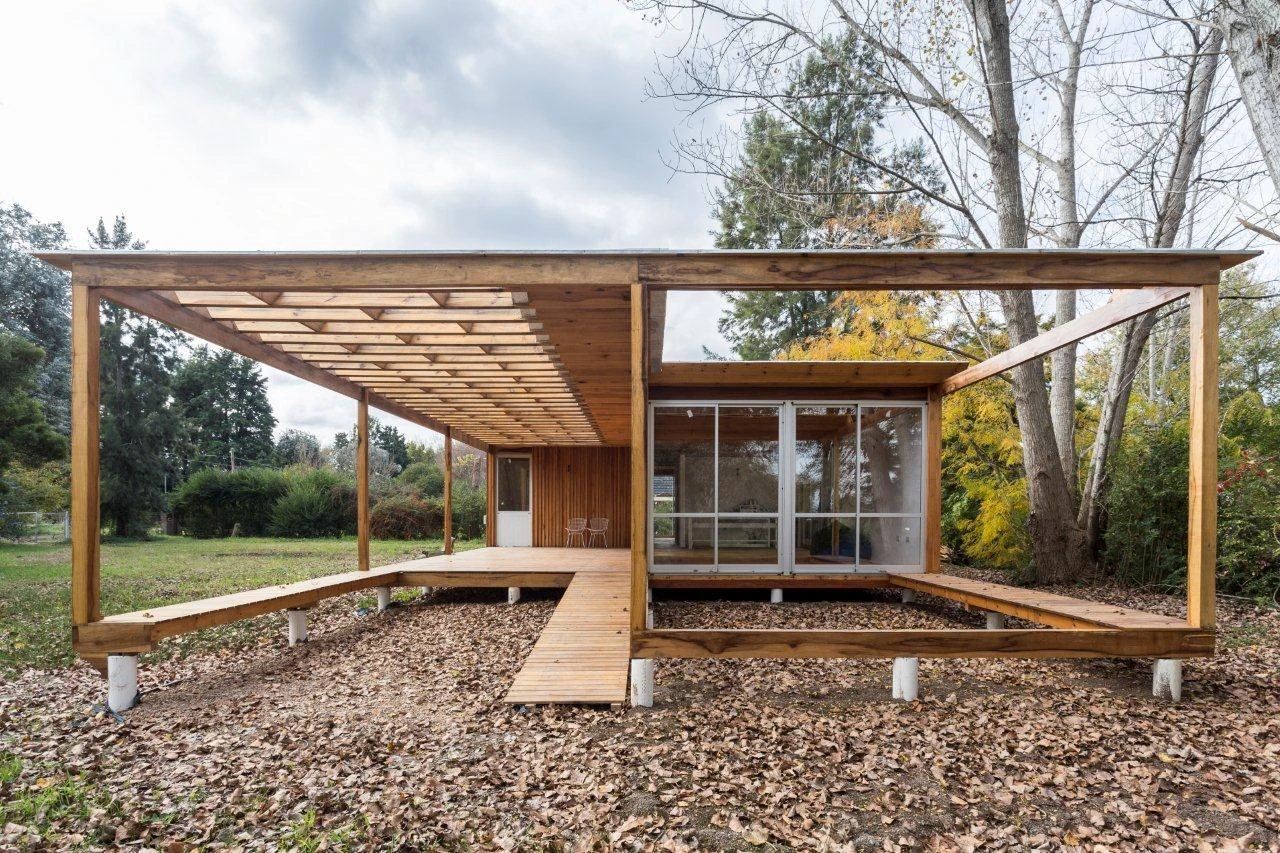
While prefabrication can help overcome many issues related to construction, it is still a new concept in many countries and faces the challenge of being accepted easily. While prefabrication reduces the overall project cost, it necessitates a significant upfront capital investment that not all projects can afford. Challenges also include expert knowledge in the design and assembly of the structure, where decisions need to be made early and detailed with as few changes as possible on-site. It requires strategic planning, not just for the process but also for materials, human resources, stakeholder collaborations, and infrastructure alignments in terms of transportation and assembly.
Digital tools and technology can be leveraged to overcome these challenges. The construction industry already depends heavily on digital tools like BIM, AI, and digital twins, which are also crucial components in the delivery of prefabricated projects. Inconsistencies, mistakes, and oversights can be detected early. As all stakeholders work simultaneously to create the design, materials, and resources, the work can be aligned accurately before starting the construction of any part of the physical structure.
Examples
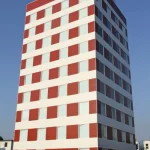
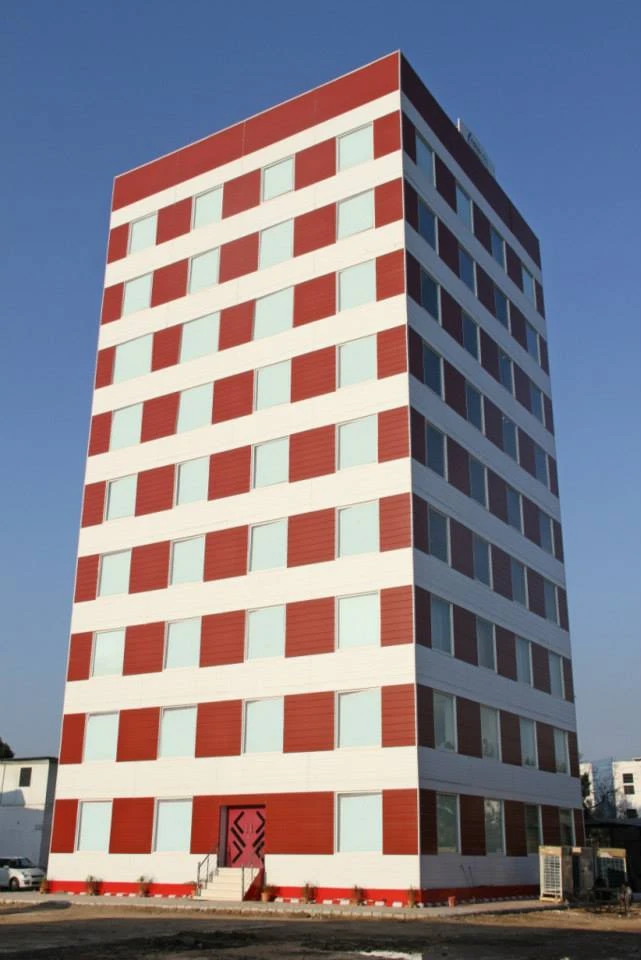
1. Instacon, India – A building that is famous for its lightning-speed construction of 48 hours, the Instacon, a 10-storey commercial structure developed by Synergy Thrislington, is a prime example of prefabricated construction. Almost 80–90% of its construction was off-site in a factory setting, and the structure exhibits the speed, accuracy, and efficiency that prefabrication offers. A modular building by design, the process helped reduce site waste. They used environmentally friendly materials and limited concrete only to the foundation, contributing to the reduction of carbon emissions. Pre-planning helped install efficient systems and high insulation in the structure beforehand, and its lightweight materials ensured structural stability and earthquake resistance.
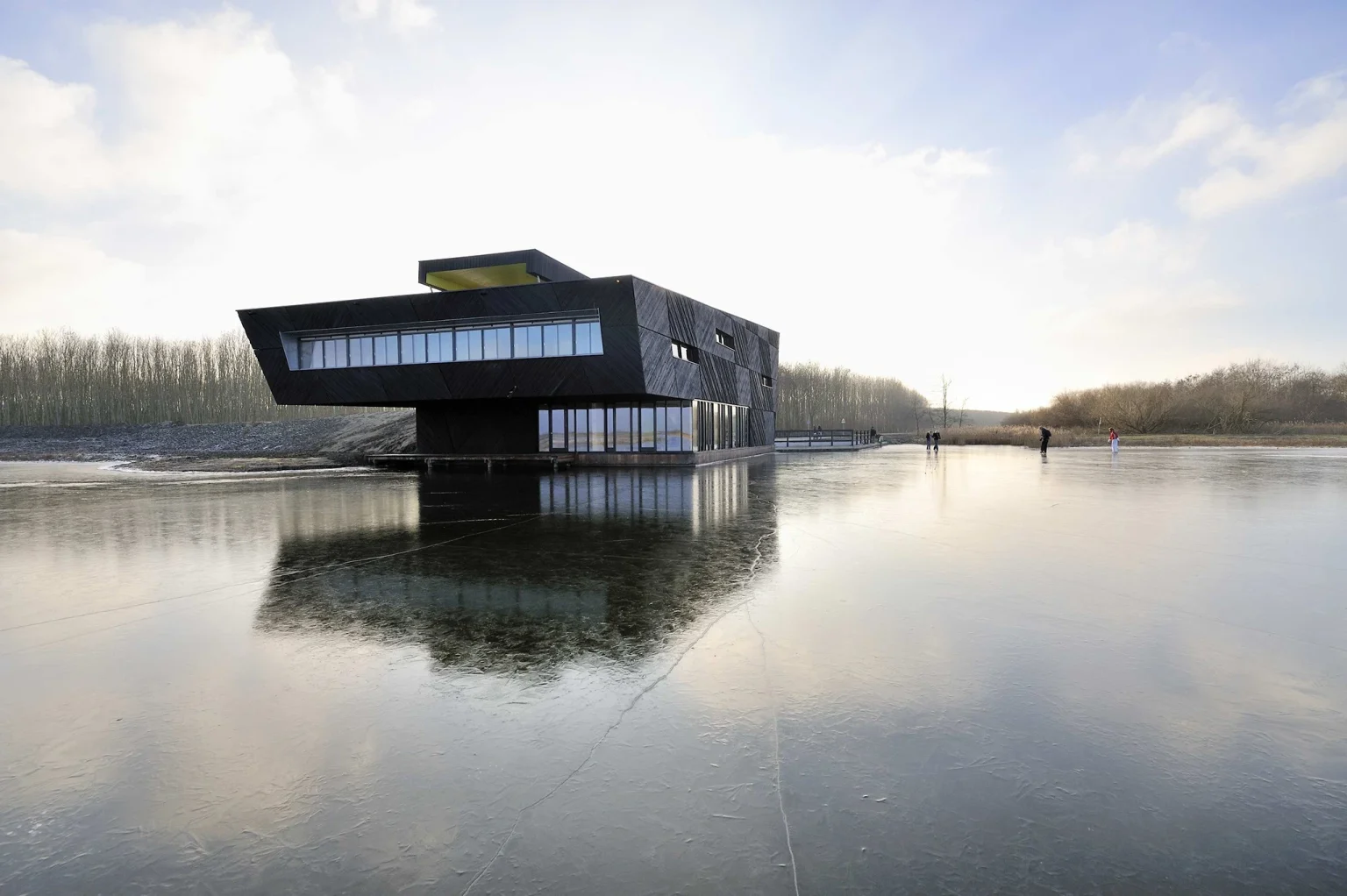
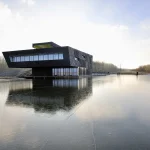
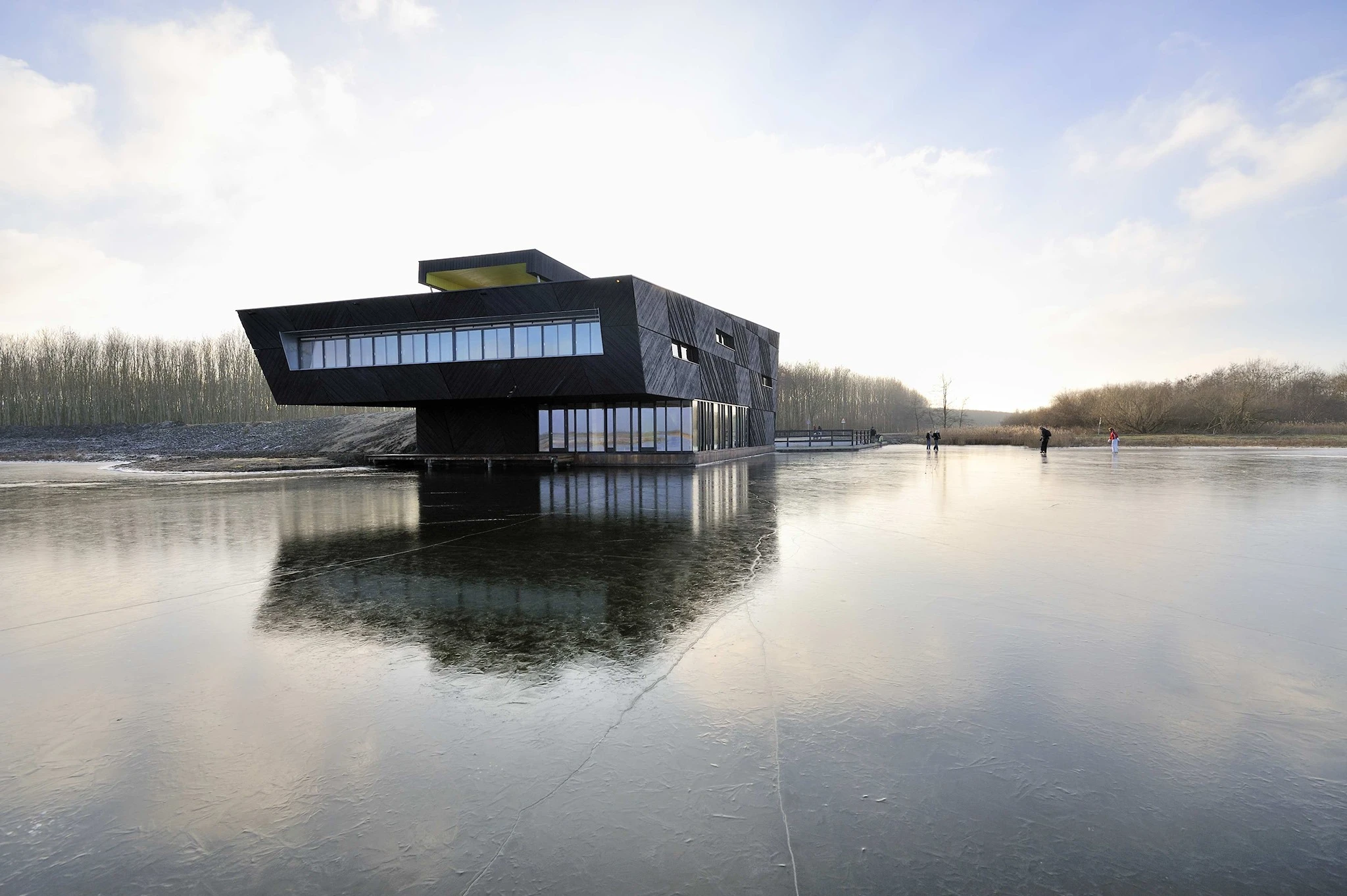
2. De Oostvaarders, Netherlands – This is a nature education reserve by Drost + van Veen architecten erected at the junction of forest, water, and fields. The most significant nudge towards the prefabrication process was to not disturb its surrounding natural environment. Wood was leveraged to create the lightweight, exposed structure that incorporates an eight-meter overhang, all constructed away from the site and then erected on-site. The building is a landmark that highlights the natural surroundings around it. The sustainable choices of eco-friendly materials and the process of construction were intentional and aimed at supporting biodiversity.
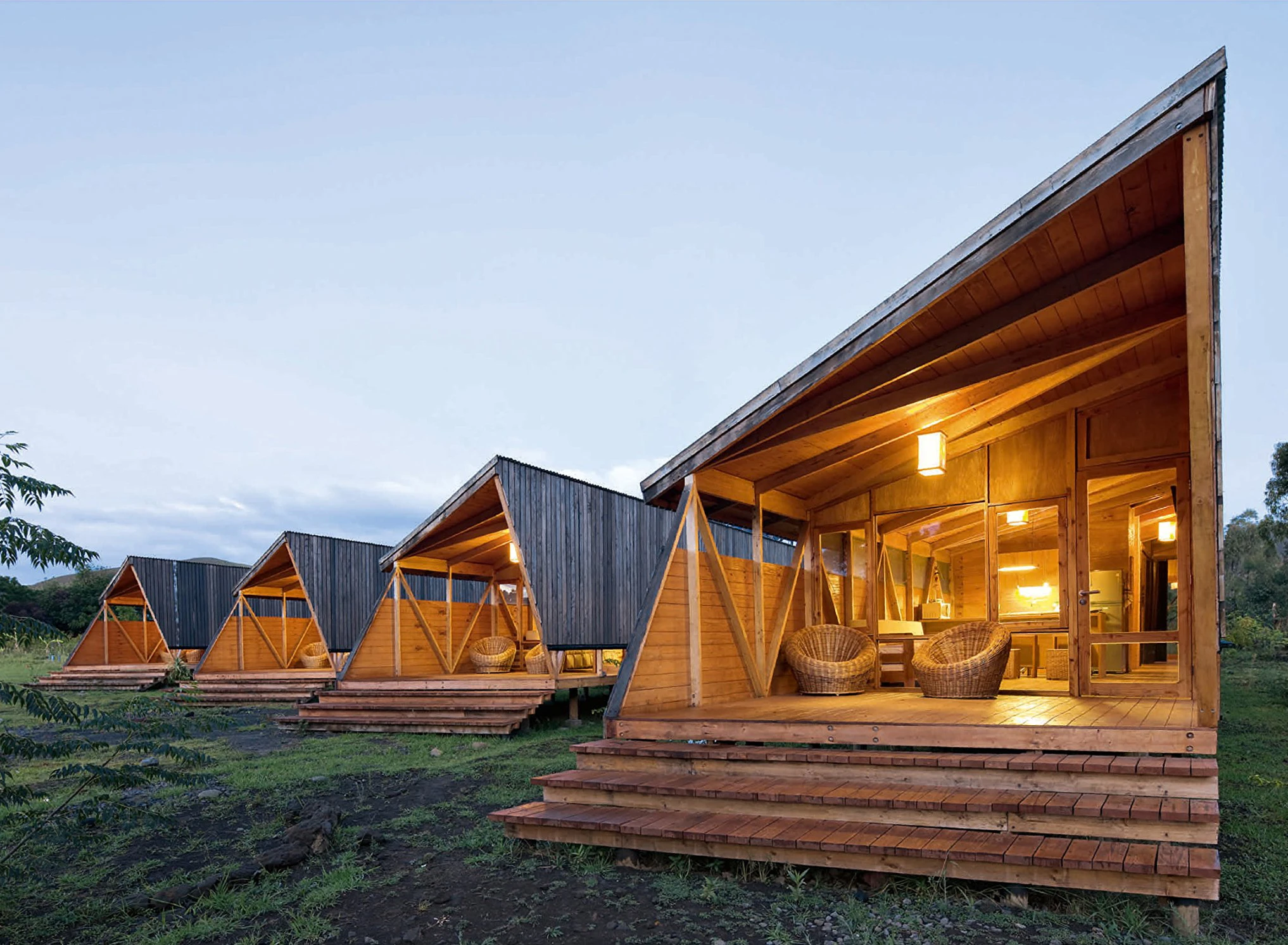
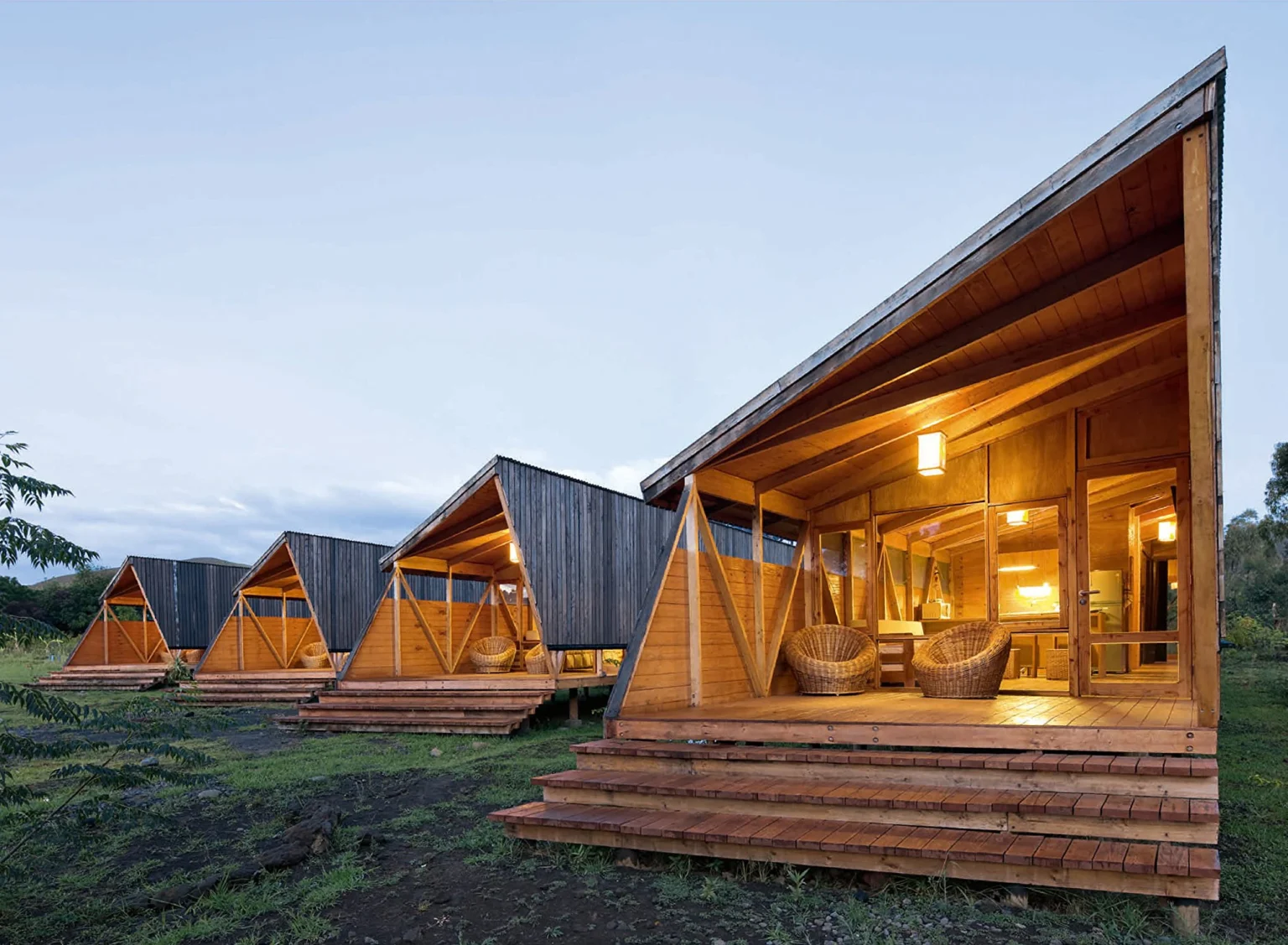
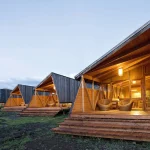
3. Morerava Cabins, Chile – In an attempt not to disturb the natural but fragile environment of Easter Island, AATA Associate Architects decided to build the structure on the mainland and assemble it on the site. The materials were optimally sourced on the mainland and used to create an exposed wooden structure that also required less workmanship, resulting in less cost. The design was also intentionally made to incorporate sustainability features, including thermal insulation, cross ventilation, daylighting, energy production, and rainwater harvesting. The structure hovers above the ground, keeping the site conditions intact, and uses a rainwater collection system to reuse the water, thereby reducing the overconsumption of all natural resources.