In the lead-up to WWE’s historic Royal Rumble 2026 event in Riyadh, Saudi Arabia, crews have nearly completed a brand-new stadium constructed from the ground up in under four weeks, an extraordinary engineering and logistical achievement that has drawn global attention.
Situated in the King Abdullah Financial District of Riyadh, the venue was designed specifically for the January 31 Royal Rumble and stands apart from traditional WWE setups by being a purpose-built structure. Recent updates and social media show the roof framework finished, lighting systems installed, Royal Rumble branding in place, and production infrastructure taking shape just days before the event officially begins.
Construction first became publicly visible in mid-January, with early images revealing foundational elements and security checkpoints. Despite ticket sales beginning before the site was widely shown, organizers have pushed forward with confidence. The nearly complete structure now features lighting rigs, LED systems, seating areas for fans, and production elements WWE usually reserves for its largest shows.
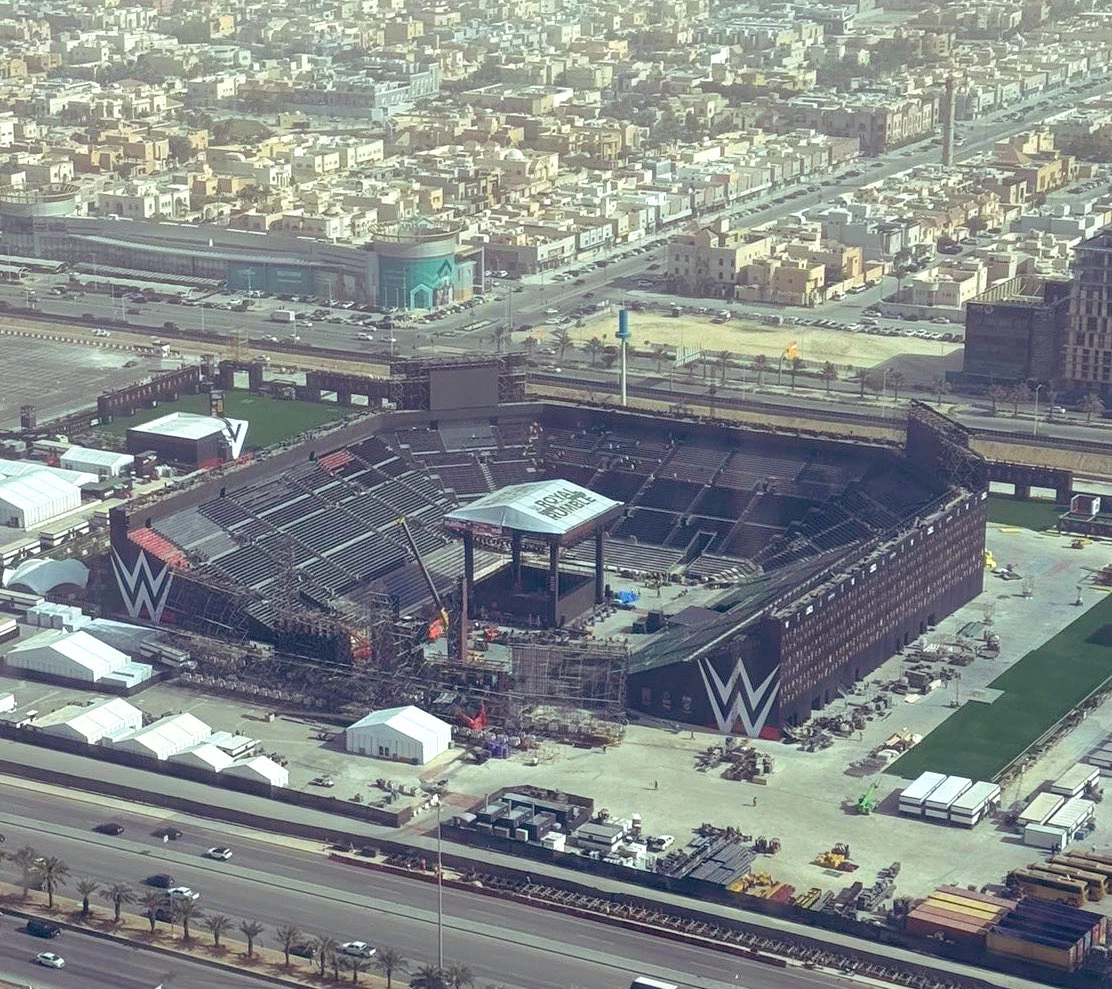
WWE itself has treated the venue with unusually high priority for a non-permanent location, putting in place what some commentators are calling a WrestleMania-level environment. With the stadium finished just five days before the show’s start, the kingdom and WWE are set to host one of the most talked-about events on the company’s calendar.
Royal Rumble 2026 in Riyadh marks the first time WWE has attempted to build an entire venue solely for a premium live event in an international market. The speed and scale of the project underscore Saudi Arabia’s willingness to invest heavily in large-scale entertainment infrastructure, aligning with broader purposes to become a global hub for major sporting and cultural spectacles.
While fans and media continue to debate the logistics and implications of this approach, what’s clear is that a stadium that didn’t exist a few weeks ago now stands ready to host thousands of wrestling fans, a rarity in modern event construction.