
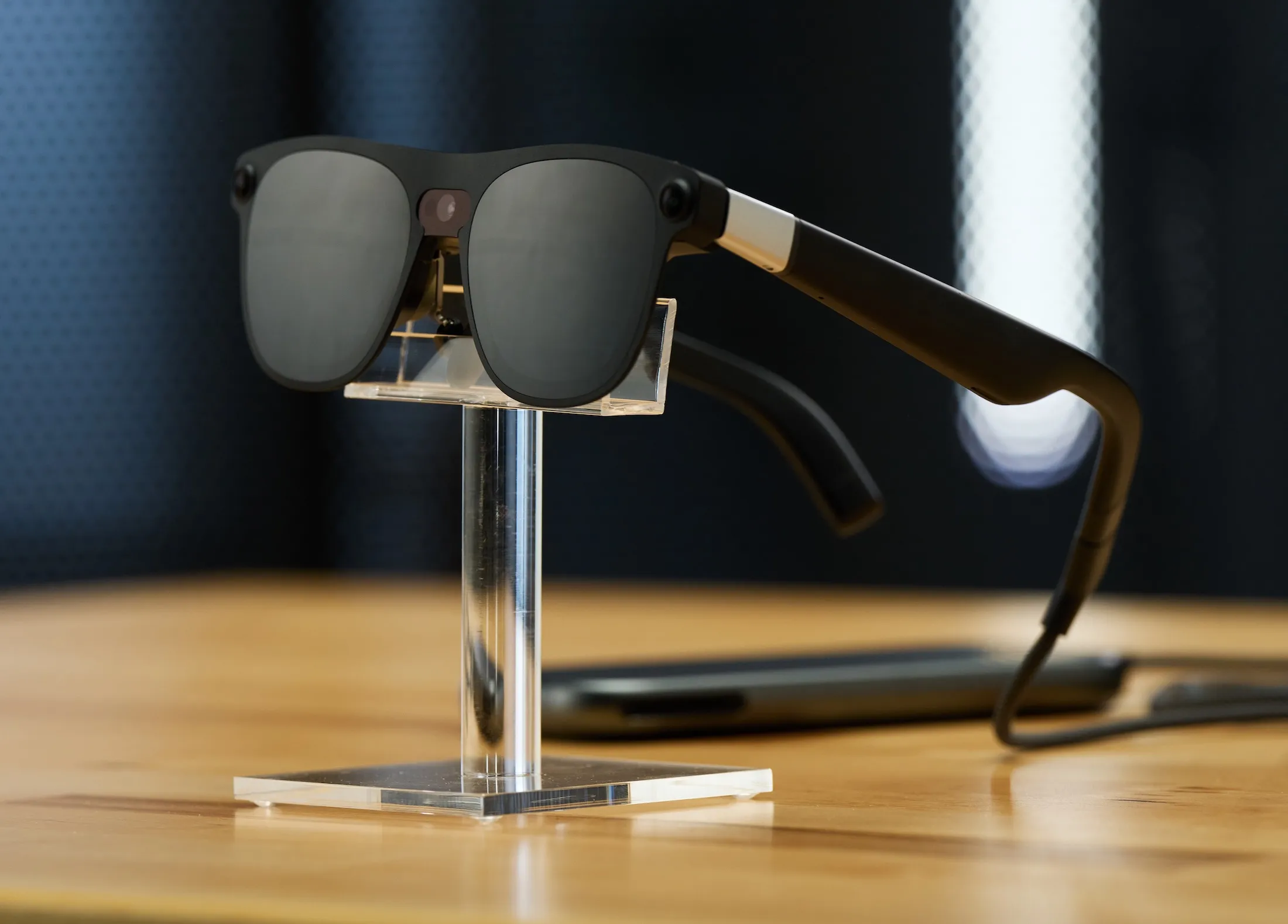
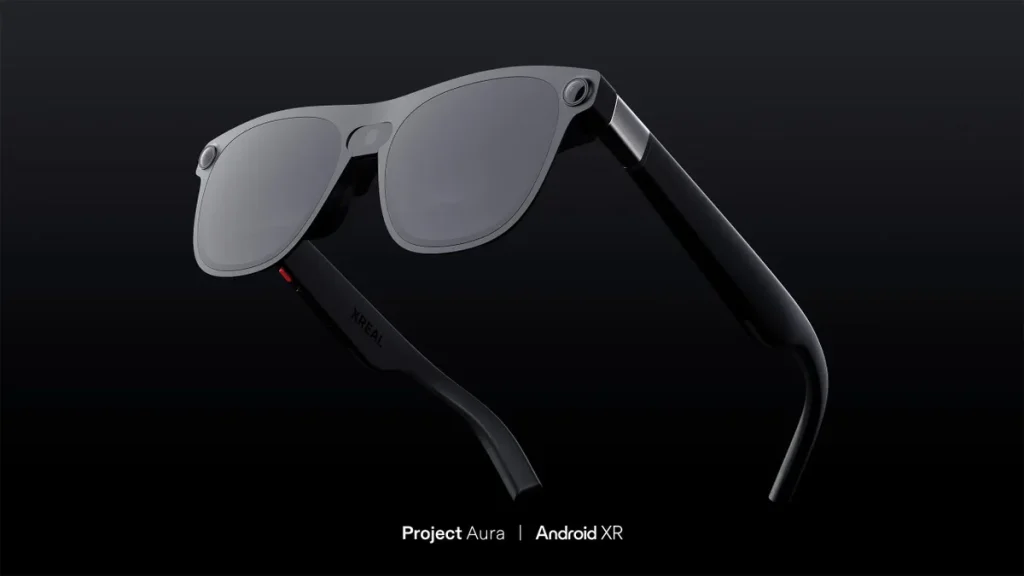
Google has confirmed that its first consumer Google AI Glasses will arrive in 2026. The product line brings the company’s Gemini assistant directly into a pair of smart glasses designed to offer quick, hands-free help without the weight or bulk of a headset. Google is preparing two versions: a lightweight, screen-free model that relies on audio and cameras, and another that includes a subtle in-lens display for simple visuals like directions, captions, or short prompts.
Google Gemini Glasses Features
Google outlined two main versions of the upcoming smart glasses for its 2026 release. The first is a screen-free, “audio-first” model: lightweight frames equipped with built-in microphones, speakers, and a camera. With this variant, you don’t get a display; rather, you speak to Gemini, ask questions, capture photos, or get help based on what the glasses “see” around you. It’s meant for short, everyday tasks: identify objects, get quick assistance, or take an on-the-go photo without adding anything visual into your field of view.
The second version, often referred to as “Display AI Glasses,” adds subtle, in-lens visual feedback while retaining the same basic sensors. Alongside the camera, mic, and speakers, these glasses include a microdisplay inside the lens so the wearer can privately view context-sensitive information, for example, turn-by-turn navigation, live translation captions, or discreet notifications. This design gives you visual assistance without the bulk or social awkwardness of a full augmented-reality headset.
With both models, Google aims for comfort, discretion, and all-day wearability. The goal is to let you carry a “smart assistant” in your eyewear, whether you need simple voice-based help or subtle visual cues, without turning your glasses into a heavy gadget.
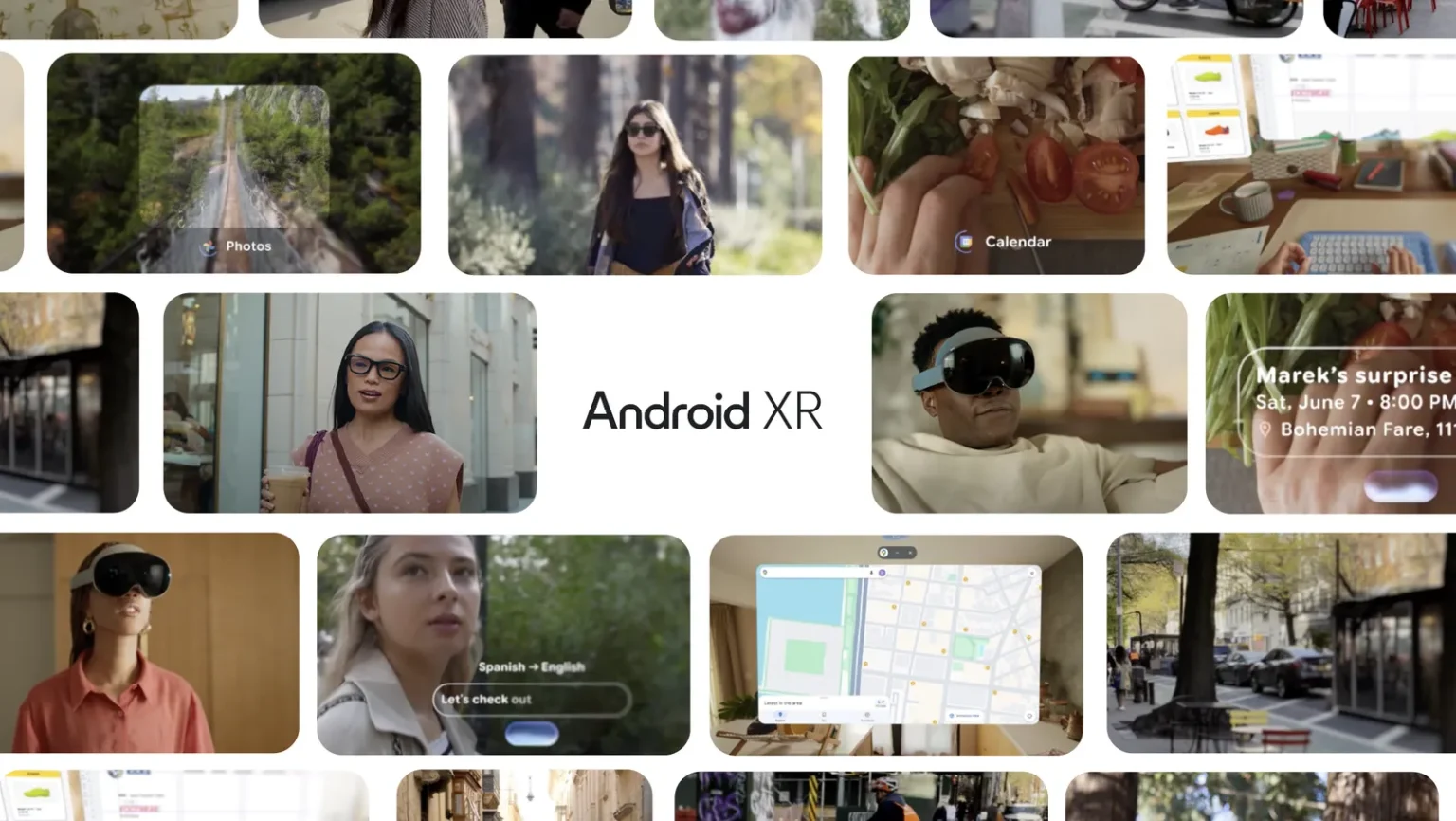
Google says the glasses will run on Android XR, its wearable platform, and will rely on a connected smartphone for the heavy lifting: the glasses handle sensors, capture audio I/O and local connectivity, while the phone performs most processing and links to cloud services. That design keeps the frames lighter and extends battery life compared with a standalone wearable that must pack large processors and batteries.
Key hardware elements mentioned or implied across the announcement and reporting:
- Camera(s): for scene capture, photo taking, and visual queries (e.g., “What is this plant?” or “Translate the sign”).
- Microphones and speakers: for natural conversation with Gemini and for delivering short voice replies or directions.
- In-lens microdisplay (on the display model): a low-power optical element that projects concise text or simple graphics onto the lens without a full heads-up display.
- Bluetooth/low-power wireless: to maintain a continuous connection to a phone.
- Battery and power management: prioritized toward all-day wear for the audio model; the display model will likely trade some battery life for visual capability.
The company also emphasized a focus on lightweight, fashion-forward frames developed with eyewear designers so people will feel comfortable wearing them all day. Google named partners, including Samsung, Warby Parker, and Gentle Monster, and confirmed a wider partner ecosystem for Android XR devices. Warby Parker specifically confirmed a collaboration to make lightweight glasses with AI features.
What Google AI Glasses Are Designed to Do
Google is framing the Gemini Glasses around practical, everyday use instead of abstract AI promises. The glasses are built to answer questions about what you’re looking at, whether that’s identifying an object, summarizing a menu, or helping you understand a repair step. They can translate signs or conversations on the spot, showing short captions when needed. Navigation is another focus. Instead of checking your phone, the glasses can give simple turn-by-turn cues in your peripheral vision. They also support quick, hands-free capture, letting you save a photo of something like a receipt or product label and ask Gemini for details later.
Behind the scenes, most of the processing happens on your phone, with cloud support when needed. This setup keeps the glasses lighter and cooler than a fully independent device while still allowing Google to update features regularly. It also helps extend battery life, since the glasses don’t need to accommodate the same heavy hardware as a smartphone.
The 2026 launch places Google in a competitive field. Meta’s Ray-Ban glasses and high-end headsets like Apple’s Vision Pro already represent two ends of the wearable spectrum. Google is positioning Gemini Glasses as more helpful than basic audio wearables but far less intrusive than full AR headsets. Partnerships with fashion brands and integration with Android XR are expected to shape how easily the glasses fit into daily life.
As with any sensor-rich wearable, the glasses raise privacy and regulatory questions. Users and regulators will expect clear indicators when cameras or microphones are active. How the device handles photos, audio, and transcripts, and how long that data is stored, will be central to trust. Google’s decision to process more information on the phone rather than in the cloud may help reassure users, depending on how it’s implemented.
Google AI glasses in 2026 aim to make quick, context-aware assistance feel natural, a short-form way to use a powerful assistant without always pulling out a phone. By splitting roles between the glasses (sensors, audio, minimal display) and the phone (processing, storage, cloud access), Google is betting it can deliver a comfortable, stylish wearable that’s useful every day. Whether consumers adopt the idea will depend on price, battery life, privacy safeguards, and how well the devices actually help in real moments, the same tests every new wearable faces.
Source: Google