











For as long as humans have built walls, we’ve dreamed of castles. They rise from mountaintops, deserts, forests, and riversides. They whisper of battles and legends, but they also reveal the evolution of design. What unites them is the way they capture our imagination.
From Europe’s misty valleys to the deserts of India and the islands of Japan, these castles and fortresses were statements of power and canvases of artistry. Some, like Germany’s Neuschwanstein, were built to fulfill a king’s fantasy. Others, like Jaisalmer Fort in India, grew into bustling walled cities. And then there are castles like Himeji in Japan, where wooden walls and maze-like corridors held back centuries of conflict yet still stand pristine today.
In this article, we explore 15 iconic castles and forts worldwide, each with a distinct story and significance.
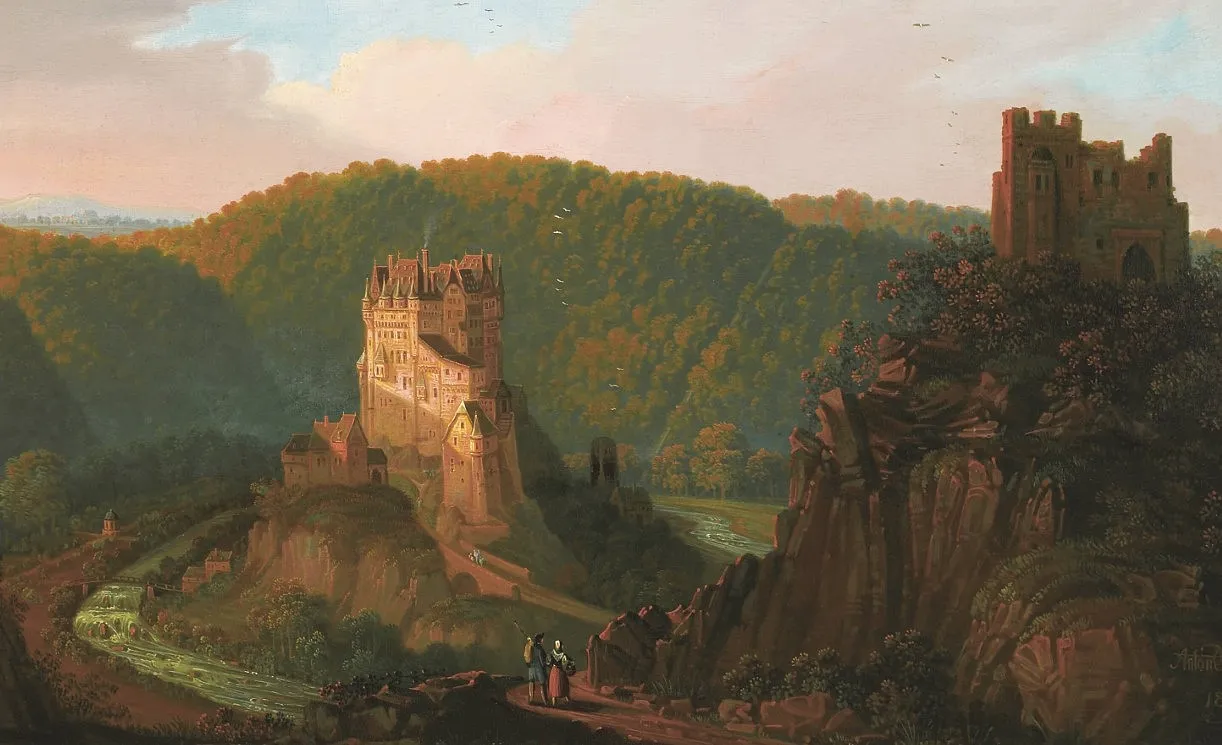
1. Burg Eltz Castle, Germany
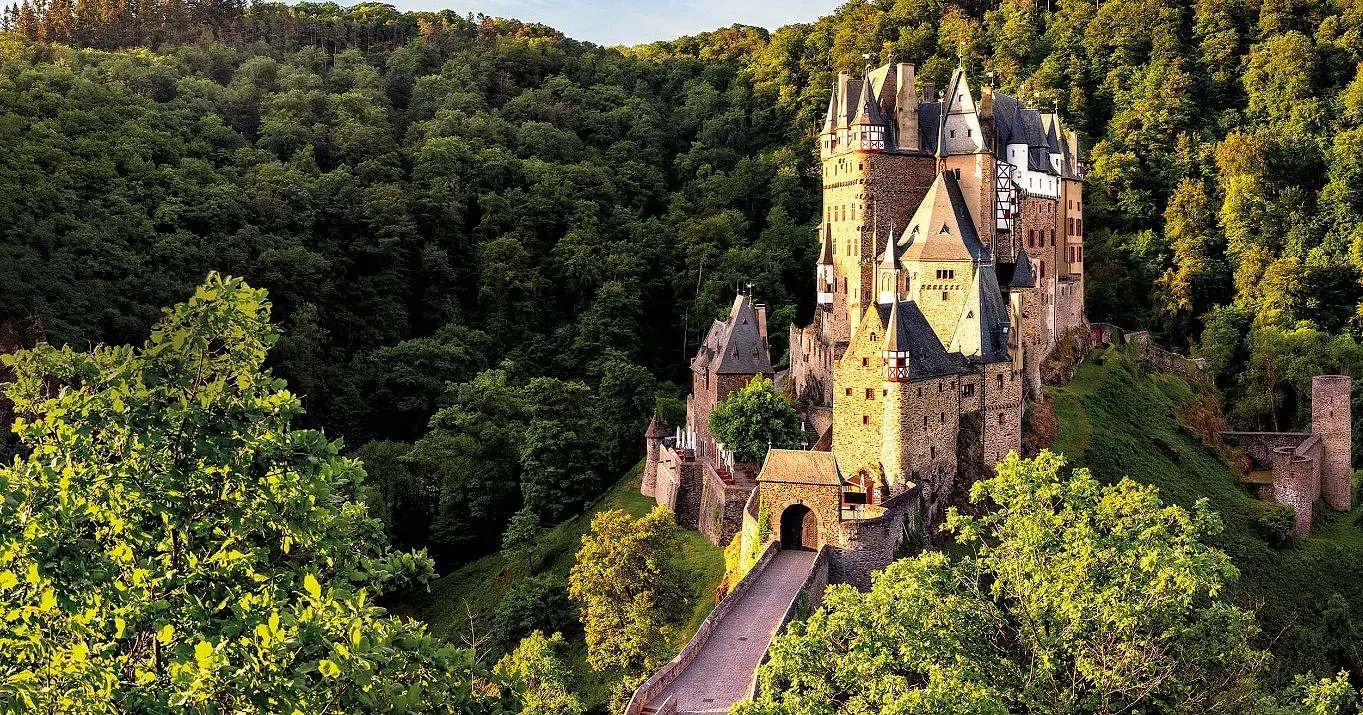
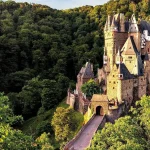
Tucked away in the lush Moselle Valley, Burg Eltz Castle has stood since the 12th century and remains untouched by conflict. Still privately owned by the Eltz family, it gives a glimpse into medieval life.
Architecturally, Burg Eltz is defined by its vertical layering of stone bases and timber-framed upper floors. The castle rises organically from its rocky foundation, with irregular towers and steep gables giving it a picturesque silhouette. Unlike symmetrical Renaissance architecture, Burg Eltz features organic medieval asymmetry, where defensive practicality inspires form. The castle also features multiple courtyards, creating a cluster-like plan that reflects its evolution over centuries.
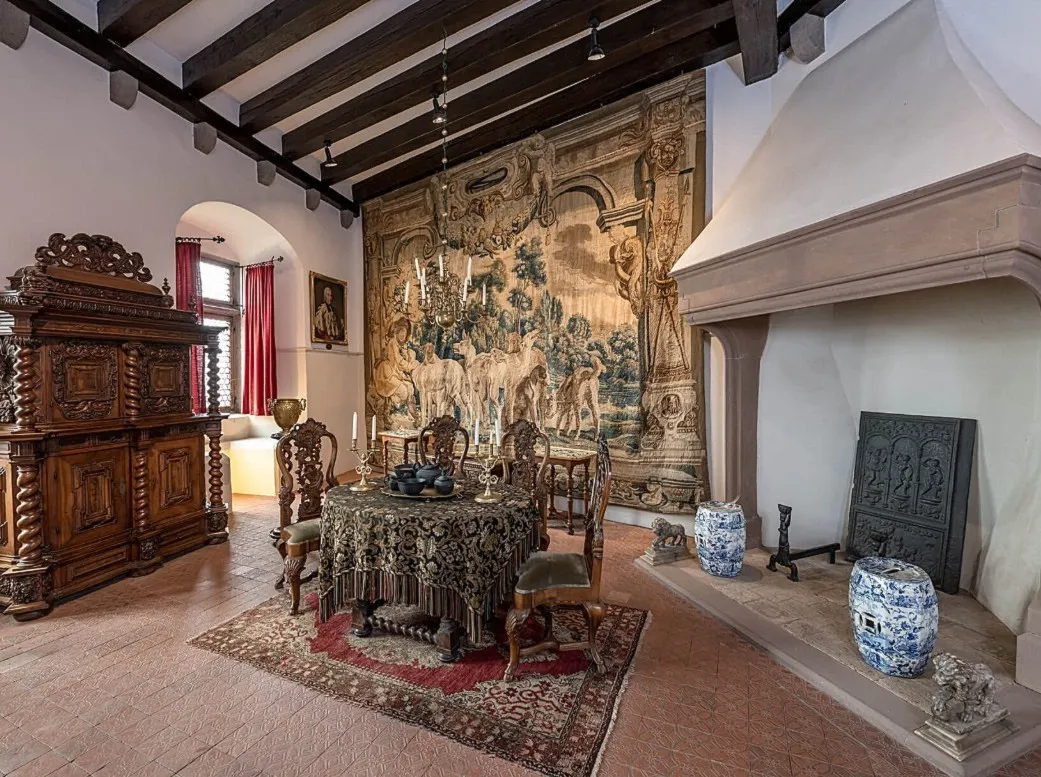
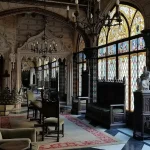
Inside, Gothic vaulted halls and richly decorated chambers display original medieval furnishings and murals. Its combination of fortified exteriors and richly detailed interiors demonstrates how castles served as military outposts and symbols of wealth and lineage.
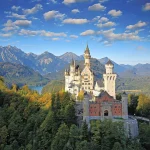
2. Neuschwanstein Castle, Germany
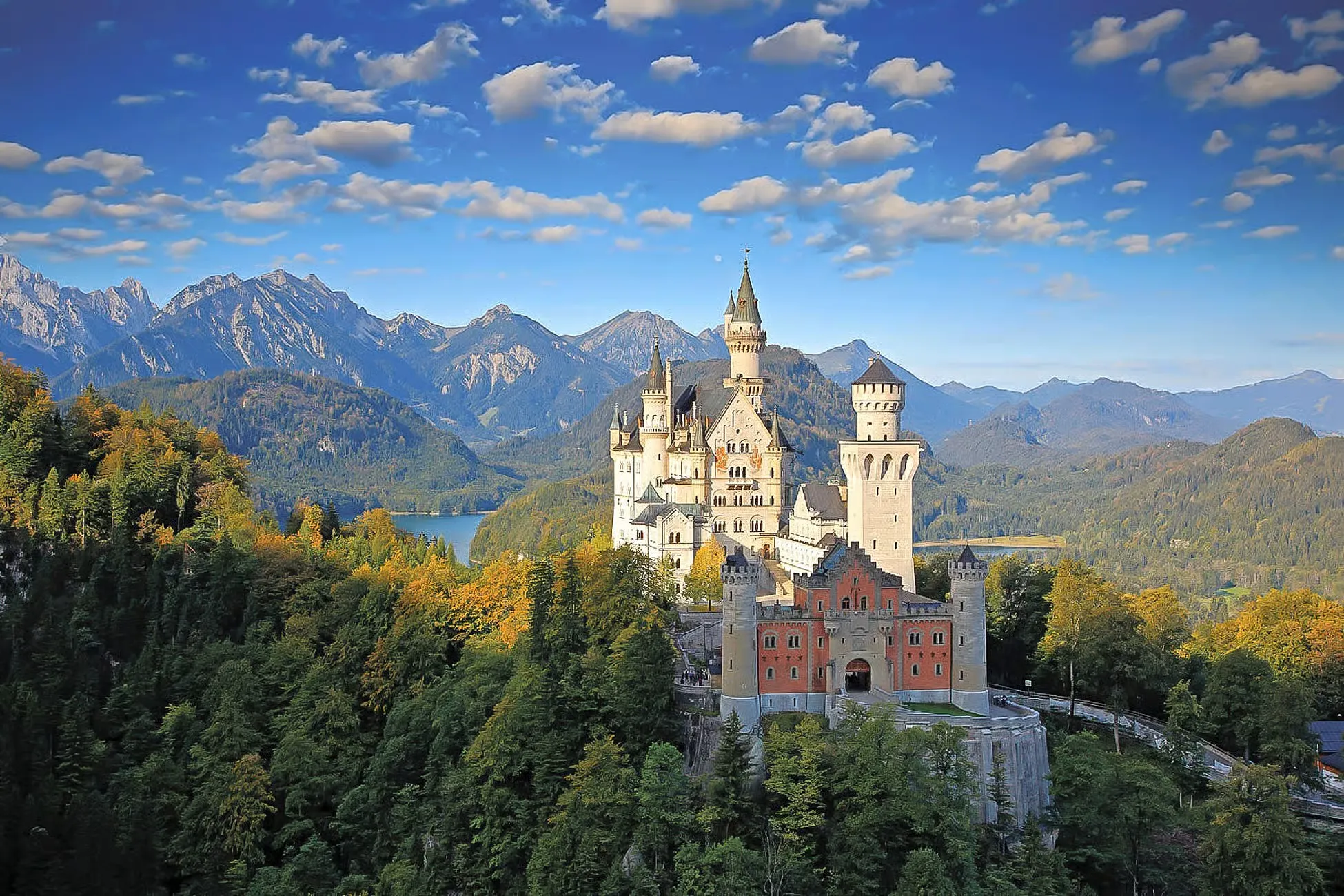
Commissioned by King Ludwig II of Bavaria in 1869, Neuschwanstein is the world’s most famous fairy-tale castle. It was designed as a personal retreat and a tribute to Wagnerian opera.
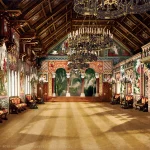
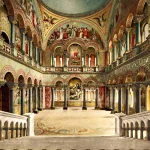
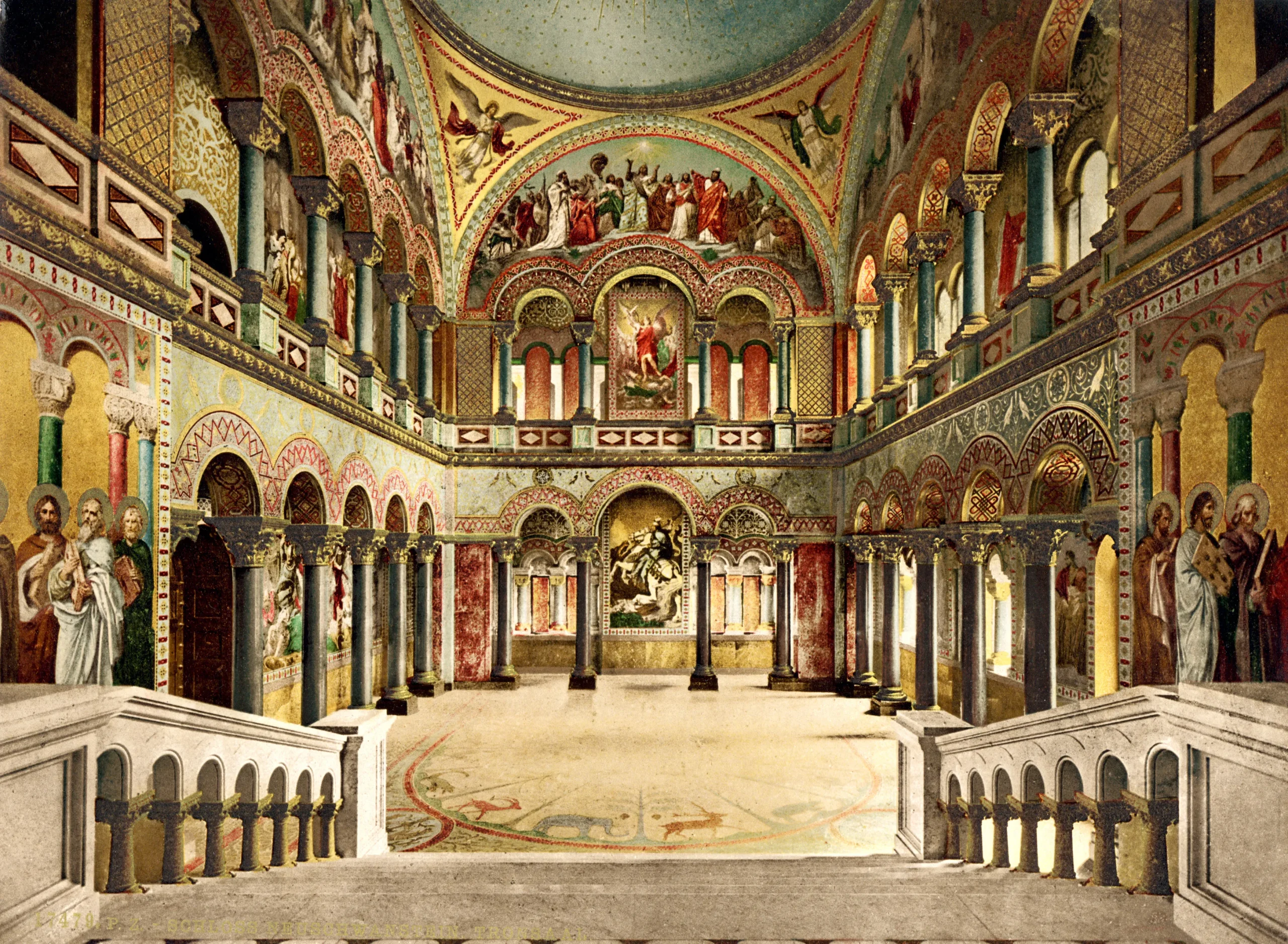
Neuschwanstein embodies Romantic Historicism: soaring spires, white limestone facades, and Gothic Revival towers with Byzantine-style interiors. The Throne Hall, inspired by early Christian basilicas, features vaulted ceilings and mosaics, while the Singers’ Hall recalls medieval legends. Though it looks medieval, the castle was equipped with modern conveniences: steel frameworks, heating systems, and running water.
Neuschwanstein’s dramatic Alpine setting and storybook design inspired Walt Disney’s Cinderella Castle and continue to influence global pop culture.
3. Jaisalmer Fort, India
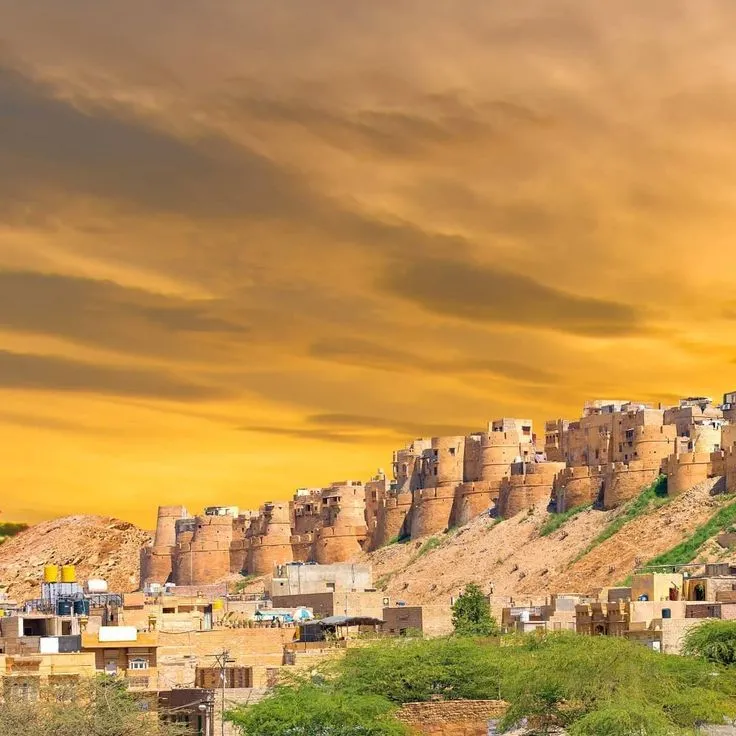
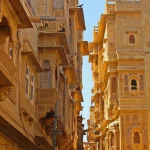
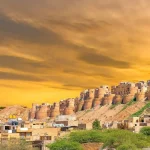
Rising out of Rajasthan’s Thar Desert, Jaisalmer Fort, also known as Sonar Quila (Golden Fort), was founded in 1156 by Rawal Jaisal. Unlike many forts, it remains a living heritage site, still home to residents, shops, and temples.
Constructed from yellow sandstone, the fort glows golden under the desert sun, shifting hues at dawn and dusk. Its massive ramparts and 99 bastions demonstrate Rajput military ingenuity, while inside, intricately carved Jain temples and palatial residences highlight craftsmanship. Jharokhas (overhanging balconies), latticed windows, and detailed carvings showcase the fusion of defensive architecture and ornate artistry.
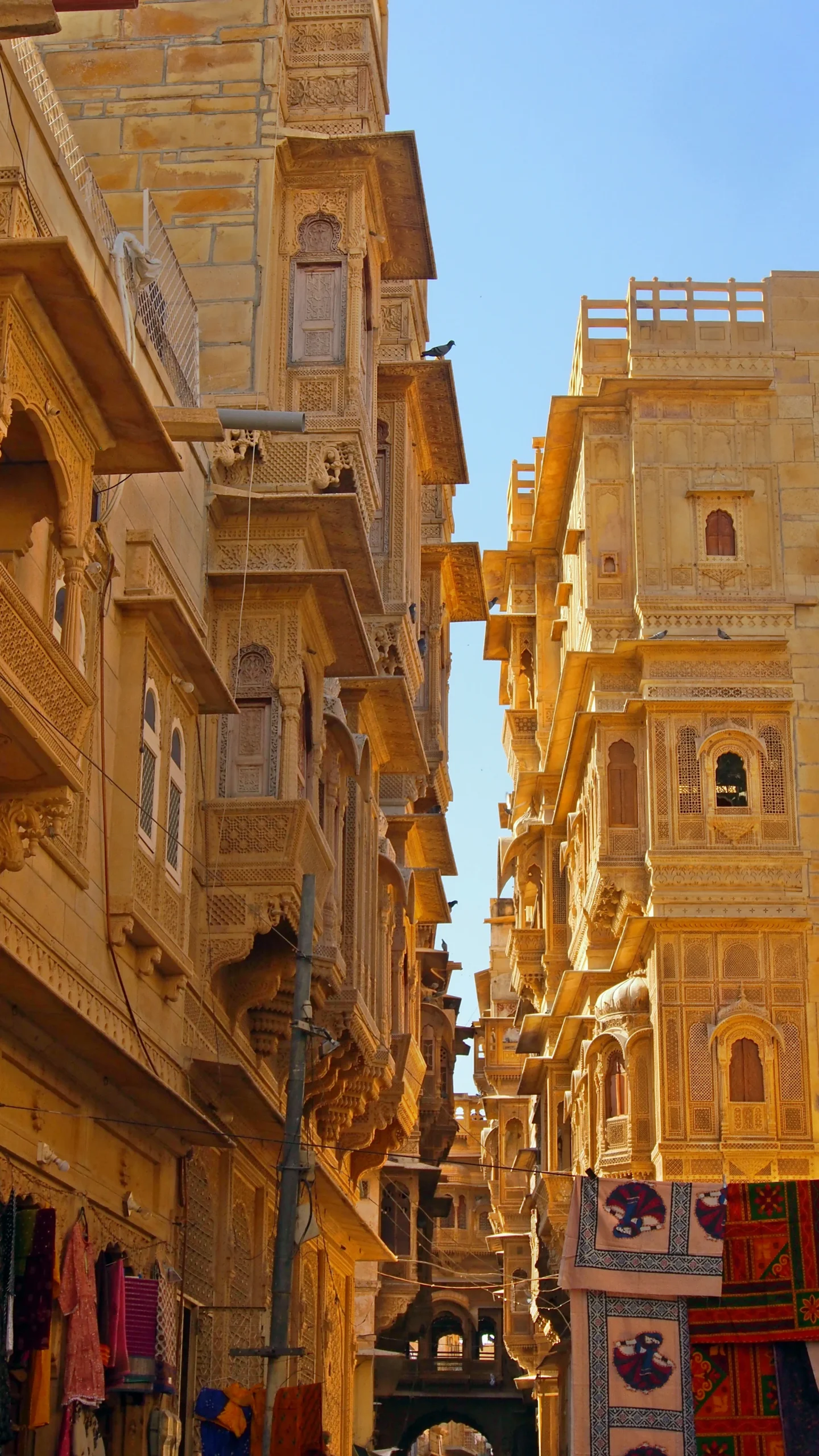
What sets Jaisalmer apart is its urban character: unlike isolated castles, it also functions as a walled city. The defensive ramparts with residential and religious spaces remain a living example of Rajputana architecture and resilience.
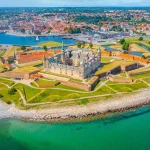
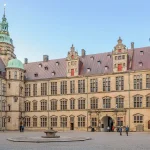
4. Kronborg Castle, Denmark
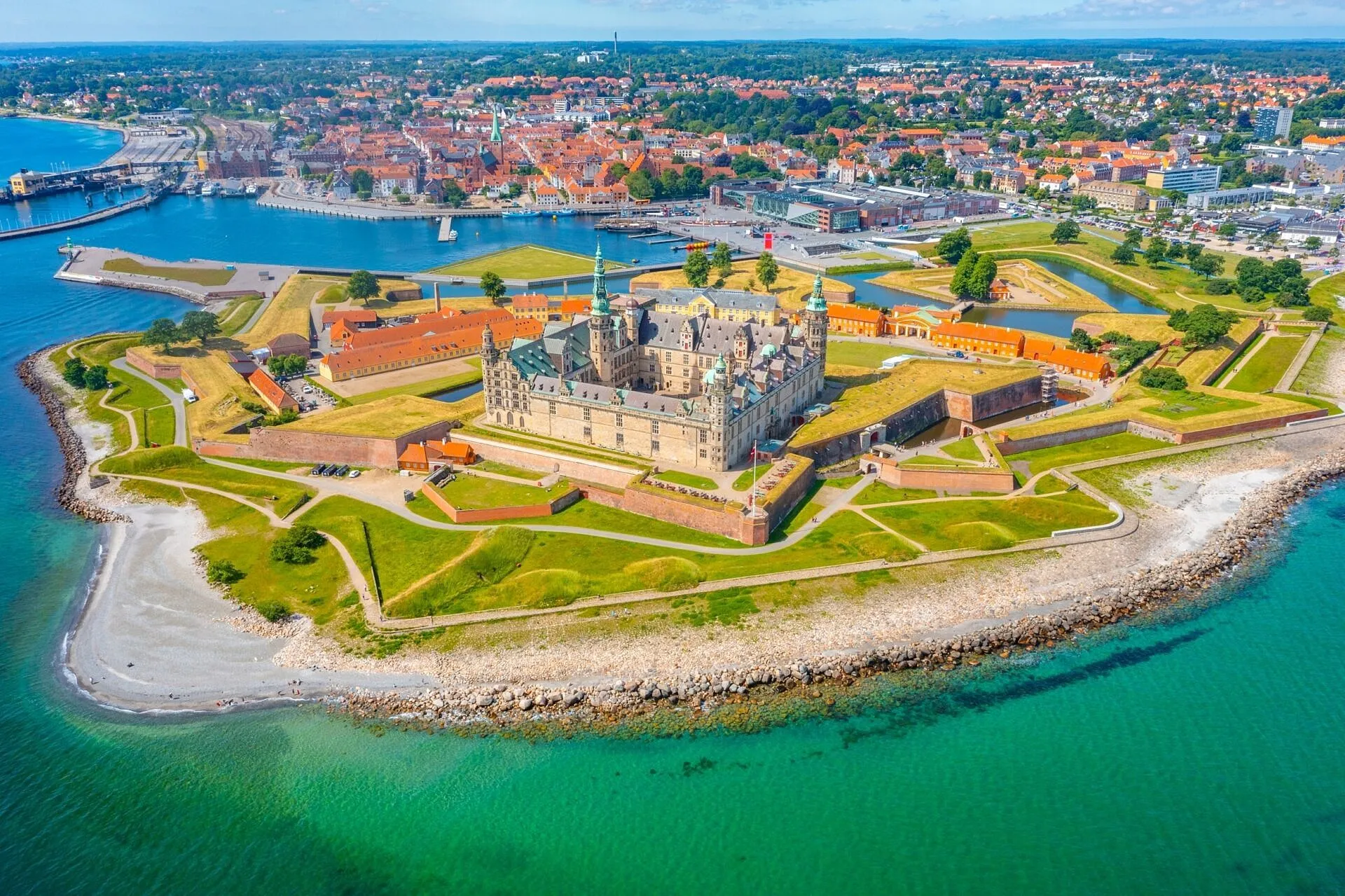
Overlooking the Øresund Strait, Kronborg Castle was completed in 1585 under King Frederick II. Its strategic position allowed Denmark to control shipping routes and collect tolls, which gave the castle immense political significance.
Kronborg is a masterpiece of the Northern Renaissance. Its symmetrical sandstone facades, copper-clad spires, and monumental gateways express royal grandeur while its bastions and ramparts showcase military strength. Inside, the Knight’s Hall is one of Europe’s longest Renaissance halls, featuring ornate tapestries and ceremonial spaces.
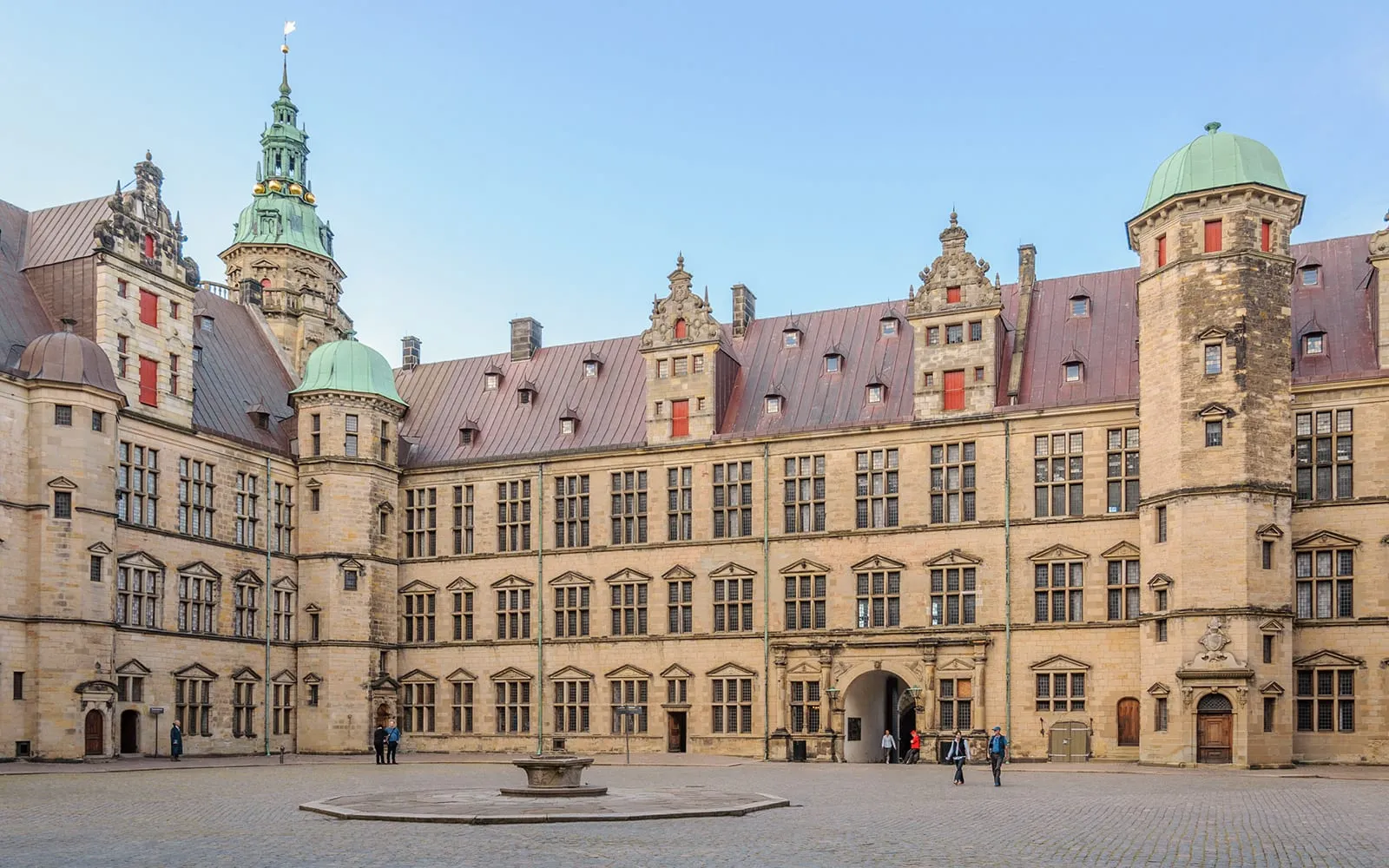
Culturally, Kronborg achieved immortality through Shakespeare, who set Hamlet within its walls. Today, it illustrates how castles have served as fortresses throughout various stages of history.
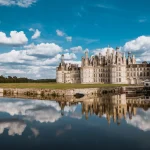
5. Château de Chambord, France

Commissioned in 1519 by King Francis I, Chambord represents the French Renaissance at its grandest. Château de Chambord became an extravagant display of royal ambition.
The castle merges French medieval forms with Italian Renaissance ideas. Its crowning feature is the double-helix staircase, believed to be influenced by Leonardo da Vinci, which allows people to ascend and descend without crossing paths. Its sprawling roofscape of chimneys, lanterns, and turrets creates a skyline like a stone forest.
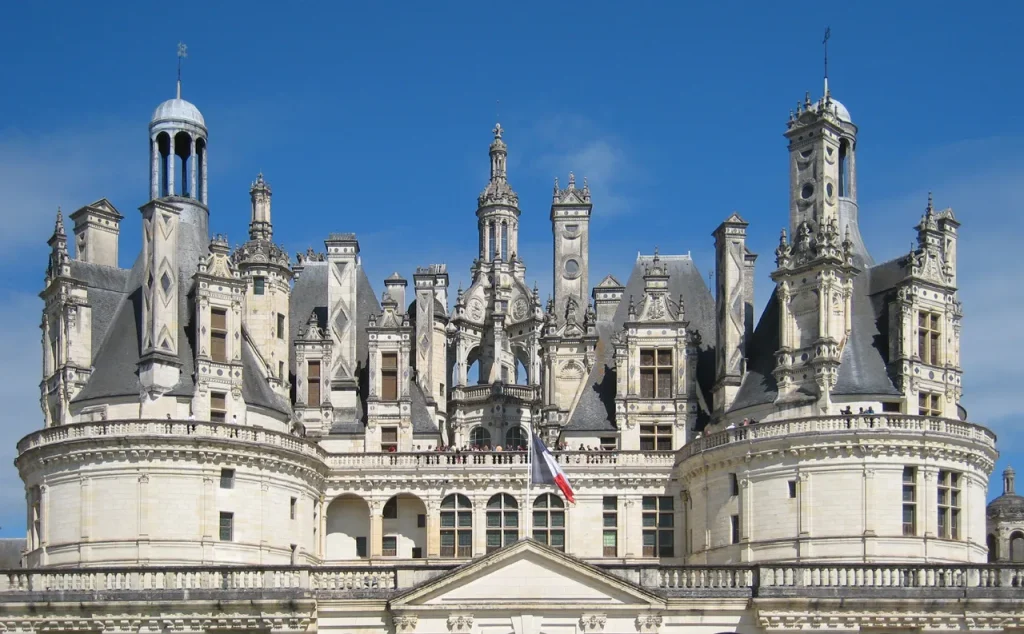
Chambord’s 400+ rooms and near-perfect symmetry reflect Renaissance ideals of order and proportion. Yet its sheer size and ornamental excess mark it as symbolic. It was a monument built for power and prestige.
6. Naveira Castle, Argentina
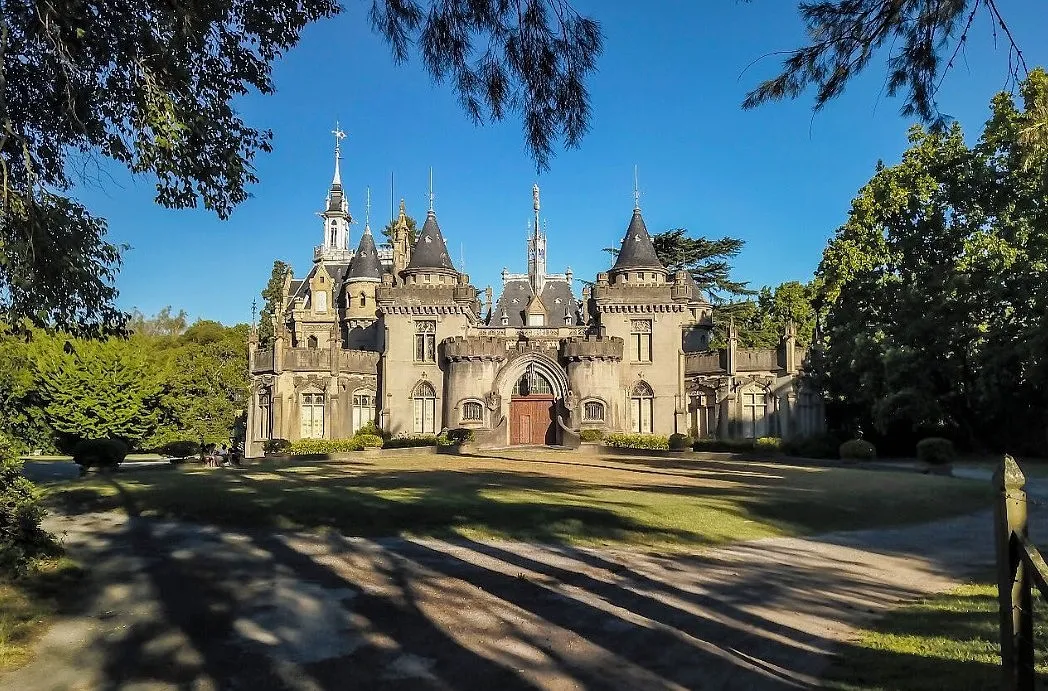
In Santiago del Estero, Argentina, Naveira Castle is an example of Latin America’s fascination with European medieval imagery. Built in the early 20th century, it was a romanticized architectural fantasy that reflected Argentina’s turn-of-the-century cosmopolitanism and its desire to embrace European cultural ideals.
Architecturally, Naveira Castle incorporates elements of Neo-Gothic Revival and Romantic Historicism. Its crenellated parapets, pointed arches, and corner towers mimic defensive medieval forms, while its decorative flourishes showcase the eclecticism of the era. Unlike true fortifications, its walls symbolized how castle architecture was built for status and style.
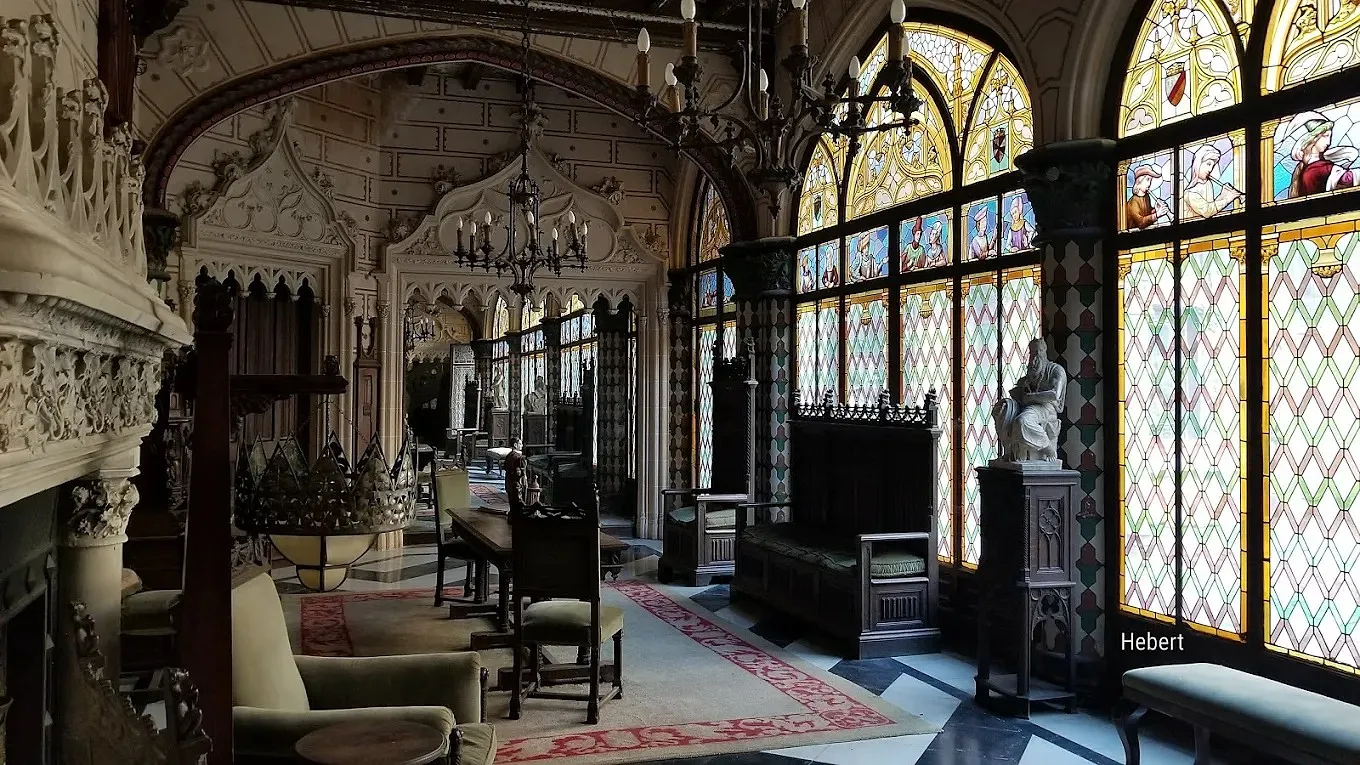
What makes Naveira significant is the way it translates European romanticism into a South American context. Constructed with local materials and adapted to the regional climate, the castle stands as a hybrid creation, a reminder of how global architectural ideas travel and transform.
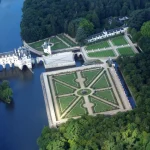
7. Château de Chenonceau, France
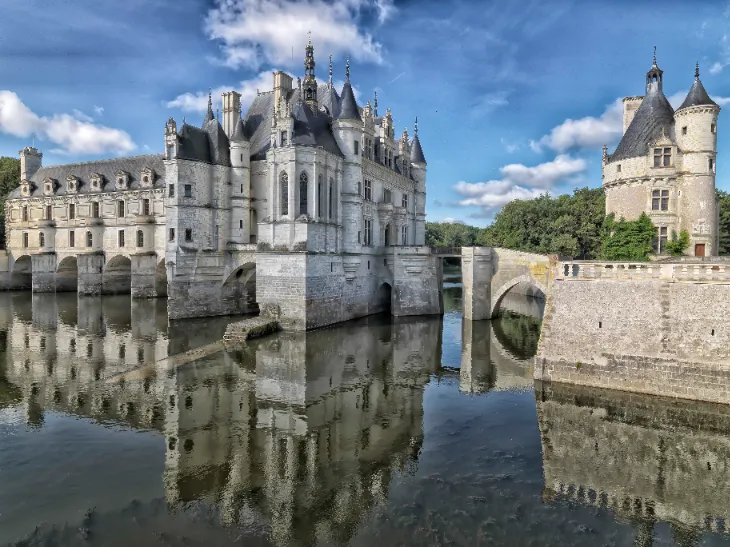
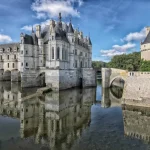
Known as the Ladies’ Castle, Chenonceau spans the River Cher in the Loire Valley. Its history is shaped by powerful women, from Catherine Briçonnet, who oversaw its construction in the early 16th century, to Catherine de’ Medici, who added the iconic bridge galleries.
Architecturally, Chenonceau is a masterpiece of Late Gothic and early Renaissance design. Its most distinctive feature is the series of arched galleries that stretch across the river, an example of a château directly integrated with water. This design reinforced the château’s symbolic role as a bridge between medieval and Renaissance worlds.

The interiors reflect refined Renaissance tastes: frescoes, ornate fireplaces, and elaborate ceilings. Outside, the formal parterre gardens exemplify French Renaissance landscape design, complementing the architectural symmetry. Chenonceau’s is one of the Loire Valley’s most admired castles.
Ruled and preserved by women, Chenonceau proves how architecture can reflect the identities of its patrons.
8. Qaitbay Fort, Egypt
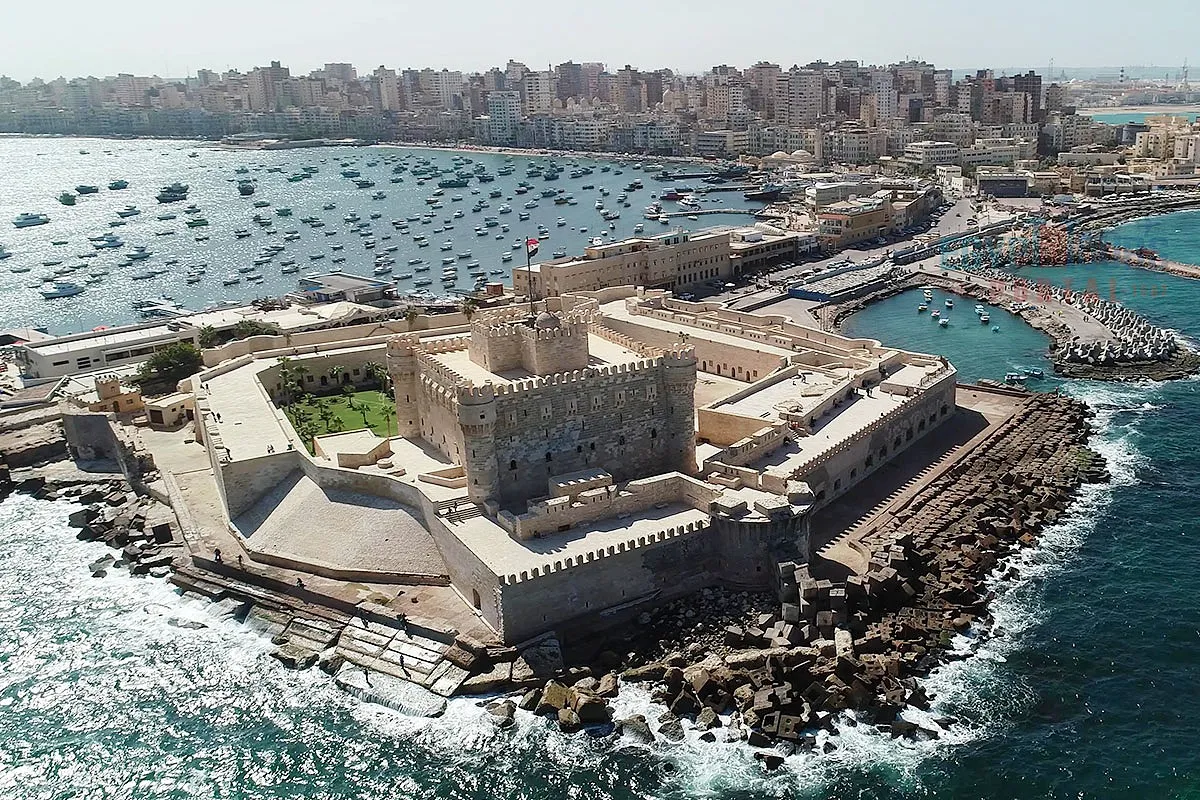
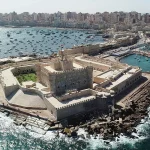
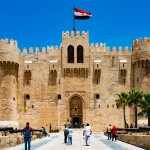
Built in 1477 by Sultan Al-Ashraf Sayf al-Din Qa’it Bay, Qaitbay Fort guards the Mediterranean entrance to Alexandria. Strategically, it was one of the most important strongholds of the Mamluk era, protecting Egypt from naval invasions.
The fort exemplifies Mamluk military design, with massive stone walls, cylindrical corner towers, and a central keep. The rectangular plan is fortified by bastions, designed to withstand artillery attacks of the late medieval period. The structure also houses a mosque, reflecting the Islamic integration of defense and spirituality.
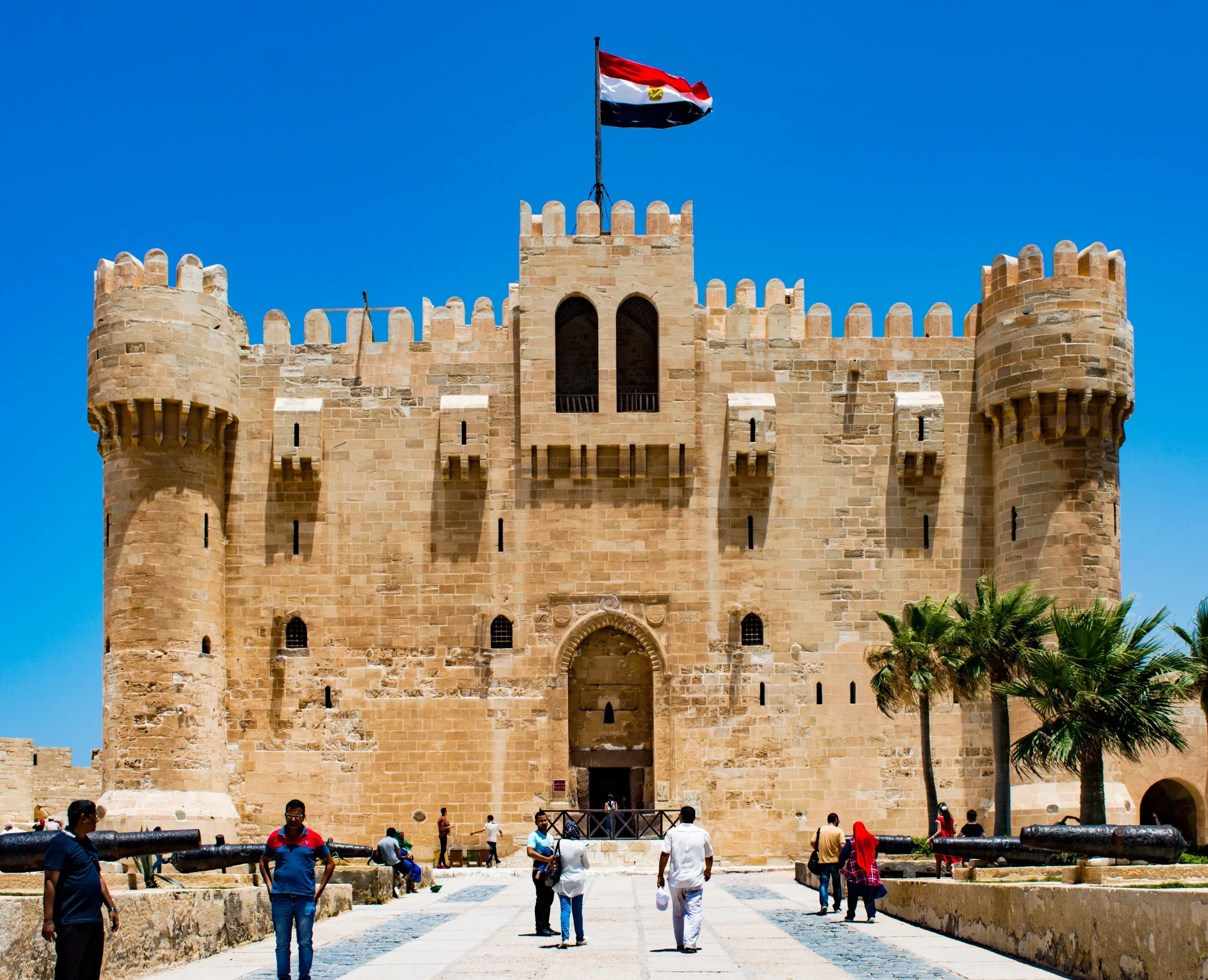
One of the fort’s most fascinating aspects is its materiality. It was built on the very site of the ancient Lighthouse of Alexandria, one of the Seven Wonders of the Ancient World, and incorporates stones salvaged from the ruined lighthouse.
Today, it operates as a maritime museum, connecting past and present. Its enduring strength reflects Egypt’s resilience and its role as a cultural crossroads between Africa, the Middle East, and the Mediterranean.
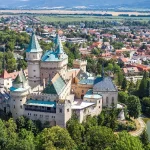
9. Bojnice Castle, Slovakia
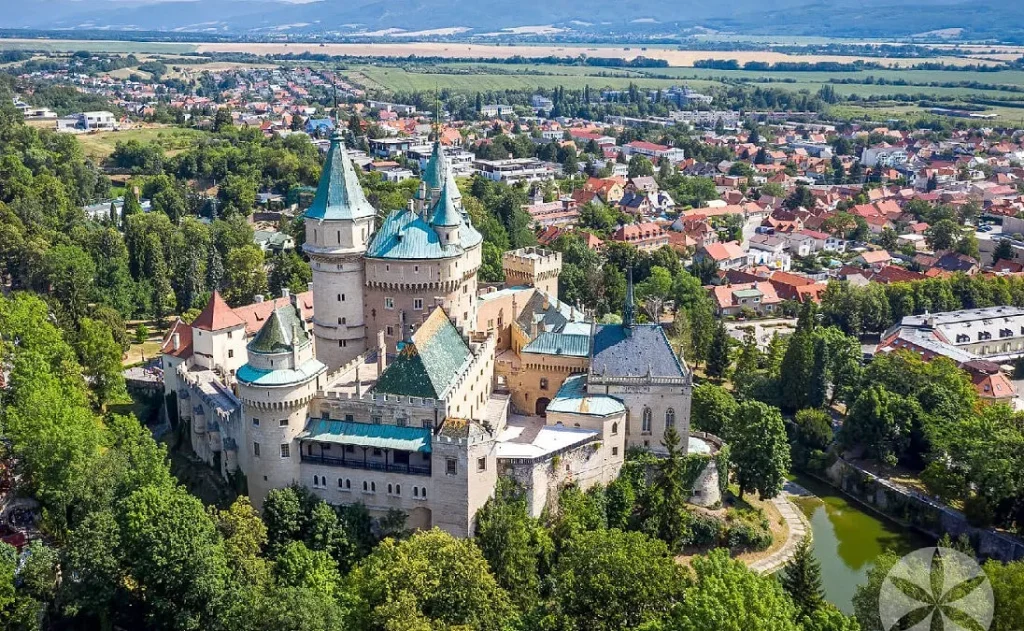
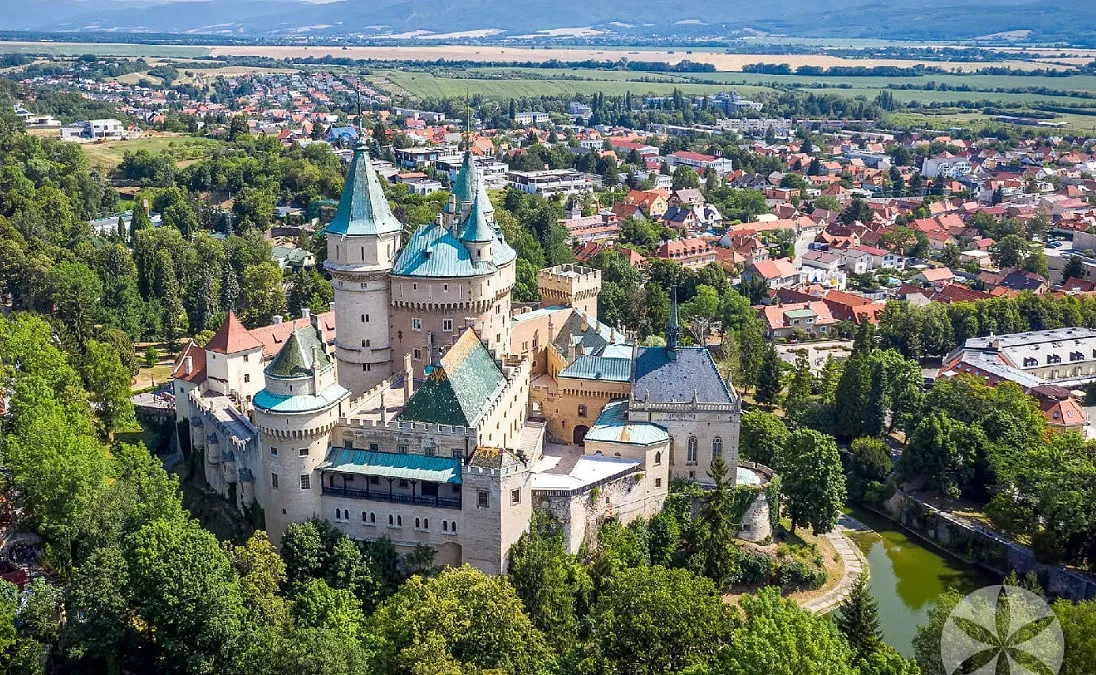
Bojnice Castle began as a wooden fort in the 12th century and gradually evolved into a Gothic and Renaissance residence before its 19th-century Romantic reconstruction by Count János Pálffy. The transformation turned it into one of Europe’s most enchanting fairy-tale castles.
The current castle was built in Neo-Gothic and Romantic Revival styles, with soaring towers, steep slate roofs, and decorative stonework. Its design draws on French Gothic models, particularly those of the Loire Valley, while also incorporating Renaissance courtyards and arcades. Surrounded by landscaped gardens and a moat, Bojnice achieves a theatrical atmosphere.
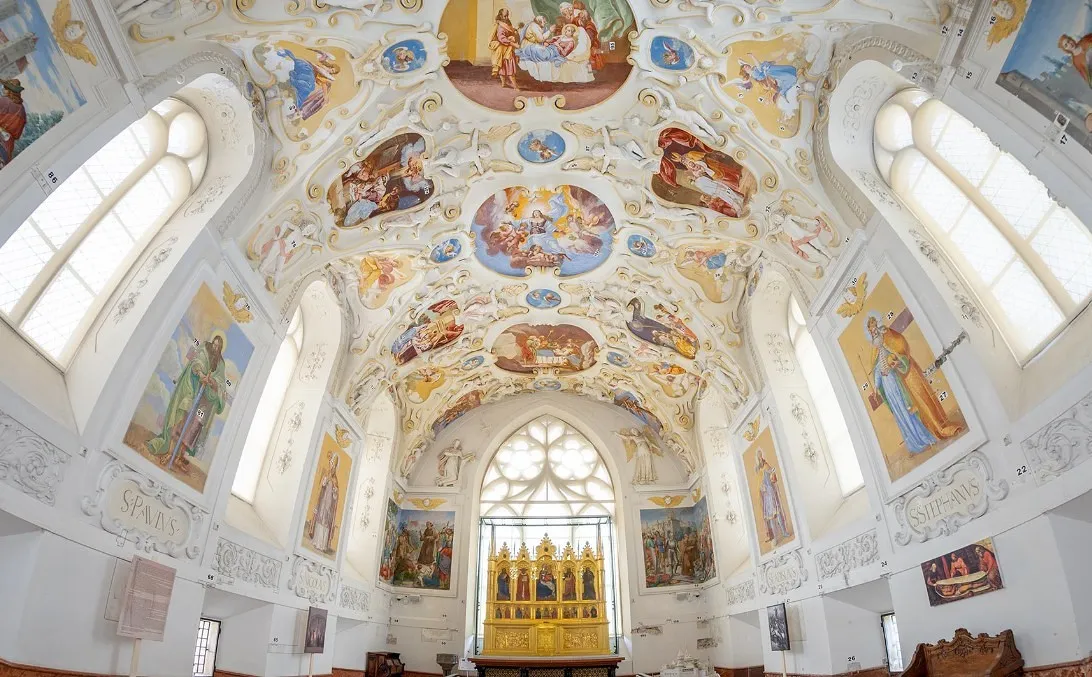
Inside, ornate halls display collections of medieval art, while the castle’s subterranean caves add to its mystique. Architecturally, it is less a fortress and more an aesthetic reinterpretation of medieval ideals, showing how 19th-century architects reimagined the Middle Ages as a source of inspiration.
Today, Bojnice is a cultural hub, hosting festivals, exhibitions, and even film productions.
10. Pena National Castle, Portugal
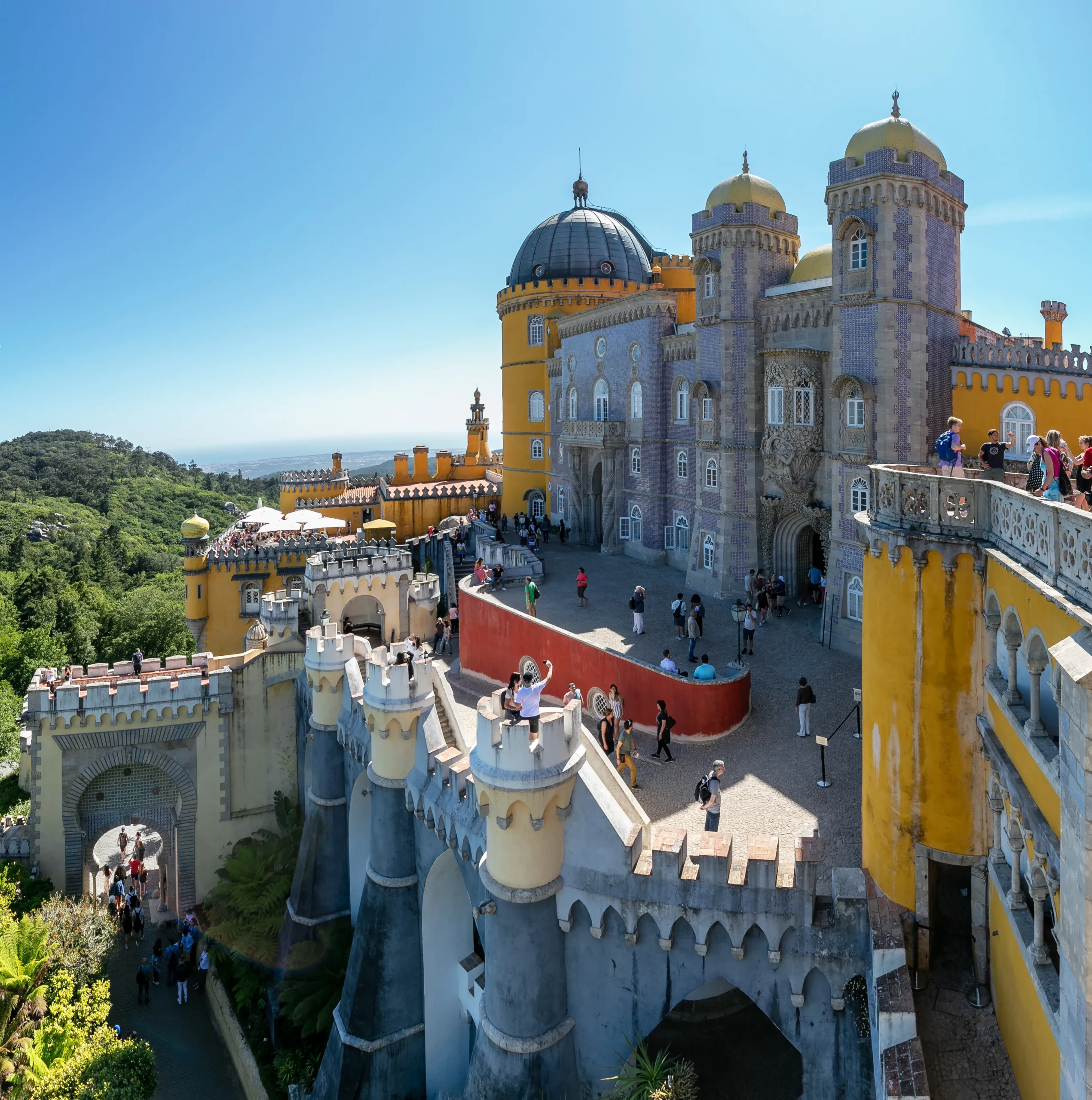
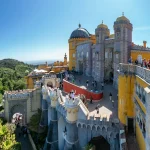
Perched atop the Sintra Mountains, Pena Castle is an example of 19th-century Romantic architecture. Commissioned by King Ferdinand II in 1838, it was designed as a summer residence and as an expression of Portugal’s cultural identity.
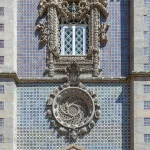
Pena Castle is defined by its eclectic style, fusing Gothic, Manueline, Moorish, and Renaissance elements. Painted in vivid reds and yellows, its facades are adorned with crenellations, domes, and decorative stone carvings. One notable feature is the use of Manueline motifs, ropes, shells, and twisted columns, that reference Portugal’s maritime history.
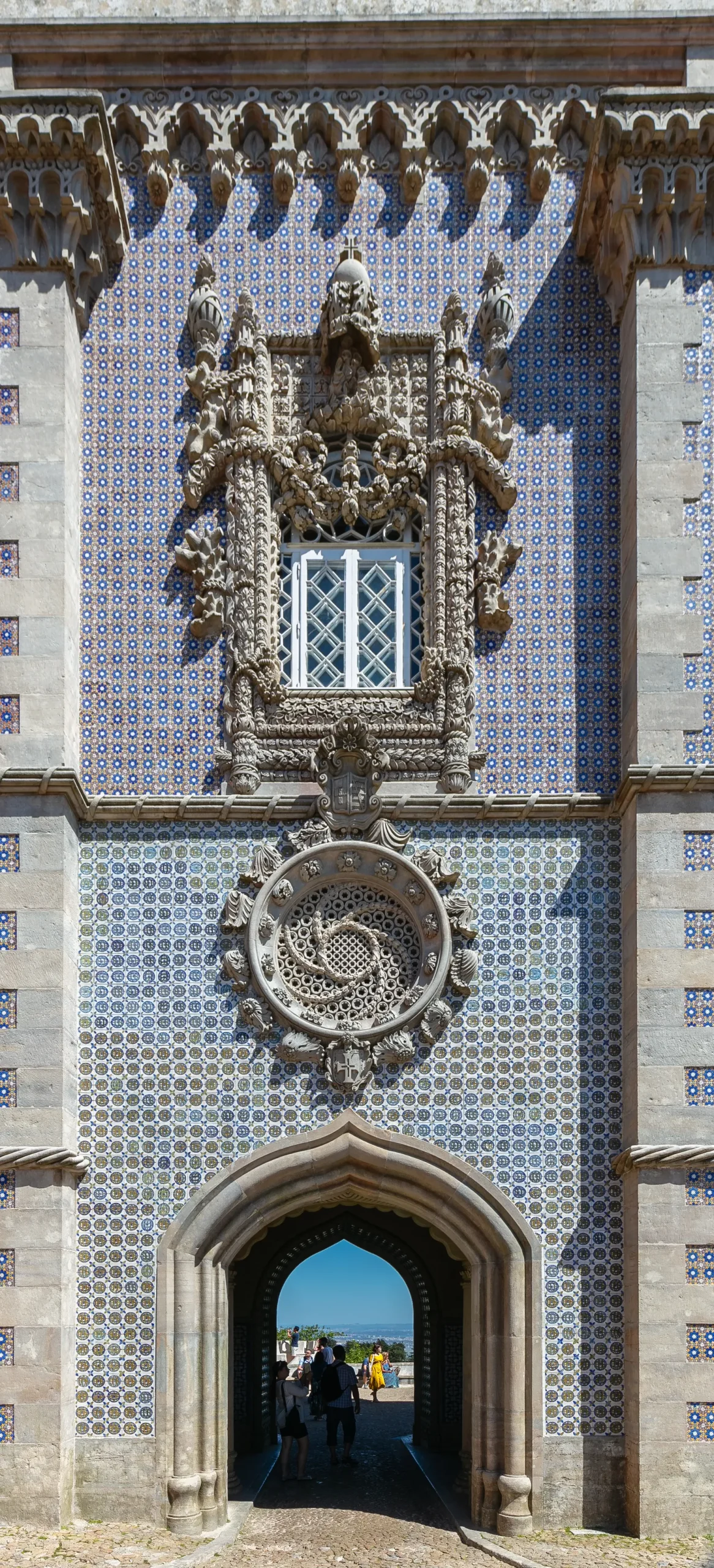
Its interiors feature richly decorated halls with stained glass, azulejo tiles, and painted ceilings. The surrounding park, landscaped in the Romantic style, integrates exotic plants and winding paths, reinforcing the castle’s theatrical quality.
Today, as a UNESCO World Heritage Site, it is celebrated as one of Portugal’s most iconic landmarks with a dramatic natural setting.
11. Windsor Castle, England
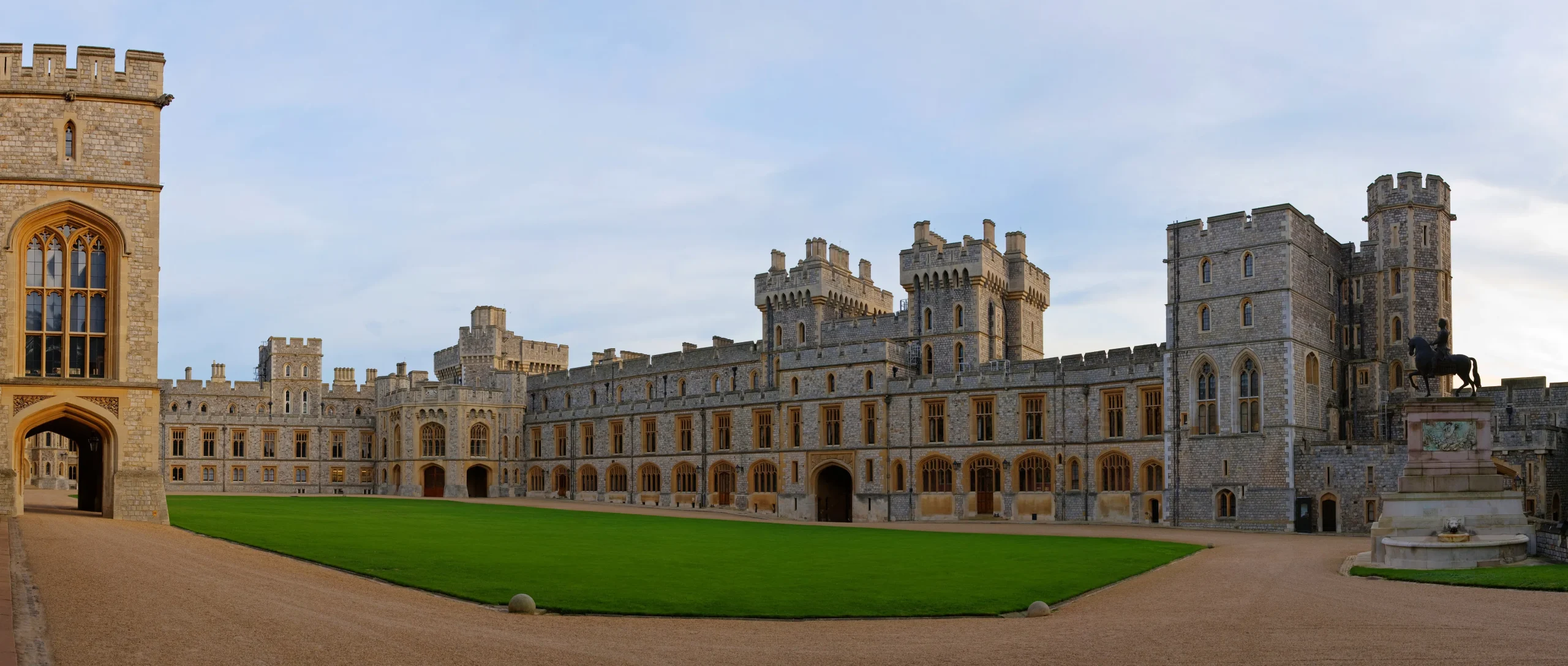
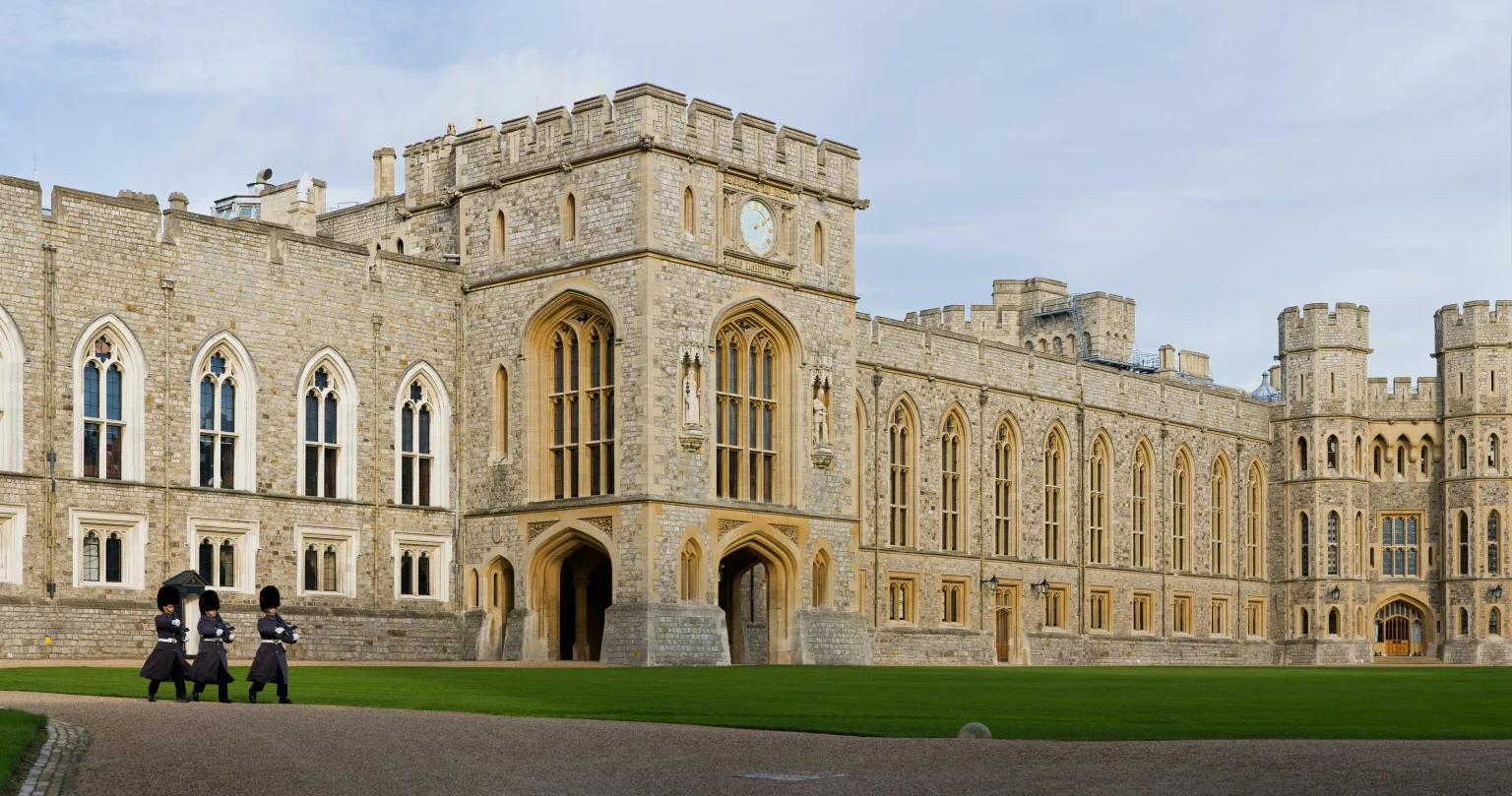
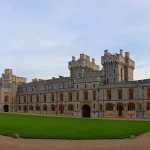
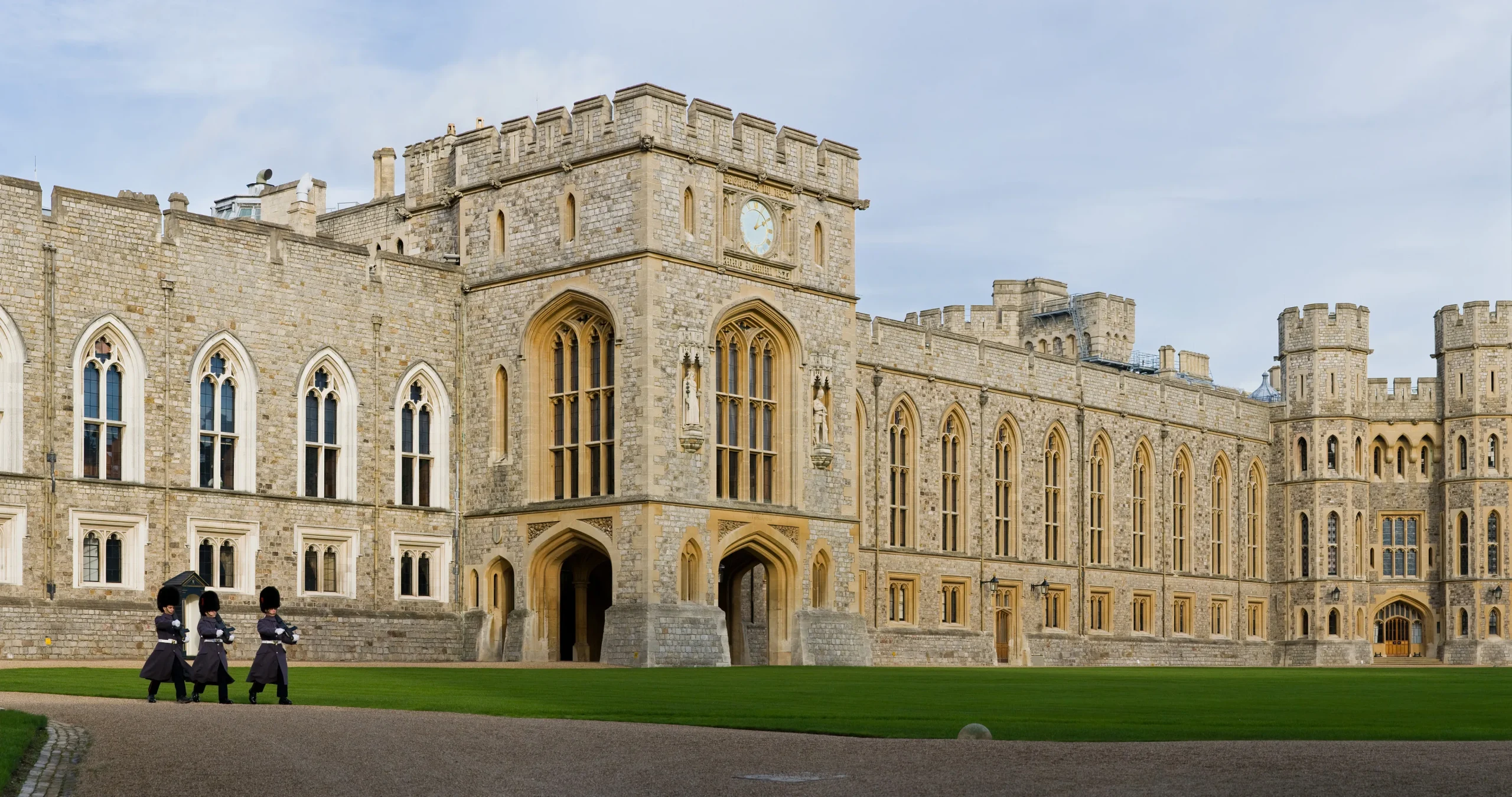
Windsor Castle is not only the world’s oldest and largest inhabited castle but also one of the most historically significant royal residences. Founded by William the Conqueror in the 11th century, it has served as a fortress, palace, and ceremonial hub for nearly a thousand years.
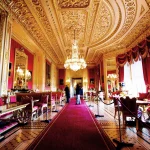
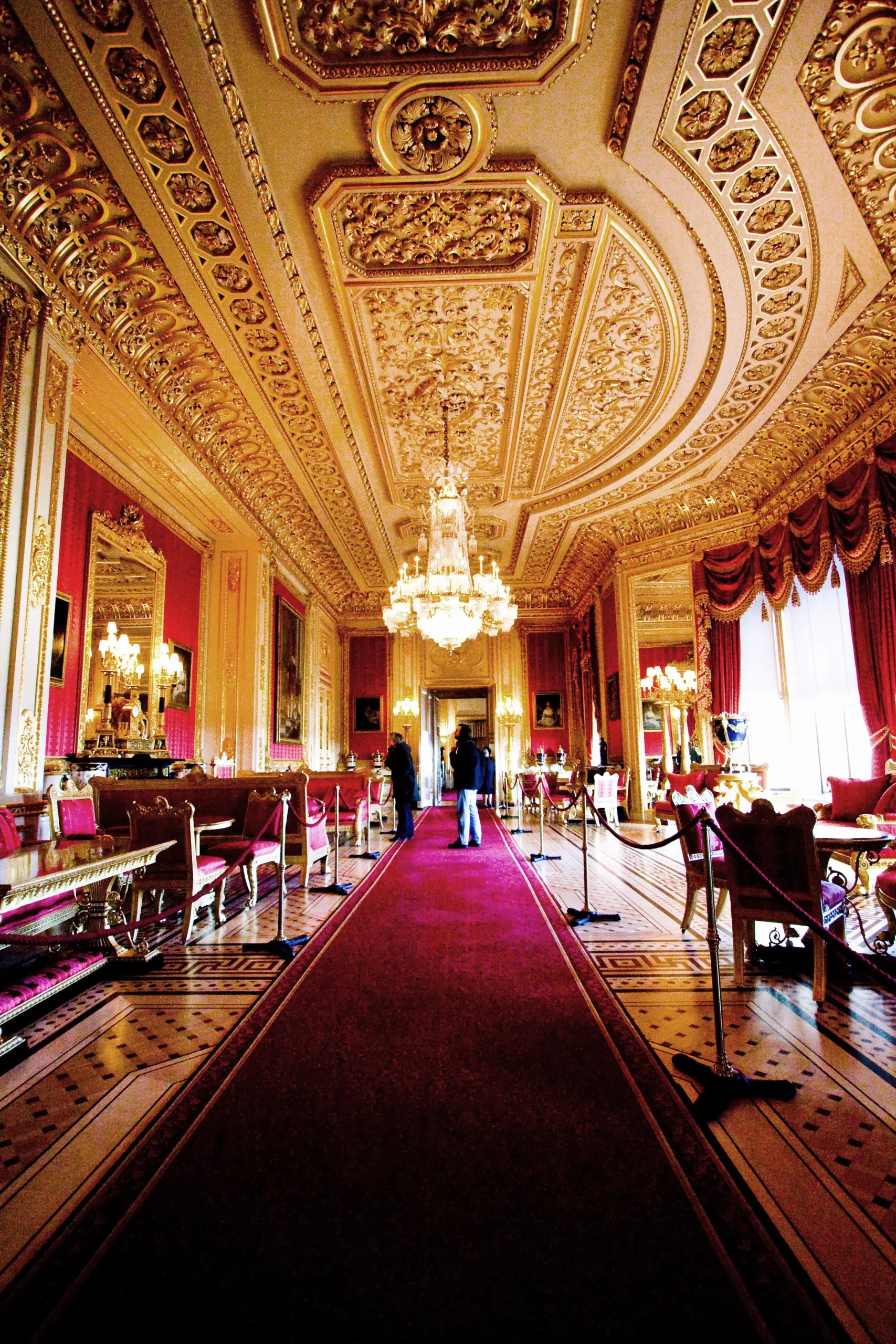
Windsor Castle is a palimpsest of styles that mirror England’s evolving history. Its original Norman motte-and-bailey fortifications were expanded into a stone castle with concentric defenses. The Round Tower, rebuilt in the 12th century, remains a defining feature of the skyline, symbolizing royal authority. The State Apartments, redesigned in the Baroque period under Charles II, exhibit opulent interiors inspired by Versailles, with gilded ceilings, grand tapestries, and ornamental plasterwork.
One of Windsor’s highlights is St. George’s Chapel, a late-medieval Gothic masterpiece with fan-vaulted ceilings, intricate stone tracery, and heraldic symbolism. It serves as the heart of the Order of the Garter and remains a functioning royal chapel, hosting events such as the wedding of Prince Harry and Meghan Markle.
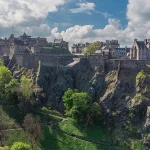
12. Edinburgh Castle, Scotland
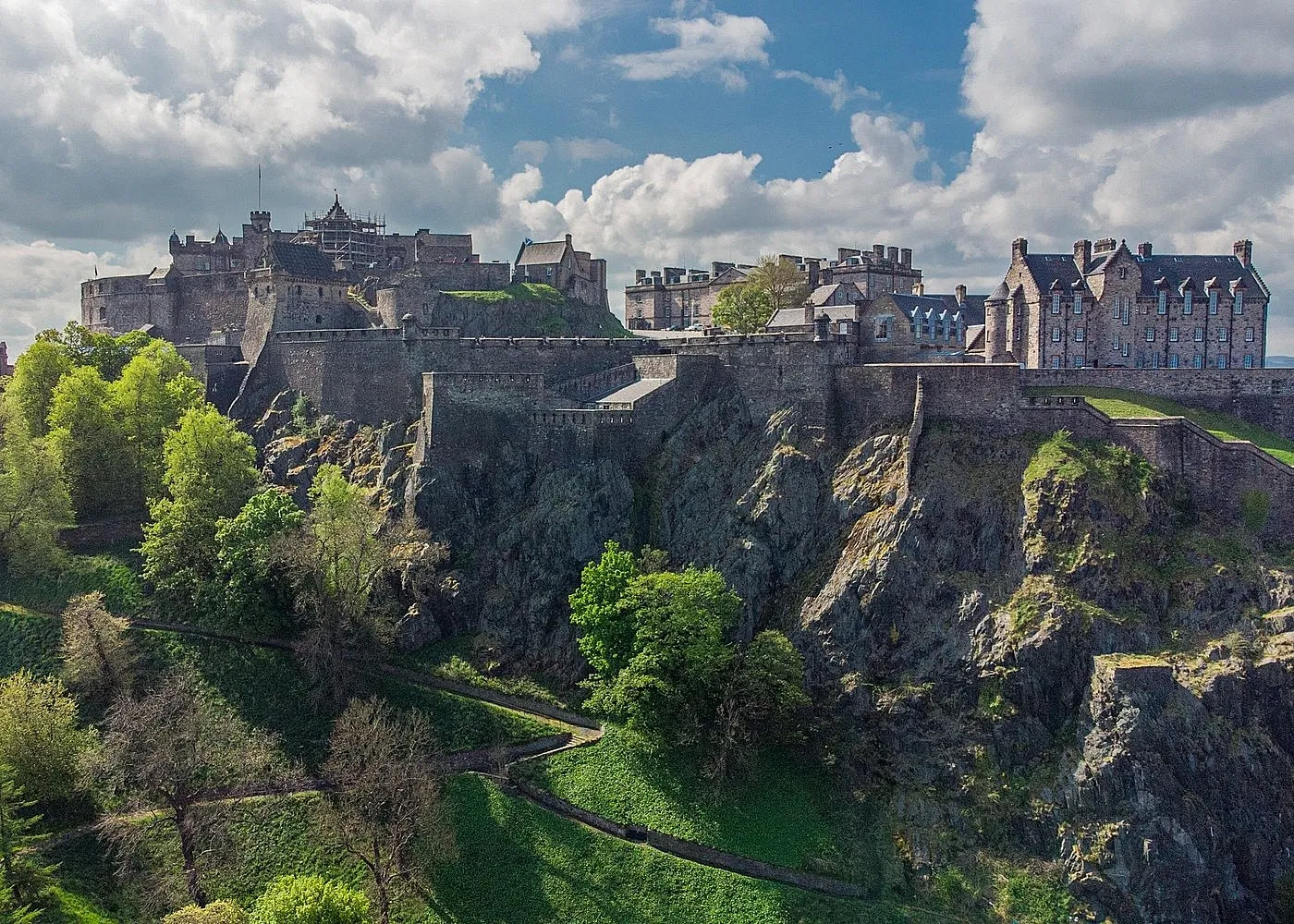
Dominating the skyline of Scotland’s capital, Edinburgh Castle sits atop Castle Rock, a volcanic plug that provided natural defense for centuries. Its history stretches back to the Iron Age, but its most formative role was as a medieval stronghold and royal residence.
The architecture reflects its military and political significance. The Great Hall, built in the early 16th century, features a hammerbeam roof and served as the ceremonial heart of the castle. The Royal Palace houses the Stone of Destiny and Scottish Crown Jewels, linking the site to national identity. Defensive structures such as the Half Moon Battery showcase Renaissance-era military engineering, designed to withstand cannon fire.
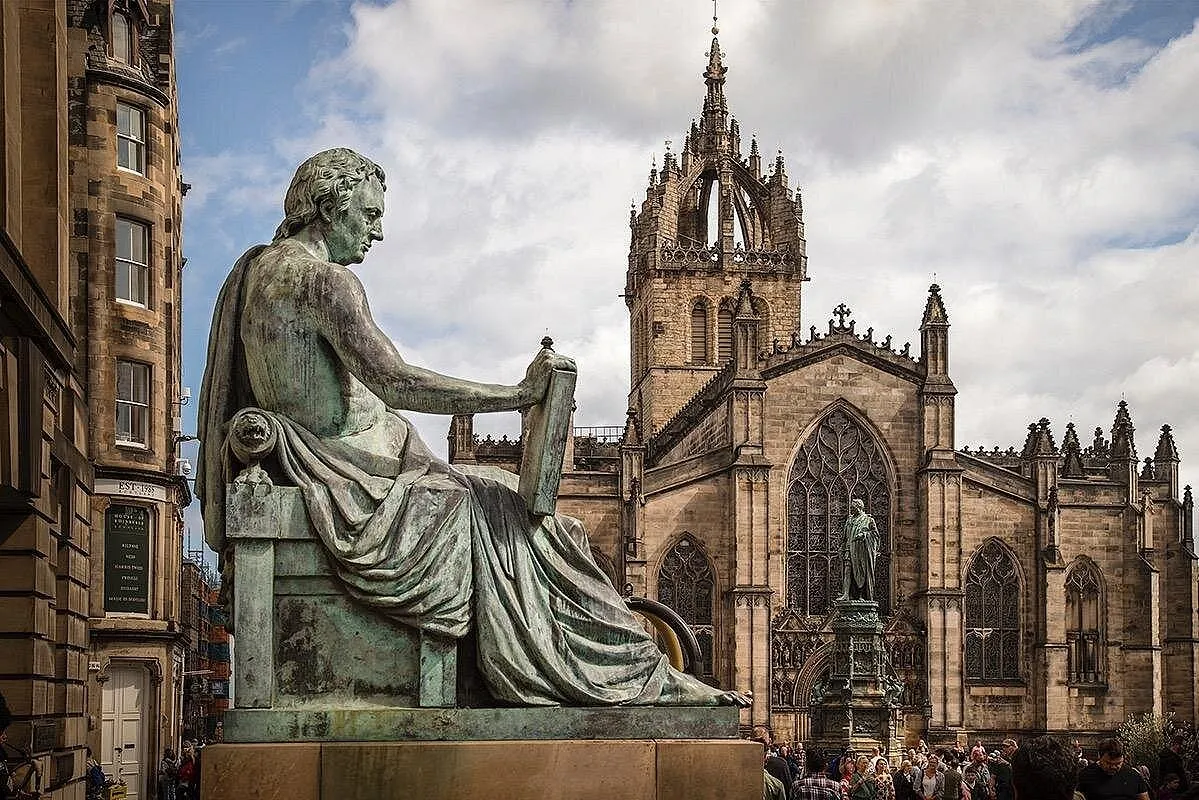
St. Margaret’s Chapel dates to the 12th century. Its simple Romanesque style, with rounded arches and small windows, makes it the oldest surviving building in Edinburgh.
Beyond architecture, Edinburgh Castle is layered with history, from the Wars of Independence to its role as a military garrison.
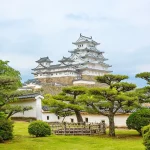
13. Himeji Castle, Japan
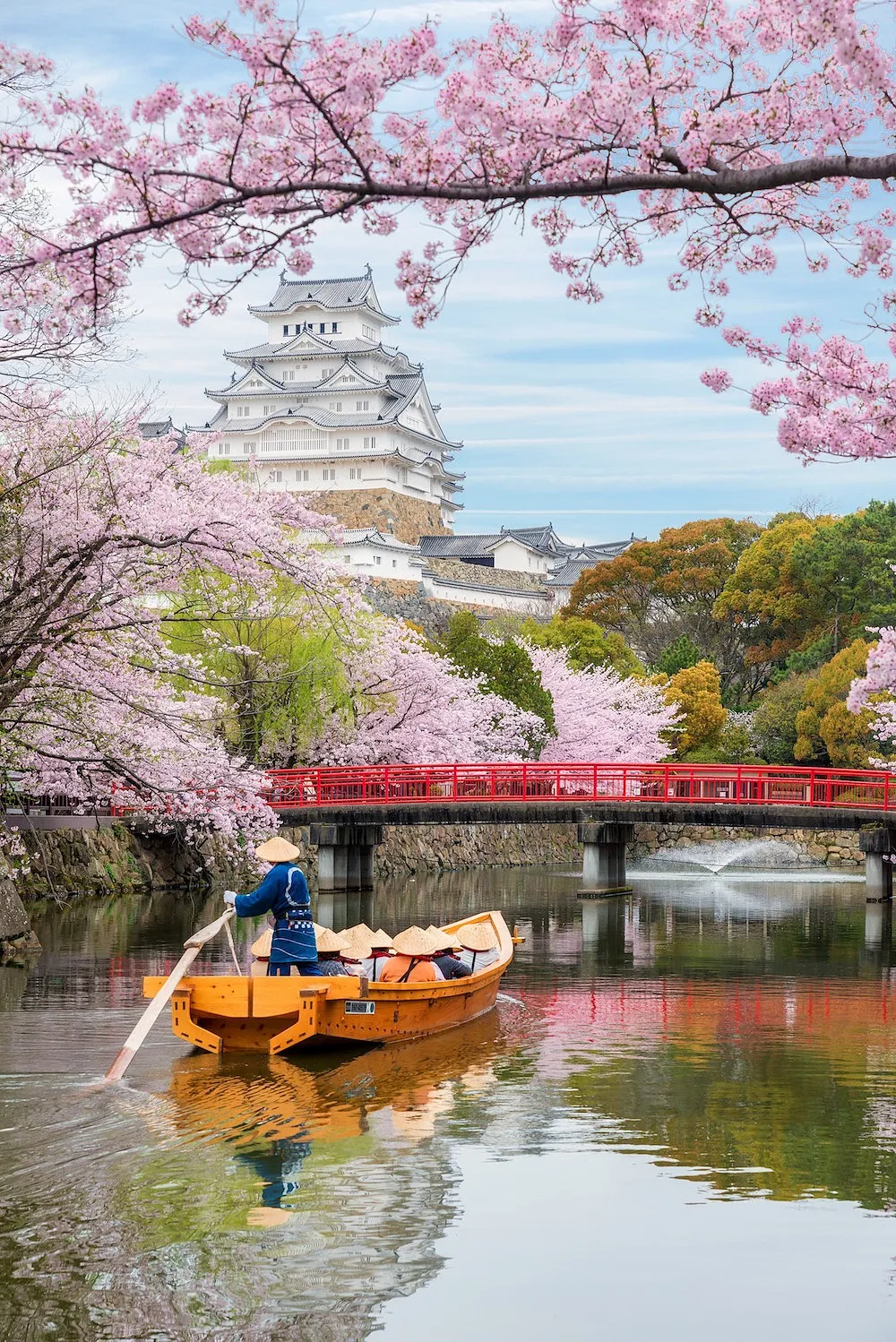
Himeji Castle, often called the White Heron Castle for its graceful, soaring appearance, is Japan’s surviving example of feudal-era fortification. Originally built in the 14th century and extensively expanded in the 16th century under Ikeda Terumasa, it still remains intact.
Unlike European castles, Himeji emphasizes wooden construction and plastered walls, creating an interplay of lightness and strength. Its white stucco walls, curved gables, and layered roofs symbolize defense. The castle complex includes over 80 structures interconnected by corridors, gates, and baileys.
Its defense strategy is as remarkable as its beauty. The maze-like approach routes were deliberately designed to confuse invaders, forcing them into narrow, twisting paths overlooked by defensive towers. The walls contain loopholes for archers and gunmen, reflecting Japan’s transition to firearm warfare.
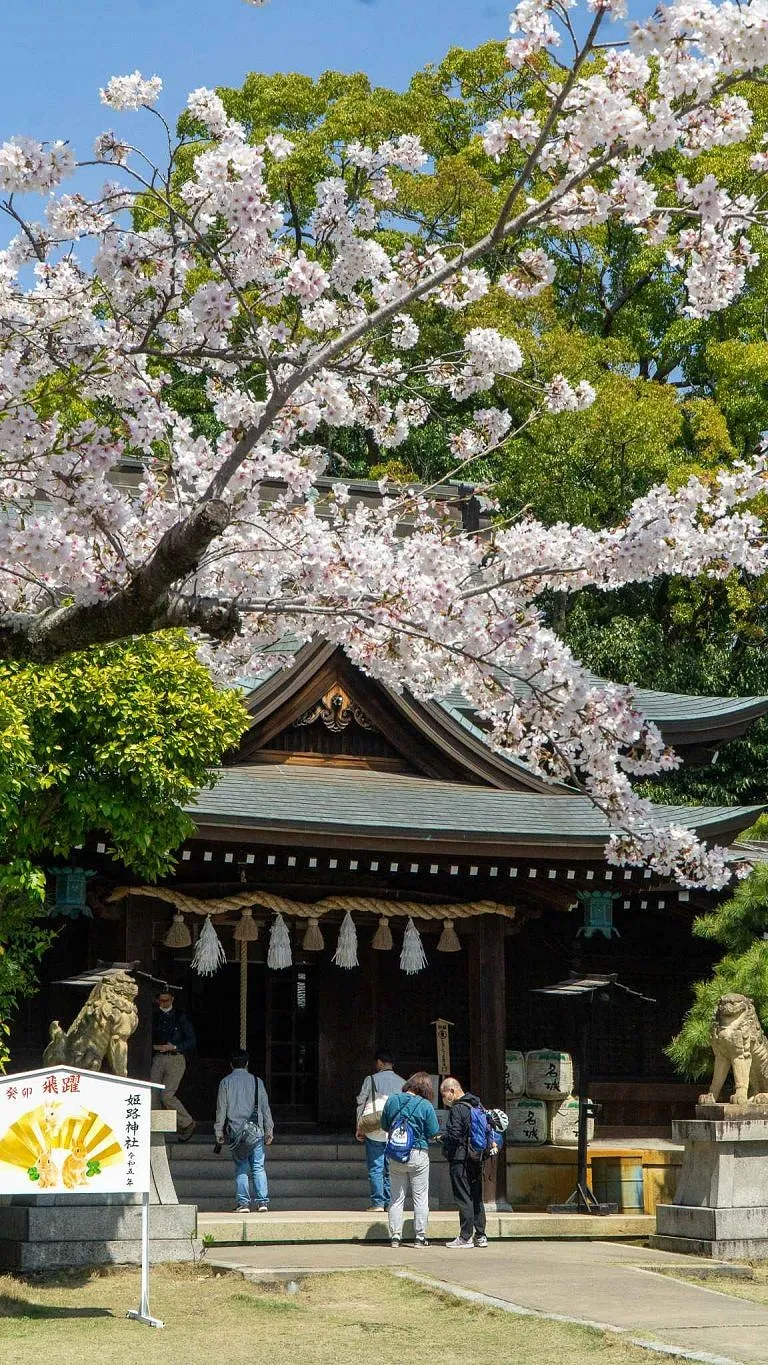
Himeji Castle is also a showcase of Japanese carpentry. The wooden framework, fitted without nails, demonstrates resilience against earthquakes and time. Declared a UNESCO World Heritage Site, it is one of the world’s greatest surviving fortresses.
14. Schwerin Castle, Germany
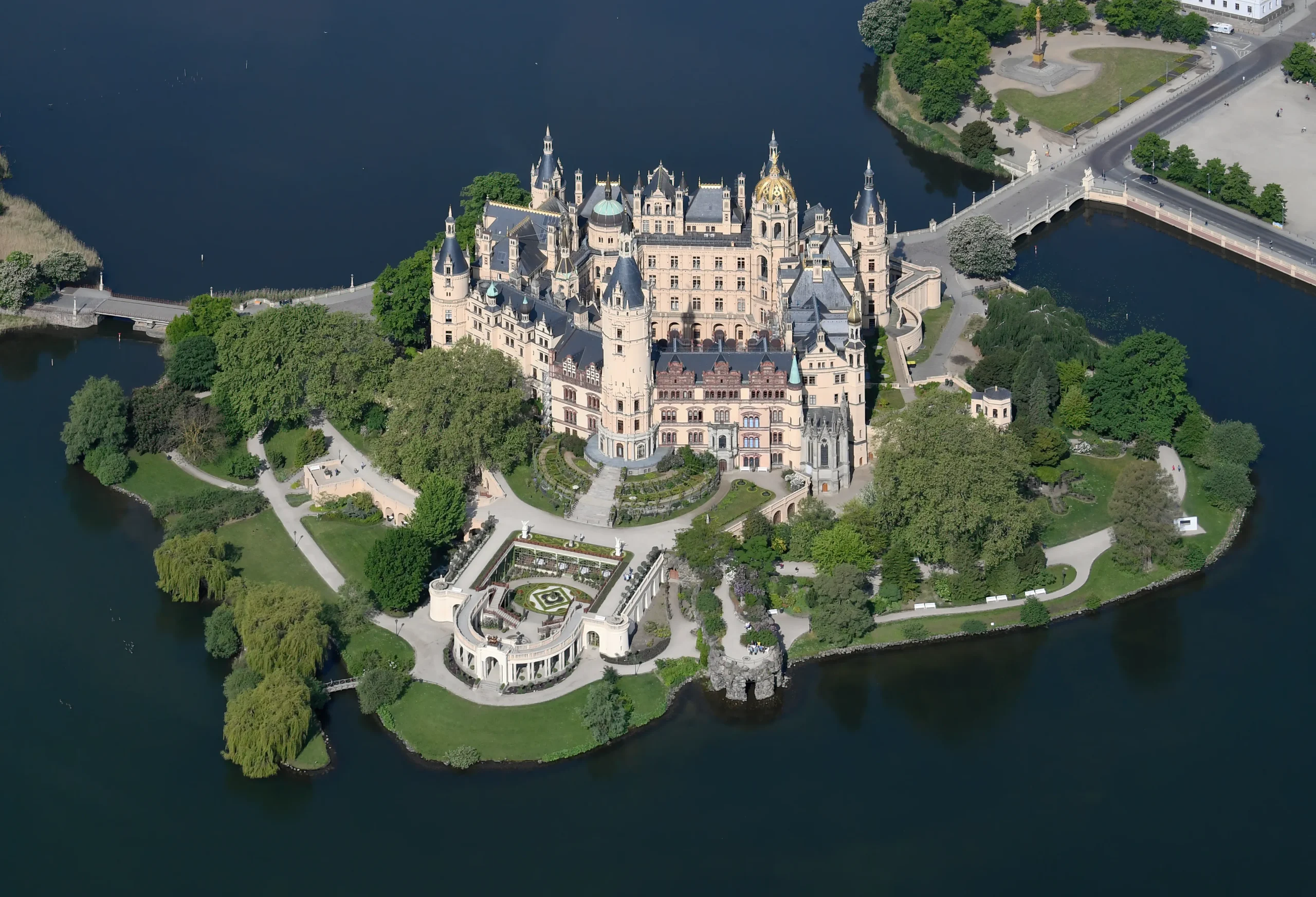
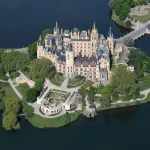
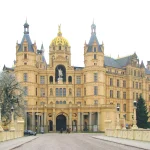
Nestled on an island in Lake Schwerin, Schwerin Castle is one of Germany’s most picturesque architectural treasures. Although its origins date back to the 10th century, the current form reflects a 19th-century Romantic reinterpretation of earlier traditions.
The castle’s design, led by architect Georg Adolf Demmler, fuses Neo-Renaissance, Gothic Revival, and Baroque influences. Its golden domes, turrets, and ornate facades rise above the lake, giving it a fairy-tale quality. The building’s symmetry and detailing recall French Renaissance châteaux, while its interiors boast lavish ballrooms, gilded ceilings, and a grand throne room adorned with Corinthian columns.
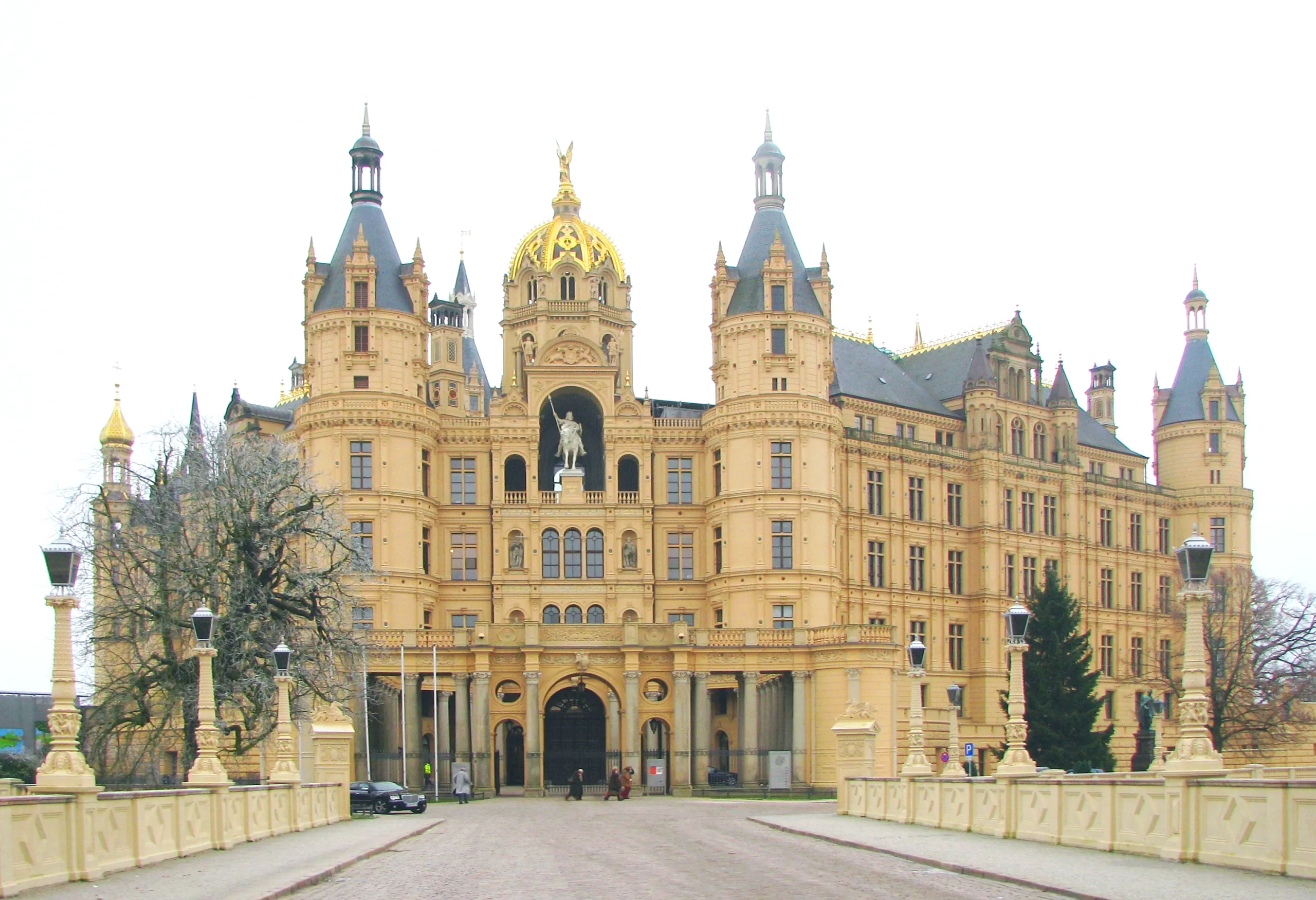
What distinguishes Schwerin is its island setting, which enhances its sense of seclusion. The surrounding gardens, designed in the English landscape tradition, complement the architecture with sweeping lawns, sculptures, and water features.
Historically, Schwerin was the seat of the Dukes of Mecklenburg and later a symbol of regional governance. Today, it also houses the state parliament.
15. Peleș Castle, Romania
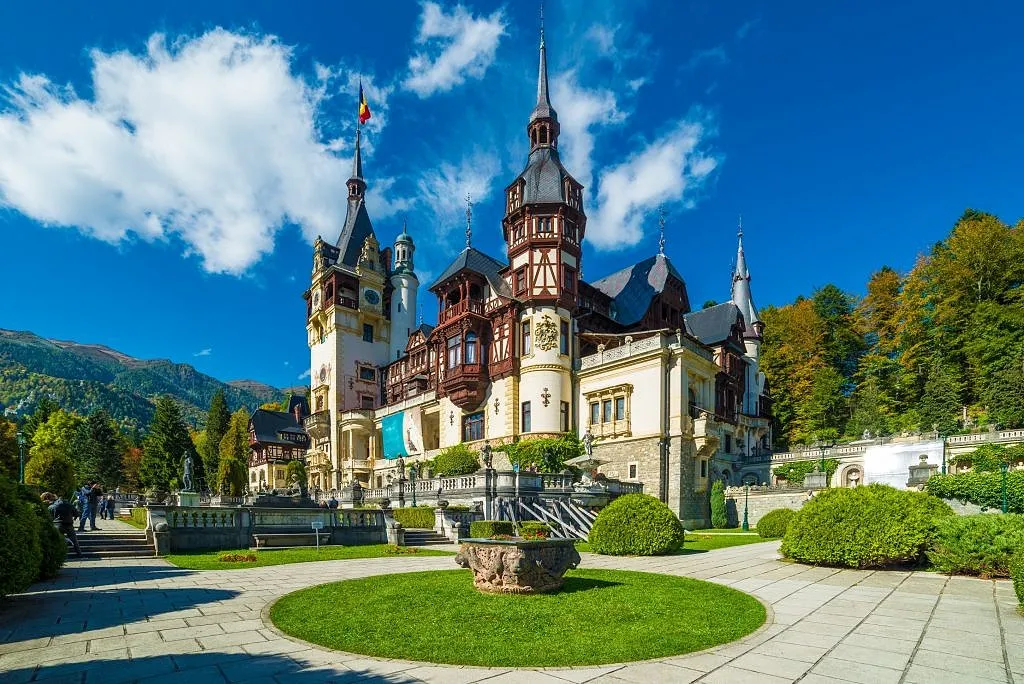
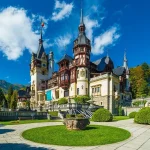
Built between 1873 and 1914 under King Carol I, Peleș Castle is one of Europe’s refined Neo-Renaissance structures. Located in the Carpathian Mountains, it was intended as a royal summer retreat and a symbol of Romania’s modernization.
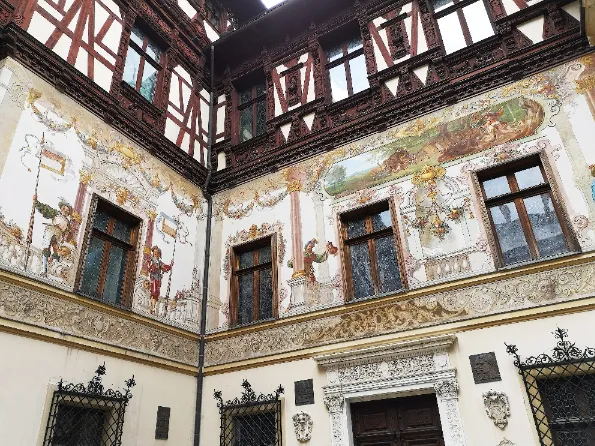
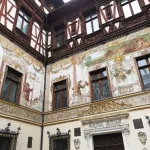
Architecturally, Peleș combines Neo-Renaissance, Gothic Revival, and German Renaissance influences. Its timber-framed facades, steeply pitched roofs, and richly carved balconies reveal Central European stylistic roots, while its interiors display a global synthesis of design. The Hall of Honor features a soaring stained-glass ceiling and ornate woodwork.
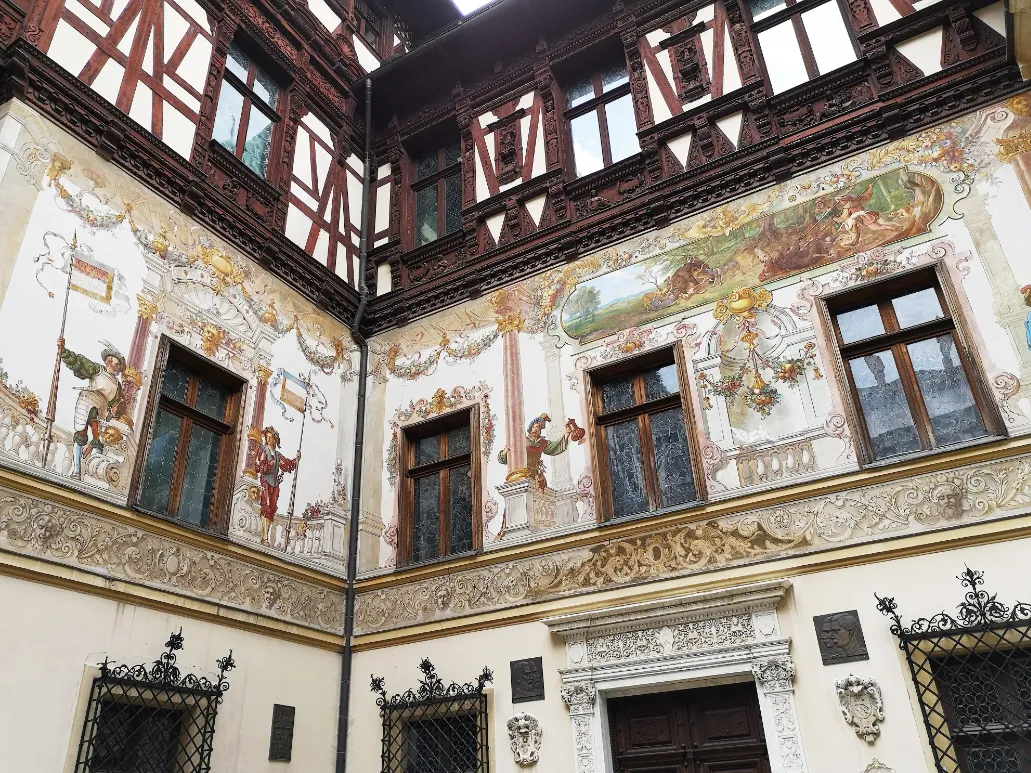
Peleș was also highly advanced technologically for its time. It was among the first castles in Europe to have central heating, electricity, and even a retractable glass roof. Culturally, Peleș represents Romania’s aspiration to connect with broader European traditions while asserting its own identity.
Today, these castles no longer command armies or chart the fate of empires. Yet they endure. They draw in architects, travelers, and dreamers alike, inviting us to trace the contours of history with our own footsteps.
To walk through a castle is to step into a living story. Their walls may no longer echo with war drums or royal proclamations, but they continue to speak of resilience, artistry, and the human desire to leave behind something greater than ourselves. And perhaps that is their greatest power!