



The Alice L. Walton School of Medicine (AWSOM) in Bentonville, Arkansas, has officially welcomed its first class of 48 students. Founded by Walmart heiress Alice Walton, the world’s richest woman, the school offers a new vision for training physicians, one centered on whole-person health, blending conventional medicine with wellness, preventive care, and the healing power of art and nature.
What Sets the Alice L. Walton School of Medicine (AWSOM) Apart
The Alice L. Walton School of Medicine (AWSOM) curriculum weaves traditional medical training with holistic care principles, emphasizing emotional well-being, nutrition, lifestyle habits, and preventive care. The school’s lessons are infused with arts and humanities, designed to sharpen empathy and observational skills through experiences like drawing classes at the nearby Crystal Bridges Museum of American Art.
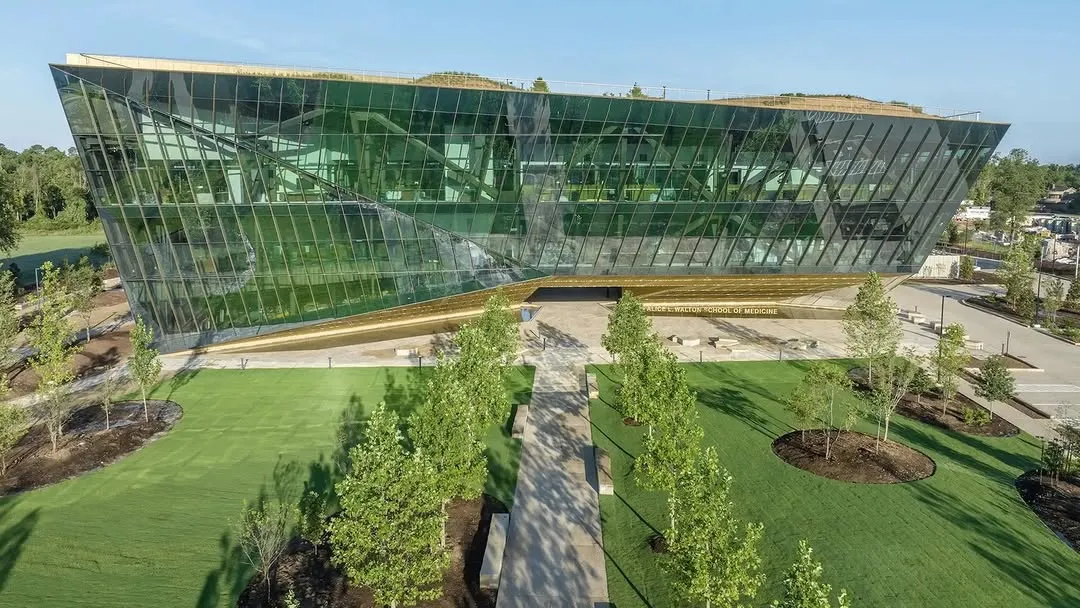
The school is located in a 154,000-square-foot, four-story building designed specifically to support a whole-health philosophy. It accepted less than 3 percent of over 2,000 applicants and provides free tuition for its first five graduating classes.
This initiative is part of Alice Walton’s broader healthcare vision, alongside the Heartland Whole Health Institute, located nearby, which aims to transform care in Arkansas and serve as a national model for medical education and health access in underserved communities.
Architecture Inspired by Nature: Healing-Centered Campus Design at AWSOM
Design That Grows From the Land
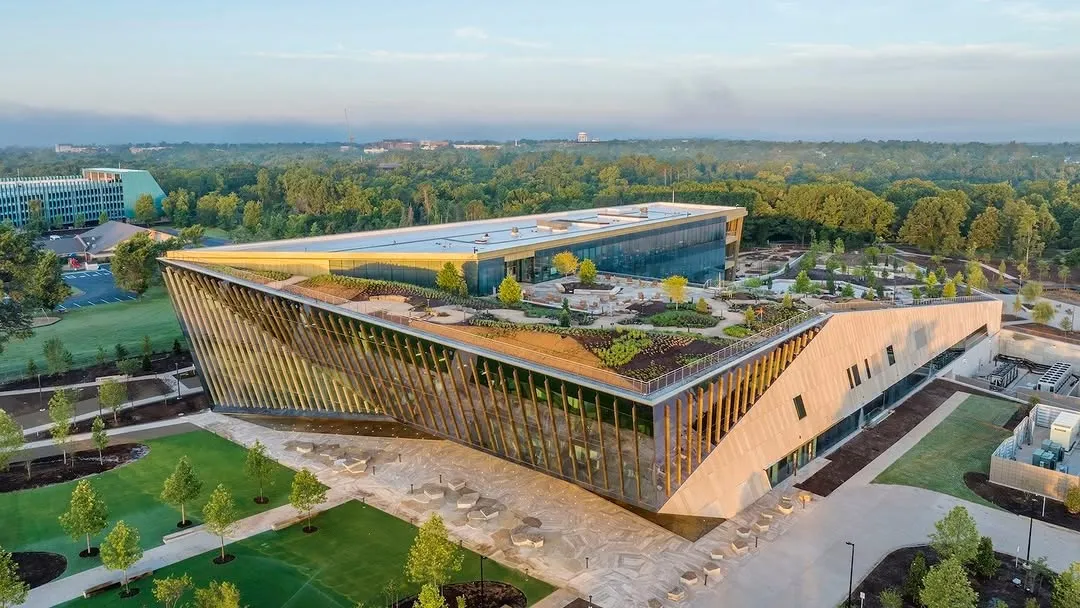
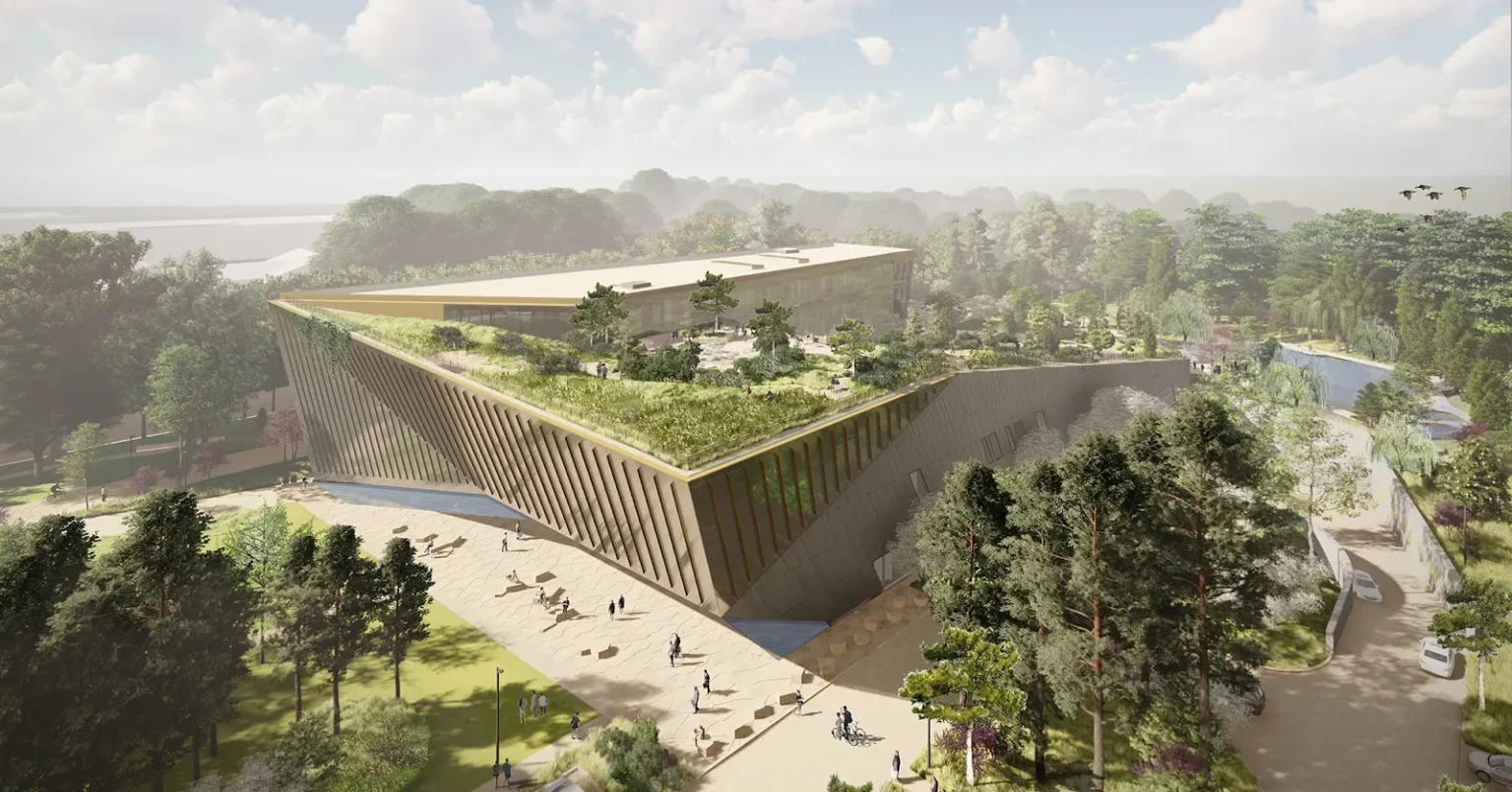
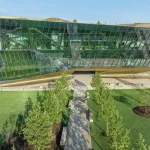
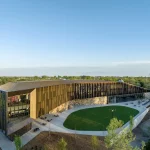
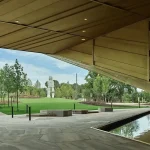
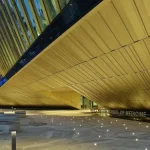
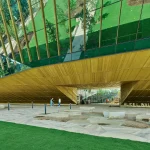
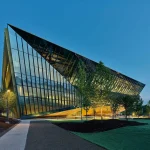
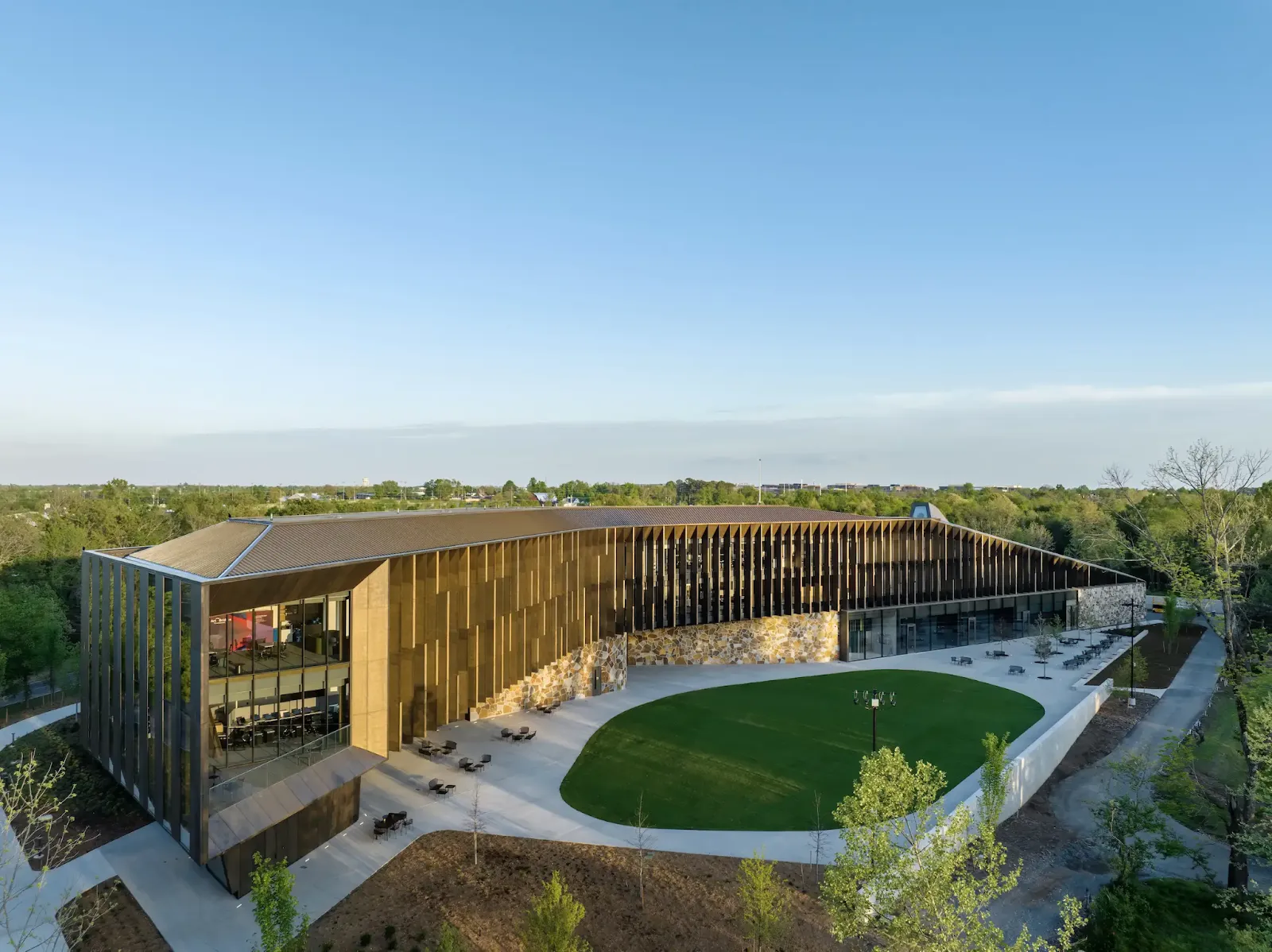
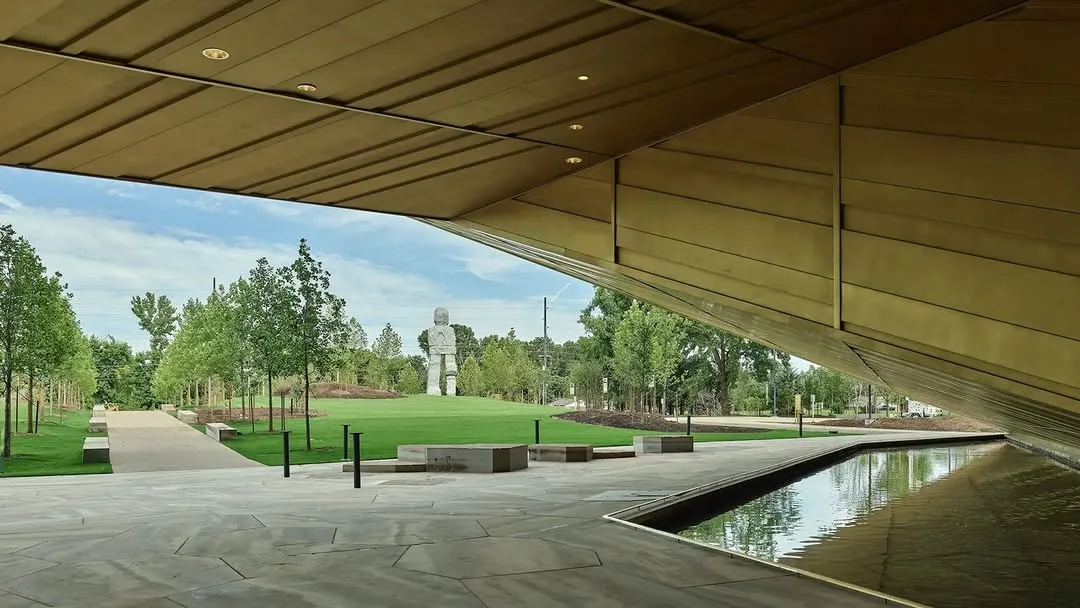
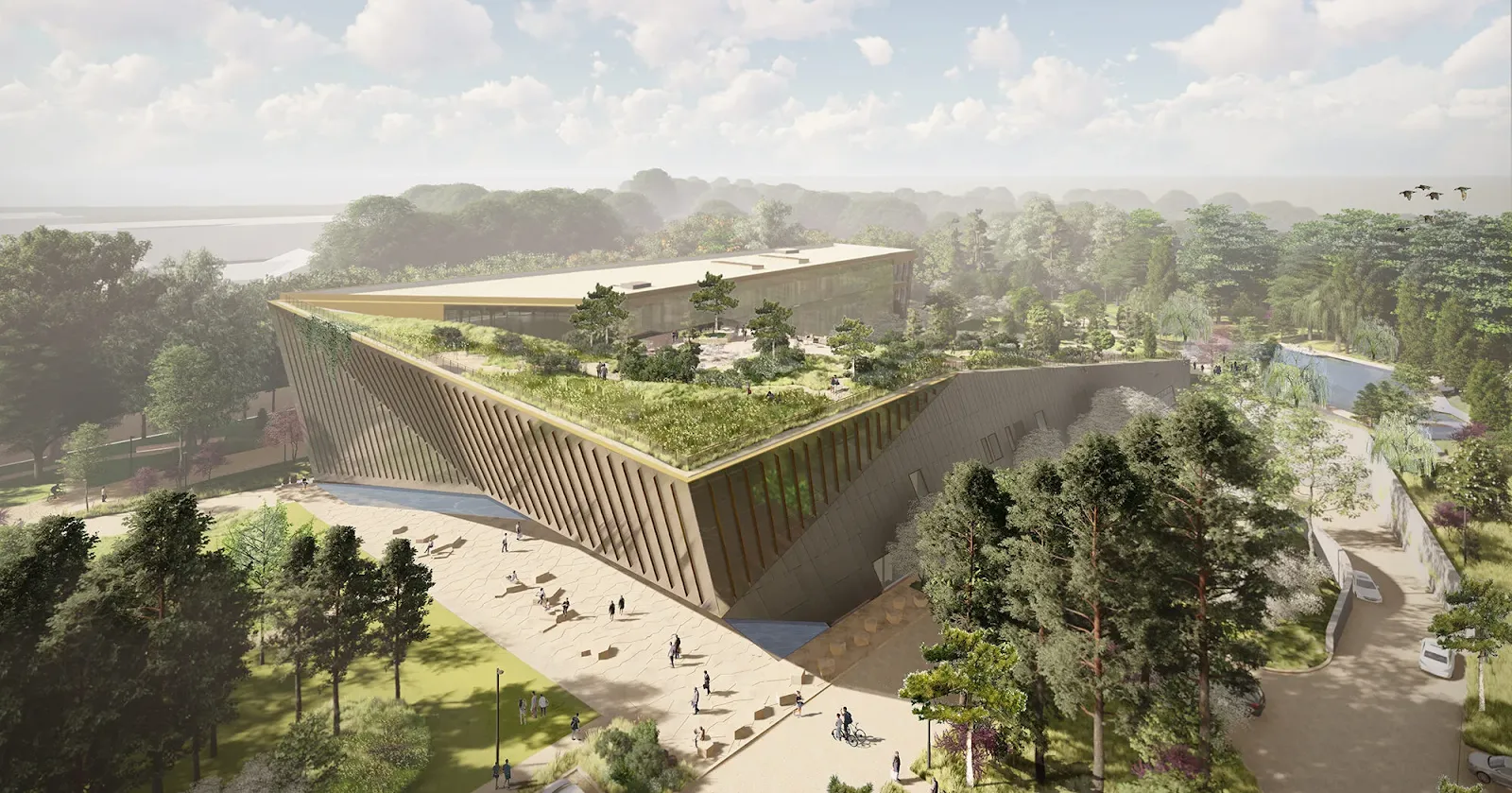
Designed by Polk Stanley Wilcox and landscaped by OSD, the building’s bluff shelter canopy, a dramatic two-story cantilever clad in marine-grade brass, echoes natural limestone overhangs while signaling a welcome. The 154,000-square-foot, four-story building is integrated into its setting, rising from the Ozark landscape rather than sitting upon it.
The ridges of the building form shallow valleys offering natural shade, sculpted views, and a connection to the surrounding woodlands. Cantilever reaches out over 80 feet, welcoming visitors under a symbolic shelter of healing and community.
Materials That Echo Place
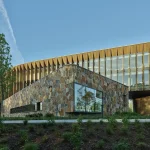
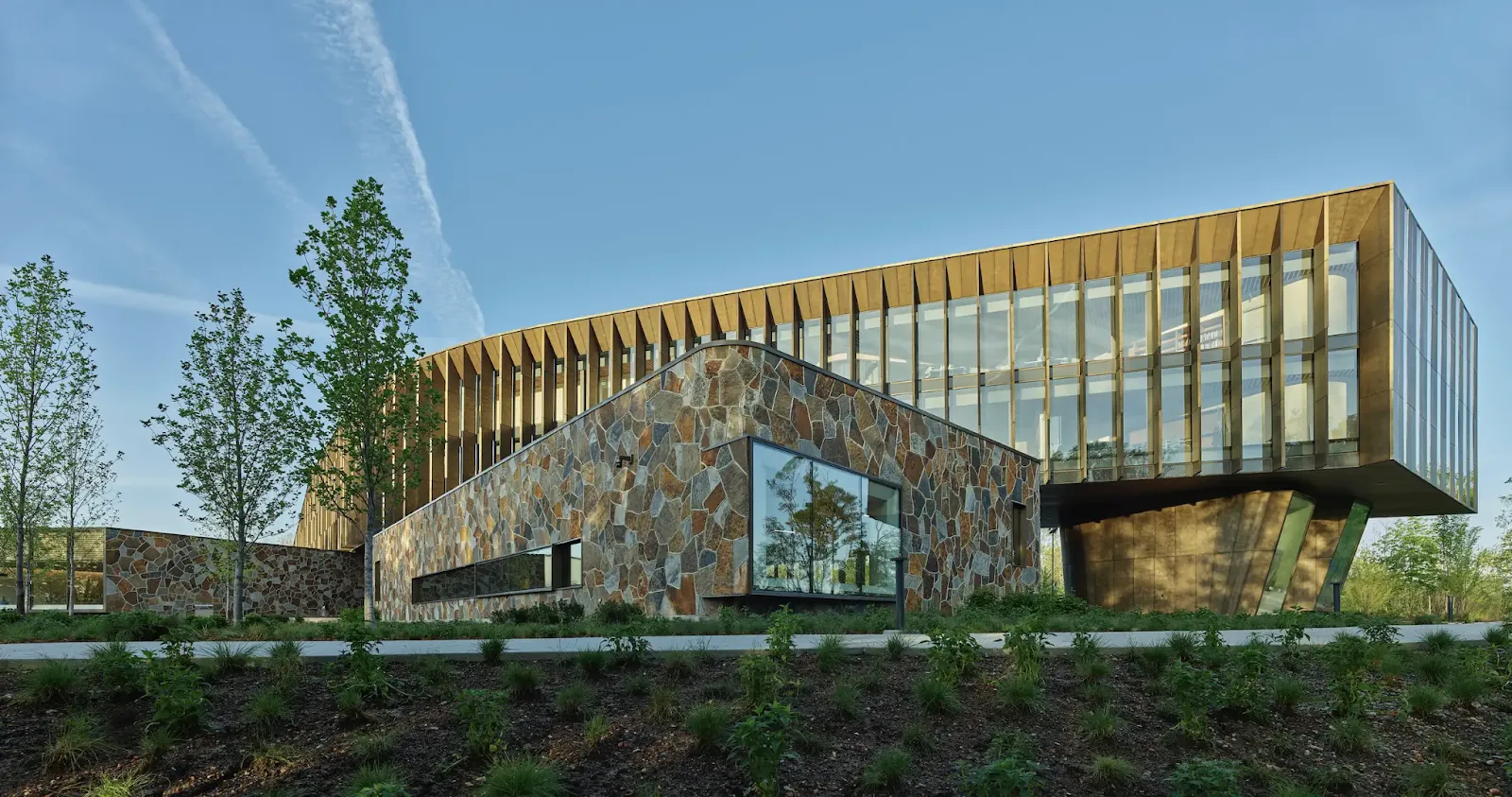
The façade combines glass, precast concrete, and marine-grade brass, including about 8,000 sq ft of perforated brass sunshades. These control light and heat while casting the building in a warm glow, reminiscent of forest light filtering through fall foliage. The approach embraces vernacular “Giraffe Stone”, a regional material, reinforcing a sense of place in every face of the building.

A Rooftop That Becomes Park
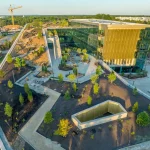
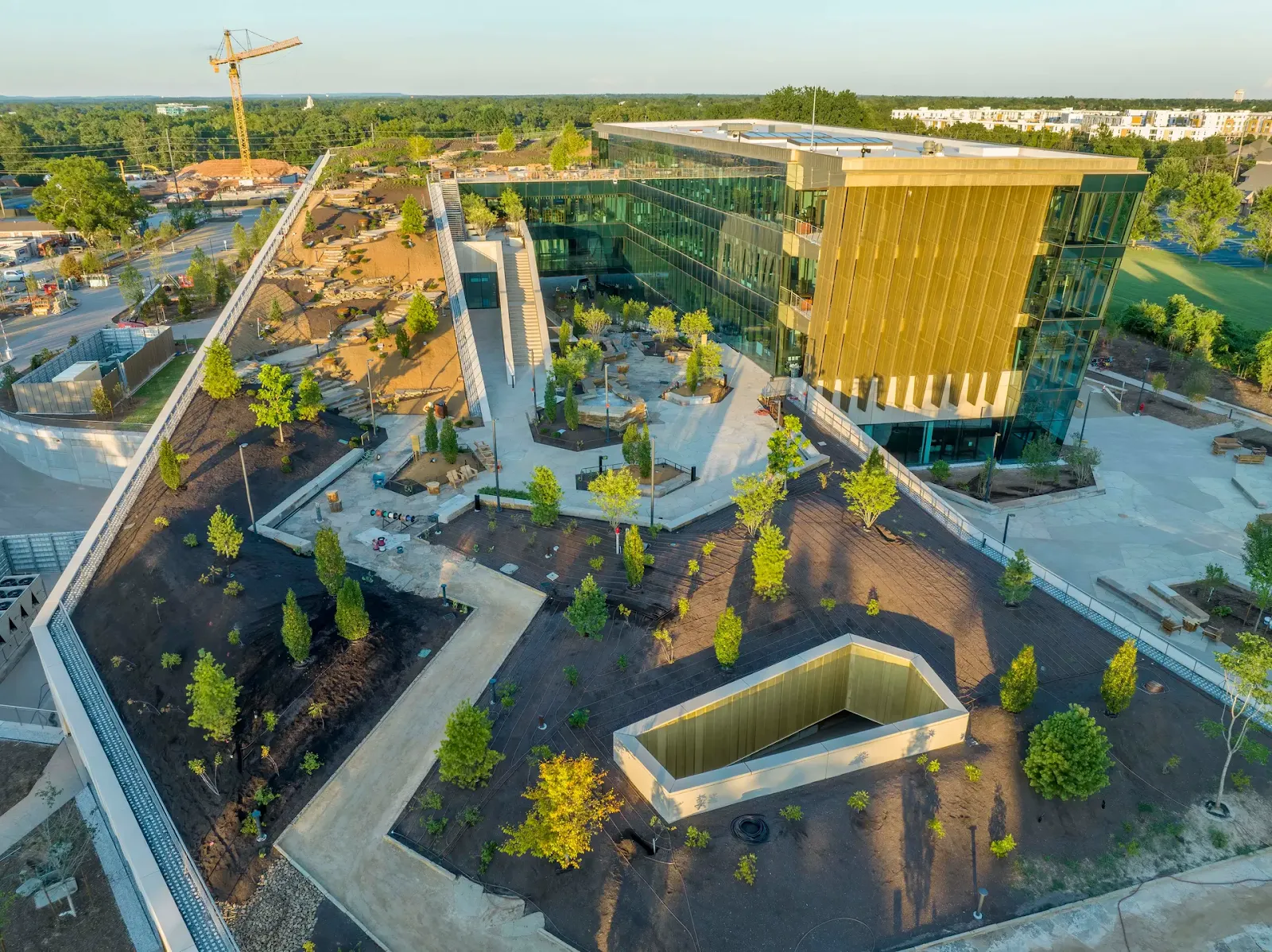
Atop the building sits a 2-acre green roof, currently the largest in the region, that transforms the structure into a living landscape, a rooftop park complete with native trees, shrubs, and perennials such as redbuds, sumacs, and catalpas. This intensive green roof rests on over 12 feet of Geofoam, bringing substantial earth and greenery into architectural form.
From ground level, trails and gardens appear to flow naturally onto the roof, blurring the line between building and nature and forming a “jump from the ground to the sky meadow”.
An Outdoor Classroom — Everywhere
The campus landscape, crafted by OSD (Office of Strategy + Design), includes healing gardens, meditation terraces, a woodland amphitheater with cascades, wetlands, outdoor classrooms, and even a teaching farm. Together, these features grok the whole-person ethos by giving students and the community space to gather, reflect, and heal.
Over 550 trees and 140,000 native plantings were added across the site, reinforcing local ecology and offering sensory richness year-round.
Spaces That Blend Inside and Out
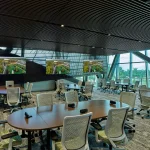
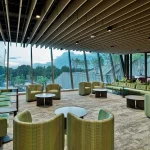
Internally, the four levels accommodate learning halls, small-group rooms, a library, clinical and anatomy labs, simulation spaces, student lounges, a theater, and wellness and recreation areas.
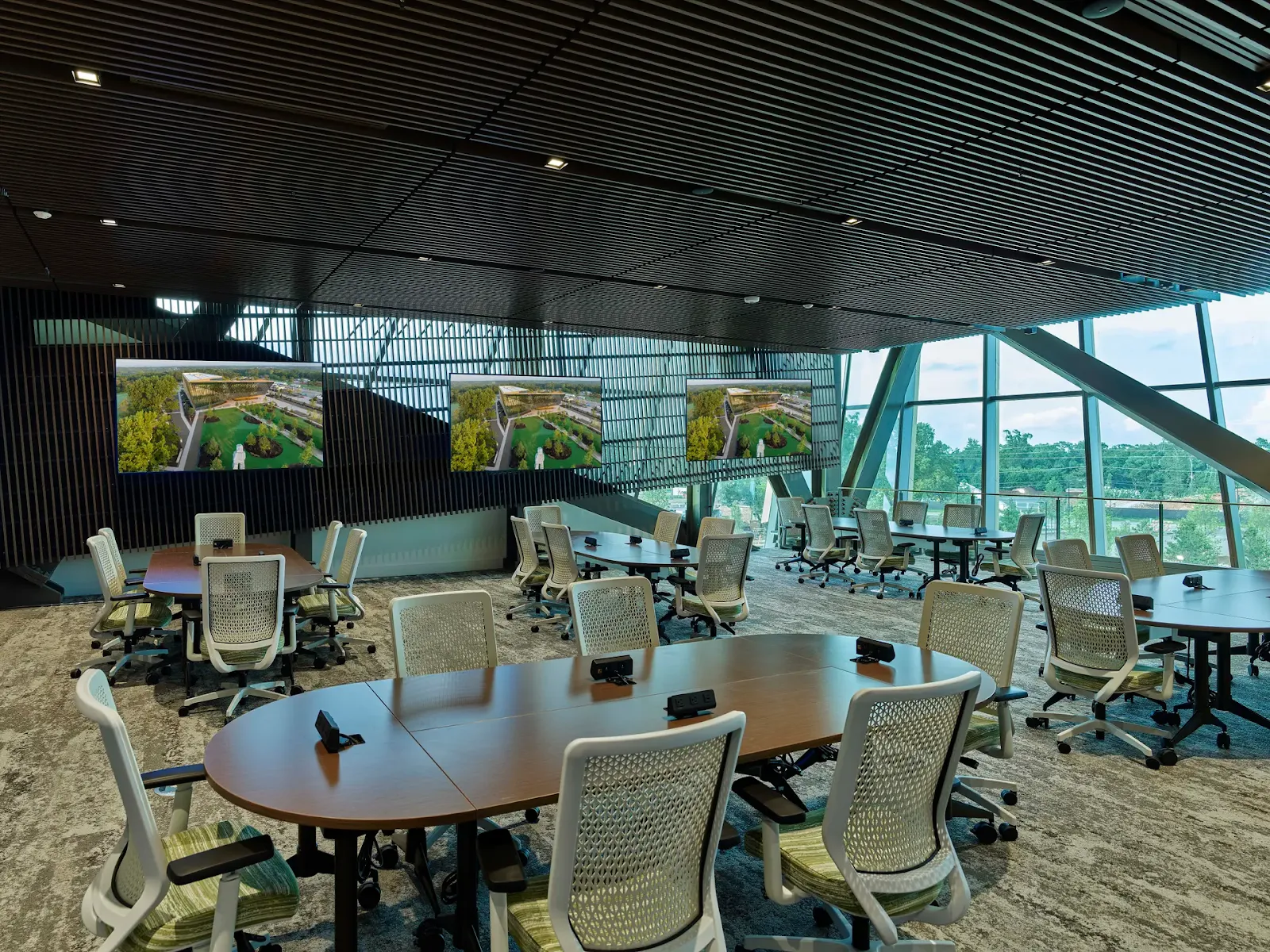
Key communal features include a public gallery, a café, terraces, and a lobby art gallery that connects directly to the natural surroundings, inviting public engagement both inside and beyond academic hours.
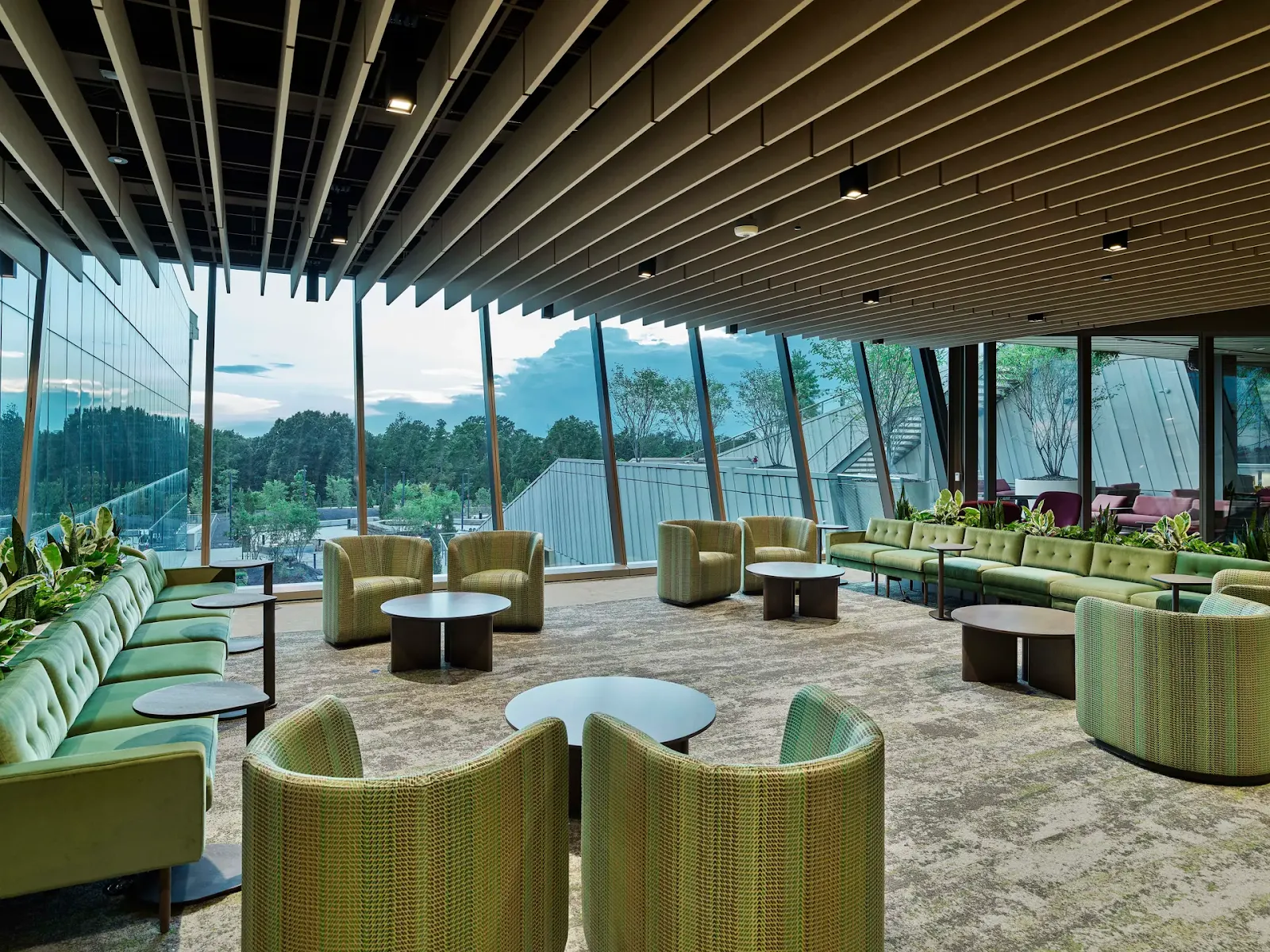
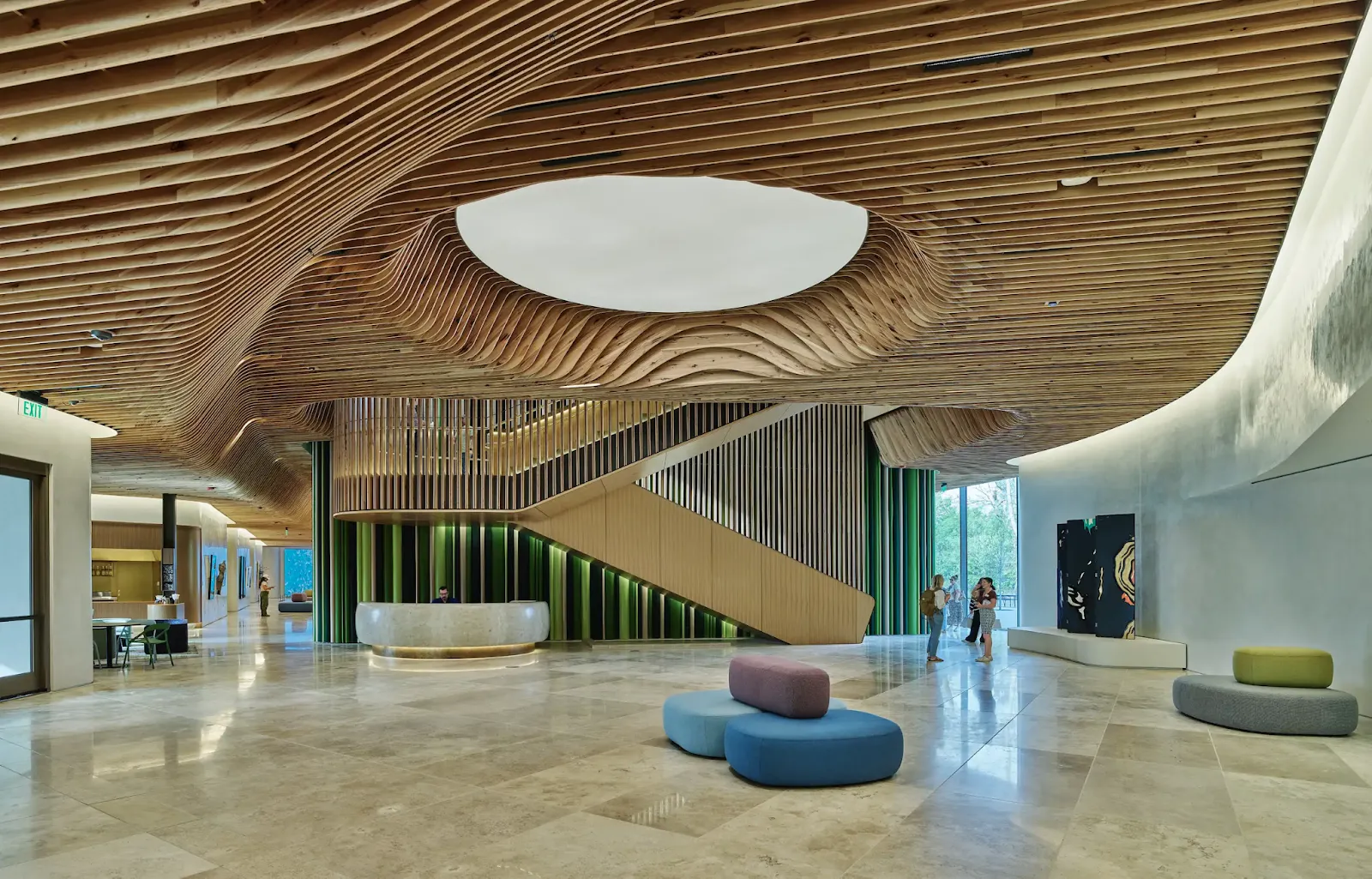
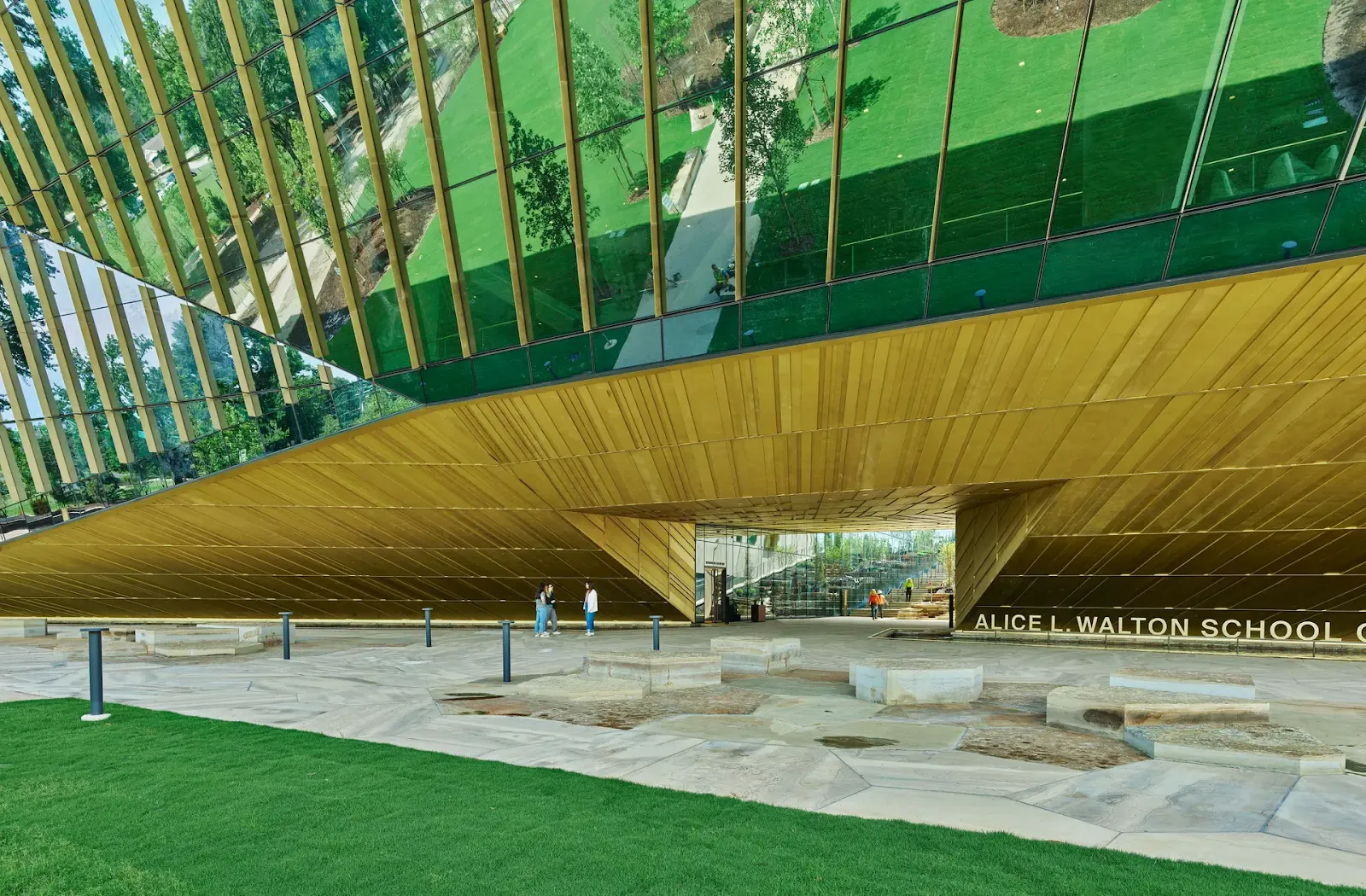
AWSOM’s architecture and landscape embody its whole-health mission, from the welcoming bluff shelter entry to green spaces and gardens that evoke healing beyond the clinic. Trails and bike paths encourage active living, the rooftop park offers a serene space for reflection and community, and natural materials like sandstone, expansive windows, and organic forms create an environment that feels both grounded and restorative.
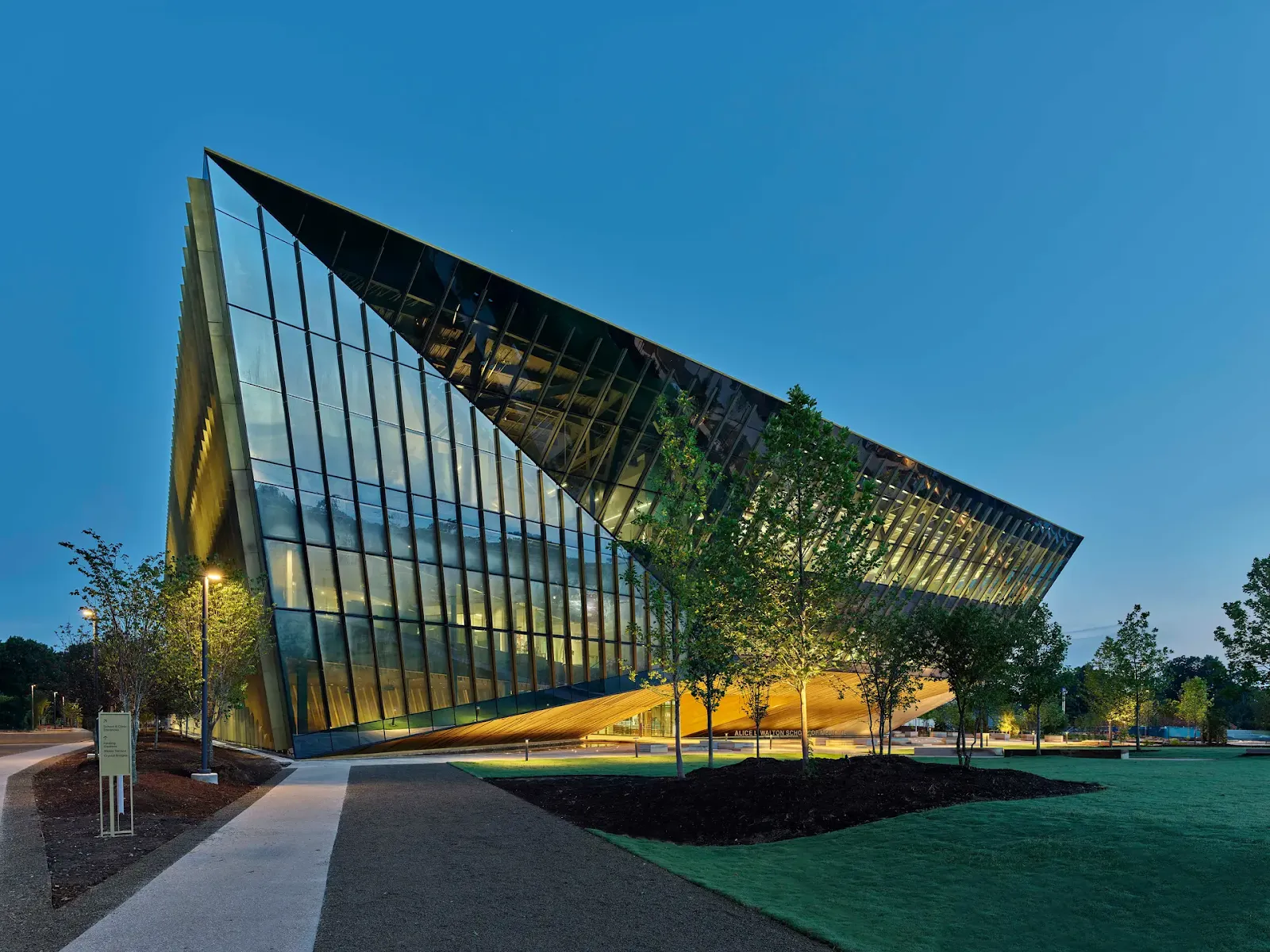
The Alice L. Walton School of Medicine is a living testament to a new way of thinking about health and healing.
Images © Timothy Hursley, courtesy Alice L. Walton School of Medicine