




Santiago Calatrava has long redefined what architecture can look and feel like. Known for works that appear weightless, kinetic, and sculptural, the Spanish architect and engineer has built a global legacy around the fusion of architecture, engineering, and art. Born in 1951, Calatrava is equally recognized as a painter and sculptor, and that artistic sensibility is deeply visible in his built work.
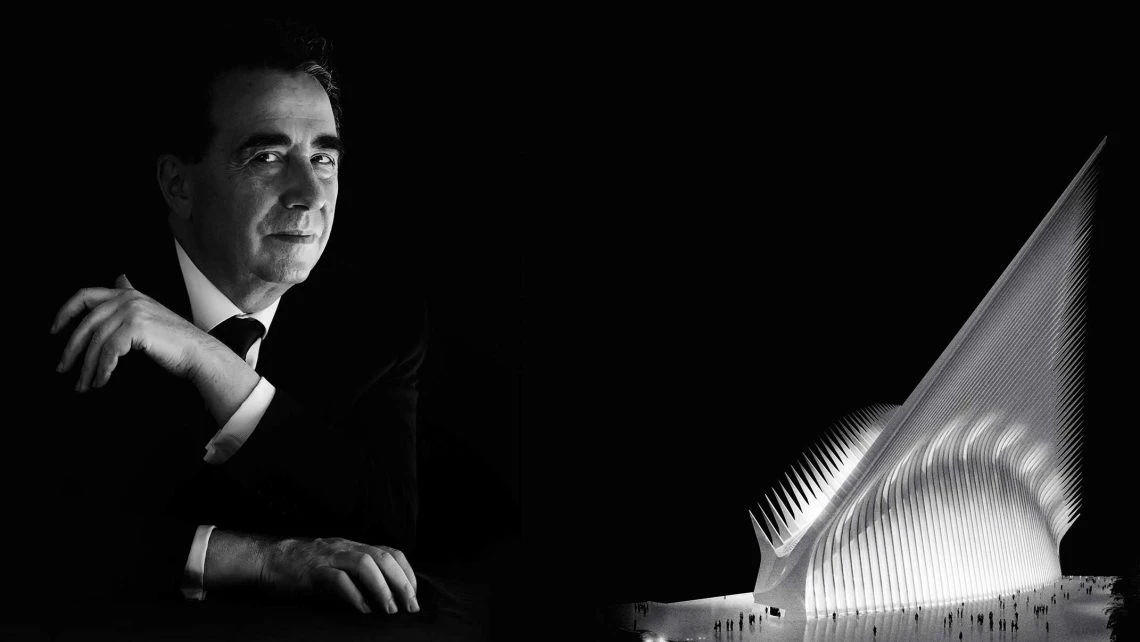
His projects are marked by sweeping forms, structural elegance, and a strong sense of rhythm and movement. Drawing inspiration from the human body as well as natural forces like waves and wings, Calatrava has transformed concrete and steel into some of the most expressive forms in contemporary architecture.
Here are 8 iconic projects by Santiago Calatrava that push the boundaries of architecture:
1. Dubai Creek Tower
Location: Dubai, UAE
Year: 2016
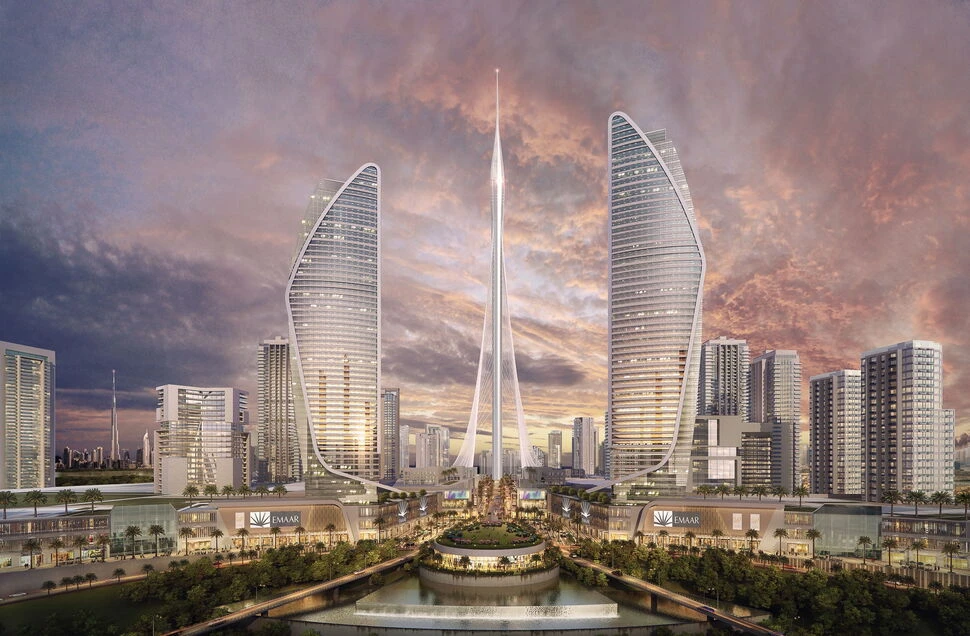
One of Santiago Calatrava’s latest projects, the Dubai Creek Tower, currently under construction, is an iconic observation tower aiming to be one of the tallest skyscrapers in the world. Inspired by the natural forms of the lily flower, the tower evokes the shape of a minaret, a distinctive architectural feature in Islamic culture. Its multiple observation decks are integrated into an elongated, oval-shaped bud at the top of the tower.
While the slender shaft forms the structural spine, the cables anchoring the tower to the ground recall the delicate veins of a lily’s petals. Combining modern, sustainable design with the rich culture and heritage of the United Arab Emirates, Dubai Creek Tower shines like a beacon of light at night.
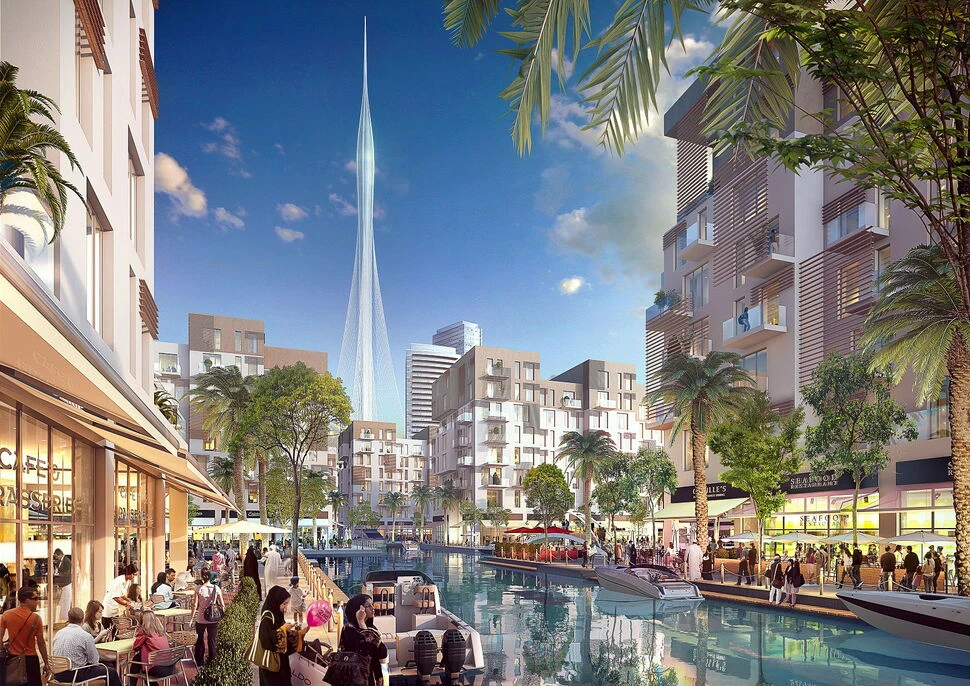
In addition to numerous rotating balconies on its exterior façade, the tower features a café within one of its three public observation terraces, along with multiple spaces for events throughout the building. The tower’s ground-floor Central Square serves as a vibrant neighborhood hub with world-class retail, a museum, educational facilities, and an indoor auditorium.
Designed with Calatrava’s emphasis on energy efficiency and sustainability, the Creek Tower incorporates a high-efficiency cooling system, with the collected water reused to clean the building’s façade.
2. Turning Torso
Location: Malmö, Sweden
Year: 1999 – 2005
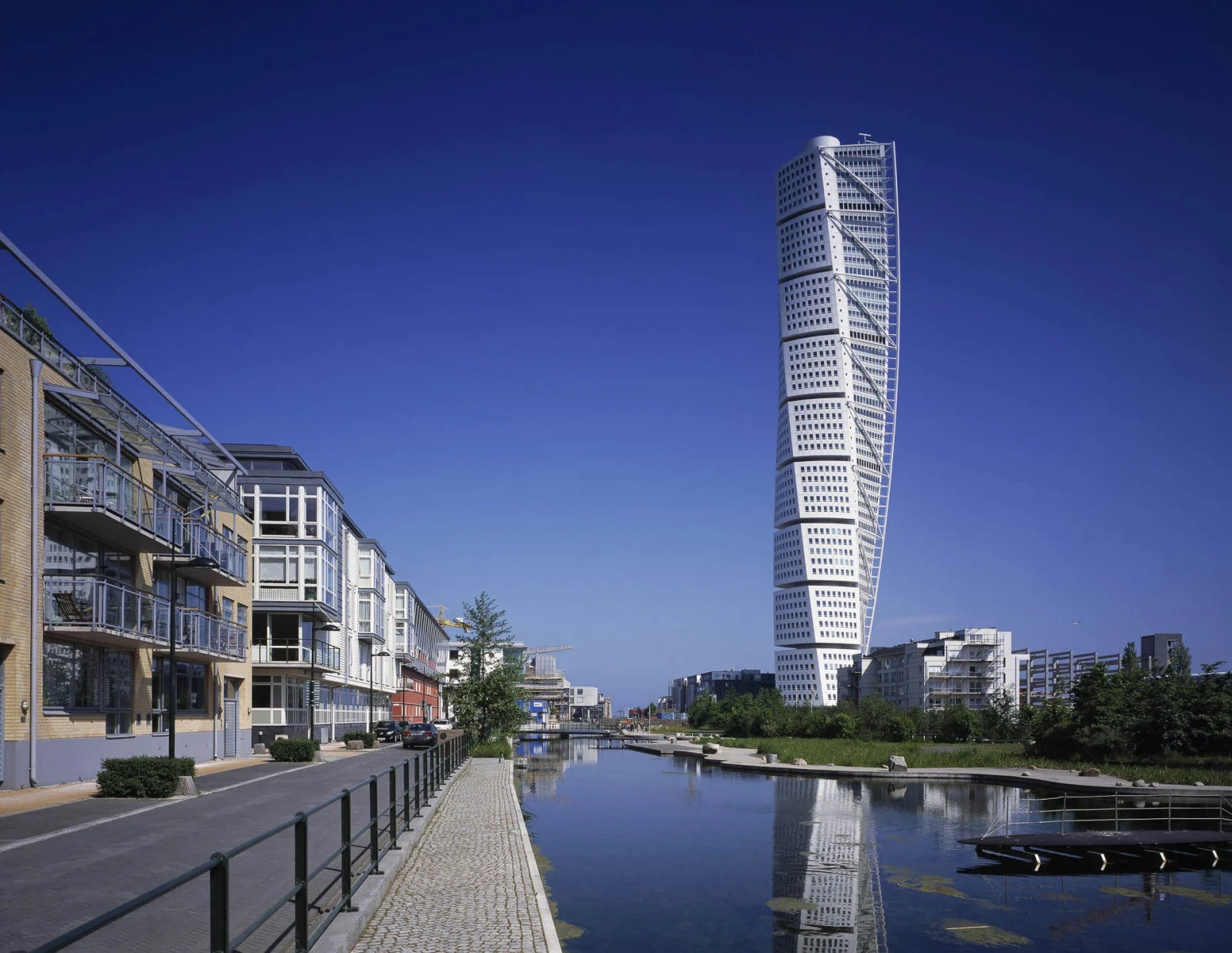
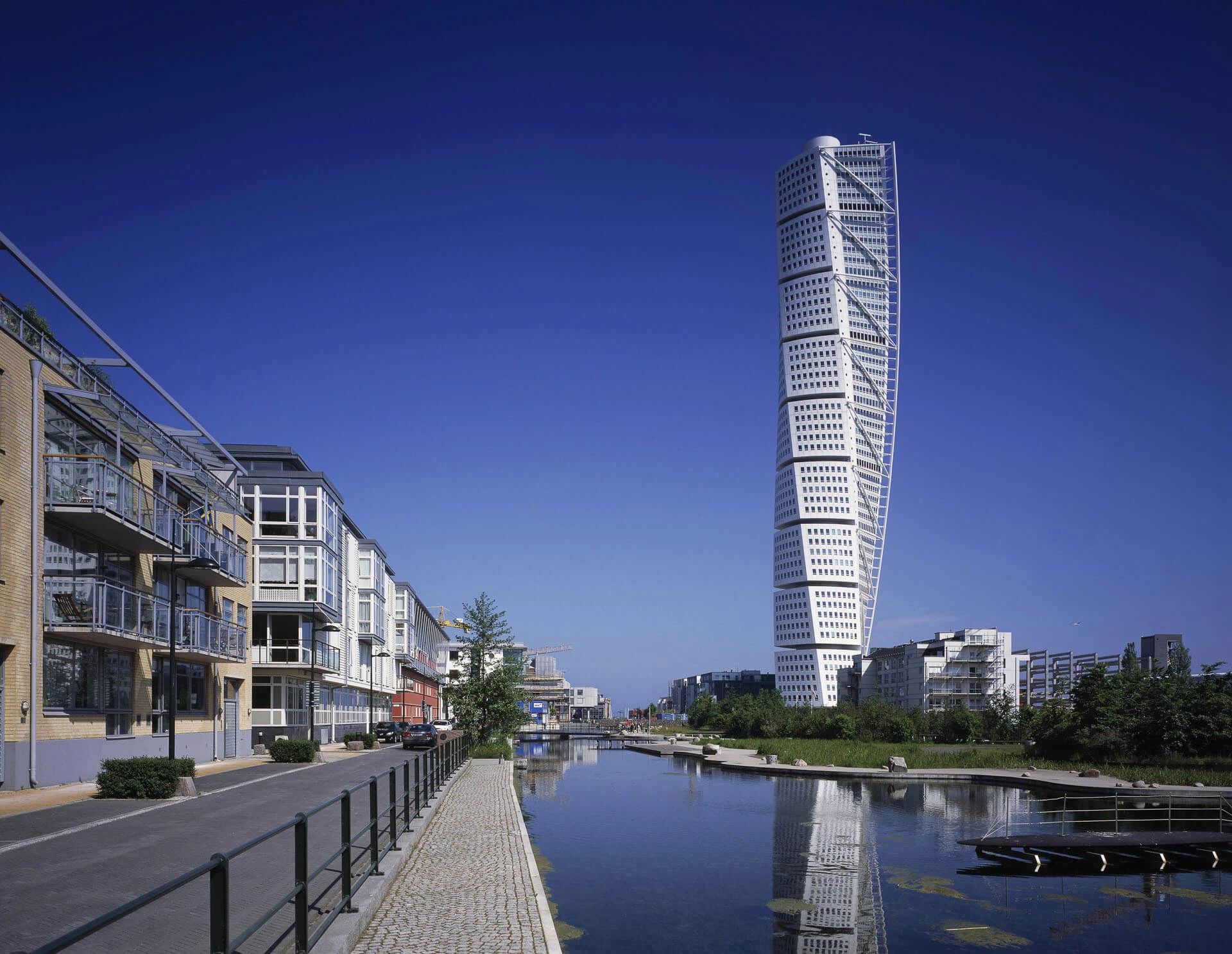
Designed as a key part of the transformation program of Malmö’s Western Harbour, near the Öresund Bridge connecting Sweden and Denmark, the Turning Torso is a mixed-use residential tower. Conceived by Santiago Calatrava as a freestanding sculpture within the urban skyline, the tower’s form is based on his sculpture “Turning Torso,” in which the movement of the human body is abstracted into a stack of cubes elegantly arranged around a central core.
Composed of nine box units in the shape of triangular-ended cubes, each unit in Turning Torso houses five floors, approximately 2,000 m² in size. Units one and two contain 4,000 m² of office space, while units three through nine house 147 apartments ranging from 45 to 190 m², creating a total of 13,500 m² of residential space. The tower’s core houses the elevators and staircases that connect its spaces and also acts as the steel support for the structure.
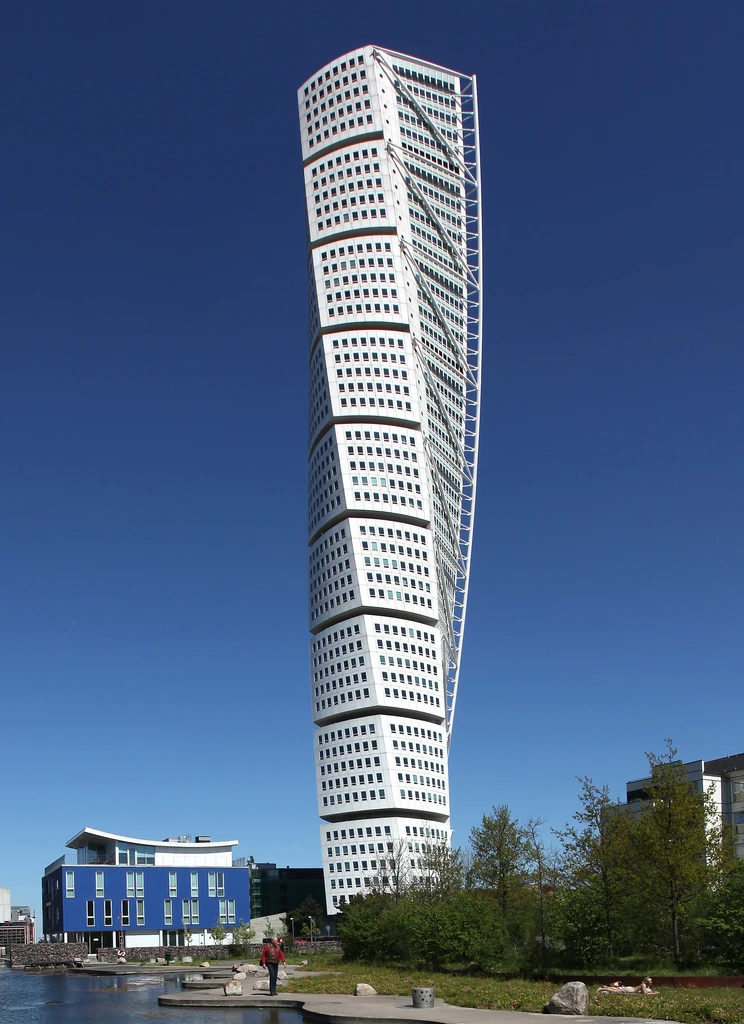
Standing at 190 meters, Turning Torso is the tallest residential building in Sweden. In addition to being designed for accessibility, it incorporates a highly advanced environmental strategy. The engineering technique employed allowed for an exceptionally efficient construction method. Initially, in the tower, which was constructed as a traditional reinforced concrete structure in the basement, the vertical circulation core and floors were installed using a sliding frame system. After the external steel structure was assembled with pre-fabricated elements in the workshop, cranes lifted the facade, which was also manufactured in the workshop. As a result, despite its highly innovative and complex design, the Turning Torso was completed in a shorter construction time.
3. Milwaukee Art Museum (MAM)
Location: Milwaukee, USA
Year: 1994 – 2001
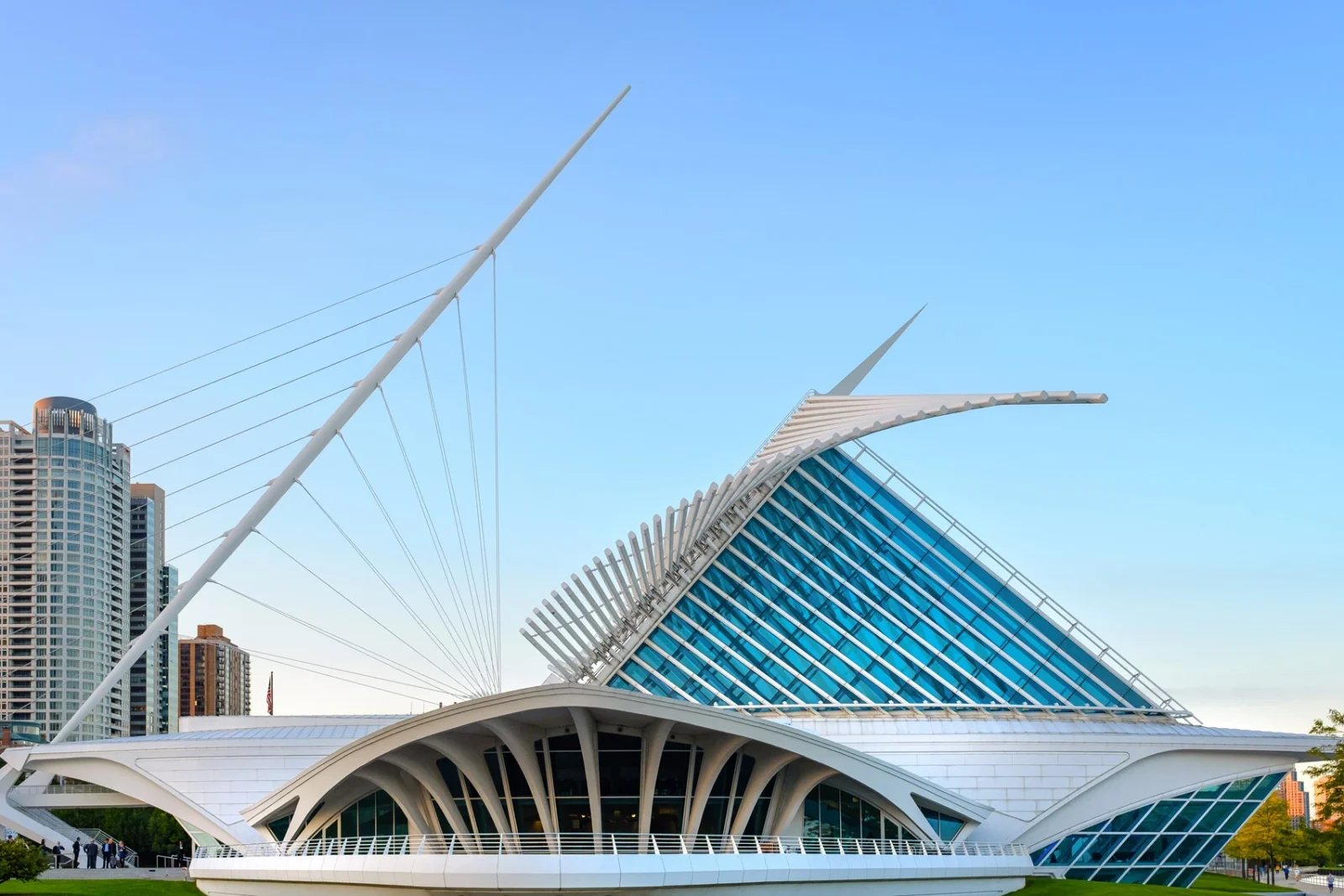
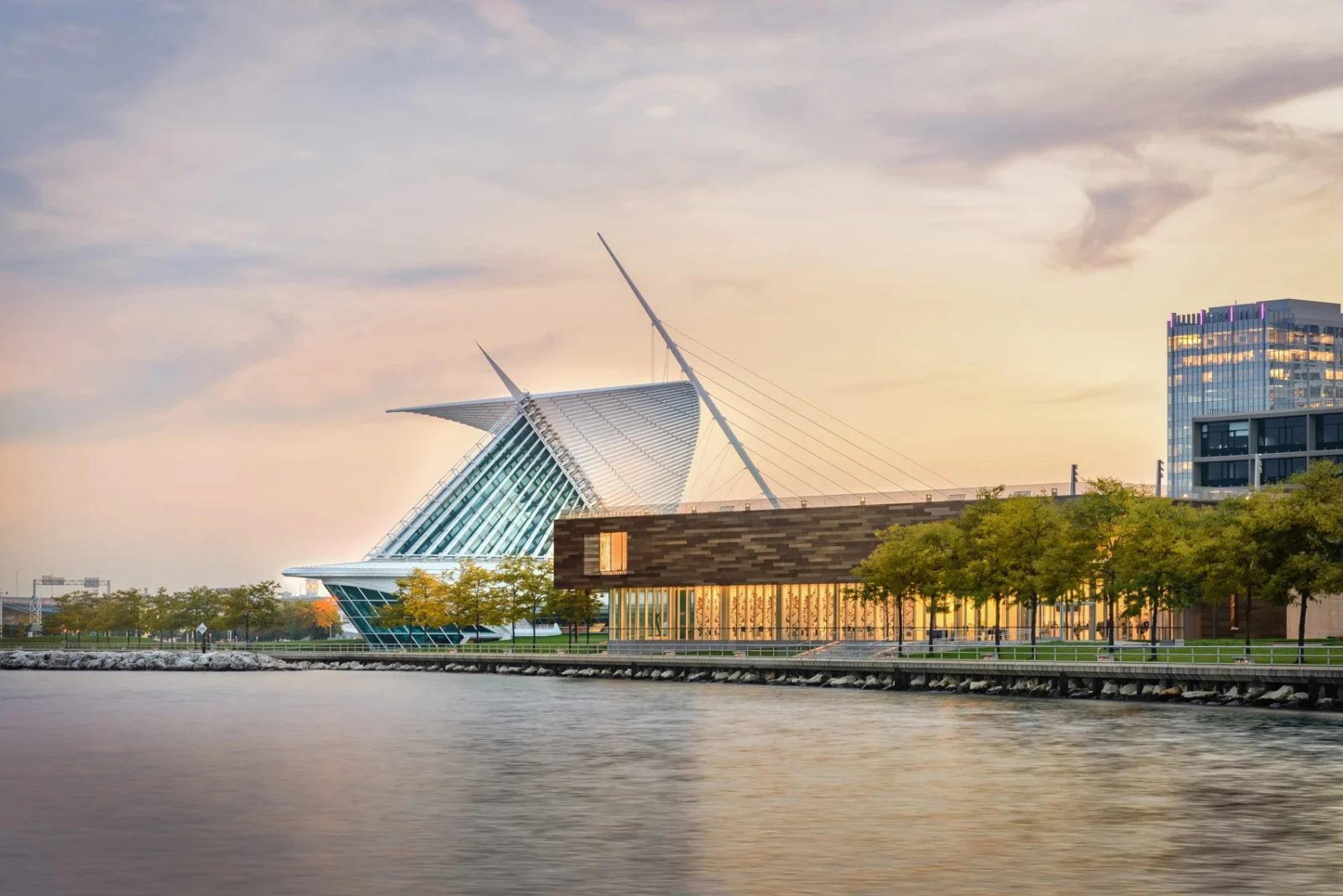
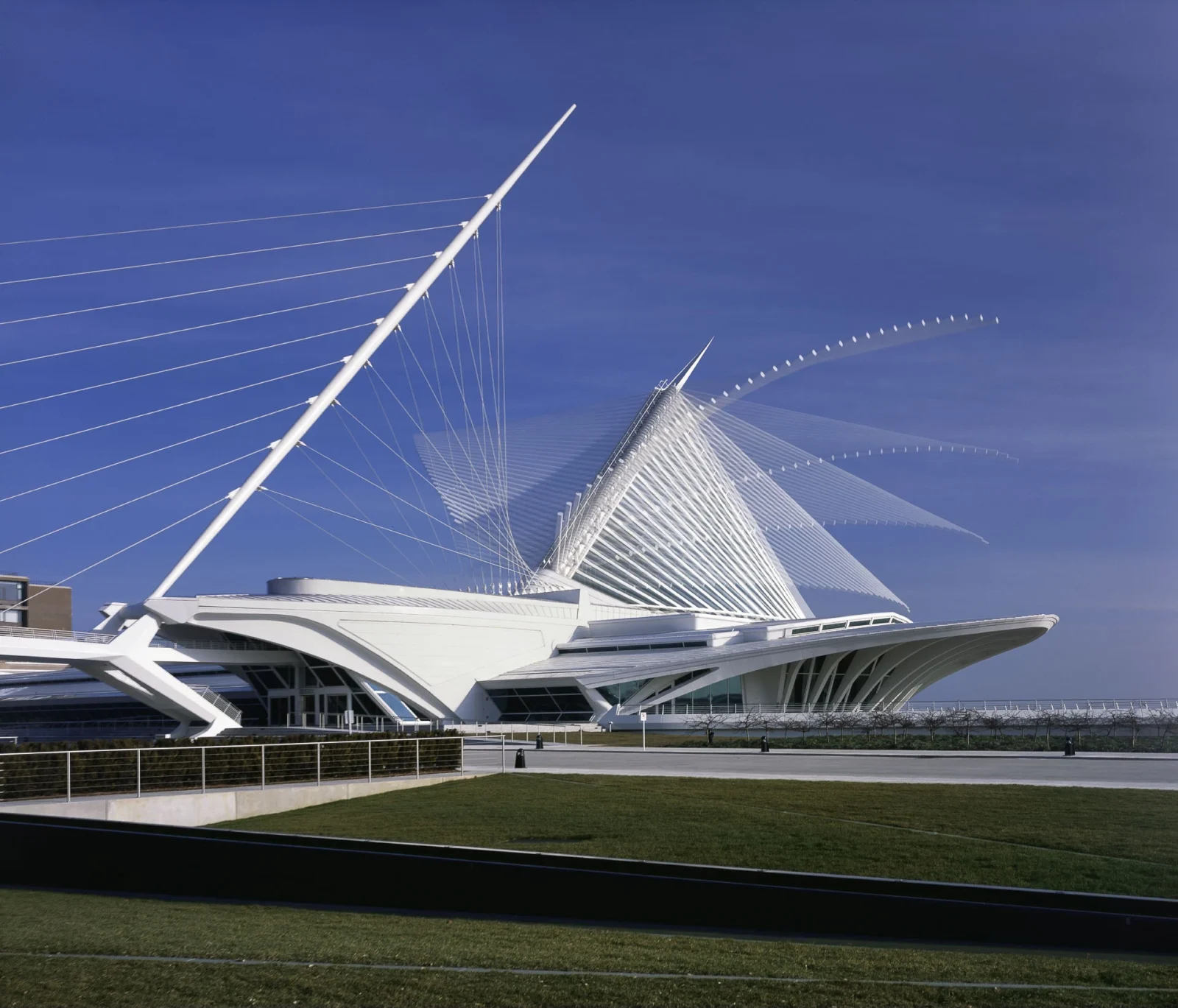
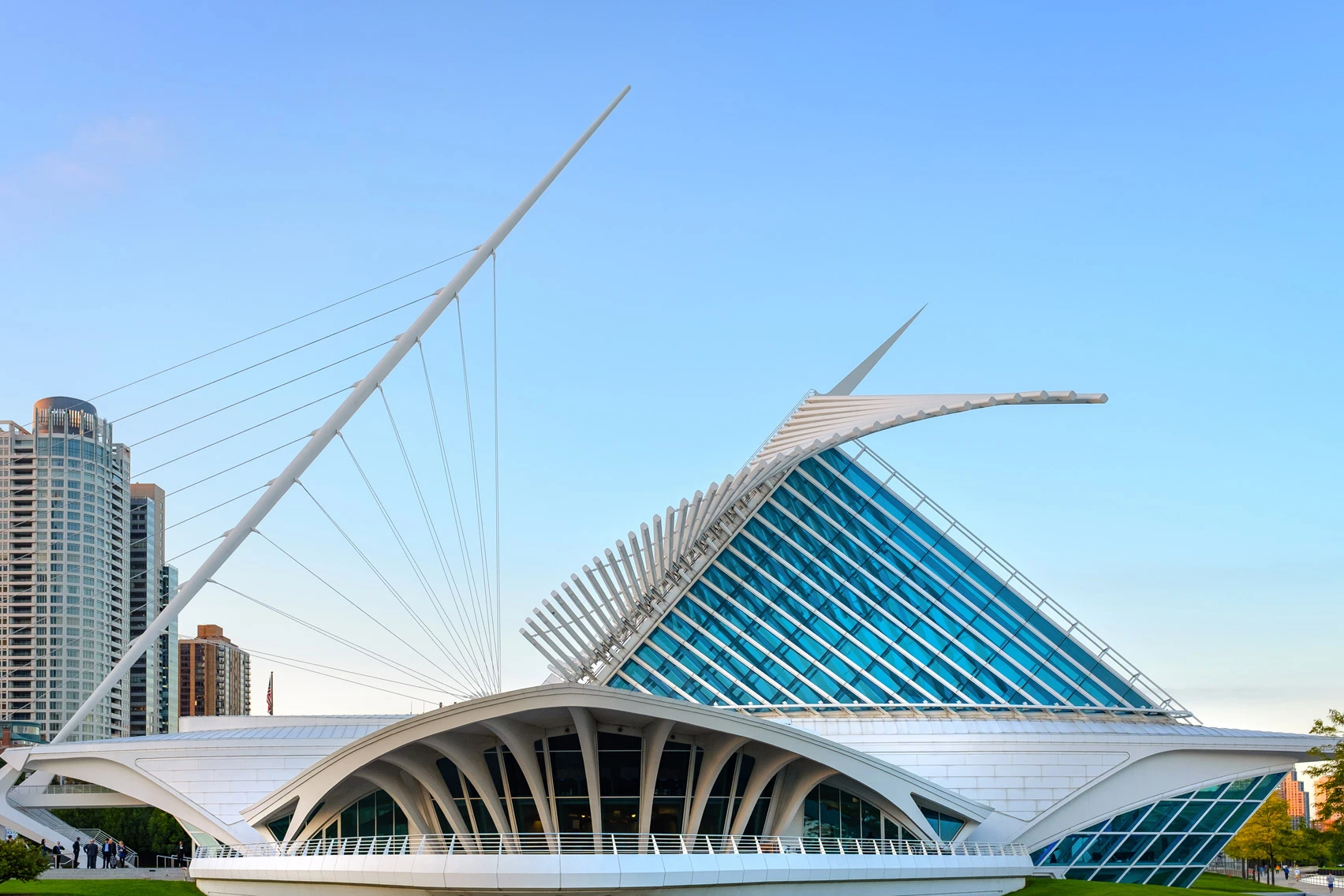
With its massive, retractable wings, the Milwaukee Art Museum is one of the most iconic examples of Santiago Calatrava’s kinetic architecture. Designed as a pavilion-like structure on the same axis as Wincinsin Boulevard and resembling a ship, MAM is constructed of white steel and concrete. A cable-stayed pedestrian bridge connects directly to Wincinsin Boulevard, allowing pedestrians to cross the busy Lincoln Memorial Drive and reach the pavilion.
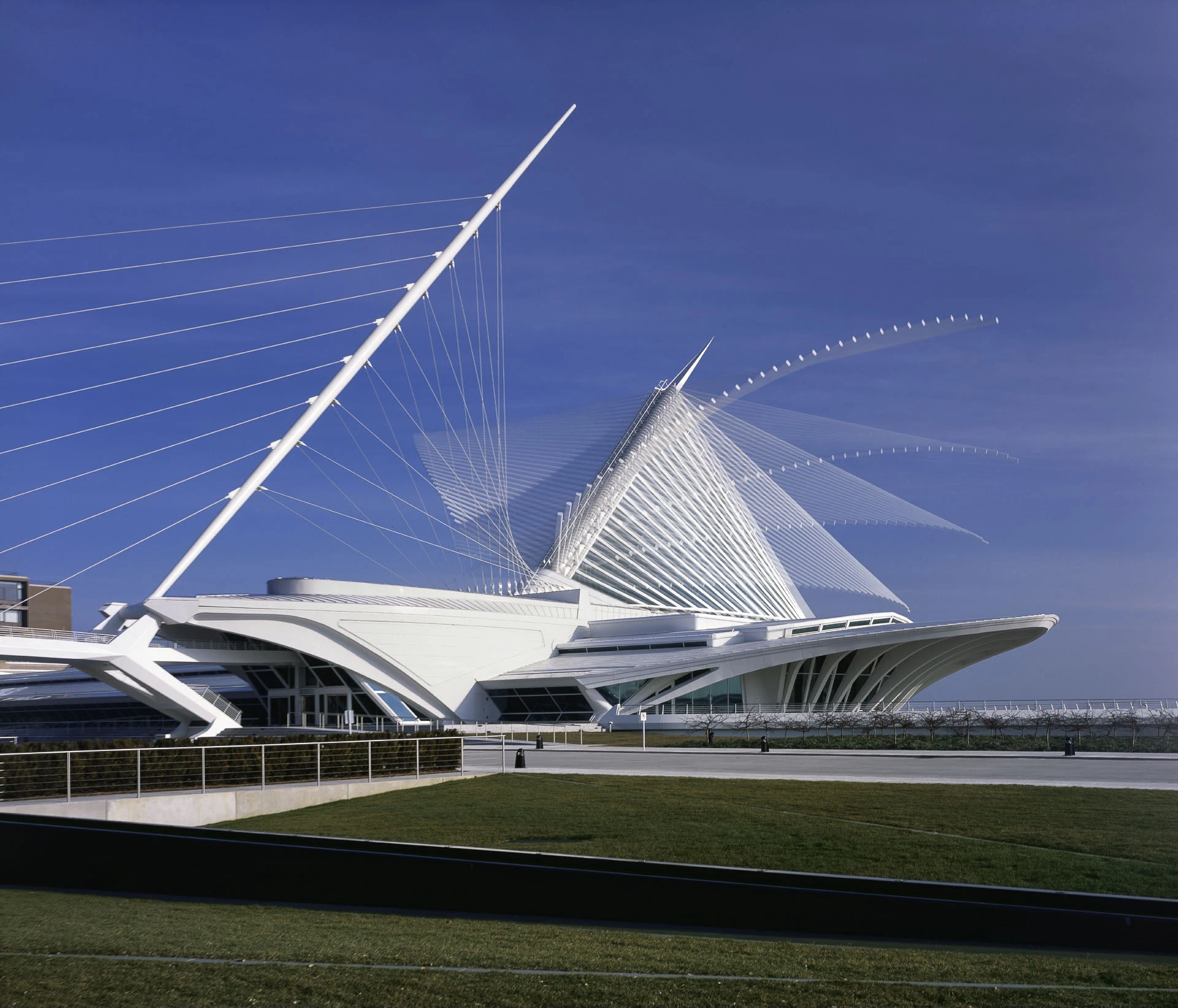
Before Calatrava’s pavilion proposal, the Milwaukee Art Museum was partially housed in a building designed in 1957 by Eero Saarinen as a war memorial. In 1975, David Kahler added a 160,000 m² extension to provide additional exhibition space. Distinct from the existing structures in both geometry and materiality, Calatrava’s design was conceived as an independent entity. Adding 13,200 m² to the existing 14,900 m², the design also includes a linear wing positioned at a right angle to Saarinen’s structure.
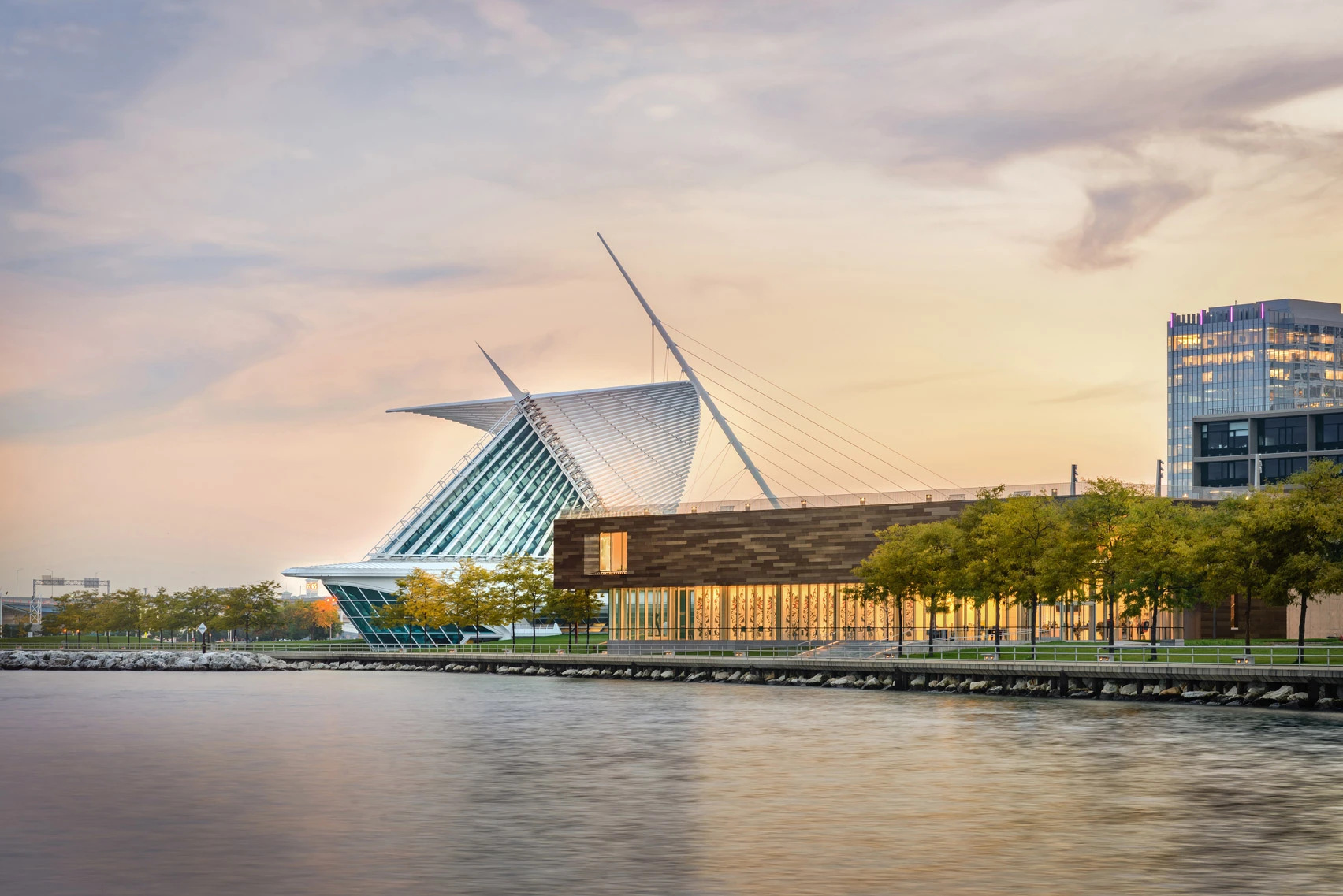
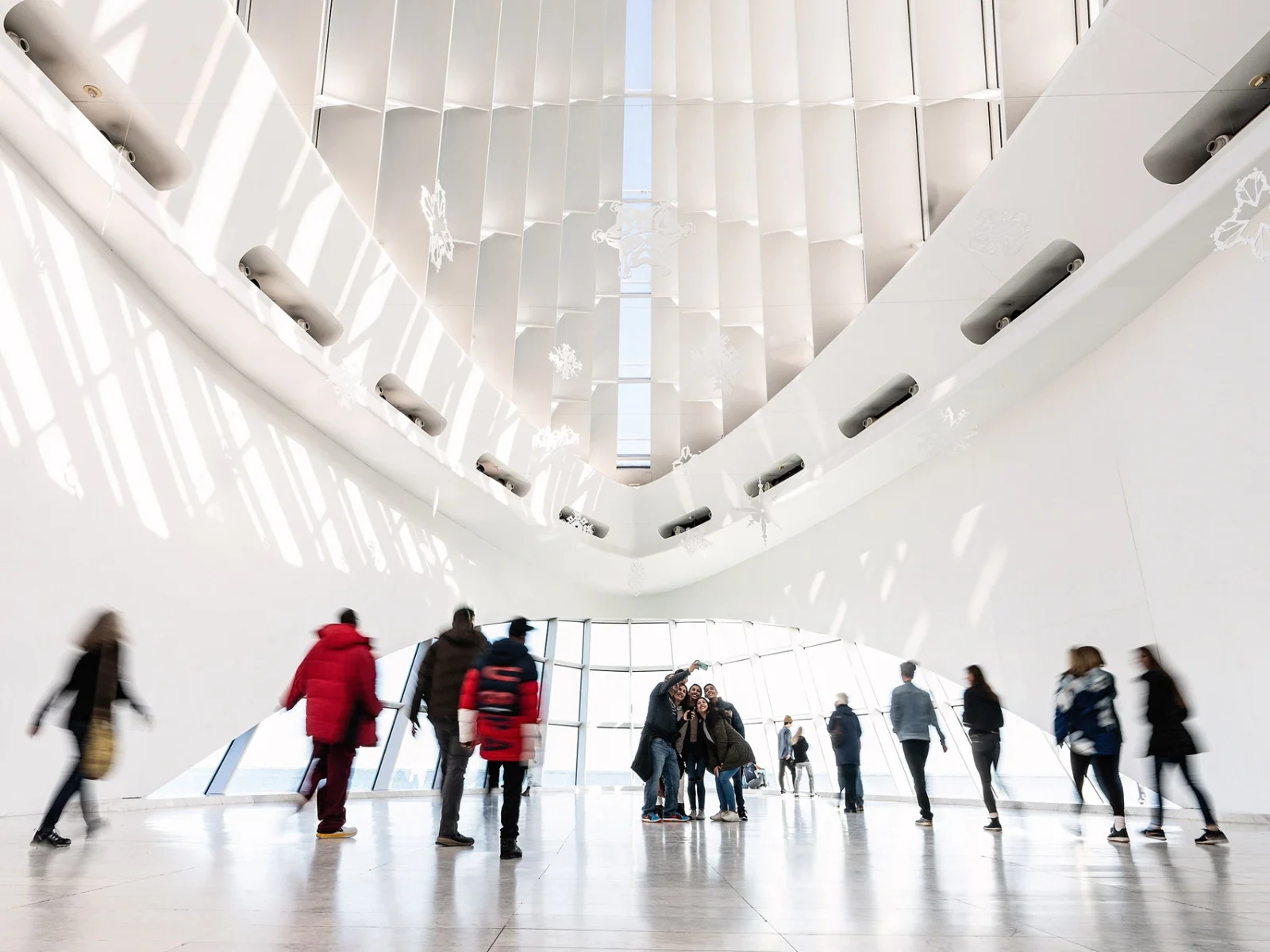
At the waterfront level, the expansion features an atrium, a 1,500 m² gallery for temporary exhibitions, an education center with a 300-seat auditorium, and a museum shop. The 100-seat restaurant, located at the heart of the pavilion, offers panoramic views of the lake. With its spectacular kinetic structure, the pavilion’s sunshades, which open and close like the wings of a large bird, herald the opening of new exhibitions against the backdrop of the lake.
4. World Trade Center Transportation Hub – Oculus
Location: New York, USA
Year: 2003 – 2016
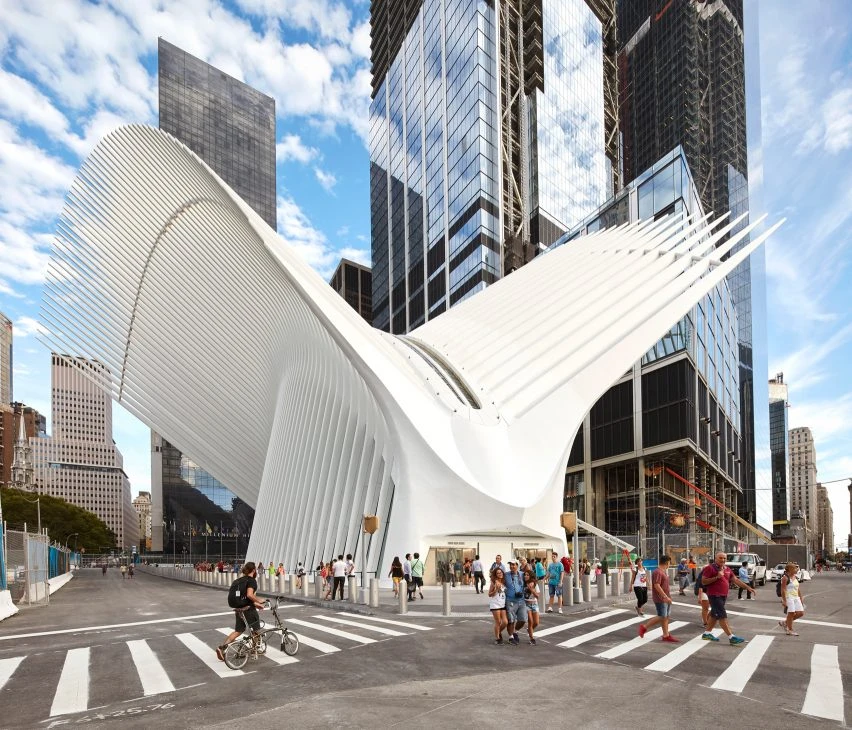
The Oculus is one of Santiago Calatrava’s most iconic works. Located within one of New York City’s most important sites, it serves as a major transportation hub and a striking sculptural landmark. Its bold form and dramatic structure make it a standout part of the city’s public transit network.
Calatrava imagined the design as a bird being released from a child’s hands. Built at ground level along the southern edge of Wedge of Light Plaza, the structure is made of steel ribs and glass arranged in a large elliptical form. These elements extend across the north and south sides of the plaza, creating two large canopies.
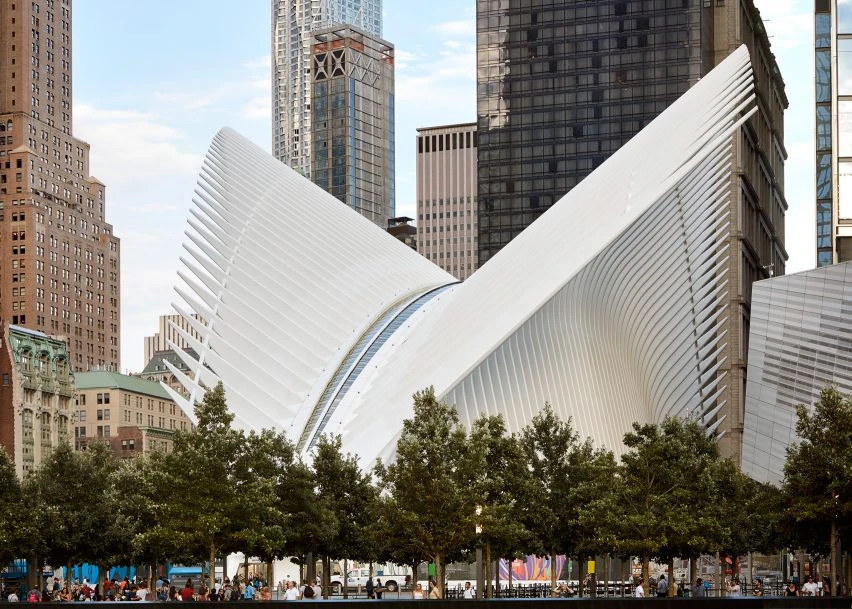
The roof structure rises from two 107-meter-long arches that frame the central axis of the project, between which lies a 100-meter operable skylight. This allows natural daylight to flow into the WTC Transportation Hub, filtering through the structure and ultimately reaching the PATH train platforms located 18 meters below street level.
Treating light as a structural element in the WTC Transportation Centre, Calatrava supports the building with columns of light while the illuminated building acts as a beacon at night.
5. City of Arts and Sciences
Location: Valencia, Spain
Year: 2005 – 2009
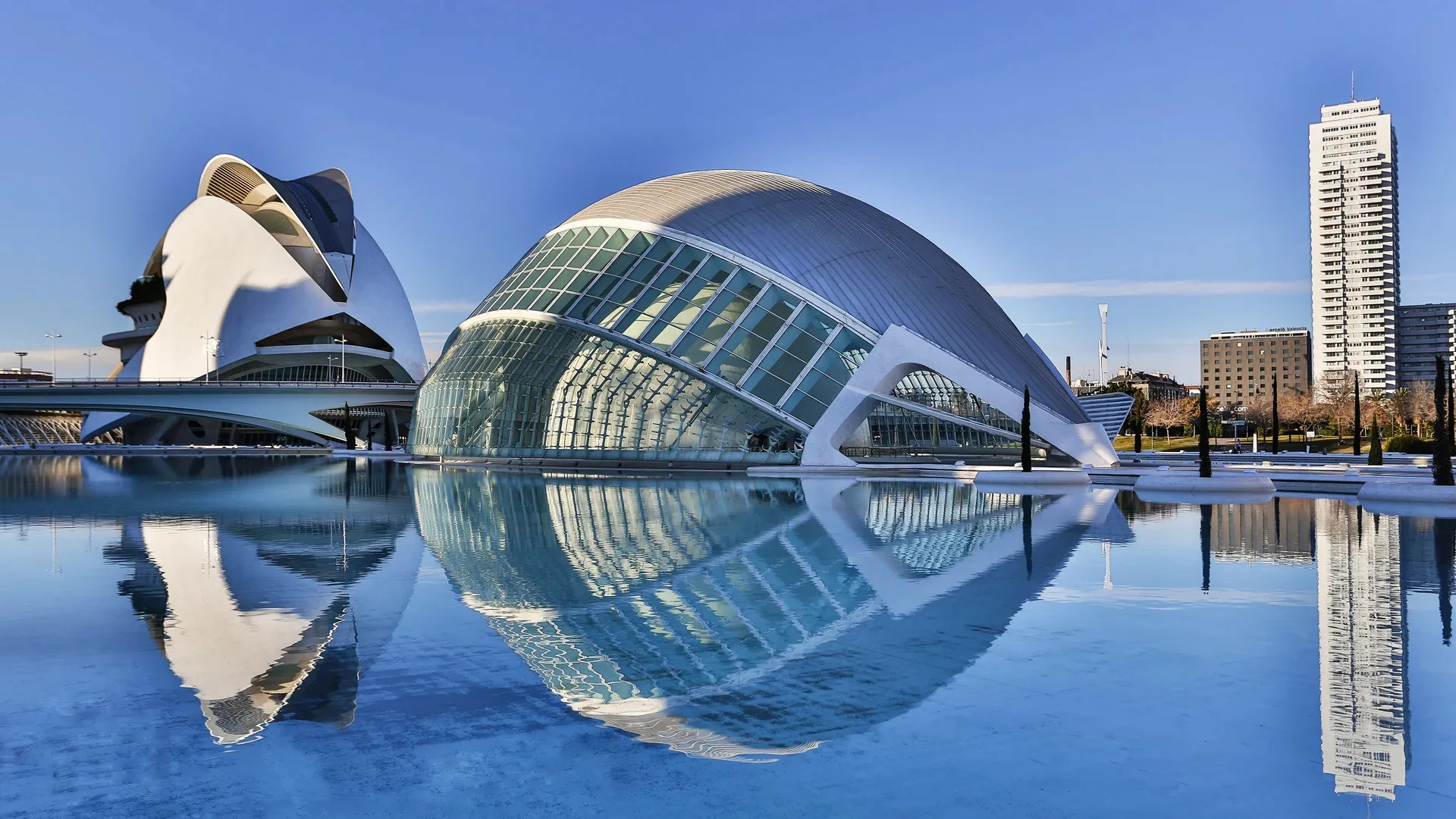
Located on a 35-hectare site in the dried-up riverbed of the Turia River, between the previously inconsistent and underdeveloped old city and the Nazareth coastal region, the City of Arts and Sciences is a large-scale urban recreation center for culture and science. A challenging project by Calatrava, a link in a chain aiming to leap into the third millennium, it stretches for approximately 2 km.
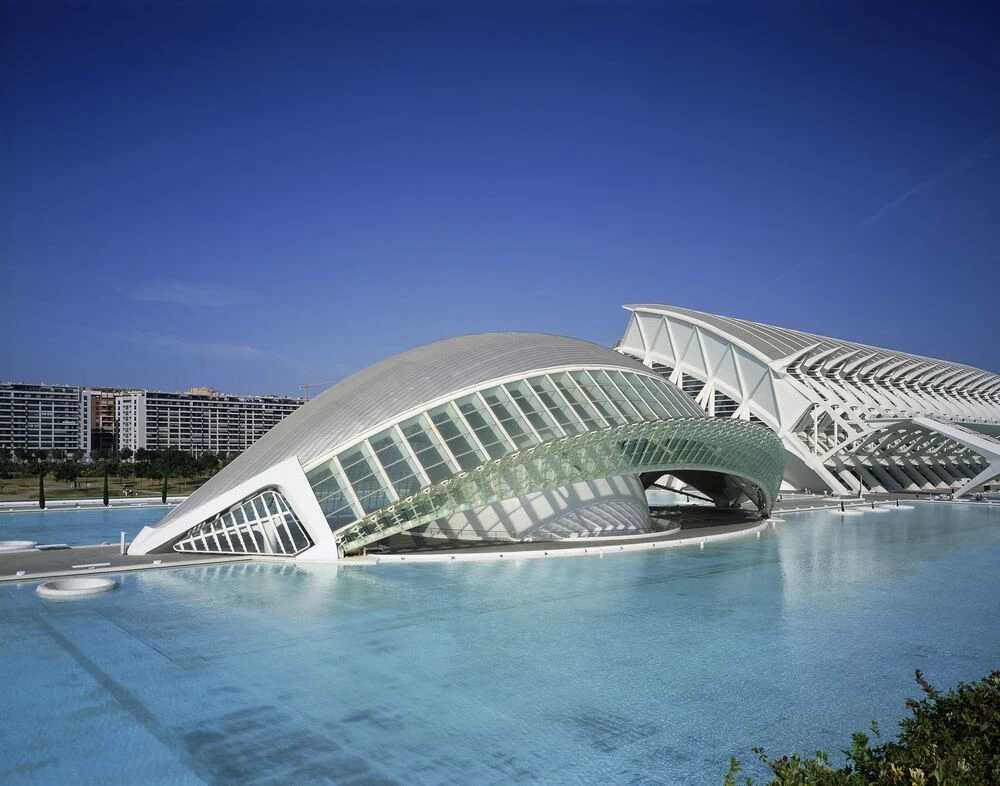
Comprising several structures, the complex is organized along a linear axis from west to east, including the Opera House, the Planetarium/IMAX Theatre (L’Hemisfèric), and the Príncipe Felipe Science Museum. The Opera House, a dynamic and monumental landmark in Valencia, houses a 1300-seat auditorium, a 400-seat hall, and a 2000-seat open-air auditorium protected by a roof. Measuring 104 meters in width and 241 meters in length, the Science Museum is a longitudinal structure formed through the modular repetition of transverse sections along its entire span.
The Planetarium is positioned slightly below ground level to avoid visual conflict with the Science Museum and Opera House. It is accessed via an axial walkway that wraps around the building and connects to the gallery. The fifth structure, known as L’Umbracle, is a passageway and car park integrated into an open promenade, offering a contemporary reinterpretation of a winter garden.
6. Adán Martín Auditorio de Tenerife
Location: Santa Cruz de Tenerife, Spain
Year: 1991 – 2003
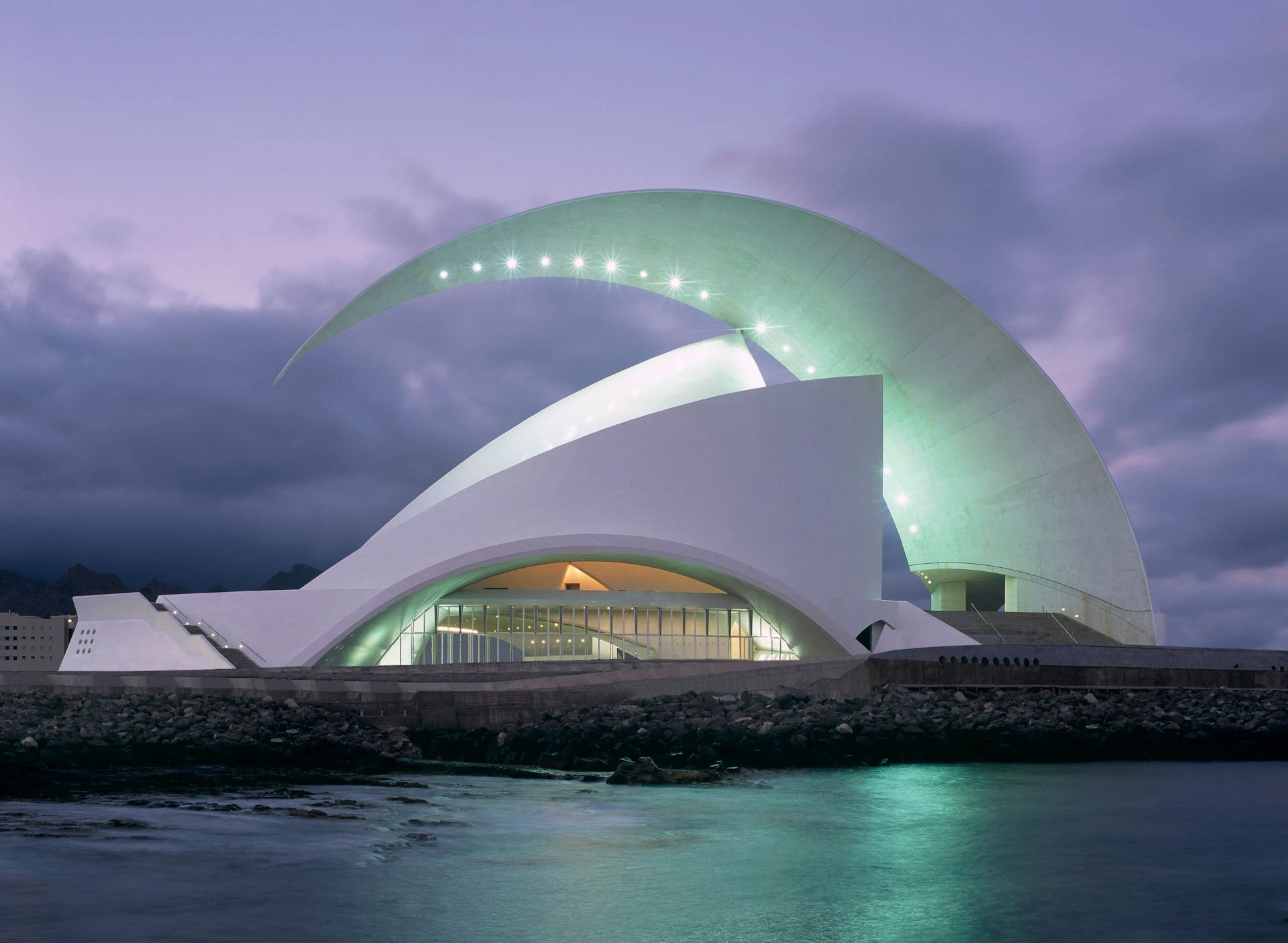
Located on the Llanos waterfront of Santa Cruz, between the Maritime Park and the harbor, the Auditorio de Tenerife stands out with its extraordinary form as one of Santiago Calatrava’s most iconic works. A significant urban landmark connecting the city to the ocean, this entirely reinforced concrete building is notable for its dramatic, curved roof.
Rising like a wave from its base, the roof ascends 58 meters above the main auditorium, curving downwards and narrowing to a spire. Geometrically, the roof is composed of two intersecting conical sections. The podium, which forms a public plaza, allows for level changes between the adjacent roads.
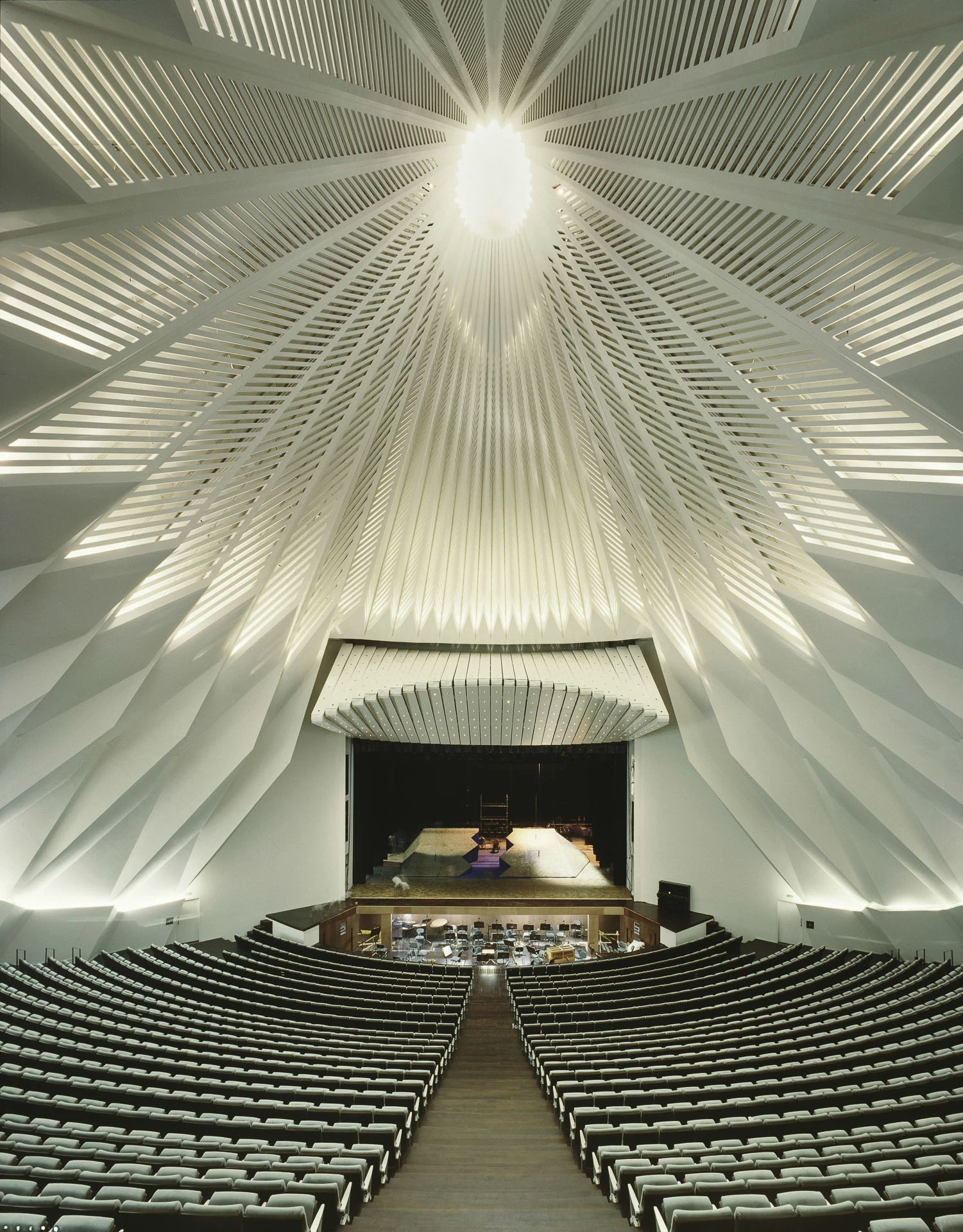
The Adan Martin Auditorio de Tenerife includes an auditorium with a capacity of 1800 people and a chamber music hall with a capacity of 400 people. The chamber music hall, technical facilities, general services, and dressing rooms are located within a stepped plinth covered in local ‘basalt’ volcanic rock. The main entrance is located in the raised square to the northeast, under the curved and sculptural roof shell, while 50-meter-wide arches on either side serve as the artists’ entrance.
7. Museum of Tomorrow
Location: Rio de Janeiro, Brazil
Year: 2010 – 2015
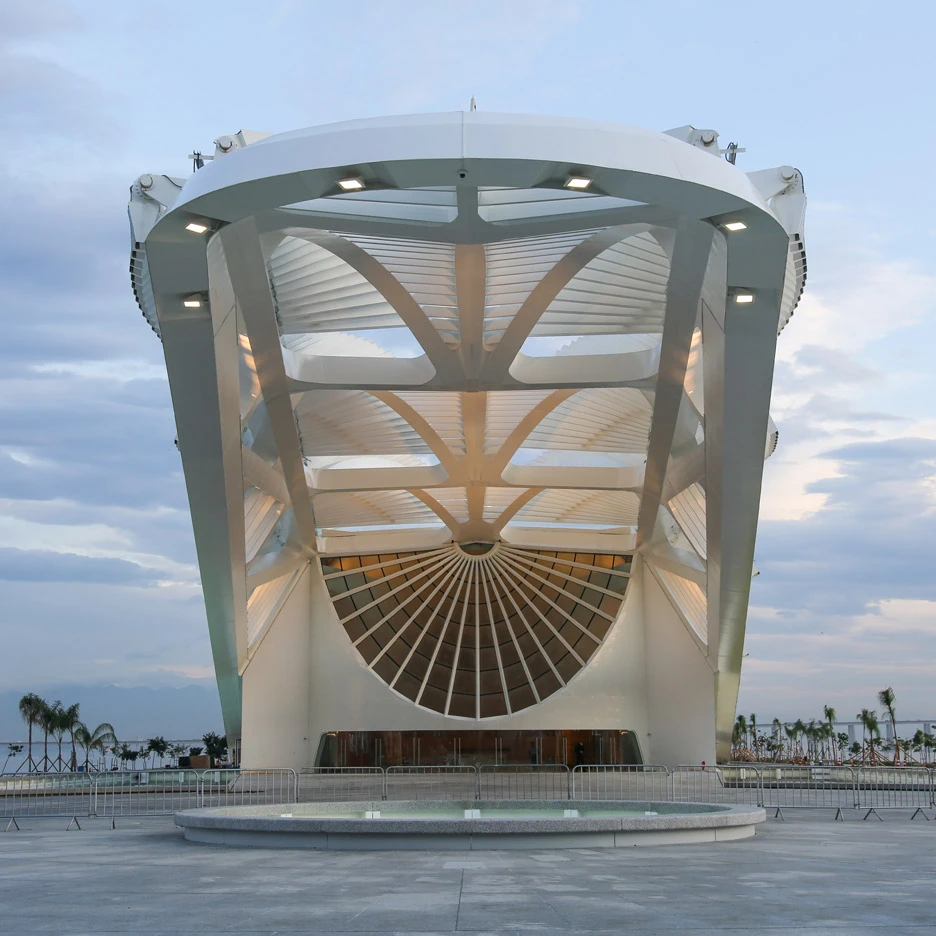
Designed by Santiago Calatrava with inspiration drawn from Carioca culture, the Museum of Tomorrow is located at Pier Mauá in Rio de Janeiro’s Port Zone, a site of major urban significance. Exploring the relationship between the city and its natural environment, the museum includes 5,000 m² of temporary and permanent exhibition space, as well as a 7,600 m² plaza surrounding the building and extending along the quay.
With its large eaves measuring 75 meters on the side facing the square and 45 meters on the side facing the sea, the museum’s extension from the quay into the bay is emphasized. The 18-meter-high building preserves the view of the UNESCO World Heritage Site, the São Bento Monastery, from the bay.
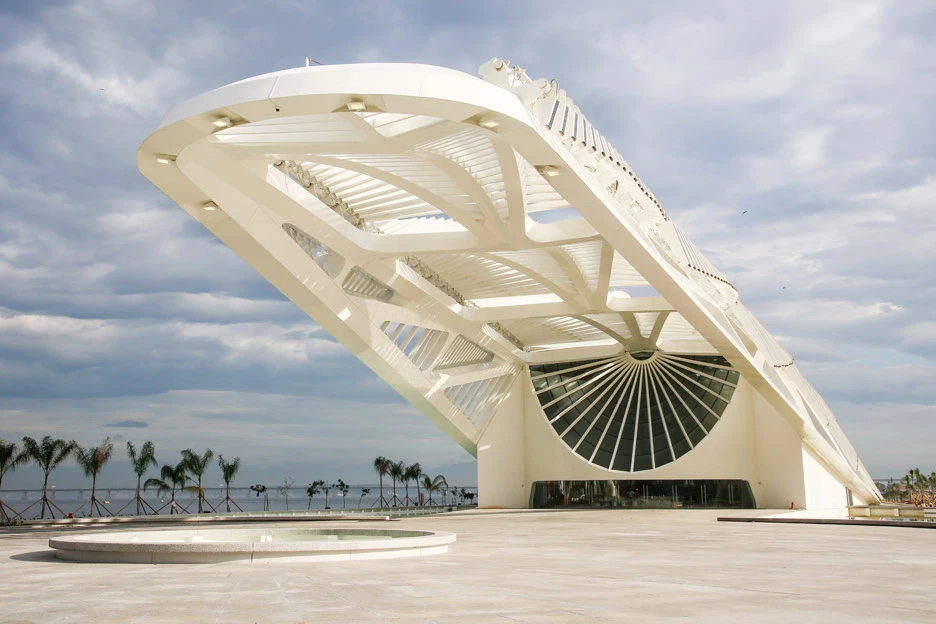
The building features a large cantilevered roof and façade system with movable wings that run along nearly the entire length of the pier, minimizing the overall width of the structure. A reflecting pool surrounding the exterior not only filters water but also gives the museum a floating appearance. The lower floor houses functional and technical rooms such as administrative offices, educational facilities, research areas, an auditorium, a museum shop, a restaurant, a lobby, archives, storage, and a delivery area, while the upper floors contain permanent exhibitions
Featuring a sustainable design incorporating natural energy and light sources, the Museum of Tomorrow utilizes adjustable photovoltaic solar panels that provide solar energy to the building and optimize the angle of the sun’s rays throughout the day.
8. Mons Train Station
Location: Mons, Belgium
Year: 2004 – 2025
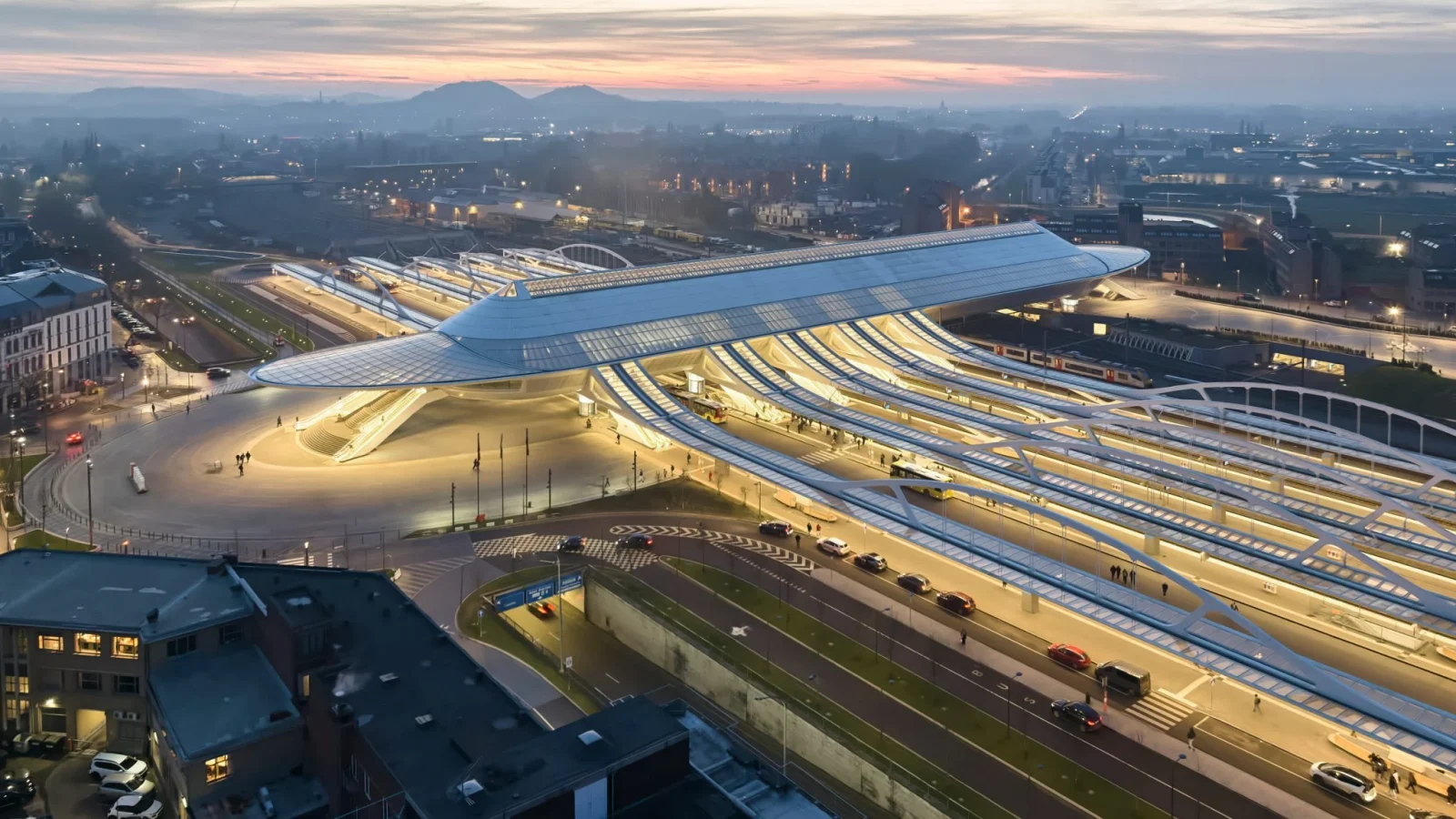
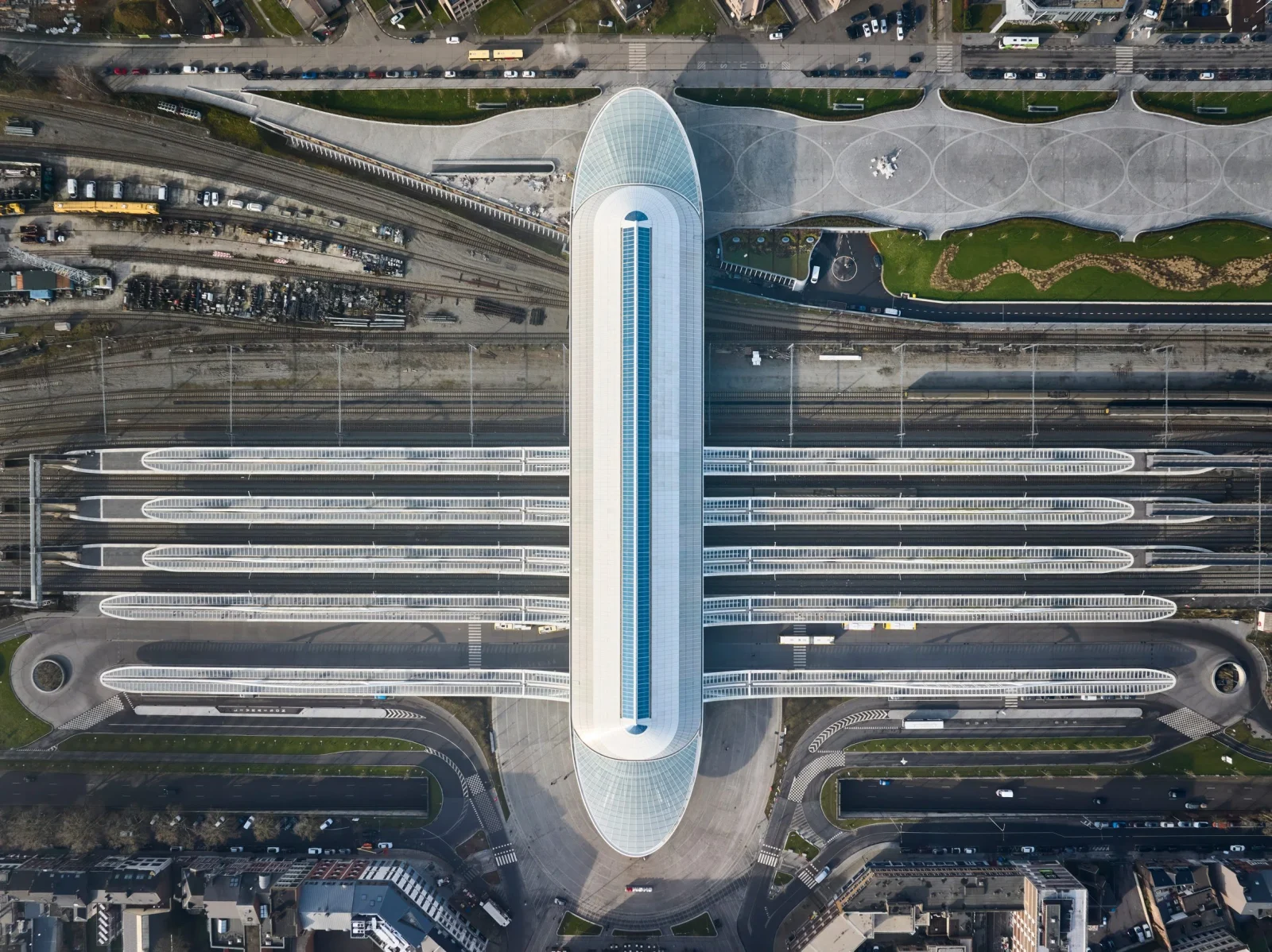
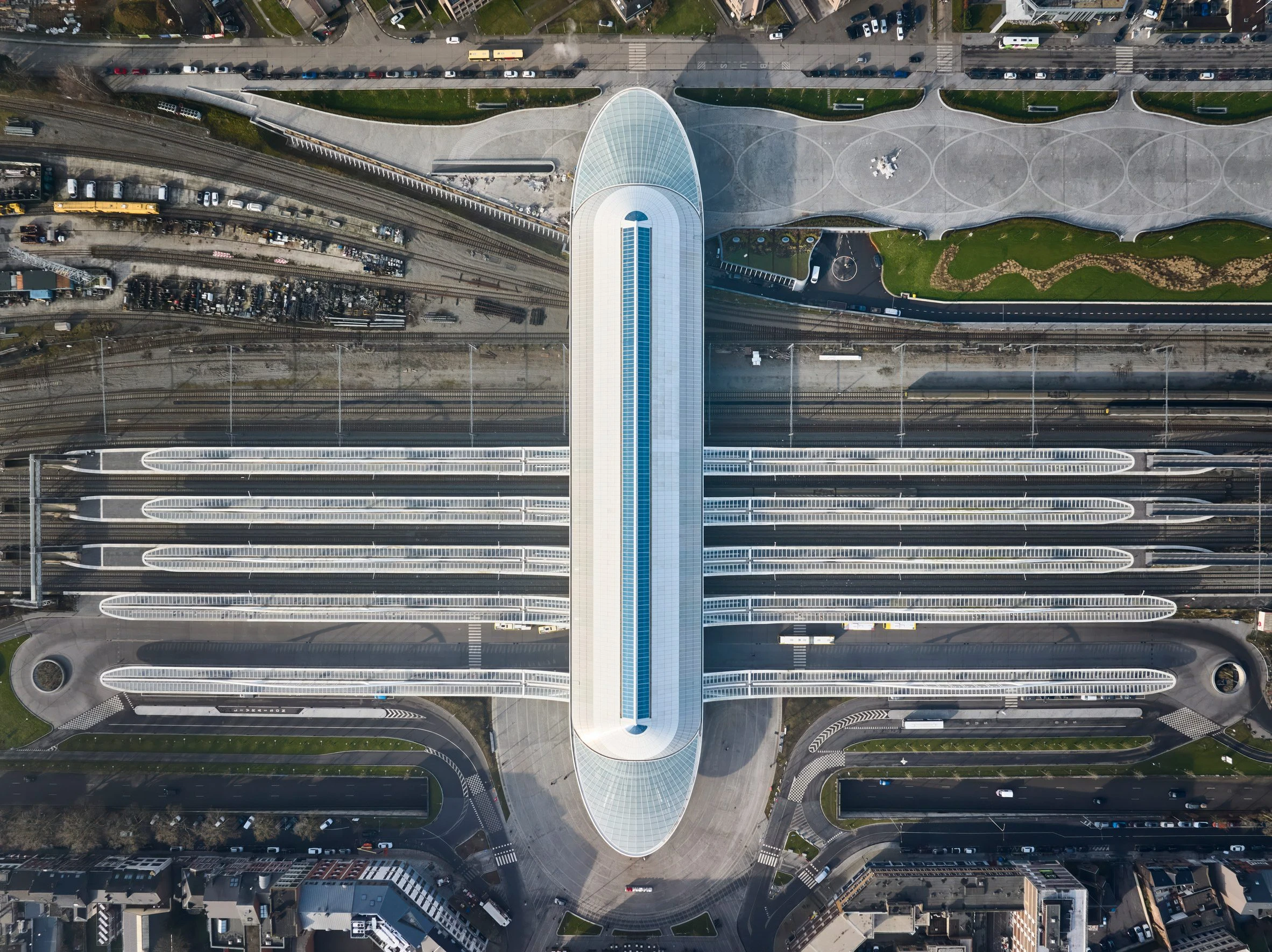
Mons Train Station, one of Santiago Calatrava’s most iconic landmarks, is one of Belgium’s largest train stations. Designed as a monumental bridge spanning the tracks, the station connects the historic heart of the city in the south with the developing Grand Prés district in the north. Measuring 165 meters in length and 15 meters in height, the station houses 350 meters of platforms, 7 passenger tracks, 29 bus stops, taxi stands, and “kiss and ride” stops.
Completely enclosed under one roof, the station’s design showcases a rhythmic sequence of sloping triangular steel beams and curved glass facades with wood frames. A spacious, light-filled gallery creates a dynamic meeting point and provides access to all platforms via stairs and elevators. A retractable skylight provides ventilation during the summer months.
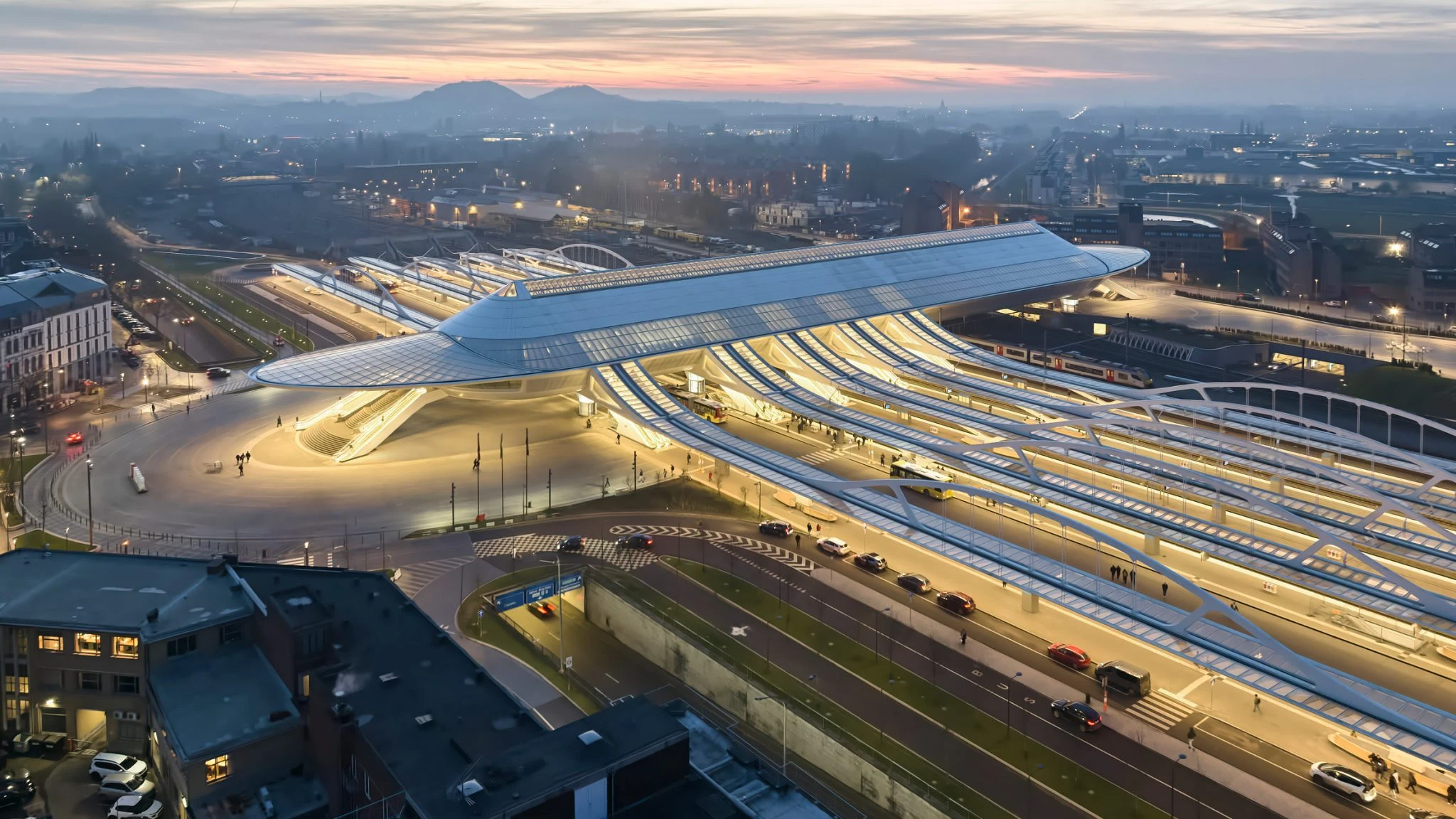
For smooth traffic flow, long-term functionality, and safety, the parking areas incorporate high-quality lighting and optimized layouts while maintaining visually striking design elements. Located beneath the bus terminal, the 500-vehicle South Car Park provides direct access to the train station and the city.
Adjacent to the car park are a series of staff facilities, back office areas, training rooms, and break rooms, grouped among small courtyards. The North Car Park accommodates over 350 vehicles and a 200-unit bicycle parking area, which is connected to the station’s vertical transportation network.
Through movement, structure, and sculptural beauty, Santiago Calatrava has created a body of work that continues to challenge how we see architecture. His projects show that buildings can be both technically ambitious and deeply expressive at the same time.
Explore Courses
.jpg "Ondrej Chybik - Rethinking Architecture")