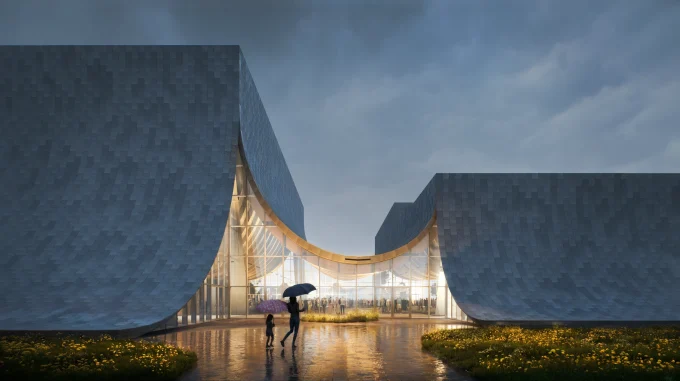





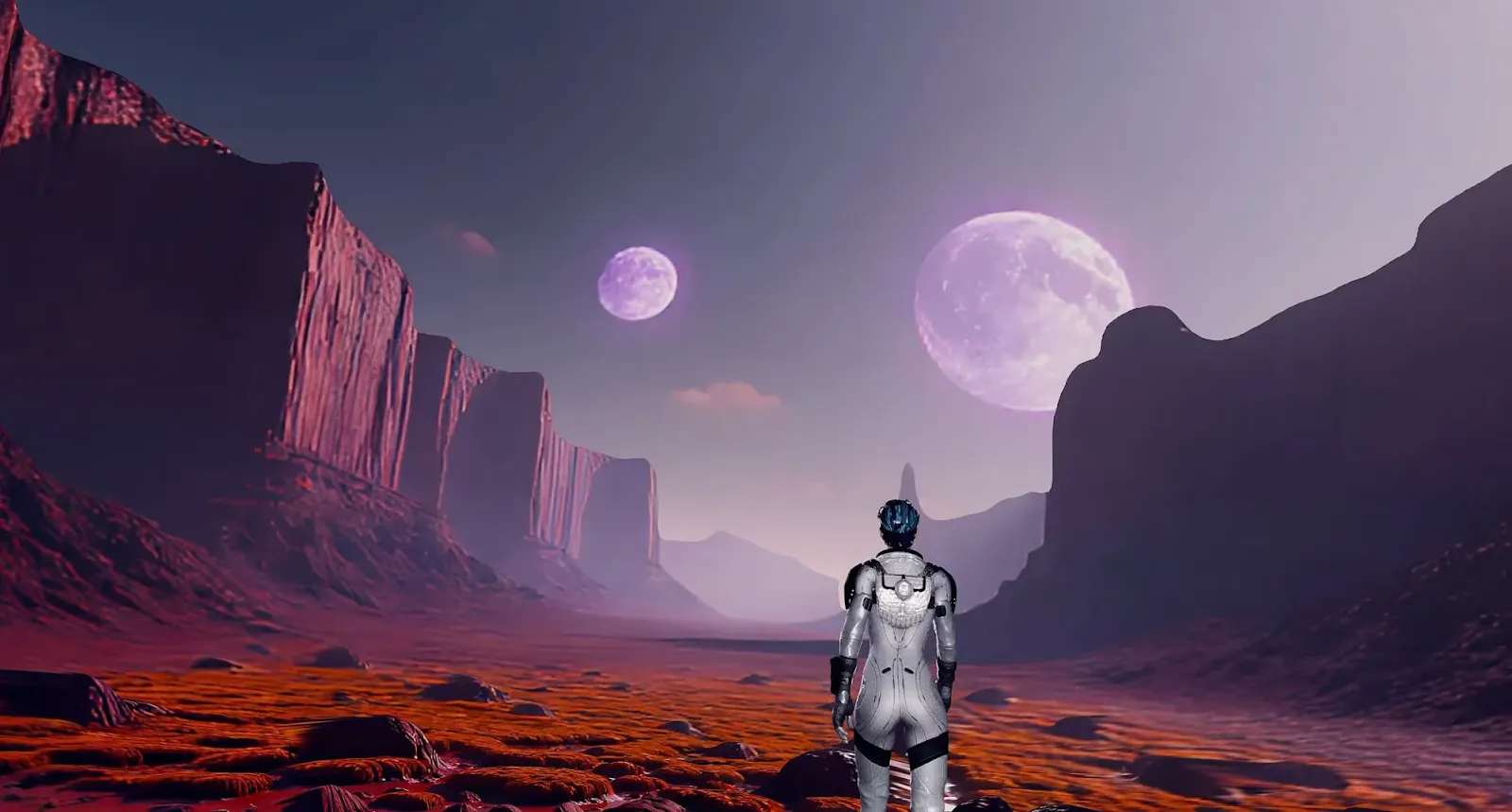
Tencent has officially dropped Hunyuan3D World Model 1.0, an open‑source system that can generate interactive, explorable 3D worlds from a single text prompt or image. Announced at the World Artificial Intelligence Conference (WAIC) in Shanghai, China on July 26, 2025, this marks the industry’s first fully open‑source AI model capable of building immersive, navigable scenes on a world scale.
Hunyuan3D World Model 1.0
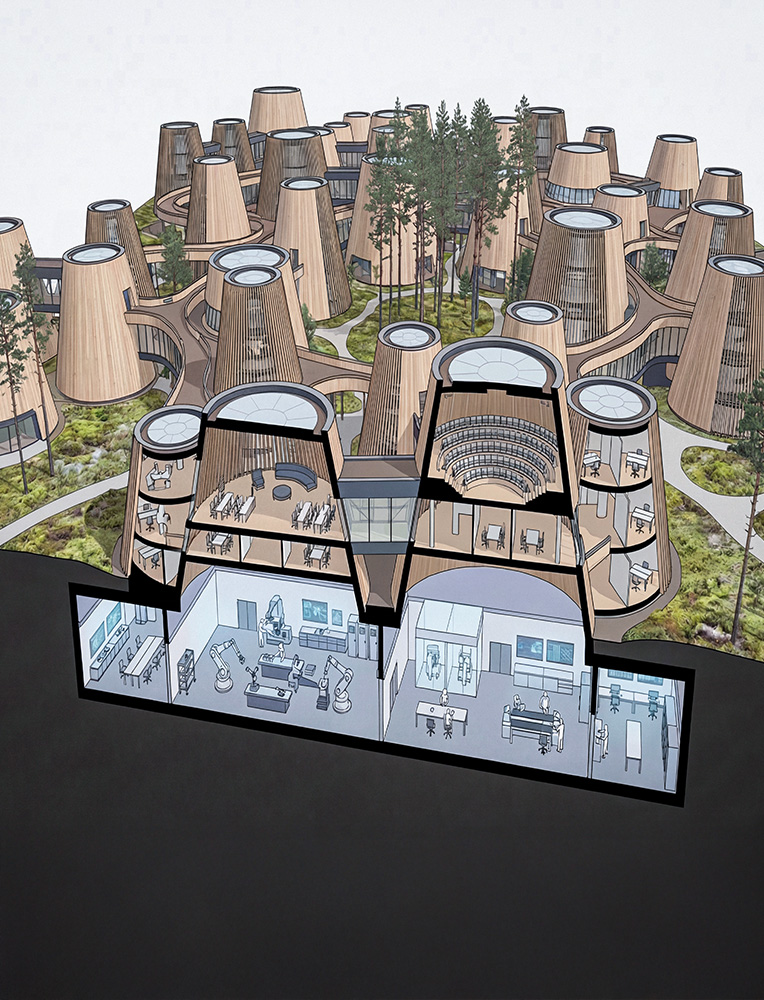
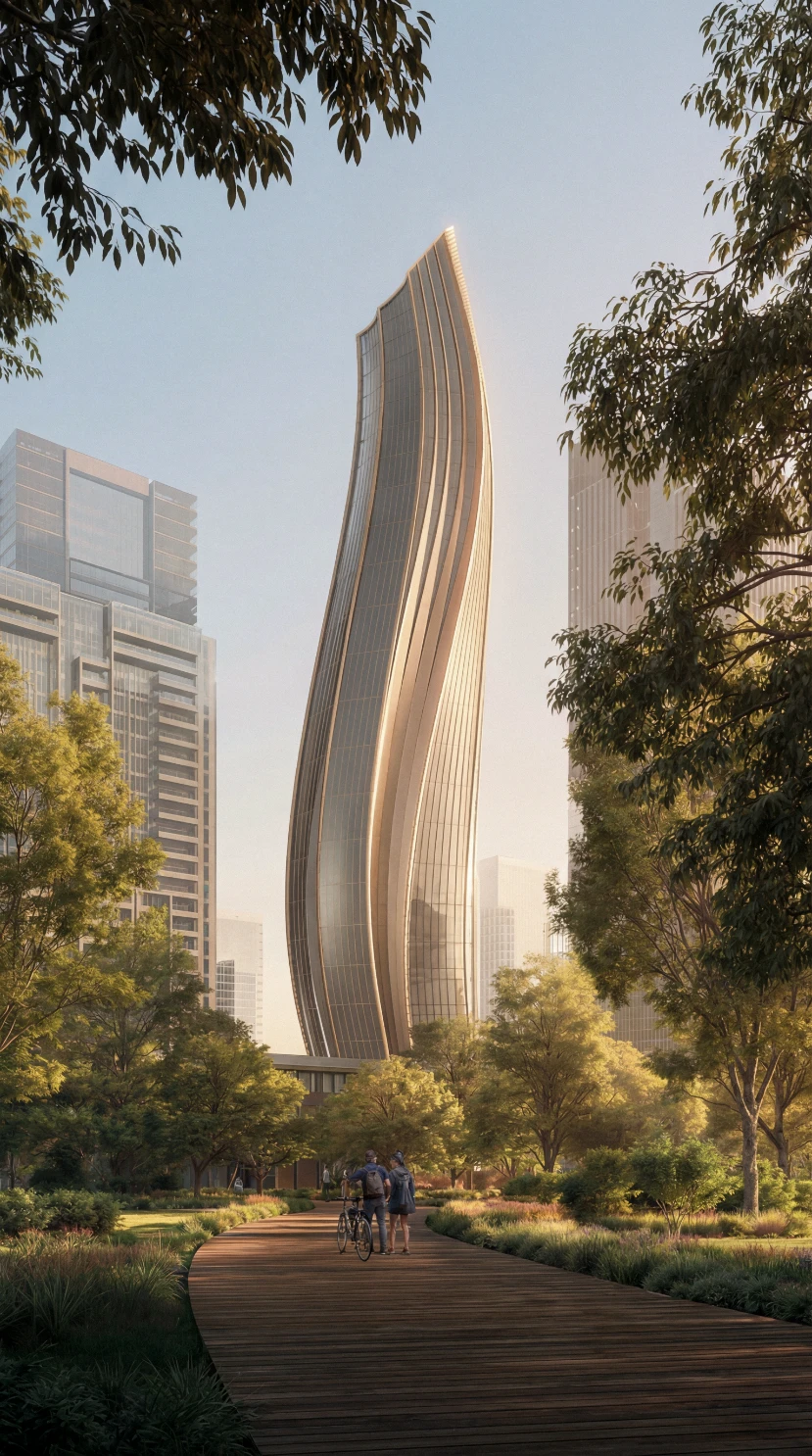
From a short sentence or a photograph, the system creates a 360‑degree panoramic proxy, then reconstructs that panorama into a layered, navigable 3D mesh, enabling users to roam the environment and interact with objects. The result is truly immersive, interactive 3D environments built in seconds.
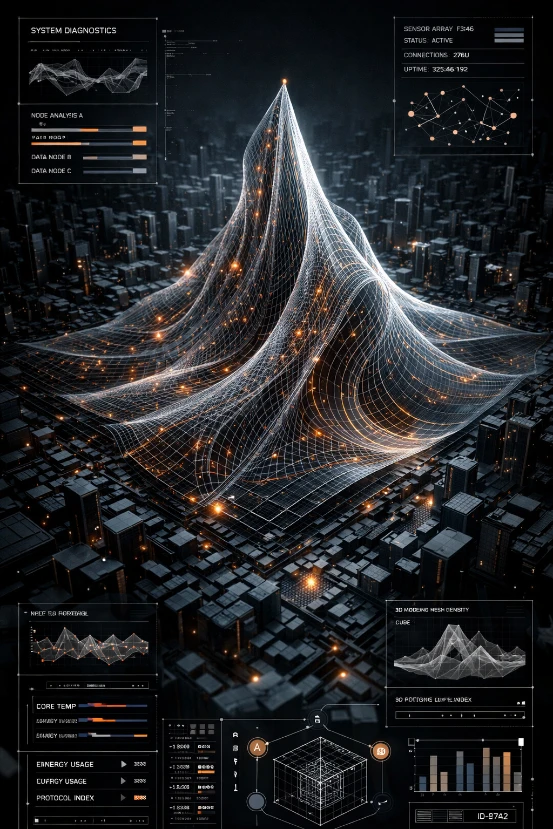
Tencent’s Hunyuan3D World Model 1.0 is built on a structured, multi-stage architecture that combines panoramic generation with layered 3D reconstruction. At its core is Panorama‑DiT, a diffusion transformer model trained to generate high-resolution 360° panoramic views based on either text prompts or reference images. This panoramic output acts as a visual proxy for the entire scene, capturing overall layout, lighting, and object positioning.
The model then applies semantic layering, breaking down the panorama into distinct parts such as sky, terrain, and foreground elements. This segmentation allows each layer to be processed and reconstructed separately, enabling more accurate geometry and logical object placement. Next, the system performs hierarchical mesh reconstruction, which involves multiple refinement steps to convert the layered data into a coherent 3D mesh. This process addresses common issues like visual noise and missing geometry, resulting in smoother, walkable environments.
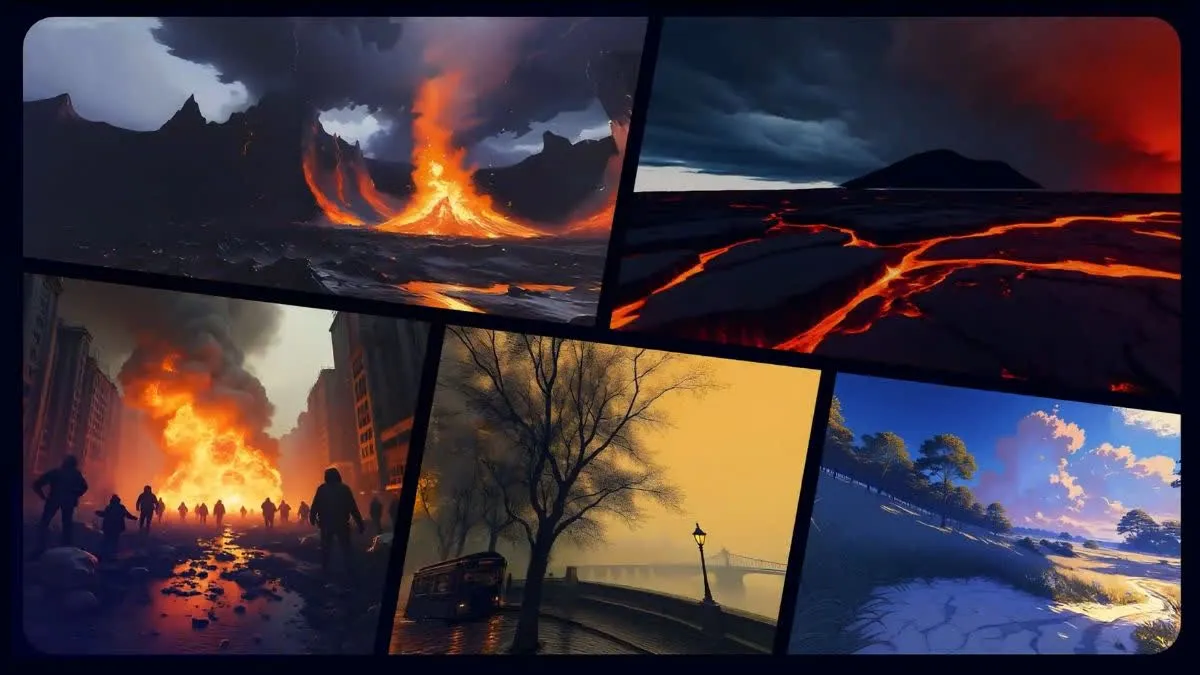
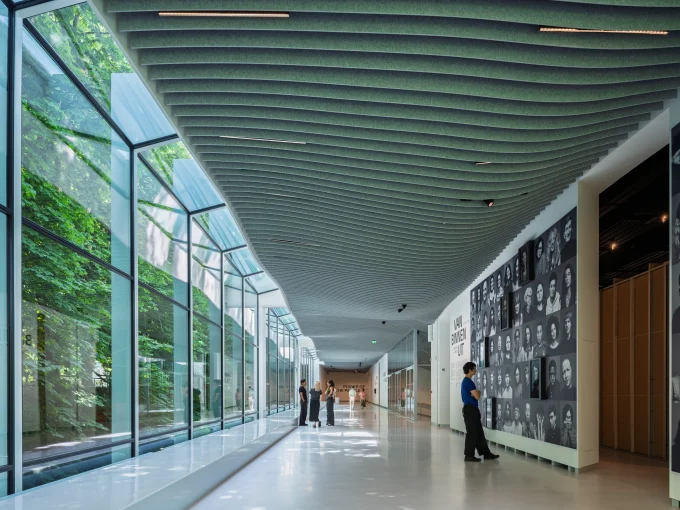
The final 3D scenes can be exported into standard formats compatible with popular simulation and rendering engines like Unity and Unreal Engine. These meshes can then be further edited, animated, or integrated into real-time applications, giving developers full creative control.
This world-building capability builds on Tencent’s earlier Hunyuan3D 1.0 model, which used a two-stage pipeline generating multi-view images followed by sparse-view 3D reconstruction.
Tencent emphasizes both speed and visual fidelity. The panoramic generator runs fast, and the reconstruction system builds the world in seconds. While performance figures haven’t been publicly itemized in seconds for the world model, its design logic follows the earlier Hunyuan3D‑1.0 two‑stage model.
Hunyuan3D World Model 1.0 ranks top in key quality metrics (BRISQUE, NIQE, CLIP alignment scores) compared to earlier systems and baseline methods. Tencent has made the full code, model weights, and documentation freely available under an open‑source license. They also released lightweight versions (0.5 B, 1.8 B, 4 B, 7 B parameter variants) to support deployment on devices with lower compute capacity.
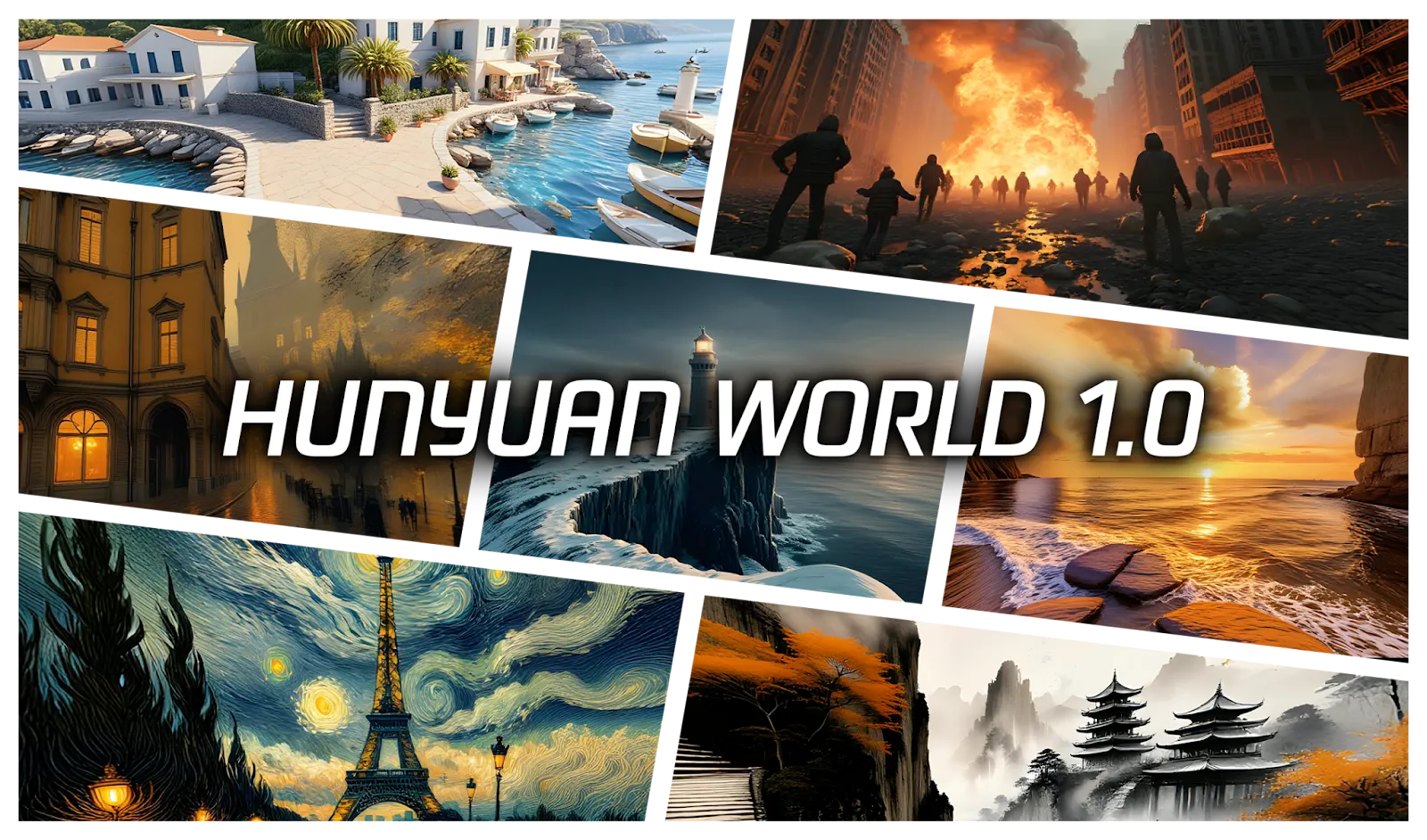
As of July 2025, the GitHub repository has already garnered thousands of stars, with downloads in the millions, demonstrating real traction in the global developer community.
Real-World Applications of Tencent Hunyuan3D World Model 1.0
- Game developers can quickly prototype scenes by simply typing a prompt or uploading a concept image. Exportable meshes plug straight into Unity, Unreal Engine, or custom graphics pipelines.
- VR and virtual tourism platforms can build immersive scenes for exploration, training, or marketing.
- Film and animation creators can draft background environments without manual modeling.
- Real‑time simulation tools for digital twins, robotics simulation, or training can leverage this world model for fast scene assembly.
- Education and design: architecture, landscapes, or historic reconstruction can be generated visually before manual refinement.
Users do not need advanced 3D skills; they only need to input text or an image. Generated scenes include navigation logic, so users can “walk” around without passing through walls or falling off terrain. That intelligent roaming layer adds realism and usability.
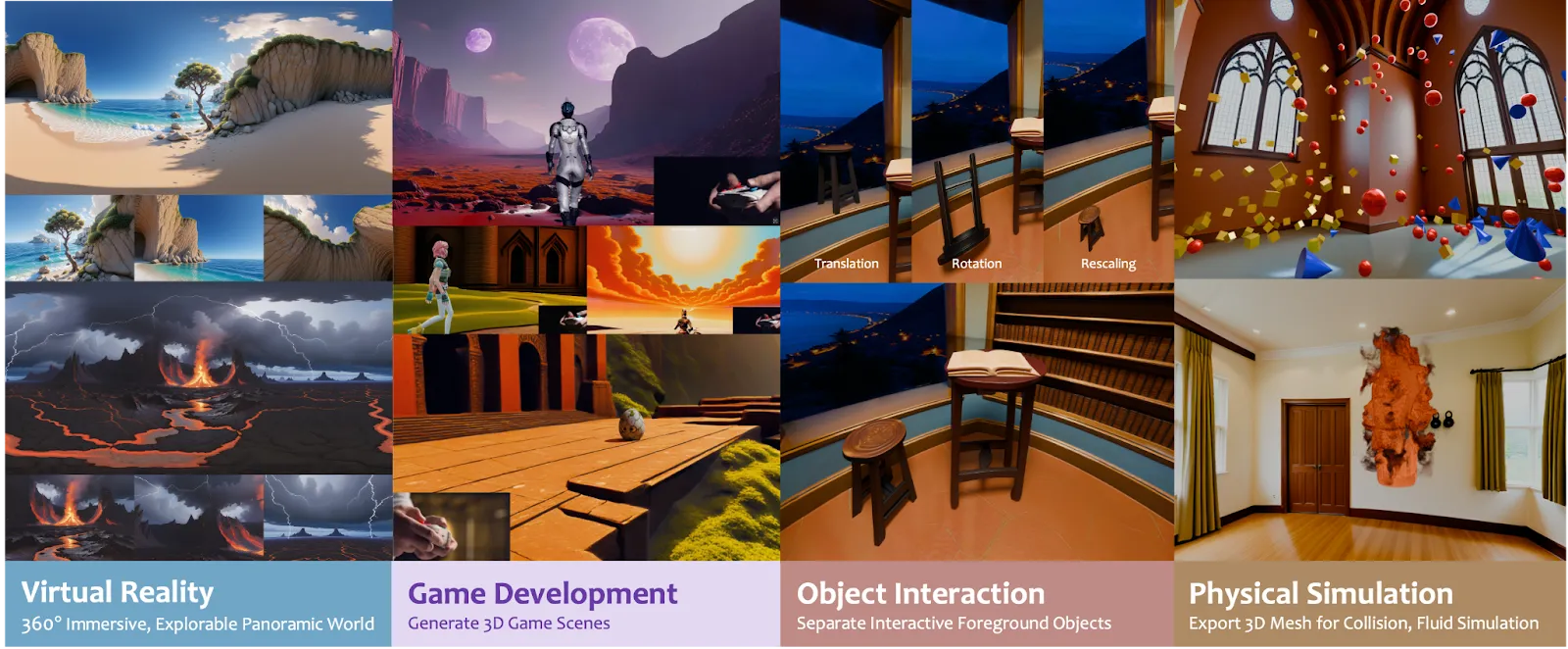
Open-Source 3D AI Is Shaping the Future.
- Industry first: Hunyuan3D World Model 1.0 is the first open‑source model that creates full 3D worlds rather than single objects or static scenes.
- Reduces cost and time: Building a 3D world previously took weeks of manual modeling. Tencent’s system does it in minutes with minimal input, slashing both labor and skill barriers.
- Global developer collaboration: By releasing open data, Tencent invites contributions, forks, and adaptations across industries from games to industrial simulation.
- Push Chinese AI edge: This release strengthens China’s position in multimodal and generative AI development, setting it more on par with US players like Google, OpenAI, and others.
Current Limitations and Future Potential of Hunyuan3D
Despite its breakthroughs, Hunyuan3D World Model 1.0 still has notable limitations. While it can generate immersive 3D environments, the scale and realism of these scenes are currently modest. Advanced features like physics simulation, weather dynamics, and complex object behavior are not yet supported. The model also faces constraints due to the relatively limited volume of 3D training data compared to 2D datasets, which can result in occasional artifacts or lower scene detail, especially in less common settings.
In terms of interactivity, the system currently allows only basic navigation; users can walk through the environment, but can’t yet manipulate objects, interact with other users, or trigger in-scene events. These interactive and multiplayer capabilities are expected in future versions.
Still, Tencent’s Hunyuan3D World Model 1.0 marks a major step forward in open-source 3D world generation. It enables anyone to create full, explorable 3D scenes from just a sentence or an image, making editable, exportable virtual worlds more accessible than ever before.

Tencent’s Hunyuan3D World Model 1.0 is a milestone in open‑source interactive 3D world generation. From just a sentence or image, you can get a complete 360° world that you can walk inside, export, edit, and build on.
With code and pretrained weights available, developers worldwide in games, simulation, VR, film, and design can now generate editable virtual worlds in minutes. It’s a powerful step toward democratizing 3D content creation and expanding the creative potential of AI.
Images & video credit: Hunyuan/Tencent.
Explore Courses
.jpg "Ondrej Chybik - Rethinking Architecture")