

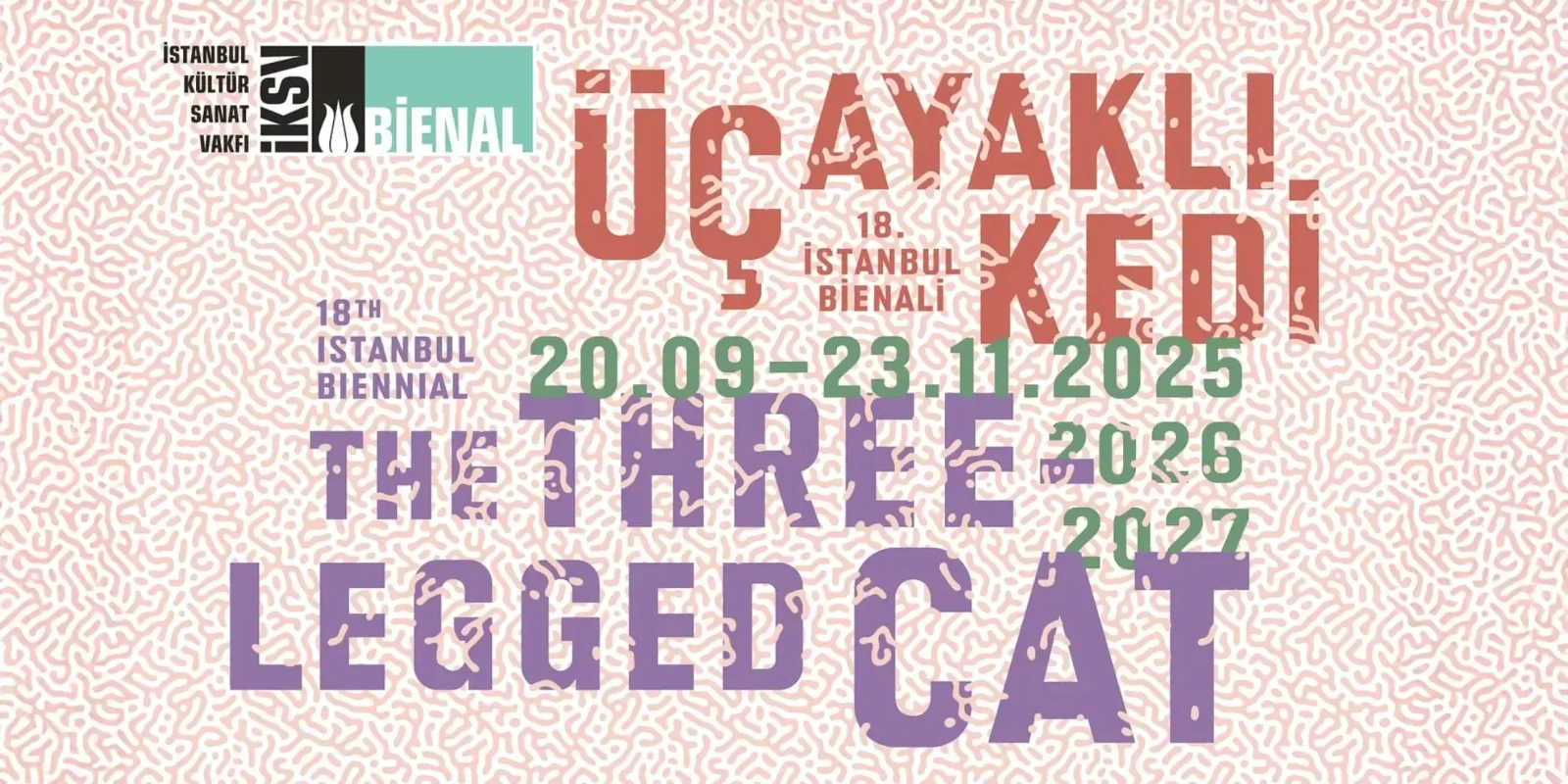
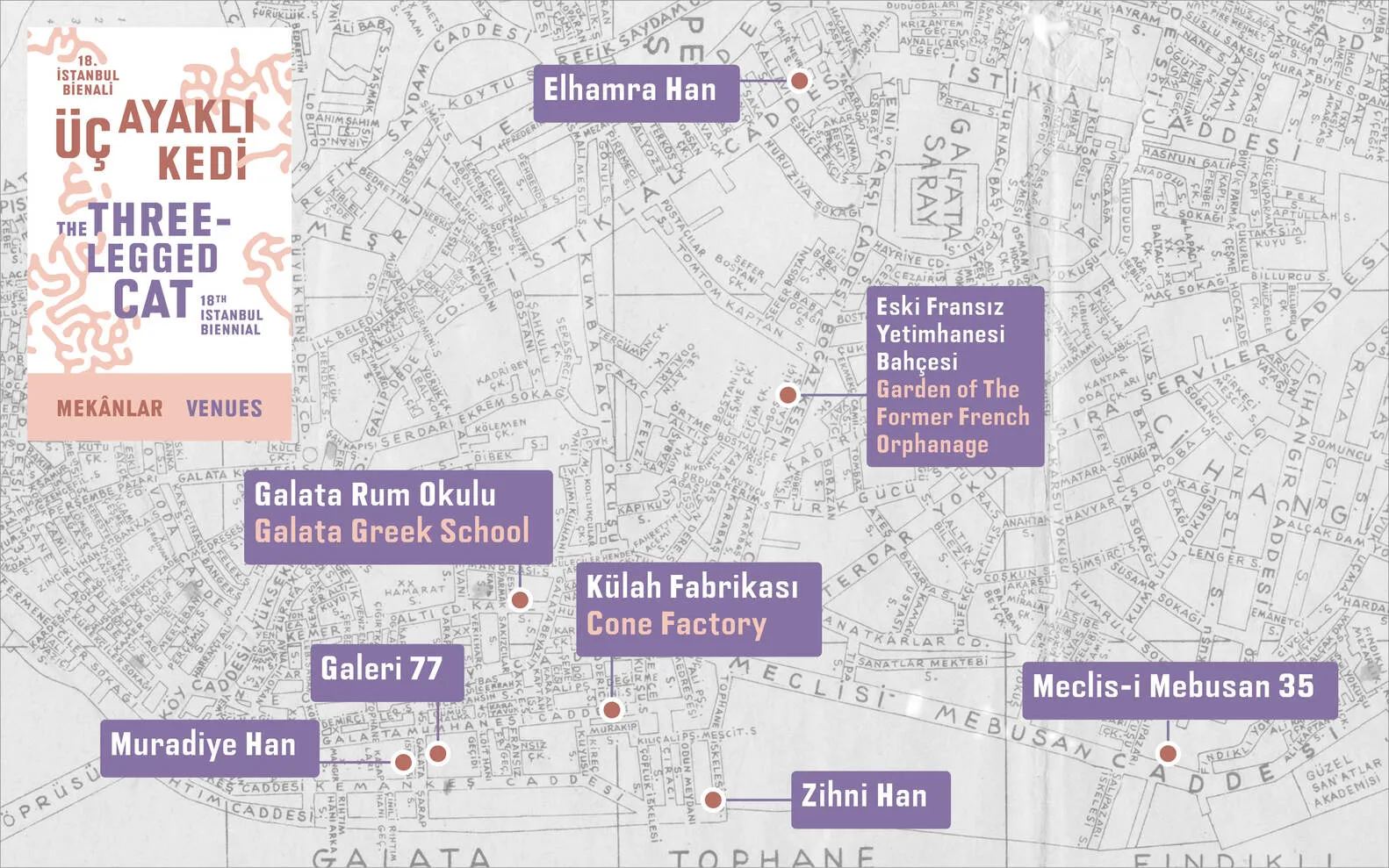
The 18th edition, running from September 20 to November 23, 2025, carries forward this ethos under the intriguing title The Three-Legged Cat. Curated by Christine Tohmé, the Biennial stretches across eight venues along the Beyoğlu–Karaköy axis, a historic corridor where Istanbul’s layered architecture meets its vibrant cultural present. Rather than a centralized exhibition hall, the works of 47 artists from over 30 countries are dispersed through the city, turning Istanbul itself into a stage. This scattering shifts the emphasis from spectacle to intimacy, where each site shapes the way audiences encounter the art, and the urban fabric becomes part of the exhibition’s conversation.
The Istanbul Biennial, organized by the Istanbul Foundation for Culture and Arts (İKSV) since 1987, has long resisted the traditional model of national pavilions. Instead, it favors exhibitions that spark dialogue between artists and audiences, with curators shaping each edition through a distinct conceptual framework. Over the decades, this approach has positioned the Biennial as the most comprehensive international art event in Turkey, offering a platform for artists from diverse geographies while also fostering educational programs, panels, and workshops that extend beyond the gallery space.
Spaces of Memory and Imagination
Venues such as the Galata Greek School, the Garden of the Former French Orphanage, and Elhamra Han anchor the exhibition in the city’s architectural memory. These buildings, some restored, others semi-abandoned, and some layered with past usages, become stages where contemporary art meets tangible histories of migration, trade, education, and civic life.
The Galata Greek School was built in 1885 in an eclectic neoclassical style, funded by Eleni Zarifis. It served the Greek community of Galata until its closure in 1988. Later, it housed a kindergarten and then stood mostly unused. It has recently been renovated (2019–2023) under Tabanlıoğlu Architects, along with Prof. George Penelis and Dr. Gregory Penelis. The restoration preserved many internal spatial elements, such as classrooms, corridors, and stairways, that now allow artworks to interact with the lived history of the space.
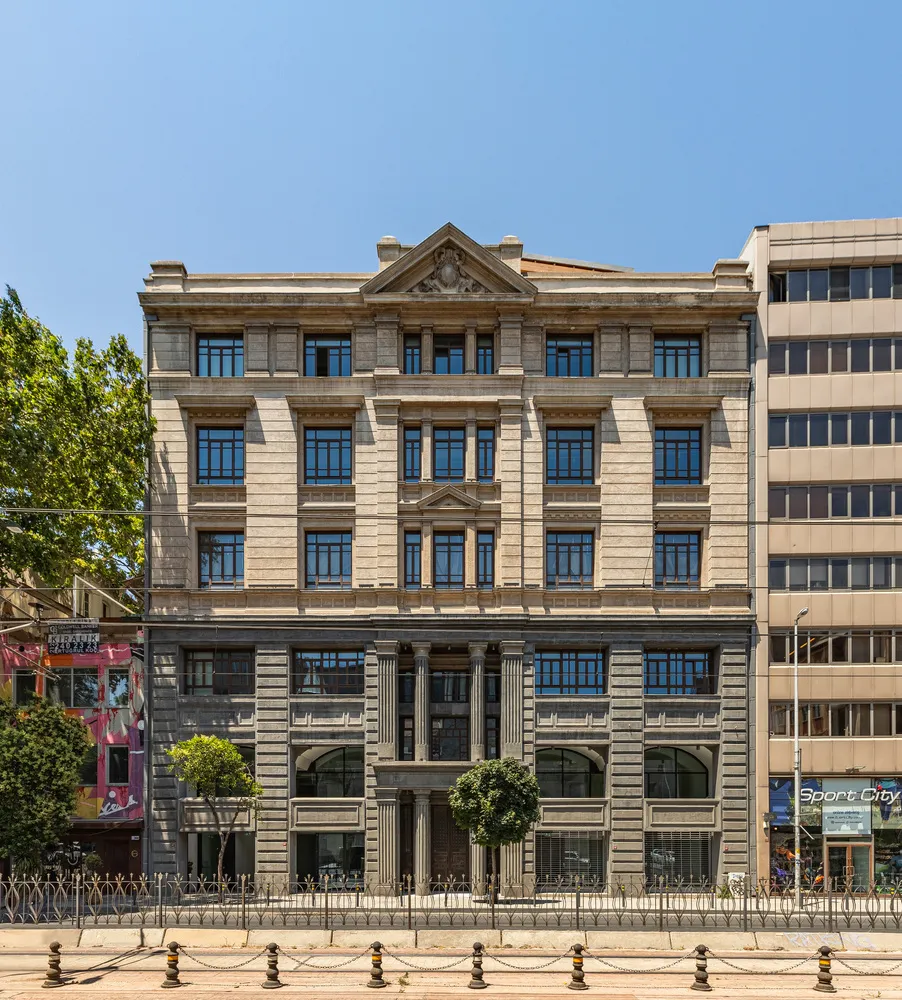
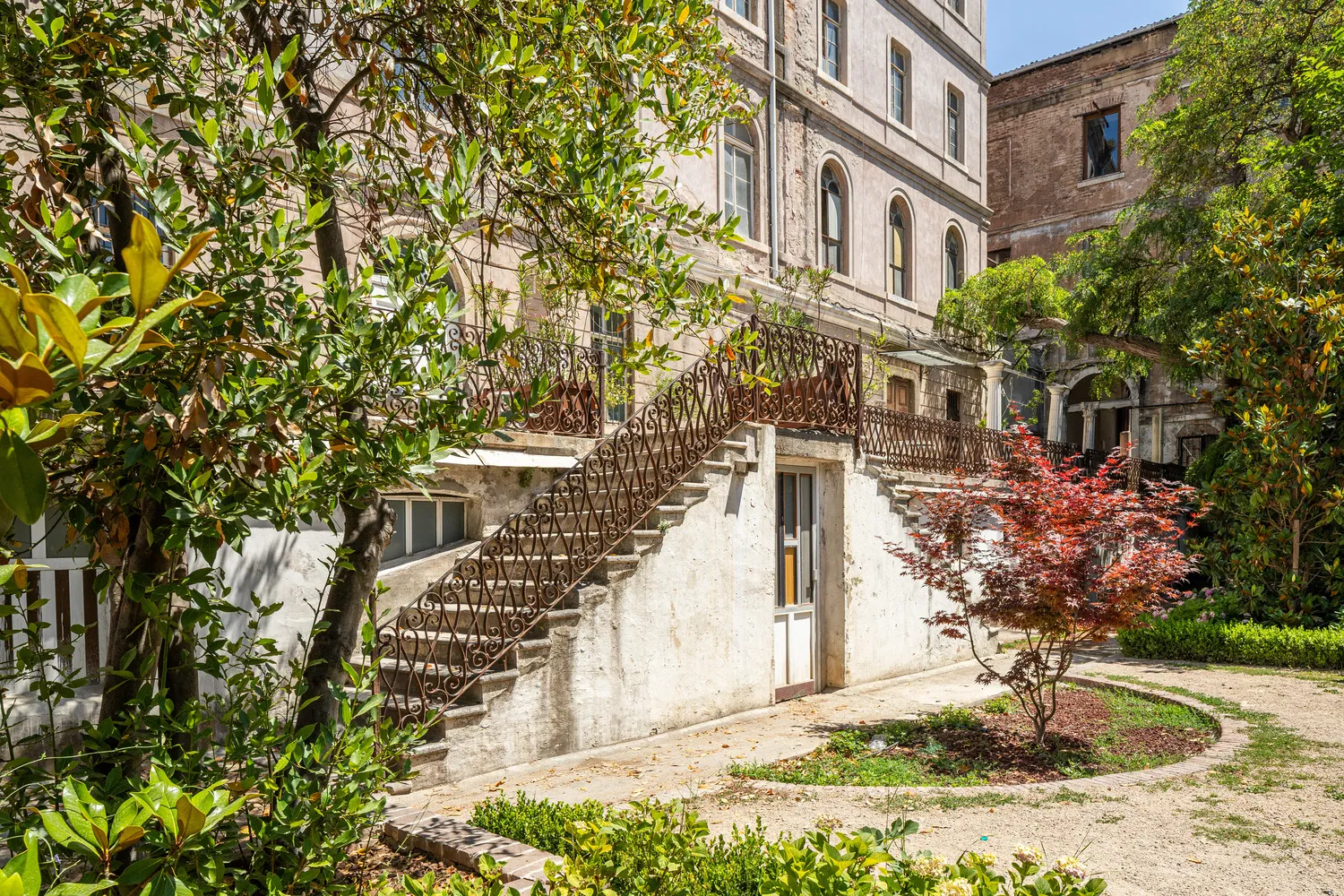
The Garden of the Former French Orphanage (Saint-Joseph) occupies a four-storey estate granted in 1869 to the Daughters of Charity of Saint Vincent de Paul. It included both the orphanage and an adjacent elementary school; after 1937, the building fell into neglect. The garden itself once included terraces, wells, running water, and a bostan (a type of community garden). Today, it has been revived by the Beyoğlu municipality as “Tophane Mekân.”
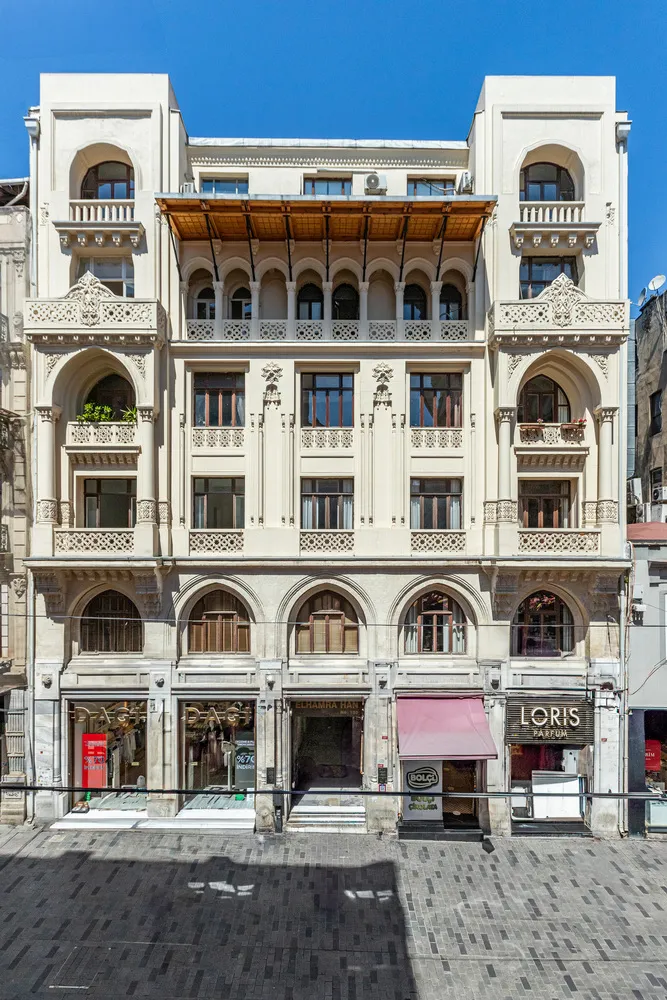
Elhamra Han, originally constructed in 1827 as one of Istanbul’s earliest theatre halls (later known as the Palais de Cristal), has hosted cinema and theatre enterprises throughout the 20th century. Its façade and internal volumes reflect changes in use, decay, and repair, a mirror of Istanbul’s own layers of entertainment, public gathering, changing tastes, and infrastructure.
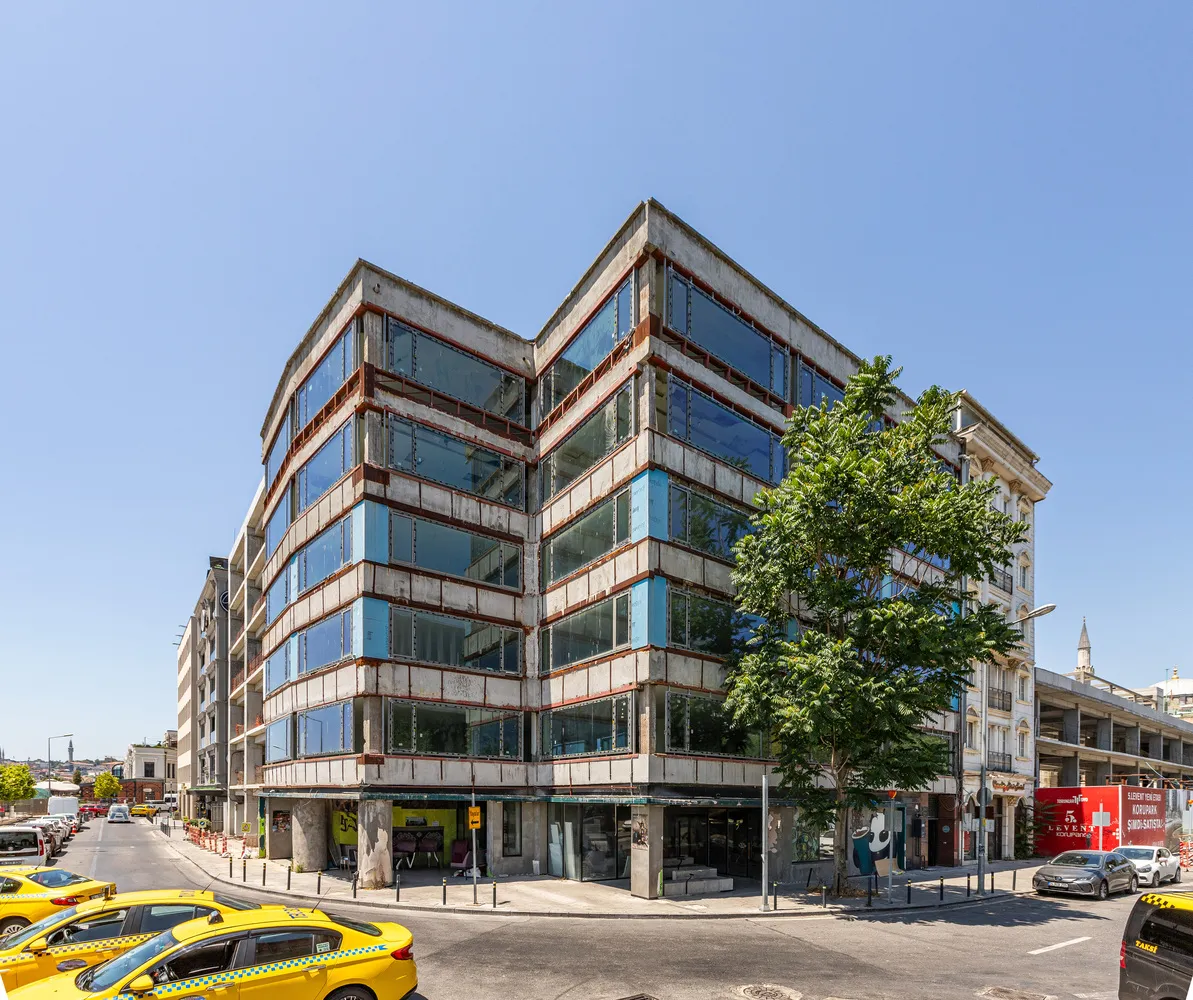
Zihni Han, located in Karaköy, carries the industrial and commercial memory of the neighborhood. Once functioning as a trade and storage space, it embodies the spirit of mercantile Istanbul. Its robust architecture, marked by utilitarian design and gradual wear, offers a raw backdrop where contemporary works intersect with the textures of economic history.
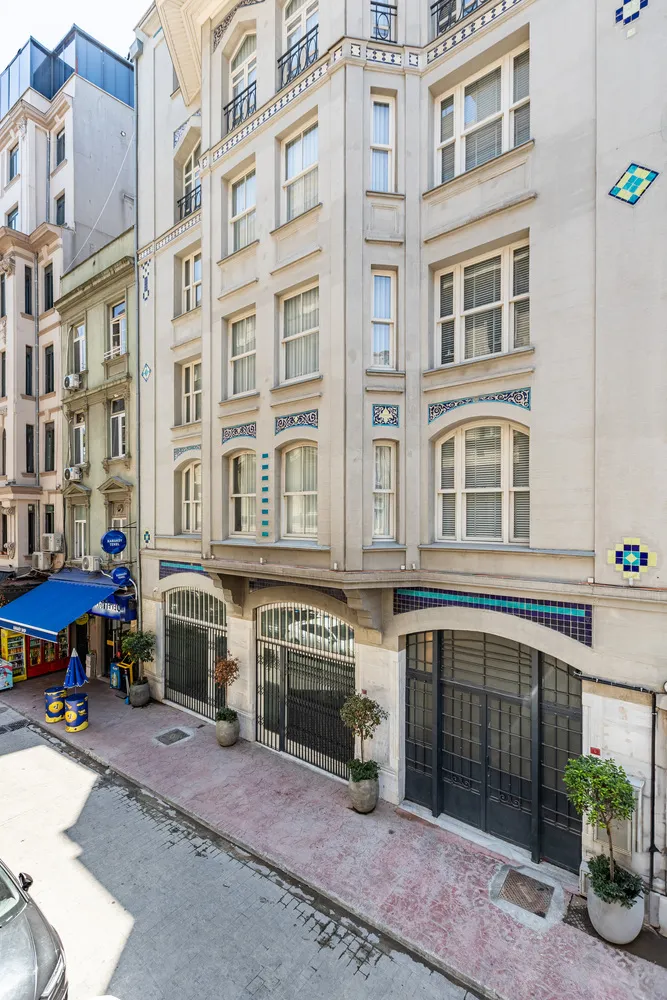
Muradiye Han, another historic han in the district, reflects the Ottoman tradition of caravanserais adapted to the urban scale. Originally designed for merchants and travelers, the building was later adapted to serve workshops and small businesses. Its layered past connects the rhythms of trade and urban labor to today’s artistic interventions.
Galeri 77 is the only venue that operates primarily as a contemporary art gallery. Its inclusion among historical sites provides a contrast, situating living artistic practice within Istanbul’s cultural present while dialoguing with the city’s architectural legacy.
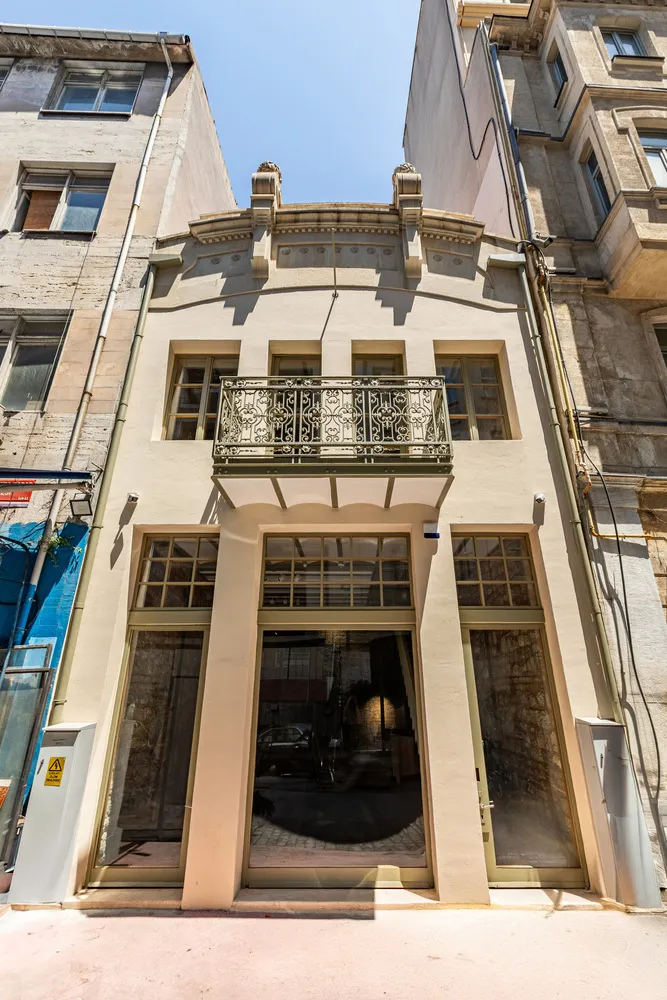
The Former Ice Cream Cone Factory once produced the industrial cones used in textile production. This utilitarian site speaks to Istanbul’s history as a manufacturing hub, carrying echoes of labor, machinery, and craft. Now, its adaptation into an exhibition space allows artworks to play against the industrial shell and its memory of production.
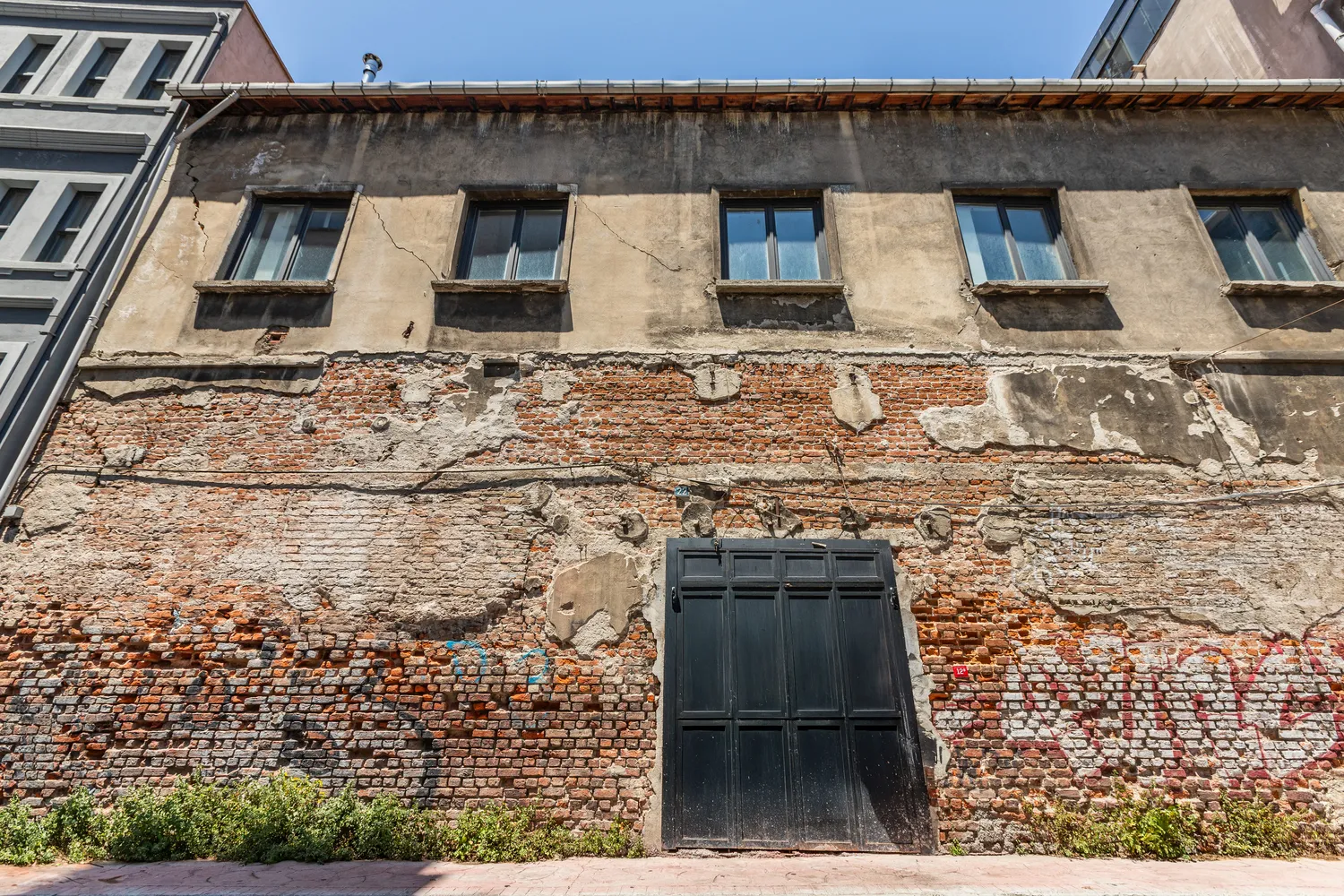
Meclis-i Mebusan 35, a former bureaucratic building, stands as a vestige of state functions in the city’s administrative history. With its austere architecture and layered bureaucratic past, the site offers a stark stage where art engages with ideas of governance, authority, and civic responsibility.
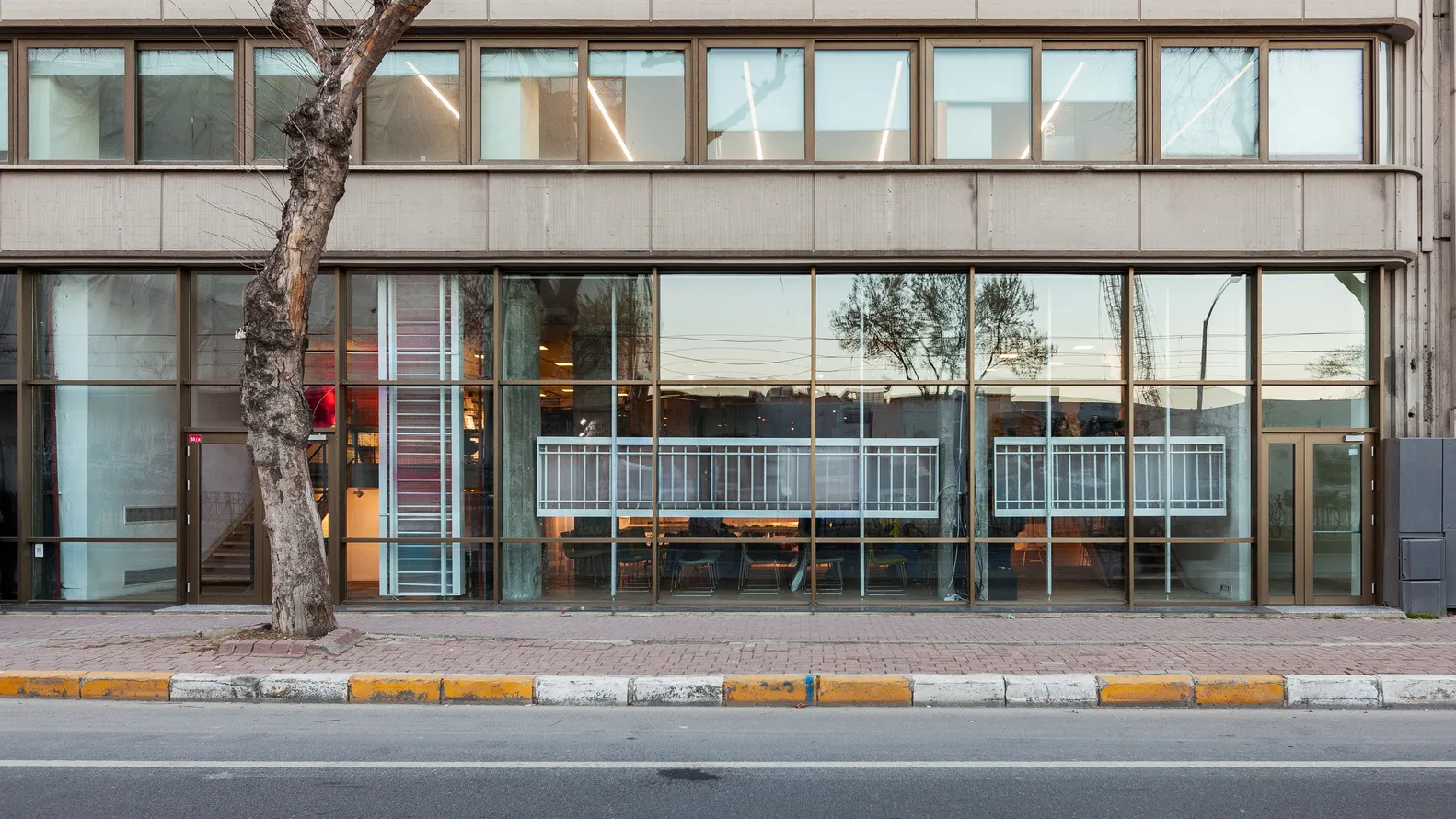
Artists and Site-Specific Interventions at the 18th Istanbul Biennial
Each venue of the 18th Istanbul Biennial is tied closely to its exhibiting artists, with curatorial choices highlighting the relationship between site and practice. At the Galata Greek School, the program brings together Nolan Oswald Dennis, İpek Duben, Ali Eyal, Simone Fattal, Lou Fauroux, Lungiswa Gqunta, Kongkee, Seta Manoukian, Merve Mepa, Naomi Rincón-Gallardo, Ana Vaz, Akram Zaatari, and Ayman Zedani.
Zihni Han is activated as a multi-layered civic space with contributions from Abdullah Al Saadi, Willy Aractingi, Karimah Ashadu, Chen Ching-Yuan, Ian Davis, Celina Eceiza, Pélagie Gbaguidi, Rafik Greiss, Jasleen Kaur, Valentin Noujaïm, Marwan Rechmaoui, Stéphanie Saadé, Sara Sadik, Sohail Salem, Elif Saydam, and Selma Selman. Muradiye Han presents a solo intervention by Ana Alenso, while Galeri 77 hosts works from Haig Aivazian, Ola Hassanain, Mona Marzouk, and Dilek Winchester.
At the Cone Factory, Doruntina Kastrati and Claudia Pagès Rabal engage directly with the industrial context of the site. Meclis-i Mebusan No: 35 includes projects by Eva Fàbregas, Pilar Quinteros, and the duo VASKOS (Vassilis Noulas & Kostas Tzimoulis). The Garden of the Former French Orphanage features a site-responsive installation by Khalil Rabah, while Elhamra Han hosts Mona Benyamin, Şafak Şule Kemancı, Jagdeep Raina, Riar Rizaldi, Lara Saab, Natasha Tontey, and Sevil Tunaboylu.
Beyond the Exhibition Walls
The Biennial’s opening week expands into performance, film, and sound. Selma Selman’s Motherboards, Alex Baczyński-Jenkins’ Untitled (Holding Horizon), and Ahmad Ghossein’s ‘So your heart aches, huh? or The Pit’ bring bodily presence and temporality into play. Screenings by Lawrence Abu Hamdan and Suneil Sanzgiri extend the curatorial inquiries into geopolitical terrains, while DJ sets by artists such as Urok Shirhan transform the evenings into collective gatherings.
A Biennial in Motion
The Biennial is structured in three phases running from 2025 to 2027. The first establishes the exhibitions and venues; the second will emphasize education and collaborations with local initiatives; and the third will bring together a city-wide program of exhibitions, performances, and publications.
By spreading across multiple venues and extending over several years, The Three-Legged Cat avoids the format of a single, large-scale event. Instead, it develops gradually, encouraging residents and visitors to revisit and engage with the intersections of art, architecture, and public life over time.
Image credit: © Sahir Uğur Eren/Istanbul Foundation for Culture and Arts (İKSV)
Explore Courses
.jpg "Architecture Diagram Mastery: Concept to Portfolio")
.jpg%202.jpg "Building Performance with Forma & Opossum")
.jpg "Ondrej Chybik - Rethinking Architecture")