




Founded in Chicago in 1936 by architects Louis Skidmore and Nathaniel Owings, together with engineer John O. Merrill, Skidmore, Owings & Merrill (SOM) quickly established itself as a leader in modern architecture. The firm has since shaped some of the world’s most recognizable skylines, from New York’s Lever House, the city’s first glass-and-steel office building, to Chicago’s Willis Tower and John Hancock Center, and Dubai’s Burj Khalifa. SOM’s work spans commercial towers, cultural institutions, airports, and large-scale urban masterplans.
SOM’s signature approach lies in its integrated studio model, where architects, engineers, planners, and designers collaborate closely. This structure allows the firm to tackle complex, large-scale projects holistically, whether designing a supertall tower, a waterfront park, or a city masterplan, ensuring that functionality and vision work hand in hand.
1. Montgomery County Justice Center Renovation and Expansion – Pennsylvania, United States
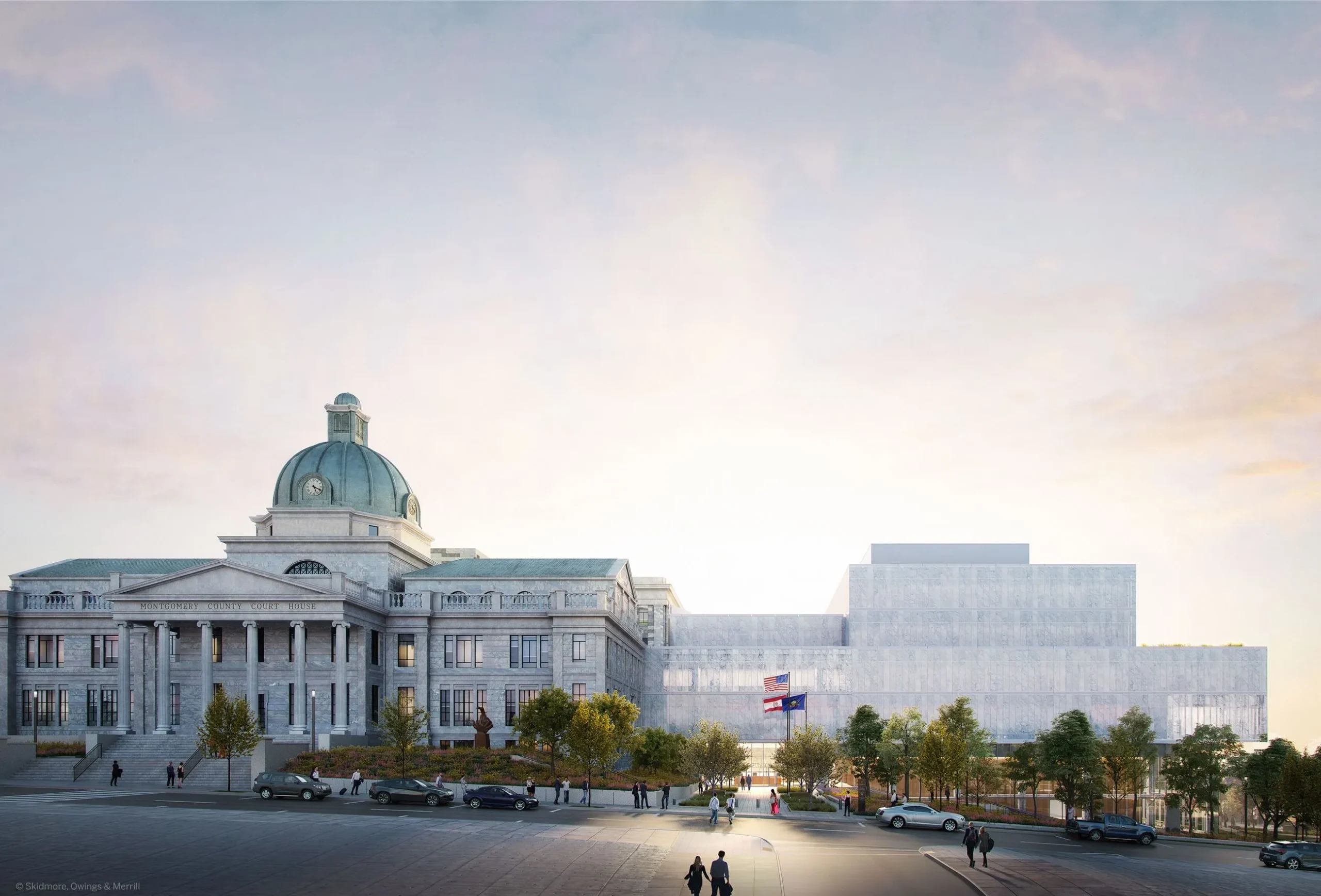
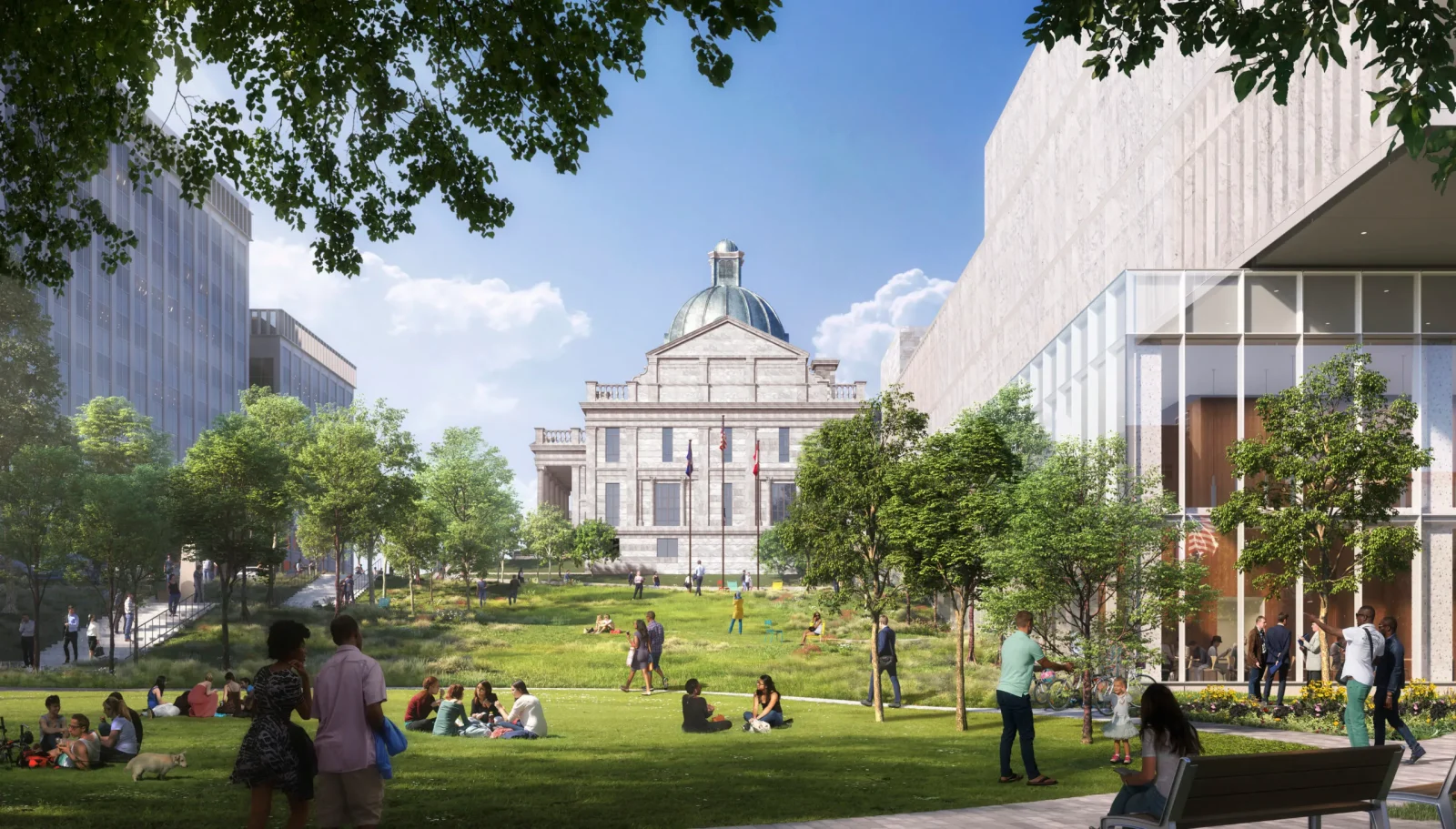
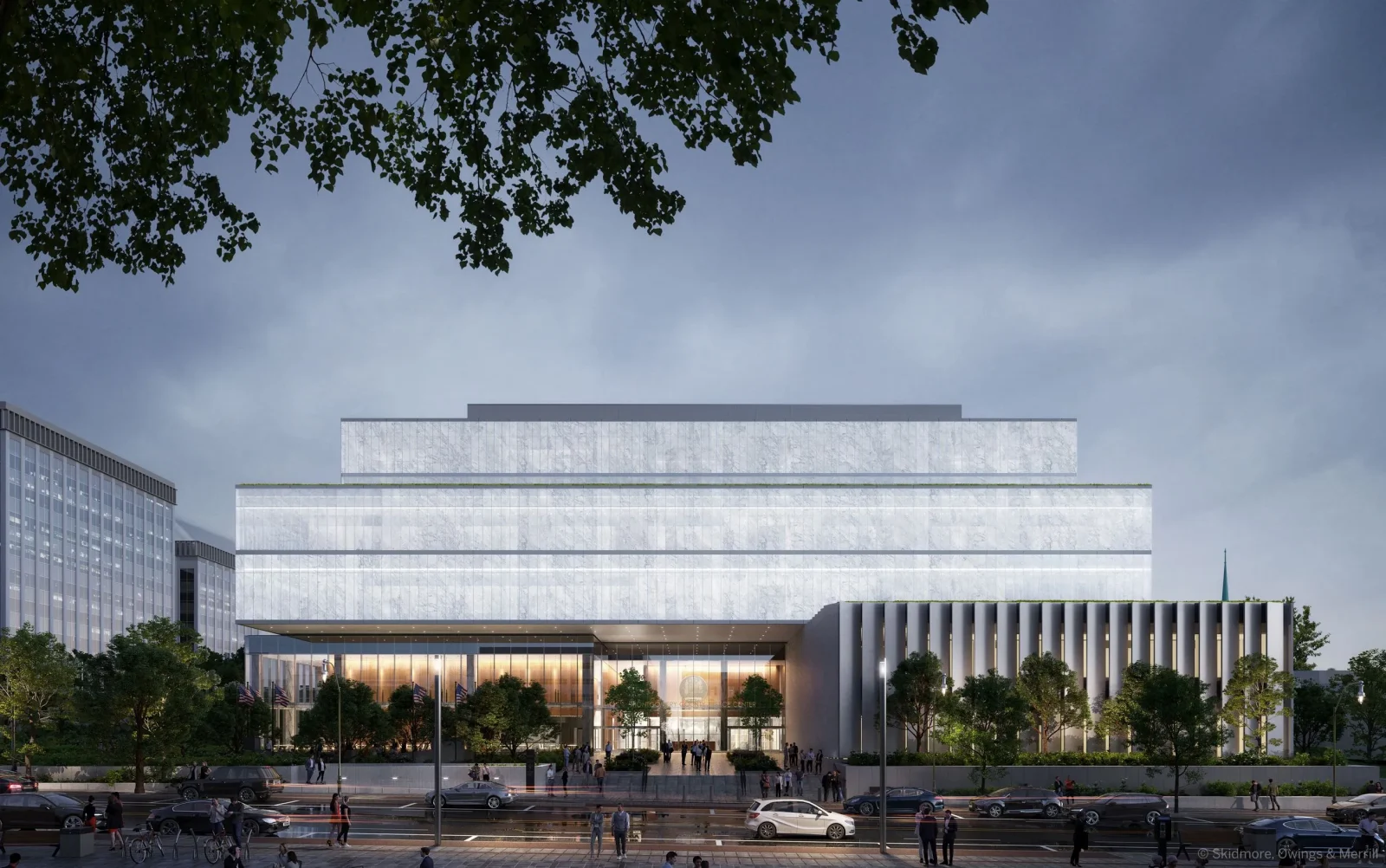
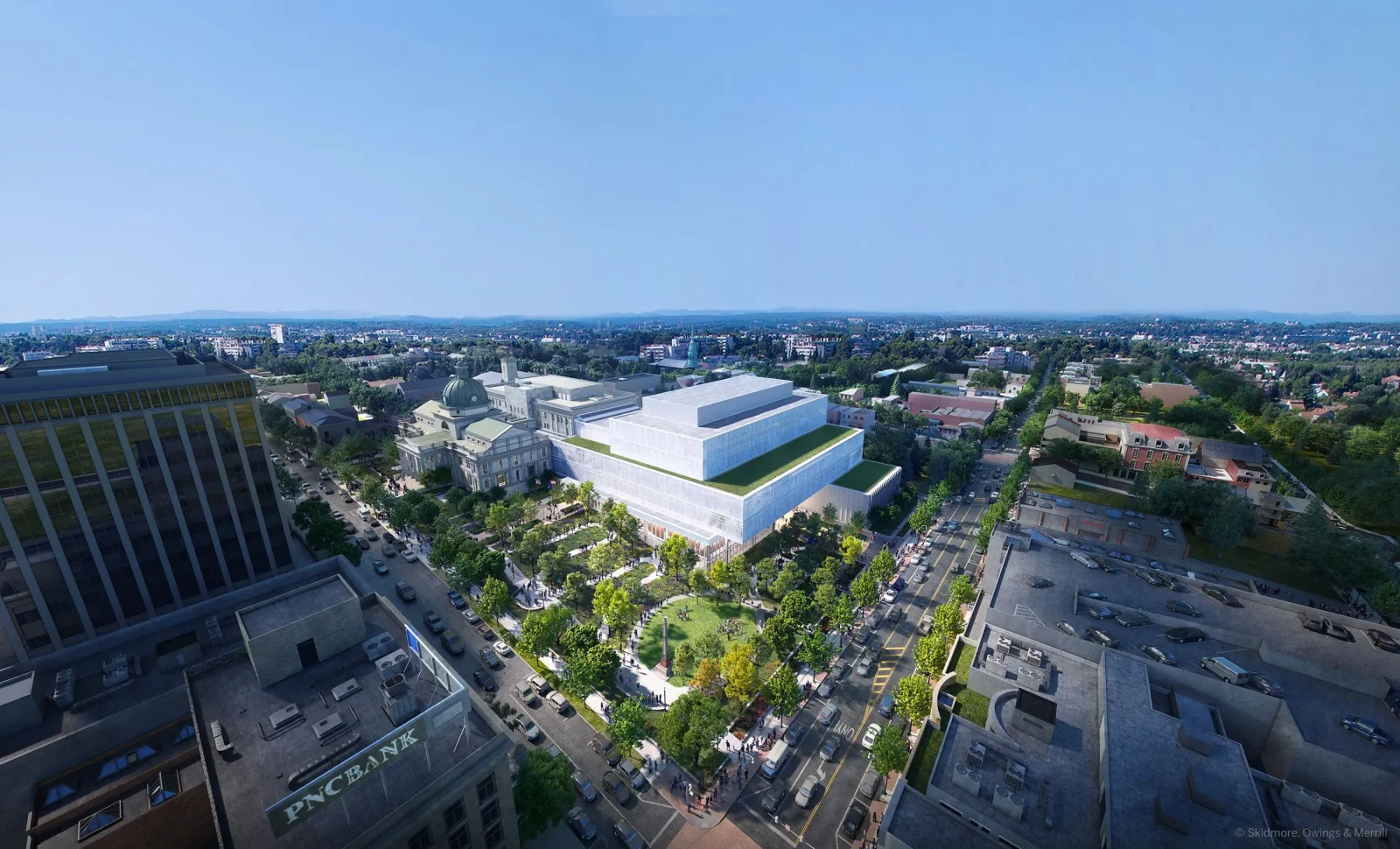
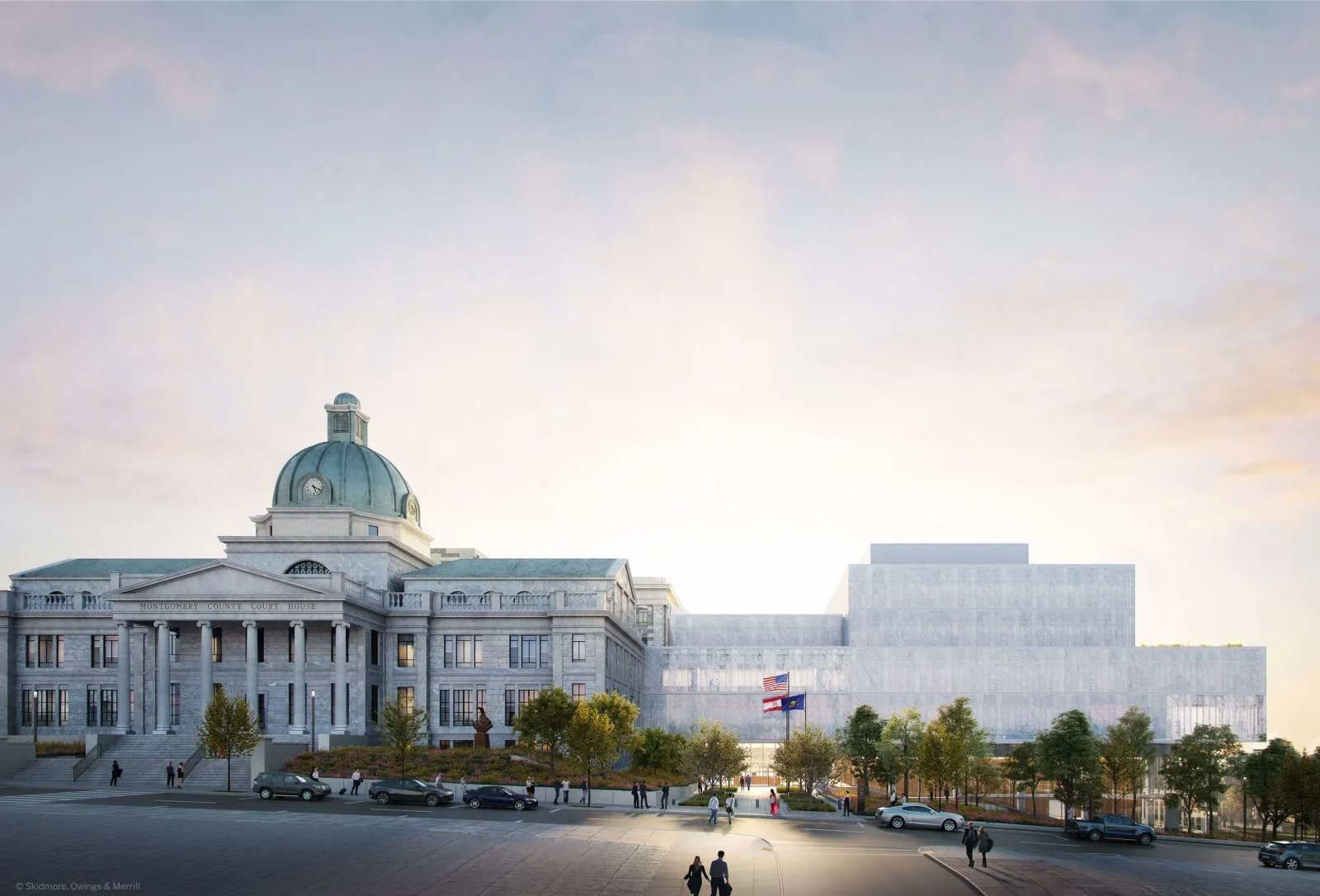
Montgomery County, Pennsylvania, has started its biggest project yet—a major renovation and expansion of its Justice Center in Norristown. The project brings together all the county’s court and administrative offices in one place and creates open spaces for the public.
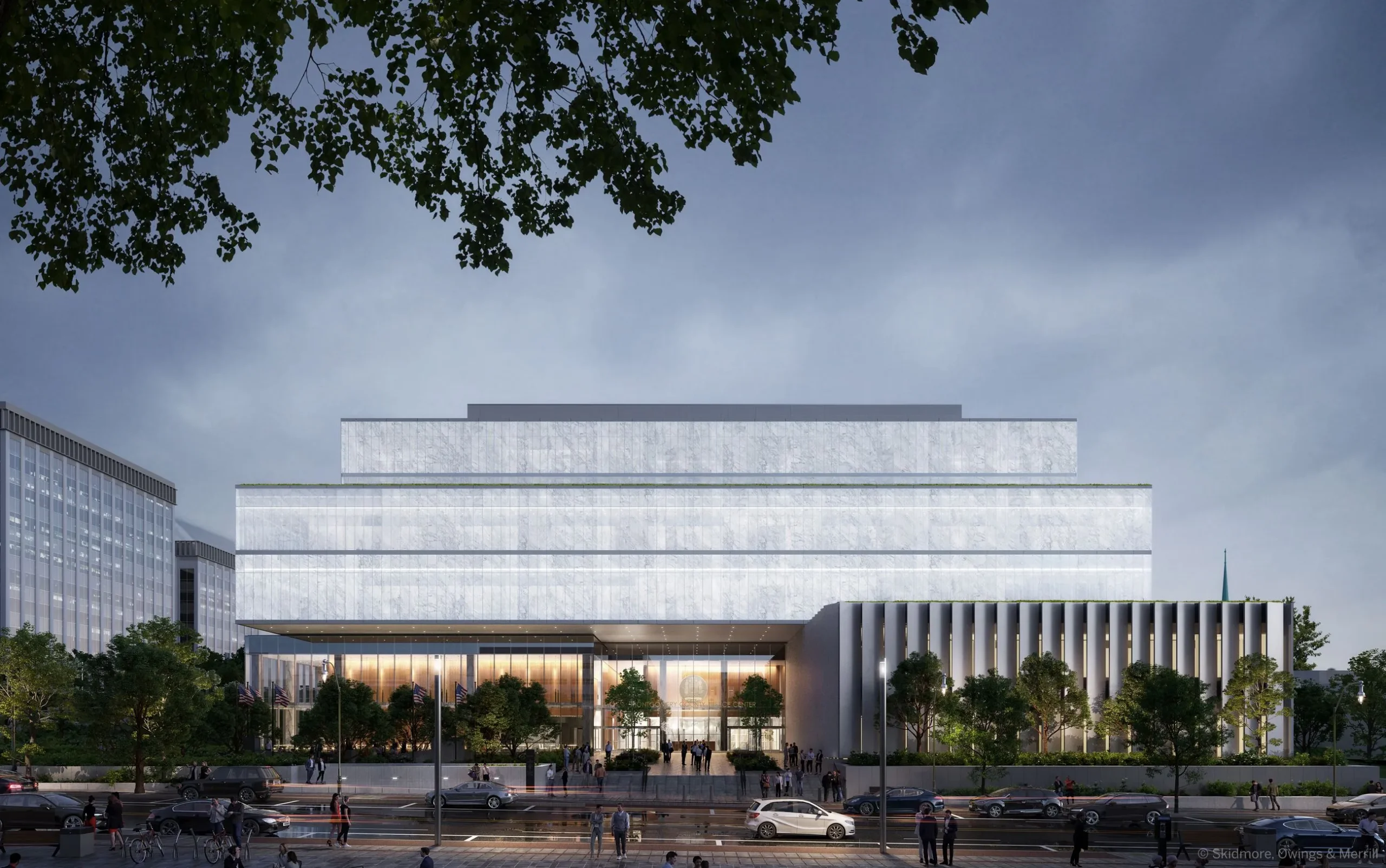
The historic courthouse, built in 1856, is being restored to highlight its original beauty, including its famous copper dome. A new 322,500-square-foot building is being added, connected to the old courthouse through a bright, glass atrium. The new building is six stories tall, reaching 108 feet, and has a total gross area of 510,000 square feet. Its height gradually lowers toward the street and surrounding green spaces to feel approachable. The exterior is mostly fritted glass with a marble-like pattern, inspired by the original courthouse and the famous Blue Marble from Montgomery County.
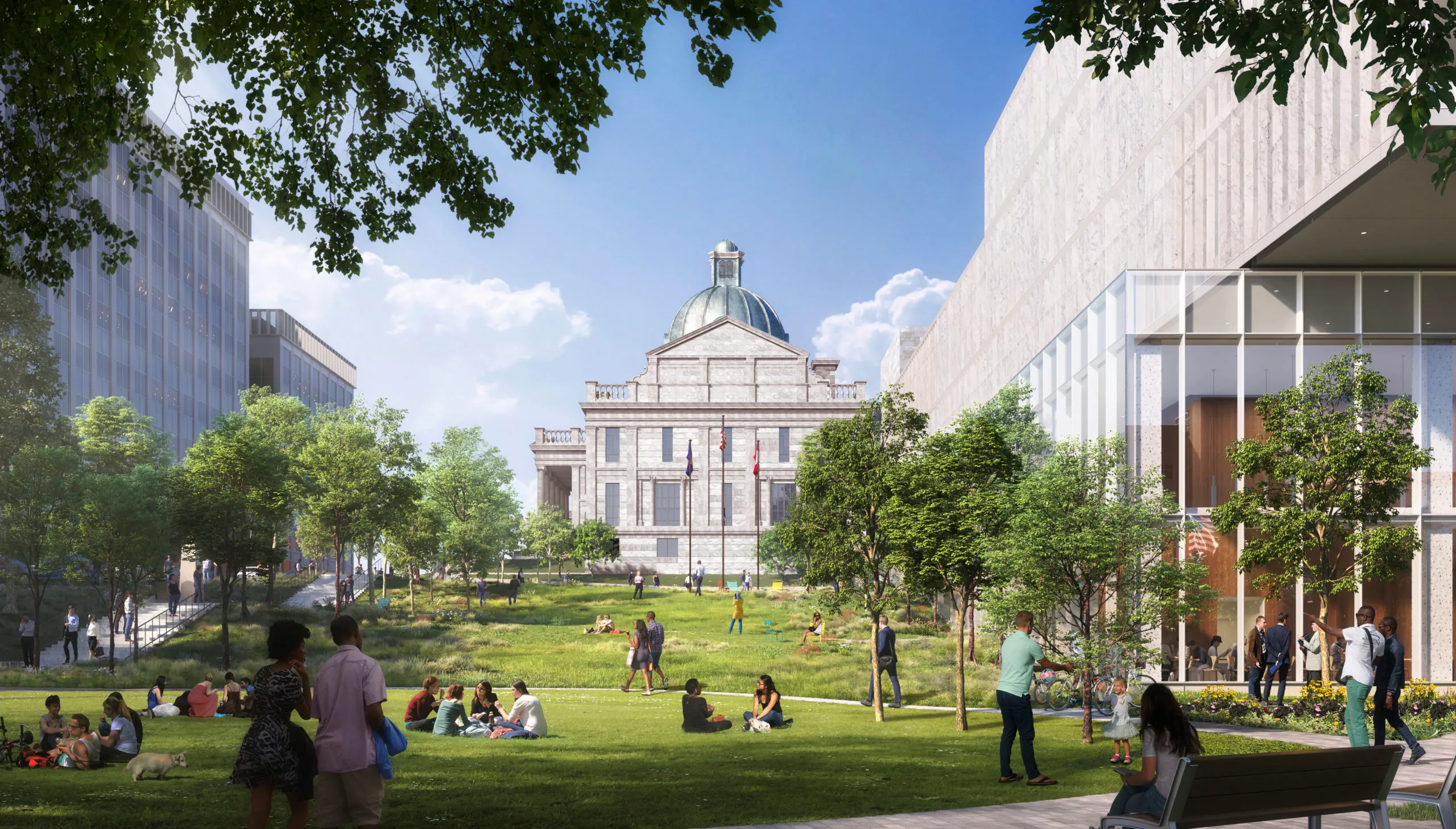
Inside, the building is organized on a simple grid, making it easy to move around and allowing flexible use of courtrooms, hearing rooms, and other spaces. The project adds 18 new courtrooms and renovates several in the historic building, arranging them efficiently so people don’t have to walk far.
Sustainability is a big focus. Green roofs, native plants, and energy-efficient systems are included, and the project aims for LEED Gold certification (Core & Shell), cutting energy and water use by half while doubling the size of the complex.
Construction is currently in progress, with the project expected to be completed in 2027.
2. One Bangkok (City-Center Development) – Bangkok, Thailand
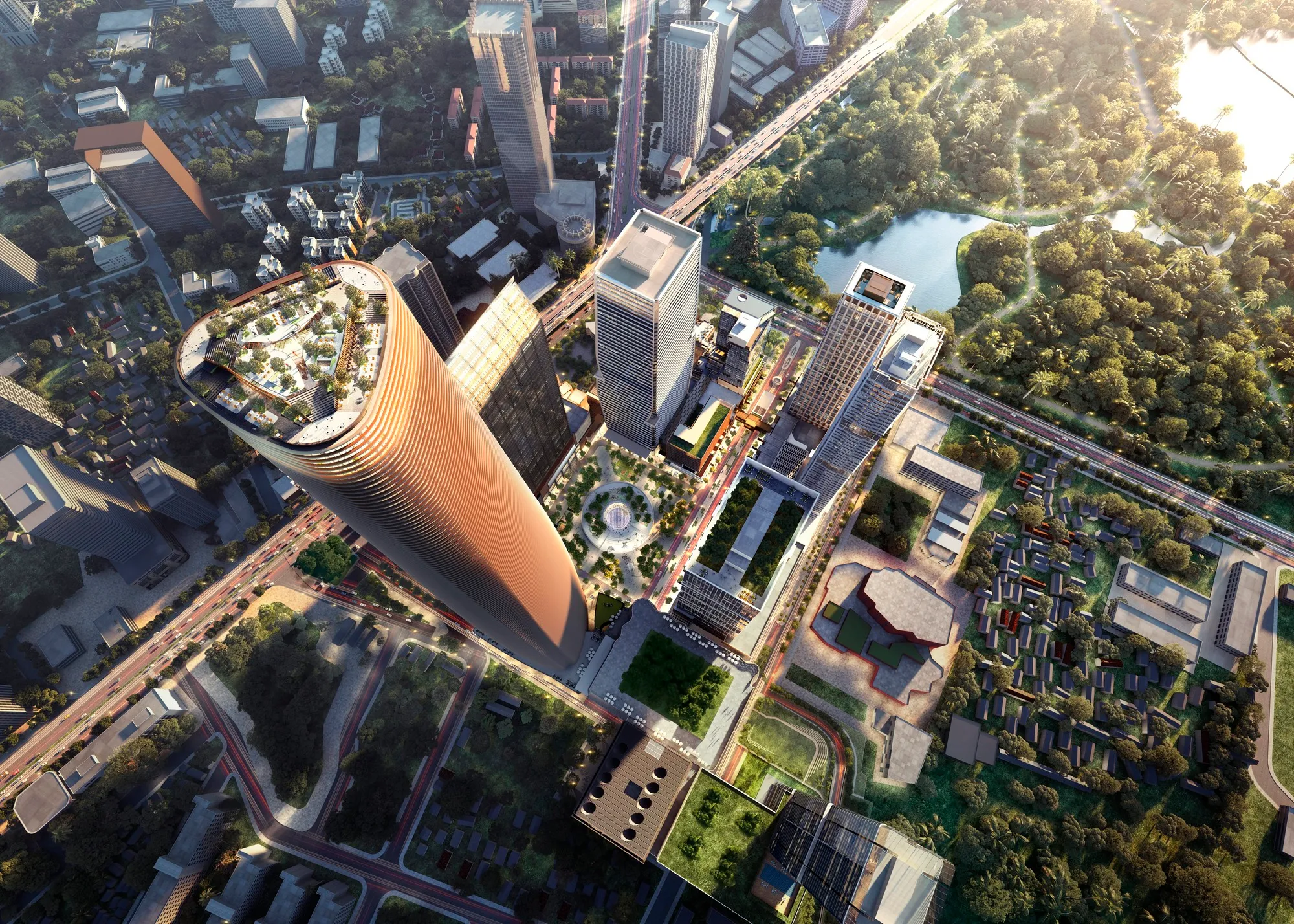
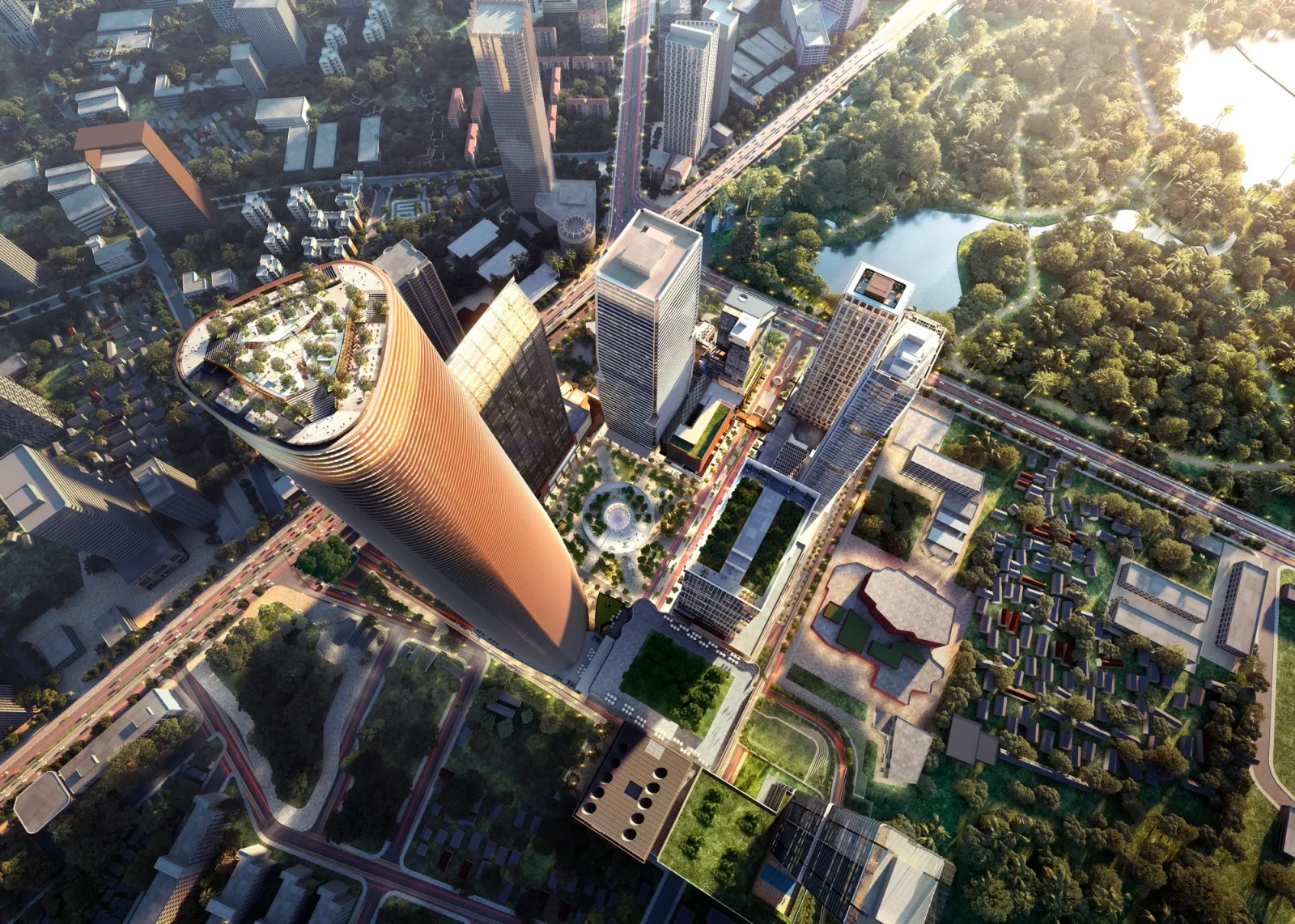
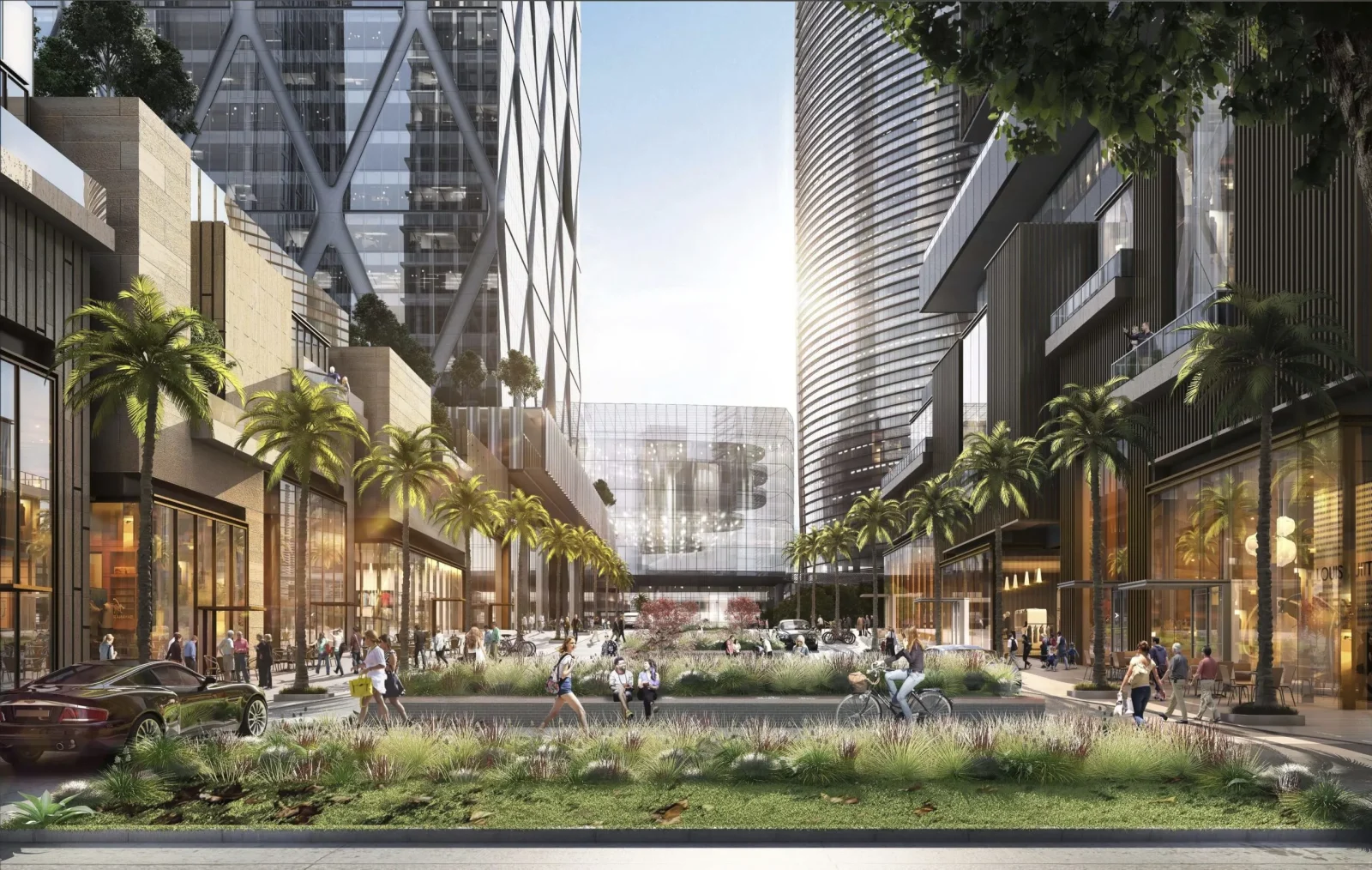
One Bangkok is a major social and commercial hub. Spanning 16.7 hectares, the project brings together residential, hotel, retail, office, and public spaces to form a new center of city life.
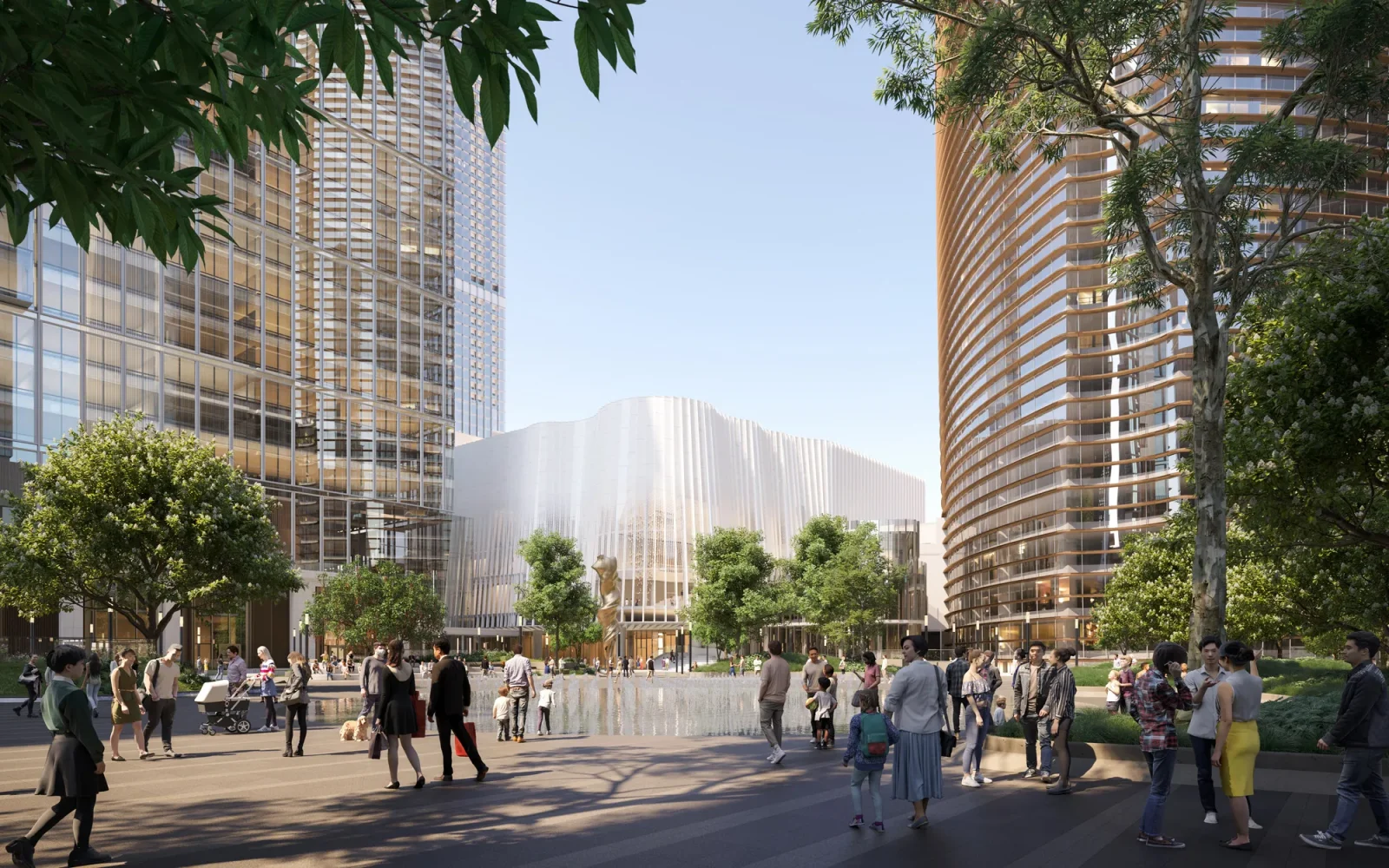
The development sits at the intersection of major roads in Bangkok, overlooking Lumphini Park. Its design features a cascade of green terraces, sky gardens, atria, and public plazas, creating welcoming outdoor spaces that encourage community interaction and make the city feel alive. SOM, working with local and international architecture and landscape teams, including Right Angle Studio, aimed to create a vertical village that supports a dense urban environment.
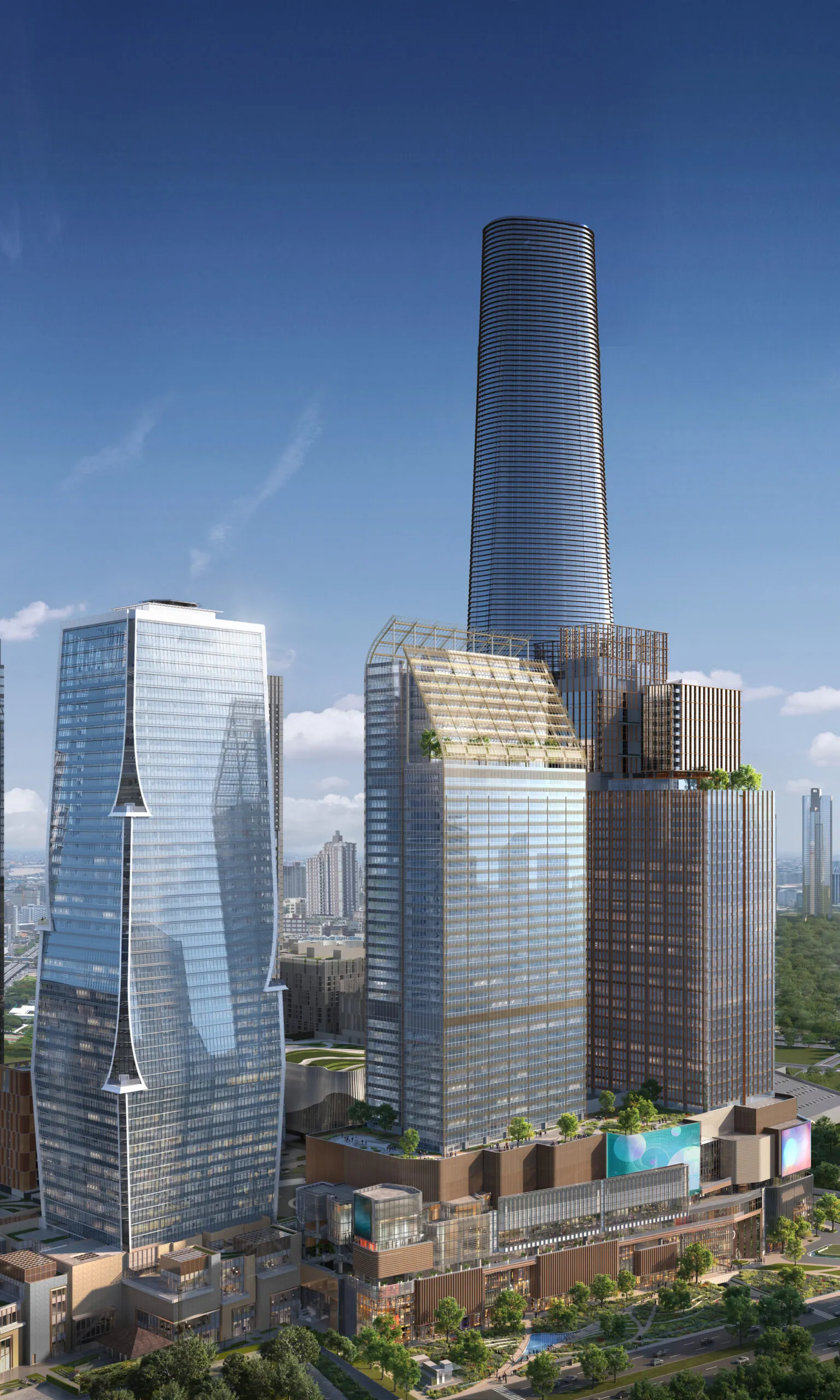
One Bangkok includes 49-story towers, reaching up to 437 meters, with a total gross area of 1,340,500 square meters and 253 rooms. Streetscapes and eight hectares of green and public space are designed to make the complex approachable for residents and visitors alike.
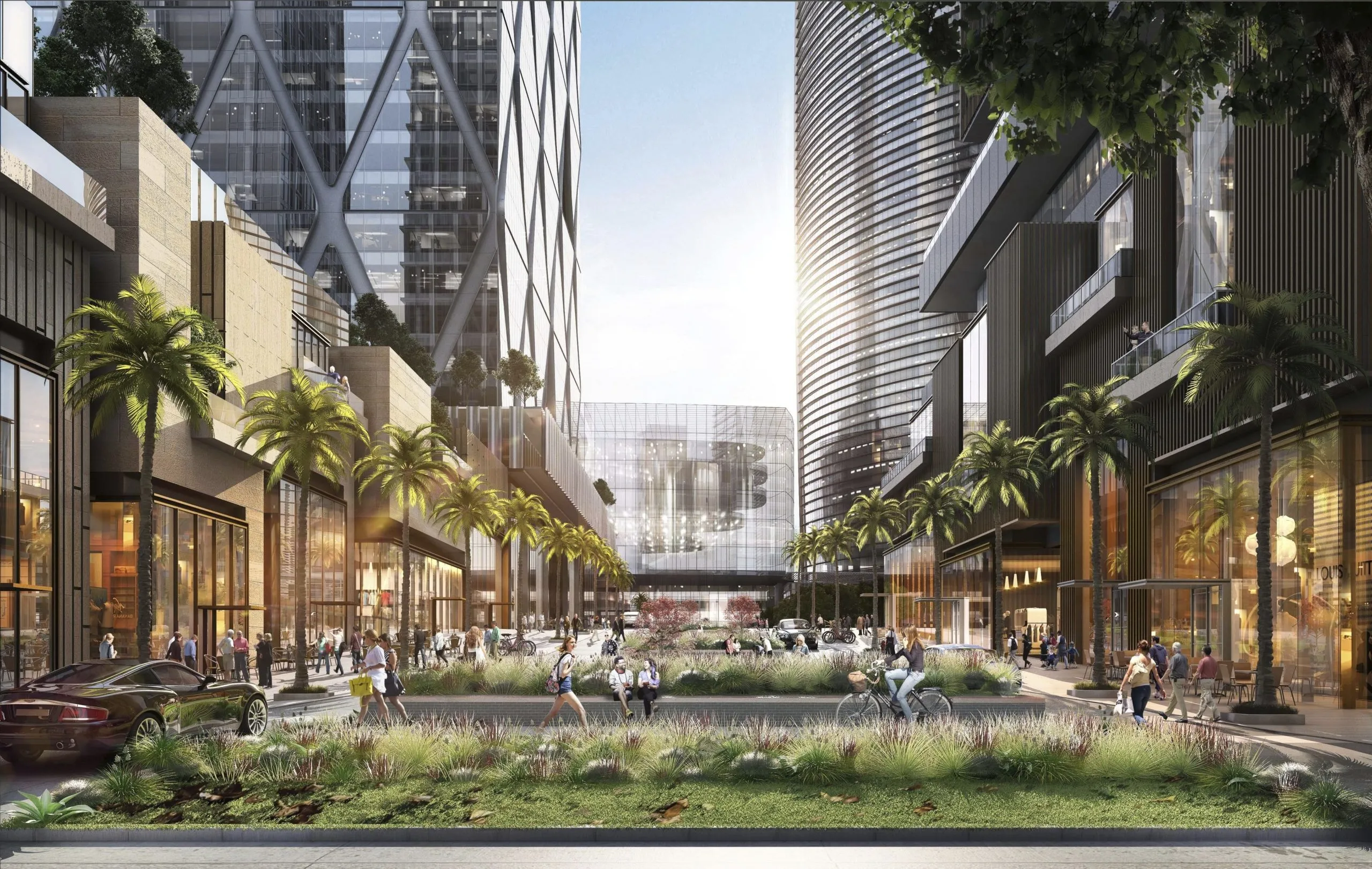
Sustainability is central to the project. It is the first development in Thailand targeting LEED Platinum Neighborhood Development certification, using strategies that reduce energy, water use, and carbon impact while responding to the tropical climate.
Construction is currently underway, with the project expected to be completed in 2026.
3. Bronzeville Lakefront (Healthcare and Community Development)—Chicago, United States
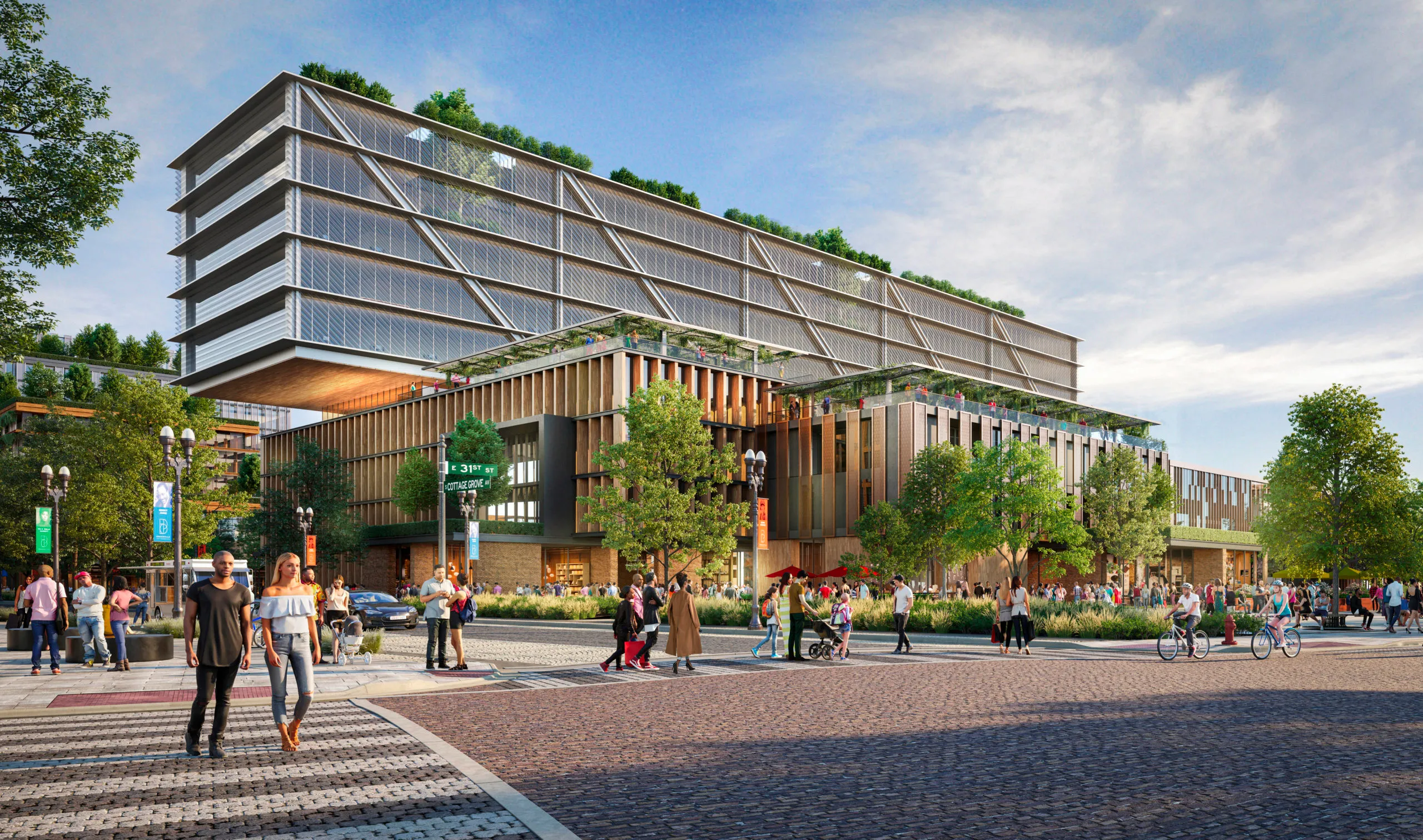
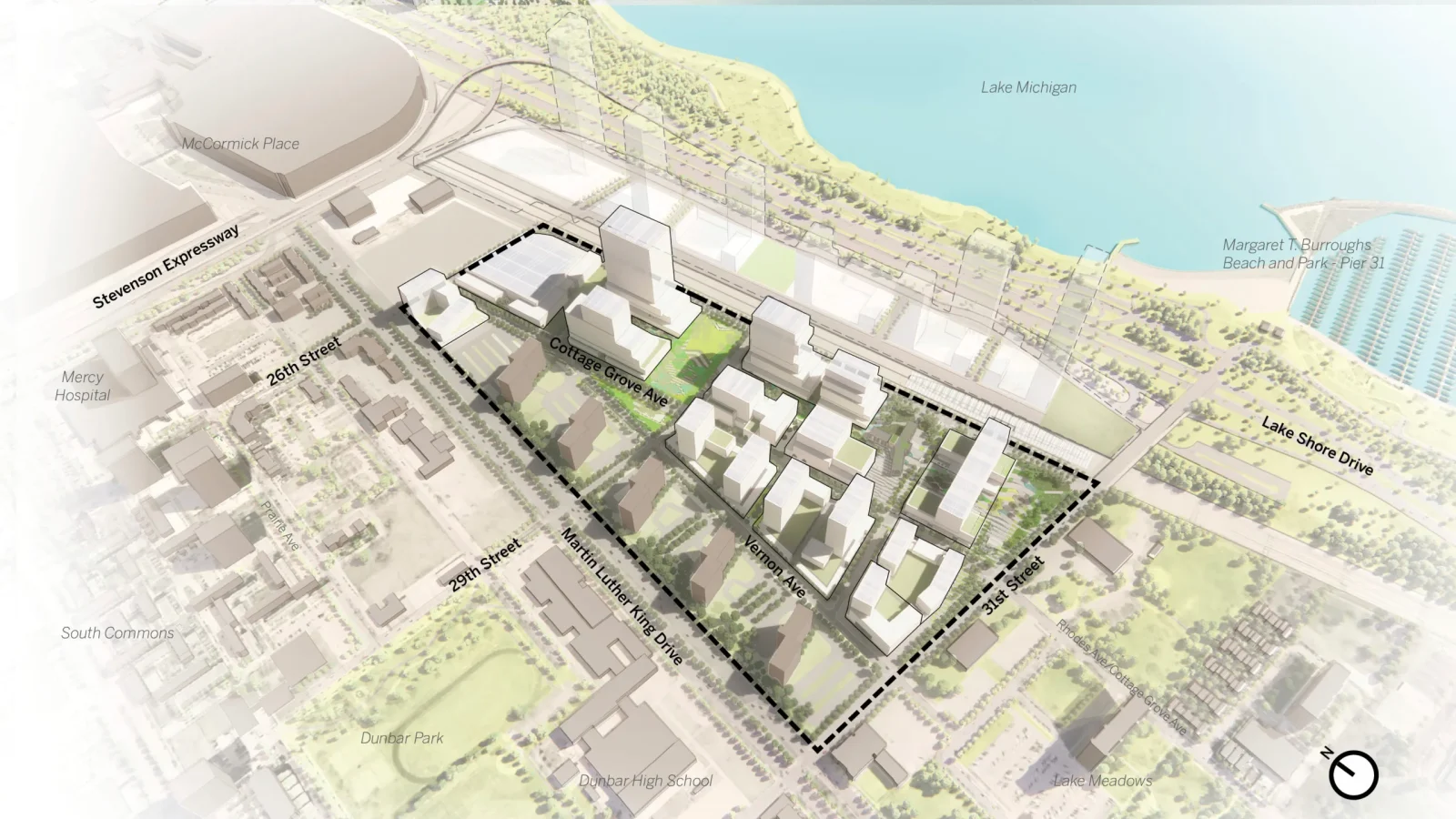
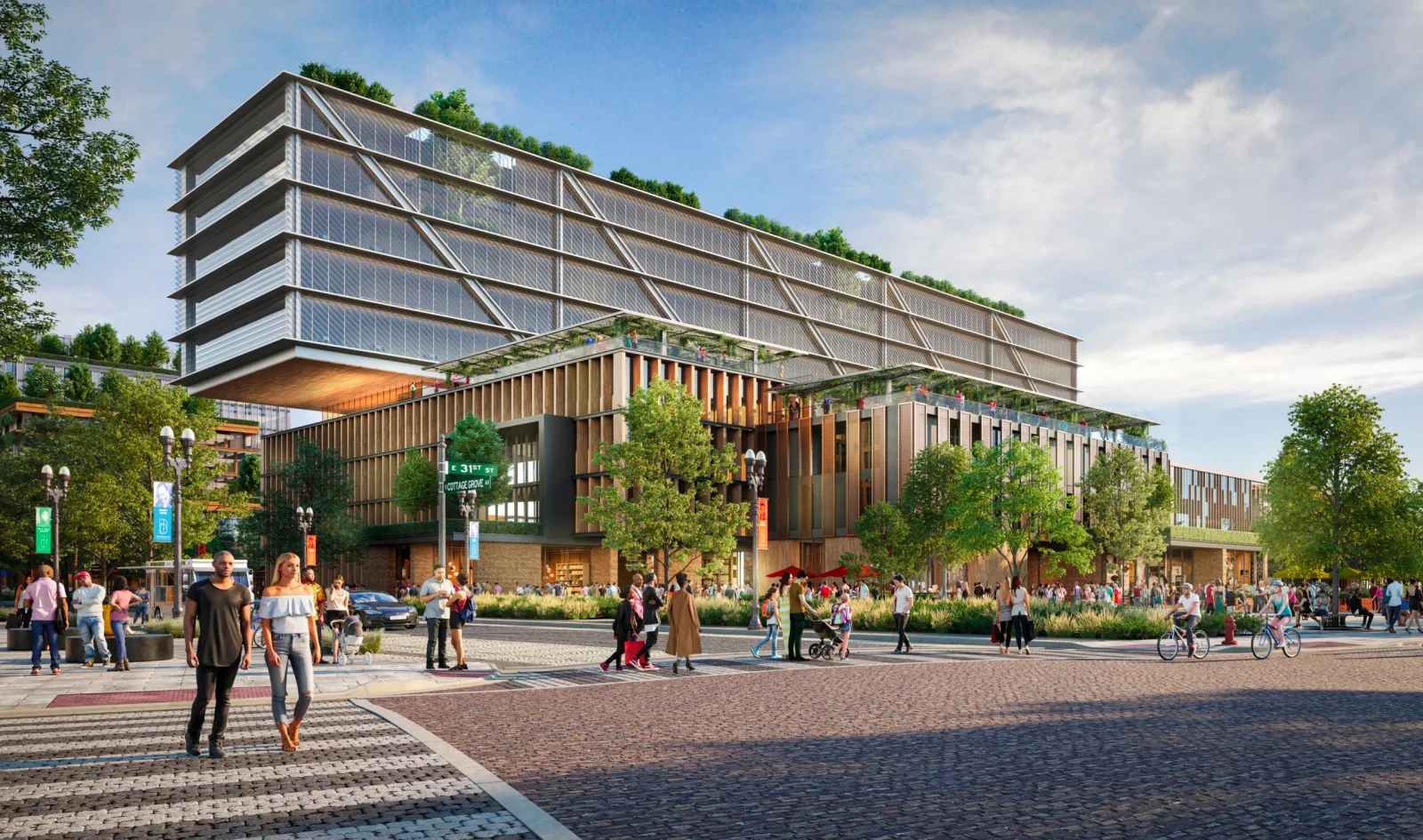
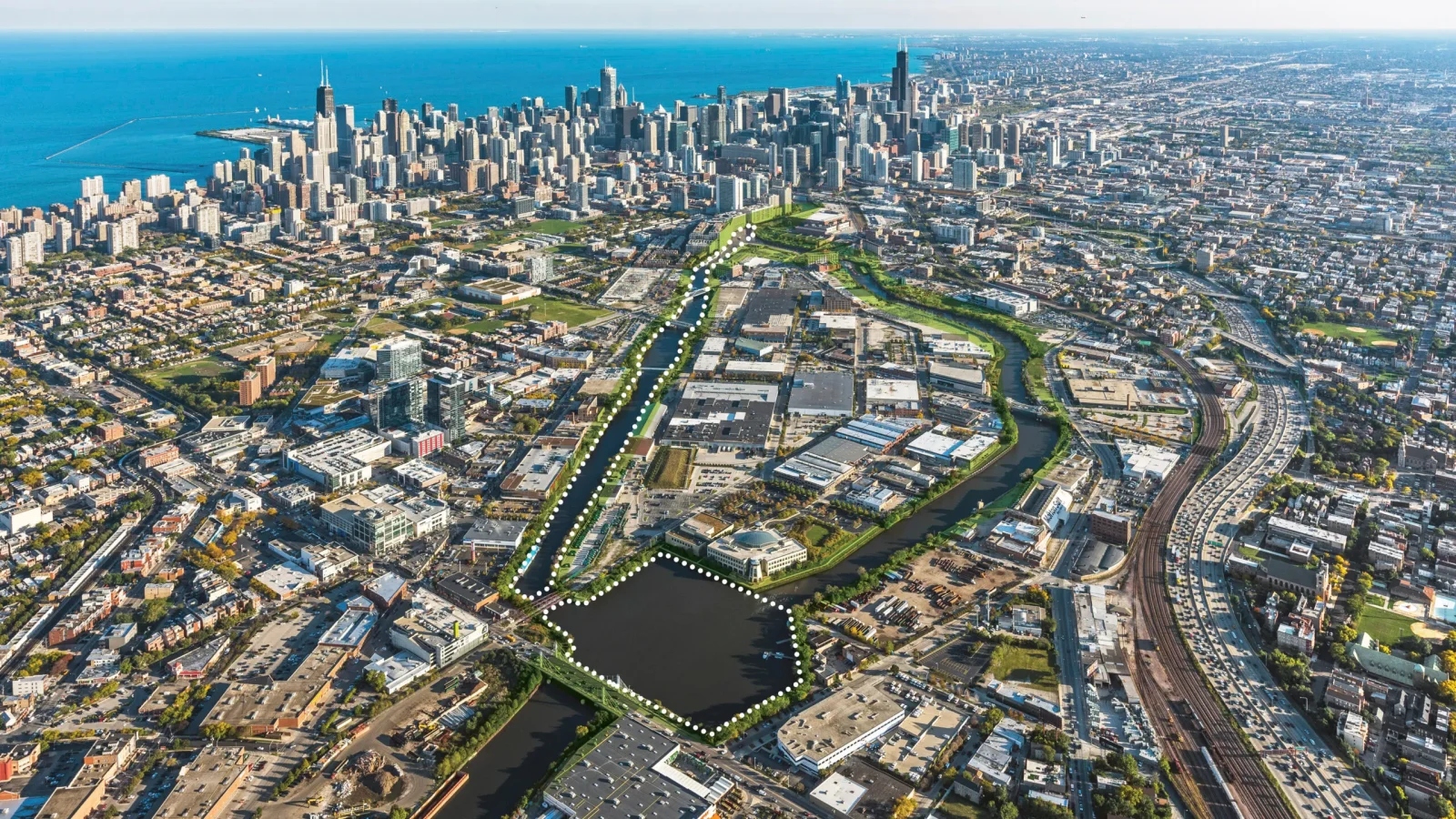
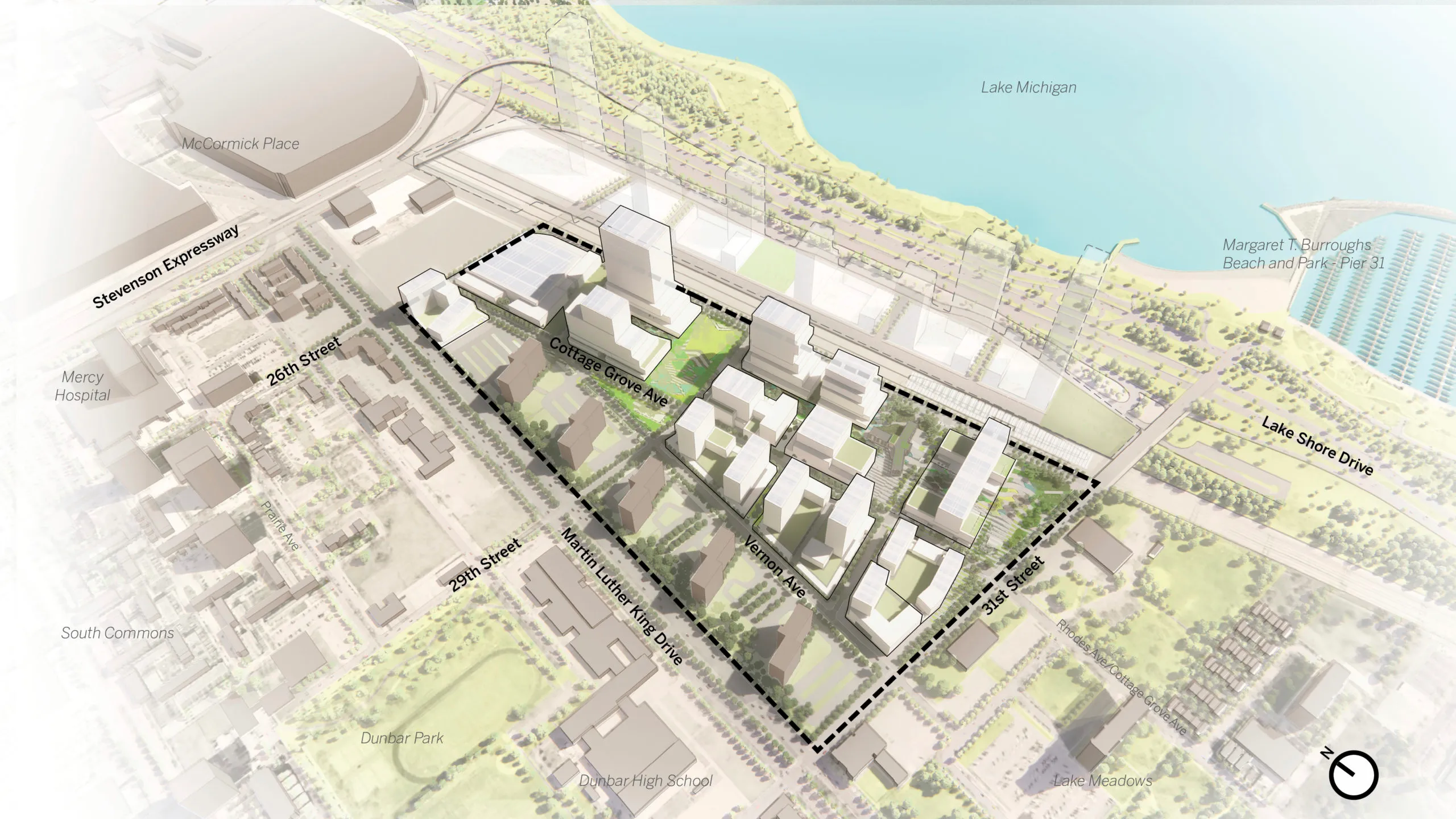
Bronzeville Lakefront is a new development on Chicago’s South Side that transforms a 48-acre lakeshore site into a center for healthcare innovation and community life. The project is located on the former site of Michael Reese Medical Center, a historic hospital that served the city for 127 years.
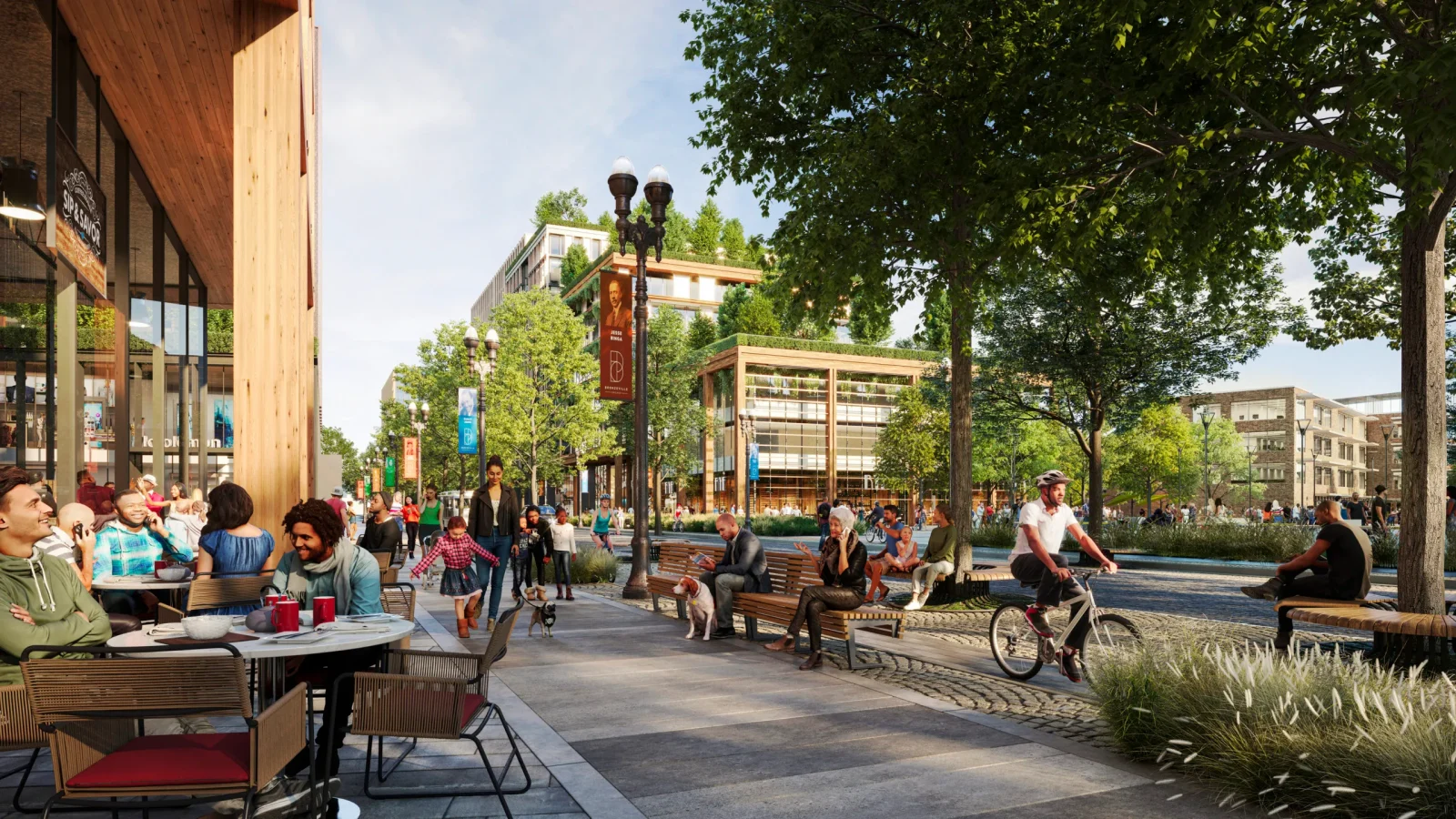
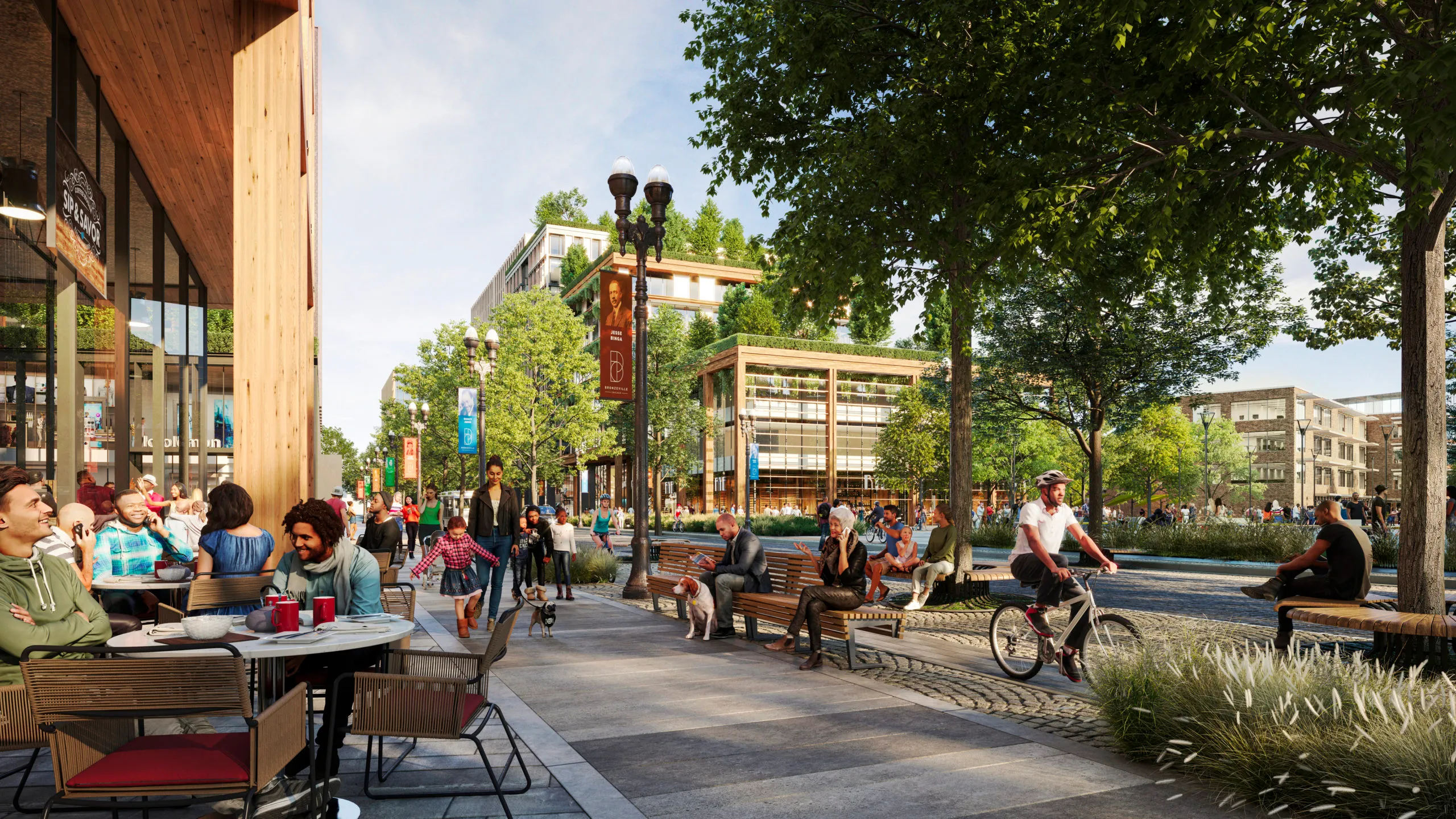
The masterplan focuses on equitable and regenerative design. Buildings act as living spaces that connect people to light, air, food, nature, and community. New green spaces, parks, and walkable streets improve air quality, manage stormwater, and encourage active living. The design leverages the native ecology of Chicago’s lakefront to create a sustainable and connected community.
Bronzeville, once known as the “Black Metropolis,” has been a center of African-American entrepreneurship, culture, and activism. Community participation is central to the design, ensuring that the development supports the neighborhood’s culture, heritage, and future growth.
The site is well-connected by bikes, buses, light rail, subway, and rideshare, making it accessible to residents and visitors.
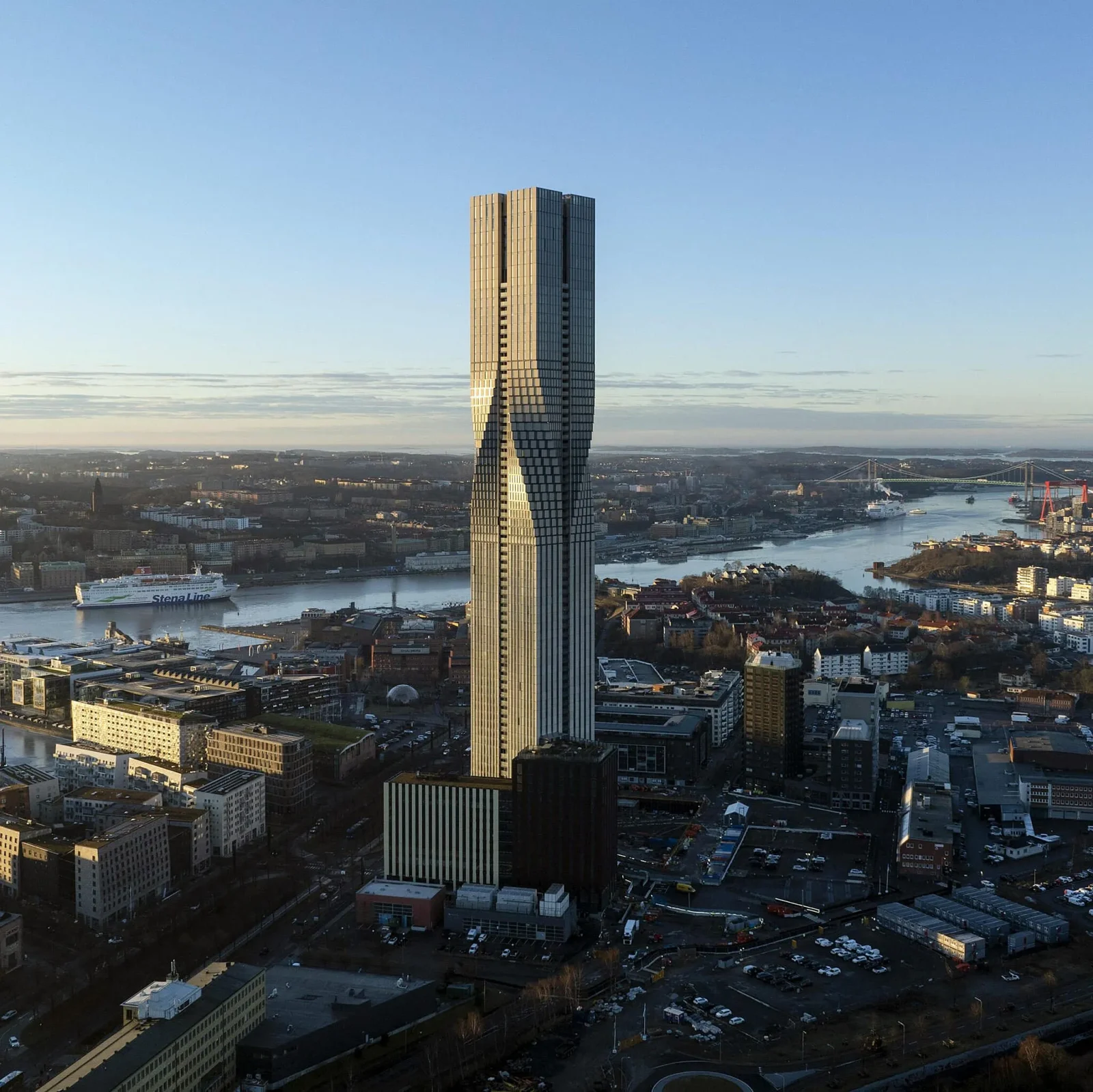
4. Karlatornet (Mixed-Use Tower) – Gothenburg, Sweden
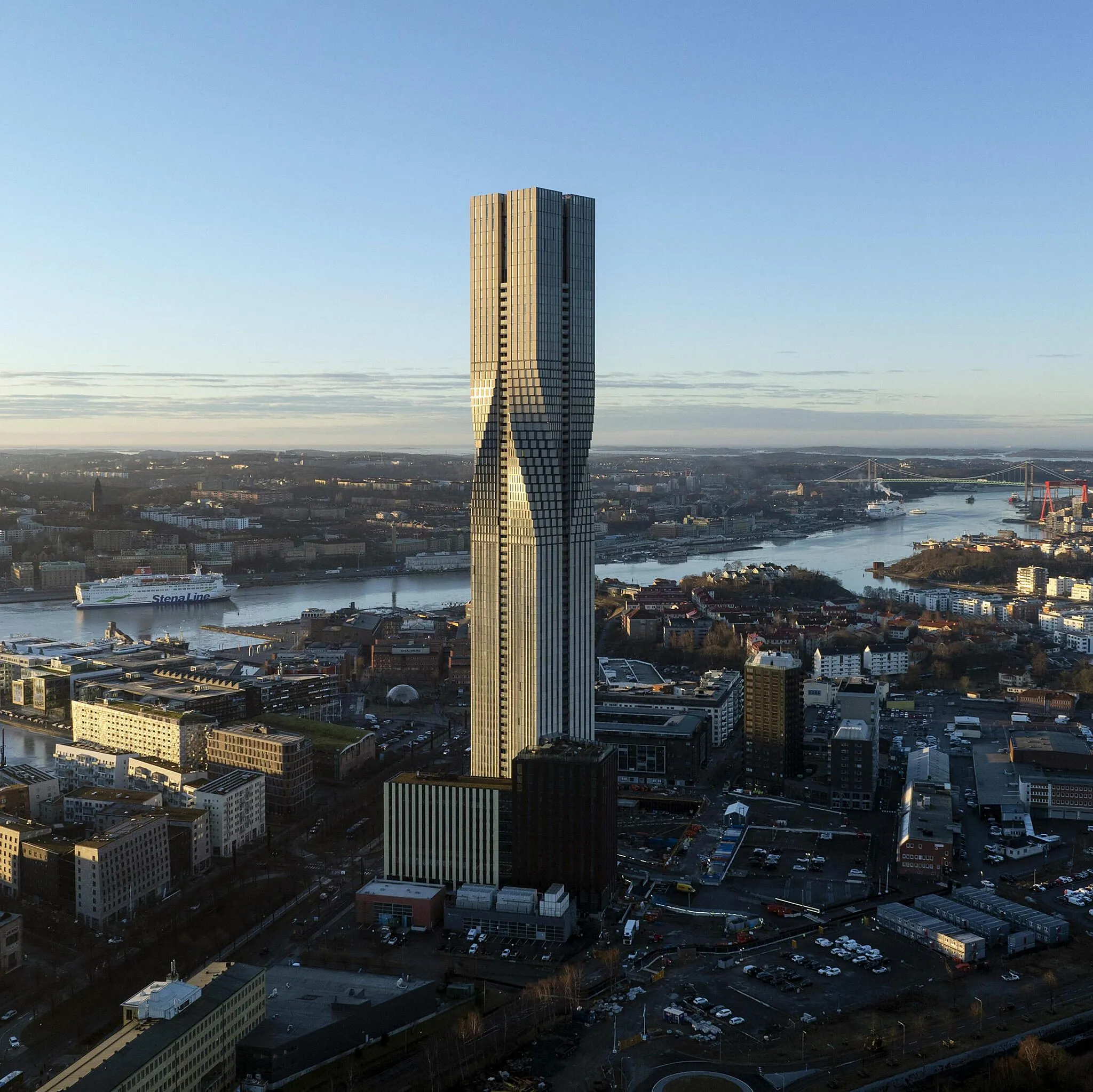
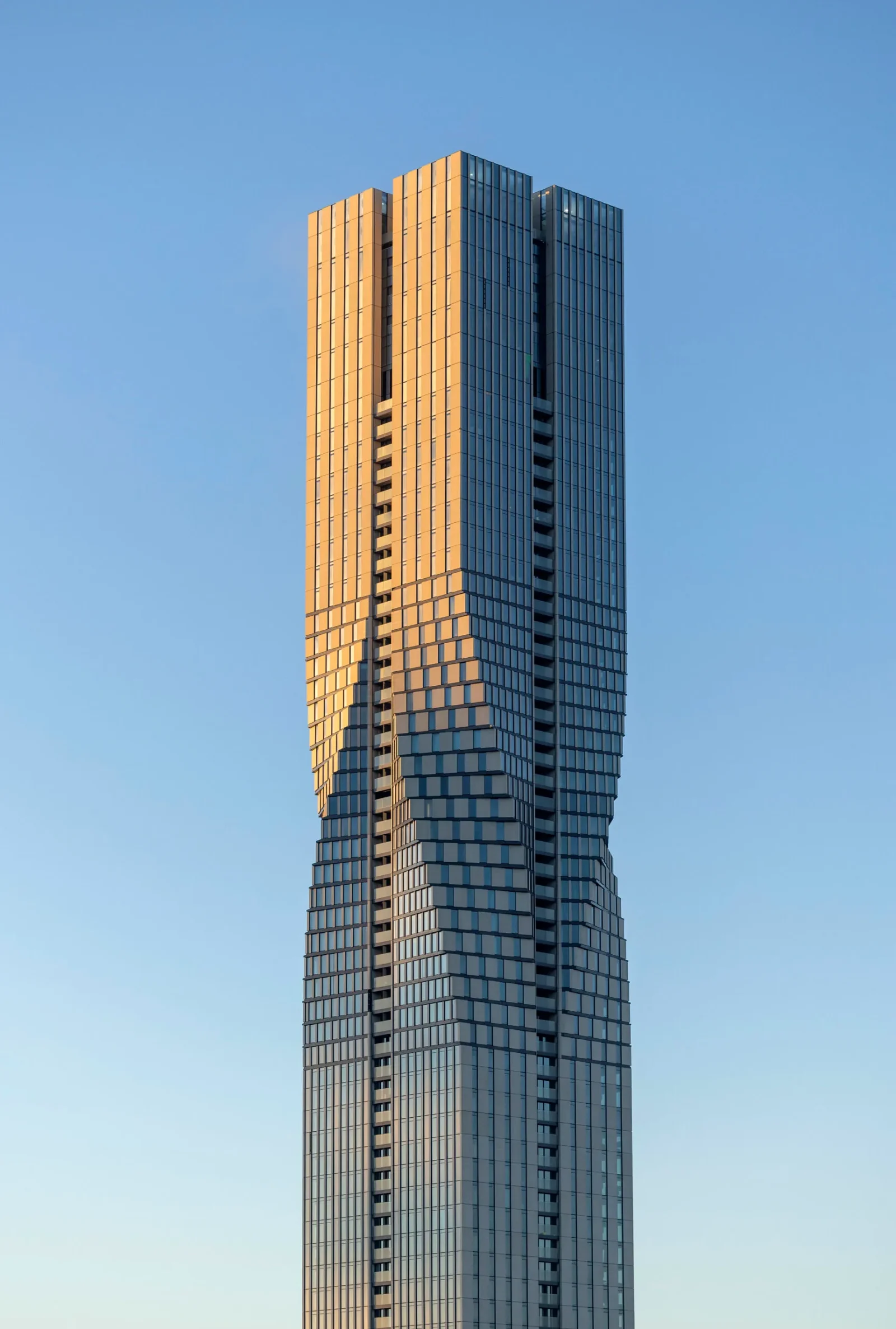
Karlatornet is a riverside district and also Scandinavia’s tallest building. Rising 245 meters with 74 stories, the tower is part of a larger 143,000-square-meter mixed-use development.
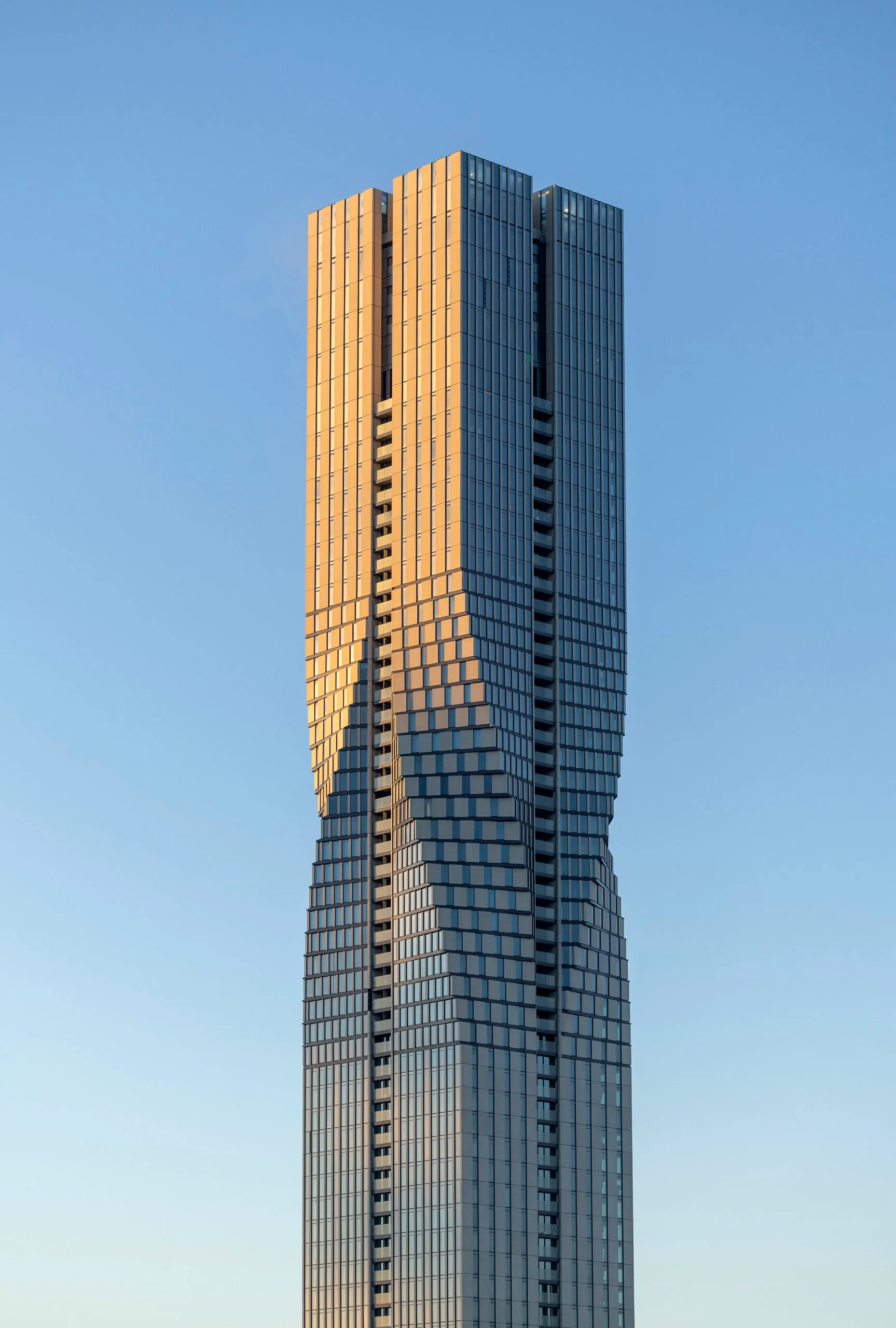
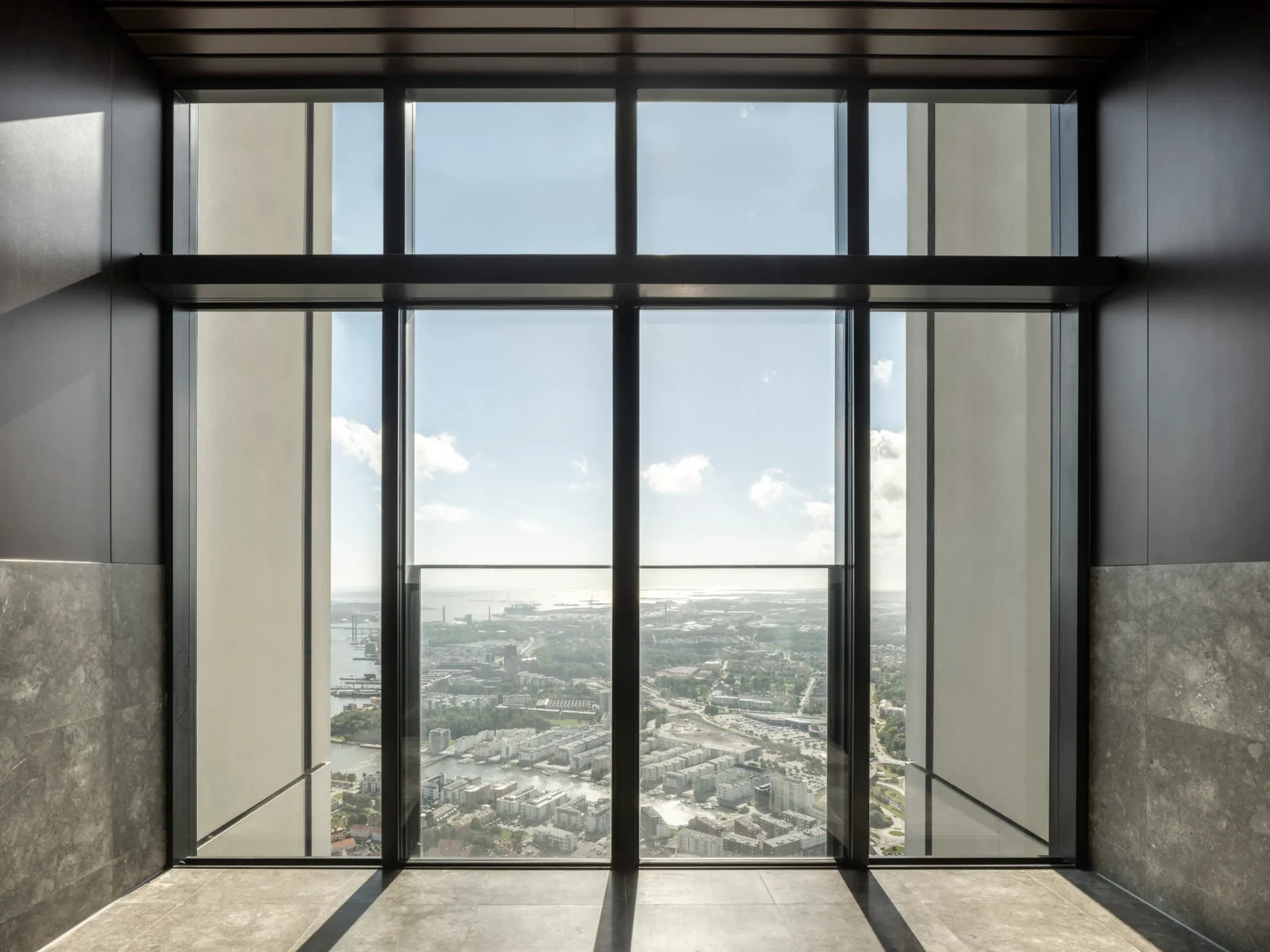
The tower features a variety of apartments, ranging from single-story flats to loft-style units and duplexes, each with balconies offering flexible living spaces and stunning views of the city and waterfront. Inside, there are shared amenities such as a residents’ lounge, gym, podium-level roof deck, and a public restaurant. An observation deck at the top gives panoramic views of Gothenburg.
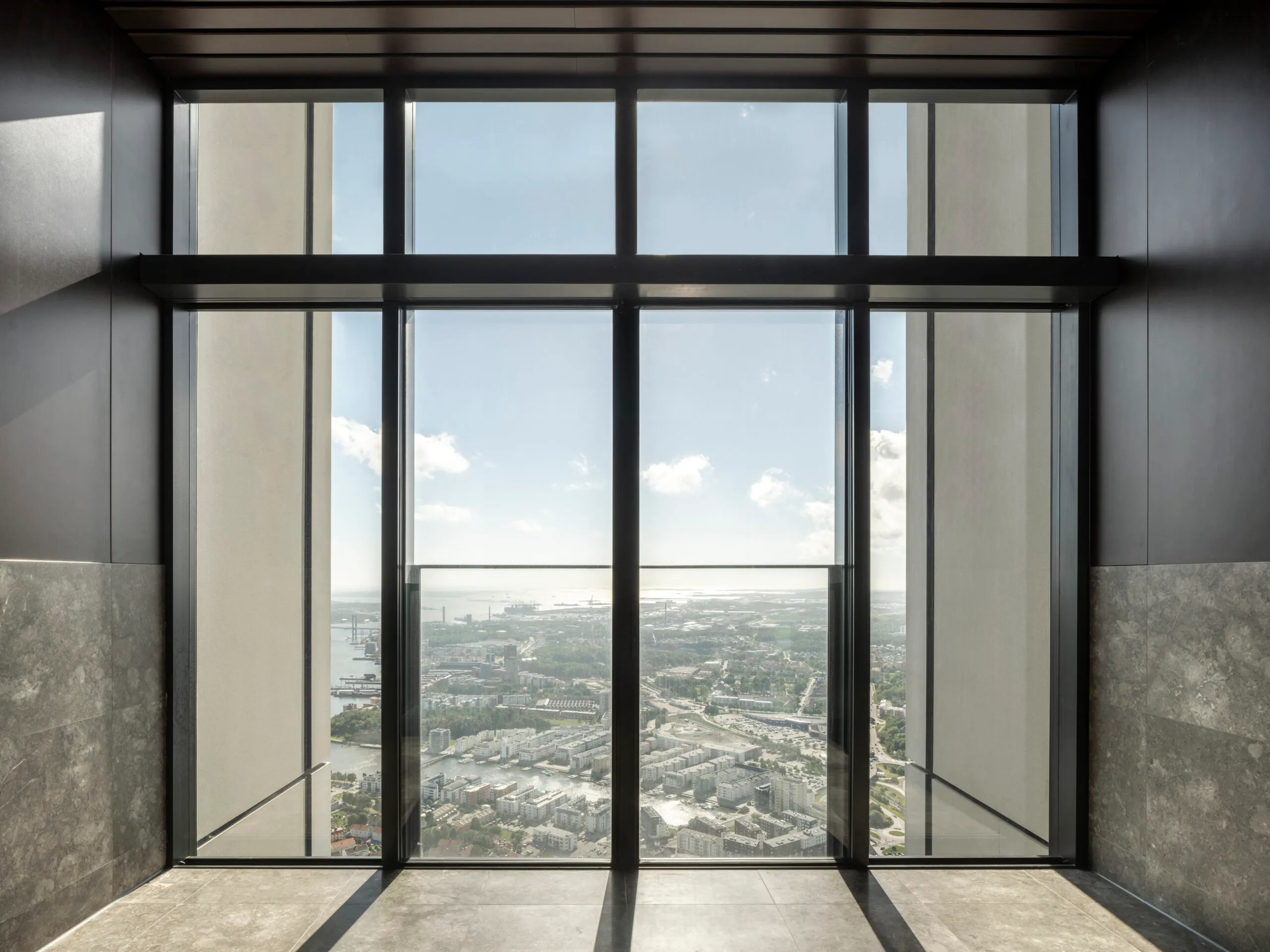
Karlatornet is part of a sustainable, mixed-use master plan that combines mid-rise towers, retail, and food and beverage spaces, creating a lively neighborhood. The development supports energy efficiency and sustainable design while helping revitalize Gothenburg’s riverside and post-industrial districts north of Götaälven.
A collaboration between SOM and Copenhagen-based Entasis, the project also includes landscaped public spaces and a new park, which celebrates Gothenburg’s cityscape and heritage.
5. 1111 Sunset Boulevard (Mixed-Use Development) – California, United States
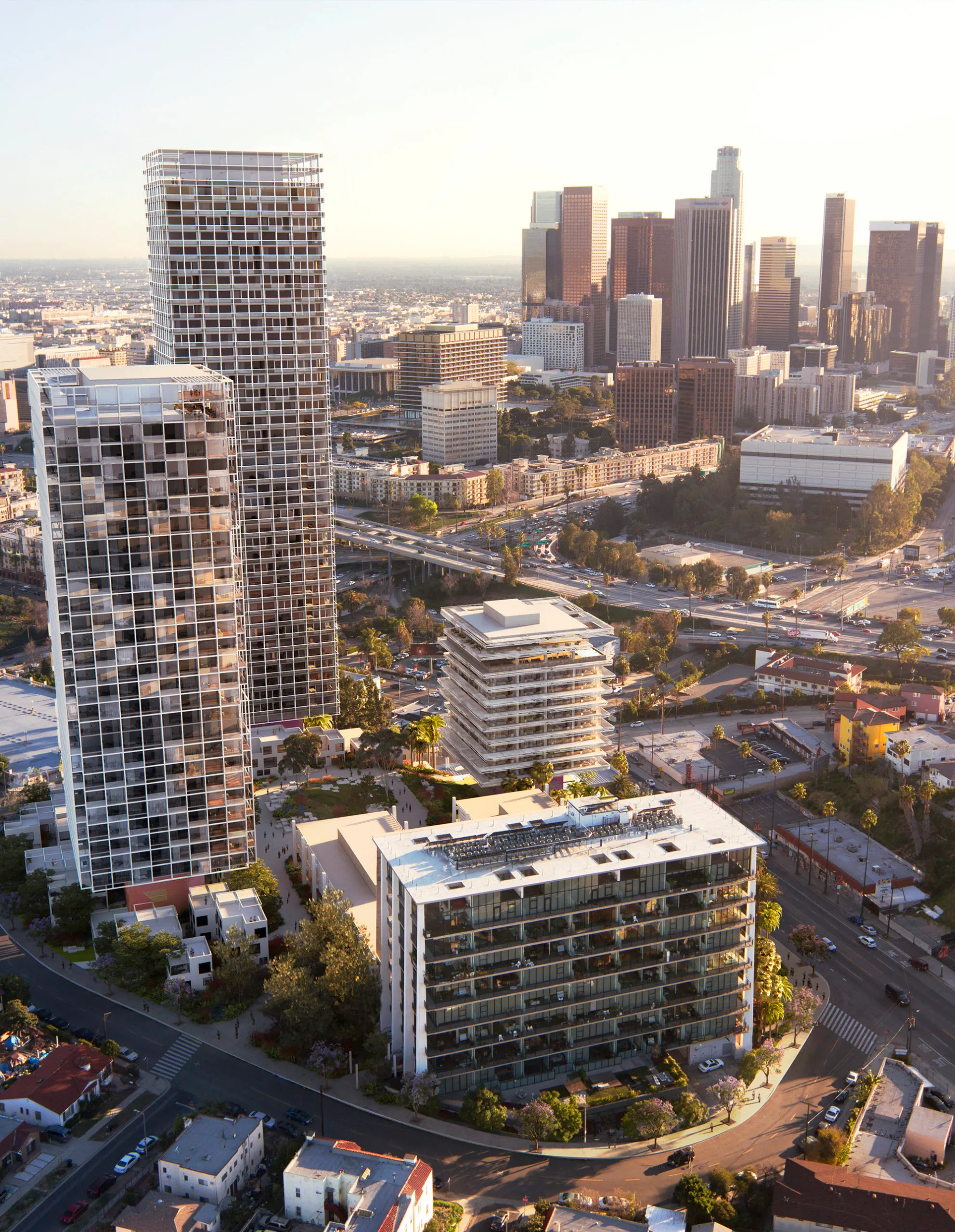
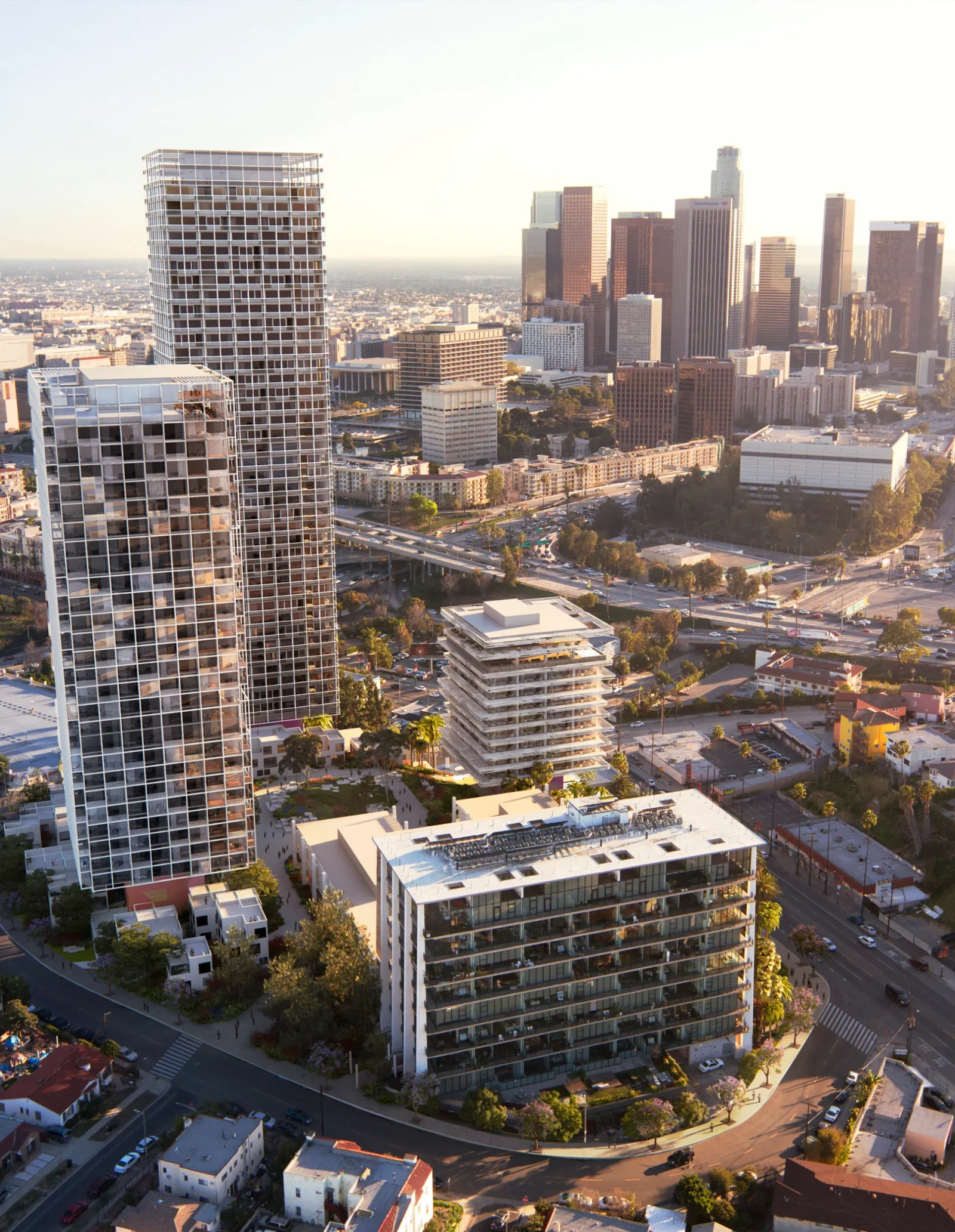
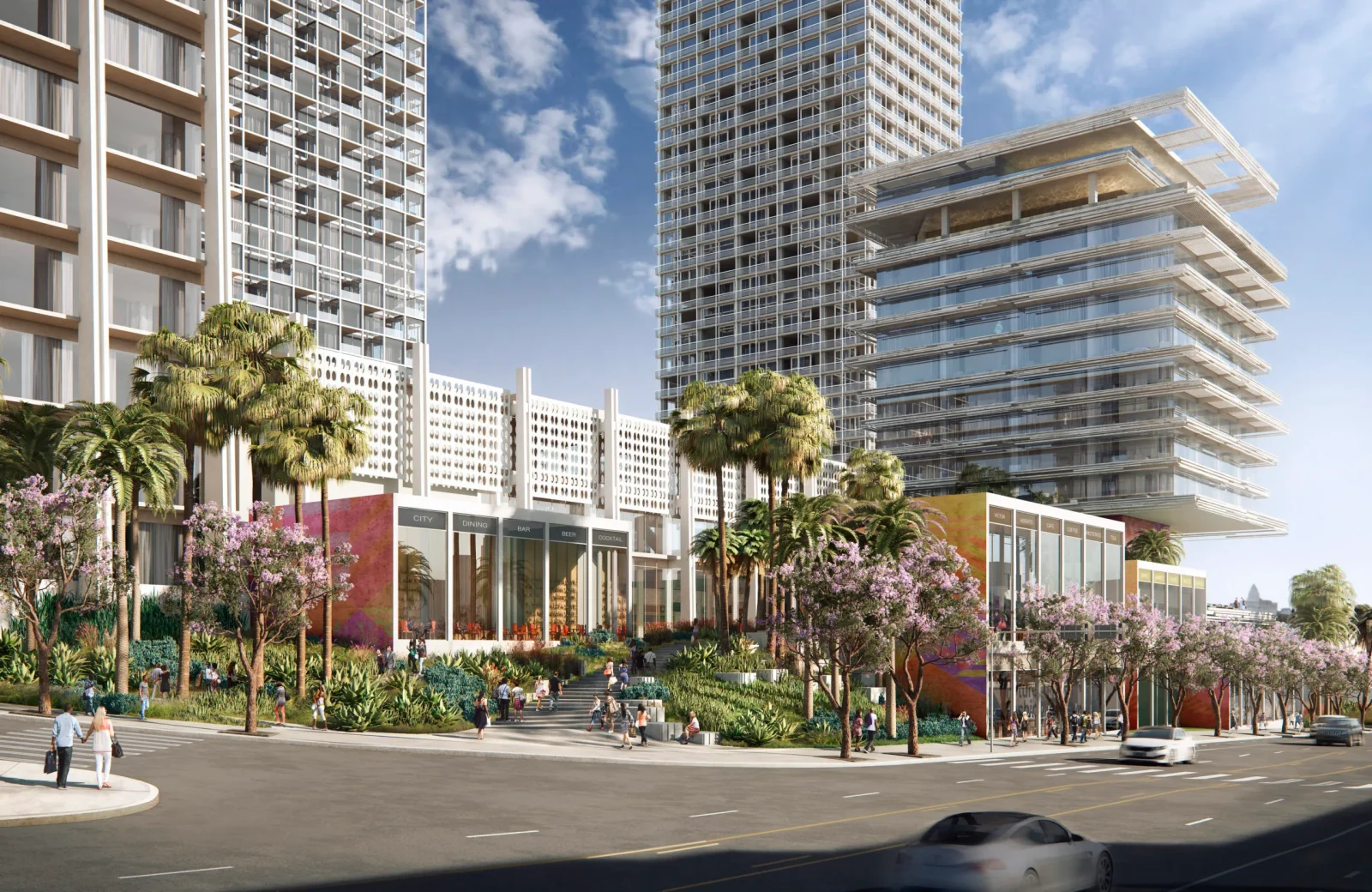
1111 Sunset Boulevard is a new mixed-use development on a long-dormant site on the edge of downtown Los Angeles. Covering a 272,918-square-foot site, the project brings new housing, workspaces, retail, and a boutique hotel to the city’s Central City North community. The development rises 572 feet over 49 stories, with a total gross area of 994,982 square feet.
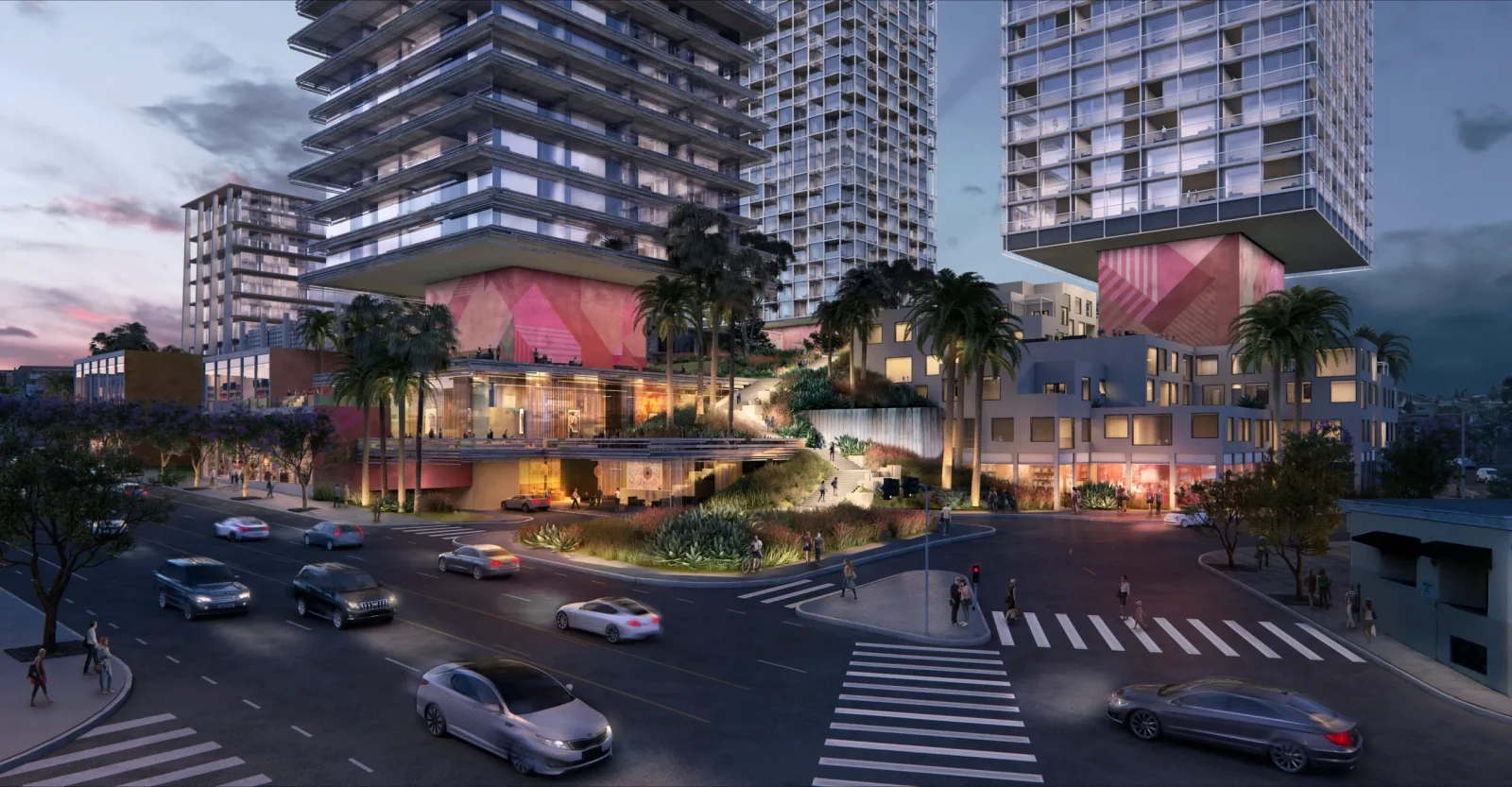
The development draws inspiration from the mid-century modern heritage of the former Metropolitan Water District headquarters. Two residential towers rise above landscaped low-rise bungalows, offering 778 residences that include both market-rate and affordable units. Balconies, rooftop terraces, and garden spaces provide access to daylight, fresh air, and city views, while cores decorated with murals give the towers a distinctive character.
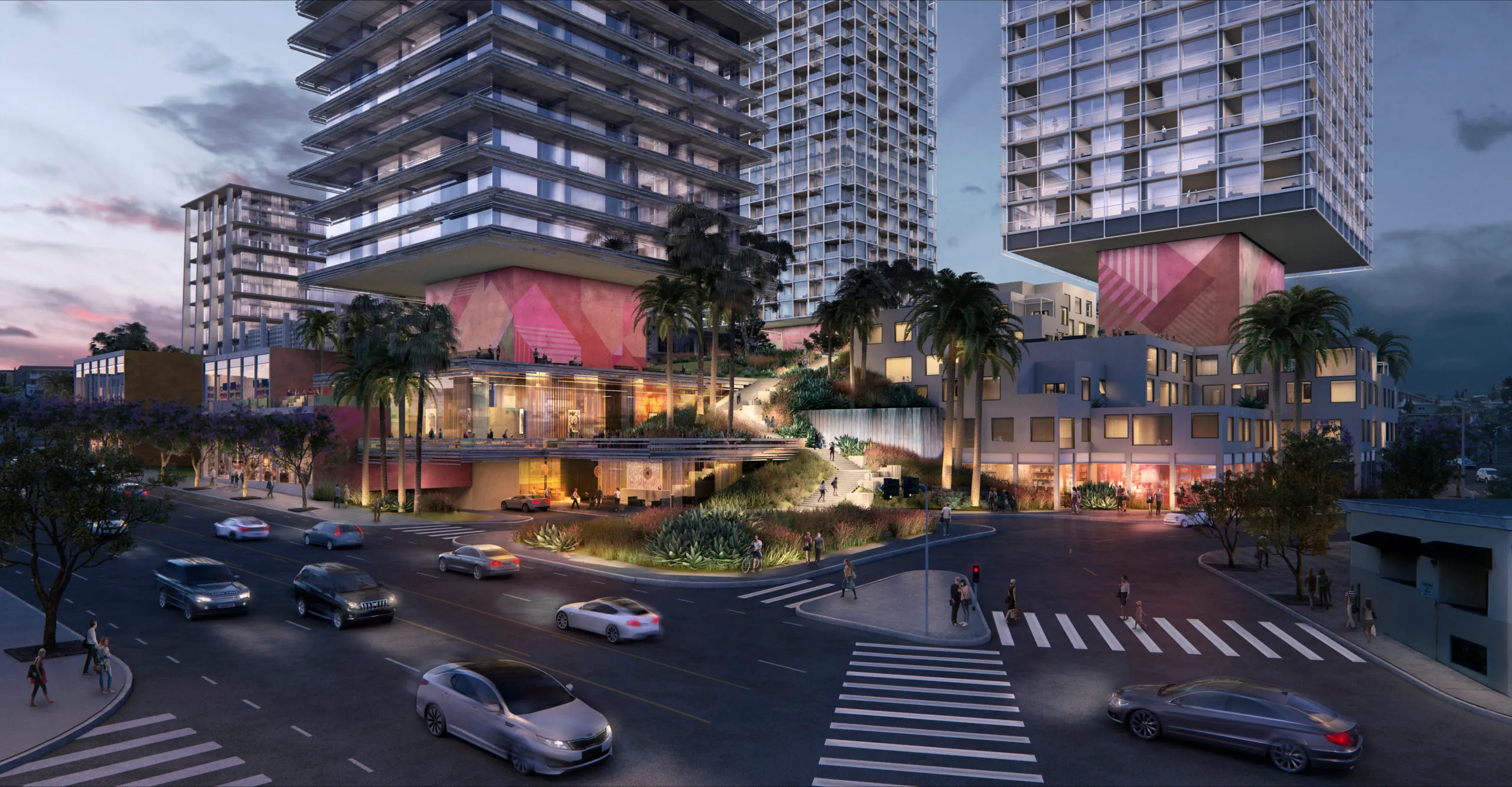
At the centre of the site are over two acres of public open space, designed with James Corner Field Operations. Sloping walkways and plazas connect the site from Sunset Boulevard to retail areas, recalling the historic Beaudry Park and integrating with the surrounding streets. Smaller-scale commercial and residential buildings are placed to enhance amenities and maintain neighborhood character.
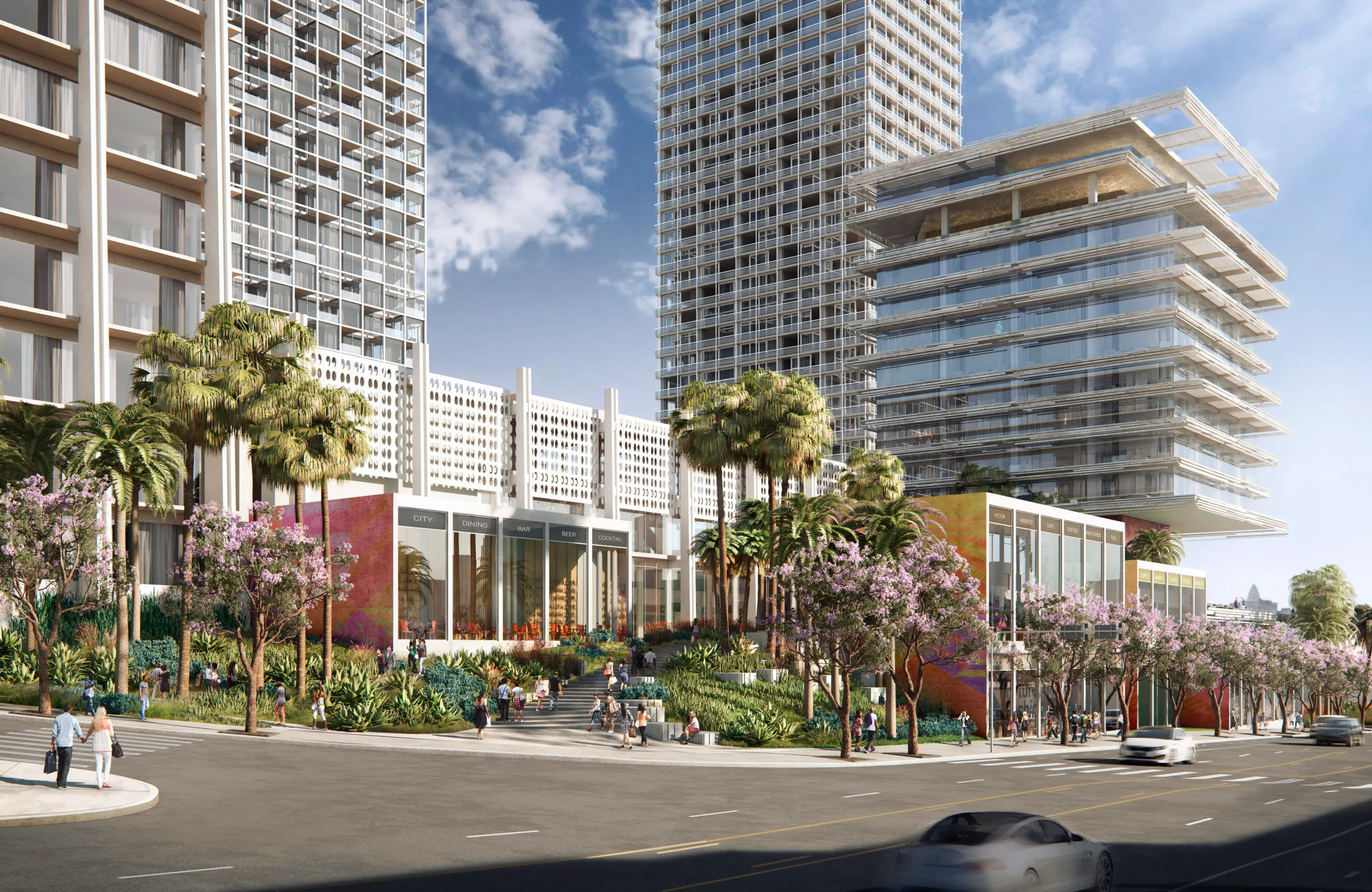
The design integrates parking and service areas discreetly within the landscape. Collaborators include SOM (overall design), Kengo Kuma (hotel), and Natoma Architects (residential tower), all combining to create a community hub.
6. The Wild Mile (Floating Eco-Park) – Chicago, United States
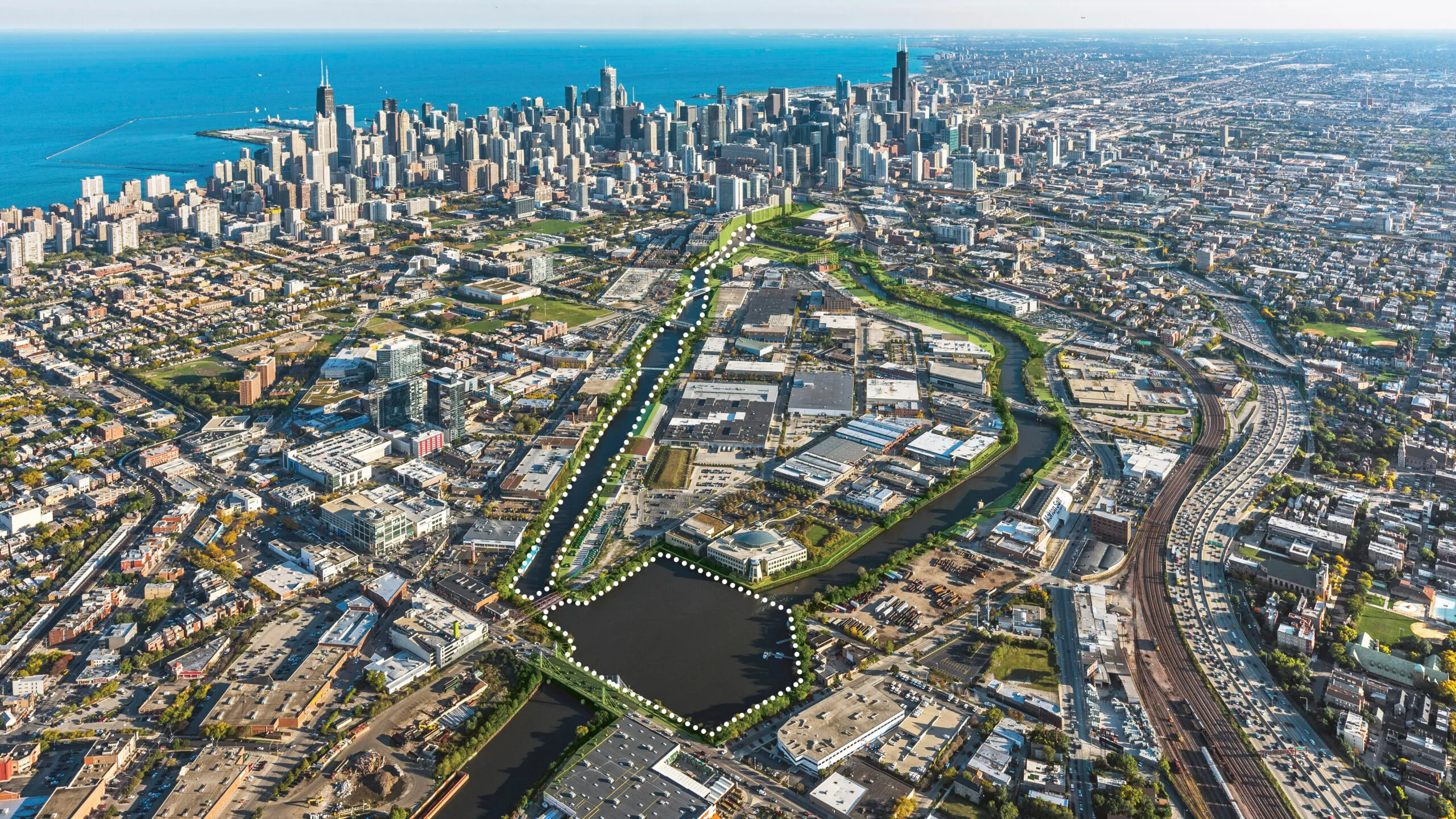
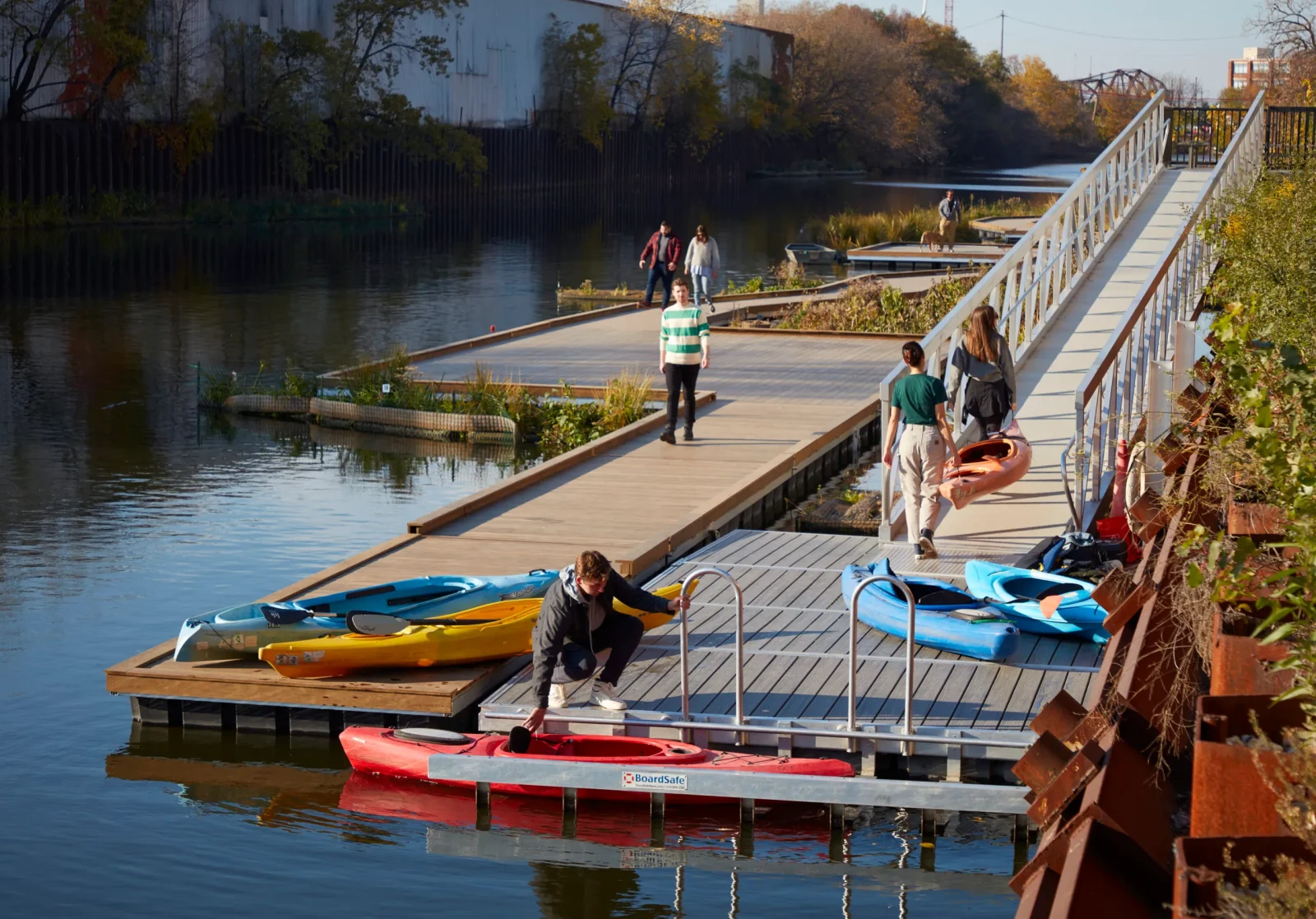
The Wild Mile is a 17-acre floating eco-park on the Chicago River, designed to create new spaces for wildlife, recreation, and education along the east side of Goose Island. The project transforms a formerly industrialized stretch of river into a public space that benefits the community and the environment.
The park includes floating gardens, riverside forests, public walkways, kayak docks, and other amenities that restore the river as a public trust. By improving water quality and supporting diverse habitats, the Wild Mile strengthens local ecosystems and neighborhood connectivity.
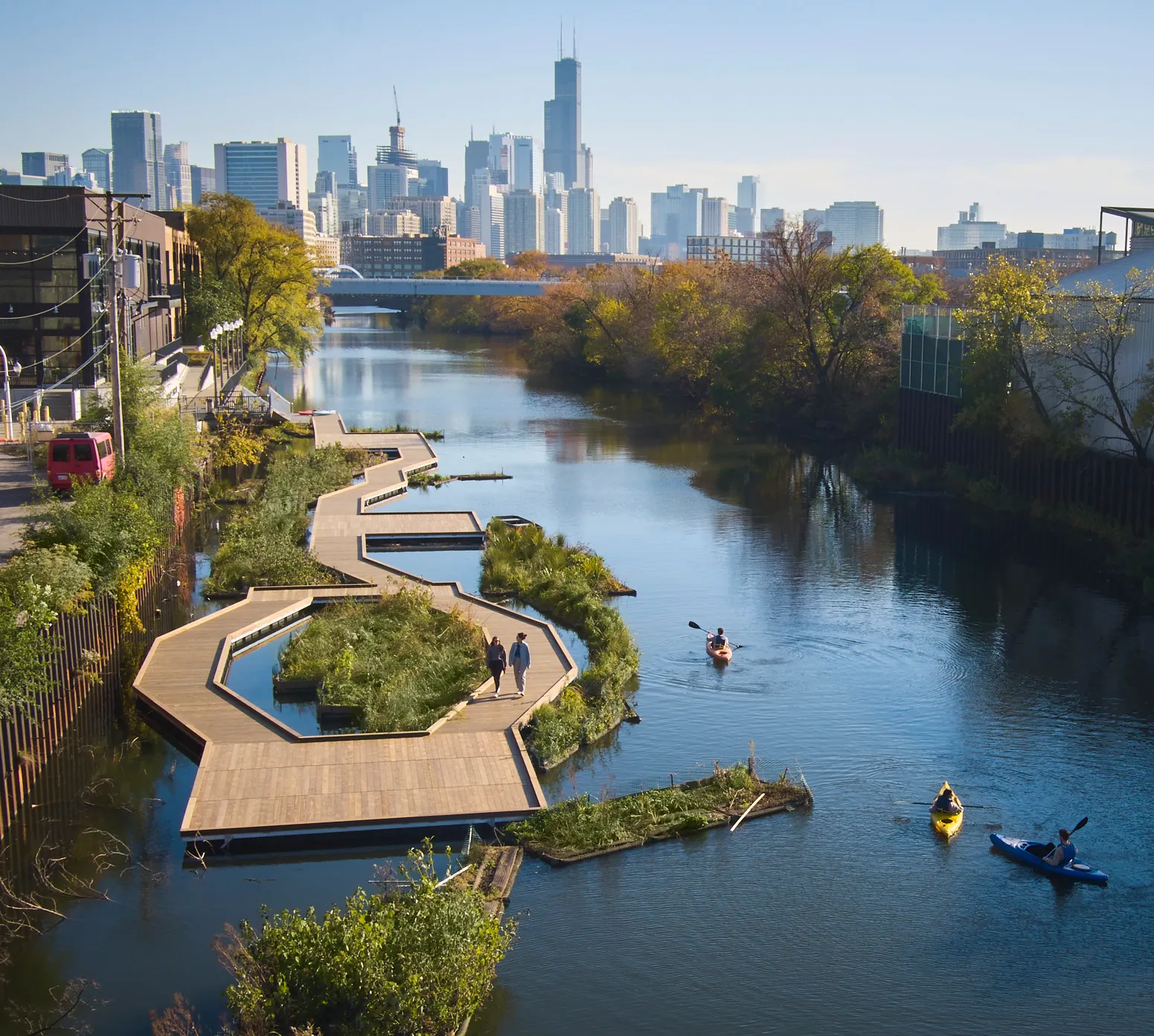
Education and community engagement are central to the project. With more than 40 nearby schools and institutions, programs like River Rangers invite volunteers and citizen scientists to track reintroduced plants and wildlife, helping the park become a living classroom for environmental stewardship.
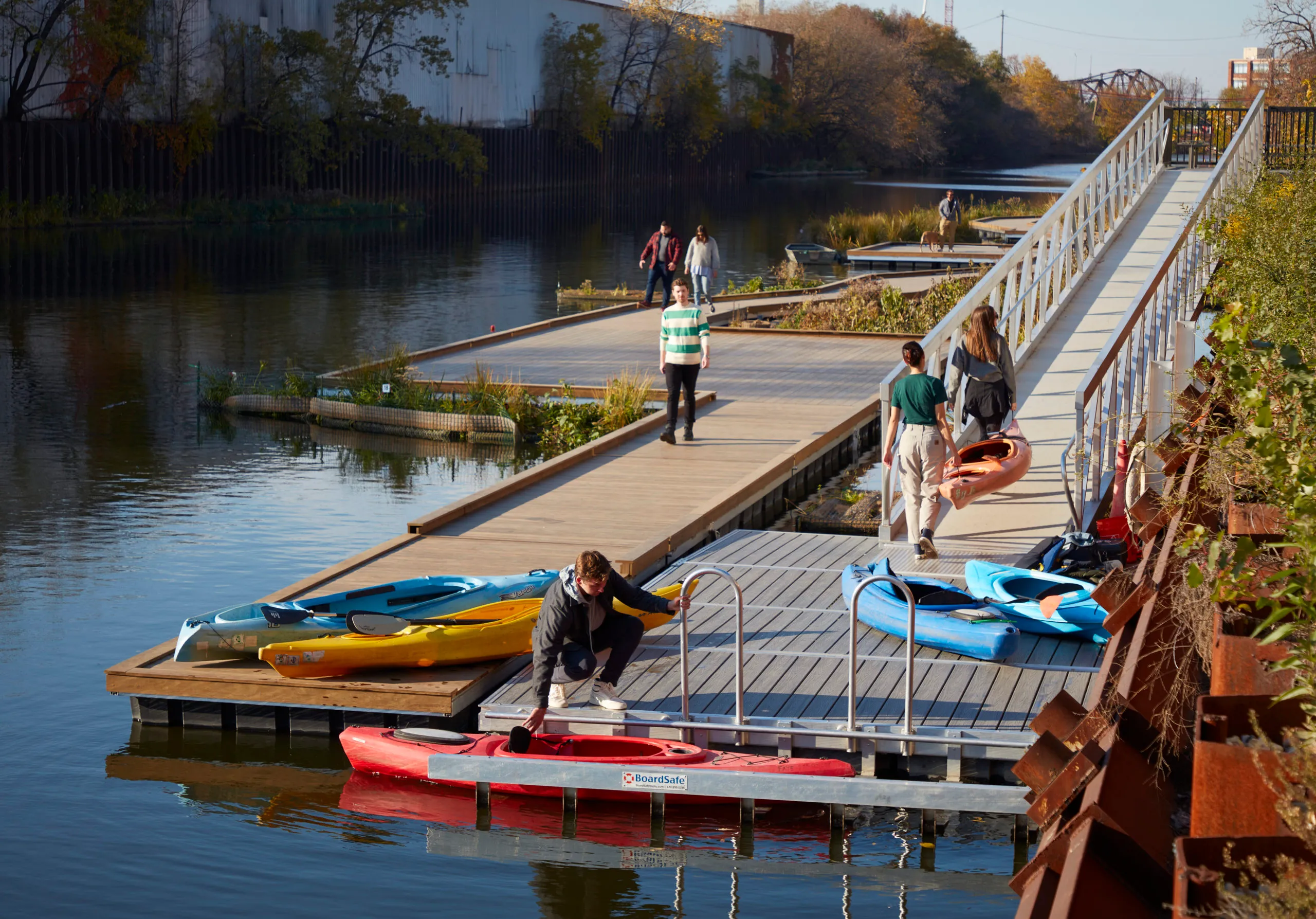
The project is the result of a collaboration between SOM, Urban Rivers, the City of Chicago, O-H Community Partners, Near North Unity Program, Omni Ecosystems, Tetra Tech, and local community members.
7. Tianjin High-Speed Rail Station (Intermodal Hub) – Tianjin, China
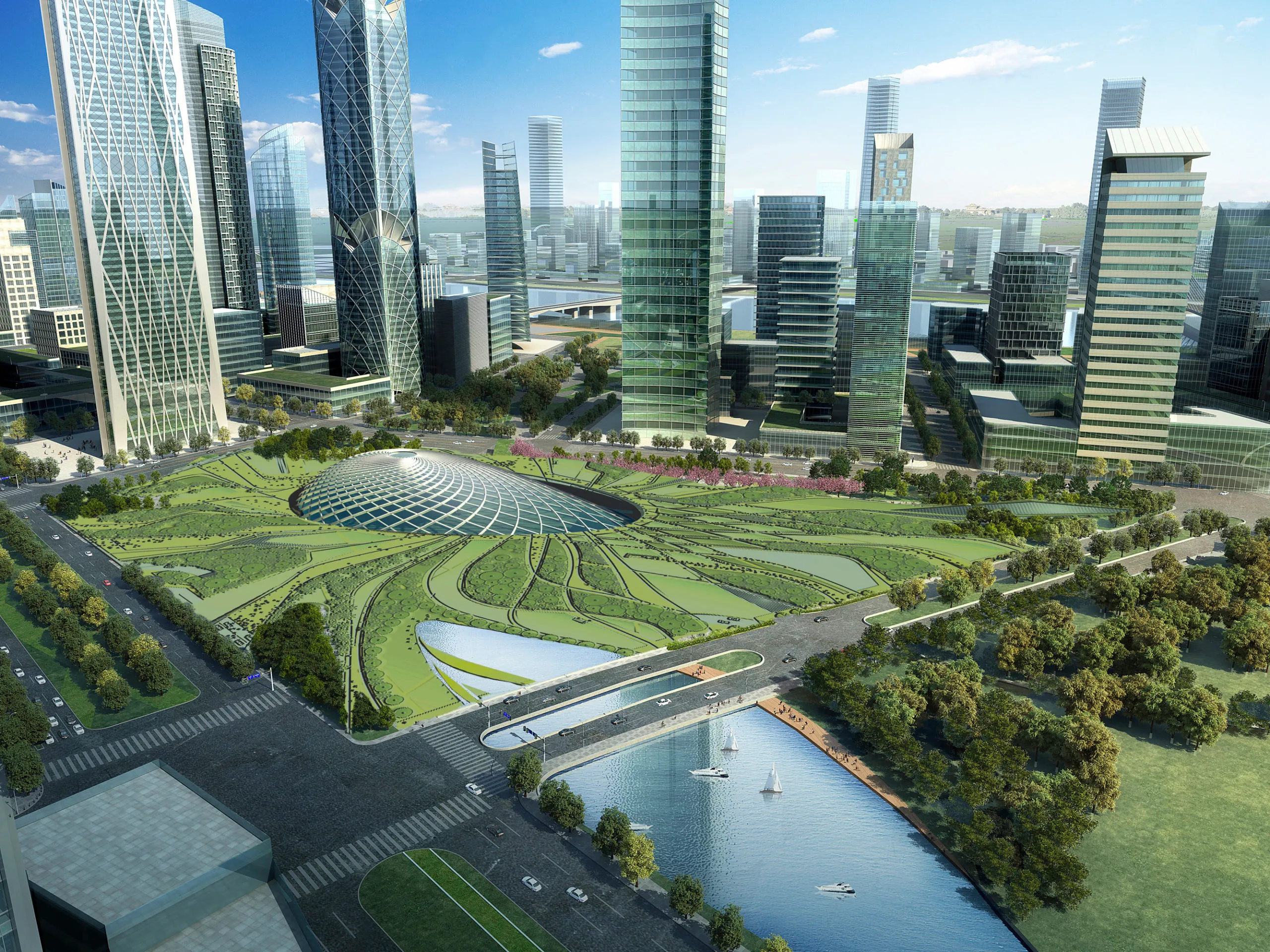
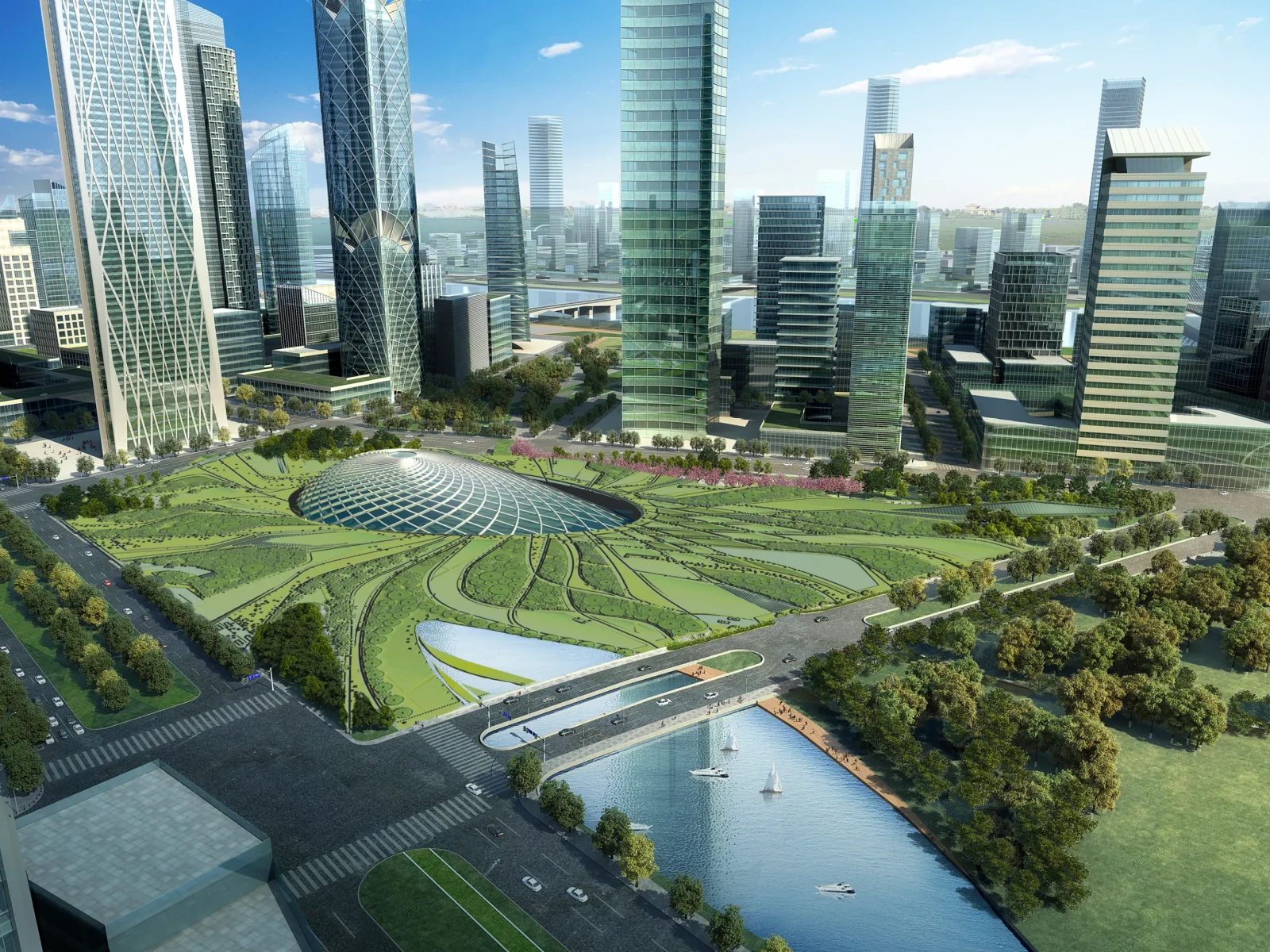
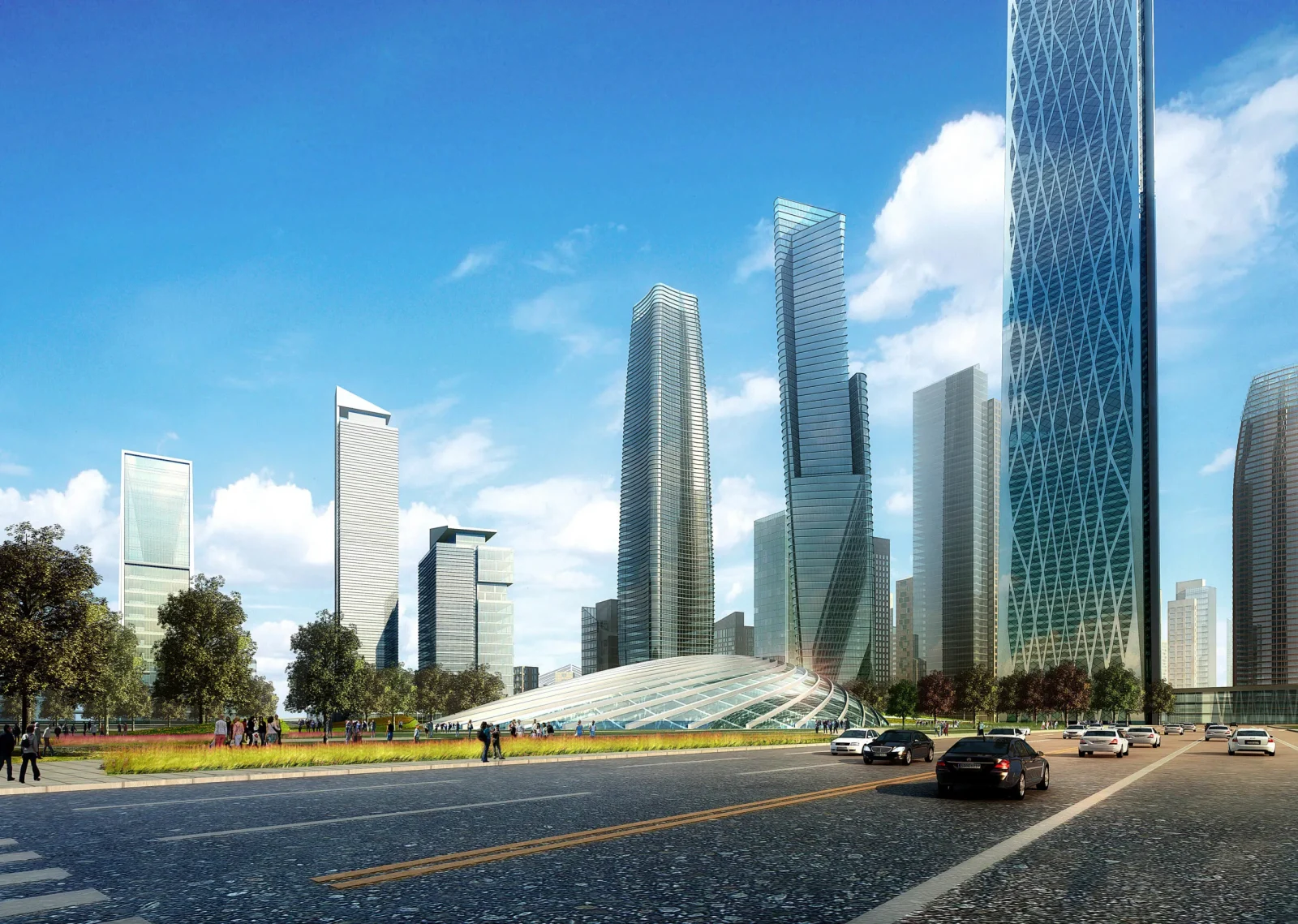
The Tianjin High-Speed Rail Station in Tianjin City serves as the terminal for one of China’s premier high-speed rail lines, capable of speeds over 300 kilometers per hour. The station sits within a 22-hectare park and is designed to accommodate over 6,000 passengers during peak hours.
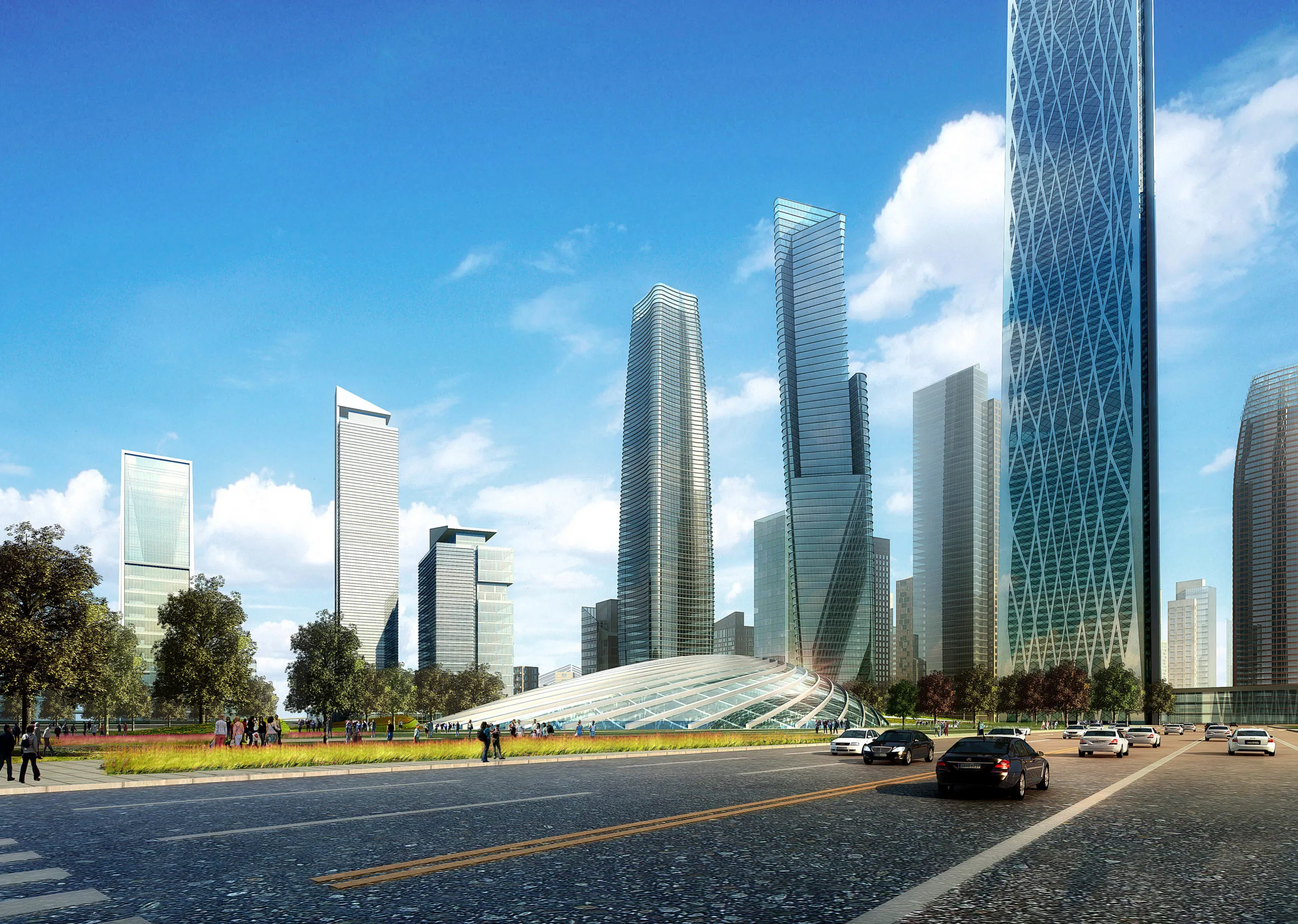
The station features a distinctive, lightweight roof with parabolic trusses that evenly distribute loads and a lattice-like framework that allows natural light to filter through. Skylights are angled with louvers to reduce summer heat while enhancing winter daylight, helping to brighten the platform level, which is located 21 meters below grade.
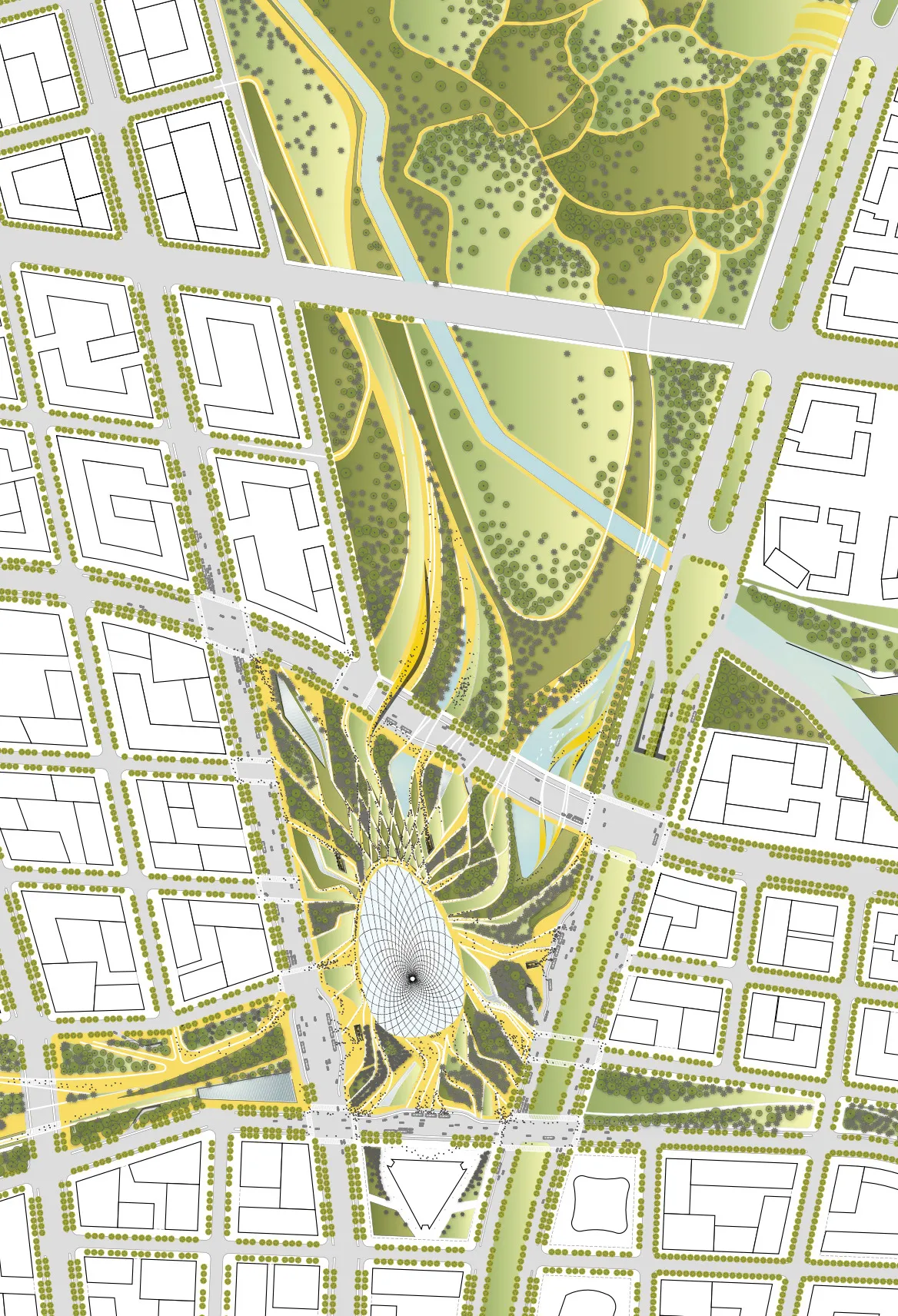
Inside, a large waiting hall provides clear views of the rail platforms, and an intuitive system of walkways guides passengers quickly to trains or into adjacent mixed-use areas. Sustainable design strategies, including a ground-source heat pump, thermal chimneys, and bioswales, improve energy efficiency and manage stormwater.
The station covers a site area of 91,500 square meters, with a building height of 28 meters, a single story, and a gross area of 100,000 square meters.
8. Hangzhou Hanggang Station (Transit-Oriented Development) – Hangzhou, China
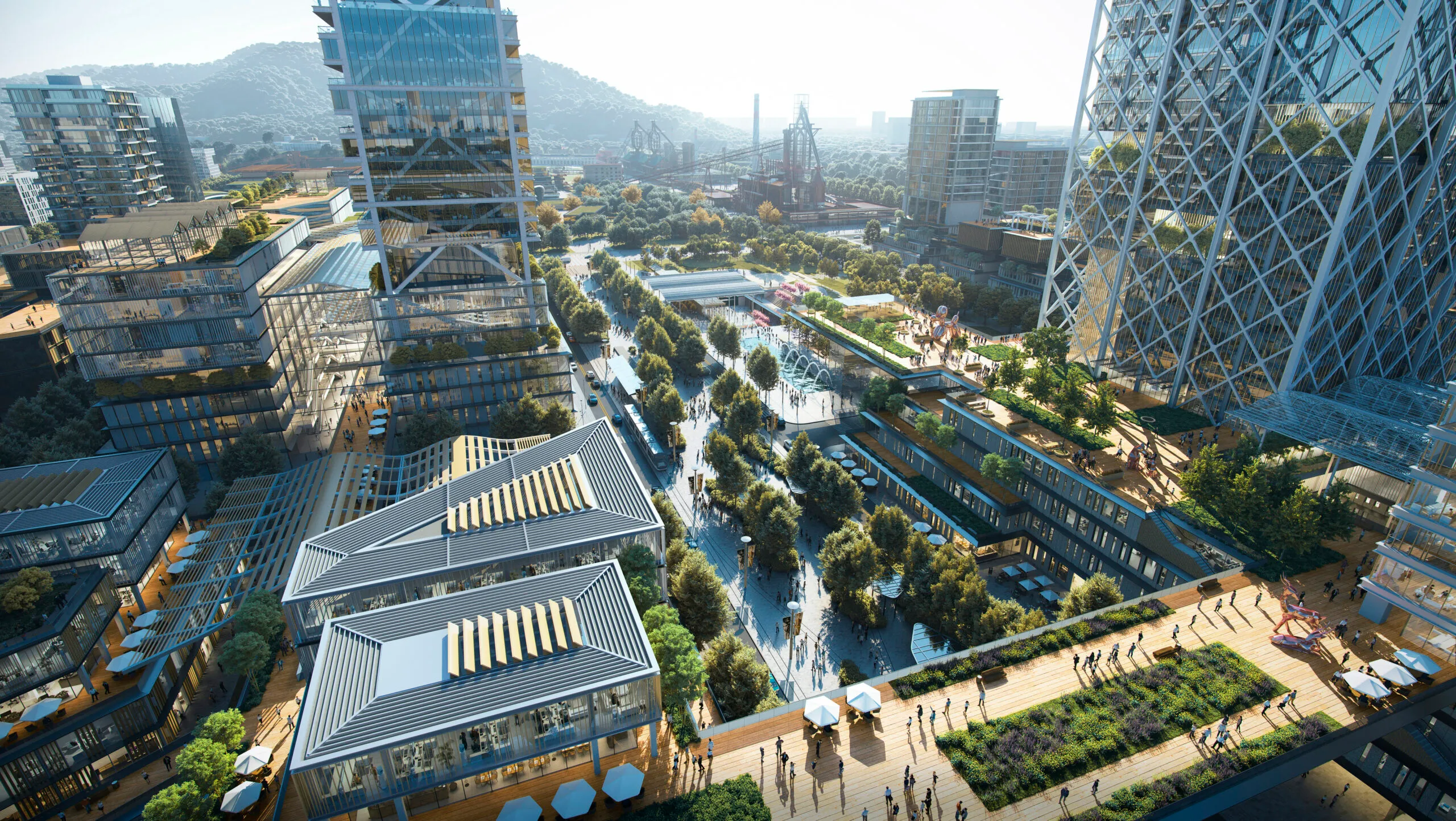
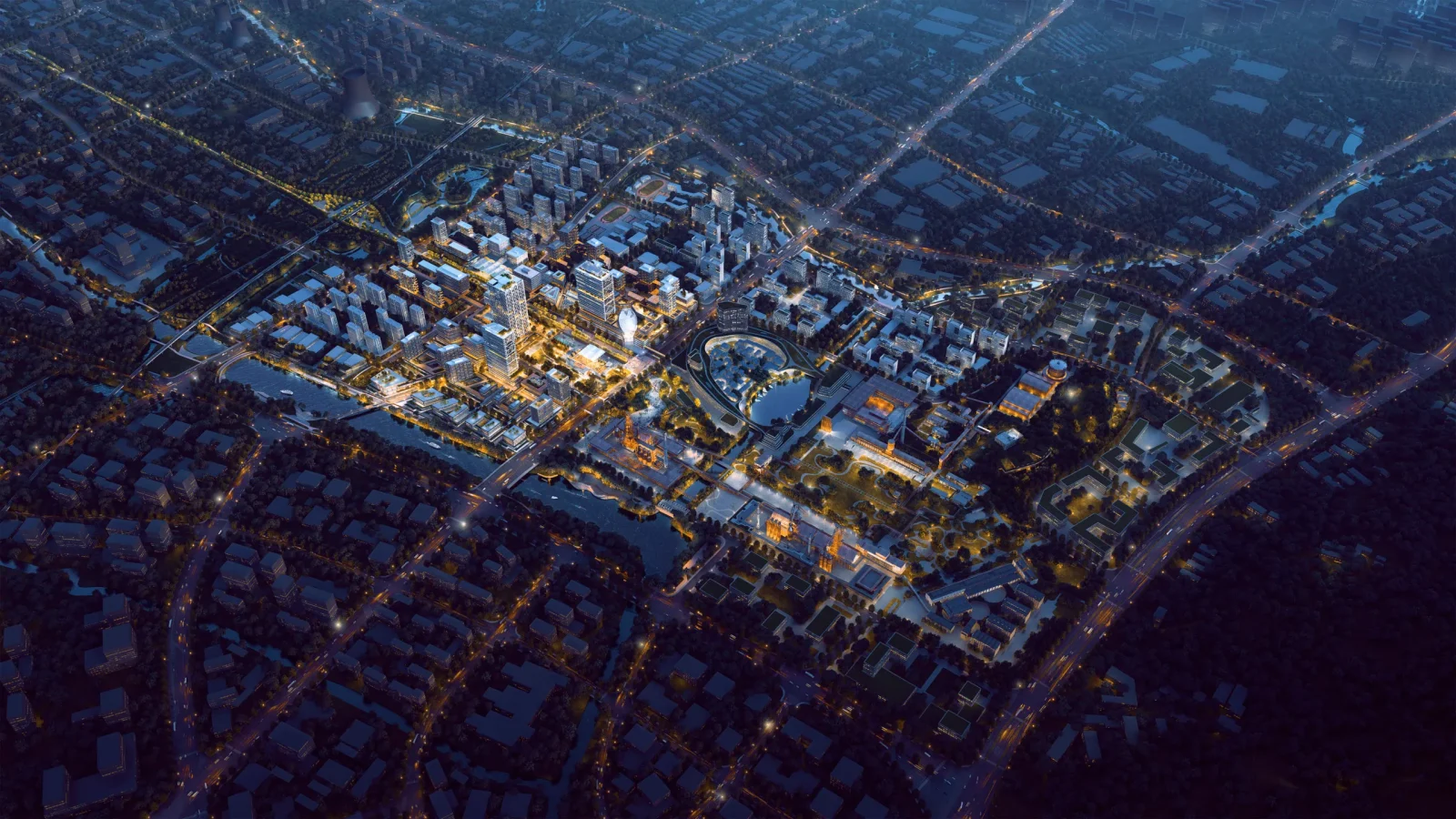
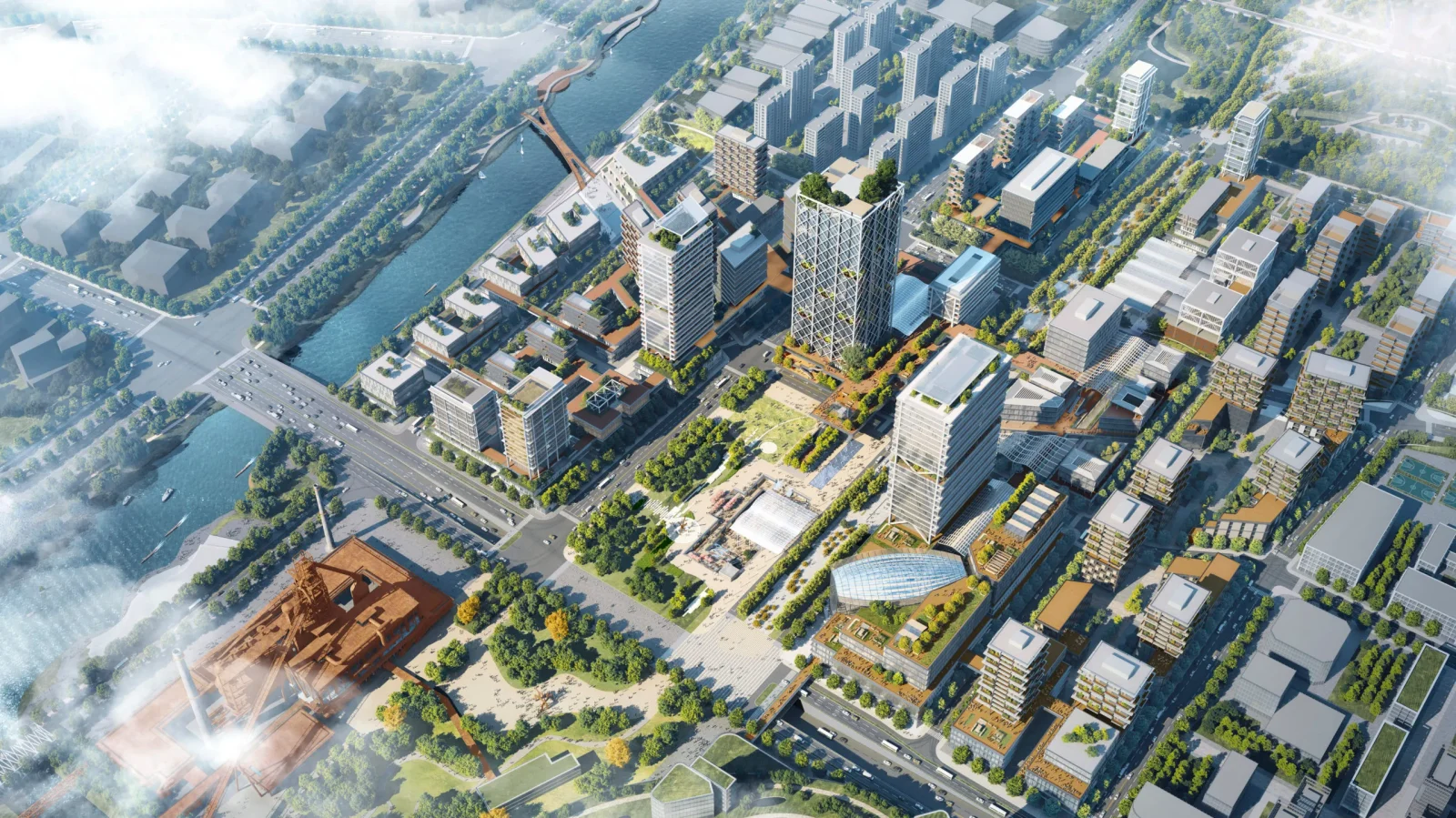
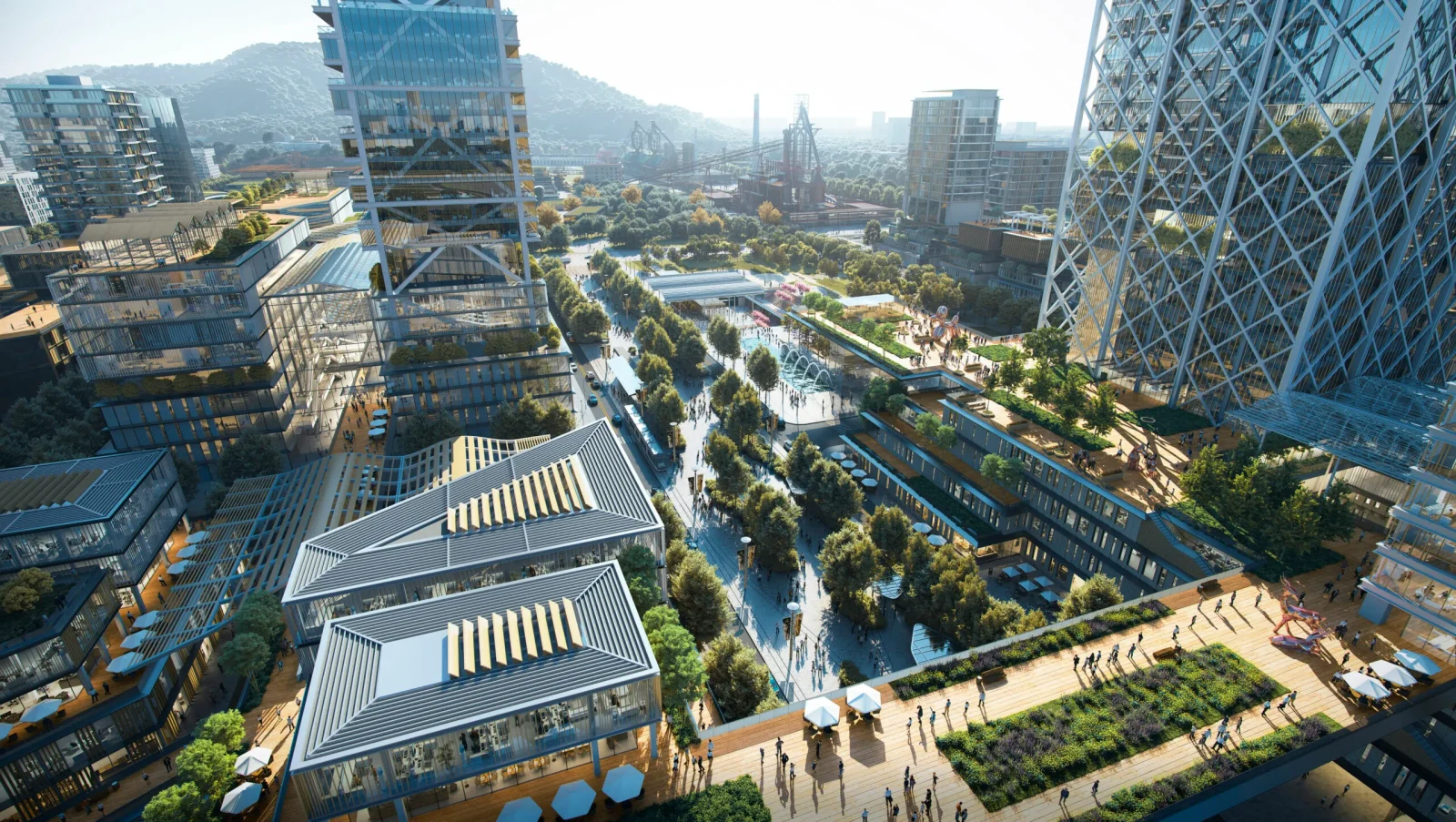
Hanggang Station is part of an environmentally conscious urban district in Hangzhou’s Old Town. It is set on a 198.6-hectare site near the Banshan Mountains. The station connects two transit lines and is an anchor for a mixed-use, low-carbon neighborhood that mixes natural beauty with the area’s industrial heritage.
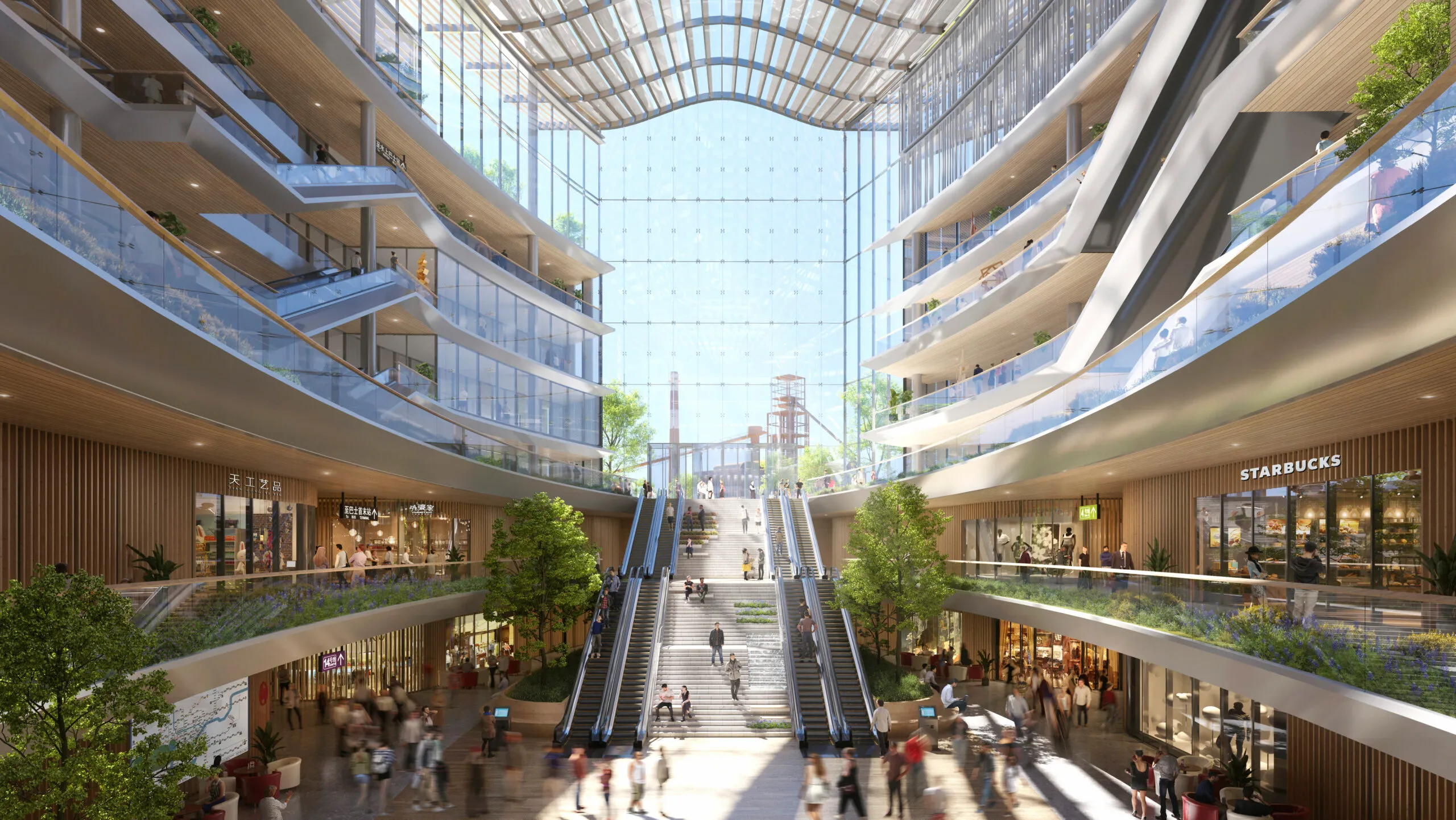
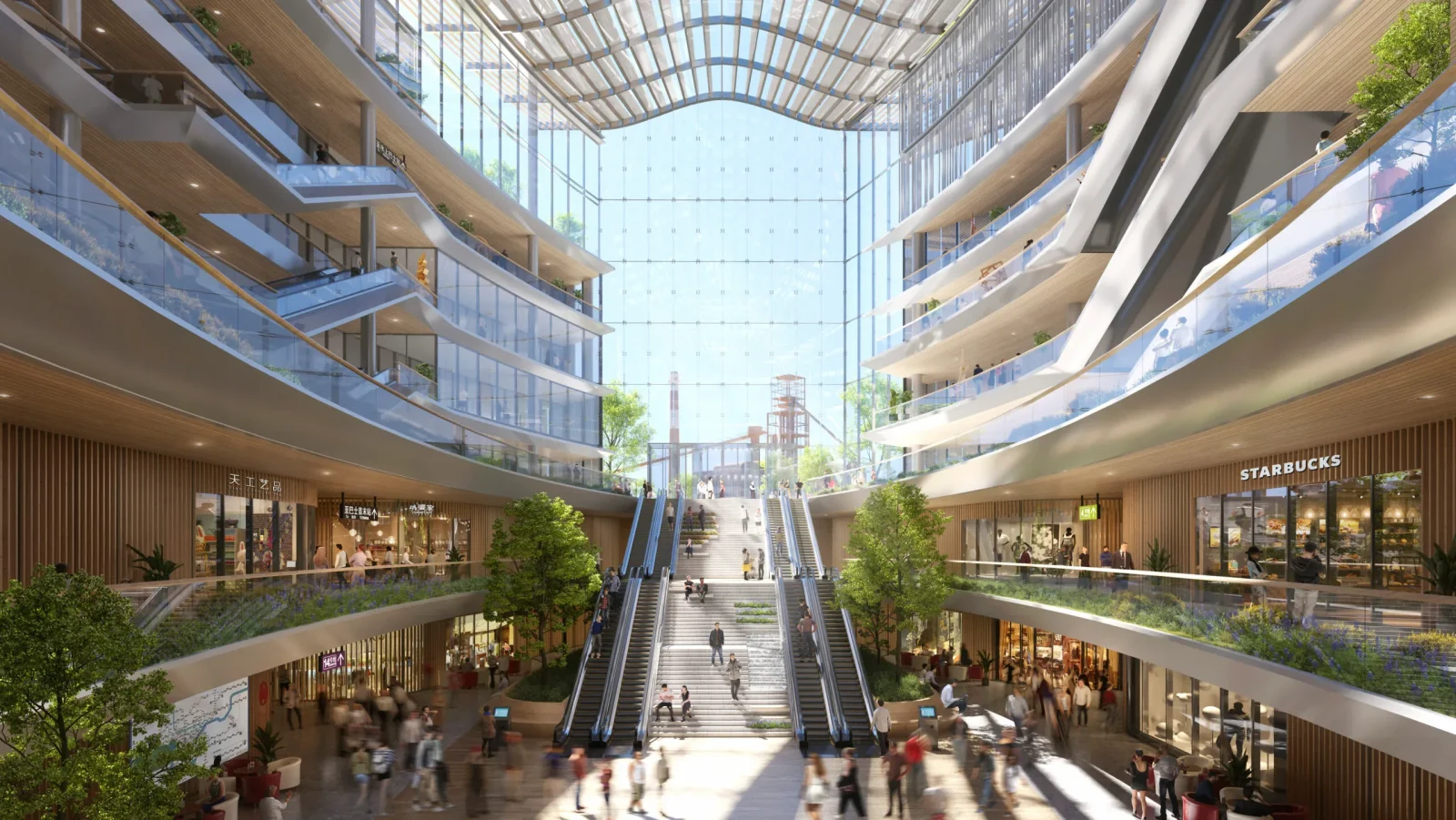
The project applies transit-oriented development (TOD) principles to create a district where open spaces, parks, and public amenities are integrated with housing, offices, and commercial areas. The existing Pinglian Road has been transformed into Central Avenue, linking the Banshan Mountains, a proposed Steel Heritage Park, and the station, culminating at Metro Gateway Park, a multilevel park with views of the mountains and access to the transportation hub.
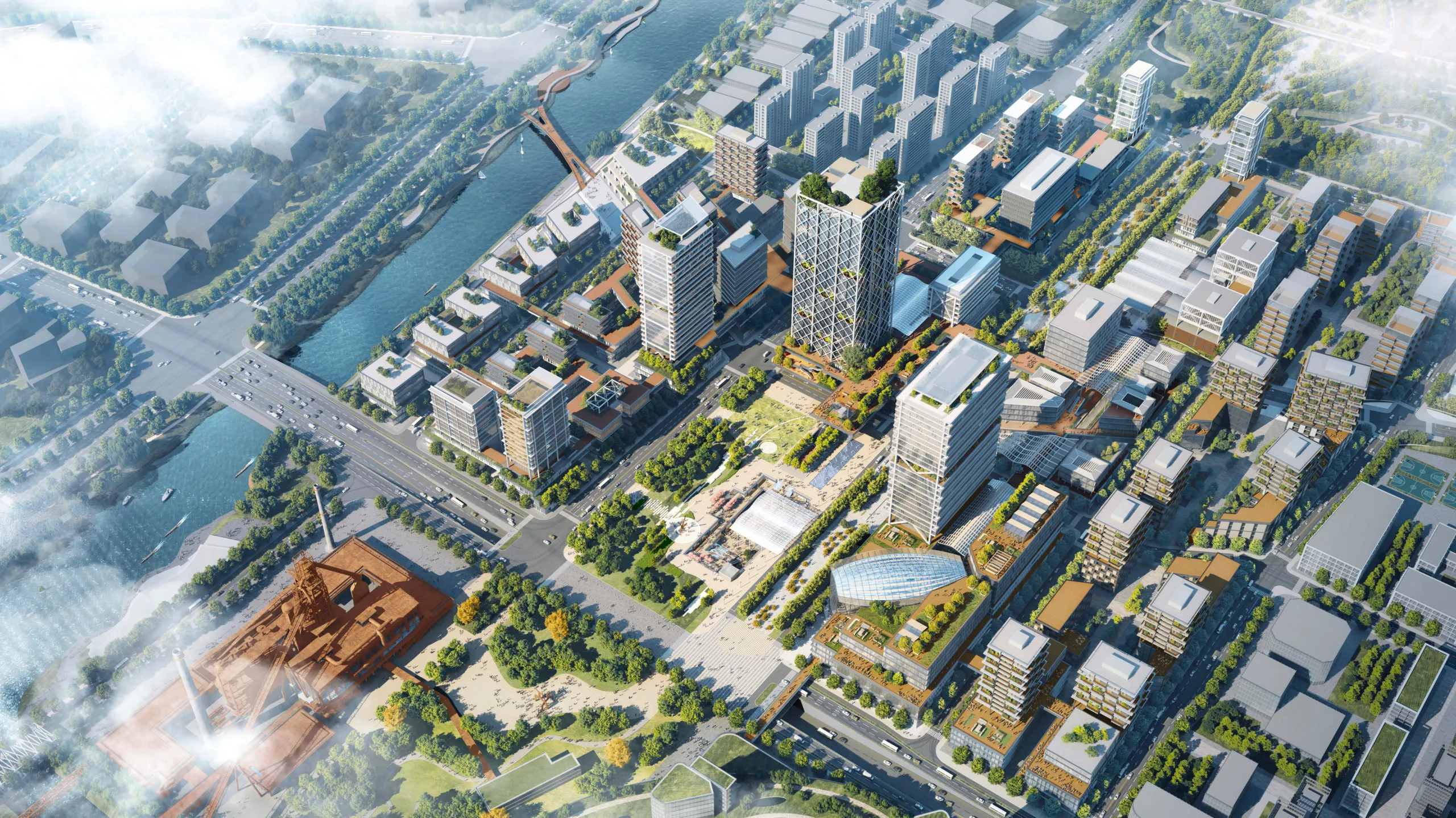
Perched atop existing warehouses, a new structure with incubator offices adds energy to the district. Visitors can enjoy sweeping views via a glass-enclosed elevator, a sky lobby above the canopy, and shared amenity spaces.
9. Chicago Museum Campus (Rewilding the Lakefront) – Chicago, United States
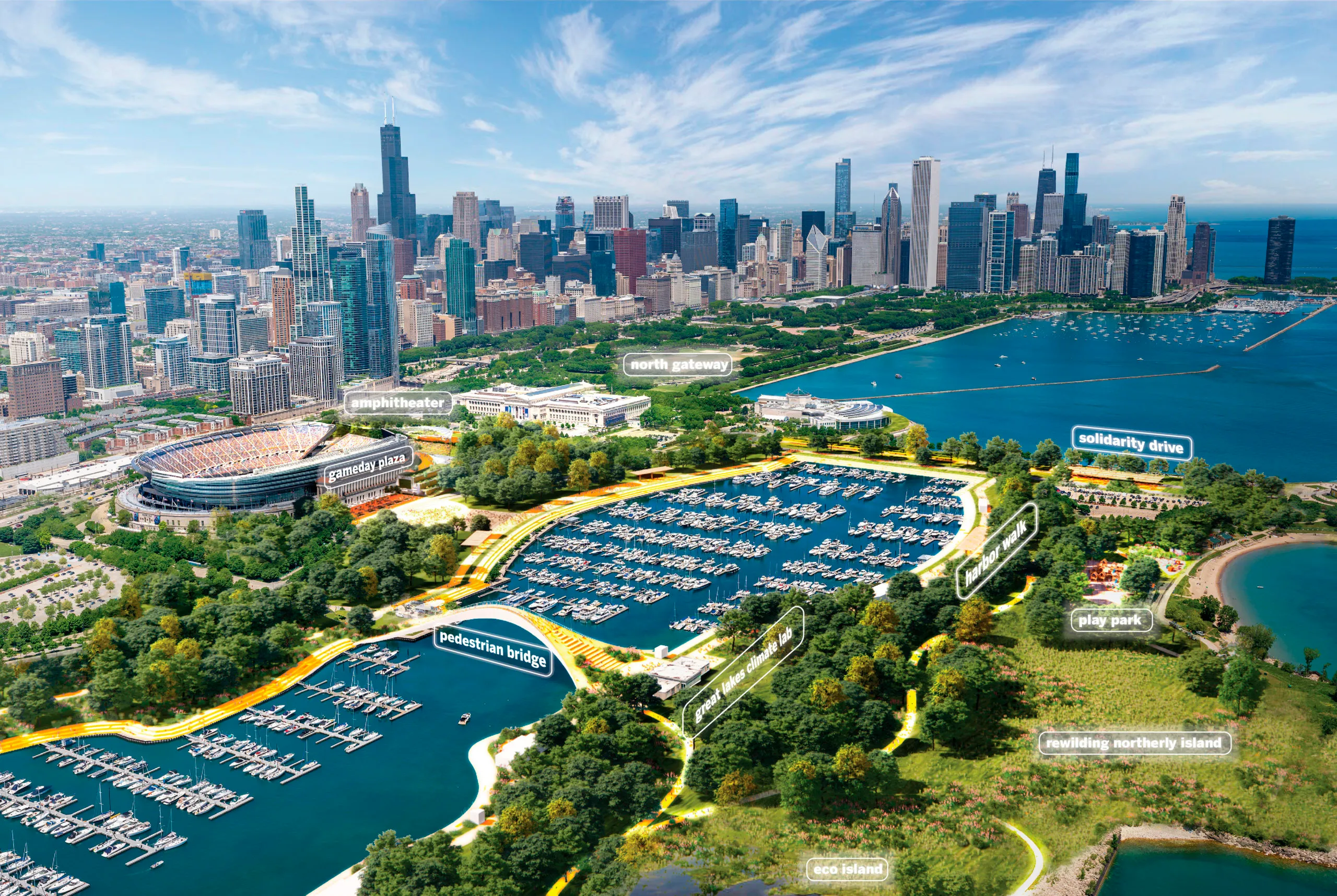
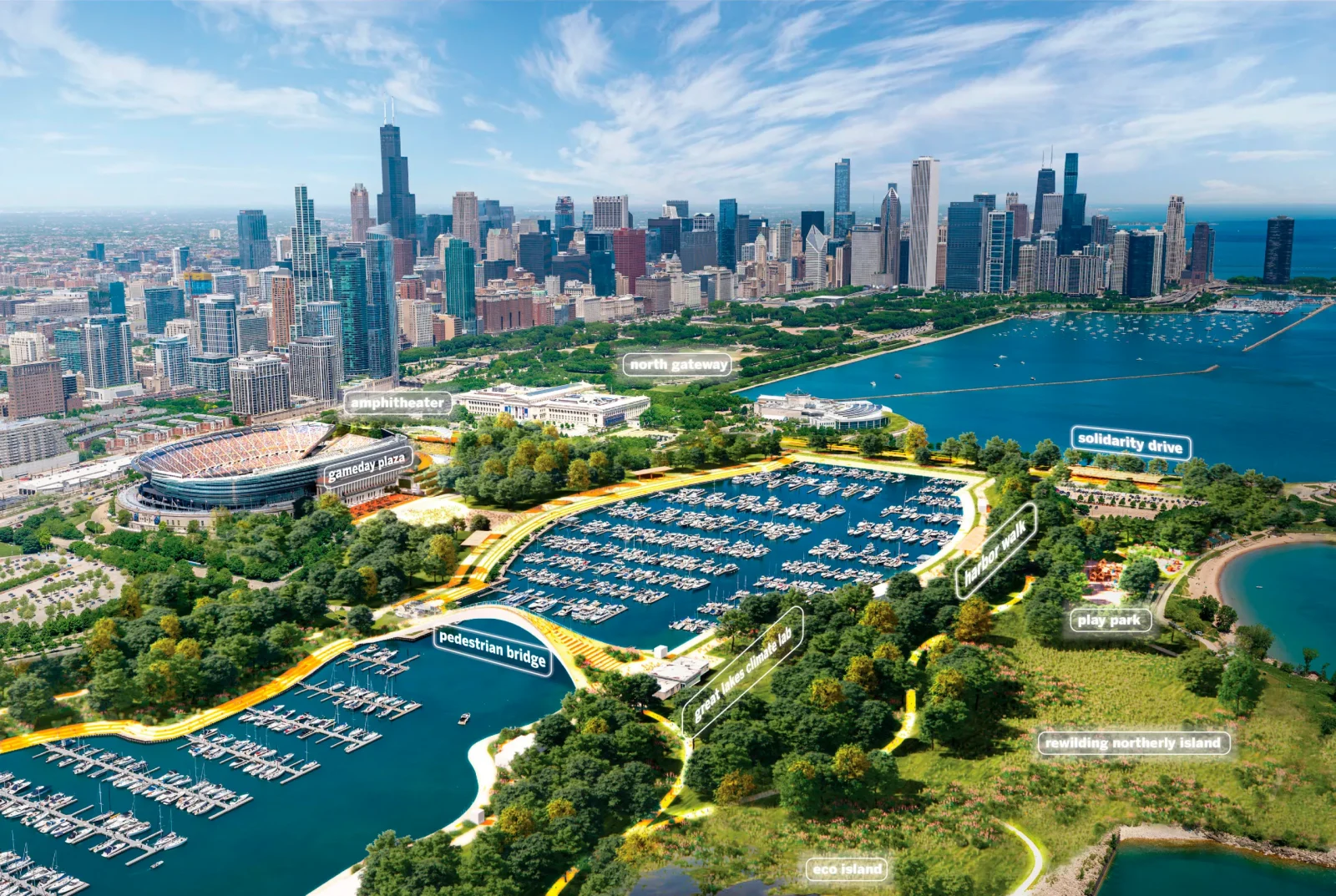
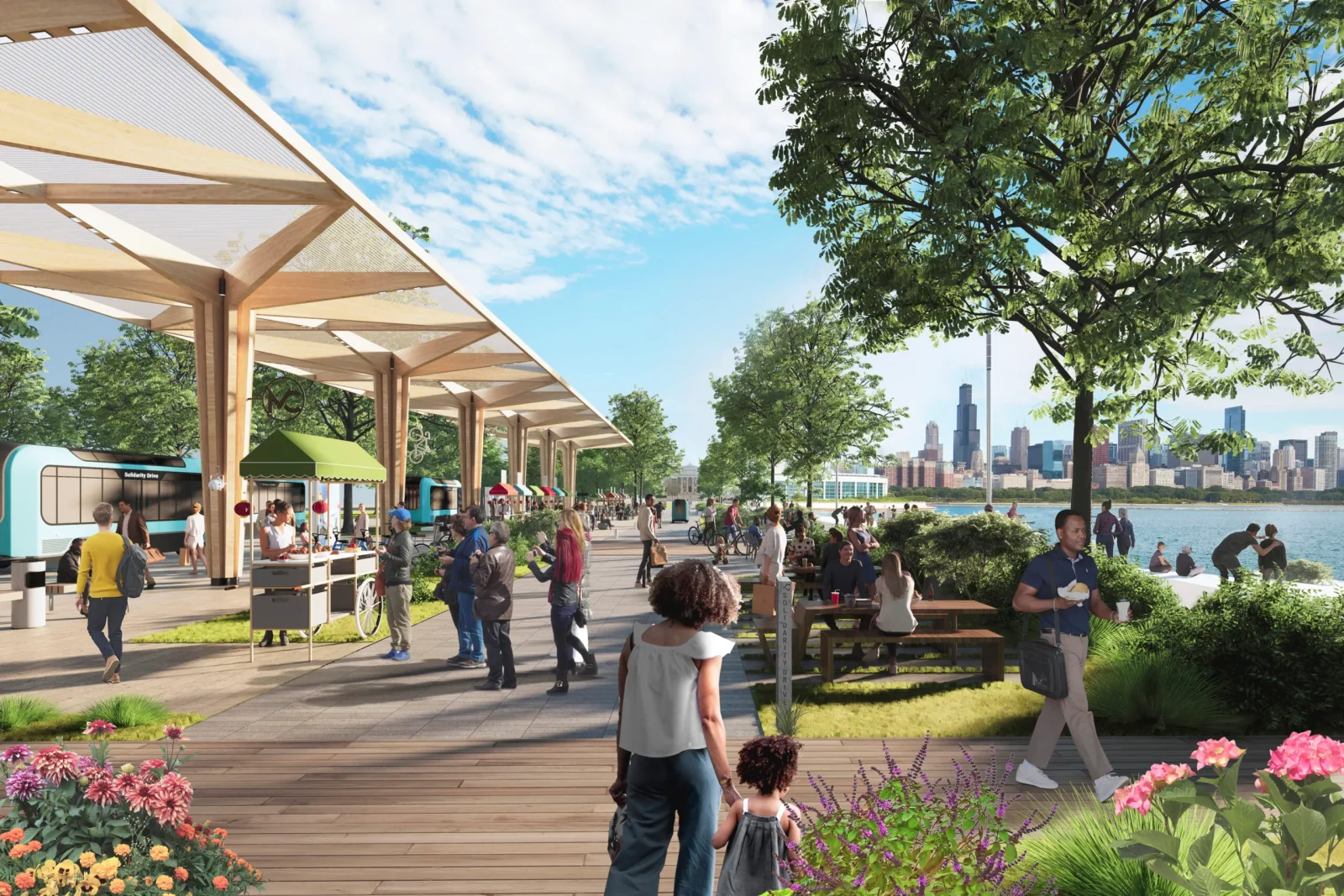
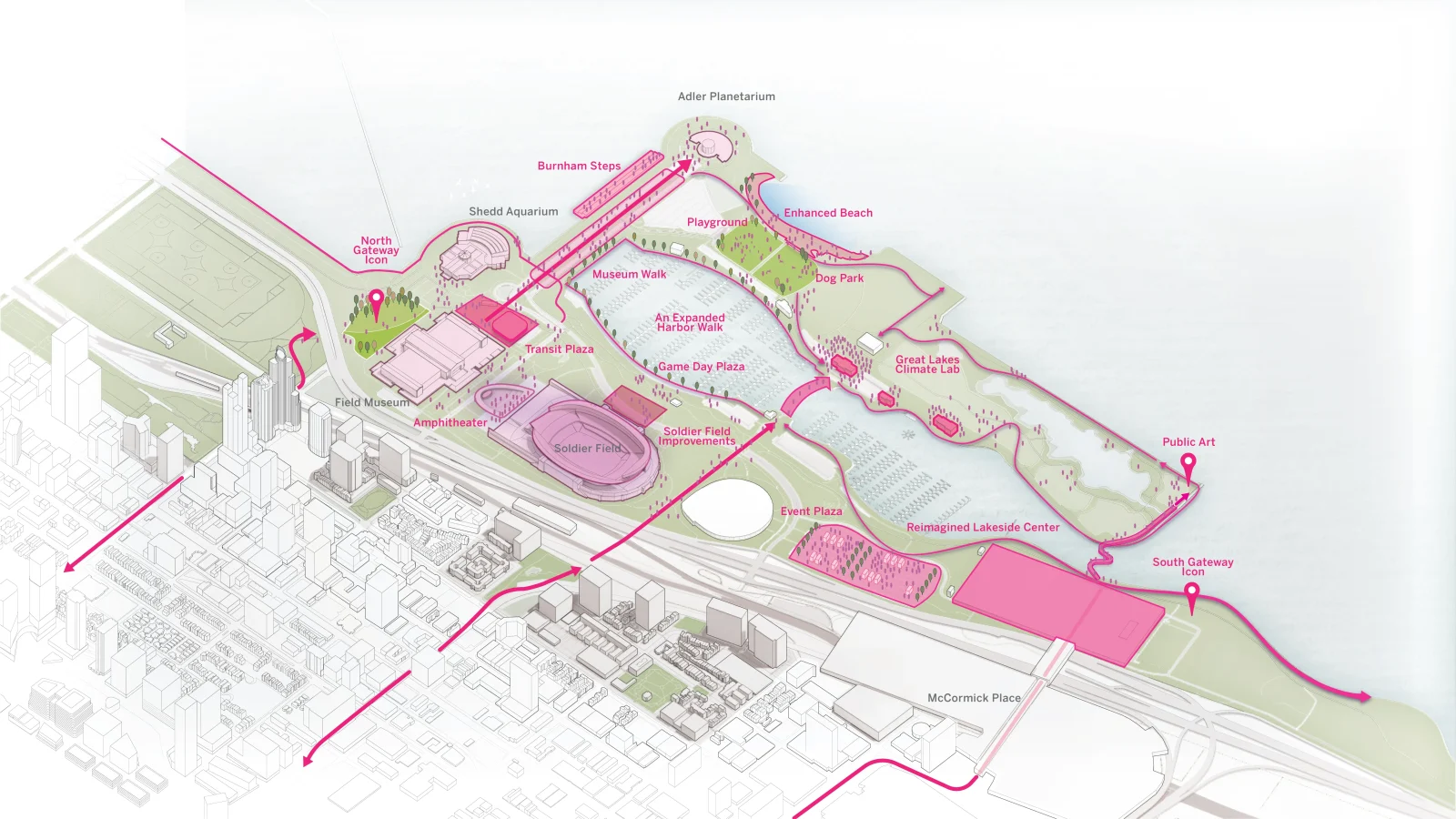
The Chicago Museum Campus is a 250-acre area along the city’s lakefront, home to the Museum Campus, Northerly Island, Soldier Field, and the McCormick Place Lakeside Center. SOM’s vision, completed in 2022 with implementation planned through 2032, aims to make the campus equitable, accessible, and sustainable, connecting neighborhoods and restoring native ecosystems.
The plan transforms underused lawns and parking areas into green spaces and flexible event areas, supporting year-round public programming. Historic structures, like the Meigs Field Terminal, are envisioned for adaptive reuse as spaces such as a Climate Lab, while Northerly Island is designed as an accessible nature sanctuary with erosion protection and reef barriers.
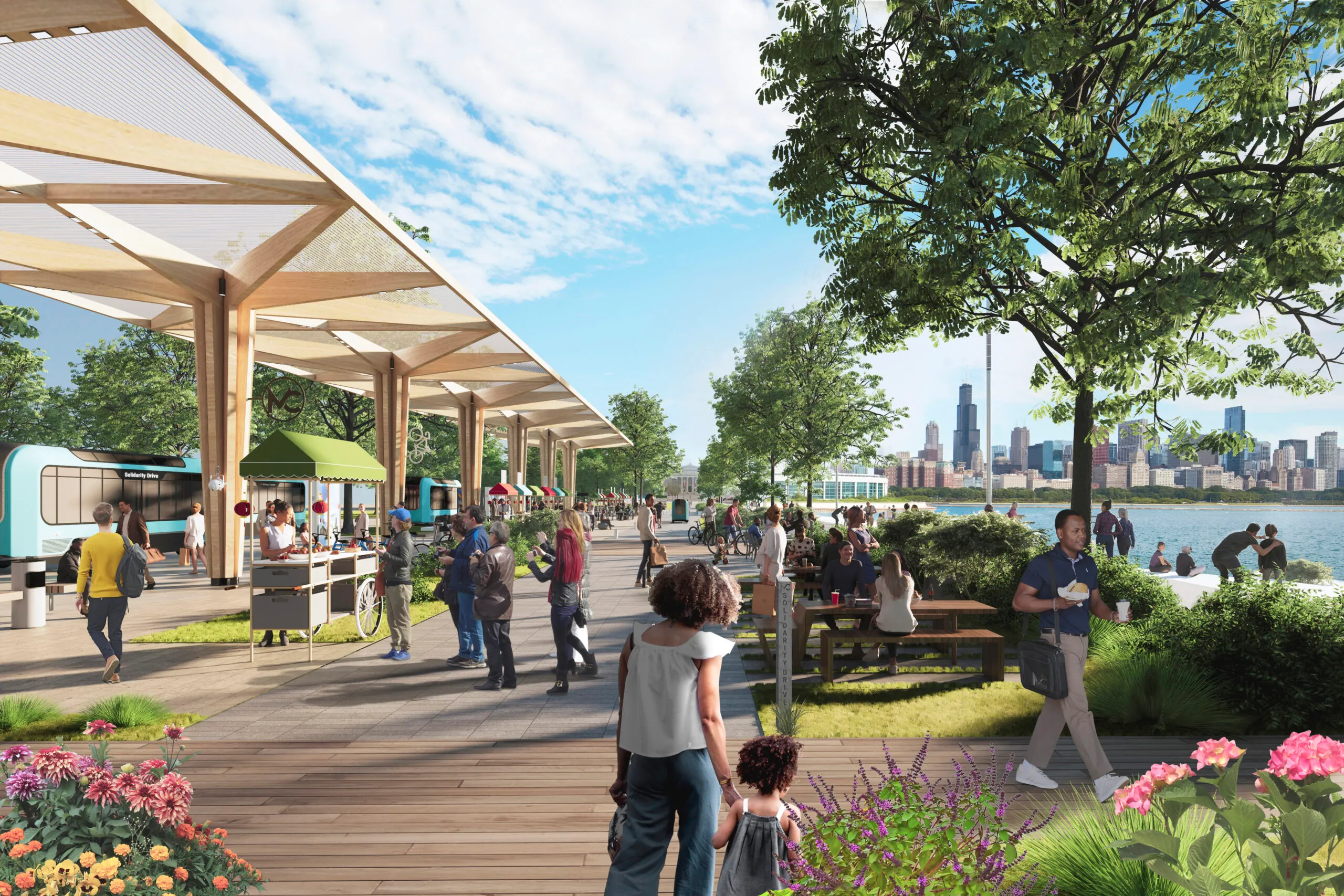
Pedestrian and bike routes, bridges, and water-based connections improve accessibility to the South Loop, Bronzeville, and Grant Park. Expanded transit options, including buses, water taxis, and Metra, further connect the campus to the city and region.
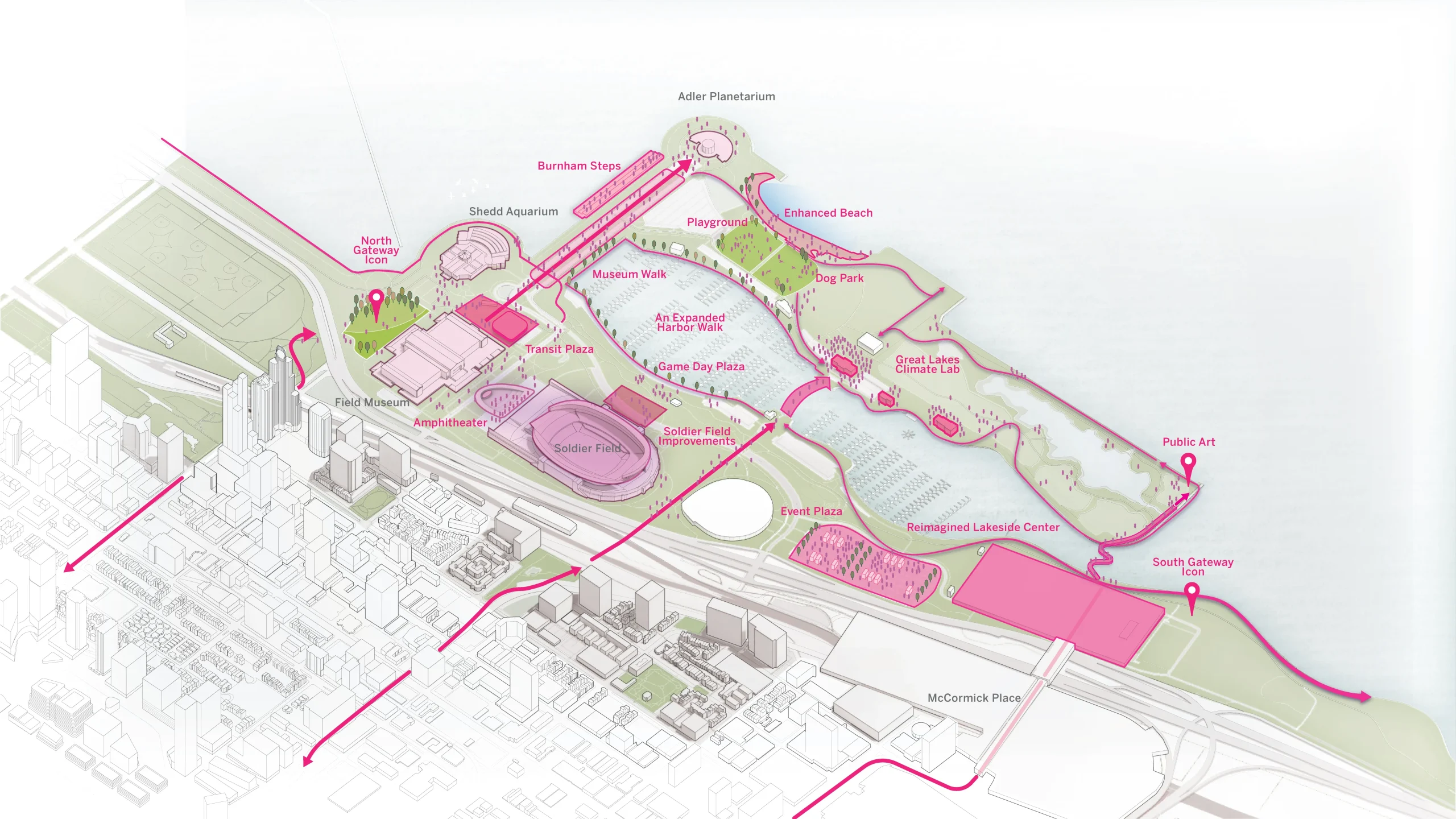
Environmental strategies focus on rewilding, permeable surfaces, diversified landscaping, and biodiversity, making the Museum Campus a model for urban climate resilience and a year-round destination for residents and visitors alike.
10. One Steuart Lane (Waterfront Residential Tower) – San Francisco, United States
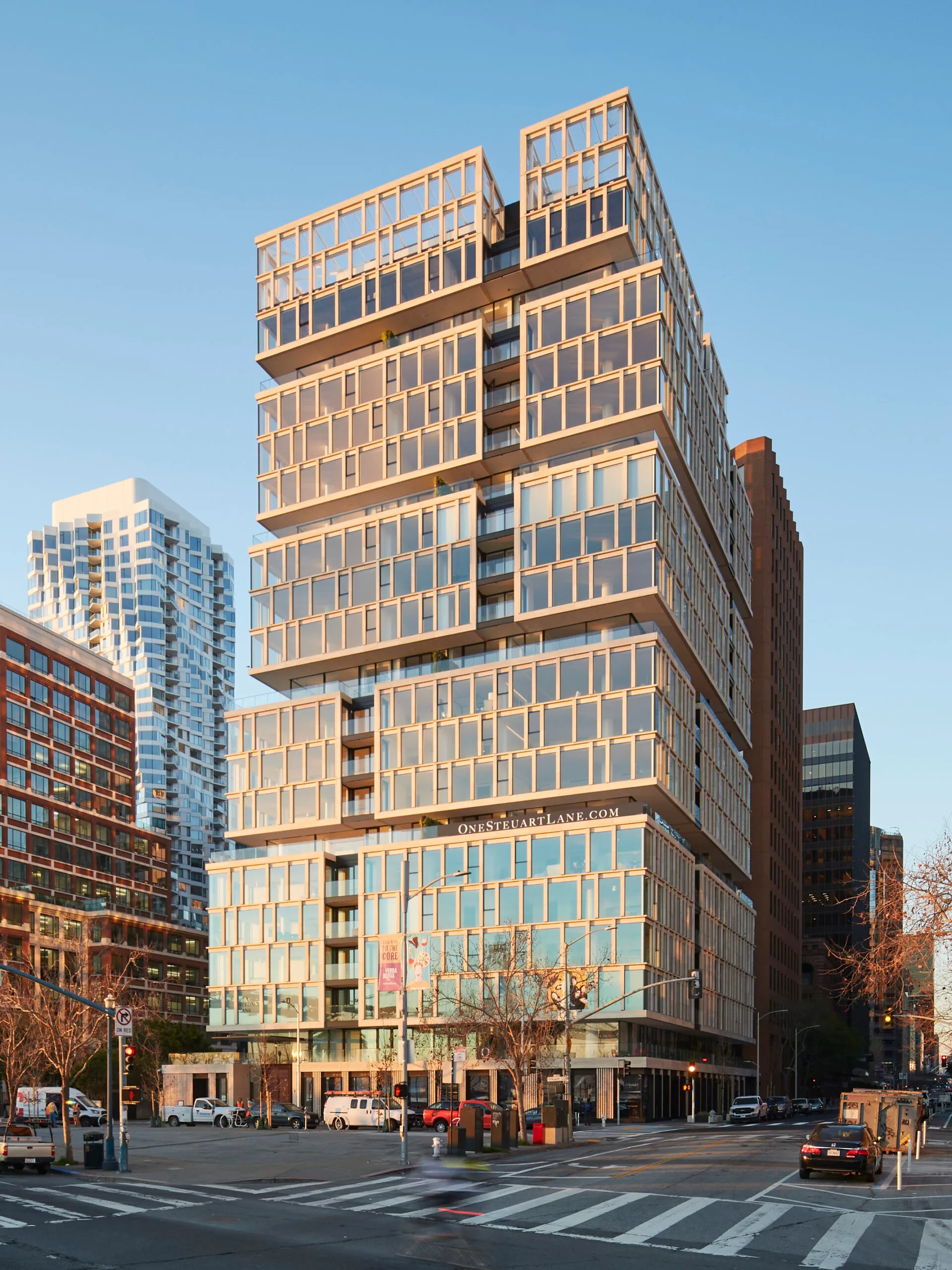
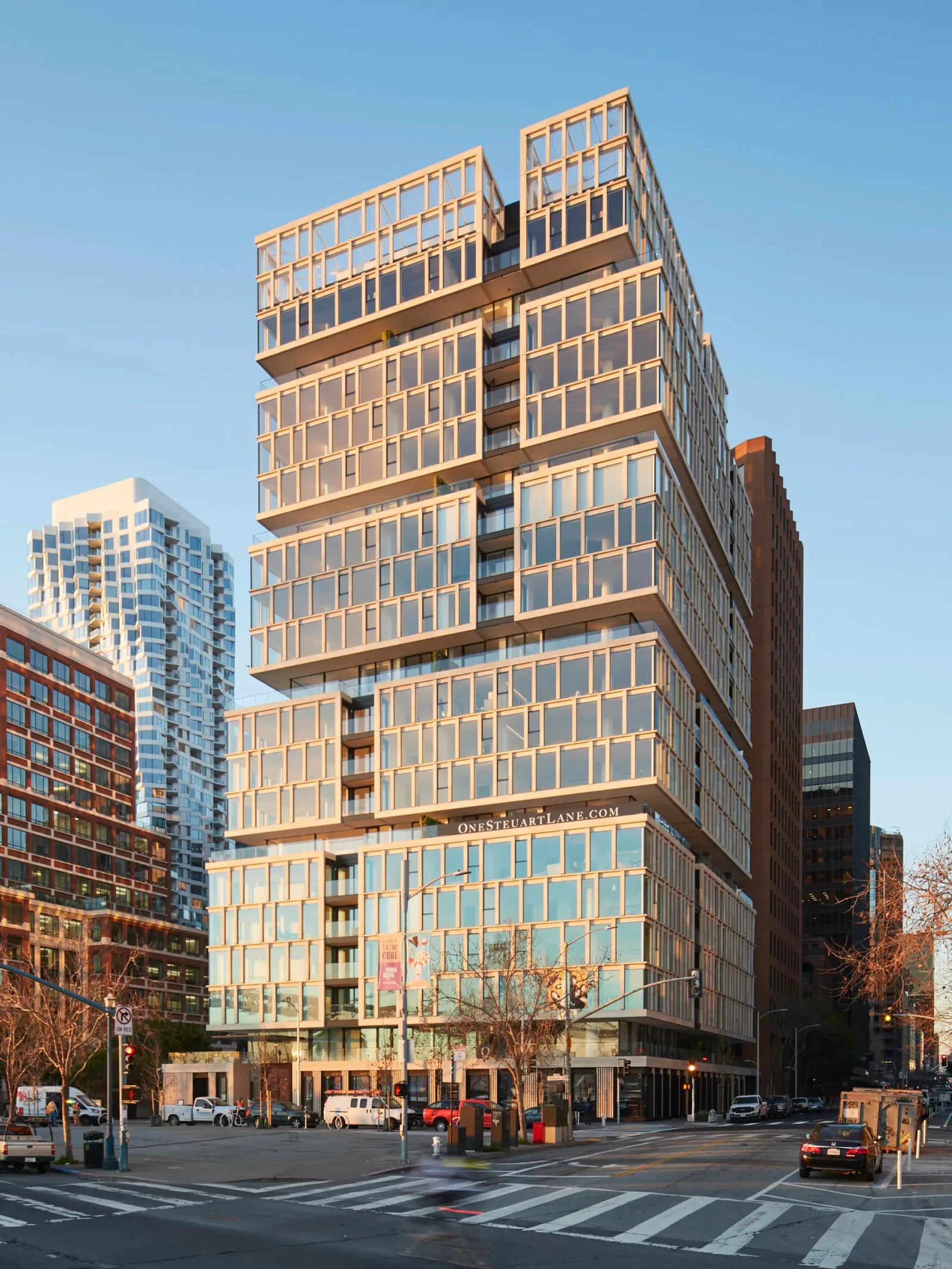
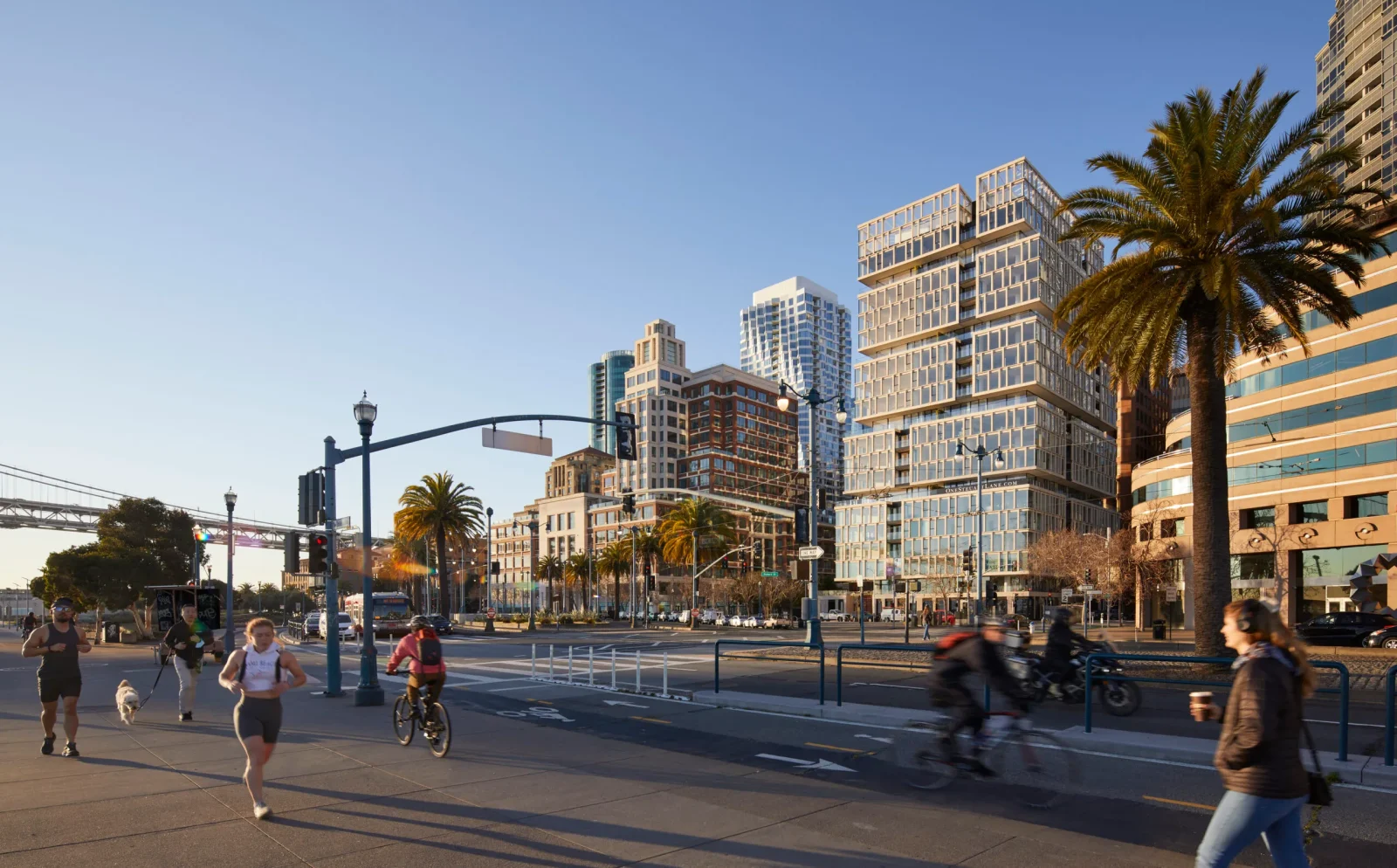
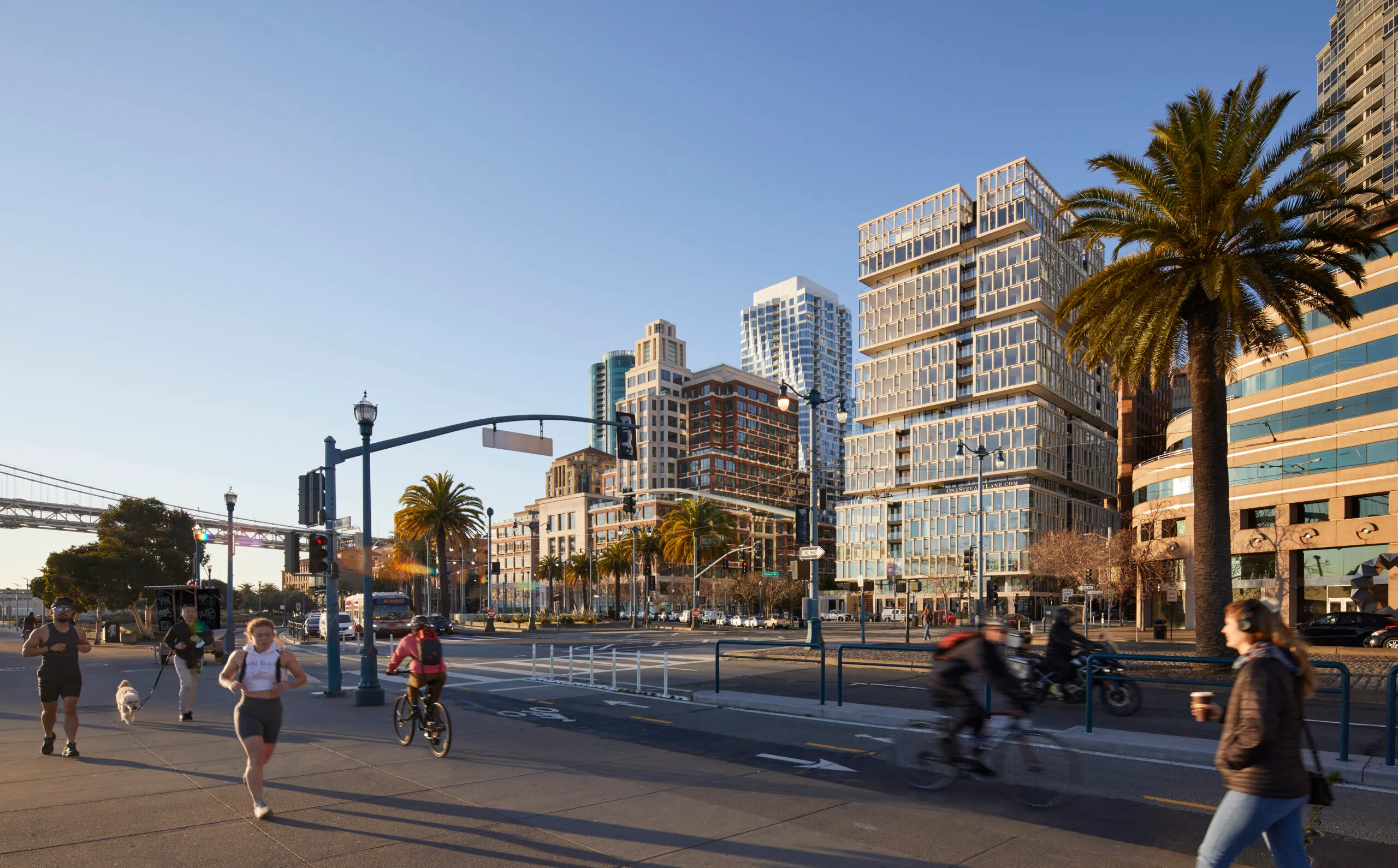
One Steuart Lane is a 20-story residential tower with California’s signature indoor-outdoor lifestyle. The building sits on a 20,595-square-foot site, rises 220 feet, and has 120 condominium units totaling 310,000 square feet. The tower has also achieved LEED Gold certification.
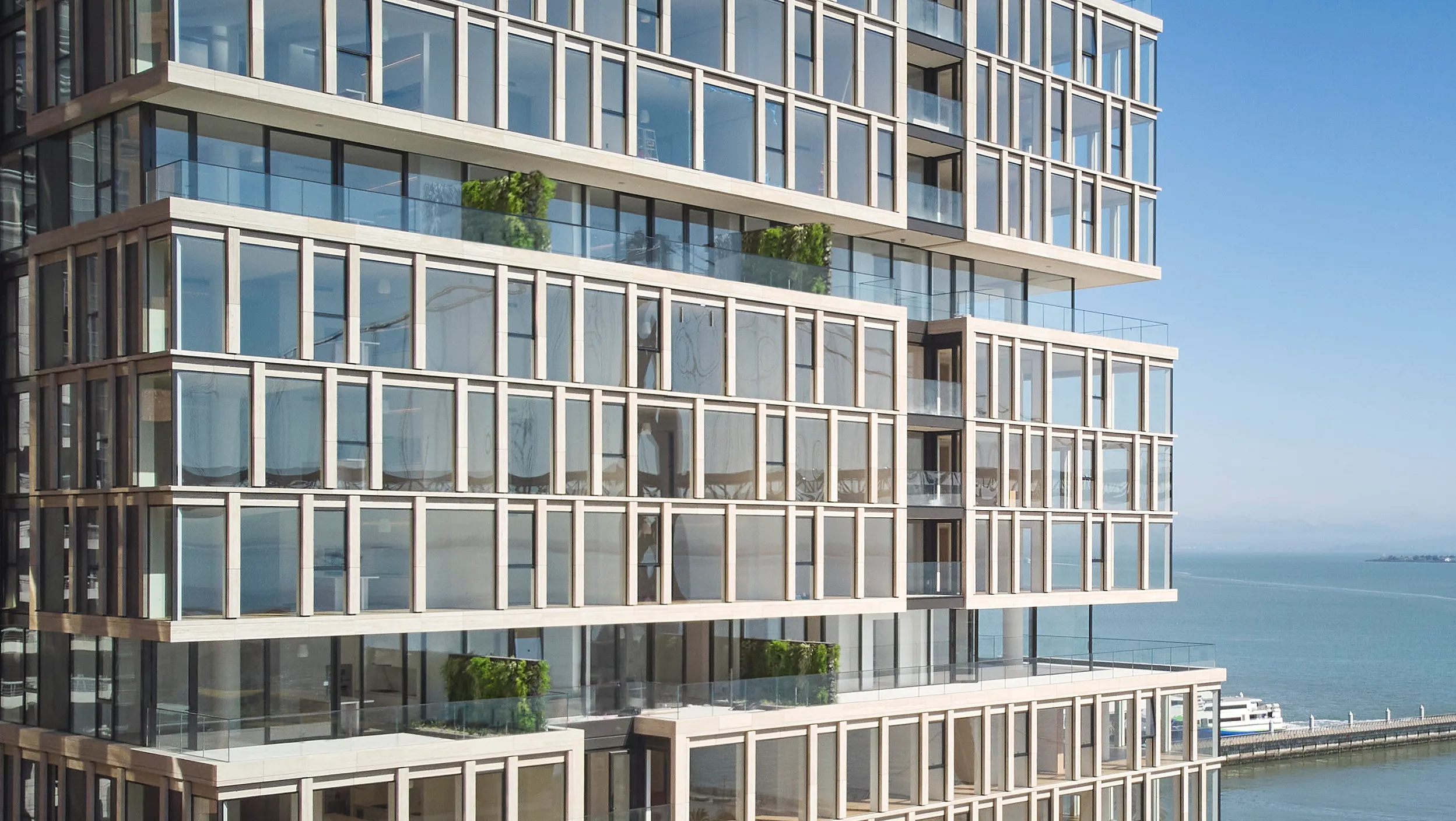
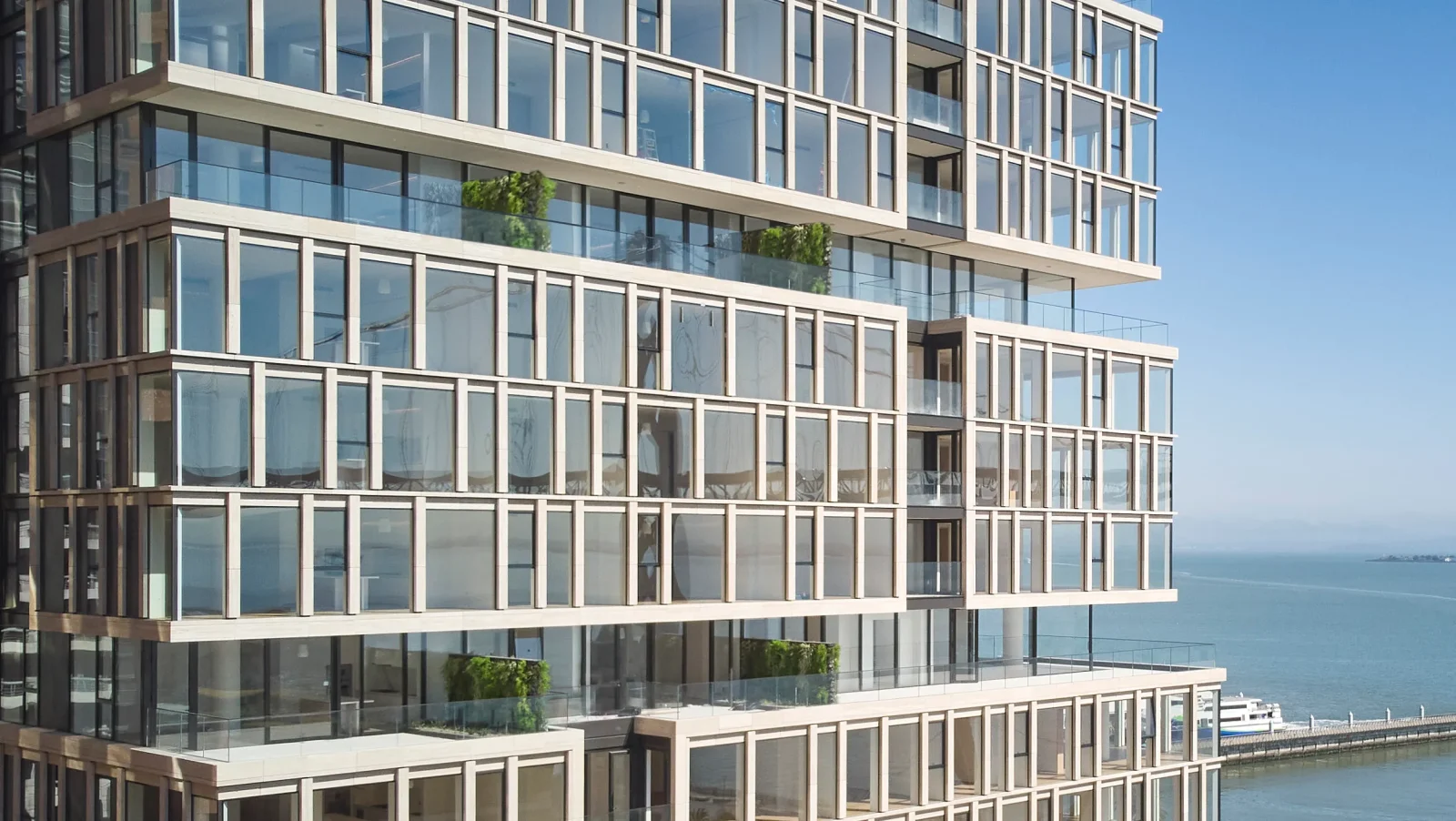
The design integrates balconies, terraces, and recessed outdoor spaces to connect residents with the panoramic views of San Francisco and the Bay. Large wraparound terraces and floor-to-ceiling glass maximize daylight, while a slender stone and glass facade complements the historic waterfront and modern Financial District towers. The variegated Tuscany silver travertine grid gives the building a classical solidity while preserving interior views.
Interior layouts minimize circulation and draw the eye outward. Cantilevered floor slabs and concealed structural elements allow expansive windows and sliding glass doors, opening residences to terraces for indoor-outdoor living. The architectural massing steps back along alternating sides, creating a visual scale along the waterfront.
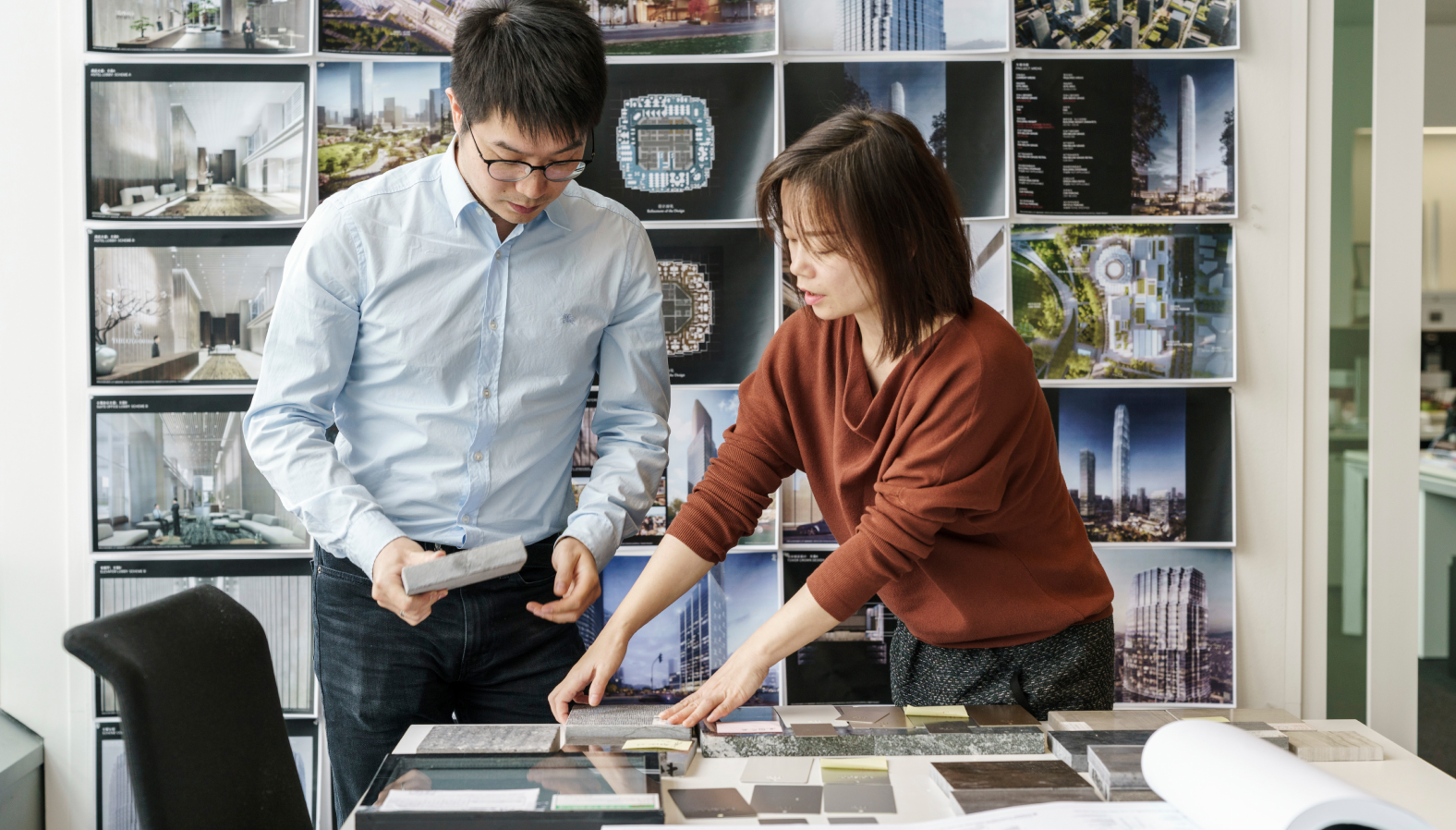
Alongside its projects, SOM also invests in research and innovation. It works with universities, labs, and industry partners to explore new ideas in materials, technology, sustainability, and ecology. These studies have often led to breakthroughs that have changed the way buildings are designed and built.
For more than 80 years, SOM has been shaping buildings as well as cities. Its legacy is about creating a healthier, more connected, and more sustainable built environment.
Explore Courses
.jpg "Ondrej Chybik - Rethinking Architecture")