





Herzog & de Meuron, founded in 1978 in Basel, Switzerland, by Jacques Herzog and Pierre de Meuron, has grown into one of the most influential studios shaping contemporary architecture. With over 600 projects across 40 countries, the practice has become synonymous with a design language that fuses precision with emotion.

The studio’s work defies formula. Each project begins as a dialogue with its environment, cultural, physical, and social, resulting in architecture that feels both inevitable and unexpected. From the industrial solemnity of the Tate Modern in London to the sculptural clarity of the Skolkovo Institute of Science and Technology in Moscow, Herzog & de Meuron’s buildings are less about style and more about sensory depth. They reinterpret the familiar through material experimentation, transforming brick, glass, and concrete into instruments of light and texture.
Collaboration has always been central to their process. Whether working with artists like Joseph Beuys or exhibiting photographs by Balthasar Burkard and Thomas Ruff, the firm dissolves boundaries between disciplines, framing architecture as part of a wider cultural conversation rather than a solitary pursuit.
Beyond their built work, Jacques Herzog and Pierre de Meuron have influenced generations through teaching at Harvard GSD and ETH Zurich, pairing academic rigor with curiosity about how architecture engages the senses and the city. Their many accolades, including the Pritzker Prize (2001) and RIBA Royal Gold Medal (2007), acknowledge not just a career, but a philosophy: architecture as exploration, not expression.
In their hands, a building is never just a building. It is a question about time, place, and the ways we inhabit them.
Here are the top 10 innovative projects designed by Herzog & de Meuron:
1. Tate Modern
Location: London, England
Year: 2000
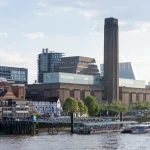
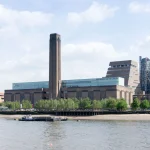
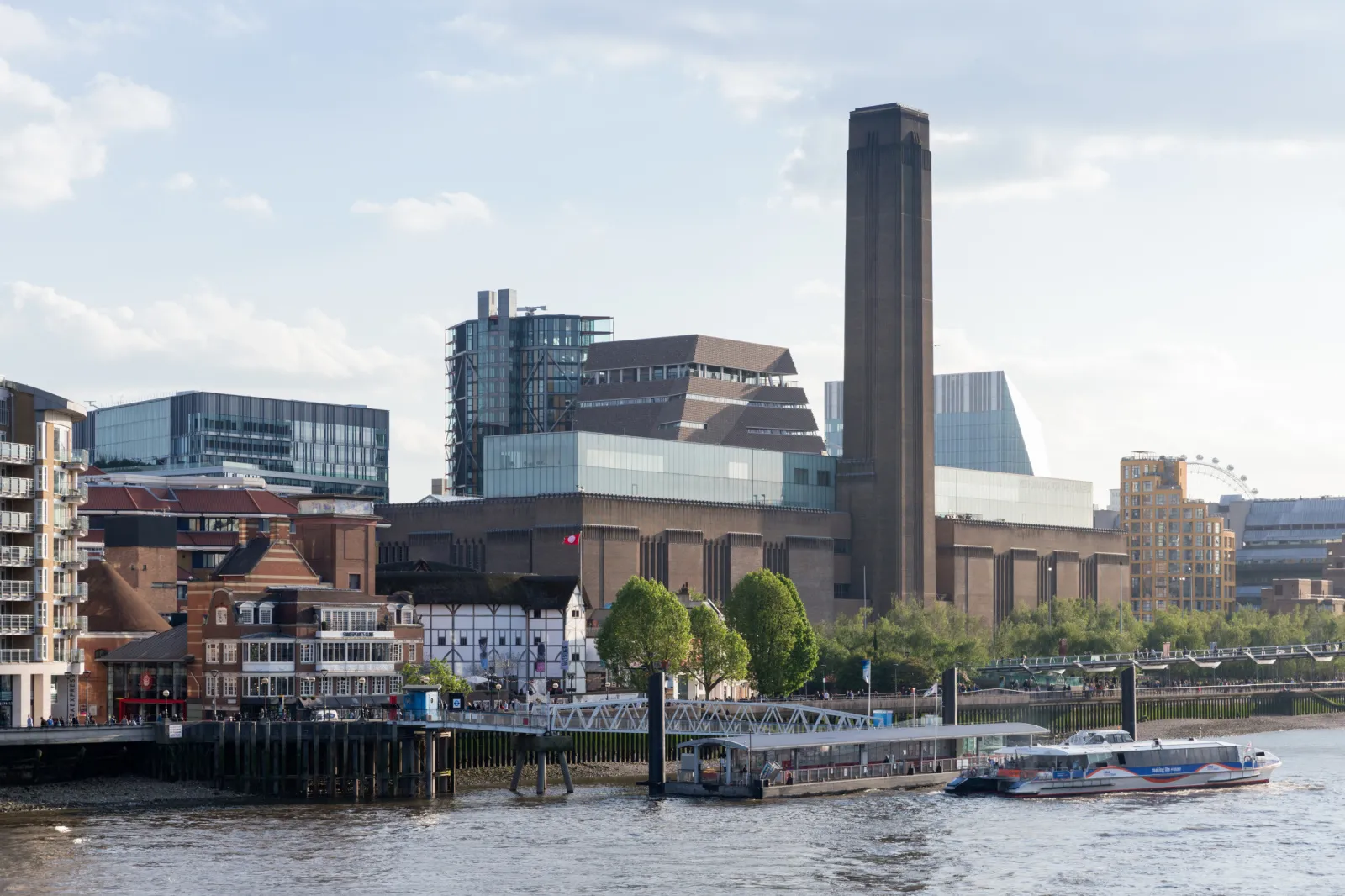
Tate Modern, the transformation of the Bankside Power Station in London, designed by Sir Giles Gilbert Scott and left idle from 1981 to 2000, is one of Herzog & de Meuron’s most innovative projects. By taking a relatively gentle approach to the transformation, the office created a contemporary public space that respects the building’s history. Thus, Tate Modern has become one of the world’s most visited modern art museums, revitalizing its industrial neighborhood.
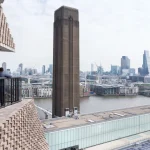
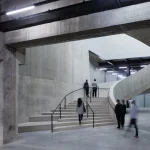
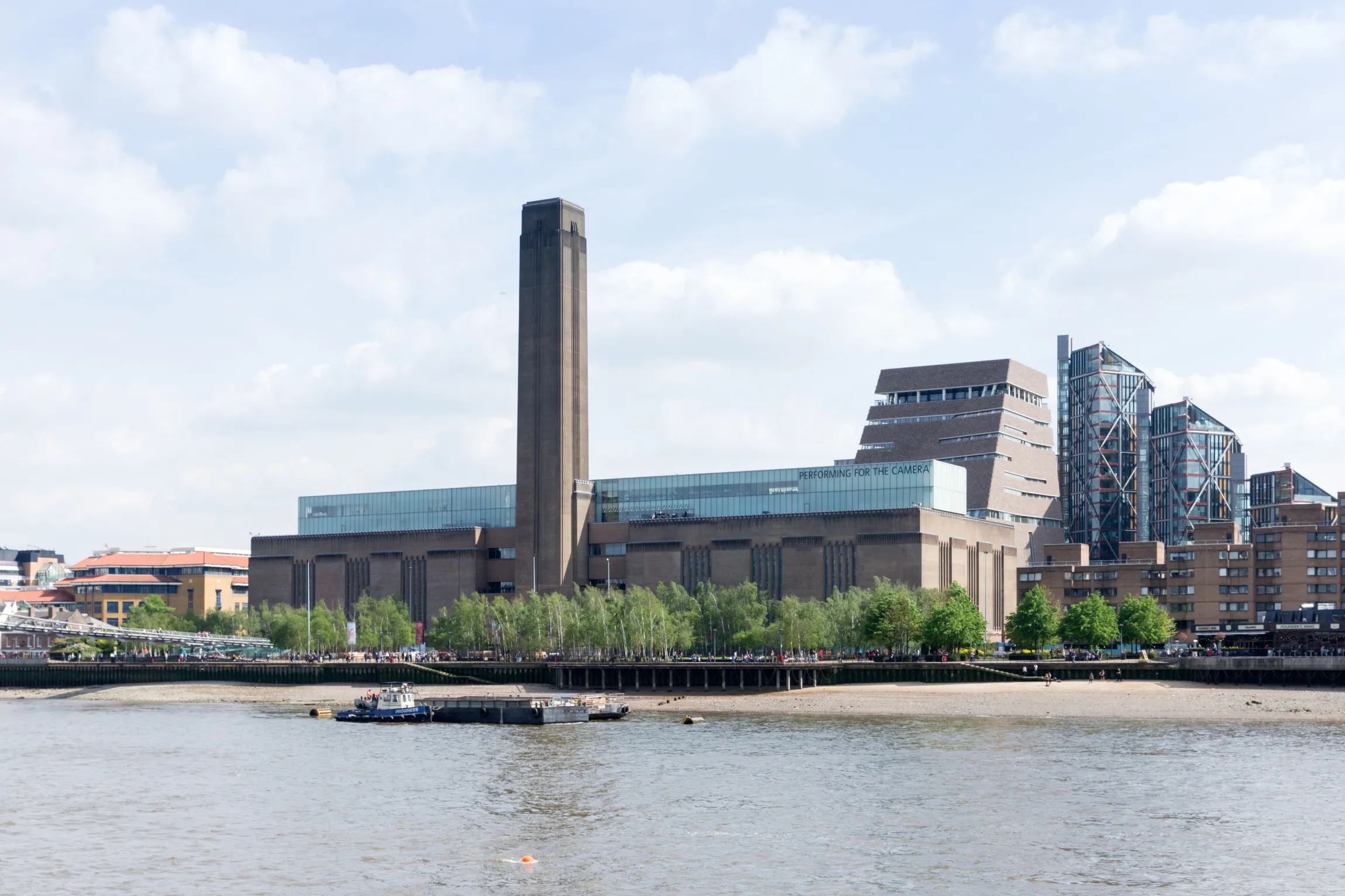
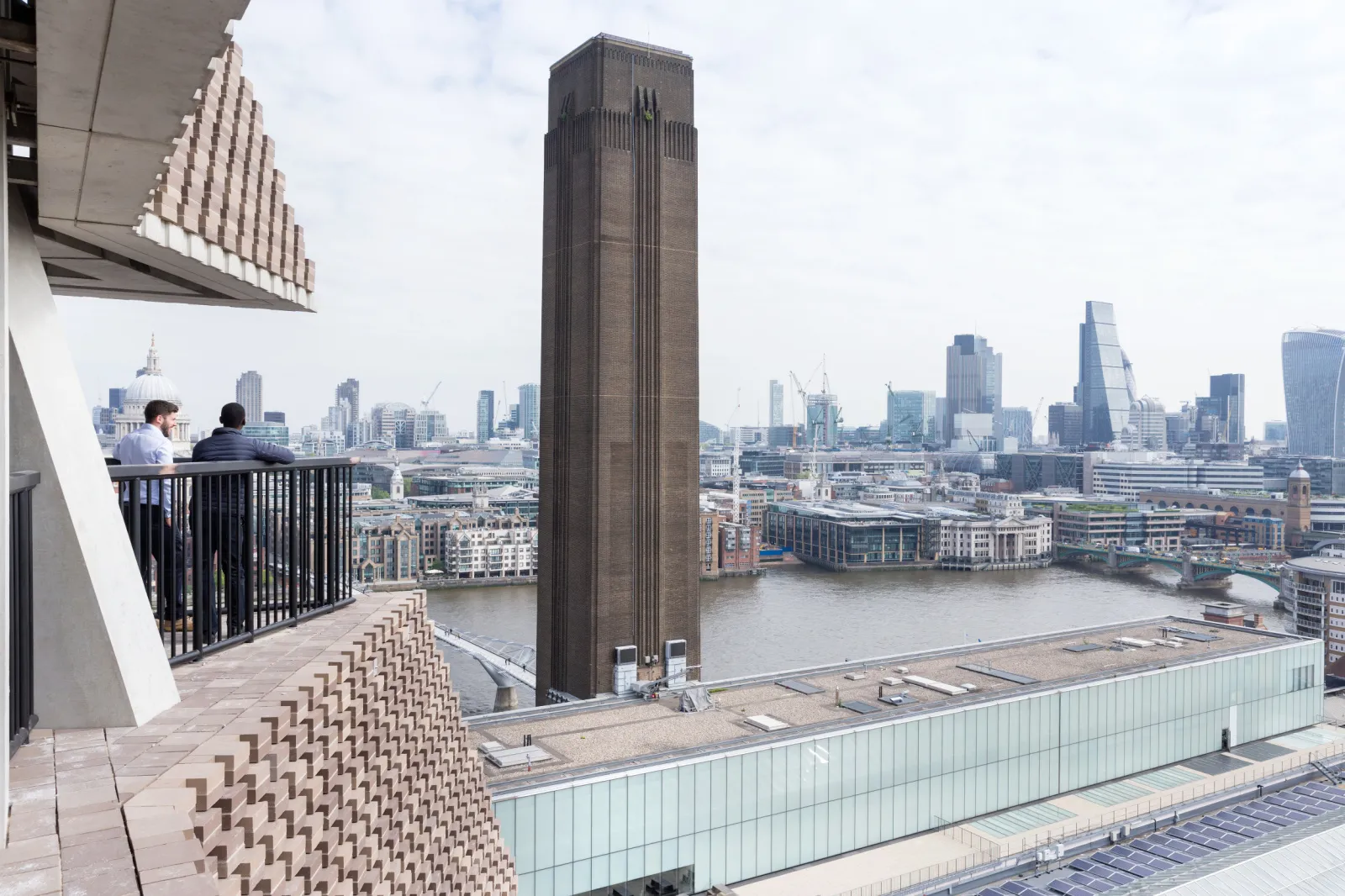
After winning the competition in 1994–1995, Herzog & de Meuron chose to retain the industrial identity rather than demolish the structure, converting it into a modern art museum. Heavy stair railings, cast-iron grilles, and unfinished wooden floors harmonize with the original aesthetic. On the exterior, the light beam rising above the roof creates a horizontal contrast, with minimal geometry and translucent glass clearly distinguishing the addition from the dark brickwork of the original façade.
The Thames-facing elevation is enlivened with color accents and added window strips, while long window elements on the first floor reduce the perceived mass of the façade. The facade’s mass is reduced by the tall window elements on the first floor.
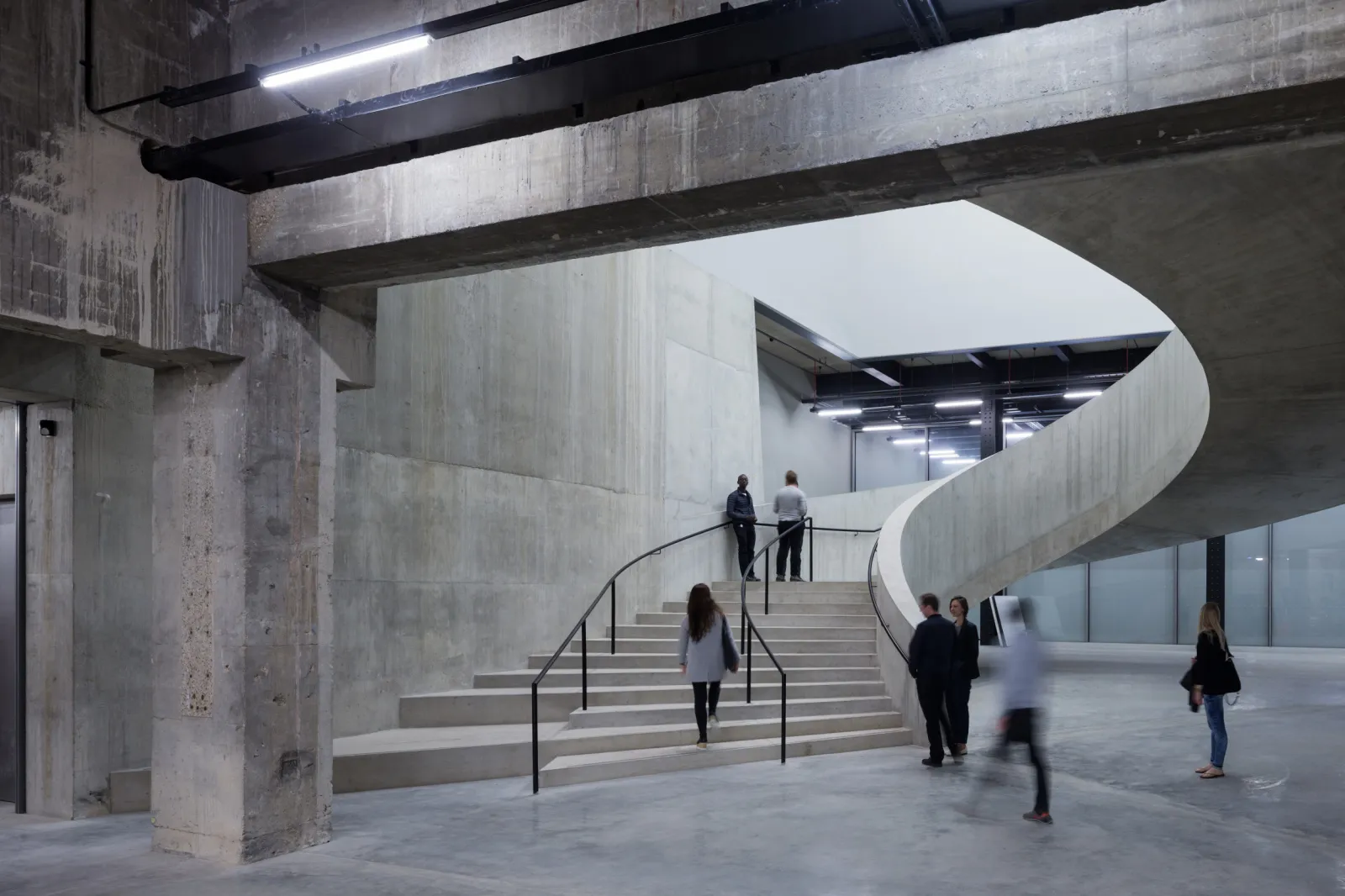
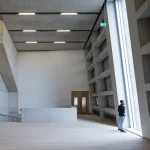
To accommodate a wide variety of art, much of the interior of the power station was reconfigured into galleries of varying sizes. The galleries, with a simple aesthetic, range in height from 5 to 12 meters and are illuminated by a variety of natural and artificial lighting. One of Tate Modern’s most striking features is the Turbine Hall, a 35-meter-high, 152-meter-long space that houses large-scale artworks and installations. A platform running through the ground level reveals the ramp below and offers views of the upper galleries.
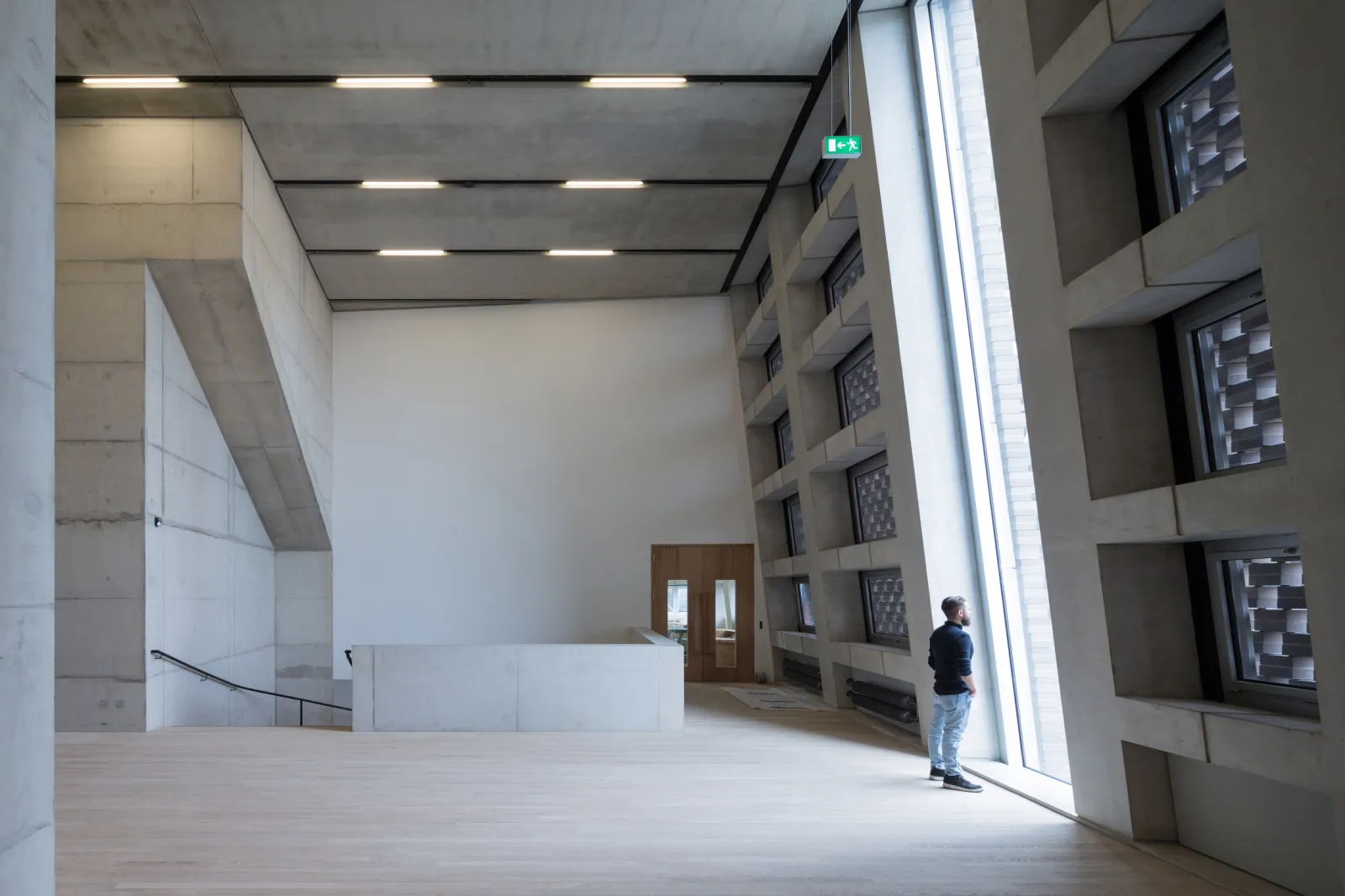
In 2012, three of the former oil tanks were converted into gallery spaces, further expanding exhibition capacity. The Switch House (Blavatnik Building), completed in 2016, with its pyramidal form, increased the museum’s capacity and reinforced the complex’s iconic silhouette.
2. National Stadium
Location: Beijing, China
Year: 2008
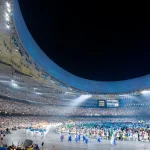
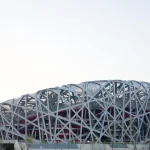
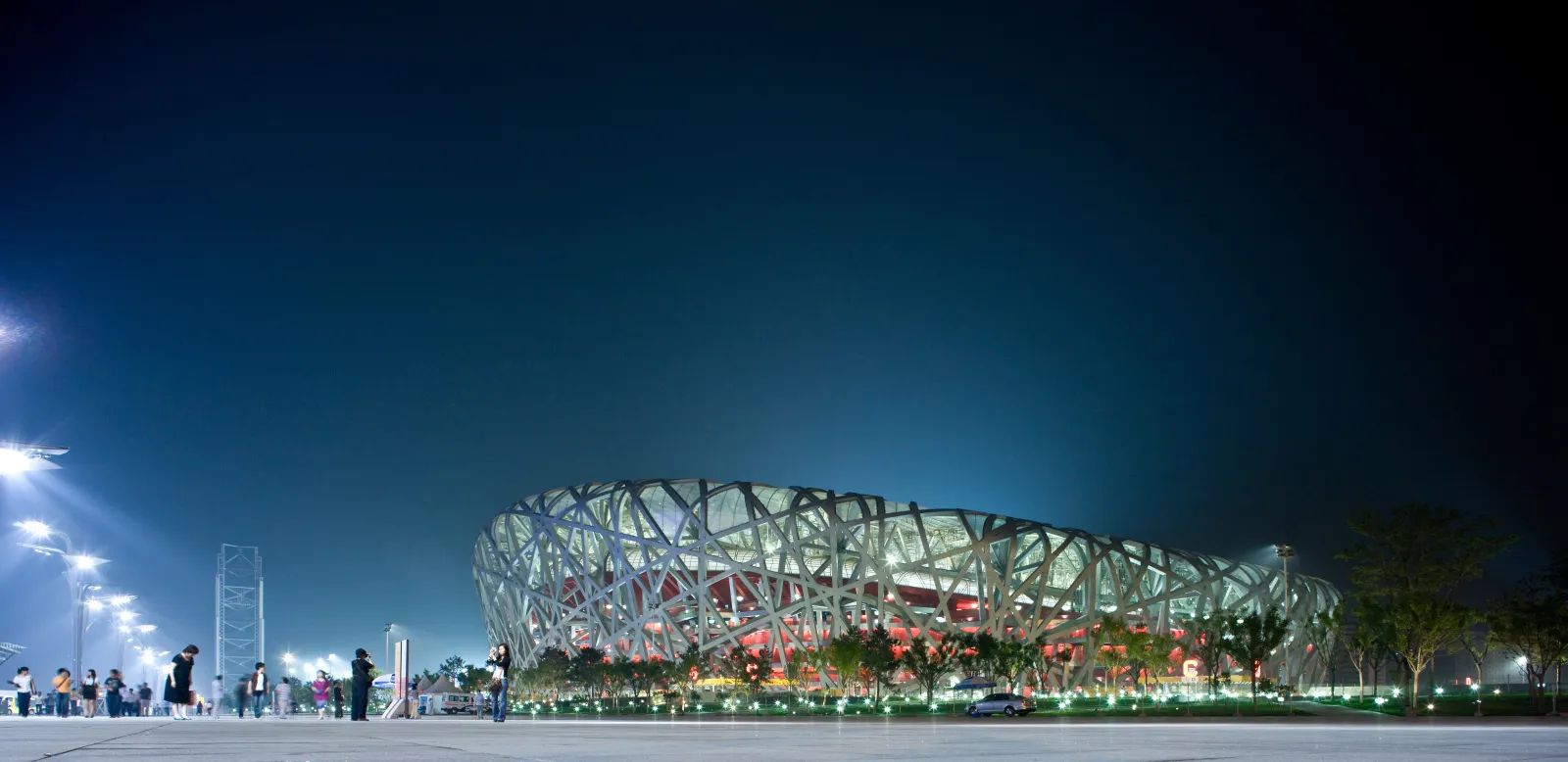
The National Stadium, known as the “Bird’s Nest,” stands as one of the most iconic architectural works of the 21st century and served as the centerpiece of the 2008 Beijing Olympic Games. Located at the heart of the Olympic complex, the stadium has become more than just a sports venue but an architectural icon that reflects the country’s global image.
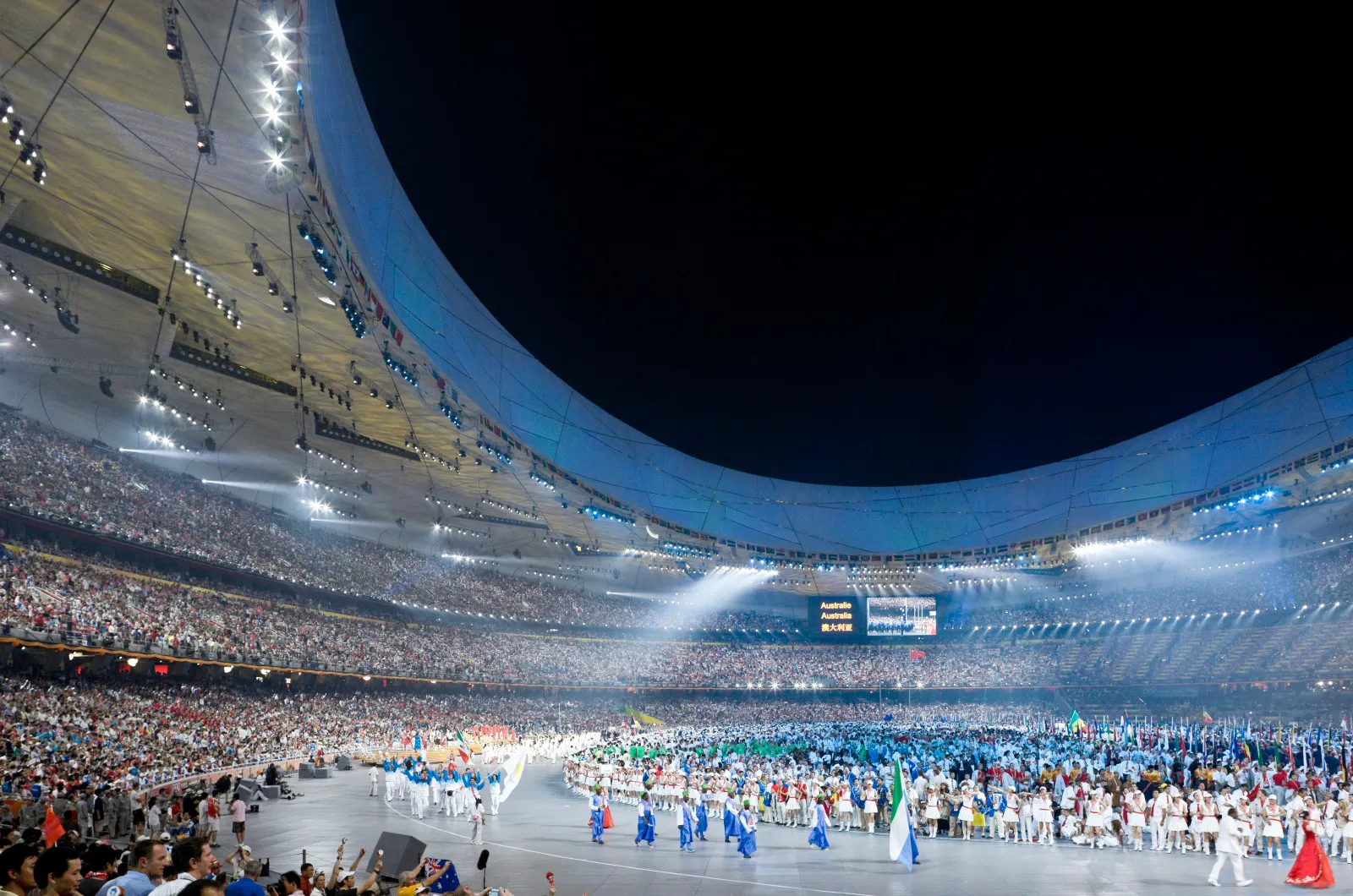
Following an international competition held in 2002–2003, Herzog & de Meuron won the commission to design the National Stadium. Its overall form was conceived not only to accommodate central events but also to interact with objects drawn from Chinese cultural history. Located on Beijing’s main north-south axis, the stadium serves as a public space for leisure activities.
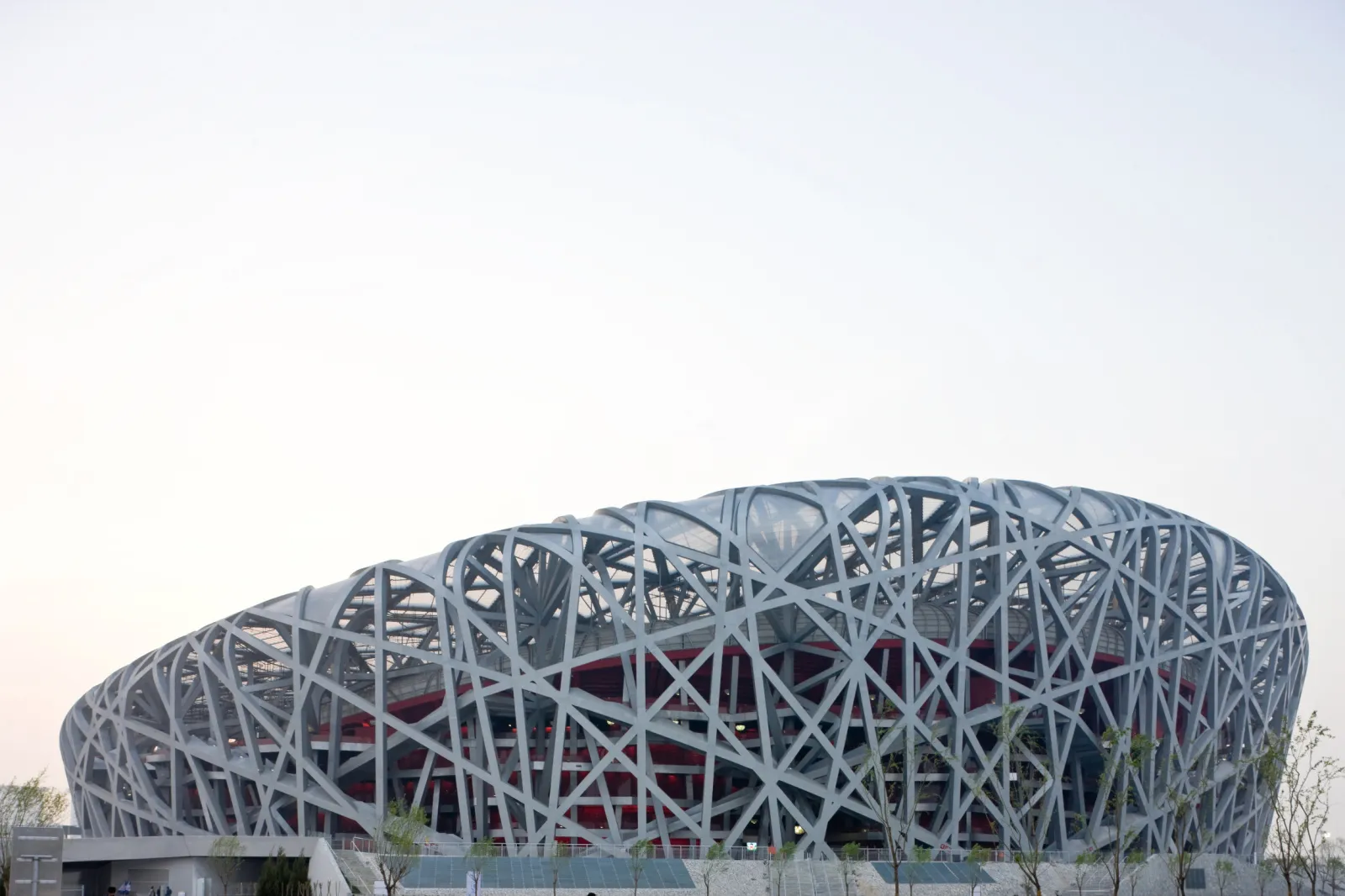
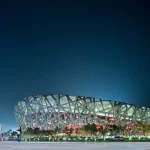
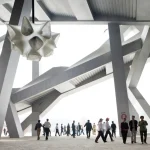
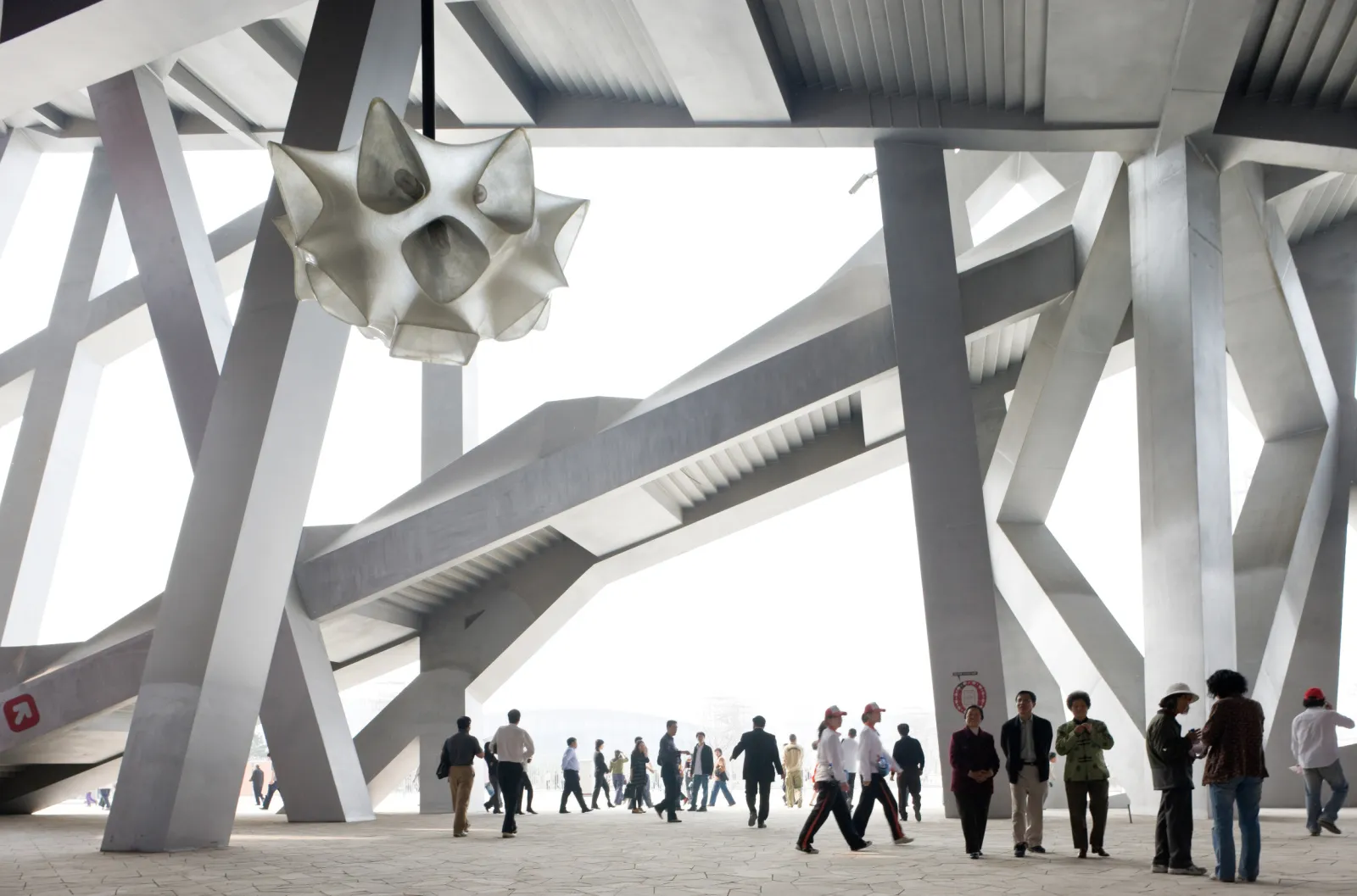
The stadium features a massive grid structure made from 42,000 tons of steel. To make the roof weather-resistant, the stadium’s voids are filled with semi-transparent ETFE (ethylene tetrafluoroethylene) membranes, reminiscent of the soft fill materials birds use to weave their nests. The roof is also covered with PTFE (polytetrafluoroethylene) acoustic membranes that preserve the stadium’s vibrant atmosphere while directing attention to spectators and events on the field. Herzog & de Meuron developed the support structure, an open space between the city and the stadium, based on both analog and computer-aided modeling.
For those seeking an in-depth understanding of computer-aided design methods, PAACADEMY offers the “BIM & Rhino. Inside for Advanced Tower Design” workshop. This four-session course covers the design of residential towers using BIM Rhino, Rhino. Inside, and AI-assisted visualization techniques.
3. Elbphilharmonie
Location: Hamburg, Germany
Year: 2016
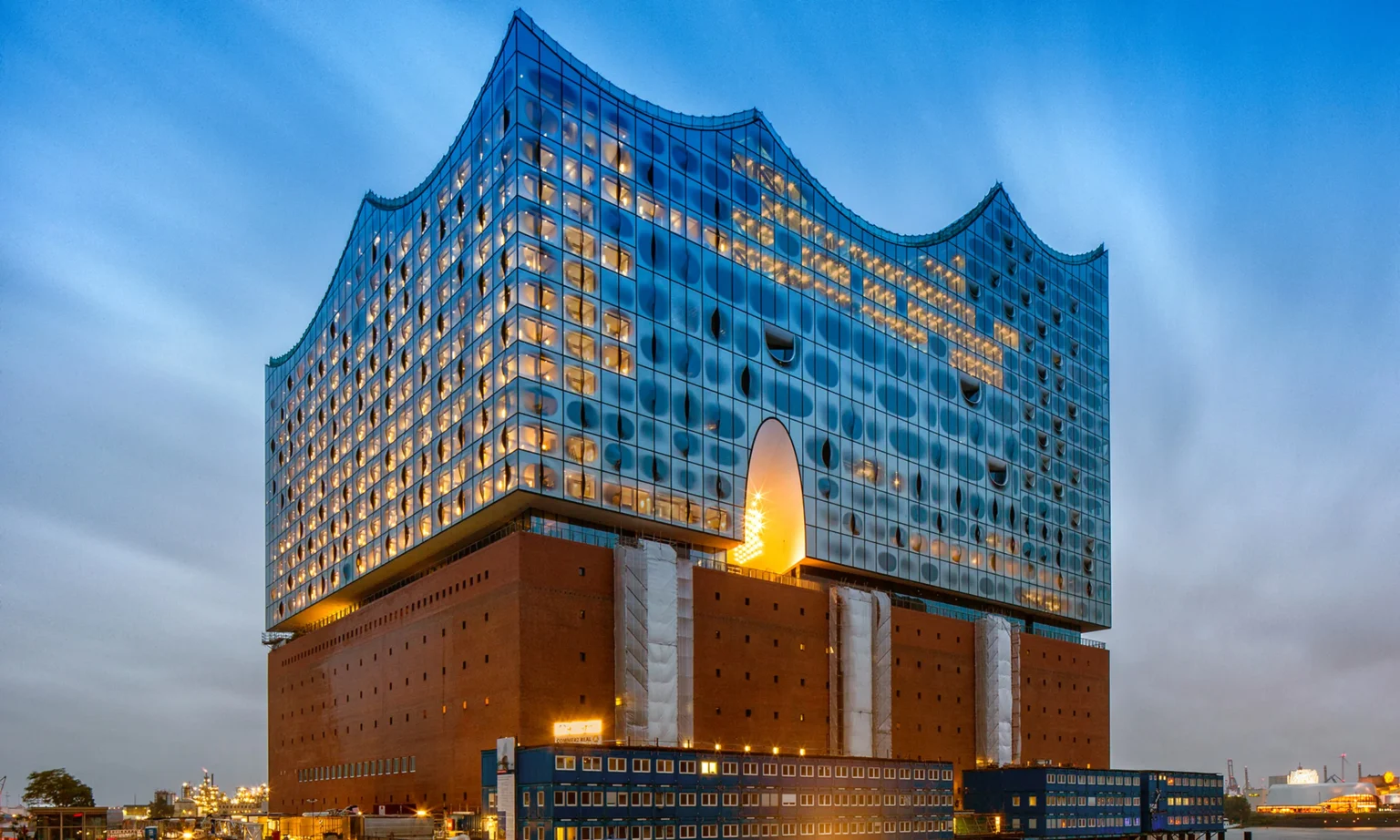
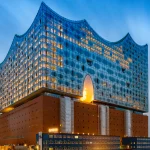
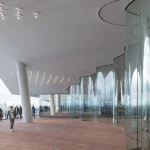
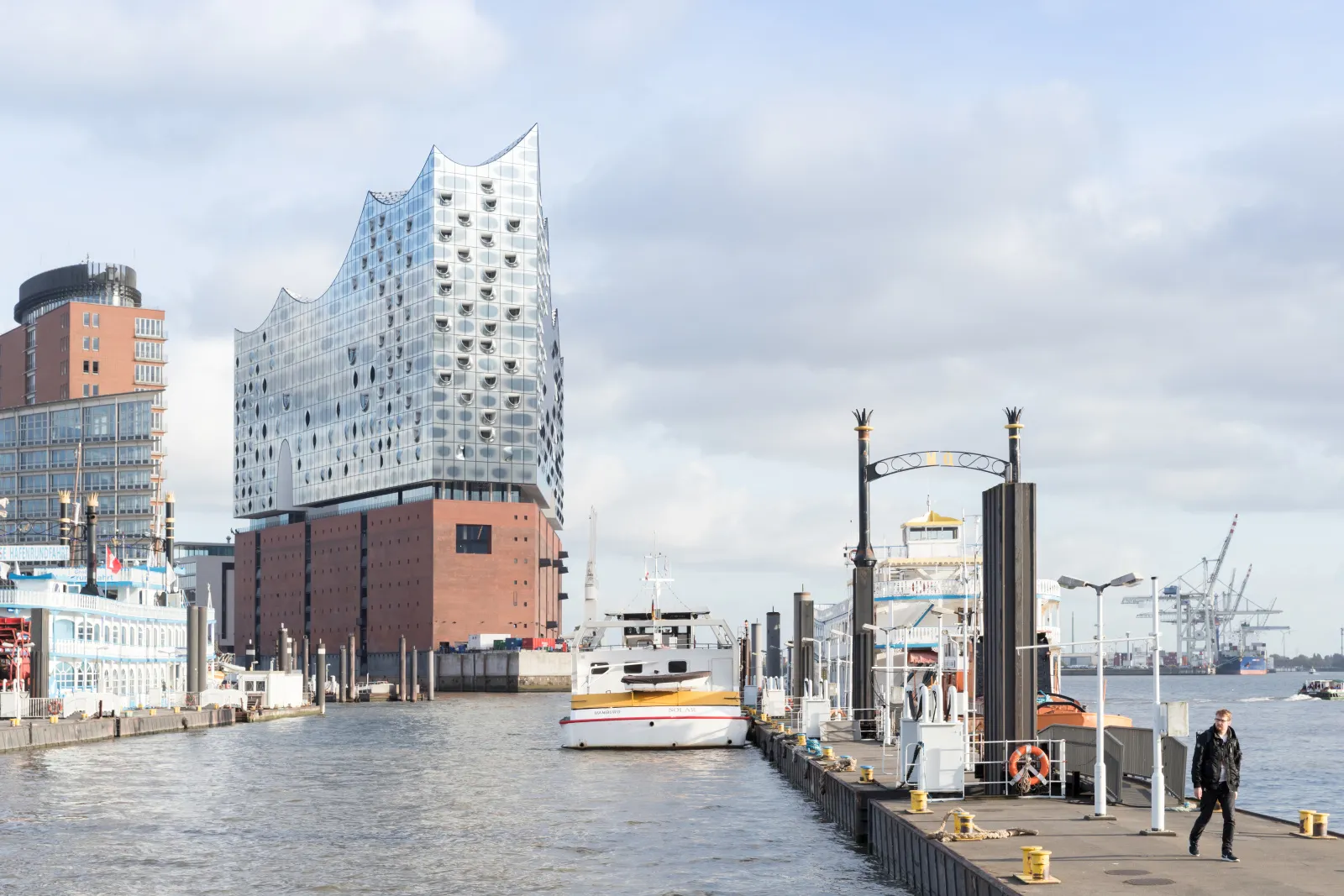
The Elbphilharmonie, designed by Herzog & de Meuron as Hamburg’s new social and cultural center, is one of the city’s most iconic buildings. The structure, which creates diverse causal spaces for the diverse use of Hamburg residents and tourists, includes a philharmonic orchestra hall, a chamber music hall, restaurants, bars, an observation deck, apartments, a hotel, and a parking garage.
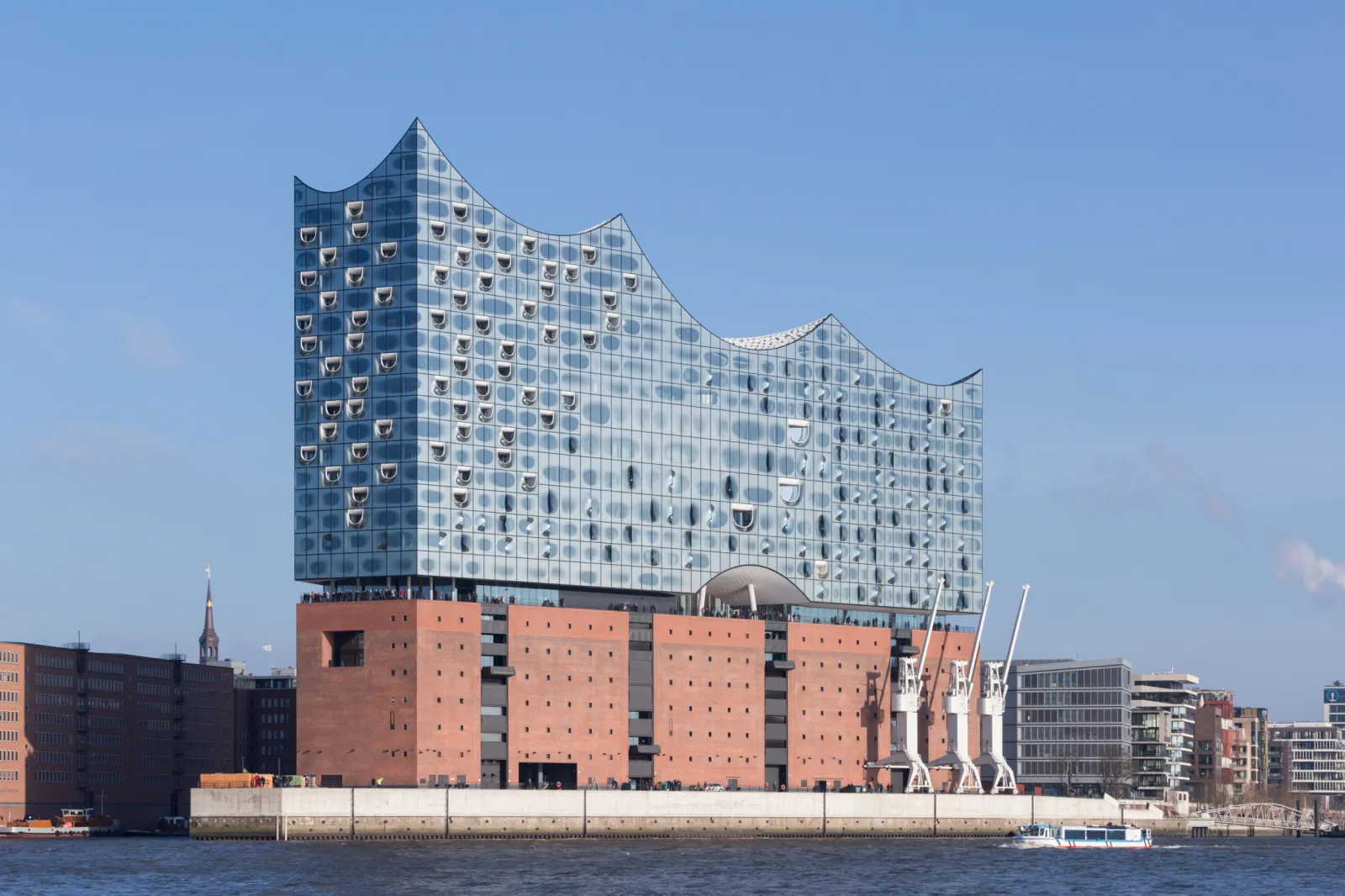
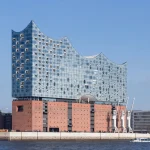
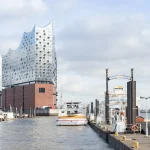
Built atop the Kaispeicher, an old salt and cocoa warehouse dating back to the 1960s, the Elbphilharmonie introduces a strikingly different architectural style while producing a variety of spaces. The Elbphilharmonie’s elegant and imposing structure contrasts sharply with the Kaispeicher’s old, antique, and original atmosphere. The Kaispeicher’s solid and powerful structural presence allows it to support the weight of the new Elbphilharmonie building.
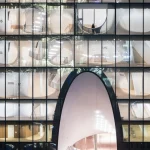
The new structure, created by extending the mass of the warehouse building and following the same plan, boasts an undulating roof that rises to a height of 108 meters. The glass façade, composed of undulating panels and occasional openings, transforms the new building into the old structure into a massive, iridescent crystal.
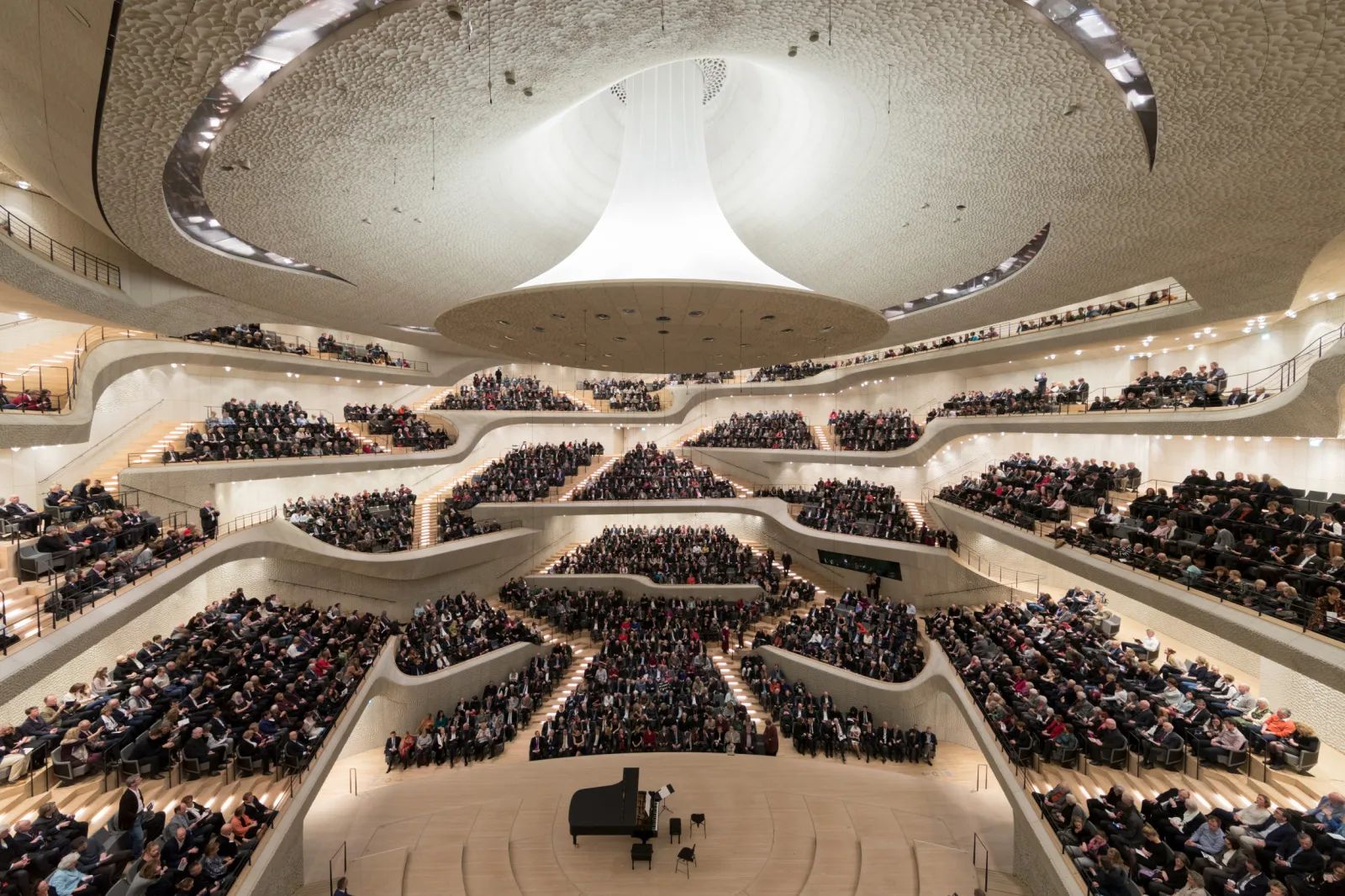
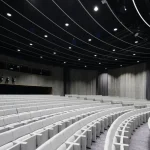
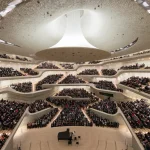
Herzog & de Meuron designed the Elbphilharmonie as a temple of music, keeping both audiences and musicians in mind. By rethinking classical philharmonic hall architecture, they created a completely new type of concert hall. The 2,100-seat main hall, arranged in a vineyard-style seating layout, immerses the audience in the performance, almost transforming the space into a stadium-like experience.
4. VitraHaus
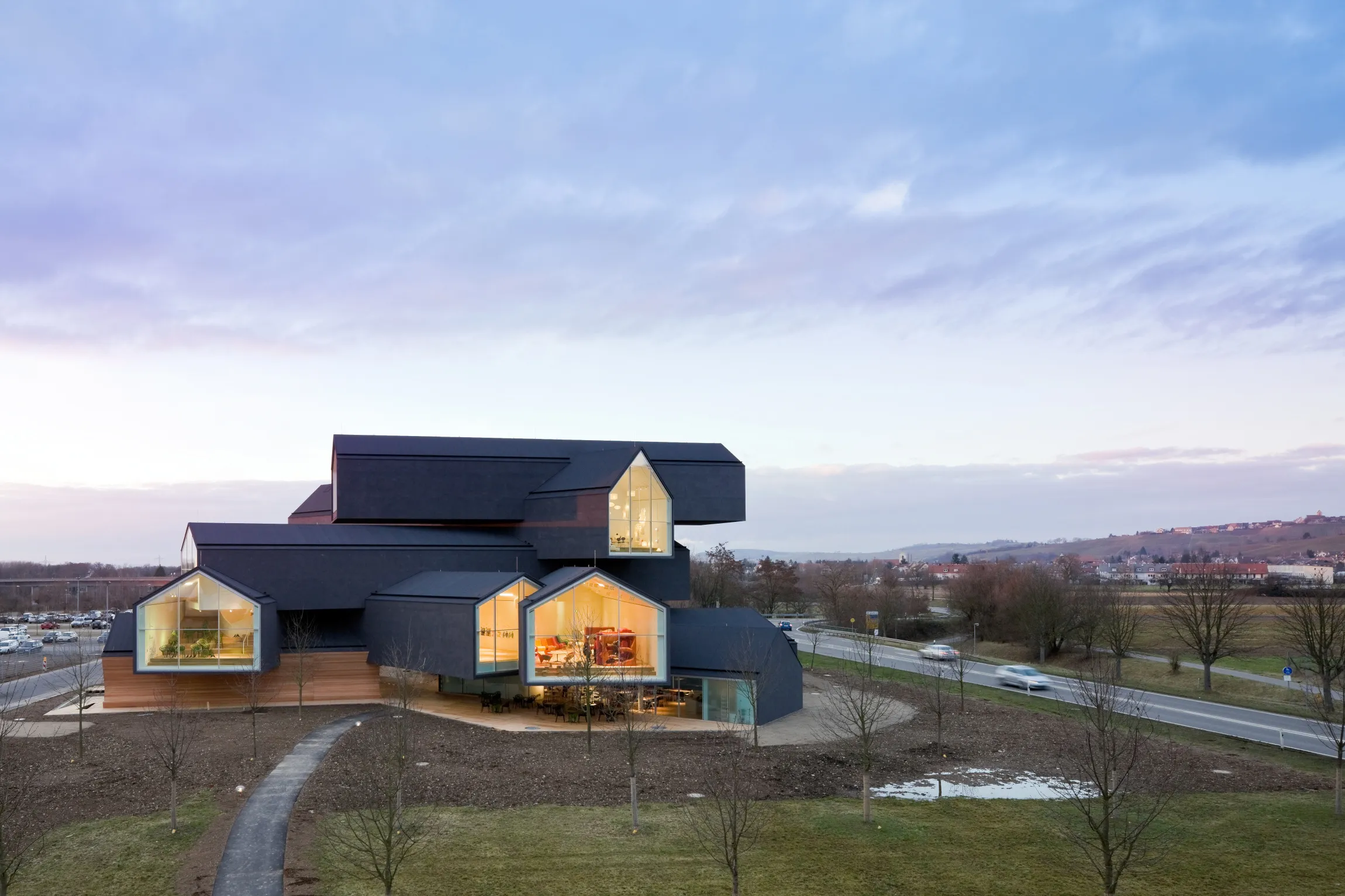
Location: Weil am Rhein, Germany
Year: 2009
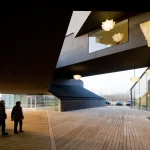
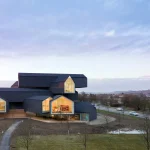
The Vitra Campus in Germany, opened in 2004, houses works by renowned architects such as Frank Gehry, Zaha Hadid, Álvaro Siza, Tadao Ando, Jean Prouvé, Nicholas Grimshaw, and Buckminster Fuller. VitraHaus, designed by Herzog & de Meuron for Vitra’s home products collection, is the most recent addition to the campus. Located on the northern side of the Vitra Campus, the building connects the Vitra Design Museum and the Conference Pavilion.

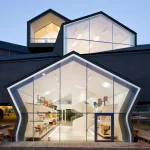
VitraHaus comprises two distinct concepts: a “prototype house” and “stacked volumes.” Each of the 12 volumes, positioned on top of each other using domestic dimensions, houses areas for displaying household products, resulting in interior designs reminiscent of a home environment.
The building consists of five floors, with elements cantilevered up to 15 meters, giving the impression of a vertical city at the entrance of the Vitra Campus. The wooden flooring surrounding the building marks the building’s footprint. VitraHaus, featuring abstract elements, has only two open facades.
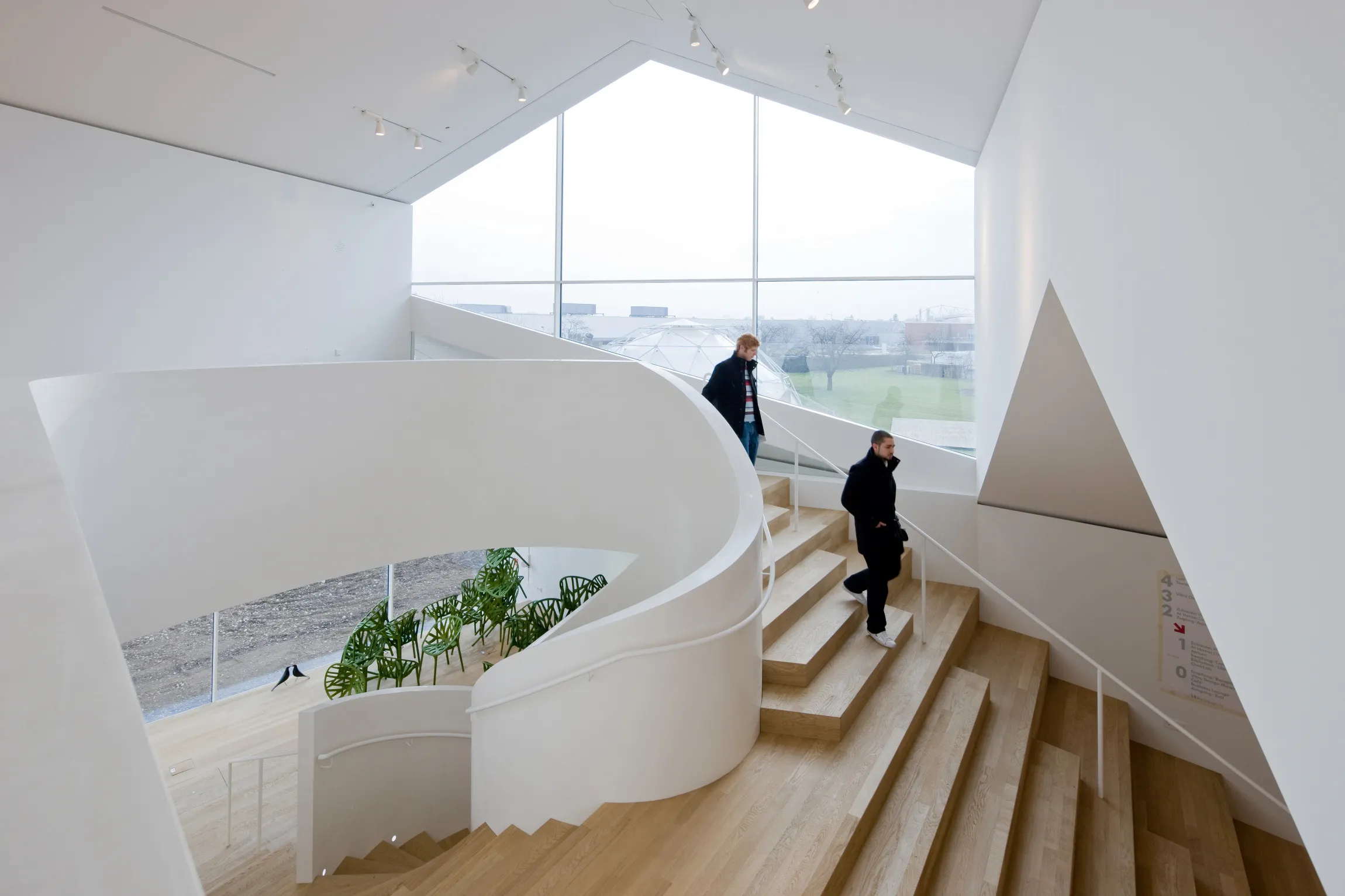
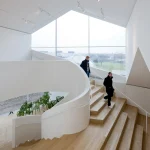
The intersections of each unit at different angles and the arrangement of staircases create a complex interior spatial experience. The expansive, interconnecting staircases act as independent, organic elements. The building’s white interior walls draw attention to the furniture displayed within, while the dark façade color integrates the design with the surrounding landscape.
5. Feltrinelli Porta Volta
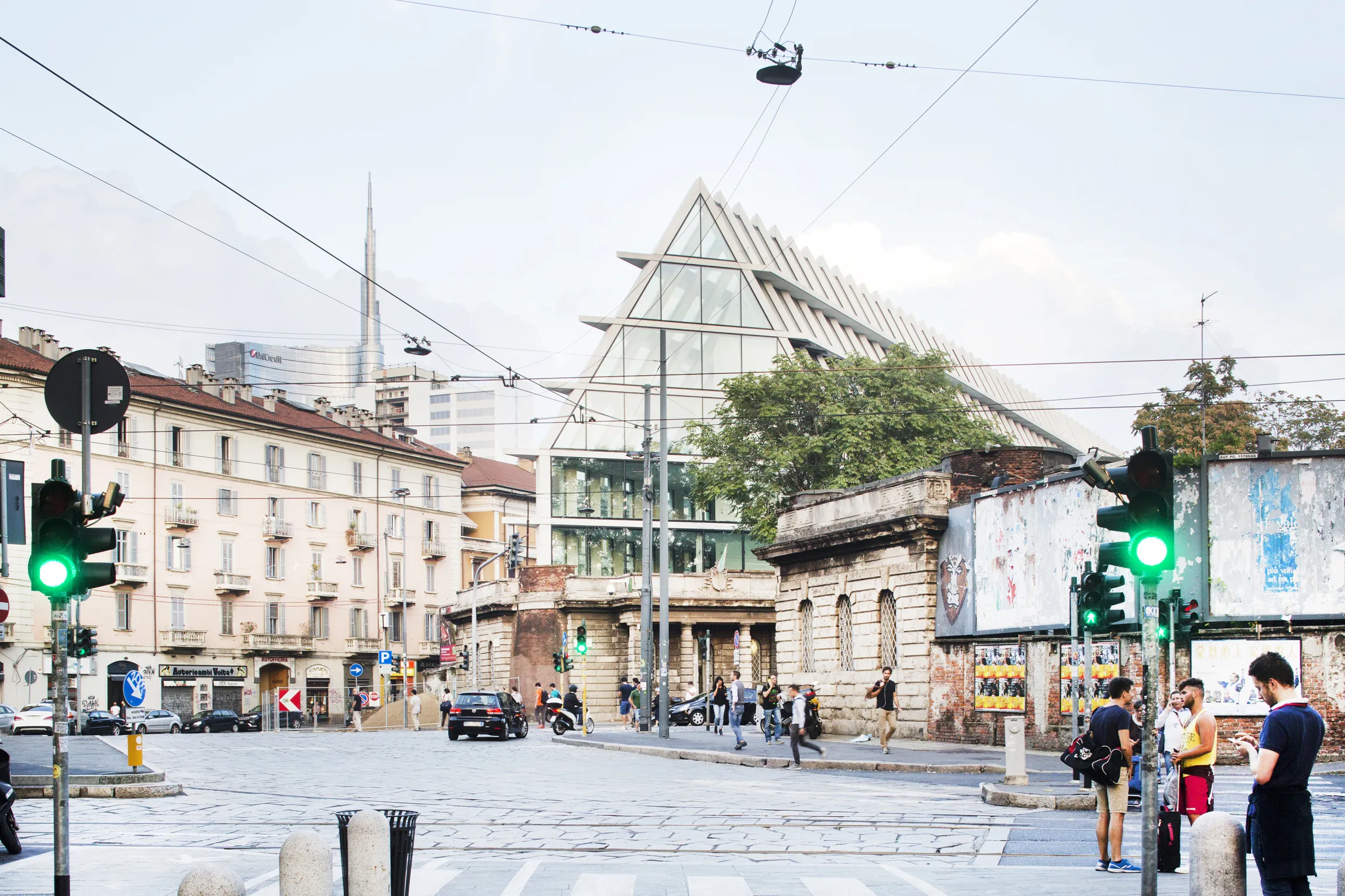
Location: Milano, Italy
Year: 2016
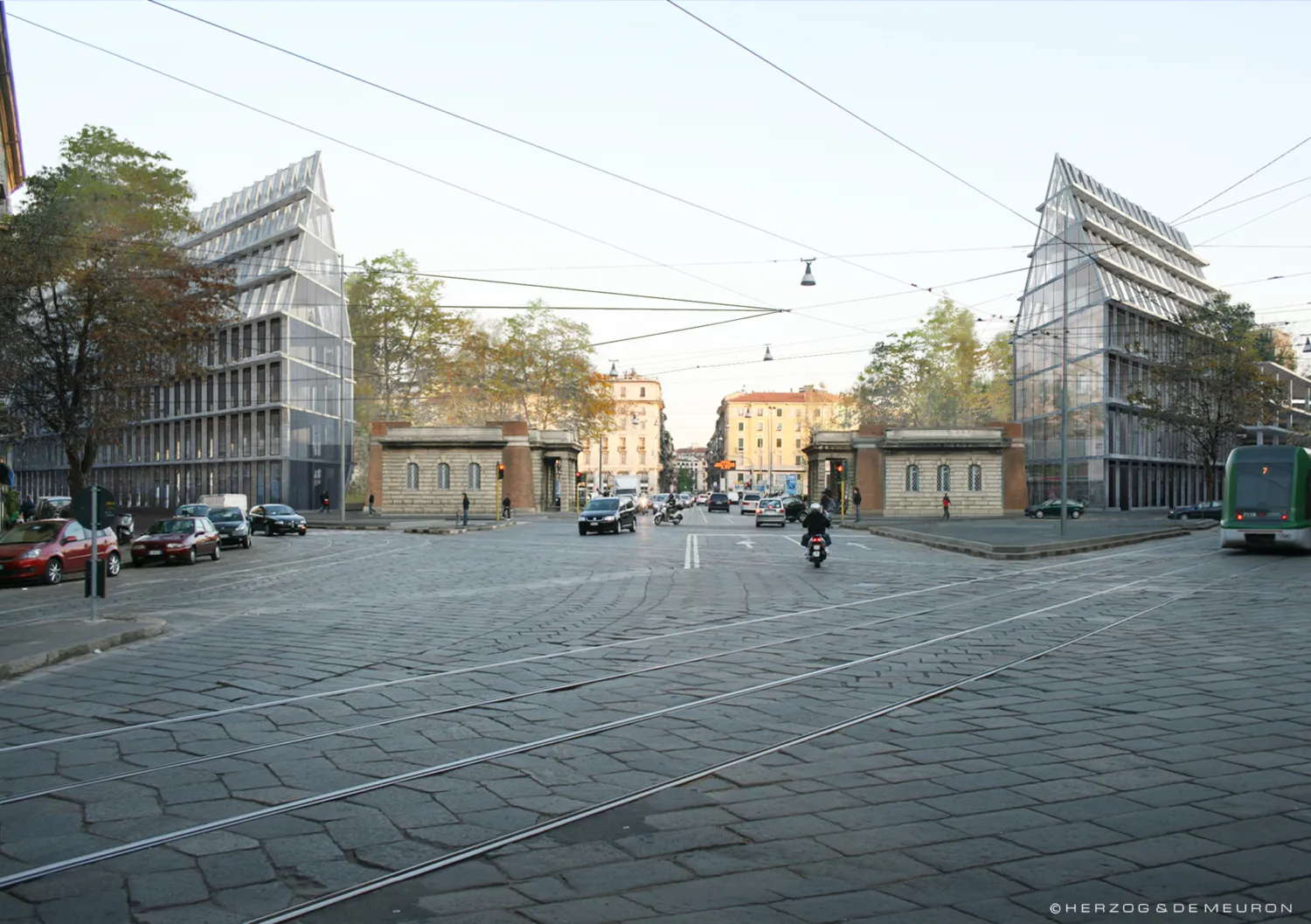
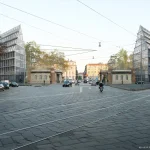
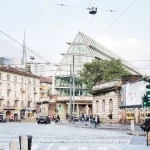
Designed to revitalize a former industrial and disused area in Milan’s Porta Volta district, Feltrinelli Porta Volta is one of Herzog & de Meuron’s most impactful projects. Serving as the headquarters for the Fondazione Giangiacomo Feltrinelli, the project includes two additional buildings primarily dedicated to offices, along with the development of a large green space as an extension of the existing boulevards. Designed as two neighboring structures, one building houses the foundation while the other accommodates offices and commercial spaces.
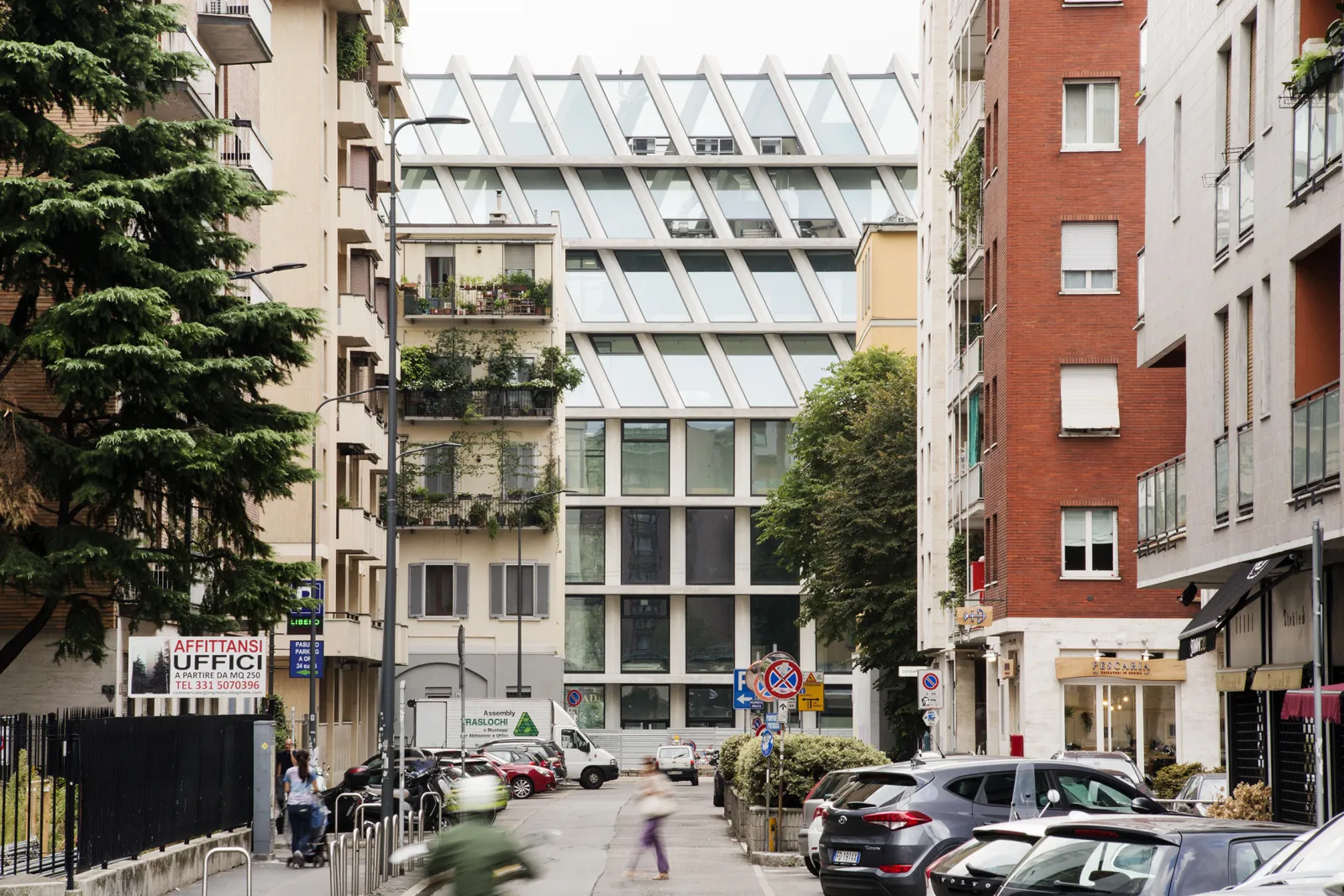
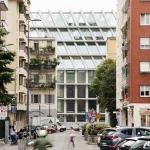
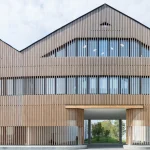
Inspired by the simplicity and generous scale of historic Milanese architecture, such as the Ospedale Maggiore, Rotunda della Besana, Lazzaretto, and Sfronzesco Castle, the project, with its latticed facade and triangular pediment, stretches along Milona Street. The long, fully white and glass-clad building features windows spanning five floors from base to roof.
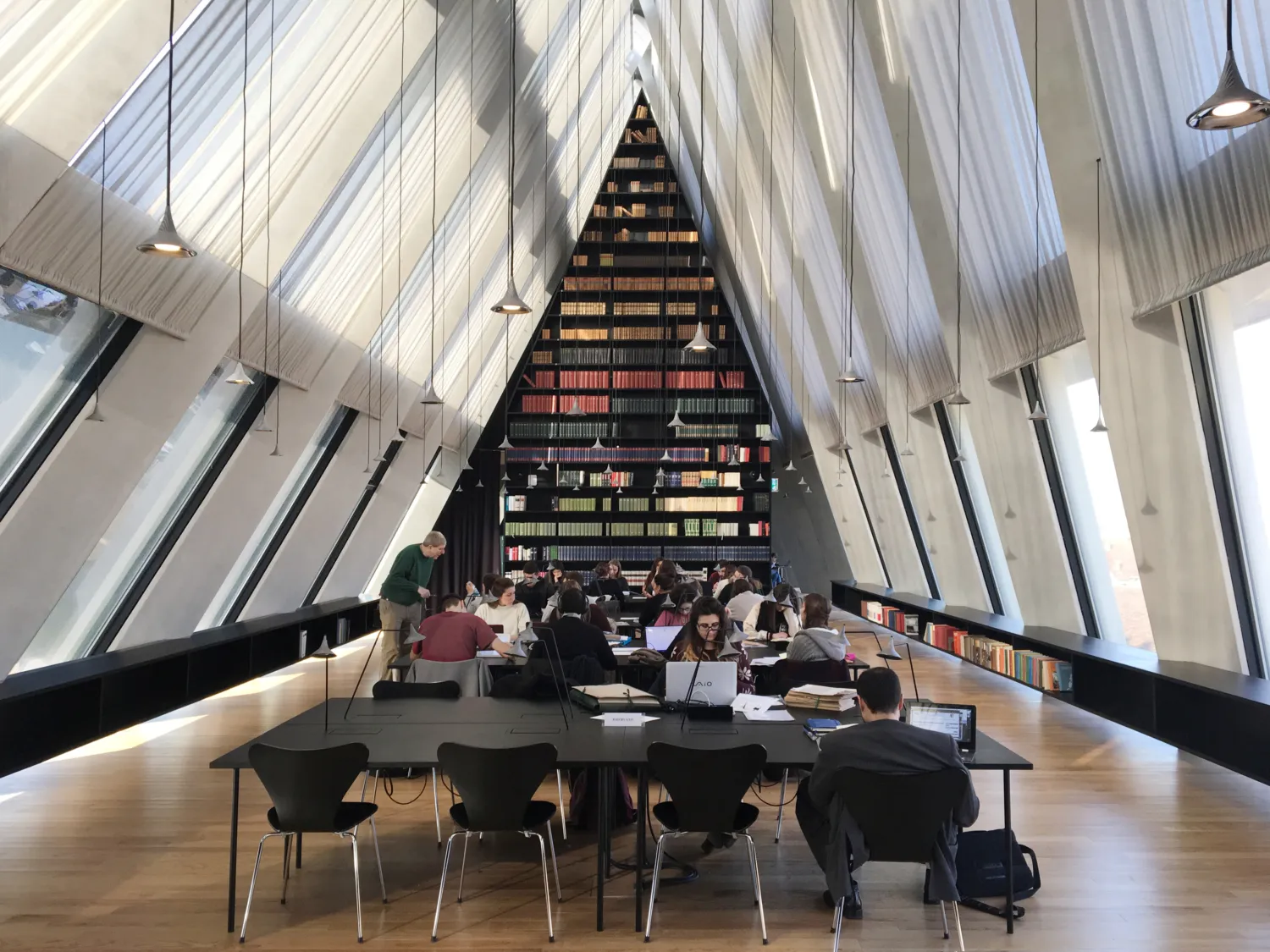
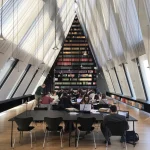
Continuing the tradition of twin buildings, Feltrinelli Porta Volta is separated from its adjacent structure by a narrow void; the ground floor houses the entrance, cafeteria, and bookstore, while the upper floors house multifunctional spaces and offices. A reading room on the top floor provides access to the collection stored in a secure underground archive.
6. BBVA Madrid
Location: Madrid, Spain
Year: 2015
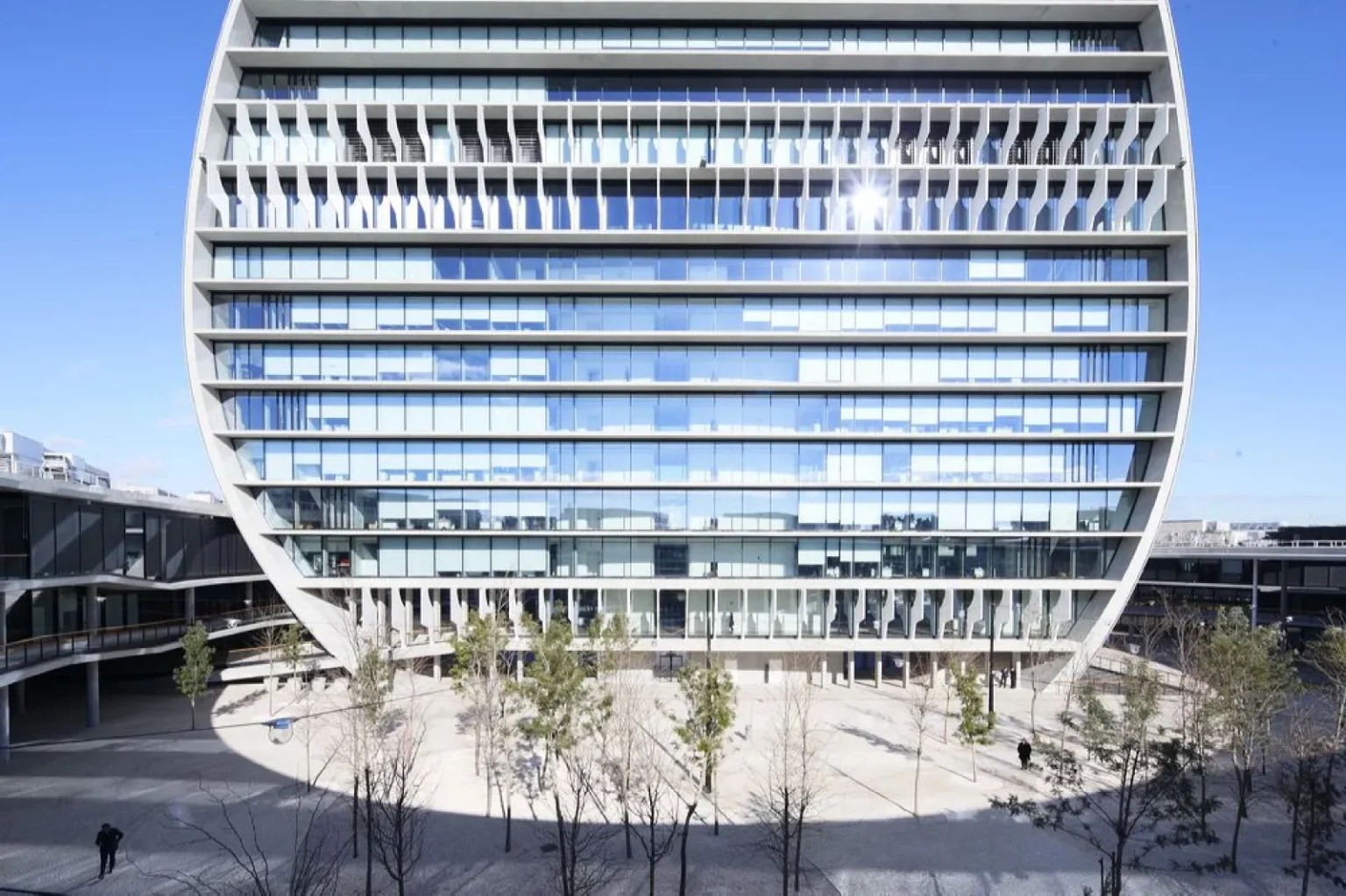
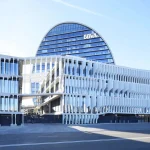
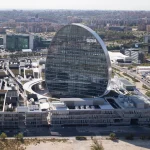
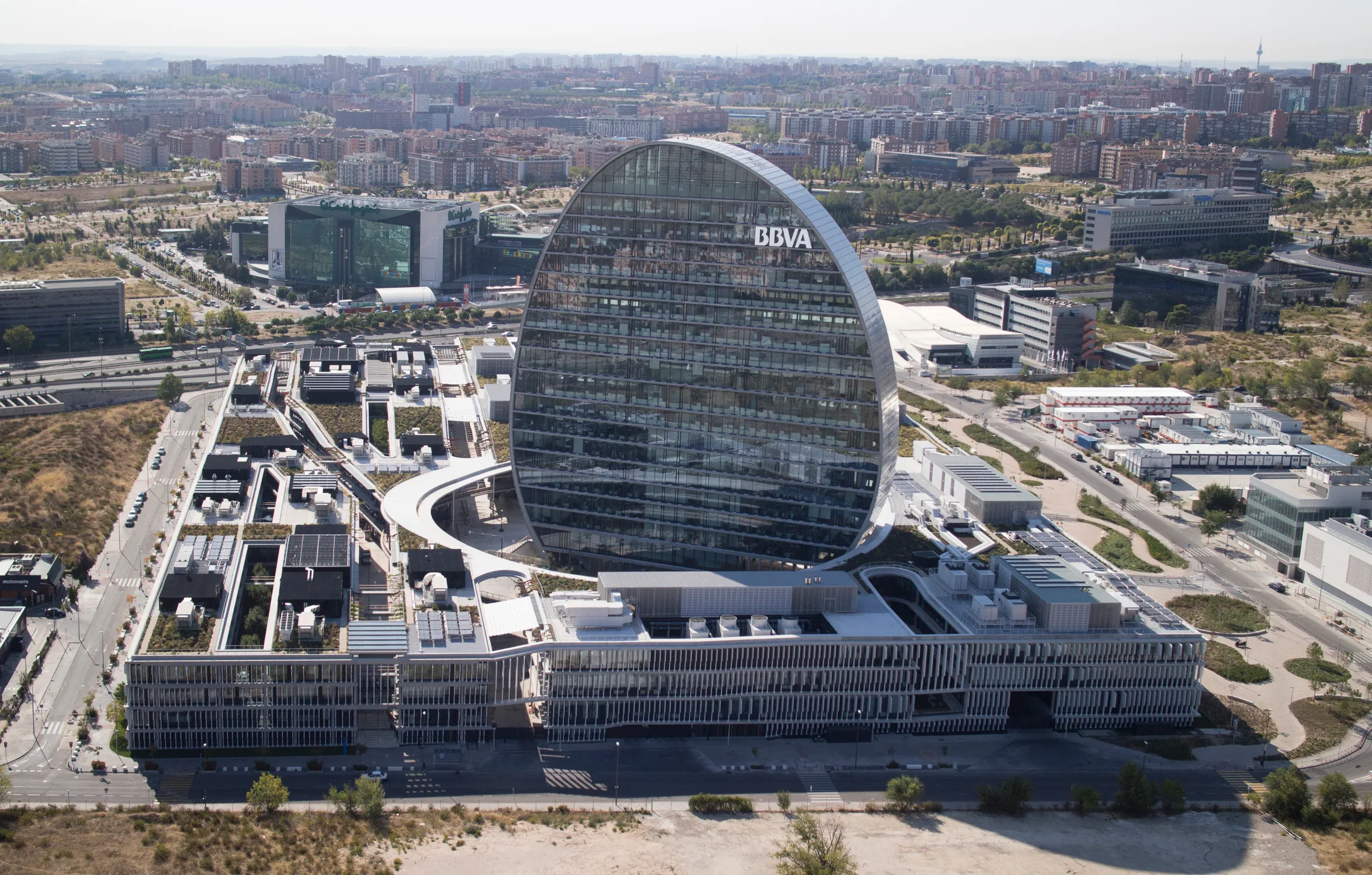
Designed by Herzog & de Meuron as BBVA’s new headquarters, BBVA Madrid is situated on a site facing the A1 highway and surrounded by newly constructed offices, commercial buildings, and scattered residential areas. Housing approximately 6,000 workstations, the new headquarters consolidates the bank’s central offices into an inward-facing building, independent of external conditions. The design creates an interior landscape of gardens and low-rise structures that integrate with the existing urban fabric. Surrounded by interior courtyards and green streets inspired by Arabian gardens, it offers a working environment integrated with nature.
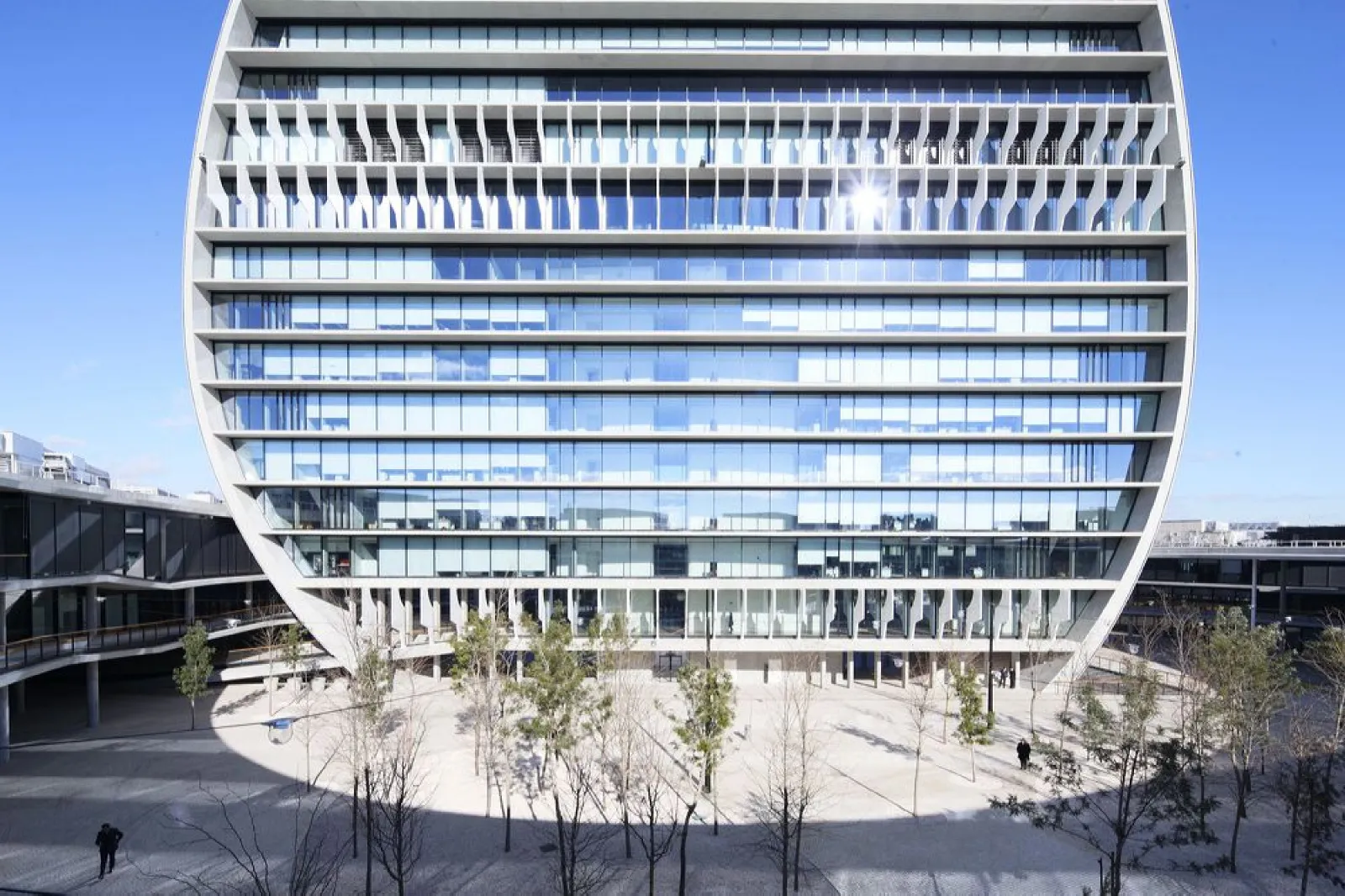
BBVA Madrid embodies the advantages of Mediterranean architecture and adapts clearly to the climate: narrow interior gardens and streets, cantilevered floor slabs that provide shade, and brise-soleils that block excessive sunlight. These features allow for the use of glass extending from the façade edge throughout the building, allowing natural light to enter. The double-glass façades and concrete surfaces provide both aesthetic quality and energy efficiency.
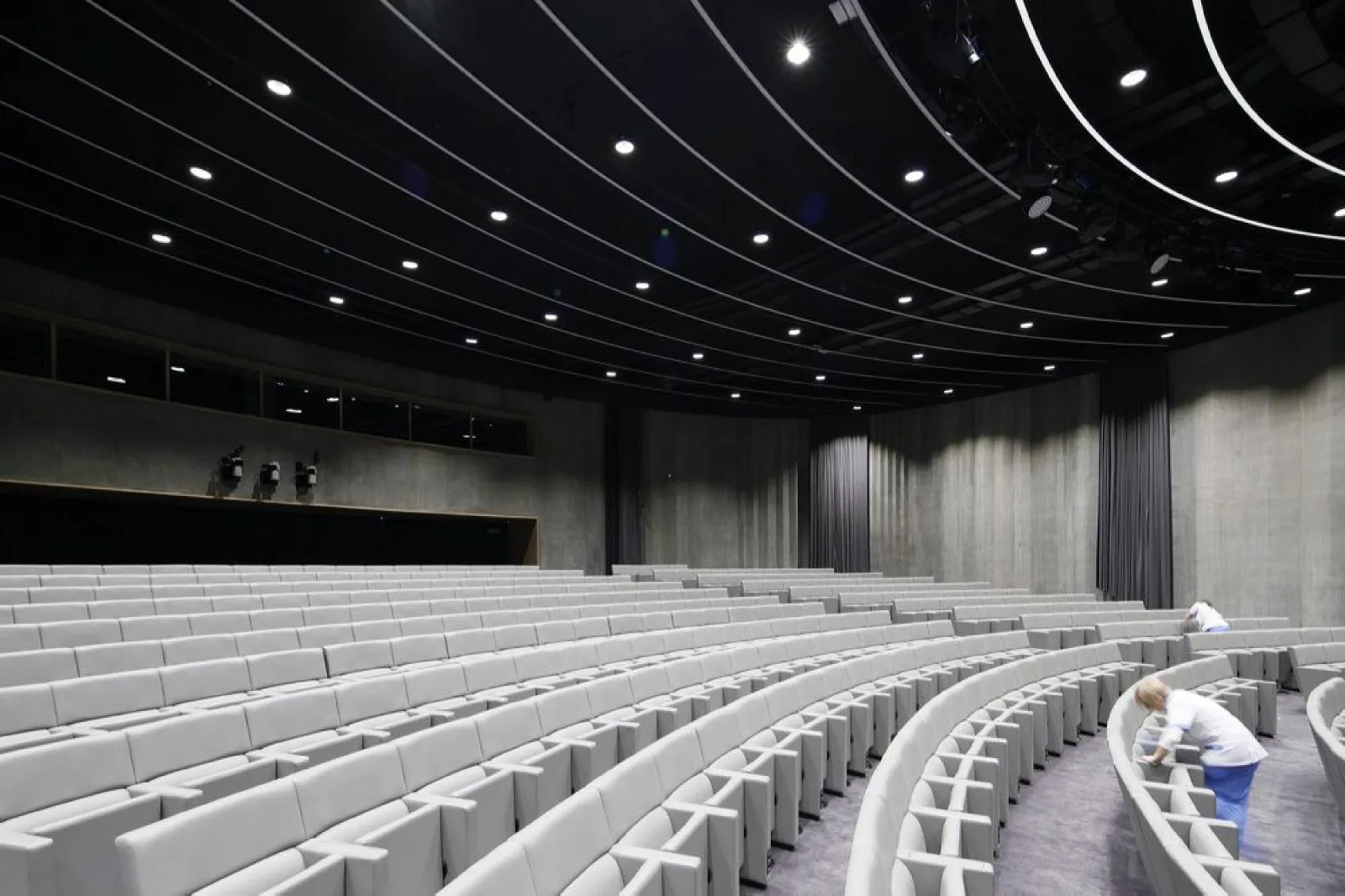
Offering employees open offices, galleries filled with natural light, social spaces, and cultural event spaces, BBVA Madrid fosters a corporate culture with a people-centered design approach. The complex creates a city silhouette along Paseo de la Castellana, defined by four towers, with a slender tower acting as a vertical reference marking BBVA. The plaza is designed as a circular cutout in the building’s upward-tilted form, providing space for vegetation and communal areas. Together, the plaza and tower give the complex both orientation and a focal point.
7. 56 Leonard Street
Location: New York, USA
Year: 2016
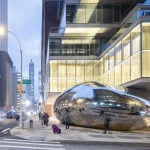
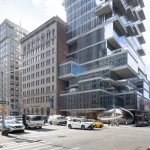
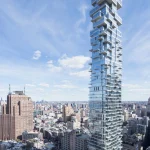
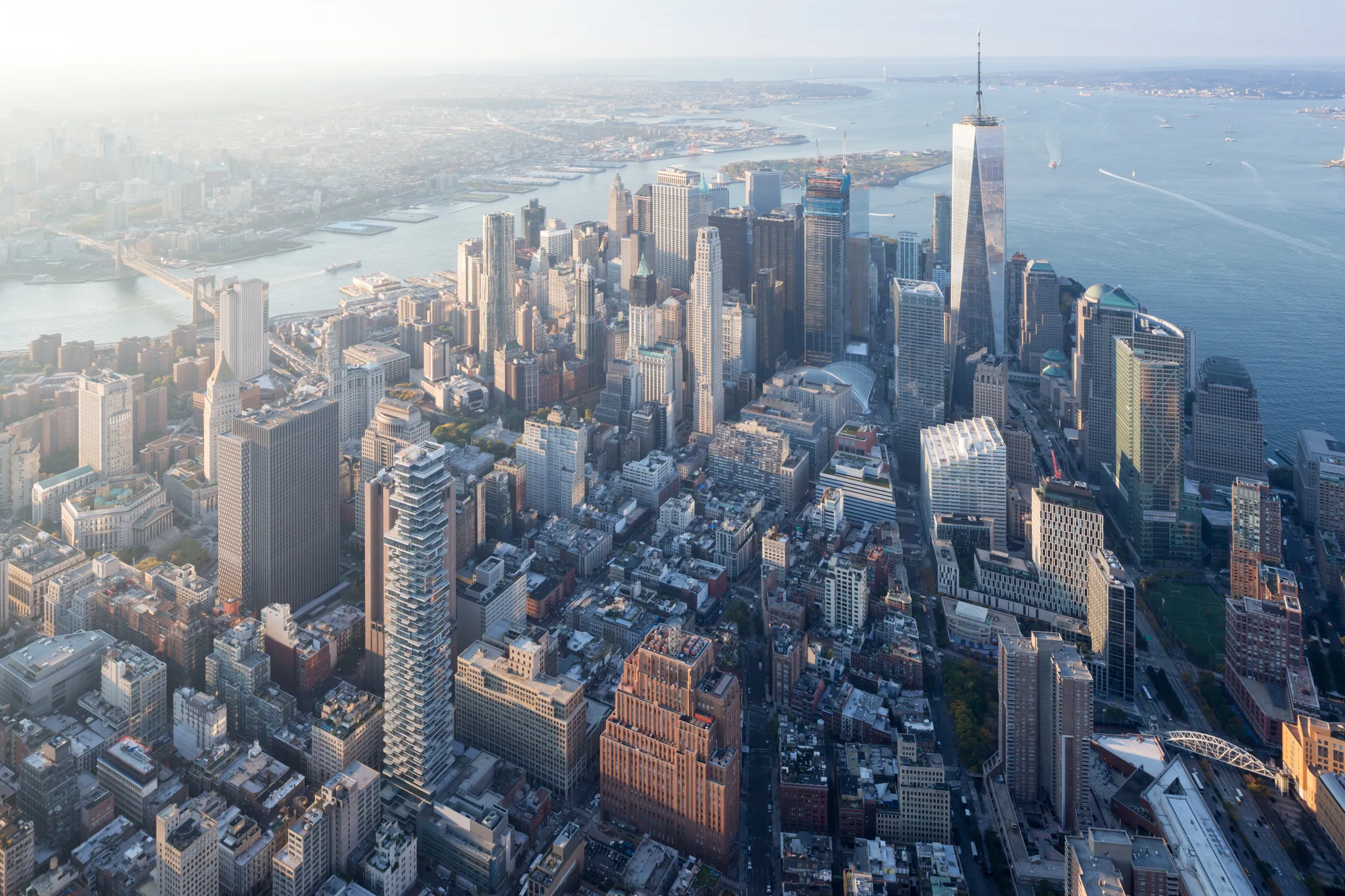
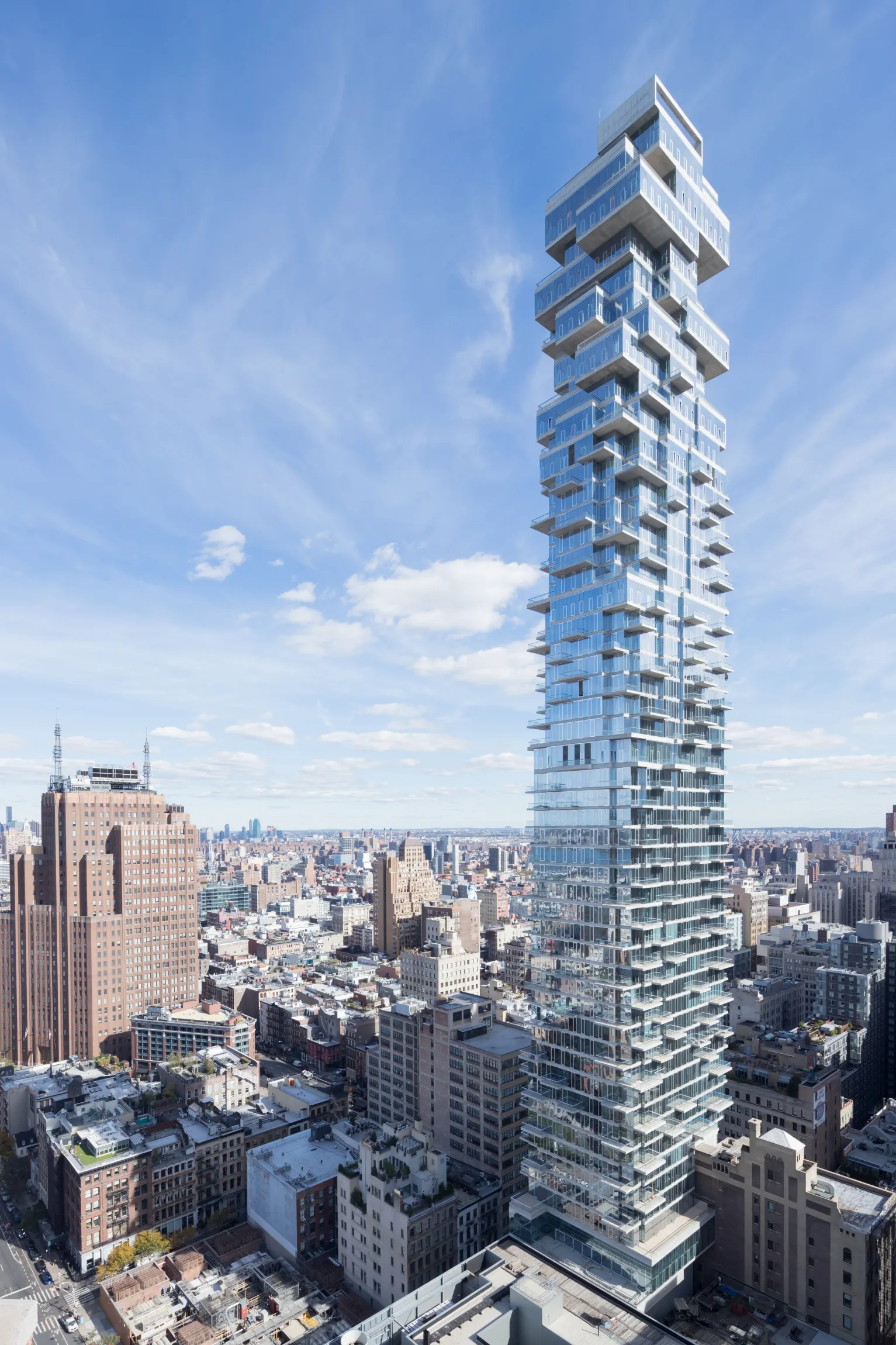
One of the most striking landmarks on the New York skyline, 56 Leonard Street is a residential tower designed by Herzog & de Meuron. In this skyscraper, composed of stacks of individual homes, the shifting of the floors creates different floors, creating different cantilevers and balconies. Thus, each house is unique and distinct from the others in the stack. At street level, the building is designed with a calm and understated base, contrasting with the sculptural, undulating form of the upper portion. Connecting these two extremes, the middle section is conceived as a controlled yet more dynamic “shaft,” evoking the body of a column.
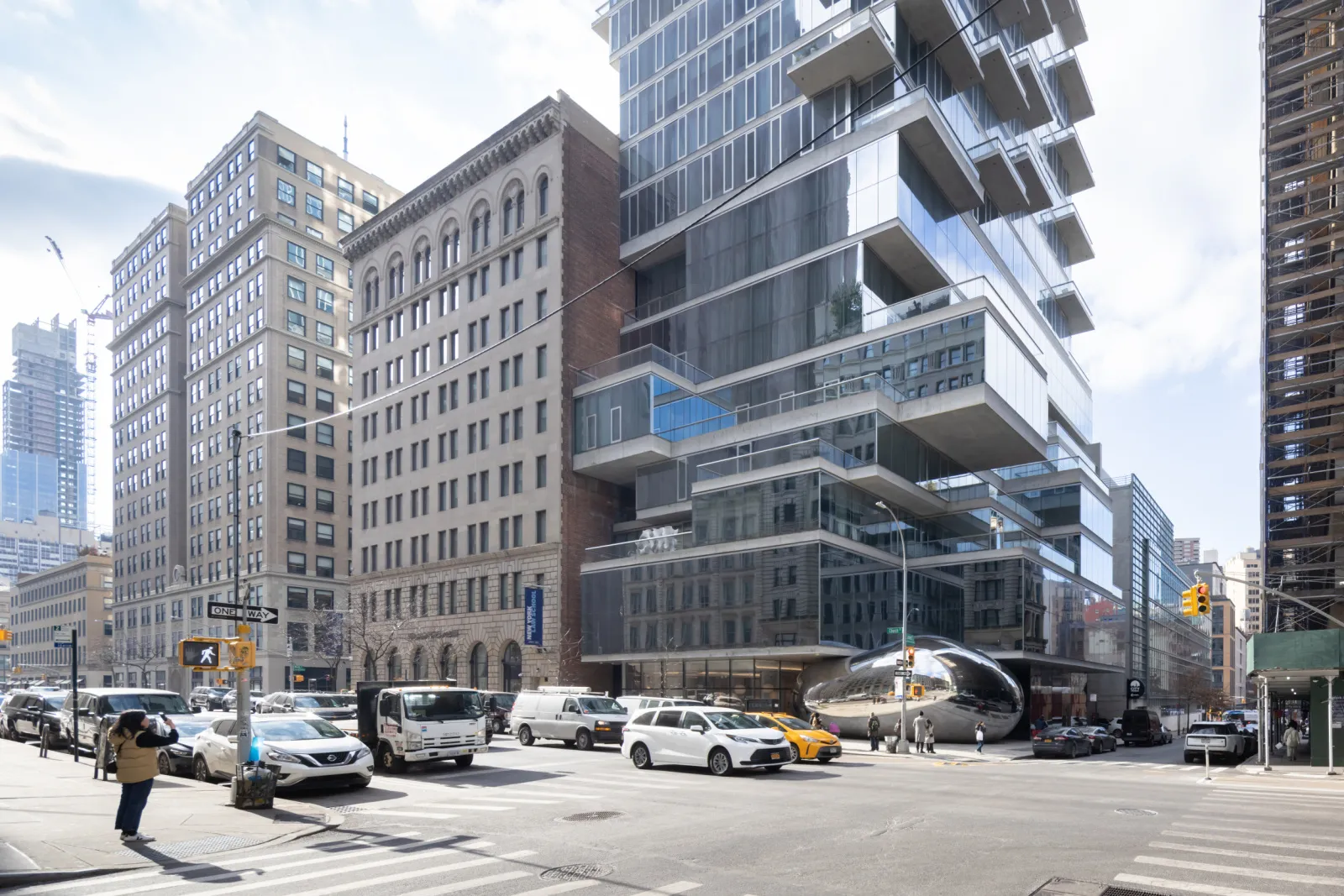
Defying New York’s increasingly uniform skyscraper architecture, the project was created by assembling individual residential units floor by floor. These units, known as pixels, create the tower’s volume and form. Expressed on the façade, this pixel-stacking method incorporates operable windows every two or three floors, allowing residents direct access to fresh air.
On the 9th and 10th floors, 56 Leonard offers a total of 1,600 square meters of shared social spaces. Each apartment features a unique layout, providing bespoke living environments. The interiors, designed by Herzog & de Meuron, were customized in collaboration with Molteni.
8. Skolkovo Institute of Science and Technology, East Ring
Location: Skolkovo, Russia
Year: 2018
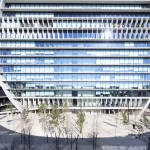
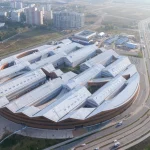
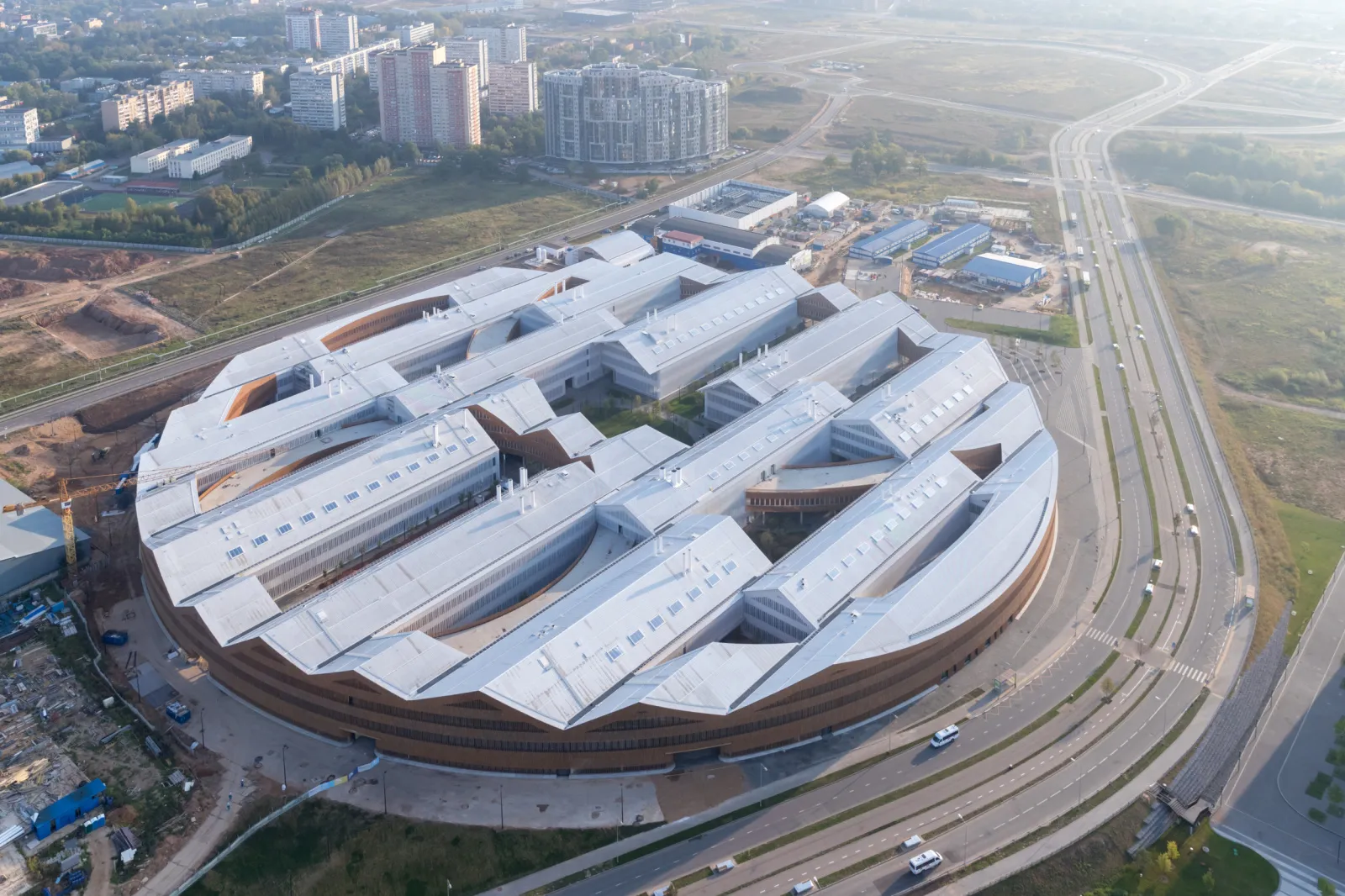
The Skolkovo Institute of Science and Technology, built as part of the Russian government’s initiative for a new urban development in Moscow’s Third Ring, is one of Herzog & de Meuron’s most innovative projects. Built from the ground up, Skolkovo aims to create a globally respected hub for innovative 21st-century technology, encompassing research and production, and including administrative centers for both established and emerging companies, schools, institutes, and a new university. Divided into five zones, each functioning as an urban island of its own, the third zone, home to Skoltech University, was designed by Herzog & de Meuron.
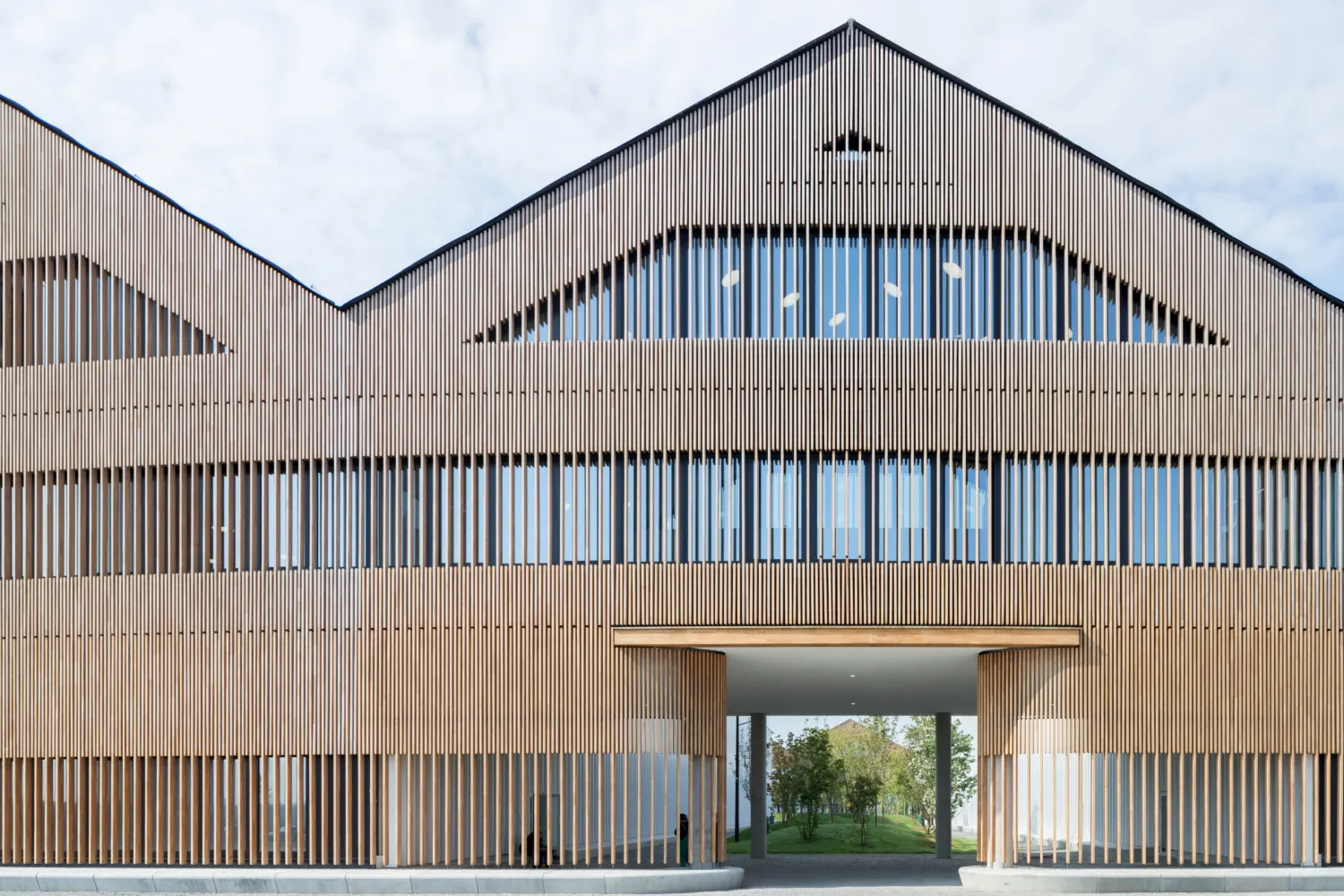
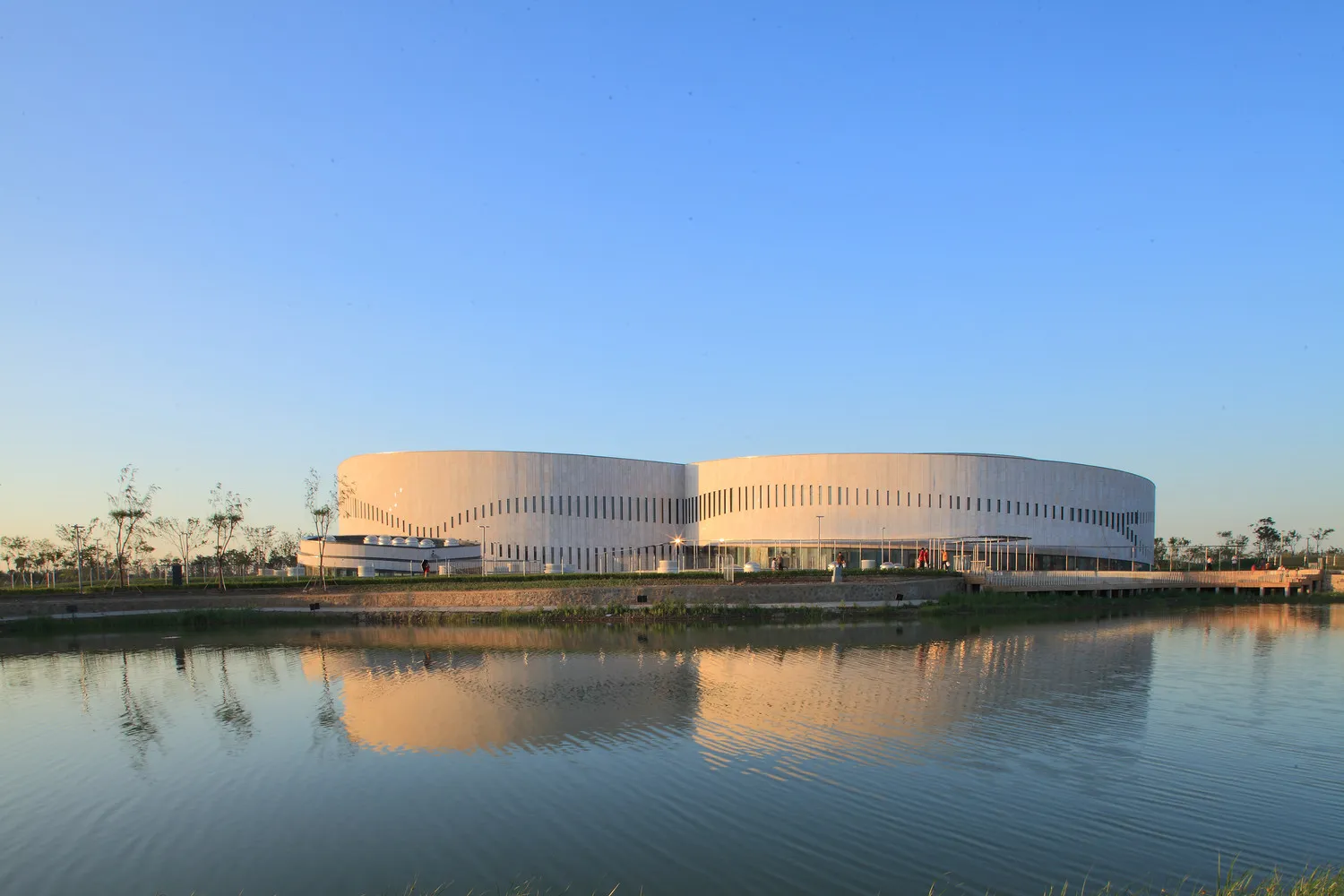
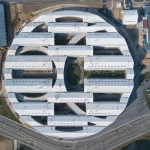
The university’s East Ring adopts a simple yet highly expressive form and organization, composed of interlocking circular rings and rectangular blocks that directly reflect the diversity of its program. The 280-meter-diameter outer ring and two smaller inner rings house all shared academic facilities and public spaces. The outer ring houses faculty offices, administrative units, and meeting spaces, while the inner rings house teaching and learning spaces, with the main auditorium located at the central intersection.
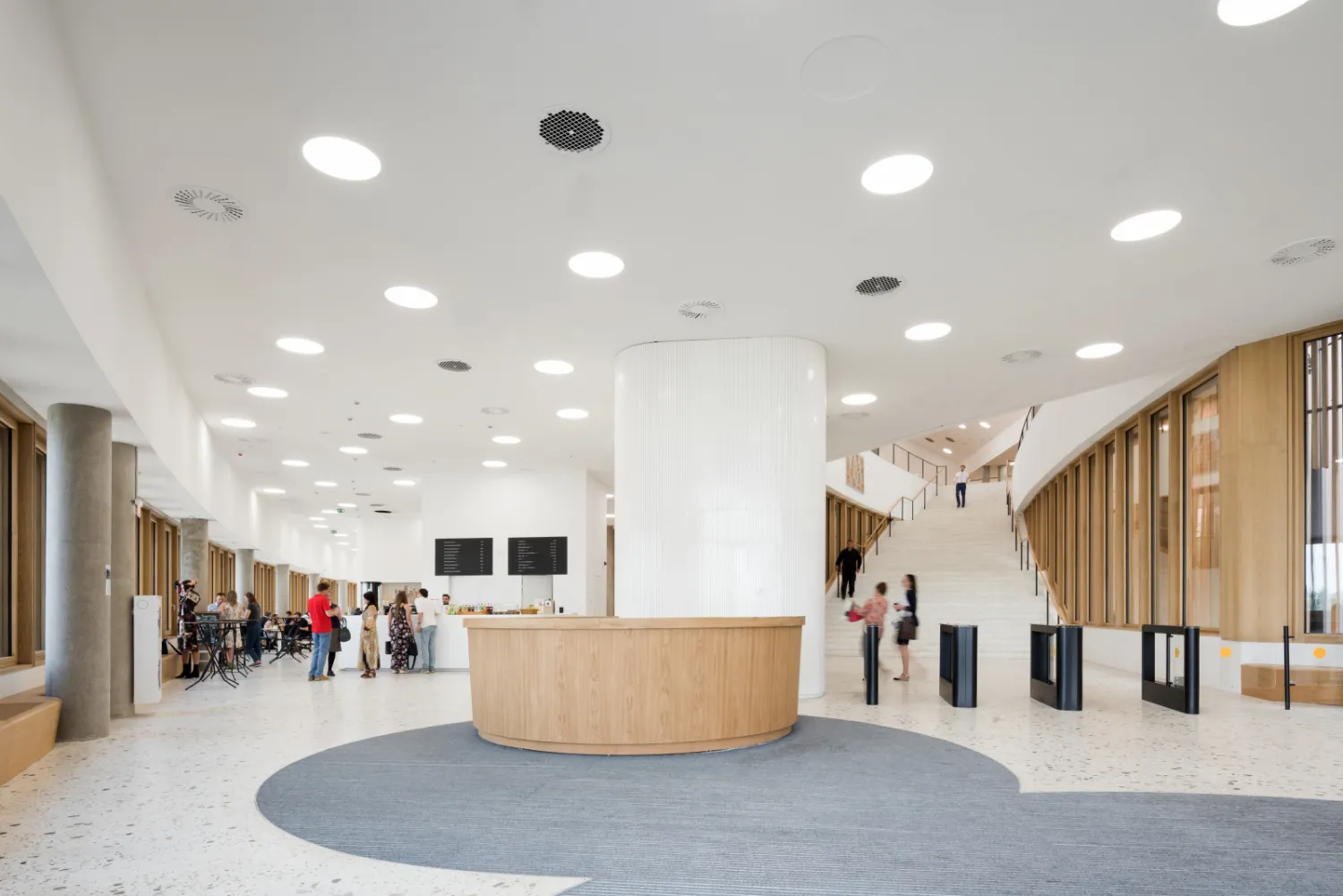
Curved shapes connect all zones within a single ring. Within the circular perimeter, spaces are arranged along an orthogonal, checkerboard-like grid. Laboratory and workshop areas are integrated into this grid within a series of repeating rectangular volumes.
Based on a structural grid of 7 by 7 meters, the laboratory blocks are organized with uniform widths of either 21 or 28 meters, but vary in length. Additional research facilities, loading, logistics, and technical areas are located in the continuous basement beneath the entire building.
9. 111 Lincoln Road
Location: Miami Beach, Florida, USA
Year: 2010
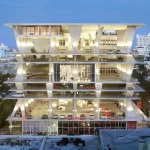
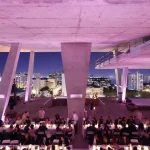
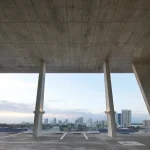
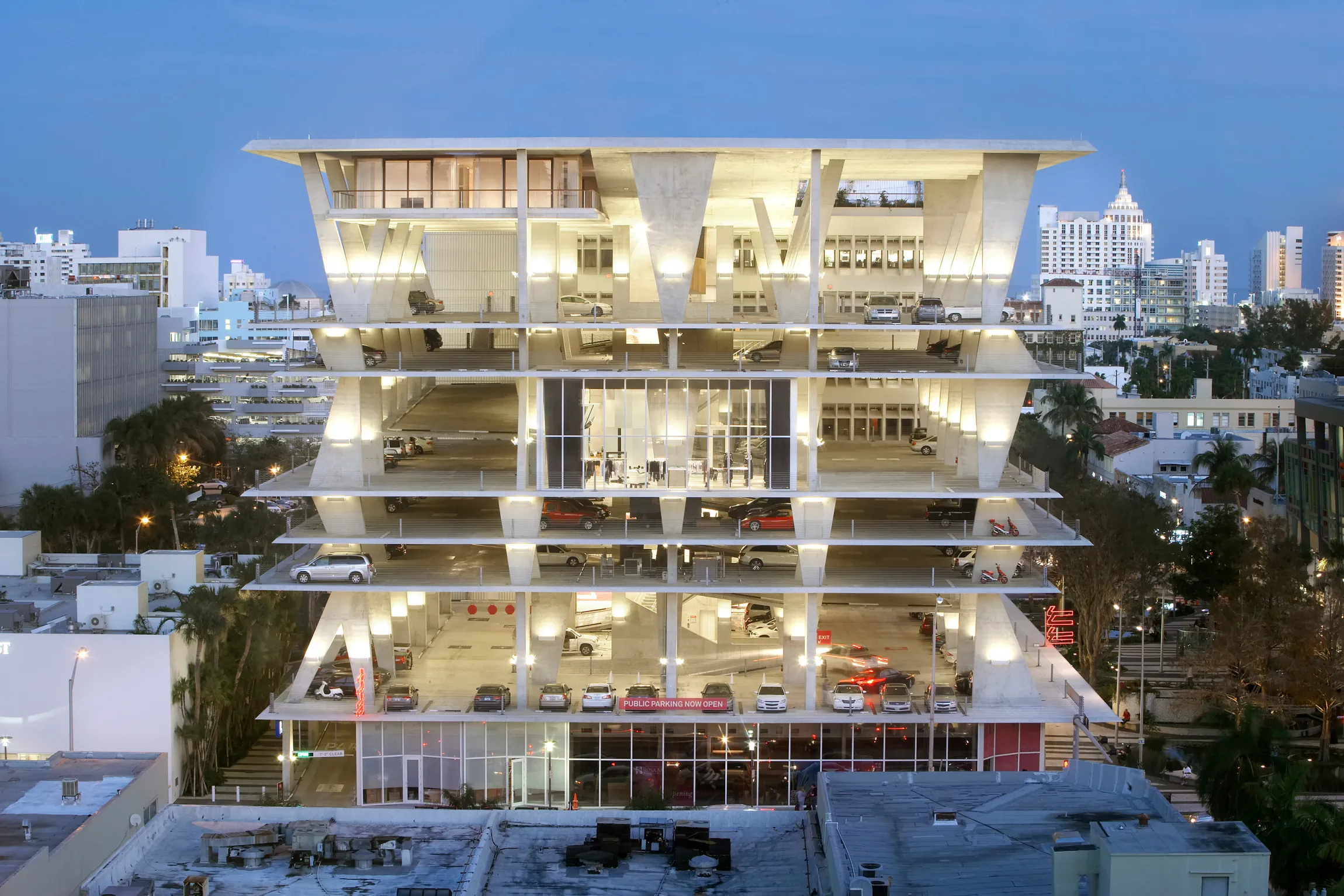
111 Lincoln Road is a pioneering example of how even the most utilitarian building types can be redefined. More than just a parking garage, the iconic structure contributes to the city’s social and cultural life, creating a multifunctional urban hub that serves the vibrant pedestrian community along the Lincoln Road Mall.
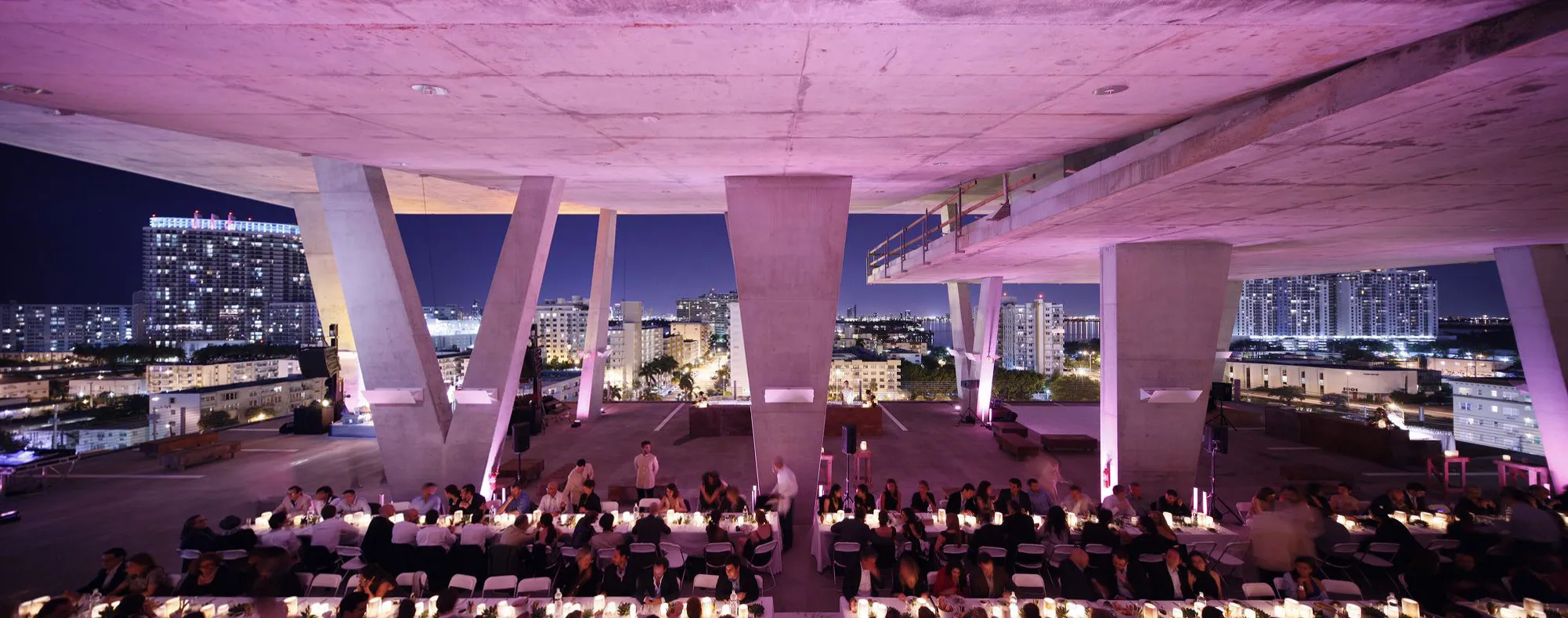
Built at the corner of Alton and Lincoln, one of the city’s most vibrant pedestrian areas, the building is a place where cars, people, commerce, and social activities converge, transforming the parking experience into an urban activity. 111 Lincoln Road houses a 300-space parking garage, 11 stores and three restaurants on the ground floor, and a fifth-floor shopping area, a rooftop restaurant, and luxury residences.
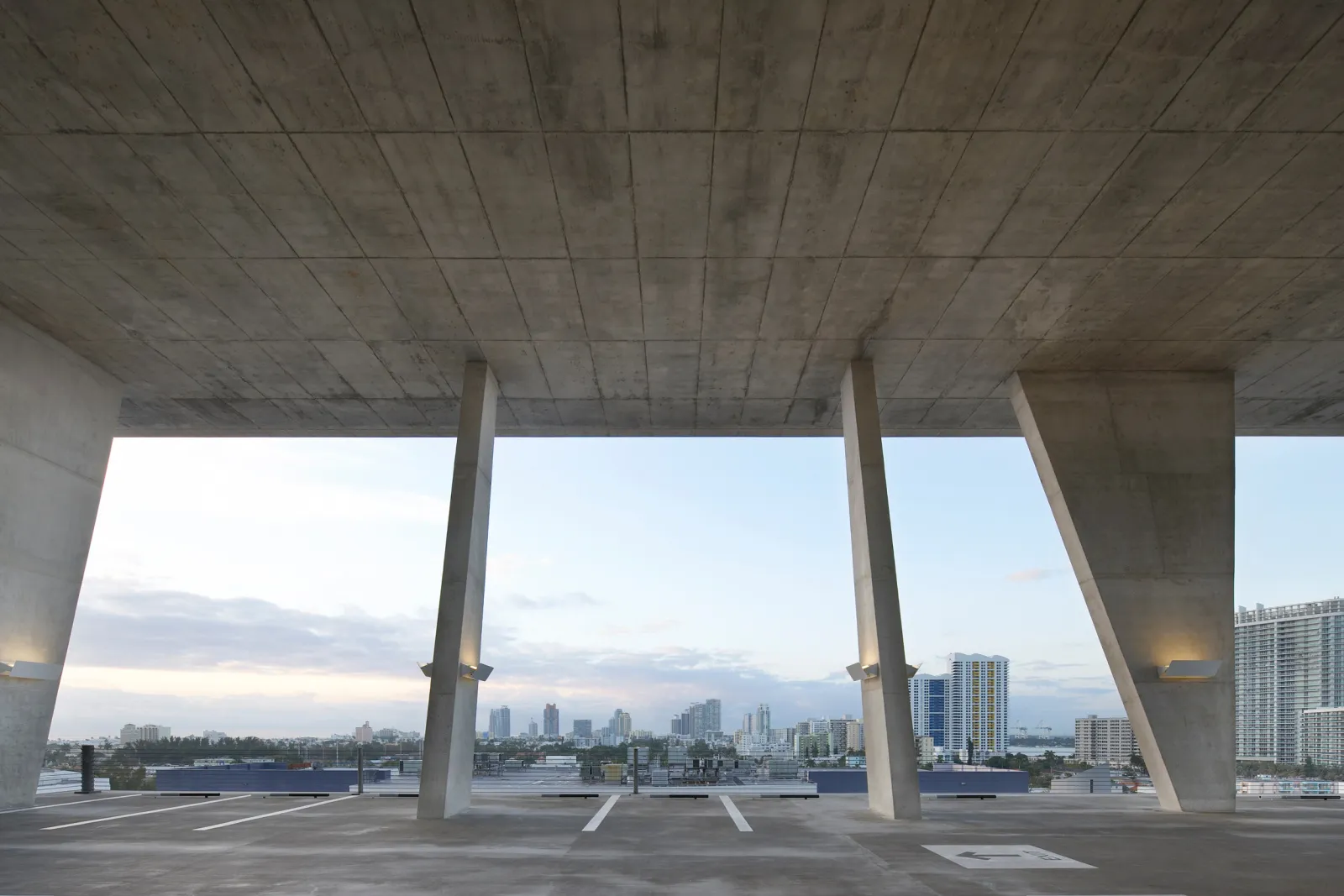
Designed as an open, multi-story concrete skeleton rather than a closed box, the building’s floor heights vary, with some floors reaching 10 meters in width. This creates a flexible public platform.
10. Forum Building
Location: Barcelona, Spain
Year: 2004
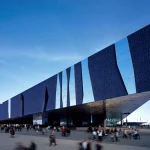
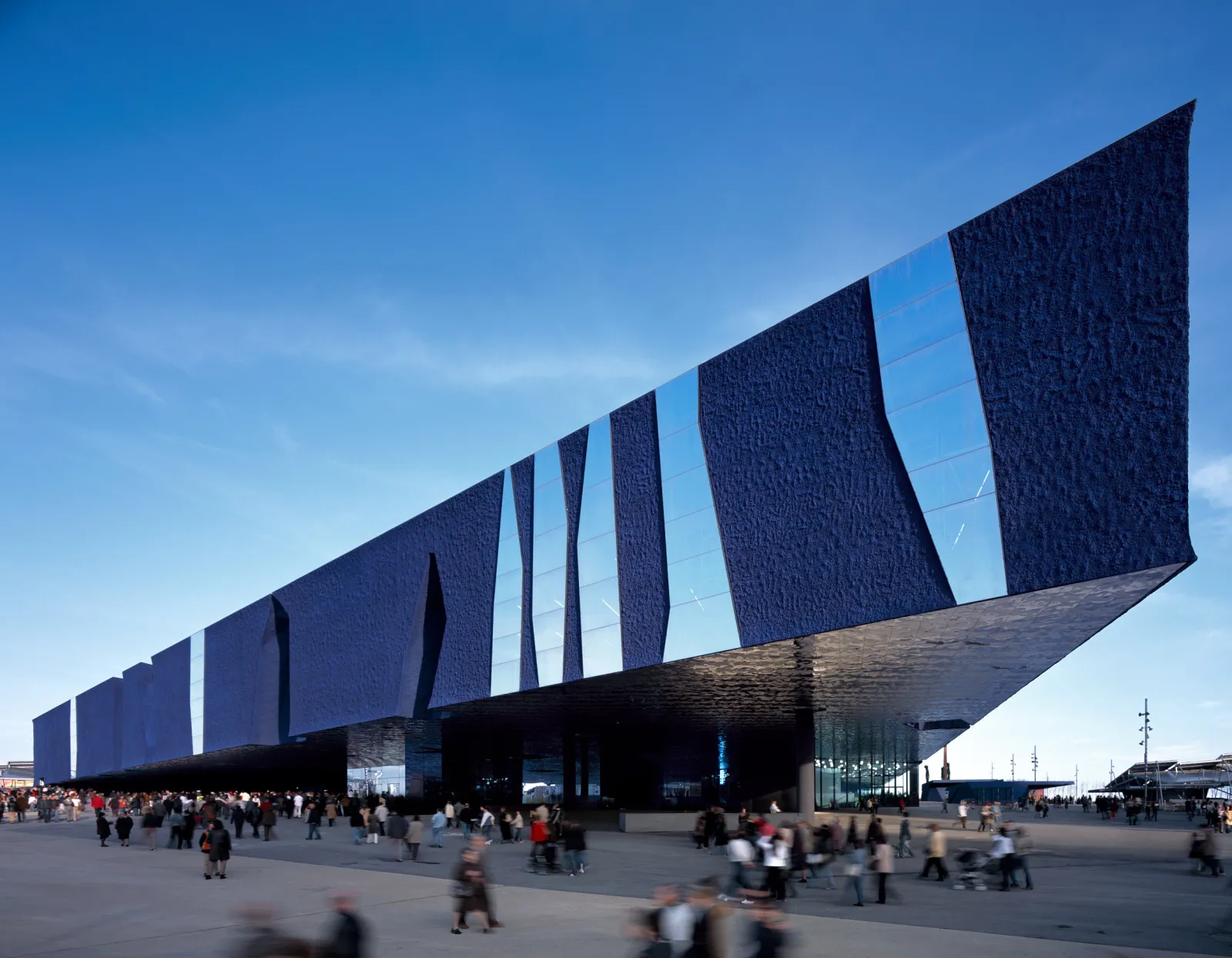
One of Herzog & de Meuron’s most innovative projects, the Forum Building was constructed as the focal point of the Parc del Forum in the northeast of the city for the 2004 Universal Forum of Cultures. Also known as the Museu Blau de les Ciències, the building takes the form of a triangle with sides measuring 180 meters and a height of 25 meters. Forum Building, which boasts a 3,200-capacity auditorium and an approximately 5,000 m² exhibition hall, has been designed to create and maintain vitality and interaction.
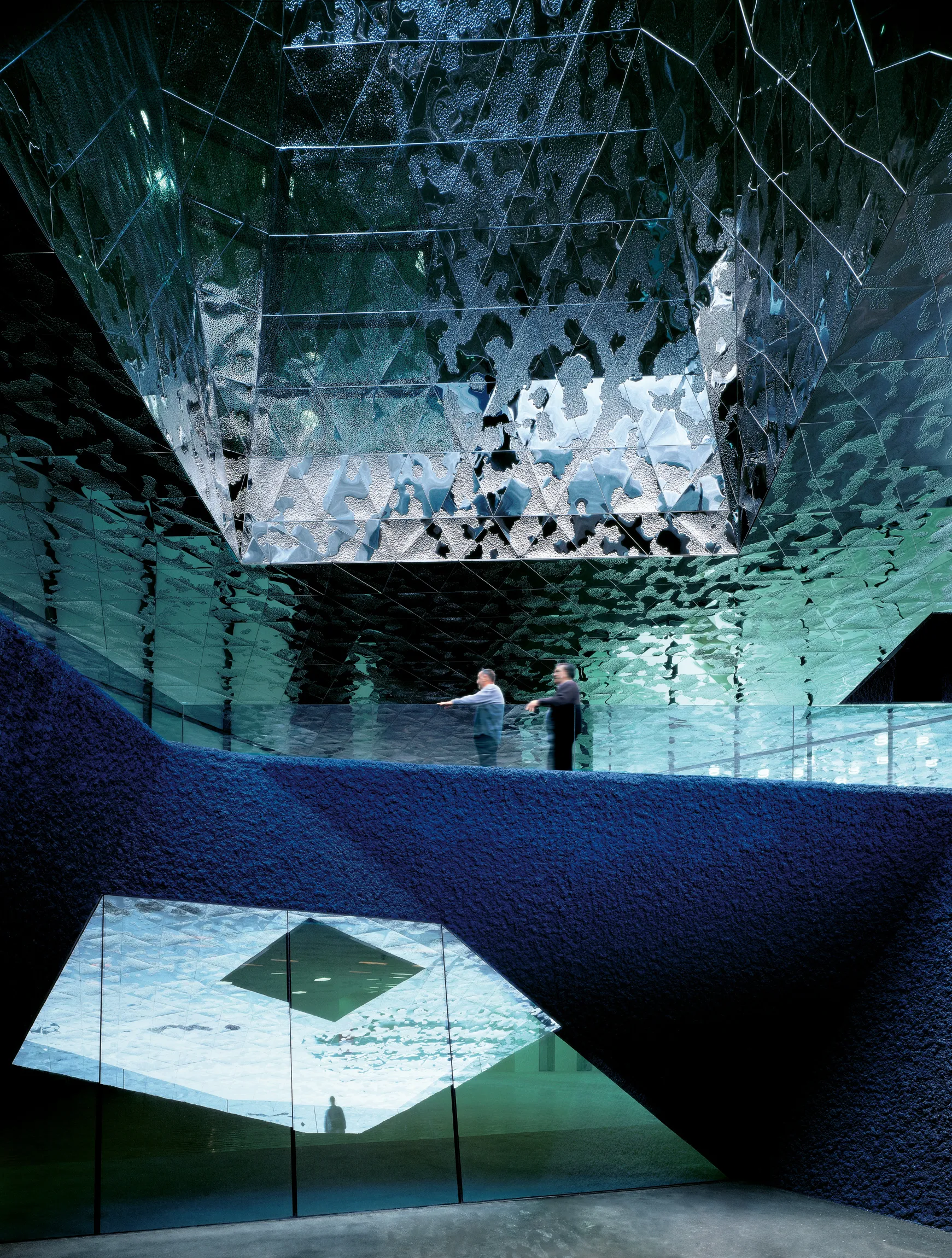
Additional program elements, such as an open market area with a large fountain, a relaxation and meditation area around a dripping water courtyard, a small and intimate chapel, a bar, a buffet, and other simple amenities complement the conference and exhibition center, have been incorporated.
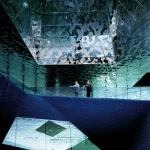
Designed as if part of the topography, the Forum Building merges interior and exterior spaces. The public space created at ground level creates a dramatic void at the center of the triangular form. This void allows daylight in while simultaneously creating a visual interplay that connects the interior spaces. The interiors of the auditorium and exhibition area are designed as hybrid spaces that not only blur the boundaries between exterior and interior spaces but also adapt easily to the ever-changing program.
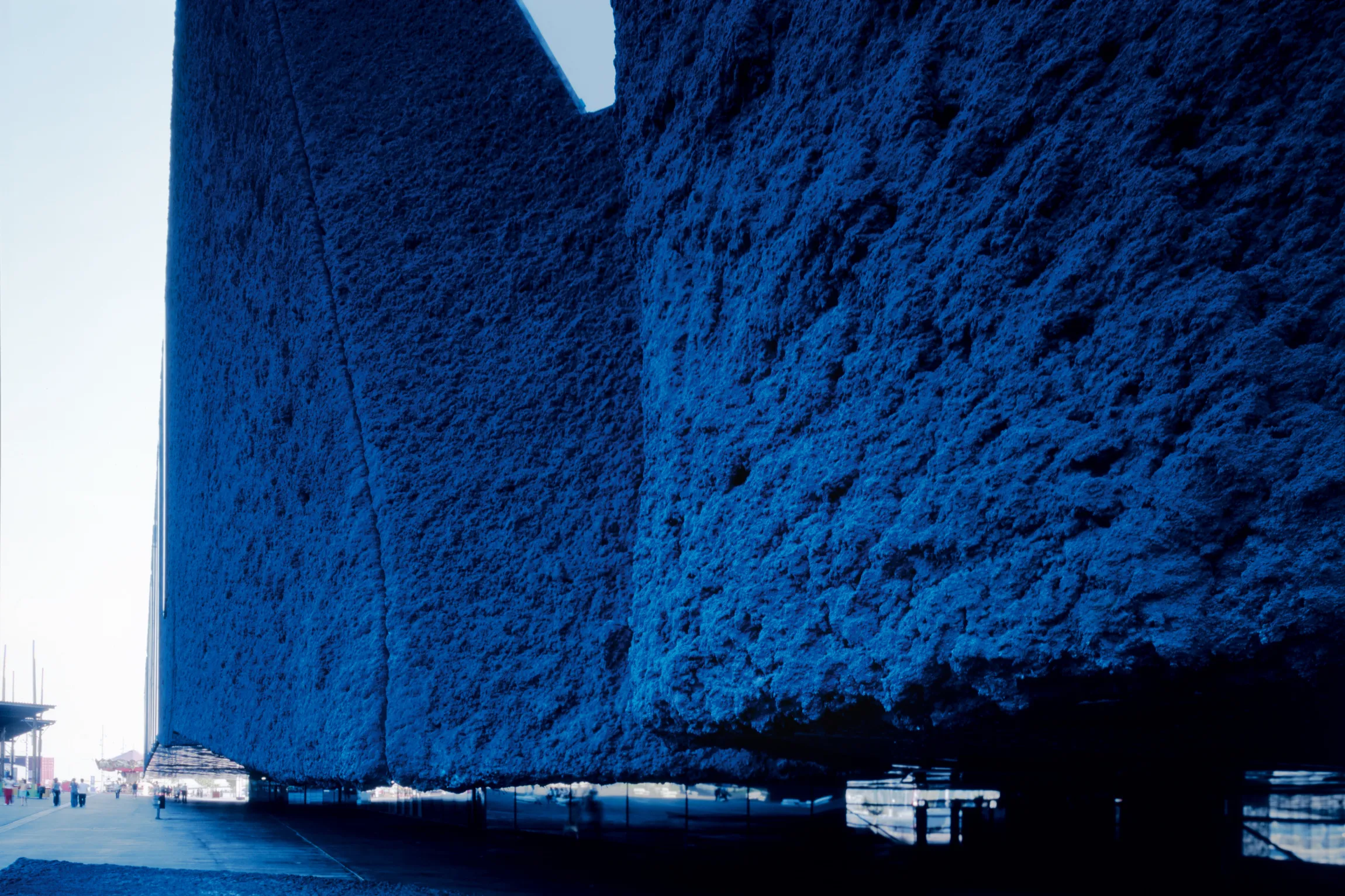
The building’s blue-tinted concrete façade gives it strong visibility from a distance, lending it symbolic weight and a powerful identity. Distinguished from typical glass and steel structures by its rough façade, the Forum Building’s interior is clad in dark tones, steel, and concrete surfaces, contrasting with the blue concrete facade.
Image credit: © Herzog & de Meuron