


“The space values of the building preserved, enlarged, expanded, presented makes an entirely new architecture.” – Frank Lloyd Wright, 1957
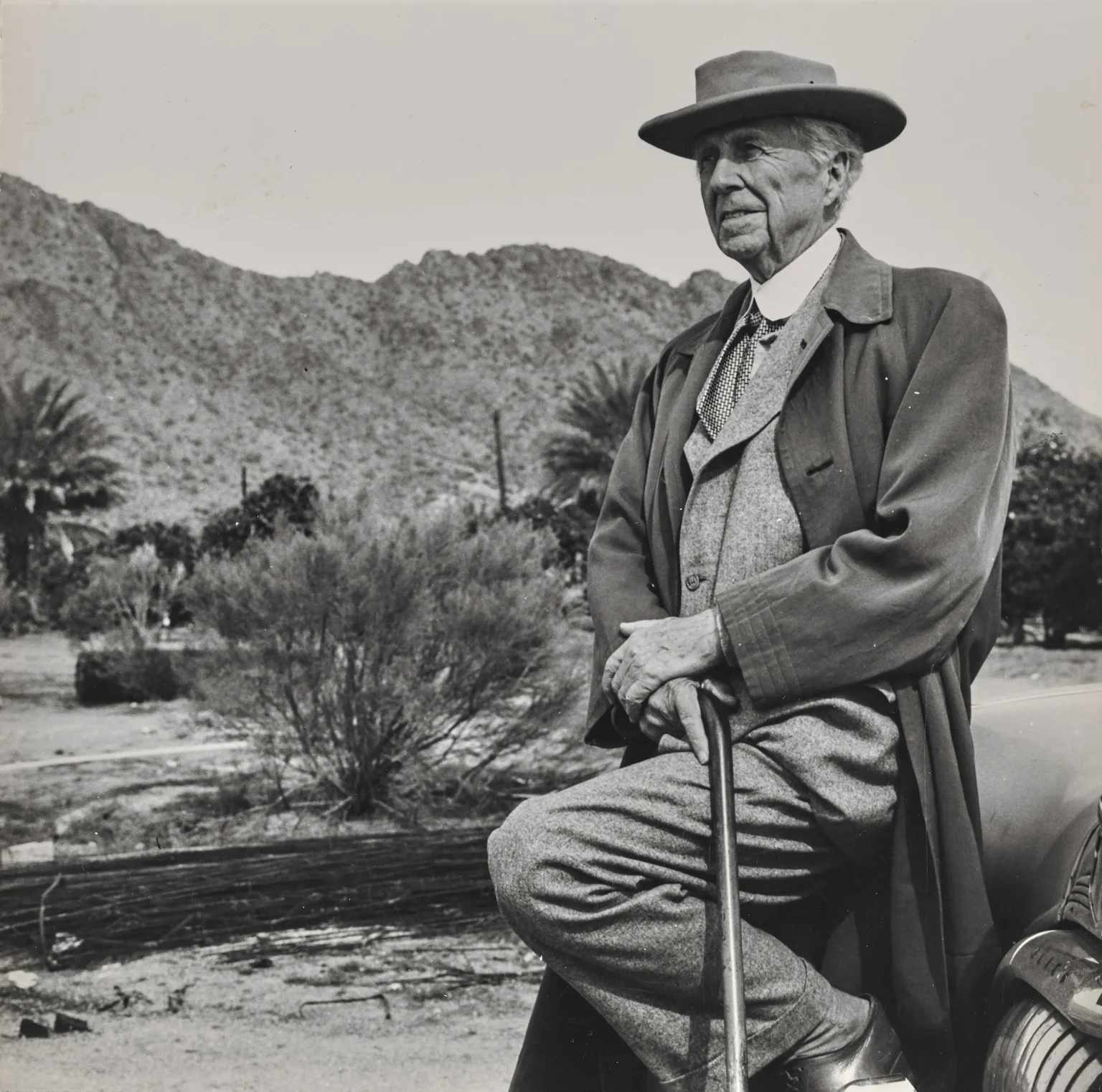
As architecture students around the world, we are immersed in history courses that trace the stories, ideologies, and conditions behind the built environment we inhabit today. Among the figures we study, few command as much admiration as Frank Lloyd Wright: a pioneer whose vision of organic architecture still captivates the imagination. His philosophy, rooted in the harmony between building and landscape, stands apart from today’s contemporary definitions of green architecture or purely technical sustainability frameworks. Wright sought an almost spiritual integration of site, material, and form, rather than a checklist of environmental performance metrics.
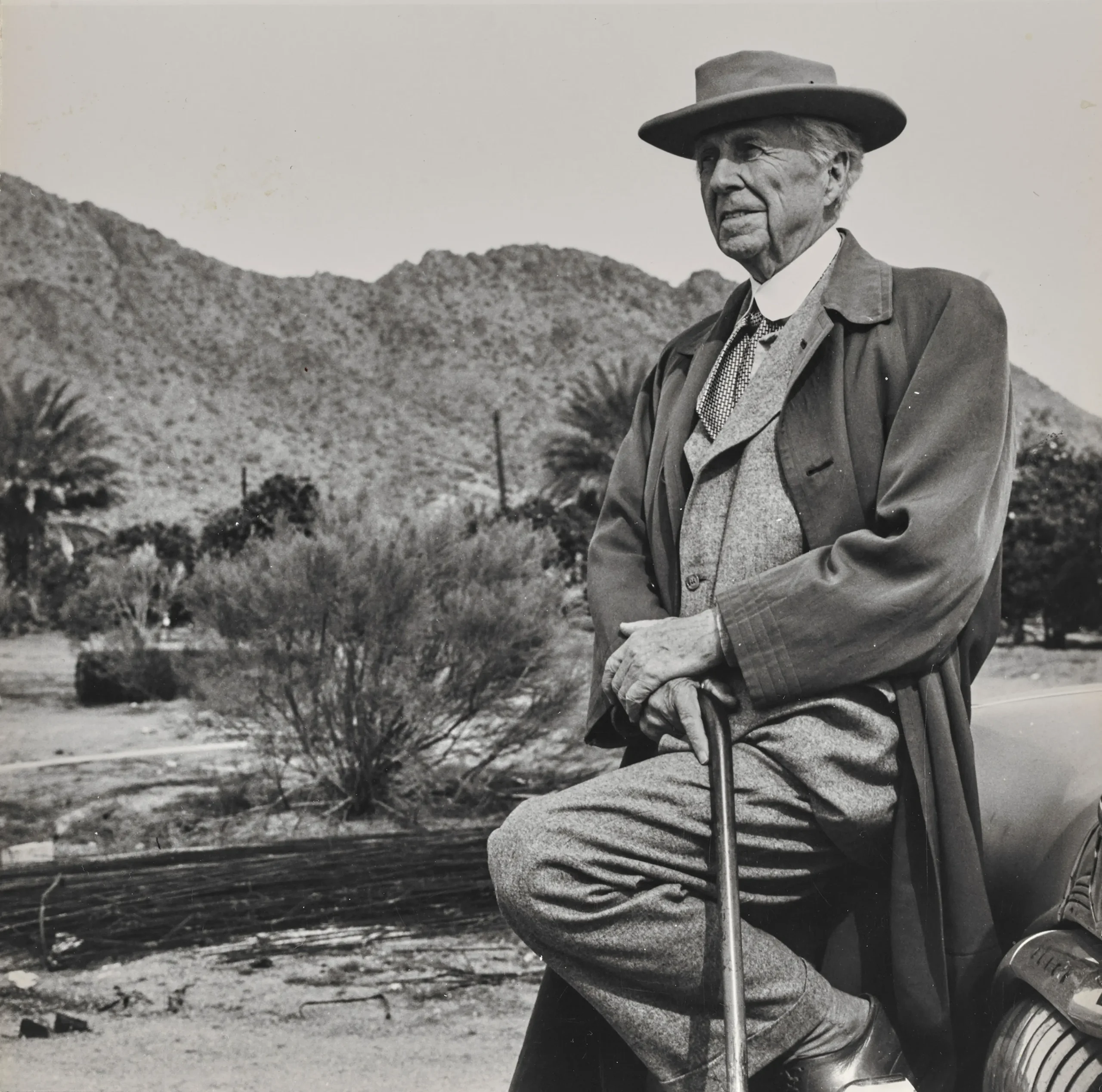
This raises an essential question for the contemporary student: how should we actually study Wright’s projects today and meaningfully translate their lessons into our own design work? Is his legacy a source of directly applicable principles, or should we treat it as a historical artifact to be critiqued and reinterpreted?
One intriguing possibility lies in emerging technology. Could we, for instance, develop an algorithm in AI capable of generating designs in the “style” of Wright, producing a convincing mock-up of a Usonian home or a Prairie School interior? The answer is almost certainly yes, at least on a superficial level.
Machine learning models trained on his archive could identify patterns in his massing, horizontal lines, material palettes, and cruciform plans. But this prompts a deeper and more unsettling question: Does imitating the aesthetic output truly carry forward Wright’s intellectual project, or does it reduce a complex philosophy to mere stylistic mimicry? Wright’s genius was not in a repeatable formula but in his radical response to site, client, and era: a kind of contextual sensitivity that a predictive algorithm, with no lived understanding of place, can only simulate.
Frank Lloyd Wright as an American Architect
To understand Wright’s continued relevance, we must first recognize him as a distinctly American architect, not merely by nationality but in his philosophical project. He emerged at a moment when the United States was still culturally deferential to European traditions, importing Beaux-Arts classicism wholesale. Wright’s declaration of architectural independence was radical: he argued that the vast, horizontal landscapes of the American Midwest demanded an entirely new spatial language. The long, low lines of the Prairie School were not an aesthetic whim but a direct response to the flat expanses of the continent.
His Usonian houses were conceived as a democratic architecture for a country that mythologized the self-reliant individual, offering quality design at a moderate cost for the average American family. Even his material choices (locally quarried stone, unstained wood, and concrete block) reflected an ethos of honesty and regional specificity that he saw as fundamentally American. In this sense, studying Wright is also studying an ongoing question: what does it mean to build as an American, in dialogue with this particular land, this particular social experiment, and its particular contradictions?
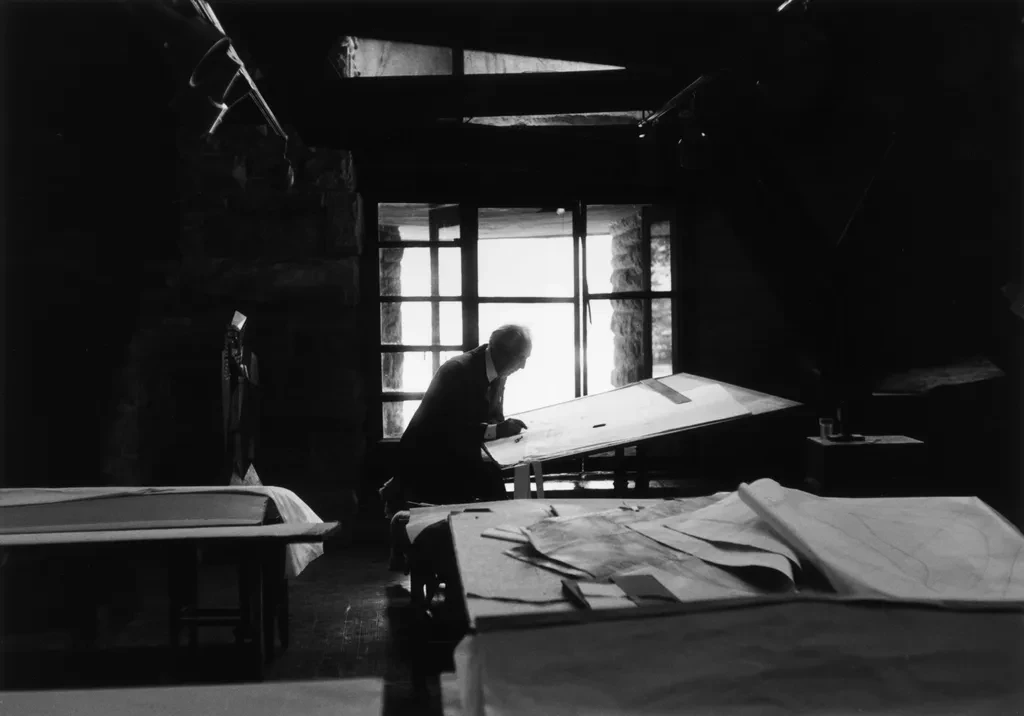
How We Can Use His Works Today: Six Proposals
Engaging with Wright’s legacy in the 21st century requires moving beyond hero worship and toward active, critical appropriation. Here are concrete ways architecture students and practitioners can use his work as a living resource rather than a museum piece:
1. Extract Principles, Not Forms
The most dangerous way to use Wright is to copy his aesthetic: the cantilevered balconies, the Cherokee-red trim, and the built-in furniture. Instead, we should extract the underlying principles and test them against contemporary conditions. His principle of the “destroyed box,” the spatial liberation achieved by breaking free of enclosed rooms, can inform open-plan strategies that balance visual connection with the acoustic and privacy needs of today’s hybrid live-work homes.
His principle of the hearth as a gravitational center can be translated into designing gathering spaces around shared activities rather than television screens. The question is never “How can I make this look like Wright?” but “What spatial problem was he solving, and how does my generation face a parallel problem with different tools?”
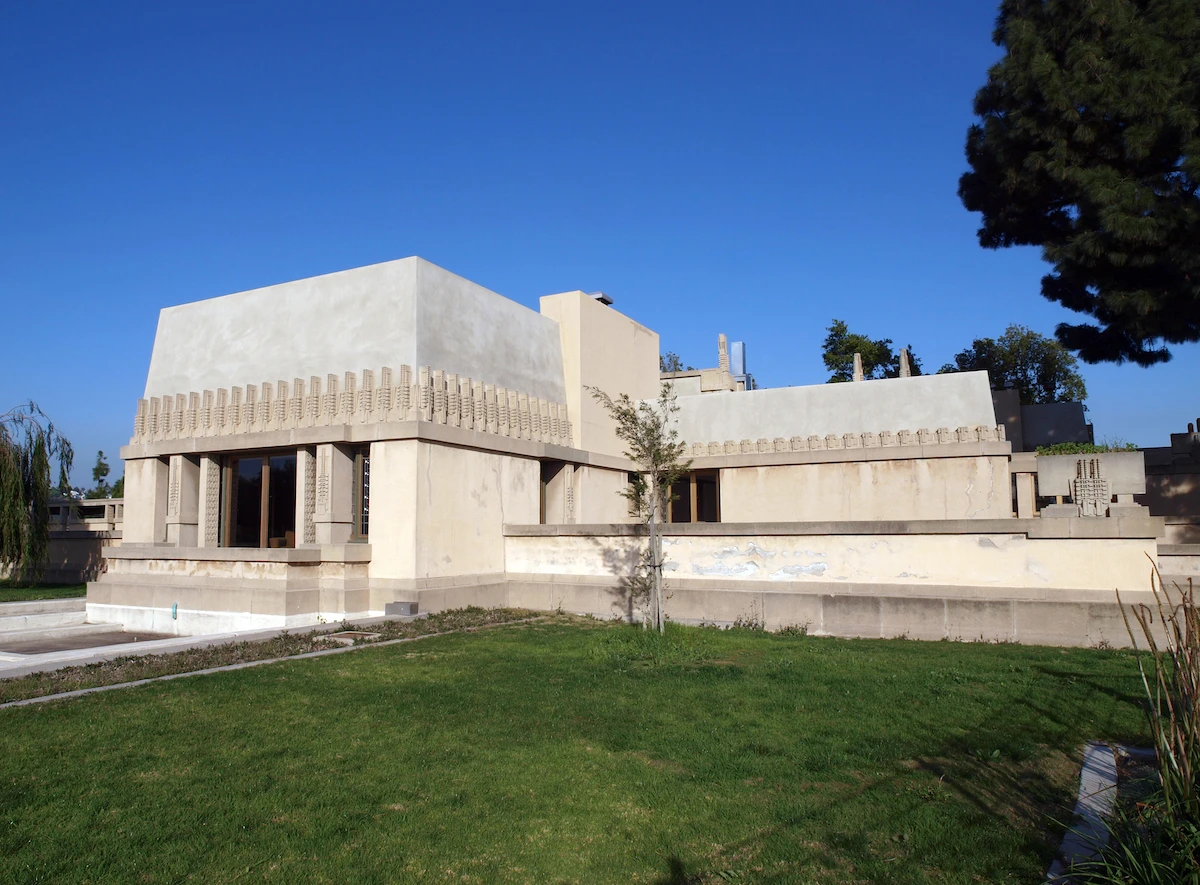
2. Treat His Buildings as a Pedagogical Field Kit
Wright’s surviving structures offer an unparalleled laboratory for experiential learning. Instead of merely photographing them on a tour, students should visit with measurement tools, sketchbooks, and a specific analytical mission. How does the compression of a low entrance corridor at Fallingwater prepare the body for the dramatic release of the cantilevered living room? What is the exact sequence of ceiling heights as you move through a Usonian house? Map his daylight carefully: where does direct sun enter, and at what time of day? These embodied observations teach lessons about choreographing human experience that no photograph or drawing can convey. Each building becomes a teacher in phenomenology if we approach it with the right questions.
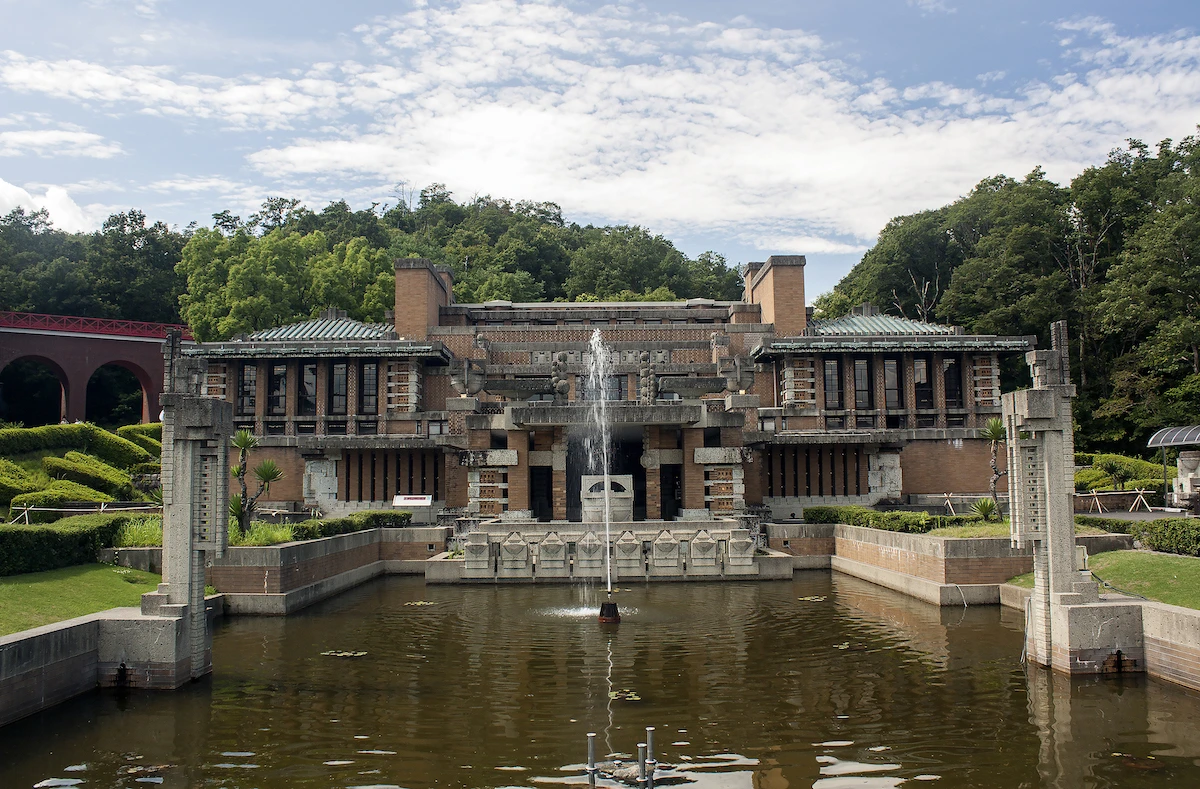
3. Reconcile Organic Architecture with Ecological Performance
Wright was a proto-environmentalist in philosophy but, by today’s standards, often a poor performer in building science. His single-glazed windows, uninsulated masonry, and notoriously leaky roofs are legendary among conservators. Here lies a crucial project for contemporary designers: reconciling Wright’s poetic integration with the land with the quantitative demands of net-zero energy, water conservation, and material carbon accounting. Can we imagine a “Neo-Usonian” house that maintains Wright’s spatial generosity, connection to the ground, and material warmth while achieving Passive House performance? This is not a betrayal of Wright but a fulfillment of his most urgent imperative: that buildings belong to their time and place. Today, belonging to a place means performing ecologically within it.
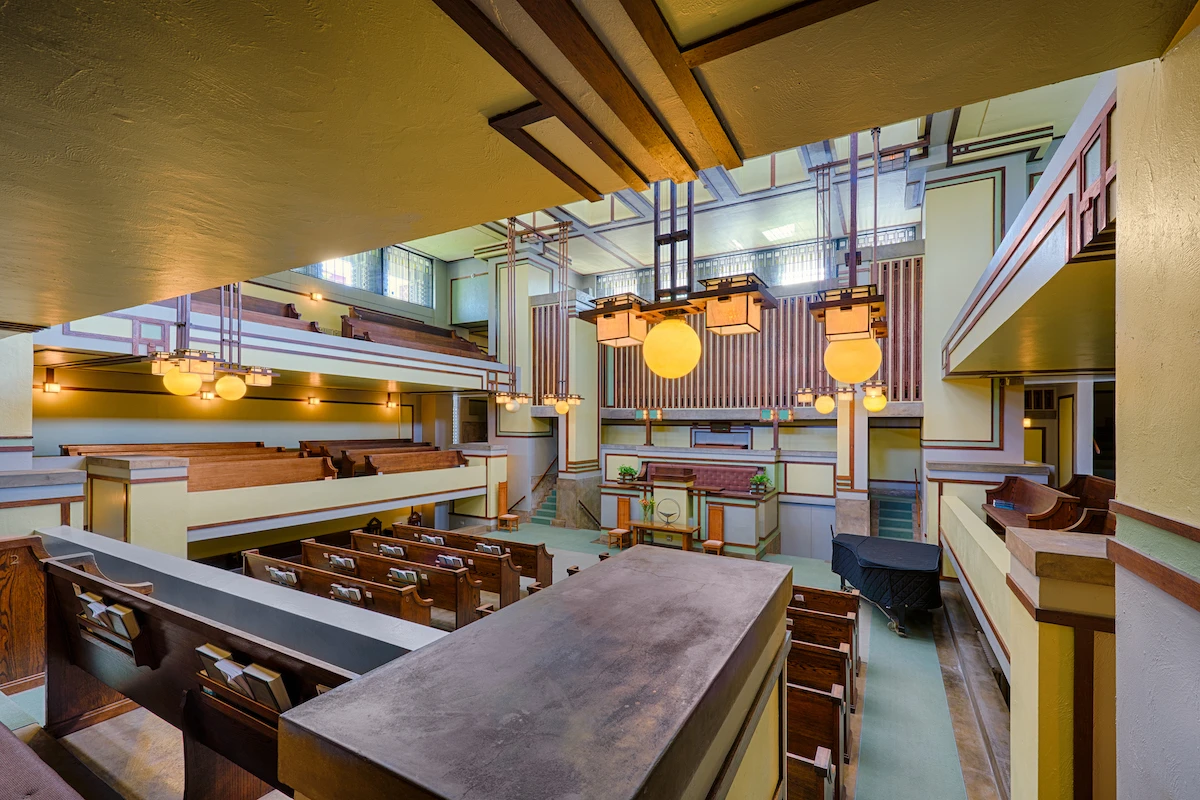
4. Critique His Blind Spots to Design More Inclusively
Using Wright honestly means confronting where his vision fell short. His Usonian houses were designed for a normative American family that assumed a full-time homemaker, a car-dependent suburban site, and a client who could afford custom craftsmanship despite the democratic rhetoric. His urban vision in Broadacre City was fundamentally anti-urban, dispersing population in a way that reads today as a blueprint for sprawl. By studying these limitations, students can design with greater awareness: how do we create democratic, affordable housing that serves diverse family structures, compact urban sites, and communities historically excluded from the architectural patronage Wright enjoyed? Wright’s blind spots are as instructive as his successes when approached with a critical lens.
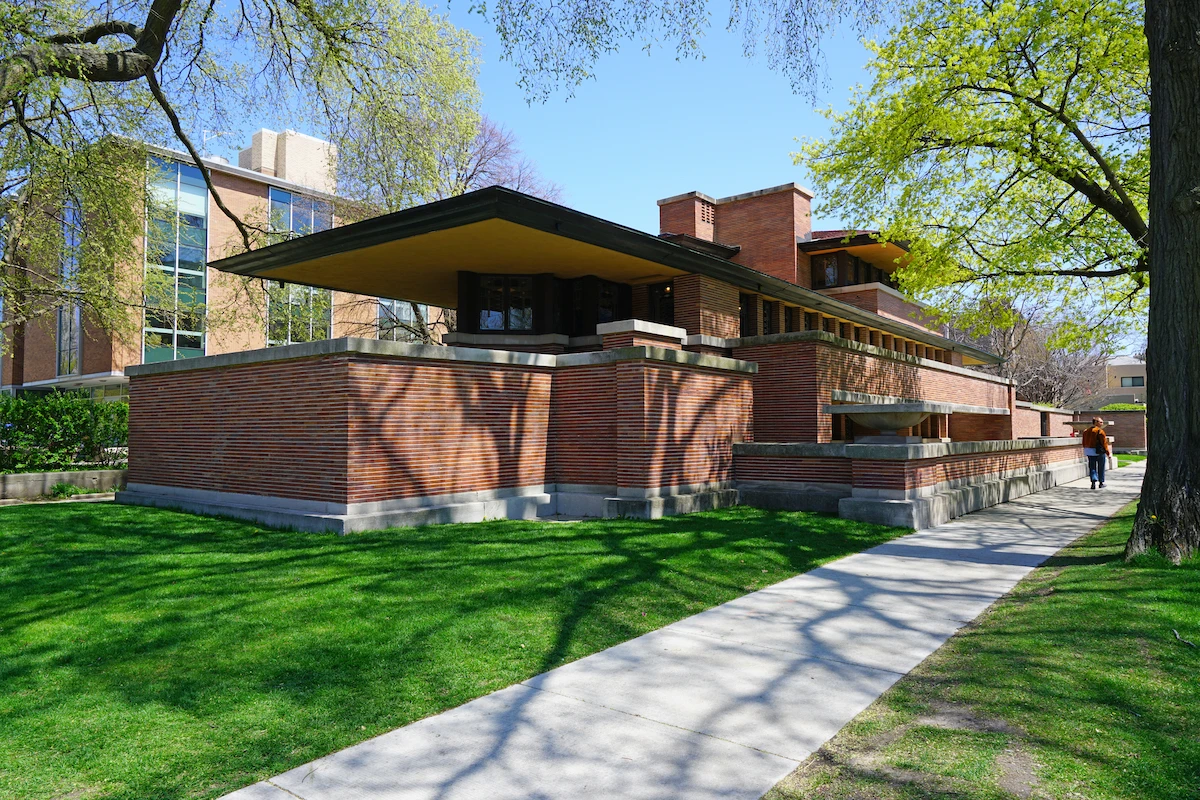
5. Use AI and Digital Tools for Forensic Analysis, Not Stylistic Pastiche
As introduced earlier, artificial intelligence can be redirected from the superficial goal of generating “Wright-style” images toward forensic and generative analysis. A machine learning model trained on Wright’s floor plans could statistically analyze proportions, circulation distances, and spatial adjacency patterns across hundreds of projects, revealing compositional tendencies even scholars may not have articulated. Parametric tools could model how a Wrightian principle, like the cantilevered horizontal plane, performs structurally with cross-laminated timber, a material Wright never knew but might have celebrated for its organic relationship to wood fiber. The technology becomes a tool of deep research rather than shallow imitation.
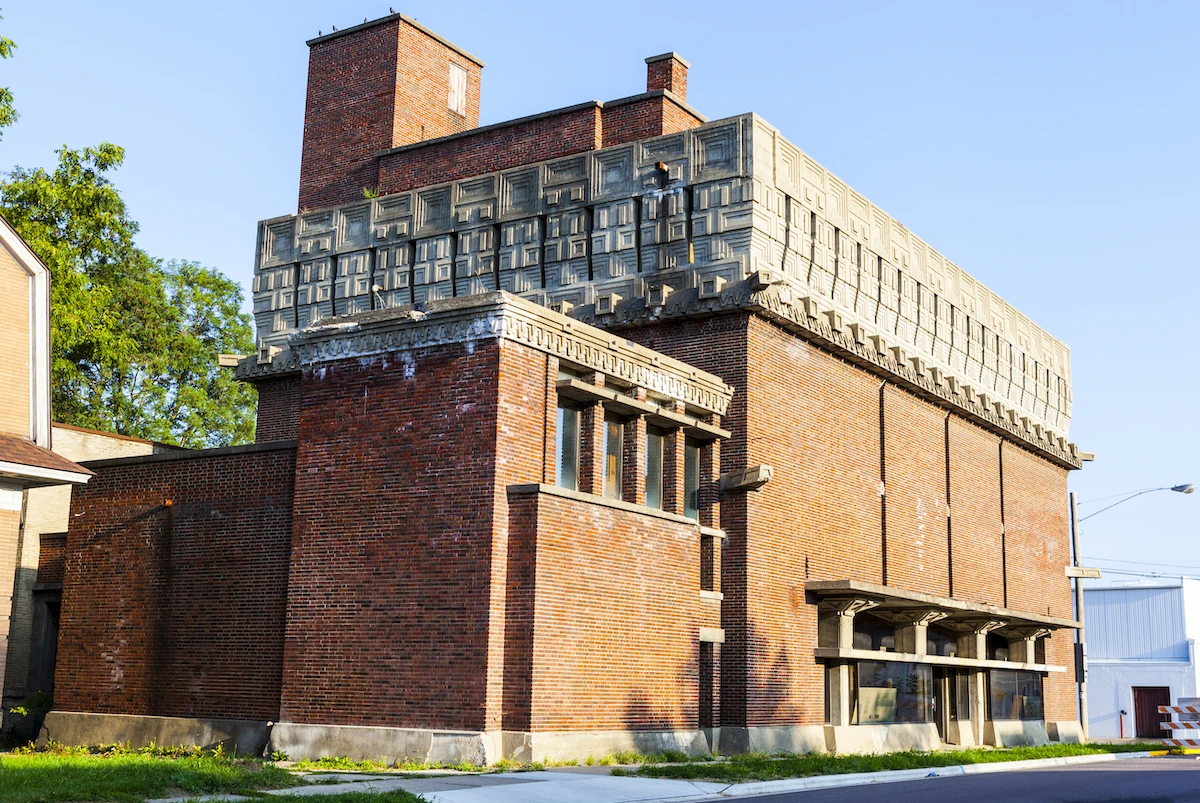
6. Adopt His Model of Radical Client and Site Engagement
Perhaps the most transferable and underappreciated lesson of Wright’s practice was his method of working. He spent extended time on site before designing, studied his clients’ daily rituals obsessively, and believed that an architect’s ethical obligation was to educate the client toward a braver vision of living. In an era of remote design, developer-driven briefs, and generic interiors, this radical commitment to site and client is revolutionary. Students can adopt this stance regardless of project type: spend the night on the site, interview future occupants about their unspoken routines, and advocate for spatial decisions that elevate daily life rather than merely satisfying a program.
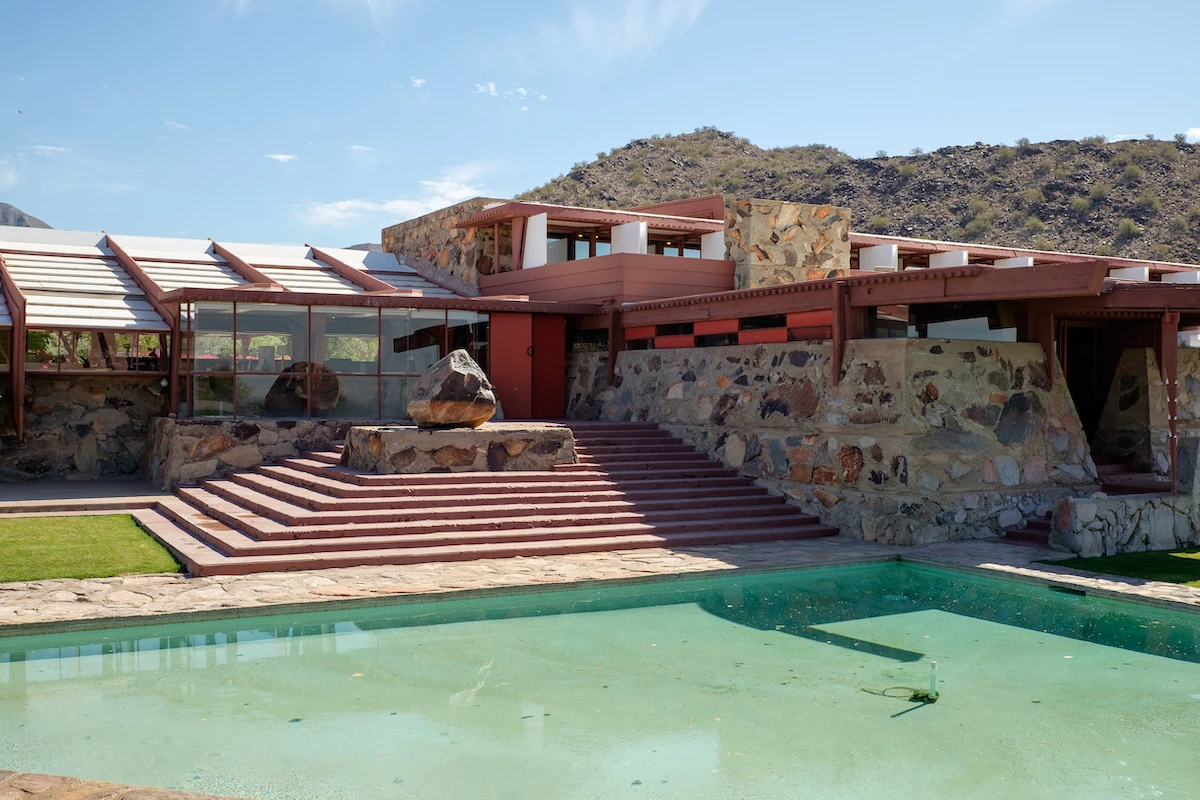
Ultimately, using FL Wright today means treating him not as a monument to be preserved in amber but as a conversational partner in the urgent architectural questions of our time. His greatest gift to us is not a portfolio of beautiful buildings but a provocation: that architecture matters, that it can ennoble ordinary life, and that every generation must reinvent what it means to build honestly. Our task is to accept that provocation and carry it forward critically, creatively, and with full awareness of the century that separates his world from ours.