



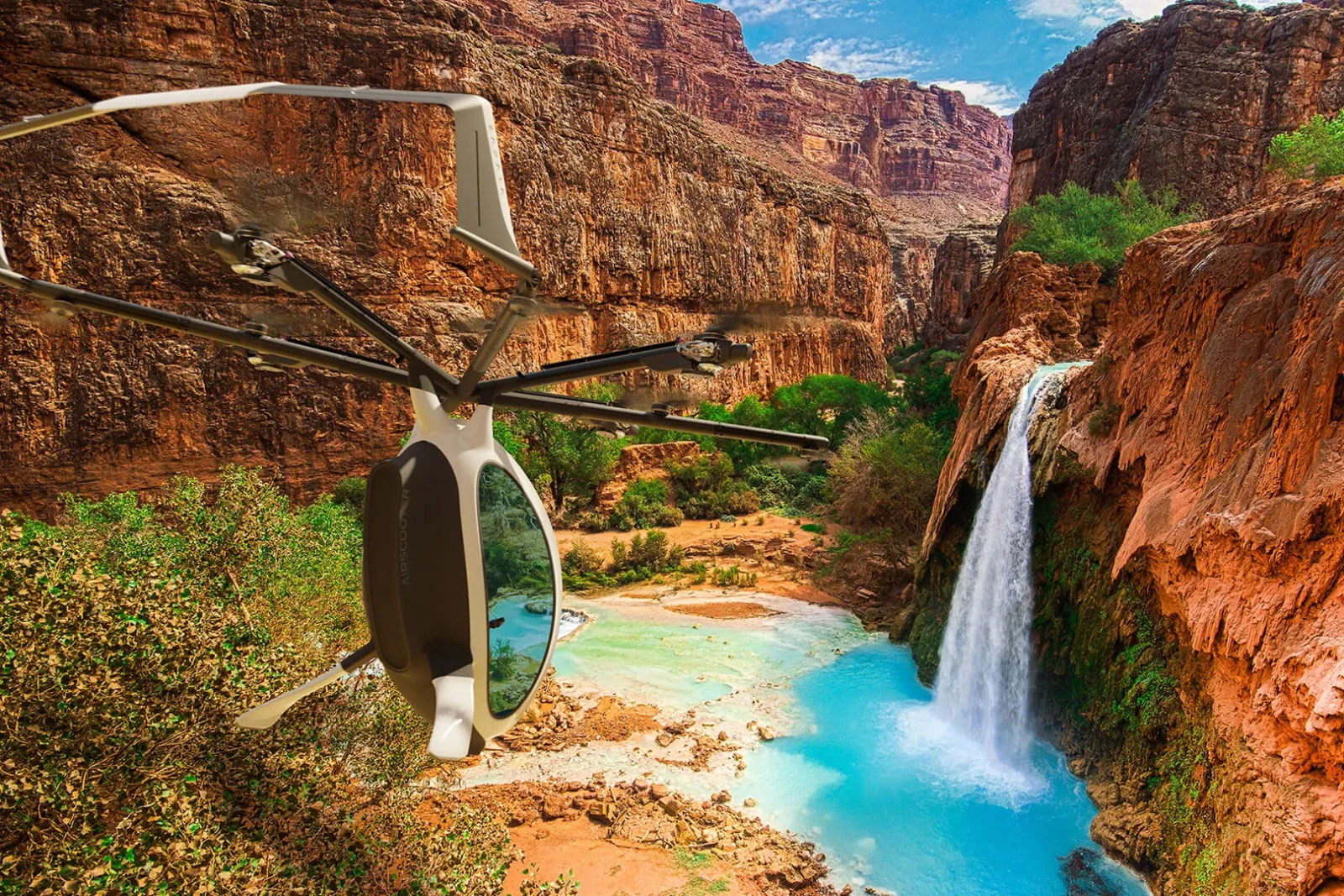
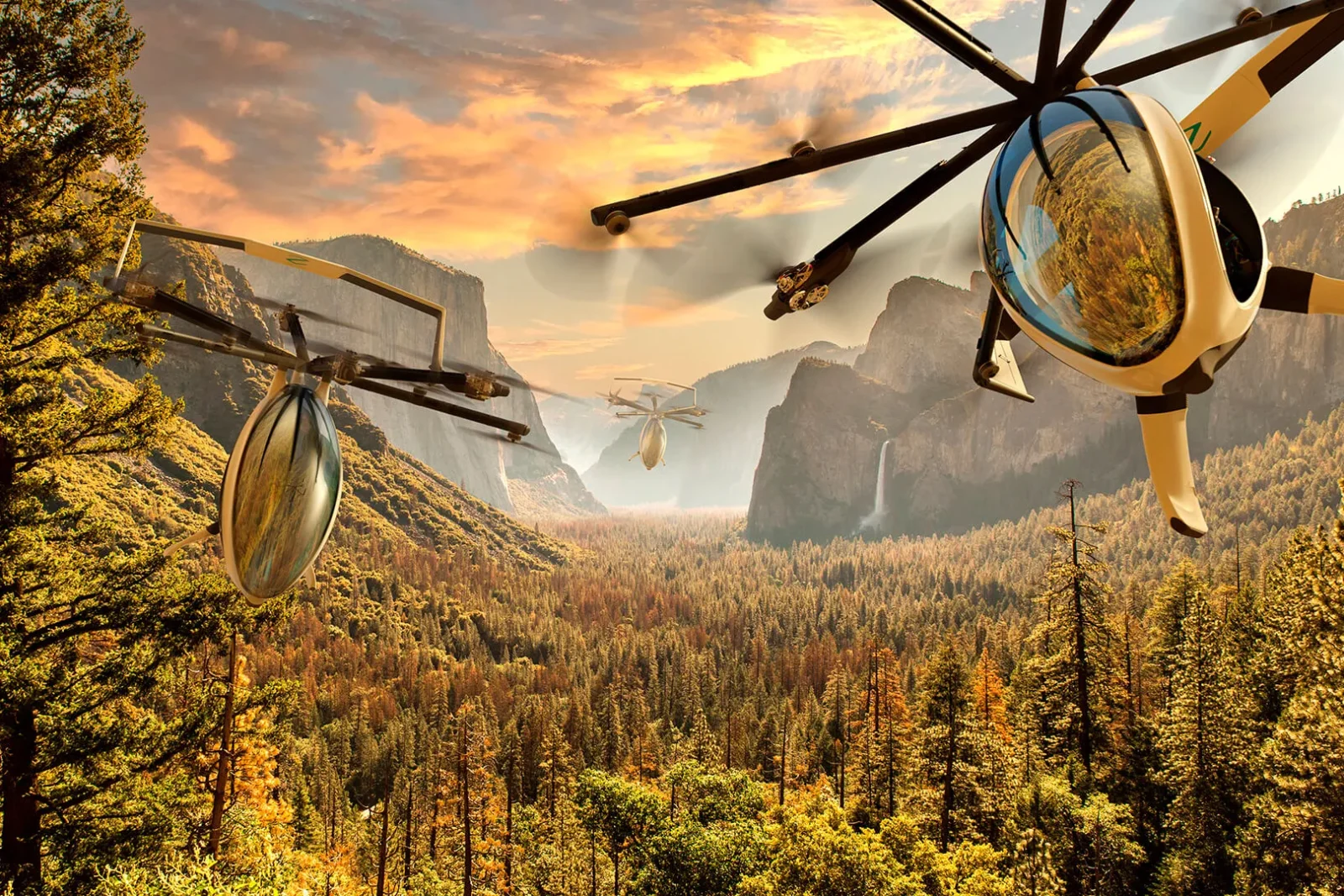
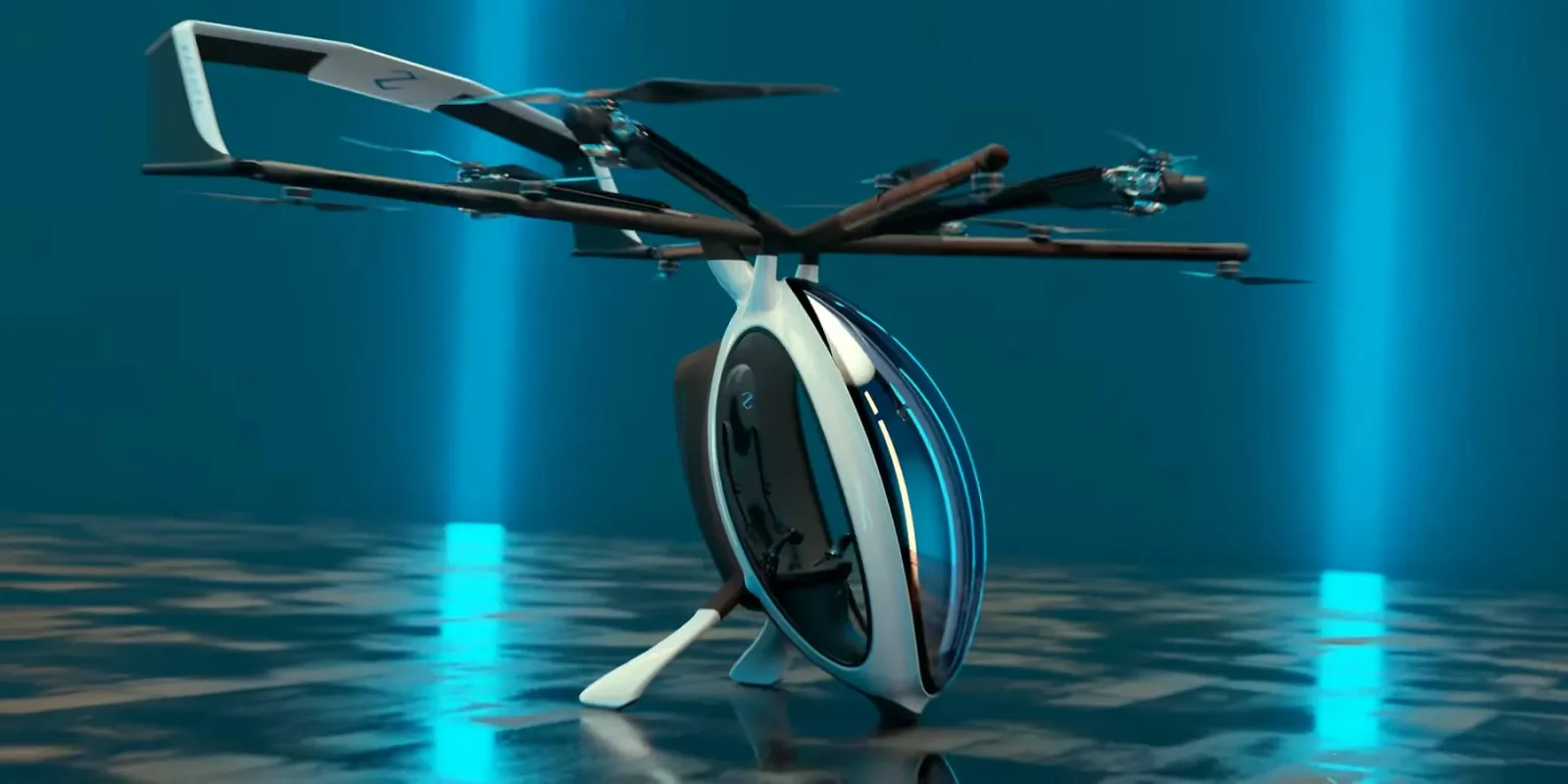
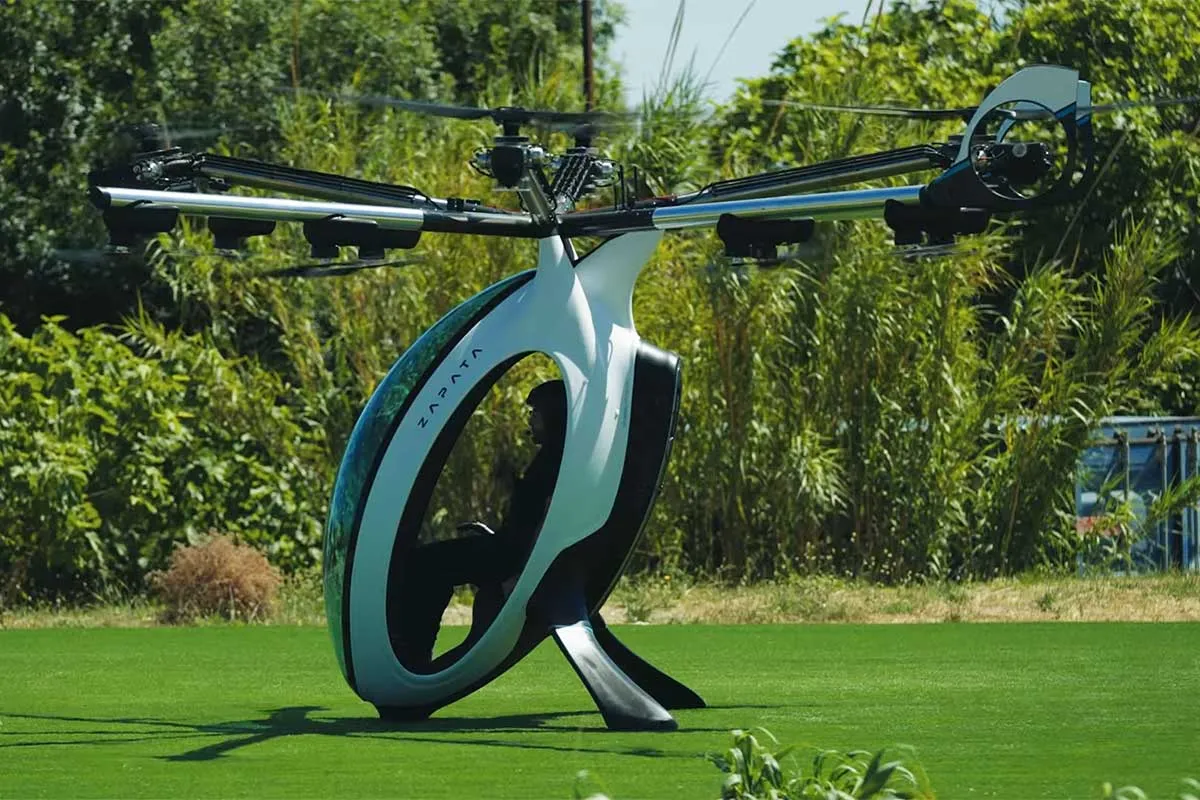
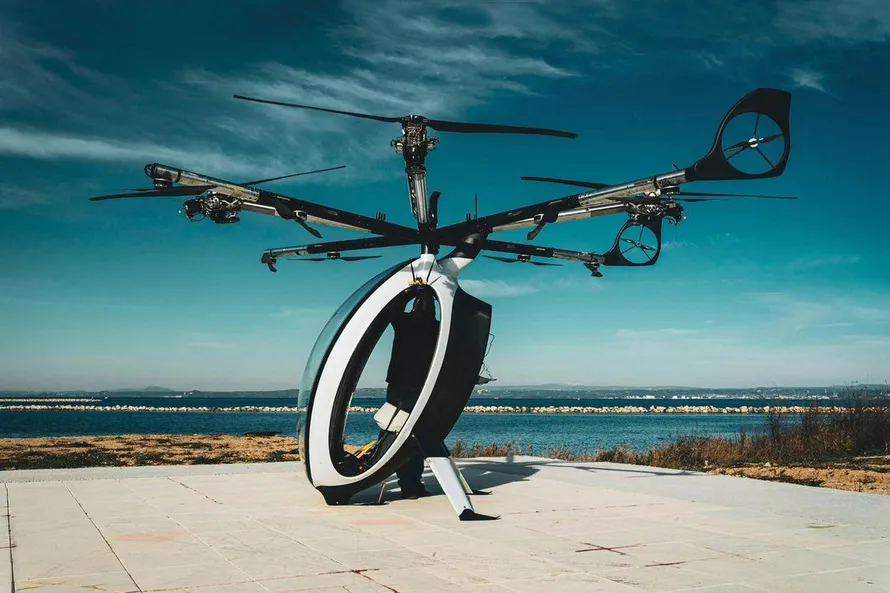
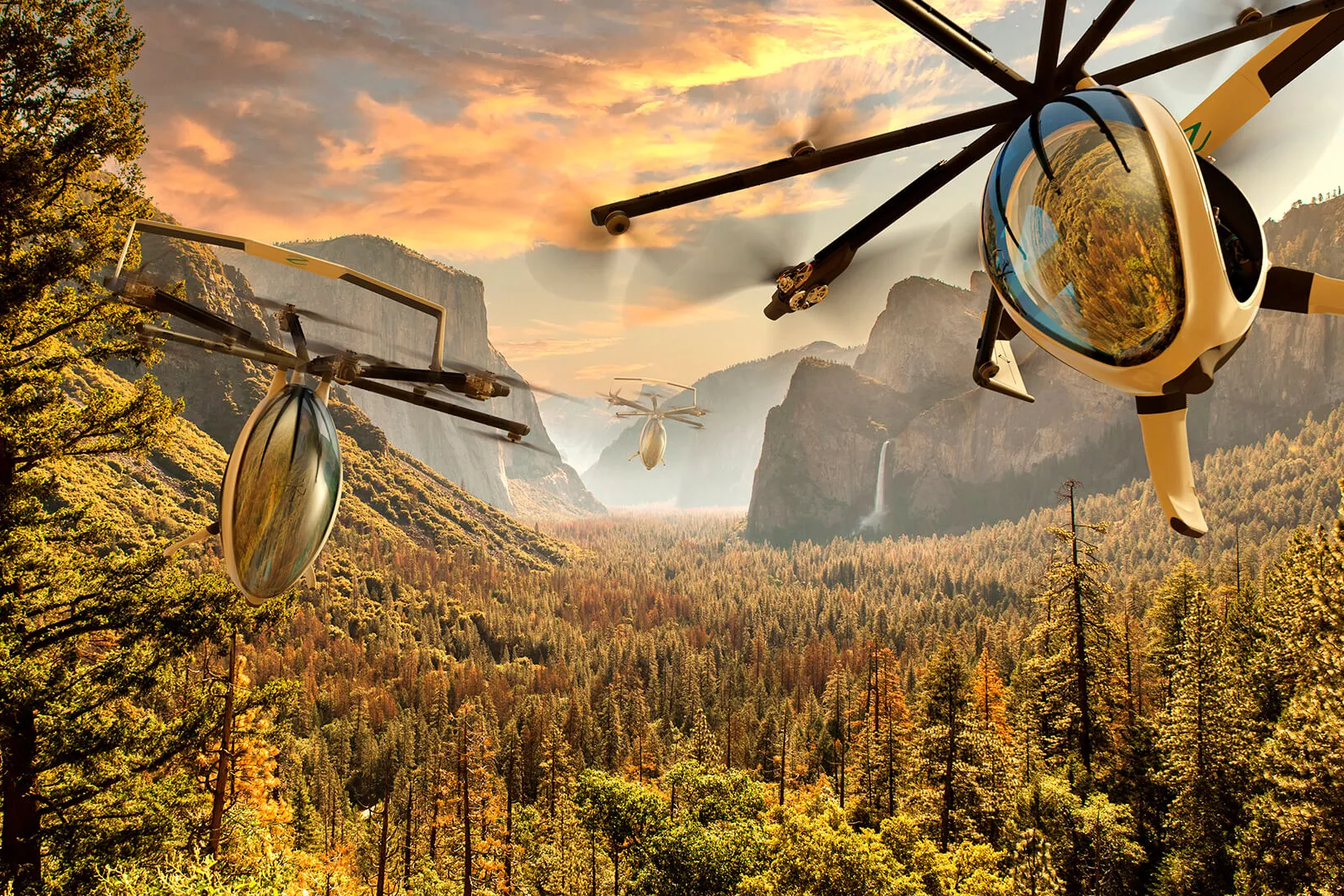
The Zapata AirScooter is a next-generation personal VTOL (Vertical Take-Off and Landing) hybrid-electric aircraft developed by Zapata, the same company founded by Franky Zapata, known for his jet-powered Flyboards. Designed as a “buy-n-fly” one-seat aircraft, it targets recreational flyers, offering the promise of personal flight without requiring a full pilot license.
U.S. Launch: Las Vegas Flight Center
Zapata plans to open its first U.S. AirScooter Flight Center near Las Vegas in early 2026. The site is designed to introduce new users to the aircraft in a controlled and structured environment, giving them a clear path from orientation to hands-on flight.
Each visitor will go through a short training program before taking off. The process includes time in a VR simulator to learn the aircraft’s controls, a guided pre-flight checklist to build familiarity with procedures, and a supervised flight in the AirScooter. After completing the steps, users get a full 40-minute flight experience.
Throughout 2025, Zapata is offering a pre-booking option. Anyone interested can reserve their spot with a 400-dollar voucher, which secures early access once the Flight Center begins operations.
Regulatory and Licensing: Ultralight Category
The AirScooter’s empty weight, which is roughly 250 pounds or about 115 kilograms, places it within the FAA Part 103 ultralight category. This classification gives Zapata a practical advantage because it allows the aircraft to be flown for recreation without the need for a formal pilot’s license in the United States. The lighter weight keeps it within regulatory limits while still supporting the hybrid propulsion system and safety architecture.
Even though a license is not required, Zapata does not position the AirScooter as an unsupervised aircraft. All recreational flights are carried out under instructor supervision. This approach gives users the freedom associated with ultralight rules while keeping the experience structured and controlled for safety.
Performance & Aerodynamics
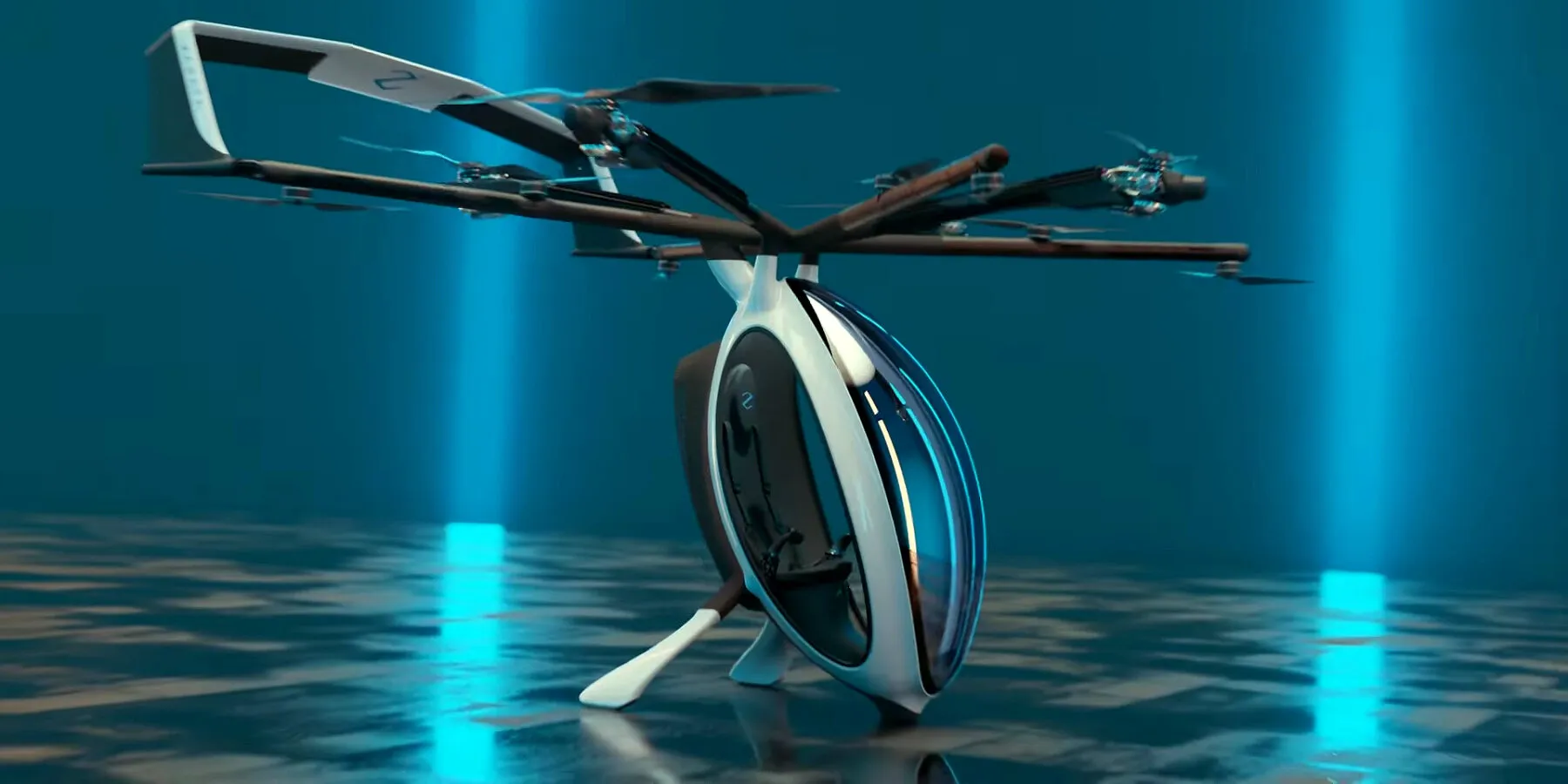
The AirScooter is built for steady recreational flight rather than high-speed travel. Its cruise speed sits around 80 km/h, or roughly 50 mph, which is suitable for sightseeing and controlled low-altitude operations. When needed, it can reach a top speed of about 100 km/h, or 62 mph. The hybrid powertrain gives it more staying power than many electric-only ultralights, delivering more than two hours of flight time on a full fuel and battery load.
In terms of reach, third-party data places the AirScooter’s range at about 160 kilometers, or roughly 100 miles. That number accounts for mixed power use and typical cruise conditions. Some listings also indicate a maximum operational altitude near 2,987 meters, or about 9,800 feet. This ceiling gives the aircraft flexibility for varied terrain and weather while keeping it within reasonable recreational flight limits.
Structural & Propulsion Architecture
Airframe
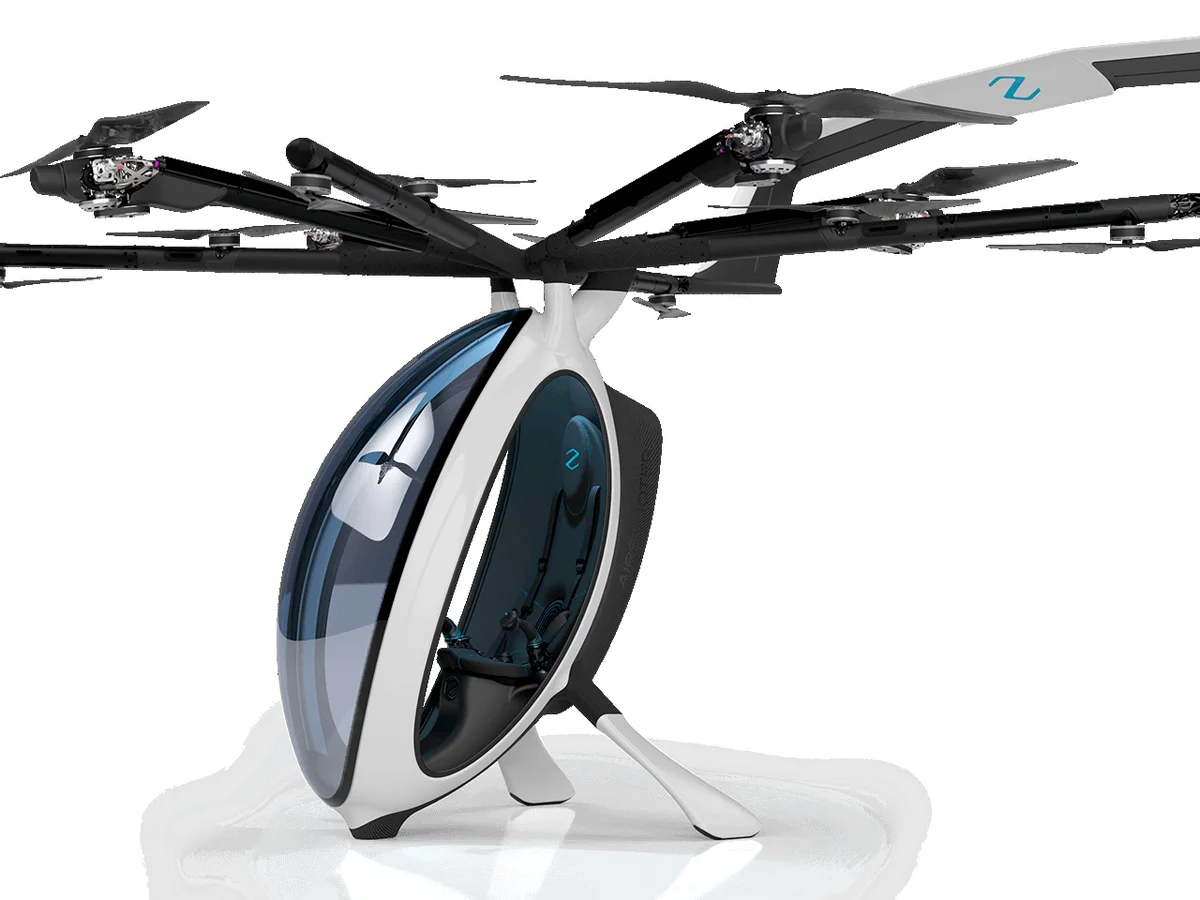
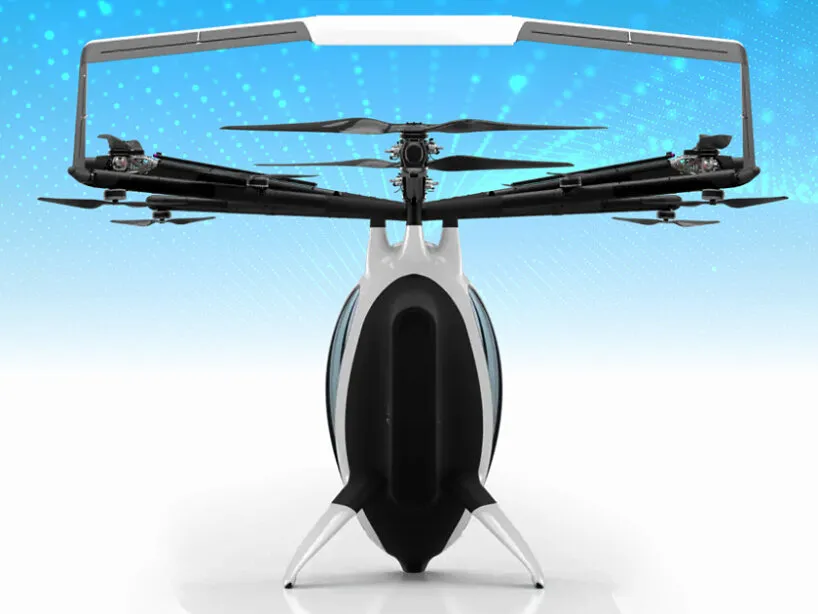
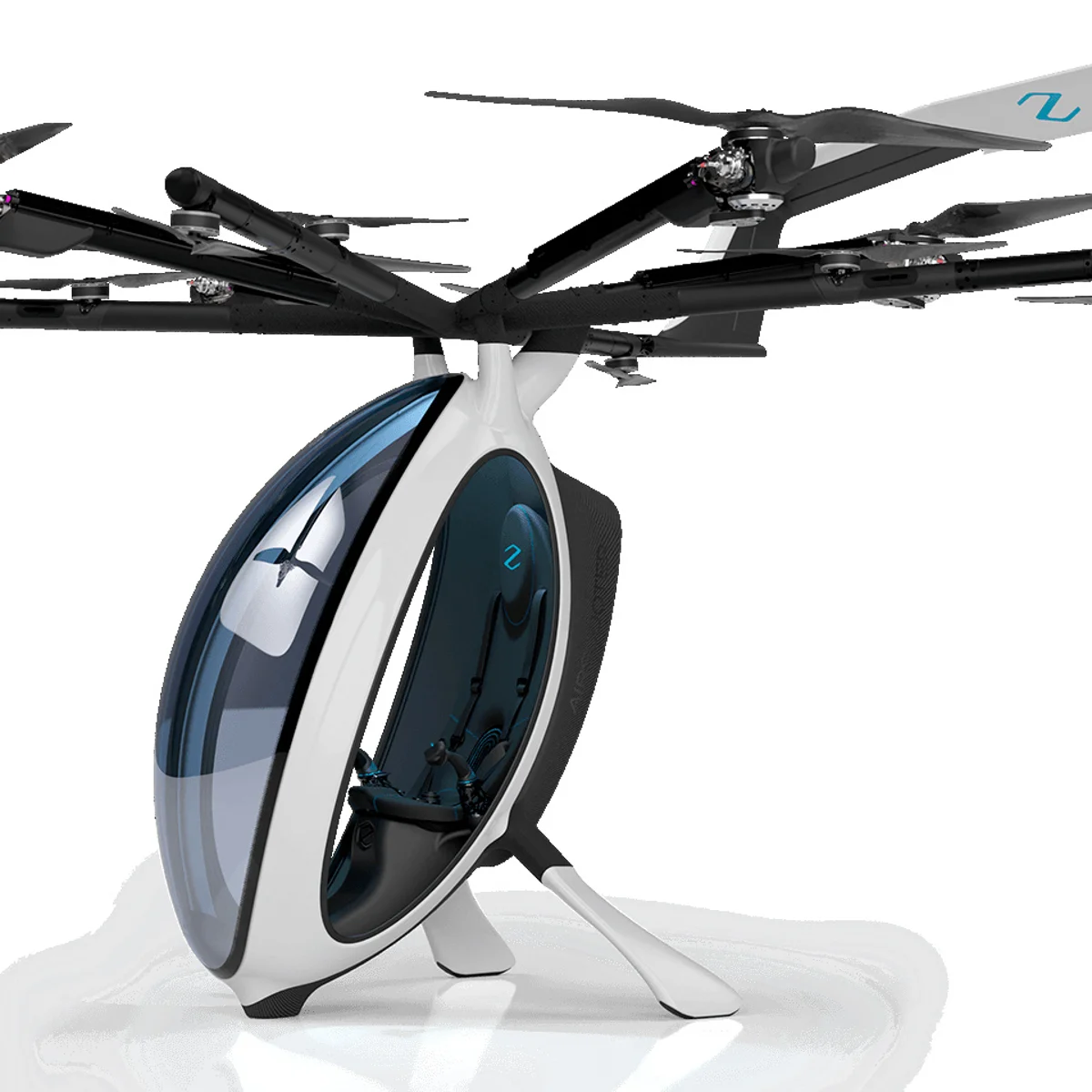
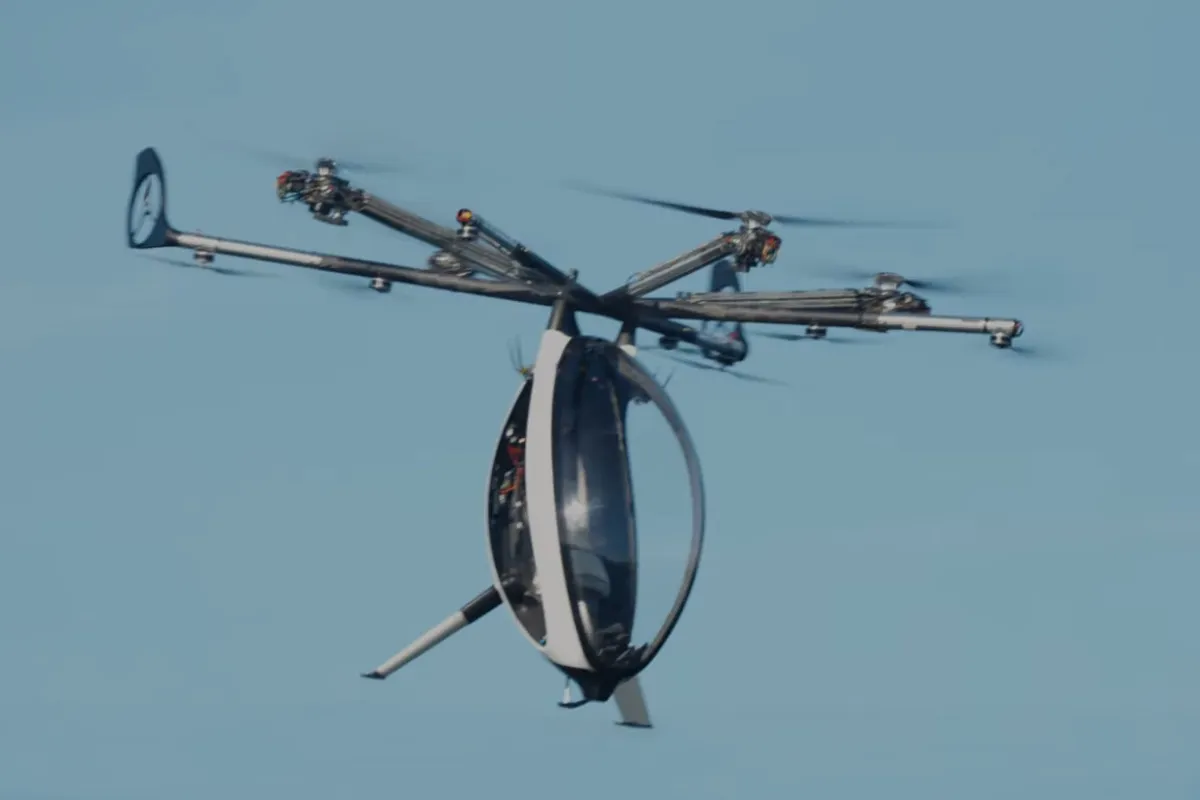
- The cockpit is an egg-shaped glazed pod, providing panoramic visibility.
- It uses fixed tricycle landing gear.
- The fuselage is made of carbon fiber composite, balancing strength and low weight.
Propulsion System
- The AirScooter uses a hybrid-electric propulsion system, combining thermal (fuel) and electric power.
- According to New Atlas, four turbine engines are driving the large propellers mounted at the ends of the main booms.
- In addition, there are smaller electric propellers on the diagonal booms used for control and stability.
- Zapata has partnered with ONERA (French Aerospace Lab) to develop its own turbojet engines, optimizing for redundancy, efficiency, and maintainability.
- The fuel tank capacity is ~18.9 L (5 U.S. gallons), according to prototype data.
Flight Control & Safety Systems
- The AirScooter features computer-assisted fly-by-wire controls, meaning pilot input is translated by computers to manage the thrust of multiple propellers.
- For reliability, three independent flight controllers run in parallel, each with its own inertial navigation unit (IMU) and GPS.
- The distributed electric propulsion (DEP) architecture provides redundancy: if some motors or propellers fail, others can compensate.
- On the sustainability side, Zapata is developing sustainable aviation fuel (SAF) in partnership with ETS Innovation, with a potential carbon-emissions reduction of up to 80% compared to conventional jet fuel.
Payload & Weight
The Zapata AirScooter has an empty weight of approximately 112–115 kg (≈ 247 lb), according to prototype data. Its maximum payload is around 120 kg (≈ 264 lb), while the maximum takeoff weight exceeds 232 kg (≈ 511 lb), based on prototype specifications. These figures highlight its ultralight classification and focus on personal flight use.
Pricing & Market Positioning
Zapata lists the AirScooter as available from US$250,000 on its official site. However, other sources, such as EV Database, report a slightly lower starting price of US$128,000 (excluding taxes and options). In Europe, a 2026 model is listed at approximately €117,190. This range positions the AirScooter in the premium recreational aviation segment, targeting early adopters and enthusiasts.
Use Case & Business Model
Initially, Zapata is positioning the AirScooter for recreational use, with a flight center in Las Vegas serving as a key launch point. Customers follow a structured experience model training via a VR simulator test and supervised 40-minute flights. Looking ahead, Zapata envisions commercial applications such as rescue operations, offshore transport, and aerotransit links, demonstrating the platform’s versatility beyond leisure flying.
Challenges & Risks
The AirScooter has faced real-world operational challenges, including a 2025 English Channel crossing attempt that had to be aborted due to a technical issue. As a hybrid aircraft with turbines, noise and emissions remain considerations compared to fully electric VTOLs. Additionally, regulatory constraints on airspace integration, safety certification, and operational regulations are significant hurdles, even though an ultralight license is not required in the U.S.
Environmental Impact
The AirScooter’s hybrid powertrain offers longer endurance than many purely electric VTOLs, but its carbon footprint is comparable to a passenger car. Zapata aims to reduce emissions through the use of sustainable aviation fuel (SAF), which could lower lifecycle emissions by as much as 80% compared with conventional fuel. This demonstrates a proactive approach toward eco-friendly recreational aviation.
The Zapata AirScooter represents a bold step in personal aviation: a hybrid-electric, single-seat eVTOL that aims to make flying accessible, relatively safe, and reasonably efficient. With its Las Vegas debut, Zapata is a flying machine launching a new kind of aerial lifestyle experience. But technical, regulatory, and operational challenges remain, particularly as the company scales up.
Image credit: Zapata
Explore Courses

.jpg "Ondrej Chybik - Rethinking Architecture")