



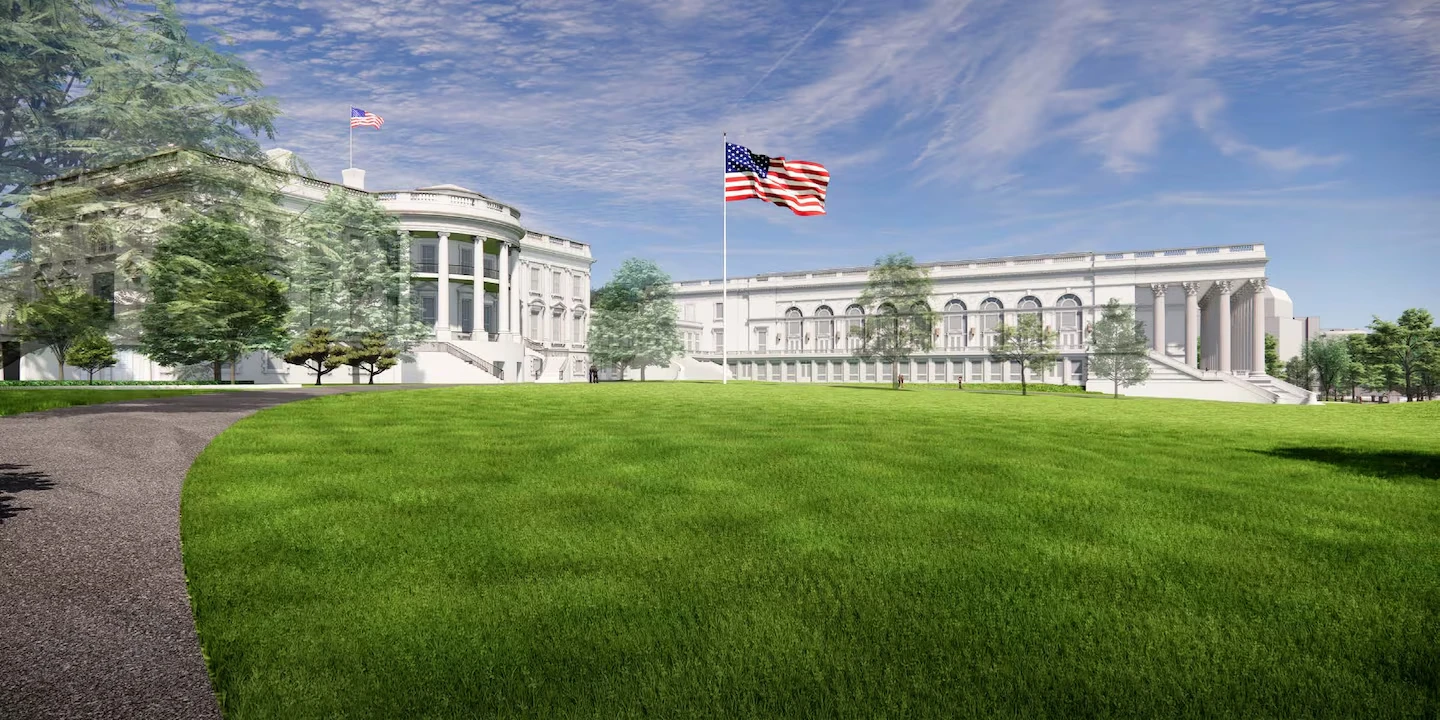
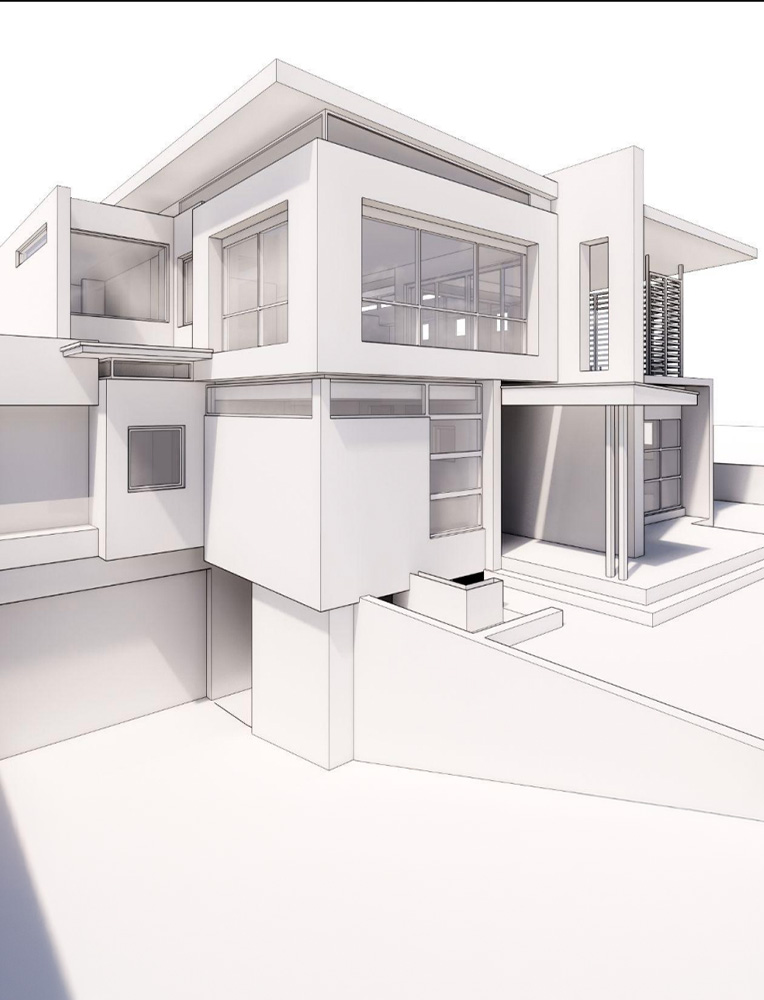
New renderings have been released, showcasing the complete look of the planned ballroom addition to the White House. The detailed images are part of official planning documents submitted ahead of regulatory reviews, providing a clearer picture of a project that has stirred debate across Washington and beyond.
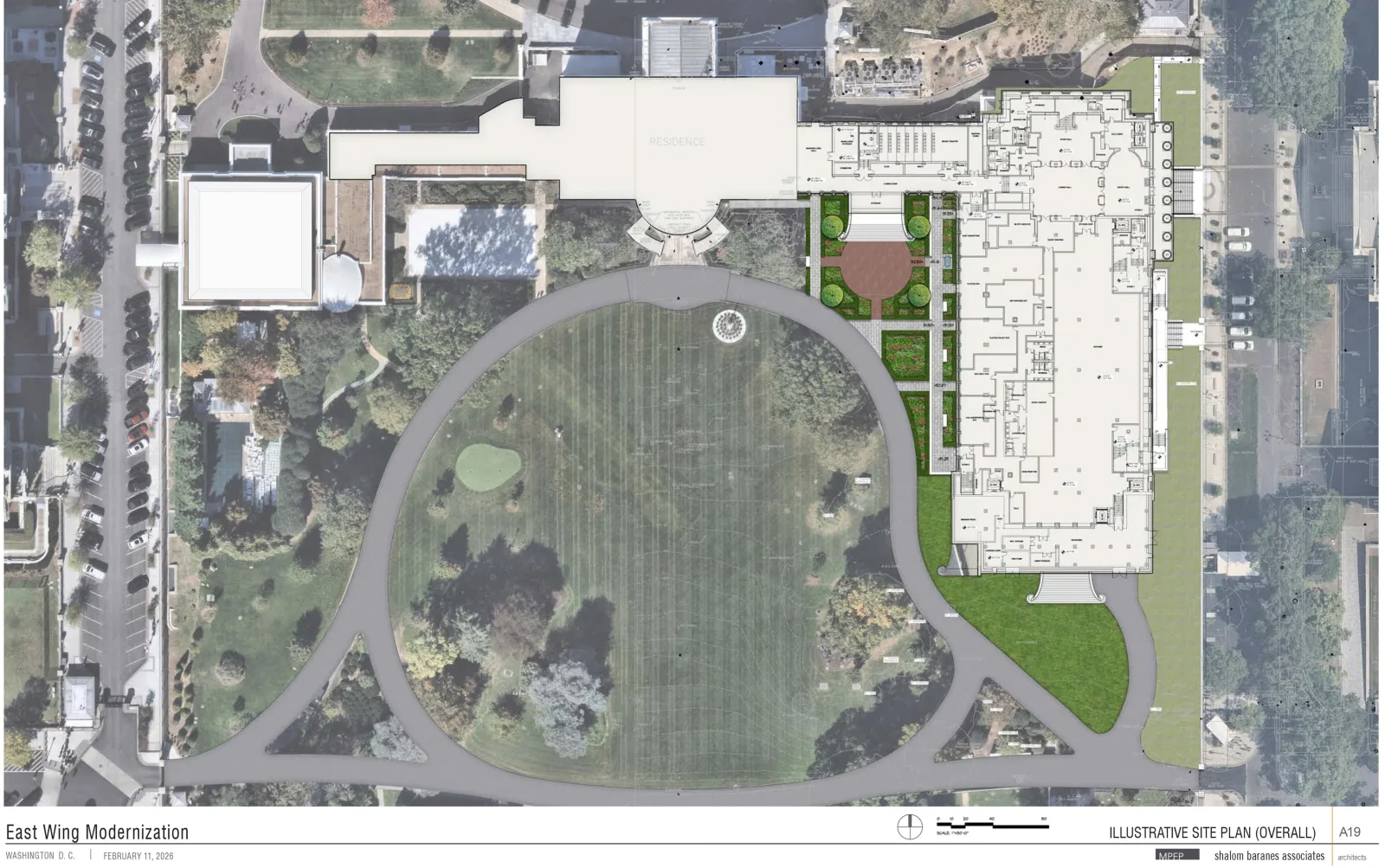
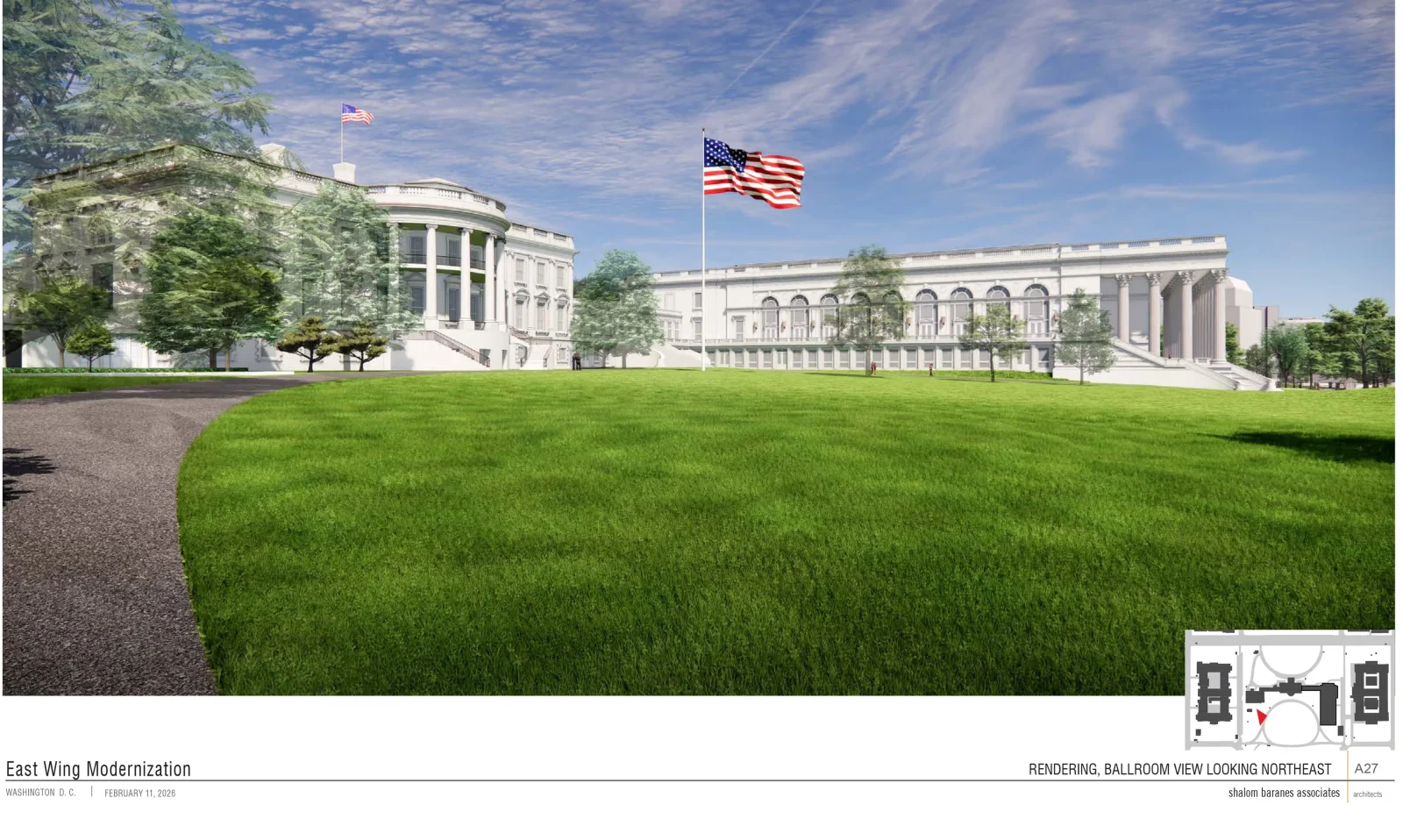
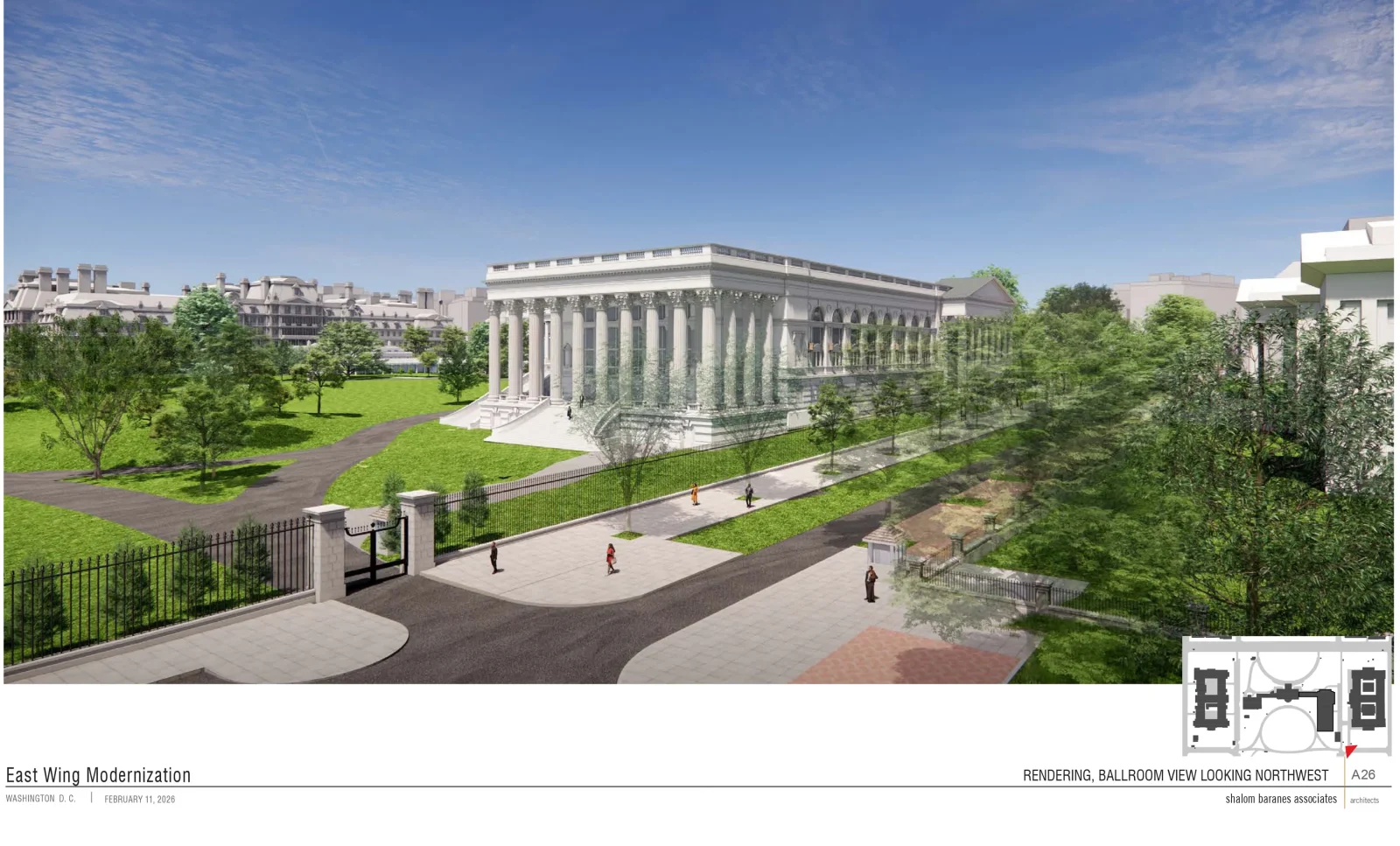
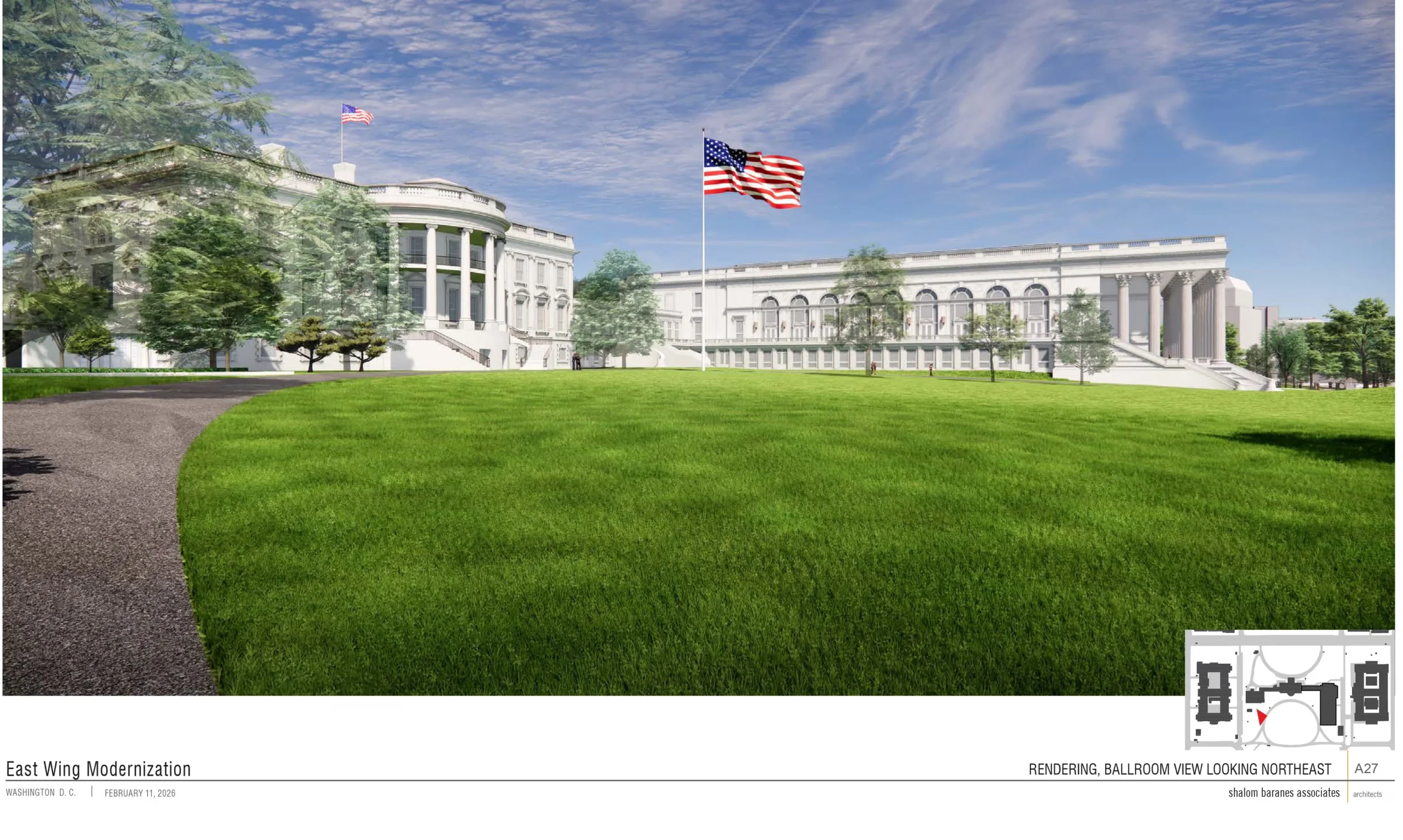
The new drawings show a 90,000-square-foot ballroom addition on the site of the former East Wing, which was demolished in late 2025 to accommodate this project. The pictures include exterior views from Pennsylvania Avenue and other vantage points, giving the public a sense of how the new space will be alongside the historic mansion.
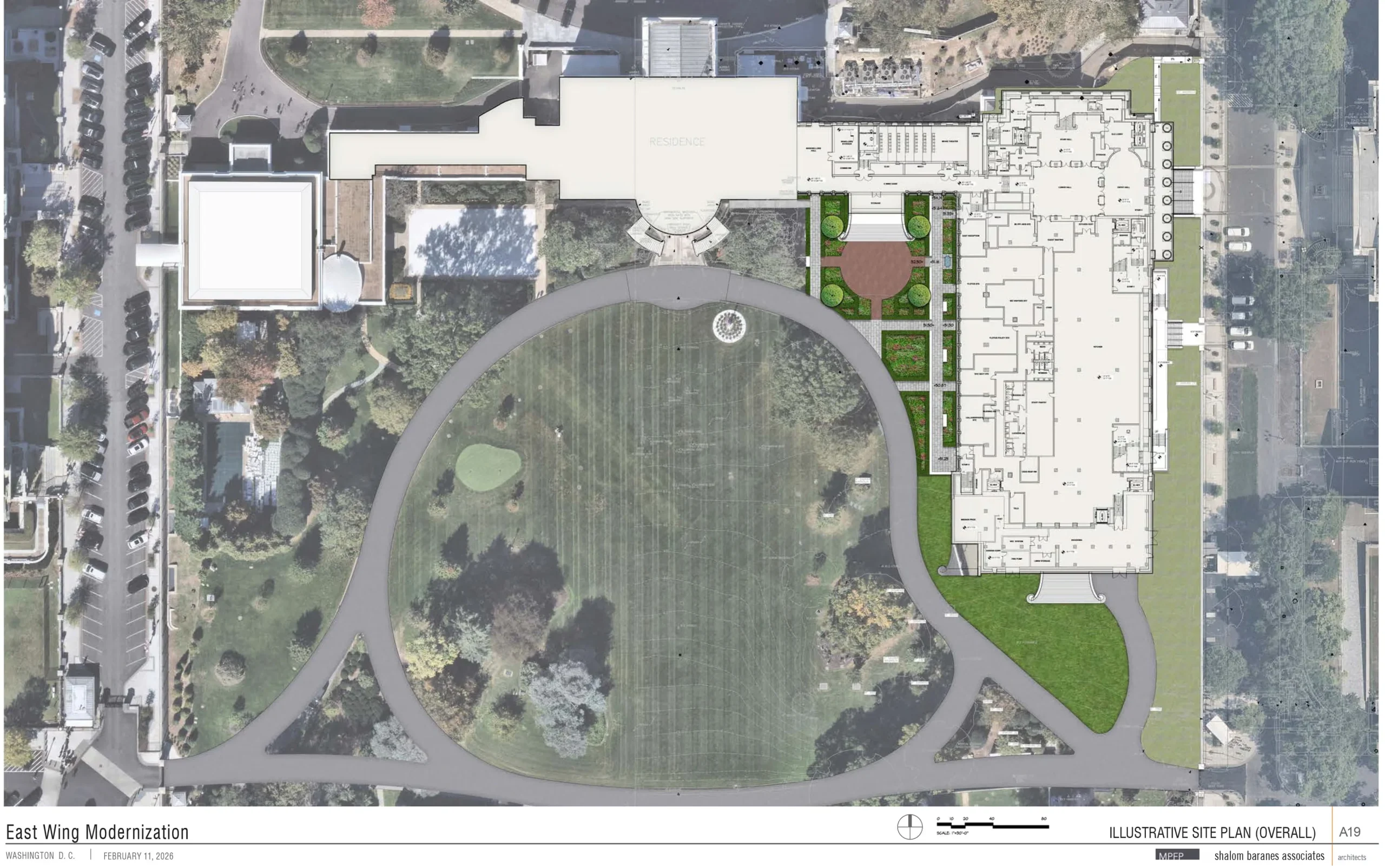
According to the submitted report, the design replaces the older wing entirely and creates a significantly larger event space than the East Room, which can accommodate approximately 200 guests. The new ballroom is planned to host large dinners, state events, and even future presidential inaugurations.
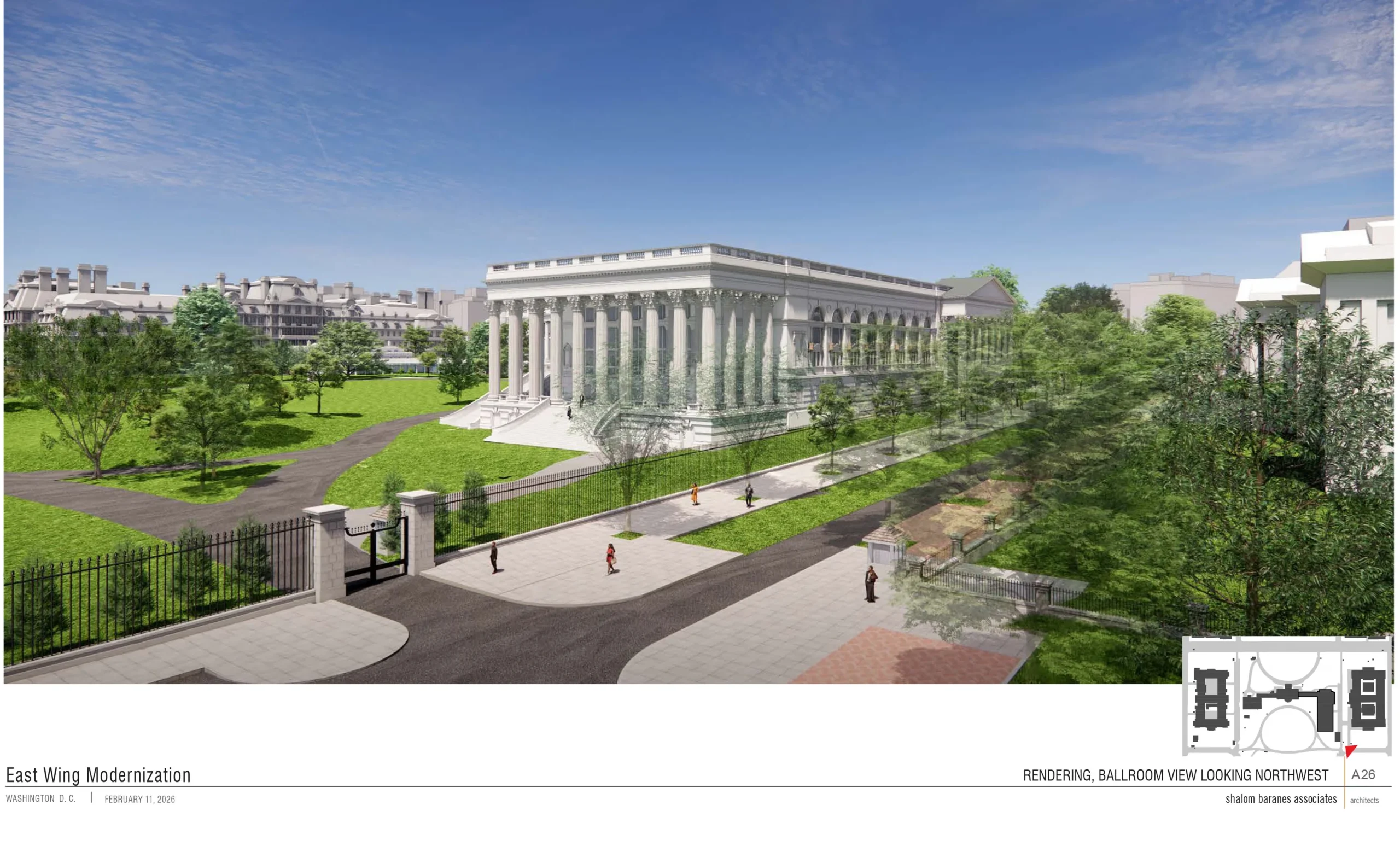
The renderings are part of a 31-page report shared with the Commission of Fine Arts and the National Capital Planning Commission ahead of hearings set for early March. The Commission of Fine Arts, created by Congress to review major building projects in Washington, will consider these refreshed images as part of its deliberations. New members of the commission were appointed recently by the White House.
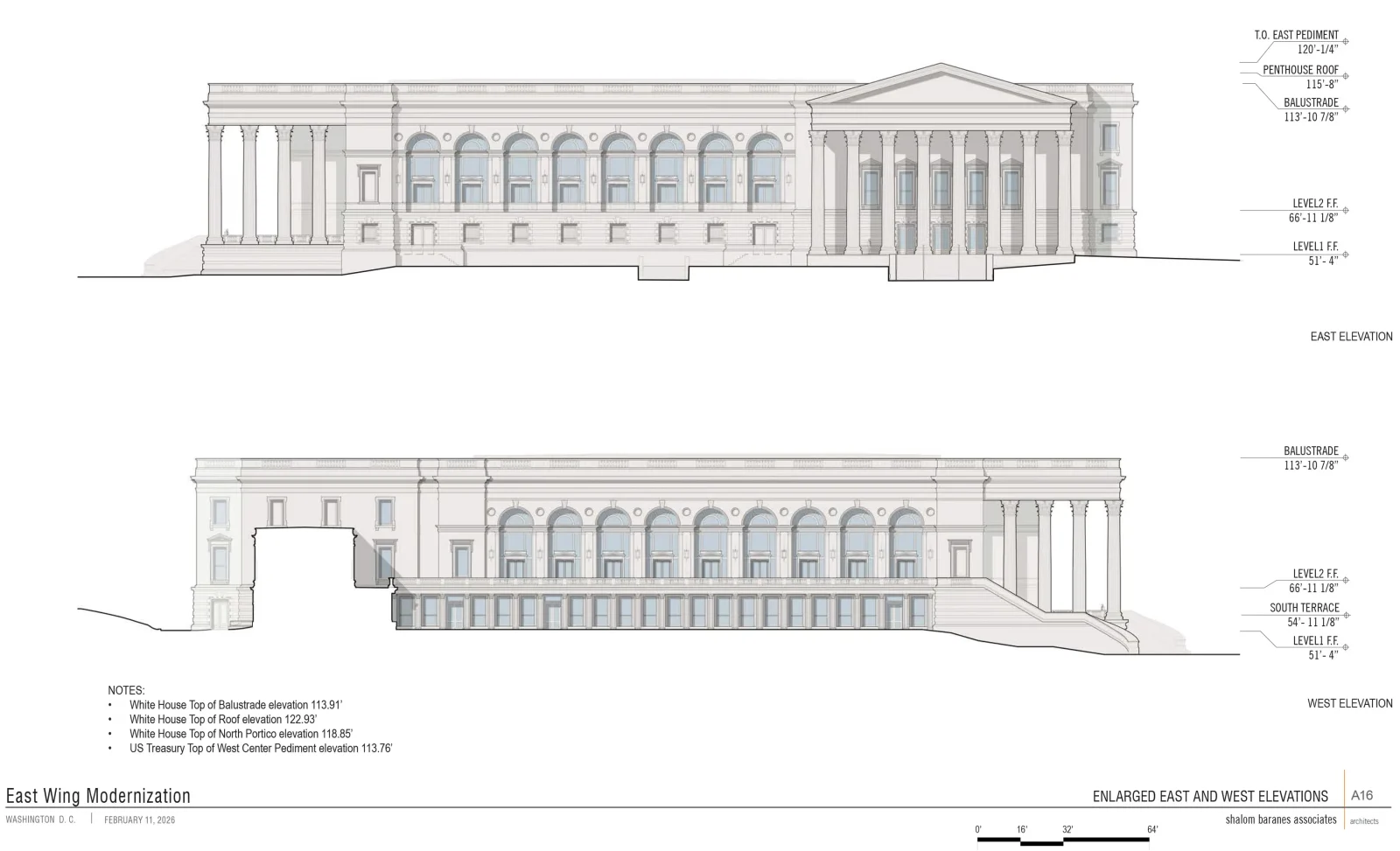
Developed by Shalom Baranes Associates, it briefly appeared on the National Capital Planning Commission’s website before being removed. The drawings suggest the proposed new East Wing would stretch close to the length of a full city block, making it notably longer than the West Wing. Based on the scale shown, the structure would also extend to more than half the length of the neighboring Treasury Building.
Supporters inside the administration argue the space fills a long-standing need for a larger formal venue at the White House. The ballroom is being funded largely by private donors, including major corporations, and officials say it remains on budget and ahead of schedule.
Critics have raised significant concerns about the project’s legality and impact. The demolition of the East Wing began before detailed plans were submitted to oversight bodies, prompting a federal lawsuit from the National Trust for Historic Preservation. Observers argue that historic preservation laws and standard review processes were bypassed.
Architects and preservation groups also worry that the size and height of the new structure could overshadow the historic White House mansion and disrupt long-established sight lines
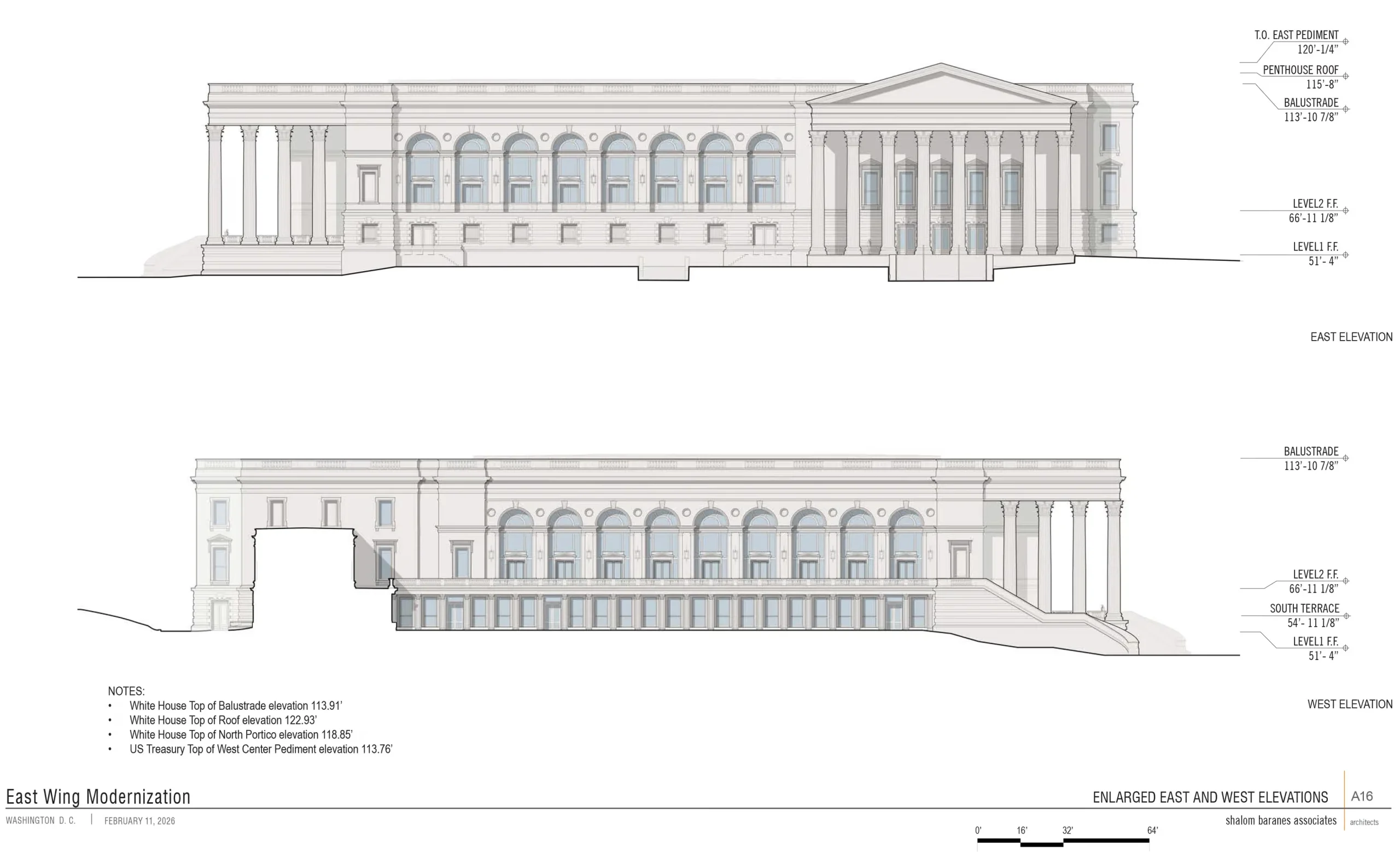
Officials from the planning commissions are scheduled to meet in March to discuss the ballroom plans. Until then, the public will be reviewing the new images and weighing their own views on how best to balance the White House’s historic character with modern needs.
Image credit: National Capital Planning Commission/Shalom Baranes Associates
Explore Courses
.jpg%202.jpg "Building Performance with Forma & Opossum")

.jpg "Ondrej Chybik - Rethinking Architecture")