


Skyscrapers first emerged in the late 19th century as cities began expanding rapidly during the Industrial Revolution. Growing populations, rising land values, and limited urban space pushed architects and engineers to build upward instead of outward. The invention of steel-frame construction and the elevator made it possible for buildings to rise higher than ever before, transforming the skylines of cities such as Chicago and New York.
What began as a race for height gradually grew into evolving ideas of architecture, engineering, sustainability, and urban living. Today’s skyscrapers are designed to respond to climate, integrate greenery, reduce energy use, incorporate intelligent technologies, and even function as vertical neighborhoods.
Across cities in Asia, the Middle East, Europe, and North America, architects are rethinking what tall buildings can look like and how they can perform.
Here are ten such major trends currently shaping skyscrapers around the world.
1. Glass Skins
From New York and Dubai to Shanghai and beyond, cities today are filled with towers wrapped in reflective glass that give their skylines a futuristic look. Architects are now using advanced glass systems that also improve energy performance, daylight, and indoor comfort.
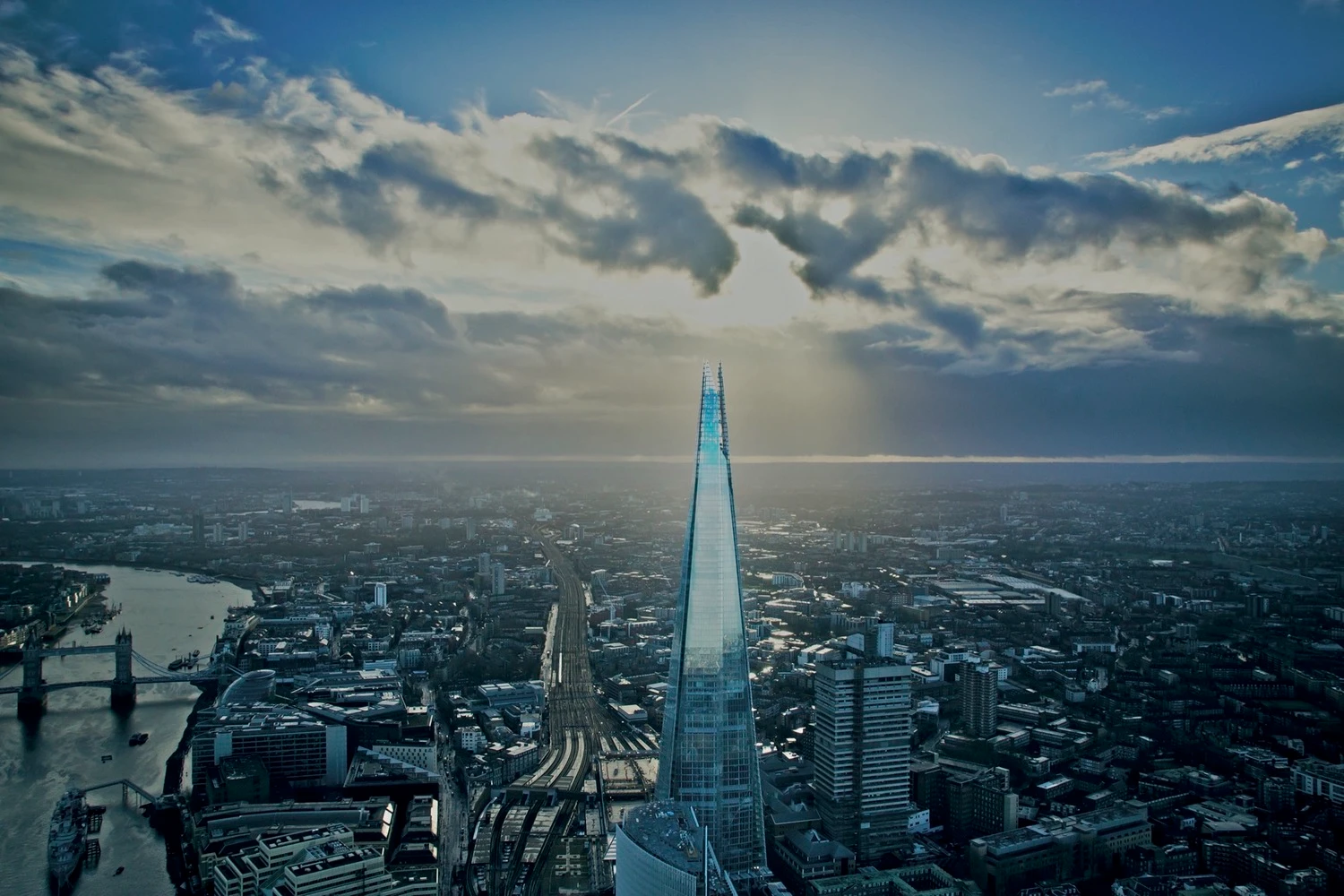
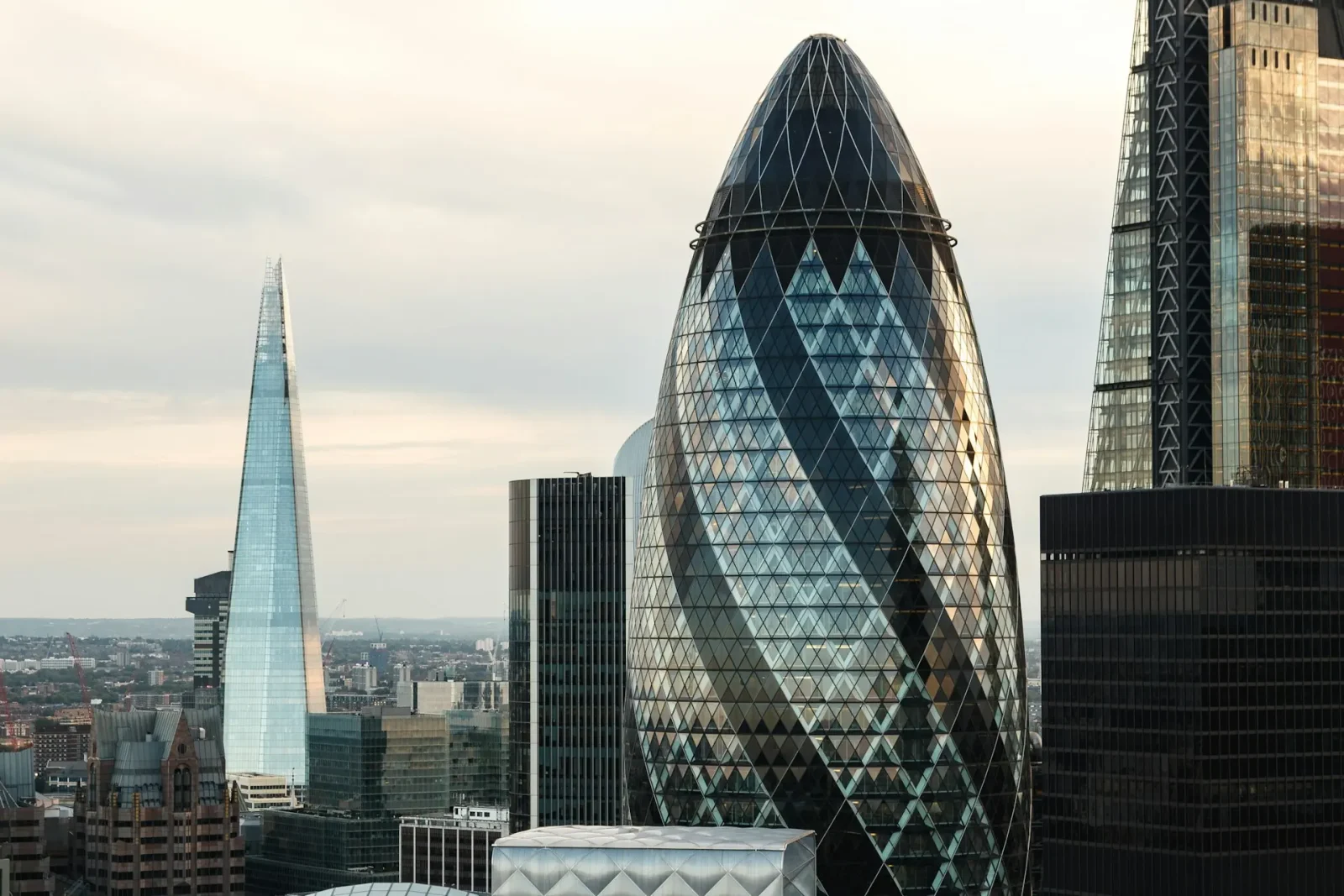
One of the best examples is The Shard, designed by Renzo Piano. The tower uses sharp-angled glass panels that make the building look like a piece of glass rising into the sky. Its transparent skin reflects changing light and weather throughout the day, helping the skyscraper feel lighter and more connected to the surrounding city.
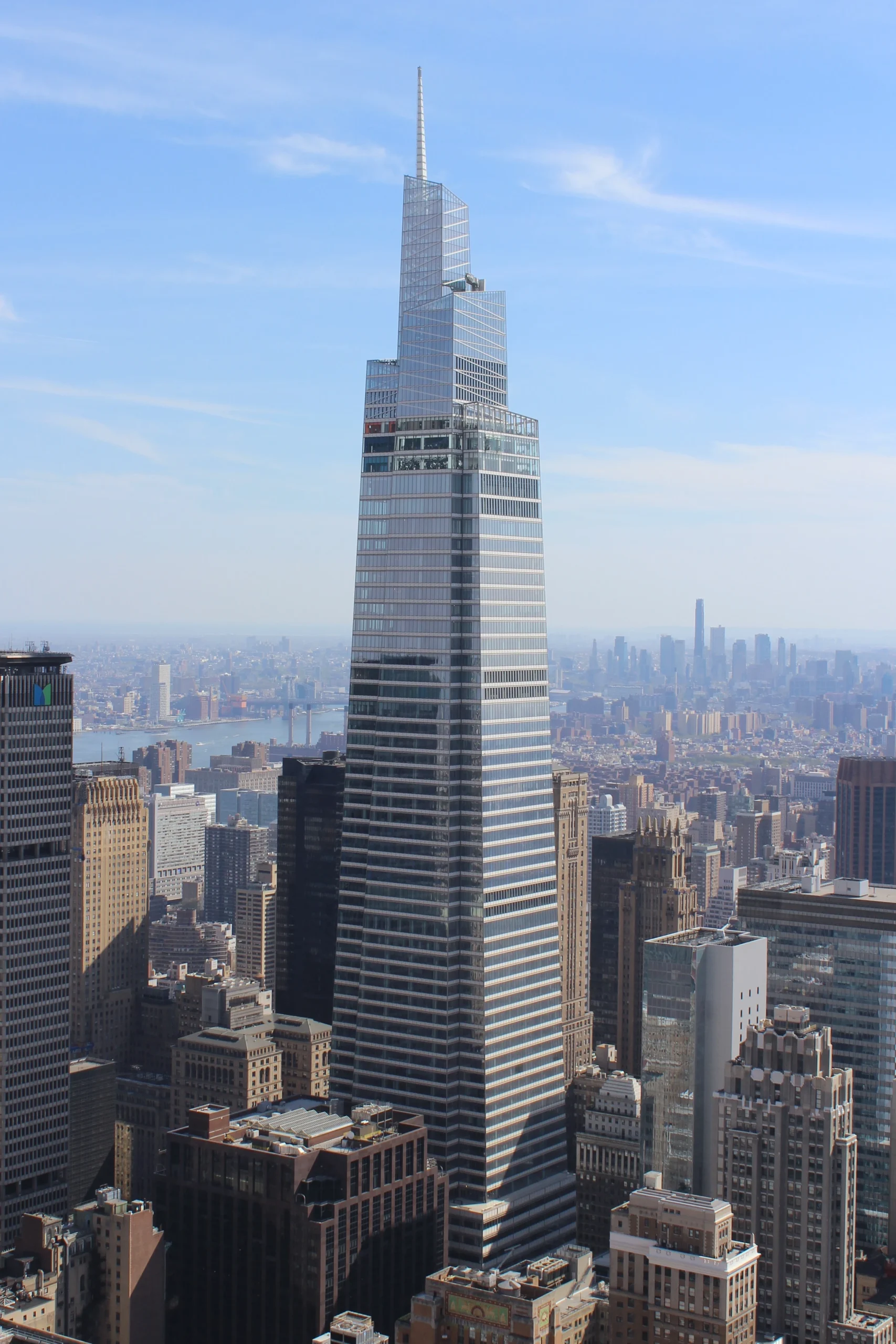
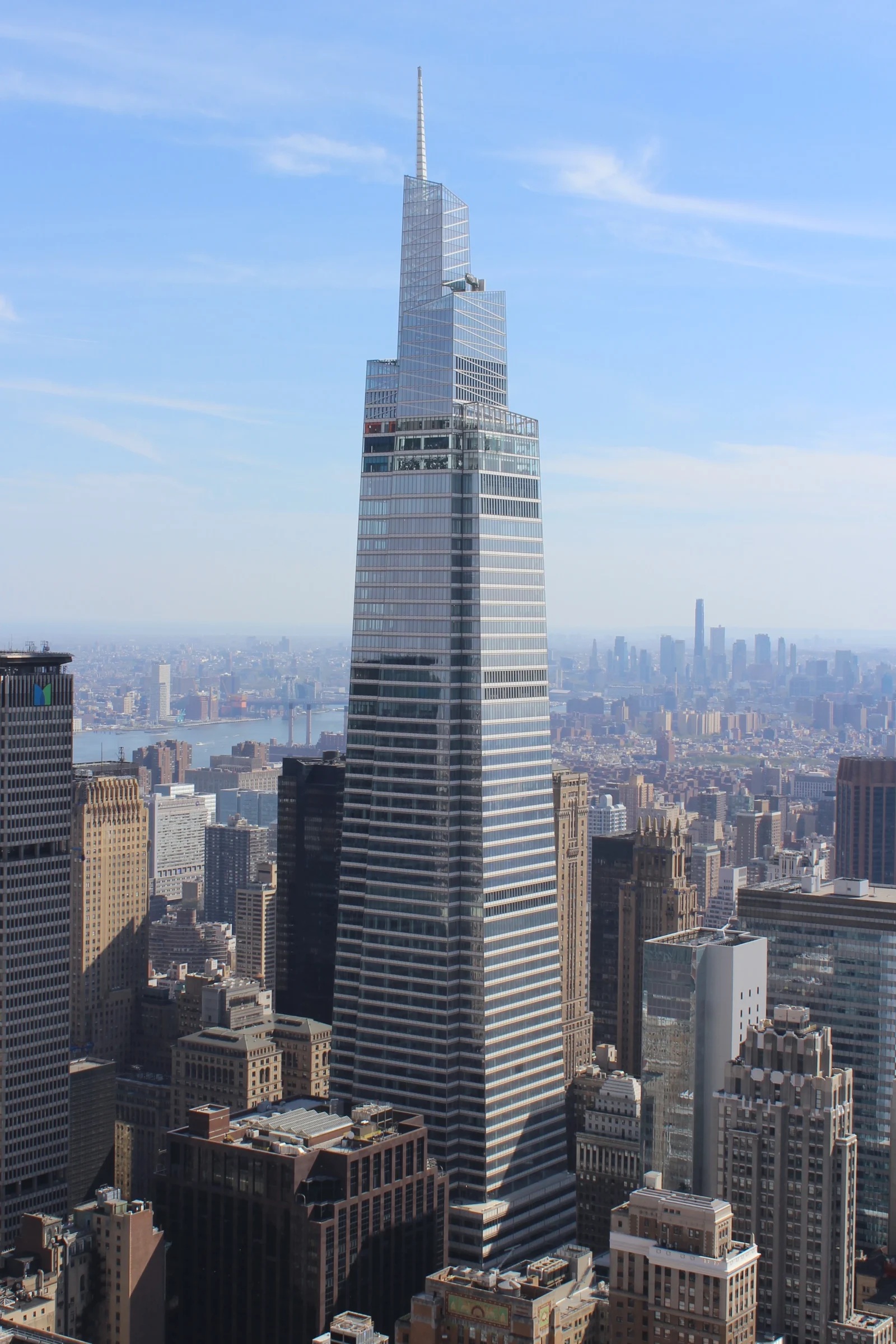
Another example is One Vanderbilt in New York. Designed by the architecture firm Kohn Pedersen Fox (KPF), the building uses large glass panels combined with metal detailing to create a clean vertical form that fits into Manhattan’s skyline. The glass is designed to reduce heat and glare while still allowing natural light deep into the interiors, cutting down the need for artificial lighting during the day.
2. Parametric and Twisting Forms
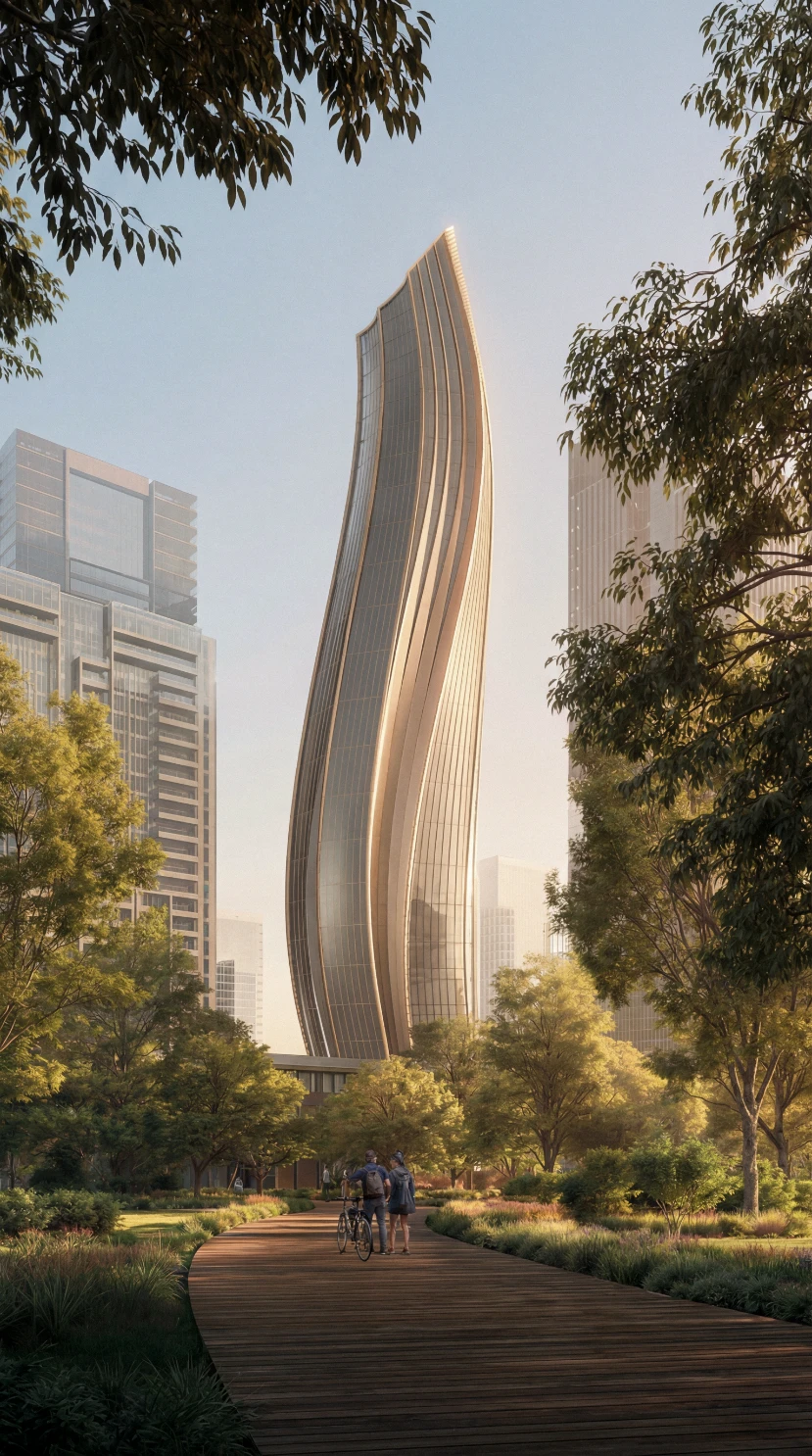
Skyscrapers and large urban buildings today are moving away from rigid box-like forms. Advances in digital modeling and parametric design software now allow architects to create structures that respond to wind, light, movement, and the surrounding urban environment in much more dynamic ways.
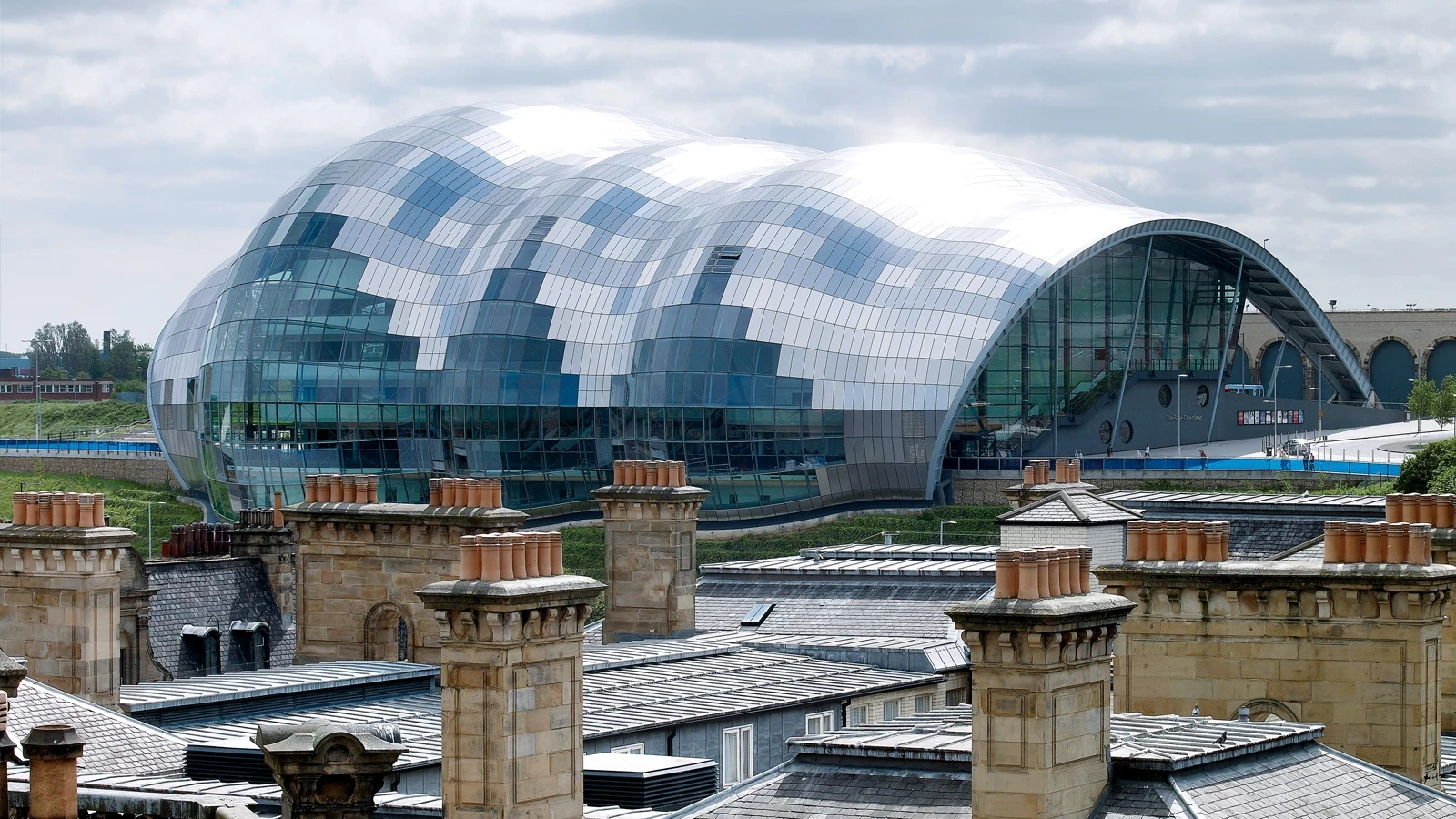
An example of this approach is The Sage Gateshead by Norman Foster. The building is wrapped in a flowing steel and glass grid shell that gives it an almost organic appearance, often compared to an armadillo shell. The building’s shape responds to environmental conditions: digital modeling tools helped shape the aerodynamic roof form to redirect strong riverfront winds around the structure more efficiently. The massive roof appears to float over the building and is supported by only four steel arches, creating large, uninterrupted interior spaces for music halls and public gathering areas.
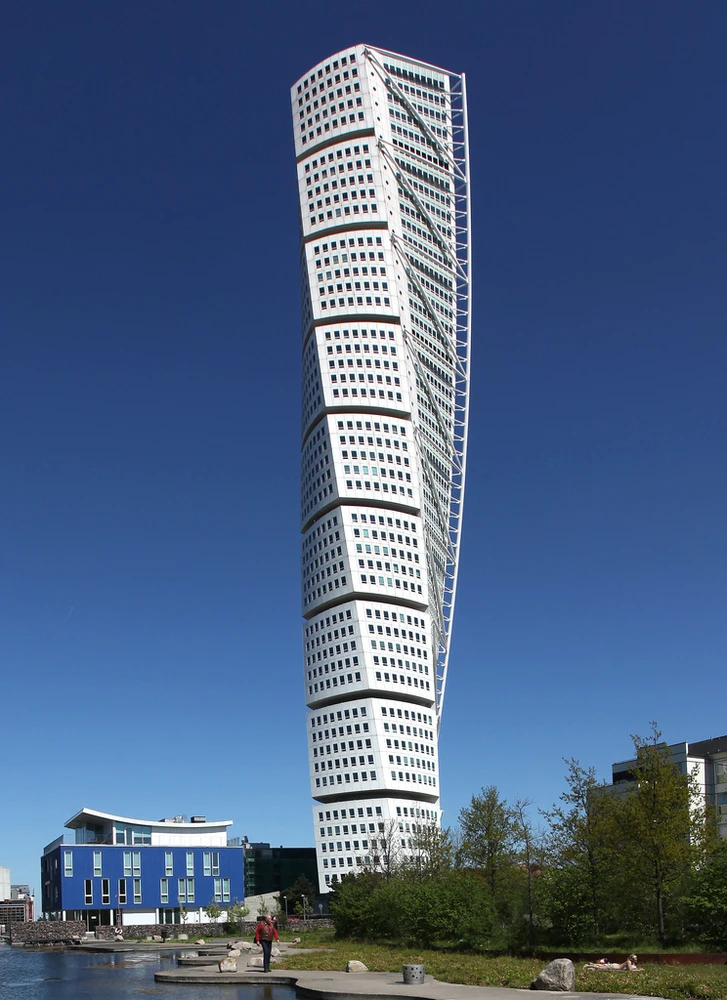
Another well-known example is Turning Torso by Santiago Calatrava. Inspired by the movement of the human body, the tower rotates section by section from the base upward, creating a twisting silhouette. When it opened in 2005, it helped push skyscraper design away from rigid rectangular forms toward more experimental architecture.
3. Super-Slender Skyscrapers
In cities where land is limited, property values are extremely high; these towers rise hundreds of metres into the sky while occupying surprisingly small footprints, creating thin, pencil-like forms. Super-slender towers have become especially common in New York, Dubai, and parts of Asia, where vertical luxury living continues to grow.
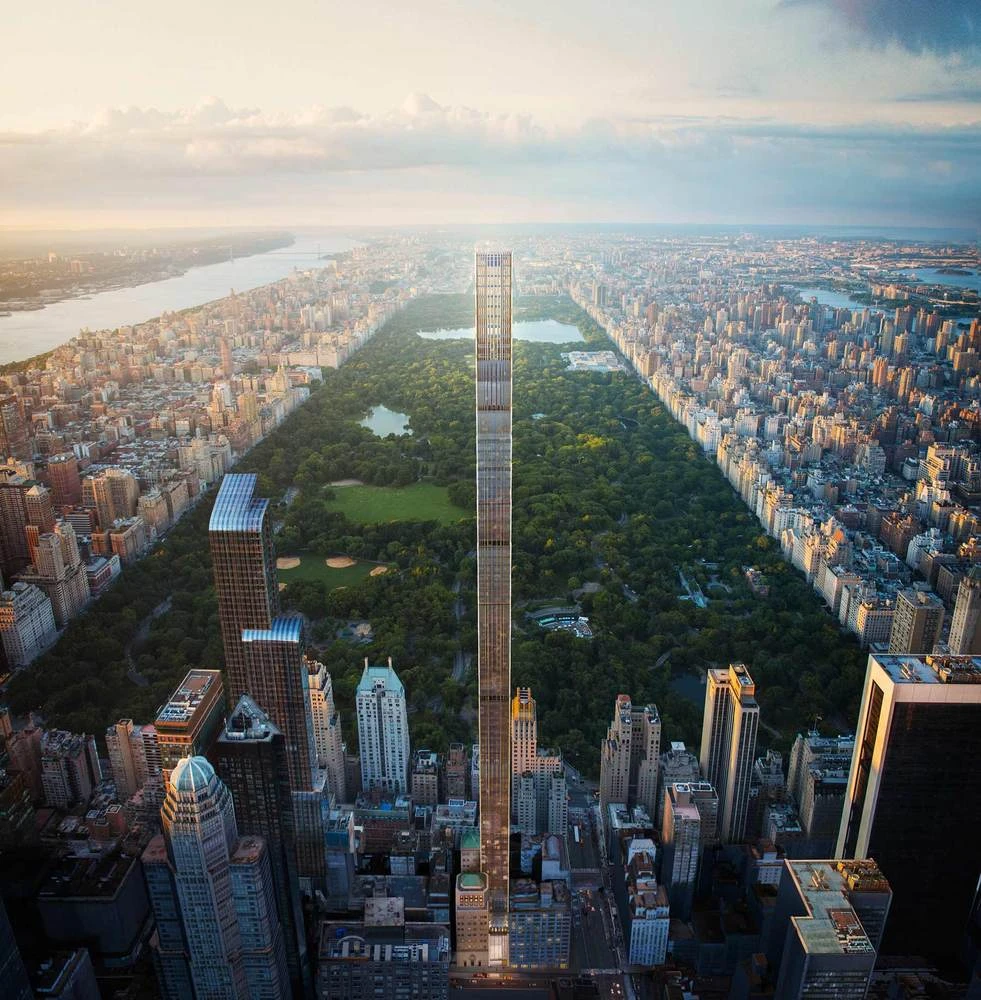
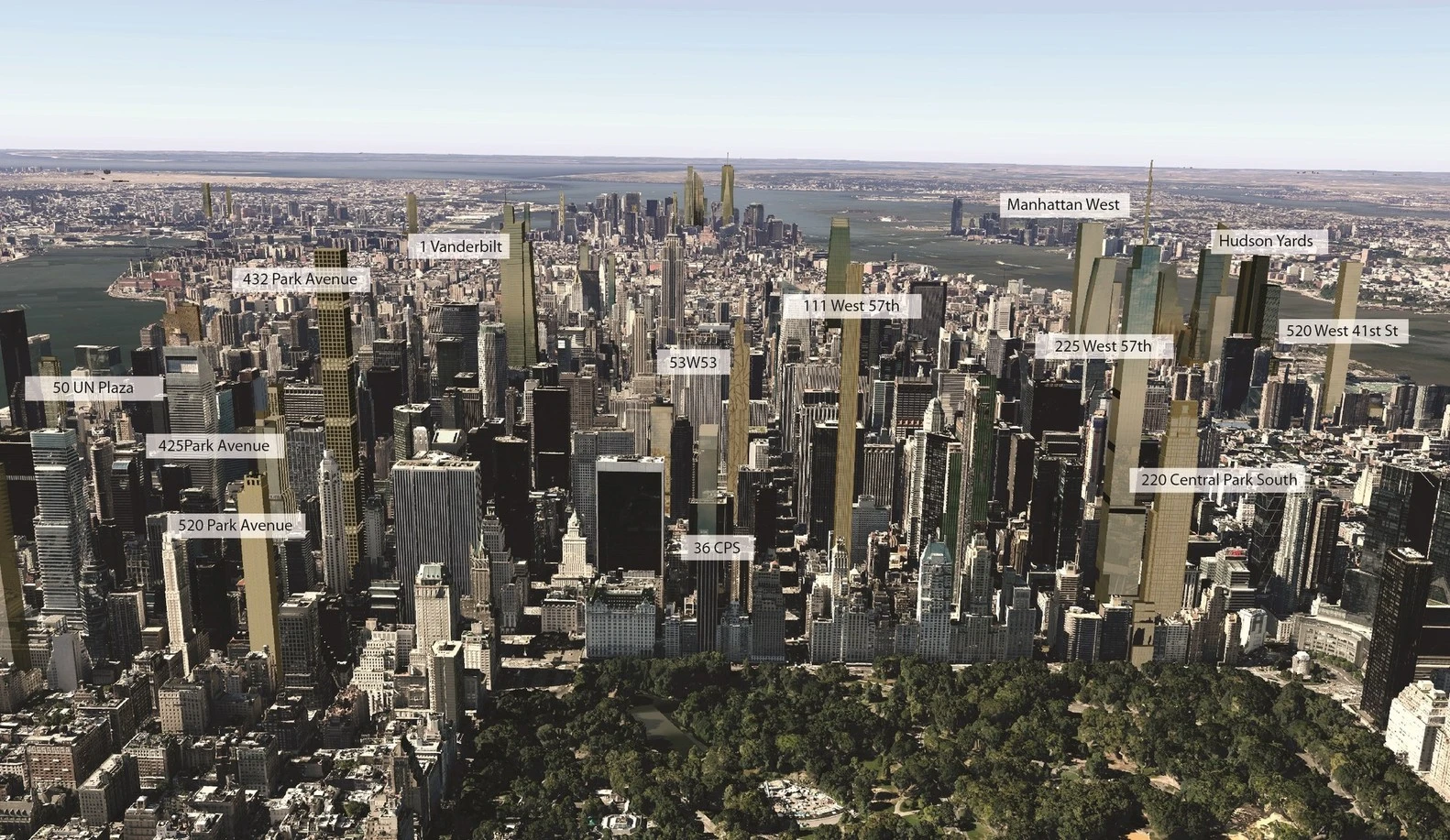
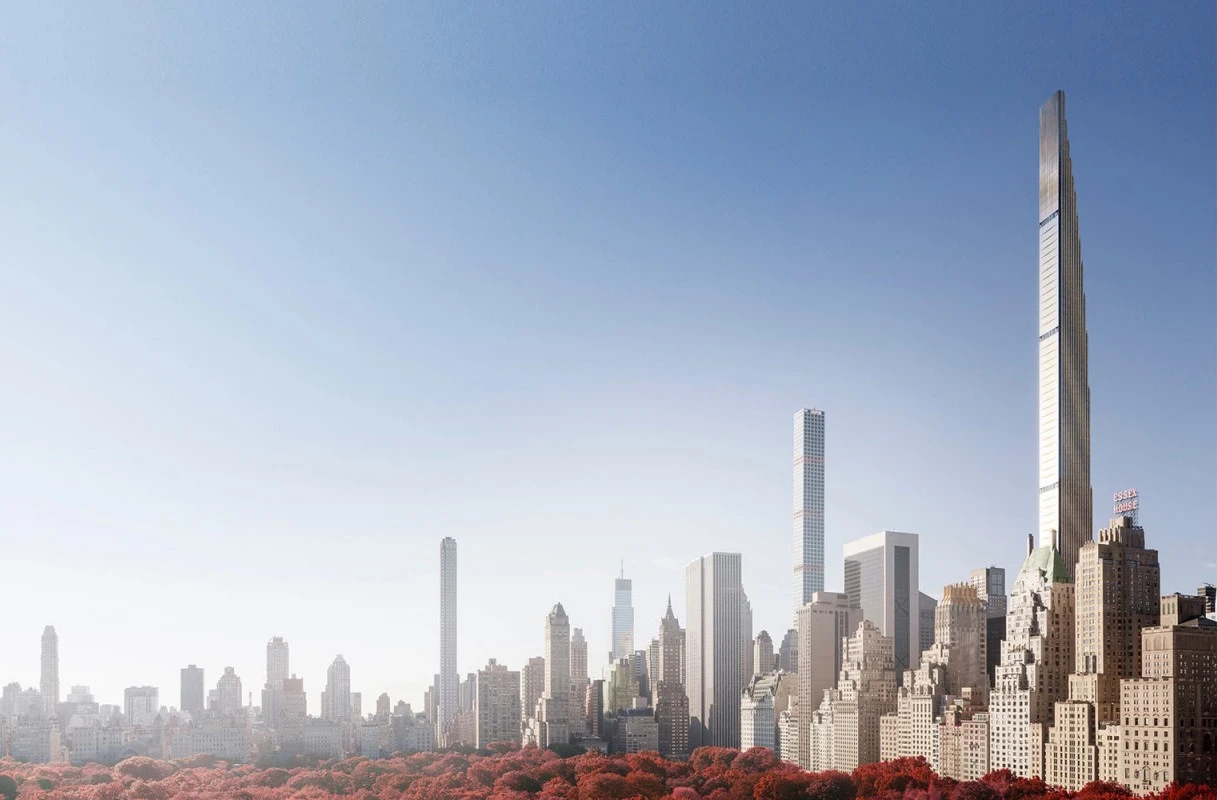
One of the best-known examples is the Steinway Tower in Manhattan. Designed by SHoP Architects and located at Manhattan’s Billionaires’ Row, this residential tower is considered one of the world’s slimmest skyscrapers, with an astonishing height-to-width ratio. Its narrow silhouette rises above Central Park, while the facade combines glass with terracotta and bronze detailing, giving the building a more textured appearance compared to conventional glass towers.
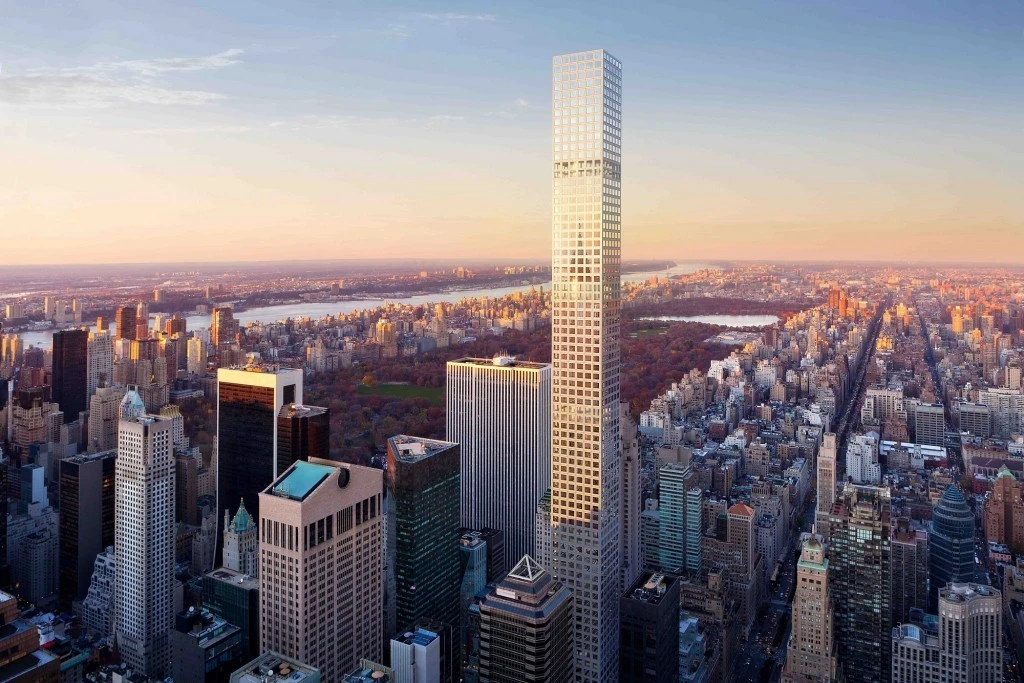
432 Park Avenue by Rafael Viñoly is a square-form tower with repetitive grid windows that create an extremely minimal skyline presence. Despite its simple appearance, the building relies on complex structural systems and tuned mass dampers to control sway caused by strong winds at extreme heights.
4. Adaptive and Climate-Responsive Design
Rising temperatures, stronger storms, flooding, and other climate-related challenges mean that skyscrapers are being designed to respond more directly to their surrounding environments. Architects are designing towers based on local weather conditions, using forms, materials, ventilation systems, and facade strategies that help buildings handle extreme heat, strong winds, humidity, and changing climate conditions more effectively.
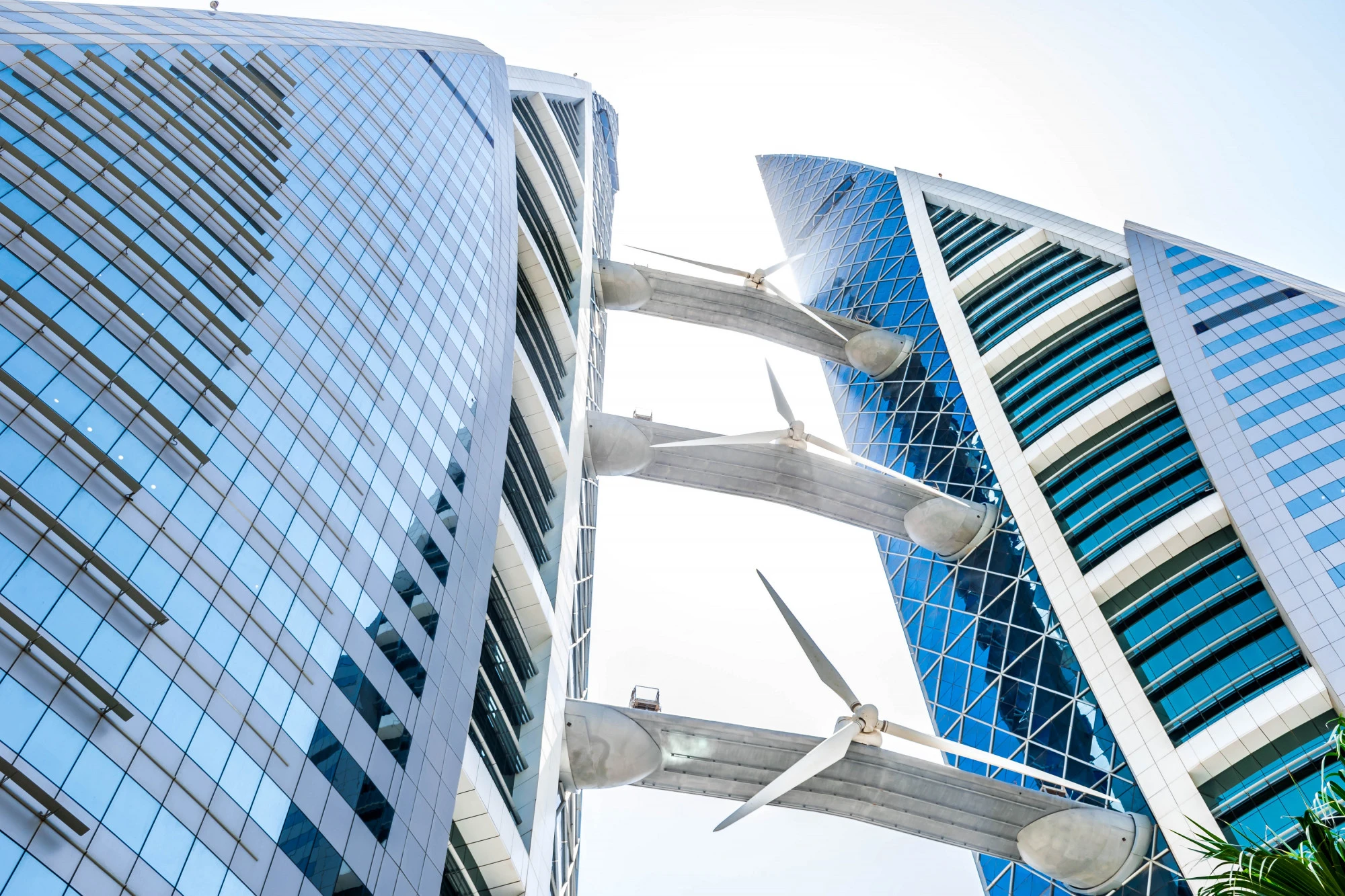
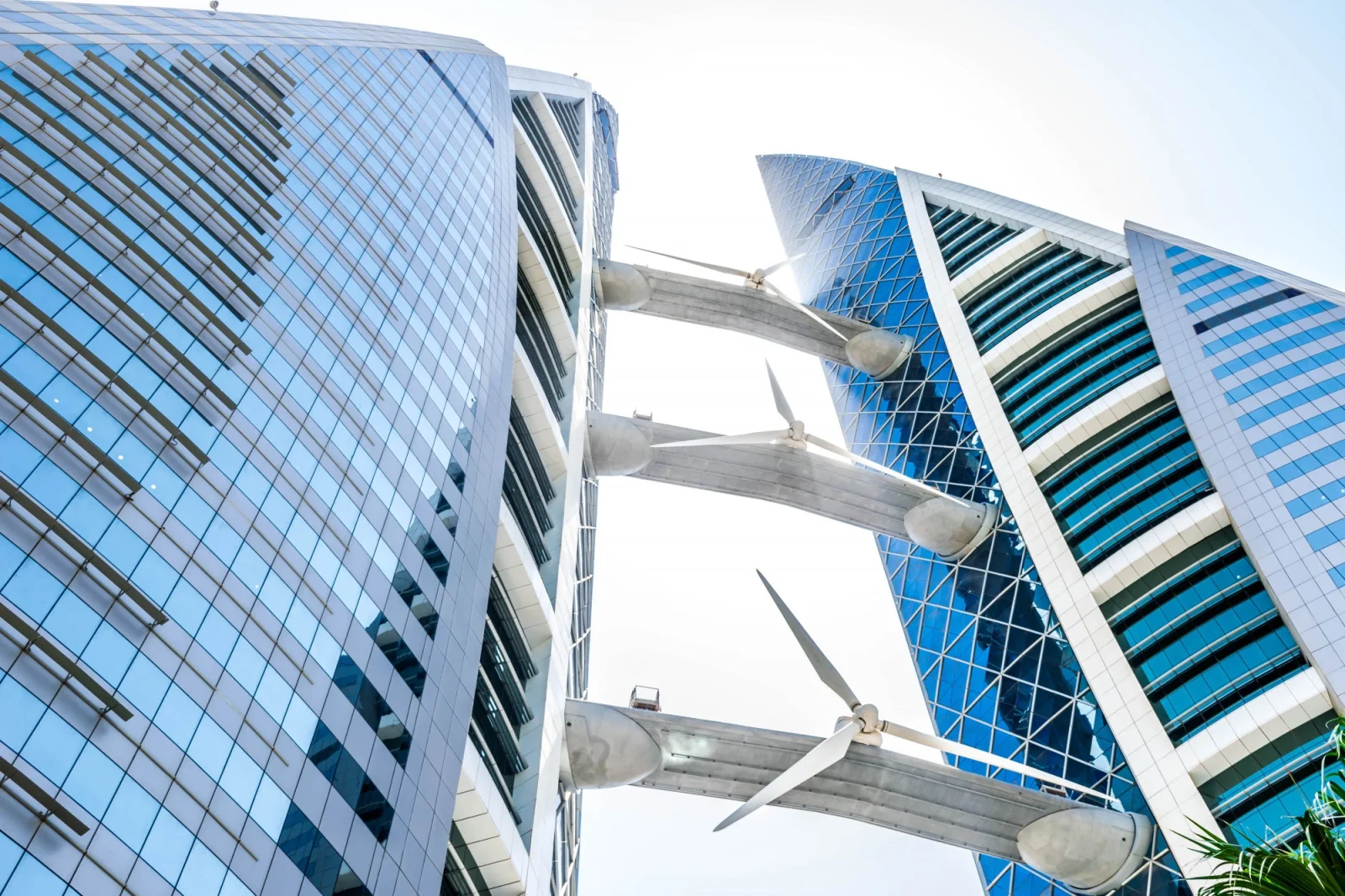
Bahrain World Trade Center by Atkins is designed to respond directly to the Gulf’s strong wind conditions through three large sky bridges positioned between the towers. Their curved form helps channel airflow through the structure, reducing wind pressure while shaping the building around its environmental context. The project became one of the first skyscrapers to visibly integrate climatic response into its overall architectural form.
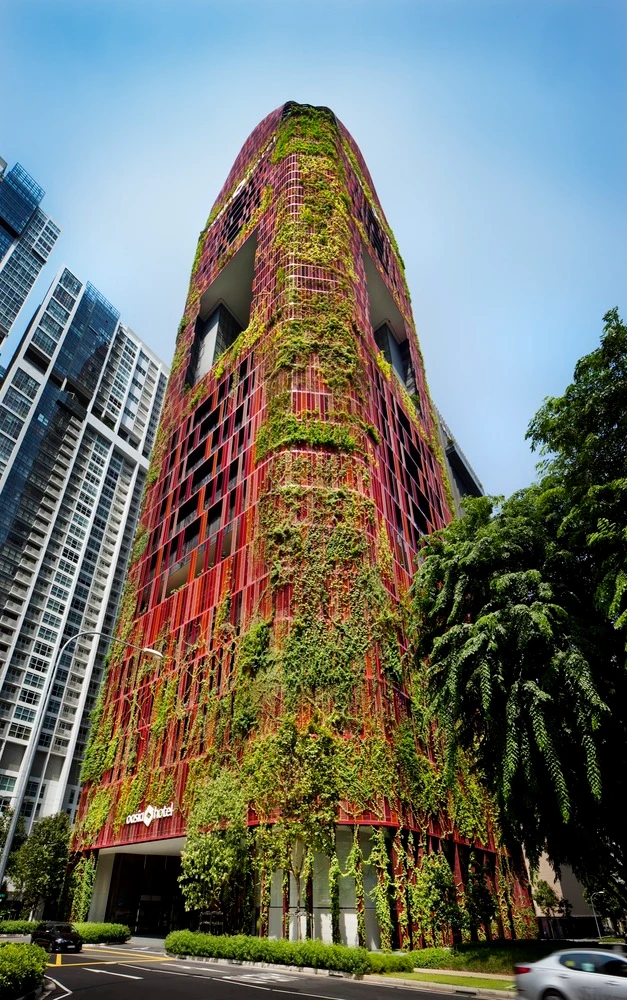
Another example is Oasia Hotel Downtown by WOHA. Instead of being wrapped entirely in glass, the tower uses a porous red facade covered with vegetation and open-air sky terraces that improve airflow and natural cooling. The building is designed specifically for Singapore’s tropical climate, allowing greenery and ventilation to become central architectural elements.
5. Mixed-Use Skyscrapers
As cities become denser and land becomes more expensive, mixed-use towers have started functioning as “vertical cities.” They combine offices, residences, hotels, shopping, entertainment, public spaces, and transport connections within one large development, designed to keep activity flowing throughout the day rather than emptying after office hours.
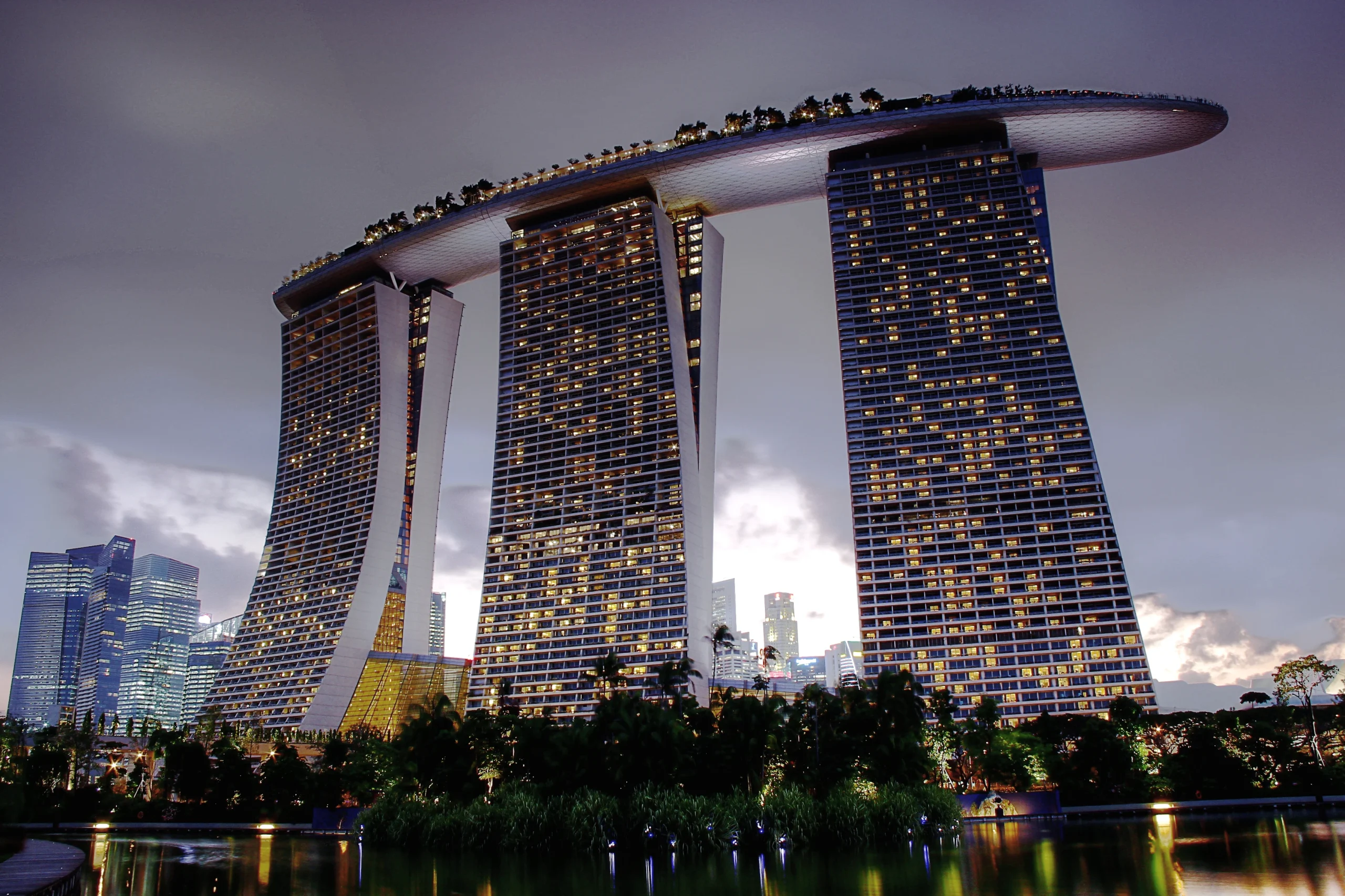
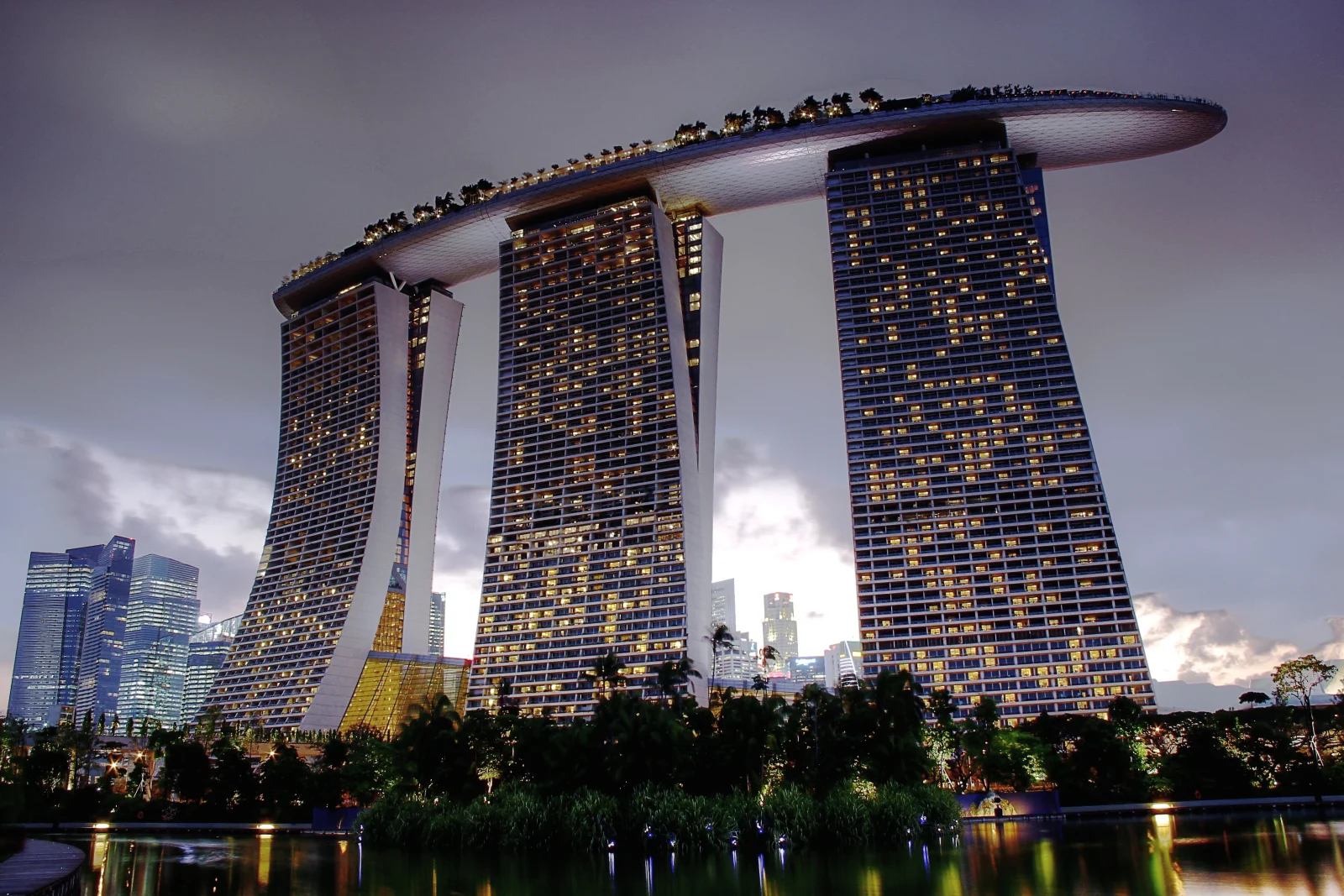
Marina Bay Sands by Moshe Safdie brings together hotel towers, retail spaces, restaurants, convention centers, theaters, observation decks, and public attractions within a single integrated complex. The massive rooftop SkyPark that connects the towers has become one of the most recognizable architectural features of Singapore.
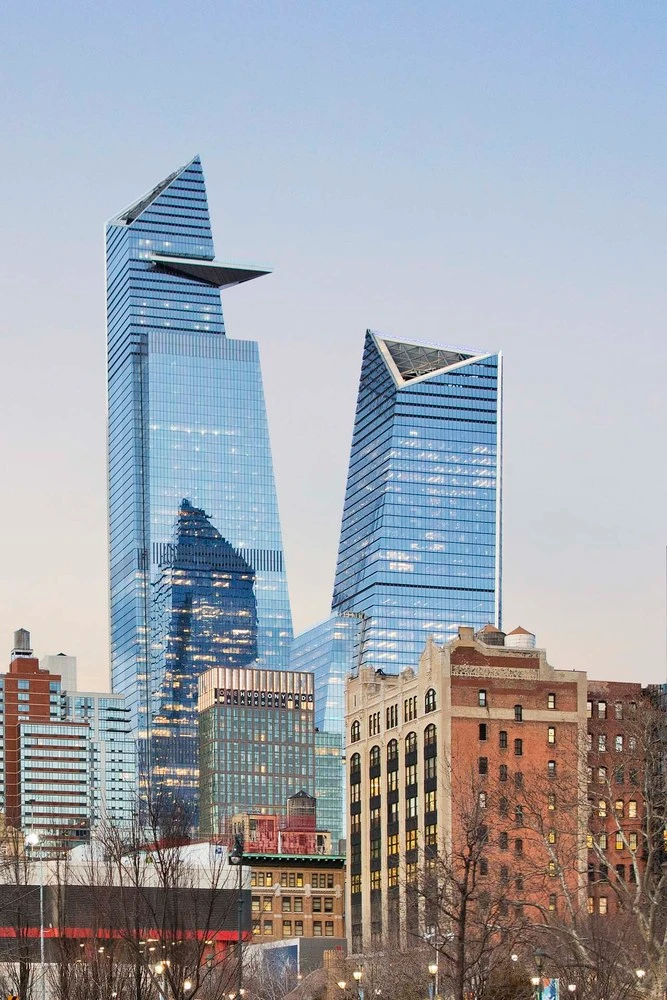
The architectural firm Kohn Pedersen Fox Associates (KPF) designed 10, 30, and 55 Hudson Yards in New York City. These skyscrapers transformed a large section of Manhattan’s west side into a dense mixed-use district filled with office towers, residences, cultural spaces, restaurants, retail, and public plazas. Instead of functioning as isolated buildings, many newer skyscrapers are now planned as part of larger urban ecosystems.
6. Vertical Forests and Biophilic Design
Architects and designers are bringing nature back into high-rise buildings through vertical forests, planted terraces, sky gardens, and biophilic design. Not treating greenery as something separate from architecture, many modern skyscrapers now integrate trees, shrubs, and vegetation directly into the structure itself.
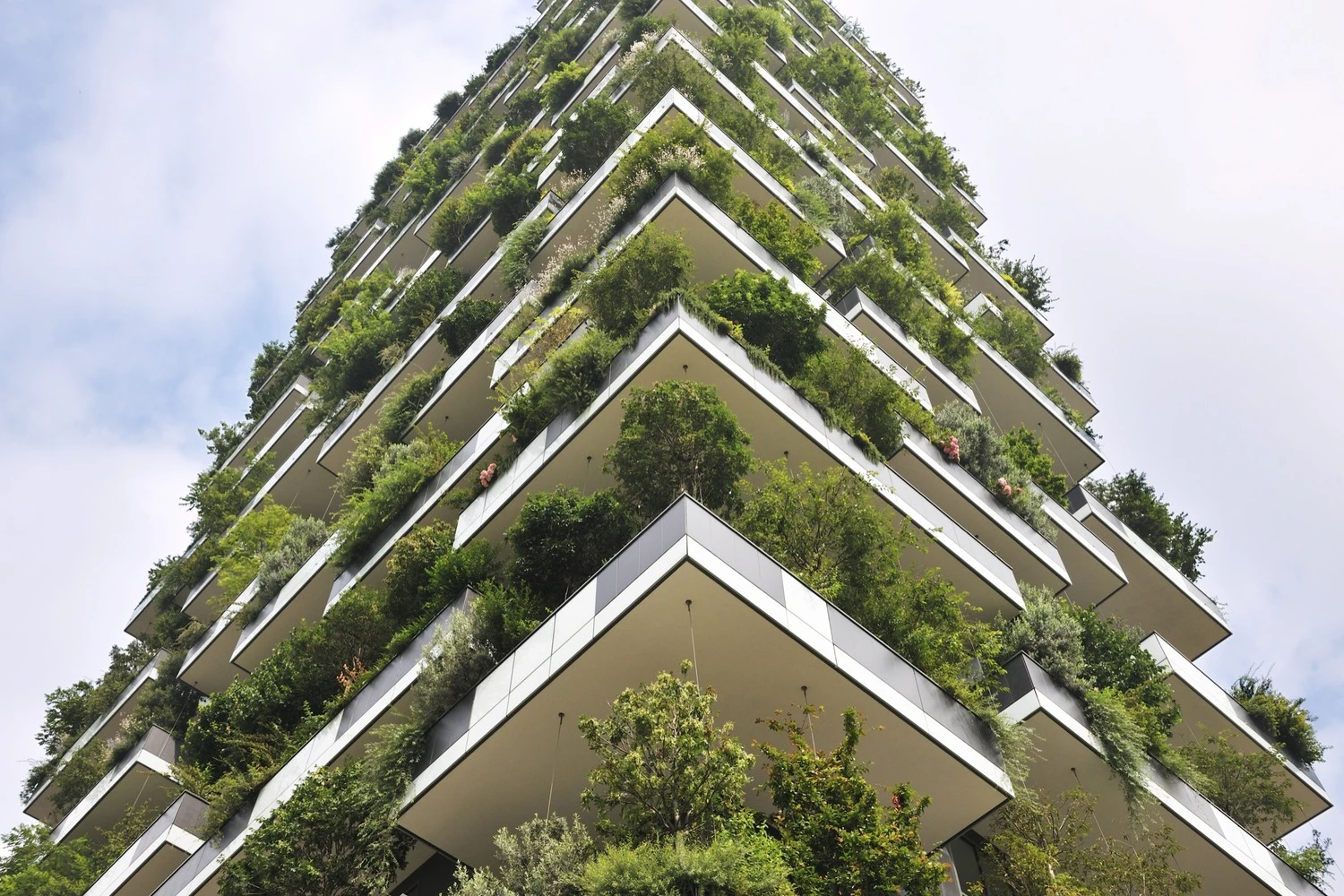
Bosco Verticale by Stefano Boeri Architetti is a pair of residential towers covered with hundreds of trees and thousands of plants distributed across projecting balconies. The greenery helps absorb carbon dioxide, reduce heat, filter dust, and improve biodiversity within the city. Architecturally, the vegetation also softens the appearance of the towers, making them feel more organic and connected to the environment rather than purely concrete-and-glass structures.
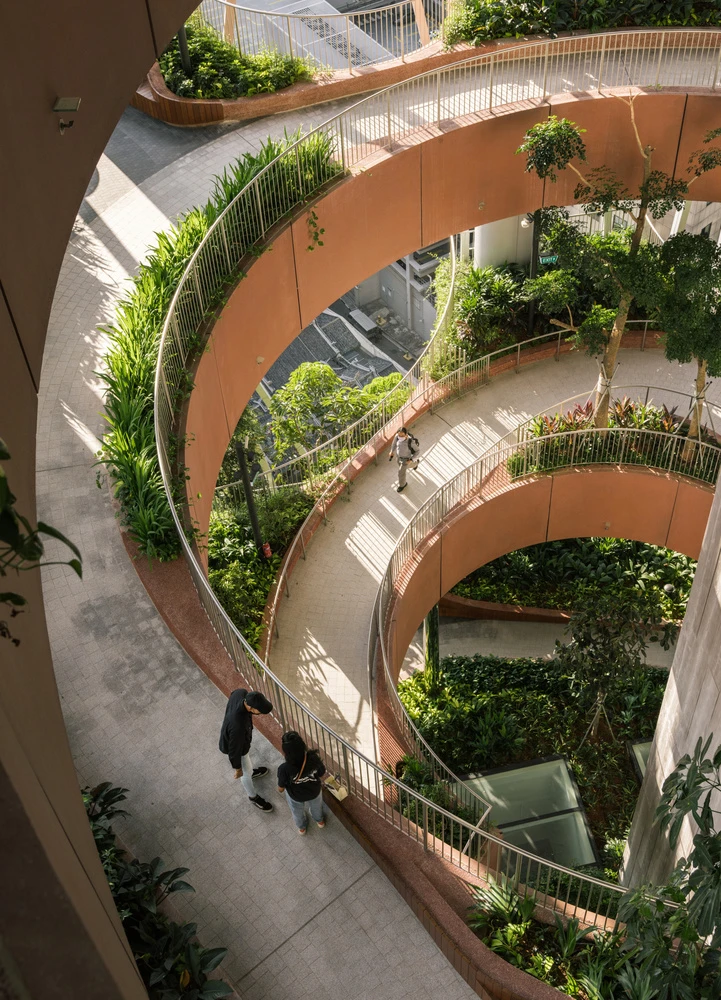
Another strong example is CapitaSpring by BIG and Carlo Ratti Associati. The skyscraper includes large sky gardens, open-air terraces, and vertical green spaces woven throughout the building. It is designed to improve mental well-being and indoor comfort: access to natural light, vegetation, and outdoor spaces.
7. Free Forms
While parametric design often responds to performance and engineering, free-form architecture is driven more by creative expression and sculptural experimentation. As digital design tools and construction technologies continue to evolve, there is a greater freedom to experiment with form, structure, and imagination.
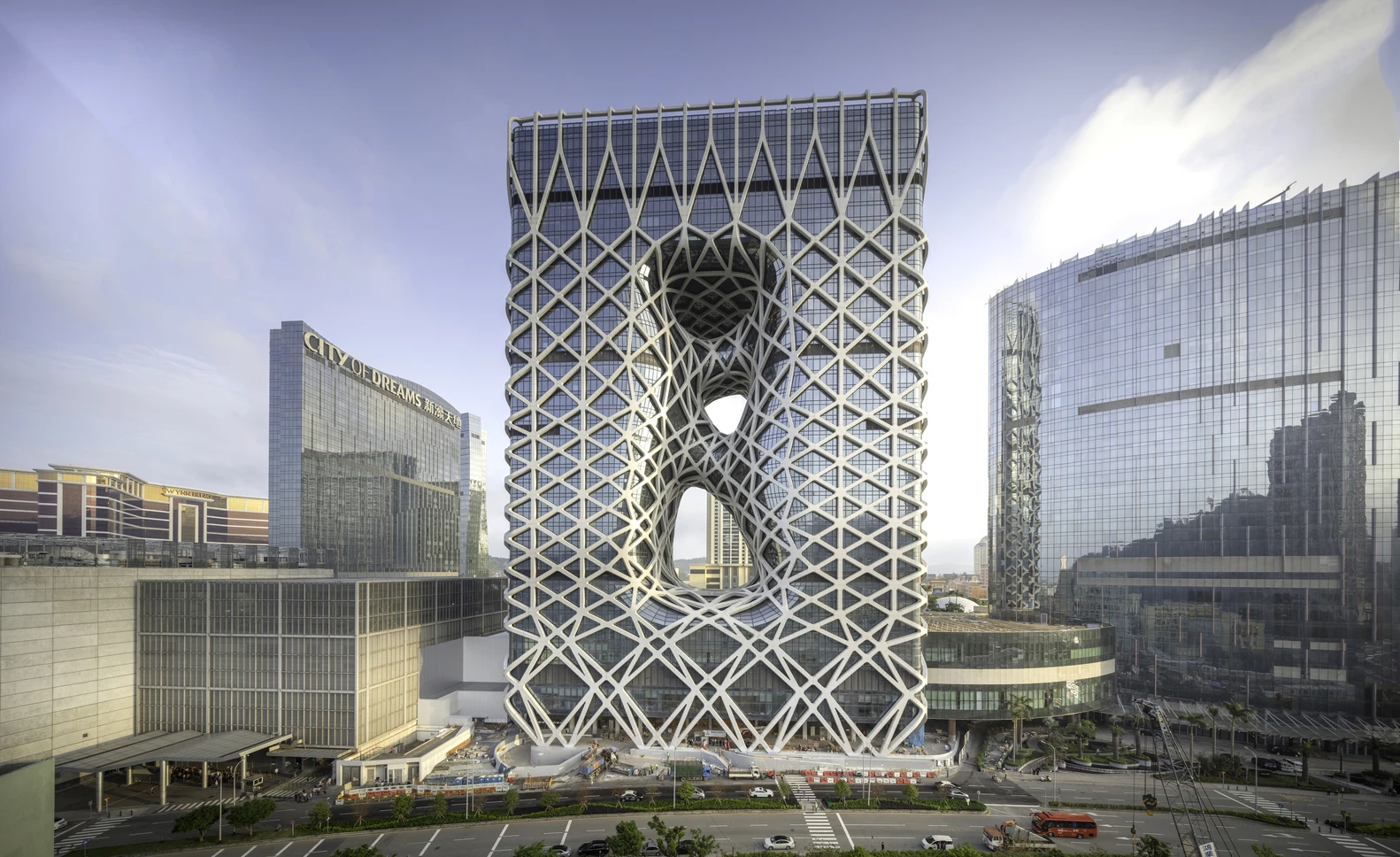
One such example is Morpheus Hotel by Zaha Hadid Architects. The tower is defined by its flowing exoskeleton structure, which wraps around the building like a web and does not rely on traditional vertical columns. Large voids are carved through the center of the tower, creating open spaces that give the skyscraper a gravity-defying appearance. The free-form design also helps maximize views and natural light inside the building.
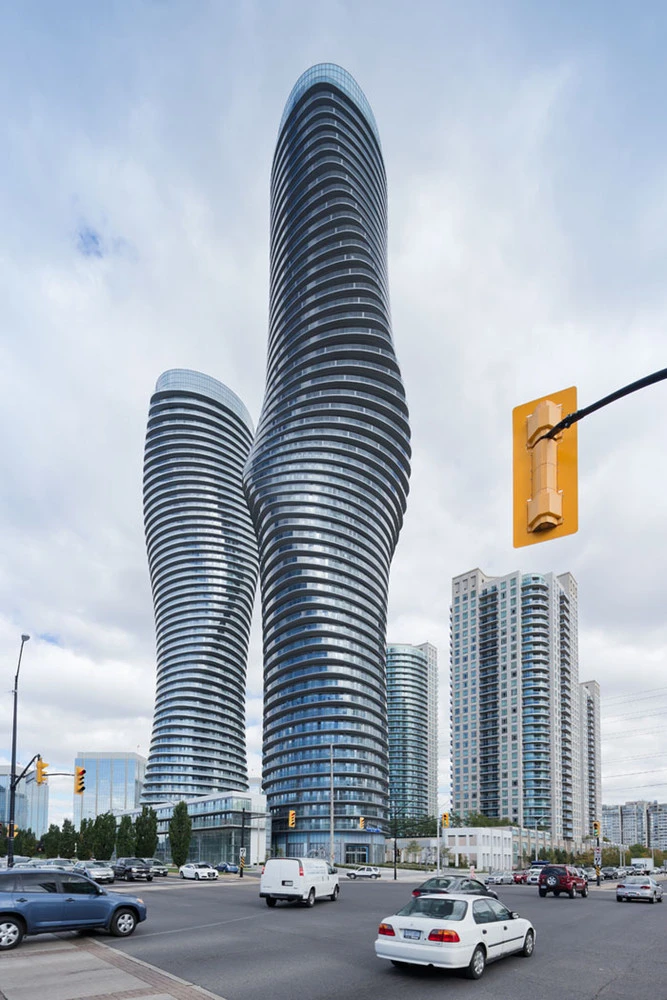
Absolute World Towers by MAD Architects, often nicknamed the “Marilyn Monroe Towers” because of their curving silhouettes, twist organically from floor to floor, creating balconies and views that change as the buildings rise upward. The flowing form breaks away from the repetitive box-shaped appearance common in conventional residential towers.
8. Linked Towers and Sky Bridges
Sky bridges, elevated walkways, and shared public spaces high above the ground are turning isolated towers into connected vertical environments.
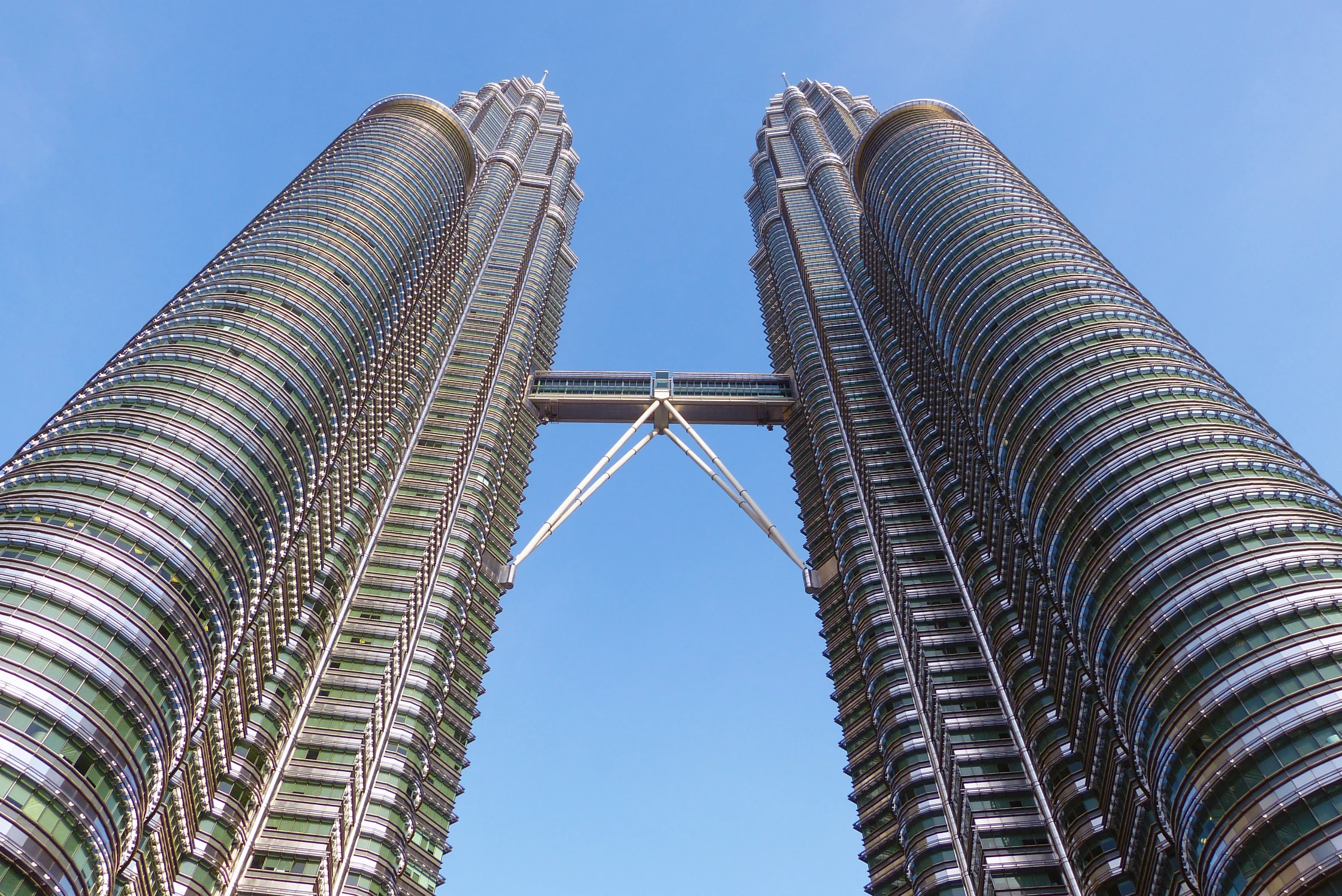
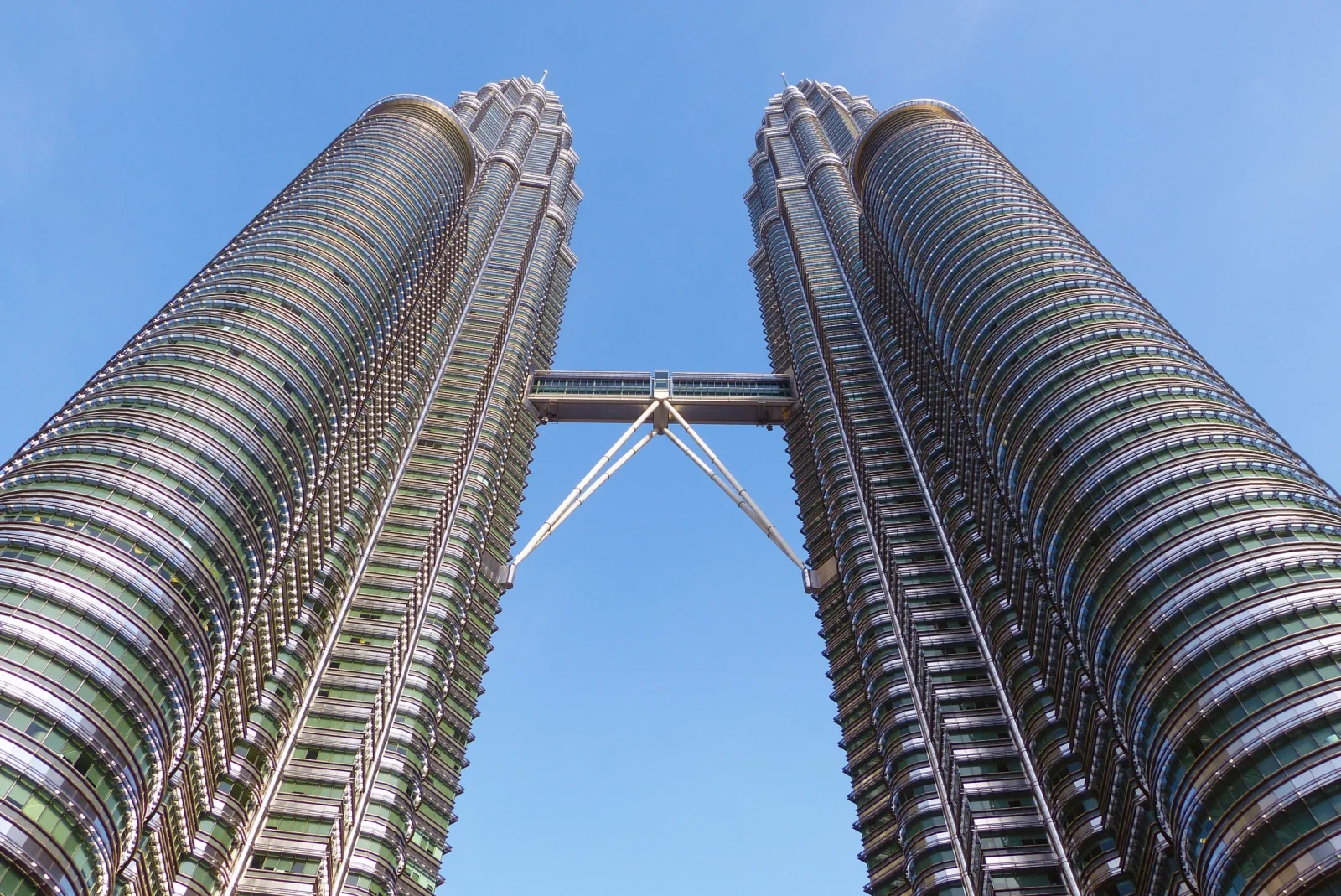
One of the most iconic examples is the Petronas Towers, by César Pelli. The twin towers are connected by a double-storey skybridge suspended between the buildings at the 41st and 42nd floors. Beyond the gigantic appearance of the tower, the bridge helps with circulation and emergency access while offering panoramic views across Kuala Lumpur.
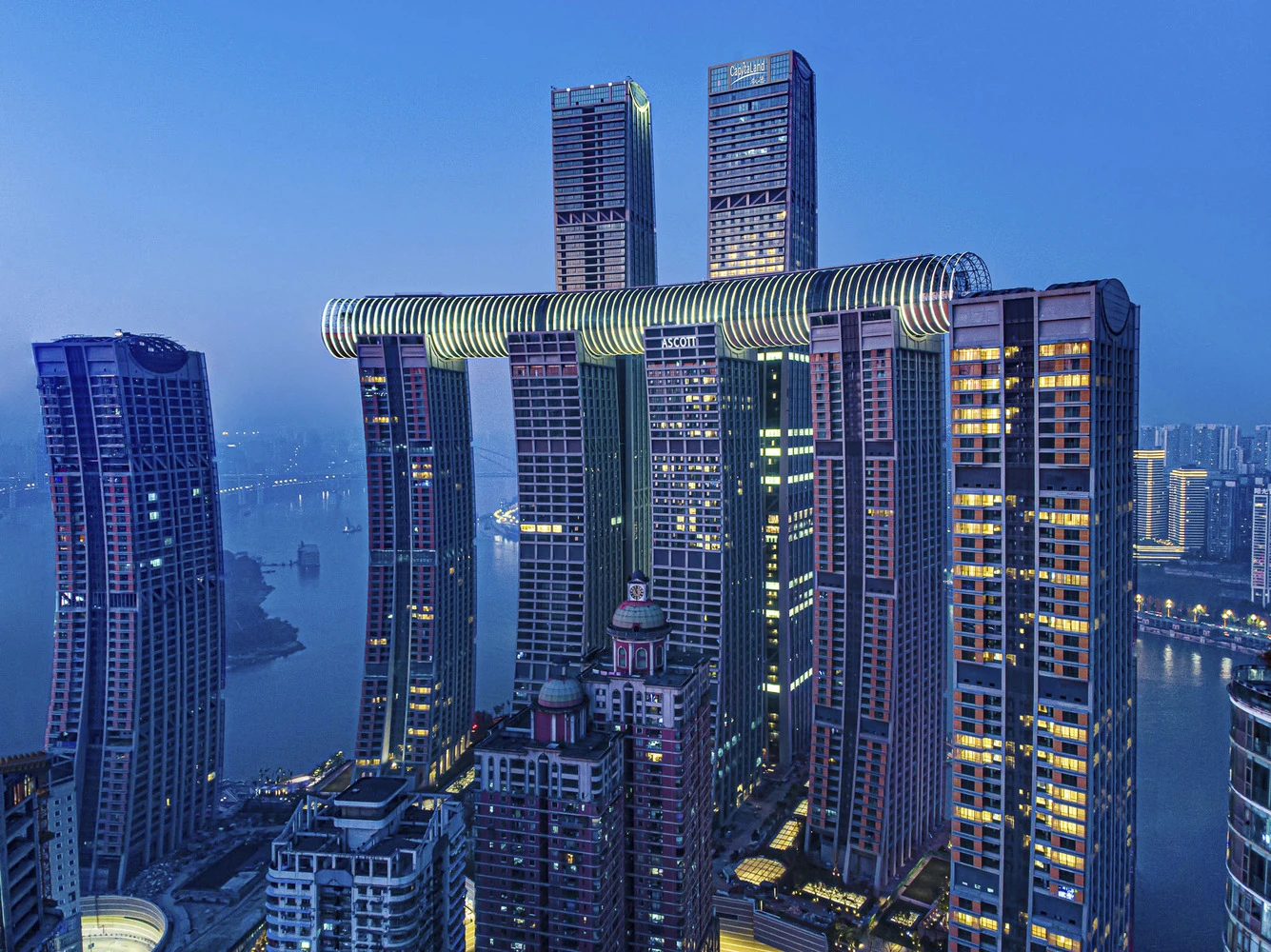
Raffles City Chongqing by Moshe Safdie features multiple towers connected by a massive horizontal sky bridge known as “The Crystal,” suspended high above the ground. The glass-and-steel structure houses gardens, observation spaces, restaurants, and public amenities and helps unify the towers into one large interconnected development.
9. Net-Zero and Passive Design
As sustainability becomes a major priority in architecture, skyscrapers are being designed to consume less energy and reduce their environmental impact. Net-zero and passive design strategies focus on lowering dependence on artificial cooling, heating, and lighting through smarter building orientation, insulation, daylight use, and energy-efficient systems.
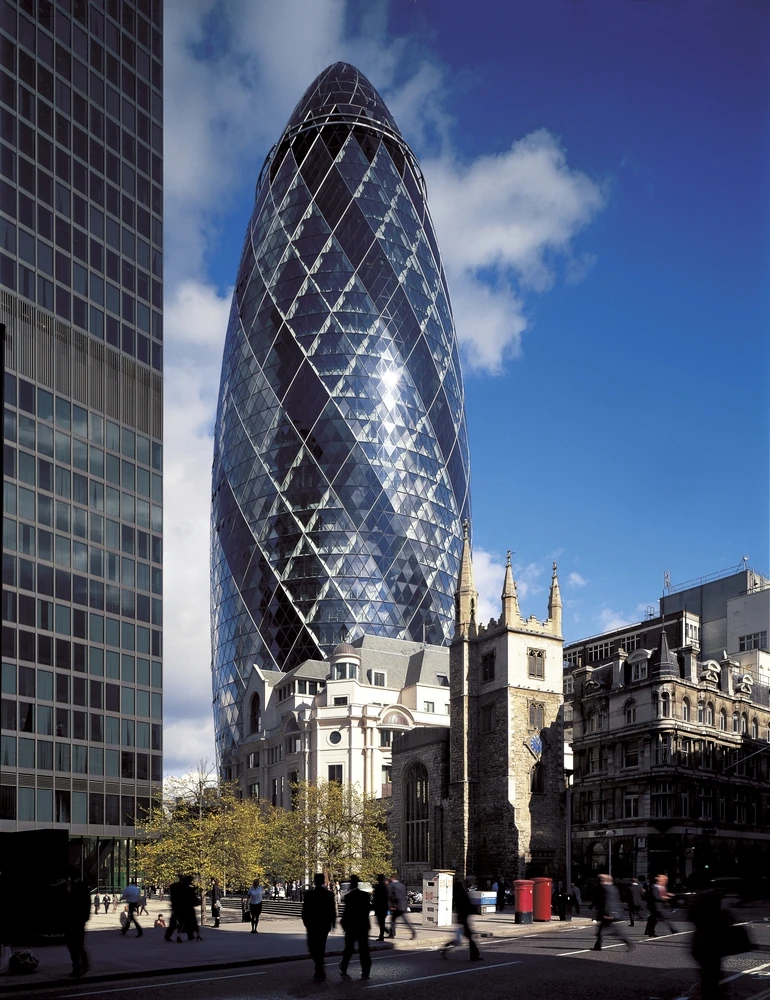
30 St Mary Axe, commonly known as The Gherkin, was designed by Norman Foster with a strong focus on reducing energy consumption through passive design strategies. The tower uses spiraling light wells that bring daylight and natural ventilation deep into the building, reducing dependence on artificial lighting and mechanical cooling. Its double-glazed facade improves insulation and helps maintain indoor thermal comfort more efficiently than conventional office towers.
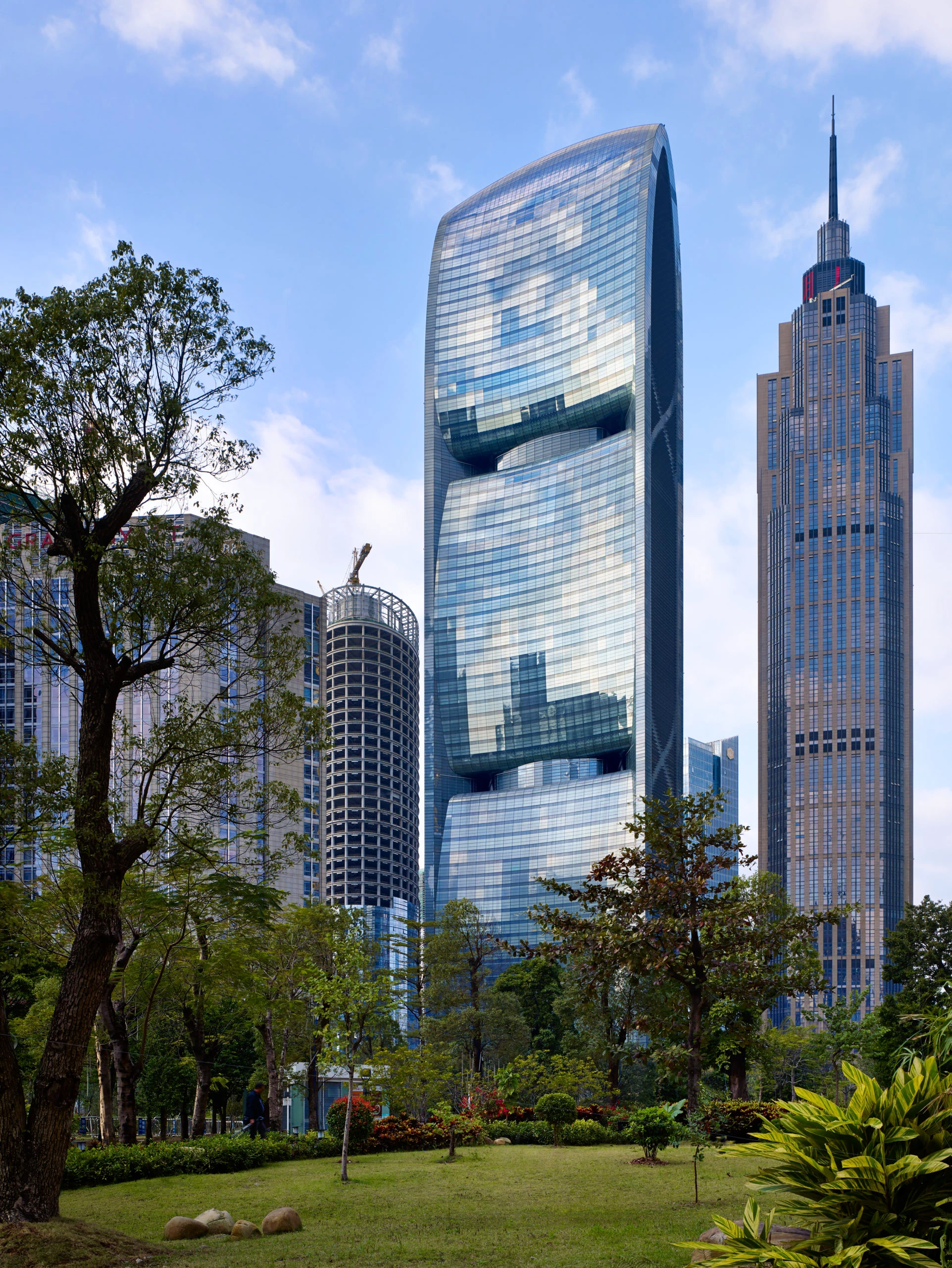
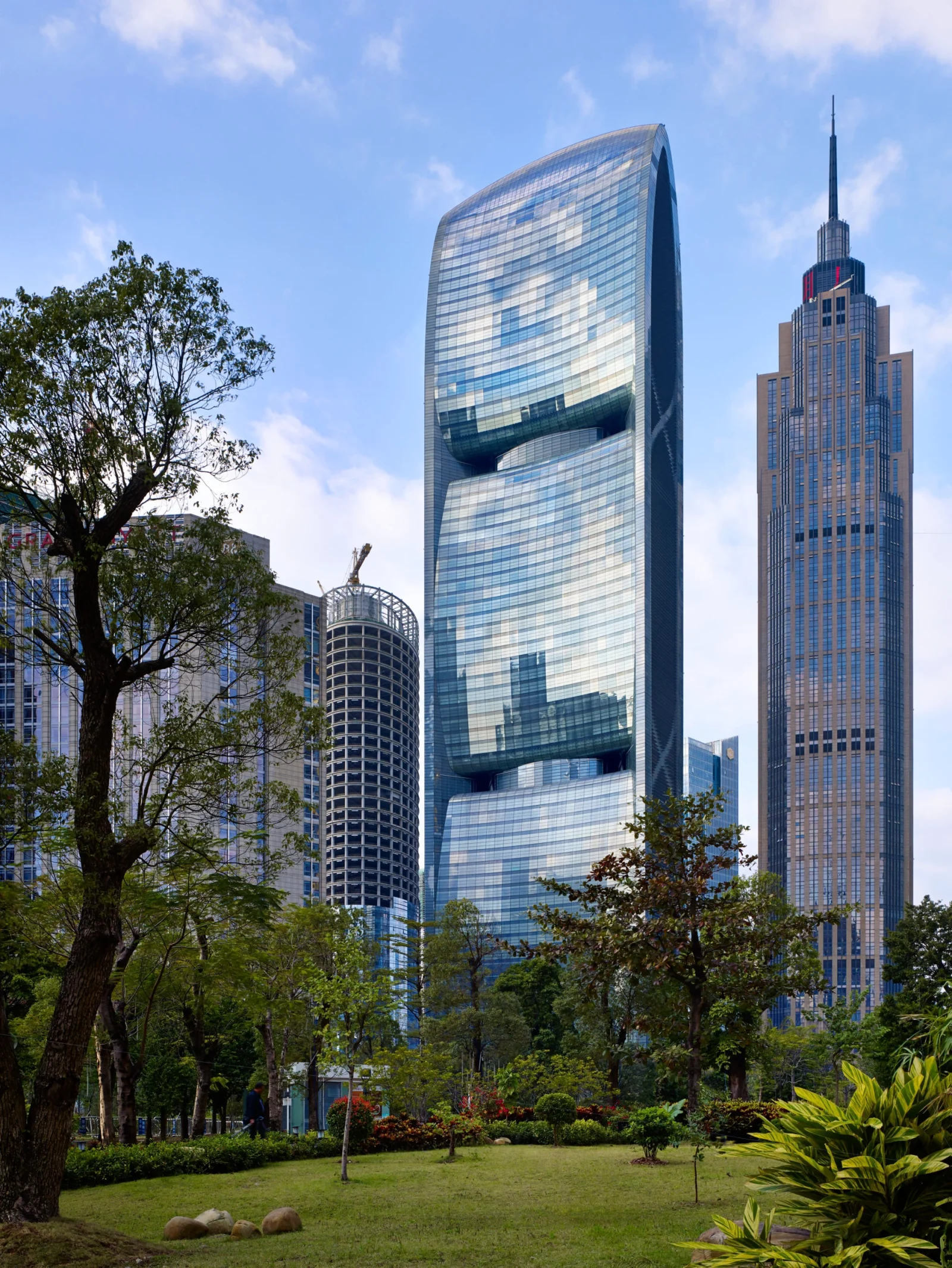
Another example is Pearl River Tower by SOM. The skyscraper integrates wind turbines, high-performance facades, and energy-efficient ventilation systems to reduce dependence on conventional power sources. Designed as a low-energy tower, the building combines renewable energy generation with passive environmental strategies to improve overall performance and reduce operational energy use.
10. Smart and AI-Integrated Buildings
Today’s smart buildings use sensors, automation systems, artificial intelligence, and real-time data to manage lighting, temperature, energy use, security, and even the movement of people throughout the building. These skyscrapers are now designed to constantly adapt to changing conditions. Predictive technologies can identify equipment problems before failures occur, helping reduce operational costs and improve long-term performance.
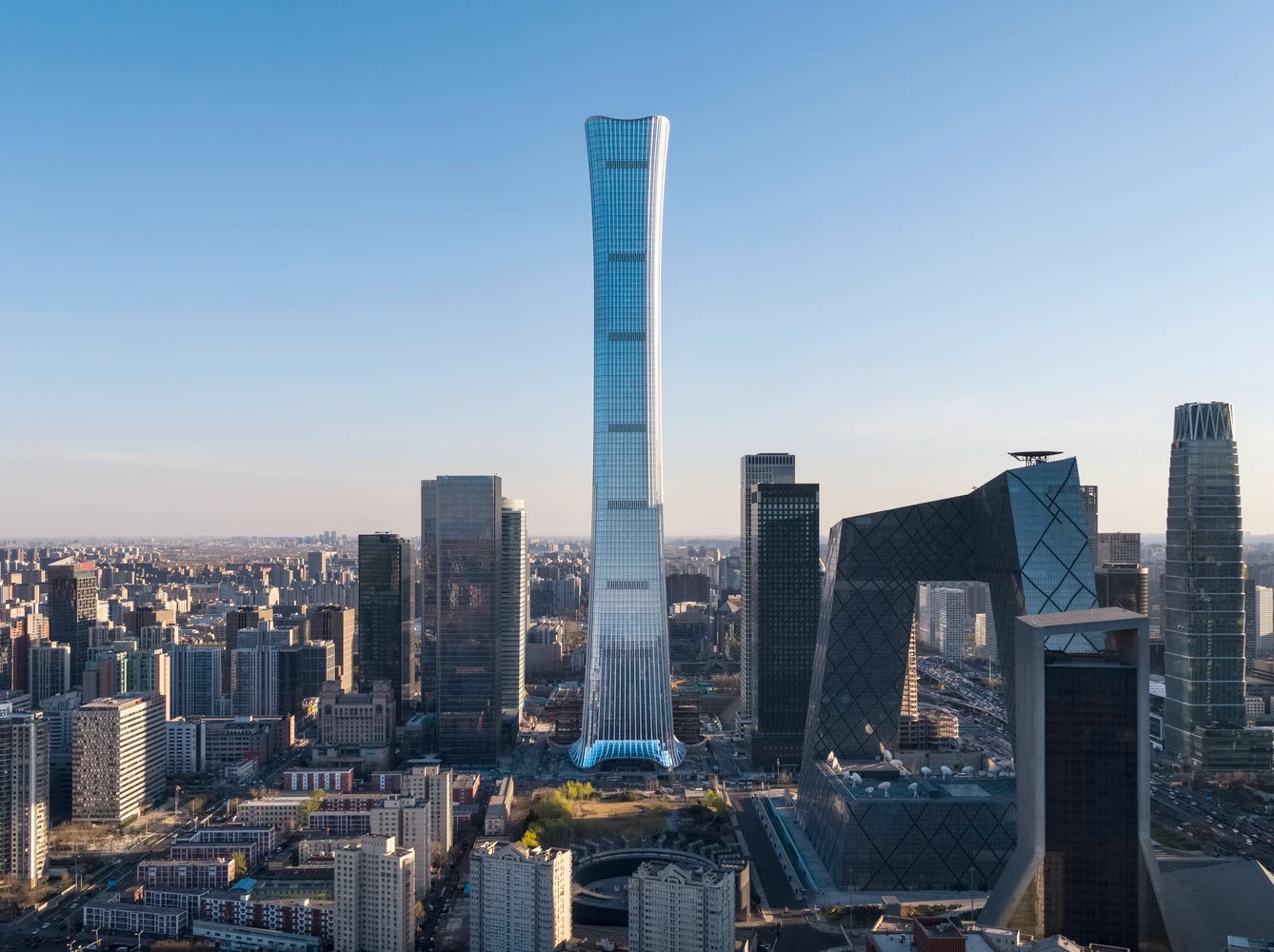
One example is CITIC Tower, also known as China Zun. Designed by Kohn Pedersen Fox Associates, the supertall skyscraper integrates advanced building management systems that monitor energy use, air quality, security, and indoor climate across its large mixed-use spaces. Smart elevator systems help manage the movement of thousands of occupants efficiently throughout the day, reducing waiting times and improving circulation inside the tower.
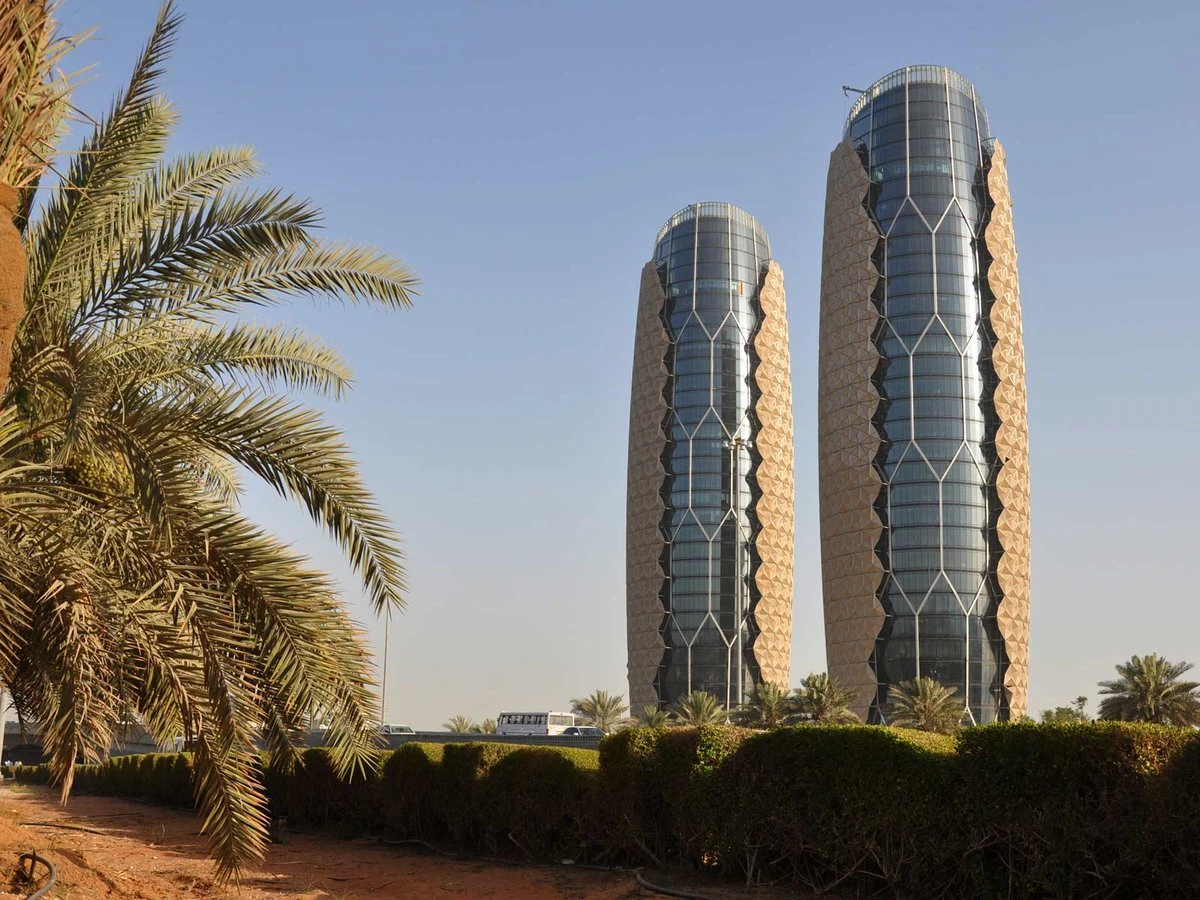
Designed by Aedas Architects, Al Bahr Towers is known for its computer-controlled facade system inspired by traditional Islamic mashrabiya screens. The exterior includes automated shading panels that open and close depending on sunlight intensity, helping reduce heat gain inside the building while lowering energy consumption. The facade also gives the towers a changing exterior pattern throughout the day.
Today’s skyscrapers are not designed around just one idea; they can combine multiple trends into a single building. A skyscraper may include smart glass facades, sky gardens, mixed-use spaces, energy-saving systems, and AI-driven technology all at once. This mix of trends shows how skyscrapers are changing from simple tall buildings into more complete urban environments.
Explore Courses
.jpg "Ondrej Chybik - Rethinking Architecture")