

Every year at Burning Man, the Temple stands as one of the most emotionally significant structures in the desert city of Black Rock City. Unlike the celebratory burning of the Man, the Temple is quiet and contemplative. People visit it to remember loved ones, write messages of grief or gratitude, and leave behind personal stories that may never be spoken aloud. In 2026, this sacred structure takes shape as the Temple of the Moon, a design by artist James Gwertzman, created with the support of the Moonlight Collective and a large volunteer build crew. The project continues Burning Man’s long tradition of building temporary architecture devoted to reflection, community, and release.
Temple of the Moon: Inspiration from the Night Bloom
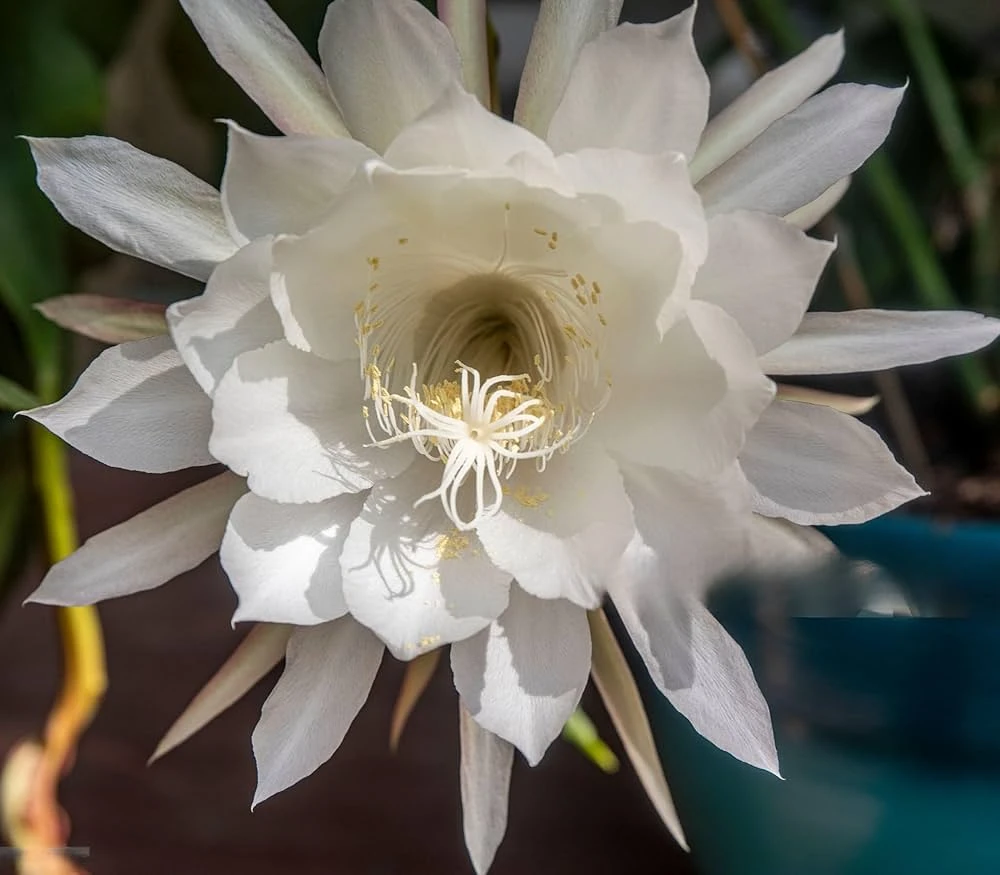
The concept for the Temple of the Moon begins with a quiet natural phenomenon: the rare blooming of the Queen of the Night, a desert cactus flower known scientifically as Epiphyllum oxypetalum. This flower opens only once a year, unfolding its luminous white petals in the darkness before fading by morning. The fleeting beauty of this bloom forms the emotional core of the Temple’s design.
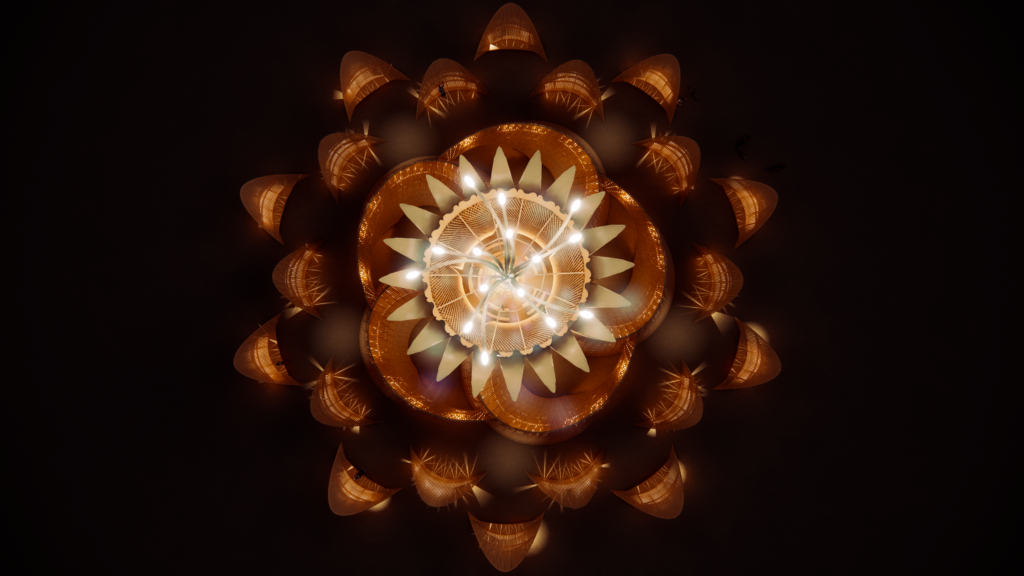
For the artists behind the project, the flower represents a moment that cannot be held onto. It exists briefly, asks only to be witnessed, and then disappears. This idea resonates deeply with the ethos of Burning Man itself. Black Rock City rises for a single week in the Nevada desert before vanishing again, leaving only memories behind. The Temple of the Moon reflects this shared sense of impermanence, reminding visitors that meaning often lies in experiences that cannot last.
The moon provides the second layer of inspiration. Its steady cycle of waxing and waning mirrors the rhythms of life, loss, and renewal. Construction of the Temple begins under a new moon and progresses toward the full moon as the structure rises on the playa. During the festival, the moon slowly wanes until the Temple is ultimately released in fire, completing the cycle.
Architecture Shaped Like a Bloom
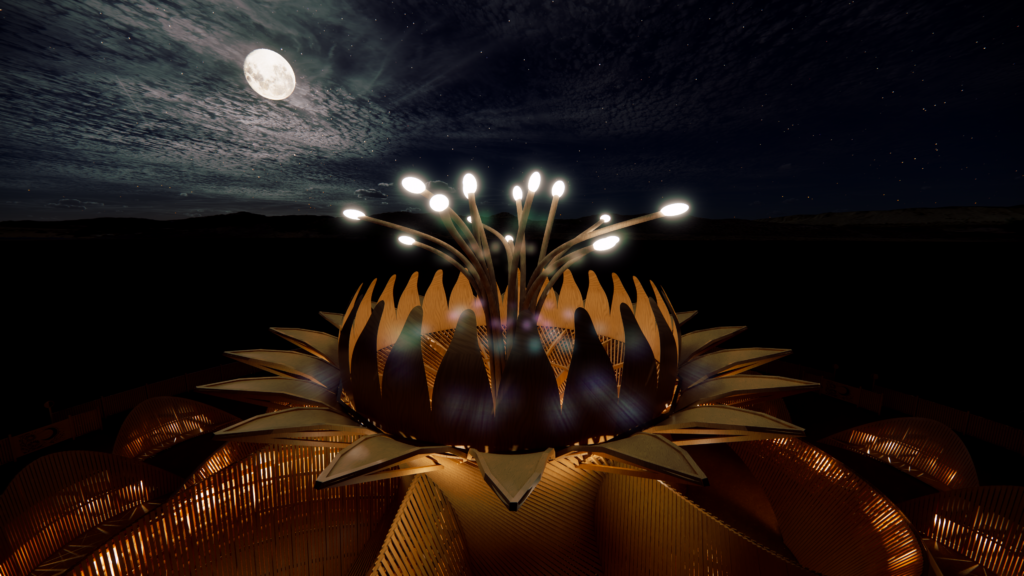
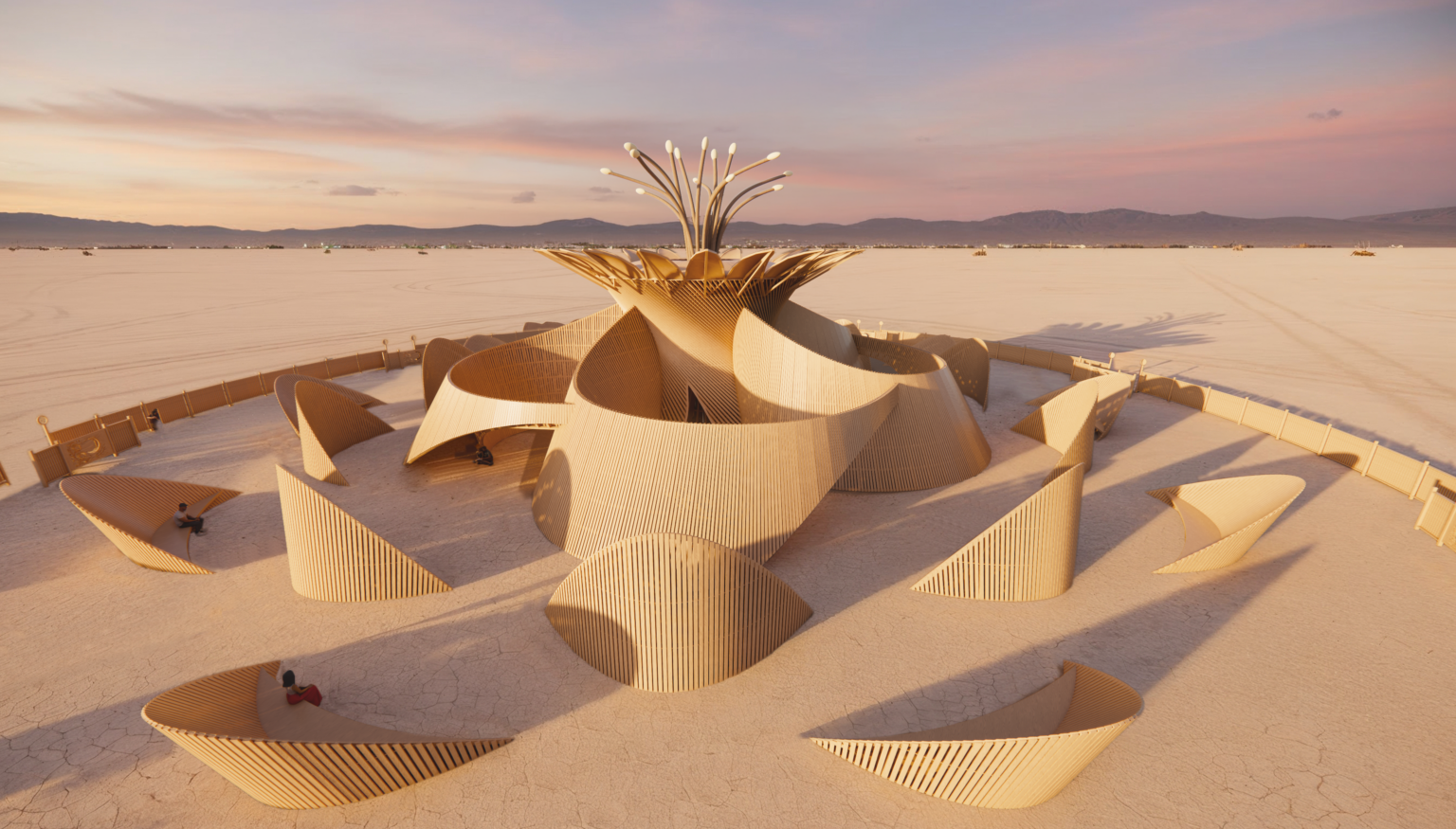
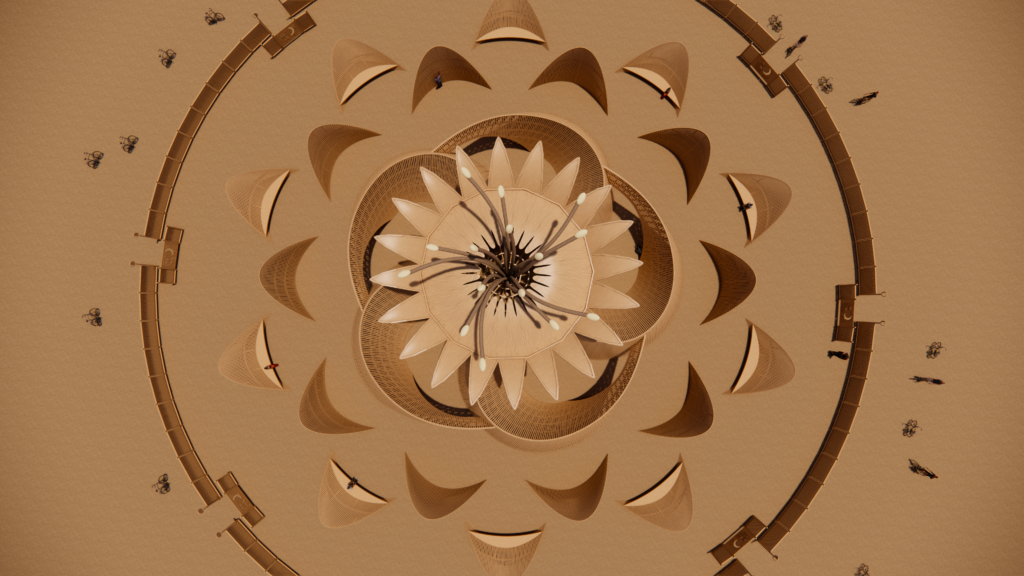
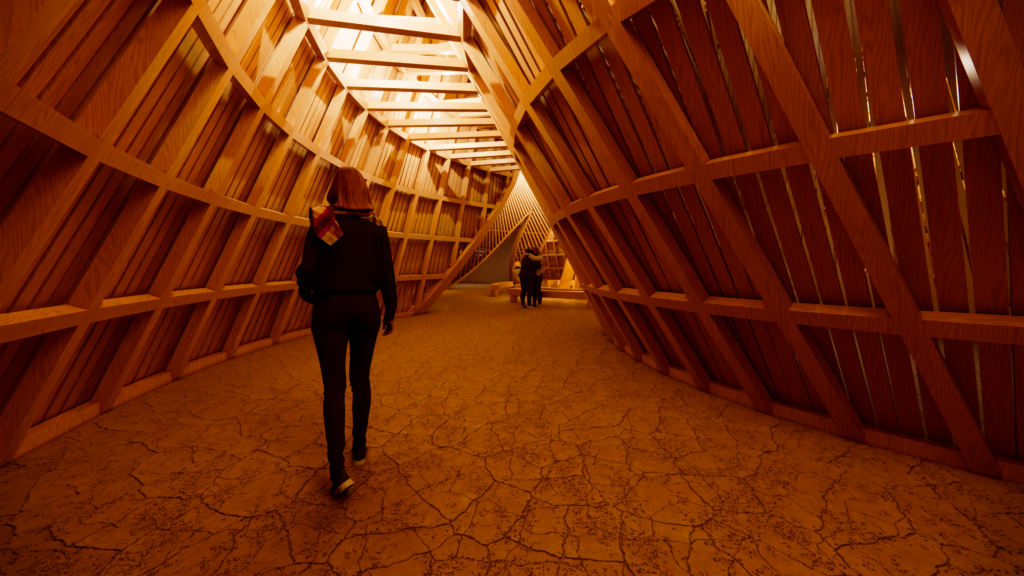
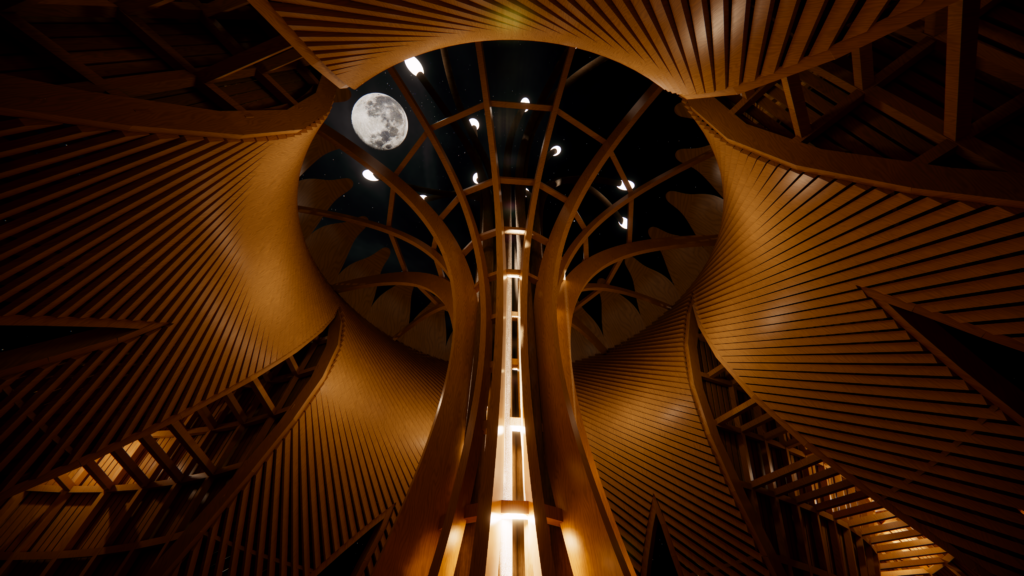
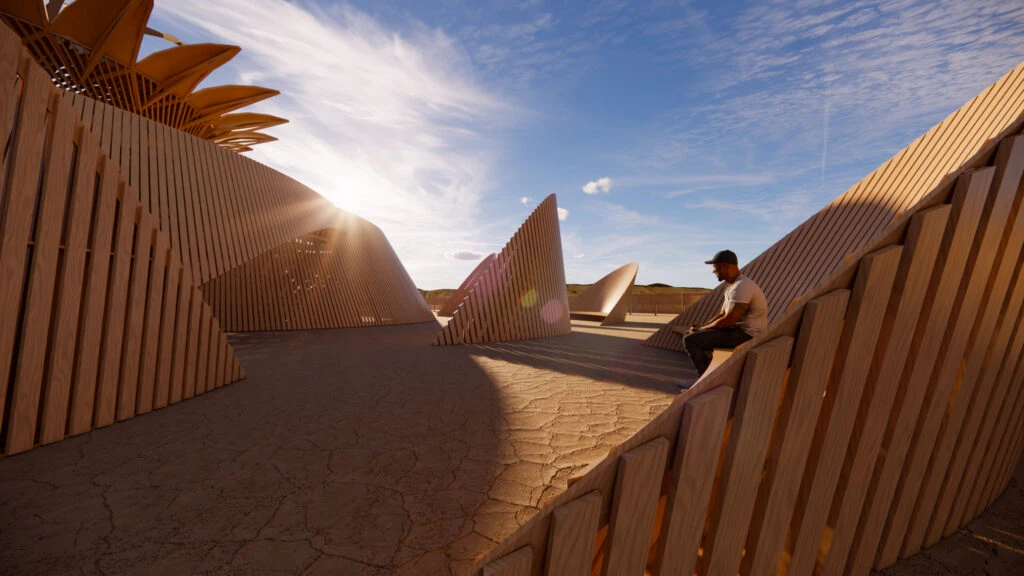
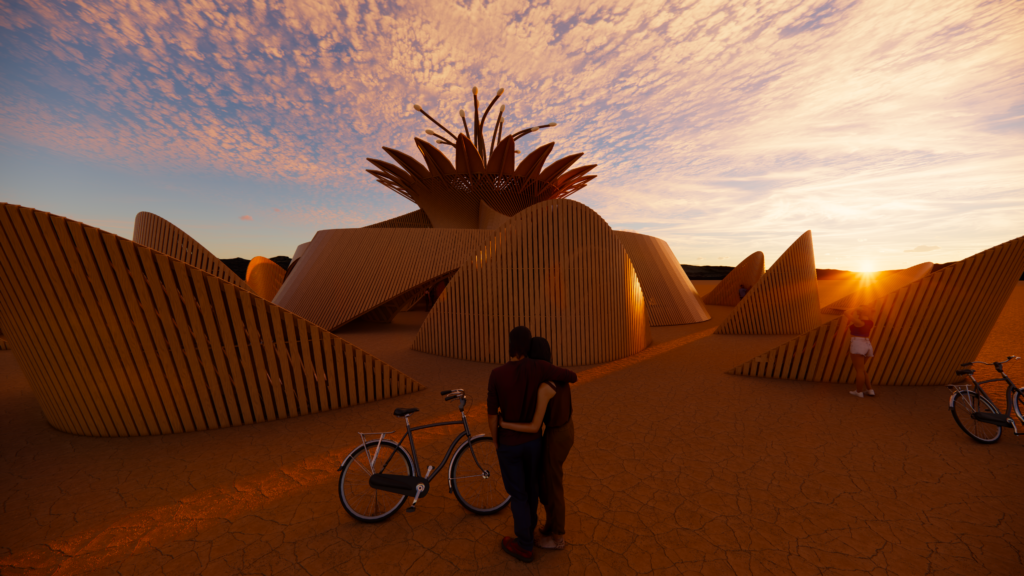
The Temple of the Moon is developed as a large circular structure spanning 220 feet in diameter, with a layout that unfolds like a night-blooming flower. The design features a central tower rising 30 feet, crowned by a tree-like stamen that reaches 50 feet, which glows at night, drawing the eye upward. Five curved arms radiate outward from the tower, folding back to form intimate alcoves for reflection, while 20 free-standing outer petals define the approach and force visitors to move indirectly toward the center. This circulation encourages reflection and a gradual shift in pace.
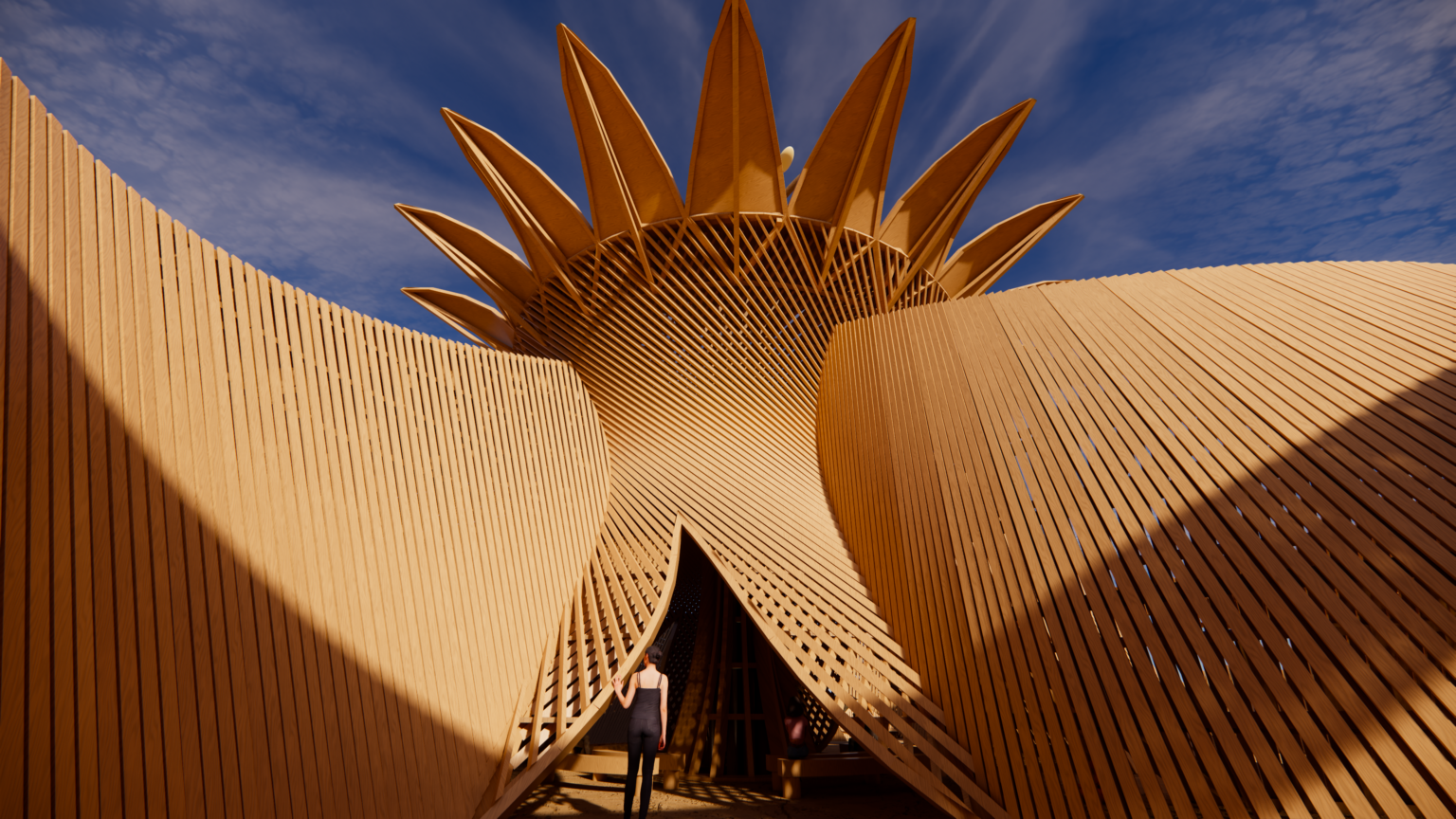
Eight gates punctuate the perimeter fence, aligned with the primary lunar phases, marking symbolic thresholds between the vibrant city and the quieter, meditative interior. The central chamber, framed by tall arches, offers a cathedral-like volume open to the desert sky, allowing light, wind, and dust to become part of the spatial experience.
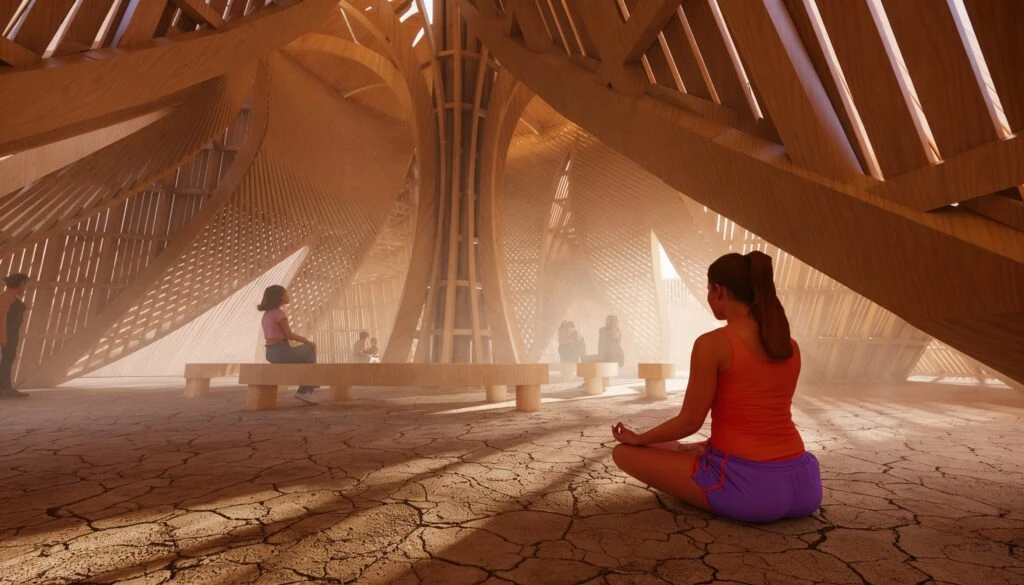
Radiating outward are alcoves and small chambers for quiet contemplation, balancing collective and personal experiences. The design ensures that visitors can experience both communal gathering and individual reflection, a defining feature of Burning Man temples.
Structure, Material, and Form
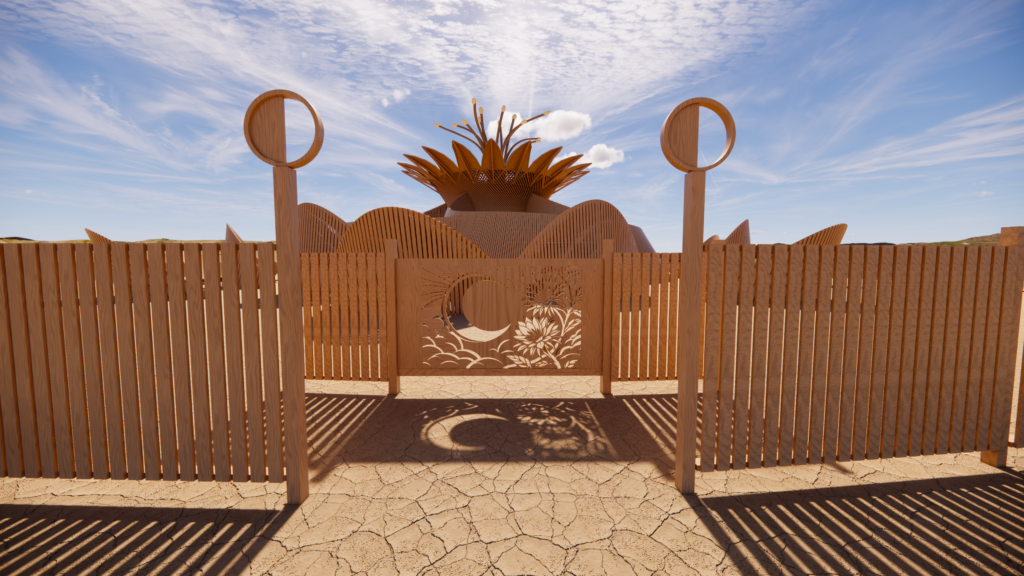
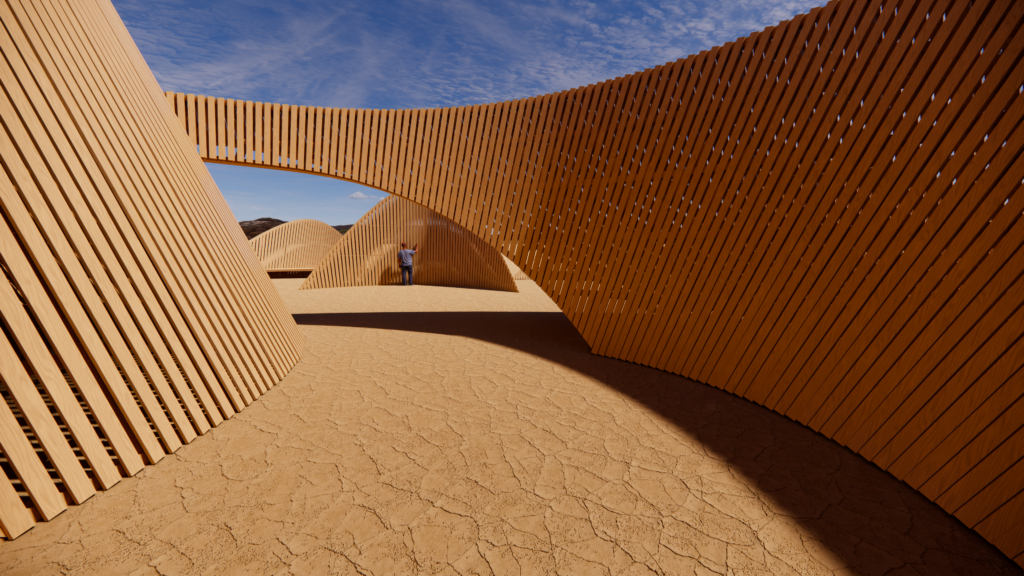
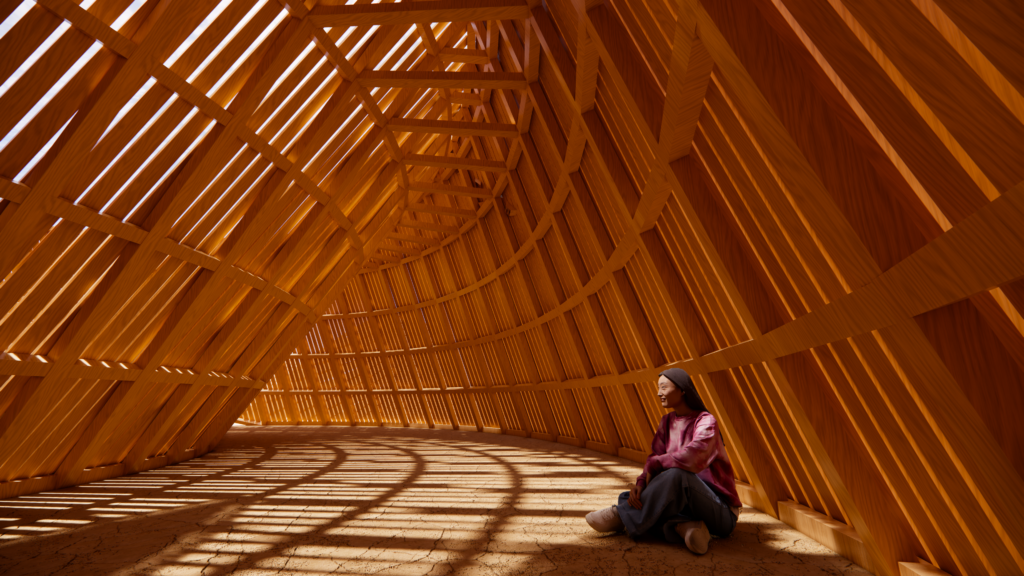
While the temple appears fluid and organic, it is constructed from modular timber elements arranged in repeating patterns. Straight wood pieces form lattice-like surfaces that curve to create the petal forms, allowing complex geometry without bending the materials. The timber is lightweight, visually porous, and creates depth through layered latticework that produces dynamic patterns of light and shadow throughout the day.
The hinged petals atop the central tower open in the evening to let moonlight and starlight penetrate the interior and close during the day to shelter visitors from the desert sun. The assembly relies on parametric modeling and algorithmic design workflows, translating digital models into buildable components. This approach ensures precision while preserving the organic flow of the forms, which is essential for harmonizing the temple’s design with the surrounding desert environment and enhancing the overall visitor experience.
Experiencing Light in the Open Desert
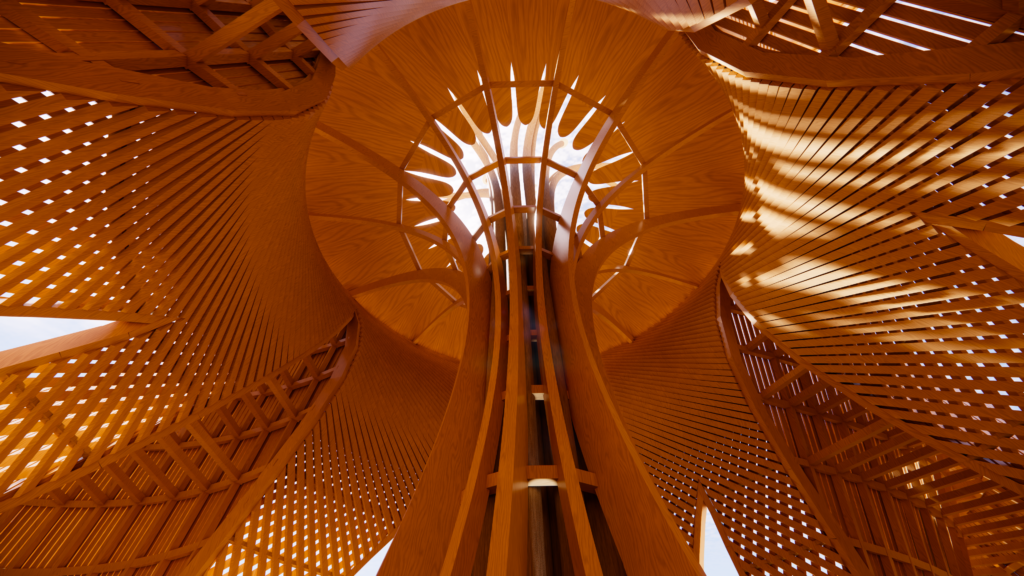
The relationship between the temple and its environment is critical. Great distances make the structure visible, particularly at night when the glowing stamen and central tower captivate the eye. Sunlight filtering through the lattice creates constantly shifting patterns inside the Temple, while at night, moonlight and small interior lights turn it into a lantern-like presence.
The architecture is temporary, designed only for the festival’s duration. Visitors attach messages, photographs, and personal objects to the surfaces, transforming the building into a collective record of memory and emotion. When the Temple is burned during the closing ceremony, it completes its final act, dissolving into fire and ash in a shared, quiet ritual.
A Space Built Through Community Collaboration
Like most large-scale projects at Burning Man, the Temple of the Moon is the work of an entire community. James Gwertzman, whose background spans theater design, technology, and collaborative art-making, leads the project. He spent decades creating interactive worlds in the video game industry before turning his focus to physical installations.
His previous projects at Burning Man helped form the Moonlight Collective, a group of artists, designers, and volunteers who now contribute to the Temple’s realization. Architects, project managers, fabricators, and builders work together with hundreds of volunteers to fabricate the components, assemble the structure, and eventually install it in Black Rock City.
Community participation extends beyond construction. Portions of the perimeter fence will include panels designed by contributors from the wider Burning Man community, many of them featuring motifs inspired by flowers and lunar imagery. These collaborative elements ensure that the Temple reflects the voices of many people who will gather around it.
Reflection, Memory, and Impermanence
For one week, the Temple of the Moon stands as a sanctuary for reflection, mourning, gratitude, and release. Messages, offerings, and personal artifacts turn the architecture into a living archive of human emotion. When the final flames rise, the structure disappears, leaving only memory, like the brief fragrance of a flower that blooms in moonlight and fades with the dawn.
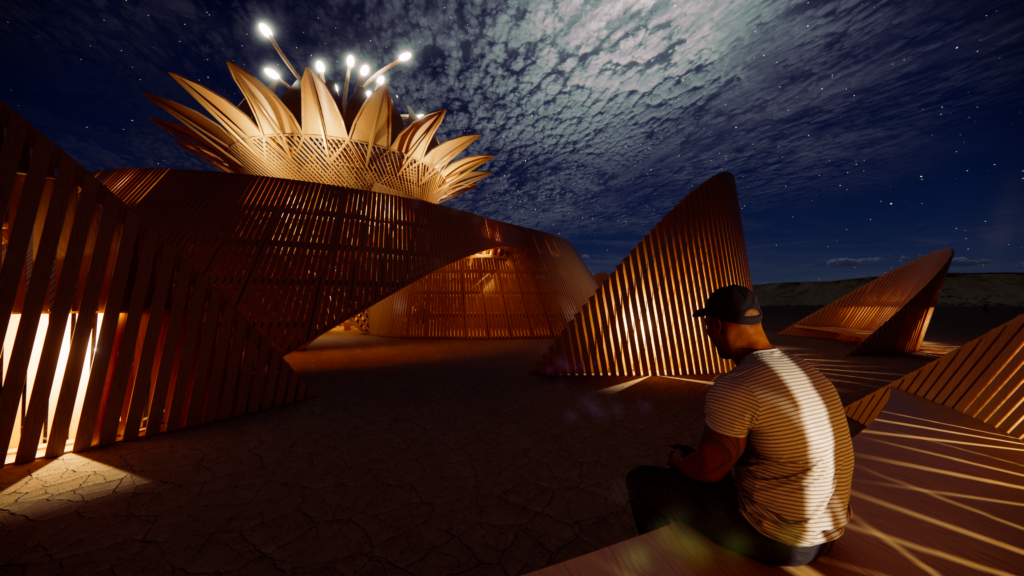
Through its design, materiality, and communal making, the Temple of the Moon captures the fleeting beauty of life and the power of shared experience, reminding everyone who enters that impermanence can be deeply meaningful.
Render Credits: James Gwertzman & Annie Locke Scherer
Explore Courses
.jpg "Ondrej Chybik - Rethinking Architecture")