



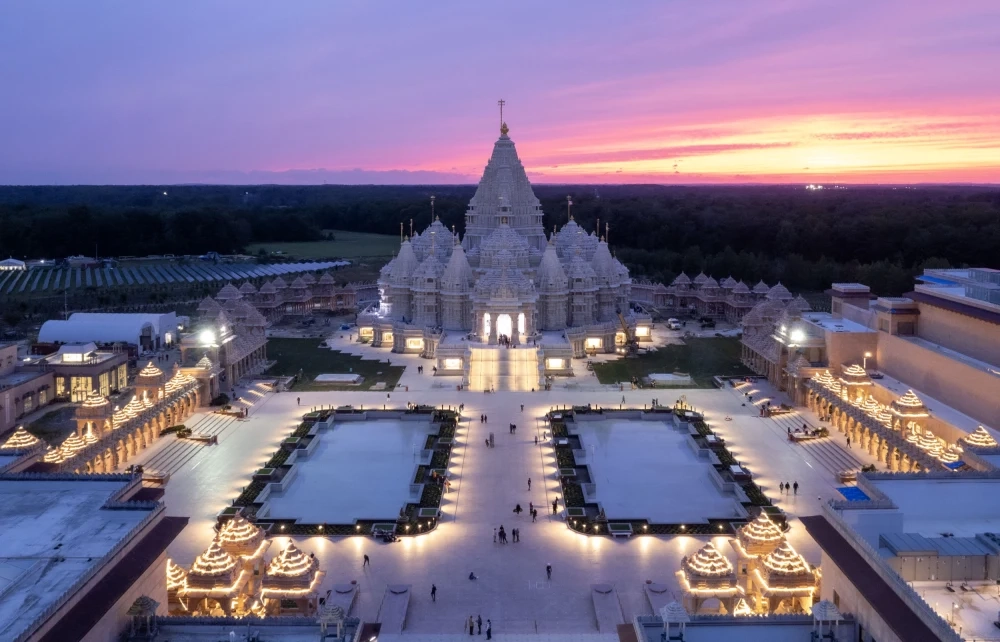
In Robbinsville, New Jersey, a temple unlike any other in the Western Hemisphere now stands. The BAPS Swaminarayan Akshardham is the largest Hindu temple in the United States and the biggest outside Asia. Spread across 183 acres, constructed with over 1.9 million cubic feet of hand-carved stone, and reaching a height of 191 feet, Akshardham is a stunning realization of ancient Indian temple architecture on American soil. The temple’s sheer scale, mission, and the controversy surrounding its construction stir vital questions about faith, labor, and immigrant identity in modern America.
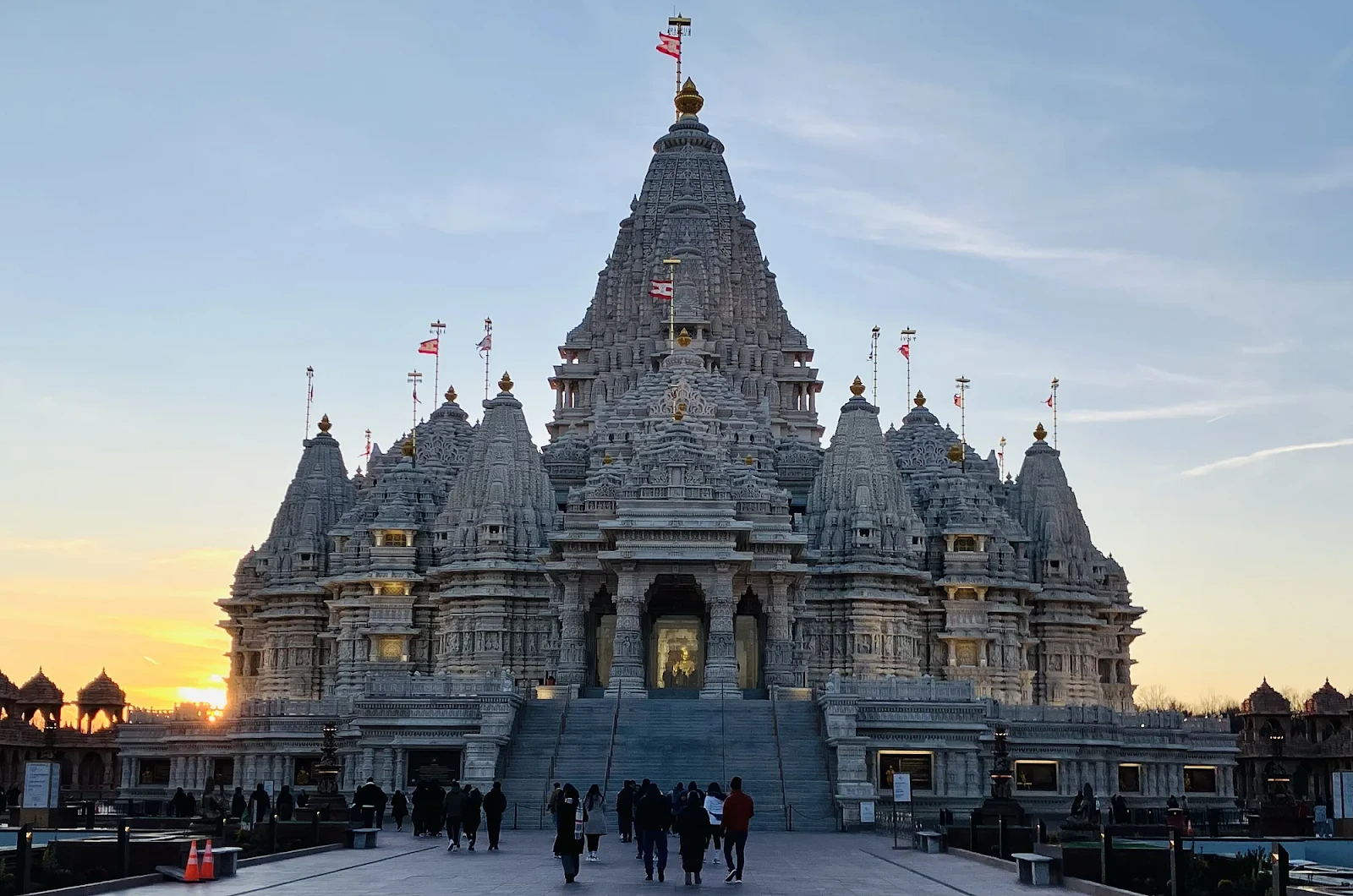
Ancient Indian Temple Architecture Reimagined in New Jersey
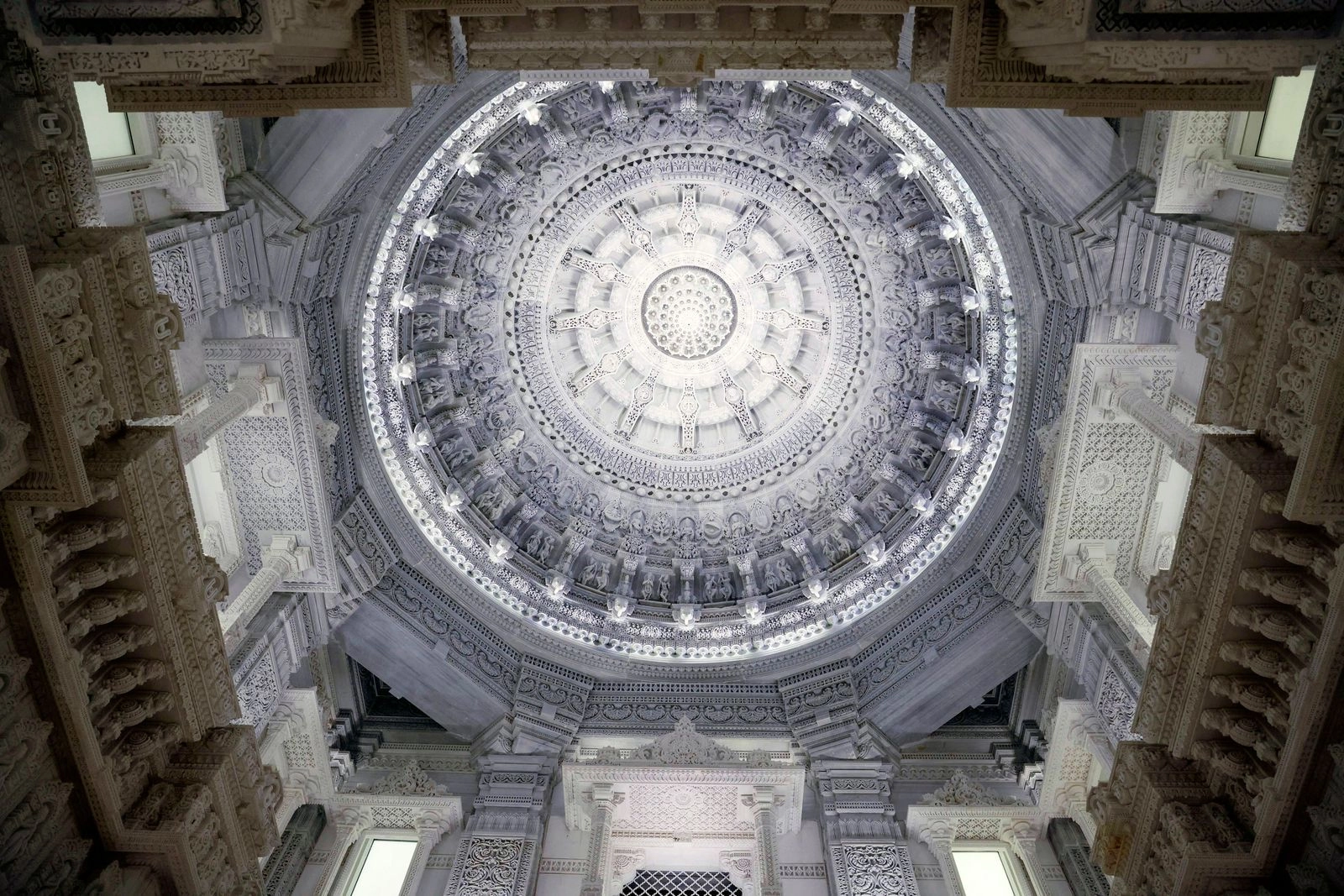
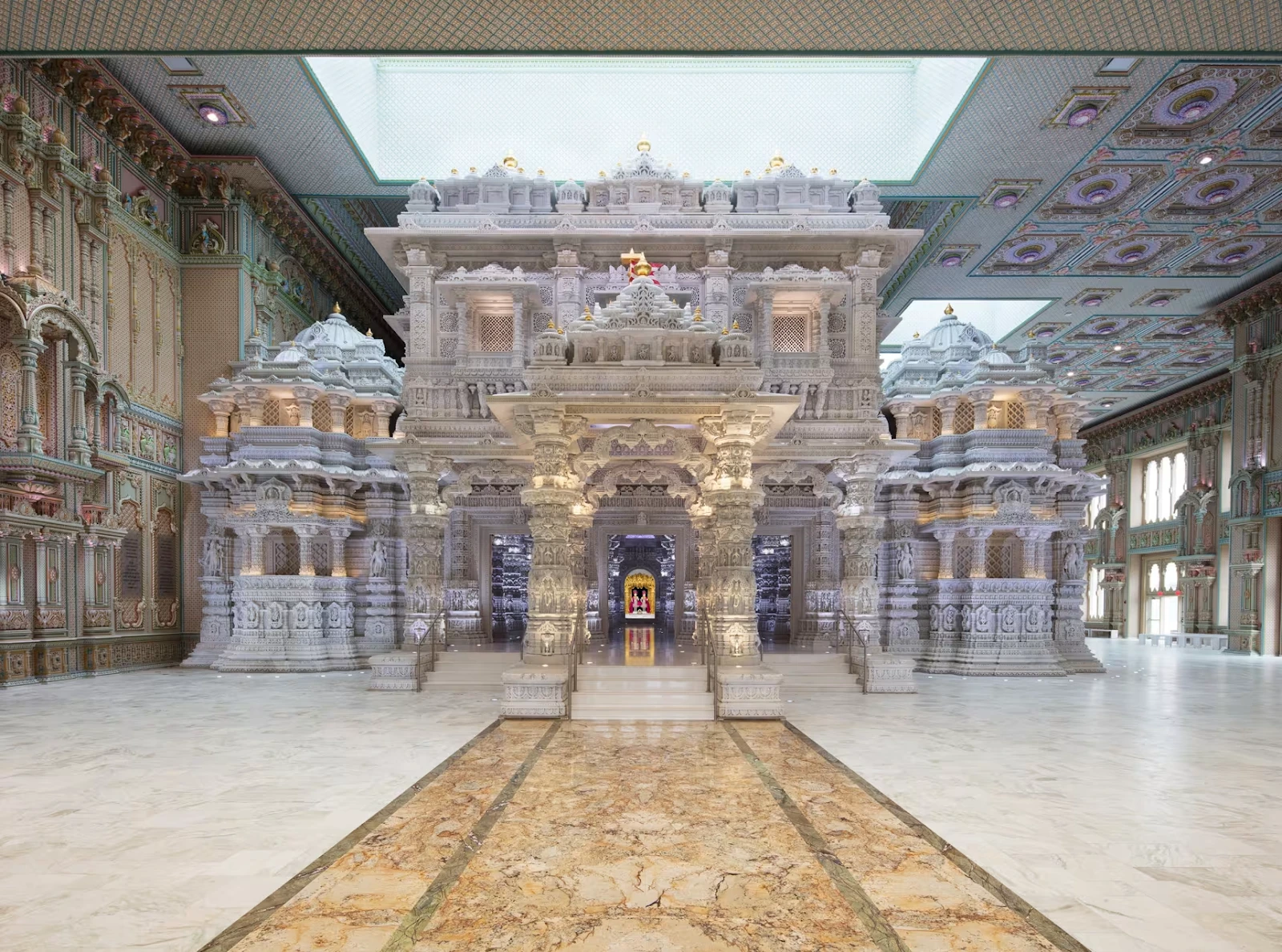
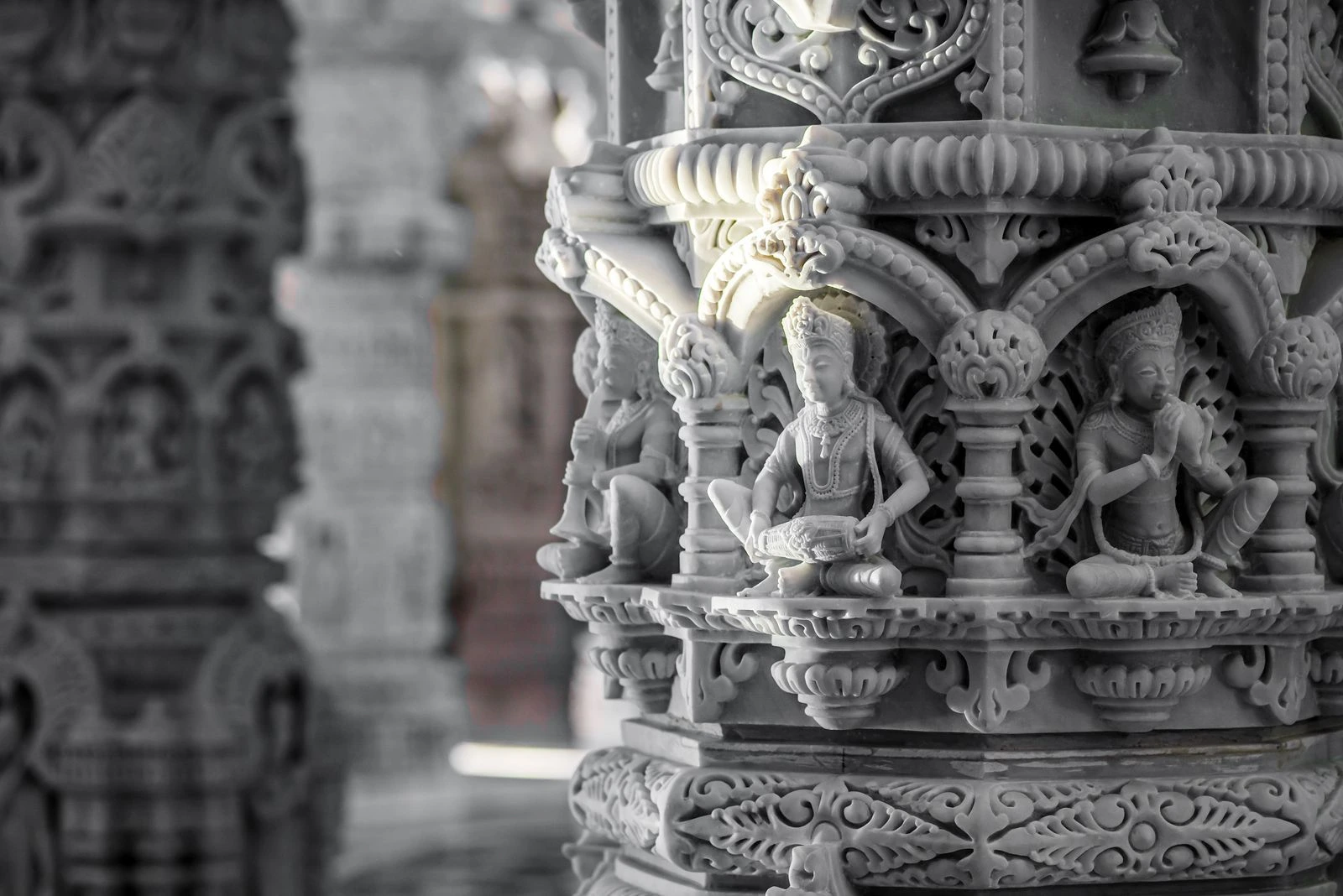
The Akshardham’s architecture follows the Shilpa and Sthapathya Shastras, ancient Indian architectural treatises that prescribe everything from structural ratios to symbolic carvings. There’s no steel or concrete within the main shrine. Instead, massive blocks of limestone from Bulgaria, marble from Italy, sandstone from India, and granite from China are stacked and interlocked in traditional style, a method designed to last centuries.
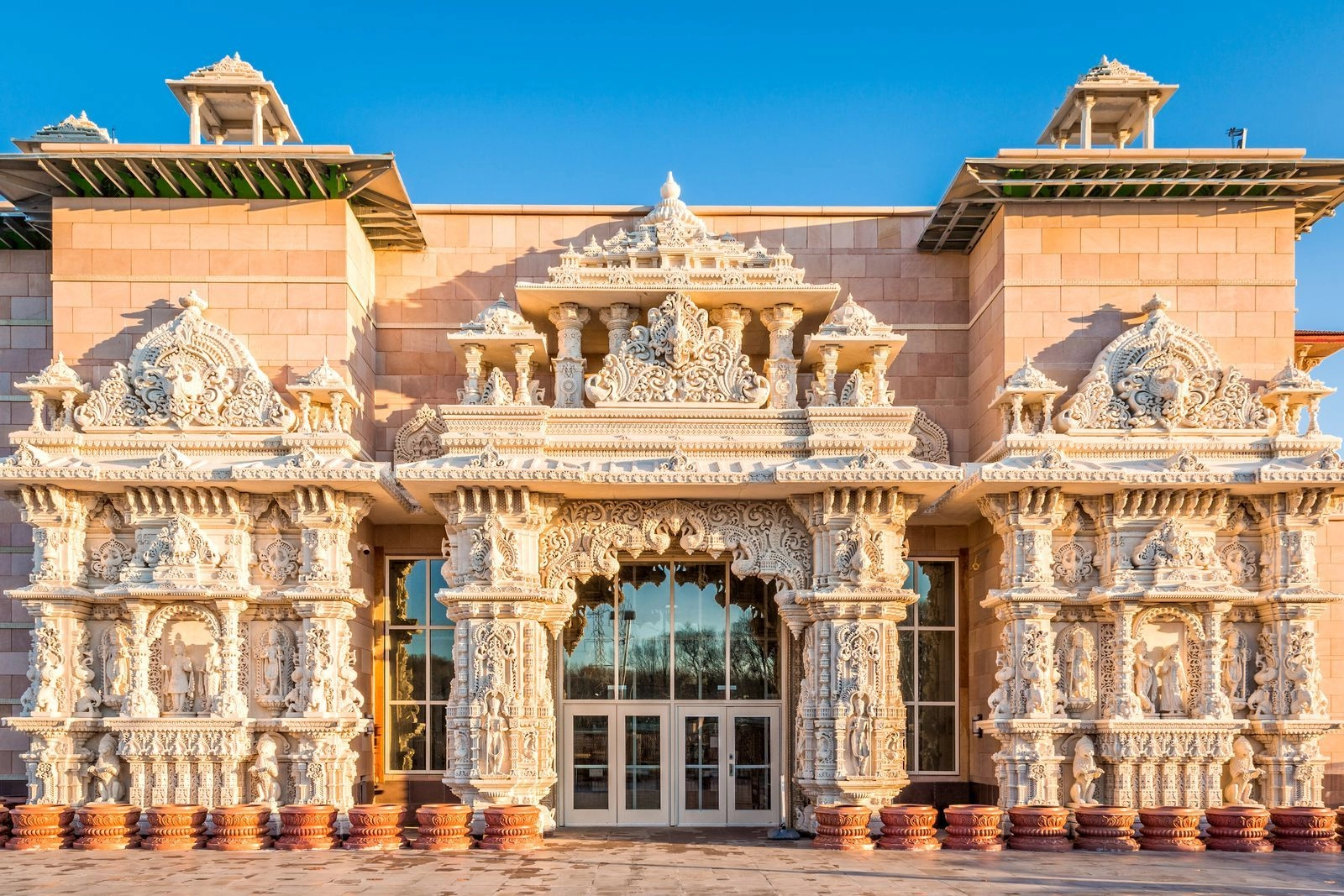
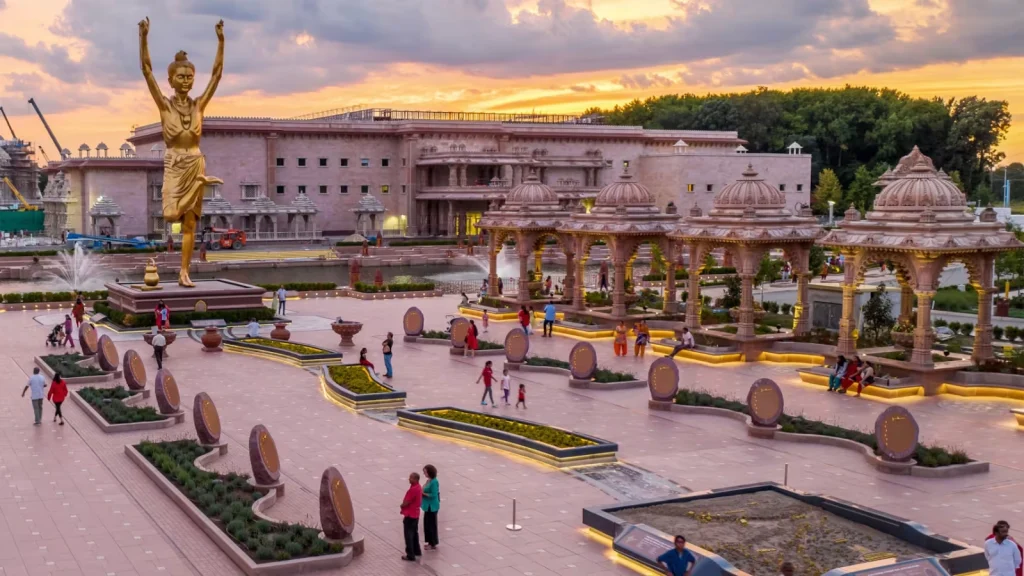
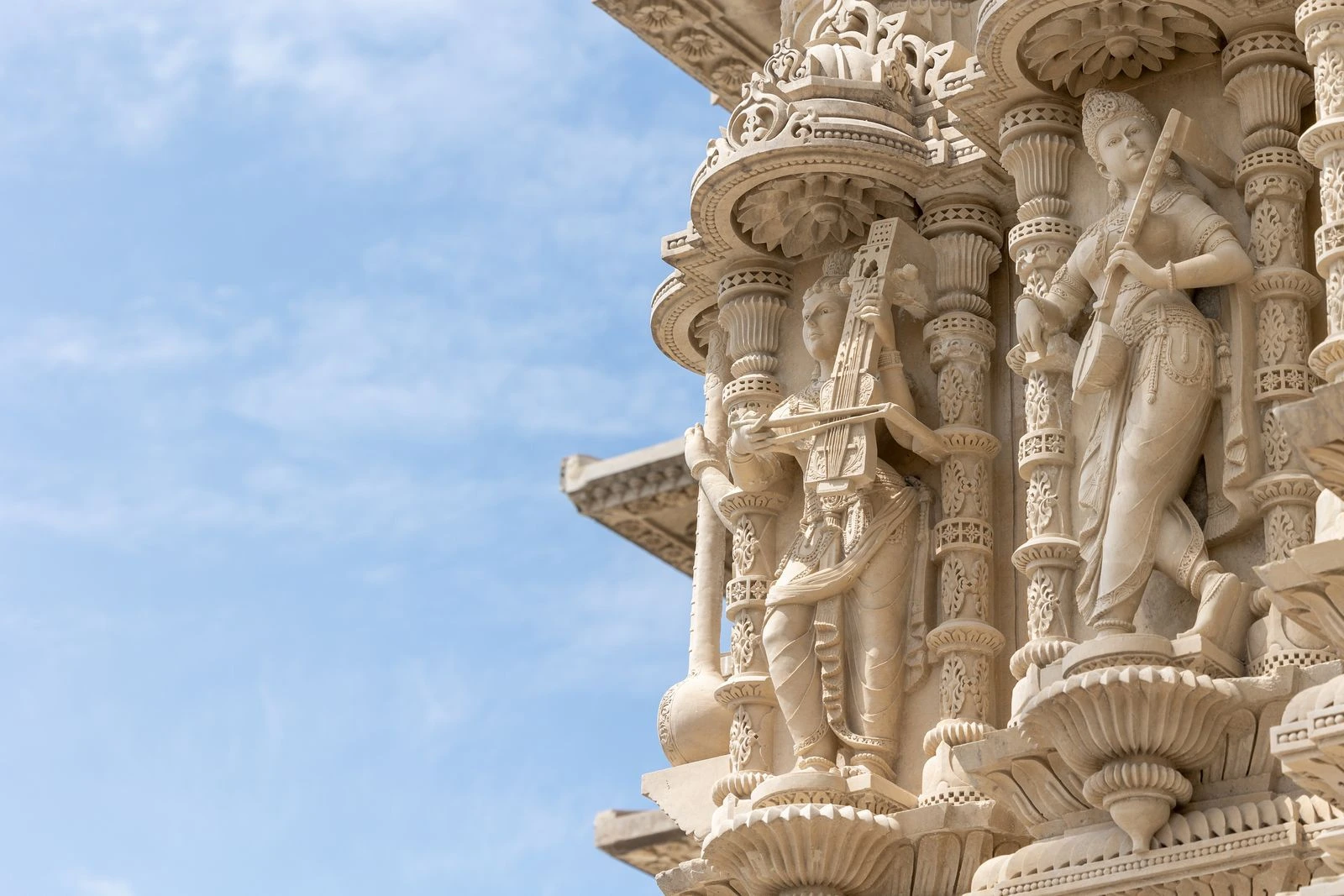
The temple includes 12 sub-shrines, a 49-foot bronze statue of Bhagwan Swaminarayan, a stepwell called Brahm Kund filled with water from 300 rivers in India and all 50 U.S. states, and an expansive canopy plaza. Inside, it’s lined with 10,000 statues and carvings ranging from Hindu deities to secular icons like Martin Luther King Jr., Socrates, and Abraham Lincoln, a nod to the values of universal service and pluralism.
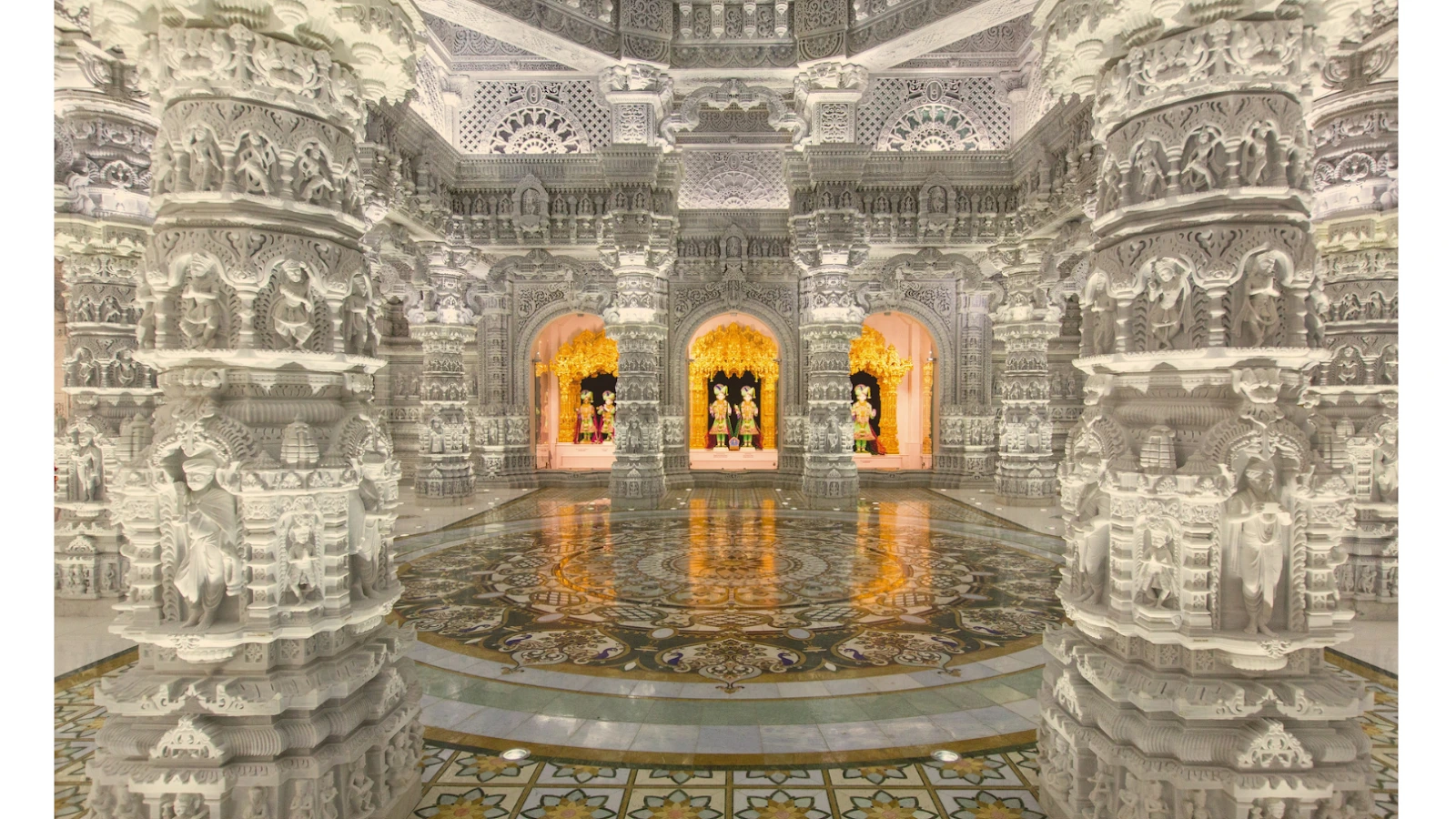
The elliptical dome, the largest of its kind in any Hindu temple, is heated from below in winter. The complex also houses a solar panel farm generating about 1 gigawatt of power daily, demonstrating a commitment to sustainability along with spirituality.
A Cultural Landmark for Hindu Americans
For the Indian American and broader Hindu community, the Akshardham is a place of worship and a cultural anchor. “This is the American Dream,” says Yogi Trivedi, a Columbia University scholar and BAPS volunteer. “It’s sacred geography, global history, and local belonging all in one.”
Every carving is deliberate, telling stories of harmony, devotion, sacrifice, and moral leadership. It’s a visual scripture meant to teach as much as to awe.
New Jersey is home to one of the largest Hindu populations in the U.S. The temple aims to be a spiritual pilgrimage destination not only for Swaminarayan followers but for Hindus and curious visitors from around the world.
A Monument of Faith Under Legal Scrutiny
While the Akshardham temple is a symbol of devotion and craftsmanship, its 15-year construction has faced serious legal challenges, including allegations of labor exploitation involving low-wage workers brought from India under religious visas.
A 2021 federal lawsuit accused BAPS, the global organization behind the temple, of bringing over more than 200 low-caste Indian men on R-1 religious visas, then forcing them into grueling manual labor under inhumane conditions. The plaintiffs allege they were paid as little as $1.20 per hour, worked 12.5-hour days with minimal rest, and had their passports confiscated. Two workers reportedly died on-site, one of them a 17-year-old boy.
BAPS disputes these allegations, stating that the artisans were “volunteers,” supported with housing, food, and medical care, and that their families were compensated back in India. Spokesperson Ronak Patel emphasized the organization’s cooperation with federal investigators and noted that 12 of the original 21 plaintiffs have withdrawn from the lawsuit.
But for civil rights advocates, the case raises critical questions about the intersection of religious seva (service) and labor exploitation, especially for Dalit workers from India’s historically oppressed castes.
Blending Tradition with the American Experience
The BAPS Swaminarayan Akshardham stands at the intersection of ancient faith and contemporary identity. Here, devotion is carved in stone, but so is the story of an immigrant community claiming space, voice, and visibility in the U.S. landscape.
Locals voiced concerns early on about the temple’s height, zoning, and impact, but those were addressed through community engagement. In turn, Robbinsville now hosts a place that merges sacred Indian tradition with American ideals of freedom, diversity, and civic life. Women played key roles in managing the project, a rarity in Hindu temple construction.
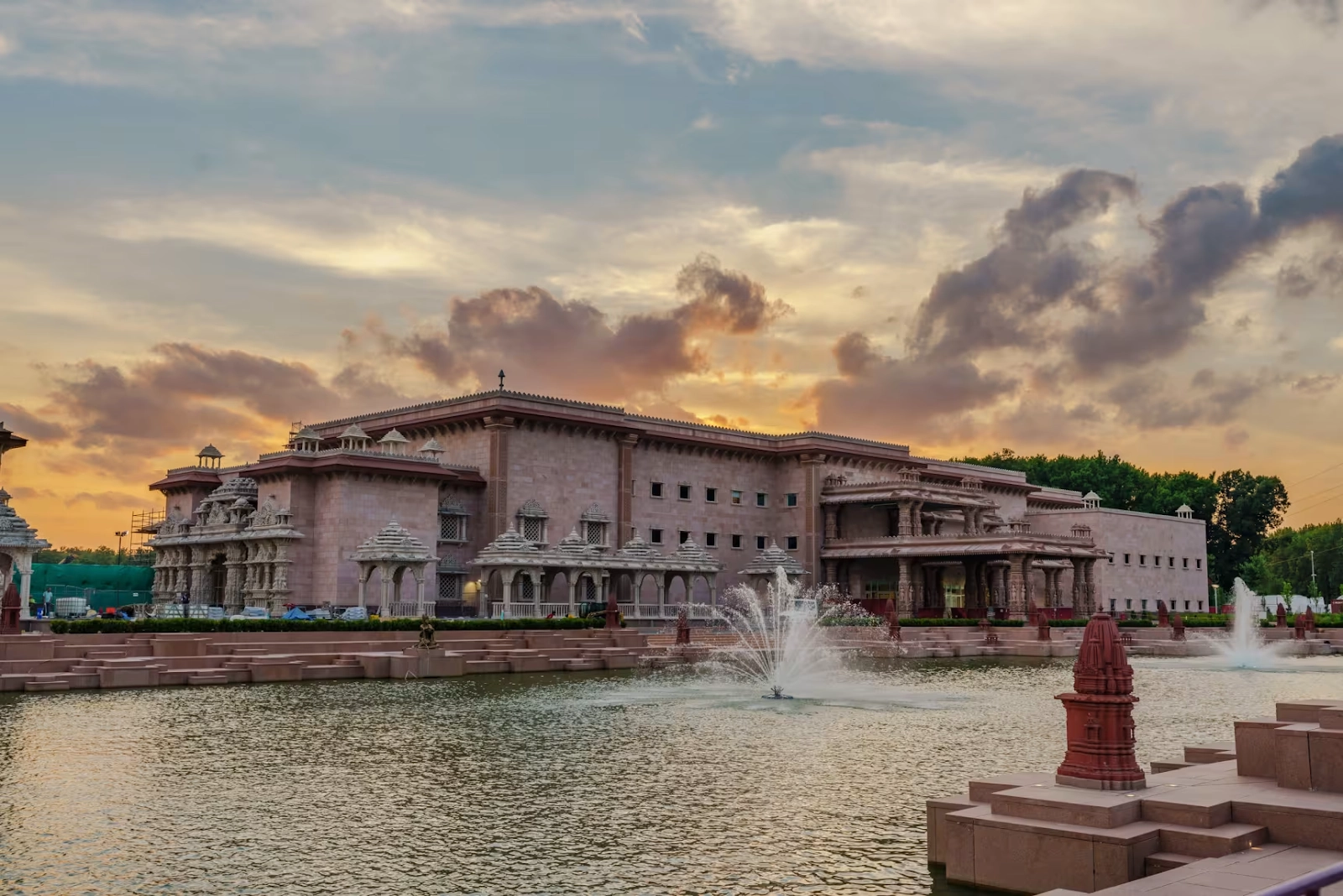
The design even features quotes from Christian, Sikh, Sufi, and secular philosophers, further reinforcing the message of inclusion. As the sun sets on the pink stone, what remains is a monument that is as inspiring as it is complicated. New Jersey is now home to history carved in stone.
Explore Courses

.jpg "Ondrej Chybik - Rethinking Architecture")