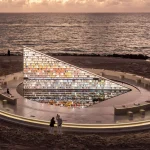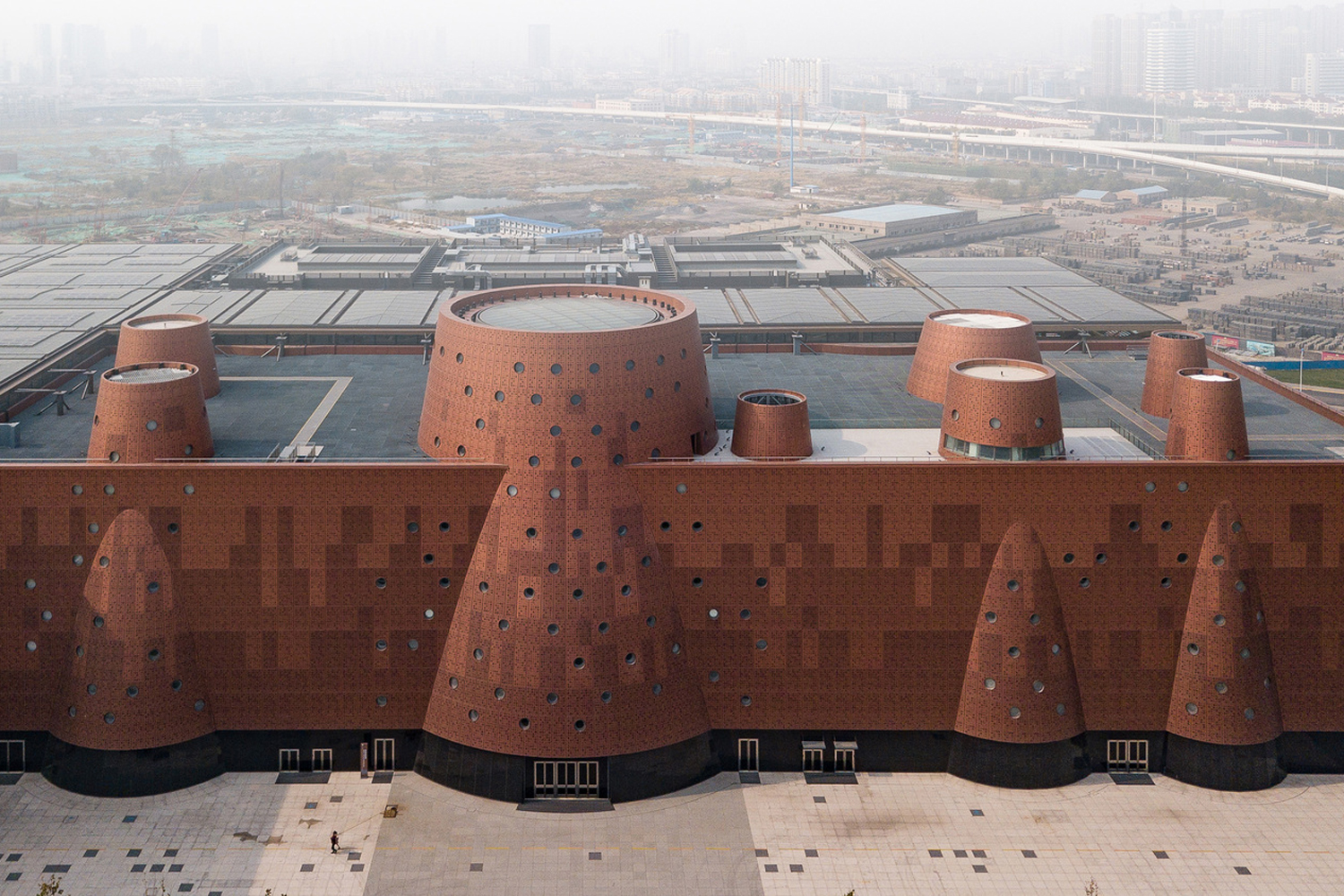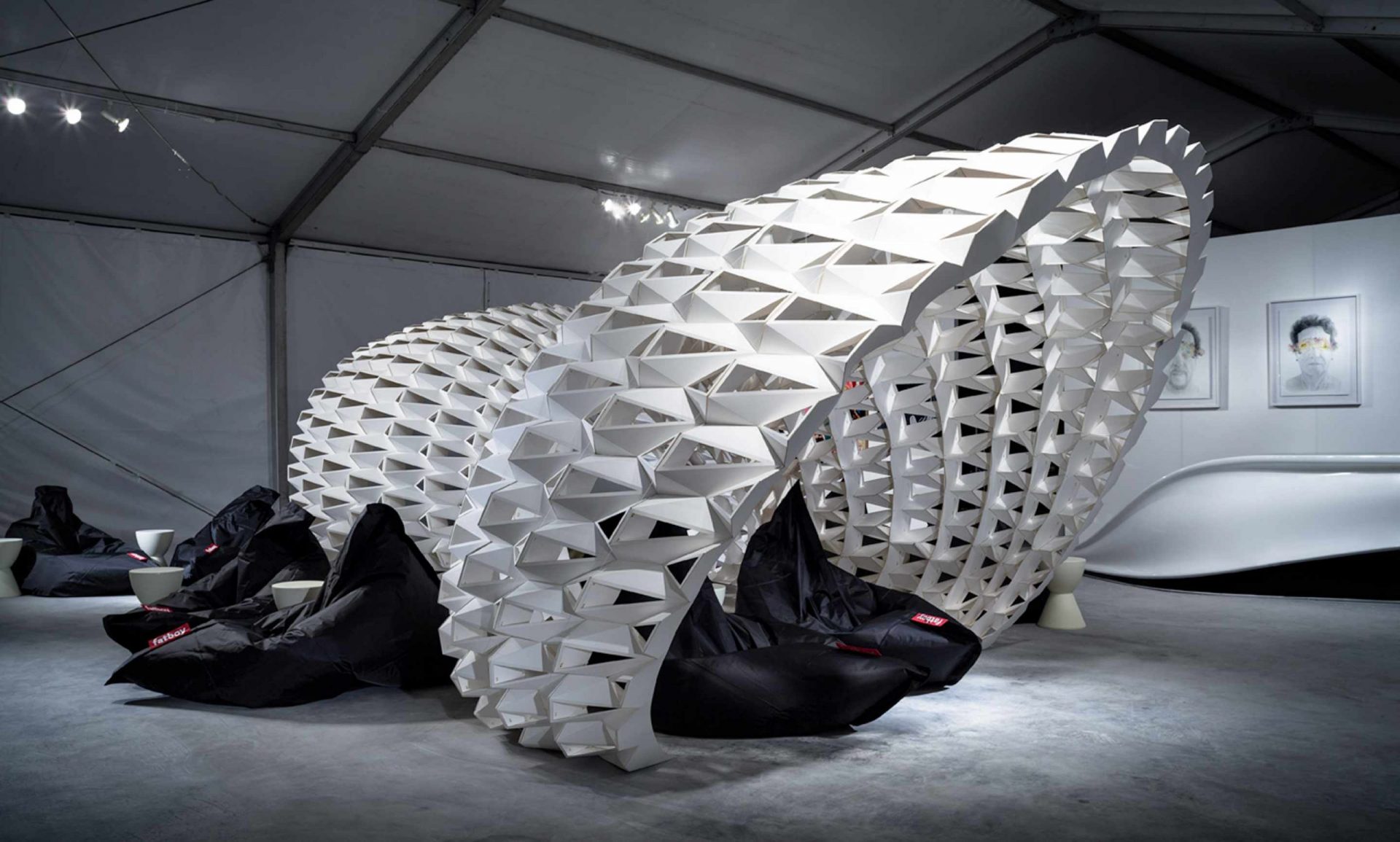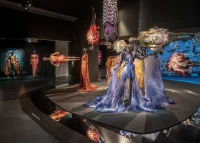





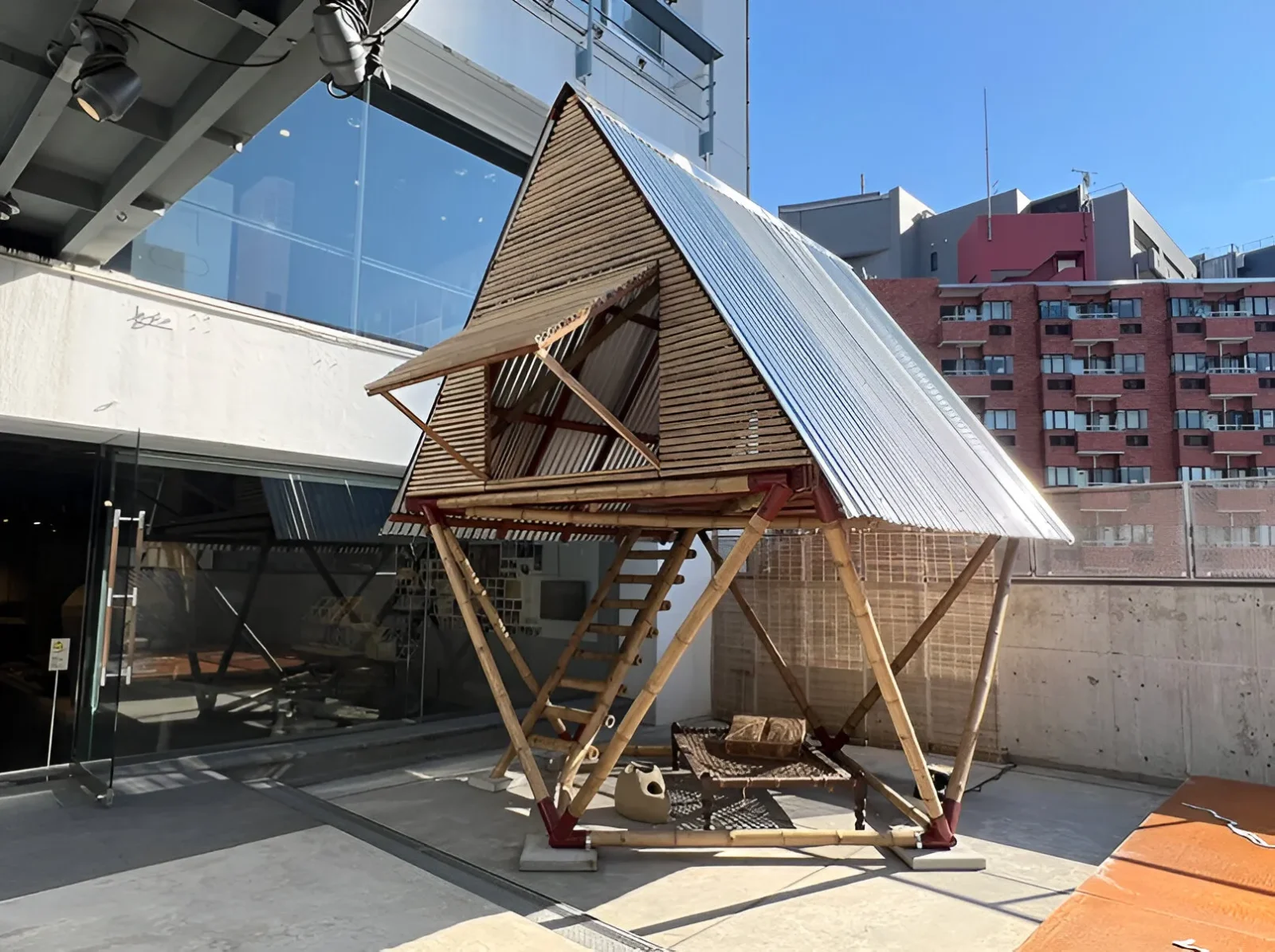
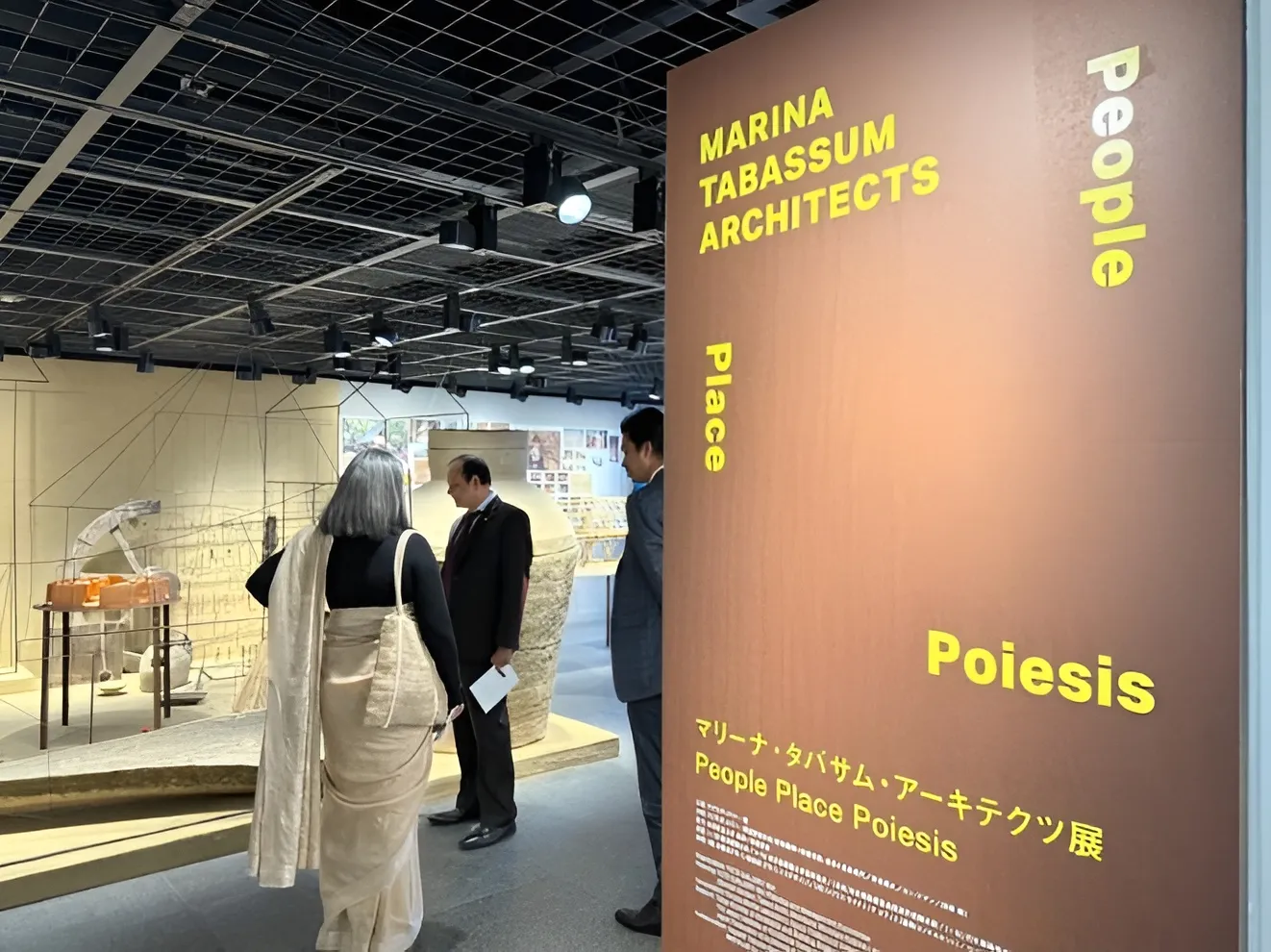
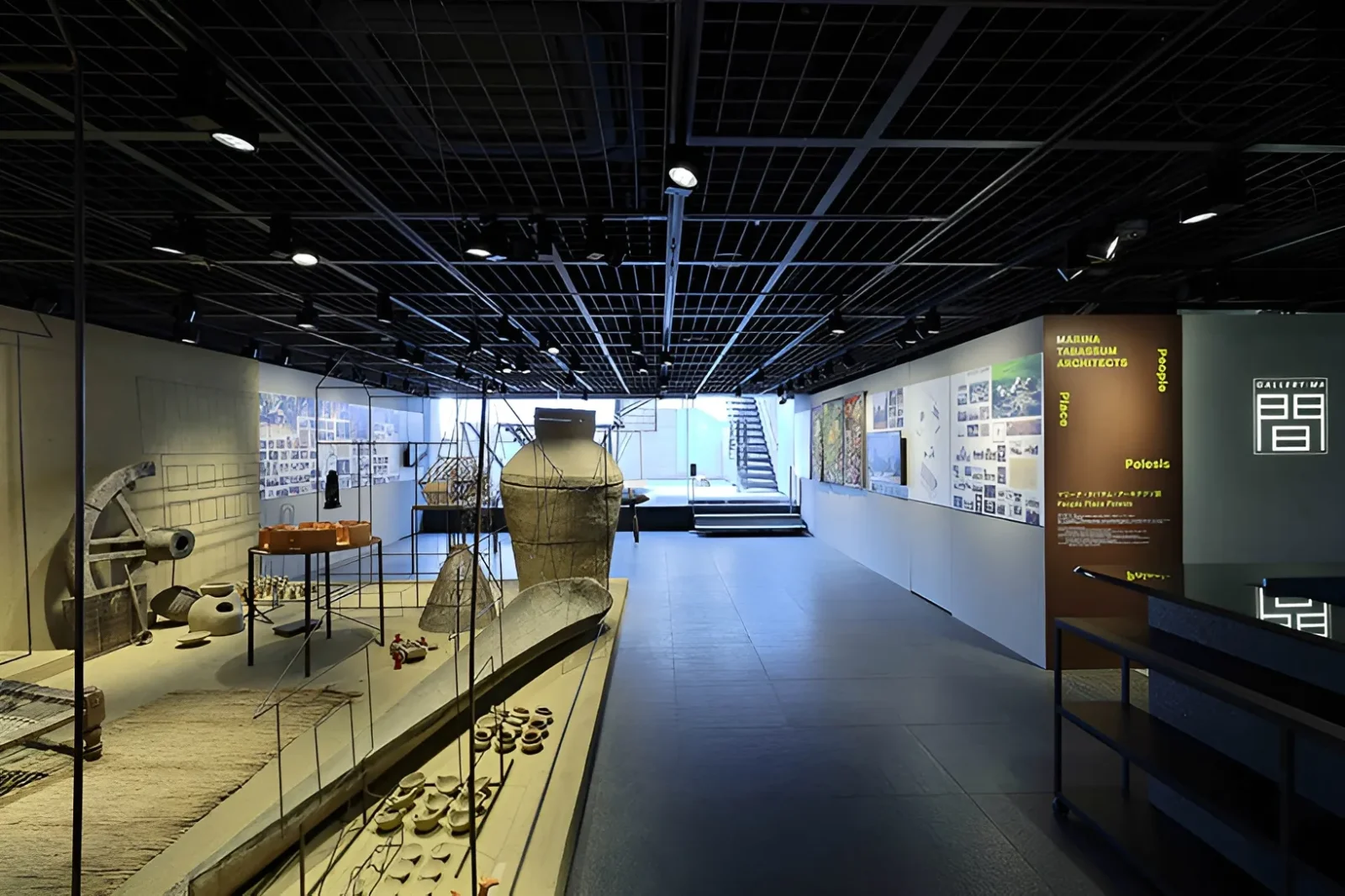
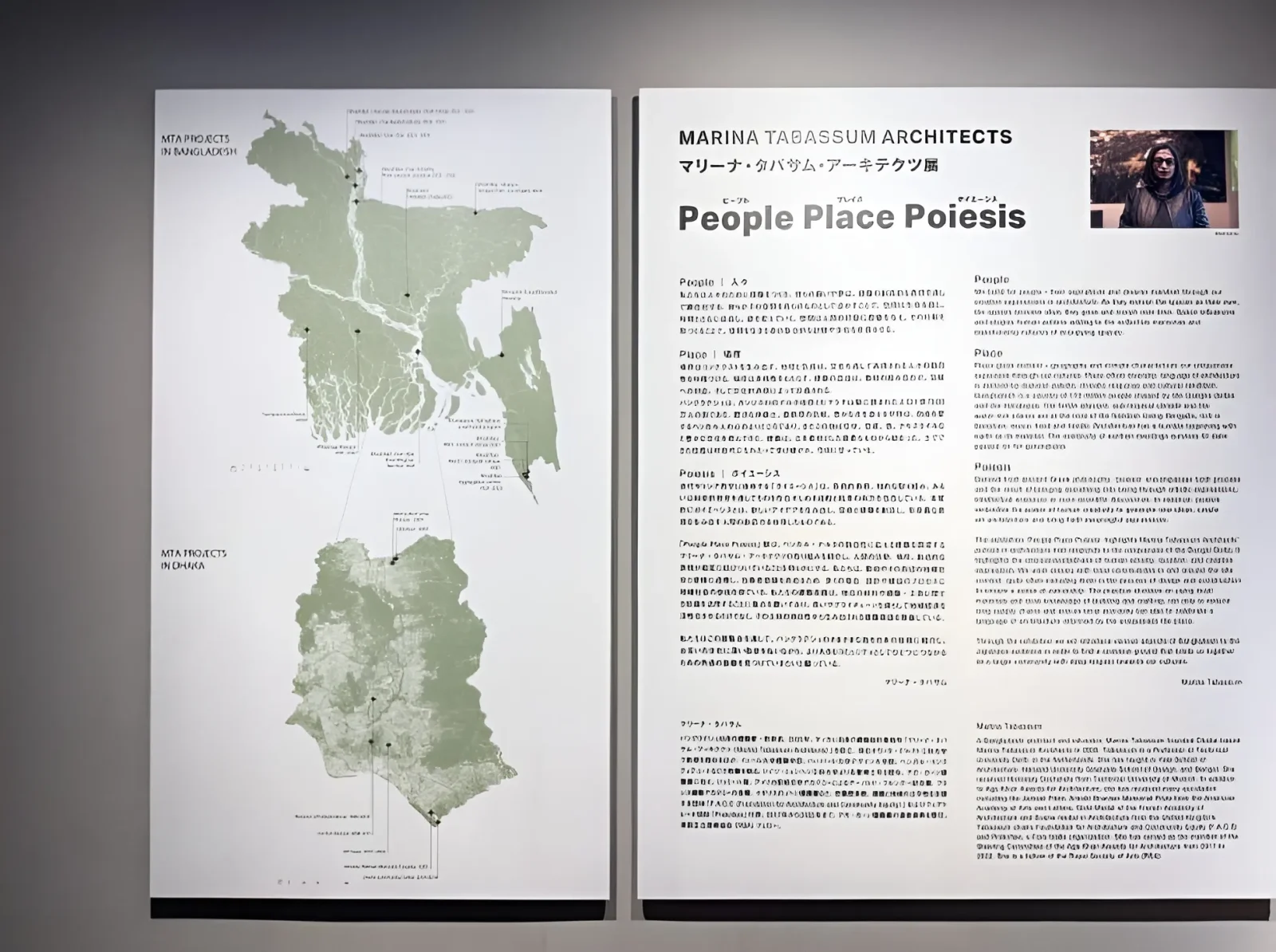
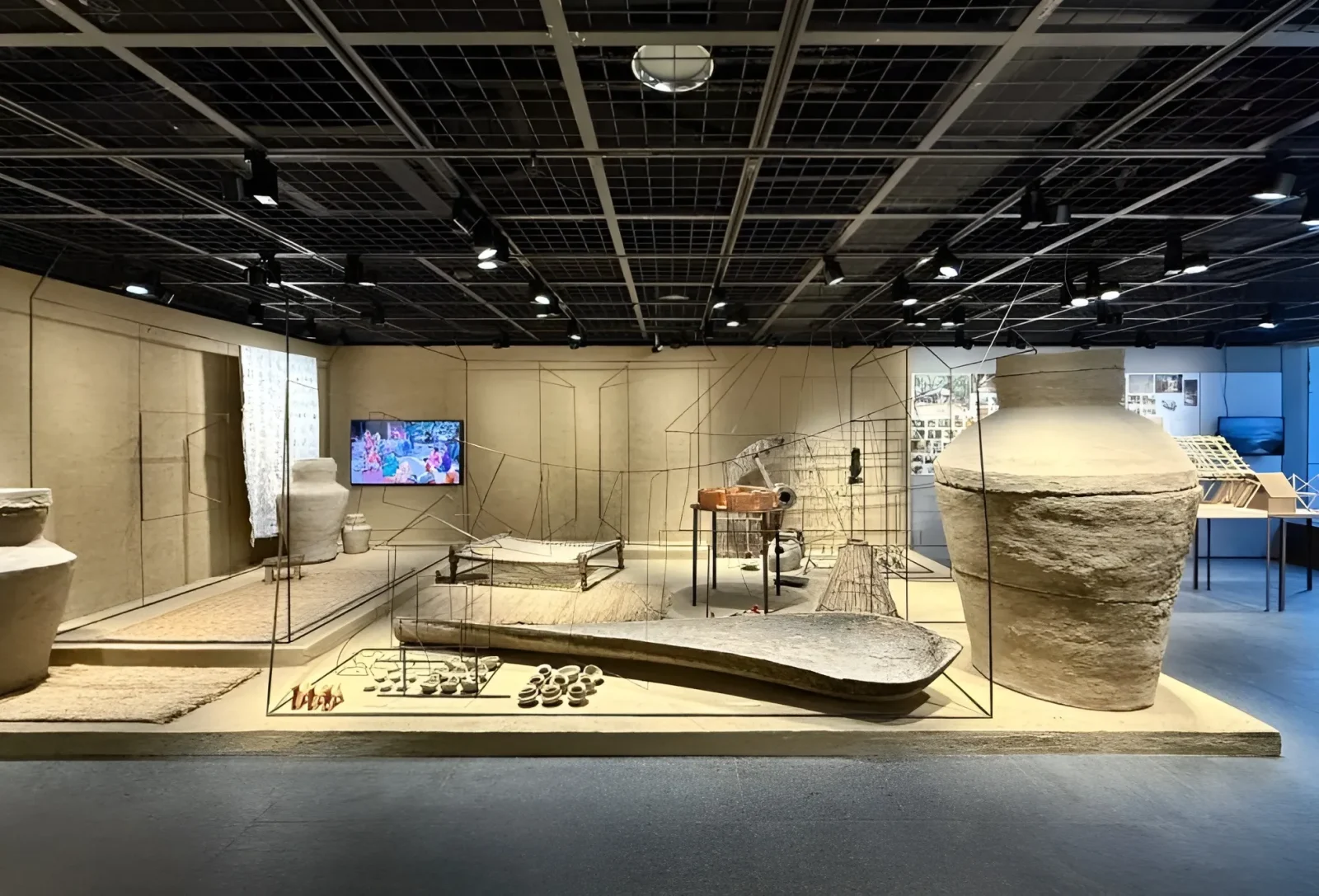
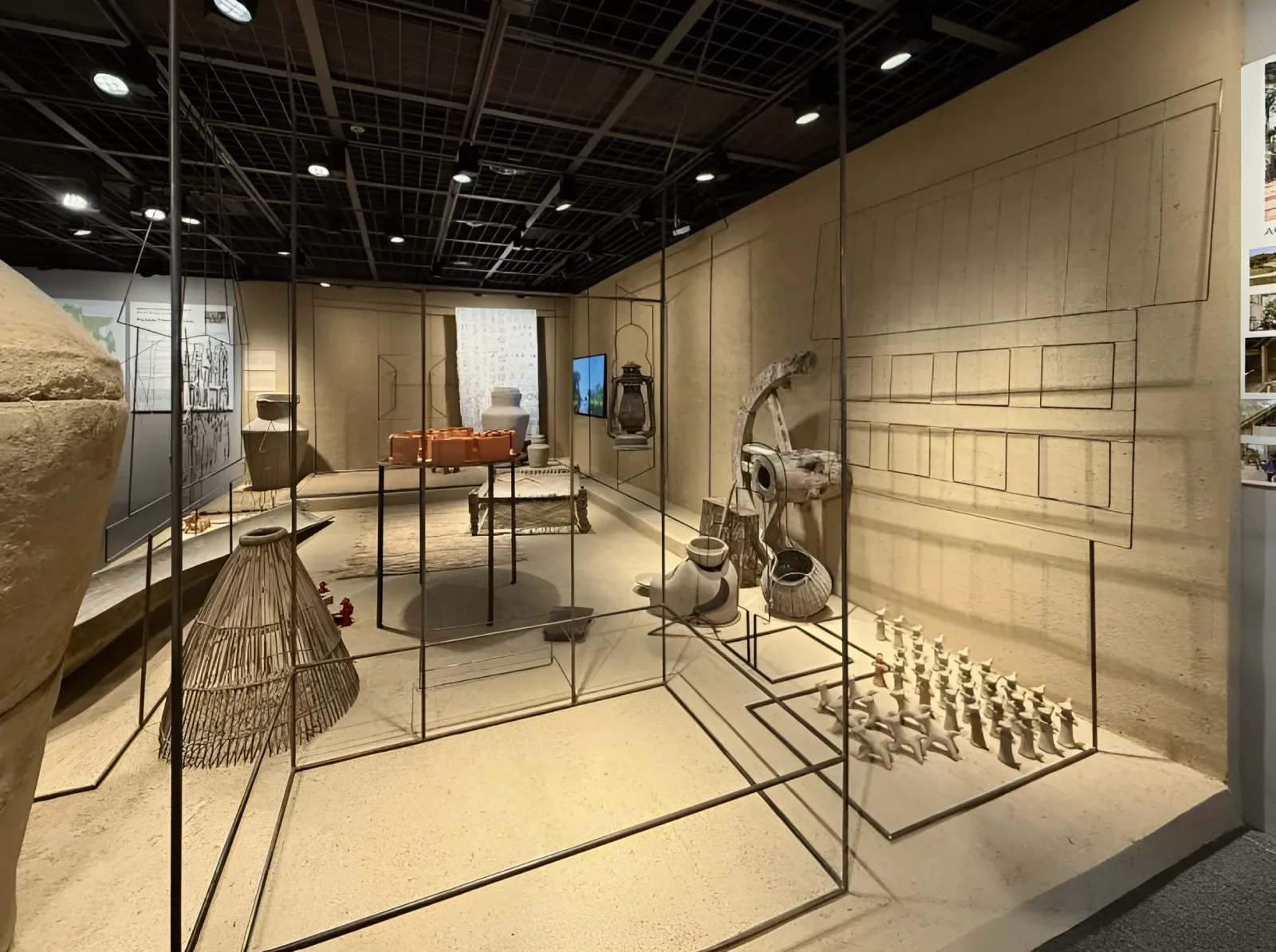
TOTO GALLERY·MA in Tokyo is currently hosting “People Place Poiesis,” a comprehensive exhibition that highlights how Marina Tabassum Architects (MTA) is redefining architecture in Bangladesh. The architects are recognized for their climate-sensitive design, community-driven approach, and innovative, lightweight building systems. MTA’s work is adaptive to the rapidly shifting world. The exhibition in Tokyo, which will run until February 15th, 2026, is hosted on two levels and outdoor courtyards; among the full-scale installations is the ‘Khudi Bari,’ one of MTA’s groundbreaking flood-resilient housing prototypes.
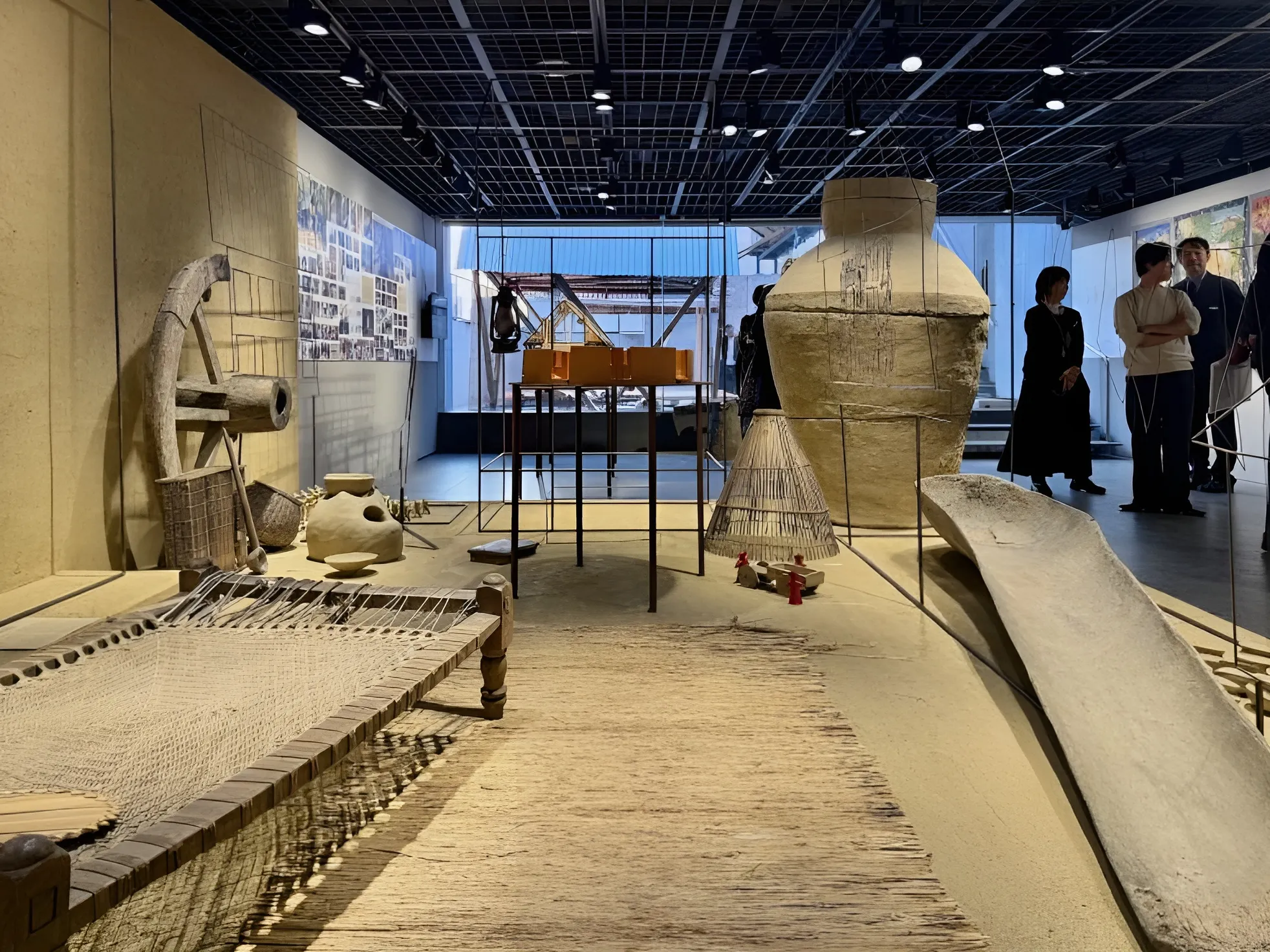
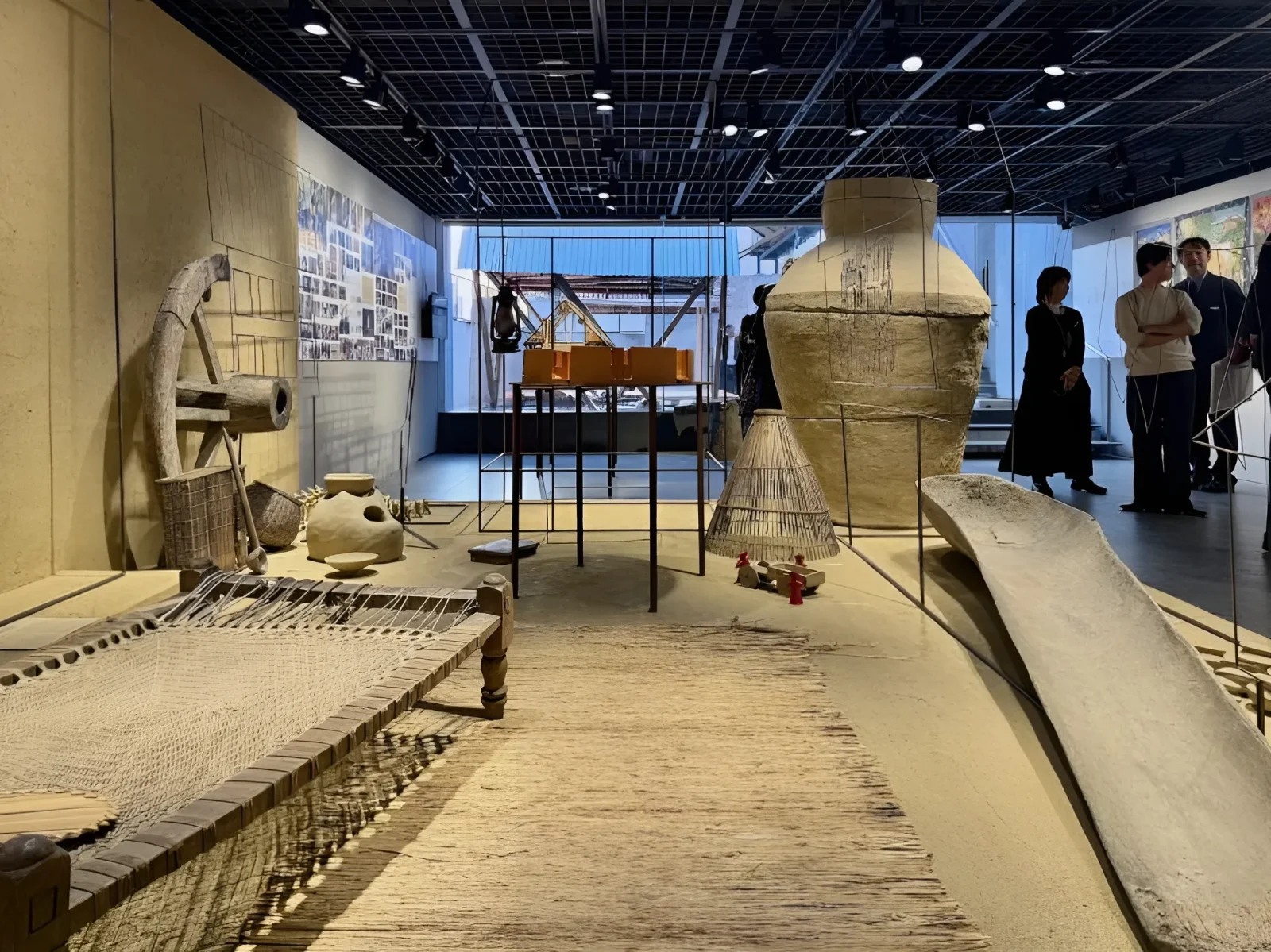
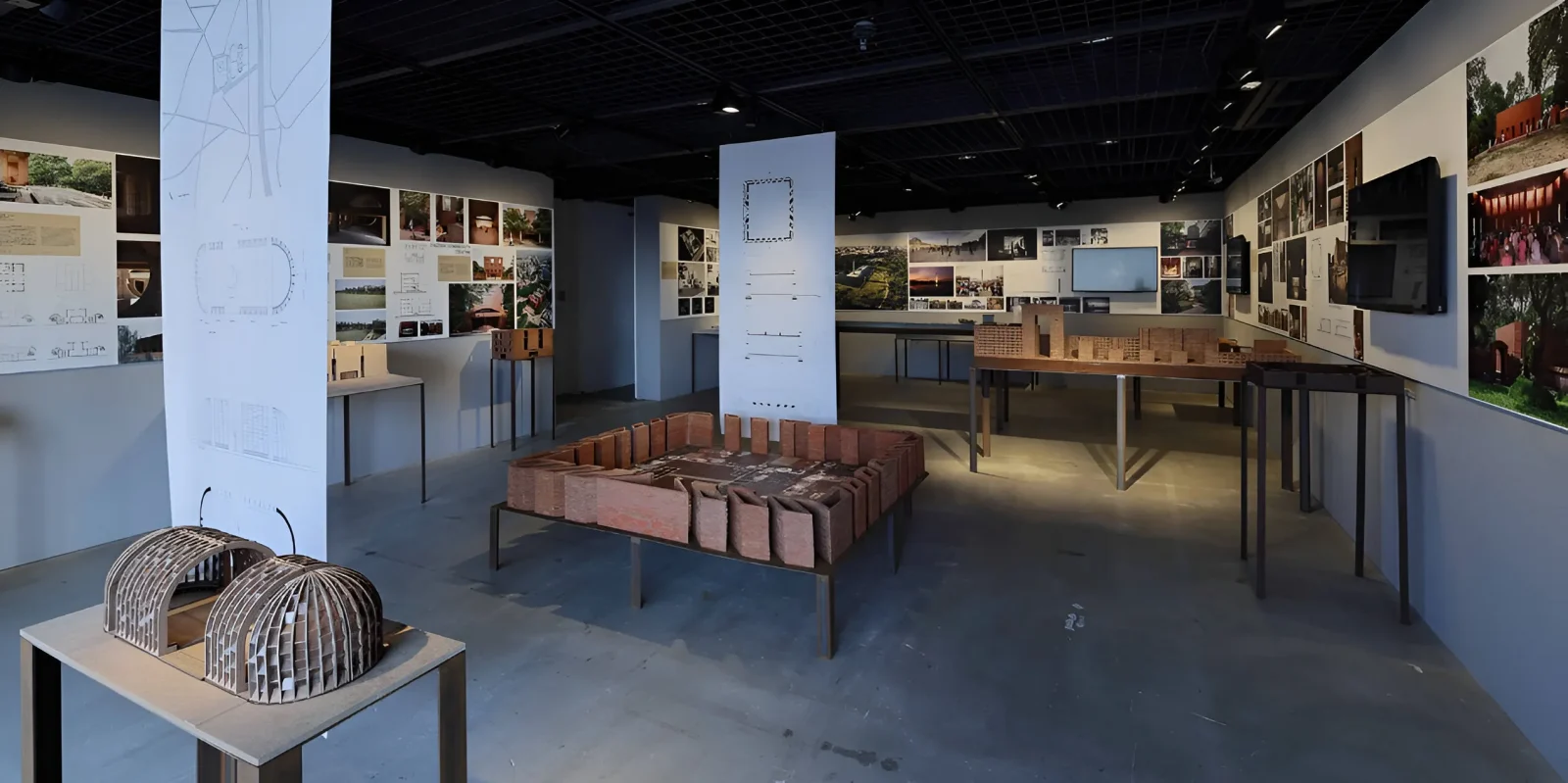
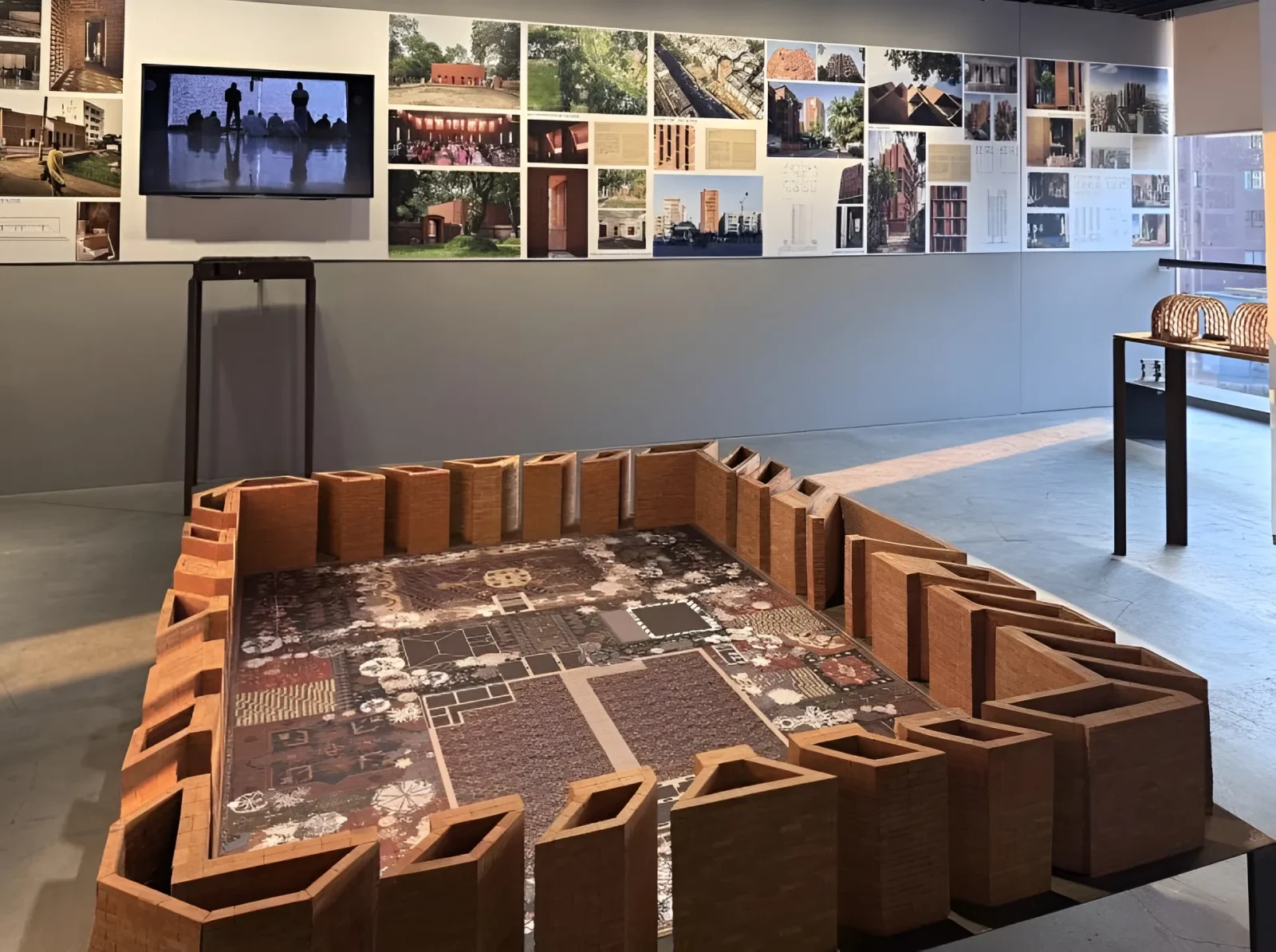
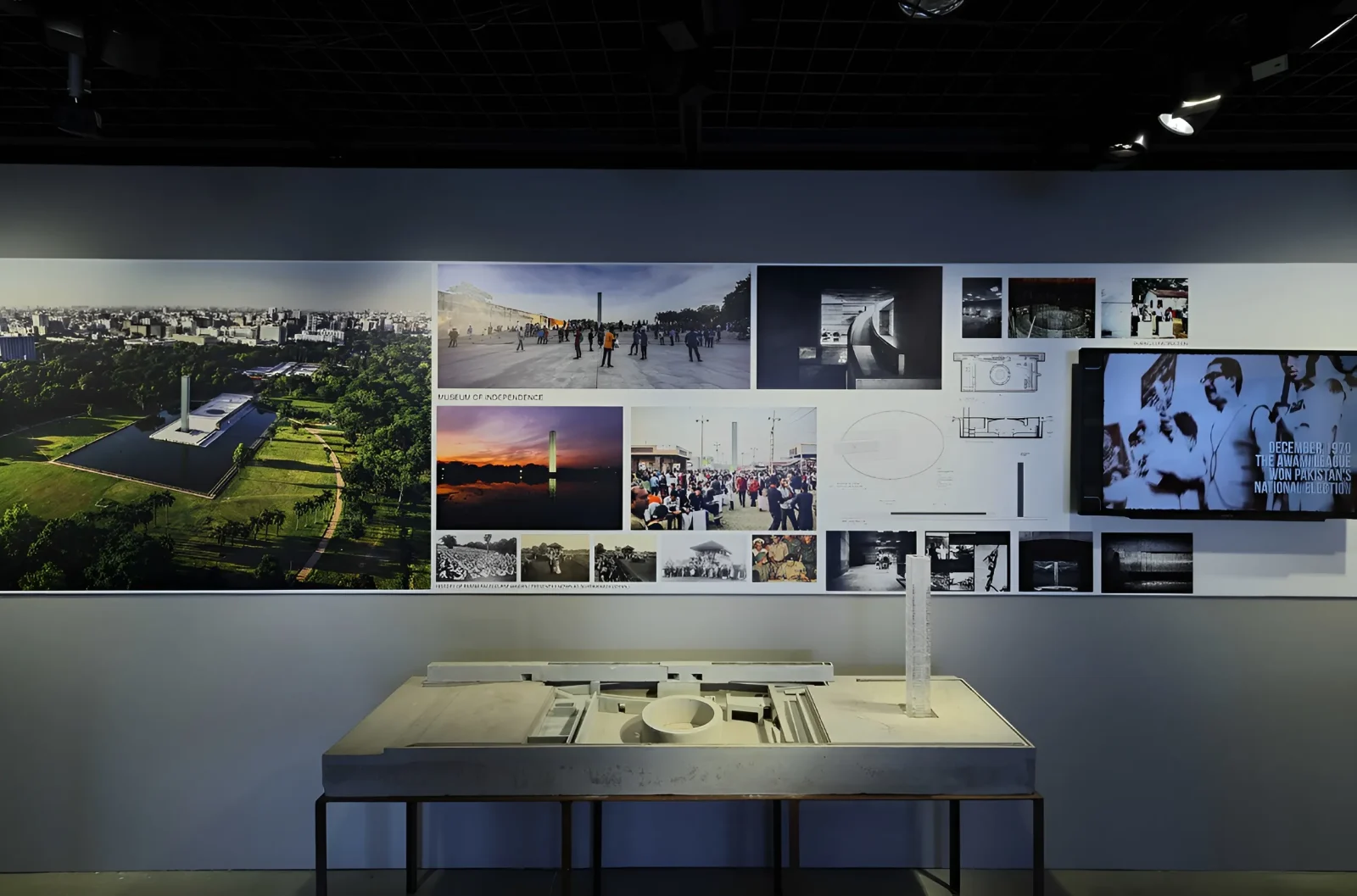
The exhibition spread across multiple levels, offering an immersive display of photographs, videos, and architectural models (some originally featured at the 2018 Venice Architecture Biennale). The displays shed light on the spatial, environmental, and social conditions shaping life beyond Dhaka. It begins on the lower levels, where Marina Tabassum Architects’ work is rooted in Bangladesh’s riverine and agricultural landscapes, where seasonal flooding can submerge nearly one-third of the land. Through this layered display, the exhibition reveals how architecture can respond with resilience and community.
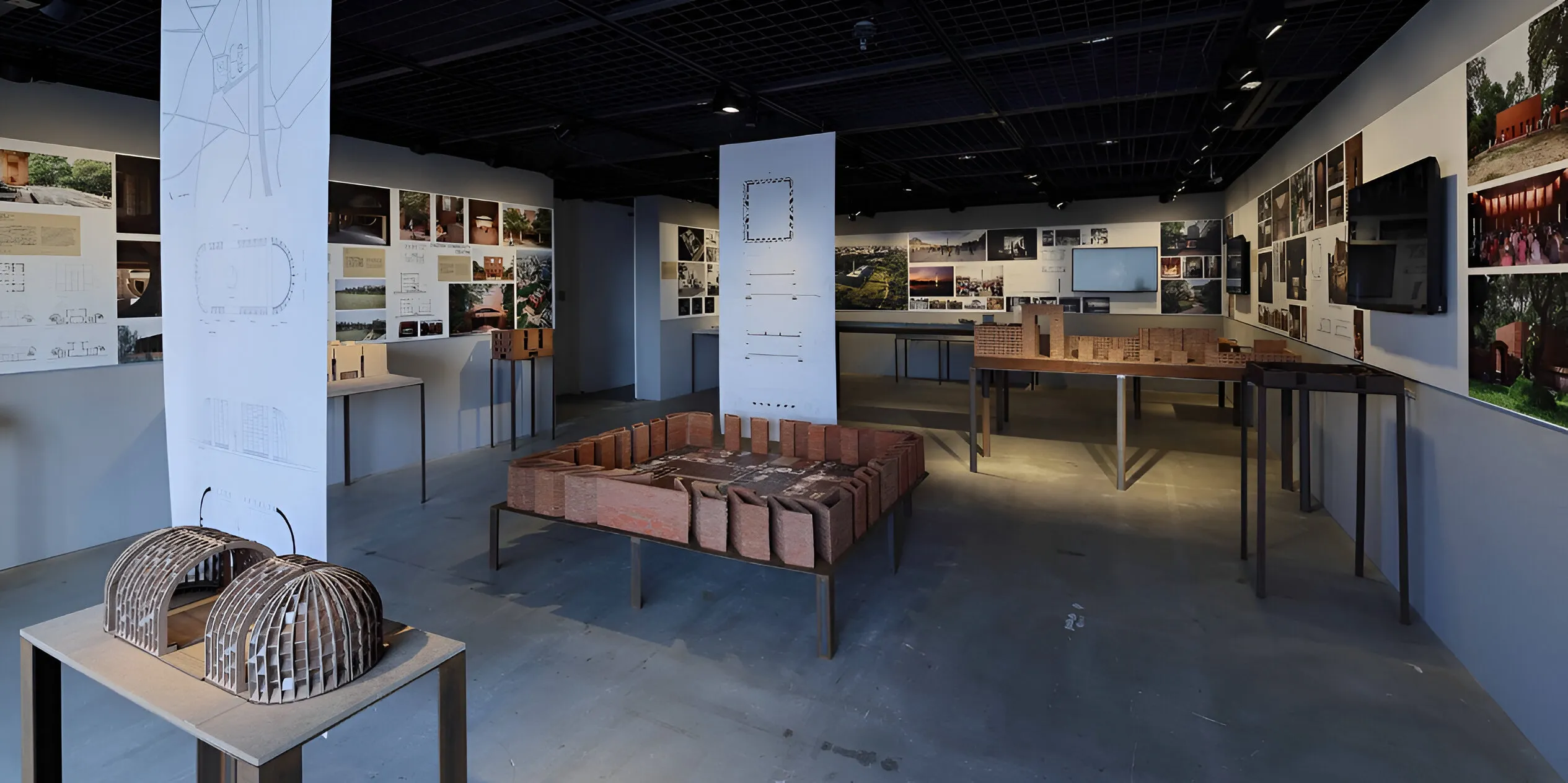
On the upper levels, the exhibition shifts its displays to Dhaka’s dense urban neighborhoods, highlighting MTA’s civic and community-driven architecture, from community centers to mosques to public gathering spaces. These works reveal how the studio uses geometric design principles, locally crafted brick construction, and thoughtful ventilation strategies to shape naturally cool, open environments that reduce the need for mechanical systems. Together, these displays present a compelling case for why climate-adaptive design is not just an architectural choice but an urban necessity.
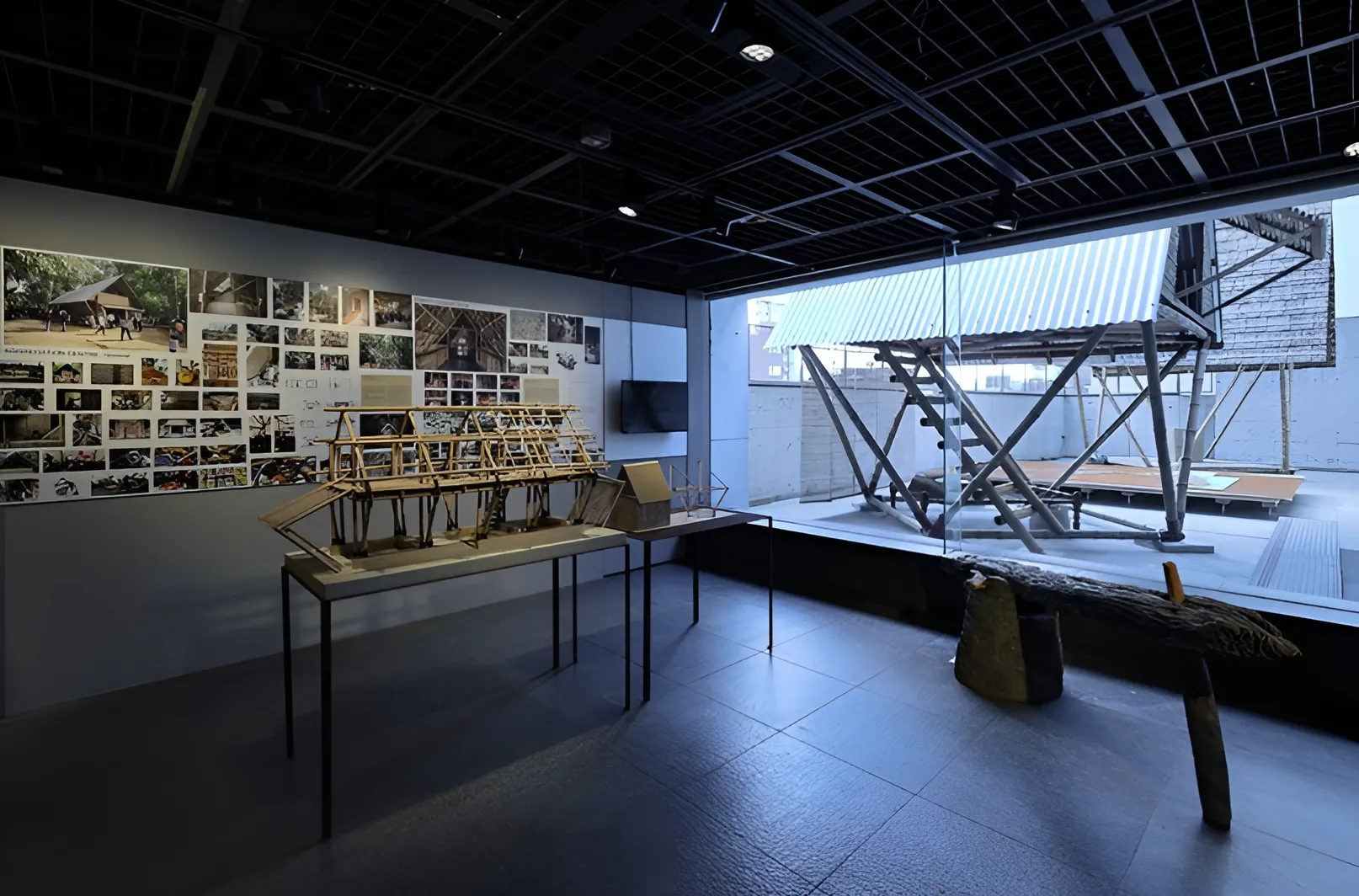
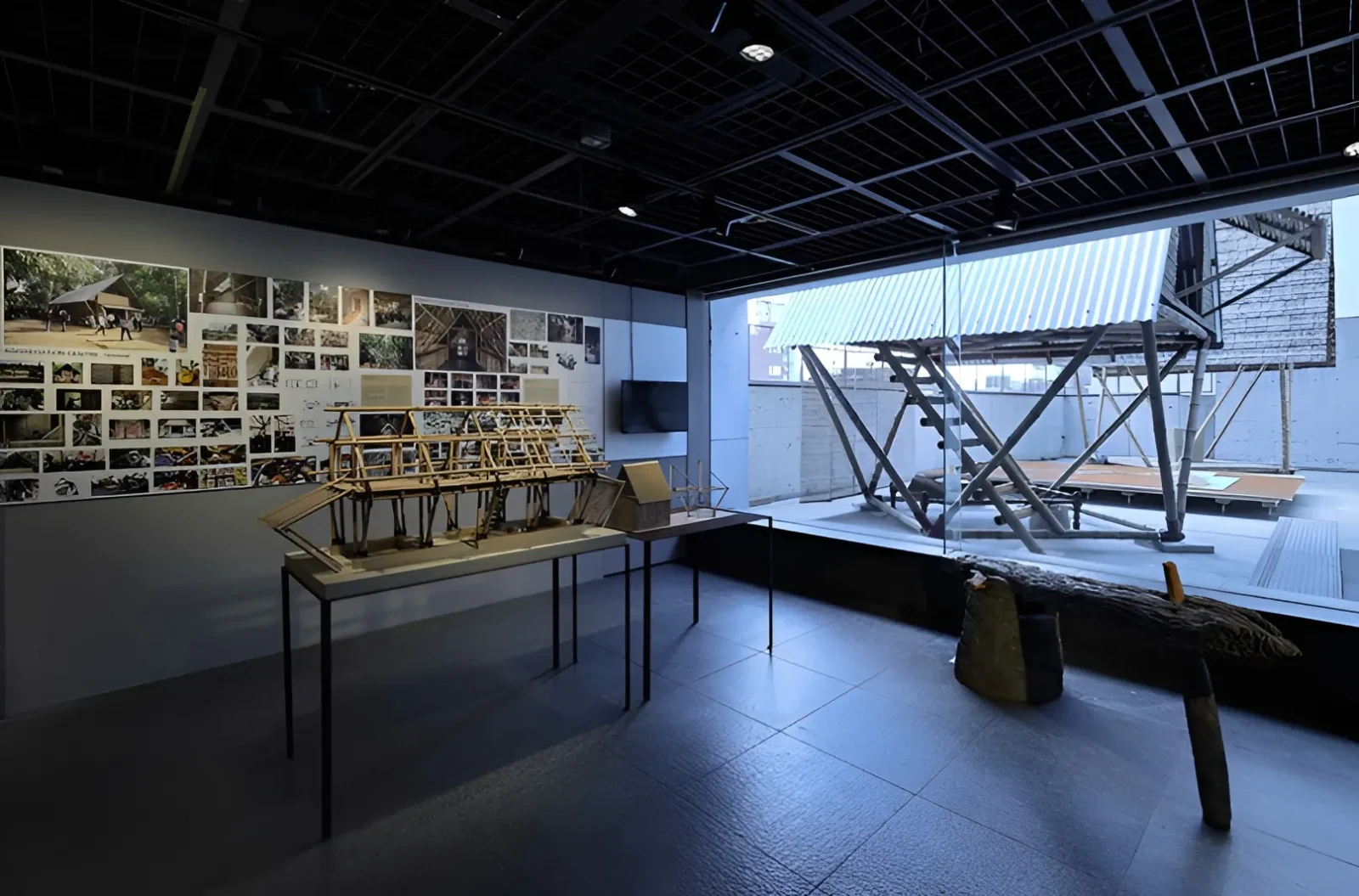
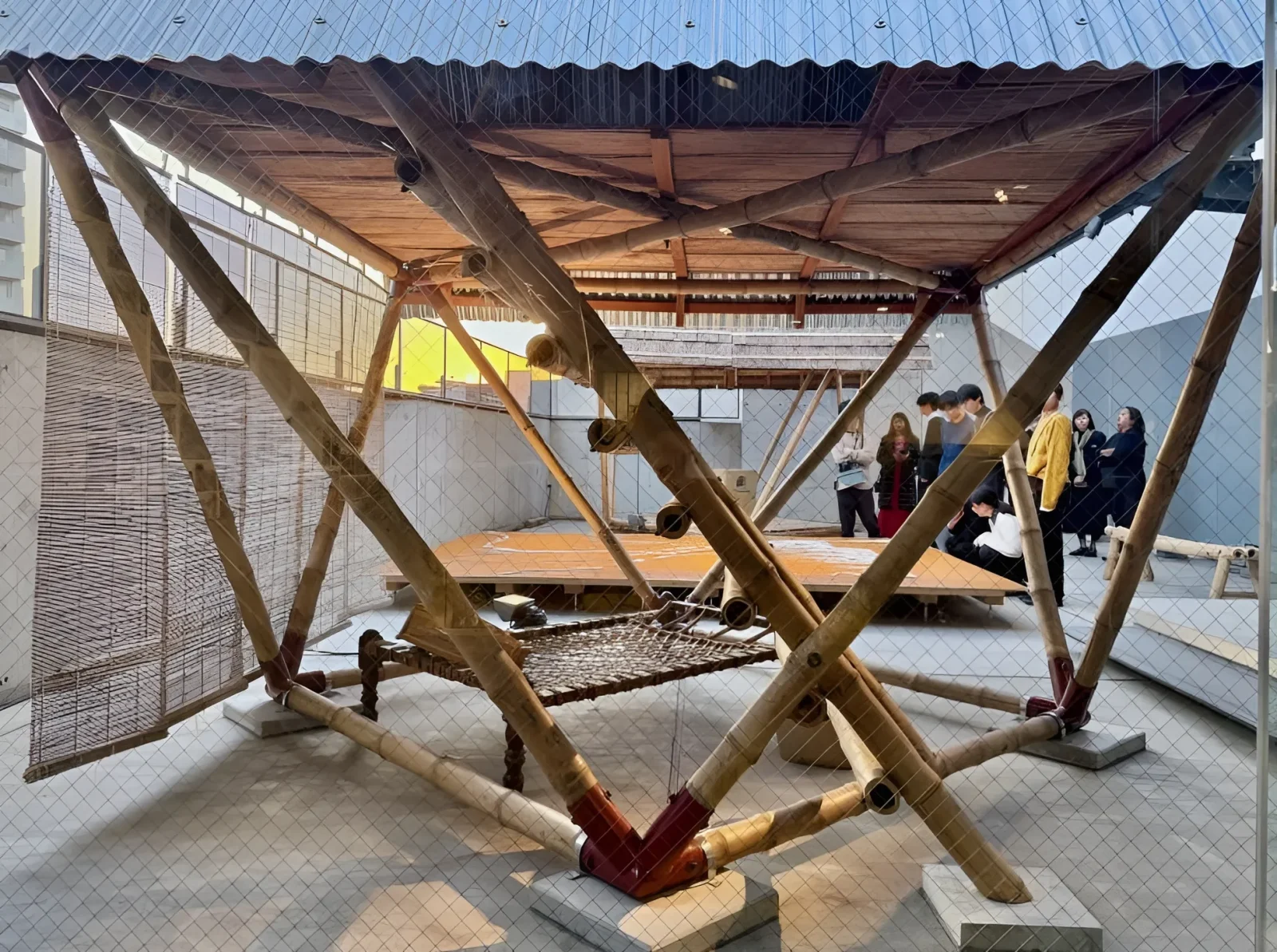
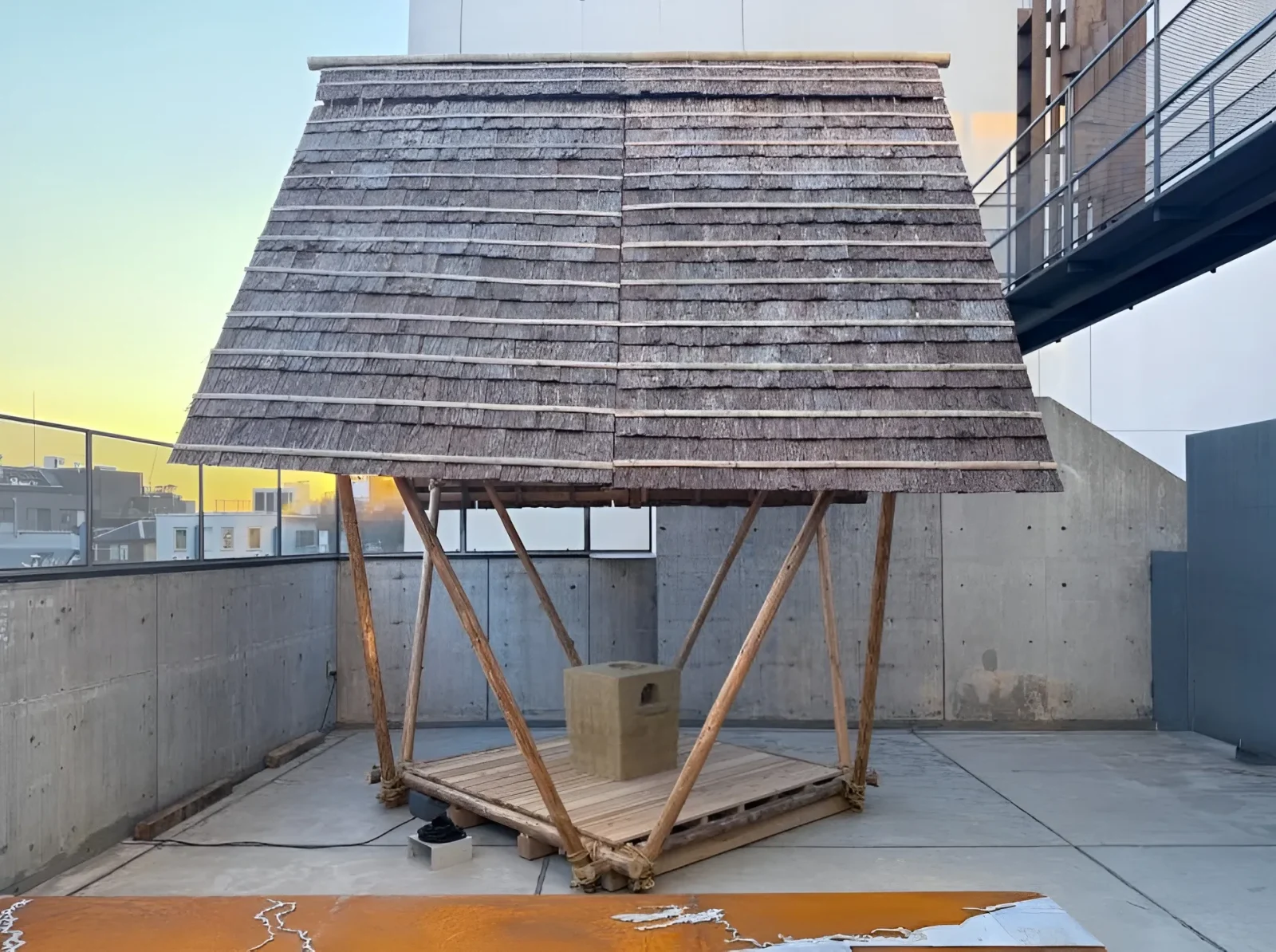
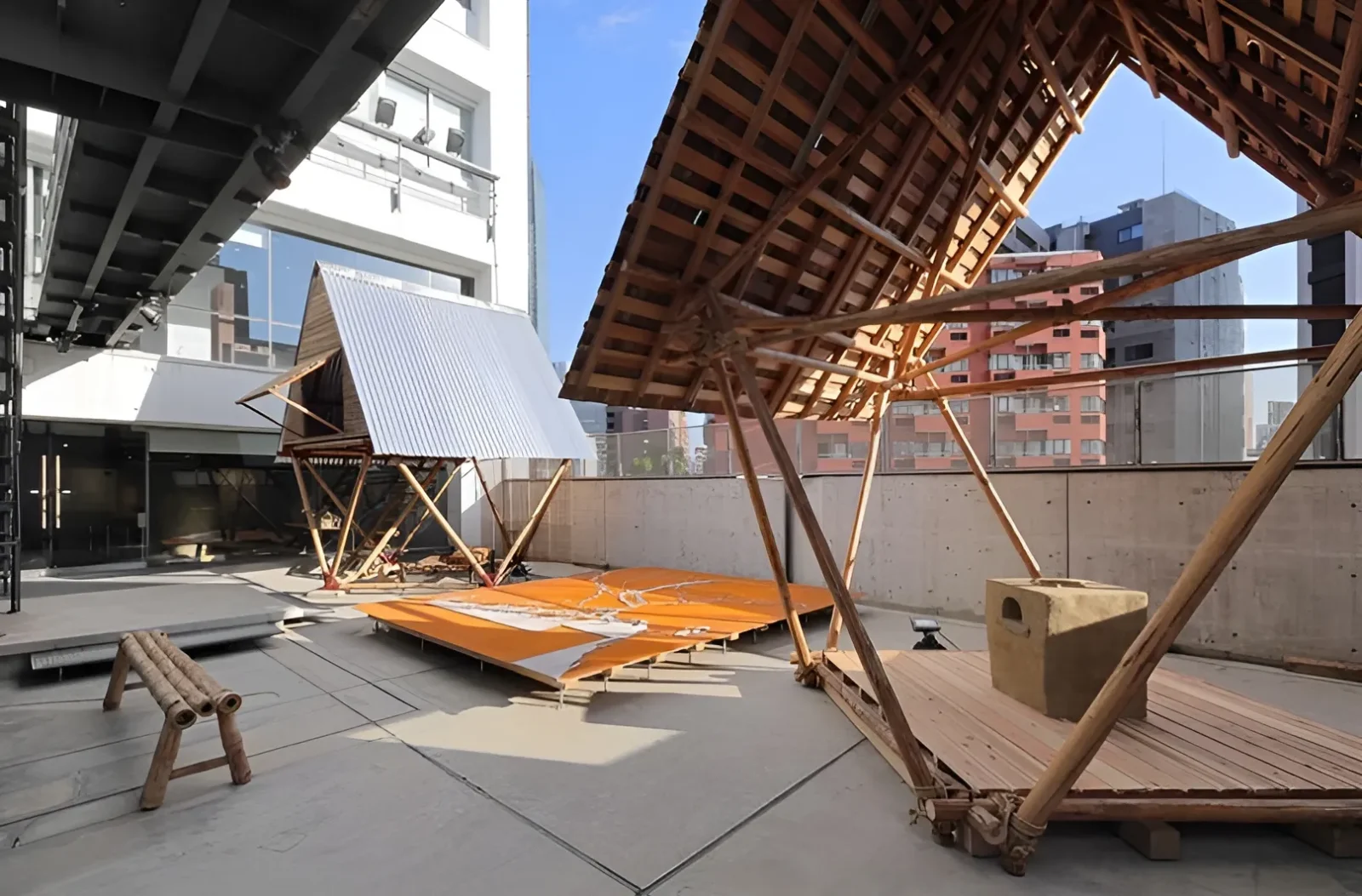
In the outdoor courtyards, the exhibition features full-scale installations, including most notably MTA’s acclaimed Khudi Bari, the studio’s seminal flood-resilient housing prototype. The prototype has been installed alongside the newly developed Japan-specific version built with architect Kazuya Morita and students from Kyoto Prefectural University. Previously showcased in Munich and Lisbon, this edition focuses on the contrast between rural, urban, and cross-cultural architectural responses, allowing visitors to experience these ideas not just visually but also spatially.
Khudi Bari by Marina Tabassum Architects
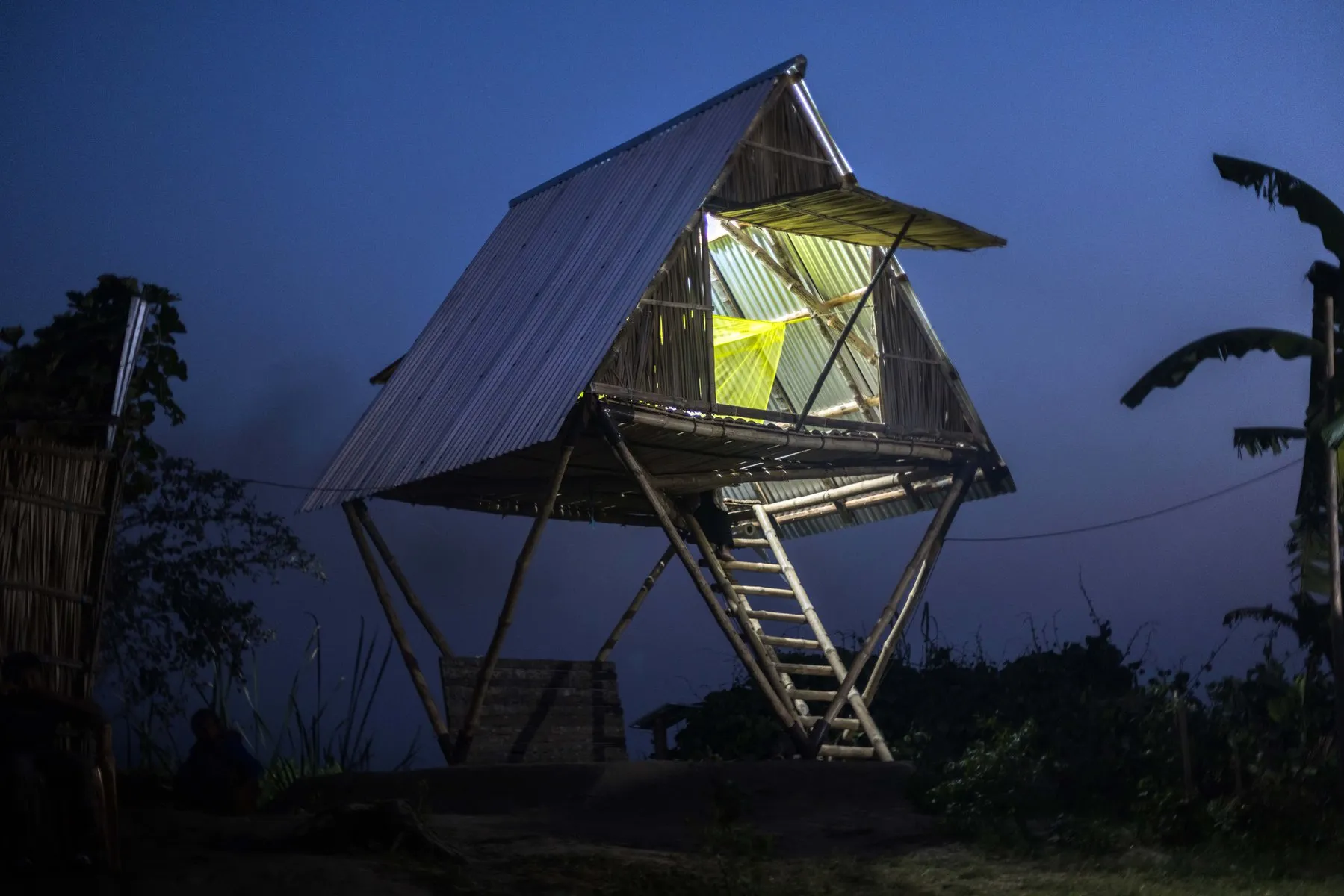
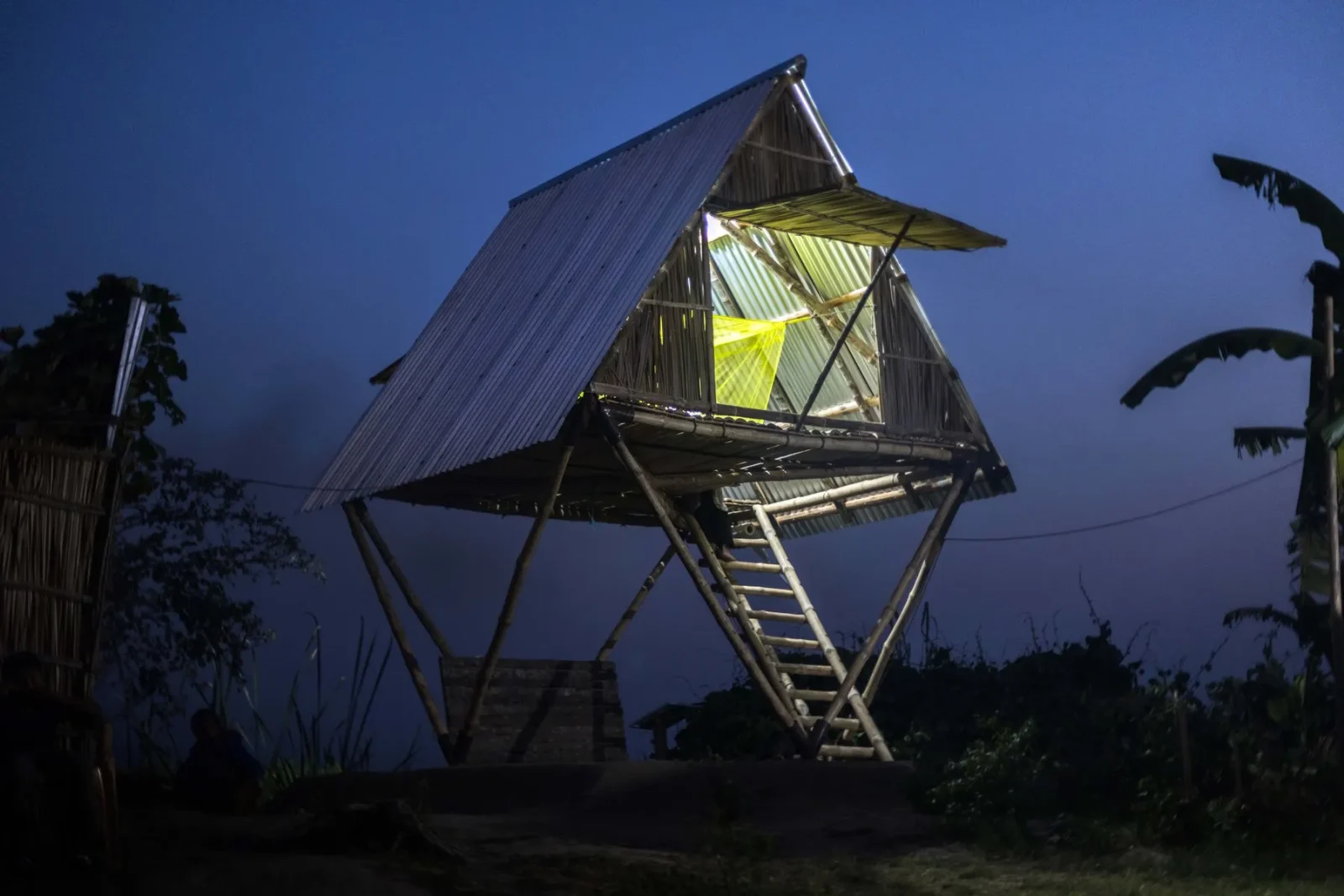
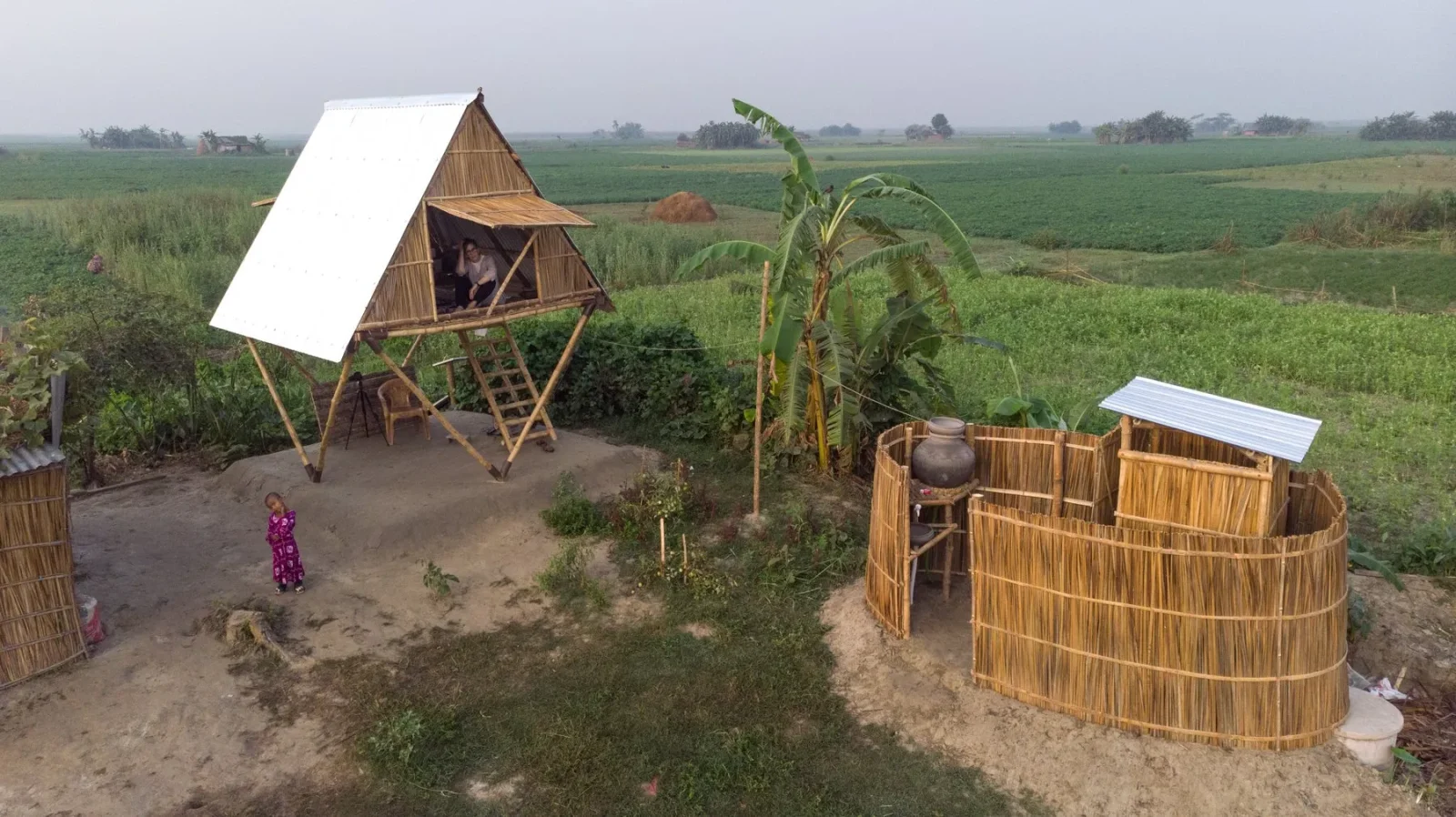
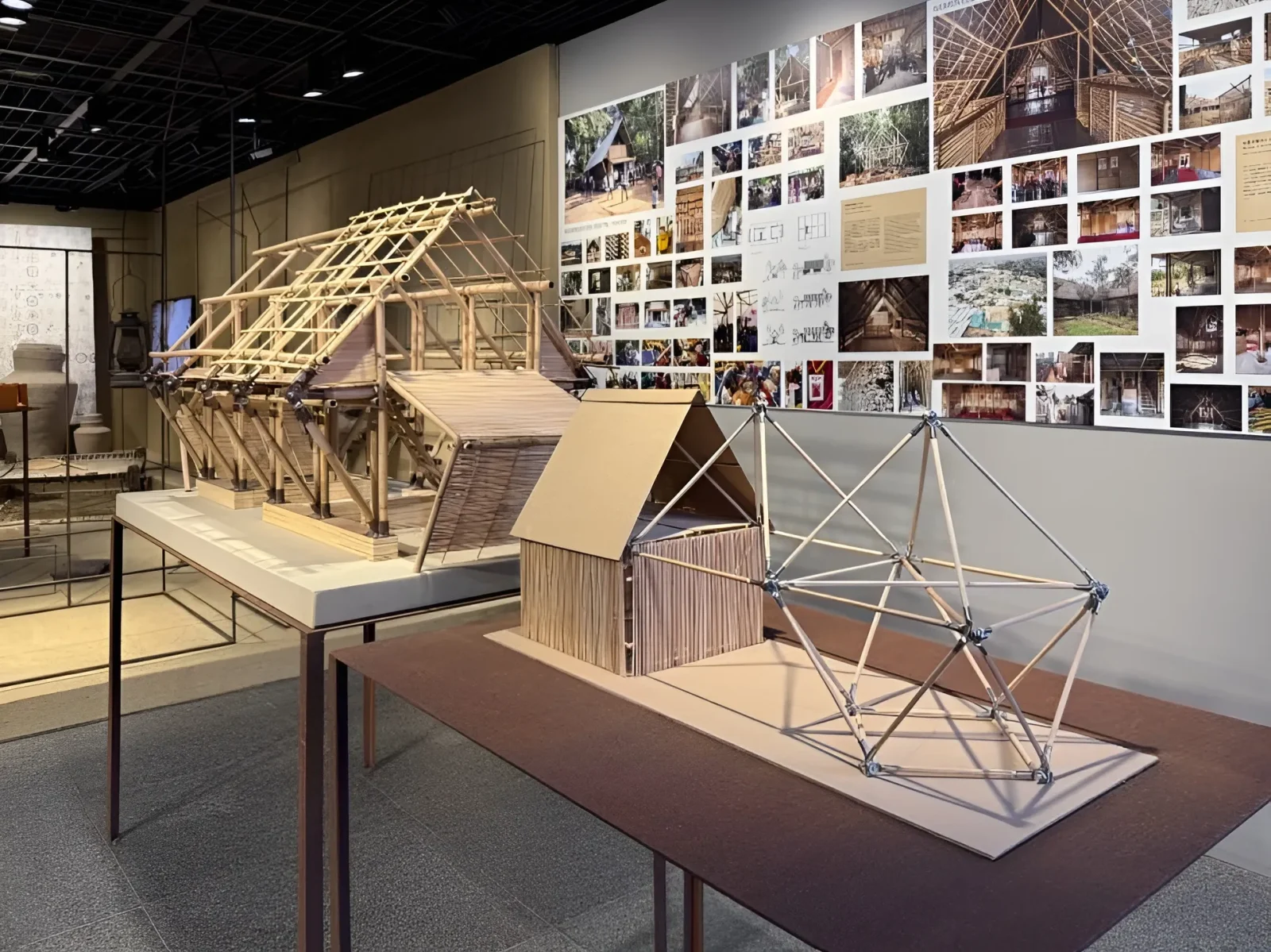
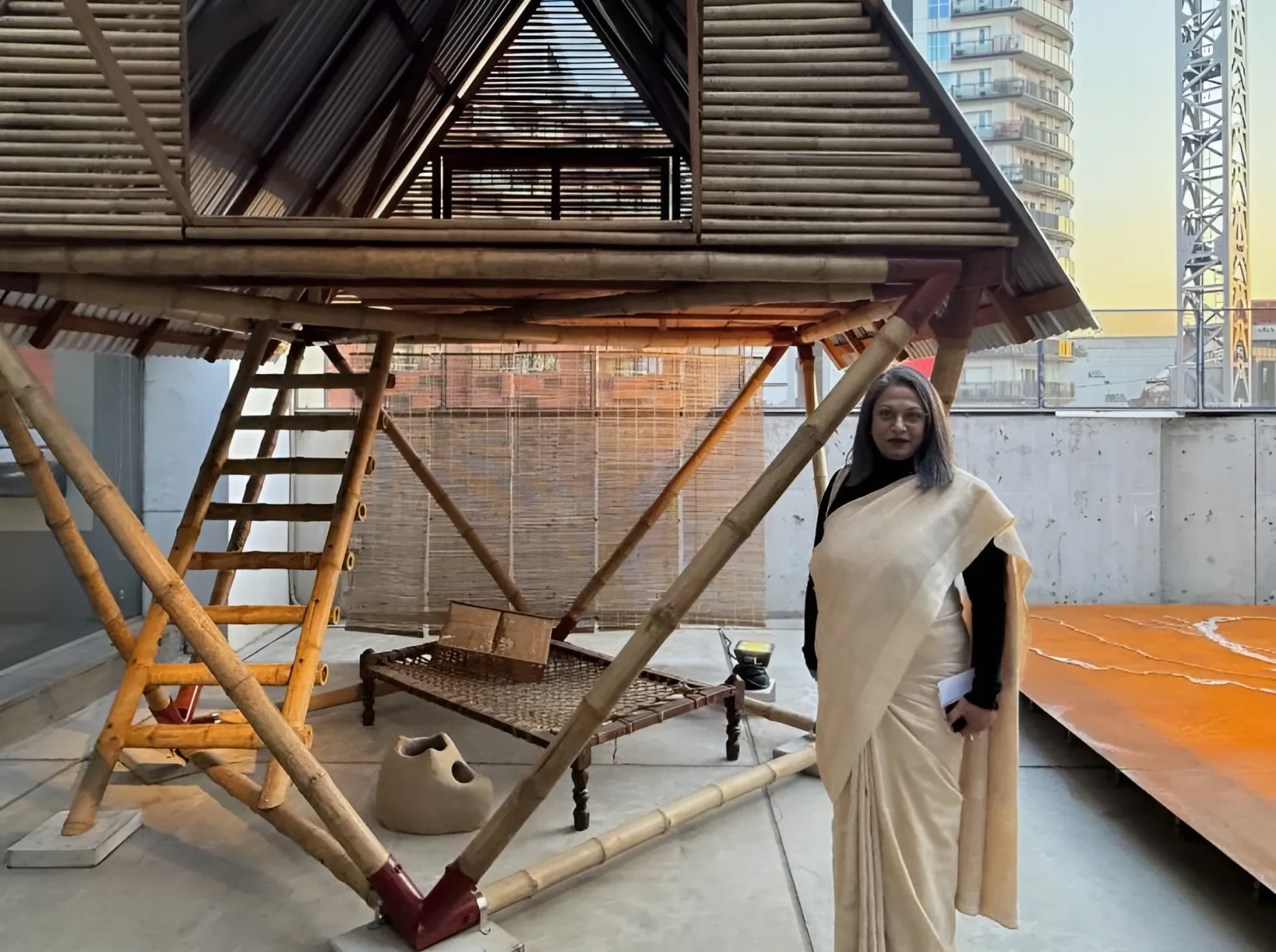
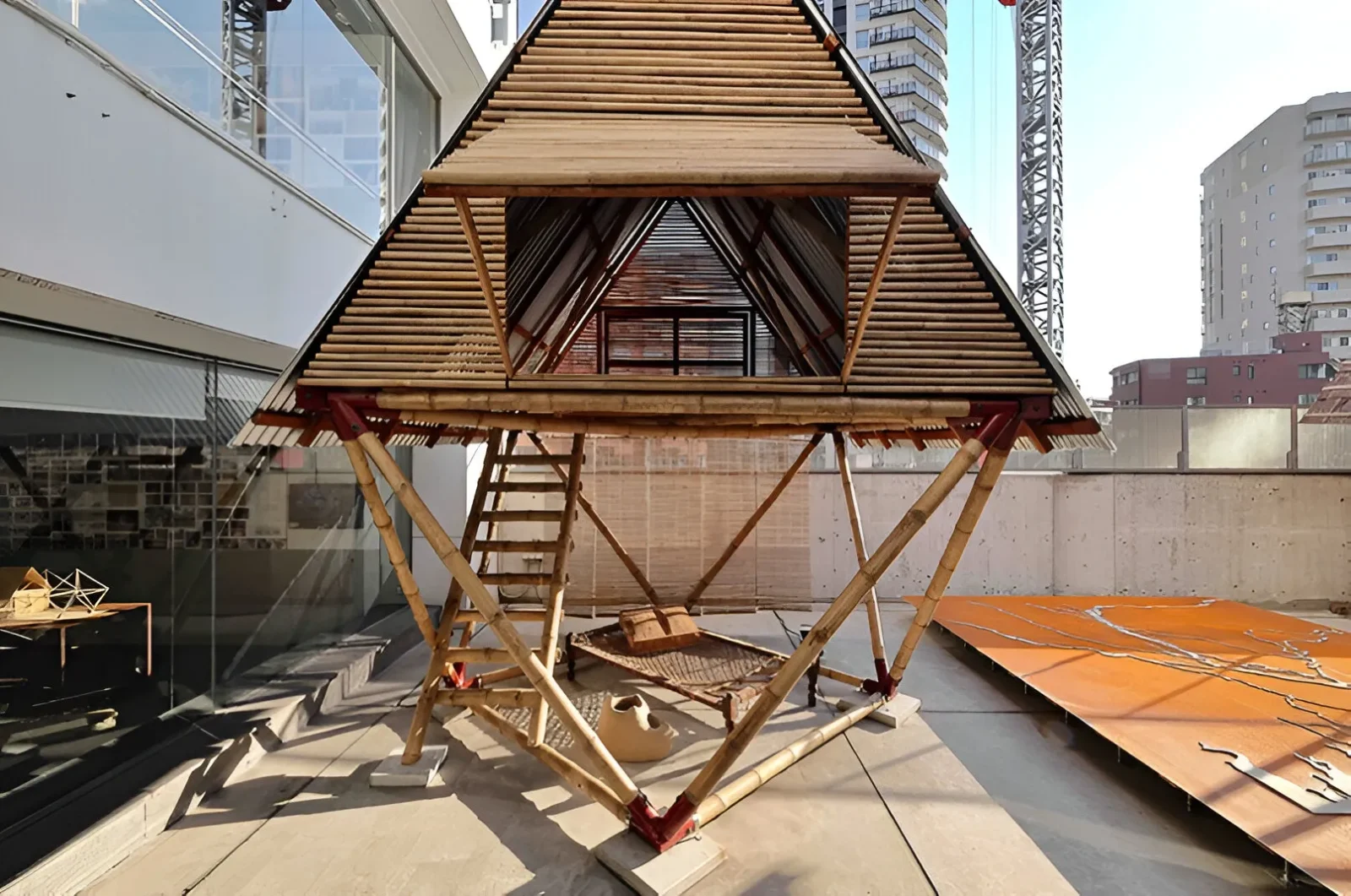
At the heart of the exhibition is Khudi Bari, MTA’s acclaimed flood-resilient housing prototype, renowned for its compact, easily assembled shelter designed for communities displaced by flooding and forced migration in Bangladesh. Developed during the 2020 lockdown as a housing structure for landless families living along the shifting sandbanks of the Meghna River, Khudi Bari stands as a powerful example of how thoughtful design can restore dignity and resilience to vulnerable communities.
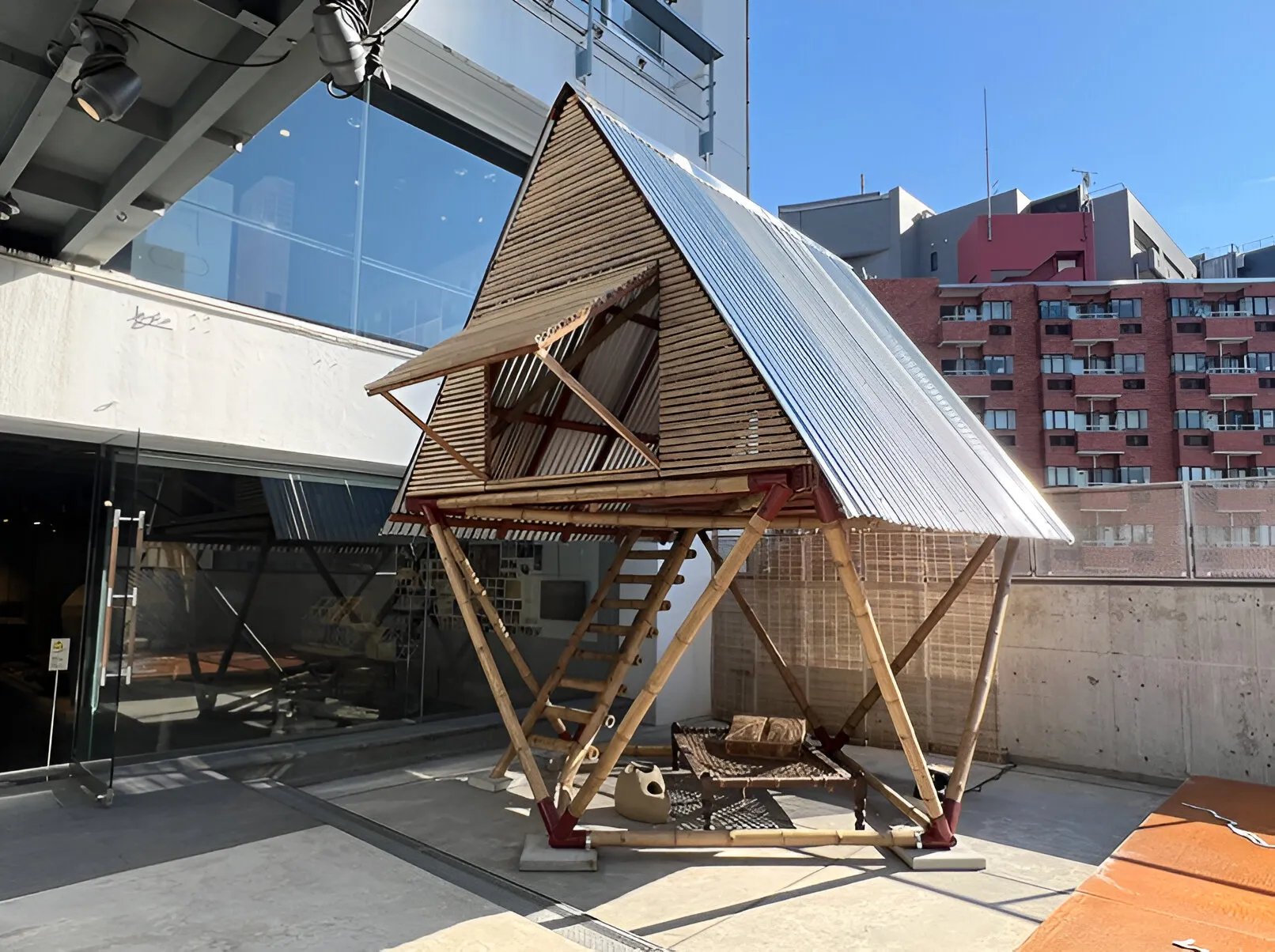
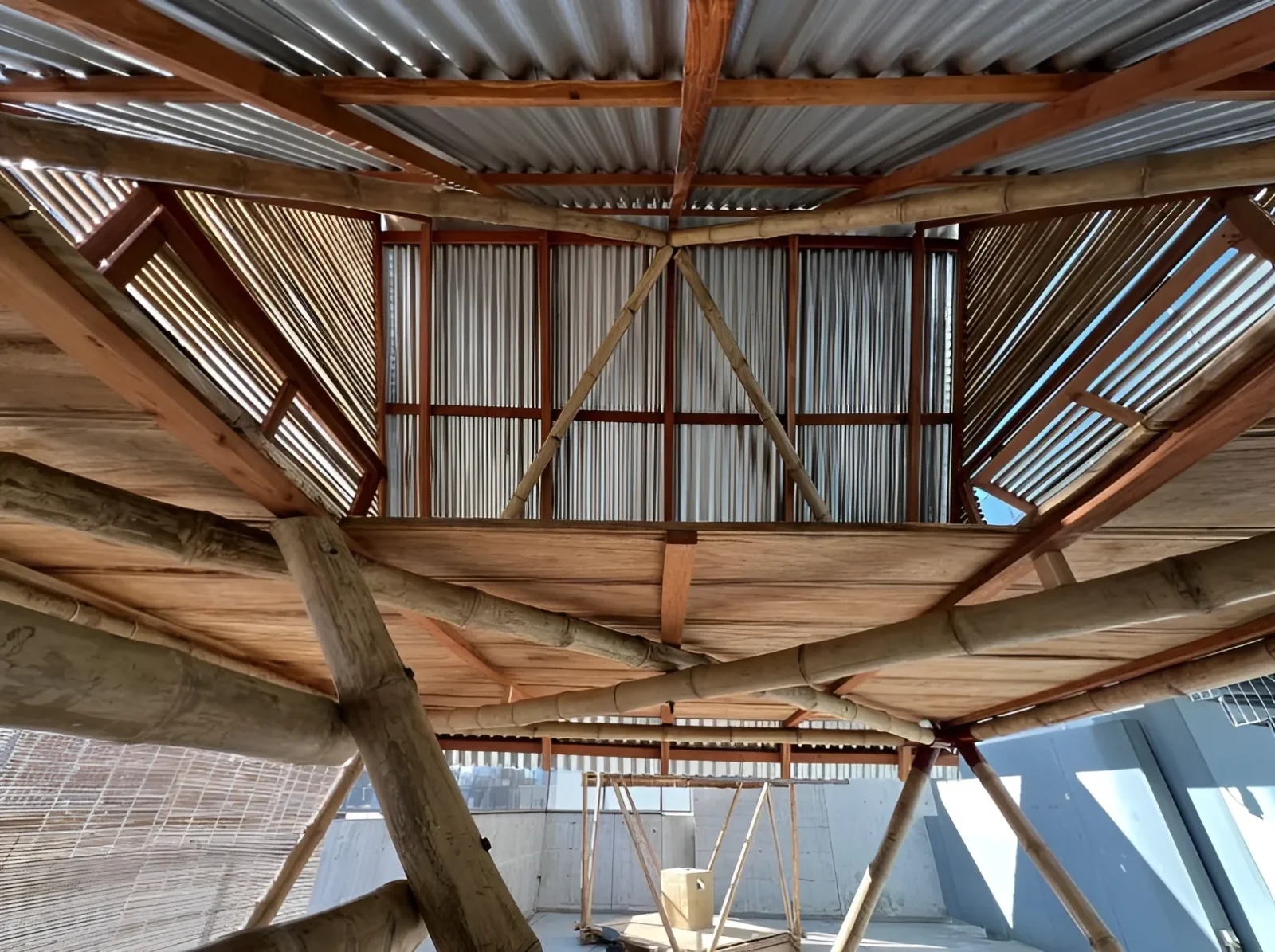
Khudi Bari is a lightweight, adaptable space-frame structure made from structural bamboo and steel joints, allowing it to be easily assembled, disassembled, and transported. Its two-level layout maximizes space and offers safe refuge during floods, while the use of locally sourced materials keeps both costs and environmental impact low. Now implemented through the Foundation for Architecture and Community Equity (FACE) across Bangladesh’s most challenging regions, and research funding from the Swiss Agency for Development and Cooperation (SDC).
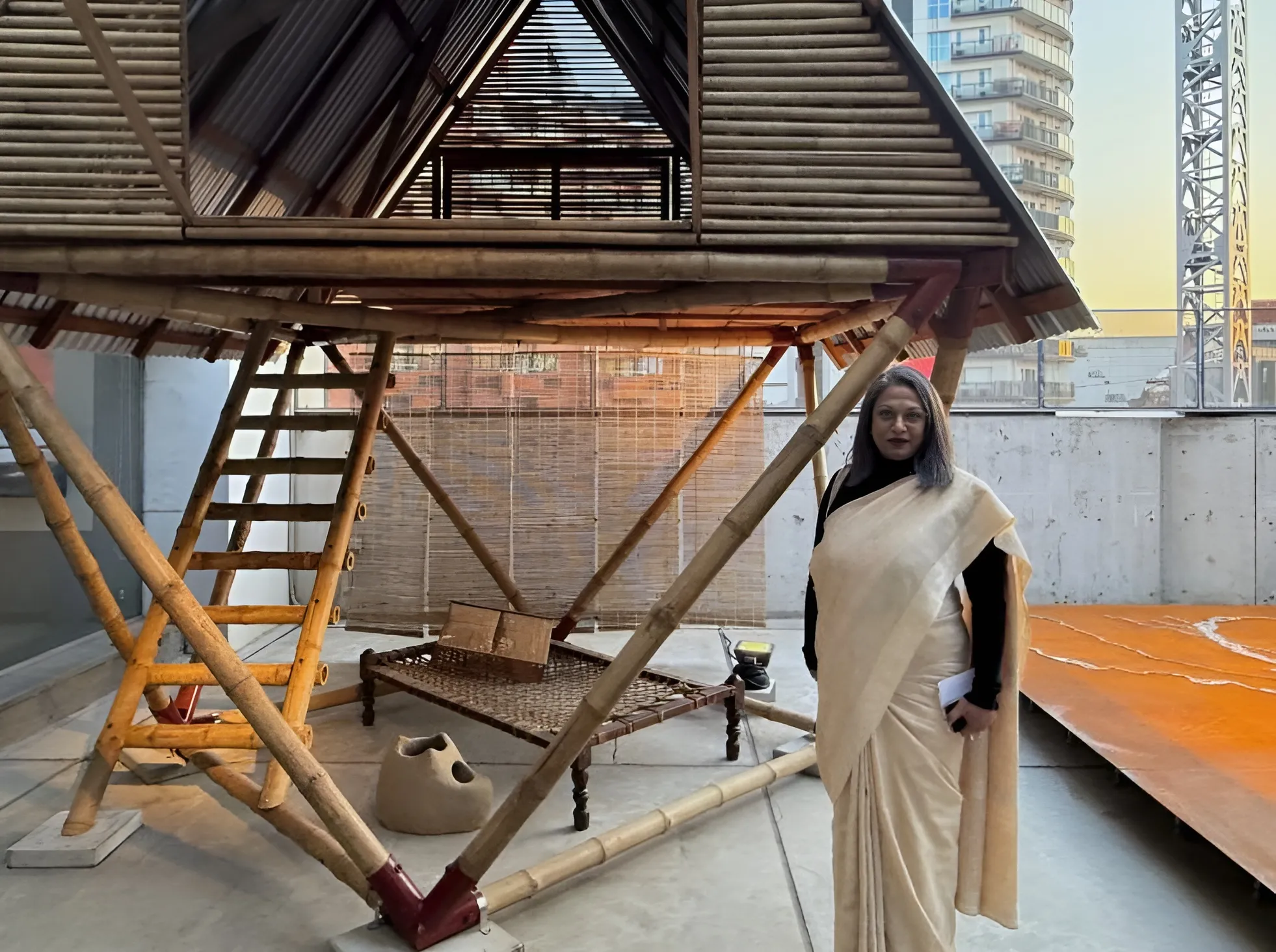
The “People, Place, Poiesis” exhibit showcases MTA’s belief that architecture grows from human experience, local culture, and the craft of making. Rooted in Bangladesh’s landscapes and traditions, this philosophy celebrates spaces shaped by communities and deeply informed by their environment. Through the exhibition, these ideas are shared with Japanese audiences, revealing connections that bridge cultures and highlight our shared sense of place.
People Place Poiesis Exhibition Details
Project name: People Place Poiesis Exhibition
Location: TOTO GALLERY.MA, Tokyo
Architect: Marina Tabassum Architects (MTA)
Year: 20th November 2025 – 15th February 2026
Photography: TOTO GALLERY.MA
Explore Courses
.jpg "Ondrej Chybik - Rethinking Architecture")