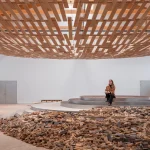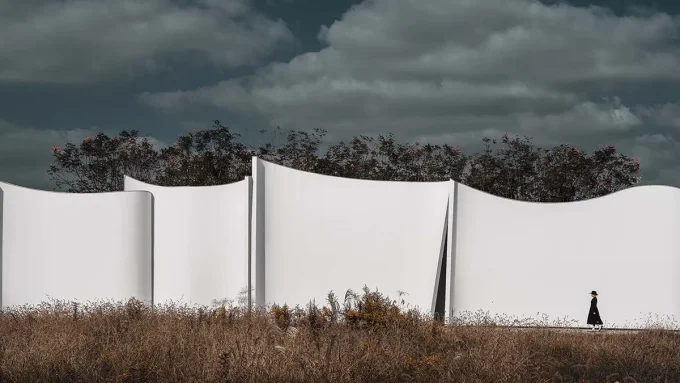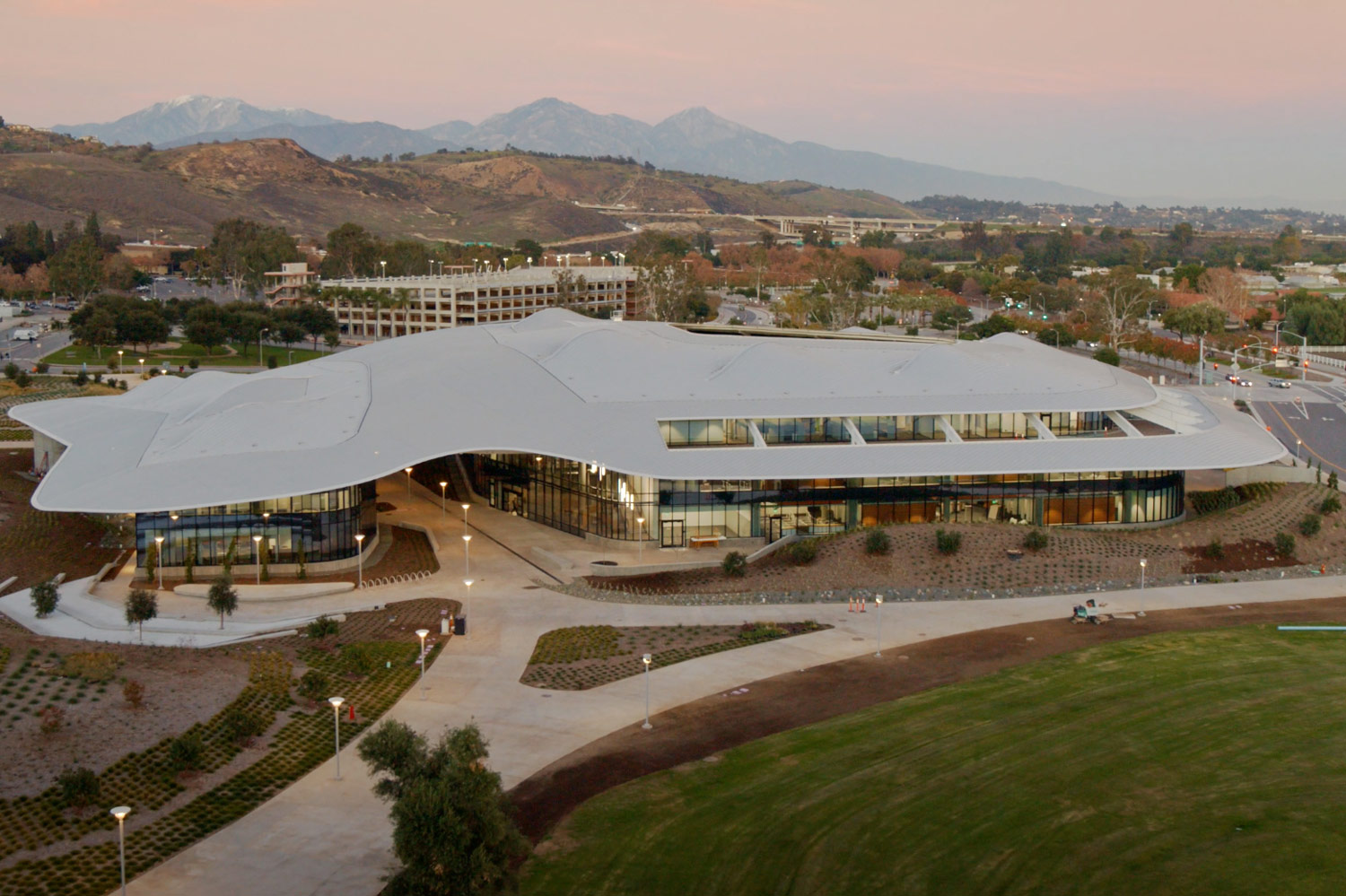


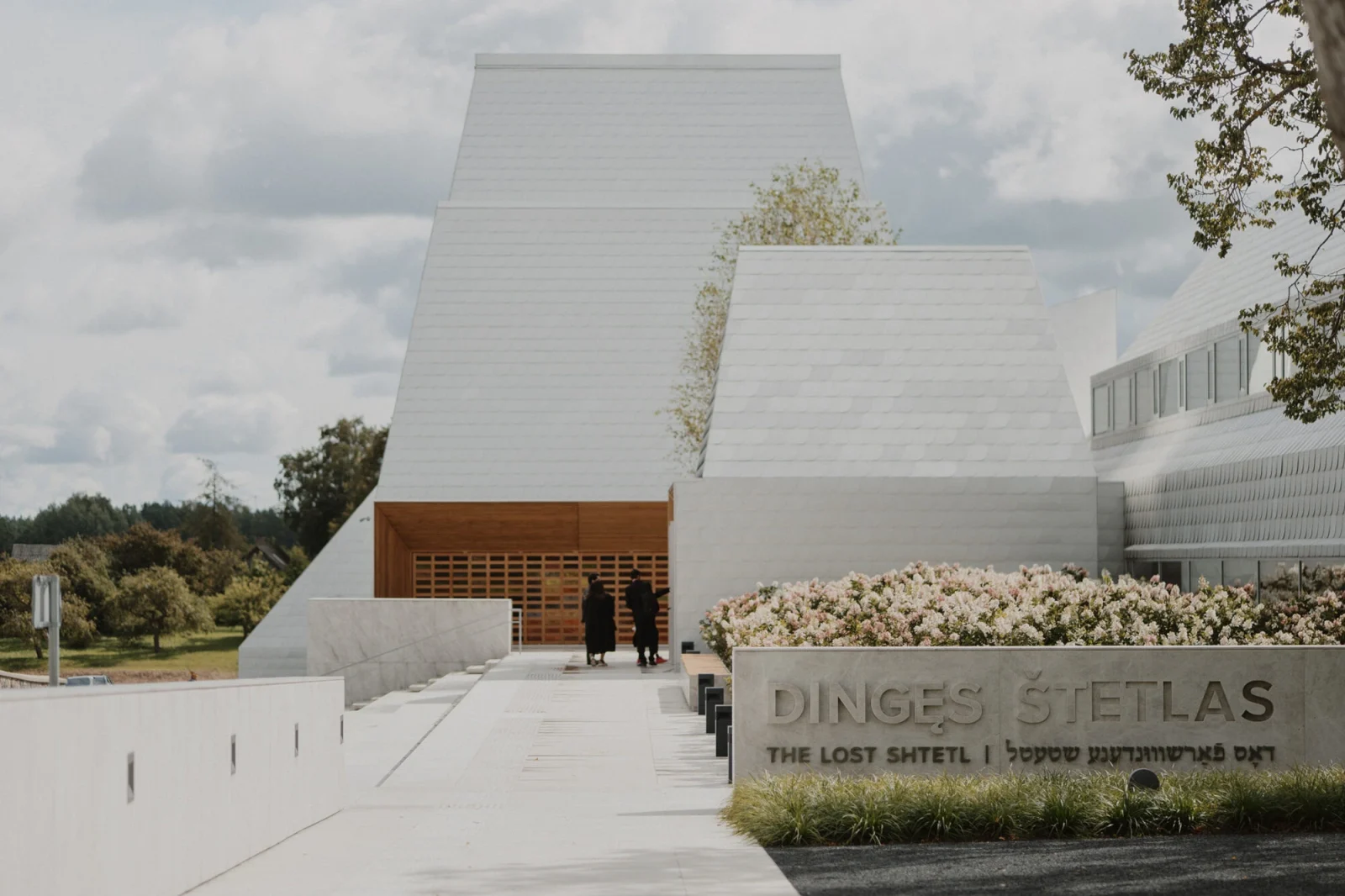
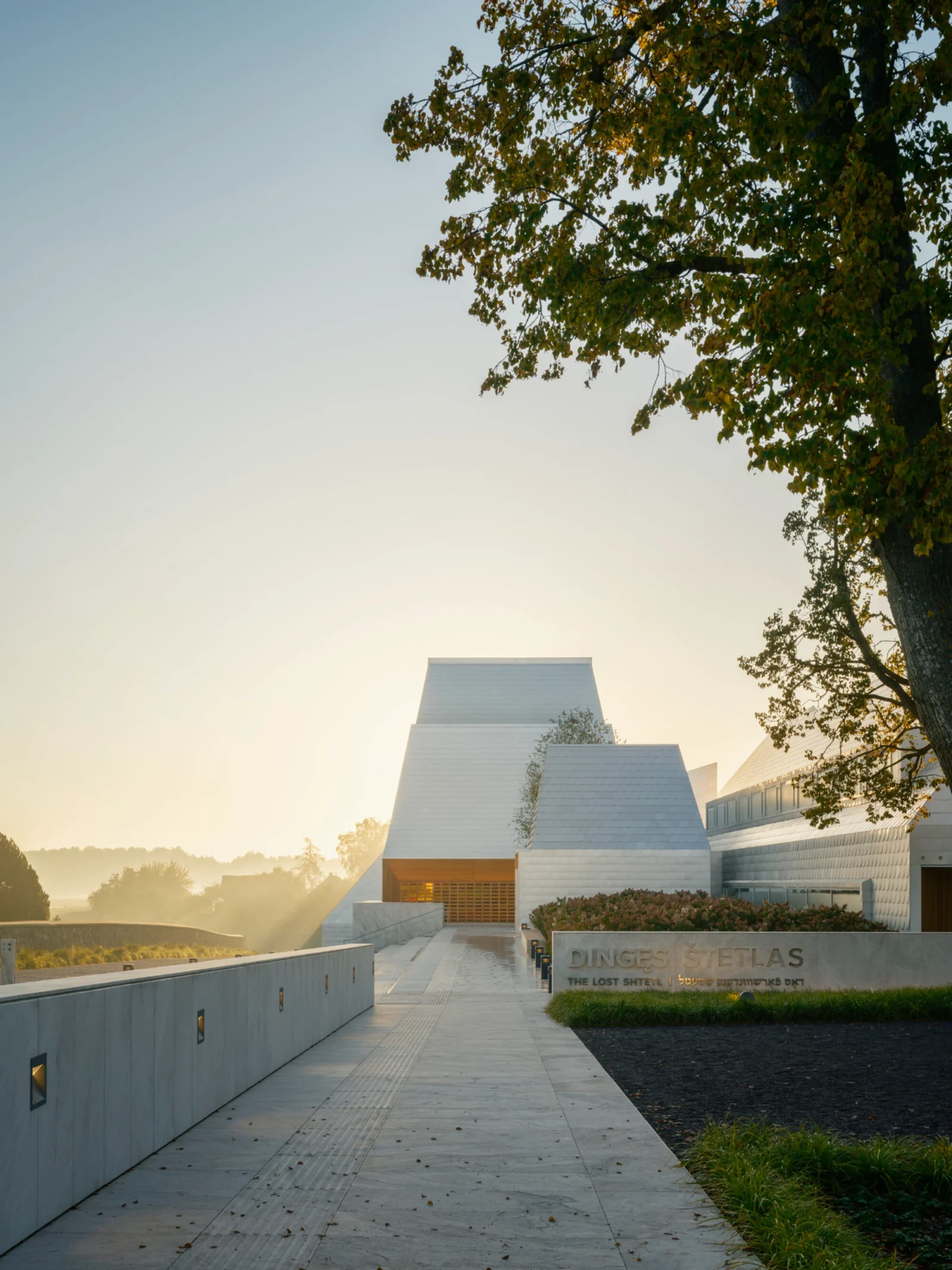
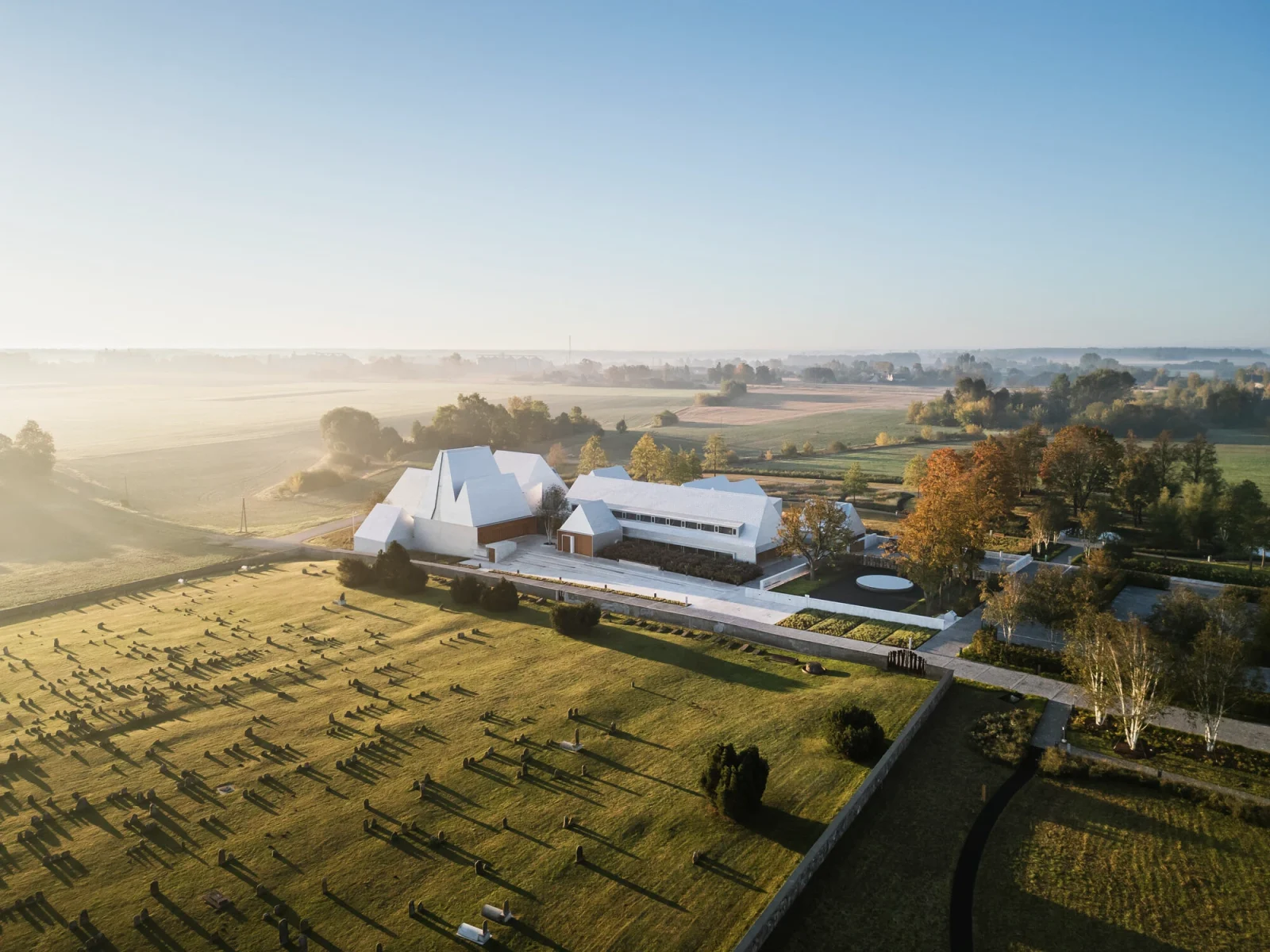
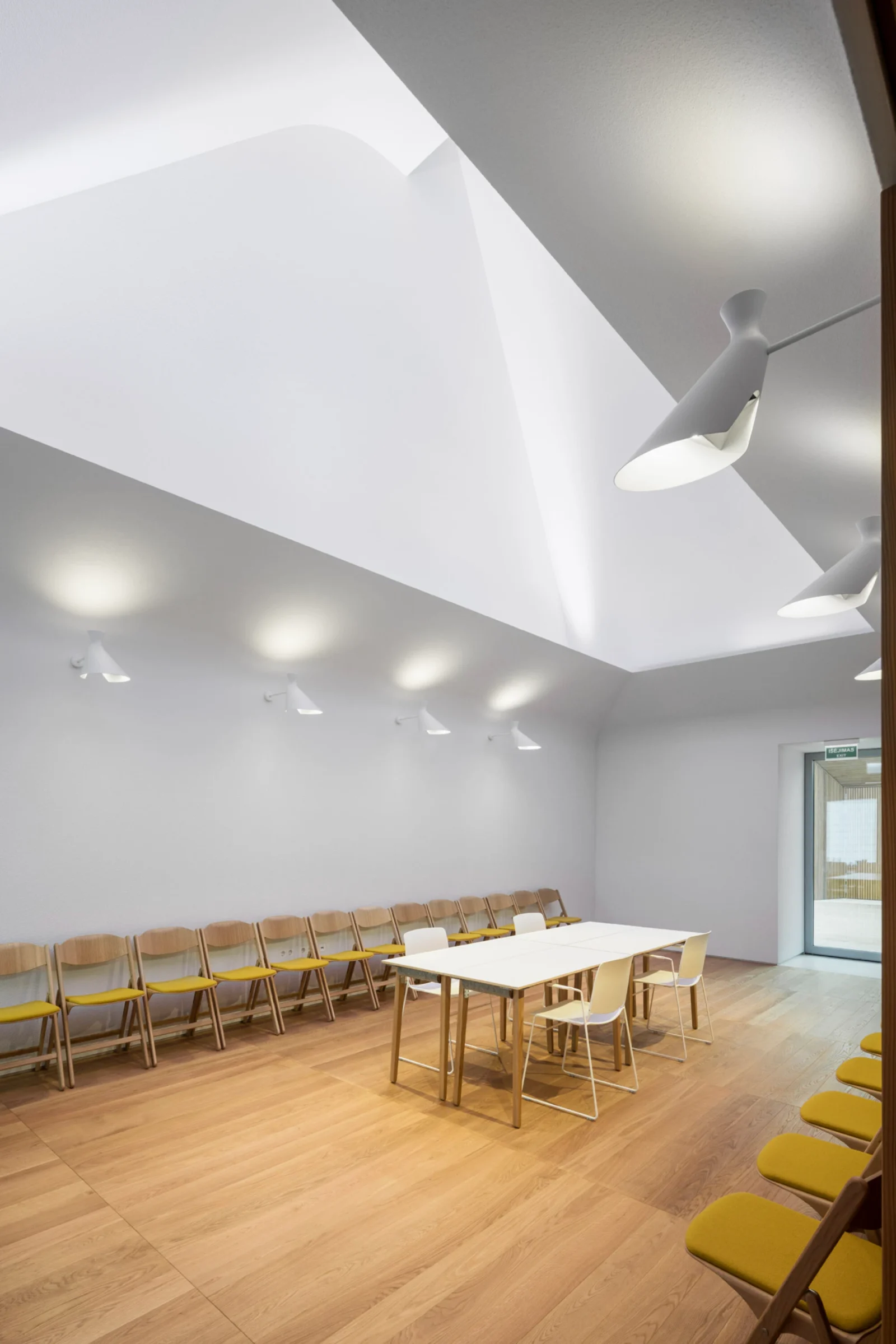
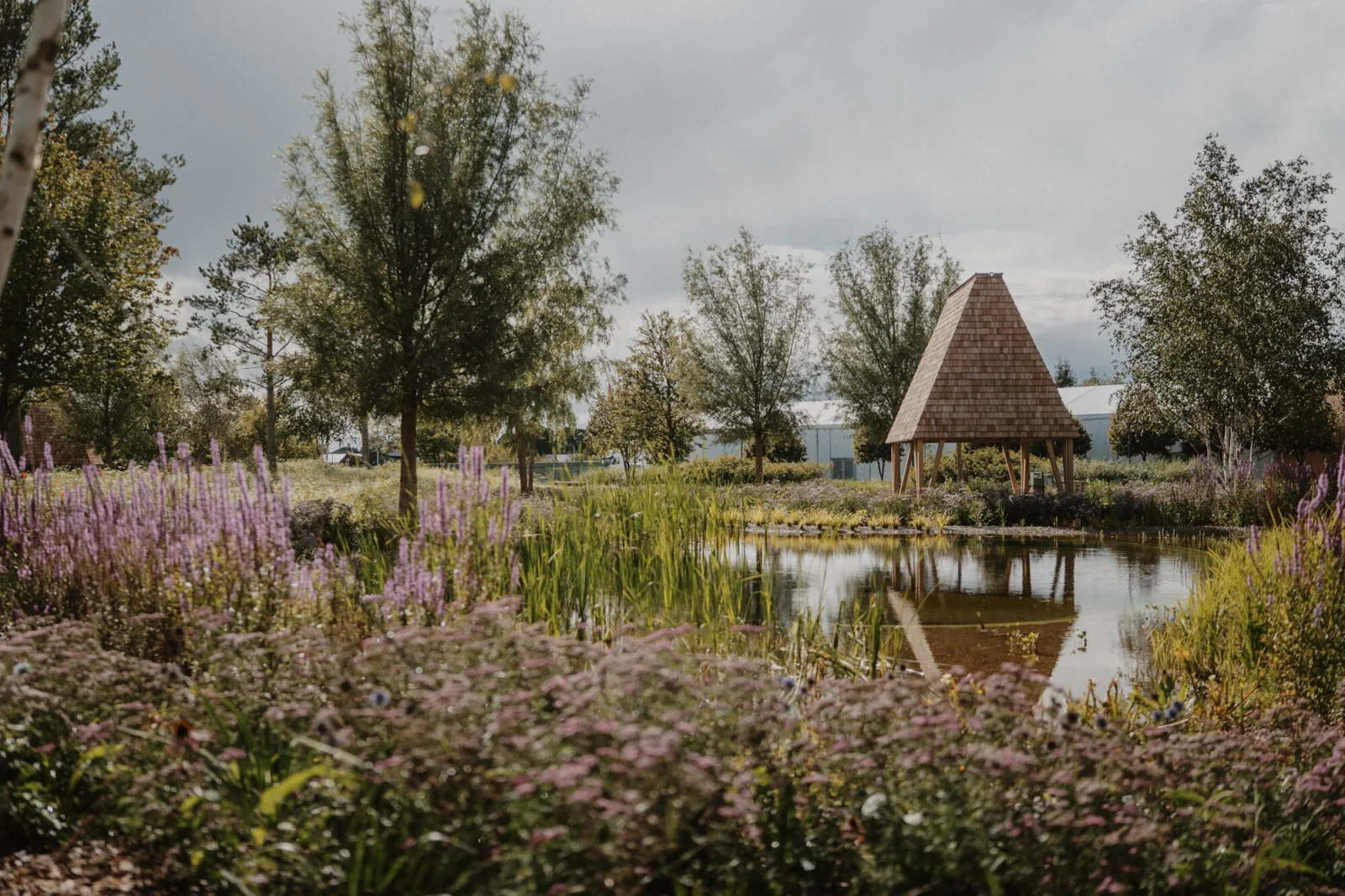
The Lost Shtetl Jewish Museum in Šeduva, Lithuania, is a contemporary memorial and cultural institution designed by Lahdelma & Mahlamäki Architects, focused on preserving the memory of Jewish shtetl life once present across the region. It is shaped around the history of Šeduva’s Jewish community, which was destroyed during the Holocaust in 1941 when hundreds of residents were killed in nearby forests. The project also reflects on everyday culture, social life, and heritage that disappeared with it.
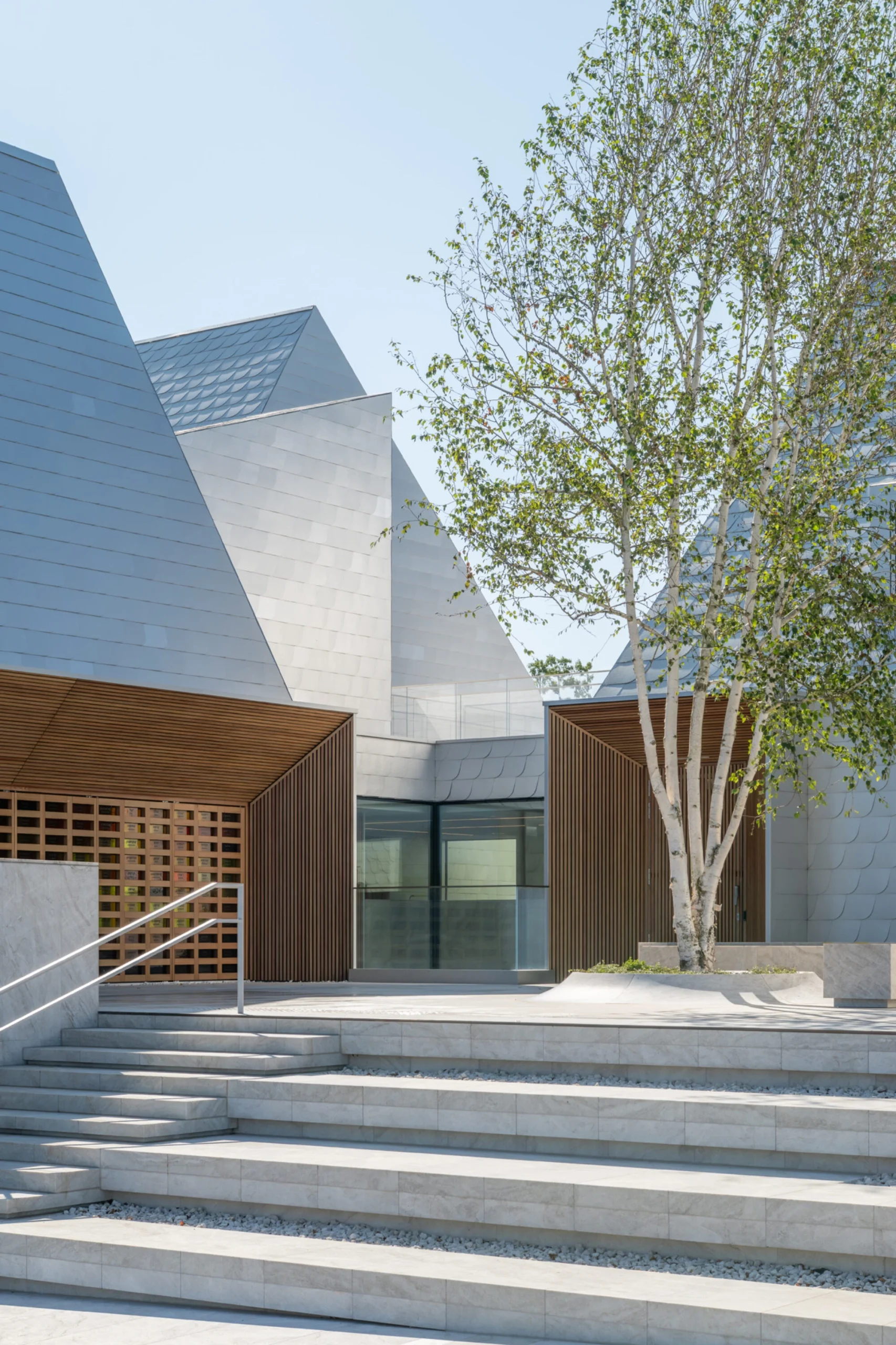
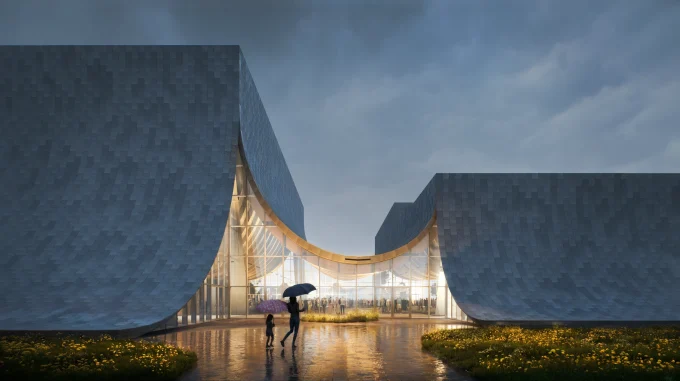
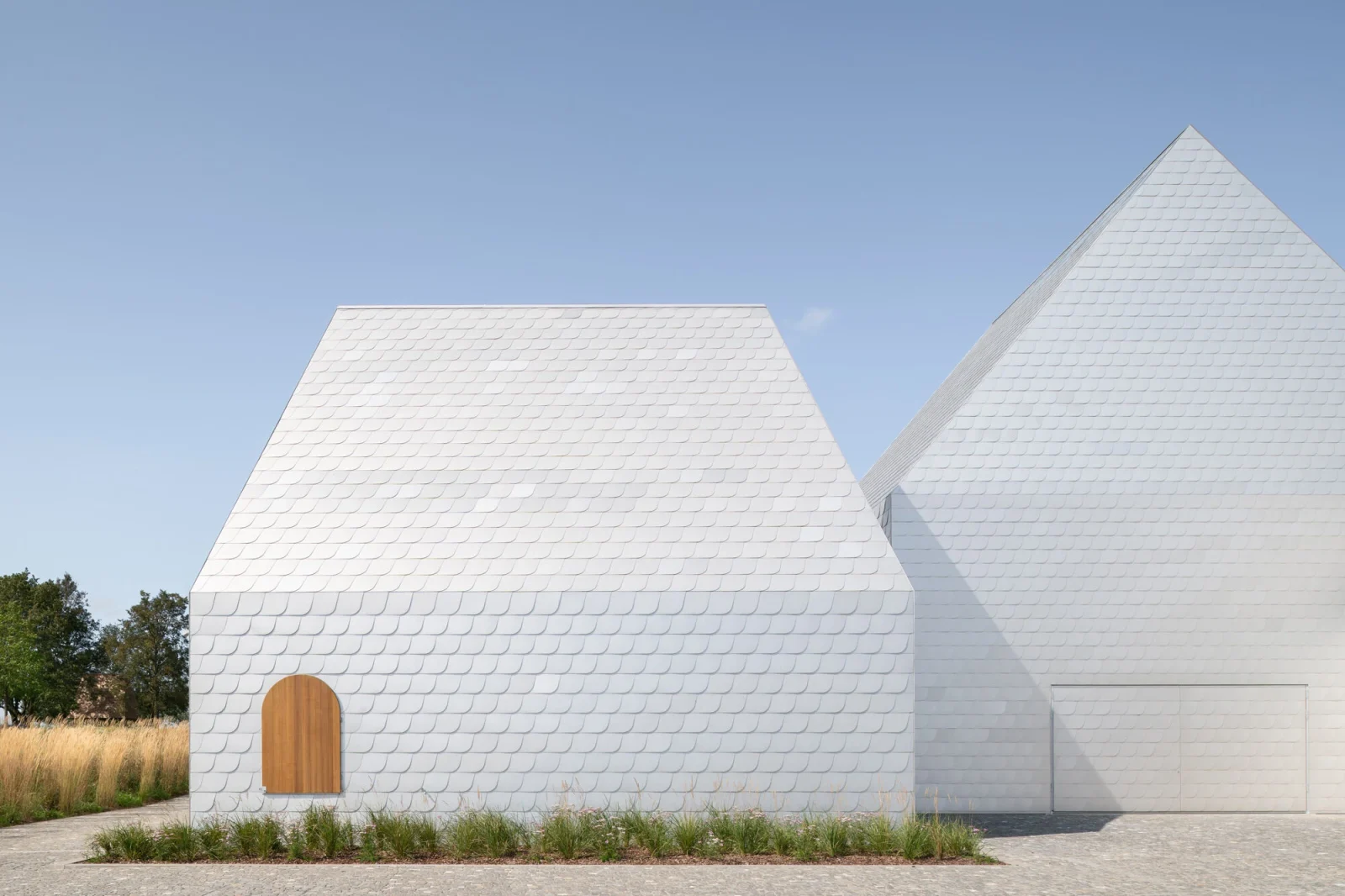
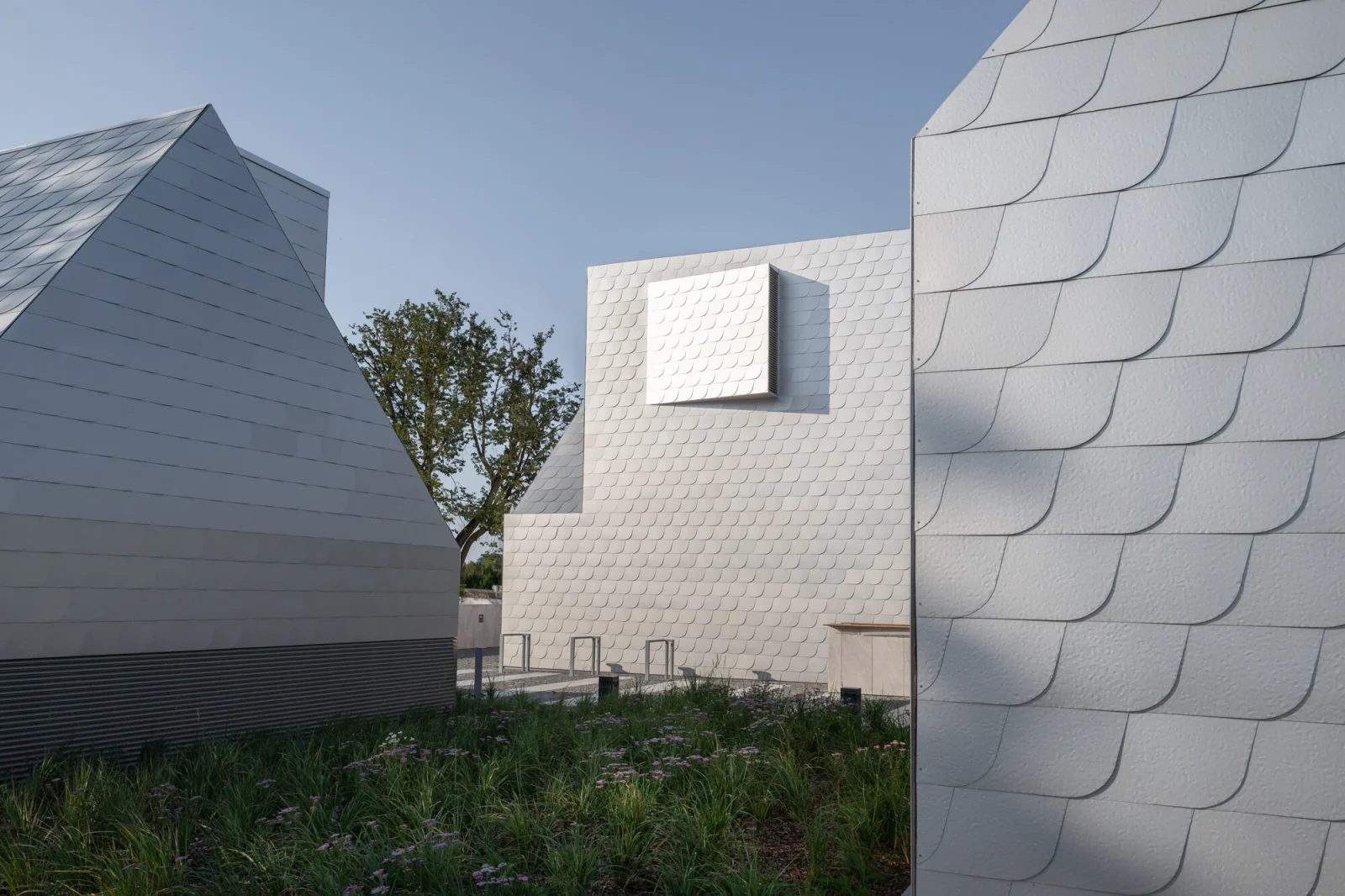
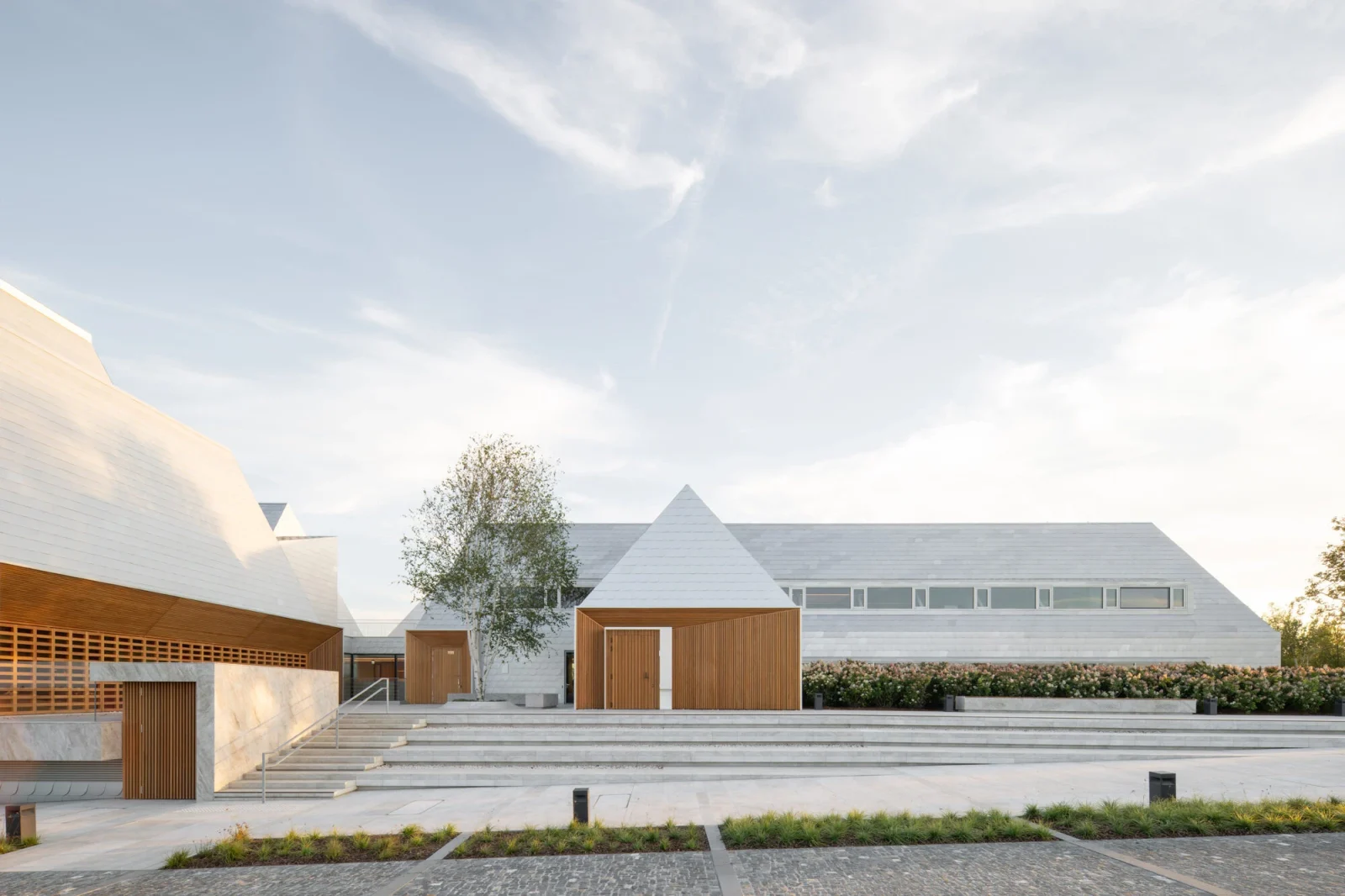
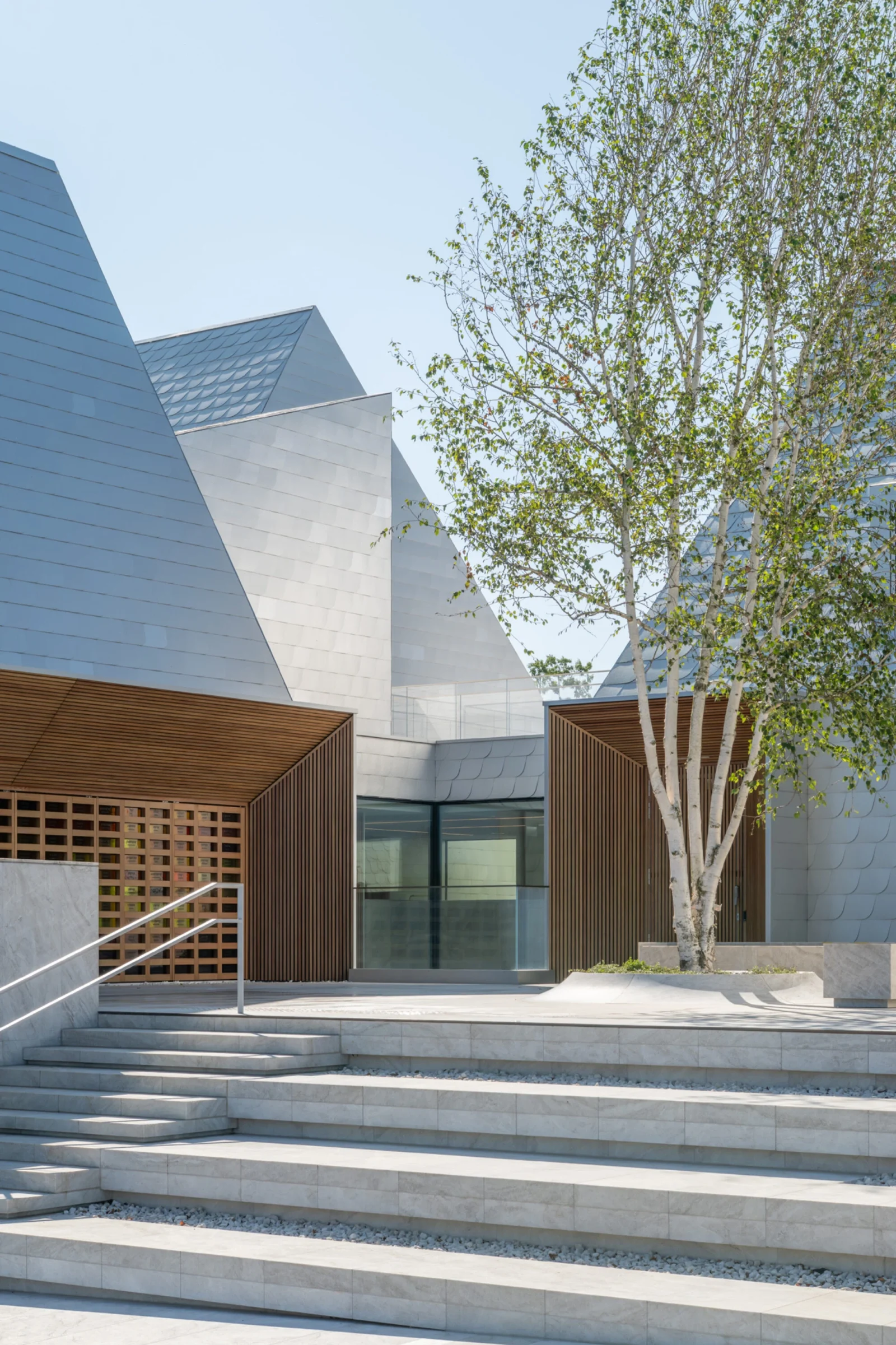
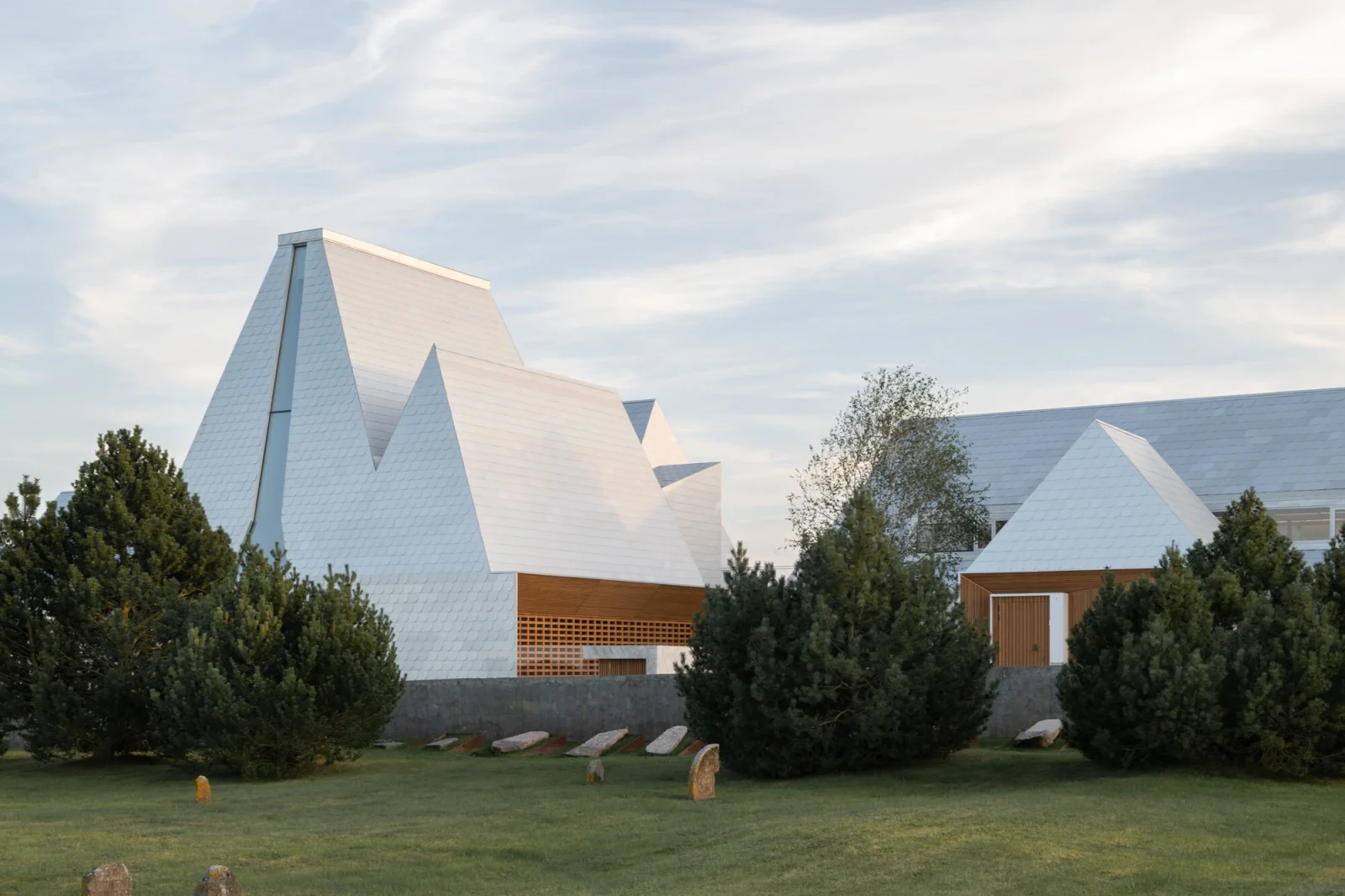
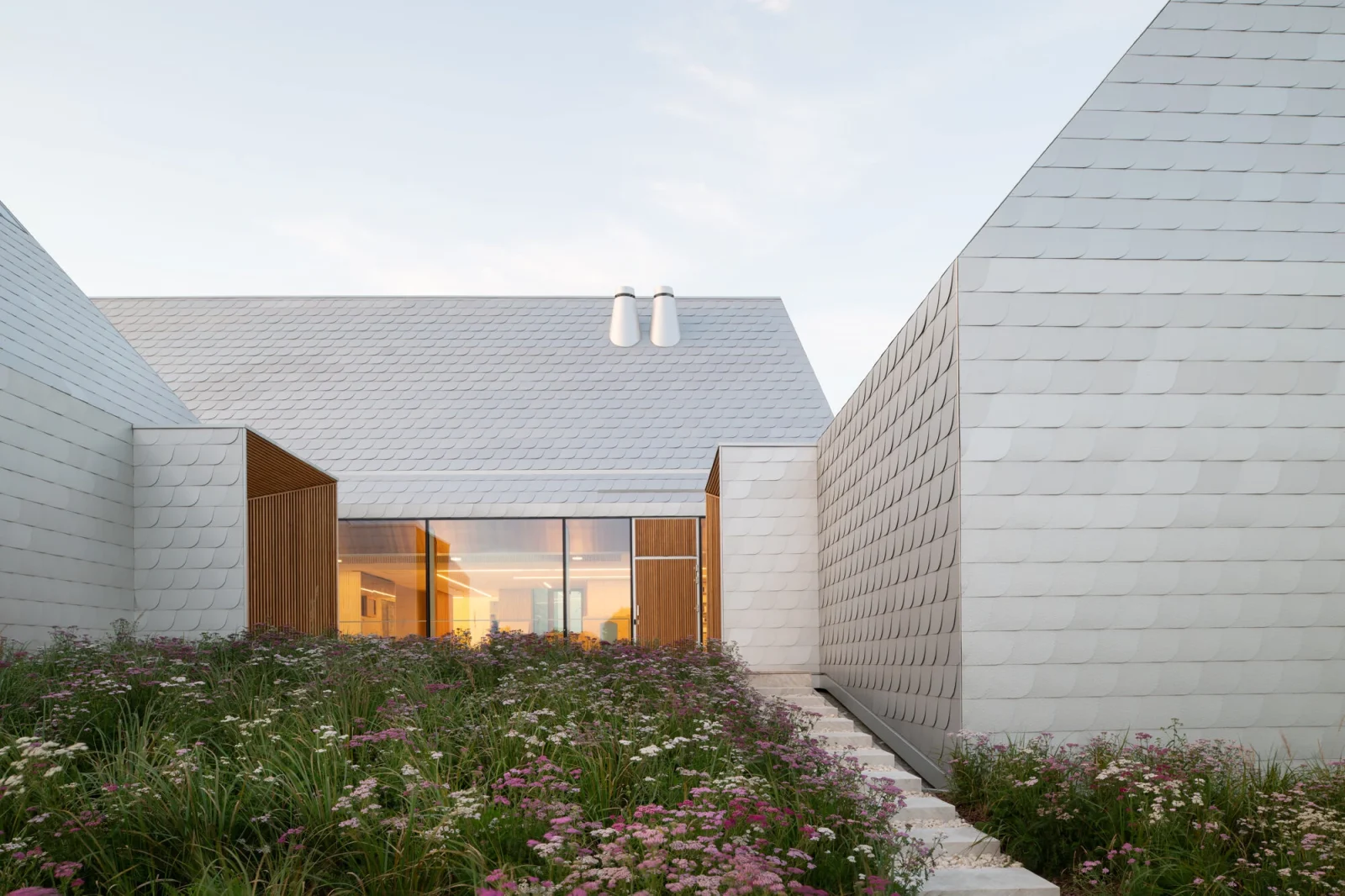
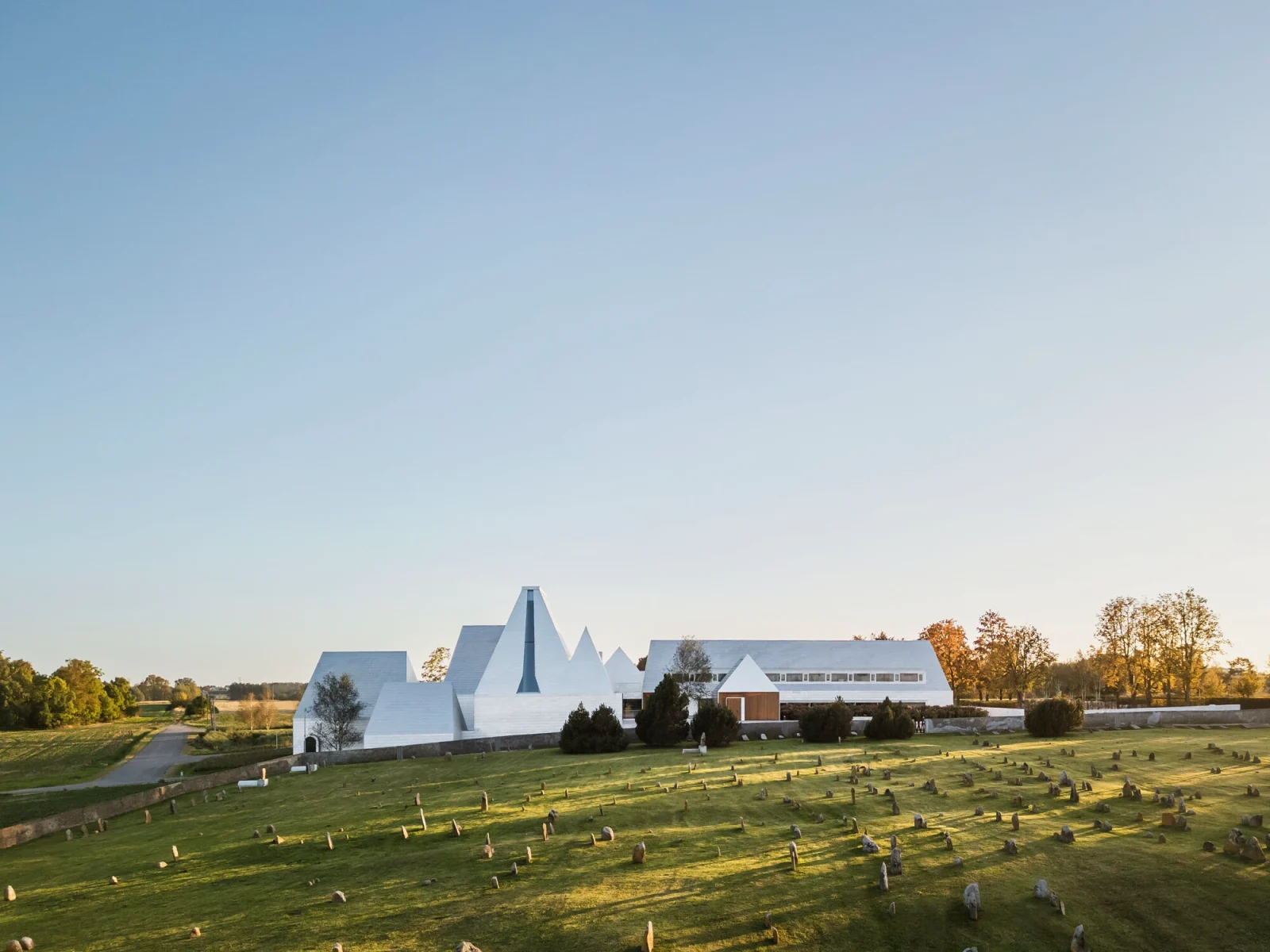
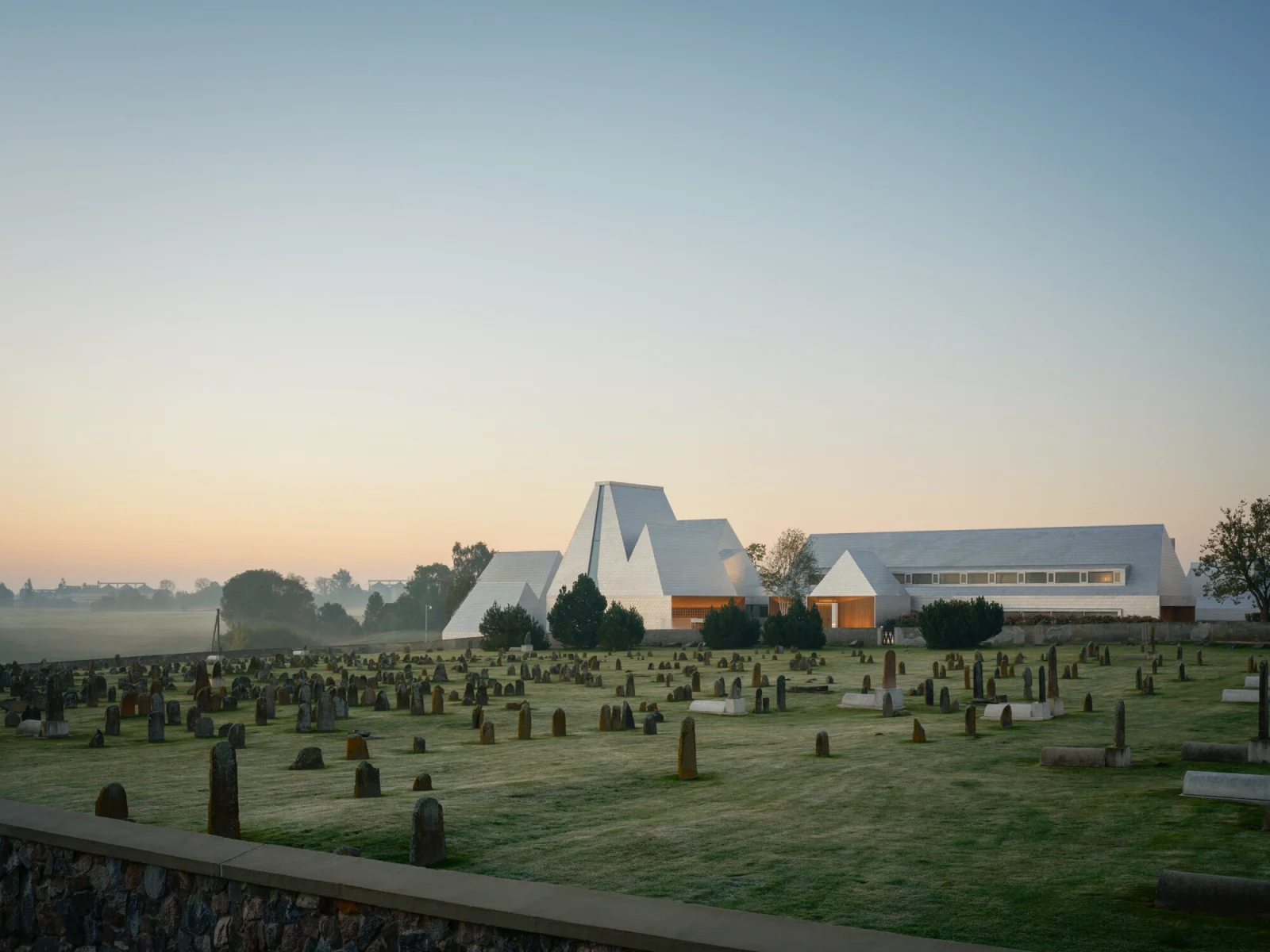
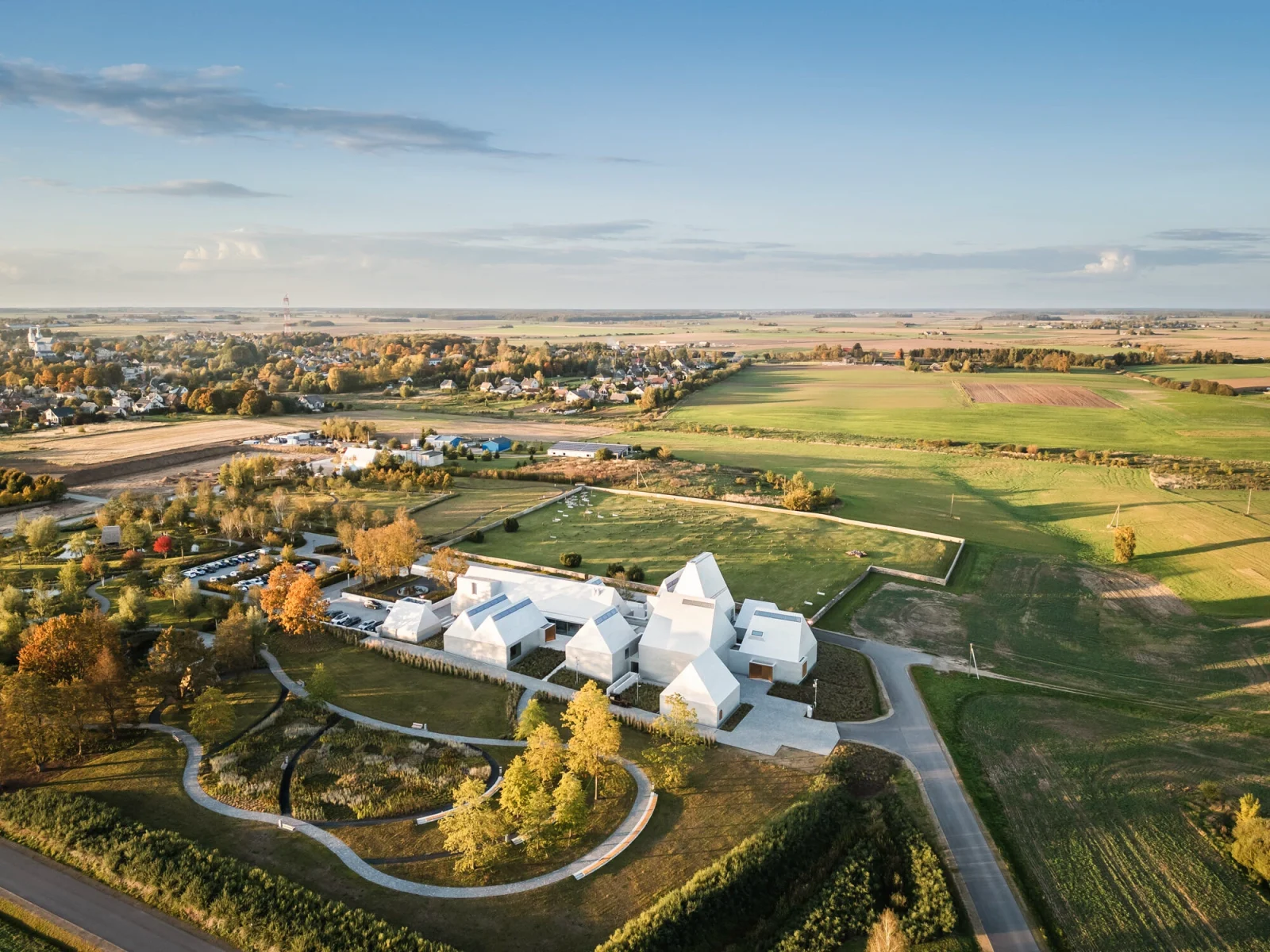
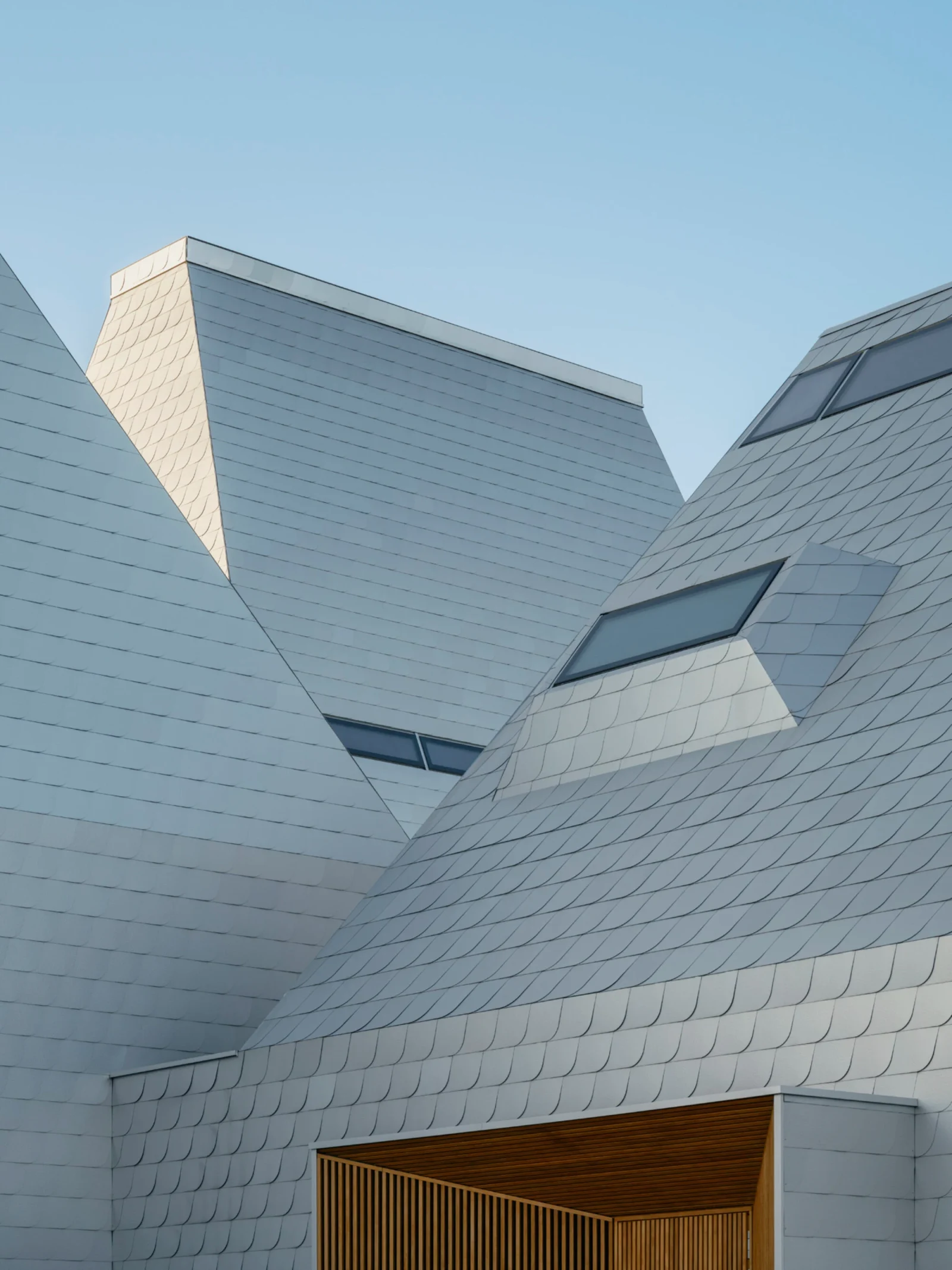
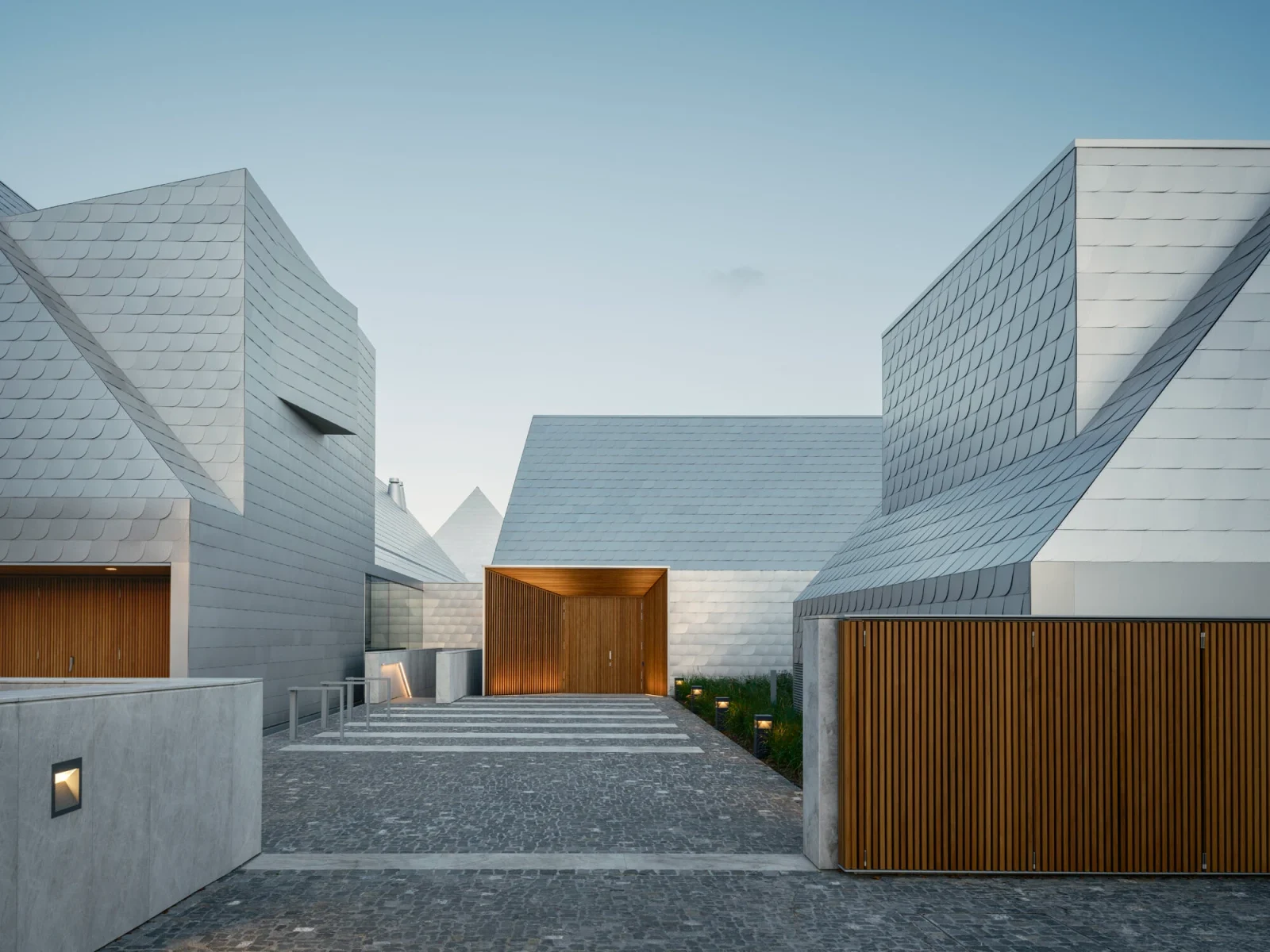
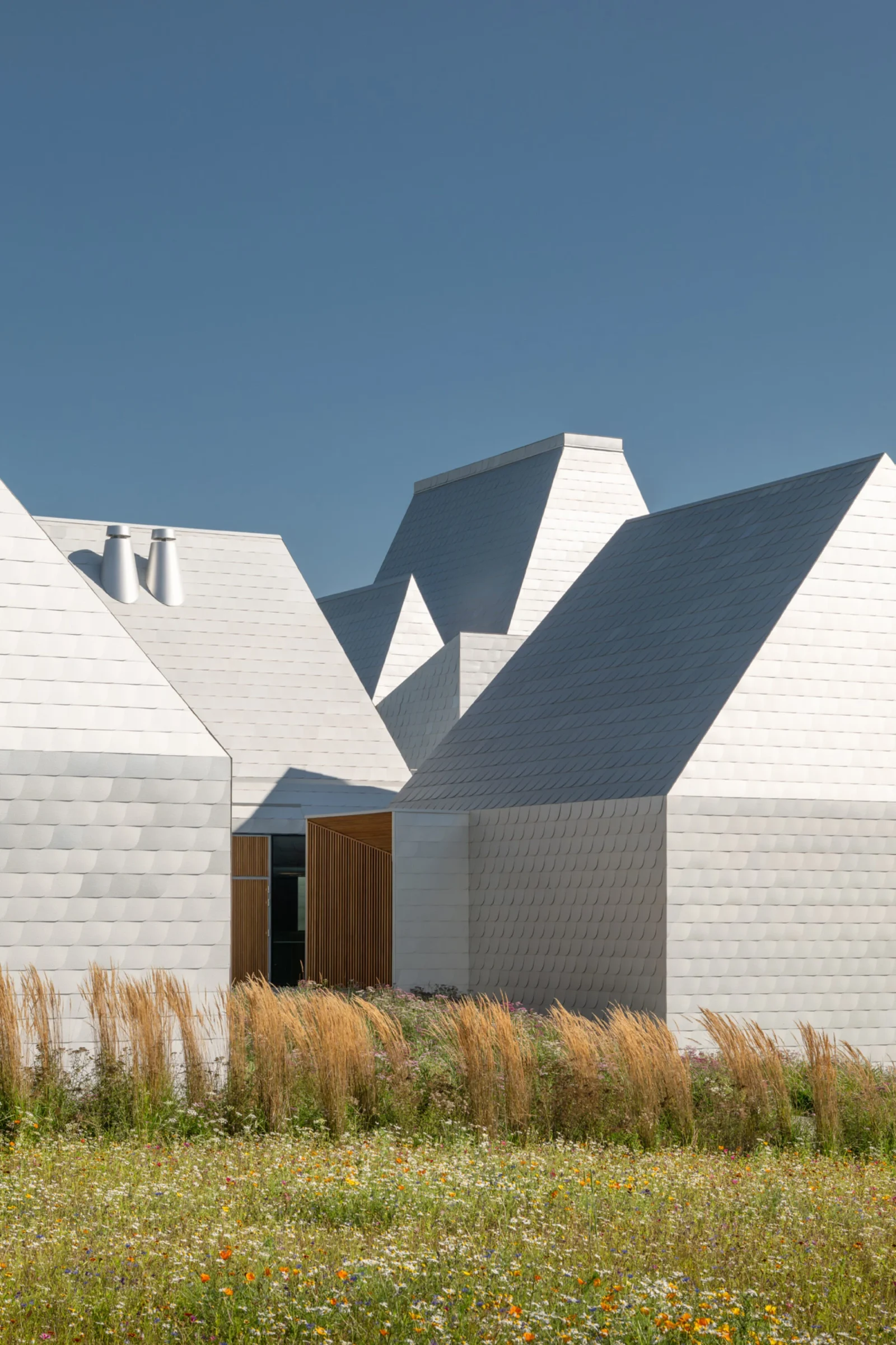
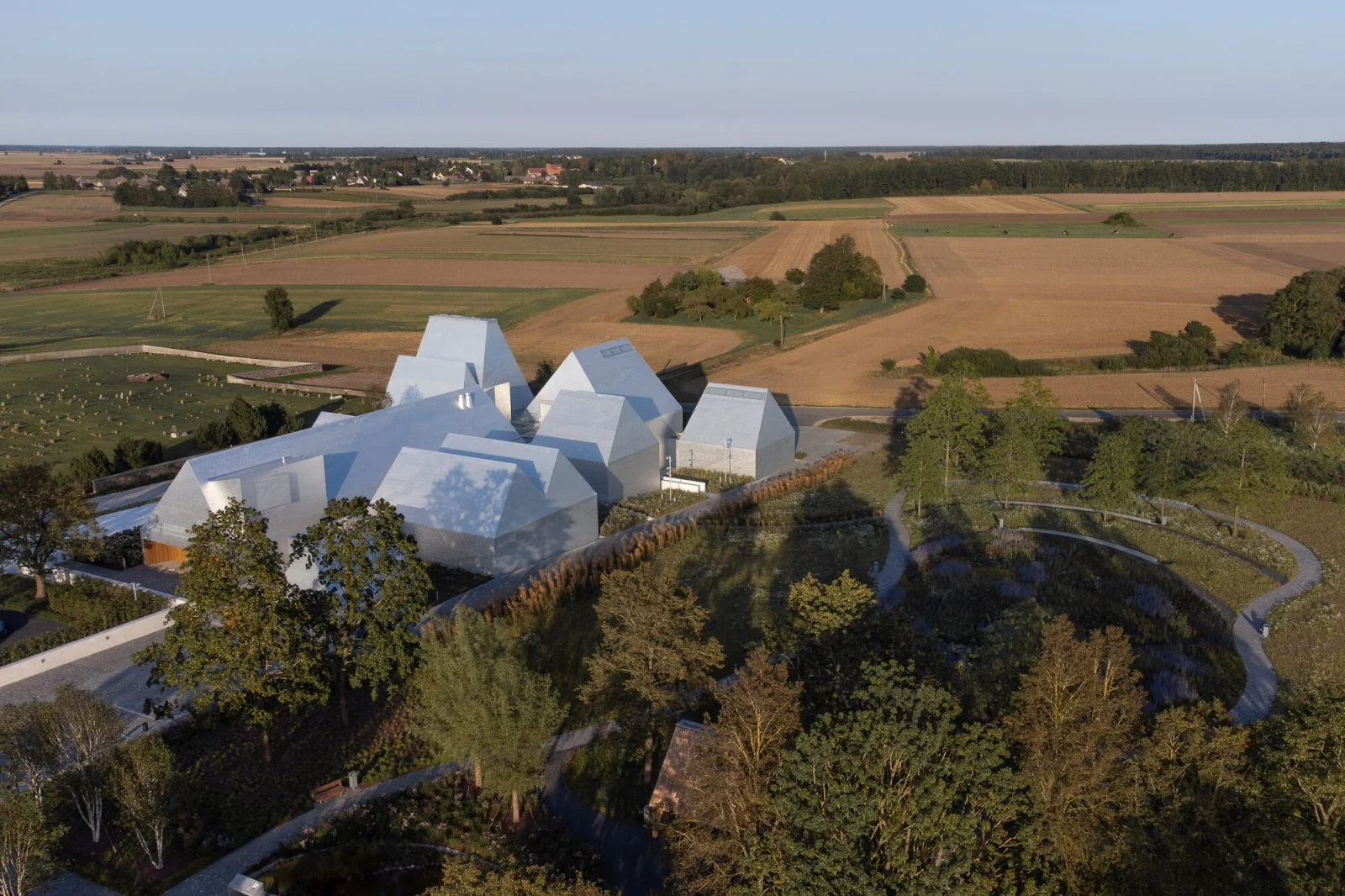
The museum is conceived as a reimagined village structure. Its composition consists of a group of small, house-like volumes. Each structure resembles a modest rural home, and together they create the impression of a fragmented yet connected shtetl. These volumes are linked through narrow passages, allowing visitors to move gradually from one space to another, as if walking through a reconstructed settlement.
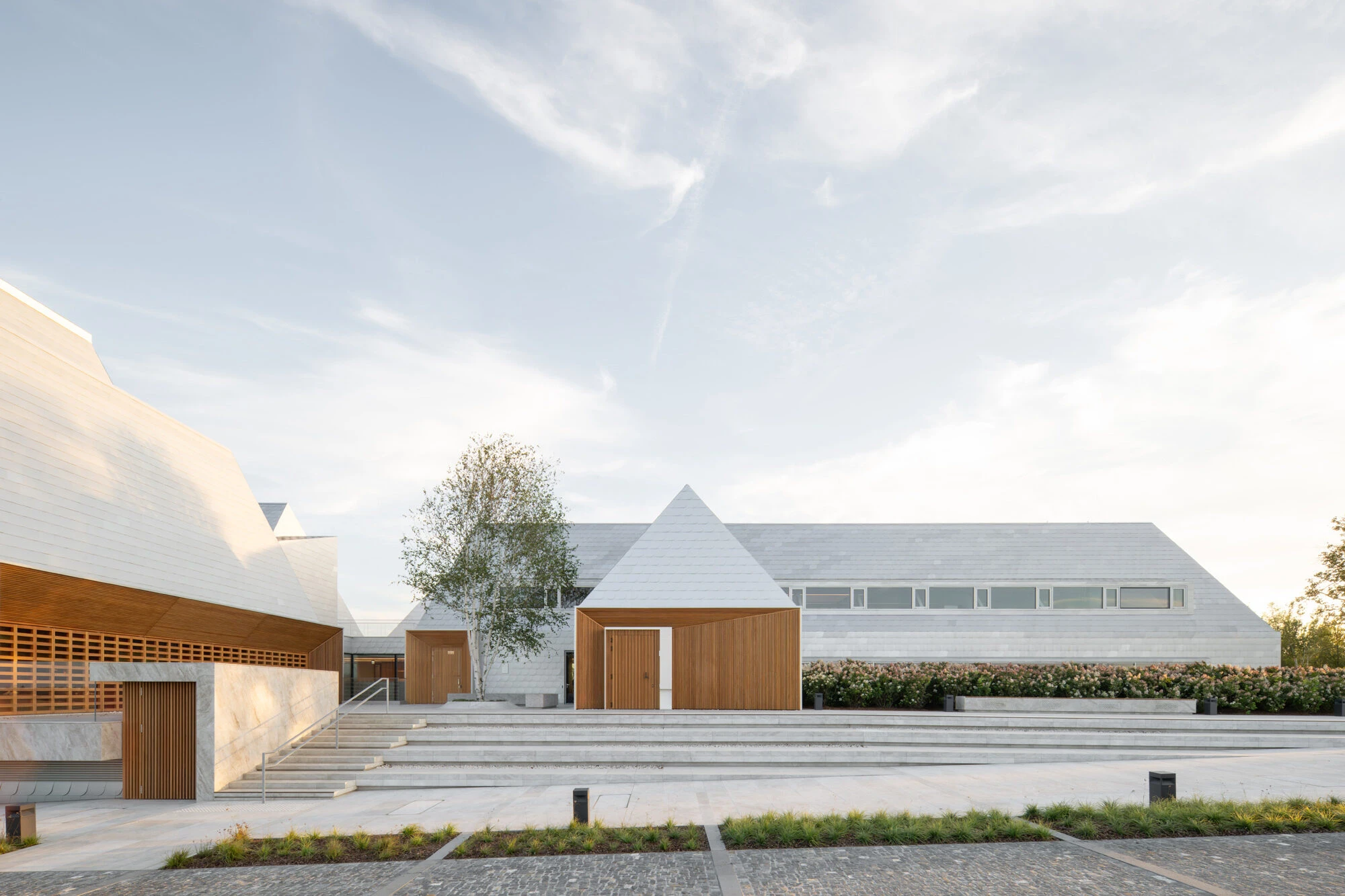
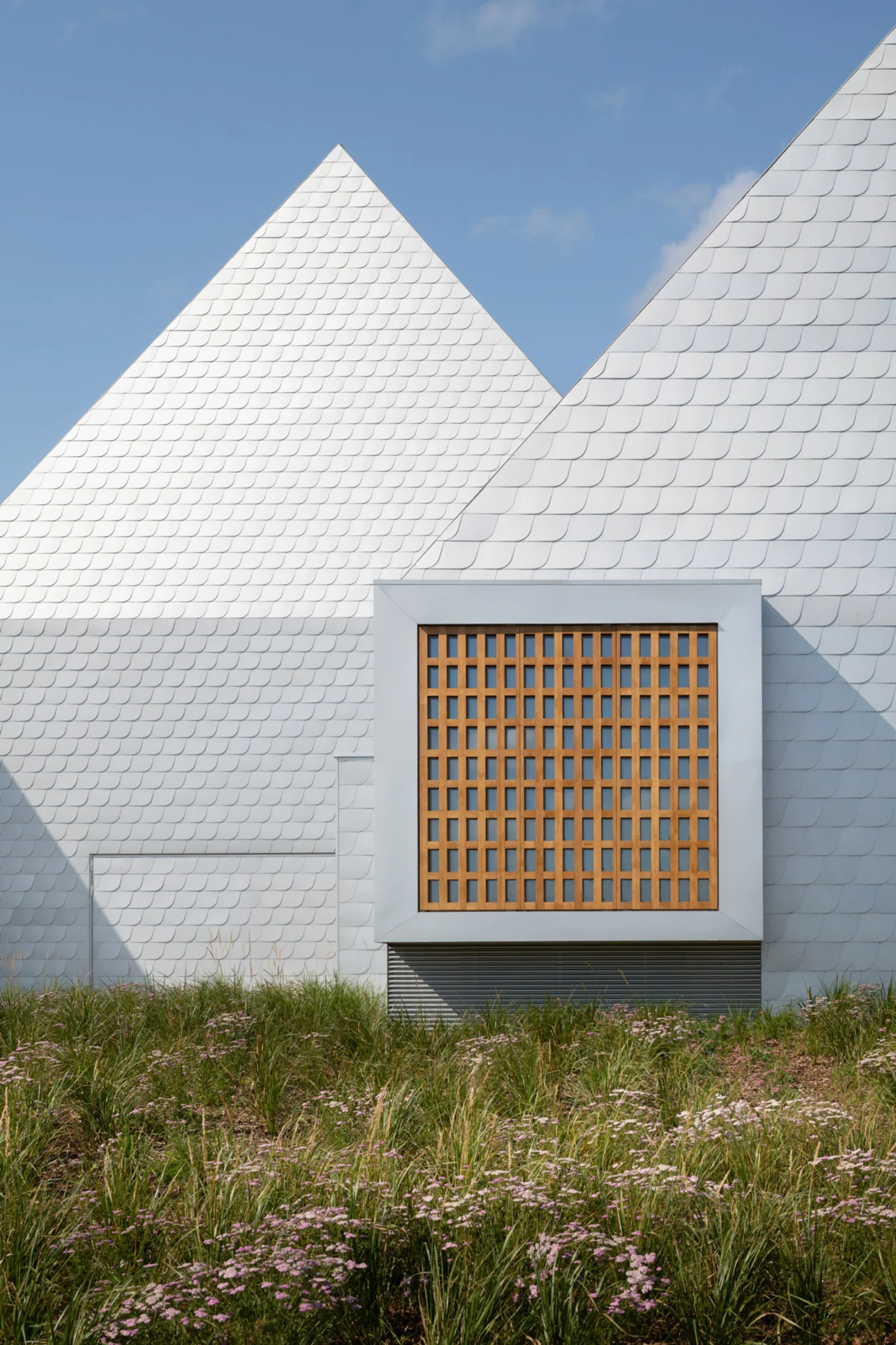
The exterior expression is defined by metallic façades made from marine-grade aluminum. This material choice is both practical and symbolic. Its reflective surface changes with daylight and seasons, echoing the shifting appearance of traditional wooden buildings in the Lithuanian countryside. The texture and rhythm of the façade provide the museum with a layered, almost living quality.
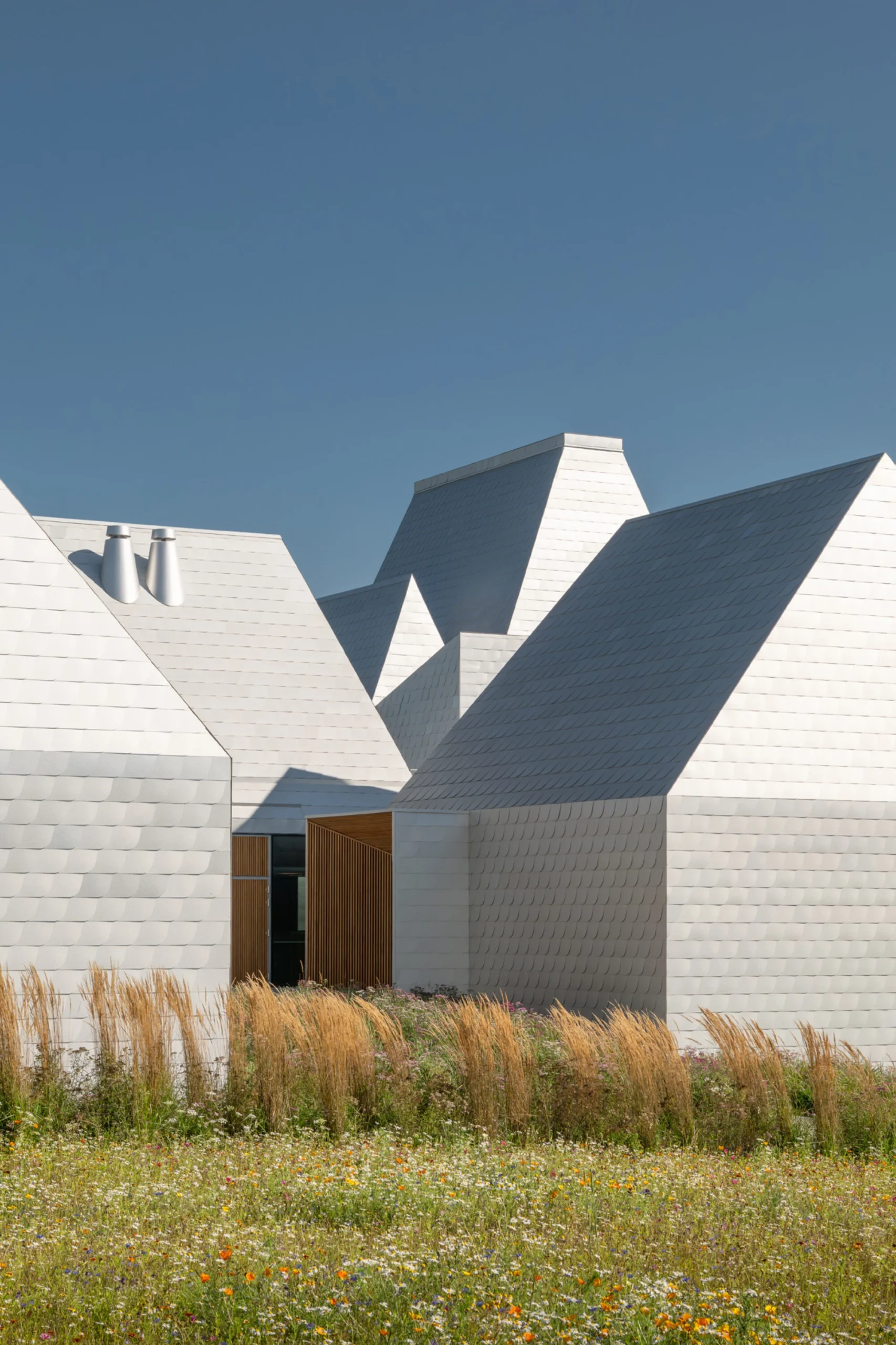
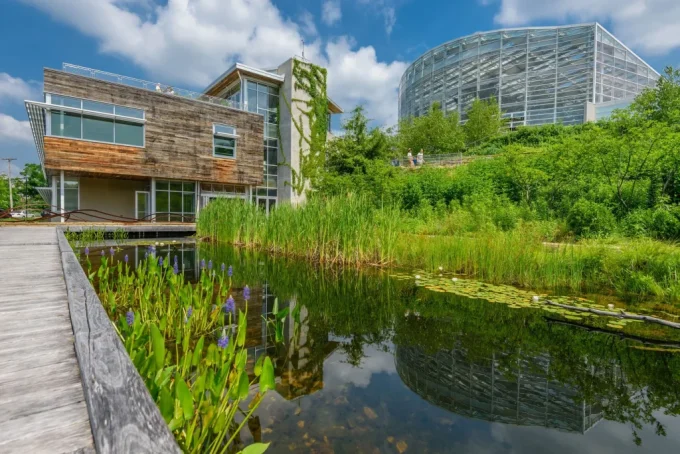
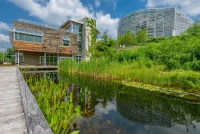
The museum is set within a memorial landscape designed as a sequence of natural environments. Rather than isolating the building, the site extends into a park that guides visitors through symbolic terrain. Birch-lined paths, open meadows, wetlands, and orchard-like areas create a slow, reflective approach. This landscape concept is tied to the historical narrative of the Jewish community’s final journeys during the war, transforming the act of walking through the site into a quiet form of remembrance.
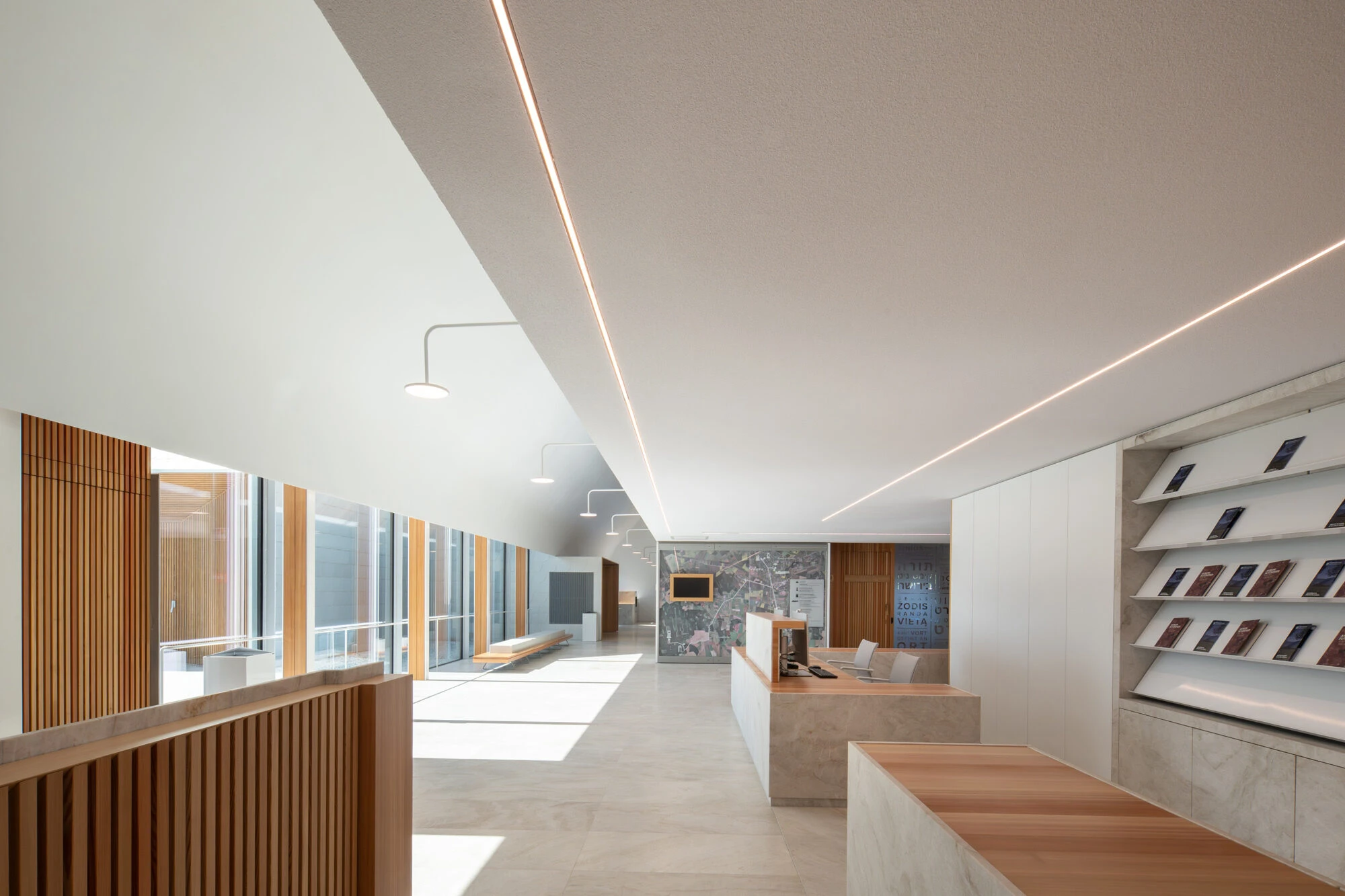
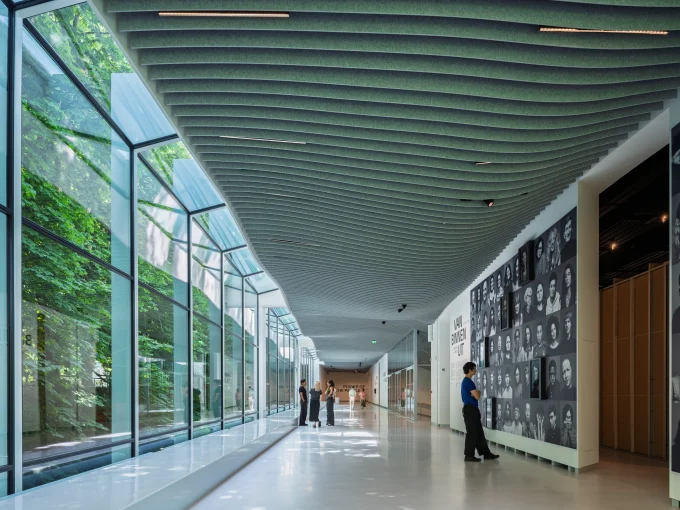
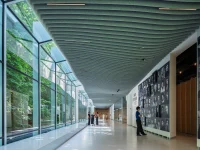
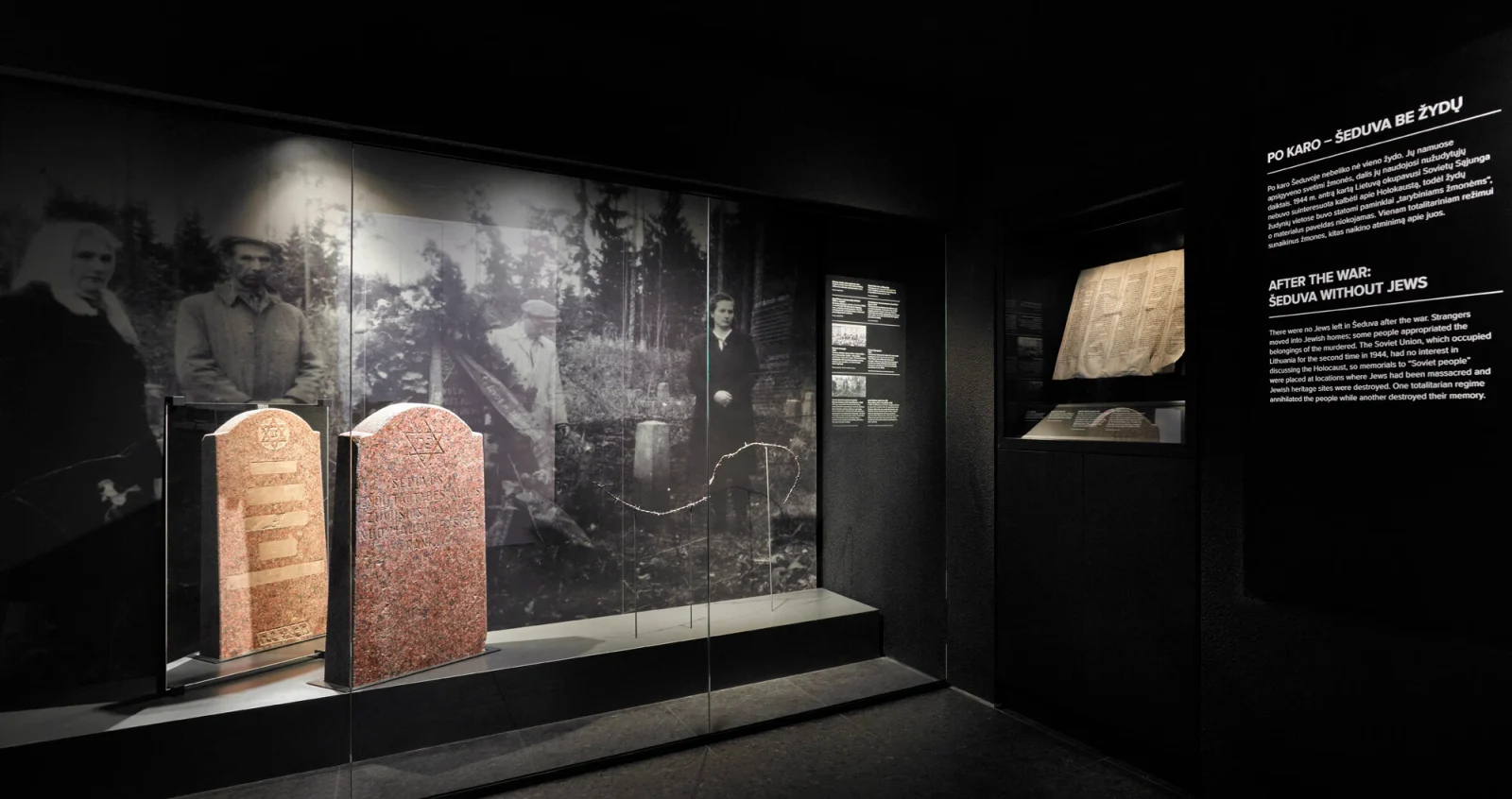
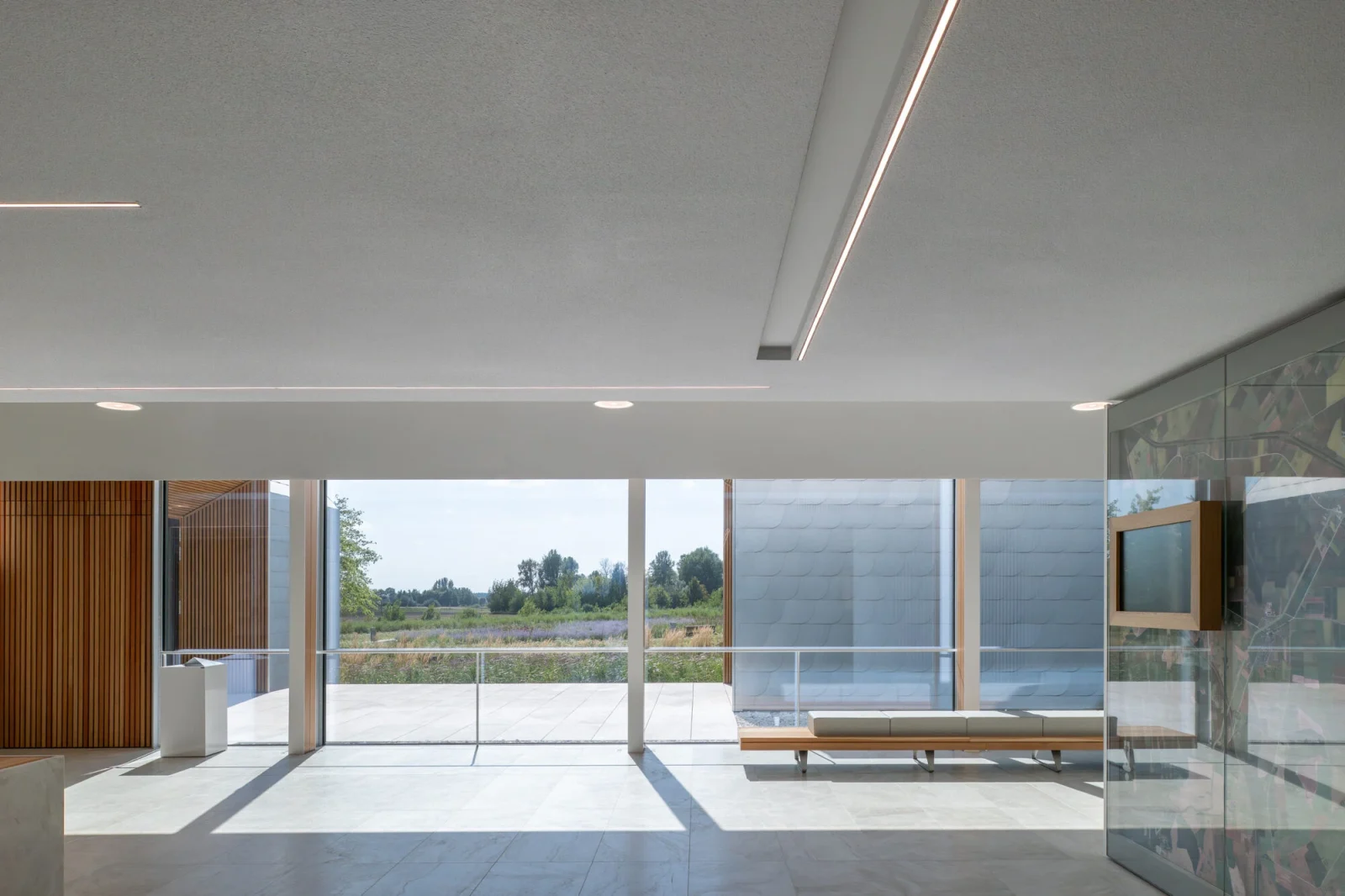
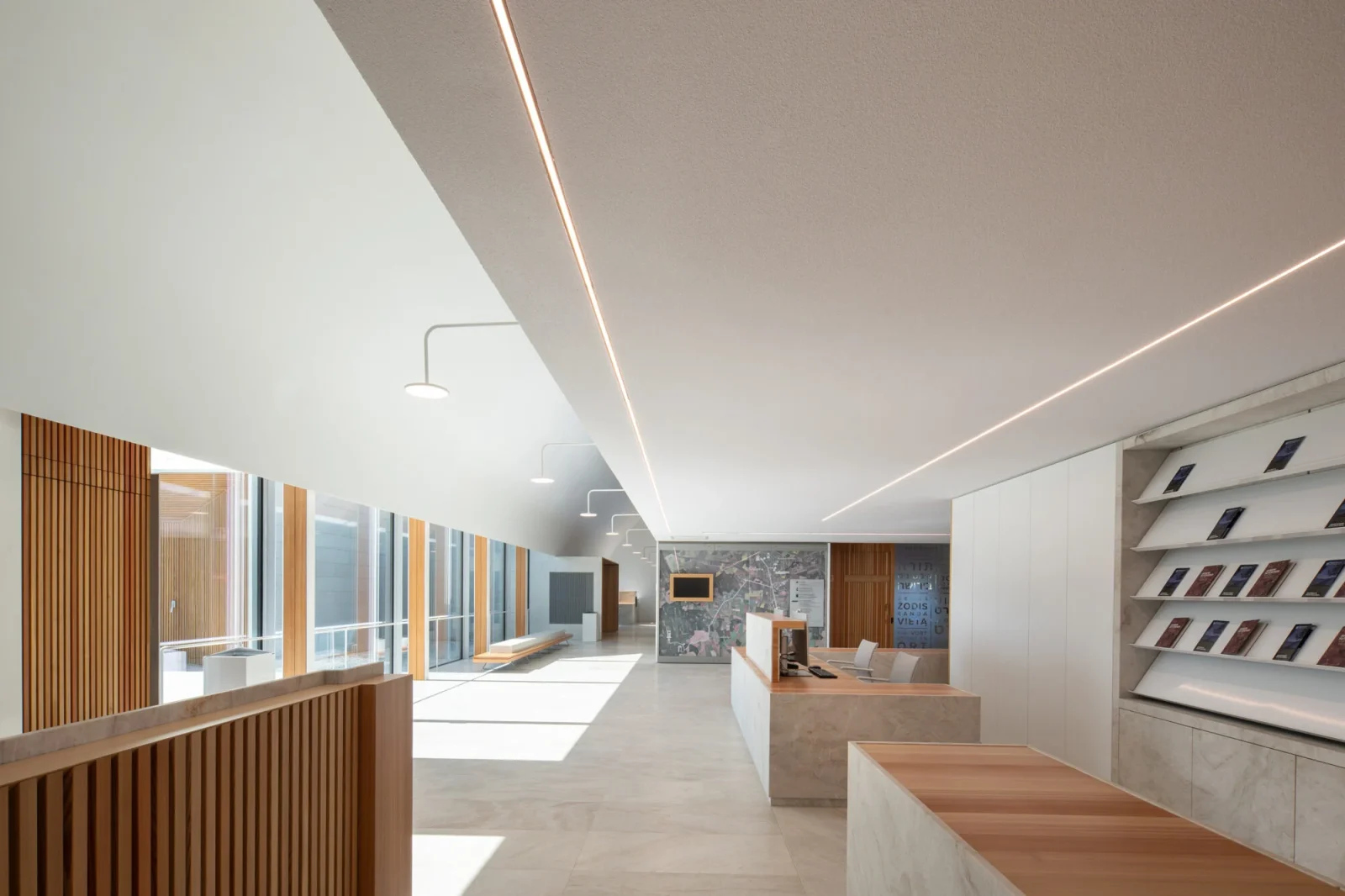
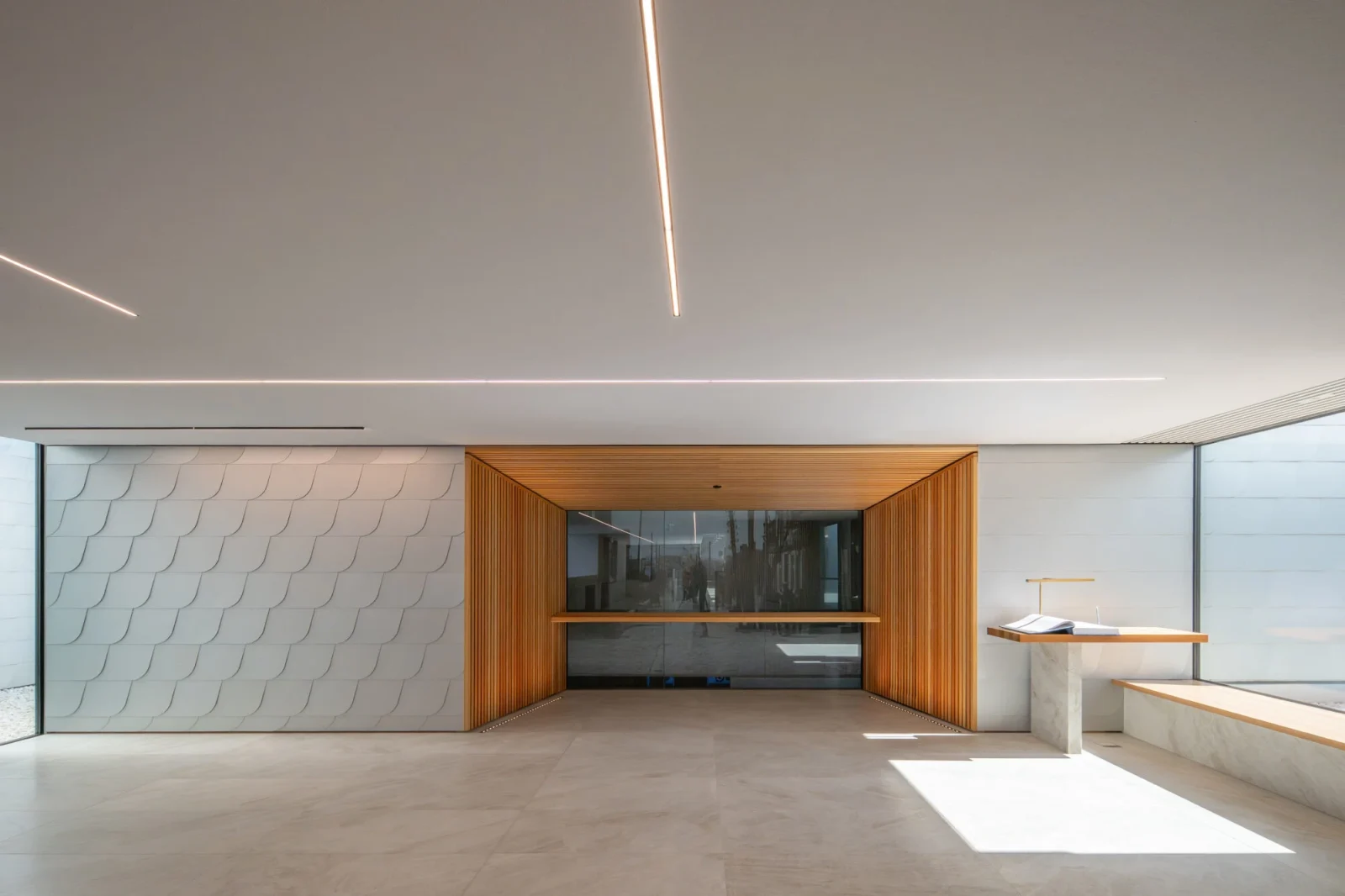
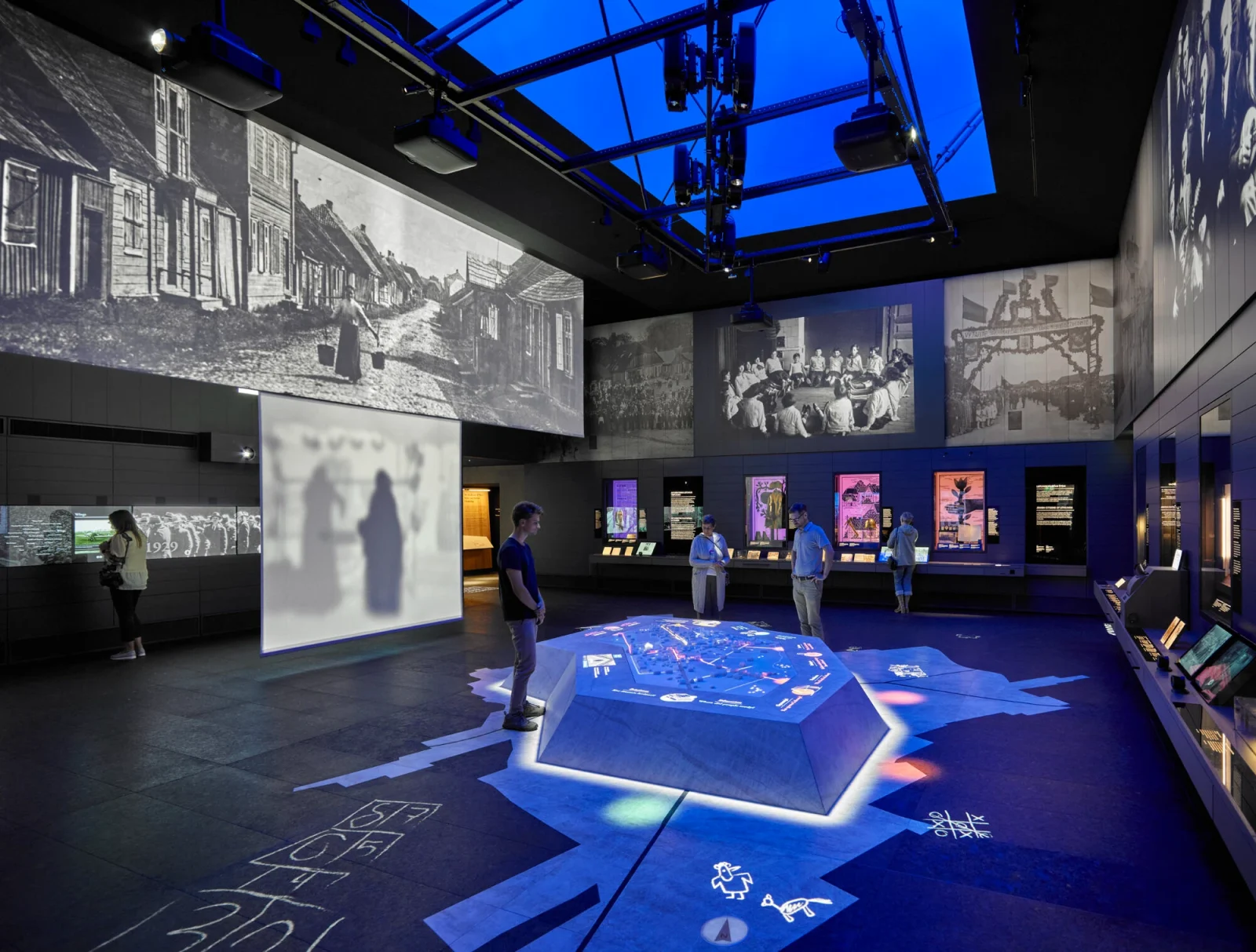
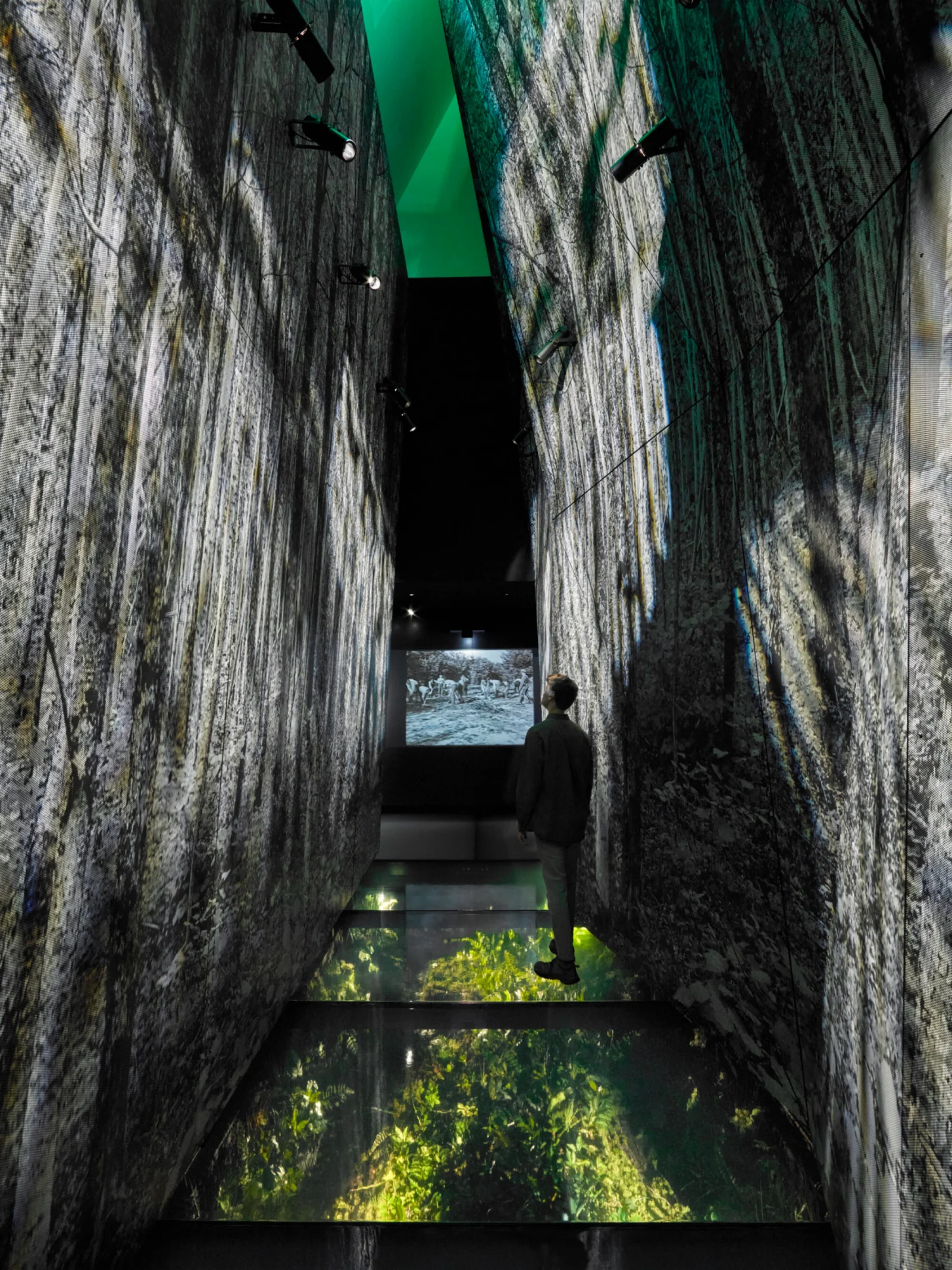
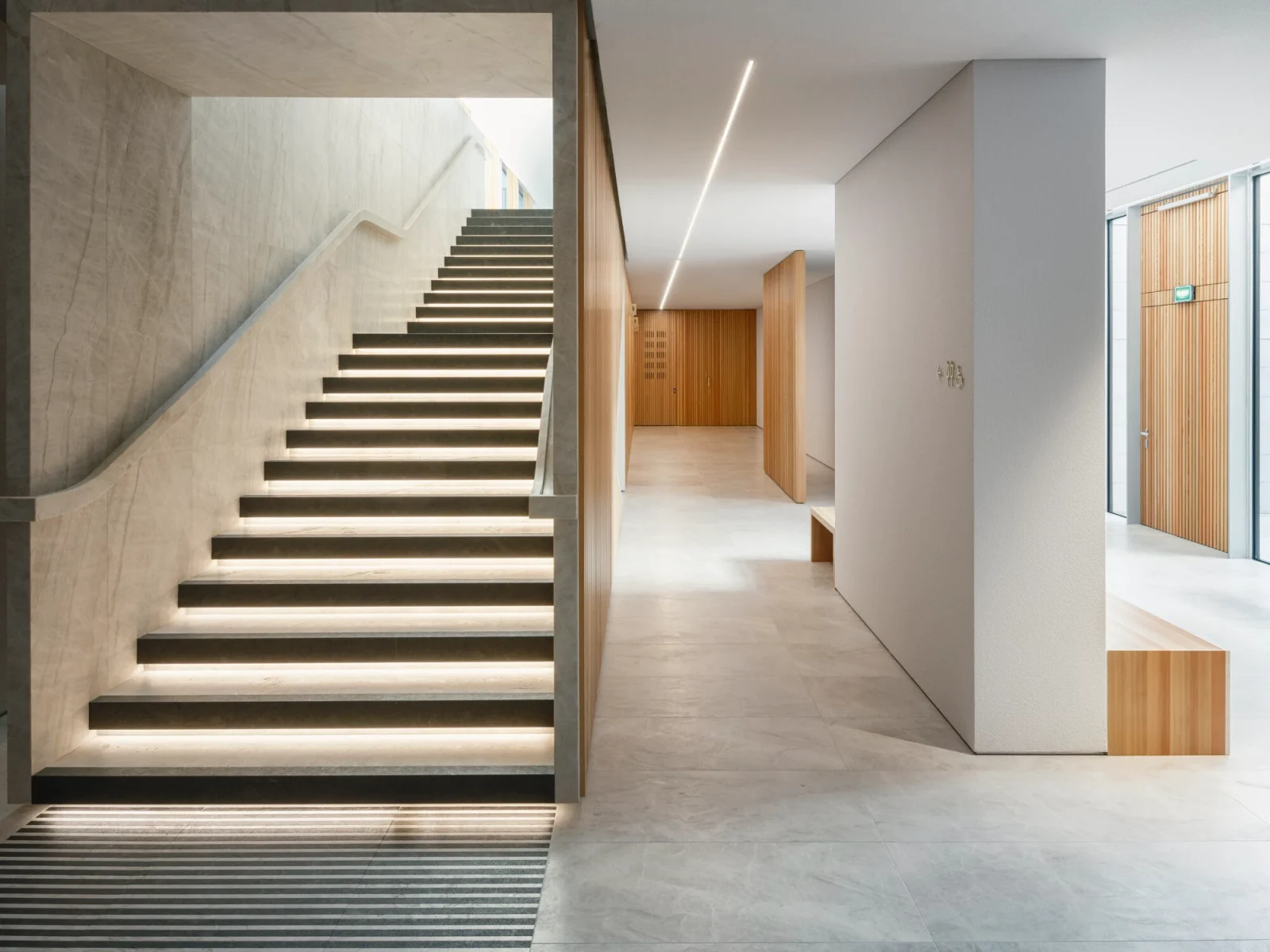
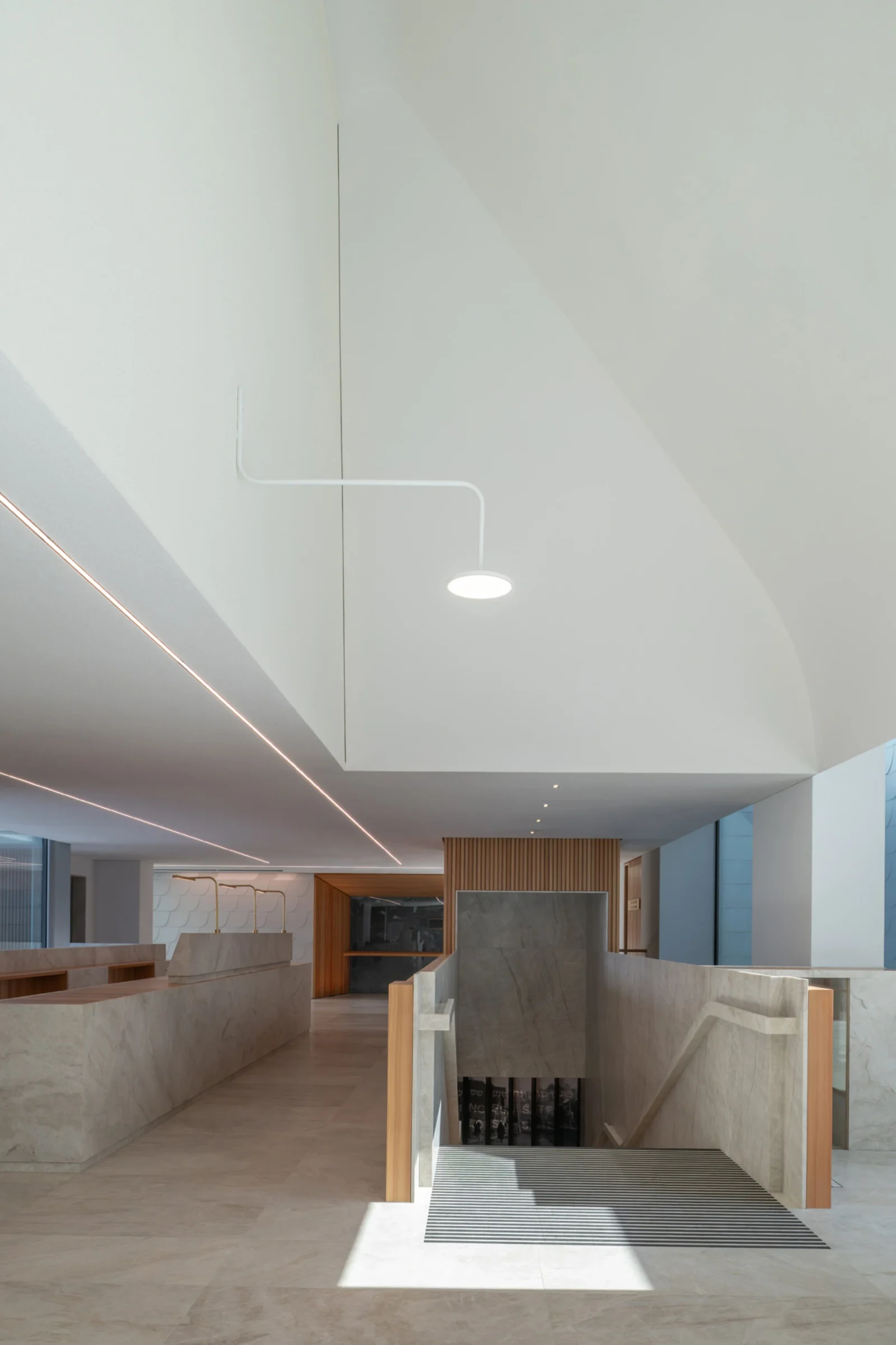
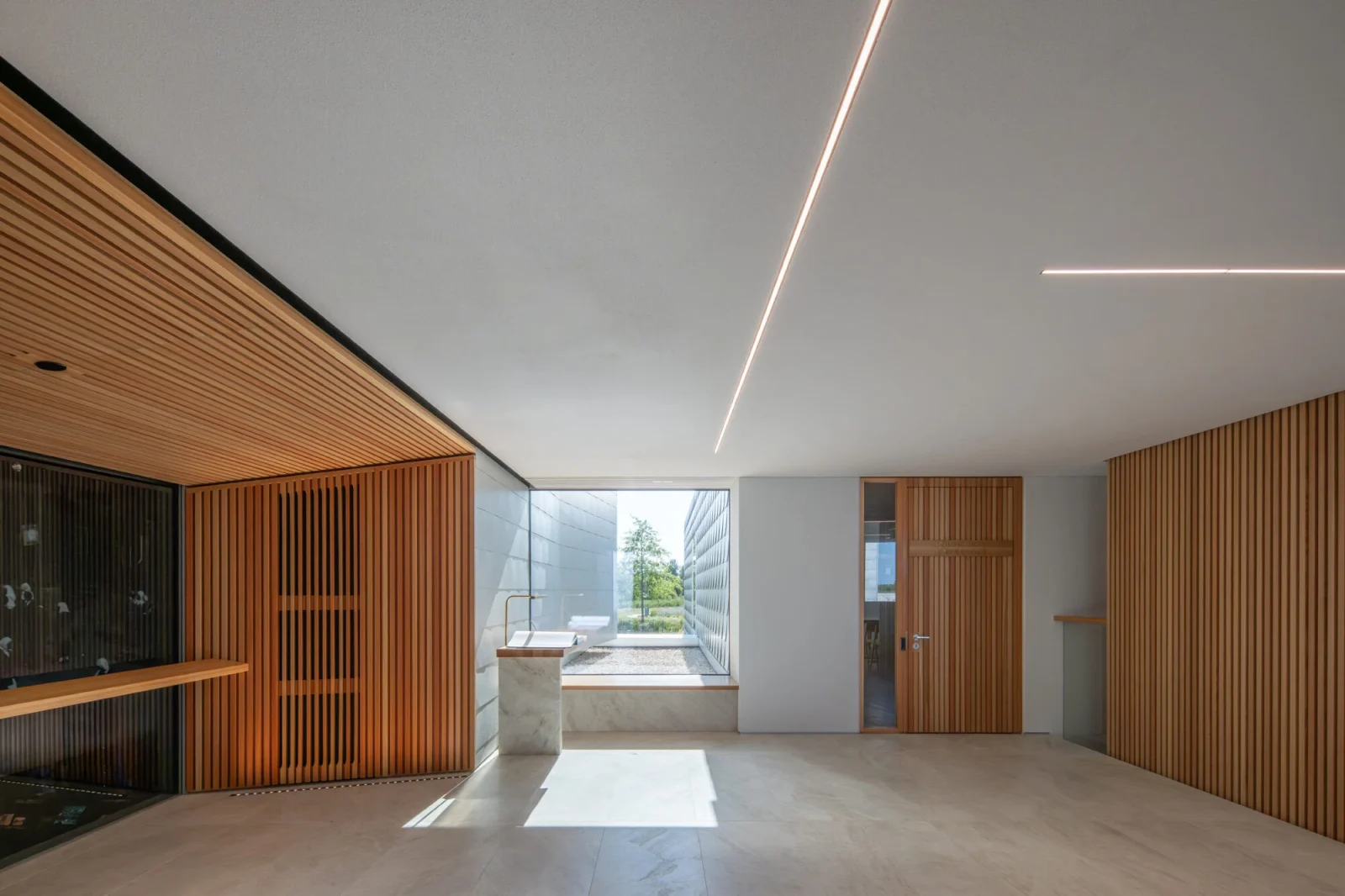
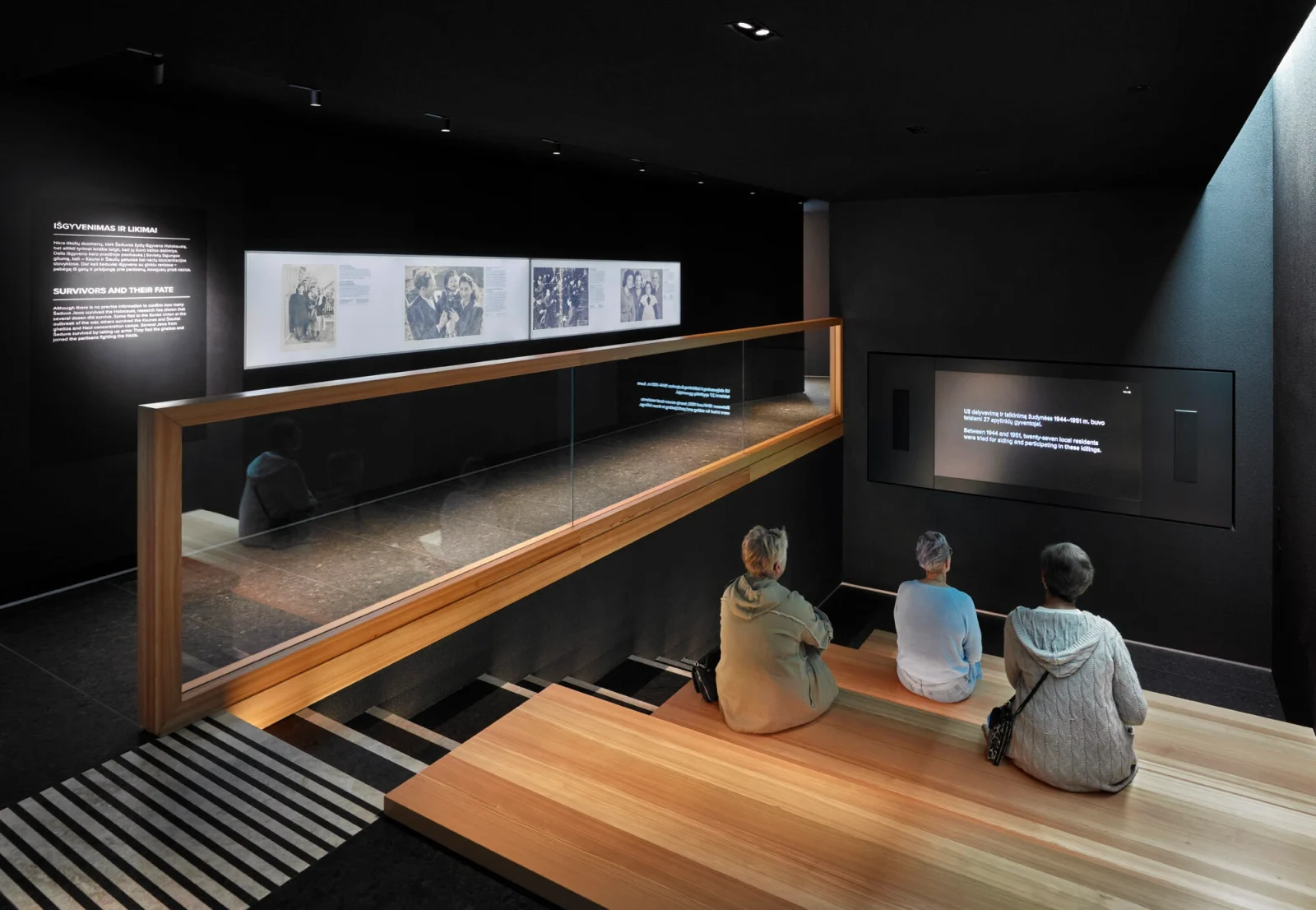
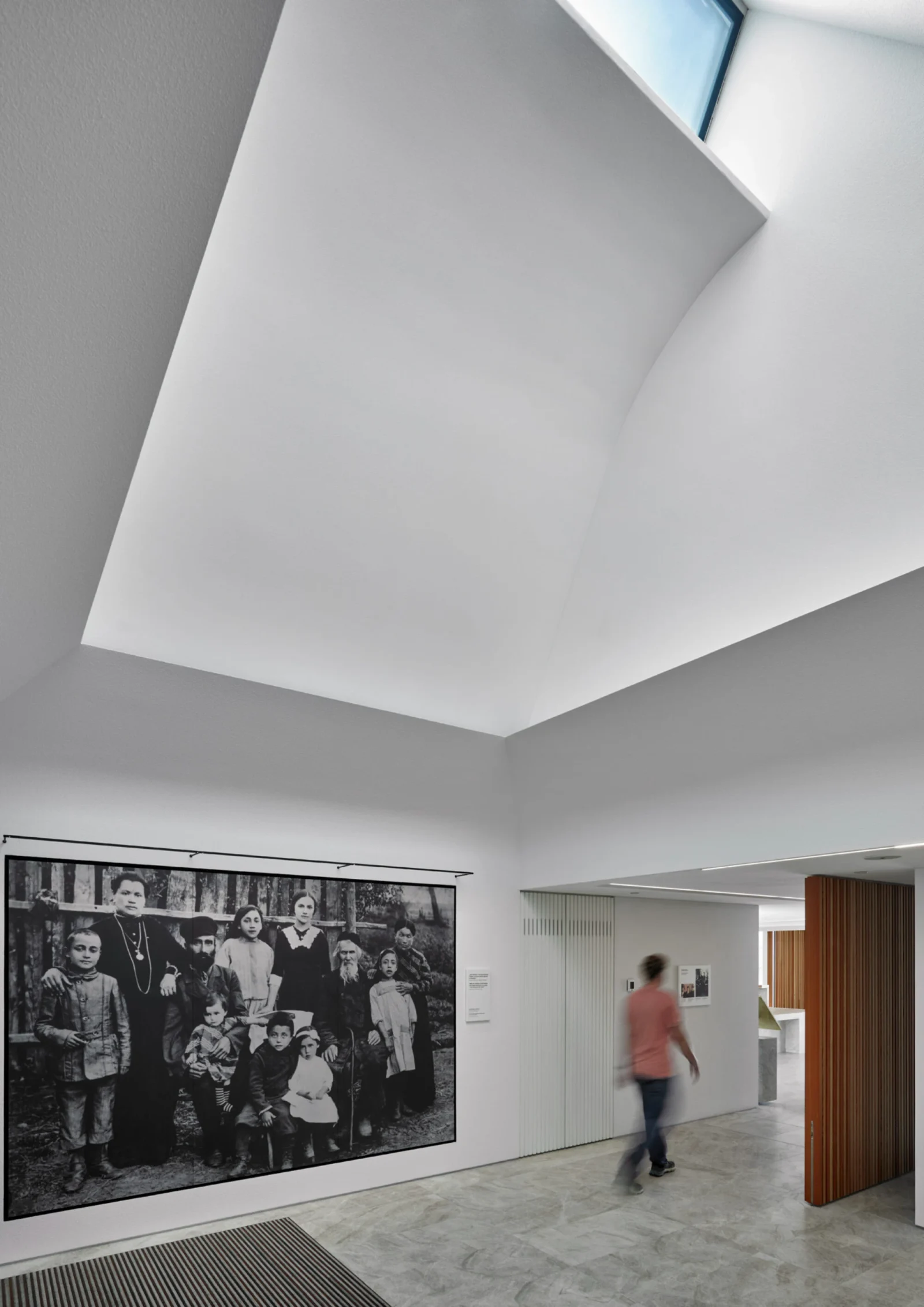
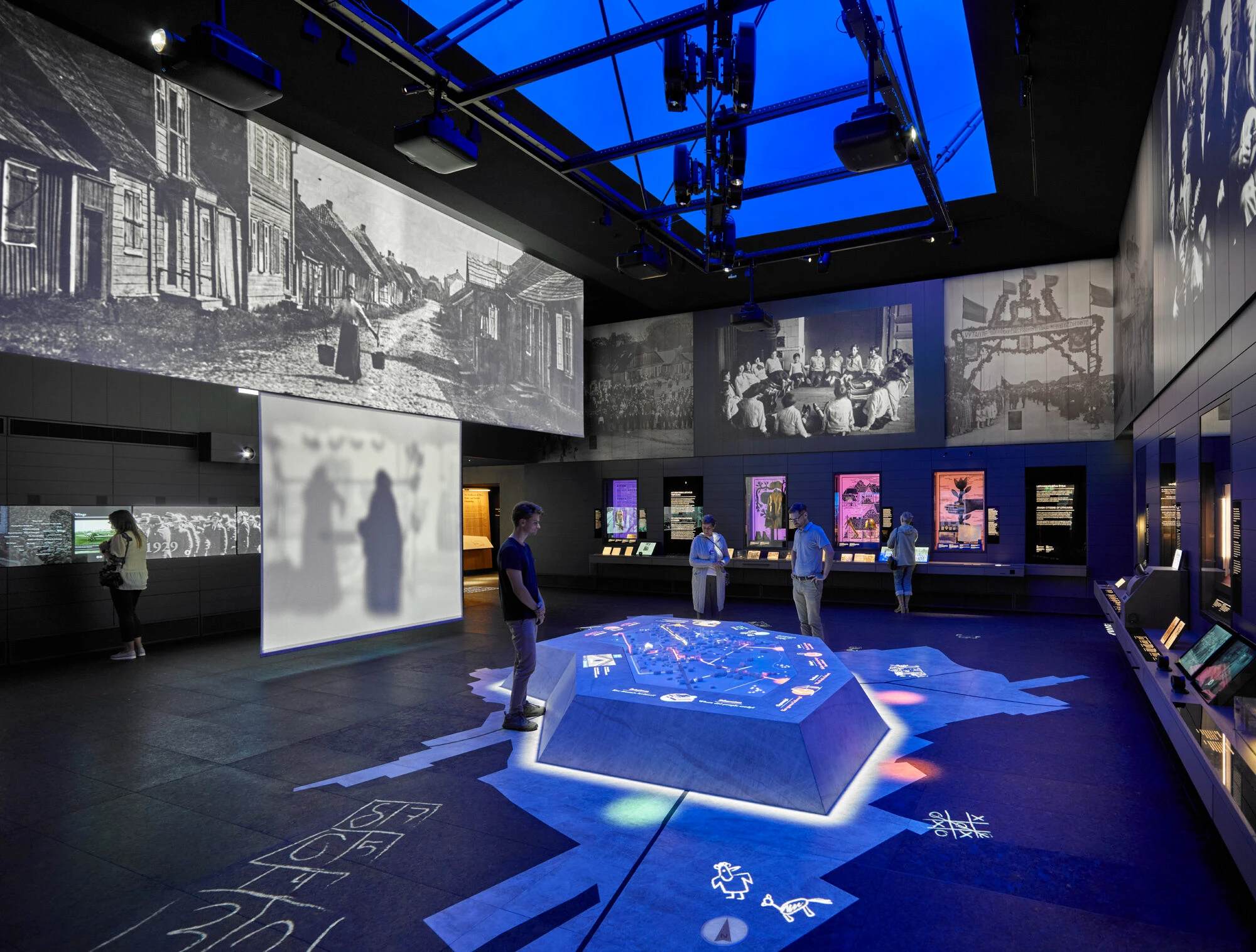
Inside, the spatial organization continues the idea of progression and narrative. Exhibition galleries are located below the entry level, taking advantage of the site’s slope. Visitors enter through a calm, domestic-scale lobby that feels closer to a living room than a public institution. From there, movement descends into the darker exhibition spaces, where the historical story unfolds in stages.
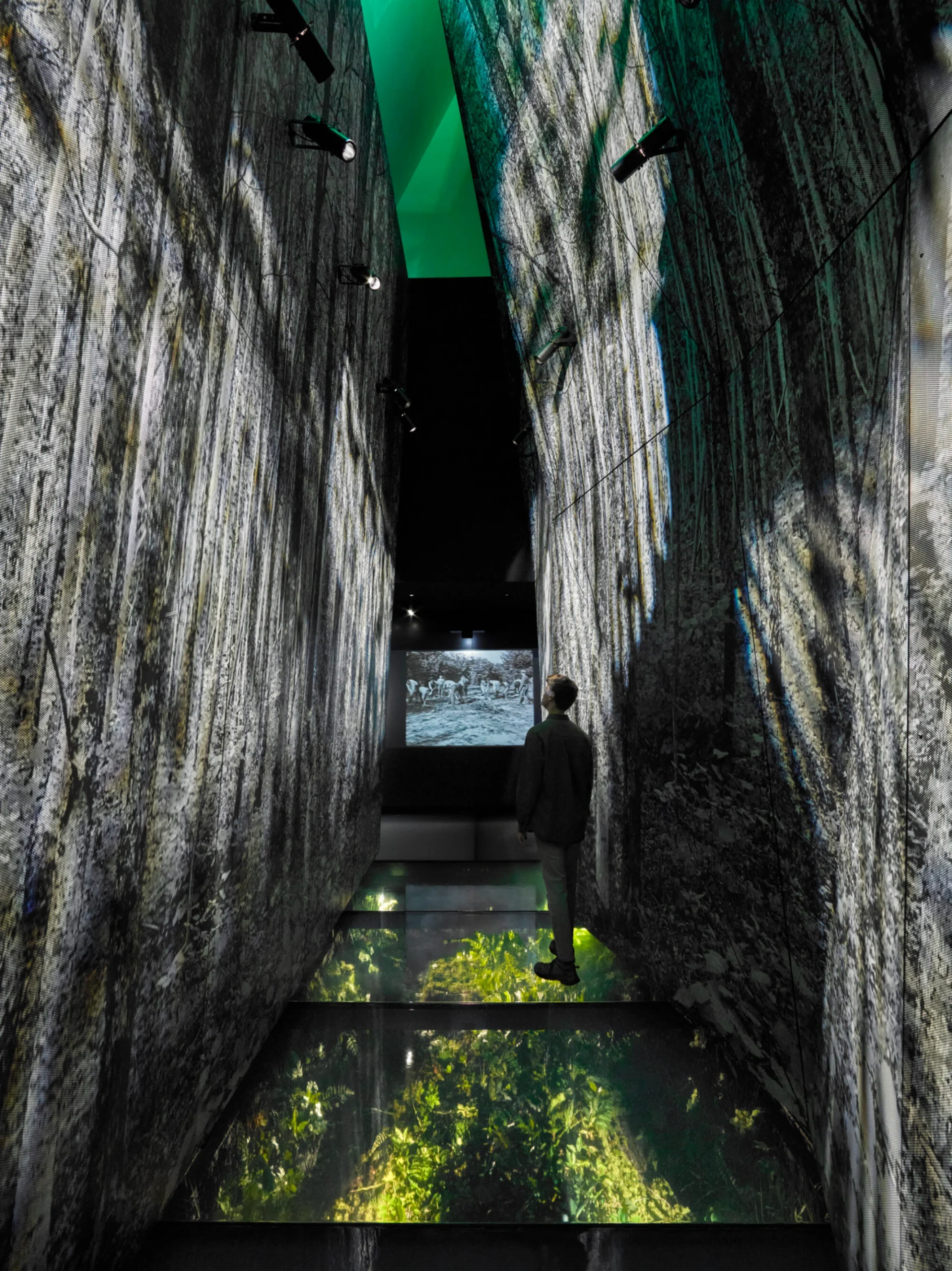
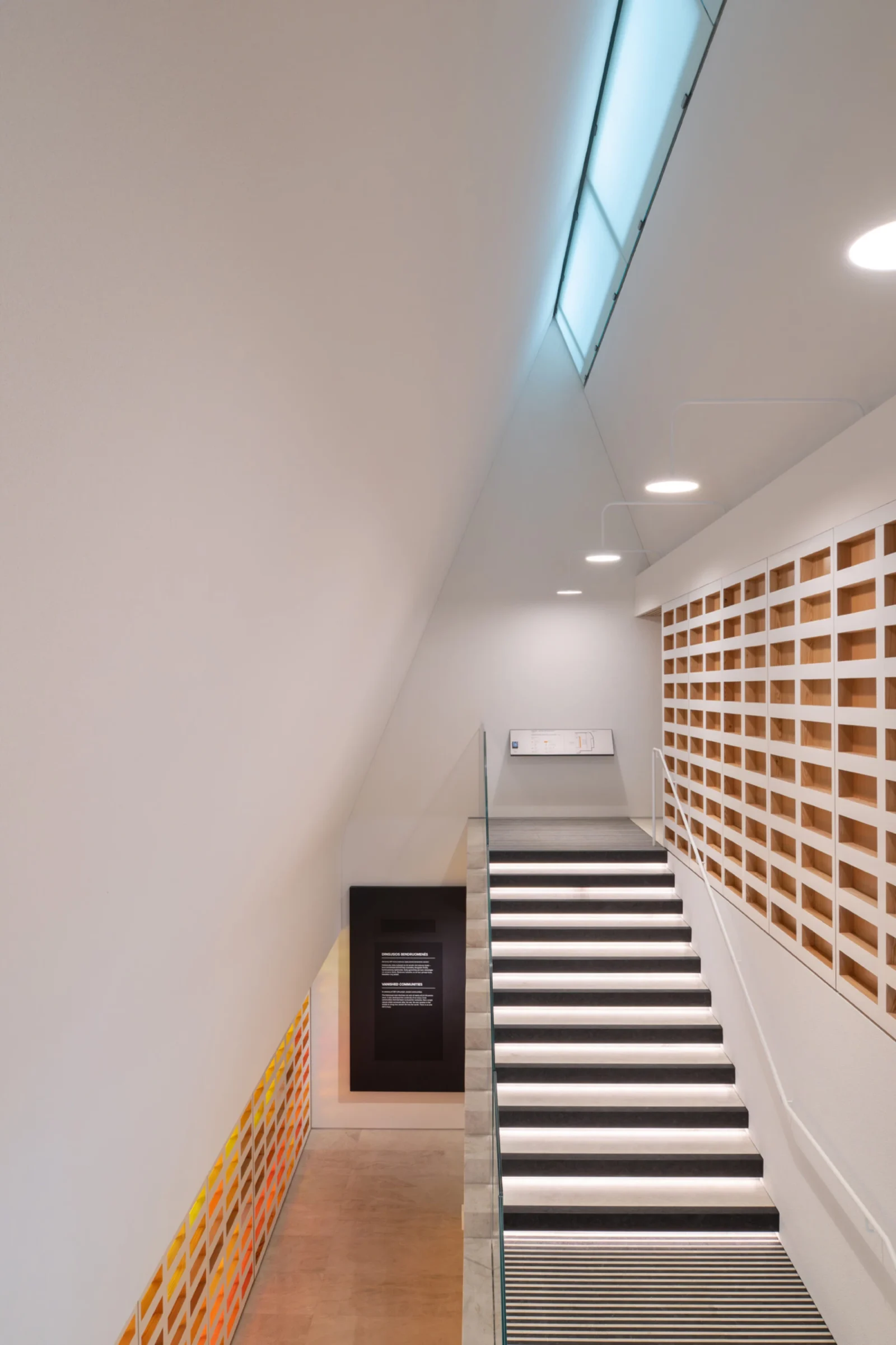
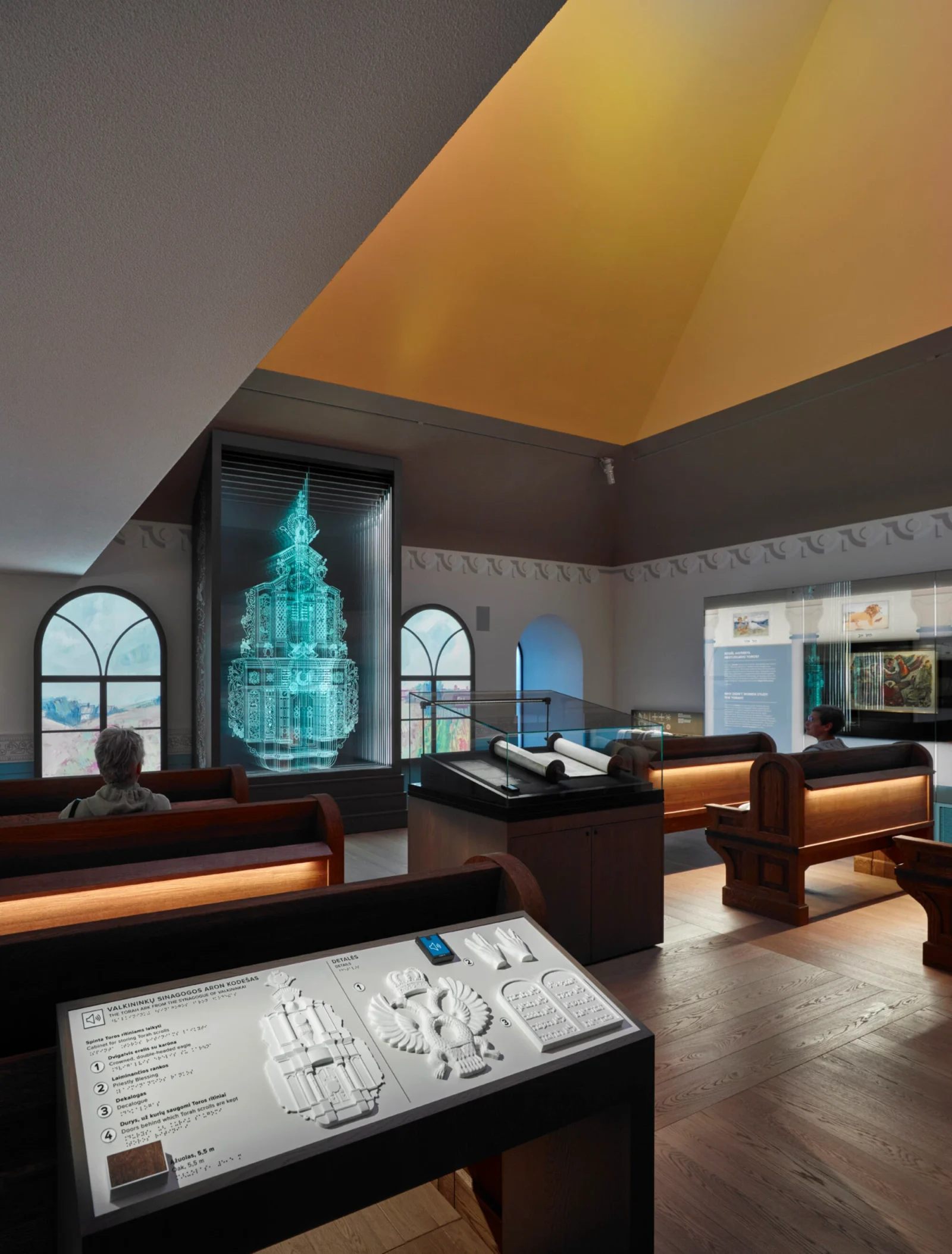
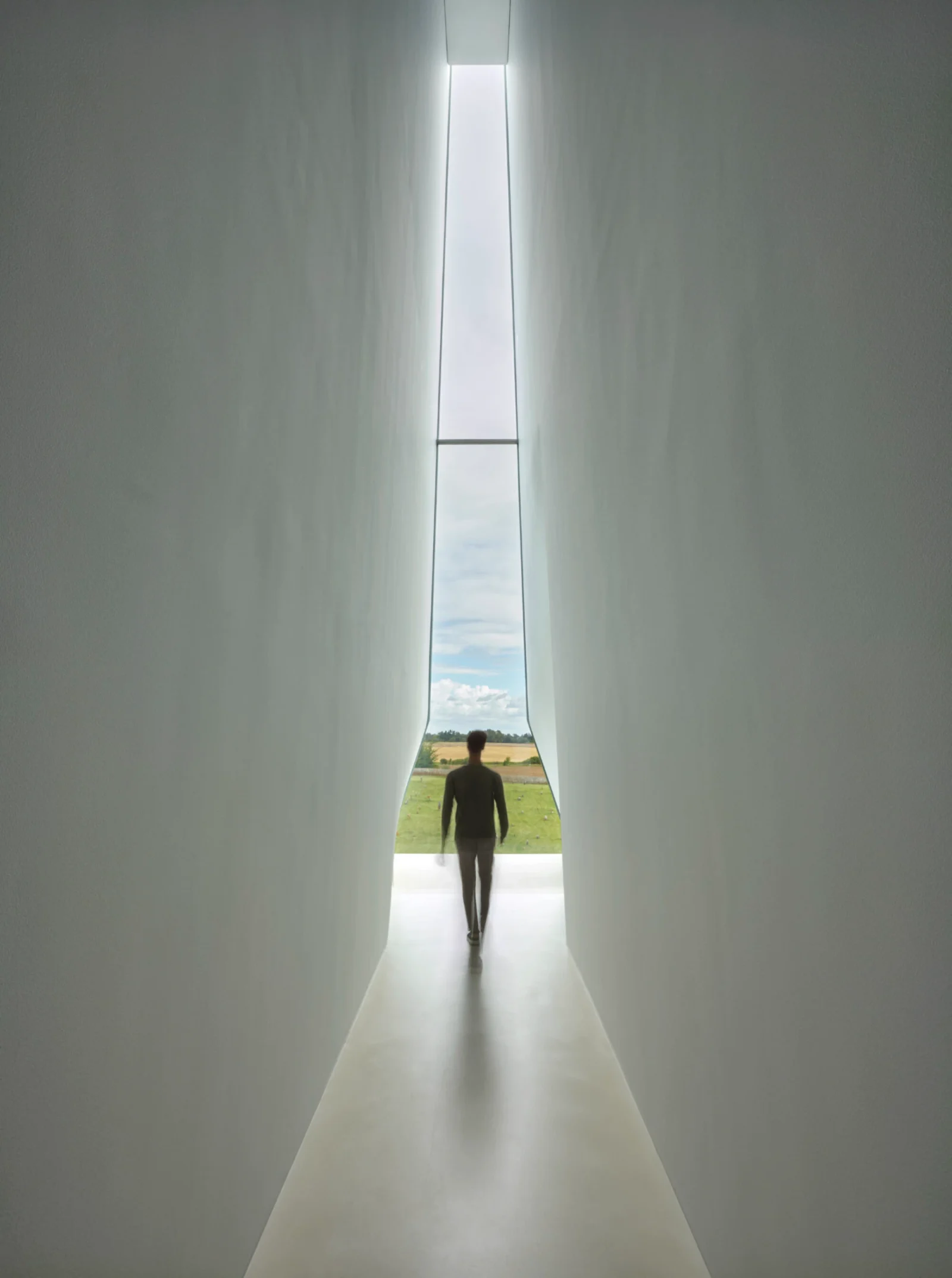
Exhibition design follows a structured narrative approach, using controlled light, spatial contrast, and material simplicity to guide emotional response. One of the most striking spatial transitions occurs between two contrasting zones: a compressed, darker environment associated with loss and destruction, and a brighter, more open space that signals reflection and continuity. These spatial “canyons” are part of the storytelling structure embedded in the architecture.
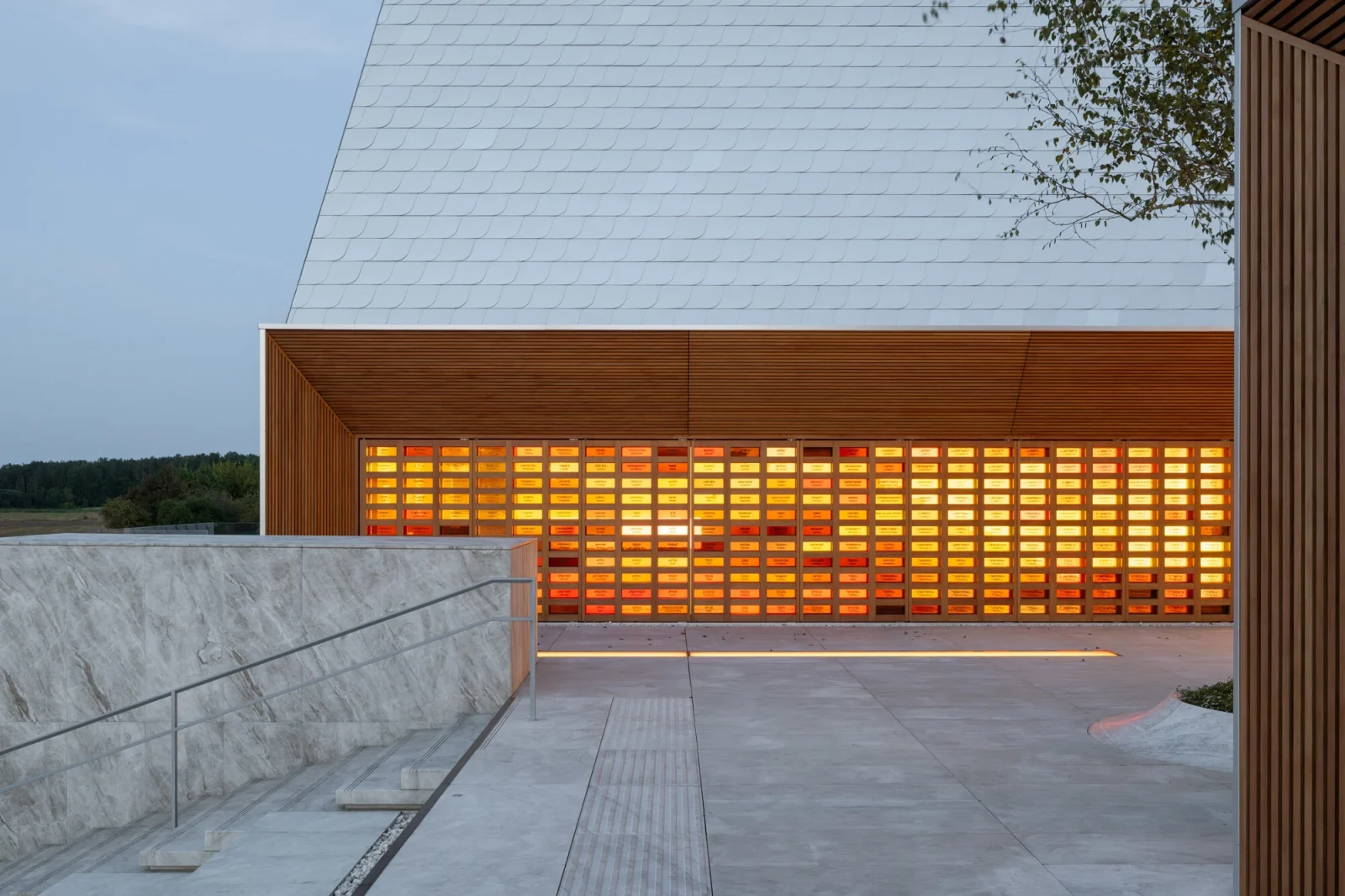
A key feature of the museum is its memorial wall, composed of hand-crafted glass elements set within a wooden framework. This surface carries the names of the many shtetls that once existed across Lithuania before World War II, turning architectural detail into a form of collective remembrance.
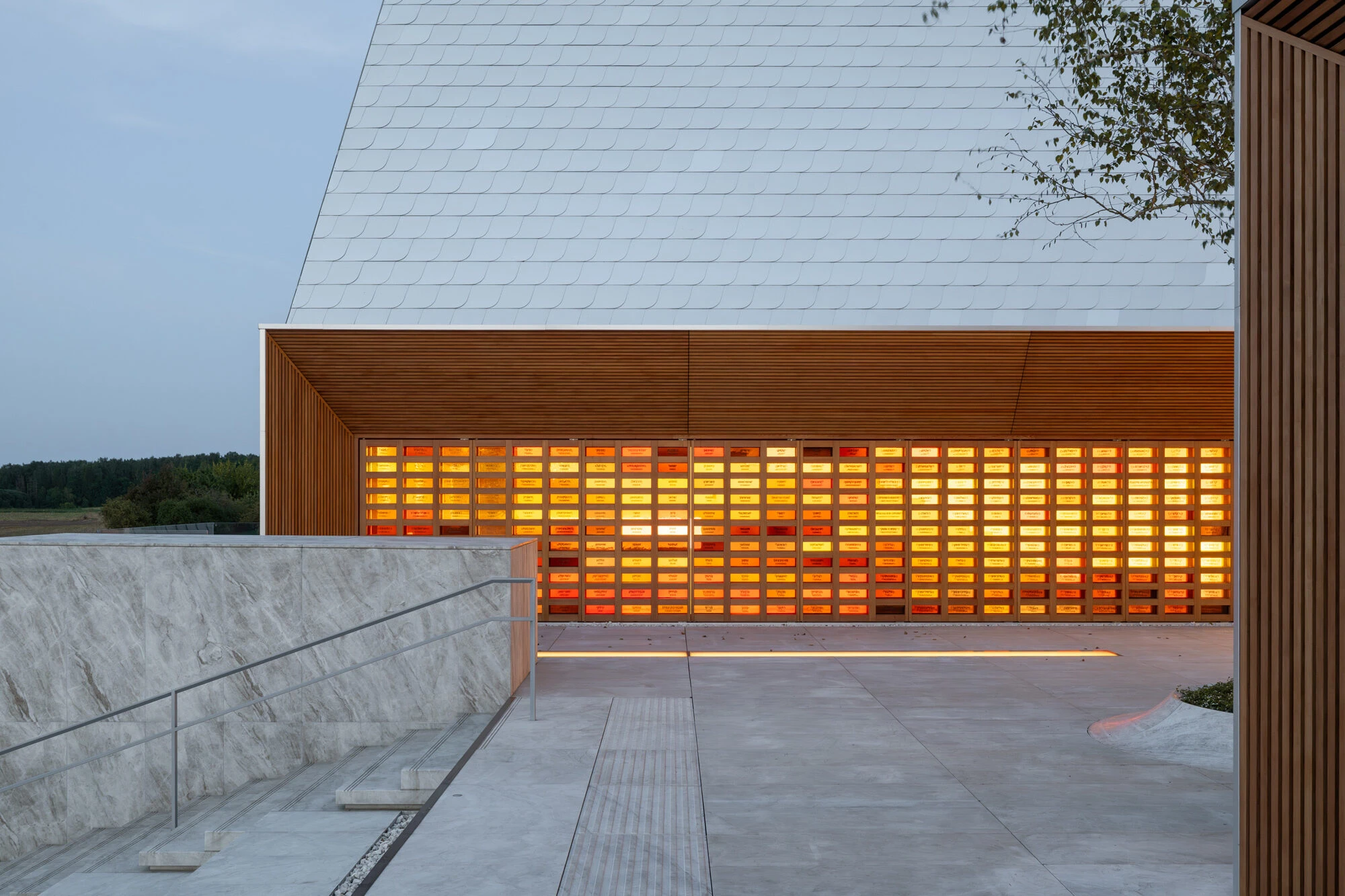
Despite the heavy historical subject, the museum avoids expressive monumentality. The design deliberately emphasizes calmness, clarity, and restraint. Natural light, precise detailing, and controlled spatial proportions are used to create a reflective atmosphere. The intention is to recreate trauma visually and allow visitors to engage with memory through quiet observation.
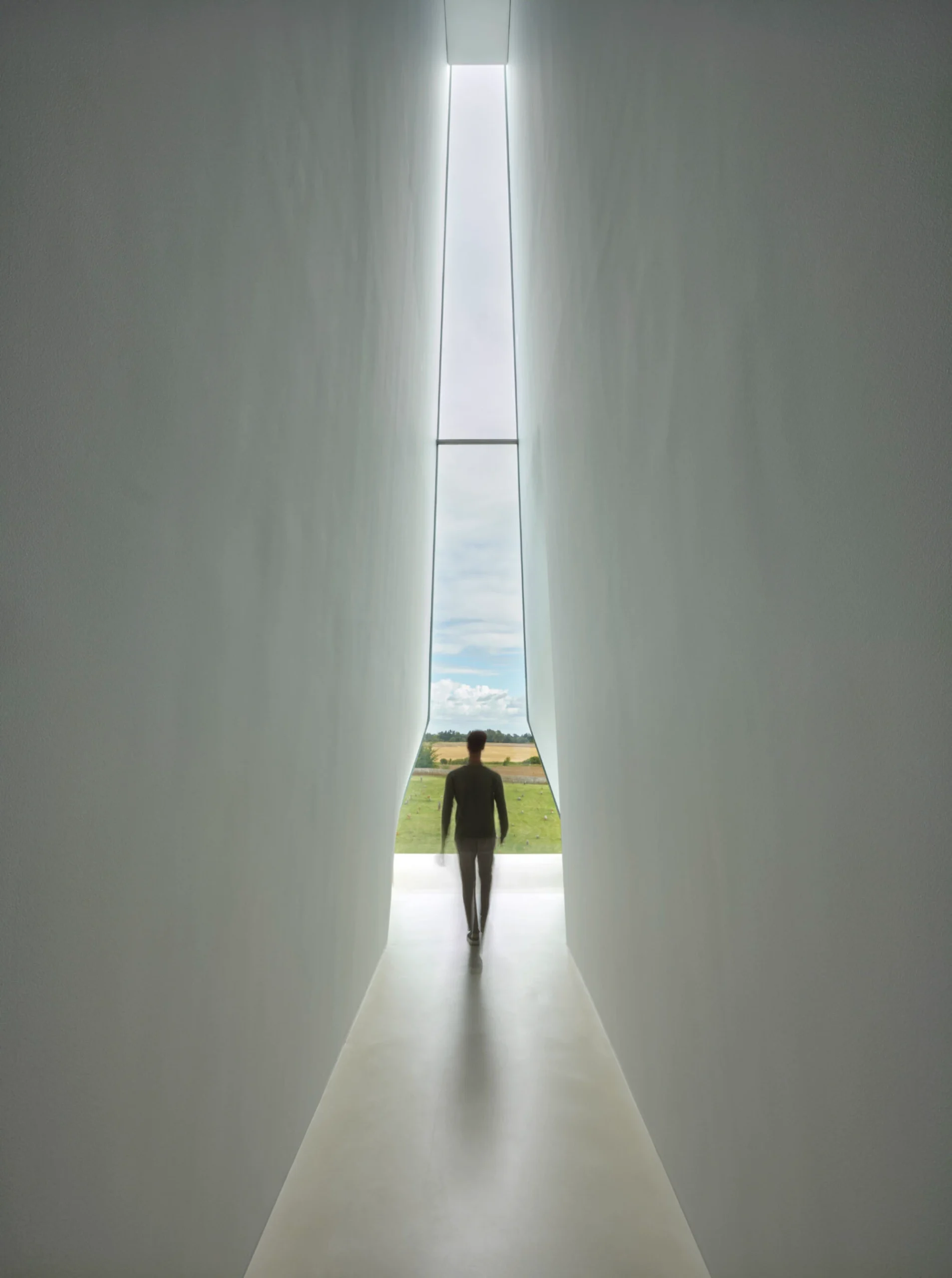
The result is an architectural environment that operates on multiple levels: a reconstructed village form, a memorial landscape, and a narrative exhibition space. Through these layers, The Lost Shtetl Jewish Museum becomes both a place of remembrance and a subtle reconstruction of cultural presence that no longer exists in physical form.
The Lost Shtetl Jewish Museum Project Details
Location: Šeduva, Lithuania
Architect: Lahdelma & Mahlamäki Architects
Total Area: 4,900 m²
Programme: Exhibition spaces, multipurpose hall, administration areas, library, café
Year: 2025
Explore Courses
.jpg "Ondrej Chybik - Rethinking Architecture")