



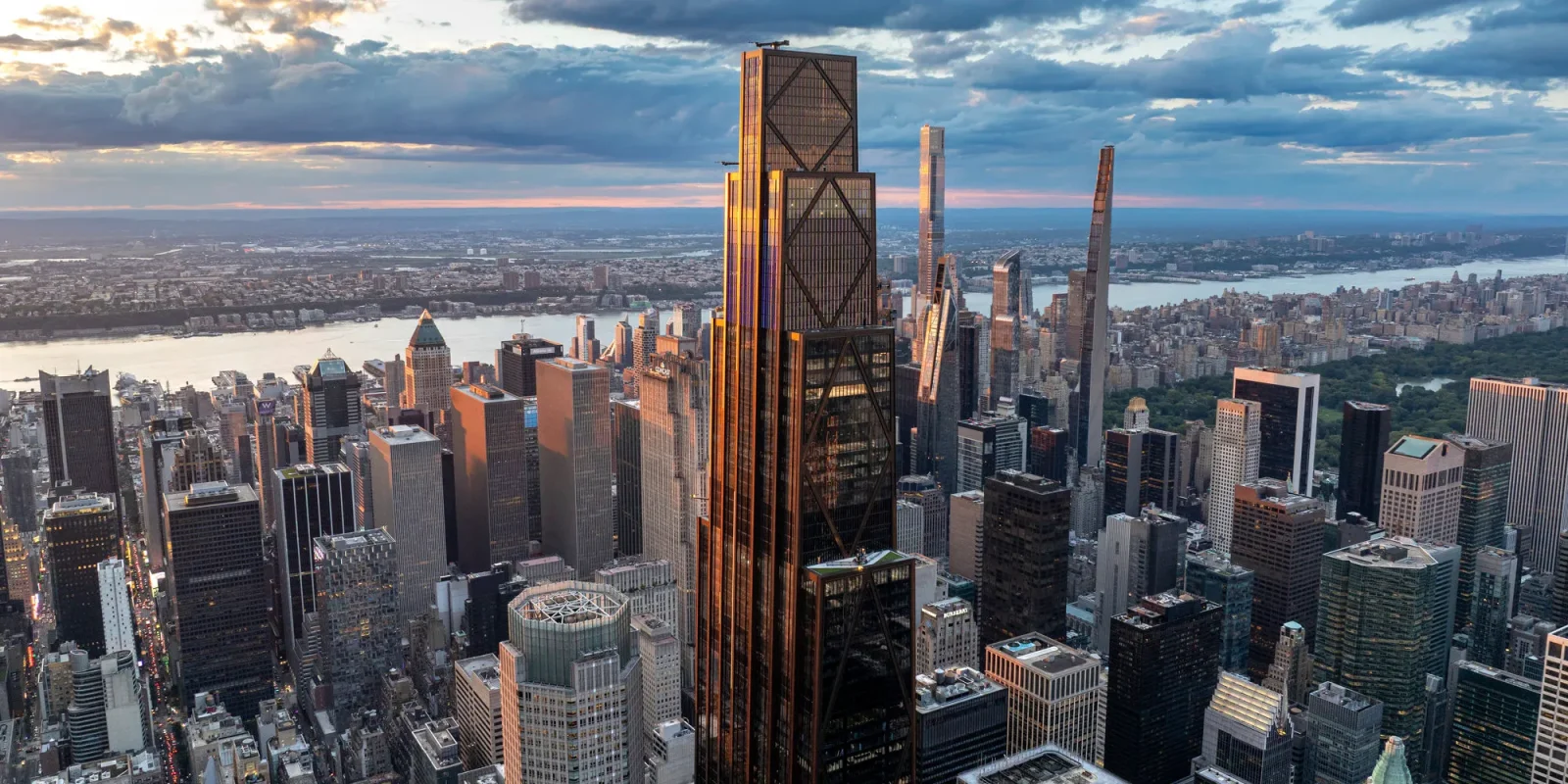
The new global headquarters of JPMorganChase, located at 270 Park Avenue in Midtown Manhattan, has officially been completed, marking a significant architectural, structural, and sustainability milestone in the city’s skyline. Designed by Foster + Partners, the 60-storey super-tall office tower replaces the previous building on the site. It emerges as New York City’s largest all-electric tower with net-zero operational carbon emissions.
Architectural Design and Site Response of JPMorganChase’s Headquarters
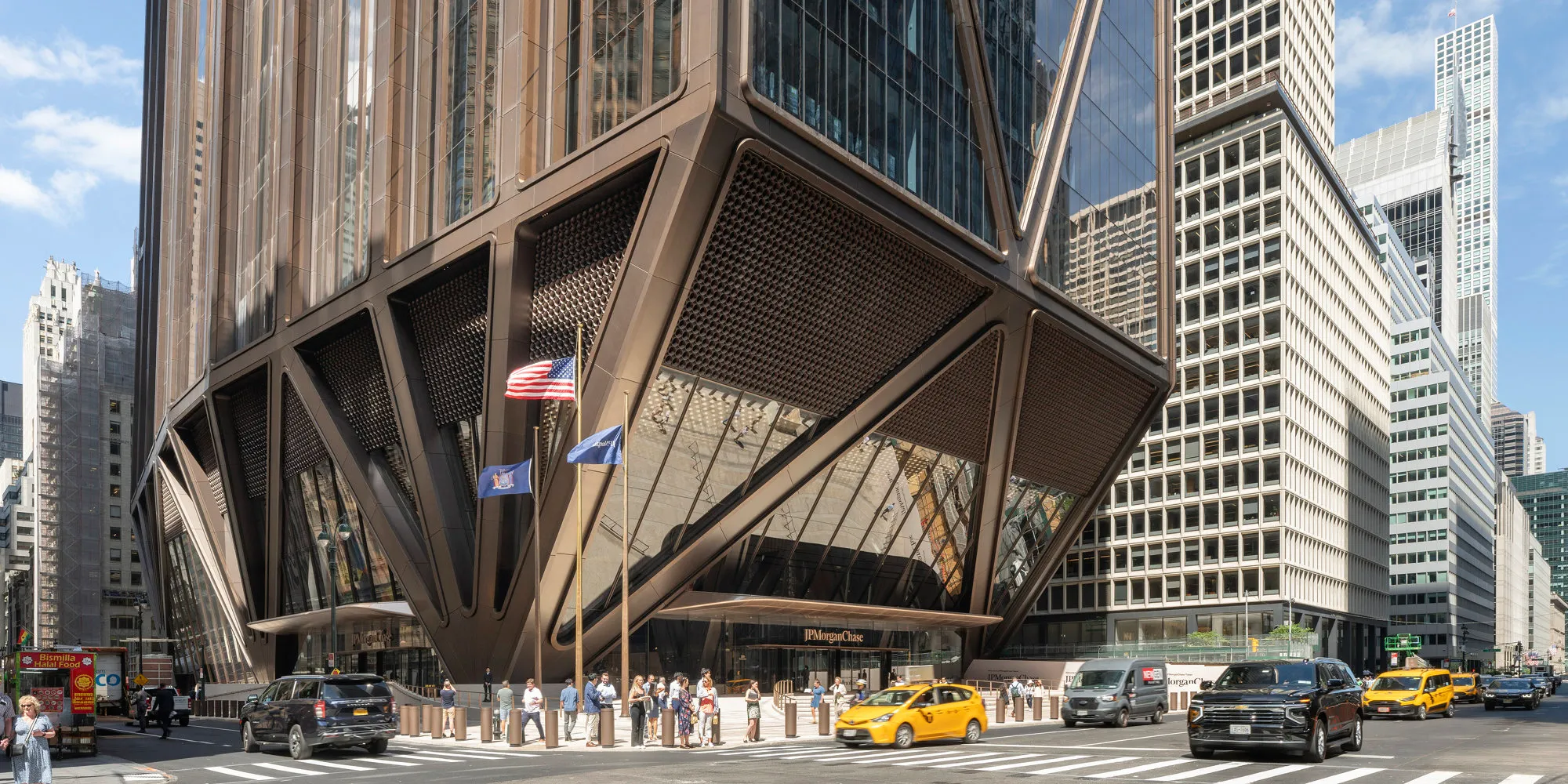
The tower sits on a full Manhattan block bounded by Park Avenue, Madison Avenue, East 47th Street, and East 48th Street. Foster + Partners describes the concept as creating “a timeless addition to Park Avenue, which celebrates the city’s iconic architectural history” and simultaneously “serves as a powerful new symbol for the next generation of office towers in New York.”
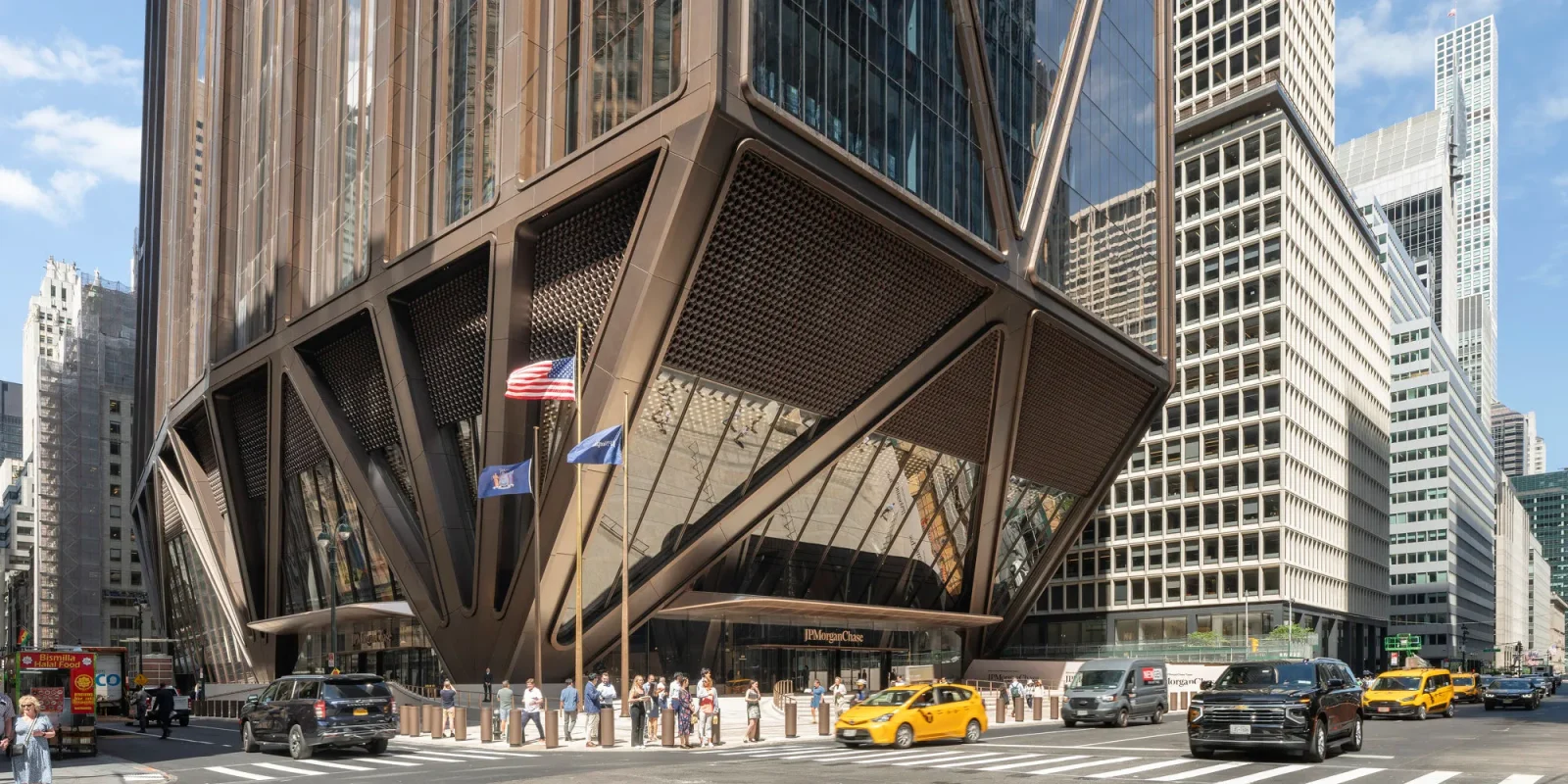
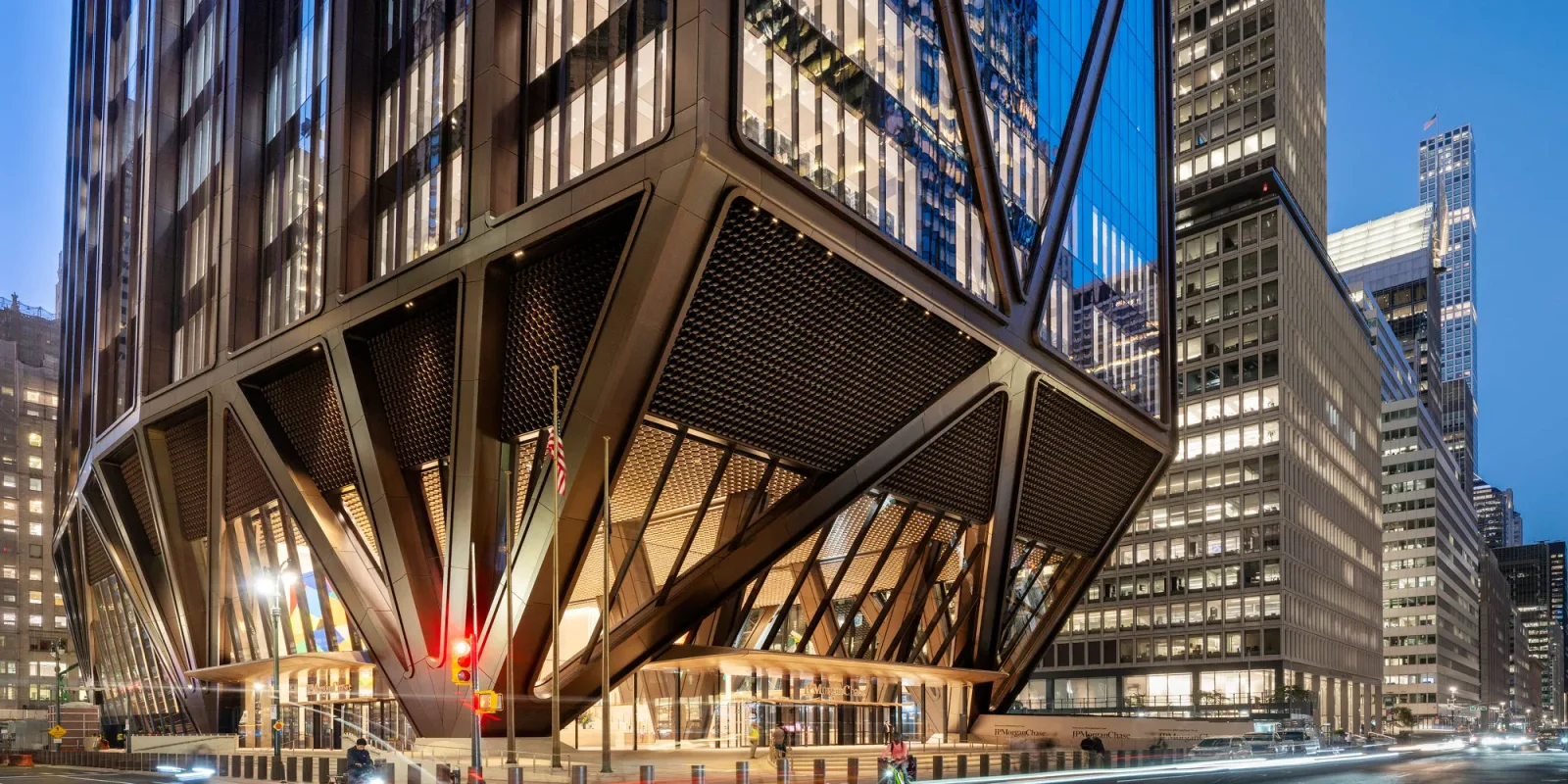
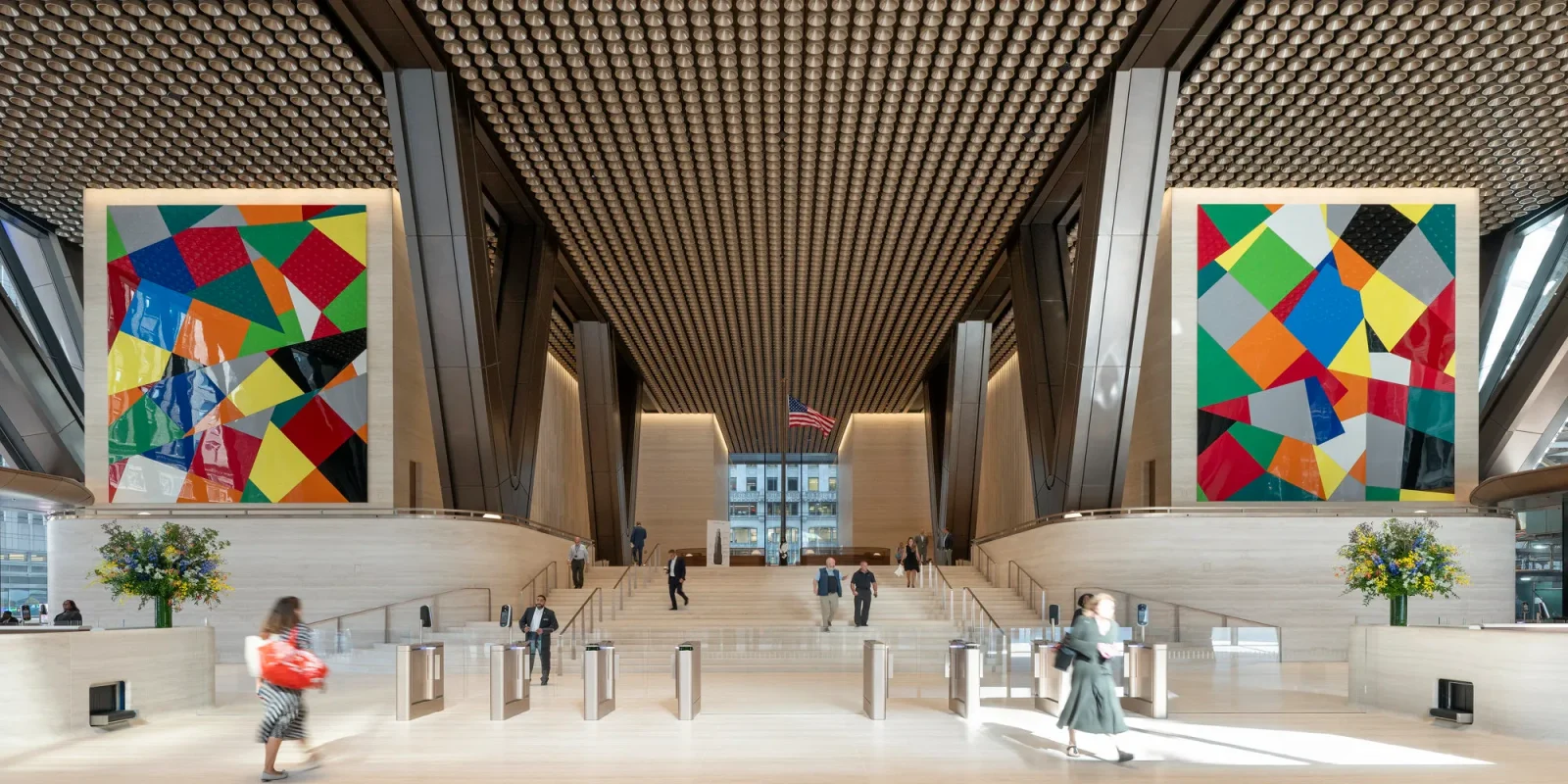
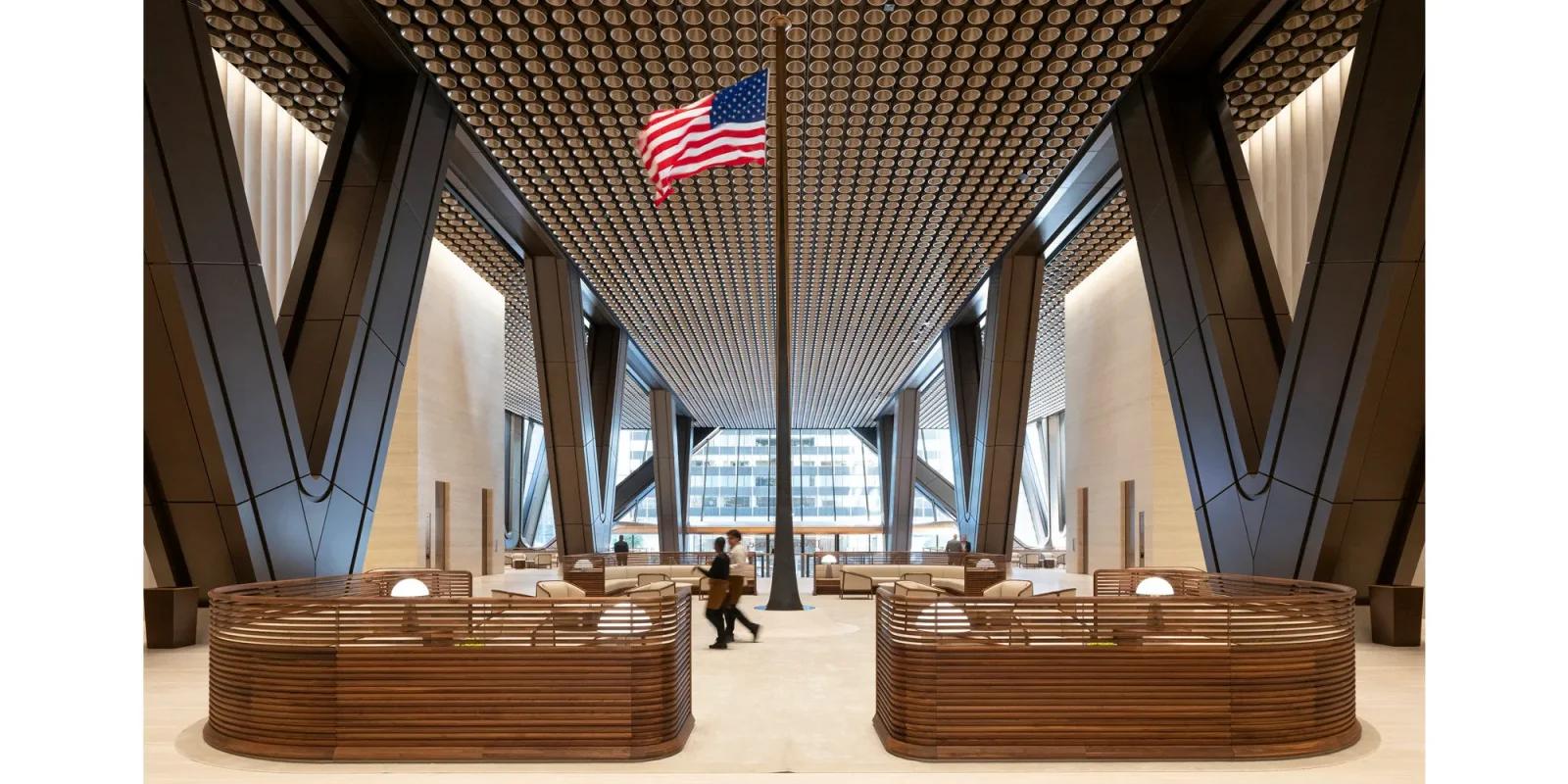
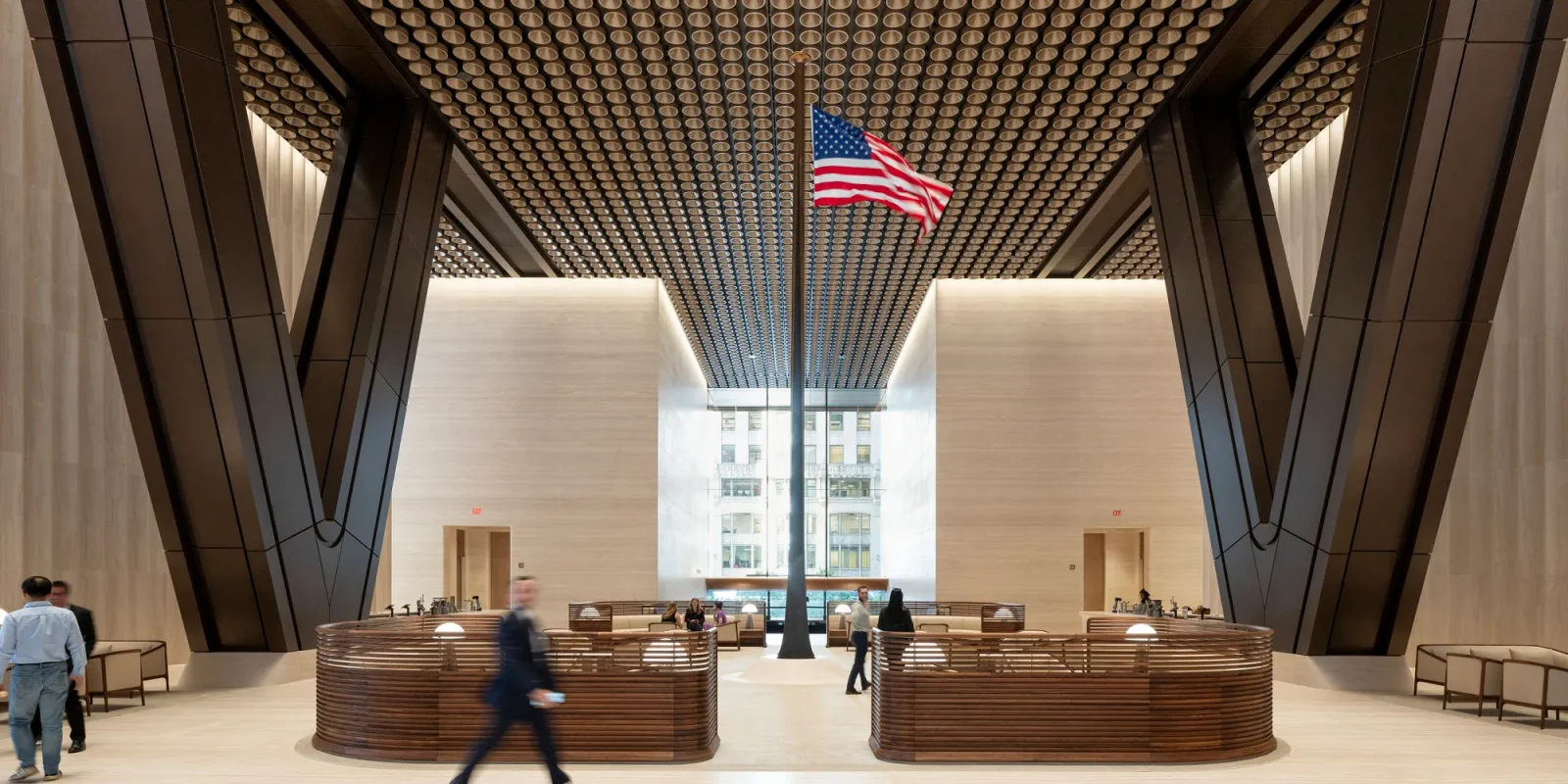
To negotiate the dense urban infrastructure beneath (including rail tunnels, utilities, and the Midtown East rezoning environment), the architectural strategy ensures the tower “touches the ground lightly across the entire block.” A broad two-story lobby spans from Park to Madison Avenues, creating a visual corridor through the site and extending sight lines, an unusual move in high-rise Manhattan office design.
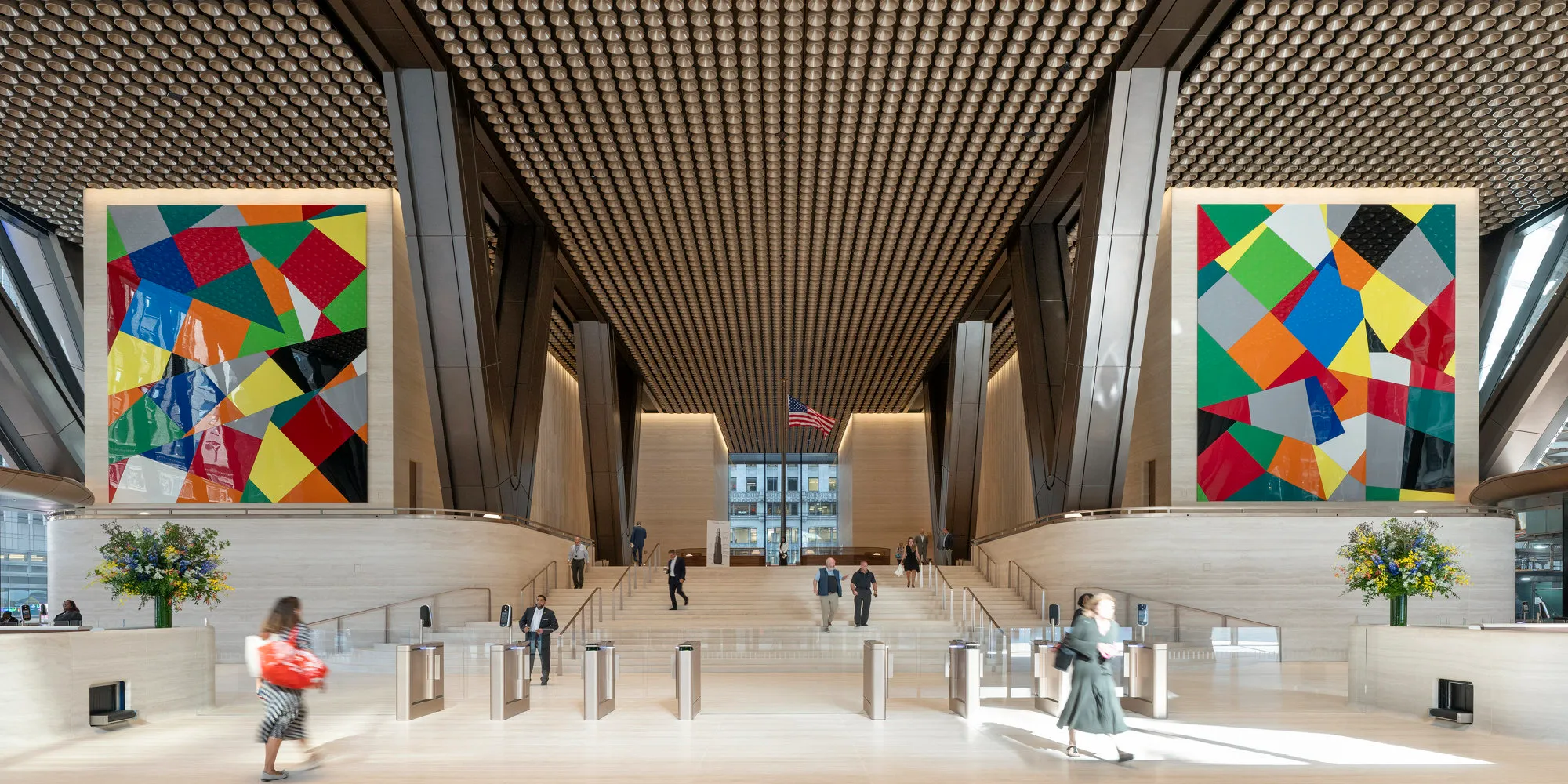
In the words of the firm’s founder, Norman Foster: “The unique design rises to the challenge of respecting the rhythm and distinctive streetscape of Park Avenue, while accommodating the vital transport infrastructure of the city below. The result is an elegant solution where the architecture is the structure, and the structure is the architecture.”
Foster + Partners’ Structural Innovation: Fan-Column and Triangular Bracing
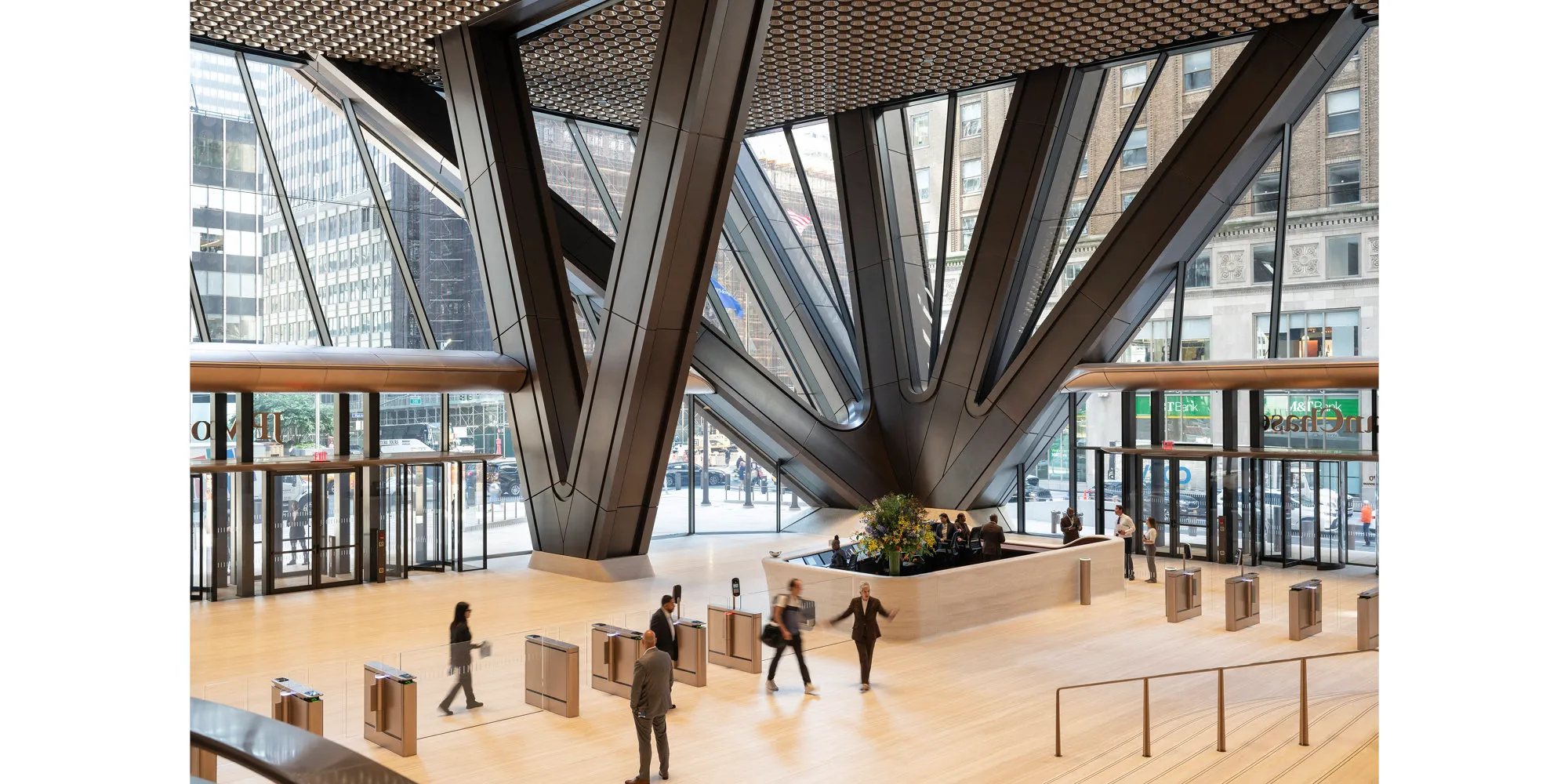
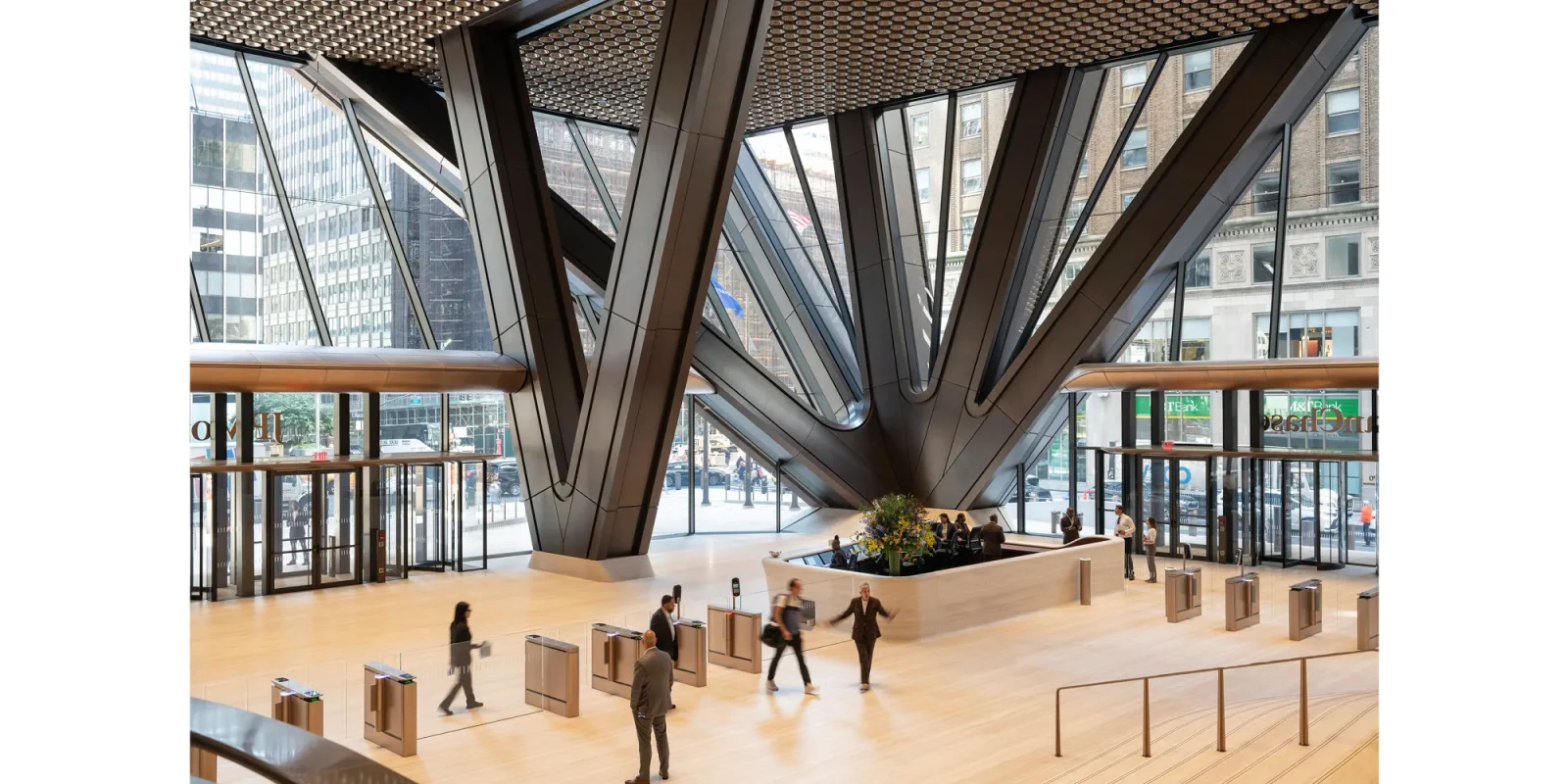
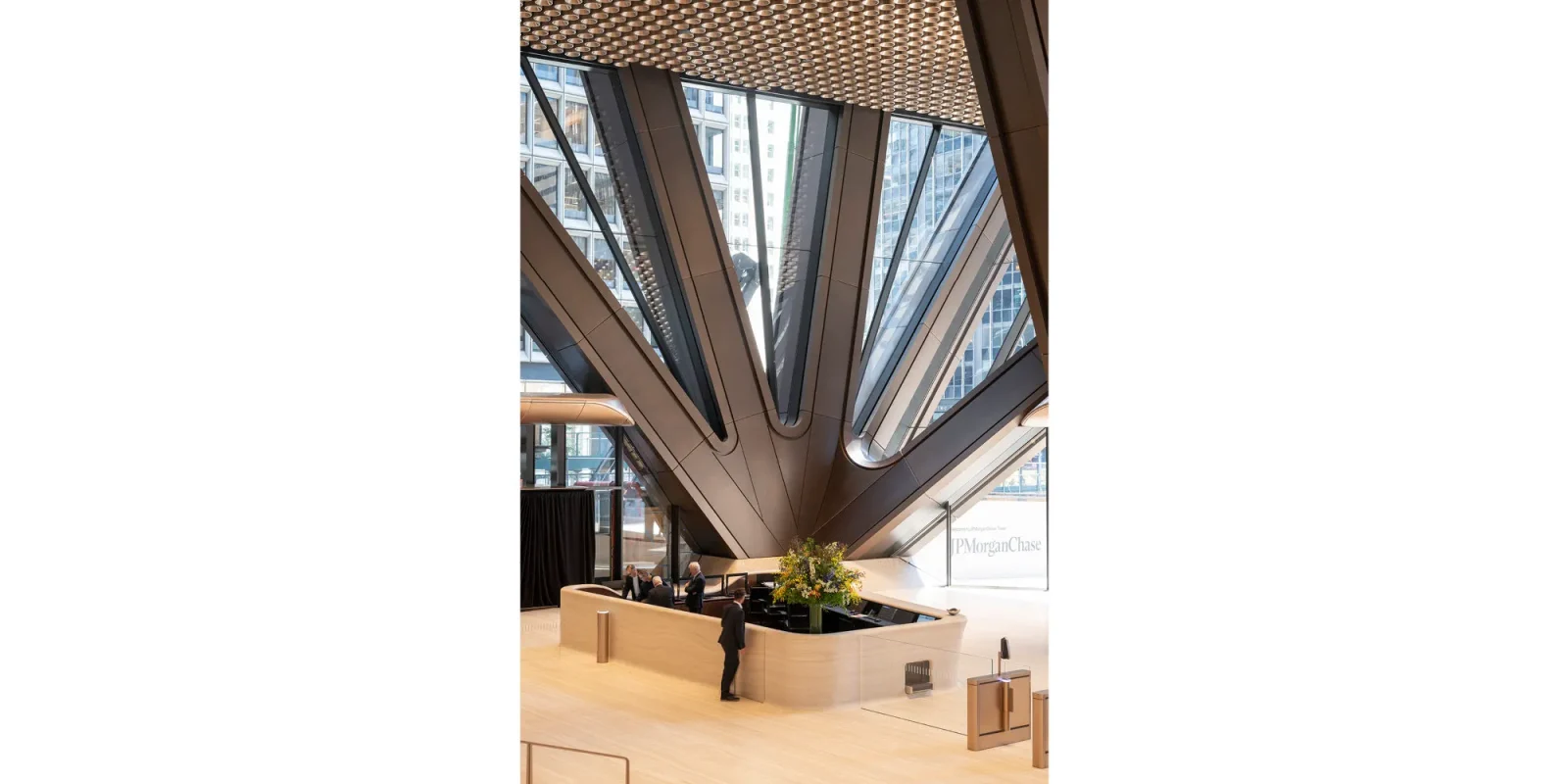
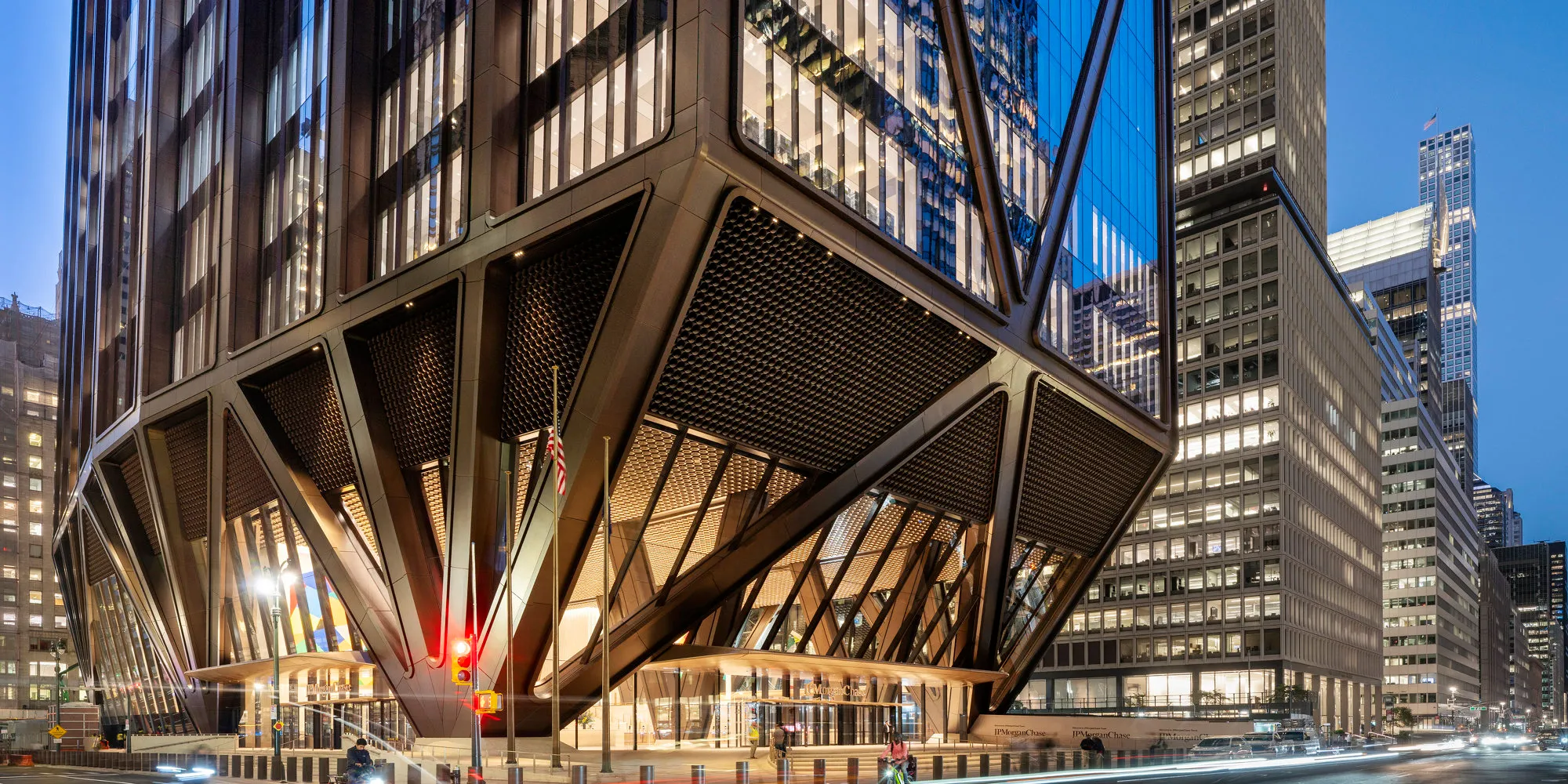
One of the structural signatures of the building is its lower “fan-column” configuration and the use of triangular bracing. Rather than placing a traditional dense grid of columns at ground level, the design spreads the structural load via fanning steel columns at the base, which enables a more open ground plane and elevated mass above.
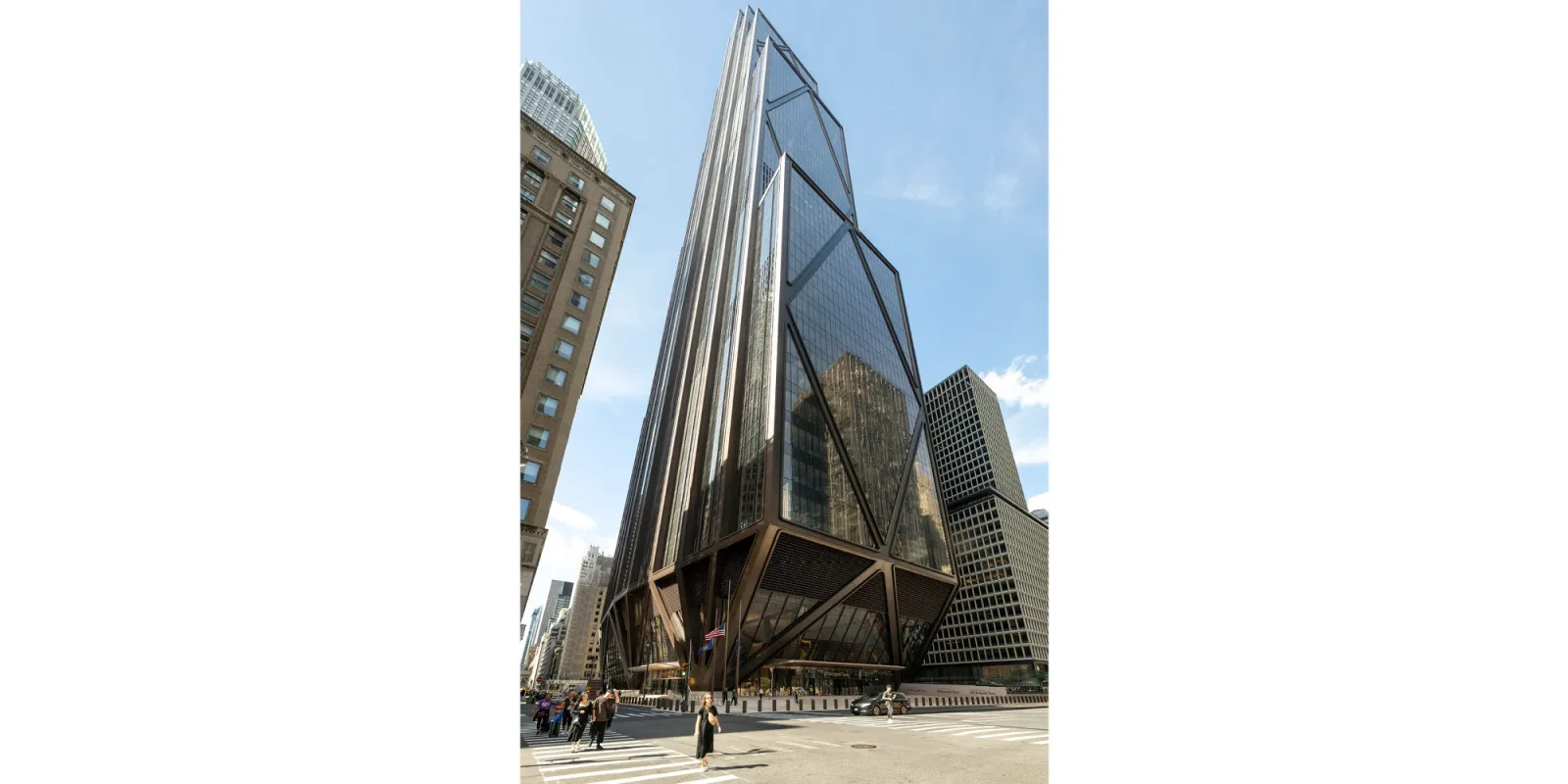
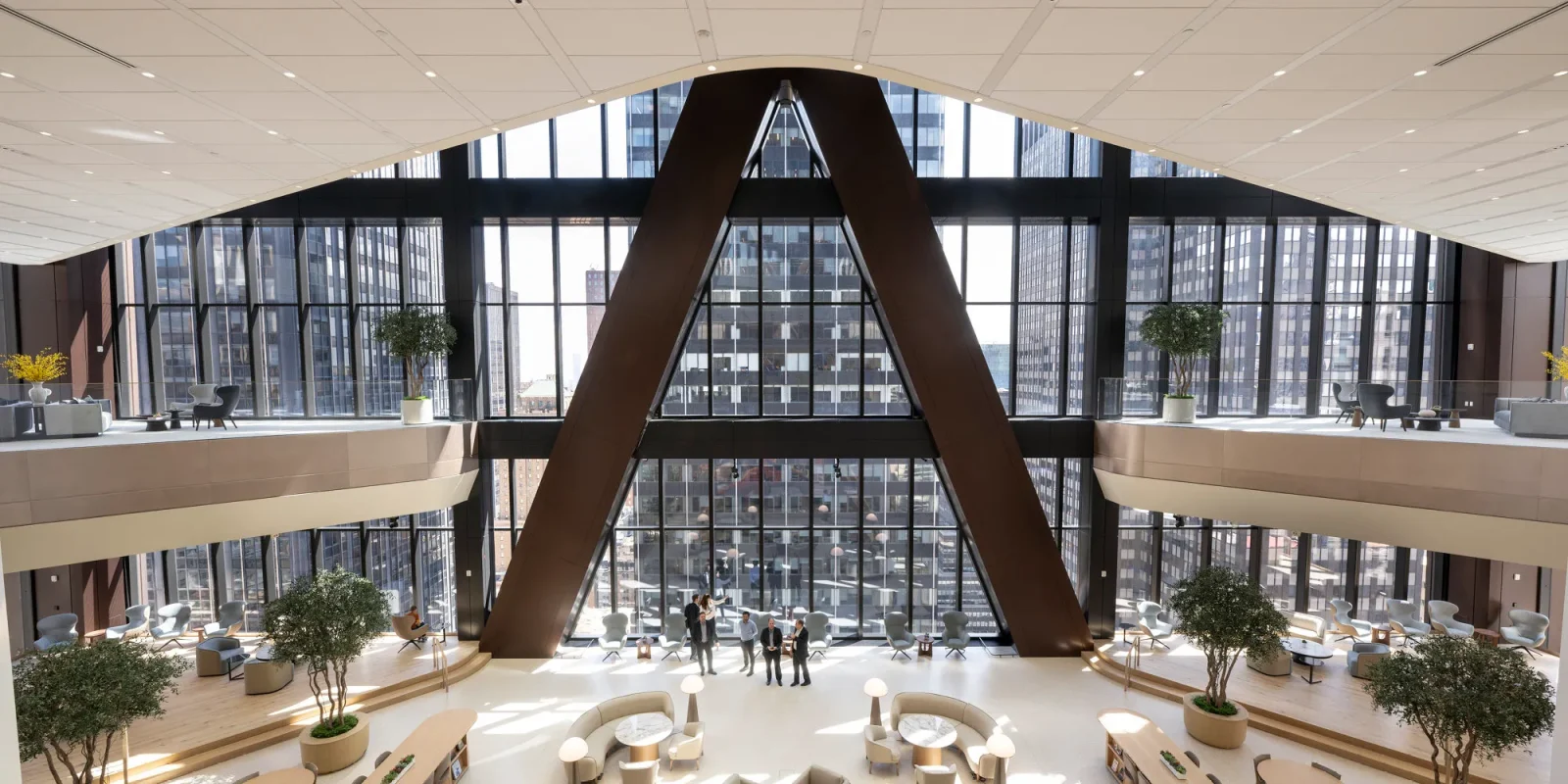
The superstructure uses triangular brace trusses that shift load into the ground efficiently and allow the tower’s massing to elevate above the street-level space. The plan allows the building’s podium to effectively “float” over the sidewalk and public realm. The tiered volume of the tower, sometimes described as a stack of rectangular extrusions, further helps distribute floor-plate loads and provide vertical setback steps.
Façade & Envelope Systems
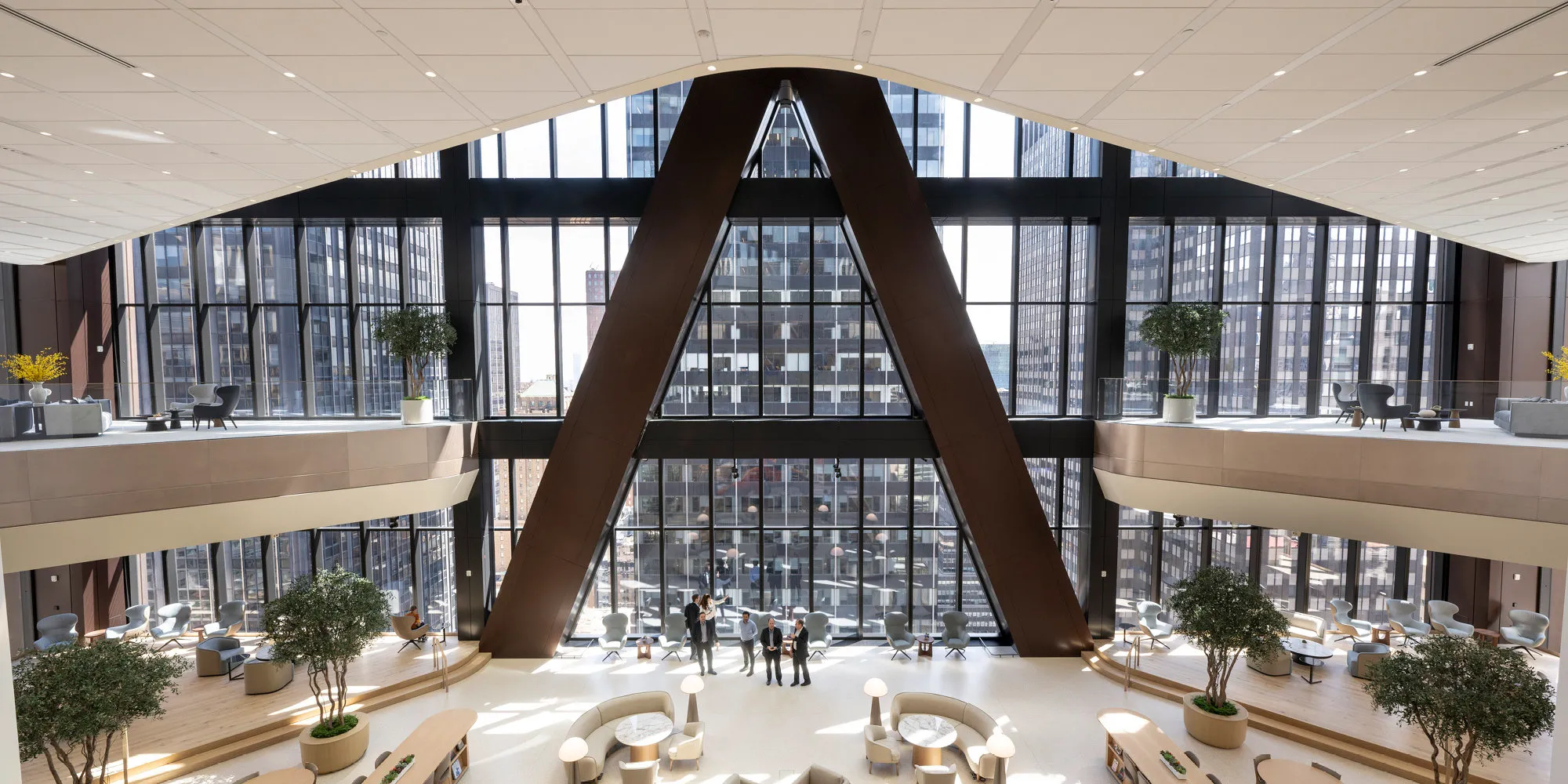
The building’s envelope plays a central role in sustainability. The façade is built with full-height triple-glazed insulating glass units, accompanied by high-performance coatings and automated solar-shading blinds integrated with the building’s HVAC systems. The glazing and shading regimes are designed to deliver significantly enhanced daylighting (around 30% more daylight than a typical speculative office building) as well as improved control of solar gain and heat loss.
Visually, the exterior offers bronze-toned cladding, structural expression of large vertical I-beam-like mullions, and the reveal of the high-performance glass behind. The facade reached its top level in 2024, demonstrating the projected scale of the 423-metre (1,388-foot) structure.
Key systems include:
- Intelligent building controls, sensors, AI, and machine-learning systems that monitor and adapt energy loads in real time.
- Water storage and reuse systems are designed to reduce consumption by more than 40%.
- Enhanced indoor air quality, biophilic design features (such as increased natural daylight, view lines, and plant integration), and circadian lighting systems to promote occupant well-being.
- The building is also designed with the ambition of achieving LEED Platinum v4 certification and the WELL Health-Safety Rating.
Urban and Site Enhancements
The tower dramatically increases the public realm at street level: it provides 2.5 times more outdoor space than its predecessor, with an expanded public plaza and sidewalk greening. Moreover, the elevated base (approximately 80 feet above grade according to some sources) helps open up views from Park to Madison and contributes to the notion of the building floating above the block. This plaza and openness align with the broader goals of the Midtown East Rezoning initiative, encouraging modern office development combined with improved public access and transit support.
Workplace Environment & Amenity Strategy
The headquarters is designed for approximately 10,000 to 14,000 employees initially, across a gross floor area of around 2.5 million square feet (≈ 230,000 m²).
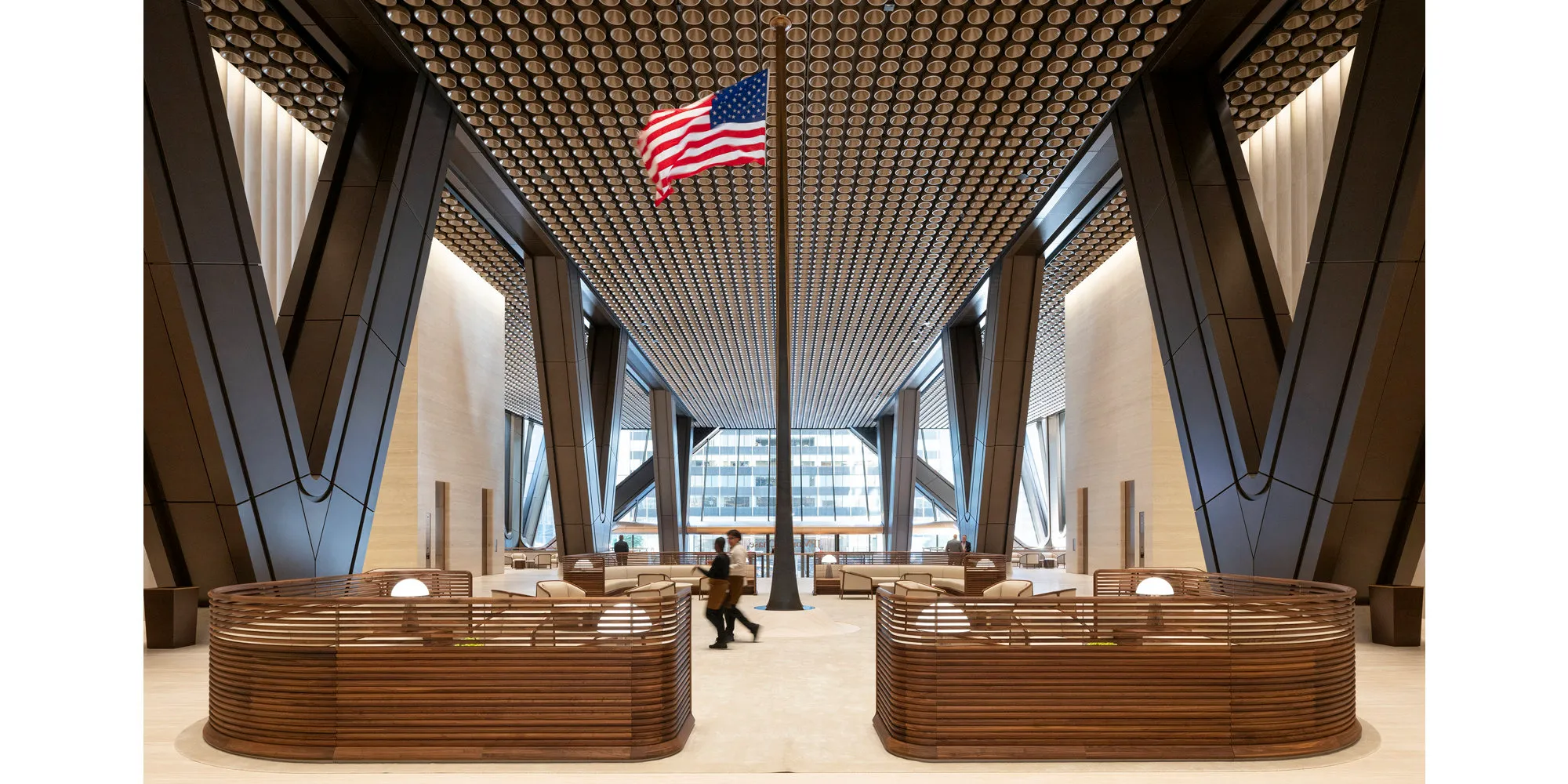
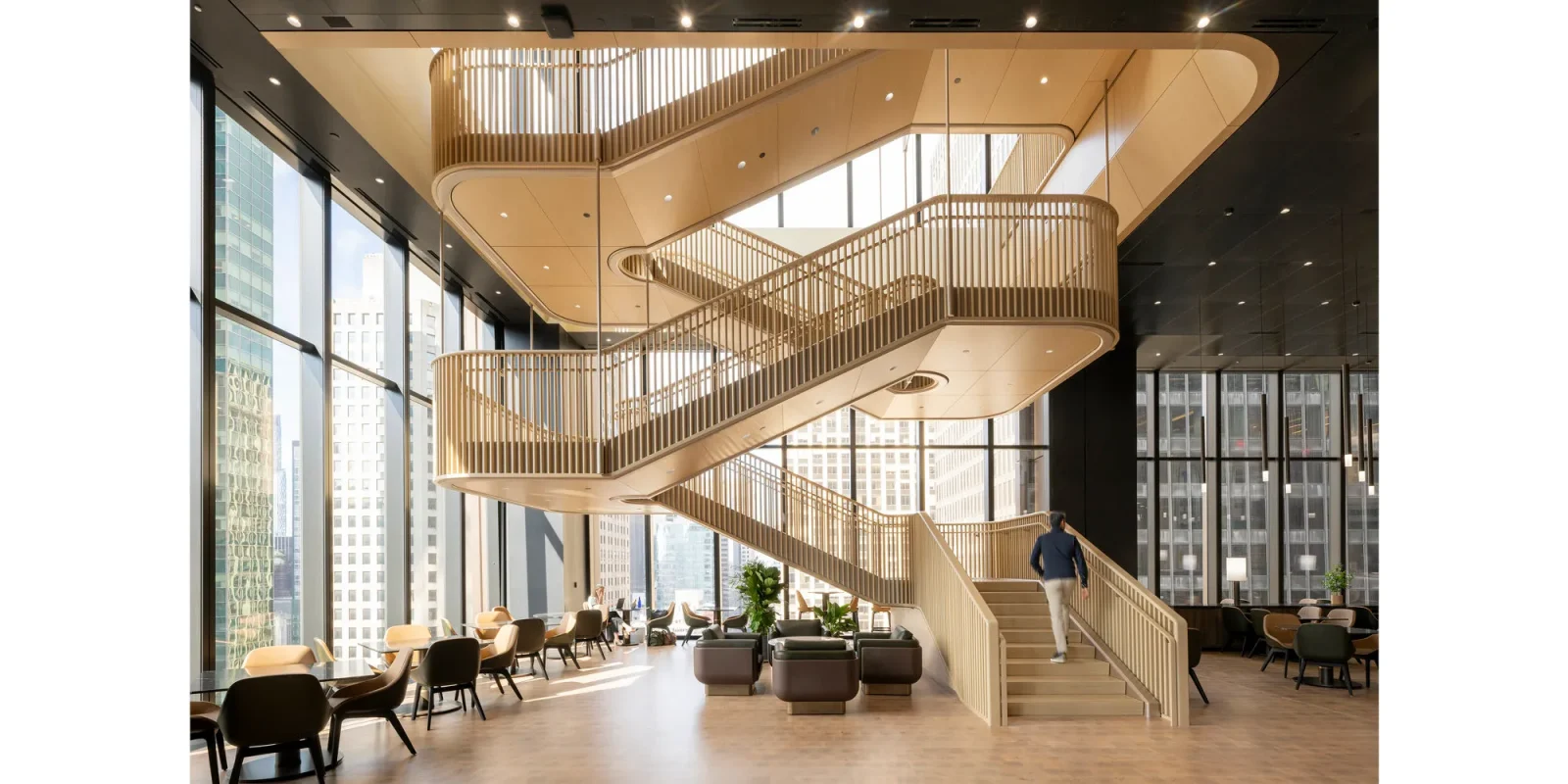
The interior design emphasizes daylight, views, and communal space, moving away from dense, dark office floors to a more open, transparent working environment. According to Foster + Partners, “workspaces flooded with daylight and fresh air, incorporating biophilic elements and materials to improve wellbeing.”
Amenity floors provide hospitality-type services, wellness areas, food halls, and lounge spaces. With the official opening in October 2025 (October 21), the completed 270 Park Avenue headquarters signals several things: a reaffirmation of JPMorganChase’s long-term commitment to New York City, a new benchmark in high-rise sustainable office design, and a structural demonstration of how dense urban infrastructure sites can be handled with both elegance and engineering.
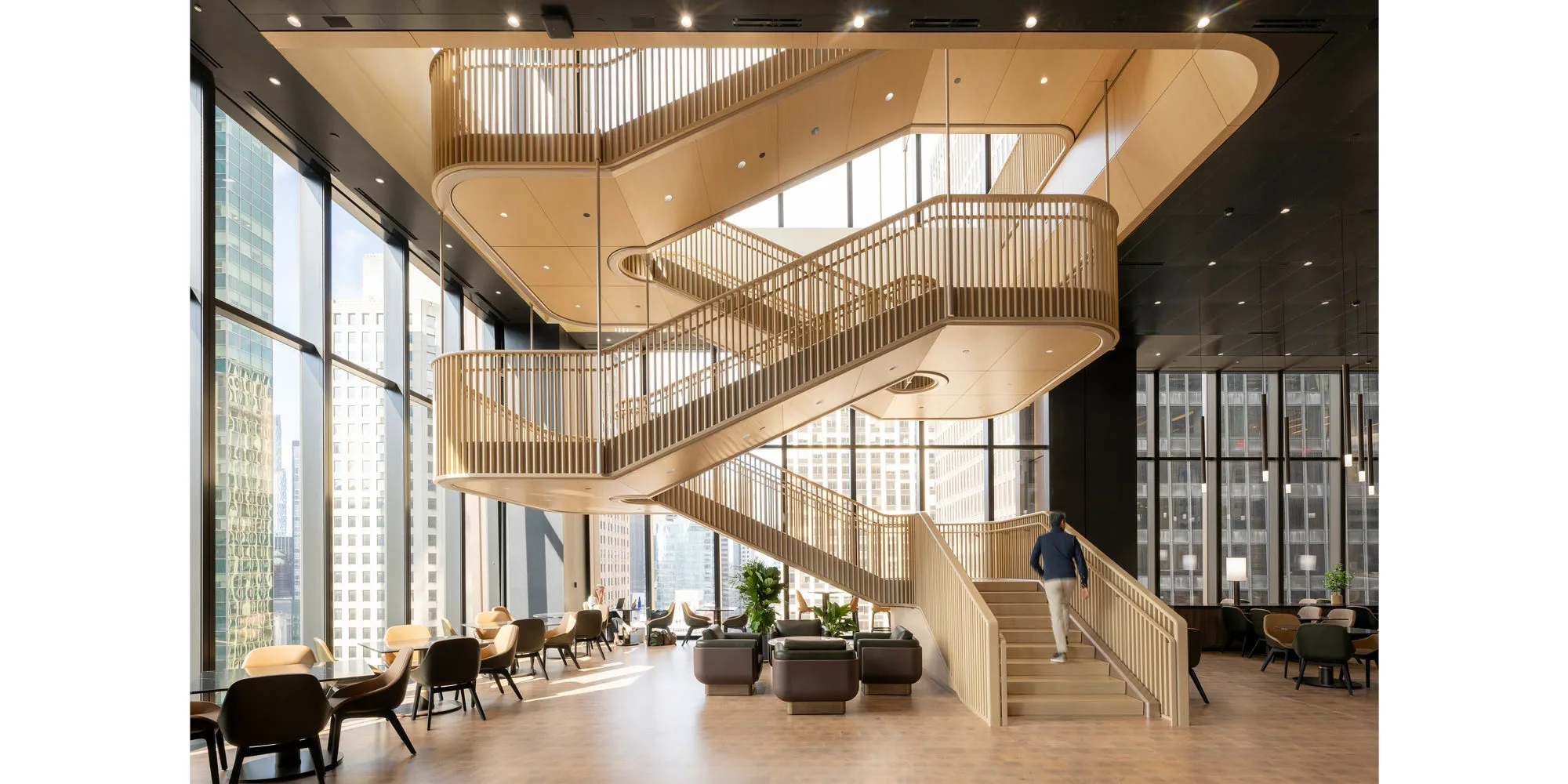
From an architectural perspective, the new 270 Park Avenue demonstrates how design, engineering, and corporate responsibility can converge into a single form. With Foster + Partners’ precision detailing, innovative structure, and a genuine push toward sustainability, the tower is a headquarters for the modern urban workplace.
JPMorganChase Global Headquarters at 270 Park Avenue Project details
Location: 270 Park Avenue, Midtown Manhattan, New York City
Project Name: JPMorganChase Global Headquarters
Architect: Foster + Partners
Structural Engineer: Severud Associates
Client / Developer: JPMorganChase & Co.
Completion Year: October 2025
Building Height: 1,388 feet (423 meters)
Floors: 60
Total Floor Area: Approximately 2.5 million sq ft (≈ 230,000 m²)
Primary Structural System: Fan-column and triangular bracing structure
Image credit: © Foster + Partners
Explore Courses
.jpg "Ondrej Chybik - Rethinking Architecture")