

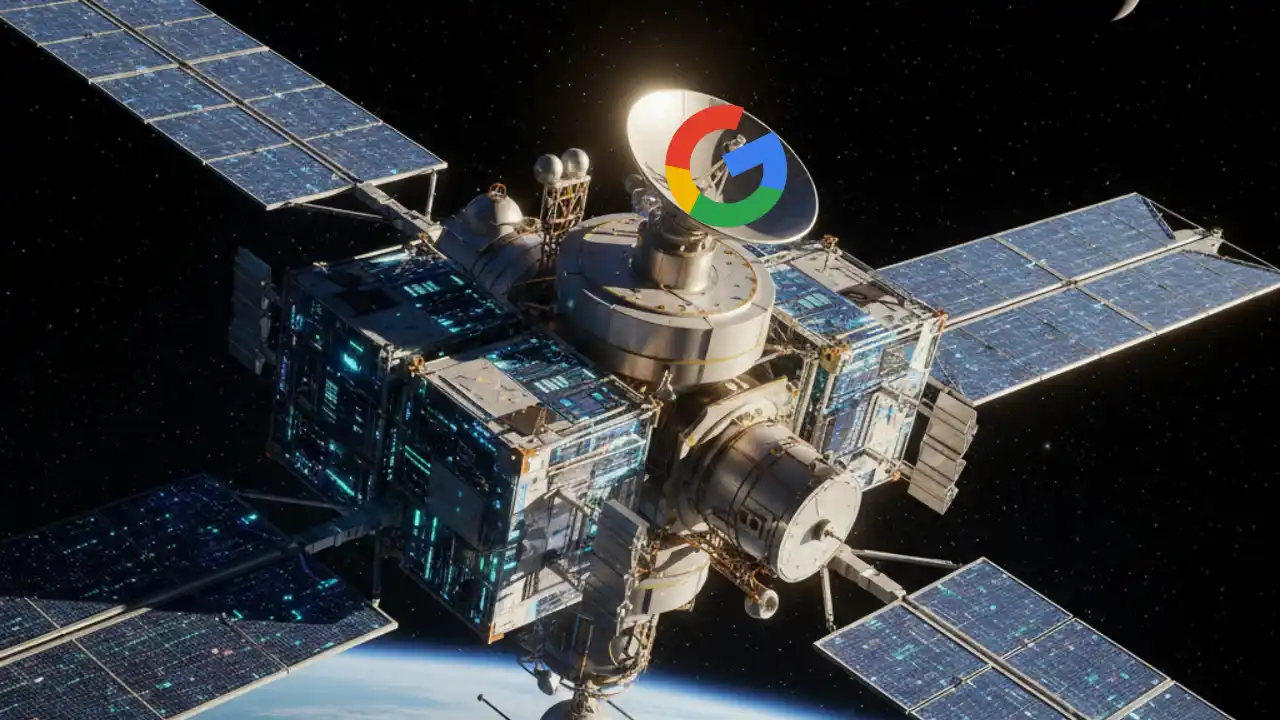










Google has unveiled a research program, “Project Suncatcher,” that explores moving AI compute from Earth to space by placing server hardware on solar-powered satellites. The company says tightly packed constellations of small satellites carrying Google’s AI processors could one day run model training and inference using near-continuous solar energy, with prototype hardware scheduled for orbital tests in 2027.
What Project Suncatcher Proposes
Project Suncatcher envisions compact constellations of solar-powered satellites equipped with Tensor Processing Units (TPUs) and linked by free-space optical (laser) communications. Google’s public materials describe arranging roughly 80 satellites in low Earth orbit, approximately 400 miles (≈640 km) above the surface, so that they can share data at very high rates and harvest sunlight far more efficiently than ground panels. The company frames the effort as a research “moonshot” to test whether space can be a practical place to scale AI compute.

Hardware and Energy: TPUs, Solar Arrays, and Continuous Power
The plan centers on shipping TPUs, chips Google designs for neural network training and inference, into orbit and powering them with large photovoltaic arrays. Google’s analysis claims orbiting solar panels could produce up to eight times the energy per unit area compared with equivalent systems on Earth because of continuous sun exposure in some orbital regimes. That near-continuous generation is the key argument; it reduces dependence on terrestrial grids and the land- and water-footprint associated with data center cooling.
Communications Architecture: Optical Links and Formation Flying
To match the throughput of terrestrial data centers, Google says satellites would need inter-satellite and downlink channels capable of “tens of terabits per second.” The company proposes free-space optical links (laser comms) for those high data rates and imagines tight formations of satellites flying “kilometers or less” apart to shorten link distances and increase capacity. Achieving those link budgets and maintaining formation-flight control are core technical hurdles.

Google plans to fly initial hardware tests in the near term. The company has stated it intends to launch two prototype satellites in a joint mission with Planet by early 2027 to validate key systems in orbit. The research material
Costs and Carbon Accounting: When Space Might Make Sense
Google’s cost model, published alongside the research, argues that rapidly falling launch prices could make operating orbiting data centers “roughly comparable” to terrestrial data centers on a per-kW/year basis by the mid-2030s. Proponents also point to lifecycle carbon savings from continuous solar power, though they note a single rocket launch currently emits hundreds of tonnes of CO₂, an upfront cost that must be amortized across a satellite’s operating life. Independent environmental and operational accounting will be essential to validate net gains.
Major Engineering Challenges
Google’s own materials highlight several unresolved technical risks:
- Thermal management: In a vacuum, heat rejection must be done radiatively. Dense-packed high-power processors will require novel radiator designs and control strategies.
- Radiation hardness and longevity: Electronics in low Earth orbit face higher ionizing radiation. Google reports testing its Trillium/TPU designs against radiation doses and claims survival for an equivalent five-year mission life without permanent failures, but wider qualification is required.
- High-bandwidth Networking: Achieving tens of terabits/sec between satellites and to ground stations demands highly reliable laser links and pointing systems. Atmospheric effects, alignment, and downtime are nontrivial.
- On-orbit reliability and maintenance: Earth data centers benefit from physical maintenance and component replacement. Servicing distributed satellites at scale is costly and complex.
Operational and Non-Technical Concerns
Beyond engineering, Project Suncatcher raises operational and policy issues:
- Space traffic and astronomy: A large constellation increases collision risk and will generate more objects to track. Astronomers warn that more low Earth orbit satellites can hinder optical and radio observations, appearing like “bugs on a windshield” for telescopes.
- Launch emissions and lifecycle impacts: The climate case hinges on amortizing launch emissions over long mission lives; short mission durations or high replacement rates would undercut projected carbon benefits.
- Regulatory, spectrum, and ground infrastructure: Licensing, coordination with existing satellite operators, and building high-capacity ground laser nodes and gateways will be major program elements.

How Project Suncatcher Fits Broader Industry Moves
Startups and incumbents are experimenting with on-orbit processing for niche workloads. Nvidia and partner startups have announced plans to launch AI chips into orbit for testing. Separately, SpaceX leadership has publicly signaled interest in scaling compute capabilities in orbit. Project Suncatcher ties into these parallel efforts but is explicit about testing Google’s TPUs and the systems engineering needed to operate many compute satellites together.
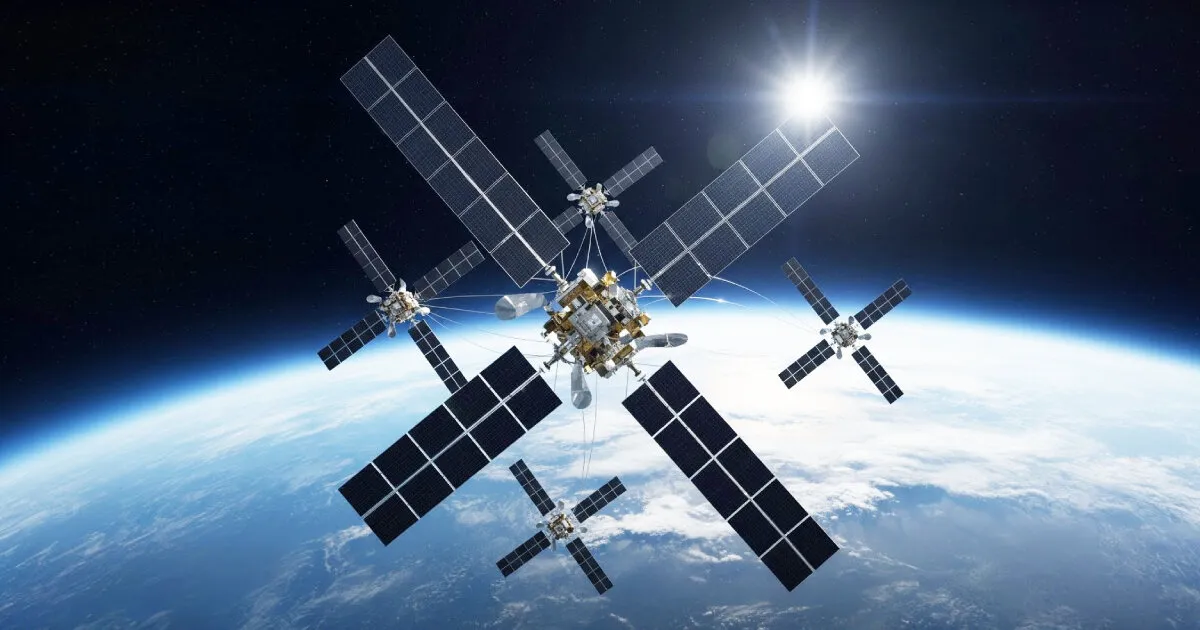
Project Suncatcher is a deliberate, research-first effort to test whether the unique electricity profile of space can change the economics and environmental tradeoffs of large-scale AI compute. It tackles promising advantages like near-continuous solar energy and potentially dense compute scaling, but also faces hard technical, environmental, and regulatory questions.
The 2027 prototype launches will be a decisive early test of feasibility; whether space becomes a mainstream home for data centers will depend on whether launch economics, on-orbit reliability, and environmental accounting all tilt in its favor.