

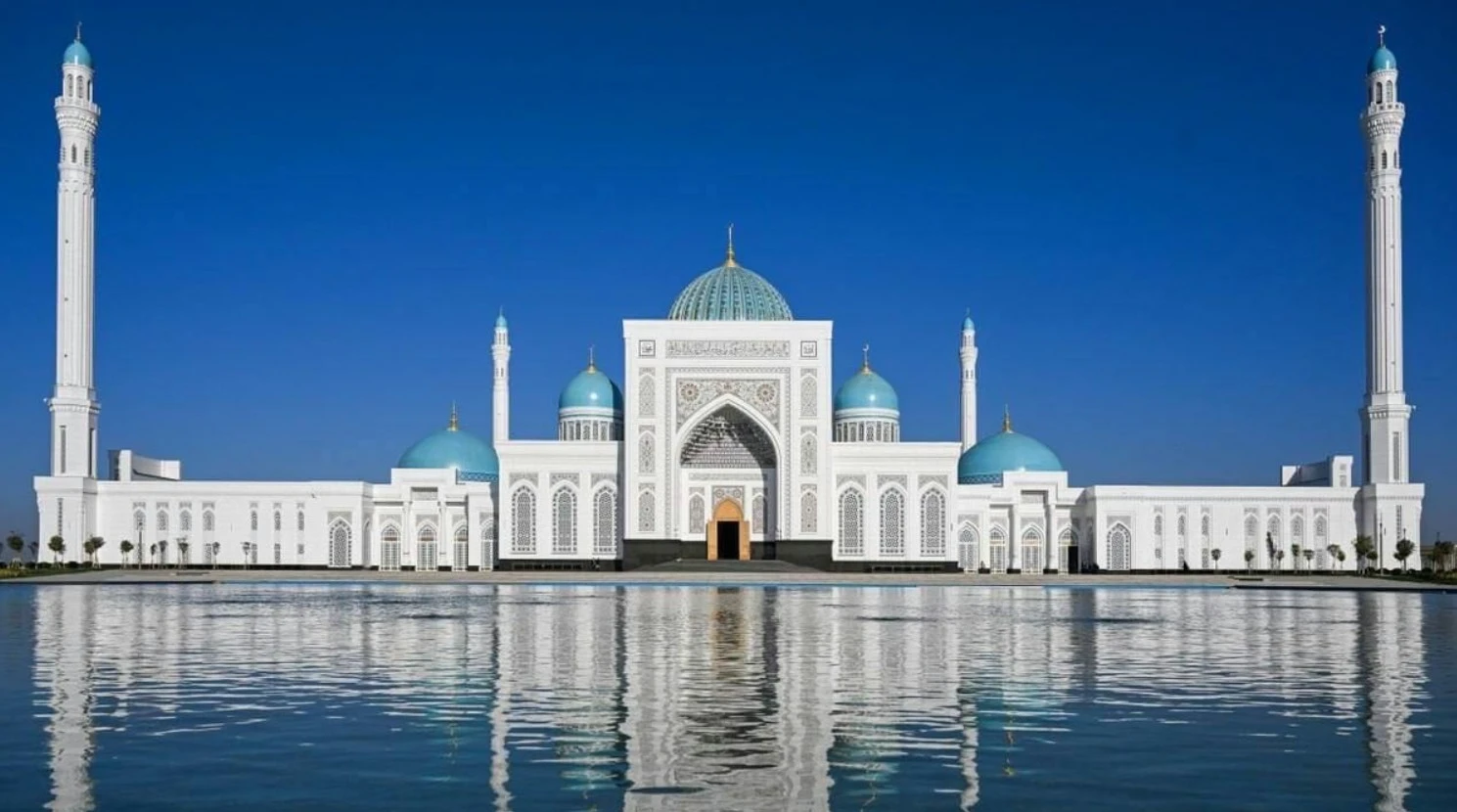
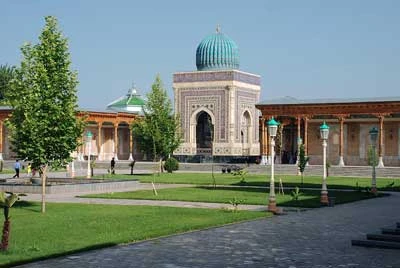
The village of Khartang was once a quiet resting place, but today it stands as a monumental bridge between 10th-century spiritual depth and 21st-century ambition. Uzbekistan‘s Imam al-Bukhari Memorial Complex has opened to host up to 65,000 visitors daily, an increase from its previous capacity of 12,000. The site is known as the final resting place of Muhammad ibn Isma’il al-Bukhari (810–870 CE), the preeminent scholar of Hadith.
Imam Al-Bukhari Memorial Complex
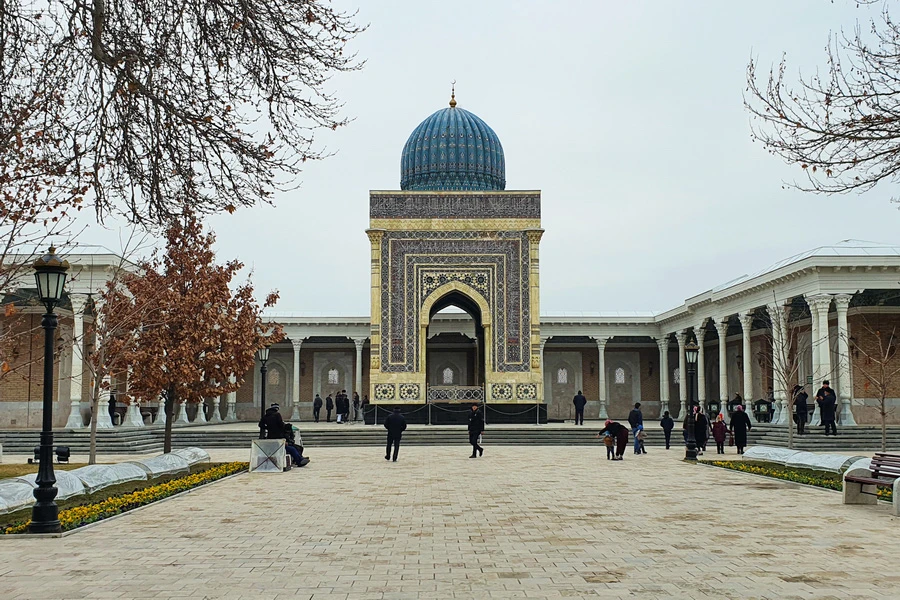
Located approximately 25 kilometers from the historic city of Samarkand, this massive redevelopment project marks the transformation of a 10th-century burial site into a global center for Islamic scholarship and tourism. Admired for its modern Islamic monumentalism, the architectural design of the new complex is defined by its symbolic use of light, space, and materiality.
Initiated under the direct oversight of President Shavkat Mirziyoyev, the expansion is not merely a logistical upgrade but a calculated effort by the Uzbek state to reclaim its historical role as a primary custodian of Islamic intellectual heritage, positioning Samarkand as a pivotal node in the global network of religious diplomacy.
Modern Islamic Monumentalism
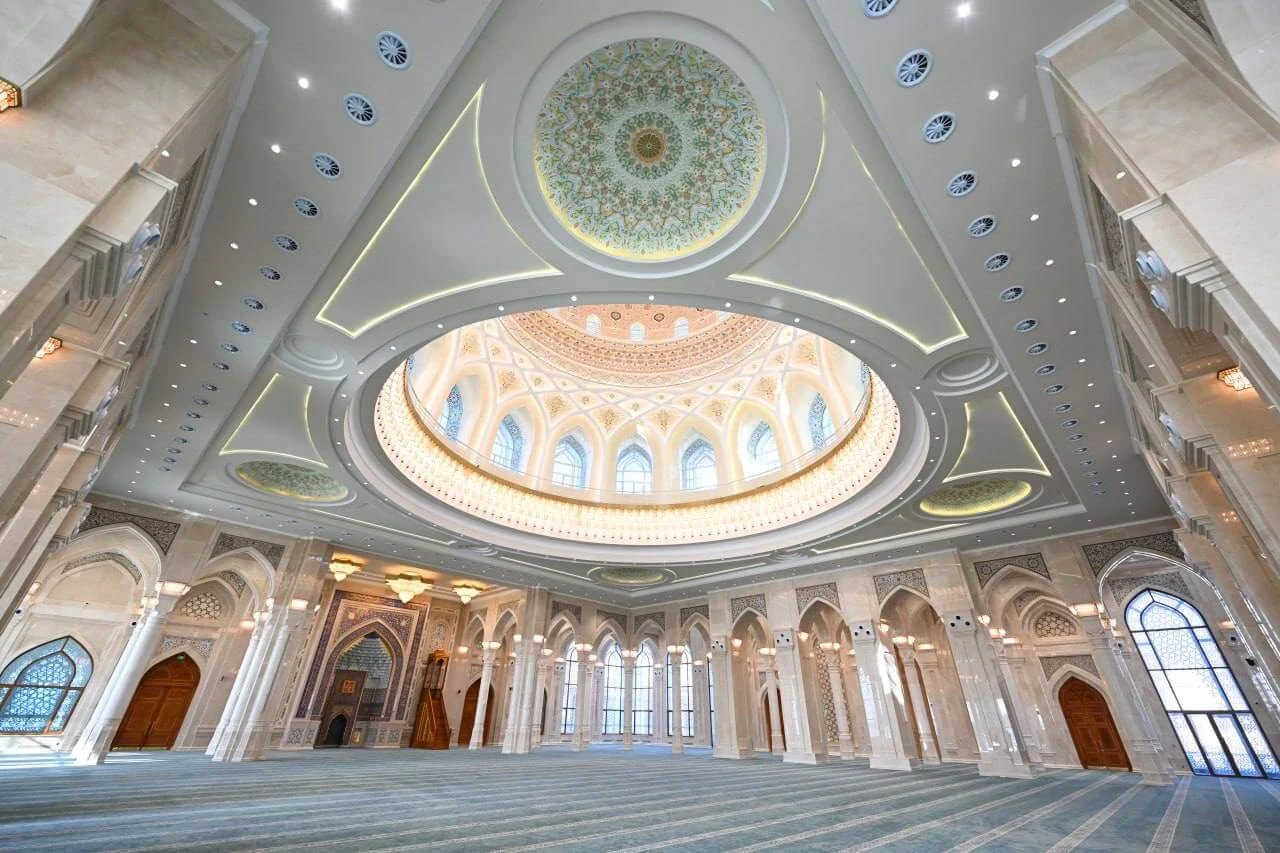
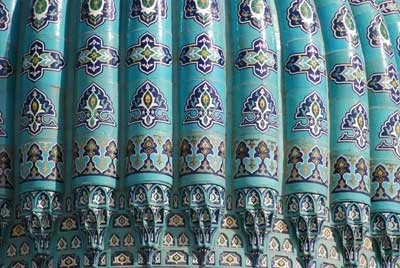
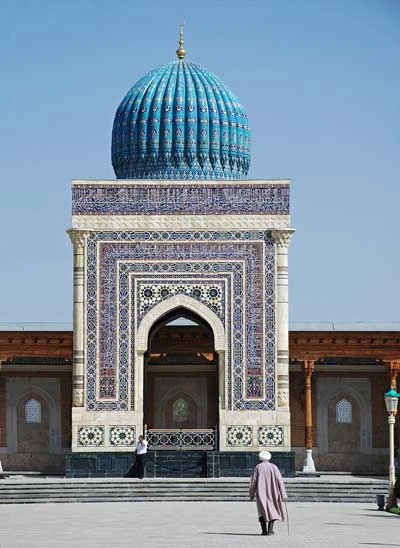
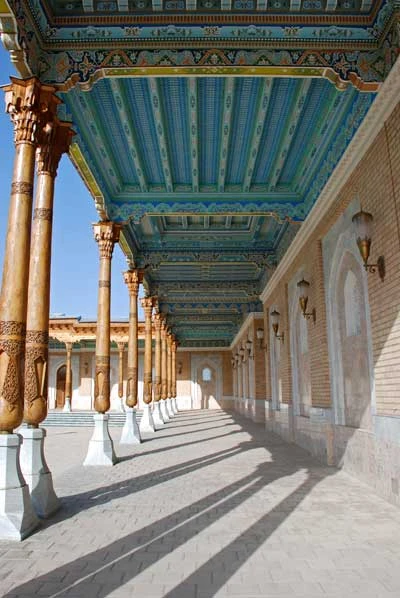
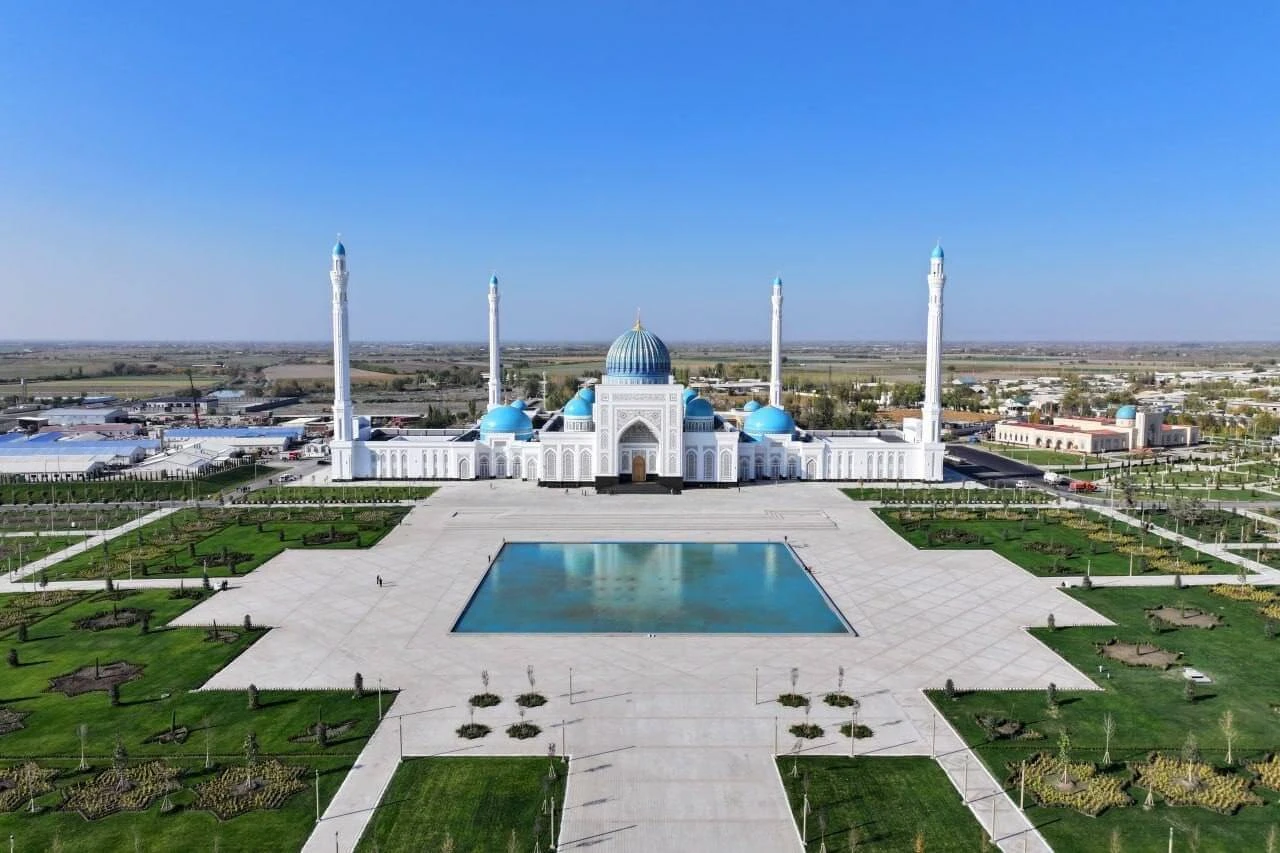
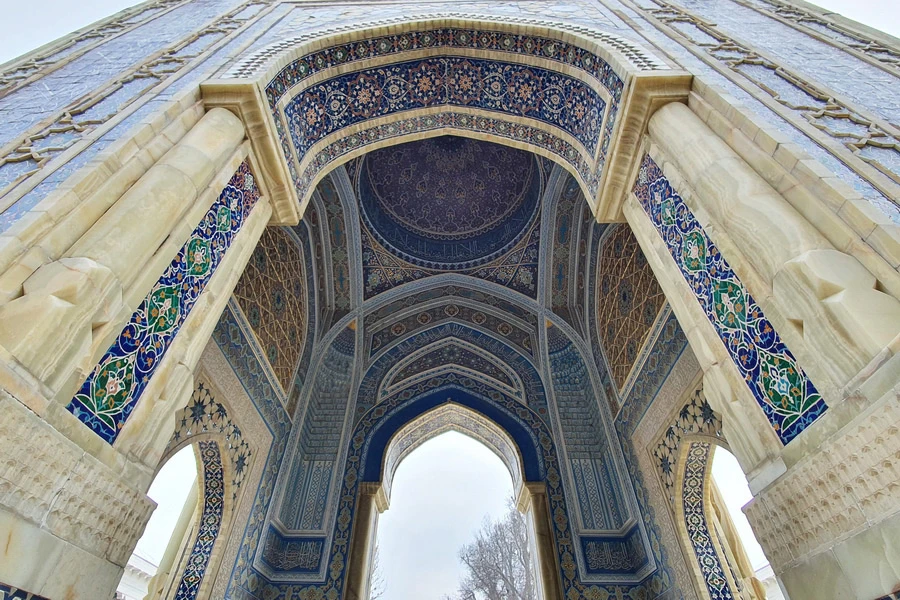
The skyline, composed of 14 blue domes and 75-meter-high minarets, serves as the visual anchor for pilgrims approaching from the surrounding Payarik district. The central space for prayer is a majestic iwan (traditional courtyard gallery) supported by 154 columns, each hand-carved by national masters from regions including Samarkand, Bukhara, Khiva, and Tashkent.
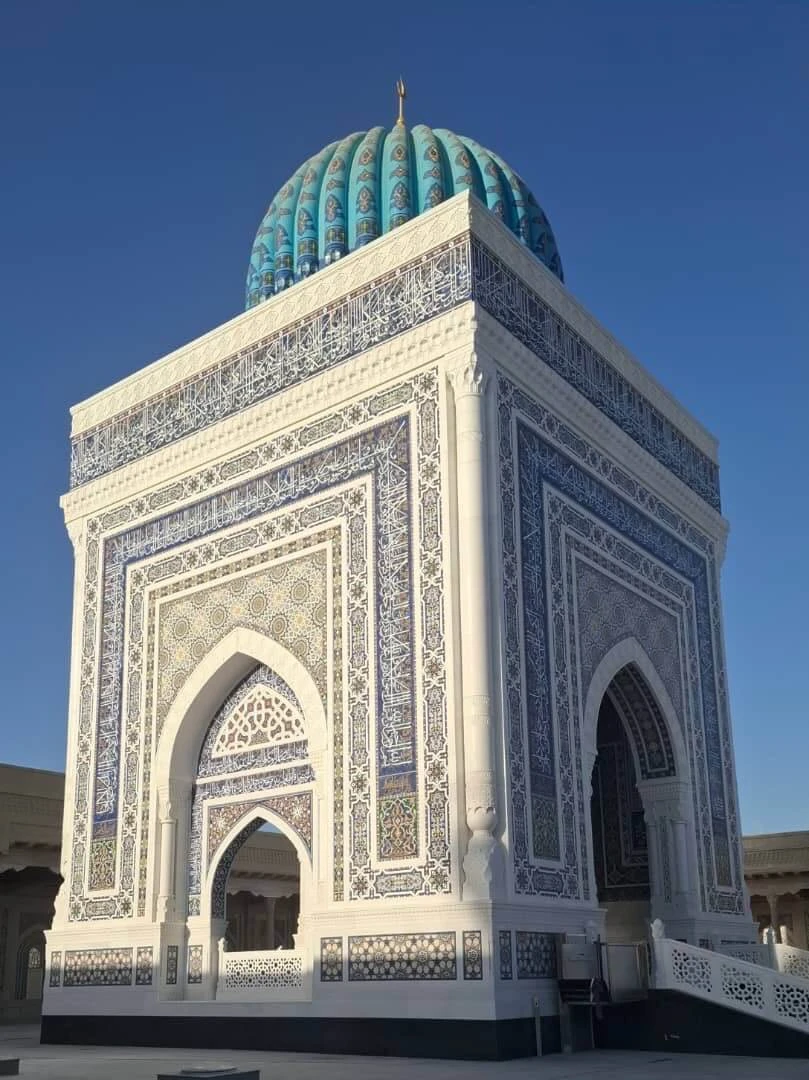
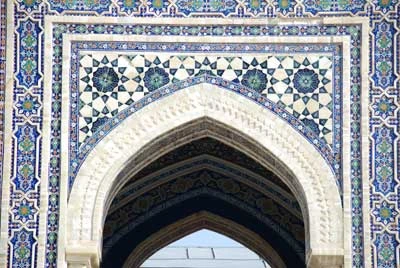
The design utilizes a palette of 18 types of natural stone sourced from Türkiye, Greece, Italy, and China for the exterior facades, while the mausoleum itself features specialized stonework crafted by Indian artisans. This international collaboration extends to the interior, where four monumental spiral staircases involve 8-cm-thick slabs requiring double-sided carving and polishing.
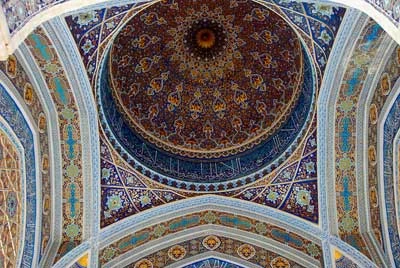
The mausoleum interior remains centered around the original burial vault, topped by a 17-meter dome decorated with intricate stucco fretwork and majolica. The tombstone (sagan) is made of light-blue onyx, a material chosen for its translucent properties and spiritual symbolism within the Central Asian tradition.
The central feature of the 2026 expansion is the integration of educational technology to facilitate the wider dissemination of Imam al-Bukhari’s intellectual contributions. The complex includes a unique museum comprising nine interactive pavilions, offering an immersive narrative of Islamic civilization through augmented reality and digital archives. The Imam Bukhari International Scientific Research Center has launched its 2026 fellowship program to foster global academic exchange, designed for foreign researchers specializing in the history and culture of Central Asia.
The 15-Hectare Tourism Zone: A New Economic Hub
The transition to a 65,000-visitor capacity integrated a 15-hectare tourism zone into the complex, providing a comprehensive ecosystem for pilgrims and ensuring that the physical and spiritual needs of visitors are met with dignity and efficiency. The new development includes one four-star hotel and several three-star hotels, providing modern amenities, 22 family guesthouses with 176 beds offering affordable lodging, and dedicated restaurants and cafes.
The architectural layout highlights sustainability, utilizing environmentally conscious materials like natural stone and traditional brickwork, combined with efficient irrigation systems and energy-saving lighting. The reconstruction of the Imam al-Bukhari complex is a centerpiece of President Shavkat Mirziyoyev’s New Uzbekistan strategy. The site serves as a bridge between the past and the future, fostering Uzbekistan’s cultural diplomacy and visitor attraction. The complex is more than a mausoleum, as it serves as a place of pilgrimage, a center for advanced research, and a symbol of Uzbekistan’s national identity.
Explore Courses
.jpg "Ondrej Chybik - Rethinking Architecture")