


At the edge of Brooklyn’s historic Green-Wood Cemetery, Architecture Research Office (ARO) has completed the restoration and expansion of the landmark Weir Greenhouse, transforming it into a new education and welcome center known as “The Green House.” The project repositions the cemetery as a burial ground but also as an active civic and cultural landscape for visitors, researchers, and the surrounding community.
Established in 1838, Green-Wood spans 478 acres and has long been regarded as one of New York’s most significant rural cemeteries, designed as a place where memory, landscape, and public life intersect. The new center gives the institution what its leadership calls a “new front door,” creating a clearer and more welcoming point of arrival for more than half a million annual visitors.
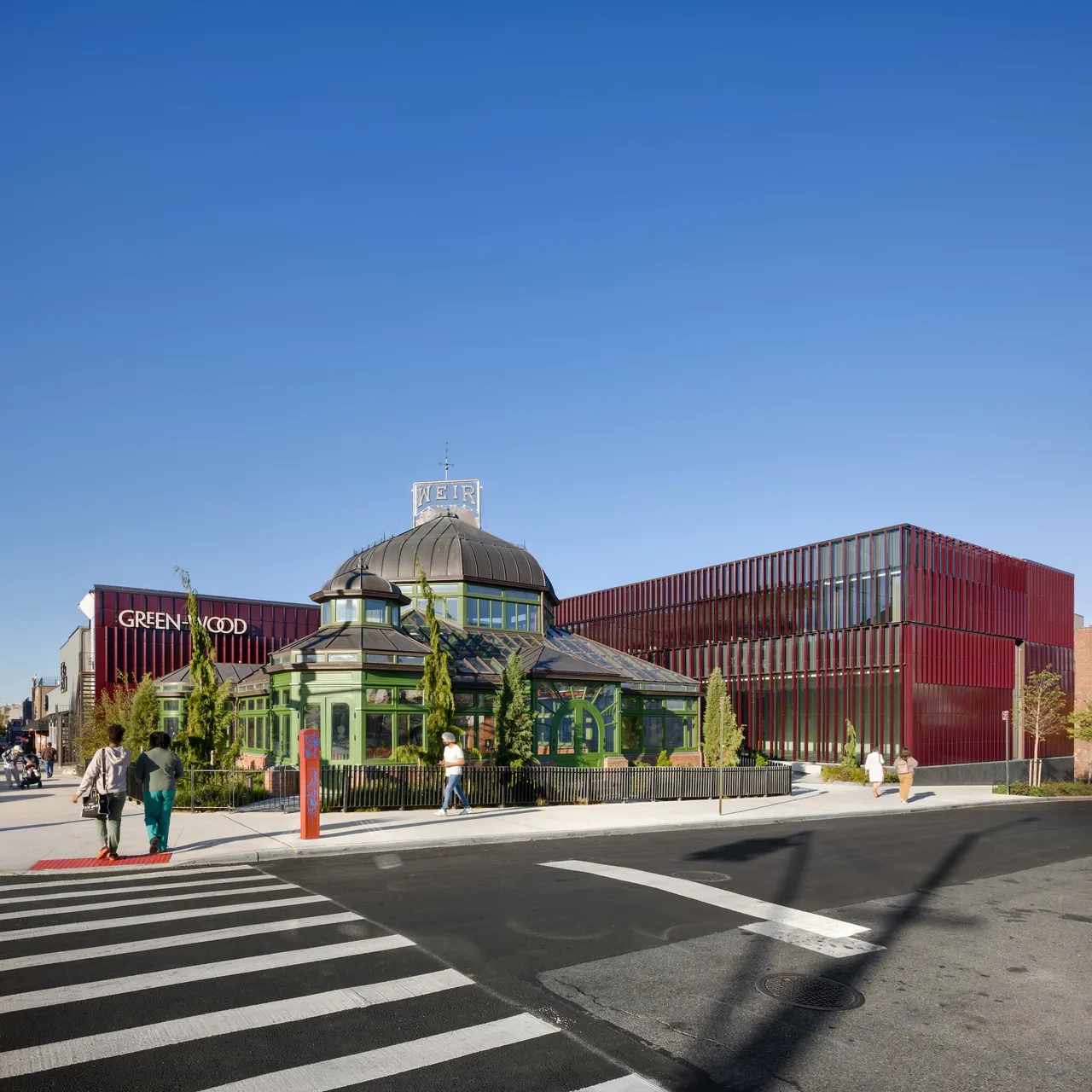
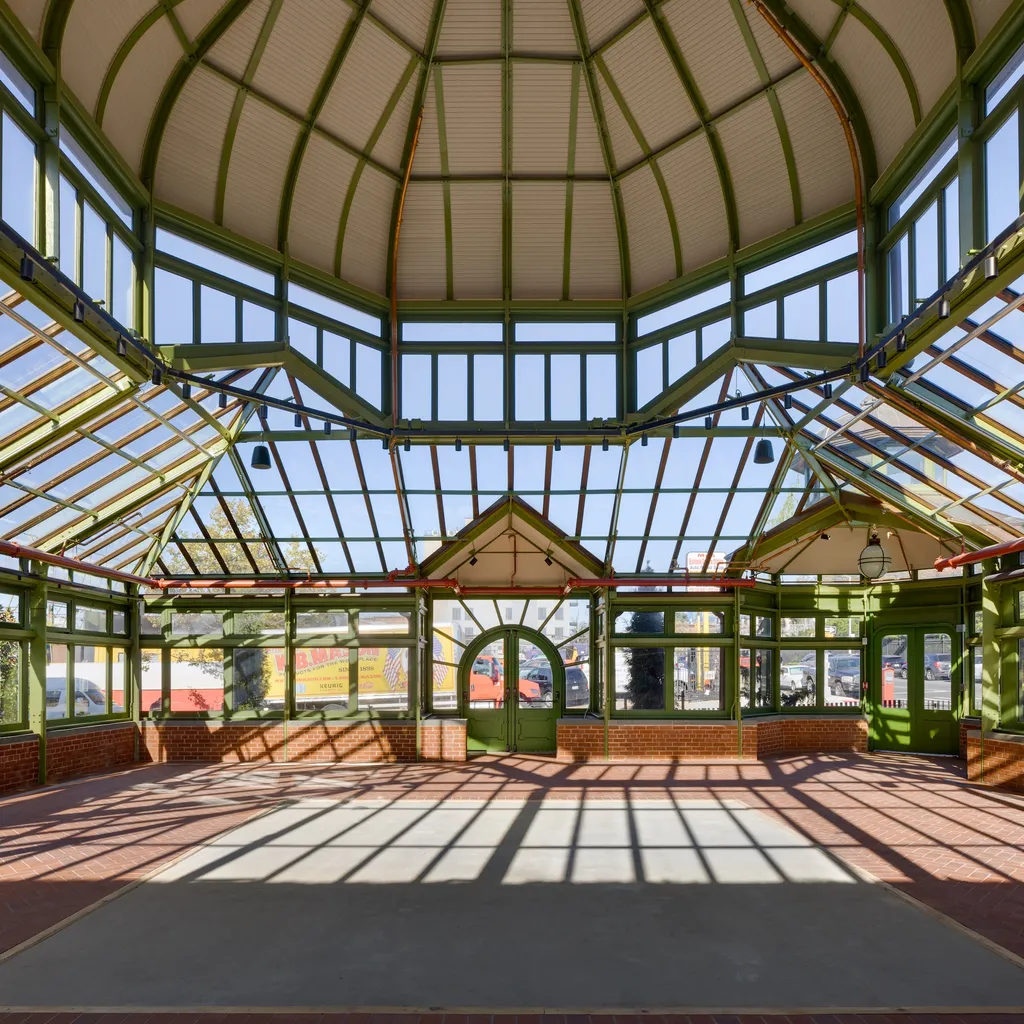
The restored Victorian greenhouse sits directly across from the cemetery’s famous 1865 Gothic Revival entrance designed by Richard Upjohn. Built in 1880 and expanded in 1895, the Weir Greenhouse originally served as a flower shop for mourners purchasing floral arrangements before funerals and visits. After decades of neglect, the structure had fallen into serious disrepair, though its cast-iron frame, glass enclosure, octagonal dome, and copper-clad cupola remained architecturally significant.
Green-Wood acquired the greenhouse in 2012 and began planning its revival as part of a broader effort to strengthen the cemetery’s public role. ARO positioned it as the centerpiece of a larger institutional project that connects preservation with contemporary use.
Architecture That Frames the Old and the New
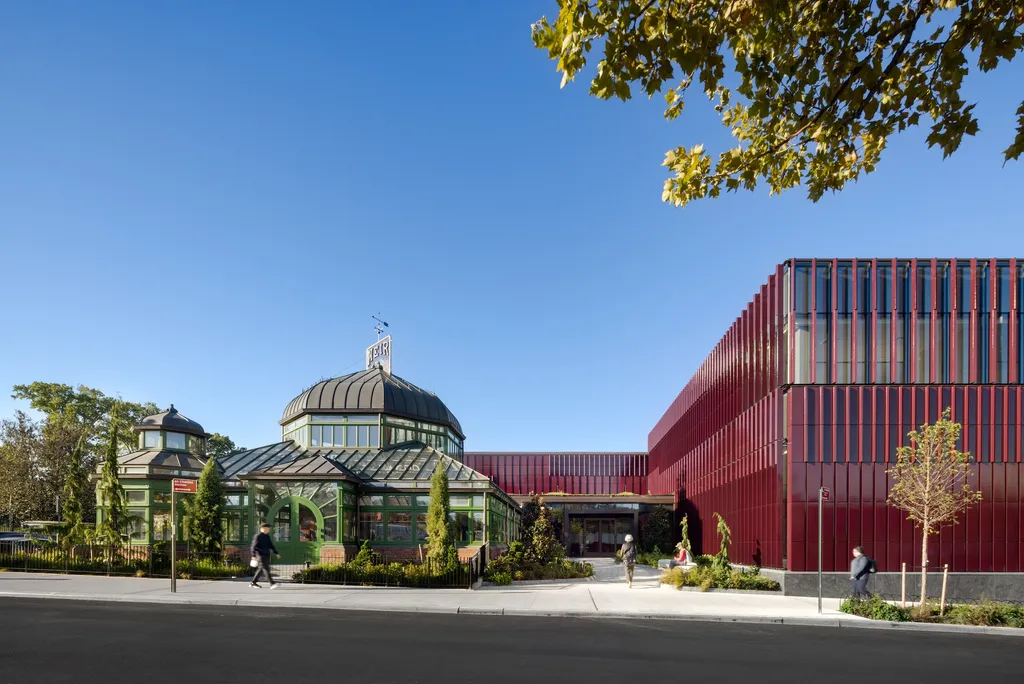
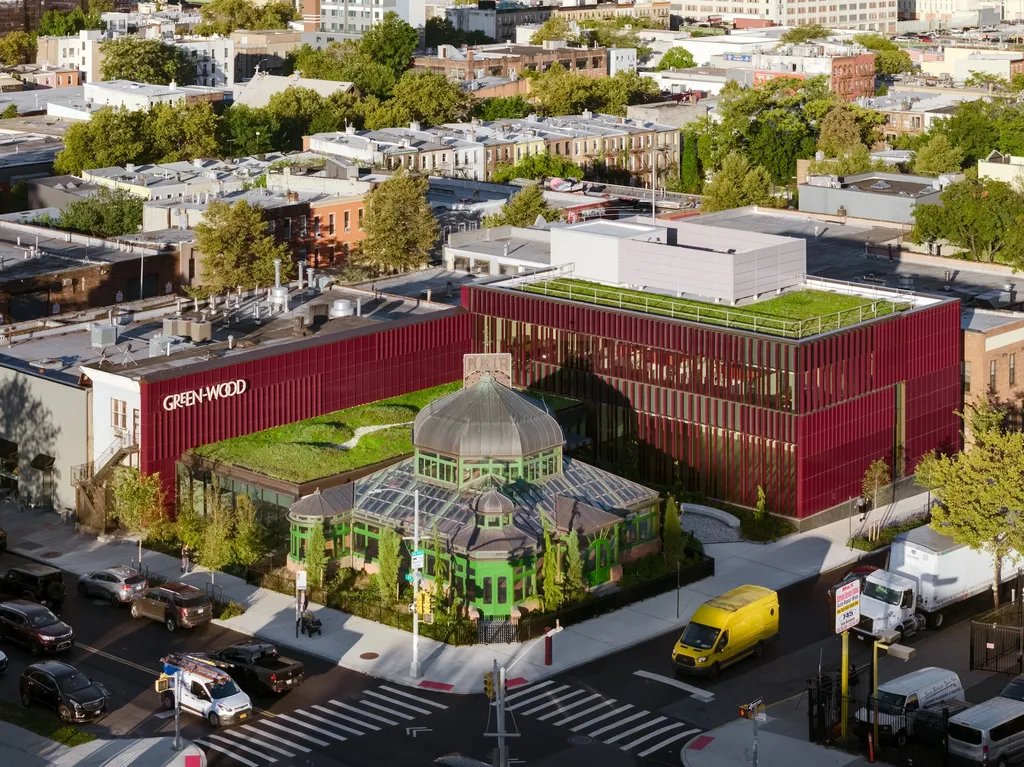
ARO designed a new L-shaped building that wraps around the restored greenhouse. The approximately 17,000-square-foot addition creates an architectural dialogue between old and new, allowing the Victorian structure to remain visually prominent while giving it a functional public setting. The new building houses exhibition galleries, a community classroom, staff offices, a reading room, and climate-controlled archives containing Green-Wood’s historic records dating back to 1838. Together, these spaces consolidate functions that were previously scattered across the cemetery into one accessible public destination.
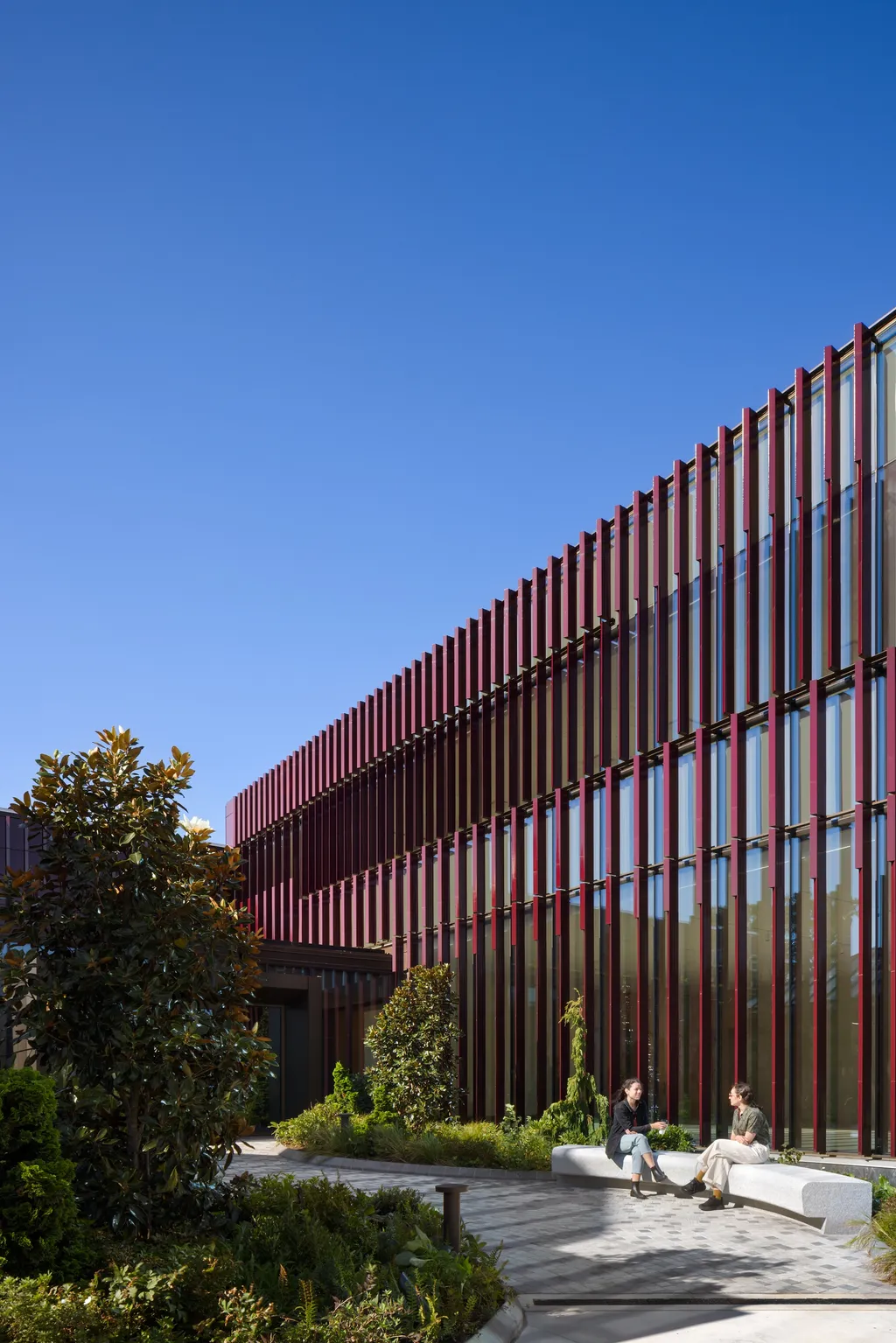
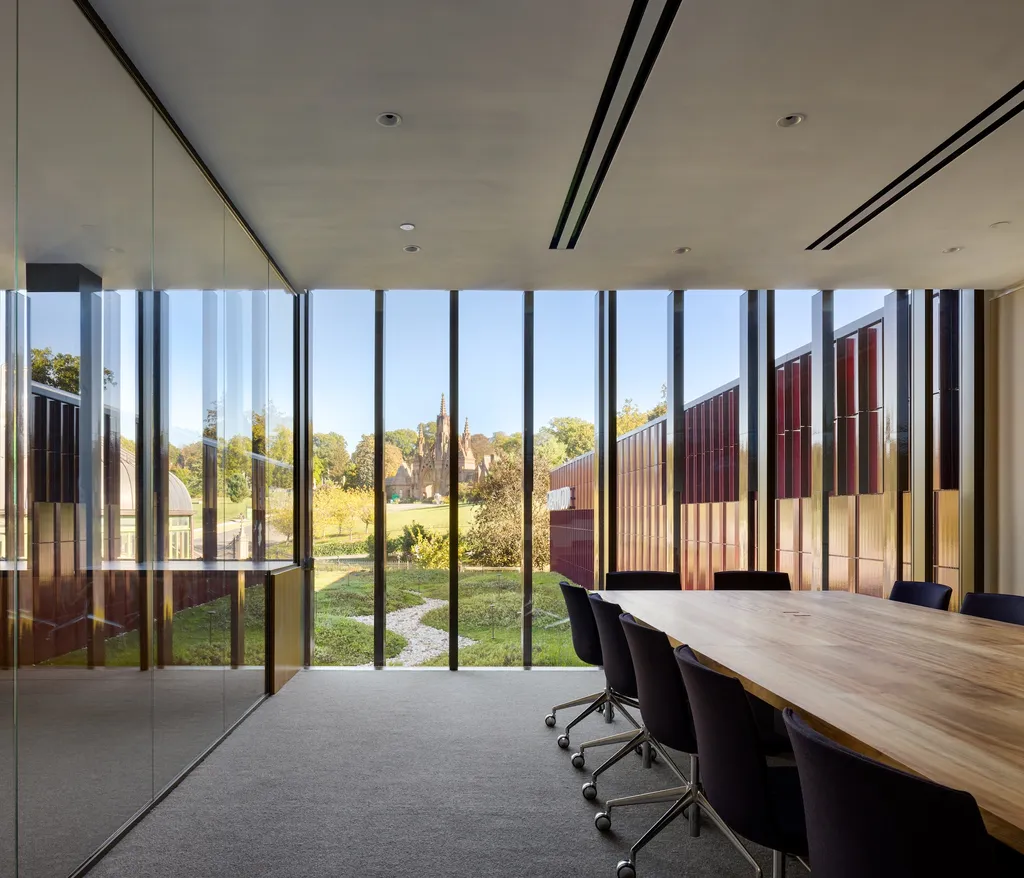
The project draws heavily from the cemetery’s architectural language. ARO used custom glazed burgundy terracotta on the façade, referencing both the brownstone tones of the cemetery’s monumental entrance and the masonry character of Brooklyn’s surrounding streetscape. Large second-floor windows are positioned to frame views toward the historic gate, reinforcing the visual relationship between the welcome center and the cemetery beyond.
The building’s massing remains low and grounded, helping the greenhouse and landscape remain the primary focus. Instead of a formal institutional frontage, visitors arrive through a planted courtyard that softens the threshold between city and cemetery.
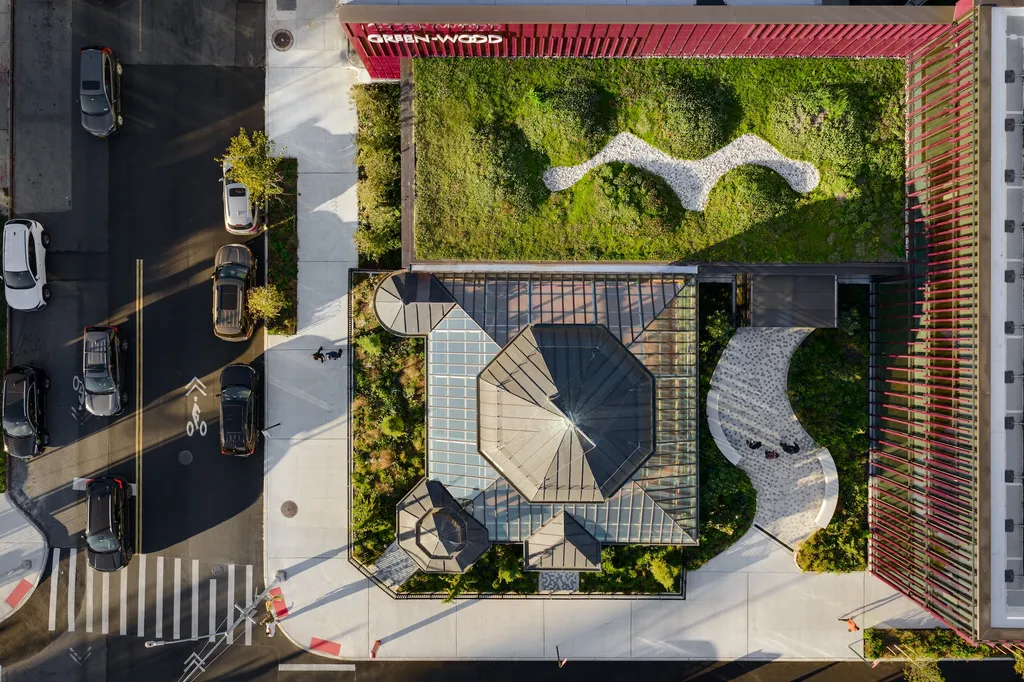
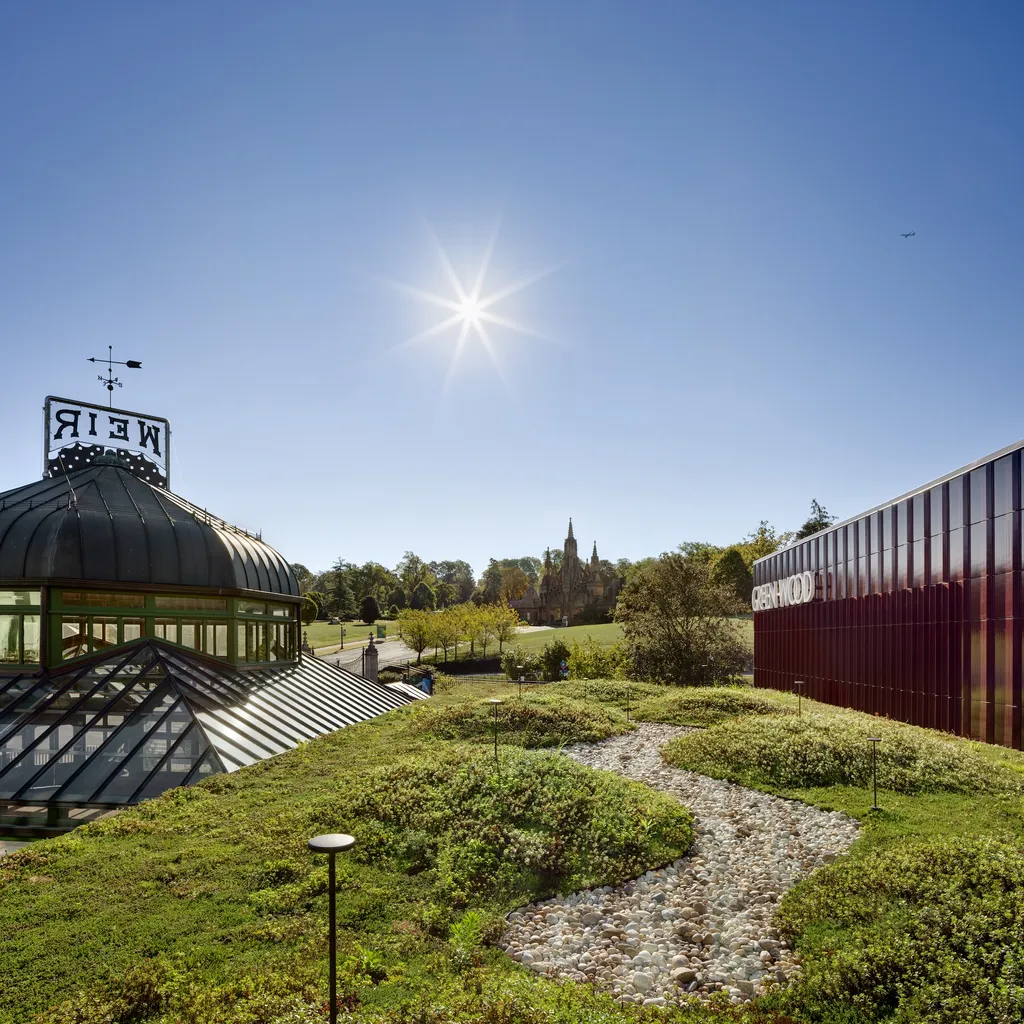
Landscape architect Michael Van Valkenburgh Associates extended this idea by shaping the site as a transition zone rather than a boundary. A sculpted green roof, lush planting, and an entry court echo the cemetery’s rolling hills and winding paths, visually pulling Green-Wood’s landscape into the surrounding Sunset Park neighborhood. This approach makes the center feel less like an isolated building and more like an extension of the cemetery itself. The project is also fully electric and LEED Gold certified, reflecting Green-Wood’s long-term commitment to environmental stewardship alongside historic preservation.
Restoring Memory Through Public Space
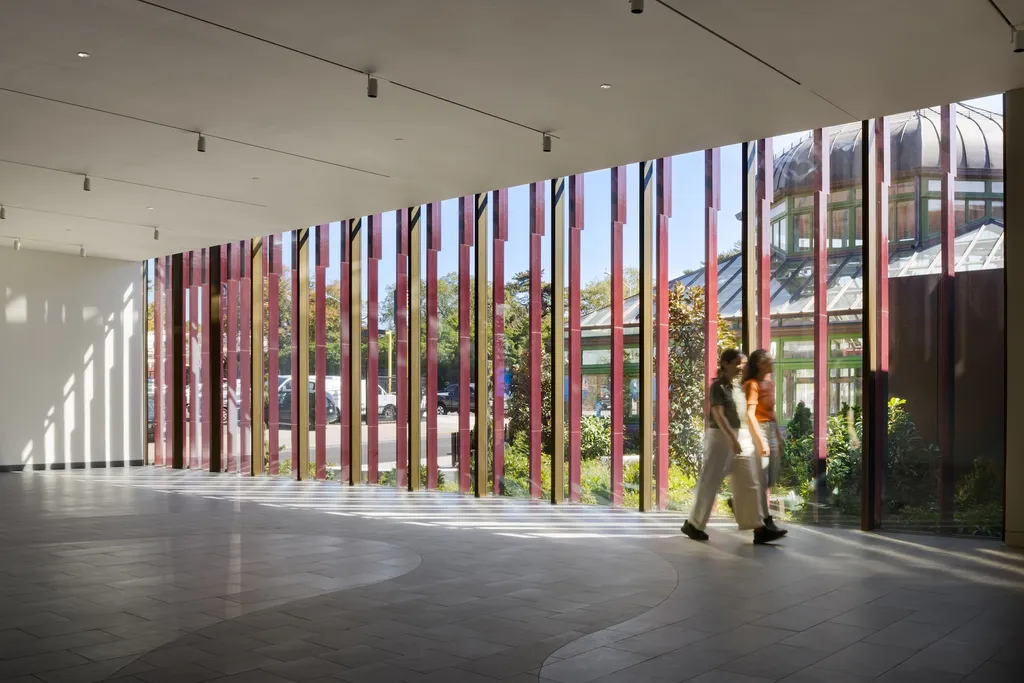
Inside the restored greenhouse, the architectural atmosphere shifts from institutional to intimate. The new tiled floor includes a large map of the cemetery, helping orient visitors before they enter the grounds. A flower stand continues the building’s original association with floral rituals, while the surrounding galleries and archives introduce Green-Wood’s history through exhibitions, records, and public programming. The project makes remembrance part of a shared civic experience.
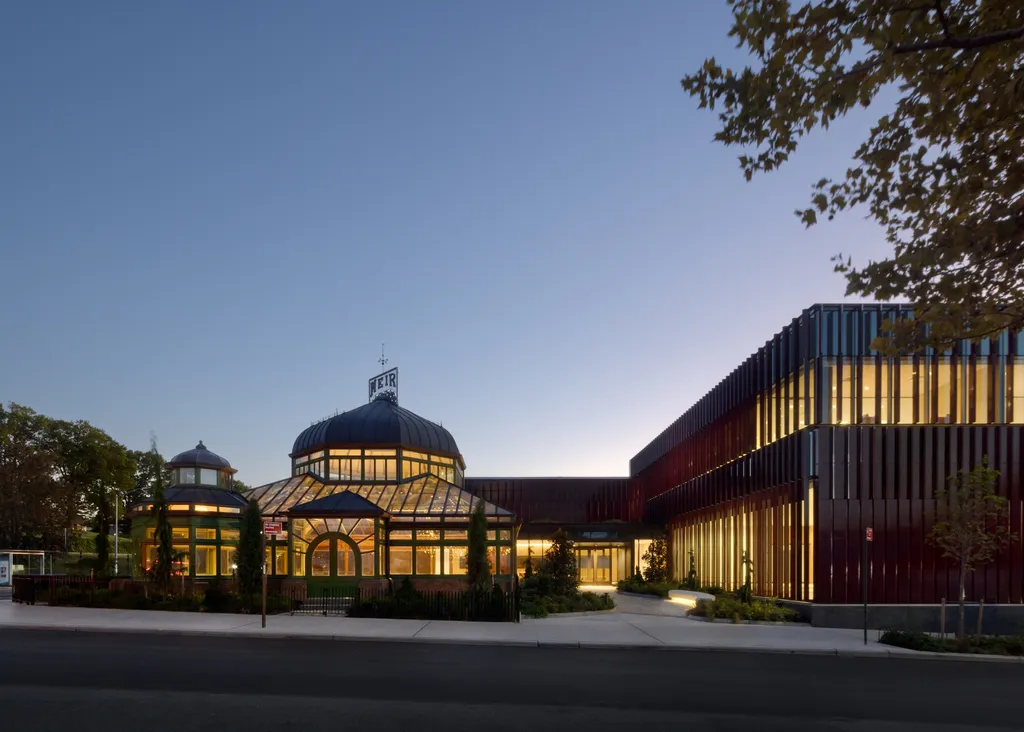
The greenhouse reflects a larger shift in how historic cemeteries are understood. It supports Green-Wood’s identity as a place for art, history, and nature as much as for burial. ARO’s intervention succeeds because it does not idealize the past or overpower it with new architecture. Instead, it restores the greenhouse’s original dignity and gives it renewed purpose. The result is a building that welcomes the living while preserving the memory of the dead, allowing one of Brooklyn’s most important historic landscapes to remain active, relevant, and open to the city around it.
Image credit: Rafael Gamo
Explore Courses
.jpg "Ondrej Chybik - Rethinking Architecture")